Introduction
Substance abuse problems are a serious med-ical and public health issue responsible for in-creasing levels of morbidity and mortality as well as a considerable burden of disease in worldwide [1]. Drug addiction is a psychologic disease affecting many young adults. Although initial drug use might be voluntary, drugs of
abuse have been shown to alter gene expression and brain circuitry, which in turn affect human behavior. Once addiction develops, these brain changes interfere with an individual's ability to make voluntary decisions, leading to compul-sive drug craving, seeking and use [2]. The im-pact of addiction can be far reaching and pa-tients with addictions have many acute and chronic medical illnesses, both related and
un-Medical Journal of the Islamic Republic of Iran.Vol. 24, No. 3, November, 2010. pp. 140-145
The frequency and pattern of substance use in outpatients of general
hospitals
Mehdi Nasr Esfahani1, Azizeh Afkham Ebrahimi2, Behrouz Birashk3, Serveh Faraji4,
Asma Aghebati5
Abstract
Background: Patients with addictions have many acute and chronic medical ill-nesses, both related and unrelated to their addictions. In spite of high incidence of substance-related disabilities, substance abuse is usually underdiagnosed in general hospitals. The objective of the present study was to investigate the frequency and pat-tern of substance use in patients with different medical complaints.
Methods:In this descriptive cross-sectional study , 1000 outpatients, aged 17 and older with various medical complaints were participated. The patients were attend-ing neurology, ENT, nephrology, ophthalmology, cardiology, orthopedic, gastroen-terology, surgical and dermatology clinics of four selected general hospitals. A 93 item clinicians-made scale, Rapid Situation Assessment of Drug Abuse in Iran, was used in this survey, and 30 items which focused on drug use were selected.
Results:8.7% of the patients reported lifelong or recent substance use and Opium was the most used substance, reported by 65.5% of the patients. Patients of neurolo-gy ,ophthalmoloneurolo-gy and orthopedic clinics showed the highest consumption . Smok-ing and injestion were the most frequent routes of substance used and the most re-ported pattern of use were 2 or 4 times a day and once a week.
Conclusions:The current cohort of substance users were relatively young, and many had reported detectable nervous system and orthopedic complications. Further research must investigate -their outcomes in the long term.
Keywords: substance use, general hospitals, outpatients, opium, pattern of sub-stance use
1. Associate Professor of Psychiatry, Department of Psychiatry. Rasoul Akram Hospital, Tehran, Iran. [email protected]
2. Corresponding author,Academy member of clinical psychology, Department of Clinical Psychology. Tehran Psychiatric Institute, Sa-tarkhan Niayesh. Shahid Mansouri St, Tehran.Iran. Tel: 09121597189. Email: [email protected]
3. Associate Professor of Counseling, Iran University of Medical Sciences, Tehran-Iran. [email protected]
Department of Clinical Psychology, Tehran Psychiatric Institute, Iran University of Medical Sciences, Tehran, Iran.
Received: 28 December 2009 Revised:22 April 2010 Accepted: 29 April 2010
related to their addictions [3,4]. Cardiovascular disease, stroke, cancer, HIV/AIDS, hepatitis and lung disease can all be affected by drug abuse [5] Addicts also tend to use more costly episodic care for medical needs such as the emergency department [5]. Diverse physical problems accompany and complicate sub-stance abuse in a way that requires the physi-cians to be aware and well-informed.
The overall incidence rate of substance abuse problems presenting in primary care settings has been noted to be generally between 7% and 8% [1]. Research had demonstrated substance abuse rates as high as 11%-16% in low-income immigrant patient population [6]. In a cross-sectional study among alcohol, heroin or co-caine dependent persons without primary med-ical care admitted to an urban inpatient detoxi-fication unit, 45% reported being diagnosed with a chronic illness and 80% had prior med-ical hospitalizations [2].
In spite of high incidence of substance-relat-ed disabilities, substance abuse is usually un-derdiagnosed in general hospitals and when substance abuse is not the principle problem, its role- often ignored [7]. The study of Reynold and his colleagues [8] shows that a general hos-pital can be a suitable place for primary diagno-sis and initiation of intervention for substance use. They have reported a rate of 8% substance use among patients of a general hospital in Lon-don. Because regular medical care has been shown to have benefits, the need to improve linkage of addicted persons with primary med-ical care has become more urgent [9].
Adults with substance-abuse related medical conditions to receive regular primary medical care , integrated with their addiction care were more likely to be abstinent and less likely to be hospitalized [10]. Other theoretical benefits are more efficient use of health services, opportuni-ty for preventive health interventions and better health [11]. There are a few reports on the prevalence of substance use in general hospitals of Iran and the majority of these studies have
targeted a single disease or a single ward and the sample sizes were small.
The focus of the present study was to investi-gate the frequency and pattern of substance use in patients with different medical complaints. This article assessed the burden of medical ill-ness and identified substance characteristics as-sociated with poor physical health .
Method
This was a descriptive cross-sectional study on 1000 outpatients aged 17 and older with var-ious medical complaints. The study was con-ducted over 9 months period. The patients were attending neurology, ENT, nephrology, oph-thalmology, cardiology, orthopedic, gastroen-terology, surgical and dermatology clinics of four selected general hospitals (Emam khomai-ni, Rasoul Akram, Milad and Shahid Rajai) within a nine month period. The sampling method was convenient and the sample size -calculated according to the estimated number of patients attending the above clinics in a week. Patients who agreed to participate and gave oral consent were included. Illiteracy, be-low 17 years old age, history of psychiatric dis-orders and physical and cognitive disability were exclusion criteria( all were obtained by an intake interview with patients by two trained students of clinical psychology). A clinicians-made scale, Rapid Situation Assessment of Drug Abuse in Iran, developed and validated by Razaghy et al and National Group of Re-search [12] was used in this survey. The 93 self-report items include general demographics plus a multiple item format for recent or life-time substance ( including tobacco) and alcohol use, the related problems and the route and pat-tern of use. The questionnaire was reviewed by two experienced psychiatrists, specialized in addiction field, and 30 items which focused on drug use with high consistency between raters, were selected. The data were gathered by two trained MS students of clinical psychology who attended the selected hospitals every two days a
week and completed the questionnaires over a 9 month period.
Statistical analysis carried out using SPSS 16 for windows and descriptive statistics was cal-culated for categorical variables.
Results
Of the total 537 (53.7%) were men and 463 (46.3%) women, who participated in the study. The age range of the patients was between 17 to 86 with the mean age of 42.17±18.29 years. 79 (91%) men and 8 (9%) women reported sub-stance abuse. The frequency of subsub-stance use was highest in the age range of 30 to 45 years
(32.18%).
Table 1 shows that 87 patients (8.7%) report-ed lifelong or recent substance use. Opium was the most reported substance abuse (57, 65.51%) followed by multiple substances (12, 13.79%)and cannabis (10,11.49%).
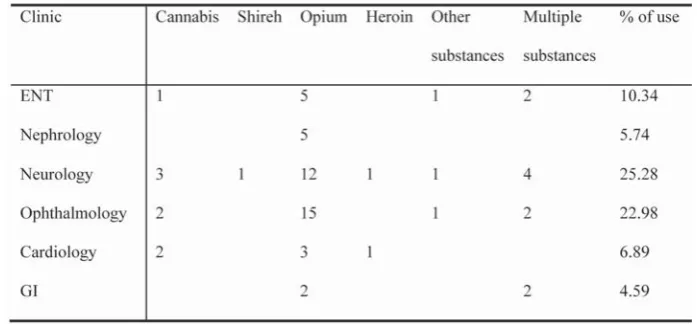
The frequency of type of substances in sepa-rate clinics showed the highest consumption of substances particularly opium in patients of neurology clinic (25.28%) followed by oph-thalmology (22.98%) and orthopedic (14.94%) (Table 2).
Table 3 shows that smoking and ingestion were the most frequent route of substance use (42.52% & 27.58 respectively) in the studied addicts.
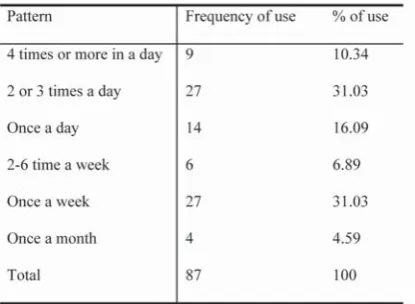
The most reported pattern of use were 2 or 4 times a day and once a week.(27% &27%) which are shown in Table 4.
Discussion
The present data indicated that people who abuse substances are seen each month in sur-veyed general hospitals. Inevitably, general practitioners in urban areas are being faced with increased numbers of patients having problems with a range of illicit drugs [13]. 8.7% of the participants of this study , mostly male, 30 to 45 years old and outpatients of neurology, oph-thalmology and orthopedic clinics, reported substance use, particularly opium.
Electroni-Table 1. The frequency distribution of the type of sub-stances used by addicts.
Table 2. The frequency distribution of substances abused in separate clinic
cally we searched for the relevant references on the topic. In the most comprehensive and simi-lar study [8], the authors reported 12% sub-stance use in medical patients which is higher than our figure. The findings of a cross-section-al study on heroin and cocaine abusers [2] showed that, 45% of the abusers suffered from chronic medical conditions. In another study on prevalence of common medical problems in al-cohol and substance-dependent patients [14], the authors found the presence of the majority of studied medical conditions in substance abusers. In Iran, two studies on chronic renal failure and cardiovascular patients[15,16] and a study on patients who were undergoing coro-nary artery bypass graft and valve surgery [17] show 41% ,38% and 54% substance use (14.1 % , 9% and 12% opium use) respectively. In an-other study in Iran which focused on opium use in hospitalized patients of 12 wards [18], the au-thors reported 11.7% lifetime opiate use, most-ly in neurosurgery and orthopedic wards. The present study showed a total of 2% lifetime sub-stance use in nephrology and cardiovascular outpatients , which was significantly lower than the above-mentioned studies. Differences in settings (inpatient versus outpatient), - abuse dichotomy and sample size may accounted for these inconsistent findings.
The findings of this study showed the high-est percent of substance use, mostly opium was
mainly found in patients of neurology clinics, followed by ophthalmology and orthopedics.
There is growing evidence that chronic expo-sure to toxic substances can cause subtle neu-ropsychological deficits that may precede to neurological deficits. Opium affects all body organs and may cause diverse physical or men-tal disorders and CNS, digestive and cardiovas-cular systems are most affected [19]. Cognitive impairment may reflect brain damage among opium misusers and haemorrhagic stroke and small scattered lesions have been found in the brains of opiate-dependent patients. [20,21]. Opiates are pain relievers that act on central nervous system, but if used over a long period of time, they turn into habit-forming sub-stances. Opiates are also used to relieve pain in a growing number of conditions, including chronic LBP and the use of opiates in the long-term management of chronic low-back pain (LBP) appears to be increasing. Despite this trend, the benefits and risks of these medica-tions remain unclear. The trials that do exist suggested that a weak opiate could reduce pain but has minimal effect on organ function [22]. Also, patients who use opiates may be at higher risk for BMD ( bone mineral density) due to several reasons. First, direct opiate effected -bone metabolism may occur through inhibition of osteoblast function-, the cells responsible for new bone formation. Moreover ,
hypogo-Table 3. Routes of substance abuse in clinics Table 4. Periodic pattern of substance use in clinics
nadism, a potential side effect of opiates is an important secondary cause of osteoporosis [23, 24]. Researchers also found that pain-related diagnosis, including arthritis, headache and lower back pain were more prevalent among substance abuse patients, particularly those de-pendent on narcotic analgesics [14]. Finding in pain-related diagnosis among patients depend-ent on narcotic analgesics, may explain the higher incidence of opium use in our neurology and orthopedic patients. It seemed that there were two sides to the opiates coin. On one side, recreational use poses clear individual and community risks. And on the other -, opiates have a therapeutic potential in pain, palliative care and spastic disorders.
The routes and pattern of substance use were also investigated in the present study. Smoking and eating were the most reported routes of sub-stance use. Opium smoking among Asians has often been stereotyped as a benign folk nostrum or a culturally accepted habit isolated to the eld-erly [25]. Some studies suggest the destructive effects of opium are related to the route of ad-ministration [26]. Different outcomes have been mentioned for various routes of opium adminis-tration. For example, it has been reported that orally administered addictive substances such as cannabinoids have a slower onset of action, but are more addictive when smoked., due to the rapid delivery to the brain. Hence the onset of action is more rapid after smoking , however the duration of action is longer after oral inges-tion [27]. Smoking as the most frequent route of substance use in our study accompanied with a pattern of 2 to 3 times daily use of opium, strongly suggested substance (opium) abuse in a proportion of our surveyed population. These results warrant rapid screening for substance abuse in medical patients and highlight the need for linkages between primary care and sub-stance abuse treatment.
Limitations
These results should be interpreted
recogniz-ing several limitations. We used a srecogniz-ingle self-re-port questionnaire for collecting our data. Pa-tient self-report of substance abuse has been the means used by many institutions to screen for substance abuse; however, the reliability and validity of self-reports are questionable A body of evidence suggests that screening question-naires alone may not be adequate in identifying substance-abusing patients as a result of dis-crepancies in patient self-report and drug use underreporting. Studies using a biological cri-terion of validity, including urine toxicology and hair analysis are needed [28]. The unequal number of patients recruited from each clinic was another limitation of this study which may accounted for underestimation of cardiovascu-lar and nephrology patients who abused sub-stances. The cross-sectional nature of the study also prevents making any cause and effect rela-tionship between substance use and certain physical illnesses.
Conclusion
The current heavy users of these study were relatively young (30-45 years old), and many had reported detectable nervous system and or-thopedic complications. Further research must investigate their outcomes in the long term.
The problems presented by substance misuse are of a multidisciplinary nature and general practitioners need to know that they can draw upon the expertise of a variety of professionals when needed.
Acknowledgments
The authors highly appreciate the head of re-search deputy and rere-search staffs of Iran Uni-versity of Medical Sciences for their valuable assistance and support.
Statement of Interest
This study was funded by a grant from Iran University of Medical Sciences, Deputy of Re-search.
References
1. Neushotz Lori A, Fitzpatrick Joyce J. Improving substance abuse screening and intervention in a primary care clinic. Archives of Psychiatric Nursing 2008; 22: 78-86.
2. De Alba I, Samet JH, Saitz R. Burden of medical ill-ness in drug and alcohol dependent persons without pri-mary care. American Journal of Addiction 2004; 13: 33-45.
3. Saitz Richard, larson Mary Jo, Horton Nicholas J, Winter Michael and Samet
Jeffrey H. Linkage with primary medical care in a prospective cohort of adults with addictions in inpatient detoxification: Room for improvement. Health Services Research 2004; 39: 587-606.
4. Samet JH, Friedman PD, Saitz R. Benefits of link-ing primary medical care and substance abuse services: patient, provider, and societal perspectives. Archives of Internal Medicine 2001; 161: 85-91.
5. French MT, McGeary KA, Chitwood DD, Mccoy CB. Chronic illicit drug use, health services utilization and the cost of medical care. Social Science and Medi-cine 2000; 50: 1703-13.
6. Miranda J, Azocar F, Komaromy M. Unmet mental health needs of women in public-sector gynecological clinics. American Journal of Obstetrics and Gynecology 1998; 178: 212-17.
7. Sadock BJ & Sadock VA. Kaplan and Sadock's Syn-opsis of Psychiatry (9th edition). Philadelphia: Lippin-cott Williams and Wilkins, 2003. pp. 123-126.
8. Reynold CK, Kouimtsidis C, Hunt M, Lind J, Beck-ett J, Drummond C, Ghodse H. Substance use in the gen-eral hospital. Addictive Behavior 2003; 26: 483-99.
9. Saitz r, Mulvey KP, Samet JH. The substance abus-ing patient and primary care; Linkage via the Addiction Treatment System? Substance Abuse 1997; 18: 187-95.
10. Weisner C, Mertens J, Parthasarathy S, Moore C, Lu Y. Integrating primary medical care with addiction treatment. Journal of the American Medical Association 2001, 286: 1715-23.
11. Levin SM. Trumble JG, Edmunds M, Statman JM, Peterson RC. Perspectives on linkage of primary health care and substance abuse treatment. Journal of Addictive Diseases 1993; 12: 1-8.
12. Razaghi EM, Hosseini M, Rahimi Movaghar A Kazem M & Madani S. Rapid Situation Assessment of drug abuse in Iran. Prevention Department, Ministry of Health . Tehran ;1999.
13. Harling R. Heroin use among young people is in-creasing in England and wales. British medical Journal 1998; 317: 431.
14. Mertens JR, Lu Yun w, Parthasarathy S, Moore C, Weisner CM. Medical and psychiatric conditions of alco-hol and drug treatment patients in an HMO. Archives of internal Medicine 2003; 163: 2511-17.
15. Ahmadi J, Benrazavi L. Substance use among Iranian nephrologic patients. American Journal of Nephrology 2002; 22: 11-15.
16. Ahmadi J & Benrazavi L. Substance use among Iranian cardiovascular patients. European Journal of Medical Researches 2002; 7: 89-92.
17. Azarasa M, Azarfarin r, Changizi a , Alizadehasl A. Substance use among Iranian cardiac surgery patients and its effects on short-term outcome. Anesthesia and analgesia 2009; 109: 1553-59.
18. Nohesara SH, Nasr Esfahani M, Afkham Ebrahimi A. Opiate use among inpatients of Rasoul Akram Hospi-tal. Andisheh va Raftar 2004; 3:227-33.
19. Baigent MF. Physical complications of substance abuse. Current Opinion in Psychatry 2003,16: 291-97.
20. Mintzer MZ, Stitzer ML Cognitive impairment in methadone patients. Drug and alcohol Dependence 2002; 67: 41-51.
21. Neiman J, Haapaniwmi HM, Hillborn M. Neuro-logical complications of drug abuse: pathophysioNeuro-logical mechanisms. European Journal of Neurology 2000; 7: 595-606.
22. Deshpande A, Furlan A, Mailis-Gagnon A, Atlas S & Turk D. Opioids for chronic low-back pain. Cochrane Database of Systematic Reviews 2007; Medline Ab-stract.
23. Danielle HW. Opioid osteoporosis. Archives of In-ternal Medicine 2004; 164: 338.
24. Kim Theresa W, Alford Daniel P, Malabanan AHolick Michael F, Samet Jeffrey H. Low bone density in patients receiving methadone maintenance treatment. Drug and Alcohol Dependence 2006; 85: 258-62.
25. Westermeyer J. Opium smoking in Laos.: A survey of forty addicts. American Journal of Psychiatry 1974; 131: 165-70.
26. Asgary S, Sarrafzadegan N, Naderi GA, Rozbe-hani R. Effect of opium addiction on new and traditional cardiovascular risk factors: Do duration of addiction and route of administration matter? Lipids in Health and Dis-eases 2008; 7: 42 doi : 10.1186/1476-511X-7-42.
27. Mohagheghzadeh A, Faridi P, Shams-Ardakani F, ghasemi Y. Medicinal smokes. Journal of ethnopharma-cology 2006; 108: 161-84.
28. Magura S & Kang SY. Validity of self-reported drug use in high risk populations: A meta- analytical re-view. Substance Use and Misuse 1996; 31: 1131-53.