This is an open access journal, and articles are distributed under the terms of the Creative Commons Attribution-Non Commercial-ShareAlike 4.0 License, which allows others to remix, tweak, and build upon the work non-commercially, as long as appropriate credit is given and the new creations are licensed under the identical terms.
© 2018 Journal of Advanced Pharmacy Education & Research | Published by SPER Publication
53
Microbiological evaluation of Sausages retailed for sale in Al
Ramadi, Iraq
Hanaa Abdullatif Yassin
Department of Biology, Education College for Women, Al- Anbar University, Iraq.
Correspondence:Hanaa Abdullatif Yassin, Department of Biology, Education College for Women, Al- Anbar University, Iraq.
ABSTRACT
Meat products are an excellent source of a wide variety of nutrients, high quality proteins, vitamins and certain minerals. At the same time, they contain an abundance of all nutrients required for the growth and multiplication of most microorganisms. The purpose of the current work was to make a microbiological evaluation of sausages retailed for sale in Al Ramadi, Iraq. To achieve this goal, a total of 100 fresh chicken and beef sausage samples (50 / each) were randomly collected from different shops. The obtained results clarified that the mean values of aerobic bacterial, coliforms, Staphylococcus aureus, Escherichia coli, Salmonella spp. and Shigella spp. counts for chicken sausages were 3.65 ×10⁵, 5.35 ×10⁴, 0.4 ×10², 1.85 ×10³, 0.04×10² and 0.005 ×10² cfu/g, respectively. On the other hand, they
were 2.6×10⁶, 1.9 ×106,0.85 ×102, 2.5×103,0.085×102 and 0.015×10² cfu/g for beef sausages, respectively. In conclusion, it was clear
that the mean values of counts for studied microbiological criteria were higher in beef sausages compared to chicken sausages reflecting a contaminative environment during processing, handling, storage and retailing of beef sausages as compared to that of chicken sausages. Finally, it was proved that contaminated food had been shown to be a critical link in transmitting pathogens to humans resulting in numerous cases of diseases. Therefore, great emphasis should be placed on the microbiological aspects of sausages and on searching for alternative mechanisms to reduce both natural and cross contamination, thus avoiding major public health problems; so, it is important to adopt hazard analysis and critical control point principles in processing and handling of sausage to achieve pathogen free products.
Keywords:Sausages, Microbiological evaluation, Al Ramadi, Iraq.
Introduction
Technology development in poultry meat processing and handling has given consumers a much greater choice over the food they can buy, so meat hygiene can comprise every step of processing from the health of the life bird to the distribution of the final product. It prevents using of harmful ingredients in manufacturing of poultry meat products as well as prevents the sale of contaminated or unwholesome meat.
Sausage is considered one of most beef and poultry meat suitable for human consumption. The English word "Sausage" is derived from the Latin word "Salsus", which means salted meat or salt preserved meat. Sausages are considered in general among the most widely consumed foodstuff by humans. It is imported from several countries and is also produced locally. They are crushed thoroughly with water (ice), table salt, sodium nitrate or potassium by adding one or more permitted nutritional additives as an optional substance, and the meat is to be treated at a suitable temperature.
Literatures extending over many years points out that chicken and meat products are liable to be contaminated with various kinds of microorganisms from different sources and such contamination may render products unsafe to consumer or impair their utility especially in
Access this article online
Website: www.japer.in E-ISSN: 2249-3379
How to cite this article: Hanaa Abdullatif Yassin, Microbiological evaluation of Sausages retailed for sale in Al Ramadi, Iraq. J Adv Pharm Edu Res 2018;8(3):53-58.
54 Journal of Advanced Pharmacy Education & Research | Jul-Sep 2018 | Vol 8 | Issue 4
undeveloped countries where the hygienic measures are still underway [1].
The presence of Enterobacteriaceae, Coliforms and Staphylococciin meat and chicken products depend upon the meat used for grinding, sanitary conditions, practices during preparation, time and temperature of processing and storage. Also, during cutting and handling, meat surfaces exposed to ambient air provide excellent media for most bacteria.
Escherichia coli (E. coli) is a commensal microorganism whose niche is the mucous layer of the mammalian colon. This bacterium is the most abundant facultative anaerobe of the human intestinal microflora. Furthermore, E. coli is widely distributed in the intestinal tracts of warm blooded animals [2]. E. coli is often nonpathogenic, although
different strains may cause diseases in gastrointestinal, urinary, or central nervous systems [3].
Staphylococcus aureus (S. aureus) is a major bacterial human pathogen that causes a wide variety of clinical manifestations. It is found in the environment and is also found in normal human flora, located on the skin and mucous membranes (most often the nasal area) of most healthy individuals. Also, it can be found in other areas of human contact including soil, water, and food products.
S. aureus is considered the third worldwide cause amongst the food-borne illnesses reported cases [4].
Salmonella is a member of the Enterobacteriaceace, Gram negative, motile, with peritrichous flagella and non-spore forming rods. Also, Salmonella is a facultative anaerobic bacterium. However, Salmonella is not included in the group of organisms referred to as coliforms [5]. More than
2,500 different types of Salmonella exist, some of which cause illness in both animals and people. Some types cause illness in animals but not in people [6].
Shigella is Gram-negative, facultative anaerobic, non-spore forming, non-motile, rod-shaped bacteria closely related to Salmonella. Infection due to other Shigella
species including S. flexneri, S. boydii and S. dysenteriae also occur. In contrast to the most common foodborne pathogenic agents, shigellosis is exclusively a human disease [7].
So the aim of the current study was to conduct a microbiological evaluation of chicken and beef sausages retailed for sale in different shops at the city of Al Ramadi, Iraq.
Materials and Methods:
Collection of samples:
A total of 100 of fresh chicken and beef sausage samples (50/each) were randomly collected from different shops at the city of Al Ramadi, Iraq. Each sample (250 g) was kept in a separate sterile polyethylene packageand transferred directly with a minimum of delay to the laboratory in an insulating refrigerated container under possible aseptic condition to avoid any changes in the quality of the sample.
Preparation
of
samples
for
microbiological examinations (APHA,
2001):
Samples were firstly cauterized by using hot spatula then cauterized parts were removed by using sterilized scalpel and forceps. Under aseptic conditions, 25 g of each sample were aseptically transferred into sterile blender flask containing 225 ml of sterile peptone water 1% and homogenized at 14000 rpm for 2.5 minutes. The mixture was left for 15 minutes at room temperature in order to achieve harmony. The contents of the flask were thoroughly mixed by shaking and 1 ml was transferred into a separate sterile tube containing 1 g of 0.1 % sterile peptone water from which tenth fold serial dilutions up to 10-6 were prepared.
Microbiological evaluation:
It was performed according to the guide lines recommended by ISO 4833, (2003) [8].
•
Determination of aerobic plate
count:
One ml of the previously prepared dilution was aseptically transferred into sterile Petri dish then about 10 ml of standard plate count agar previously melted and tempered at 45° C were added and thoroughly mixed in a horizontal position. After solidification, inoculated as well as control plates were incubated at an inverted position at 37° C for 48 hours. The colonies on the plates counted and the total aerobic bacterial count/gram was calculated.
•
Coliforms and
Escherichia coli
counts:
Journal of Advanced Pharmacy Education & Research | Jul-Sep 2018 | Vol 8 | Issue 3 55
picked up and streaked on sterile Eosin Methylene blue (EMB) agar plates and incubated at 37° C for 24 hours then one colony was picked up from EMB plate into sterile semisolid agar tubes then the tubes were kept in refrigerator until further identification of E. coli.
•
Determination of
Staphylococcus
aureus
count:
The use of mannitol salt agar is highly recommended for enumeration of Staphylococci. From each of the serial dilutions previously prepared, 0.1 ml was inoculated onto the surfaces of separate plates and evenly spread with a sterile bent glass rod until the surface of the medium appears dry. Duplicate plates were prepared for each dilution. The plates were incubated at an inverted position at 35-37° C for 24-48 hours. Yellow colonies surrounded by yellow haloes were counted as mannitol fermenter. Biochemical tests as the blood plasma enzyme coagulation test, the catalase test, Gram straining, urea enzyme test and a group of other tests were performed upon them.
•
Determination of
Salmonella
and
Shigella
count:
Salmonella and Shigella were isolated by using the selective medium Tetrathionate broth then 0.1 ml of pre-enriched samples were transferred to 10 ml Rappaport Vassiliadis broth (RV) and incubated at 42.5° C for 24 hours. Loopful from enriched RV broth was separately streaked onto Xylose Lysine Desoxycholate (XLD) agar and incubated at 37° C for 24 hours. Typical colonies were selected and streaked onto Triple sugar iron agar (TSI) and incubated at 37° C for 24 hours. Suspected colonies were subjected to biochemical identification using indole, methyl red, Voges Proskaur, citrate utilization and hydrogen sulphide production tests.
Statistical Analysis:
Data collected were subjected to analysis of variance (ANOVA) by the aid of SAS, (2014) [9], then conducting
T. test to assess the significance between different groups, and the level of significance is (P<0.05).
Results:
Table 1: Microbiological evaluation of chicken sausage
Microbiological criteria Minimum Maximum Mean SD Aerobic bacterial count 3.61×10⁵ 3.70×10⁵ 3.65×10⁵ 3.050
Coliforms count 4.7 ×10⁴ 6.0 ×10⁴ 5.35×10⁴ 4.031
Escherichia coli 1.5 ×10³ 2.2 ×10³ 1.85×10³ 2.426
Staphylococcus aureus 0.2 ×10² 0.6 ×10² 0.4 ×10² 13.200
Salmonella spp. 0.02×10² 0.06 ×10² 0.04×10² 1.418
Shigella spp. 0.0 0.01×10² 0.005×10² 0.418
SD means Standard Deviation
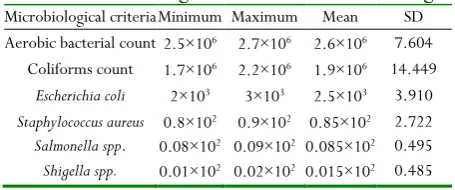
Table 2: Microbiological evaluation of beef sausage
Microbiological criteria Minimum Maximum Mean SD Aerobic bacterial count 2.5 ×10⁶ 2.7 ×10⁶ 2.6 ×10⁶ 7.604
Coliforms count 1.7 ×10⁶ 2.2 ×10⁶ 1.9 ×10⁶ 14.449
Escherichia coli 2×10³ 3×10³ 2.5 ×10³ 3.910
Staphylococcus aureus 0.8 ×10² 0.9 ×10² 0.85×10² 2.722
Salmonella spp. 0.08×10² 0.09×10² 0.085×10² 0.495
Shigella spp. 0.01×10² 0.02×10² 0.015×10² 0.485
Table 3: Statistical analysis of mean values of microbiological criteria of chicken and beef sausage
Microbiological criteria Mean T. test Chicken Sausage Beef Sausage Aerobic bacterial count 3.65×10⁵ 2.6 ×10⁶ 89.535
Coliforms count 5.35×10⁴ 1.9 ×10⁶ - 64.829
Escherichia coli 1.85×10³ 2.5 ×10³ - 12.323
Staphylococcus aureus 0.4 ×10² 0.85×10² - 27.785
Salmonella spp. 0.04×10² 0.085×10² - 23.073
Shigella spp. 0.005×10² 0.015×10² - 12.586
There were great differences according to T. tests and for each investigated microbiological criteria (P<0.01).
Discussion:
In case of malpractices in handling, cooking or post-cooking storage of products, contamination of them with pathogens remains a crucial public health issue, leading to illness. Food production and health care cost increase is partially caused by food borne illness in developed countries which might also cause mortality, particularly in developing regions, where the health status of many individuals is already compromised.
Aerobic bacterial count is used as an indicator of bacterial population and it is based on an assumption that each cell will form a visible colony when examined with agar containing the appropriate nutrients. It is generic test for microorganisms that grow aerobically at mesophilic temperature but do not differentiate types of bacteria [10]. Also, it gives an idea about the hygienic measures applied during processing and also helps in the determination of the keeping quality of the poultry carcasses. So, it is the most reliable method for detection of sanitary level of proper processing, storage and marketing of food products.
The presented data in Table (1) showed that aerobic bacterial count for chicken sausages ranged from 3.61×10⁵ to 3.70×10⁵ with a mean value of 3.65×10⁵
56 Journal of Advanced Pharmacy Education & Research | Jul-Sep 2018 | Vol 8 | Issue 4
2.5×10⁶ to 2.7×10⁶ with a mean value of2.6×106 cfu/g.
Moreover, it was clear that the mean value of aerobic bacterial count for both chicken and beef sausage exceeded the permissible limits (ABC must not exceed 105 cfu/g) meaning that samples were unfit for human
consumption and reflecting a serious state of contamination during the processing of these sausages and probably contaminated meat and raw material besides inefficient cooking.
Coliforms are referred as general indicator microorganisms to measure the potential presence of enteric pathogens in foods, besides the measuring of fecal contamination of food products and the sanitary condition in the foods processing environment [11]. The presence of
these organisms in food products depicts a deplorable state of poor hygiene and sanitary practices employed in the processing and packaging of this food product [12]. The presented data in Table (1) showed that coliforms count for chicken sausages ranged from 4.7×10⁴ to 6.0 ×10⁴ with a mean value of 5.35×10⁴ cfu/g while the
recorded results in Table (2) clarified that coliforms count for beef sausages ranged from1.7×106 to 2.2×10⁶ with a
mean value of1.9×106 cfu/g. Moreover, it was clear that
the mean value of coliforms count for both chicken and beef sausage exceeded the permissible limits (102 cfu/g)
meaning that samples were unfit for human consumption. Unfortunately, undercooked meat products have caused much food poisoning incidence associated with coliforms and investigations had established that the bacteria are present in the feces and intestine contents that it could be potentially contaminate meat during the slaughtering process [13].
E. coli is considered the parameter of choice to evaluate the effectiveness of sanitation practices and potential fecal contamination of meat [14]. The presented data in Table (1) showed that E. coli count for chicken sausages ranged from 1.5×10³ to 2.2×10³ with a mean value of1.85×103
cfu/g while the recorded results in Table (2) clarified that coliforms count for beef sausages ranged from2×103 to
3×10³ with a mean value of2.5×103 cfu/g. The presence
of E. coli in food may be due to handlers who contaminate food via manual contact or the respiratory tract by coughing and sneezing and also contamination may occur after heat treatment of the food [15].
In general, Staphylococci exist in air, dust, sewage and food or on food equipment, environmental surfaces, humans and animals. Humans are the primary reservoirs as they are present in the nasal passages and throats and on the hair and skin of 50 % or more of healthy individuals [16]
therefore, the high count of staphylococci in food
products indicates the presence of cross contamination, which is usually related to human skin, hand touch, discharge from human and clothing because of faulty handling activities, as they are typical contaminants from hands, clothes and utensils [17].
As shown in Table (1), Staphylococcus aureus count for chicken sausages ranged from 0.2×10² to 0.6 ×10² with a
mean value of0.4×102 cfu/g while the recorded results in
Table (2) clarified that aerobic bacterial count for beef sausages ranged from 0.8×10² to 0.9×10² with a mean
value of0.85×102 cfu/g. Presence of Staphylococcus aureus
in the examined samples made them non comply with the hygienic standards and unfit for consumption as the thermal process used during manufacture can limit staphylococcal contamination but cannot eliminate preformed toxins [18].
Several Staphylococci food poisoning outbreaks were attributed to the use of bare hands in preparation of food
[19]. There are many types of staphylococci, but most
infections are caused by Staphylococcus aureus which is the third most common cause of confirmed food poisoning in the world [20].
CDC estimates Salmonella causes about 1.2 million illnesses, 23,000 hospitalizations, and 450 deaths in the United States every year. Food is the source for about 1 million of these illnesses. Most persons infected with Salmonella develop diarrhea, fever, and abdominal cramps 12 to 72 hours after infection. The illness usually lasts 4 to 7 days, and most persons recover without treatment. However, in some persons, the diarrhea may be so severe that the patient needs to be hospitalized [21].
The presented data in Table (1) showed that Salmonella spp. count for chicken sausages ranged from 0.02×10² to
0.06 ×10² with a mean value of0.04×102 cfu/g while the
recorded results in Table (2) clarified that coliforms count for beef sausages ranged from0.08×102 to 0.09×10² with
a mean value of0.085×102 cfu/g.
The presence of Salmonella in sausages may reflect the unsatisfactory hygienic conditions and faults in personal hygiene during handling, packaging and marketing. Shigella is one of the leading bacterial causes of diarrhea worldwide, causing an estimated 80–165 million cases. The number of deaths it causes each year is estimated at between 74,000 and 600,000. It is in the top four pathogens that cause moderate-to-severe diarrhea in African and South Asian children[22].
The presented data in Table (1) showed that Shigella spp.
count for chicken sausages ranged from 0.0to 0.01×10²
Journal of Advanced Pharmacy Education & Research | Jul-Sep 2018 | Vol 8 | Issue 3 57
results in Table (2) clarified that coliforms count for beef sausages ranged from0.01×102 to 0.02×10² with a mean
value of0.015×102 cfu/g. The most common symptoms
of Shigella infection are diarrhea, fever, nausea, vomiting, stomach cramps, and flatulence. It is also commonly known to cause large and painful bowel movements. The stool may contain blood, mucus, or pus. Hence, Shigella cells may cause dysentery [23].
The results of statistical analysis found in Table (3) showed a significant difference between the mean values of the studied microbiological criteria for chicken and beef sausages where the examined samples of beef sausages scored higher mean values than that of chicken sausages clarifying that beef sausages were highly contaminated with different types of bacteria reflecting bad hygienic conditions during processing and alarming the bells of dangers about the health issues of people consuming such products.
Conclusion:
According to the recorded results in the current study, it was clear that both chicken and beef sausages retailed for sale in Al Ramadi were highly contaminated with different species of bacteria either from animal or human sources that would throw the light on manufacturing chain starting from animal farms passing by abattoirs then manufacture plants. Workers included in the manufacture process could be a significant source of contamination of sausages and they could be at the same time a significant barrier to prevent contamination if they received efficient training programs and the principles of Hazard Analysis and Critical Control Points (HACCP) and Good Manufacturing Practice (GMP).
References
1. Farag, M.A. (2004): Quality evaluation of poultry products in Assiut city. Ph. D Thesis (Meat Hygiene), Fac. Vet. Med. Assiut Univ.
2. Ishii, S. and Sadowsky, M. J. (2008): Escherichia coli in the environmental: Implications for water quality and human health. Microbes and Environments, 23, 101-108.
3. Nataro, J.P. and Kaper, J.B. (1998): Diarrheagenic Escherichia coli. Clinical Microbiology Reviews, 11, 142-201
4. Taylor, T.A. and Unakal, C.G. (2017): Staphylococcus aureus. In: StatPearls [Internet]. Treasure Island (FL): StatPearls Publishing. Available from:
https://www.ncbi.nlm.nih.gov/books/NBK44186 8/
5. Lawley, R., Curtis, L. and Davis, J. (2008): The Food Safety Hazard Guidebook. Food Safety Info, London, UK RSC Publishing ISBN: 978-0-85404-460-3 422 p.
6. Brands, D. A. (2006): Deadly Diseases and Epidemics Salmonella, 1st ed. Chelsea House Publishers.
7. Health Protection Agency (2009): Guidelines for Assessing the Microbiological Safety of Ready-to-Eat Foods. London.
8. International Organization for Standardization 4833 (ISO) (2003): Microbiology of food and animal feeding stuffs -- Horizontal method for the enumeration of microorganisms -- Colony-count technique at 30 degrees C.
9. SAS, (2014): Statistical user's Guide. Statistical analysis system. INT., Cary, NC. USA.
10. American Public Health Association (APHA), (2001): Compendiums of methods for microbiological examination of foods. 4th ed. 1st, NW Washington DC.365-366.
11. Food and Agriculture Organization (FAO), (1992): Food for the cities. http://www.fao. org/ fcit/ street.asp.
12. Jay, J. M. (2005): Modern Food Microbiology 4th Ed. Chapman and Hall, New York.p.187.
13. Duffy, G, Enda C., Nally, P., O’ Brien, S. and
Butler, F. (2006): A review of quantitative microbial risk assessment in the management of Escherichia coli O157:H7 on beef. J. Meat science, 74, 1. 14. United States Department of Agriculture, Food
Safety and Inspection Service (USDA-FSIS), (2012): Raw Ground Beef and Raw Ground Beef Components Analyzed for E. coli O157:H7 and
non-O157 STEC.
https://www.fsis.usda.gov/wps/portal/informatio nal/en
15. European Food Safety Authority (EFSA), (2014): Scientific Opinion on the public health risks related to the maintenance of the cold chain during storage and transport of meat. EFSA Journal, 12(3): 3601. 16. Food and Drug Administration (FDA), (2012):
Staphylococcus aureus. In Bacteriological analytical manual. 8th Ed., Chapter12. Gaithersburg, p.562. 17. Postgate, J. R. (2000): Microbes and Man. Oxford,
58 Journal of Advanced Pharmacy Education & Research | Jul-Sep 2018 | Vol 8 | Issue 4
aureus and staphylococcal Enterotoxin A. in breaded chicken products: Detection and behavior during the cooking process. Applied Environ. Microbiol., 72(11): 7057-7062.
19. Soliman, M. R. (1988): Sanitary status of ready to eat meat products and fishes. M. V. Sc., Thesis (Meat Hygiene), Fac. Vet. Med., Cairo Univ. 20. Acco, M.; Ferreira, F.S.; Henriques, J.A.P. and
Tondo, E. C. (2003): Identification of multiple strains of Staphylococcus aureus colonizing nasal mucosa of food handlers. Inter. J. Food Microbiol., 20: 489-493.
21. Center for Disease Control and Prevention (CDC)
(2018): Salmonella
https://www.cdc.gov/salmonella/index.html 22. Kotloff, Karen L; Nataro, James P; Blackwelder,
William C; et al. (2013): Burden and etiology of diarrheal disease in infants and young children in developing countries (the Global Enteric Multicenter Study, GEMS): a prospective, case-control study. The Lancet, 382 (9888): 209–222.