S T U D Y P R O T O C O L
Open Access
Effects of acetyl-DL-leucine on cerebellar
ataxia (ALCAT trial): study protocol for a
multicenter, multinational, randomized,
double-blind, placebo-controlled, crossover
phase III trial
Katharina Feil
1,2,11*, Christine Adrion
3, Julian Teufel
1,2, Sylvia Bösch
8, Jens Claassen
5, Ilaria Giordano
7,
Holger Hengel
6, Heike Jacobi
7, Thomas Klockgether
7, Thomas Klopstock
1,4,12, Wolfgang Nachbauer
8,
Ludger Schöls
6, Claudia Stendel
1,4, Ellen Uslar
5, Bart van de Warrenburg
9, Ingrid Berger
2, Ivonne Naumann
2,
Otmar Bayer
2, Hans-Helge Müller
10, Ulrich Mansmann
3and Michael Strupp
1,2Abstract
Background:Cerebellar ataxia (CA) is a frequent and often disabling condition that impairs motor functioning and impacts on quality of life (QoL). No medication has yet been proven effective for the symptomatic or even causative treatment of hereditary or non-hereditary, non-acquired CA. So far, the only treatment recommendation is physiotherapy. Therefore, new therapeutic options are needed. Based on three observational studies, the primary objective of the acetyl-DL-leucine on ataxia (ALCAT) trial is to examine the efficacy and tolerability of a symptomatic therapy with acetyl-DL-leucine compared to placebo on motor function measured by the Scale for the Assessment and Rating of Ataxia (SARA) in patients with CA.
Methods/Design:An investigator-initiated, multicenter, European, randomized, double-blind, placebo-controlled, 2-treatment 2-period crossover phase III trial will be carried out. In total, 108 adult patients who meet the clinical criteria of CA of different etiologies (hereditary or non-hereditary, non-acquired) presenting with a SARA total score of at least 3 points will be randomly assigned in a 1:1 ratio to one of two different treatment sequences, either acetyl-DL-leucine (up to 5 g per day) followed by placebo or vice versa. Each sequence consists of two 6-week treatment periods, separated by a 4-week wash-out period. A follow-up examination is scheduled 4 weeks after the end of treatment. The primary efficacy outcome is the absolute change in the SARA total score. Secondary objectives are to demonstrate that acetyl-DL-leucine is effective in improving (1) motor function measured by the Spinocerebellar Ataxia Functional Index (SCAFI) and SARA subscore items and (2) QoL (EuroQoL 5 dimensions and 5 level version, EQ-5D-5 L), depression (Beck Depression Inventory, BDI-II) and fatigue (Fatigue Severity Score, FSS). Furthermore, the incidence of adverse events will be investigated.
Discussion:The results of this trial will inform whether symptomatic treatment with the modified amino-acid acetyl-DL-leucine is a worthy candidate for a new drug therapy to relieve ataxia symptoms and to improve patient care. If superiority of the experimental drug to placebo can be established it will also be re-purposing of an agent that has been previously used for the symptomatic treatment of dizziness.
(Continued on next page)
* Correspondence:[email protected] 1
Department of Neurology with Friedrich-Baur-Institute, University Hospital, Munich, Germany
2German Center for Vertigo and Balance Disorders (DSGZ), University
Hospital, Munich, Germany
Full list of author information is available at the end of the article
(Continued from previous page)
Trial registration:The trial was prospectively registered at www.clinicaltrialsregister.eu (EudraCT no. 2015–000460–34) and at https://www.germanctr.de (DRKS-ID: DRKS00009733).
Keywords:Cerebellar ataxia, Amino acids, Acetyl-DL-leucine, Symptomatic therapy, Randomized controlled trial, Crossover design, Ataxia rating scales, Patient questionnaires, Quality of life
JEL classification:30.040 Ataxia, 20.060 Clinical trial, 10.070 Movement disorders, 30.260 Neurodegeneration, 20.140 Qualitative research
Background
Cerebellar ataxia (CA) is a frequent and often disabling syndrome which can severely impair motor functioning and quality of life (QoL) [1]. CAs are most often caused by neurodegenerative disorders of the cerebellum which are either hereditary or non-hereditary (spor-adic); all in all, about 50% of the cases are sporadic. Studies suggest that the overall prevalence of CA in Europe is similar to that in Japan and may approach 20:100,000, i.e., 15,000 patients in Germany (www.atax-ie.de) [2]. Due to the various etiologies and different courses of the diseases, there are no robust epidemio-logical data on CA-related mortality.
The leading clinical symptoms of CA are disturbances of stance or gait (>85%) with recurrent falls, limb ataxia with severe functional impairment of arm and hand movements, dysarthrophonia with impaired oral com-munication abilities, and ocular motor disturbances with impaired vision [1]. Further, most types of CA are pro-gressive and therefore become more disabling in the course of the disease, severely impairing QoL and func-tioning [1]. In addition to functional impairment, CA also affects cognitive and psychosocial abilities and limits the ability to perform tasks of daily life. It is thus a severely disabling condition, progressively restricting autonomy and social participation. The care that is required is frequently provided by the family, thus fur-ther increasing the socioeconomic burden of disease [3]. Major cost components relevant for patients with CA are informal care, early retirement because of permanent disability, drugs, orthopedic devices, and rehabilitation. As the disease progresses, quality of life decreases and utilization of health resources increases [4].
No medication has yet been proven effective for the symptomatic or even causative treatment of degenerative CA [5]. Beneficial effects of Varenicline and Riluzole have been reported [6–8]. However, according to a consensus paper on management of degenerative CA, these findings need to be further confirmed in further placebo-controlled trials, in particular long-term and disease-specific studies [8, 9]. To date, the only treatment recommendation for CA is physiotherapy [10] and new therapeutic options are needed.
Acetyl-DL-leucine
projections on upstream and downstream structures, thus influencing movement control.
Trial rationale
In a first case series on 13 patients with different types of hereditary and non-hereditary non-acquired CA, we re-ported positive effects of acetyl-DL-leucine (5 g per day for one week) on the motor function measured by the Scale for the Assessment and Rating of Ataxia (SARA) and the Spi-nocerebellar Ataxia Functional Index (SCAFI) [17]. The agent was well tolerated [17]. Mean total SARA decreased from 16.1 ± 7.1 (mean ± SD) at baseline to 12.8 ± 6.8 after one week on medication (p =0.002), and patients showed better performance in the SCAFI consisting of the 8-m-walking-time (8 MW), 9-Hole-Peg-Test of the dominant hand (9HPTD) and the PATA rate task (timed speech task where the patient is asked to repeat“PATA”as quickly and distinctly as possible for 10 s two times). Preliminary FDG-PET-data in a case series of 18 patients suffering from de-generative CA with different etiologies showed central compensation processes in the group of responders mainly in the medulla (vestibular nuclei), midbrain (vestibular inte-gration centers), thalami, basal ganglia and insular regions rather than neurons in the cerebellum, the primary site of dysfunction in CA syndromes [18]. In gait analysis, acetyl-DL-leucine improved the coefficient of variation of stride time in 14 out of 18 cerebellar patients. Acetyl-DL-leucine showed a reduction of gait variability during slow walking [19], whereas aminopyridines have been shown to improve gait variability mainly during fast walking [20, 21]. Subject-ive ambulatory gait scores and the SARA score also im-proved under treatment [19]. Further, in a case series on 12 patients with Niemann-Pick type C, a lysosomal storage disorder, there was also a significant improvement of symp-toms of ataxia [22]. On the other side, the use of the liquid formula of acetyl-DL-leucine 5 g once daily for 7 days in 10 patients with degenerative CA failed to confirm a treatment benefit of the drug in combination with a short-term phy-sio— and occupational therapy, although 7 out of 10 pa-tients reported subjective improvement [23]. However, all these case studies provide limited evidence and have con-siderable methodological limitations. Efficacy outcomes were assessed unblinded, rendering objective evaluation of treatment response difficult. Large-scale double-blind ran-domized controlled trials are highly warranted. Based on these results, we designed the prospective ALCAT trial (Ef-fects ofAcetyl-DL-Leucine onCerebellarATaxia) to inves-tigate the efficacy and safety of acetyl-DL-leucine with the aim of demonstrating superiority over placebo.
Methods/Design
Trial design and setting
The ALCAT trial is an investigator-initiated, multicenter, randomized, double-blind, placebo-controlled, 2-treatment
2-period crossover phase III trial. The study was initiated at the Department of Neurology and the German Center for Vertigo and Balance Disorders (University of Munich) and the Friedrich-Baur-Institute, and has been subsequently ex-tended to other study sites located in Germany (University of Tuebingen, University of Essen, and DZNE Bonn), Austria (Innsbruck) and will be expanded to the Netherlands (Nijmegen). The study has been approved by the responsible ethics committees in Germany (project number 248–15 fed) as well as the ethics committee in Austria (project number AN2015–0252 355/2.1) and has been submitted to the ethics com-mittee in the Netherlands. Furthermore, the study has been approved by the legal medical regulatory author-ities (Federal Institute for Drugs and Medical Devices, in German: Bundesinstitut für Arzneimittelsicherheit und Medizinprodukte - BfArM in Germany, Austrian Agency for Health and Food Safety Ltd. AGES, in German: Österreichische Agentur für Gesundheit und Ernährungs-sicherheit GmbH in Austria, Central Committee on Re-search Involving Human Subjects, in Dutch: Centrale
Commissie Mensgebonden Onderzoek – CCMO in the
Netherlands). The first patient was randomized on January 25, 2016. The ALCAT trial is conducted in accordance with the International Conference for Harmonisation (of Technical Requirements for Pharmaceuticals for Human Use) - Good Clinical Practice Guideline (ICH-GCP) and the Declaration of Helsinki. The trial has been prospect-ively registered at www.clinicaltrialsregister.eu (EudraCT no. 2015–000460–34) and https://www.germanctr.de (DR KS-ID: DRKS00009733) on January 15, 2016. Patient insur-ance for the study has been arranged (policy number for Germany 39 130537 03026, for Austria 07208763–1, for Netherlands 081 50474–14005).
Patient population and eligibility criteria
Recruitment and patient involvement
Patients will be recruited via personal correspondence and by routine care appointments at specialized tertiary referral centres (Neurological departments of University hospitals). In Germany, we also cooperate with the Deutsche Heredo-Ataxie Gesellschaft e.V. (DHAG), a self-help group of ataxia patients. All eligible CA patients who agree to participate in the study will be provided with a full verbal explanation of the trial and the Patient Information Sheet. This will include detailed information about the rationale, design and personal implications of the study. After information is provided to patients, they will have sufficient time to consider participation before they are asked whether they would be willing to take part in the trial. It is imperative that written consent be obtained before any trial-specific pro-cedures commence.
Randomization, concealment, and blinding
Participants fulfilling the entry criteria at screening will be randomly assigned in a ratio of 1:1 to receive one of the two treatment sequences (active treatment followed by placebo, or vice versa). The randomization technique
is based on permutated balanced blocks with random block length. The procedure considers stratification by study site and by genetic vs. sporadic CA to ensure bal-anced strata, maintaining allocation concealment. The allocation sequence will be generated by an independent person from the Institute of Medical Informatics, Biometry and Epidemiology (IBE) of the University of Munich who is not involved in assessing study outcomes. Neither the investigators nor other trial staff (data analysts, statisti-cians) or the patients will be informed about the treatment sequences to which a patient is allocated, and neither has access to the randomization list. Thus, random-isation will be conducted without any influence of the investigators or trial staff. The IBE will provide an internet-based, password-protected randomization tool (“Randoulette”: https://wwwapp.ibe.med.uni-muenchen.de/ randoulette), which chooses the treatment sequence for a new patient who fulfills the eligibility criteria and has signed the informed consent. Randoulette will register the patient by his or her screening number, gender, year of birth and strata before the allocated package number is provided. The current trial is subject— and investigator-blinded. Patients, clinicians, core laboratories, and trial staff
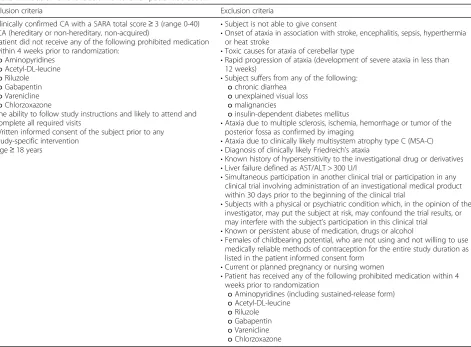
Table 1Inclusion and exclusion criteria for patient selection
Inclusion criteria Exclusion criteria
•Clinically confirmed CA with a SARA total score≥3 (range 0-40) (CA (hereditary or non-hereditary, non-acquired)
•Patient did not receive any of the following prohibited medication within 4 weeks prior to randomization:
oAminopyridines
oAcetyl-DL-leucine
oRiluzole
oGabapentin
oVarenicline
oChlorzoxazone
•The ability to follow study instructions and likely to attend and complete all required visits
•Written informed consent of the subject prior to any study-specific intervention
•Age≥18 years
•Subject is not able to give consent
•Onset of ataxia in association with stroke, encephalitis, sepsis, hyperthermia or heat stroke
•Toxic causes for ataxia of cerebellar type
•Rapid progression of ataxia (development of severe ataxia in less than 12 weeks)
•Subject suffers from any of the following:
ochronic diarrhea
ounexplained visual loss
omalignancies
oinsulin-dependent diabetes mellitus
•Ataxia due to multiple sclerosis, ischemia, hemorrhage or tumor of the posterior fossa as confirmed by imaging
•Ataxia due to clinically likely multisystem atrophy type C (MSA-C)
•Diagnosis of clinically likely Friedreich’s ataxia
•Known history of hypersensitivity to the investigational drug or derivatives
•Liver failure defined as AST/ALT > 300 U/l
•Simultaneous participation in another clinical trial or participation in any clinical trial involving administration of an investigational medical product within 30 days prior to the beginning of the clinical trial
•Subjects with a physical or psychiatric condition which, in the opinion of the investigator, may put the subject at risk, may confound the trial results, or may interfere with the subject’s participation in this clinical trial
•Known or persistent abuse of medication, drugs or alcohol
•Females of childbearing potential, who are not using and not willing to use medically reliable methods of contraception for the entire study duration as listed in the patient informed consent form
•Current or planned pregnancy or nursing women
•Patient has received any of the following prohibited medication within 4 weeks prior to randomization
oAminopyridines (including sustained-release form)
oAcetyl-DL-leucine
oRiluzole
oGabapentin
oVarenicline
(including data analysts and statisticians) will be unaware of the treatment that the participant will take during both double blind treatment periods.
Un-blinding will occur in the event of a clinical emer-gency in which the knowledge of the medication being taken is essential for the participant’s clinical manage-ment. The investigator is supplied with an opaque sealed envelope for each participant that contains the corre-sponding treatment sequence for unblinding. Alterna-tively, the randomization code can be broken using Randoulette.
Trial procedures and interventions
Each treatment sequence consists of a first treatment period of 6 weeks (42 days), followed by a 4-week (28 days) wash-out period, and a second treatment period of 6 weeks (42 days). Finally, a post-treatment follow-up is scheduled 4 weeks (28 days) after the end of the second treatment period (see fig. 1). The 4-week wash-out period between consecutive treatments is as-sumed to be long enough to allow the effects of a treat-ment to wear off and prevent carry over from one treatment period to the next.
Patients will be screened and assessed for eligibility at visit 1. If within 4 weeks prior to visit 1 a patient has re-ceived any of the prohibited medications defined in the eligibility criteria, irrespective of the preceding treatment duration, a wash-out period of 4 weeks (screening period), prior to enrolment is required. Patients eligible for entry in the study will be randomized and assigned to one of the two sequence groups at visit 2. Visits 1 and 2 coincide if patients are not on prohibited medication
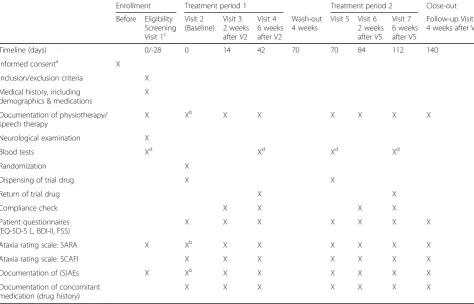
4 weeks prior to recruitment. At baseline, data on demo-graphic and clinical characteristics including neuro-logical assessment, ataxia rating scales, information about preceding physio–and speech therapy as well as patient questionnaires will be obtained. Figure 1 displays the crossover intervention scheme. Table 2 lists the schedule of enrolment and assessments together with pre-planned time points for clinic visits. Including the eligibility screening visit 1 and the post-treatment follow-up visit 8, a total of eight study visits (three in each treatment period) are scheduled.
Investigative drug and placebo
In the experimental treatment period, patients will re-ceive tablets of acetyl-DL-leucine 500 mg (Tanganil®, manufactured by Pierre Fabre, Castres, France) (other ingredients: wheat starch, pregelatinized corn starch, calcium carbonate, and magnesium stearate as filling material). Tablets containing the active ingredient will be refilled from original packaging into blisters under sterile conditions and relabeled by the pharmacy of the univer-sity hospital of Heidelberg. An identically appearing tab-let filled with wheat starch, pregelatinized corn starch, calcium carbonate, and magnesium stearate but not containing any active ingredient will be administered as placebo. Study medication blisters will be packed in boxes and study kits will be delivered to the par-ticipating centers.
Study medication will be delivered to the patient at the beginning of a 6-week treatment period (visits 2 and 5, respectively). Patients are instructed to apply a 2-week up-titration scheme and will be provided with written
Fig. 1ALCAT trial: crossover intervention scheme. Screening (visit 1) and visit 2 can take place on the same date, if patients are not on prohibited
information. The up-titration scheme is as follows: in the first week an initial dosage of 1.5 g per day (500 mg t.i.d.), followed by 3 g per day (500 mg 2 tablets t.i.d.) in the second week. After that (and another study visit), the full dosage of 5 g per day (500 mg 3–3–4) will be administered for another 4 weeks. If adverse events (AEs) are noted, patients are permitted to down-titrate to a minimum dosage of 1.5 g per day (in the maintain-ing phase from week 3 to 6) within the current treat-ment period, which is then considered to be their maximal dose. The patients are instructed that the study medication has to be taken at least 30 min before and at least 2 h after a meal. Treatment adherence will be assessed by counting tablets at the end of the treatment period, and by recording the number of skipped intakes.
Study objectives and outcomes
The primary objective of the ALCAT trial is to demon-strate that acetyl-DL-leucine is effective at improving motor function measured by the SARA total score. The primary efficacy endpoint is the absolute change in the
SARA total score from period-level baseline to the end of the 6-week treatment period, i.e. the difference between post-treatment values at the end of each treatment period and the corresponding period-level baseline values:
Delta SARAtotalð Þ ¼ SARAtotal postð ‐treatmentÞ –SARAtotal period baselineð Þ
We presume a minimum clinically relevant difference in the SARA total score of 1.5 points. The secondary ob-jectives are to determine whether Acetyl-DL-Leucine is effective at:
a) improving motor function measured by the Spinocerebellar Ataxia Functional Index (SCAFI) and SARA subscore items
b) improving QoL, as well as the common comorbidities depression and fatigue.
The secondary efficacy outcome measures will be ab-solute changes in the subscores of SARA as well as the
Table 2Schedule of enrolment, interventions, and assessments
Enrollment Treatment period 1 Treatment period 2 Close-out Before Eligibility
Screening Visit 1c
Visit 2 (Baseline)
Visit 3 2 weeks after V2
Visit 4 6 weeks after V2
Wash-out 4 weeks
Visit 5 Visit 6 2 weeks after V5
Visit 7 6 weeks after V5
Follow-up Visit 8 4 weeks after V7
Timeline (days) 0/-28 0 14 42 70 70 84 112 140
Informed consenta X
Inclusion/exclusion criteria X Medical history, including
demographics & medications
X
Documentation of physiotherapy/ speech therapy
X Xb X X X X X X
Neurological examination X
Blood tests Xd Xd Xd Xd
Randomization X
Dispensing of trial drug X X
Return of trial drug X X
Compliance check X X X X
Patient questionnaires (EQ-5D-5 L, BDI-II, FSS)
X X X X X X X
Ataxia rating scale: SARA X Xb X X X X X X
Ataxia rating scale: SCAFI X X X X X X X
Documentation of (S)AEs X Xb X X X X X X
Documentation of concomitant medication (drug history)
X X X X X X X
A delay of -3 and +5 days is acceptable for visits 2 and 5, for all other visits a delay of ± 5 days is acceptable
a
prior to first study-specific intervention and allocation
b
If visit 1 and visit 2 take place at the same time, the ataxia rating scale (SARA), documentation of physiotherapy/speech therapy and documentation of (S)AE are assessed only once
c
If patients are on medication due to cerebellar symptoms at visit 1, a 4-week wash-out (screening period) prior to randomization at visit 2 is required (adherence will again be checked before randomization at V2). Otherwise, visit 1 and visit 2 coincide
d
SCAFI total score and subscores of SCAFI (8 MW testing gait, 9HPT testing limb ataxia and the PATA rate task for speech). Furthermore, patient-reported out-comes using the EuroQoL 5 dimensions and 5 level version (EQ-5D-5 L), Beck’s Depression Inventory (BDI-II) as well as the Fatigue Severity Scale (FSS) will be recorded.
For all these scores, the treatment effect will be assessed at the end of each treatment period and at the post-treatment follow-up visit.
During the whole study period any AE (any untoward medical occurrence, including an abnormal laboratory finding, regardless of its causal relation to the study treatment) will be recorded.
Ataxia rating scales
The clinical severity of ataxia will be assessed by two dif-ferent clinical ataxia rating scales — namely SARA [24] and SCAFI [25, 26]. The scores will be assessed by the investigators. Both scales assess ataxia and dysarthria, and are widely used in clinical practice [26] and clinical trials covering the whole range of impaired motor func-tion in ataxic patients. The scales are measured at each clinic visit.
The SARA total score serves as a key inclusion criter-ion measuring the severity of ataxia prior to enrollment. The SARA total score has eight categories reflecting neurologic manifestations of CA. Each category repre-sents a crucialmovement feature in CA rated by an examiner (gait, stance, sitting, speech disturbance, finger chase, nose-finger test, fast alternating hand movements, heel-shin slide) resulting in a score ranging from 0 (no ataxia) to 40 points (most severe ataxia). It is a reliable and valid clinical scale with a high internal consistency that measures the severity of ataxia and increases with disease stage [25, 27, 28].
The SCAFI includes the 8 MW testing gait, the 9HPT testing limb ataxia and the PATA rate task for speech and therefore represents vital movement features. In contrast to the SARA, the SCAFI uses a timed approach rated by an examiner. After the assessment, raw scores are transformed into reciprocals and converted into sub-test Z-scores. The resulting SCAFI is defined as the arithmetic mean of all three Z-scores.
Patient questionnaires for quality of life, depression and fatigue
A self-administered questionnaire to evaluate QoL, namely the EQ-5D-5 L [29] (multiple choice question-naire and a visual analogue scale) will be used. The EQ-5D-5 L is a standardized measure of health status that provides a simple, generic measure of health for clinical and economic appraisal and consists of 2 parts — the EQ-5D descriptive system and the EQ visual analogue
scale (EQ-VAS). The EQ-5D-5 L descriptive system comprises the following 5 dimensions: mobility, self-care, usual activities, pain/discomfort and anxiety/de-pression. Each dimension has 5 levels: no problems, slight problems, moderate problems, severe problems, and extreme problems.
As depression and fatigue are known common comor-bidities in patients with CA, trial participants are instructed to complete the BDI-II [30–32] and FSS [32] questionnaires at each clinic visit. The BDI-II is a multiple choice self-report inventory for measuring the severity of depression and is composed of items related to symptoms of depression such as hopelessness and ir-ritability, emotions such as guilt or feelings of being punished, as well as physical symptoms such as fatigue, weight loss and lack of interest in sex. The FSS captures the patient’s experience of mental or psychological fatigue and how it interferes with performing certain activities (exercise, work and family life). It is a self-reporting scale of 9 items. The mean of all answered items represents the fatigue severity.
Laboratory examinations
A routine blood sample will be taken to exclude liver or kidney failure, and a pregnancy test for women of child-bearing potential will be performed. A pregnancy test is not required for postmenopausal (amenorrhea >12 months), surgically sterilized or hysterectomized women. The follow-ing laboratory parameters will be assessed (but not rou-tinely documented in the CRF): sodium, potassium, creatinine, serum bilirubin level, AST, ALT, urea, ALP, TSH, hemoglobin, erythrocytes, hematocrit, thrombocytes, leukocytes, pregnancy test for women of childbearing po-tential. In a case of an AE, laboratory parameters will be documented. The total amount of blood taken per subject during the entire trial will be approximately 20 ml. Labora-tory examinations are carried out at visit 1, visit 4, visit 5 and visit 7.
Concomitant drug and non-drug therapies
Trial participants should not begin physiotherapy or speech therapy while they are enrolled in the trial. If they are already under therapy, the amount of sessions of physiotherapy and speech therapy (measured in hours of therapy per week) will be documented in the patient’s medical record and in the case report form (CRF) during the trial and for 6 months prior to randomization. To adhere to the protocol, the non-pharmacological con-comitant therapy should be continued with the same in-tensity while the patient is enrolled in the trial.
Participation discontinuation and follow-up of participants‘off protocol’
If a participant withdraws from the study, the reason will be documented.‘Off protocol’ is defined as those study participants who cease trial medications on clinical grounds. Regardless of the decision to continue with study medication, these participants will be asked to par-ticipate in all scheduled follow-up appointments, as if they were maintaining full participation, in order to pre-vent further missing data. Those who are unwilling or unable to do this will be asked to agree to a phone or mail follow-up, and/or permission for study staff to con-tinue ascertainment of outcomes.
Statistical planning and analyses
Power considerations and sample size calculation
The sample size was calculated on the basis of the pri-mary hypothesis, using our own preliminary case series data (13 patients [17]) and a similar placebo-controlled trial (20 patients [7]) investigating the efficacy of vareni-cline on the change in SARA total score in patients with SCA 3. Hence, assuming a minimum clinically relevant difference in the SARA total score of 1.5 points [25] to be detected (i.e. the absolute change on acetyl-DL-leucine is 1.5 score points better than the change on pla-cebo) and a standard deviation of the individual SARA change of 4.2, a sample size of 86 (85 is calculated but 2 sequences are needed) in total is will have 90% power to detect a difference in means of 1.5, using a pairedt-test with a 0.05 two-sided significance level [Software used: nQuery Advisor 7.0]. On the basis of our experience with patient compliance in previous studies, we expect a dropout rate of about 20%. Thus, a total of 108 patients have to be enrolled. With a proportion of about 50–55% recruited patients out of the number to be screened, about 200 patients have to be assessed for eligibility. There is no interim analysis planned for this study.
Statistical analyses for primary and secondary endpoints Efficacy analyses are based on the intention to treat (ITT) principle in that all participants randomized will be analyzed according to the treatment sequences to which they were allocated and irrespective of the extent of intervention received. In this study, the term‘full ana-lysis set’is used to describe the analysis set, which is as complete as possible and as close as possible to the ITT ideal of including all randomised participants (i.e, the ITT population). All statistical tests are two-sided, and the significance level alpha is set to 5%.
For the primary efficacy outcome change in SARA total score (DeltaSARA), the null hypothesis will be tested that there is no difference in mean change be-tween placebo and acetyl-DL-leucine.
Absolute change, calculated as the difference between the period-level baseline score and the score measured at the 2-week and 6-week visits of the acetyl-DL-leucine/placebo period, will be considered for a model-based primary efficacy analysis. If not revised in the statistical analysis plan (SAP), a linear mixed effects model for DeltaSARA will be performed (fixed effects: factor for treatment, visit, treatment-by-visit interaction, and mean of both period-level baseline SARA total scores as covariate; normally distributed patient-specific random intercepts and slopes) in order to deal with re-peated measurements within periods and measurements not made at equivalent times in each subject due to un-scheduled or missed clinic visits. This subject-specific modelling approach allows individual change scores over time to be calculated. To analyse the differences between both interventions at the end of the 6-week treatment period, 95% confidence intervals will be provided to quantitatively describe treatment effects.
Sensitivity analyses will be performed on a per protocol approach which takes into account treatment adherence and compliance with the trial protocol. Additional efficacy analyses adjusting for genetic vs. sporadic CA, gender, age, or trial site, will be performed. In addition, the robustness of the overall efficacy result will be investigated by ana-lyses adjusting for the amount of physiotherapy the pa-tient received when he or she was enrolled in the trial (which should be comparable to the amount received be-fore randomization), as considered appropriate during the blinded data review and depending on the data quality. Since this analysis will also be based on variables mea-sured after randomization, the susceptibility for bias will be given consideration and will be discussed.
In case of a statistically significant primary efficacy result, confirmatory testing will be extended to the EQ-5D-5 L (VAS and descriptive scale). SCAFI (total score and 3 sub-scores), SARA subscale items, as well as patient-reported outcomes BDI-II and FSS are not considered in the hier-archical multiple testing procedures. Descriptive compari-sons between treatment groups at the end of the 6-week acetyl-DL-leucine/placebo period will be performed using a two-sided Wilcoxon signed rank test, and additionally, Hodges-Lehmann estimation of the location shift between the two groups will be provided, as considered appropriate based on the blinded data. The same non-parametrical tests will be employed to estimate treatment differences at the follow-up visit 8 (close-out visit). Further methodo-logical details will be provided in the SAP.
Safety assessment
All adverse events will be listed by trial site and patient and displayed in summary tables. The incidence of adverse events and their relationship to the study drug will be ana-lyzed descriptively, guided by the Medical Dictionary for Regulatory Activities (MedDRA) classification.
Data collection
Results from the trial assessments will be recorded in an electronic CRF (e-CRF) via a validated open-source elec-tronic data capture (EDC) system based on the OpenCli-nica® Community Edition. At each clinical site, study personnel will enter data directly into the EDC system. Data will be transferred on a regular basis to the official study database stored in SAS (Version 9.2 for Linux, SAS Institute, Cary, NC) for quality checks and query manage-ment. Statistical analyses will be performed using SAS, as well as the software package R version 3.3.0 or higher [33].
Data safety and monitoring board (DSMB)
An independent DSMB has been established. The func-tion of the DSMB is to monitor the course of the study and if necessary to give a recommendation to the coord-inating investigator and sponsor of the trial for discon-tinuation, modification or continuation of the study. Furthermore, the DSMB will periodically review the safety data of Development Safety Update Reports.
Discussion
Because there is no approved causal or symptomatic drug therapy yet, there is an urgent need for effective and well-tolerated drug treatment. Based on different case series in hereditary or non-hereditary non-acquired CA of different etiologies [17, 19, 22] and its good safety profile (since 1957 on the market in France for symp-tomatic dizziness and vertigo treatment) the modified amino-acid acetyl-DL-leucine is a good candidate.
In this multicenter, multinational, randomized, double-blind, placebo-controlled, phase III trial, short-term treat-ment efficacy and safety are evaluated with a 2-treattreat-ment 2-period crossover design comprised of 6-week treatment periods. The primary inclusion criterion SARA total score of at least 3 points ensures that patients are at least mod-erately affected by the disease and allows CA patients with a wide spectrum of clinical severity to be included. Except for the blood tests, all examinations and assessments applied are non-invasive and also performed in clinical routine. If superiority of acetyl-DL-leucine compared to placebo intervention can be established, this medication could offer a complete new therapeutic approach for the target population. Due to the high prevalence and the participation of many centers in three European countries, recruitment to reach the target sample size of 108 partici-pants seems achievable within the planned time frame of 32 months. Due to the pragmatic nature of the trial
design, the primary question of interest relates to inter-vention effectiveness, i.e. whether the interinter-vention works under real-life conditions. In particular, trial participants are allowed to maintain physio- or speech therapy during the trial provided that they have already started this ther-apy before recruitment.
Of course, this trial has some limitations: first, so far we do not know what the optimal dosage is. The dose of 5 g per day used in this trial is based on case series. Sec-ond, we do not know what the optimal dosage interval is. Third, since the plasma levels are not measured, we cannot correlate them with the clinical effect and we cannot exclude patients taking acetyl-DL-leucine in addition to the study medication. Fourth, as we include multiple types of CA (hereditary or hereditary non-acquired) we will not know if the agent is more effective with one CA than with another due to small numbers of the different CA types. Last, but not least, the observa-tional period is quite short, so we cannot evaluate the effect of the drug on the long-term progression of the disease compared to placebo intervention. This, how-ever, could easily be done as soon as its efficacy and safety in symptomatic treatment is demonstrated.
Trial status
At the time of manuscript submission, the study design had been evaluated by independent international reviewers and has been approved by the responsible ethics commit-tee of the University of Munich and the ethics commitcommit-tee in Austria as well as the authorities in Germany (BfArM) and Austria (AGES). The study is being prepared for sub-mission in the Netherlands. The first study participant was randomized on January 25, 2016 with the opening of the trial site of the coordinating investigator. As of October, 1st, we have included a total of 92 patients.
Abbreviations
(S)AE(s):(serious) adverse event(s); (S)CA: (spino-) cerebellar ataxia; 8 MW: 8-m-walking-time; 9HPTD: 9-Hole-Peg-Test of the dominant hand;
AGES: Österreichische Agentur für Gesundheit und Ernährungssicherheit GmbH in Austria (Austrian agency for health and food safety Ltd.); BDI-II: Beck’s depression inventory; BfArM: Bundesinstitut für
Arzneimittelsicherheit und Medizinprodukte (Federal institute for drugs and medical devices); CCMO: Centrale Commissie Mensgebonden Onderzoek (Central committee on research involving human subjects); CRF: Case report form; DHAG: Deutsche Heredo-Ataxie Gesellschaft e.V.; DSMB: Data safety and monitoring board; e-CRF: Electronic CRF; EDC: Electronic data capture; EQ-5D-5L: EuroQol 5 dimensions and 5 level version; EQ-VAS: EuroQol Visual analogue scale; FSS: Fatigue severity scale; ICH-GCP: International conference for harmonisation (of technical requirements for pharmaceuticals for human use) - good clinical practice guideline; ITT: Intention to treat;
MedDRA: Medical dictionary for regulatory activities; MSA-C: Multisystem atrophy type C; QoL: Quality of Life; SAP: Statistical analysis plan; SARA: Scale for the assessment and rating of ataxia; SCAFI: Spinocerebellar ataxia functional index; SD: Standard deviation; SDP: Sponsor’s delegated person
Acknowledgment
Funding
This investigator-initiated trial is funded by the German Federal Ministry of Education and Research (BMBF, No. 01KG1422). The funder had no influence on the design of protocol, and will not have any impact on patient recruitment, data generation, statistical analyses or writing of the final manuscript.
Availability of data and materials
Data sharing is not applicable to this article as no datasets were generated or analysed during the current study (study protocol).
Authors’contributions
MS, KF and JT initiated the initial case series pre-study, leading to the study concept and design of the ALCAT trial. MS is the sponsor delegated person (SDP) and coordinating investigator. MS and KF are responsible for the implementation of the study.
MS, KF, OB, JT, CA and HHM made substantial contributions to the conception and the trial design, and wrote the study protocol or preceding research proposals for funding.
SB, JC, IG, HH, HJ, TK, TK, WN, LS, CS, EU, BW made contributions to the study protocol or research proposals and revised the final manuscript for medical content.
KF and CA drafted the manuscript. HHM and CA developed the statistical concept and performed the sample size calculation. UM has the main responsibility for statistical analyses and supervised parts of the protocol development. IB and IN contributed decisively to approval to ethics and regulatory authorities and made substantial contribution to the study protocol. All authors read and approved the final manuscript.
Competing interests
Michael Strupp, is Joint Chief Editor of the Journal of Neurology, Editor in Chief of Frontiers of Neuro-otology and Section Editor of F1000. He has received speaker’s honoraria from Abbott, Actelion, Biogen, Eisai, GSK, Hennig Pharma, Pierre Fabre, MSD Sharp & Dohme, TEVA, and UCB and works as a consultant for Abbott, Heel, IntraBio, Sensorion and Synthon.
Bart van de Warrenburg reports research funding from the Radboud University Medical Center and ZonMW.
The other co-authors declare no competing interests.
All authors provided feedback on drafts of this paper and read and approved the final manuscript.
Consent for publication
Not applicable.
Ethics approval and consent to participate
The study has been approved by the responsible ethics committees in Germany (project number 248-15 fed) as well as the ethics committee in Austria (project number AN2015–0252 355/2.1) and has been submitted to the ethics committee in the Netherlands. Furthermore, the study has been approved by the authorities (BfArM in Germany, AGES in Austria, submitted to CCMO in Netherlands).
Author details
1Department of Neurology with Friedrich-Baur-Institute, University Hospital,
Munich, Germany.2German Center for Vertigo and Balance Disorders (DSGZ),
University Hospital, Munich, Germany.3Institute for Medical Informatics, Biometry and Epidemiology (IBE), University Hospital, Munich, Germany.
4German Center for Neurodegenerative Diseases (DZNE), Munich 80336,
Germany.5Department of Neurology, University Hospital Essen, University of
Duisburg-Essen, Essen, Germany.6Department of Neurology and Hertie Institute for Clinical Brain Research, University Hospital Tübingen, Tübingen, Germany.7German Center for Neurodegenerative Diseases (DZNE), Center
for Clinical Research, Bonn, Germany.8Department of Neurology, Medical
University Innsbruck, Innsbruck, Austria.9Department of Neurology, Donders Institute for Brain, Cognition, and Behaviour, Radboud University Medical Centre, Nijmegen, Netherlands.10Institute for Medical Biometry and
Epidemiology, Philipps University Marburg, Marburg, Germany.11Department
of Neurology and German Center for Vertigo and Balance Disorders, University Hospital, Campus Grosshadern, Marchioninistrasse 15, Munich 81377, Germany.12Munich Cluster for Systems Neurology (SyNergy), Munich
80336, Germany.
Received: 17 May 2016 Accepted: 14 December 2016
References
1. Jacobi H, et al. The natural history of spinocerebellar ataxia type 1, 2, 3, and 6: a 2-year follow-up study. Neurology. 2011;77(11):1035–41.
2. Klockgether T. Sporadic adult-onset ataxia of unknown etiology. Handb Clin Neurol. 2012;103:253–62.
3. Perlman SL. Symptomatic and disease-modifying therapy for the progressive ataxias. Neurologist. 2004;10(5):275–89.
4. Lopez-Bastida J, et al. Social economic costs and health-related quality of life in patients with degenerative cerebellar ataxia in Spain. Mov Disord. 2008;23(2):212–7.
5. Ilg W, Bastian AJ, Boesch S, Burciu RG, Celnik P, Claaßen J, Feil K, Kalla R, Miyai I, Nachbauer W, Schöls L, Strupp M, Synofzik M, Teufel J, Timmann D. Consensus paper: management of degenerative cerebellar disorders. Cerebellum. 2014;13(2):248-68. doi:10.1007/s12311-013-0531-6. 6. Ristori G, et al. Riluzole in cerebellar ataxia: a randomized, double-blind,
placebo-controlled pilot trial. Neurology. 2010;74(10):839–45. 7. Zesiewicz TA, et al. A randomized trial of varenicline (Chantix) for the
treatment of spinocerebellar ataxia type 3. Neurology. 2012;78(8):545–50. 8. Romano S, et al. Riluzole in patients with hereditary cerebellar ataxia: a
randomised, double-blind, placebo-controlled trial. Lancet Neurol. 2015; 14(10):985–91.
9. Ilg W, et al. Consensus paper: management of degenerative cerebellar disorders. Cerebellum. 2014;13(2):248–68.
10. Ilg W, et al. Intensive coordinative training improves motor performance in degenerative cerebellar disease. Neurology. 2009;73(22):1823–30. 11. Ferber-Viart C, Dubreuil C, Vidal PP. Effects of acetyl-DL-leucine in vestibular
patients: a clinical study following neurotomy and labyrinthectomy. Audiol Neurootol. 2009;14(1):17–25.
12. Vibert N, Vidal PP. In vitro effects of acetyl-DL-leucine (tanganil) on central vestibular neurons and vestibulo-ocular networks of the guinea-pig. Eur J Neurosci. 2001;13(4):735–48.
13. Highstein SM, Holstein GR. The anatomy of the vestibular nuclei. Prog Brain Res. 2006;151:157–203.
14. Gunther L, et al. N-acetyl-L-leucine accelerates vestibular compensation after unilateral labyrinthectomy by action in the cerebellum and thalamus. PLoS One. 2015;10(3):e0120891.
15. Suh BC, Hille B. PIP2 is a necessary cofactor for ion channel function: how and why? Annu Rev Biophys. 2008;37:175–95.
16. Witter L, et al. The cerebellar nuclei take center stage. Cerebellum. 2011; 10(4):633–6.
17. Strupp M, et al. Effects of acetyl-DL-leucine in patients with cerebellar ataxia: a case series. J Neurol. 2013;260(10):2556–61.
18. Becker-Bense S, Feuerecker R, Xiong G, Feil K, Bartenstein P, Strupp M, Dieterich M. Effects of acetyl-DL-leucine on the cerebral activation pattern in cerebellar ataxia (FDG-PET study) - Oral Sessions No. O1201. Eur J Neurol. 2015;22:21–117.
19. Schniepp R, et al. Acetyl-DL-leucine improves gait variability in patients with cerebellar ataxia-a case series. Cerebellum Ataxias. 2016;3:8.
20. Schniepp R, et al. 4-aminopyridine and cerebellar gait: a retrospective case series. J Neurol. 2012;259(11):2491–3.
21. Schniepp R, et al. 4-Aminopyridine improves gait variability in cerebellar ataxia due to CACNA 1A mutation. J Neurol. 2011;258(9):1708–11. 22. Bremova T, M.V., Amraoui Y, Mengel E, Reinke J, Kolníková M, Strupp M
Acetyl-DL-leucine in Niemann-Pick type C: a case series. Neurology. Neurology, 2015. In press.
23. Pelz JO, et al. Failure to confirm benefit of acetyl-DL-leucine in degenerative cerebellar ataxia: a case series. J Neurol. 2015;262(5):1373–5.
24. Subramony SH. SARA–a new clinical scale for the assessment and rating of ataxia. Nat Clin Pract Neurol. 2007;3(3):136–7.
25. Schmitz-Hubsch T, et al. Scale for the assessment and rating of ataxia: development of a new clinical scale. Neurology. 2006;66(11):1717–20. 26. Schmitz-Hubsch T, et al. SCA Functional Index: a useful compound
performance measure for spinocerebellar ataxia. Neurology. 2008;71(7):486–92. 27. Weyer A, et al. Reliability and validity of the scale for the assessment and rating
of ataxia: a study in 64 ataxia patients. Mov Disord. 2007;22(11):1633–7. 28. Yabe I, et al. Usefulness of the scale for assessment and rating of ataxia
29. Rabin R, de Charro F. EQ-5D: a measure of health status from the EuroQol Group. Ann Med. 2001;33(5):337–43.
30. Schmitz-Hubsch T, et al. Self-rated health status in spinocerebellar ataxia– results from a European multicenter study. Mov Disord. 2010;25(5):587–95. 31. Schmitz-Hubsch T, et al. Depression comorbidity in spinocerebellar ataxia.
Mov Disord. 2011;26(5):870–6.
32. Brusse E, et al. Fatigue in spinocerebellar ataxia: patient self-assessment of an early and disabling symptom. Neurology. 2011;76(11):953–9. 33. R Core Team, R: A language and environment for statistical computing. R
Foundation for Statistical Computing,. Vienna, Austria 2016. http://www.R-project.org/.
• We accept pre-submission inquiries
• Our selector tool helps you to find the most relevant journal • We provide round the clock customer support
• Convenient online submission • Thorough peer review
• Inclusion in PubMed and all major indexing services • Maximum visibility for your research
Submit your manuscript at www.biomedcentral.com/submit