ScholarWorks @ Georgia State University
ScholarWorks @ Georgia State University
Counseling and Psychological Services
Dissertations Department of Counseling and Psychological Services
Spring 5-5-2012
Headsprout Early Reading for Students At Risk for Reading Failure
Headsprout Early Reading for Students At Risk for Reading Failure
Donna D. Kreskey Georgia State University
Follow this and additional works at: https://scholarworks.gsu.edu/cps_diss
Recommended Citation Recommended Citation
Kreskey, Donna D., "Headsprout Early Reading for Students At Risk for Reading Failure." Dissertation, Georgia State University, 2012.
https://scholarworks.gsu.edu/cps_diss/73
This dissertation, HEADSPROUT EARLY READING FOR STUDENTS AT RISK FOR READING FAILURE, by DONNA DEVAUGHN KRESKEY, was prepared under the direction of the candidate’s Dissertation Advisory Committee. It is accepted by the committee members in partial fulfillment of the requirements for the degree Doctor of Philosophy in the College of Education
The Dissertation Advisory Committee and the student’s Department Chair, as representatives of the faculty, certify that this dissertation has met all standards of excellence and scholarship as determined by the faculty. The Dean of the College of Education concurs.
_________________________ ___________________________
Stephen D. Truscott, Psy.D. Gary Bingham, Ph.D.
Committee Chair Committee Member
_________________________ ___________________________
Catherine Cadenhead, Ph.D. Andrea Dixon, Ph.D.
Committee Member Committee Member
_________________________ Date
__________________________ Brian Dew, Ph.D.,
Chair, Department of Counseling and Psychological Services
__________________________ R. W. Kamphaus, Ph.D.
By presenting this dissertation as a partial fulfillment of the requirements for the advanced degree from Georgia State University, I agree that the library of Georgia State University shall make it available for inspection and circulation in accordance with its regulations governing materials of this type. I agree that permission to quote, to copy from, or to publish this dissertation may be granted by the professor under whose direction it was written, by the College of
Education's director of graduate studies and research, or by me. Such quoting, copying, or publishing must be solely for scholarly purposes and will not involve potential financial gain. It is understood that any copying from or publication of this dissertation which involves potential financial gain will not be allowed without my written permission.
All dissertations deposited in the Georgia State University library must be used in
accordance with the stipulations prescribed by the author in the preceding statement. The author of this dissertation is:
Donna DeVaughn Kreskey 200 Ashley Creek Drive Newnan, Georgia 30263
The director of this dissertation is:
Dr. Steven D. Truscott, Psy.D.
Department of Counseling and Psychological Services College of Education
Donna DeVaughn Kreskey
ADDRESS: 200 Ashley Creek Drive
Newnan, GA 30263 EDUCATION:
Ph.D. 2012 Georgia State University School Psychology Ed.S. 2000 Georgia State University
School Psychology M.Ed. 1998 Georgia State University
School Psychology
B.S. 1990 The University of Alabama Education (English & Psychology) PROFESSIONAL EXPERIENCE:
2000 - Present School Psychologist
Coweta County Schools, Newnan, GA 1990 - 1999 Teacher
Henry County Schools, McDonough, GA PROFESSIONAL AFFILIATIONS
American Psychological Association
Georgia Association of School Psychologists National Association of School Psychologists PUBLICATIONS AND PRESENTATIONS:
Truscott, S.D., Kreskey, D., Bolling, M., Psimas, L., Graybill, E. Albritton, K., &
Schwartz, A. (in press). Creating consultee change: Theory-based learning and behavioral change processes in school-based consultation. Invited manuscript for special issue on school-based consultation in Consulting Psychology Journal: Practice and Research (S. Rosenfield, guest editor).
Quick, L. M., Driscoll, K., & Kreskey, D. (in preparation). Does a three week self-regulation intervention improve math fluency?
Collection and Graphing. Presented to the staff of the Department of Psychological and Social Services, Dallas Independent School District, Dallas, TX.
Kreskey, D. (2009, October). [Commentary on “Crisis intervention for children/ caregivers exposed to intimate partner violence by C. Blodgett, K. Behan, M. Erp, R. Harrington, & K. Souers, (2008)]. Communique, pg. 12.
Psimas, L., Bolling, M. A., Graybill, E., Schwartz, A., Albritton, K., Kreskey, D., Truscott, S. D., & Stringer, D. (2009, February). Designing and conducting exceptional professional learning to create lasting change. Mini-skills presented at the National Association of School Psychologists 2009 Annual Convention, Boston, MA.
Graybill, E., Kreskey, D., Boney, T., Psimas, L., Bolling, M., Freer, P., & Truscott, S. (2008, February). Professional development that builds capacity for behavioral interventions. Paper presented at the National Association of School Psychologists 2008 Annual Convention, New Orleans, LA.
Kreskey, D., Brooks, J. H. & Carroll, M. S. (2008, February). Administrators’
and teachers’ perceptions of pre-referral intervention teams. Poster session presented at the National Association of School Psychologists 2008 Annual Convention,
New Orleans, LA.
Truscott, S., Kreskey, D., Graybill, E., Psimas, L., & Bolling, M. (2007). Professional
Development that Builds Capacity for Behavioral Interventions. Presented to representatives of Marietta City Schools, Marietta, Georgia.
Henderson, J., Kreskey, D., Hargrove, J., & Hannon-White, F. (2006, October).
Disproportionality, SST, and RTI: Coweta’s Response to Closing the Achievement Gap. Paper presented at the 2006 Georgia Association of School Psychologists Fall Conference, Savannah, GA.
Oster, R. & Kreskey, D. (2006). Vocabulary Infusion. Presented to the faculty of Yeager Middle School, Douglas County School System, and Douglasville, GA.
HEADSPROUT EARLY READING FOR STUDENTS AT RISK FOR READING FAILURE
by
Donna DeVaughn Kreskey
This study examined the efficacy of using Headsprout Early Reading (Headsprout, 2007)
to supplement a balanced literacy curriculum for kindergarten and first grade students in
a suburban public school system. Headsprout, which is an example of computer aided
instruction (CAI), provided internet-based, supplemental reading instruction that
incorporates the five critical components of reading instruction cited by the National
Reading Panel (NRP, 2000). The school system implemented Headsprout as a standard
protocol, Tier 2 intervention within their Response to Intervention (RTI) process. The
study included kindergarten and first grade students from across the school system who
were identified as at risk for reading failure based on fall Dynamic Indicators of Basic
Early Literacy (DIBELS) scores. Kindergarten and first grade students identified as at
risk for reading failure who participated in Headsprout were compared with matched
groups of kindergarten and first grade students who did not participate in Headsprout.
Overall, neither kindergarten nor first grade students who participated in Headsprout
gained meaningful educational benefit from the CAI instruction provided by Headsprout
beyond the benefit they received from participating in the general education, RTI Tier 1,
balanced literacy curriculum that was available to all kindergarten and first grade
by
Donna DeVaughn Kreskey
A Dissertation
Presented in Partial Fulfillment of Requirements for the Degree of
Doctor of Philosophy in
School Psychology in
the Department of Counseling and Psychological Services in
the College of Education Georgia State University
Copyright by Donna DeVaughn Kreskey
ii
ACKNOWLEDGEMENTS
There are many people I wish to thank for encouraging me along this journey. Foremost is my dissertation chair, Dr. Stephen Truscott. Steve, thank you for adopting me when my previous advisor left to take another job. You have consistently believed in my ability to make a significant contribution to our profession, and provided wonderful opportunities for me to learn new skills and to develop skills that I did not know that I had. For your guidance, mentoring, and friendship, I will forever be grateful. I also thank my committee members, Dr. Catherine Cadenhead, Dr. Gary Bingham, Dr. Andrew Roach, and Dr. Andrea Dixon for your expertise and encouragement throughout the dissertation process. Thanks as well, to the professors at GSU, I am a better school psychologist and child advocate now than I was when I began the program. I celebrate your vision of all the things that our field can be.
I am also grateful that I had the opportunity to share my doctoral studies with my GSU cohort, Janell, Amanda, and Amy; the GLRS research team, Michelle, Emily, and Lynnae; and special GSU friends, Jessica, Kathryn, Lisa, and Sam. I am lucky to have shared my doctoral program experiences with each of you. I am also fortunate to have had the support of a wonderful supervisor in my work as a school psychologist, Maria Carroll. Without her support of my project, this dissertation would not have been possible.
Finally, I thank my family. To my husband, David, you have been my heart for the past 18 years. I appreciate your patience with my addiction to school more than I can say. I could not have completed this degree without your loving support, your
encouragement, and most importantly, your intuitive understanding of when it was past time for me to take a break. Thank you for sharing your life and our children with me. To my children, Ashley and Andrew, thank you for allowing me to be your stepmother. Watching you grow into the adults you are has been amazing. I appreciate your
iii
TABLE OF CONTENTS
Page
List of Tables ………... v
List of Figures ……….. vi
Definitions of Terms ……….. vii
Chapter 1 INTRODUCTION……… 1
Response to Intervention……….. 4
Computer Aided Instruction………. 9
Need for the Study……… 12
Purpose of the Study………. 13
2 LITERATURE REVIEW………... 16
Reading Theory and Models of Reading Development…... 17
Cognitive Load Theory………. 20
Early Reading Intervention..………... 22
Response to Intervention in Reading……… 30
Computer Aided Instruction for Reading………. 35
3 METHOD..………... 70
Research Questions………... 70
Research Design………... 70
Instrumentation………. 80
Procedure…..……… 98
Data Analysis……… 105
4 RESULTS………. 107
Research Question 1 (Kindergarten)………. 107
Research Question 2 (First Grade)……… 119
5 DISCUSSION………... 130
Impact of Headsprout on Early Reading Skills……… 130
Implications……….. 137
Future Directions………... 139
Limitations……… 141
Conclusion……… 142
iv
LIST OF TABLES
Table Page
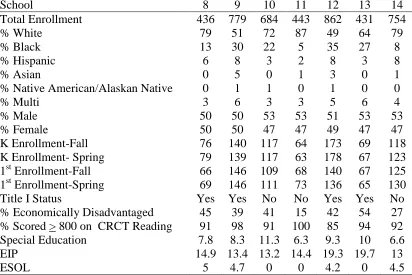
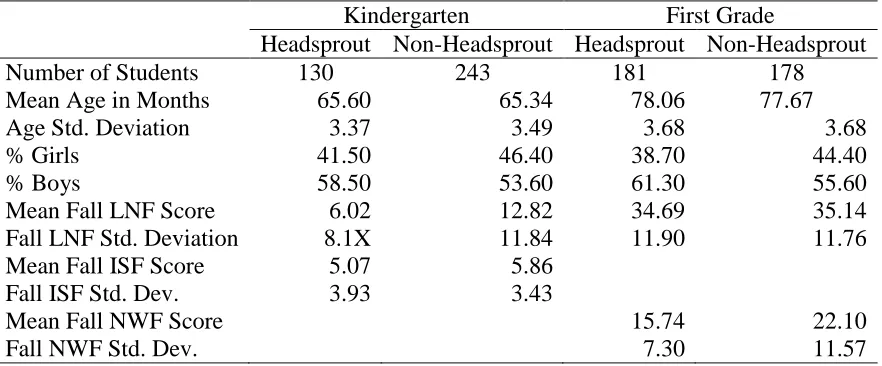
1 Demographic Information by School………... 74 2 Demographic Information for Students At Risk for Reading Failure………. 75 3 Supplemental Instructional Programs and
Headsprout Implementation Methods………. 78
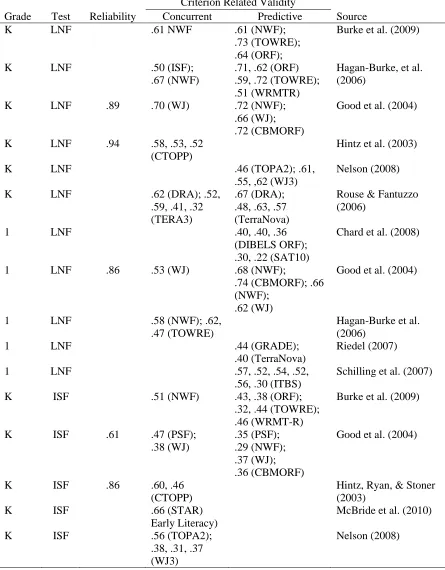
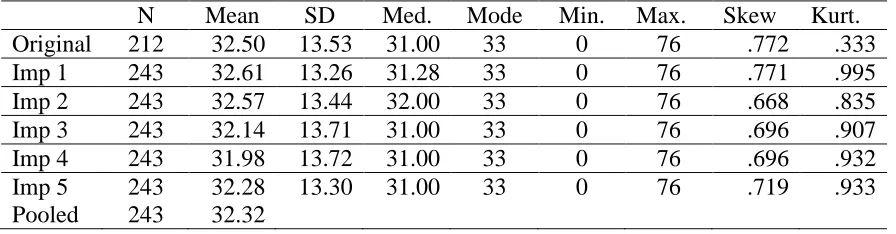
4 DIBELS Reliability and Validity Data……… 90 5 Kindergarten Spring LNF Multiple Imputation Descriptive Statistics
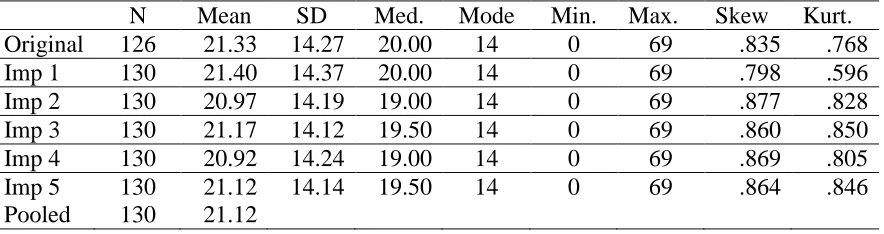
for the Treatment Group………...………... 104
6 Kindergarten Spring LNF Multiple Imputation Descriptive Statistics
for the Control Group……….………... 104 7 Kindergarten Spring NWF Multiple Imputation Descriptive Statistics
for the Treatment Group………... 104
8 Kindergarten Spring NWF Multiple Imputation Descriptive Statistics
for the Control Group……….………... 105
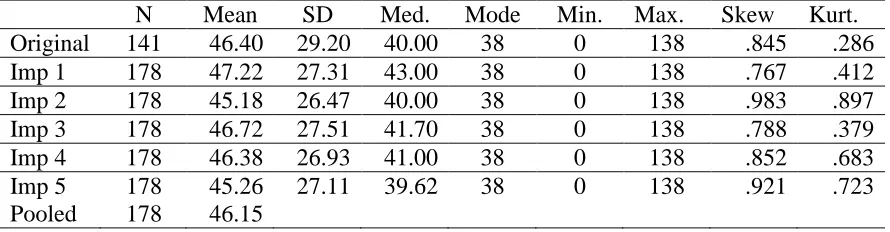
9 First Grade Spring ORF Multiple Imputation Descriptive Statistics
for the Original Treatment Group……….………... 106 10 First Grade Spring ORF Multiple Imputation Descriptive Statistics
for the Original Control Group……….………..
106
11 Kindergarten Mean Pretest, Posttest, and Change Scores
for the Matched Groups ………... 118 12 First Grade Mean Pretest and Posttest Scores
v
LIST OF FIGURES
Figure Page
1 Kindergarten Fall ISF Scores for the Treatment (HS: 1) group... 109
2 Kindergarten Fall ISF Scores for the Control (HS: 2) group…... 109
3 Kindergarten Fall LNF Scores for the Treatment (HS: 1) group………... 110
4 Kindergarten Fall LNF Scores for the Control (HS: 2) group………... 110
5 Kindergarten Spring LNF Scores for the Matched Treatment (HS: 1) Group…... 114
6 Kindergarten Spring LNF Scores for the Matched Control (HS: 2) Group……... 114
7 Kindergarten LNF Change Scores for the Matched Treatment (HS: 1) Group... 115
8 Kindergarten LNF Change Scores for the Matched Control (HS: 2) Group…….. 115
9 Kindergarten Spring NWF Scores for the Matched Treatment (HS: 1) Group….. 116
10 Kindergarten Spring NWF Scores for the Matched Control (HS: 2) Group…….. 116
11 First Grade Fall NWF Scores for the Treatment (HS: 1) Group……… 120
12 First Grade Fall NWF Scores for the Control (HS: 1) Group……… 121
13 First Grade Spring ORF Scores for the Treatment (HS: 1) Group………. 122
14 First Grade Spring ORF Scores For the Conrol (HS: 2) Group………... 122
15 First Grade Spring ORF Scores for the Matched Treatment (HS: 1) Group…….. 126
16 First Grade Spring ORF Scores for the Matched Control (HS: 2) Group……….. 126
17 First Grade CRCT Scores for the Matched Treatment (HS: 1) Group…………... 127
vi
DEFINITION OF TERMS
Alphabetic Principle - The alphabetic principle is the understanding that there are systematic and predictable relationships between written letters and spoken sounds (National Reading Panel [NRP], 2000).
Analytic Phonics - Phonics instruction that begins with a whole word. Students analyze parts of the word to understand how letters combine to form words (Pressley, 2005).
Balanced Literacy Instruction – Literacy instruction that includes an abundance of authentic reading and writing activities that occur within literacy rich classroom environments that incorporate high-quality literacy centers, the use of authentic children’s literature, and opportunities for social collaboration among students (NRP, 2000)
Computer Aided Instruction (CAI) - Instruction that uses a computer to teach the student. The computer holds instruction, and the instruction is designed to teach, guide, and test the student until proficiency is attained (Association for Educational Communications and Technology, 1977).
Comprehension - The process of making meaning from text at both the literal and inferential level (Moats, 2004).
Criterion Referenced Competency Test (CRCT) - The CRCT assessment program is the designated assessment tool for federal accountability in Georgia for grades one through eight. The CRCT assessments and their associated reports provide information about academic achievement at the student, class, school, system, and state levels (Georgia Department of Education, 2009).
Drill and Practice Program – Computer programs that provide the learner with exercises and immediate feedback to reinforce specific skills (Desrochers & Gentry, 2004; Sivin-Kachala & Bialo, 1998; Soe et al., 2000).
Dynamic Indicators of Basic Early Literacy Skills (DIBELS) - DIBELS are a set of brief, individually administered pre-reading and early reading tests designed to assess
phonological awareness, alphabetic awareness, and fluency in children. Benchmark assessments are administered to students three times each year, and the results of these screenings are used to evaluate students’ progress toward the mastery of early literacy skills. Additional assessments are available to monitor the progress of at risk students at regular intervals (Good & Kaminski, 2007).
Explicit Instruction - Instruction that sequentially reviews previous work, presents new material, provides guided practice, provides feedback and correction, provides
vii
Fluency - Reading fluency is the ability to accurately and quickly decode text, so that comprehension can occur (Kamil, 2005).
Graphemes – The written symbols that represent each phoneme (Ritchey & Goeke, 2006).
Initial Sound Fluency (ISF) - ISF assesses the child's ability to recognize and produce the beginning sound in an orally presented word (Kaminski & Good, 1996, 1998).
Integrated Learning System (ILS) – Computerized instructional programs that provide sequential instruction to students across several grades, while keeping records of student progress (Kulik, 2003).
Intensive instruction - Small group or individual instruction that is targeted to the needs of individual students, occurs at least several times a week, lasts for sessions of at least 15 minutes, and continues over several months (Cavanaugh, Kim, Wanzek & Vaughn, 2004).
Nonsense Word Fluency (NWF) - NWF measures knowledge of letter sound
correspondences and the ability to blend letters into words (Kaminski & Good, 1996).
Oral Reading Fluency (ORF) - ORF is a standardized, individually administered measure of a student’s accuracy and fluency when reading connected text (Kaminski & Good, 2006).
Phoneme –The smallest units of sound in a language (Ritchey & Goeke, 2006).
Phonemic Awareness - The understanding that words are made up of smaller sound-parts that can be manipulated to form other words (Scarborough & Brady, 2002).
Phonics - Instruction is about letter-sound correspondences (NRP, 2000).
Problem Solving Model RTI – An RTI process through which practitioners determine the magnitude of a student’s problem, analyze its cause, design a goal-directed intervention, conduct it as planned, monitor the student’s progress, modify the intervention as needed based on student responsiveness, evaluate its effectiveness, and determine future actions (Telzrow, McNamara, and Hollinger, 2000).
Response to Intervention (RTI) - A multi-tiered, general education process through which schools can monitor the progress of their students within the curriculum in order to identify students who are at risk for academic failure and provide them with interventions in a timely manner (Torgesen, 2009).
viii
Synthetic Phonics – Instruction that centers on the 44 phonemes of the English language and their related graphemes (Ritchey & Goeke, 2006).
Standard Protocol RTI – RTI in which all students in Tier 2 at a given grade level with the same instructional deficit receive the same intervention. The intervention is time-limited, and it is typically implemented with students in a small group setting (Fuchs & Fuchs, 2009).
Universal Screening Measures - Brief screening tools that demonstrate diagnostic utility (e. g., DIBELS, Good & Kaminski, 2007; AIMSWeb, Shinn & Shinn, 2002; STEEP, Witt, 2002) for predicting performance on the reading and math state assessments in the elementary grades or on the local graduation requirements at the secondary level
(McCook, 2006).
CHAPTER 1
INTRODUCTION
Literacy is a skill of universal importance. The National Assessment of Adult
Literacy (National Center for Educational Statistics [NCES], 2005) defines literacy as
“using printed and written information to function in society, to achieve one’s goals, and
to develop one’s knowledge and potential” (p. 2). Individuals with poor literacy skills in
the United States are at risk for a multitude of debilitating problems (Lyon, 1997; NCES,
2005). Adults who do not read well are likely to be unemployed due to their inability to
function in a majority of employment situations (NCES, 2005), and research suggests that
up to 75% of unemployed adults are unable to read (Lyon, 1997). Individuals with poor
literacy skills comprise at least 60% of the prisoners and 85% of the juveniles who appear
in court (Hodgkinson, 1991), and only 2 to 3% of prison inmates read at a proficient level
(NCES, 2003). Unfortunately, as many as 50% of all children will have difficulty
learning to read, and of these children, only half will ever become proficient readers
(Lyon, 1997).
Converging research documents that patterns of reading achievement are
established early, and once established they are difficult to change (e.g., Good, Simmons,
& Kame’enui, 2001). Juel (1998) found that 88% of children who were poor readers at
the beginning of first grade continued to be poor readers in fourth grade. In contrast, the
likelihood of a student who was at least an average reader in first grade becoming a poor
reader by fourth grade was only 12%. This occurs because the gap between poor readers
2004), particularly after third grade (NCES, 2003). These findings demonstrate that early
intervention is essential to effectively address the nation’s literacy problems.
In an attempt to change current trends in reading acquisition, President George W.
Bush signed the No Child Left Behind Act (No Child Left Behind [NCLB], 2003) into
law in 2002. This law mandates that every child read at grade level by the end of third
grade. NCLB embodies the four principles of President George W. Bush’s education
reform plan: 1) stronger accountability for states, school districts and schools regarding
student outcomes; 2) expanded flexibility and local control in the use of federal education
dollars; 3) expanded options for parents and students, particularly those attending
low-performing schools; and 4) emphasis on teaching methods that have been proven to work.
The requirement for programs to be funded under NCLB is evidence of effectiveness,
which was defined as “programs that have been found through scientifically based
research to significantly improve the academic achievement of participating children or
have strong evidence that they will achieve this result” (U.S. Department of Education,
2002, p. 45).
The Reading First (Elementary and Secondary Education Act, as amended, Title I,
Part B, Subpart 1, 2002) initiative significantly increased Federal investment in
scientifically based reading instruction programs for kindergarten through third grade
students. NCLB requires that professional development, instructional programs, and
materials used by states or school districts must include the five key areas of reading
instruction that research has identified as essential. These areas of instruction are
phonemic awareness, phonics, vocabulary, fluency and reading comprehension (National
as the core curriculum for all students. It also requires explicit, intensive, and supportive
instruction for students who experience difficulty learning to read. Overall, the Reading
First initiative emphasizes early identification and the need to screen all children for
reading difficulties in order to intervene as early as possible.
While Reading First (2002) significantly increased federal investment in
scientifically based reading instruction and intervention programs for children, it does not
appear to have resulted in substantial progress toward the goal of universal literacy by
third grade (Reading First Impact Study Final Report, 2008). Reading achievement,
measured at the fourth grade, has increased for some minority groups and for children as
a whole, but a significant percentage of children continue to read below basic
proficiency. Specifically, only 48 % of black students, 48% of Hispanic students, and
78% of white students were able to read with at least basic proficiency on the most recent
National Assessment of Educational Progress (NAEP; NCES, 2009). Basic proficiency in
reading is defined as the ability to make relatively obvious connections between a text
and one’s own experiences and extend the ideas in the text by making simple inferences
when reading text appropriate for fourth-graders (NCES, 2009). Additionally, only 51%
of students who were eligible for free and reduced lunch were able to read at the basic
proficiency level (NCES, 2009).
Despite the mixed results of recent early literacy initiatives, evidence from
research settings continues to demonstrate the potential effectiveness of early intervention
for children with early literacy problems (Cooke, Kretlow & Helf, 2010; McIntyre et al.,
2005; Wanzek & Vaughn, 2007). For example, Vellutino and his colleagues (1996) found
the course of 15 weeks, only 1.5 to 3 percent of poor kindergarten aged readers in their
study continued to experience significant reading difficulties. A solid foundation of early
reading research and theory exists (NRP, 2000; Pressley, 2005; Tracey & Morrow, 2006;
Vellutino, Fletcher, Snowling & Scanlon, 2004) along with a growing body of
evidence-based interventions that can serve as a foundation for prevention and remediation (Kamil,
2008). An important avenue for future research is how to translate early intervention that
has been demonstrated to be successful in research settings into the public education
system without diluting its effectiveness.
Response to Intervention
Prevention and early intervention have long been goals of educators for struggling
students. Response to Intervention (RTI) is a process that is intended to systematically
addresses both of these goals (Fuchs, Mock, Morgan, & Young, 2003; Glover & DiPerna,
2007). The construct of RTI is not new. It originated in research-based practices such as
mastery learning and curriculum-based assessment in the fields of special education and
reading intervention, as well as models of consultation within the field of school
psychology (Fuchs, 2004). RTI is a multi-tiered, primary prevention approach to
education that employs evidence-based instruction and intervention, paired with
continuous monitoring of student progress, to either prevent student learning difficulties
or intervene to remediate them as early as possible (Reschly, 2005; Torgesen, 2009).
Further support for RTI processes was provided by the reauthorization and revision of the
Individuals with Disabilities Act (IDEA) in 2004. IDEA now requires the use of
evidence-based instruction within the general education program prior to a student’s
of school districts are implementing RTI models to address a variety of student learning
and behavior needs (Response to Intervention Adoption Survey, 2010). Effective RTI
processes attempt to ensure that all students have equal educational opportunity and
prevent long periods of academic failure. Results from schools that have implemented
RTI for a number of years suggest that RTI can be an efficient method for identifying and
intervening with student difficulties in reading, mathematics, and classroom behavior
(Burns, Appleton, & Stehouwer, 2005; Fuchs, Compton, Fuchs, Bryant & Davis, 2008;
VanDerHeyden, Witt, & Gilberson, 2007).
The literature on RTI broadly identifies two models for intervention delivery:
individualized interventions developed through a consultation based problem solving
model and standard protocol interventions (Fuchs et al., 2003). According to Telzrow,
McNamara, and Hollinger (2000), the problem solving model was first described in the
behavioral consultation literature. As described by Bergan and Kratochwill (1990),
behavioral consultation is both inductive and empirical. Solutions for instructional and
behavioral difficulties are determined by the frequent and systematic evaluation of a
student’s response to an implemented intervention. It is a process through which
practitioners determine the magnitude of the problem, analyze its cause, design a
goal-directed intervention, conduct it as planned, monitor student progress, modify the
intervention as needed based on student responsiveness, evaluate its effectiveness, and
determine future actions (Telzrow, McNamara, & Hollinger, 2000). Collaborative
consultation models, such as the instructional consultation teams approach (Rosenfield &
Gravois, 1996), build upon the behavioral consultation model by intentionally
across disciplines and purposefully enhancing teachers’ skills in and application of best
practices of instructional assessment and delivery.
Standard protocol interventions, in contrast, provide every child who is identified
at risk in a specific area with the same evidence-based intervention. The standard
protocol approach is advocated by some early reading researchers (e.g., Fuchs et al.,
2003; Fuchs & Fuchs, 2009). Examples of evidence-based reading interventions
implemented within the standard protocol approach include alternative curricula such as
Reading Mastery Classic (McGraw-Hill, 2003)and Language for Learning
(McGraw-Hill, 2005). These curricula provide instruction that includes the areas of phonemic
awareness, phonics, reading fluency, vocabulary, and comprehension. They are
characterized by scripted instruction, increased repetition of skills, and a slower pace of
instruction. Standard protocol interventions may increase treatment integrity by
simplifying training of school personnel and assessment of the accuracy of
implementation. Additionally, grouping children with similar problems may increase the
number of children who receive evidence-based intervention (Fuchs, et al., 2003).
RTI is conceptualized as a multi-tier model. The first tier is comprised of the
school system’s standard curriculum and instruction within the general education
program. This tier is viewed as primary prevention, and instruction at this level is
generally expected to meet the educational needs of 80% of a given school’s student
population (McCook, 2006). Tier 1 is consistent with typical classroom instruction
supplemented by classroom adaptations that require minimal resources to implement. The
classroom teacher provides instruction and support at the individual and group level. The
concern do not exceed what is typically used for classroom instruction. In Tier 1, general
education assumes responsibility for universally screening all students at least three times
each school year. Within the first month of school, all students are screened to identify
those at risk for school failure using brief screening tools that demonstrate diagnostic
utility (e. g., AIMSWeb, Shinn & Shinn, 2002; Dynamic Indicators of Basic Early
Literacy Skills [DIBELS], Good & Kaminski, 2002; System to Enhance Educational
Performance [STEEP], Witt, 2002) for predicting performance on the reading and math
state assessments in the elementary grades or on the local graduation requirements at the
secondary level (McCook, 2006). School personnel meet regularly to review the
screening data, and measurable goals are set for the entire group of students for the next
check point. In Tier 1, the focus is on making large-scale changes to the instruction for
entire groups of students.
The second tier of RTI is reserved for those students who are not responding to
general education instruction. Tier 2 is considered secondary prevention and should
include no more than 20% of the general education population (Burns et al., 2005).
Through universal screening, students categorized as at risk are identified, and at Tier 2,
school personnel identify instructional changes designed to address the educational needs
of these students. These instructional changes may include evidence-based standard
protocol interventions, the use of problem solving teams to develop more individualized,
evidence-based interventions for specific students, or both. The students in Tier 2 receive
this instructional treatment in addition to Tier 1 core instruction. Teachers and other
school personnel implement the interventions with fidelity, and students who have been
monitor their progress toward grade level expectations. Adequate progress toward grade
level expectations is operationalized using local or national normative data. For students
at risk for reading failure, Tier 2 serves two purposes: to prevent reading difficulty by
delivering a more intensive, and presumably effective, level of intervention that
accelerates reading development, and to assess the child’s responsiveness to instructional
intensity from which the vast majority of children should profit (Vaughn & Fuchs, 2003).
Students who do not make adequate progress toward grade level expectations at
Tier 2 may be moved to Tier 3. In many RTI models, Tier 3 is synonymous with special
education services because the students served in Tier 3 have failed to make adequate
progress in the general education program (Tier 1 and Tier 2) despite the implementation
of increasingly intensive evidence-based interventions, and the presence of a disability
has been confirmed through comprehensive evaluation (Fuchs & Fuchs, 2009). Tier 3 is
tertiary prevention. Teachers develop ambitious, individualized goals for each student
who receives Tier 3 services. These goals may or may not be grade-appropriate. Thus, in
Tier 3, students who are at risk for reading failure may receive instruction in foundational
skills that are below grade-level but necessary for successful reading achievement (Fuchs
& Fuchs, 2009). As in Tier 2, each student progress is monitored weekly; however, the
student’s progress is compared to his or her individual goals rather than to grade level
expectations (Fuchs & Fuchs, 2009).
Although few researchers have taken these interventions to scale, increasing
numbers of school systems are implementing RTI processes. Significant barriers to the
effective implementation of RTI processes are prevalent in public school settings. These
resources for instruction and monitoring student progress (Response to Intervention
Adoption Survey, 2010). Because school systems consistently report lack of teacher
training and lack of intervention resources as barriers to the implementation of RTI, it is
important to ensure that interventions that prove effective in research settings are further
evaluated within school systems that adopt them.
Computer Aided Instruction (CAI)
According to the Response to Intervention Adoption Survey (2010), the lack of
intervention resources, such as personnel to implement interventions, is one of the
greatest barriers to the implementation of RTI. Some professionals in the field of
education believe that CAI has the potential to reduce educational costs while enhancing
educational effects (Kulik & Kulik, 1991; Sivin-Kachala & Bialo, 1998). CAI may
provide an avenue to address many of the perceived difficulties of both problem solving
and standard protocol models of RTI because it is intended to provide individualized,
engaging teaching based on a standardized curriculum without the need for large amounts
of extra work from teachers or additional school personnel. Well-designed CAI can also
provide immediate feedback, provide frequent opportunities to respond, and create high
rates of success by either allowing students control over the instructional sequence or
adapting the presentation of content based on student responses (Sivin-Kachala & Bialo,
1998). CAI, therefore, has the potential to provide important instructional opportunities to
help children of all ages who struggle to learn to read acquire critical early reading skills
such as phonics, word recognition, and word meaning (Hall, Hughes, & Filbert, 2000;
Early meta-analytic reviews of CAI found generally positive effects for CAI on
overall student achievement and on reading achievement in particular (Soe, Koki, &
Chang, 2000) when it is used as a supplement to traditional teaching across grade levels
and subject areas, and on student attitudes toward learning (Kulik & Kulik, 1987;
Sivin-Kachala & Bialo, 1998). CAI also reduced the time required for students to learn new
information (Hasselbring, 2001; Kulik & Kulik, 1987). Positive outcomes for CAI were
also reported specifically in the area of reading instruction based on meta-analytic
reviews of a variety of different types of CAI (Blok, Oostdam, Otter, & Overmaat 2002;
Soe et al., 2000). In another meta-analytic review, MacArthur and his colleagues (2001)
concluded that CAI can be used to teach phonemic awareness and decoding skills. In
their review of the literature on CAI for students with reading disabilities, Hall, Hughes,
and Filbert (2000) concluded that CAI had positive effects on student achievement in
reading decoding and reading comprehension. They also suggested that carefully
designed CAI can provide the systematic instructional procedures found to be effective
for reading instruction.
In contrast, other researchers have reported neutral or unfavorable outcomes for
CAI in the area of reading. First, the authors of meta-analytic reviews of the CAI
literature consistently reported that firm conclusions regarding the effectiveness of CAI
for reading cannot be drawn because there is a scarcity of acceptable studies in the
important sub-skills related to reading achievement (Hall et al., 2000; Kulik 2003; Kulik
& Kulik, 1987; MacArthur et al. 2000, Soe et al., 2000; Sivin-Kachala & Bialo, 1998).
Evidence that students generalized the skills learned during CAI to other reading tasks
particular, CAI results were inconclusive. Some studies documented student gains in
reading comprehension over and above the gains made by students receiving only
traditional instruction, but others did not (Cheung & Slavin, 2011; Kulik, 2003). Despite
the generally positive findings for reading decoding skills reported above, further
research in the specific area of reading CAI is needed to determine whether or not CAI
that addresses “the big five” in reading (i.e. phonemic awareness, phonics, vocabulary,
fluency, and comprehension) is effective in improving the reading skills of students who
are at risk for reading failure.
HeadsproutEarly Reading. Headsprout is one of several currently available
CAI programs designed to provide supplementary reading instruction beyond the
standard curriculum adopted by a school system. Headsprout is an internet-based,
supplemental reading program designed for students in kindergarten through second
grade who are not yet reading or who are at the beginning stages of learning to read. The
program incorporates the five critical components of reading instruction cited by the NRP
(2000). Headsprout includes numerous instructional strategies in the areas of phonemic
awareness, phonics, fluency, vocabulary, and comprehension. Both the publishers of
Headsprout (Layng, Twyman, & Strikeleather, 2003) and the Florida Center for Reading
Research (FCRR, 2003) identify Headsprout as CAI with content and design that reflect
scientific research. In RTI language, Headsprout is an example of a standard protocol,
Tier 2 intervention for students at risk for reading failure that can be provided to students
via a computer with internet access.
Initial research data suggest that most children who work with the Headsprout
teach (Clarfield, 2006; FCRR, 2003; Layng et al., 2003). Evidence that Headsprout
produces reading gains over and above the gains that result from general classroom
instruction, however, is inconclusive. Quasi-experimental research published by the
developers of Headsprout (Layng et al., 2003; Layng, Strikeleather, & Twyman, 2004a;
Layng, Strikeleather, & Twyman, 2004b) suggests that kindergarten, and first grade
students who use Headsprout as a supplement to their regular reading instruction make
significantly more progress in reading than those who do not use the program even when
the amount of time spent in reading instructional activities is held constant. Using a
multiple baseline design, Clarfield and Stoner (2005) found that three kindergarten and
first grade students with ADHD made greater gains in reading fluency when they
participated in Headsprout in addition to their regular reading instruction. Other
researchers (Campuzano et al., 2009; Dynarski et al., 2007), however, found that use of
the Headsprout program had no effect on student achievement in reading as measured
using group administered standardized tests of reading. These differences in outcomes
may be related to the amount of outside support provided to teachers who implemented
the Headsprout program and to the fidelity with which the program was implemented.
Need for the Study
The goal of this research was to examine the effectiveness of a specific, internet
based reading intervention, Headsprout, for improving the reading skills of young
students at risk for reading failure. This study is timely and important for two reasons.
First, the need for effective early intervention in the area of reading is well documented in
the literature (e.g. Cooke et al., 2010; Lyon, 1997; Vellutino et al., 1996). Secondly,
MacArthur et al., 2001) suggests that CAI holds promise for young students at risk for
developing reading problems. Results from many of these studies are limited for several
reasons including small sample sizes, lack of adequate control groups, and potential
researcher bias (Soe et al., 2000). The existing literature does not yet allow for firm
conclusions about the effectiveness of CAI in the area of reading to be drawn. The
current study extends the available literature by examining the effectiveness of a specific
computer-based reading intervention, Headsprout, which will add to the existing
information regarding the effectiveness of CAI in the area of early reading instruction.
The current study utilizes an existing data set from a school system that implemented the
CAI program using only the resources typically available to the school system, which
will supplement the existing literature by providing information about the effectiveness
of CAI when it is implemented outside of carefully controlled research settings.
Purpose of the Study
The purpose of this study was to investigate the impact of an internet-based
reading program, Headsprout, on the reading skills of kindergarten and first grade
students at risk for reading difficulty in one suburban district. In this school district,
some kindergarten and first grade students who were having difficulty learning to read as
determined by their performance on the DIBELS (Good & Kaminski, 2002) and
classroom teacher professional judgment were provided with supplementary instruction
through Headsprout, an internet based early reading instructional program. For the
purposes of this study, the kindergarten and first grade student population identified as at
risk for reading failure was conceptualized as consisting of students who participated in
with the lowest DIBELS scores at each grade level at each school were assigned to
participate in Headsprout.
The impact of Headsprout on the reading skills of kindergarten and first grade
students at risk for reading failure was the independent variable. The proposed data
analysis statistic was ANCOVA. The first proposed covariate for each of the two
outcome measures in both the kindergarten and first grade data sets was student age in
months. This covariate was proposed because prior research has shown that student age is
correlated with the acquisition of early literacy skills (Paris, 2005). Additionally, a pretest
measure of early reading skill was proposed to minimize the effects initial differences in
reading skill between the control group and the treatment group at each grade level. That
is, for the kindergarten data set fall LNF scores were proposed as a covariate in the
analysis of spring LNF scores and fall ISF scores were proposed as a covariate in the
analysis of spring NWF scores. For the first grade data set, fall NWF scores were
proposed as a covariate in the analysis of spring ORF scores and CRCT scores.
Because early intervention that incorporates the five critical components of
reading instruction has been shown to improve the reading skills of students who are at
risk for reading failure, it was hypothesized that participating in Headsprout would
improve the reading skills of the kindergarten and first grade students at risk for reading
failure who participated in the program beyond the improvement in reading skill
demonstrated by students at risk for reading failure who did not participate in
Headsprout. Specifically, the research questions addressed in this study and answered
Research Question 1. Do Kindergarten students at risk for reading failure who
participate in Headsprout in addition to their regular classroom reading instruction
demonstrate different skill levels in reading as measured by the DIBELS Letter Naming
Fluency (LNF) and Nonsense Word Fluency (NWF) tasks than kindergarten students at
risk for reading failure who do not participate in Headsprout?
Research Question 2. Do first grade students at risk for reading failure who
participate in Headsprout Early Reading in addition to their regular classroom instruction
demonstrate different skill levels in reading as measured by the DIBELS Oral Reading
Fluency (ORF) task or the Georgia Criterion Referenced Competency Test (CRCT) than
CHAPTER 2
LITERATURE REVIEW
The purposes of this chapter are to review the literature: 1) contributing to the
current understanding of effective early reading instruction and intervention for
kindergarten and first grade students at risk for reading failure, 2) regarding effective
methods to identify and monitor the progress of young students at risk for reading failure,
3) regarding CAI for kindergarten and first grade students in the area of reading, and 4)
regarding Headsprout, the internet-based CAI program for early reading instruction that
is the focus of this research. Within the area of early reading intervention, the primary
focus of the literature review is on instruction and remediation in phonemic awareness,
phonics, and sight word recognition because proficiency in these skills by the end of first
grade appears to be essential for children to become good readers (NRP, 2000; Pressley,
2005; Shaywitz & Shaywitz, 2004; Sweet, 2004). Fluency, vocabulary development, and
comprehension are discussed in less detail. While fluency, vocabulary development, and
comprehension are also essential to good reading, poor reading outcomes in kindergarten
and first grade appear to be more closely related to deficits in phonemic awareness,
phonics, and sight word recognition, which must develop before fluency with and
comprehension of written text can occur (Foorman & Torgesen, 2001). The methods used
to identify and monitor the progress of students who require intervention to become
skilled readers are as important as the content of early reading interventions; therefore,
the literature regarding RTI, an evidence-based method for the early identification of
students at risk for academic failure (Burns et al., 2005; Cusumano, 2007), is also
effectiveness of computer-based reading interventions designed for kindergarten and first
grade students. The widespread availability of computer technology in schools has
resulted in the frequent use of computer software by teachers and students as part of the
daily instructional curriculum. Research regarding the effectiveness of technology,
however, remains in its relative infancy, and researchers continue to explore the efficacy
of CAI with typically developing children as well as children at risk for reading failure.
The intuitive appeal of CAI in the schools is based on the idea that computer
applications can actively engage students in instruction without requiring direct,
immediate involvement by a teacher. Well-designed computer programs have the
potential to provide students with practice in specific reading skills and strategies at an
individualized pace and with immediate feedback (Hall et al., 2000). Research regarding
the efficacy of CAI for early reading instruction and intervention, however, has had
mixed results. This chapter reviews the literature regarding early intervention for at risk
readers since the publication of the National Reading Panel’s report in 2000, reviews the
literature regarding RTI, and finally, reviews the empirical research conducted using CAI
reading interventions for kindergarten and first grade students who are learning to read in
English, including those at risk for reading failure, published since 2000.
Reading Theory and Models of Reading Development
There are few areas of pedagogy that have been debated as extensively as how to
teach reading to young children as they enter school.While educators share the goal of
providing children with early literacy instruction that creates students who are successful
readers, and extensive research documents the importance of children’s early literacy
Griffin, 1998; Sweet, 2004), the disturbing reality is that children who do not master
early literacy skills remain at risk as learners throughout their school years (Pressley,
2005; Shaywitz & Shaywitz, 2004; Sweet, 2004). Given the importance of early literacy
proficiency, a great deal of research has been directed toward understanding the
instructional approaches that facilitate early reading success.
Theories of reading development are often broadly categorized as bottom up, top
down, or interactive based on the way they model reading development (Frey, Lee,
Tollefson, Pass, & Massengill, 2005; Tracey & Morrow, 2006). Bottom up models (i.e.
Chall 1976; Ehri, 2005) typically describe reading as a series of stages beginning with
letter sound recognition and ending with the construction of meaning. In bottom up
models of reading, first letters are identified, then sounds are attached to the letters, next
the meaning of the decoded word is added, and finally, after all the words are processed,
the meaning of the sentence is understood. Basic reading skills such as phonics are taught
in isolation, and the reader learns to decode before he or she is expected to attend to
meaning. The context of what is being read and background knowledge of the reader is
not considered essential to the process of decoding the words on the page (Tracey &
Morrow, 2006).
While bottom up models of reading development provide an understandable
model of how reading decoding occurs, they are less able to account for the
comprehension of text, which is the end goal of reading instruction (Pressley, 2005).
Paris (2005) expands on this criticism of bottom up models of reading development in his
presentation of constrained skills theory. Paris argues that phonemic awareness, phonics,
their reading development. Since these skills are mastered early, they are important
predictors of later reading skill only within a narrowly defined period of time when
children are first beginning to learn to read. According to constrained skills theory, too
much emphasis on the measurement and remediation of phonemic awareness, phonics,
and fluency in young children who are beginning to learn to read may have at least two
important consequences. First, analysis of the development of constrained skills using
traditional parametric statistics may miss-identify students whose literacy skills are
developing normally as at risk for reading failure. Secondly, over-emphasis on instruction
designed to teach phonemic awareness, phonics, and may reduce the amount of
classroom time spent in authentic literacy activities. This may, in turn, result in children
who can decode words but are not truly literate beyond the basic ability to decode words.
In contrast to the constrained skills of phonemic awareness, phonics, and fluency,
vocabulary and comprehension are described as unconstrained skills because they
continue to develop across the lifespan (Paris, Carpenter, Paris, & Hamilton, 2005).
Top down reading theories, such as Emergent Literacy Theory (Tracey &
Morrow, 2006) posit that reading is one part of the broader concept of literacy
development, which begins at birth and includes both oral and written language skills.
Emergent literacy theory also emphasizes that literacy development occurs across a wide
variety of settings that include homes and communities in addition to schools. Models of
reading built from top down theories emphasize the importance of what the reader brings
to the reading process. The accurate decoding of each word in a reading passage is not
considered essential for comprehension. Background knowledge, including knowledge
knowledge of word meanings, and knowledge of letter-sound correspondence, are all
important to reading because readers use information from each of these sources to
anticipate upcoming text. If what is read is consistent with what the reader anticipated,
reading progresses smoothly. If not, reading slows, and the reader attends more closely to
the printed text. Top down models of reading provide an explanation for reading
comprehension, but they are less able to explain how individuals read unfamiliar texts to
learn new information when they have little knowledge of the topic and cannot generate
predictions (Tracey & Morrow, 2006).
Interactive theories of reading (i.e. Rumelhart, 2004) recognize the importance of
and interaction between bottom-up and top-down processes in skilled reading. They
emphasize both what is on the written page and what a reader brings to reading. Readers
develop reading skills and reading strategies in context rather than in isolation. Models of
reading that develop from interactive theories portray skilled readers as both good
decoders and good interpreters of text. Decoding skills become more automatic but no
less important as reading skill develops. Skilled reading is the result of interaction
between reader and text (Tracey & Morrow, 2006). Interactive models of reading often
underlie balanced approaches to the teaching of reading. Balanced literacy programs
include the direct instruction and modeling of skills, strategies, and processes as well as
student-centered reading and writing activities (Frey et al., 2005; Snow et al., 1998).
Cognitive Load Theory
Research in the area of Cognitive Load Theory (CLT; i.e. Paas, Renkl & Sweller,
2003, 2004) also contributes to understanding how reading develops in both typically
happens best when the amount of new information to be learned does not overwhelm the
limited capacity of human working memory. It further suggests that working memory can
become effectively unlimited when dealing with familiar material stored as schemas.
Schemas are organized and automated routines for processing information or performing
an action stored in long-term memory. Automated schemas can be used unconsciously,
without placing demand on working memory capacity (Chandler & Sweller, 1991). For
example, according to the tenets of CLT, skilled reading develops as a learner constructs
increasingly complex schemas for reading skills, such as sight word reading, by
combining elements of previously mastered schemas for more basic skills, such as
phonemic awareness and phonics, as described in bottom up models of reading
development.
Three types of cognitive load, intrinsic, extraneous, and germane, are important in
CLT and should be considered when providing instruction (Paas et al., 2004). Intrinsic
load is the cognitive load imposed by the information to be learned. Extraneous load is
imposed by information and activities that do not contribute to the processes of creating
and automizing (i.e., learning) schema. Germane load is not imposed by the information
to be learned, but is a result of the activities required to learn schemas.
CLT suggests that instruction should be designed to decrease extraneous load,
while simultaneously increasing germane load, so that the combined intrinsic and
germane loads do not exceed working memory capacity. When this is not possible
because reducing extraneous load also reduces germane load, it may be necessary to
provide simplified learning tasks even though this may partially compromise full
relevant when teaching reading decoding skills to students at risk for reading failure. The
application of CLT to beginning reading instruction suggests that for some students it
may be necessary to teach decoding skills separately from comprehension skills to ensure
that working memory demands are not overloaded to the point that no learning occurs.
CLT also suggests that knowledge of the learners level of expertise (Kalyuga, Ayres,
Chandler, & Sweller, 2003) is important to ensure that the cognitive demands of
presented tasks are neither overwhelming for novice or struggling learners nor too simple
for learners with more expertise. Therefore, children who are at risk for reading failure
may require qualitatively different instruction than those whose reading skills are
developing as expected.
Early Reading Intervention
Expert consensus has identified the instructional strategies that are associated with
successful literacy outcomes. These strategies reflect a balanced approach to literacy
instruction and include literacy rich classroom environments that incorporate high-quality
literacy centers, the use of authentic children’s literature as a central component of
literacy instruction, opportunities for social collaboration among students, and extensive
professional development for teachers (NRP, 2000). Furthermore, explicit instruction and
meaningful practice in the areas of phonics, phonemic awareness, vocabulary, fluency
and comprehension are also important (Foorman & Torgesen, 2001; NRP, 2000; What
Works Clearinghouse [WWCH], 2007). Explicit instruction is defined as instruction that
sequentially reviews previous work, presents new material, provides guided practice,
provides feedback and correction, provides independent practice, and provides weekly
While the debate regarding the amount of explicit instruction required and how
best to provide this instruction for typically developing students continues (Frey et al.,
2005), there is general agreement that explicit instruction in the areas of phonemic
awareness, phonics, fluency, vocabulary, and comprehension, embedded within a
balanced reading program that also includes an abundance of authentic reading and
writing activities, benefits all students and is crucial for those students who are at risk for
reading failure (e.g., Foorman & Torgesen, 2001; Frey et al., 2005; Pressley, 2001).
Research also indicates that intensive, supplementary instruction in phonemic awareness
and phonics skills can significantly improve long-term outcomes for struggling readers
(Al Otaiba & Fuchs, 2002; Foorman & Torgesen, 2001; McIntyre et al., 2005; NRP,
2000; WWCH, 2007). Intensive instruction, as the term is typically used in research (e.g.,
Foorman & Torgesen, 2001), refers to small group or individual instruction that is
targeted to the needs of individual students, occurs at least several times a week, lasts for
sessions of at least 15 minutes, and continues over several months (Cavanaugh, Kim,
Wanzek & Vaughn, 2004).
Phonemic Awareness.
Phonemic awareness is knowledge about the sounds in language (Foorman &
Torgesen, 2001; Scarborough & Brady, 2002). Before students are ready to read, they
must know that words are made up of smaller sound-parts. They also need to know how
the sounds in words work. The focus of phonemic awareness is narrow. Students learn to
identify and manipulate the individual sounds in words. Manipulating the sounds in
words includes blending or otherwise changing words. Effective phonemic awareness
language (Scarborough & Brady, 2002). For example, a student who is beginning to
establish phonemic awareness can rhyme words. At the next level, the student can
recognize the odd word within a set of words—if the set of words is fan, can, and bed the
student recognizes bed as the odd word. Next, the student learns to blend sounds to make
words. For example, /m/, /a/, /t/ becomes mat. The student then learns to segment a word
like stop into the sounds /s/, /t/, /o/, /p/. Finally, the student is able to remove a sound
from a word to make a new word on request. For example, when asked to stay stop
without the /s/, the child says top (Pressley, 2005).
Phonics.
Phonics instruction is about letter-sound correspondences. Before phonics
instruction can be effective, however, children must recognize that the words that they
hear, and will eventually read, are made up of individual sounds (phonemic awareness).
The goal of phonics instruction is to help children to learn and use the alphabetic
principle. The alphabetic principle is the understanding that there are systematic and
predictable relationships between written letters and spoken sounds. Phonics instruction
teaches children the relationships between the letters of written language and the sounds
of spoken language. Learning that there are predictable relationships between sounds and
letters allows children to apply these relationships to both familiar and unfamiliar words
and to begin to read with fluency (Kamil, 2008). While phonemic awareness is important
to phonics instruction, research suggests that phonemic awareness and phonics skills can
be effectively taught at the same time (Pressley, 2005).
The term phonics is used to describe a wide range of different reading activities
and analytic phonics. Synthetic phonics involves the development of phonemic awareness
as the beginning point for instruction. As part of the decoding process, the reader learns
44 phonemes, the smallest units of sound, and their related graphemes, the written
symbols that represent the phonemes. For example, the student learns that the letter s
represents the phoneme /s/ as heard at the beginning of the word sit. In order to read a
word the student must recognize each grapheme, sound out the phoneme it represents,
and blend the phonemes together to pronounce a word. In other words, to read the word
sit, a student must recognize each of the letters, s, i, and t; associate each letter with the
phoneme it represents, /s/, /i/, /t/; and, finally, blend the phonemes to produce the word
sit. Synthetic phonics instruction often involves highly systematic whole-class instruction
that begins in kindergarten. The sounds and their corresponding written symbols are
taught in quick succession, often using a multi-sensory approach in which children see
the grapheme, listen to the phoneme, say the phoneme, and accompany this by doing an
action. The multi-sensory approach to phonics instruction appears to support most
learners in remembering the sound-symbol relationships (Ritchey & Goeke, 2006).
Analytic phonics, in contrast, is an approach that requires the learner to discover
letter-sound correspondences from words. Letter sounds are not taught in isolation.
Instead, instruction begins with a whole word and students are directed to analyze parts
of the word to understand how letters combine to form words. Analogy, or onset-rime
phonics, is a specific type of analytic phonics in which children are asked to look at
chunks of words or word families. For example students might be asked to look at a
group of words that end with an. The first sound is added or changed to make different
The NRP (2000) concluded that synthetic phonics programs were especially
effective for younger students who were at risk for reading difficulties or identified as
disabled as compared to analytic phonics programs. The panel's conclusions were that
children with learning disabilities and children who are low achievers make the greatest
gains when they are provided with systematic, synthetic phonics instruction. Moreover,
systematic synthetic phonics instruction was significantly more effective than other types
of instruction in improving the reading skills of children from low socioeconomic levels
(NRP, 2000). Other research evidence indicates, however, that some struggling readers
make greater gains when they are taught using analytic phonics (Chera & Wood, 2003;
Comaskey, Savage & Abrami, 2009; Pressley, 2005).
It appears that good readers use both synthetic and analytic phonics skills when
reading. Students who become good readers initially decode words based on letter sound
correspondences, but as they encounter groups of sounds that frequently occur together,
such as the suffix –ing or the suffix –tion, they begin to read them as a unit, which is
called structural analysis. Finally, they begin to recognize words as a single unit. Word
recognition occurs almost instantaneously and is called sight word reading (Ehri, 2005).
Sight Words.
Good readers read familiar words by accessing them as whole words in memory,
which is called sight word reading (Ehri, 2005). Sight word reading is one desired result
of instruction in phonemic awareness and phonics (Compton, Appleton, & Hosp, 2004;
Pressley, 2005; Shaywitz & Shaywitz, 2004). In typically developing beginning readers,
sight word reading is not a process of rote memorization (Pressley, 2005; Shaywitz &
connections are created in memory between the letter patterns of the word on the page
and the word in memory. Each successive successful sounding out of the word
strengthens these connections until the word is recognized automatically as a sight word.
For example, the first time a reader encounters the written word cat, it is sounded out as
/c/, /a/, /t/. When cat is read after several exposures, it may be read as /c/, -at. Finally, the
whole word is immediately recognized and almost instantaneously brings to mind the
image of a small, furry animal that meows and purrs. Additionally, some high frequency
words are phonetically irregular and must be taught as sight words. For typically
developing beginning readers, frequently encountered words rapidly become sight words
(Ehri, 2005; Pressley, 2005; Shaywitz & Shaywitz, 2004). Some research evidence
suggests that explicit, intensive instruction in phonemic awareness and phonics skills
helps non-disabled children at risk for reading failure develop sight word recognition
skills that are similar to those of typically developing readers (Kamil, 2008; Shaywitz &
Shaywitz, 2004). Because sight word reading is automatic, it allows fluent reading to
develop and creates a foundation for reading comprehension (Pressley, 2005; Shaywitz &
Shaywitz, 2004).
Fluency.
Reading fluency is the ability to accurately and quickly decode text, so that
comprehension can occur (Kamil, 2005). Children who have mastered the basic skills of
reading are able to identify words quickly and with very little effort. Fluency depends on
the automatic recognition of high-frequency words and skilled decoding of less
frequently encountered words (Compton et al., 2004; Shaywitz & Shaywitz, 2004). The