Abstract
The presentation of depression in primary care is in many ways different from that seen in psychiatric settings. The process of detection and treatment is also different. This is particularly so in developing countries like Pakistan, which has high prevalence rates of depression but poorly organized primary health care services and primary care physicians (PCPs) who have little psychiatric training, either at undergraduate or postgraduate levels. There is a need to review difficulties faced by primary care physicians in detection and management of depression. It is hoped this would lead to better and more effective management of depression at primary health care level.
Introduction
Depressive disorders are a group of clinical conditions characterized by a disturbance of mood, a loss of sense of control and a subjective experience of a great distress. Depression affects the functioning and thinking processes of the individual, greatly diminishing his or her social role and productivity.1 Currently depression contributes 10.5% to
mortality index of Global Burden of Diseases, which is pro-jected to increase to 15% by the year 2020.2
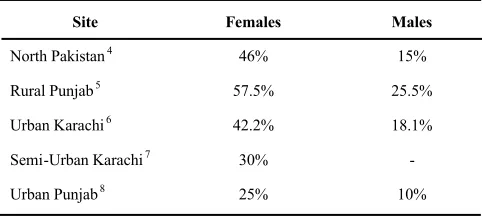
[image:1.612.37.278.460.568.2]Community based prevalence studies for common men-tal disorders (CMDs) in Pakistan give very high figures, ranging from 10% to 25% for men and 25% to 57% for women.3
Table 1. Prevalence of depression from community studies in Pakistan.
Prevalence of CMDs in primary care settings in Pakistan is estimated to vary from 17% to 30%.9Fifty
per-cent of all women presenting to a primary care per-centre (PCC) in Chitral in northern area of Pakistan were found to be depressed.10Similarly, 18% of men and 42.2% of women
attending a Primary care center (PCC) in urban Karachi were found to be depressed.11
Although depression has been diagnosed in third of
primary care attendees in other Asian countries, primary care staff is generally reported to recognize 10% of cases only.12
Primary care physicians (PCP) may fail to diagnose or treat depression for several reasons: depression that pres-ents in primary care is in many ways a different disease than that seen in psychiatric settings. The process of detection and treating it is also different.13 Acute presentation of
patients with psychosocial problems and limited time avail-able in primary care clinics adds to difficulty of PCPs.14
Some PCPs disagree with the medical model of disease, arguing against the medicalisation of human distress or the use of antidepressants. However this remains a controver-sial issue though some consensus can be achieved regarding the economic burden and social and emotional cost of untreated illness.15
This review addresses some of the paradoxes and dif-ficulties faced by PCPs in the detection and management of depression, in particular factors pertaining to symptamatology, diagnostic and psychometric assessment. Management of depression in primary care especially with reference to care-pathway in Pakistan is also discussed. Finally an attempt is made to provide micro and macro-level solutions.
Does diagnosis of depression medicalize human grief?
It has been echoed many a times by both mental health professionals and PCPs that depression, as a disease entity does not exist. They argue that feeling of grief sec-ondary to sense of actual or perceived loss is a normal human reaction. M Scot Peck, the famous American psychi-atrist and psychotherapist in his book "The Road less trav-eled" talks about healthiness of depression in the context of psychotherapy. "Since mentally healthy human beings must grow, and since giving up or loss of the old self is an inte-gral part of the process of mental and spiritual growth, depression is normal and basically a healthy phenomena. It becomes abnormal or unhealthy only when something inter-feres with the giving up process, with the result that the depression is prolonged and can not be resolved by comple-tion of the process."16
In a more scientifically robust publication, "A psy-chotherapist looks at depression" the psypsy-chotherapist Anthony Storr writes that "depression is not an illness, but a psychobiological reaction, which can be provoked in any one; that it is much more easily provoked in some people than in others and that vulnerability to depression partly depends on
Review Article
Depression in primary care: difficulties and paradoxes
Haider Naqvi, Murad Moosa Khan
Department of Psychiatry, Aga Khan University Hospital, Karachi.
Site Females Males
North Pakistan4 46% 15%
Rural Punjab5 57.5% 25.5%
Urban Karachi6 42.2% 18.1%
Semi-Urban Karachi7 30% -
social factors, as George Brown has demonstrated."17
When examined superficially, such views appear conflicting and can lead to erroneous judgment by physi-cians and general public alike. In a clinical realm there is a consensus on the definition of clinical depression and reac-tion to loss and bereavement. However, such differentiareac-tion remains a contentious issue in busy family physicians prac-tice. Diagnostic criteria of depression based on symptoms, as opposed to signs adds further confusion to the medical model of depression. A historical perspective on the vari-ability of diagnostic criteria will help in further understand-ing the medical model of depression.
Variability in diagnostic criteria for depression
Historically there have been number of ways to clas-sify depressive symptoms. Unfortunately this has played a role in increasing the ambiguity in recognition of depressive illness at primary care level. Current usage is for an opera-tional classification. The essence of operaopera-tional approach is that it identifies the relevant pattern of symptoms. It makes no claims about etiology, instead, it makes possible the fun-damental scientific activity of classification, and thereby communication about similar patients. The process of oper-ational approach is arbitrary based on severity, duration and quality of experience. This has originated from Maudsley school of researchers.18
Another approach is to dichotomize the classifica-tion on the basis of signs and symptoms. This has been the leading principle behind the Newcastle school of researchers, who identified a group of core signs. Non-reac-tivity, delay in verbal response, poverty of association, delayed motor activity, and slowed speech rate was described by parker and colleagues. It shows a bimodal dis-tribution across patient population where symptom score do not and it also fits the classical model of endogenous verses reactive depression.19It can be argued that PCPs trained in
medical model of illness tend to overlook the psychological aspect of illness. Any classification based on signs will have better acceptance than one based on phenomenological basis of symptoms.
Depression and co-morbid conditions
Significant depressive symptoms are seen in 36% of medically ill patients.20 Those with dementia, diabetes,
stroke, asthma and renal impairment have especially high rates of co- morbid depression.21 Fifty two percent
depressed patients show signs of sub clinical hypothy-roidism.21Similarly a study by Walker et al demonstrated
that 13% to 55% initial patients presenting to gastroenterol-ogists have functional illness.22 Prevalence estimates for
depression and anxiety ranges from 54% to 100% among functional gastroenterology symptoms.23 Disorders like
hypercortisolism and HIV are examples of co-morbid
med-ical illnesses that may be associated with depression and its poor response.24Depression is recognized as one of the risk
factors for cardiac illness and short-term mortality from co morbid depression and cardiac illnesses are greatly increased.25 Conditions like fibromyalgia and chronic
fatigue syndrome, exists at the interface of medicine and psychiatry and are associated with major depressive disor-der.
Depression is also associated with use of medica-tions as 3% of patients on high dose steroids report signif-icant symptoms of depression.26Calcium channel blockers,
beta-blockers and digoxin are known to cause depression.27
Caffeine use may be associated with increased side effects and failure of some symptoms to improve (for e.g. anxiety and insomnia).28 Co morbid alcohol use and withdrawal
from alcohol and stimulants are associated with depres-sion.29
Co morbid psychiatric disorder adds further to the difficulties of physicians and burden of symptoms to the patient. In a study carried out in USA (PRIME-MD 1000 study), over half of the patients with a psychiatric diagnosis had more than one psychiatric disorder, and almost one third had three or more. Sixty five percent patients with depres-sion were also diagnosed with an anxiety or somatoform disorder or alcohol abuse and 82 % of the 1000 patients assessed had at least one co-morbid problem: almost half had hypertension, 23 % had arthritis, 17% had diabetes, and 15% had cardiac disease.30
Depression sub-typing: differences in primary care and psychiatry
There are number of factors mentioned in literature regarding type of depressive disorder seen in primary care and psychiatry. Patients seen in the two settings may be quite different. Depression seen in primary care is less severe and less impairing. Evidence of this comes from Michigan Depression Project (MDP), a long-term study of depression in primary care that has provided valuable data regarding the similarities and differences between depressed patients in primary care and psychiatry and whether the same treatment is appropriate in both settings.31
were diagnosed with Major Depression and 22.6% with any depressive disorder, but over 40% of those meeting the cri-teria for MDD were mildly depressed. Many of the primary care patients with mild or moderate depression were not diagnosed; family physicians only diagnosed 35% with MDD and 28% patients with any depressive disorder.31
However detection rate for severe depressive patients was significantly higher; 73% of severely depressed patients were selected compared with 18.4% of mildly depressed patients.
It appears that primary care physician in MDP relied heavily on level of impairment when diagnosing depression, reserving use of the label "depression" for clinical circum-stances that they saw as warranting intervention. This is consistent with other primary care studies from western countries. There are no studies looking at the degree of depressive illness in patients attending primary health care centers.
Somatization and depression
In a medical out-come study from USA, practice attendees were screened with brief psychosocial question-naire. Those who screened positive for depression were then confirmed by a diagnostic assessment that was compared with the clinician's perception signified 'detection'. Detection rates were found to be significantly lower in pri-mary care setting than in mental health setting.32The main
reason sighted was medically un-explained symptoms and somatization.
The main reason for the discrepancy of under recogni-tion is somatisarecogni-tion i.e., the presentarecogni-tion of psychological dis-tress in somatic terms- and poor awareness on part of health professionals. In a study by Munk-Jorgensen et al (1997) the only socio-demographic variable that influenced GPs' recogni-tion rate was employment. Mental illness was recognized in the group of unemployed individuals (including prisoners) than in group of employed individuals.33This suggested that GPs may
use disability as an indicator of mental illness. However, other studies have shown that a substantial proportion of mental dis-orders in primary care go unrecognized, or else are inadequate-ly recognized by the GP.
Many researchers have pointed out patients in devel-oping countries present more with somatic symptoms than psychological or cognitive symptoms. This assumption has been challenged. The reason behind this is that certain somatic complaints do accompany the psychological distress i.e. palpitation in anxiety or loss of vital feelings in depres-sion. Indeed, a WHO primary care study recorded patients with mental disorder presenting with fever and cough, and the investigator went on to state that "it seems that many patients assume that a physical symptom is almost a require-ment in order to be seen at a health facility".12They did not
present data on the co morbidity of physical disorders such as tuberculosis. What is central to the assumption of somati-sation in depression is cultural-congruent concept of disease entity. People adopt disease models and presenting com-plaints that are most amenable to attention. This does not change the nature or prevalence of the disorders; rather it makes allowances for the uniqueness of presentation of the individual disorder. Further research on this issue with cul-turally valid tools is needed to clarify the controversy.
Depression and psychometric assessment
The debate of culture specific explanatory model of ill-ness (Emic) has been an old one in social anthropology. To what extent concepts of another culture (Etic) can be used for categorization of illness in another culture is a debatable issue. Cross cultural psychiatry makes an assumption regarding the universalism of diagnostic entities i.e. depression as a diagno-sis exists in a similar manner in Lahore and Leeds. When anthropologists assign different culture specific explanatory models to illnesses their psychometric measurement becomes an additional issue. Emic-instruments and questionnaires with cultural sensitive explanatory models are reported to be prefer-able over Etic-instruments. But research findings of studies using emic-instruments only without established cross cultural validity are open to question.34
There are five questionnaires that have been validat-ed and adaptvalidat-ed for cross cultural use in Urdu speaking pop-ulations (Table-2). Principal issues involved are linguistic in nature. What are the idioms of distress? Are they same in Urdu speaking population or are they significantly different from western population? Does migration have an effect in the way distress is communicated?
Table 2. Cross culturally validated instrument for measuring depres-sion in Urdu speaking population along with references in peer
reviewed journals.
Some of these questions have been addressed in a cross cultural study of somatic sensations and psychologi-cal distress among students in Britain and Pakistan. Mumford et al reported prevalence of somatic sensations in matched populations of students in Leeds (U.K.) and Lahore (Pakistan). A new self-report questionnaire, the Bradford Somatic Inventory (BSI), was employed together with the General Health Questionnaire (GHQ-28). There was no statistically significant difference between the two
Validated instruments for measuring depression in Pakistan
Bradford somatic inventory (44 -items).35
General Health Questionnaire (GHQ -28).36
Hospital Anxiety and depression scale (HADS -14 items).37
Self-Report questionnaire (SRQ -20).38
populations in mean endorsement rates but females from both ethnic groups demonstrated a higher prevalence of reported somatic sensations and had higher GHQ scores than males. The frequency hierarchy of endorsed items was similar in both groups. This study provides no support for the notion that Asian subjects generally experience more somatic sensations associated with psychological distress than Western subjects.
In another study the Urdu and English versions of the GHQ-28 were administered to bilingual Pakistani stu-dents using a crossover design, in order to evaluate the equivalence and reliability of translation in relation to the original, and to determine convergent validity using the Hospital Anxiety and Depression Scale (HADS) as compar-ison measure. Riaz and Reza (1998) were able to demon-strate the similarity of the basic concept of depression with its cultural uniqueness. Satisfactory findings at each level of analysis indicated that the Urdu GHQ-28 was comparable to the original English version and were thus assessing the underlying psychopathology (depressive disorder) in simi-lar ways. The study supported the earlier work of Mumford in dispelling the notion of predominant somatisation in developing countries.
The Aga Khan University Anxiety and Depression Scale (AKUADS) is an emic instrument that has been developed indigenously keeping in view the linguistic and cultural idioms of distress. Its concurrent validity has been established in community and center based studies. It has sensitivity of 66% and reliability of 79%.
The Self Reporting Questionnaire (SRQ) is another instrument that has been validated and adapted for cross cul-tural use in Urdu speaking population. Its distinct advantage is in its dichotomous response (yes/no) to symptoms contrary to Likert scale. The latter has the difficulty of interpretation by the responder even when interviewer bias and variability has been controlled by training.
Primary care psychiatry: in vogue but incongruent with the disease epidemiology
Strategies for indigenous and innovative approach to mental health care in developing countries were provided by the World Health Organization (WHO). According to this, mental health care services should be integrated with gener-al hegener-alth services, provided in decentrgener-alized manner. The WHO expert committee has recommended "in developing countries, trained health professionals are very scarce indeed, clearly if proper health care is to be brought within reach of the mass of the population, this will have to be done by primary health care physicians, working in collaboration with and supported by more specialized personnel".40
Integration of management of mental illnesses in pri-mary care is primarily driven by the need to reduce
institution-alism and promote better care of individuals with mental ill-ness. Research form the West and developing countries has shown that quarter to half of the patients seen in primary care have unmet mental health needs. In the setting of poor aware-ness and resources it is feasible that primary care staff be trained to treat and manage mental illness, thereby fulfilling the need-supply gap. This model was conceived by psychia-trists in Western countries having administrative convenience and well established primary health care system.
In Pakistan primary health is poorly developed with weak referral chain from primary-secondary-to-tertiary care services. Most patients' by-pass the primary care serv-ices and access servserv-ices at secondary and tertiary care cen-ters directly. The primary reason being poor quality of serv-ices offered at these centers. Additionally, in the absence of any kind of health insurance, most patients pay out of their own pockets. The dynamics of pathway to care, therefore, is much different compared to countries with well estab-lished health care networks like National Health System in United Kingdom.
Many developing countries followed the lead from the West and piloted and implemented some of the models devel-oped in the Western countries. These programs often had funding and other incentives attached to them. Such models, predictably, demonstrated the feasibility of integration of mental health programme in the primary health care. In short primary care psychiatry became in vogue.
Studies on integration of mental health services in primary care centers in Pakistan are inconclusive. Some of the issues involved are related to the perception of govern-ment run primary health care services by the general public as well as the, costs involved, knowledge of services, stig-ma, pathways to care and design issues.41
There is lack of accurate information for objective decision making. It has been amply demonstrated that mod-els developed in research are much different from usual clinical care setting. One of the principal reasons is the high level of motivation and commitment of the researchers to demonstrate feasibility of their model and support for their hypothesis. Support, funding and conflicts of interest can also influence the findings in conscious and unconscious ways. Publication bias adds to this list with associated paucity of publications from developing countries finding place in high impact-well subscribed journals.
exist even before the index study was published.42 Depression and pathway to psychiatric care
A pathway to psychiatric care pilot study from a ter-tiary care hospital demonstrated that only 2.8% (n=96) patients were referred by primary care physicians as opposed to 20% referral from specialists in other fields of medicine. In this study 63% cases were self/family referred. Only 17% patients had a primary care physician as the previous carer before presentation to a psychiatrist.43 Cultural practices in
Pakistan create a barrier even for treatment of ailments. The observation noted in the diarrhoea control programme were that female attendants bringing their children to the health centre were hesitant to seek advice from male healthcare staff. It took almost a decade to recognize the need for lady health workers to rectify the mistake in the design of the management programme.
Treatment difficulties in primary care setting
Depression, with its relapsing and remitting course, fits more in the chronic illness models for clinical approach, level of clinical challenge, and strength of therapeutic alliance and resources required for optimal management. Patients may also have many health beliefs that negatively influence medication adherence and a psychosocial context that does not support wellness. Popular beliefs that medications are habit forming or misinterpreting benzodiazepines as antide-pressants add to the difficulties. Other chronic social difficul-ties, extended household settings, marital disharmony, and conflict with hostile in-laws fuels the negative mood states, often complicating the treatment.
Since many of the primary care patients are mildly depressed, they may resist treatment even if they accept the diagnosis. Physicians may in turn hesitate to officially diagnose these patients, choosing instead a "wait-and-see" philosophy.44
Another factor that may contribute to the seemingly low rate of depression in primary care is the stigma still attached to a diagnosis of depression or any psychiatric dis-order. Patients who present with somatic symptoms may fail to connect them to psychological distress or a psychiatric disorder. Finally, sustaining treatment for depression can be much more difficult in primary care in the presence of mul-tiple health problems and competing demands that unfolds over time than in the psychiatric setting where it is the sole focus of a doctor-patient relationship.43
The discovery in Western countries that primary care was filled with patients suffering from depression coincided with introduction of the first selective serotonin reuptake inhibitor (SSRI). Their use for more than a decade highlighted an unanticipated (from the primary care physicians' perspective) reality about depression treatment: antidepressants do not work as well as we had been led to believe, or depression is much
harder to treat than expected on the basis of the content of cur-rent medical education. Perhaps it is combination of factors.45
Primary care physicians are surprised to learn that most patients with depression are treatment resistant.
The way-forward: need for innovative strategies
In low-income countries like Pakistan mental health resources are limited and constrained, mental health legisla-tion is out-dated and in-effectively implemented. Governmental funding for health in general and mental health in particular are abysmally low. There are only 320 trained psychiatrists for a population of 150 million. Specialized in-patient care facilities exist in the form of large custodial care mental hospitals. That too is available to the urban population that constitutes only 28% of the populations.46
What can be done in these circumstances? There are macro- and micro-environment problems. Solutions there-fore need to be designed at different levels.
There is a need to integrate the management of depres-sion at all the levels of care and generalists and specialists both need to be trained in recognition and management of depres-sion. This need not be a costly exercise; all it requires is in-service training of health care personnel and provision of essential drugs. However this can only be done when health care personnel are educated to magnitude of the mental health problems. This requires mental health professionals to adopt a dual role of a physician/ teacher and health care manager in developing countries' settings.
There is also a need for objective data collection regarding perception and pathway of care taken by people in Pakistan from a representative sample, in order to design better mental health care services congruent to social and cultural ethos of society. Guidelines for integration of men-tal health intervention should be based on local disease spectrum, social epidemiology, cultural interpretations, and co-morbidities beside available resources.
There is also a need to develop research capacity in order to address the short comings in research and care of men-tal illnesses in developing countries. Collaboration needs to be developed not only among primary health care physicians but also with physicians in other specialties, epidemiologists and public health administrators. Guidelines based on operational criteria needs to be developed and implemented.47Treatment
algorithms may serve as a management aid, but their proper implementation requires astute clinical observation. Complexities of diverse clinical presentation, psychosocial conflicts and poor compliance can only be mastered after extensive experience and vigorous training.
healing by therapeutic communication, structured therapies and should not just dispense drugs. Only by stringent self eval-uation and interdisciplinary collaboration one can bring about better and effective management of depression and better quality of life for patients at primary care level.
References
1. Goodwin G. Mood disorder. In: Companion to psychiatric studies, sixth edition. Churchill Livingston: Harcourt Brace and Company Limited Edinburgh 1998;551-64.
2. Murray CJ, Lopez AD. The Global Burden of Disease: A comprehensive assess-ment of Mortality and Disability from Disease, Injury and Risk Factors in 1990 and projected to 2020. Boston: Harvard School of Public Health, WHO and World Bank, 1996.
3. Mirza I, Jenkins R. Risk factors, prevalence, and treatment of anxiety and depres-sive disorders in Pakistan: systematic review. BMJ 2004;328:794-7. 4. Mumford DB, Nazir M, Jilani FU, Baig IY. Stress and psychiatric disorder in
Hindukush: a community survey of mountain village. Br J Psychiatry 1996;168:299-307.
5. Mumford DB, Saeed K, Ahmad I, Latif S, Mubbashar MH. Stress and psychi-atric disorder in rural Punjab: a community survey. Br J Psychiatry 1997;170:473-78.
6. Ali BS, Amanullah S. Prevalence of Anxiety and depression in an Urban squat-ter settlements of Karachi. JCPSP 2000;10:4-6.
7. Ali BS, Rahbar MH, Naeem S, Tareen AL, Gul A, Samad L. Prevalence of and factors associated with anxiety and depression among women in a lower middle class semi-urban community of Karachi, Pakistan. J Pak Med Assoc 2002;52:513-17.
8. Mumford DB, Minhas FA, Akhtar I, Akhtar S, Mubbashar MH. Stress and Psychiatric disorder in Urban Rawalpindi: a community survey. Br J Psychiatry 2000;177:557-62.
9. Sabooh SM, Saeed K, Gater R. Reaching the unreached: Evaluation of training of primary care physicians. J Coll Phys Surg Pak 2001;11:232-38.
10. Dodani S, Zuberi RW. Psychiatric disorders in the northern areas of Pakistan. J Pak Med Assoc 2000;50:137.
11. Ali BS, Amanullah S. Prevalence of Anxiety and depression in an Urban squat-ter settlement of Karachi. J Coll Phys Surg Pakistan 2000;10:4-6.
12. Patel V. Recognition of common mental disorders in primary care in African countries. Lancet 1996;347:742-44.
13. Jencks SF. Recognition of mental distress and diagnosis of mental disorder in pri-mary care. JAMA 1985;253:1903-7.
14. Ormel J, Brink V, Koeter M. Recognition, management, and outcome of psy-chological disorders in primary care: a naturalistic follow-up study. Psychol Med 1990;20:909-23.
15. Andrew G, Sanderson K, Beard J. Burden of disease: Methods of calculating dis-ability from mental disorder. British Journal of Psychiatry 1998;173:123-31. 16. Peck MS. The Healthiness of Depression. In: The Road Less traveled; A new
psychology of love, traditional values and spiritual growth. Hutchinson and Company, Great Britain 1983, pp. 72-75.
17. Anthony S. A Psychotherapist looks at depression. Brit J Psychiat 1983;143:431-35. 18. Kendell RE. The classification of depressive illness. Maudsley monograph 1968.
Oxford University press, Oxford 62-73.
19. Parker G, Hadzi-Pavlovic D. Old data, new interpretation: a re-analysis of Sir Aubrey Lewis' MD thesis. Psychological Medicine 1993;23:859-70. 20. Husain N, Chaudhry I, Asfar S and Creed F. Psychological distress among
patients attending a general medical outpatient clinic in Pakistan. General Hospital Psychiatry 2004;26:277-81.
21. Frasure-Smith N, Lesperance F, Talajic M. depression and 18-month prognosis after myocardial infarction. Circulation 1995;91:999-1005.
22. Walker EA, Peter P, Katon WJ. Irritable bowel syndrome and functional psychi-atric illness. Am J Psychiatry 1990;147:565-72.
23. Jafri W, Yakoob J, Jafri N, Maloni M, Hamid S, Shah HA, et al. Irritable bowel syndrome in health care professionals in Pakistan. J Pak Med Assoc
2003;53:405-7.
24. Wust S, Federenko I, Hellhammer DH, Kirschbaum C. Genetic factors, per-ceived stress, and the free cortisol response to awakening. Psychoneuroendocrinology 2000;25:707-20.
25. Carney MW, Roth M, Jaffey AS. Insomina and depression prior to myocardial infarction. Psychosomatic medicine 1990;52:603-09.
26. Naber D, Sand P, Heigl B. Psychopathological and neuropsychological effects of 8-days corticosteroid treatment: A prospective study. Psychoneuroendocrinology 1996;21:25-31.
27. Patten SB, Love EJ. Drug induced depression. Psychotherapy and psychosomat-ics 1997;66:63-73.
28. Peroutka SJ, Newman H, Harris H. Subjective effects of 3, 4-methylenedioxymethylamphetamine in recreational users. Neuropsychopharmacology 1988;1:273-7.
29. Kendler KS, Heath AC, Neale MC, Kessler RC. Alcoholism and major depres-sion in women: a twin study of the causes of the Comorbidity. Arch Gen Psychiatry 1993;50:690-8.
30. Spitzer RL, Williams JB, Kroenke K. Utility of a new procedure for diagnosing mental disorder in primary care: the PRIME-MD 1000 study. JAMA 1994;272:1749-56.
31. Schwenk TL, Klinkman MS, Coyne JC. Depression in the family physicians office: what the psychiatrist needs to know: The Michigan depression project. J Clin Psychiatry 1998;59:94-100.
32. Coyne JC, Klinkman MS, Gallo SM. Short term outcomes of detected and un-detected depressed primary care patients and depressed psychiatric patients. Gen Hosp Psychiatry 1997;19:333-43.
33. Munk-Jorgensen P, Fink P, Brevik JI, Dalgard OS, Engberg M, Hansson L, et al. Psychiatric morbidity in primary public health care: a multicentre investigation. Part II. Hidden morbidity and choice of treatment. Acta Psychiatr Scand 1997;95:6-12.
34. Mumford DM, Bavington JT, Bhatnagar KS. The Bradford Somatic Inventory. A multi-ethnic inventory of somatic symptoms reported by anxious and depressed patients in Britain and the Indo-Pakistan subcontinent. Br J Psychiatry 1991;158:379-8.
35. Riaz H, Reza H. The evaluation of an Urdu version of the GHQ-28. Acta Psych Scandanavia 1998;97:427-32.
36. Mumford DB, Tareen AK and et al. The translation and evaluation of an Urdu version of The Hospital Anxiety and Depression Scale. Acta Psychiatr Scand 1991; 83:81-5.
37. Rahman A, Iqbal Z, Waheed W, Hussain N. Translation and cultural adaptation of questionnaires. J Pak Med Assoc 2003;53:142-7.
38. Ali BS, Reza H, Khan MM. Development of an indigenous screening instru-ment in Pakistan: The Aga Khan University Anxiety and Depression Scale. J Pak Med Assoc 1998;48:261-5.
39. Bhui K. Cultural adaptation of mental health measures: improving the quality of clinical practice and research. Editorial. B J Psych 2003;183:184-6.
40. World Health Organization. The world health report. Mental health: new under-standing, new hope [online] 2001 [cited 2003 November 1]. Available from: URL: www.who.int/whr2001/ 2001/main/en/
41. James S, Chisolm D, Murthy S, Kishor KK, Sekhar K, Saeed K, et al. Demand for, Access to and use of community mental health care: Lesson from a demon-stration project from India and Pakistan. Int J Soc Psych 2002;48:163-76. 42. Burns T, Knapp M, Catty J. Home treatment for mental health problems: a
sys-tematic review. Health technology assessment 2001;5:1-139.
43. Manning JS. Difficult-to-treat Depression: A primary Care Perspective. J Clin Psychiatry 2003;64:24-31.
44. Sackein HA. The definition and meaning of treatment-Resistent depression. J Clin Psychiatry 2001;62:10-6.
45. Thase ME, Rush AJ, Howland RH. Double blind switch study of imipramine or sertraline treatment of anti-depressant resistant chronic depression. Arch Gen Psychiatry 2002;59:233-39.
46. Gadit AA. Scope of Ehinopsychiatry in Pakistan. Editorial. J Pak Med Assoc 1996;46:119.