Using action research to develop my solution-
focused practice in collaboration with Year 6 and 7
pupils when discussing their behavioural
self-regulation at school.
Daniel Tully
Declaration.
This work has not previously been accepted for any degree and it is not currently being submitted for any other degrees. This research is being submitted in partial fulfilment of the requirements of the University of East London for the degree of Applied Educational and Child Psychology.
The thesis is the result of my own work and investigation, except where
otherwise stated. Other sources are acknowledged by explicit references in the text. A full reference list is included in the thesis.
I hereby give permission for my thesis, if accepted, to be available for reading and for inter-library loans, and for the title and summary to be made available to outside organisations.
Acknowledgements.
There are many individuals who have supported the completion of this thesis. My parents have always challenged and encouraged me to look deeper into all areas of life and to try to find new paths of discovery for myself and for others. I owe them endless gratitude for their support throughout this process.
I would also like to offer thanks to the UEL tutor team. I am particularly indebted to Dr Miles Thomas who has been a constant source of support through thick and thin.
In addition I would like to thank the Educational Psychology Service for their help.
Abstract.
This action research study aimed to develop the researcher's use of solution- focused techniques when working with Year 6 and 7 pupils’ self-regulation. A systematic literature review highlighted an evidence base that demonstrated the efficacy of solution-focused methods when working with this population. The researcher’s intention was to add to the body of Educational Psychology practice-based evidence in this area.
The researcher recruited eight participants from primary and secondary school provisions. Solution-focused techniques were systematically trialled in partner-ship with the pupils and were modified through an action research cycle. Semi-structured interviewing provided participants the opportunity to critically evaluate the researcher’s solution-focused practice. Thematic Analysis was used to as-sess feedback in order to adapt the delivery of solution-focused techniques.
Contents Page.
Chapter 1 Introduction… 1
1.1. Introduction to chapter… 1
1.2. Definitions of terms…1
1.2.1. Self-regulation… 1
1.2.2. Social Emotional and Mental Health… 2
1.2.3. What is Solution Focused Brief Therapy?.. 3
1.3. National context of this research… 4
1.3.1. Recent legislation and Educational Psychology practice… 4
1.4. The local context and the development of solution-focused practice when training to become an Educational Psychologist… 5
1.5. Reflective practice and action research…6
1.6. Researcher’s position…7
1.7. The purpose of this research…8
1.8. The research question… 8
Chapter 2 Literature review…10
2.1. Aims and overview of literature review… 10
2.2. The theoretical and conceptual background of Solution Focused Brief
Therapy… 10 2.3. Systematic literature review… 11
2.3.1. Databases, web-based sources and search engines used… 12
2.3.2. Inclusion and exclusion criteria… 12
2.3.3. Identification of studies relevant to this research… 13
2.3.4. Critical analysis of studies that validate the use for a solution-focused approach for Year 6 and 7 pupils’ self-regulation development… 13
2.3.5. Summary of the above 16 studies to provide a rationale for this work…21 2.3.6. Previous solution-focused action research… 23
2.3.7. Key learning from the four AR studies… 26 2.3.8.Critique of the literature review… 27
2.4. Other literature relevant to this study… 27
2.5.The relevance of this action research project for Educational Psycholo-gists…29
2.6. Summary of literature review… 30
Chapter 3. Methodology… 31
3.1. Introduction to chapter… 31
3.2. Practice-based evidence… 31
3.3. Research design… 32
3.4. Philosophical position / research paradigm… 33
3.4.1. Ontology… 33
3.4.2. Epistemology… 33
3.4.3. Theoretical position… 35 3.5. Further information related to the theory and evidence-base for action re-search as a methodological tool… 36
3.6. Data collection and analysis procedures… 37
3.6.1. Overall summary of procedure for action research cycles… 39
3.6.2. Brief summary of subsidiary phases in-between each of the three
solu-tion-focused sessions with pupils… 39 3.6.3. Qualitative data collection and Thematic Analysis… 40
3.6.3.2. Details of Thematic Analysis… 40
3.6.4. School and participant selection criteria…42
3.6.5. Recruitment procedure summary… 44
3.6.6. Sampling methods… 44
3.6.7. Consideration of validity and reliability issues… 44
3.7. Ethical considerations… 46
3.8. Summary of methodology… 47
Chapter 4. The action research process / Findings… 49
4.1. Introduction… 49
4.2. Action research cycle 1… 49
4.2.1. Cycle 1 subsidiary learning phase… 49
4.2.2. Cycle 1 interview data collection and first Thematic Analysis ... 52
4.2.2.1. Step 1: Becoming familiar with cycle 1 data… 52
4.2.2.2. Step 2: Generating initial codes… 53
4.2.2.3. Step 3. Searching for themes… 56
4.2.2.4. Step 4. Reviewing themes… 60
4.2.2.5. Step 5. Final thematic map… 62
4.2.3. Summary of cycle 1… 62
4.2.3.1. Key findings and modifications to solution-focused practice for cycle 2… 62
4.2.3.2. Moving on to cycle 2… 65
4.3. Aims of cycle 2… 65
4.3.1. Subsidiary phases within cycle 2 utilising learning from cycle 1… 66
4.3.2. Cycle 2 data collection and second Thematic Analysis… 68
4.3.2.1. Step 1: Becoming familiar with cycle 2 data… 68
4.3.2.2. Step 2: Generating initial codes… 68
4.3.2.3. Step 3. Searching for themes… 71
4.3.2.4. Further re-coding within Step 3… 71
4.3.2.5. Coding evidence to support theme choices… 71
4.3.2.6. Step 4. Reviewing themes… 72
4.3.2.7. Step 5. Final thematic map… 73
4.3.3. Summary of cycle 2… 74
4.3.3.1. Key findings and implications for possible adaptations of practice for ongoing solution-focused work beyond cycle 2… 74
4.4. Overall summary of findings… 76
Chapter 5. Discussion… 78
5.1. Introduction to chapter … 78
5.2. Discussion and critique of research findings… 78
5.2.1. Reflections on modifications to the use of resource activation… 78
5.2.2. Examples / critique of methods of resource activation during cycle 1… 79
5.2.3.Discussion of further adaptations to resource activation… 80
5.2.4. The inclusion of resources located beyond the school setting… 80
5.2.5. Multi-sensory methods of resource activation… 81
5.2.6. Considering the pace of the session in terms of resource activation… 82
5.2.7.Encouraging ‘spontaneous creative (lateral) thinking’ in terms of resource activation… 83
5.3. Reflections on goal setting when using the miracle question and preferred-future questioning… 84
5.3.1. Examples and critique of miracle question usage for goal setting… 85
5.3.2. Modification to language delivery of miracle question reflecting the need to improve client ownership of goals… 85
5.3.3. Frequency of miracle question use… 86
5.3.4. Multi-sensory use of miracle question reflecting the need to improve client ownership of goals… 86
5.3.5. Encouraging pupil autonomy… 87
5.4. Modifications to the use of finding exceptions to pupils’ problems in solu-tion-focused practice… 87
5.4.1. Examples and critique of methods of exception finding throughout cycle 1 and 2… 88
5.4.2. Adaptations utilising participant peer-group support… 88
5.5. The use of scaling in solution-focused practice… 89
5.5.1. Examples and critique of modifications to scaling… 89
5.5.2. Clarity of scaling description… 89
5.5.3. The use of scaling beyond a one to one context… 89
5.5.4. Support for scaling beyond a one to one context… 90
5.5.5. Multi-sensory scaling using colour to develop pupil autonomy… 90
5.6. Modifications to the use of a break for reflection… 92
5.7. Modifications to the agreement of next steps … 92
5.7.1. Examples and critique of modifications based on cycle 1 learning… 92
5.7.2. Support structures for actioning of next steps… 93
5.7.3. Parental support adaptations… 95
5.7.4. Co-construction of next steps modifications… 96
5.8. Evaluation of methodology… 96
5.8.1. Questioning the validity of this action research study… 96
5.8.2. Individual one to one session validity… 97
5.8.3. Validity of the interview process… 98
5.8.4. Challenges that were faced throughout the interviewing process… 99
5.8.5. Ethical considerations and the researcher in a position of power… 100
5.8.6. Sample homogeneity… 101
5.8.7. Audit trail, rigour and a consideration of direct-application… 101
5.8.8. Thematic Analysis validity… 101
5.8.9. Evaluation of Thematic Analysis phases (1-5)… 102
5.8.10. Implications of using qualitative approaches to validity… 104
5.9. Feedback of study… 104
5.9.1. To pupils, parents and school… 105
5.9.2. To Educational Psychology Service and University of East London Educa-tional Psychology trainees and faculty members… 105
5.10. The relevance and implications of this work for Educational Psychologists …105
5.10.1. Implications for this researcher…105
5.10.2. Implications for the wider Educational Psychology community…106
5.11. Conclusions… 107
Appendices… 121
Appendix A. Summary of systematic literature searching… 122
Appendix B. Head teacher Information Sheet and consent form… 124
Appendix C. Parents/carers and pupil Information Sheet and consent form… 126
Appendix D. UEL ethical approval form… 130
Appendix E. Research diary entry… 132
Appendix F. Margie’s data transcript… 133
Appendix G. Margie’s code-book continued… 138
Appendix H. ‘Post-it’ note example of initial theme grouping… 141
Appendix I. Initial thematic map… 142
Appendix J. Copy of the final thank you letter sent to the participants…143
List of abbreviations. AR action research
SF solution-focused
SR self-regulation
UK United Kingdom
SEMH Social Emotional Mental Health
SEN Special Educational Needs
BESD Behavioural Emotional Social Difficulties
DfE Department for Education
SFBT Solution Focused Brief Therapy
USA United States of America EP Educational Psychologist
YP young people/person
BPS British Psychological Society
TA Thematic Analysis
EBTA European Brief Therapy Association SDT Self Determination Theory
EPS Educational Psychology Service UEL University of East London
EARS Elicit Amplify Reinforce Start over
EB externalising behaviour
SENCo Special Educational Needs Coordinator MQ miracle question
PI Personal Investigator
SFBTA Solution Focused Brief Therapy Association
BPS British Psychological Society
SOLAR Sit attentively; Open posture; Leaning forward; Eye contact; Relaxed body language
SMART specific measurable and realistic targets.
EPNET email discussion lists for the UK Education and Research communities
List of Figures.
Figure 1. Action reflection cycle … 32
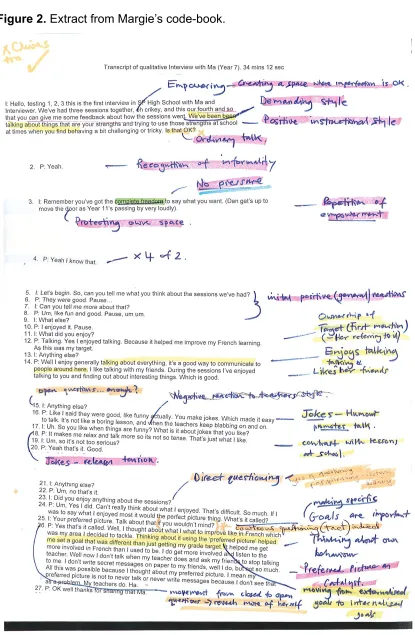
Figure 2. Extract from Margie’s code-book… 54
Figure 3. Interaction thematic map… 60
Figure 4. Pace thematic map… 60
Figure 5. Questioning thematic map… 61
Figure 6. Systemic thematic map… 61
Figure 7. Cycle 1 final thematic map… 62
Figure 8. Developed thematic map… 72 Figure 9. Cycle 2 final thematic map with sub-themes… 74
Figure 10. Scaling modification using colour… 91
Figure 11. Copy of Blue’s SF target setting sheet… 94
List of Tables.
Table 1. Categories of interest and related terms for the systematic article search… 12
Table 2. Quantitative, qualitative and mixed-method article summary… 14
Table 3. Outline of previous action research studies… 23
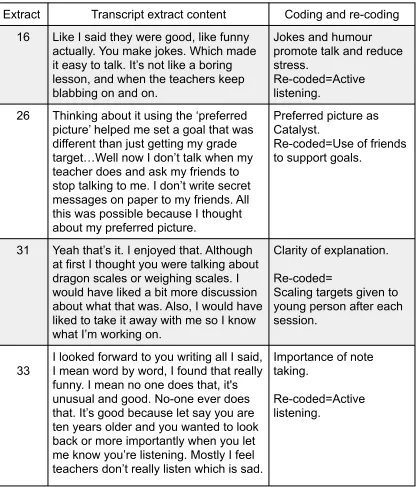
Table 4. Codes developed from Margie’s interview data… 55
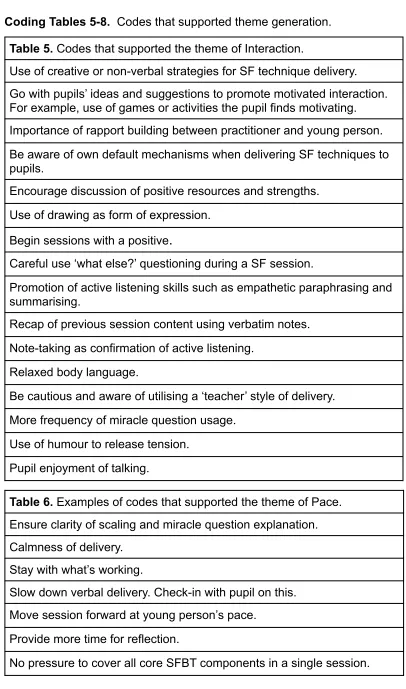
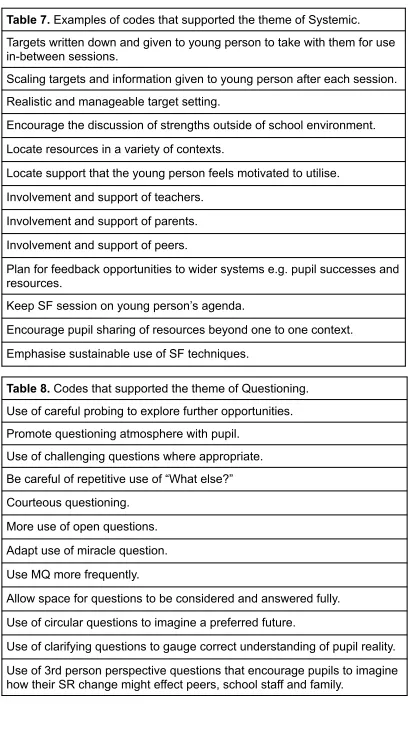
Coding Tables 5-8. Codes that supported theme generation… 58
Table 5. Examples of codes that supported the theme of Interaction… 54
Table 6. Examples of codes that supported the theme of Pace… 54
Table 7. Examples of codes that supported the theme of Systemic… 55
Table 8. Examples of codes that supported the theme of Questioning… 55
Table 9. Cycle 2 participant data extracts, initial codes and re-coding evi-dence… 69
Chapter 1. Introduction. 1.1.Introduction to chapter.
This research focuses on the improvement of the researcher’s use of solution-focused (SF) techniques when working with young peoples’ self-regulation (SR) development. This chapter will open the discussion around the topic which the researcher has set out to explore. It will begin with definitions of key terms and move into an explanation of the relevant legislation necessary. The researcher will then delineate the reasons for this study. This will include a brief outline of where the journey of using action research (AR) began and the development of this researcher’s solution-focused practice. The chapter will conclude by setting out the research question.
1.2.Definition of key terms. 1.2.1. Self-regulation.
According to Blair and Diamond (2008) the concept of self-regulation (SR) con-sists of cognitive and behavioural processes that allow an individual to maintain optimal levels of emotional well-being, motivation and cognitive arousal. SR ca-pacities include the ability to control impulses and pay attention to environmen-tal stimuli. Increasingly,through the various stages of life, young people need to learn how to work on their SR in such areas as better independent learning, successful navigation of social interaction, longer periods of attention to learn-ing tasks and stronger skills in adaptlearn-ing creatively to school routines and disci-plines.
Code of Practice (Department for Education and Department of Health) reflects and beckons in a new arena of professional policy development alongside the well established areas of assessment, curriculum, school performance, ac-countability, school status and safeguarding domains.
1.2.2. Social Emotional and Mental Health (SEMH).
Trainee Educational Psychologists operate within the 2014 Children and Fami-lies Act. In visits to schools, this researcher has worked with school staff and families within the framework of the new Special Educational Needs (SEN) Code of Practice (DfE and DoH, 2015) to co-construct and identify outcomes for pupils. The term ‘Behaviour Emotional and Social Difficulties’ (BESD) has re-cently been replaced by ‘Social Emotional and Mental Health’ (SEMH). This is with a view to consider the behaviour messages of underlying and unmet social, emotional or mental health issues.
The Department for Education definition of SEMH reads as,
Children and young people who may experience a wide range of social and emotional difficulties which manifest themselves in many different ways. These include becoming withdrawn or isolated, as well as displaying chal-lenging, disruptive or disturbing behaviour. These behaviours may reflect underlying mental health difficulties such as anxiety or depression, self-harming, substance misuse, eating disorders or physical symptoms that are medically unexplained. Other children and young people may have disor-ders such as attention disorder, attention deficit and hyperactive disorder or attachment disorder (DfE and DoH, 2015, p98).
need in order to work out what actions are needed and not necessarily to fit a pupil into a specific category.
When allocating participants to this research study, school special educational needs coordinators (SENCos) of the two schools taking part in the study were asked to consider the revised Code of Practice category of SEMH and then re-fer pupils whose self-regulatory challenges were in accordance with this defini-tion in terms of their enduring social and emodefini-tional needs. The participants were not on the schools SEN register but were being considered for this and were referred as a proactive response to their self-regulatory challenges.
1.2.3. What is Solution Focused Brief Therapy?
According to Kim and Franklin (2009) Solution Focused Brief Therapy (SFBT) is essentially a ‘strengths-based’ approach emphasising the positive resources that people inherently possess and how these resources can be used to create solutions to their challenges that may have been previously been labelled as ‘problems’.
SFBT was developed in the United States of America (USA) in the 1980s by Steve de Shazer and Kim Insoo Berg who were Social Workers. De Shazer and Berg were interested in therapeutic communication through the use of ‘strength-based’ co-constructed language, collaborative goal setting and solution-building dialogue and questioning (Kim & Franklin, 2009). According to de Shazer, (1991) solution-focused thinking posits the idea that people are experts in their own lives and that solutions should be co-constructed by both the client and therapist. De Shazer and his colleagues were interested in reframing the ‘prob-lem’ concept in terms of the co-construction of client-directed solutions rather than the therapist simply solving problems for the client.
1.3. National context of this research.
According to Cassidy (2012), young people in the UK are becoming more in-volved in decisions about their own lives and are increasingly seen as having important ideas and experiences to share. UK government legislation has at-tempted to facilitate this process. For example, the 1981 Education Act stated that young people should be consulted on educational provision and their feel-ings and perceptions should be taken into account. The new Children and Fami-ly Act (2015) recentFami-ly emphasised the importance of children, young people and their families being involved in decisions regarding goal setting and person-cen-tred outcomes. However the level and complexity of participation and involve-ment of young people is not discussed in detail within these policy docuinvolve-ments. Reference is made to the involvement needed appropriate to the child’s age, maturity and cognitive ability, leaving practitioners to their own interpretation of this guidance. Milner and Bateman (2011) refer to practitioners often espousing to work in child-centred ways. According to Milner and Bateman (2011) the chil-drens' evaluations of the practitioner’s involvement often does not support this position.
1.3.1. Recent legislation and Educational Psychology practice.
As already stated the recent Code of Practice (DfE, 2015) encourages more emphasis on voicing the views of the children and young people. It has become common practice for Educational Psychologists to gain the views of the child or young person that they are working with. As a trainee EP the researcher has been in a position to be able to gather pupils’ views related to the research goal of developing SF practice.
A key aim therefore of this research was to consider the involvement and con-sultative contributions of young people in the development of the researcher’s SF practice.
intervention in terms of supporting pupils’ social and emotional needs in greater depth. This type of EP practice became integral to this research design.
1.4. The local context and the development of solution-focused practice when training to become an Educational Psychologist.
During the researcher’s first year of EP training he had the opportunity to use SF techniques when working with pupils. This involved two separate interven-tions to develop Year 6 and Year 7 pupils’ SR within the context of school transi-tion. In the course of this work the researcher experienced positive anecdotal feedback from the children, school staff and parents.
In the 2nd and 3rd year EP trainee placement in a London Local Authority bor-ough, the researcher decided to attempt to further develop SF practice as part of his doctoral research project.
EP practice incorporates several frameworks of service delivery. Most models have focused on problem-solving or problem-centred methods. Since the 1970s Educational Psychology as a profession began to move away from a medically oriented deficit-focus of practice towards one that also included intervention and positive change (Stobie, Boyle & Woolfson, 2005). Up to the present day UK EPs have reported using solution-focused approaches in their work alongside the well-established problem-solving models (Stobie, Boyle & Woolfson, 2005). The establishment of the Brief Therapy Practice in London in the 1990s created training opportunities for EPs to study the techniques of SFBT. The effective-ness of SF approaches in various elements of EP practice, added to the fact that it adopts the valued deficit-free approach, has led to its inclusion in many of the EP doctorate training course syllabuses (Stobie, Boyle & Woolfson, 2005).
therapeu-tic provider in line with the government focus on social and emotional wellbeing. An online questionnaire distributed to all UK Educational Psychology Services received 455 responses.
When asked, “Do you use therapeutic interventions as part of your current pro-fessional practice?”an overwhelming 92% of the participants answered
‘Yes’ (Atkinson et al, 2011).
When questioned, “How have you used therapeutic intervention?”, over 80% declared that they used therapeutic tools during individual direct work with chil-dren and young people. Another point of relevance to this research is that EP participants in the Atkinson et al study (2011) recorded using SFBT at least 20% more often than Cognitive Behavioural Therapy or other associated therapeutic approaches to intervention.
The EP Yasmin Ajmal (2004) points out that expecting a child or YP to bear the burden of SR change individually or in isolation is unrealistic. She advocates the use of SF approaches and posits further that both family and school need to be motivated to work together on the issue of enhancing the pupils’ chances of positive change. The use of SF approaches therefore could be considered to be an alternative contribution when supporting social and emotional intervention in schools. Ajmal (2004) also stated that working in schools provides unique op-portunities for the creative and systemic use of SFBT.
Stobie et al (2005) note that SF research by EPs is currently, however, in an embryonic stage and in need of development and expansion. They also suggest a need for more EP-based research in this area.
1.5. Reflective practice and action research.
Sten-ment. AR later became known as a type of practical research underpinned by practice-based evidence other than being seen solely as research relying on evidence-based practice. It provided the opportunities for educational practi-tioners to utilise their own professional wisdom and to develop new forms of practice (McNiff & Whitehead, 2011).
Action research provided an appropriate platform to improve the researcher’s SF practice (McNiff & Whitehead, 2011). The researcher’s aim was to develop his SF practice by learning from the feedback of the pupils involved in this re-search. McNiff & Whitehead (2011) noted that “practitioner knowledge is central to practical and theoretical evolution” (p21). Exploring and developing SF prac-tice seemed therefore to align with the self-transformational capacities of first-person action research.
1.6.Researcher’s position.
When this researcher began his research journey there were professional prac-tice-based questions that need to be reflected upon and considered. Once the research arena was chosen the researcher considered his philosophical stance in terms of what paradigm of research he would align himself within. This re-searcher chose a critical-realist ontology which will be explored in greater depth in Chapter 3.
1.7.The purpose of this research.
This research aimed to specifically focus on Year 6 and 7 participants’ own self-regulatory processes that they themselves wished to develop. It was the re-searcher’s intention to develop his use of solution-focused techniques through-out this process using the methodology of action research. Feedback gathered from the young people after two cycles of SF intervention with the participants was gathered and analysed using Thematic Analysis (TA) in order to enhance the researcher's use of SF techniques.
1.8. The research question.
According to McNiff and Whitehead (2011) research should be “a developmen-tal process where nothing stands still” (p121). AR posits that original research questions often go through transformations due to the impact of the modification processes that the researcher adheres to over the course of carrying out their research. This has also been described as progressive-focusing (Parlett & Hamilton, 1977). Taking up this position the research question evolved over time. It moved away from being not only related to the participants’ SR devel-opment but more towards using the pupils’ responses to enable the
re-searcher’s own SF practice enhancement and development.
McNiff and Whitehead (2011) also stated that there is an importance in the re-searcher taking action for their own personal, professional and wider social benefit.
The chief focus of this study was for the researcher to take action towards his own SF practice development through the investigation of the following re-search question:
Chapter 2. Literature review.
2.1. Aims and overview of the literature review.
A number of themes related to relevant previous literature will be considered in this literature review. Section 2.2 will provide an overview of SFBT’s philosophi-cal outlook and conceptual framework. It will also provide further details of the six core components of SFBT. Section 2.3 delineates the systematic literature review. This literature review locates previous research where SF approaches were used to develop young peoples’ SR. The efficacy of studies found will be evaluated in order to demonstrate the appropriateness of using SF techniques to support the development of Year 6 and 7 pupils’ SR. This will involve looking first at previous quantitative, qualitative and mixed-methods SF research (see section 2.3.4) and then funnelling down thematically to previous SF action re-search (see section 2.3.6) within the topic domain. The studies will be critically evaluated in chronological order to place on record how SF research took place over time. This does not imply however that each research paper necessarily builds on or evolves from the previous paper. The researcher will discuss how these studies made use of the core components of SFBT in an attempt to learn from previous work in this area. This chapter will also analyse further literature relevant to the researcher’s SF practice development. It will end by considering the relevance of this action research project for Educational Psychologists.
2.2. The theoretical and conceptual background of SFBT.
resources people have and how these can be utilised to effect positive change (Grandison, 2007).
There is an ongoing debate around the theoretical and conceptual orientation of SFBT. De Shazer and Berg (1997) argued that SFBT has no need for a theory to explain its origins whereas others such Visser (2010) argued that SFBT could be viewed through the lens of Self-Determination Theory (SDT). Visser (2010) stated that the processes of SFBT supported clients’ perceptions of autonomy, competence and relatedness. Similarly to SFBT, Ryan and Deci (2008) posited that SDT provided empirically informed guidelines and principles for motivating clients to explore experiences and make adaptive changes towards their goals, behaviours, and relationships. Grandison (2007) proposed that SFBT had three broad theoretical underpinnings incorporating constructivism, social construc-tivism and systems theory. Therefore it could be posited that clients who experi-ence SFBT construct their own meanings when interacting with their social con-text. Further to this point they select, interpret and re-shape social information and meaning to create a better future in a self-directed manner (De Shazer & Berg (1997).
For the purposes of this research the six core components of SFBT will be utilised as advocated by De Shazer and Berg (1997) to include:
1: Resource activation to locate pupil strengths.
2: Goal setting including preferred future questioning such as the miracle ques-tion to imagine a preferred future.
3: Exploring exceptions to problems.
4: Scaling to prioritise goals and measure progress.
5: Break for reflection so that participants can consider their work so far. 6: Agreement of next steps towards SR goals.
2.3. Systematic literature review.
2.3.1. Databases, web-based sources and search engines used.
Prior to literature searching, the types of documents applicable to this area of research were established. These included academic journal studies and doc-toral theses. The selection criteria included searching for studies where SFBT was used as an approach for intervention to develop young peoples’ self-regu-lation skills. The search parameters went beyond the UK and incorporated stud-ies published from Europe and the USA after and including 1999. Randomised controlled trials, quasi-experimental designs, single case-studies, action re-search and qualitative designs were all considered. Four electronic databases were used to undertake the systematic literature review. These included Ebsco-host, Scopus, Google and Google Scholar.
2.3.2. Inclusion and exclusion criteria.
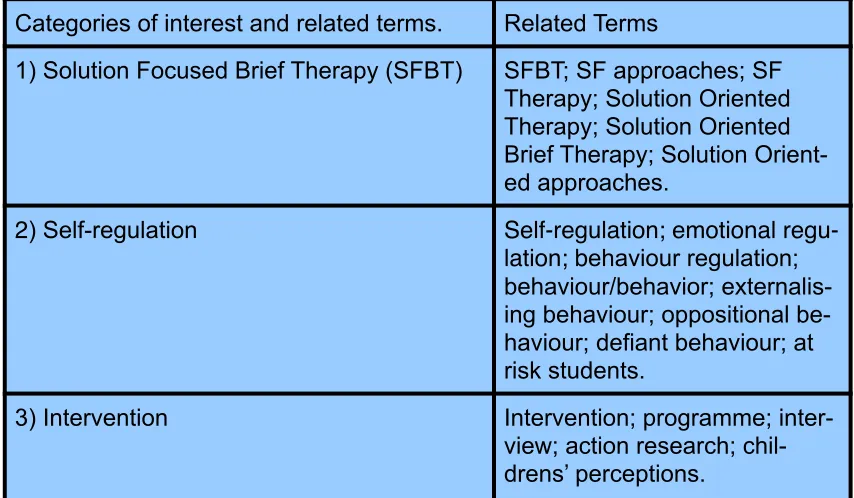
[image:22.595.112.539.499.748.2]Search terms were divided into three categories relating to 1) Solution Focused Brief Therapy 2) self-regulation 3) intervention. See Table 1 to view the list of words and/or phrases that were utilised for literature searching.
Table 1. Categories of interest and related terms for the systematic article search.
Categories of interest and related terms. Related Terms
1) Solution Focused Brief Therapy (SFBT) SFBT; SF approaches; SF Therapy; Solution Oriented Therapy; Solution Oriented Brief Therapy; Solution Orient-ed approaches.
2) Self-regulation Self-regulation; emotional regu-lation; behaviour regulation; behaviour/behavior; externalis-ing behaviour; oppositional be-haviour; defiant bebe-haviour; at risk students.
3) Intervention Intervention; programme;
Throughout the searching process relevant literature was filtered by using the following inclusion criteria:
• Published in the English language • Published in the period 1999-2016
• Including 11 or 12 year olds (Directly or indirectly)
• SFBT approaches for SR intervention for both clinical and non-clinical popula-tions.
Conversely, studies were not included if they met the following exclusion criteria:
• Published in a language other than English • Published outside of the period 1999-2016
• Not including 11 or 12 year olds (Directly or indirectly)
• Did not involve the use of SFBT for self-regulation intervention for either clini-cal or non-cliniclini-cal populations.
2.3.3. Identification of studies relevant to this research.
Boolean phrases and snowball searching were used to locate previous studies relevant to the topic area. When searching systematically using the EBSCO database 14 relevant studies were identified from 1323 hits. Snowball searching found 1 relevant study. When searching SCOPUS using boolean phrases 3 rel-evant studies were identified from 135 hits. Snowball searching using Google Scholar found 1 relevant additional study. A recent University of East London (UEL) Doctoral Thesis by Barton in 2015 was also included in the literature re-view. Therefore a total of 20 articles, 16 quantitative, qualitative and mixed- mixed method studies and four action research projects will be evaluated in sections 2.3.4. and 2.3.6. See Appendix A for details of Boolean systematic lit-erature searching.
2.3.4.Critical analysis of studies that validate the use for a SF approach for Year 6 and 7 pupils’ SR development.
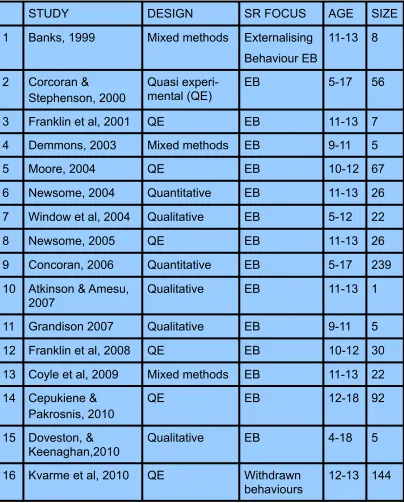
Table 2: Quantitative, qualitative and mixed-method article summary.
A North American survey design by Banks (1999) used SFBT in a group setting to reduce bullying behaviour as part of the participants’ self-regulation (SR) de-velopment. A group of eight 12 year old students met once a week over the course of four weeks. The study utilised all six core components of SFBT. Banks (1999) suggested that SFBT carried out in a group context encouraged the pupils to utilise peer support strategies when actioning their SR goals. Sur-vey data six months post intervention suggested a 50% increase in positive SR
STUDY DESIGN SR FOCUS AGE SIZE
1 Banks, 1999 Mixed methods Externalising Behaviour EB
11-13 8
2 Corcoran & Stephenson, 2000
Quasi experi-mental (QE)
EB 5-17 56
3 Franklin et al, 2001 QE EB 11-13 7
4 Demmons, 2003 Mixed methods EB 9-11 5
5 Moore, 2004 QE EB 10-12 67
6 Newsome, 2004 Quantitative EB 11-13 26
7 Window et al, 2004 Qualitative EB 5-12 22
8 Newsome, 2005 QE EB 11-13 26
9 Concoran, 2006 Quantitative EB 5-17 239
10 Atkinson & Amesu, 2007
Qualitative EB 11-13 1
11 Grandison 2007 Qualitative EB 9-11 5
12 Franklin et al, 2008 QE EB 10-12 30
13 Coyle et al, 2009 Mixed methods EB 11-13 22
14 Cepukiene & Pakrosnis, 2010
QE EB 12-18 92
15 Doveston, & Keenaghan,2010
Qualitative EB 4-18 5
16 Kvarme et al, 2010 QE Withdrawn
behaviours
behaviours. Bank’s (1999) work highlights the efficacy of using SF techniques with groups of pupils as well as the utility of peer support strategies.
Corcoran and Stephenson’s (2000) quantitative North American study utilised family therapy sessions using four SFBT core components with 56 family groups. Significant improvements post SFBT intervention were found on the ‘Conners Parent Rating Scale’ for conduct, learning and impulsivity-hyperactivi-ty. The ‘Feelings, Attitudes, and Behaviors Scale for Children’ measure noted positive self-image improvements. Methodological limitations included the lack of a control group (Corcoran & Stephenson, 2000).
A quantitive single case design by North American researchers Franklin, Biever, Moore, Clemons and Scamardo (2001) provided SFBT to support seven 10-13 year old pupils’ behavioural change. The school-based study lacked a control or comparison group and instead focused on seven individual case studies. The study incorporated four out of the six core SFBT components. Conners Teacher Rating Scale analysis showed positive but not significant changes in behaviour for five out of the seven cases (Franklin et al, 2001). A limitation of the study was that positive behaviours were noted by teachers only and not the partici-pants. This potentially corrupted the validity of measurement outcomes in that the researchers could not demonstrate that the intervention itself was the rea-son for any positive changes. Franklin et al (2001) commented that solution-fo-cused approaches held promise for supporting student SR development.
highlight-ed the efficacy of using SFBT for SR development in schools (Demmons, 2003).
A quasi-experimental North American study by Moore (2004) evaluated the im-pact of individual SFBT sessions on 67 middle school children SR. 34 pupils re-ceived between five to eight sessions and 33 pupils were assigned to a no treatment comparison group. The sessions utilised four of the six SFBT core components. Solution-focused teacher-training ran alongside the individual sessions to widen the impact of the programme. Child Behaviour Checklist re-sults revealed large effect sizes on both the teacher and pupil behaviour check-list. Limitations of the study include the possibility that teacher and therapist consultations throughout the study may have biased teacher ratings (Moore, 2004).
A North American study by Newsome (2004) used SFBT in a group setting to attempt to develop students’ self-regulation capacities related to their grade progression. A quasi-experimental pre and post test comparison group design investigated the differences between 26 pupils (aged 11-12) receiving SFBT and a control group not receiving any intervention. Two groups of 13 pupils met once a week for eight weeks for 35 minutes. The study utilised all six core com-ponents. The facilitator’s use of purposeful and goal-oriented questions helped to co-construct participant preferred-futures therefore empowering the pupils to recognise their own academic strengths (Newsome, 2004). An exception finding technique entitled EARS (i.e., elicit, amplify, reinforce and start over) was used to reinforce pupils’ present and future progression. Scaling questions were ex-tended and revisited using methods such as ‘a letter from an older, wiser self’. Newsome (2004) reported that SFBT intervention led to enhanced academic scores. Limitations of the research were outlined by Newsome (2004) to include selection bias and other maturation factors pertaining to increased grade scores from pre to post intervention.
Thera-emotional and behavioural challenges. Results gathered from interview feed-back suggested that individual work with the children over the course of six home visits helped to increase their coping strategies and abilities to generate solutions and had a positive impact on their SR. Window et al (2004) noted the importance of more direct involvement of children in their SF intervention and found the maturity and clarity of the young peoples’ feedback surprisingly bene-ficial to SF practice development.
A North American quasi-experimental design by Newsome (2005) investigated whether or not SFBT intervention could increase pupils’ positive classroom haviours. Participants included children whose behaviour was interpreted as be-ing the cause of both poor teacher-pupil relations and academic outcomes. The sample was split into four SFBT groups for eight sessions. The group sessions incorporated all six SFBT core components. The ‘Social Skills Rating System’ was completed by children and was used to measure social behaviours that af-fect teacher-student relations. ‘Social Skills Rating System’ results showed sta-tistically significant improvements in positive behaviour relations between pupils and teachers from pre-test to post-test and six week follow-up. These results offer positive implications for SFBT intervention in schools (Newsome, 2005). However, the lack of a randomised control within the design, small sample size and the possible social desirability effects influencing the ‘Social Skills Rating System’ self-report measures represent possible limitations given the quantita-tive nature of Newsome’s (2005) design.
possible negative effects this may have had on treatment integrity. Statistical data analysis was used and found a non-significant difference between the ex-perimental and comparison group. Findings noted that both groups made simi-lar improvements on the behaviours measured. It was reported that the SFBT intervention had a significantly lower drop-out rate or higher treatment engage-ment compared to the Cognitive Behavioural Therapy condition (Corcoran, 2006).
A UK based case study design conducted by the Bury Educational Psychology Service led by Atkinson and Amesu (2007) combined SF approaches with Moti-vational Interviewing. The study utilised scaling as a means of allowing the sin-gle participant, a 12 year old, to gauge his/her own progress with scaling targets set. The researchers utilised ‘reverse scaling’ as a method of developing
awareness of the young person’s vulnerabilities to relapse. Preferred-future questioning was used to visualise how life might be different with SR enhance-ment. Atkinson and Amesu (2007) described this as a motivational incentive in which the likelihood of change was increased. The miracle question (MQ) was used as another method of encouraging the participant to begin to think about how life might be without their problem. The author’s innovative use of the MQ included an activity entitled ‘Deciding not to Change’, where the client was asked to weigh up the pros and cons of SR development.Atkinson and Ame-su’s (2007) case study illustrated the flexibility of SF approaches and how the responsibility of change should be owned by the young person. The authors note that a potential critique of SF approaches is that they are heavily reliant on language-based delivery. They recommended a multi-sensory approach when working with young people.
experi-reported increased confidence levels. This was reiterated by teachers and par-ents. Grandison (2007) described how children in the study were able to use SF techniques to enhance school work and reduce anxiety. Grandison’s (2007) work highlighted the possible utility of using SF approaches creatively in school contexts in schools when tackling SR development over a short period of time.
A North American quasi-experimental study by Franklin, Moore and Hopson (2008) compared a SFBT experimental sample with a control. The Child Behav-ior Check List, Teacher Report Form and the Youth Self Report were used to measure potential positive SR changes including fewer incidents of aggressive behaviour. The SF intervention involved seven individual sessions that incorpo-rated five out of the seven SFBT core components. The sessions were carried out by Masters level SF therapists and were video-taped to maintain treatment fidelity (Franklin et al, 2008). The intervention also included solution-focused teacher training as well as teacher and parent SF consultations. These ran alongside the individual sessions. Results showed significant SR improvements for the experimental group which contrasted with the comparison group at both post test and follow-up with an overall effect size of 1.4. Although results seem promising a number of further limitations might limit the power of generalisation to other school contexts. These included no randomisation of participants for both experimental and comparison groups and also that gender may have been a confounding variable as the study contained significantly more boys than girls (Franklin et al, 2008).
dis-placement of aggression and the development of problem solving skills (Coyle et al, 2009). The authors noted, “The flexibility to use computer games instead of straight talk is valuable. It emphasises opening communication barriers and joining adolescents at their level. It provides focus, and is in line with their inter-est level and adolescent methods of communication” (Coyle et al, 2009, p353). Findings from this study highlight the possible successes of using multi-sensory Information Communication Technology methods of delivery that young people may be more inclined to relate to and find relevant. A limitation of using comput-er games within a thcomput-erapeutic context may include the possibility that participant engagement centres on the gaming and not the wider content of sessions (Coyle et al, 2009).
A Lithuanian study by Cepukiene and Pakrosnis (2010) investigated the thera-peutic outcome of SFBT as an individualintervention for adolescent SR devel-opment. An experimental quasi-experimental design with a control matched age, gender and behaviour type. The study utilised three out seven core SFBT components. Results showed that 31% of the adolescents who received SFBT experienced significant SR development compared to control group (Cepukiene & Pakrosnis, 2010).
frame their perceptions about classroom behaviour problems more positively. Scaling was also utilised for measuring progress towards teachers’ preferred futures. One teacher reported, “The scaling is very good, very visual, I think the scales’s are the most important part of this … because I think that scale says a lot more than what words can say sometimes”(Doveston & Keenagan, 2010, p135). The authors noted that utilising SF approaches is often a more produc-tive use of time when working with pupils whose behaviour is perhaps more symptomatic of classroom dynamics rather than within-child factors.
A Norwegian study by Kvarme, Helseth, Sorum, Luth-Hansen, Haugland and Natvig (2010) incorporated a quasi-experimental design. Kvarme et al (2010) set out to explore the effects of a solution-focused group intervention on the self-efficacy of socially withdrawn children. Social withdrawal was defined as consistent solitary behaviour across situations with both familiar and unfamiliar peers (Kvarme et al, 2010). The study was a non-randomised controlled trial, with both experimental and control groups. Participant ages were 12-13. The study consisted of six consecutive weekly sessions of one hour. Pupils were asked to complete questionnaires assessing self-efficacy at baseline, at the end of the sixth session and after three months. Results found immediately signifi-cant increased self-efficacy scores for girls, but not for boys for the experimental group. There were only slight differences in scores for both sexes and control group after three months. Kvarme et al (2010) state their research shows that SF intervention has utility for self-regulatory development in socially withdrawn children, particularly for girls. However a possible limitation was that children making up both conditions of the study were often drawn from the same class. Kvarme et al (2010) note that this may have affected outcome scores as the children may have discussed elements of the intervention biasing questionnaire completion.
2.3.5. Summary of the above 16 studies to provide a rationale for this work.
noted the utility of incorporating peer support strategies to complement SF work. Corcoran and Stephenson (2000) and Window et al (2004) emphasised the importance of involving wider family systems alongside SF approaches. Demmons (2003), Newsome (2005), Grandison (2007) and Kvarme et al (2010) all reported the ease in which SFBT techniques could be used successfully in schools. Newsome (2004) developed the exception finding core component of SFBT ‘EARS’ to support goal setting as well as citing adaptions to scaling. Cor-coran (2006) highlighted the lower drop out rate of SFBT where the children participants appeared more motivated to engage with SFBT rather than CBT.
Section 2.3.4 also evaluated six previous studies that provided an evidence-base for using SF approaches in a one to one context to support the develop-ment of young peoples’ SR. Key findings from these studies within the rationale of this AR work will now be summarised. Franklin et al (2001), Moore (2004) Franklin et al (2008) and Cepukiene and Pakrosnis (2008) all reported statisti-cally significant and positive improvements to participants’ SR resulting from one to one SFBT intervention. Atkinson and Amesu (2007) highlighted an inno-vative approach that combined SFBT with Motivational Interviewing. Atkinson and Amesu (2007) also cited the importance of pupil ownership of goal setting as well as the possibilities of using a multi-sensory approach to SFBT session delivery. Coyle et al (2009) noted the potential utility of incorporating computer technology to enhance the multi-sensory and motivational aspects of pupil en-gagement with SFBT.
Another study by Doveston and Keenaghan (2010), this time incorporating a SF approach for teachers and not pupils, encouraged the promotion of pupil SR development. Teachers reported positive outcomes when utilising the visual scaling SF technique with children.
researcher’s use of SFBT techniques with Year 6 and 7 pupils and the re-searcher’s aim of modifying, improving and adapting SF practice.
2.3.6. Previous solution-focused action research.
[image:33.595.114.519.299.483.2]Section 2.3.4. above outlined studies using SFBT for SR related intervention with Year 6 and 7 aged young people. This section will funnel down and critical-ly anacritical-lyse previous practice-based evidence that utilised the methodology of action research to develop SF techniques.
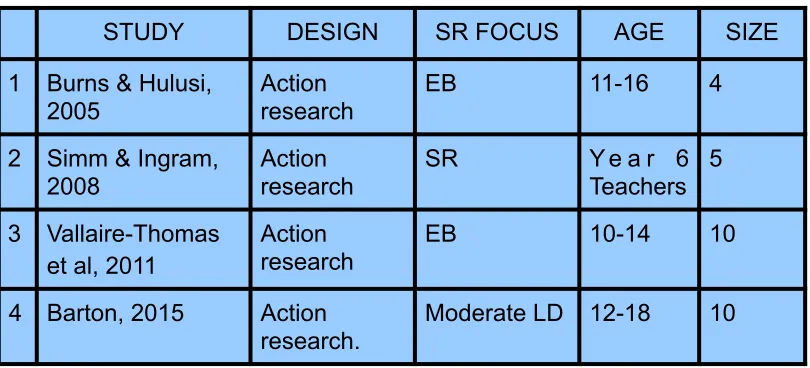
Table 3: Outline of previous action research studies.
Systematic searching for previous SF AR located four studies (see Table 3). The first was a small scale UK action research project originating from the Birm-ingham Educational Psychology Service. The study aimed to promote the effec-tiveness of a learning support centre within a secondary school (Burns & Hulusi, 2005). SF principles were used in a group context where participants worked on self-directed SR challenges rather than a fixed topic. The authors sought to utilise the SFBT philosophical assumption that views participants as experts in their own lives (Burns & Hulusi, 2005). The intervention consisted of four pupils between the age of 11-16. It was facilitated by two EPs alongside a learning centre manager. Hourly sessions ran for six weeks. Resources used included a flip-chart to make scaling more visual. Session structure included: problem-free talk; description of pupils ‘miracle school day’; group activities to support the description of an individual’s miracle were used such as role-play;
solution-fo-STUDY DESIGN SR FOCUS AGE SIZE
1 Burns & Hulusi, 2005
Action research
EB 11-16 4
2 Simm & Ingram, 2008
Action research
SR Y e a r 6
Teachers 5
3 Vallaire-Thomas et al, 2011
Action research
EB 10-14 10
4 Barton, 2015 Action research.
cused questioning and reflection; opportunities to rehearse the participants’ pre-ferred futures and to experience aspects of their ‘miracle thinking’; scaling sup-port and questioning to describe what they imagined would be different in their behaviour as they moved up their scale; opportunities to reflect on exceptions to problem behaviours, goal setting and a reflective break (Burns & Hulusi, 2005). Pupils were given the choice to share their goals and were offered support by their learning centre teachers in-between sessions. Outcomes of the interven-tion as reported by the researchers included a general increase in the four pupils scaling ratings of progression towards their preferred future and in-creased confidence of their ability to change. Burns and Hulusi (2005) noted that using a group approach proved a powerful means of encouraging partici-pants to use SF language. They noted that involving teachers allowed for a greater connectedness between work undertaken in the support centre and wider school organisational structures. However they did not appear to explain how this actually happened. A limitation of the study was that it did not include parents as a support mechanism in-between sessions. Burns and Hulusi (2005) also point out the potential merits of training teachers in solution-focused ap-proaches so as to impact on a wider school ethos of pupil SR support. A further limitation was that the authors did not appear to describe how they used action research as a methodology and did not attempt to make a thorough and/or sys-tematic analysis of data.
research (Simm & Ingram, 2008). This would allow for a more rigorous and ac-curate analysis rather than allowing the SF AR processes to be cascaded out systematically through the school systems. The focus of theintervention was for EPs to contribute to the emerging Primary National Strategy in developing teacher awareness of SF approaches when teaching children to become more aware of their own strengths and resources. The authors published a report mid-way through the two year study. The report highlighted anecdotal success-es in aiding SENCos and teachers implementing SF classroom management strategies to encourage pupil ownership of SR change (Simm & Ingram, 2008). However no pupil comments were included in this anecdotal feedback. Simm and Ingram (2008) also stated that AR and SF approaches worked well when used together to generate practice-based evidence. They postulated that AR should evolve by learning from previous action research cycles. However they noted that this was difficult to operationalise due to funding issues and the ex-ternal pressures of Ofsted inspection.
The third AR study by Vallaire-Thomas, Hicks and Growe (2011) was from the USA. The authors designed an AR proposal targeting SF intervention for 5 in-ner-city elementary and 5 rural middle school aged children with high discipline referral rates. The focus for this proposed intervention was for the researchers to train school staff and parents in SF techniques when aiding the childrens’ SF development. This action research project was initially planned to continue over three school years. However teacher resistance to the programme presented as an obstacle to the project’s action and fulfilment. The authors referred to the challenges of working within a school setting in terms of overcoming teacher resistance to changing well-established methods of behavioural management (Vallaire-Thomas et al, 2011). As result of these difficulties the results of this possibly too ambitious study were never published. Consequently there is limit-ed transferability towards on-going solution-focuslimit-ed practices.
Gov-ernment's initiative to improve opportunities for the use of psychological thera-pies (Barton, 2015). Ten young people attending specialist educational provision were assigned to the study who were between the ages of 12-18. SF tech-niques were evaluated in partnership with the participants and adapted through four action research cycles. Video recording was used for analysis of participant responses to the SF adaptations (Barton, 2015). The views of the participants were also recorded and evaluated and their feedback informed the develop-ment of Barton’s SF practice when working with this population. Barton (2015) noted that her findings have the potential to inform EPs and related profession-als working in this field. Barton (2015) emphasised the limitations of her re-search in that she did not examine the efficacy of using adapted solution-fo-cused techniques with young people with severe or moderate learning difficul-ties. She also recognised that her SF adaptations may not be transferable for use with other young pupils or wider populations. Modifications to Barton’s SF practice throughout her research included the use of a visual linear scale, sim-plifying numerical scale by replacing with smiley faces, lengthening time for pupil responses to questioning and a person-centred approach to visualising preferred futures. Barton (2015) noted that when working with pupils with se-vere learning difficulties there can be a lack of reality in response to researcher questions because these children have such strong desires to be accepted more than answer honestly.
2.3.7. Key learning from the four AR studies.
Key learning from the Burns and Hulusi (2005) AR was that pupil directed SR work is preferable than work decided by SF practitioners or by school staff or parents. Also the importance of the use of drama and role-play to enhance pupil participation in their understanding of their preferred futures when using the miracle question. Additionally the advantages of also involving the pupils’ teachers in SF processes (Burns & Hulusi, 2005).
tems. This research therefore validates the use of a one to one direct approach for SF AR in that the researcher was thereby able to be kept closer in touch with the SF learning taking place. Another key factor was that Simm and Ingram (2008) posited that AR and SF approaches worked well together.
The key learnings from Vallaire-Thomas et al (2011) are the importance of in-cluding parents in SF processes and, in the light of the fact that this project was not actioned, the possible dangers of being too ambitious in terms of research design and not working within resources and time constraints.
Finally Barton (2015) posited the key point that transferability was questionable when adopting a practice-based approach to research.
2.3.8. Critique of the literature review.
A necessary critique of the literature review is that 50% of the studies consid-ered originated and were researched in the USA. The researcher is aware of the possible lack of transferability of this North American research into UK EP practice.
2.4. Other literature relevant to this study.
According to Stobie, Boyle & Woolfson (2005) SFBT research is in an embryon-ic stage and in need of development and expansion. This suggests the need for more EP focused research. Stobie et al (2005) asserted that consistent use of the six SFBT core components and triangulation of evidence from multi-method designs should be considered when conducting research in this area. The im-portance of practice-based evidence was also highlighted by Stobie et al (2005). They argued that the research base for evidenced based practice
should be complemented and extended to include a variety of designs including qualitative research.
Approach to Improving Behaviour’ (DfES, 2005) mentioned that a SF model, “encourages teachers, and others involved in developing effective approaches to behavioural issues, to adopt a positive stance in which energy is directed to-wards finding satisfactory ways forward rather than focusing on what is going wrong” (p.5). Further to this point, Miller (2003) stated that EPs have begun to utilise positive psychological SF behavioural approaches when working in a consultative capacity with schools. Finally, Amesu (2004) highlighted that SF language and questioning could be used to encourage young people to explore and problem-solve SR development and facilitate movement through stages of self-directed change set at their own pace.
After the exploration of relevant literature in the review in sections 2.3.4, 2.3.5, 2.3.6 and 2.3.7, seven of the studies utilised a one to one direct approach to support young people’s SR development using SF techniques. Additional sur-vey research conducted by Stobie et al (2005) reported that direct one to one individual work with children or young people represented the most frequent type of SF work used in UK EP practice. This demonstrated the importance of further professional practice development needed within this topic area.
Leggett (2009) noted that using SF methods with young clients can present a great challenge in terms of how to reach the current generation of young peo-ples’ verbal and non verbal expression of thought, feelings and behaviours. Be-ing flexible and creative with SFBT was also endorsed by de Shazer who pro-posed that practitioners shouldcomplement talking strategies by drawing from their own sources of creativity and experience (Leggett, 2009).
2.5. The relevance of this action research project for Educational Psychologists.
This solution-focused action research project has the potential to offer useful insights relevant to EP work in relation to Year 6 and 7 students’ self-regulation. Although the central focus of this project was to develop the researcher’s solu-tion-focused practice, the findings and learning resulting from it may also be beneficial to other EPs seeking to enhance their own solution-focused practice. This view is somewhat mirrored by Simm and Ingram (2008) who noted the effi-cacy of EPs engaging in solution-focused action research in terms of embed-ding the use of these approaches in their professional educational work.
Fox (2011) posits that it is critical for EPs to strengthen their own evidence base through the process of developing their practice-based knowledge. This points to the further relevance of this researcher’s action research project in terms of sharing any personal learning and practice development with other EPs. Fox (2003) also postulates that individual EPs should systematically study their own ways of working through the rigorous process of self-reflection and appraisal. This proposal further highlights the relevance of this AR work in terms of provid-ing other EPs an example of how practice-based development could be
achieved.
2.6. Summary of literature review.
This chapter provided an overview of the philosophical background as well as the six core components of SFBT. The systematic literature review evaluated previous SF research related to young peoples’ SR development. The review provided some initial insights into SF practice development. The studies evalu-ated appear to provide an evidence base supporting the efficacy of utilising SF techniques for the development of Year 6 and 7 pupils’ SR. Literature evaluation also revealed that there is limited research into the area of EP professional practice development related to the modification of SF techniques.
This research aims to explore and develop the researcher’s professional SF practice when working with young peoples’ SR development. In doing so he in-tends to add to the limited body of previous practice-based evidence in this do-main. To reiterate, the research question under investigation is set out as fol-lows:
Chapter 3. Methodology. 3.1. Introduction to chapter.
This chapter will begin with a brief discussion of the importance of practice-based evidence in Educational Psychology. It will outline details of the action research methodology and data collection procedures. The researcher’s philo-sophical position will then be delineated. This will be followed by details of the Thematic Analysis used to analyse data. Details of the participants and methods of recruitment will also be considered. The chapter concludes with a discussion of ethical considerations.
3.2.Practice-based evidence.
The research question, How can I use first person action research to develop solution-focused practice in collaboration with Year 6 and 7 pupils when dis-cussing their behavioural self-regulation at school?, aligns with the modus operandi of practice-based evidence. According to Fox (2011) practitioner re-search has become a useful method of examining professional practice and de-veloping expertise. Fox (2011) notes that EPs often use a range of psychologi-cal problem-solving models to frame common problems. These may utilise Be-havioural, Systemic, Cognitive Behavioural and Psychodynamic theories. Ac-cording to Stobie et al (2005) UK EPs have reported positively about using solu-tion-focused approaches in their work alongside the well-established problem-solving models.
that the goals of the individual pupil has to be central in order for a SF approach to be successful.
3.3.Research design.
The literature review highlighted limited EP practice-based research in the area of developing SF practice using AR. For this reason it was necessary to utilise an exploratory research design. There was a need for a fluid methodology that allowed for a degree of flexibility to account for changes and adaptations to the AR cycles. Simm and Ingram (2008) posited that AR and SF approaches com-plement each other and work together effectively. AR allows the practitioner/re-searcher to explore and critique their work (McNiff & Whitehead, 2011). It allows space for professional practitioners to study their own practice and view them-selves as the context and main foci of their studies. The AR design aimed to in-corporate a qualitative approach using Thematic Analysis (TA). TA was used to evaluate participant feedback and inform the modification of the researcher’s SF practice.
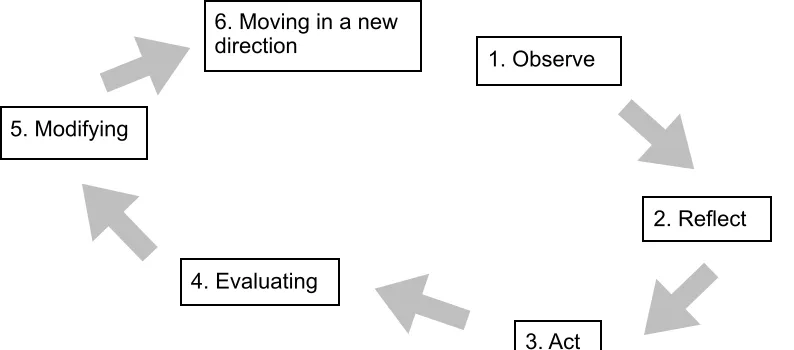
[image:42.595.104.501.571.746.2]AR typically follows a cyclical process which is known as an Action-Reflection Cycle (McNiff & Whitehead, 2011, p10). The cycle is made up of a number of phases which include; observing, reflecting, acting, evaluating, modifying and the possible movement in new and improved directions (see Figure 1).
Figure 1. Action-Reflection cycle adapted from McNiff and Whitehead (2011).
6. Moving in a new direction
5. Modifying
4. Evaluating
3. Act 1. Observe
This cyclical model was followed throughout the research. The details of how this process was actioned by the researcher is explained in further detail in sec-tion 4.5.
3.4.Philosophical position / research paradigm. 3.4.1. Ontology.
Central to the research design was the idea of listening to and learning from young peoples’ experiences and views of SF intervention by the researcher with the aim of improving SF practice. For parts of this chapter the researcher will refer to himself from a first person perspective. The reasons for this change will be explained in epistemological section 3.4.2.
My ontology was the specific need to improve SF practice. It was not the inten-tion to take up a spectator approach but rather to undertake enquiries with oth-ers involved in the research in order to create ‘living theories’ of practice (McNiff & Whitehead, 2011). Utilising an AR methodology offered the opportunity to work co-operatively with the young people who joined me on my research jour-ney. Interview feedback from the participants was used to evaluate and develop my own SF practice. AR seeks to promote participant power and encourages a research partnership towards building better ways of working (McNiff & White-head, 2011).
AR became therefore a ‘living theory’ grounded in the ontological ‘I’ (McNiff & Whitehead, 2011). I envisaged myself as operating in a way that was consistent with my values. These values remained firmly rooted in the importance of de-veloping empathetic and balanced relational practices with the participants in-volved in this research (McNiff & Whitehead, 2011).
3.4.2. Epistemology.
young peoples’ SR development or would not have had the time to work with them in a classroom context.
As an action researcher I aimed to develop my SF professional practice and cri-tique and modify established methods of working with young people. I set out to place myself at the centre of the research in order to attempt to become a ‘knowledge-creator’ as part of professional EP training (McNiff & Whitehead, 2011). The decision to deliberately write portions of my thesis from a first person perspective somewhat reflected this position as a ‘practice-based’ researcher. I reconciled that writing from an ‘I’ perspective where the object of enquiry was myself and not other people and using a first person narrative. This provided a stronger sense of authenticity to this chapter of my write-up. McNiff and White-head (2011) add further clarification and support for this choice. They note,
Perhaps the main ‘do’ is to write in the first person; to use ’I’ with conviction and celebrate your capacity and to write high quality texts that will withstand the most rigorous critique. Previously the use of ‘I’ was avoided; today, in action research and most case study research, the use of ‘I’ is expected. This is your research, and your original claim to knowledge, so go ahead and celebrate it with honour and panache (McNiff & Whitehead, 2011, p. 118).
respect-ful to the Year 6 and 7 pupil participants. I attempted to give them the space and opportunity to critique my SF practice during the interviews.
3.4.3. Theoretical position.
The research position aligned itself with critical-realism. A critical-realist philo-sophical stance posits that there is a shared reality or truth and that views of this reality are dependent on the individual and their constructions of truth. A critical-realist view refers to the importance of understanding a situation before it can be changed (McNiff & Whitehead, 2011). Further to this point power rela-tionships are also analysed and considered.
This research assumes the belief that young people present with SR challenges within a broad spectrum of need. It also assumes that SF techniques are also valid and useful tools for helping young people develop their own SR.
When conducting my research I became aware of how my own personal knowl-edge and values impacted on interactions with the participants. This interaction is known as axiology, and is influenced by the philosophical paradigm that the researcher adopted (Mathews, 2003). Taking up a critical-realist position creat-ed awareness of how my values and knowlcreat-edge impactcreat-ed on research interac-tions as well as the need to be reflexive in terms of power and how my position as a researcher should be acknowledged and managed. For this reason a re-search diary was utilised. This diary tool will be discussed further in Chapter 4.
Other important assumptions built into my research philosophical design were McNiff and Whitehead’s (2011) ideas that:
• Knowledge creation is an uncertain and subjective enterprise