1
London School of Economics and Political Science
Intergenerational transfers and productive ageing in a
cross-national comparative perspective
Ginevra Floridi
A thesis submitted to the Department of Social Policy of the London
School of Economics and Political Science for the degree of
Doctor of Philosophy
2
Declaration
I certify that the thesis I have presented for examination for the MPhil/PhD degree of the
London School of Economics and Political Science is solely my own work other than
where I have clearly indicated that it is the work of others (in which case the extent of
any work carried out jointly by me and any other person is clearly identified in it). The
copyright of this thesis rests with the author. Quotation from it is permitted, provided that
full acknowledgement is made. This thesis may not be reproduced without my prior
written consent. I warrant that this authorisation does not, to the best of my belief,
infringe the rights of any third party.
I declare that my thesis consists of 65,717 words excluding references.
Statement of conjoint work
I confirm that Chapter 3 was jointly co-authored with Professor Benjamin Lauderdale
and I contributed the majority of this work. Specifically, I am responsible for 50% of the
conception of the idea, research design and analysis, and for 100% of the data collection,
data management, interpretation of the results and writing of the manuscript (on which I
3
Abstract
Internationally, concerns with the implications of population ageing have led to growing
attention being paid to the economic contributions and dependency of older adults.
Research on intergenerational support investigates older adults’ exchanges of money and
time with their family members, while productive ageing refers to their economic
contributions to the broader society. So far, research on these topics at the aggregate level
has mainly focussed on Europe and the United States (US). Comparisons of
intergenerational transfer regimes are usually made between welfare states in Europe,
while productive ageing is a US-centred concept that is not necessarily translatable to
societies with different socio-cultural characteristics. In addition, only a few studies of
individual-level relationships link intergenerational family transfers with older adults’
participation in economically productive roles.
This thesis addresses the gaps in the literature cited above with four empirical papers on
intergenerational support, productive ageing and the interrelations between them in a
cross-national comparative perspective. I use data from the Survey of Health, Ageing and
Retirement in Europe, the Korean Longitudinal Study of Ageing, and a conjoint survey
experiment. In the first paper, I compare transfers of financial, practical and coresidential
support between parents aged 50 and above and their children in Italy and South Korea,
two countries with similarly familistic approaches to welfare but different levels of social
protection towards older adults. The second empirical paper develops a method for
weighting and aggregating indicators into a composite scale based on a conjoint
experiment on experts, which I use to compare operationalisations of productive ageing
between a group of Italian and a group of South Korean academics. In the third paper, I
compare the factors associated with participation in paid work and informal caregiving
among middle-aged and older Italian and South Korean parents, focussing on the role of
socioeconomic status and transfers of support with adult children. In the fourth paper, I
study the association between daily grandchild care and grandparents’ labour supply in
Europe with a focus on gender and socioeconomic differences. Overall, the findings
highlight the role of country-level policy and culture as well as gender, socioeconomic
resources and family transfers in influencing older adults’ contributions to welfare and
4
Acknowledgements
In the four years since I started working on this thesis, I have been surrounded by great
mentors, friends and colleagues. I will start by thanking Emily Grundy, Benjamin
Lauderdale and Stephen Jenkins for their invaluable supervision. I am grateful to Emily
for her guidance and advice in the first two years of PhD, and for her continued support
after she left the LSE. I thank Ben for his patience and for the great experience of writing
a paper with someone from a different discipline. Last but certainly not least, I am
grateful to Stephen for being my supervisor in the last two years and for the super-human
attention to detail in all his feedback on my work.
A massive thank you goes to all my colleagues from the Social Policy PhD, with whom I
have shared the good and the bad times, and shots from the communal Polish vodka on
both types of occasions. Special mentions go to my friends Ewa Batyra, Filippo
Temporin, Laura Sochas, Diego Alburez-Gutierrez, Ellie Suh, Cristian Crespo, Rishita
Nandagiri, Marco Palillo, Antonella Bancalari, Philippa Mullins, Sam
Mohun-Himmelweit, Tze-Ming Mok, Julia Philipp, Joaquin Prieto, Joe Strong and Michaela
Sedovic.
I would like to thank all those who have taken the time to give me feedback on my work,
starting from Jane Lewis and Anne West in the first-year seminars. I am grateful to
Giorgio di Gessa, Ben Wilson and Alice Goisis for being exceptional role models in
research, teaching, and life in general. Special thanks also to Jouni Kuha for his
generosity with his time. I am grateful to all participants in the ALPHA research
seminars for their feedback on my presentations. Thank you to my friends from the
School of Public Health at Seoul National University for three amazing months of
research visit, especially Hyeonju Kim for helping me with pretty much everything.
Finally, friends and family: I am enormously grateful to Vicky, Elliott, Tim, Ikumi, Ryan
and Shomari, and obviously to Tom, for continuing to deal with me throughout the years.
I could not have wished for a better group of people to have around while working on
this thesis. I thank my parents Sabrina and Giuliano, my brother Giacomo, and my
grandad Dino for all their love and support. This thesis is dedicated to my grandmother
5
6
Contents
1. Introduction ... 12
1.1. Ageing, intergenerational support and activity participation ... 12
1.1.1. Concepts and definitions ... 12
1.1.2. Why study older adults’ contributions to society in a comparative perspective? ... 14
1.2. Intergenerational transfers of support: review of the literature ... 16
1.2.1. Welfare states, familism and intergenerational transfer regimes ... 19
1.2.2. Cross-national comparative research on intergenerational transfer regimes ... 22
1.2.3. Individual motives and consequences of intergenerational support ... 27
1.3. Productive ageing: review of the literature ... 31
1.3.1 Theoretical perspectives and issues of definition and measurement ... 32
1.3.2. Empirical work on the determinants of productive ageing ... 38
1.3.3. Cross-national comparative research on productive ageing ... 41
1.4. Countries under study and approaches to cross-national comparisons ... 43
1.4.1. Two approaches to cross-national comparisons ... 44
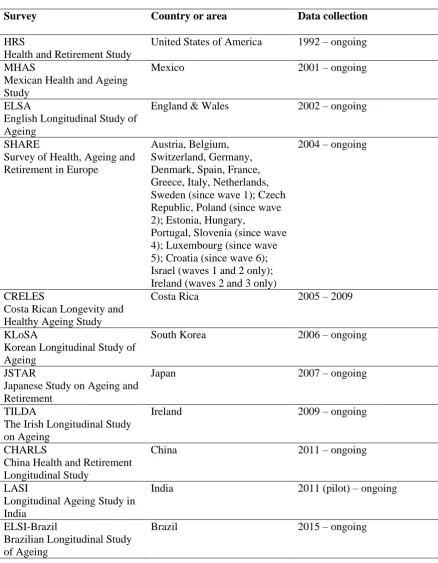
1.4.2. Data availability, opportunities and challenges ... 46
1.5. Structure of the thesis ... 50
2. Social policies and intergenerational support in Italy and South Korea ... 53
2.1. Introduction ... 54
2.2. Conceptualising intergenerational support ... 55
2.3. Contextualising intergenerational support in Italy and South Korea ... 58
2.3.1. Reliance on intergenerational family support ... 59
2.3.2. Differences in societal transfers to older and younger generations ... 62
2.4. Comparing intergenerational support between Italy and Korea ... 66
2.4.1. Datasets and analysis ... 67
2.4.2. Financial support ... 68
2.4.3. Provision of care for grandchildren ... 71
2.4.4. Care and help from children to parents ... 72
7
2.5. Conclusion ... 81
Appendix: Replication of all tables and figures with samples restricted to parents whose oldest child is younger than 50 years old ... 83
3. Using expert judgements to measure “productive ageing” in Italy and South Korea .. 89
3.1. Introduction ... 90
3.2. Background ... 91
3.2.1. Productive ageing: definition and measurement ... 91
3.2.2. Definition and context for this study ... 94
3.2.3. Measurement strategy ... 95
3.3. Method ... 97
3.3.1. Data ... 100
3.3.2. Model ... 103
3.4. Results ... 105
3.5. Discussion ... 115
Appendix: Supplementary tables and figures ... 120
4. The correlates of paid work and informal caregiving after age 50: A comparison between Italy and South Korea ... 122
4.1. Introduction ... 123
4.2. Background and context ... 125
4.2.1. Correlates of paid work and informal care ... 125
4.2.2. Italy and Korea ... 127
4.2.3. Aims and hypotheses of the study ... 130
4.3. Method ... 133
4.3.1. Data ... 133
4.3.2. Measures ... 134
4.3.3. Statistical analysis ... 137
4.4. Results ... 141
4.4.1. Descriptive sample characteristics ... 141
4.4.2. Paid work ... 147
4.4.3. Informal care and help ... 151
8
5. Intensive grandchild care and grandparents’ labour supply in Europe ... 164
5.1. Introduction ... 165
5.2. Background ... 166
5.2.1. Grandparenthood, grandchild care and employment ... 166
5.2.2. Familism and intensive grandchild care ... 168
5.2.3. Rationale, aims and hypotheses ... 170
5.3. Data and method ... 174
5.3.1. Data ... 174
5.3.2. Measures ... 175
5.3.4. Statistical analysis ... 177
5.4. Results ... 180
5.4.1. Descriptive sample characteristics ... 180
5.4.2. Pooled results across 20 countries ... 182
5.4.3. Results by country group ... 187
5.5. Discussion ... 192
6. Conclusion ... 196
6.1. The findings of the thesis ... 196
6.1.1. Contextualising intergenerational support and productive ageing ... 196
6.1.2. Interrelations between intergenerational support and productive ageing ... 198
6.2. Implications of the findings ... 200
6.2.1. Implications for research on intergenerational support and productive ageing ... 200
6.2.2. Implications for policy ... 203
6.3. Limitations ... 208
6.4. Directions for future research ... 211
9
List of tables
Table 1.1: Longitudinal surveys on ageing ... 48
Table 1.2: Thesis chapters ... 50
Table 2.1: Proportions of grandparents aged 50+ looking after any grandchild aged 0–10, by sex (Italy 2013; Korea 2012) ... 72
Table 2.2: Proportions of parents aged 50+ with no functional limitations receiving help or personal care from any child, by sex (Italy 2013; Korea 2012) ... 74
Table 2.3: Proportions of parents aged 50+ with one or more functional limitations receiving help or personal care from any child, by sex (Italy 2013; Korea 2012) ... 75
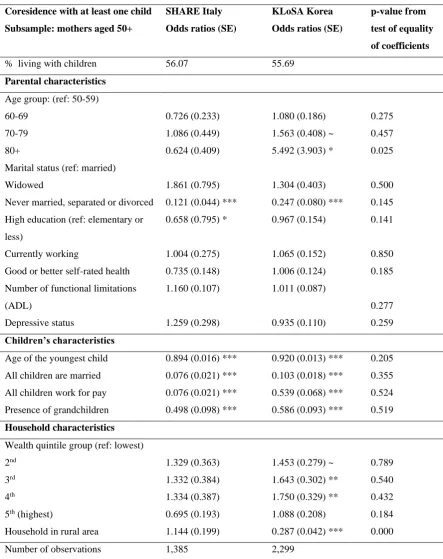
Table 2.4: Fully-adjusted, weighted logistic regressions for the probability of living with children (mothers aged 50+) ... 79
Table 2.5: Fully-adjusted, weighted logistic regressions for the probability of living with children (fathers aged 50+) ... 80
Table 3.1: Frequency categories for each activity in the KLoSA and SHARE tasks ... 102
Table 3.2: Coders’ characteristics and dates for the conjoint task, by country ... 102
Table 3.3: Number of comparisons by country, task and coder (total = 1021) ... 103
Table 3.4: Correlation (ρ) of KLoSA productive ageing scores constructed from codings of each coder. Comparisons of Italian with Korean experts enclosed in thick border. Correlations of experts’ scores with scores obtained from equal weighting (EW) and factor analysis (FA) in the last two columns ... 106
Table 3.5: Correlation (ρ) of SHARE productive ageing scores constructed from codings of each coder. Correlations of experts’ scores with scores obtained from equal weighting (EW) and factor analysis (FA) in the last two columns. ... 106
Table 3.6: Coefficients and standard errors from ordered logistic regression of experts’ responses on the full set of activity indicators, by coding task (KLoSA vs. SHARE) ... 108
10 Table 4.1: Sample characteristics at baseline interview (weighted for non-response) ... 143
Table 4.2: Estimated marginal effects for the probability of working (fully-adjusted, weighted random effects logistic regressions), Korean and Italian mothers. Robust standard errors in parentheses. ... 145
Table 4.3: Estimated marginal effects for the probability of working (fully-adjusted, weighted random effects logistic regressions), Korean and Italian fathers. Robust standard errors in
parentheses. ... 146
Table 4.4: Estimated marginal effects for the probability of informal caregiving (fully-adjusted, weighted random effects logistic regressions), Korean and Italian mothers. Robust standard errors in parentheses. ... 149
Table 4.5: Estimated marginal effects for the probability of informal caregiving (fully-adjusted, weighted random effects logistic regressions), Korean and Italian fathers. Robust standard errors in parentheses. ... 150
Table 4.6: Coefficients from fully-adjusted, weighted random-effects logistic regressions for the probability of paid work ... 153
Table 4.7: Coefficients from fully-adjusted, weighted random-effects logistic regressions for the probability of informal care ... 156
Table 5.1. Weighted sample characteristics (grandparents aged 569 with grandchildren aged 0-14), by sex and grandchild care provision. ... 181
Table 5.2. Coefficients from single-equation probit and linear regression models for self-reported employment and average working hours, by sex. Country and wave fixed-effects not shown. . 184
Table 5.3. Grandmothers: Coefficients from recursive bivariate models for a) probability of work and grandchild care (all grandmothers) and b) weekly hours worked and grandchild care
(working grandmothers). Country and wave fixed-effects not shown ... 185
Table 5.4. Grandfathers: Coefficients from recursive bivariate models for a) probability of work and grandchild care (all grandfathers) and b) weekly hours worked and grandchild care (working grandfathers). Country and wave fixed-effects not shown ... 186
Table 5.5. Childcare policy indicators and sample percentages of grandparents employed / looking after grandchildren daily, by country group. ... 189
11
List of figures
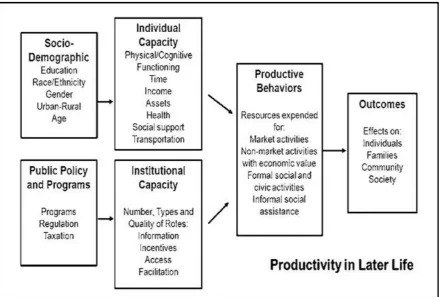
Figure 1.1: The productive ageing framework ... 35
Figure 2.1: Proportions living with less than 50% of median household income (OECD, 2016c) ... 65
Figure 2.2: Exchanges of financial support between parents aged 50+ and their children (Italy 2013; Korea 2012). Means and 95% confidence intervals for the percentage of parents giving / receiving financial support in each country by 10-year age group, separately by sex. ... 70
Figure 3.1: Coefficient estimates for Italian versus Korean experts coding using the KLoSA indicator categories ... 112
12
1.
Introduction
1.1. Ageing, intergenerational support and activity participation
In this thesis I investigate middle-aged and older adults’ contributions to their families
and to the broader society through intergenerational support transfers and participation in
productive roles. Specifically, I analyse transfers of financial and practical assistance
between parents aged 50 and above and their adult children, and older parents’ and grandparents’ engagement in productive activities such as employment and informal
caregiving. I consider intergenerational support and productive participation in later life
as part of the same framework, and investigate how these behaviours interact with each
other and with the characteristics of middle-aged and older individuals across different
countries.
1.1.1. Concepts and definitions
Throughout the thesis, I refer to individuals aged 50 and above as “middle-aged and
older” or simply “older”, and to ages from 50 onwards as “mid- to later life” or simply “later life”. This is a rather broad definition, and many individuals in their 50s and 60s would not consider themselves “older” (or even “middle-aged”). However, I take 50 as
the lower age boundary for several reasons. First, participation in the labour market is an
important theme of the thesis, and considering ages 50 and above allows me to examine
and compare groups of individuals who are before, around and past the normal retirement
age. Second, I am interested in transfers of resources with adult children, including
grandchild care. Given previous demographic trends in the countries I study, individuals
aged 50 or older are likely to have young-adult children (i.e. aged 20–34), who may need
financial and practical assistance as they set up their own independent livelihoods, and
often have young children of their own. Third, given that the term “old” does not refer to
any specific chronological age (Balard, 2015), a low cut-off allows me to capture a wide
variety of experiences and transitions. Fourth, the surveys that I use for the empirical
analyses collect data on individuals aged 50 (or 45) and older, so by adopting this
threshold I make the most of the information available. Thus, rather than advancing the
13
in the understanding that no defined cut-off age adequately captures the variety of
individual experiences of ageing.
In social gerontology, the study of older adults’ contributions to their families and
societies has developed around the themes of intergenerational support and activity
participation. Intergenerational support refers to transfers of resources between family
members of different generations, predominantly older adults, their children and their
grandchildren (Albertini, 2016; Szydlik, 2008). The study of intergenerational transfers
highlights how older adults contribute to the welfare of their family members by giving
and receiving money, time and other resources. Gerontological research on activity
participation relates instead to older adults’ engagement with the broader society through
activities that have a social or economic dimension (Bass & Caro, 2001) or that
contribute to their health and wellbeing (WHO, 2002).
As Arber and Attias-Donfut (1999) note, the term “generation” can assume different
meanings, including those of birth cohort, family generation or, from a sociological
perspective, historical or social generation. In this thesis, the term generation is used in
two overlapping ways. The first is to identify groups of people who were born around the
same time and, in the countries under study, have common ways of engaging with public
welfare by receiving social benefits, making contributions, and participating in the labour
market. This definition comes closest to Kohli’s (1996) concept of “welfare generations”.
The second way in which the term is used refers to generations as “family generations”,
to indicate the lineage between older parents and adult children, or among grandparents,
parents and children. The two definitions clearly overlap, as older adults in this thesis
represent both the generation of parents/grandparents, and the generation of those with
specific labour market participation patterns, societal contributions and benefits.
In this thesis I focus on the economically quantifiable contributions older people make to
their families and societies. With regard to intergenerational support, I restrict my
attention to exchanges of financial and practical assistance, including direct money
transfers, coresidence and the provision of informal care. Accordingly, I do not study
emotional support in the form of closeness, frequency of contact and relationship quality
(Szydlik, 2008). Moreover, I focus on exchanges of support between parents aged 50 and
14
of intergenerational family support in later life, and also the most relevant for estimating
older adults’ contributions to (and dependency on) younger generations (Albertini, Kohli,
& Vogel, 2007). I thus exclude childless individuals, who deserve separate accounts
since they tend to differ substantially from parents in their support networks and
behaviours (Albertini & Kohli, 2009; Pesando, 2018).
With regard to activity engagement, I adopt the concept of “productive ageing”, defined
as older people’s participation in activities that produce services or goods that have value
for others (Bass, Caro, & Chen, 1993). In line with this definition, I examine
participation in employment, volunteer work and informal caregiving (including care for
grandchildren and adults) as productive activities. Given my focus on contributions that
have an economic value, I do not consider older people’s engagement in predominantly
consumption-related activities such as education, sport or hobbies, which are commonly
studied in relation to their effect on health and wellbeing (Adams, Leibbrandt, & Moon,
2011).
1.1.2. Why study older adults’ contributions to society in a comparative perspective?
Population ageing affects nearly all countries in the world, albeit with different timing
and speed (UN, 2017; WHO, 2015). In the West, the forerunners in the process are
Mediterranean countries such as Italy, where 43% of the population is currently aged 50
or above, a proportion that is projected to rise to more than half (52%) by 2035 (UN,
2017). In Asian countries, ageing is taking place at a higher speed. In South Korea (from
now on simply referred to as “Korea”), the proportion of over-50s is currently around
34%, but it will reach half of the population in less than two decades, by 2035 (UN,
2017).
Ageing implies that societies need to adapt to the shift from a primarily young to a
primarily middle-aged and older population. In recent decades, this has prompted
concerns among policymakers in high-income countries about the sustainability of
pensions and healthcare systems (OECD, 1988), and about imbalances in the so-called
“generational contract” (Walker, 1996), with higher proportions of older people putting
increasing pressure on younger generations in both the private and the public domains.
15
precisely these concerns. On the one hand, both entail a recognition of older people’s
contributions to the social groups in which they live and operate, and dismiss conceptions
of later life as an exclusively dependent state (Gonzales, Matz-Costa, & Morrow-Howell,
2015). On the other hand, both discourses also engage with the concept of dependency.
The study of intergenerational support deals with dependency explicitly, by quantifying
the assistance that older adults receive from their family members. Research on
productive ageing frames dependency implicitly, by characterising it as lack of
participation in socially valued roles (Moulaert & Biggs, 2013).
In addition to their separate relevance, intergenerational support and productive ageing
can be usefully studied as part of the same framework. Middle-aged and older adults
contribute to society as members of their families. Forms of intergenerational support
such as informal care for sick or disabled parents and grandchild care are socially
productive activities that contribute to the long-term care and childcare systems,
respectively. Moreover, family transfers and productive roles performed outside the
family are heavily interconnected and strongly linked with the resources available to
older individuals. Family transfers can facilitate or hinder participation in paid and
unpaid work and care, and productive participation can shape the time and money that
older adults have available to transfer to others, as well as their own support needs.
Investigating these interactions will lead to a better understanding of the determinants
and consequences of older people’s contributions to their families and societies.
I adopt a cross-national comparative perspective to study intergenerational support and
productive ageing. By definition, comparisons encompass more than one case. Ageing is
currently taking place across a variety of different political, economic and cultural
contexts, and analysing more than one country highlights the diversity in the extent and
types of older adults’ participation and contributions to society. By explicitly accounting
for such diversity, comparisons can inform policy developments for similar contexts, as
well as differentiations in what works best (Morrow-Howell & Wang, 2013).
Importantly, comparative research is necessary to identify how policy, structural and
cultural factors interact with older adults’ engagement in socially productive roles, with
its predictors and its consequences (Chen et al., 2016). A cross-national comparison
enables to contextualise individual outcomes in a way that is often not possible in
16
on the relationship between contextual characteristics and individual behaviours
(Hancké, 2009).
I adopt two cross-national comparative approaches. The first three empirical chapters of
this thesis consist in a two-country case study of Italy and Korea. As I explain in
Chapters 2 and 4, these two countries are interesting to compare with respect to
intergenerational transfers and activity participation, because similarities in their welfare
models and labour markets coexist with striking differences in the degree of social
protection guaranteed to middle-aged and older individuals relative to younger
generations. Moreover, as I argue in Chapter 3, differences in socio-cultural norms
around older adults and the family make Italy and Korea interesting cases to test whether
the definition and measurement of concepts such as “productive ageing” is comparable
across contexts. In the last empirical chapter (Chapter 5) I use data from 20 European
countries to study the relationship between grandchild care and grandparents’ labour
supply across different childcare policy regimes.
Both approaches to cross-national comparative research have advantages and drawbacks,
which I discuss in section 1.4 of this introduction. In the following two sections, I review
the literatures on intergenerational support (1.2) and productive ageing (1.3) and
highlight the gaps in each of them, thus beginning to motivate the four empirical chapters
of the thesis.
1.2. Intergenerational transfers of support: review of the literature
In this section I review the literature on transfers of money and time between
middle-aged and older parents and their adult children, including intergenerational coresidence
and grandchild care provision.
Exchanges of assistance between parents and their children are an essential aspect of
human socialisation and development, and do not represent a particular feature of certain
societies or time periods. As Ron Lee (2013) argues, intergenerational transfers evolved
in pre-historical times in the setting of small groups of hunter-gatherers, and operate like
17
growing up, and later repay this debt through transfers to their ageing parents and to their
own children.
In a prominent account of family ties and values across Western Europe, Reher (1998)
argues that, as far back as the Middle Ages, family members of different generations
were strongly dependent upon one another in Mediterranean countries. He shows that, in
these settings, it was customary for adult children to live with or in close proximity to
their parents even after marriage, and this facilitated the exchange of money and time
resources between generations. Reher also argues that, in Central and Northern Europe,
ties between family members have historically been weaker than in the South, as shown
by the fact that in the Middle Ages it was customary for young-adult children in England
to be sent to work in a different household away from the parental home. However,
Anderson (1971) provides a historical account of families in nineteenth-century
Lancashire and shows that, in urban industrial settings in England, intergenerational
family exchanges were the predominant source of assistance for those in dependent or
critical stages of life. Among working-class families, children were regularly looked after
by grandparents and extended kin, and intergenerational coresidence was normative
during the first years of married life and subsequent to widowhood.
Fertility decline and increased longevity have generally contributed to a strengthening of
parental support to children over time, as individuals have a lower number of offspring in
whom they invest more heavily (R. Lee, 2013) and spend increasing proportions of their
lifetimes alive at the same time as their descendants (Bengtson, 2001). In the 1980s and
‘90s, sociological and demographic research on family relations mainly investigated the
causes of fertility decline, relating it to the decreasing importance of family institutions
like marriage and childbearing and to shifting gender roles, in what Van de Kaa (1987)
and Lesthaeghe (1995) termed a “second demographic transition”. Since the turn of the
twenty-first century, with population ageing becoming a more prominent issue,
demographers and sociologists have paid increasing attention to the rising importance of
multigenerational family relations (Bengtson, 2001). In particular, the last two decades
have witnessed a rapid expansion in the literature on intergenerational support that is in
line with the increasing policy relevance of notions of intergenerational redistribution
18
In a traditional life course perspective, the overall volume of intergenerational support
from parents to children is greater when children are young than after they have become
adults (R. Lee, 2013). Financial assistance intensifies during the transition to adulthood,
as children attempt to set up their independence and parental investments act as
“scaffolds” and “safety nets” (Swartz, Kim, Uno, Mortimer, & Bengtson O'Brien, 2011).
Practical and financial support from parents may also increase when children have
offspring of their own (Bucx, Van Wel, & Knijn, 2012), after which children are largely
independent, until the parents age and may become dependent upon filial support due to
poor health, widowhood or the inability to work (Haberkern & Szydlik, 2010; Isherwood,
Luszcz, & King, 2016). The timing of these transitions and the amount of support given
and received by each generation at each point in their life are inherently linked to
demographic trends and socio-political structures, and thus vary across space and time.
An important feature of the research on intergenerational support has been the
challenging of traditional notions of old-age dependency on adult children, and the
recognition of the rising importance of older parents as providers of support. This is
linked to the fact that, since the 1970s, young people in high-income countries have
experienced progressively delayed and extended transitions to adulthood, characterised
by prolonged education (Furstenberg, 2008), delayed union formation (Billari &
Liefbroer, 2010), and greater difficulties in achieving economic and housing
independence (Sironi & Furstenberg, 2012). In line with these changes, parental support
has become extended until children are well into their reproductive years (Swartz et al.,
2011). Increased divorce rates have also contributed to prolong parental support, as
children tend to receive more financial assistance from their older parents after marital
breakdown (Leopold & Schneider, 2011). Moreover, the increase in female employment
has led to a rise in young parents’ childcare support needs, and to a greater involvement
of grandparents in the rearing of grandchildren (Glaser & Hank, 2018).
Socio-demographic trends in the lives of children alone do not explain the expansion in
the duration of parental support. The most influential component of this shift in Western
welfare states has been the development of pensions and old-age benefits, which has
enabled parents to provide assistance to their children until later in life (Kohli &
Kunemund, 2003). In East Asia, where similar socio-demographic trends delaying the
19
stages of the parental life course remains upward, from children to parents, partly due to
the late development of old-age protection (C. S. Kim, 2008; Lin & Yi, 2011).
1.2.1. Welfare states, familism and intergenerational transfer regimes
A large body of literature compares intergenerational support transfers across countries
with the aim of investigating the link between the private and the public dimensions of
the generational contract (Albertini et al., 2007). This literature is based on the premise
that, by providing financial security and care services to individuals, the state performs
functions that were originally assigned to families, thus altering their internal allocation
of resources (Kohli, 1999). This implies that the cross-national comparative literature on
intergenerational support cannot be understood without reference to the comparative
literature on welfare states. Welfare regimes are broadly intended here as the ensemble of
social policies, legislation, structural and cultural factors that may shape the incentives
and obligations for family members to provide financial and care support to one another.
In his influential work, Esping-Andersen (1990) classified welfare regimes into three
model typologies, according to the degree of “de-commodification”, which he defined as
the extent to which individuals can make a livelihood without relying on the market. In
the liberal welfare regime model, represented by the United Kingdom (UK), the state
encourages market solutions to social problems and needs, and state support is limited to
those unable to make a living for themselves. In conservative or corporatist welfare
regimes such as Germany and Italy, the state consolidates existing divisions across social
groups and encourages de-commodification through the family, typically by tying
benefits to formal employment and by keeping family services underdeveloped. The
social-democratic model, represented by countries such as Sweden and Norway, is
characterised instead by a universalistic approach to welfare provision by the state. This
model is the most egalitarian and de-commodifying, because it socialises the cost of
providing financial and care support for dependent individuals.
While important as a systematic method for classifying welfare regimes, the
Esping-Andersen (1990) model proved overly simplistic. Because it was predominantly focussed
on Western Europe, the classification was hard to generalise to different geographical
contexts. Ferrera (1996) argued that Southern European countries – Italy, Spain, Portugal
20
lacked the universalism in employment protection typical of continental European
welfare. They were instead characterised by highly fragmented income maintenance
systems, combining generous pensions with large gaps in coverage for unemployment.
They also presented some distinctive characteristics such as strong clientelism and
selective distribution of subsidies and cash transfers; low involvement of the state in
welfare provision, with the exception of the healthcare system; and, as Flaquer (2000)
later pointed out, labour markets characterised by widespread informality, tax evasion
and low female participation.
A second group that did not fit within the Esping-Andersen welfare classification is
represented by East Asian countries. Kwon (1997, 1999) analysed the welfare systems of
Korea, Japan and Taiwan. He argued that, despite being most closely comparable to the
conservative-corporatist type, East Asian welfare states presented some distinctive
features. These included the role of the state as regulator, rather than provider of welfare;
the fragmented provision of income security, which was mainly guaranteed to selected
groups strategic for the survival of the authoritarian government; and, most importantly,
the subordination of welfare developments to the imperative of economic growth and
modernisation, which led Holliday (2000) to classify East Asian countries into a separate,
“productivist” model of welfare capitalism.
In addition to its limited generalisability to non-Western European contexts, the
Esping-Andersen model was also criticised for its lack of attention to gender and family issues.
In particular, the original classification did not consider the degree to which welfare
institutions favoured and reinforced a male-breadwinner family model, characterised by
the distinction between unpaid care work, carried out by women, and paid employment,
carried out by men (Lewis, 1992). Lister (1994) argued that, given that family care is
predominantly women’s work, the classification of welfare regimes based on
de-commodification should be complemented by one based on “de-familialisation”. Specifically, she proposed that welfare regimes may be characterised according to “the
degree to which individual adults can uphold a socially acceptable standard of living,
independently of family relationships, either through paid work or through the social
security system” (p.37). Esping-Andersen (1999) addressed this criticism by
21
While in its generic meaning familism, or familialism, is defined as a social pattern in
which the family assumes a position of ascendance over individual interests, in the
comparative literature on welfare regimes and intergenerational transfers it is intended as
the extent to which families, rather than the state or the market, are assumed to be
predominantly responsible for financial and practical assistance to dependent individuals
(Leitner, 2003).
In her study of family policies in Europe, Leitner (2003) defines “familialistic” policies
as those actively aimed at strengthening the family caring function towards children,
older adults and disabled individuals. These include policies concerning time rights, such
as parental leave and care leave; direct and indirect transfers to caregivers, such as cash
benefits and tax deductions; and social rights attached to caregiving, such as derived
income security for non-employed spouses. By contrast, she identifies “de-familialising”
policies as those aimed at unburdening families from support functions, such as publicly
provided childcare and long-term care, or state subsidies for service provision through
the market.
Countries may be classified as more or less familistic according to their policy mix, as
well as their existing legal obligations and cultural norms around the family and gender
roles. Among high-income countries, familism is strongest in Mediterranean settings
such as Italy, due to the presence of “familialising” policies such as cash-for-care
transfers, legal responsibilities to financially provide for family members in need, and
strong cultural norms concerning the reciprocal obligations between family members (Da
Roit, Gonzalez Ferrer, & Moreno Fuentes, 2013; Da Roit & Naldini, 2010; Saraceno,
2016). Some East Asian countries, including Korea, can instead be considered familistic
welfare regimes in transition. Since the early 2000s, they have witnessed a rapid
expansion of “de-familialising” policies concerning childcare and long-term care, mostly
subsidised through the market (D. Lee, 2018; Saraceno, 2016). At the same time, legal
obligations and cultural norms around the family continue to mandate its support
responsibilities (H. J. Park, 2015), income support measures such as pensions and
unemployment benefits are far from achieving universal coverage (Hwang & Lee, 2012),
22
Because familism directly relates to the extent to which family members are reliant upon
one another for financial support and care, the classification of countries based on the
degree of familism in welfare institutions is extremely relevant for the comparative
literature on intergenerational support regimes (Dykstra, 2018). Numerous studies, which
I review below, compare parent-child transfers of financial and care support between
groups of countries classified as “familistic” or “de-familised”. However, as I argue in
Chapter 2, there is also value in comparing intergenerational transfers across countries
within the familistic group. This allows to go beyond binary distinctions between familism and de-familisation, and to make hypotheses about which specific aspects of
welfare may interact with the exchange of resources between family members.
1.2.2. Cross-national comparative research on intergenerational transfer regimes
The main aim of the literature on the country-level determinants of intergenerational
support is to unveil the relationship between public (state) and private (family) transfers.
As argued by Martin Kohli (1999) in his seminal discussion on the topic, the traditional
view of modernisation posits that the development of the welfare state has made family
support unnecessary. The implication is that more de-commodifying – or de-familising –
welfare states should display lower levels of intergenerational family exchanges, in what
is referred to as the “crowding-out” effect. However, since the late 1990s, empirical
evidence has been reaching different conclusions. In an influential study Kunemund and
Rein (1999), analysing parent-child transfers in five high-income countries, suggest that
the more resources older people receive from the welfare state, the more scope they have
to engage in reciprocal support exchanges with their children. This mechanism is referred
to as “crowding-in”.
These early papers have paved the way for a rapid growth in the literature on welfare
regimes and intergenerational transfers, boosted in the mid-2000s by the release of the
Survey of Health, Ageing and Retirement in Europe (SHARE) (Borsch-Supan & Jurges,
2005). Based on the pre-existing Health and Retirement Study (HRS) from the United
States (US) and on the English Longitudinal Study of Ageing (ELSA), SHARE is the
first comprehensive cross-national survey that allows researchers to analyse support
transfers between older parents and their children in a number of European countries
23
SHARE-based studies of intergenerational support from adult children to their ageing
parents find some evidence of crowding-out, as levels of financial and practical
assistance from children appear to be higher in countries with less generous pension
systems (Attias-Donfut, Ogg, & Wolff, 2005) and characterised by familistic welfare
policies and cultural norms (Kalmijn & Saraceno, 2008; Schmid, Brandt, & Haberkern,
2011). However, the literature suggests that crowding-out is not the only mechanism in
act. Daatland and Lowenstein (2005) use an alternative dataset on Norway, England,
Spain, Germany and Israel and show that, while the absolute level of filial support to
parents over 75 is similar across these countries, support mainly comes in the form of
intensive personal care in Spain (a familistic setting) and of non-essential tasks such as
regular contact and company in Norway (a non-familistic one). Findings by Haberkern &
Szydlik (2010) using SHARE also back the claim that, although intensive care support
from children is more prevalent in Southern than in Northern Europe, the wider
availability of formal care services in the North enables adult children to focus on
complementary support functions such as organisational tasks and housekeeping.
SHARE-based studies have also revealed that, across Europe, intergenerational support
flows mainly from parents to children (Albertini et al., 2007; Attias-Donfut et al., 2005).
As in the case of filial support, the evidence on the crowding-out hypothesis is mixed.
Albertini et al. (2007) find that financial and time transfers from parents to children are
more frequent in the de-familising Northern European welfare states than in the familistic
South, but also corresponding to lower amounts of money and time provided. Isengard
and Szydlik (2012) and Albertini and Kohli (2013) also reveal a European North-South
divide in the predominant type of parental assistance to adult children, with coresidence
more common in the South, direct monetary transfers in the North, and Central European
countries such as Belgium, Germany and France performing somewhere in the middle.
European studies on grandparental childcare also find mixed evidence for the
crowding-out and crowding-in hypotheses. Among the studies using SHARE, Hank and Buber
(2009) and Igel and Szydlik (2011) find grandparental involvement to be more frequent
but less intensive in terms of time commitments in Northern and Central European
countries, where formal childcare provision is more widespread than in the South. More
recent studies by Di Gessa and colleagues (2016) and Bordone et al. (2017) show that,
24
opportunities for part-time work correspond to higher rates of intensive childcare
provision by grandmothers. Analysing data from the European Social Survey (ESS),
Jappens and Van Bavel (2012) find that mothers are more likely to utilise grandparental
care as a substitute for formal childcare in regions where traditional familistic values are
more prevalent.
A consistent message from the empirical literature is that crowding-out and crowding-in
are not mutually exclusive, and the differentiation in family transfer regimes across
European welfare states is in the type and amount (in terms of money and time
transferred) as opposed to the absolute level of intergenerational support. Taking from
Litwak’s (1985) task-specificity model, the emerging theory on the relationship between
public and family transfers is the so-called “specialisation hypothesis”. This posits that
the welfare state and the family specialise in different functions, so that policies relieving
families from financial and care responsibilities will crowd out intensive forms of
support such as large money transfers and personal care, but encourage more
complementary forms of help such as frequent exchanges of small sums of money and
help with household chores. A series of empirical papers by Martina Brandt and
colleagues use multilevel models of European SHARE countries to test these
mechanisms in relation to care, help and financial support in both directions along the
generational line, and find evidence in favour of the specialisation hypothesis (Brandt &
Deindl, 2013; Brandt, Haberkern, & Szydlik, 2009; Deindl & Brandt, 2011; Igel, Brandt,
Heberkern, & Szydlik, 2009).
The large body of evidence discussed here attributes differences in intergenerational
transfer regimes across Europe to a combination of family policies, legal obligations,
pension systems and cultural attitudes about family responsibilities. Comparative
analyses of intergenerational support regimes in other regions are relatively rare.
Research on East Asian countries tends to emphasise the role of cultural norms rather
than welfare policies. Lin and Yi’s (2011, 2013) comparative analyses of China, Taiwan,
Japan and Korea find similarities in intergenerational support transfer regimes across
these countries, and emphasise the main differences with respect to the West. In
25
in East Asia flows mainly from children to older parents, arguing that this reflects
stronger cultural norms of filial responsibility.
Regarding grandparental care, Maehara and Takemura (2007) argue that the greater
persistence of traditional filial norms in Korea compared to Japan is related to stronger
intergenerational solidarity between grandparents and grandchildren. Ko and Hank
(2014) compare China and Korea and suggest that the much higher proportions of
grandparents involved in childcare in China (around 58%) compared to Korea (around
6%) reflect differences in the relative importance of patrilineal norms and working
mothers’ needs as determinants of grandparental care.
Cross-national comparative studies on grandparental care and intergenerational
coresidence in South-East Asia (Knodel & Nguyen, 2015; Knodel & Pothisiri, 2015)
emphasise instead the role of macroeconomic factors. The authors argue that, because
countries such as Thailand, Myanmar and Vietnam are relatively culturally homogenous,
the higher rates of custodial grandchild care and lower coresidence between older parents
and adult children in Thailand relative to Myanmar reflect the fact that young Thai adults
have fewer children and are more likely to migrate, in line with the country’s higher level
of economic development.
US research on intergenerational support is notably US-centred, and mainly focussed on
individual-level relationships (Silverstein, Gans, & Yang, 2006). Comparative studies of
the US and the UK (Grundy & Henretta, 2006; Henretta, Grundy, & Harris, 2002) have
also aimed to compare individual-level outcomes rather than highlight how differences in
welfare characteristics may interact with transfer regimes. The availability of a large
number of waves from the HRS has recently enabled researchers to look at differences in
intergenerational support over time and across cohorts of older adults (Henretta, Van
Voorhis, & Soldo, 2018).
Several shortcomings arise from this review of the cross-national comparative literature
on intergenerational support regimes. First, the empirical work on the connection
between contextual structures and intergenerational transfers is strongly Euro-centred,
with most studies analysing SHARE data to compare parent-child transfers across
European welfare regimes. Comparative research on other contexts is scarce. As
26
1990), Western European models can be hard to generalise to contexts with different
historical and cultural backgrounds (Szoltysek, 2012). Thus, context-specific knowledge
is necessary to assess whether similar relationships between public and private transfers
hold outside European countries.
There is also a lack of studies comparing intergenerational support regimes across
countries belonging to different geographical regions. This reflects an implicit
assumption that welfare systems are more “comparable” within than across regions.
However, it has been shown that, especially with regard to familism in welfare
institutions, East Asian and Southern European countries share similarities that matter
(Ferrera, 2016). In 2016, a special issue of the Journal of European Social Policy was
dedicated to comparing the welfare states of Italy, Japan, Korea and Spain (Estevez-Abe,
Yang, & Choi, 2016 and other articles in that issue). The authors highlight that all four
countries have familistic welfare policies, strong cultural norms about the reciprocal
obligations among family members, and labour markets characterised by a division
between the formal and informal sectors, with little social protection to those working in
informal jobs (Estevez-Abe et al., 2016; Ferrera, 2016; Saraceno, 2016).
These characteristics predict strong interdependence between older parents and their
adult children for financial and practical support, which implies that a comparison across
these countries may highlight other contextual factors that influence the net direction and
amount of intergenerational transfers. And while it is arguable that cultural differences
between East Asia and Southern Europe are important, so they are between the North and
South of Europe, especially with regard to family values (Reher, 1998). More generally,
cross-regional comparisons are valuable for generating hypotheses about the
country-level influences on intergenerational support that go beyond the European North-South
divide.
In terms of methodology, the European literature on the specialisation hypothesis (e.g.
Brandt & Deindl, 2013) often relies on multilevel models to infer the effect of
country-level characteristics on parent-child transfers. It has been shown by Bryan and Jenkins
(2016) that the coefficients for country-level characteristics in multilevel random-effects
models with few (e.g. less than 25 or 30) countries may not provide reliable estimates of
27
baseline and 28 at the most recent wave (released in 2019), it may be more profitable for
research to rely on in-depth comparisons of fewer case studies rather than on multilevel
analyses.
Chapter 2 of this thesis consists in a two-country comparison of intergenerational support
transfers between Italy and Korea. The comparison allows me to study intergenerational
transfer regimes beyond the traditional distinction into familistic and non-familistic
welfare in Europe. This comparison is particularly useful in suggesting whether the
Western European model of intergenerational support can be applied to contexts where
the degree of social protection guaranteed to older adults through pensions, benefits and
public services is much lower, such as Korea. As an empirical approach, the two-country
case study approach allows me to better contextualise the differences between these
countries in terms of specific socio-political and structural factors.
1.2.3. Individual motives and consequences of intergenerational support
Research on intergenerational support at the individual level has aimed to explain the
motives for transferring resources, the personal and family characteristics that predict
support exchanges, and the consequences of such support for its givers and recipients.
The literature on the individual motives for giving financial and practical support is
framed around the concepts of altruism and reciprocity. While altruism assumes the
benefit of the recipient to be the main motivation for giving support, reciprocity or
exchange theory posits that individuals transfer resources in the expectation of receiving
something in return (Kohli & Kunemund, 2003). Altruism and reciprocity are related to
crowding-out and crowding-in at the country level (Reil-Held, 2006). By assuming the
main reason behind a transfer to be the need of the recipient, altruism predicts the
crowding out of family support by public transfers that address that need. By contrast,
reciprocity fits better within the crowding-in framework as it allows for the existence of
further motives behind intergenerational exchange. As it is the case for the relationship
between public and family transfers in cross-national comparative studies, these two
types of motivations are not mutually exclusive, and assumptions that individuals have a
single and well-defined reason for giving support to their kin are unrealistic (Grundy,
2005; Kohli & Kunemund, 2003; Silverstein, Conroy, Wang, Giarrusso, & Bengtson,
28
Going beyond individual motivations, at the family level intergenerational exchanges are
explained by need and opportunity structures (Szydlik, 2008), so that the likelihood of a
transfer increases when a family member needs practical or financial help, and another
member possesses the necessary resources (Brandt & Deindl, 2013).
In Europe and the US, parents of higher socioeconomic status as expressed by
occupational class, education and wealth are more likely to transfer money to their
young-adult children, and less likely to live with them (Albertini & Radl, 2012;
Fingerman et al., 2015; Isengard, Konig, & Szydlik, 2018). Household and family
structure also influence the likelihood of time and money transfers: in Europe, only
children receive on average more money from their parents than individuals with siblings
(Emery, 2013); in the UK and the US, mid-life women providing care for their older
parents or parents-in-law are also more likely to help their adult children through time
transfers (Grundy & Henretta, 2006). Across different contexts, caregiving is
predominantly performed by women (Albertini, 2016; Do, Norton, Stearns, & Van
Houtven, 2015) and mothers tend to receive more support from their adult children than
fathers (Silverstein et al., 2006).
Among the indicators of recipients’ needs that predict support transfers, children’s
marital breakdown, job loss and the birth of a child have been found to increase the
likelihood of parental support (Leopold & Schneider, 2011). Filial support to ageing
parents is connected instead to poor parental health, and its likelihood increases with
parents’ age (Haberkern & Szydlik, 2010; Igel et al., 2009).
Among studies of the effects of intergenerational support on its recipients, transfers of
money from older parents to their young-adult children are usually examined with
respect to their consequences for children’s outcomes. In the US, parental financial support is positively linked with children’s subsequent occupational attainment
(Manzoni, 2018) and health (Ong, Nguyen, & Kendall, 2018). Grandparental childcare
has also been found to have a positive effect on young parents’ participation in the labour
market (Arpino, Pronzato, & Tavares, 2014) and on young adults’ fertility intentions
(Aassve, Meroni, & Pronzato, 2012), especially in countries such as Italy, where public
29
children to parents, have been mainly been studied in relation to their effect on parental
health and wellbeing (Silverstein & Bengtson, 1994; Silverstein, Chen, & Heller, 1996).
Another body of literature examines the consequences of intergenerational support for
the givers, focusing predominantly on their wellbeing (Albertini, 2016). From the point
of view of older adults, some theoretical discussions (Bengtson, Giarrusso, Mabry, &
Silverstein, 2002) and empirical evidence from Europe (Tosi & Grundy, 2018) suggest
that giving support to adult children as a consequence of children’s divorce or economic
difficulties may result in lower psychological wellbeing and quality of life among
parents. However, authors analysing SHARE data have found coresidence with adult
children to have positive or no effects on parents’ mental health in later life (Aranda,
2015; Courtin & Avendano, 2016). Results about the effect of grandparental care on
grandparents’ health are ambiguous, with some European studies reporting positive (Di
Gessa, Glaser, & Tinker, 2016) and others detecting no effect (Ates, 2017).
From the point of view of the adult children, the consequences of giving support have
been examined in relation to caregiving burden, with intensive care for an ageing parent
or parent-in-law linked to poor mental and physical health outcomes for women across
Europe (Brenna & Di Novi, 2016; Hiel et al., 2015) as well as in Korea (Do et al., 2015).
Research on the effects of providing care to ageing parents on paid work participation
also suggests that women in Europe and the US reduce their labour supply when faced
with care responsibilities (Bauer & Sousa-Poza, 2015; Crespo & Mira, 2014), while for
men either modest declines (Van Houtven, Coe, & Skira, 2013) or increases in
participation (Dentinger & Clarkberg, 2002) have been detected.
While the literature on the consequences of intergenerational support for its givers and
recipients is extensive, some gaps emerge from this summary. First, relatively little
research has looked at how giving money or practical assistance to adult children may
affect the labour supply of middle-aged and older parents. Intergenerational transfers can
affect the money and time resources available to older adults, and thus shape their
financial necessity or ability to work for pay. Some studies of productive ageing in East
and South-East Asia that I review below (section 1.3.2) have highlighted the relevance of
intergenerational support transfers for older parents’ participation in economic activity
30
Kim, 2013, 2018). In the US, Miller, Tamborini and Reznik (2018) study the effect of
giving financial assistance to young-adult children on fathers’ retirement expectations
and realisations. They find that a child’s move out of the parental home substantially
reduces financial support to children, and leads to a decrease in fathers’ age of expected
and realised retirement. This suggests that supporting a child affects parents’ labour
supply by reducing their retirement savings and thus altering their planning horizon.
However, more research is necessary to assess whether this relationship holds and is
generalizable to different contexts.
In Chapter 4 of this thesis, I analyse participation in employment and informal caregiving
after age 50 among Italian and Korean parents. I include transfers of money to and from
children, intergenerational coresidence and grandchild care among the predictors of
employment and informal care and help to adults, with the aim of understanding the
potential interrelations between intergenerational transfers and middle-aged and older
parents’ participation in these productive roles. While the empirical strategy does not
allow to make inference about the direction of causality, the results suggest that helping
children financially is significantly associated with parents’ participation in paid work in
both countries, which is in line with the results from Miller et al. (2018).
Second, a small but growing number of studies has looked at how grandparental
childcare may affect grandparents’ labour supply (Zanella, 2017). Some studies on the
US and various European countries find that the presence or birth of a grandchild is
linked with a decrease in labour supply, especially among grandmothers (Backhaus &
Barslund, 2019; Frimmel, Halla, Schmidpeter, & Winter-Ebmer, 2017; Rupert & Zanella,
2018). However, some questions remain unanswered. In particular, it is unclear whether
intensive grandchild care reduces paid work participation by representing a competing
time commitment, or whether grandparents are less likely to work than non-grandparents
because of changes in their circumstances upon grandparenthood, such as the acquisition
of a new social role. Moreover, differences in the relationship across countries
characterised by different childcare policies are under-investigated, but they may be
relevant given that rates of intensive grandchild care provision as well as individuals’
ability to reconcile or combine work and childcare varies across childcare policy regimes
31
In Chapter 5, I examine the association between daily grandchild care provision and
grandparents’ labour supply across European countries using SHARE data. Unlike
previous studies, I take daily grandchild care rather than grandparent status as the main
explanatory variable, and use a bivariate modelling approach to account for the selection
of grandparents with different unobserved traits into work and grandchild care. I test for
heterogeneity in the association across groups of countries characterised by different
childcare policy regimes. My findings suggest that the conflict between work and
grandchild care is strongest for grandparents living in countries with familistic
approaches to childcare policy.
1.3. Productive ageing: review of the literature
In recent decades, a debate has developed around the potential decline in economic
growth and productivity associated with population ageing (Bloom, Canning, & Sevilla,
2003). Reports such as the Organisation for Economic Cooperation and development
(OECD)’s (1988) “Ageing populations: The social policy implications” and the World
Bank’s (1994) “Averting the old age crisis” are emblematic of policymakers’ concerns
with the rising economic costs linked to the increase in the proportion of older
individuals covered by defined-benefit pension systems. The dominant policy response to
population ageing since the 1980s can be summarised by the “live longer, work longer”
(OECD, 2006) approach, which has prompted reforms aimed at extending working lives
and shifting from defined-benefit to defined-contribution pension systems in most
high-income countries over the past decade (OECD, 2017e).
By emphasising the economic risk associated with a growing number of “inactive” older
adults in receipt of pensions and other welfare benefits, this policy framework equates
productivity with labour market activity, and it assumes that older adults who are retired,
unemployed or homemakers do not produce economic output. However, this does not
provide an accurate description of older adults’ contributions to society, as it ignores
participation in activities such as volunteering and family care, which take place outside
the formal labour market but produce valued services and goods (Bass & Caro, 2001).
Moreover, a framework equating productivity with formal paid work carries implicit age