REINVENTING THE RATTLING TIN
EXPLAINING THE DYNAMICS OF
SOCIAL NETWORKING SITE FUNDRAISING
Evie Lucas
School of Arts & Media
University of Salford, UK
Submitted in Partial Fulfilment of the Requirements of
the Degree of Doctor of Philosophy
June 2015
T A B L E O F C O N T E N T S
List of tables p. 6
List of figures p. 8
Acknowledgements p. 11
Abstract p. 12
CHAPTER 1
Introduction: The case for studying SNS charitable fundraising p. 13
1.1: Charitable fundraising on social networking sites p. 13
1.2: Social Capital Theory p. 17
1.2.1: Social versus Sociotechnical Capital p. 18
1.2.2: An alternative theory: Mass Interpersonal Persuasion p. 18
1.3: Research questions, aims and objectives p. 19
1.4: Originality p. 20
1.5: Thesis structure p. 21
CHAPTER 2
Literature review: The search for insights p. 22
2.1 Fundraising: The historical context p. 22
2.1.1 Charitable fundraising in antiquity and the Middle Ages p. 22
2.1.2 British charitable fundraising in the 17th and 18th centuries p. 23
2.1.3 British charitable fundraising in Victorian Britain p. 26
2.1.4 Fundraising in the 20th century p. 30
2.1.5 The role of religion p. 33
2.1.5.1. Fear of God, or fear of loneliness? p. 35
2.2 Social networks p. 35
2.2.1 The historical context p. 36
2.2.2 Social networks and fundraising p. 36
2.2.3 The role of technology p. 38
2.2.4 Social shaping of technology p. 39
2.2.5 A new outlet for an old impulse p. 40
2.2.6 Creating or maintaining connections? p. 41
2.3 Fundraising and online social networking p. 42
2.4 Summary p. 45
CHAPTER 3
Theoretical framework: Social capital rebooted p. 46
3.1 Other possible theoretical approaches considered p. 46
3.2 Social network analysis: A paradigm for the analysis
of social relations p. 48
3.3 Social capital theory p. 49
3.3.1 Social and other forms of capital p. 50
3.3.2 Origin and development of social capital theory p. 52
3.3.3 Coleman’s conceptualization p. 53
3.3.4 Putnam’s conceptualization p. 54
3.3.5 Bourdieu’s conceptualization p. 55
3.3.6 Social capital redefined p. 56
3.3.7 Aspects of social capital to examine p. 58
3.3.7.1 Potential possessors of social capital p. 58
3.3.7.2 Sources of social capital and motivations of givers p. 59
3.3.9 Social capital and network ties p. 64
3.3.10 Social capital and mass interpersonal persuasion p. 65
3.3.11 Modelling social capital p. 66
3.4 Summary p. 68
CHAPTER 4
Research methodology p. 70
4.1 Knowledge claim p. 70
4.2 Research approach p. 71
4.3 The case study p. 73
4.3.1 Justification of the case study approach p. 74
4.3.2 Practical considerations p. 75
4.3.3 The three cases compared p. 76
4.3.4 The use of theory p. 78
4.4 Methods of collecting and analysing empirical materials p. 79
4.4.1 Documents analysis p. 79
4.4.2 Webometrics p. 79
4.4.2.1 Web content analysis p. 79
4.4.2.1.1Web content analysis stage 1
Communicative functions of Facebook posts p. 81
4.4.2.1.2Web content analysis stage 2:
A closer look at fundraising posts p. 85
4.4.2.1.3Hyperlink analysis p. 88
4.4.2.2 Metrics p. 88
4.4.2.2.1A visible marker of success p. 89
4.4.3 Semi-structured interviews p. 90
4.4.4 Survey p. 94
4.5 Ethical considerations p. 96
4.5.1 Informed consent p. 96
4.5.2 Data protection p. 97
4.5.3 Additional ethical issues p. 98
4.6 Summary of research design p. 98
CHAPTER 5
Notes from the field p. 100
5.1 Preparation for data collection p. 100
5.2 Difficulties encountered p. 105
5.3 Securing the interviews p. 110
5.4 A timely SNS fundraising campaign p. 111
5.5 Summary p. 112
CHAPTER 6
Data analysis and presentation p. 114
6.1 Semi-structured interview data p. 114
6.2 Online survey data p. 118
6.3 Webometrics data p. 119
6.4 Presenting the results p. 122
CHAPTER 7
Presentation of empirical findings: overview of the cases p. 123
7.1 Cancer Research UK (CRUK) p. 123
7.2 Macmillan Cancer Support p. 134
7.4 Summary p. 152
CHAPTER 8
Thematic presentation and analysis of empirical findings p. 154
8.1 The purpose of online social networking p. 154
8.2 The communicative functions of Facebook posts p. 160
8.3 The value of Facebook ‘friends’ p. 165
8.4 Monetising Facebook ‘friendship’ p. 171
8.5 Social capital investment techniques p. 175
8.5.1 Fostering obligations to reciprocate p. 176
8.5.2 Reinforcing identification p. 176
8.5.3 Promoting social interaction p. 178
8.5.4 The use of weak ties p. 179
8.5.5 Inspiring trust p. 180
8.6 Weapons of social capital mobilization p. 182
8.6.1 Persuasion techniques p. 183
8.6.1.1 Public recognition (reciprocity) p. 183
8.6.1.2 Efficacy p. 185
8.6.1.3 Authority p. 187
8.6.1.4 Co-operation p. 189
8.6.2 Inspiration p. 190
8.6.3 Promise of fun and games p. 191
8.6.4 Direct requests p. 193
8.6.5 Good visuals p. 193
8.6.6 Mobile text to donate codes p. 195
8.6.7 Hashtags p. 196
8.7 Hyperlinking p. 196
8.8 Mobile optimisation p. 198
8.9 Personalisation and targeting p. 199
8.10 The changing nature of SNS fundraising p. 201
8.11 Summary p. 2036
CHAPTER 9
Conclusion p. 205
9.1 Original contribution to knowledge p. 205
9.1.1 Theoretical contribution to knowledge p. 205
9.1.1.1 A revised social capital framework p. 206
9.1.1.2 Social capital or Mass Interpersonal Persuasion? p. 208
9.1.2 Methodological contribution to knowledge p. 208
9.1.3 Practical contribution to knowledge p. 209
9.1.3.1 Practical recommendations p. 210
9.2 The research questions revisited p. 212
9.3 Limitations of this research p. 213
9.3.1 External validity p. 214
9.3.2 Limited access p. 214
9.4 Suggestions for future research p. 214
9.4.1 The value of SNS communication p. 214
9.4.2 The rise of private online social networking p. 215
9.4.3 Motives for Facebook use p. 215
9.4.4 The communicative functions of Facebook posts p. 215
9.5 A final word p. 216
APPENDICES
Appendix 2: Invitation for participation in an interview p. 220 Appendix 3: Question guide for qualitative interviews p. 221
Appendix 4: Online survey p. 222
Appendix 5: Participant information sheet for interviews p. 226 Appendix 6: Participant information sheet for online survey p. 228
Appendix 7: Examples of online survey results p. 229
Appendix 8: Examples of web content analysis p. 240
L I S T O F T A B L E S
Table 3.1: Definitions of social capital p. 56
Table 4.1: Web content analysis categories within
the Information function p. 81
Table 4.2: Web content analysis categories within
the Community function p. 82
Table 4.3: Web content analysis categories within
the Action function p. 84
Table 4.4: Web content analysis categories pertaining to persuasion
tactics used in fundraising posts p. 85
Table 4.5: How the interview questions relate to the research questions p. 93
Table 4.6: Online survey – key concepts and variables p. 95
Table 6.1: An example of initial coding of the Stuart Witts p. 114 Interview transcript
Table 6.2: An example of initial coding of the Amanda Neylon p. 115 Interview transcript
Table 6.3: An example of initial coding of the Aaron Eccles p. 115 Interview transcript
Table 6.4: An example of initial coding of the Jonathan Waddingham p. 116 Interview transcript
Table 6.5: An example of the final coding framework for the p. 117 semi-structured interviews
Table 6.6: Demographic characteristics of the inline survey respondents p. 118
Table 6.7: Example of web content analysis of CRUK posts p. 119
Table 6.8: Example of web content analysis of fundraising posts p. 121
Table 7.1: Cancer Research UK’s Facebook posts by
communicative function p. 125
Table 7.2: Cancer Research UK’s Facebook posts by category p. 127
Table 7.3: Macmillan Cancer Support’s Facebook posts by
communicative function p. 135
Table 7.5: Marie Curie Cancer Care’s Facebook posts
by communicative function p. 146
Table 7.6: Marie Curie Cancer Care’s Facebook posts by category p. 148
Table 8.1: The communicative functions of Facebook posts p. 162
Table 8.2: Number of posts fostering obligations to reciprocate p. 176
Table 8.3: Number of posts reinforcing identification p. 177
L I S T O F F I G U R E S
Figure 3.1: The social capital process p. 68
Figure 4.1:The social capital process as operationalized in the p. 87 web content analysis
Figure 4.2:Summary of the research design p. 99
Figure 7.1:Screenshot of Cancer Research UK’s Facebook page p. 123
Figure 7.2: Screenshot of typical Facebook post with a tripartite communicative
function by Cancer Research UK p. 126
Figure 7.3: Screenshot of human-interest story on CRUK’s
Facebook page p. 128
Figure 7.4: Screenshot of No Make-up Selfie Facebook post by Cancer Research
UK p. 132
Figure 7.5: Screenshot of Macmillan Cancer Support’s main
Facebook page p. 134
Figure 7.6: Screenshot of a typical post with a tripartite communicative function on
Macmillan Cancer Support’s main Facebook page p. 136
Figure 7.7: Screenshot of a typical support post by Macmillan Cancer Support on
its main Facebook page p. 138
Figure 7.8: Screenshot of No Make-up Selfie post by Macmillan Cancer Support on
its main Facebook page p. 141
Figure 7.9: Screenshot of Tweet Your Feet post by Macmillan Cancer Support on
its main Facebook page p. 144
Figure 7.10: Screenshot of Marie Curie Cancer Care’s main
Facebook page p. 145
Figure 7.11: Screenshot of a typical community post on Marie Curie Cancer Care’s
main Facebook page p. 147
Figure 7.12: Screenshot of a typical human-interest story on Marie Curie Cancer
Care’s main Facebook page p. 151
Figure 8.2: Responses to online survey question: Please indicate whether you strongly agree, agree, neither agree nor disagree, disagree or strongly disagree with the following statements: “I trust this charity” p. 156
Figure 8.3: Responses to online survey question: Please indicate whether you strongly agree, agree, neither agree nor disagree, disagree or strongly disagree with the following statements: “I believe this charity and I share
common values” p. 156
Figure 8.4: Responses to online survey question: Please indicate whether you strongly agree, agree, neither agree nor disagree, disagree or strongly disagree with the following statements: “I owe gratitude to this charity” p. 157
Figure 8.5: Responses to online survey question: In what ways, if any, has being a Facebook fan of this charity changed your behaviour towards it? Please select as many of the below answer options as you feel relevant p. 158
Figure 8.6: Percentage of ‘donate’ posts by case p. 161
Figure 8.7: Screenshot of a typical post by CRUK with a tripartite communicative
function p. 163
Figure 8.8: Tripartite communicative functions and average
share/like ratios p. 165
Figure 8.9: Responses to online survey question: What activities, if any, did you engage in BEFORE you joined this charity’s Facebook community? Please select as many of the below answer options as you feel relevant p. 166
Figure 8.10: Responses to online survey question: Other than Facebook ‘fan’, what is your association with this charity? Please select as many of the below options as
you feel relevant p. 166
Figure 8.11:Number of survey respondents who donated to their chosen charity both before and after joining its Facebook community versus number of respondents who donated to their chosen charity after but not before joining its Facebook
community p. 168
Figure 8.12: Responses to online survey question: Have you ever donated to a fundraising appeal by this charity directly via Facebook (i.e. by clicking a link on the
charity’s Facebook page?) p. 171
Figure 8.13: Percentage of online survey respondents who strongly agreed with the
statement: “I trust this charity” by case p. 181
Figure 8.14: Percentage of fundraising posts including recognition as a persuasion
technique in the top 30 versus the rest p. 183
Figure 8.16: Percentage of fundraising posts including efficacy as a persuasion
technique in the top 30 versus the rest p. 185
Figure 8.17: Responses to online survey question: Please indicate whether you strongly agree, agree, neither agree nor disagree, disagree or strongly disagree with the following statements: “I am more likely to like/share this charity’s posts if I believe this action will make a difference” p. 186
Figure 8.18: Percentage of fundraising posts including authority as a persuasion
technique in the top 30 versus the rest p. 188
Figure 8.19: Responses to online survey question: Please indicate whether you strongly agree, agree, neither agree nor disagree, disagree or strongly disagree with the following statements: “I am more likely to like/share this charity’s posts if they are
endorsed by an expert” p. 188
Figure 8.20: Responses to online survey question: Please indicate whether you strongly agree, agree, neither agree nor disagree, disagree or strongly disagree with the following statements: “I am more likely to like/share this charity’s posts if they are
endorsed by a celebrity” p. 189
Figure 8.21: Percentage of fundraising posts including co-operation as a persuasion technique in the top 30 versus the rest p. 190
Figure 8.22: Responses to online survey question: Please indicate whether you strongly agree, agree, neither agree nor disagree, disagree or strongly disagree with the following statements: “I am more likely to like/share this charity’s posts if they are
inspirational” p. 191
Figure 8.23: Responses to online survey question: Please indicate whether you strongly agree, agree, neither agree nor disagree, disagree or strongly disagree with the following statements: “I am more likely to like/share this charity’s posts if their
tone is upbeat” p. 192
Figure 8.24: Responses to online survey question: Please indicate whether you strongly agree, agree, neither agree nor disagree, disagree or strongly disagree with the following statements: “I am more likely to like/share this charity’s posts if they
contain good visuals” p. 194
Figure 8.25: Responses to online survey question: Please indicate whether you strongly agree, agree, neither agree nor disagree, disagree or strongly disagree with the following statements: “I am more likely to like/share this charity’s posts if I can personally relate to their message” p. 200
ACKNOWLEDGEMENTS
The assistance of my supervisory team has been of great value to the preparation of this thesis. I owe my supervisor, Prof Seamus Simpson, a considerable debt of gratitude for sharing expertise and providing guidance, encouragement and comradeship from the first day of my PhD study. I am also grateful to my co-supervisor, Dr Gaynor Bagnall, for never failing to offer advice when needed. Additional thanks go to Prof Ben Light, who
co-supervised the first year of my work.
I am indebted to the research participants, both named and anonymous, for taking the time to contribute valuable insights for this thesis. I am truly humbled by their generosity.
ABSTRACT
Recent social media fundraising success stories like the No Make-up Selfie and Ice Bucket Challenge campaigns, which raised millions of pounds for charities in just days, have been hailed as a new method of fundraising in a new, networked society. They also, at a first glance, appear to support claims by various scholars that social capital is on the rise because of the
pervasiveness of online social networking sites (SNSs). However, SNS
fundraising is still at its infancy and few professionals in the sector understand why and how it works, while guidance from academic research studies has hitherto been scarce.
Inspired by a twin interest in the dynamics of communication on social networking sites and philanthropy, this study employs a multi-disciplinary approach in analysing how good will is accumulated and mobilised in support of a charitable cause in an SNS environment – an area that has been hugely neglected in computer-mediated communication (CMC) research. Drawing on social capital theory, and the concepts of mass interpersonal persuasion and online collective action, it generates a refined framework that aims to produce a rich and insightful analysis of a type of communication that is largely
unexplored.
A case study approach is used to collect both qualitative and quantitative data, in order to examine the dynamics of charitable asking in an SNS environment and provide a precise theoretical explanation of the ways in which social capital, as redefined by this thesis, is manifest in this context. By examining what works and why in SNS fundraising, this study is also
designed to produce results that can help charities mobilise their online communities more effectively in fundraising, making a practical, as well as a theoretical contribution to knowledge.
Finally, Reinventing the Rattling Tin lays claim to a few methodological innovations. It is the first UK study, for example, to use web content analysis to code the content of charity Facebook pages, and the first to devise and use a ‘shareability’ metric to measure the success of fundraising posts. It also uses a novel technique of recruiting participants for the online survey, treating online social networking as a methodological tool, as well as a research topic.
This thesis finds that social capital does accrue to charities as institutional actors via their investment in SNS-mediated relationships with supporters. It presents evidence that charities invest in social capital by fostering trust, obligations, identification and social interaction, thus strengthening
relationships with supporters; and mobilise social capital mainly by tapping into social influence dynamics and by reducing the cost of taking action. The most common outcome of this investment process is public endorsement of charities’ fundraising posts via sharing, and this outcome can be converted to economic capital using easy giving mechanisms like mobile text to donate codes. The four-stage process of investment-mobilisation-outcome
C h a p t e r 1
INTRODUCTION: THE CASE FOR STUDYING
SNS CHARITABLE FUNDRAISING
This thesis is inspired by a twin interest in the dynamics of communication on social networking sites (SNSs) – the social ties that it fosters and the often-extraordinary acts of sharing and cooperation that these ties support – and philanthropy. It also recognises the explanatory potential of the often-criticised social capital theory, and takes on the challenge of refining it and testing its utility in the context of SNS fundraising.
The ability of SNSs to support vast, open, loosely-knit networks cannot be fully explained using any of the classic communication theories (Garton et al., 1997), which poses an interesting challenge for communication researchers. Is it mainly the content or the structure of the communication that can spur virtual strangers to interact as a community? What attributes of an SNS message, both atomistic and contextual, foster the development of a network and enable access to resources embedded within this network? The extant literature does not offer a satisfactory answer to either of these questions, indicating a significant gap in knowledge.
UK philanthropy provides an interesting orientation for the study of SNS communication, because it has long thrived on social networking and can therefore provide a valuable historical reference resource. It is also an area that has been grossly neglected in computer-mediated communication (CMC) research, which means that answers to the following questions have yet to be found: How do the dynamics of social networking for good causes change (if at all) when transferred onto an SNS platform? What works and what is counterproductive in SNS fundraising? If people receive no obvious
immediate reward from mobilising their personal online social networks in the support of a good cause, then what forces are at work?
By examining the various uses of online social networking by UK fundraising charities, this study aims to shed light on the dynamics of philanthropic asking in an SNS-mediated environment. Combining Bourdieu’s original
conceptualization of social capital with elements borrowed from the areas of online collective action and mass interpersonal persuasion, it generates a refined framework that aims to produce a rich analysis of a type of computer mediated communication that is little understood.
The rest of this chapter sets out the academic context of this study and outlines its aims, research questions, objectives and contribution to knowledge. It finishes by summarizing the structure of the thesis and providing a brief description of each chapter.
1.1 CHARITABLE FUNDRAISING ON SOCIAL NETWORKING SITES
connect by creating personal information profiles, inviting friends and
colleagues to have access to those profiles, and sending e-mails and instant messages between each other” (Kaplan & Haenlein, 2010, p. 63). The most popular SNS today is Facebook, with a reported 1.4 billion users (Facebook Newsroom, 2015). Although ‘social network sites’ and ‘social networking sites’ are often used interchangeably, this study employs the term ‘networking’ to emphasise the ability of SNSs to initiate relationships, often between
strangers. This is in contrast to Boyd and Ellison (2008, p. 211), who argue: “While networking is possible on these sites, it is not the primary practice on many of them, nor is it what differentiates them from other forms of computer-mediated communication (CMC)”. Indeed, Lampe et al. (2006) claim that Facebook users are primarily looking to communicate with people they have actually met rather than seeking to meet new people. However, although individual users primarily communicate with people they already know, institutional actors use SNSs more strategically (see Waters et al., 2009), therefore the use of the word ‘networking’ is more appropriate in the context of this study.
There are only a handful of academic research studies examining how UK fundraisers ask for money, and none that focus specifically on how they do it via social networking sites. This is remarkable, considering the fact that a) social networking has been at the heart of fundraising for centuries (see, for example, Owen, 1964 and Shapely, 2000) and b) 92 per cent of UK charities use Facebook according to NFP Synergy (2011). Perhaps the paucity of literature in this area is due to the fact that, although most UK charities joined Facebook in 2008, they have only recently started to use it strategically in fundraising, as suggested by the empirical findings of this thesis. It is easy to imagine that, given the much-publicized SNS fundraising success stories of 2014, this will become a much more attractive area of research in the near future.
To the best of this researcher’s knowledge, there is currently only one published research study exploring the use of social networking sites by UK charities. This is a study by Quinton and Fennemore (2013), who use semi-structured interviews with charities and digital marketing agencies to
The scarcity of published academic work on the dynamics of charity fundraising in the UK does not detract from its significance as a research area, especially at a time when harsh public spending cuts have left gaps in charity funding that need to be filled by philanthropy. According the NCVO’s
UK Civil Society Almanac (2014), there are just over 160,000 general charities in the UK, with a combined income of around £39 billion. Around one quarter of charities’ income is made up of donations from individuals (Cowley et al., 2011), although this figure is higher for the three cases examined in this thesis. Even Marie Curie Cancer Care, which covers nearly half of the cost of running its services via funding from the NHS, still has to raise £5,500 per hour to continue its operations across the UK (Marie Curie Cancer Care, 2015). A recent survey report by PwC, Charity Finance Group and the Institute of Fundraising (2013) shows that the tough economic climate is still putting UK charities under pressure, as increased demand for charity services is coupled with a reduction in public sector funding. According to this report, government welfare cuts are expected to total £3.7 billion by the financial year 2015-2016, while 72 per cent of charities are bracing themselves for a higher demand for services, and 93 per cent of charities admit that fundraising has become more challenging.
It is in this climate of austerity that some practitioners are advocating the integration of online social networking in charities’ fundraising strategies. The former head of the Strategy and Consumer Insight Department at Cancer Research UK, for example, argues that the rise of Web 2.0 is offering charities an opportunity to “re-visit traditional community fundraising approaches and adapt them to the online world” (Miller, 2009, p. 369). Miller is one of the social media experts interviewed for this thesis, and he is still adamant that social media in general and online social networking in particular can produce results for charities, if used correctly. There is strong anecdotal evidence to support Miller’s view. Comic Relief, for example, reportedly raised more than £37 million on Facebook and Twitter in 2011 (Taylor, 2011), while online games company Zynga used its Facebook games to generate $1.5 million for the Haiti disaster in just five days (Whitson & Dormann, 2011). More recently, the No Make-up Selfie campaign raised £8 million for Cancer Research UK in six days (Eccles, 2014), while the Ice Bucket Challenge meme increased Macmillan Cancer Support’s fundraised income by a reported £3 million (Townsend, 2014).
Yet not everyone is united in their call for an increased reliance on social media in fundraising. Nah and Saxton (2013), for example, claim that there is a negative relationship between frequency of social media use and
The majority of academic studies on the use of social media by US and Canadian organisations focus on their value as tools for dialogic and relation-building communication (see, for example, Waters et al., 2009, Rybalco & Seltzer, 2010, Bortree & Seltzer, 2009, and Smitko, 2012). Exceptions include Worley and Little (2002), and Waters (2008), who measure the impact of relationship management strategies on fundraising. Other relevant studies include Farrow and Yuan (2011), who find a positive relationship between participation in alumni groups on Facebook and alumni’s charitable giving behaviour; and Nah and Saxton (2013), who examine how non-profit organizations adopt and use social media.
Lovejoy and Saxton (2012) pave the way for a more in-depth exploration of the communicative functions of social media for charities in their study of how the 100 largest non-profit organizations in the United States use Twitter. This is the first study to categorise the content of the actual messages posted by charities on Twitter. Their analysis shows that microblogging serves to disseminate information, promote dialogue and foster the development of communities, or spur supporters to action. They conclude: “We thus propose an ‘‘Information-Community-Action’’ microblogging message classification scheme” (Lovejoy & Saxton, 2012, p. 349). This classification scheme is important because it adds a third category, ‘action’, to the
information/dialogue model that dominates prior research on new media and organisations. Lovejoy and Saxton indicate that this is an important area for new research. They argue: “Roughly 16% of all messages in our data were promotional and mobilisational in nature. If these results are generalizable, future studies should endeavor to incorporate this dimension into their research” (Lovejoy & Saxton, 2012, p. 350).
To the best of this researcher’s knowledge, no published work exists that codes charities’ Facebook posts – something that is confirmed by Lovejoy and Saxton (2012). This thesis takes on the challenge posed by the 2012 study to code Facebook posts, paying special attention to the ones that serve to
mobilise fans, as fundraising success hinges on the charities’ ability to access and convert the resources embedded within their Facebook networks.
However, rather than just relying on quantitative data, this thesis uses
qualitative interviews with social media experts to corroborate and add detail to the findings of the web content analysis. In addition, this thesis goes further than just describing the content of Facebook posts. Using a number of
different methodological tools, it aims to explain what factors combine to make Facebook communication successful for charities and why. Furthermore, rather than examining just one aspect of the communication (i.e. the text),
Reinventing the Rattling Tin also examines the audience. People who are spurred to action by fundraising posts are questioned about their motivations and perceived rewards, using an online survey. Finally, whereas most studies of institutional SNS usage use theories of relationship management or
1.2 SOCIAL CAPITAL THEORY
This study uses the multi-disciplinary social capital theory as a theoretical framework because it lends itself best to the comprehensive analysis of the value of social relations.
There are almost as many definitions of social capital as there are scholars evoking it, but they all share the same basic premise: there are valuable resources embedded in social relations that can be summoned to facilitate action. Most CMC studies that employ social capital as a theoretical
framework use the conceptualisations of either Bourdieu or Putnam. The first, a French sociologist, studies social capital as one of three main forms of capital that work to reproduce social inequality, and describes it as the resources that are embedded within a network and that entitle each member of the network to “credit” (Bourdieu, 1986, p. 249). Whereas Bourdieu focuses on the resources embedded in social networks that constitute individual
assets, American political scientist Robert Putnam uses social capital as an umbrella term to refer to the conditions that engender social cohesion, thus benefiting communities. These include trust, norms and networks (Putnam, 1995). Other scholars who helped to popularize social capital theory include American sociologist James Coleman (1988), who employs it in his study of high school dropouts, and economist Glen Loury (1977), who invokes it in his explanation of racial economic inequalities. For Coleman, social capital is a concept that can be used to add social context to the economic rational action paradigm. Loury uses the concept in a similar way, to add social context to traditional economic theories in explaining racial income differences.
As a multi-disciplinary concept, social capital has been developed in a rather ad hoc manner and stretched to almost incredible breadth in its applications. Indeed, a look at pertinent literature shows that social capital has been
equated with a vast range of variables, from number of acquaintances and life satisfaction to generalized trust and civic engagement. As a result, social capital has been criticized as being too broad and too flexible to be useful as a theoretical framework in academic research (see, for example, Fine, 2010). If a concept means many things to different people, it deserves accusations of meaning nothing at all, so refining social capital is crucial before applying it in the study of SNS fundraising. Accepting that “social capital is a
multidimensional construct that is based on individuals’ social networks and their predicted effects” (Valenzuela et al., 2009, p. 877) does not do much to improve the theory’s utility. This thesis modifies Bourdieu’s theory for
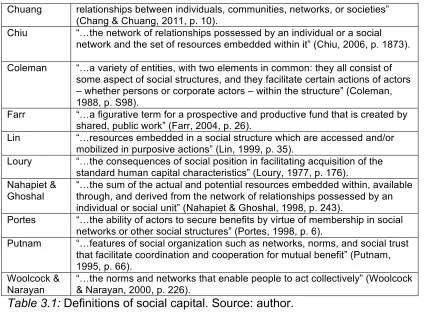
application in the study of social capital as a resource that accrues to institutional actors via their investment in SNS-mediated relations. For the purposes of this study, social capital is defined as the productive resources that are accumulated through investment in networks of personal
interaction and that can ultimately be converted to economic capital.
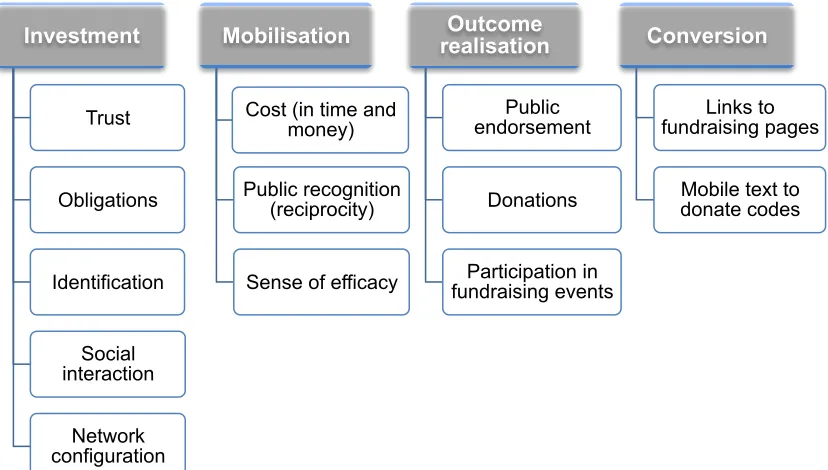
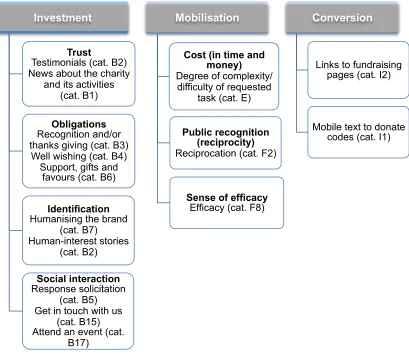
realisation and 4) conversion. It aims to investigate how charities invest in social capital via their SNS communication; what persuasion techniques and other features of Facebook posts they use to facilitate the mobilization of social capital; what the perceived and actual returns of this investment are; and whether these returns can be converted to fundraised income. None of the studies reviewed in this thesis investigate social capital as a conscious process of investment with expected returns that can be converted to economic capital, i.e. none examine all four stages of this process:
investment, mobilisation, outcome realisation and conversion. In this respect, this study aims to make a theoretical contribution to knowledge and hopefully add to existing efforts to re-assert social capital as a useful analytical
framework in CMC.
1.2.1 SOCIAL VERSUS SOCIOTECHNICAL CAPITAL
Scholars are divided about whether or not SNS communities constitute new forms of social capital. Putnam, for example, is sceptical about the
opportunities for social capital formation offered by social media. He argues: "I think strong social capital has to have a physical reality – a purely virtual tie is a pretty thin reed on which to build anything; it's highly vulnerable to
anonymity and spoofing and very difficult to build trust” (Bunting, 2007, para. 21). In contrast, Lin (1999, p. 46) credits cyber-networks for the launch of “a new era where social capital outpaces personal capital in significance and effect”, and Resnick (2001, p. 272) claims that technology fosters social relations “that would be infeasible without computers mediating interactions and managing the interaction traces and artifacts that are created during interactions”. The latter proposes the concept of sociotechnical capital, a subset of social capital, in the study of technology-mediated social relations. According to Resnick, ICT helps to invigorate traditional sources of social capital (from bowling leagues to religious engagement) by reducing the cost of coordinating and publicizing activities. More intriguing, however, is Resnick’s idea of using technology to invent new forms of association that can reverse the perceived decline of social capital, and this claim is investigated in this thesis. If indeed SNSs are a platform for new forms of social relations that would not be feasible in the real world, and if there is actual value in these relations, then this would make a good argument for increased investment in SNS fundraising.
1.2.2 AN ALTERNATIVE THEORY: MASS INTERPERSONAL PERSUASION (MIP)
Fogg (2008) argues that the development of SNS sites like Facebook has led to a new type of persuasion, which he calls “mass interpersonal persuasion (MIP)” and which combines “the power of interpersonal communication with the reach of mass media” (Fogg, 2008, p. 23). Although he insists that MIP is not determined by the technology it uses, he traces its birth to a specific date: 24 May 2007. This was when Facebook launched Facebook Platform,
people would be able to create apps and distribute them through social networks online. A small percentage of the creations would reach millions, persuading people in ways that are sometimes trivial and sometimes important” (Fogg, 2008, p. 24).
According to Fogg, this new type of persuasion has six ingredients, brought together for the first time when Facebook launched Platform: “persuasive experience”, “automated structure”, “social distribution”, “rapid cycle”, “huge social graph” and “measured impact” (Fogg, 2008, p. 27). He finishes his paper on an optimistic note, arguing that MIP will enable ordinary individuals to reach out to millions of people in the promotion of mostly good causes. “This democratization of persuasion will lead to far better outcomes than those achieved when persuasion is controlled by a few powerful groups,” he argues (Fogg, 2008, p. 34). Cynics may raise an amused eyebrow at Fogg’s claims, but there is evidence on the ground to suggest that Facebook is being used for humanitarian reasons. One very recent example is the No Make-up Selfie campaign that was reportedly started by a teenage mum from Stoke-on-Trent and that raised £8 million for Cancer Research UK in just 6 days (Duffin, 2014).
The No Make-up Selfie and other successful Facebook fundraising
campaigns observed during the period of the fieldwork are examined to see how MIP plays out in this context, if at all. Specifically, this thesis aims to determine whether MIP and social capital theory are incompatible, or if
elements of both can be incorporated into a revised theoretical framework for the study of SNS persuasive communication.
1.3 RESEARCH QUESTIONS (RQS), AIMS & OBJECTIVES
Following an initial review of existing literature in the areas of UK fundraising and online social networking, questions arose, indicating gaps in knowledge. As a result, this thesis is underpinned by the following three main research questions:
RQ 1: How are UK charities using online social networking in their fundraising efforts?
RQ 2: What works and what is counterproductive in SNS fundraising, and why?
RQ 3: How is social capital operationalized in the context of charity fundraising and how can this be explained theoretically?
Objective 1: To critically analyse the literature on UK charitable fundraising and online social networking and to identify any established fundraising practices that have been reinvigorated by being transferred to an SNS platform.
Objective 2: To critically analyse the literature on social capital, and unpack and sharpen the theory for application in the context of SNS fundraising.
Objective 3: To investigate the various uses of online social networking by UK fundraising charities, as well as their motivations and strategies, and to determine which fundraising methods are best suited to the SNS environment.
Objective 4: To provide an enriched theoretical explanation of the ways in which social capital is manifest in SNS charity fundraising.
Objective 5: To provide a set of practical recommendations to charities about how (and how not to) use online social networking in their fundraising efforts.
1.4 ORIGINALITY
The original contribution to knowledge this research aims to make is threefold:
i. Theoretical
This is the first study to investigate whether (and under what conditions) social capital can accrue to charities as institutional actors via their investment in SNS-mediated relations with supporters. Although other studies have
examined aspects of social capital in cybernetworks, this is the first study to attempt a thorough investigation of how social capital is created, mobilised and converted to economic capital in the context of SNS fundraising. By conceptualizing social capital as the product of investment in social relations that can ultimately be converted to economic capital, it seeks to determine and develop the utility of Bourdieu’s theory in a web-mediated social environment.
ii. Practical
At a time when harsh public spending cuts have left gaps in charity funding that need to be filled by philanthropy, this study aims to make a practical contribution to knowledge by examining what works and how in SNS
fundraising. Its findings are hoped to help charities mobilise their online social networks more effectively in fundraising.
iii. Methodological
environment and paves the way for future methodological innovation in social media research.
1.5 THESIS STRUCTURE
The rest of the thesis is structured as follows:
Chapter 2 presents a critical examination of relevant existing literature in the areas of fundraising, social networks and SNS fundraising. It specifically seeks evidence of continuity in fundraising practices and other insights that can inform the empirical work.
Chapter 3 considers social network analysis and compares it to other
dominant research approaches in computer-mediated communication (CMC). It also examines the origin, various conceptualisations, facets and limitations of social capital theory, as well as applications of this theory in CMC. Finally, it presents a reworked definition of social capital and proposes a new model for analysis.
Chapter 4 presents the methodological approach of this study, including knowledge claim, research approach and specific research methods. It justifies the choices made and reflects on ethical issues. It finishes with an overview of the research design.
Chapter 5 discusses challenges faced, opportunities seized and lessons learnt in the process of data collection, contributing insights to the
development of social media research methods.
Chapter 6 provides an overview of the three main datasets analysed in this thesis and explains the decisions made in presenting the results.
Chapter 7 provides an overview of the three cases, comparing their various uses of online social networking and consequent outcomes. It reports
empirical findings about the objectives, communicative functions and relative success rates of their Facebook posts, and discusses opportunities and challenges facing their respective social media teams.
Chapter 8 presents and analyses key findings thematically, explains how these findings address the aims and objectives of the study, and discusses how they relate to findings of other studies in the same area.
C h a p t e r 2
LITERATURE REVIEW: THE SEARCH FOR
INSIGHTS
“Novices may think that the purpose of a literature review is to determine the answers about what is known on a topic; in contrast, experienced
investigators review previous research to develop sharper and more insightful questions about the topic” (Yin, 2012, p. 9).
This chapter provides a critical examination of relevant existing literature in three main areas: fundraising, social networks and SNS fundraising. The analysis primarily aims to provide the researcher with insights on the
dynamics of fundraising in an SNS environment that can inform the empirical work of the thesis. Attention is paid to both the answers given and the
questions raised by the reviewed literature.
2.1 FUNDRAISING: THE HISTORICAL CONTEXT
A review and critical analysis of existing literature on fundraising has found established fundraising practices, tapping into primal human instincts, which have survived through the ages. The key findings are described below: 2.1.1 CHARITABLE FUNDRAISING IN ANTIQUITY AND THE MIDDLE AGES
The practice of charity is one of mankind’s most ancient instincts, developed to ensure the survival of the species. Phillips (1969, p. 1) argues: “When for the first time an apeman gave his neighbour a helping hand he discovered charity. He found that people who helped each other became stronger and happier, whether a tribe, a race or a nation.” Kidd (1999, p. 66) also highlights the timelessness of charity in human history. He claims: “Charitable giving is as old as civilisation. It can be found in a variety of structures and forms in most human societies down the ages.”
It is not surprising, then, to find that fundraising is an ancient practice. The oldest exhibit on SOFII, the online Showcase of Fundraising Innovation and Inspiration, dates back to circa 1,500 BC. It recounts the story of Moses raising contributions for the tabernacle following the Israelites’ exodus from Egypt. The story is from the Bible (Exodus 35-36, English Standard Version, Kindle edition) and it recounts how the prophet asked, in the name of “the Lord”, for contributions from his fellow Jews in the shape of possessions and skills in order to build a travelling worship tent in the dessert. Among the items requested were “gold, silver, and bronze”, “blue and purple and scarlet yarns and fine twined linen” and “goats’ hair, tanned rams’ skins, and goatskins”. His appeal was so successful that he eventually had to restrain supporters from giving more – a problem many fundraisers wish they had today.
There is also evidence of successful fundraising in the Middle Ages. In the UK, Phillips (1969) recounts the story of St Hughs, who was touring
Lincolnshire around 1190 on a mission to collect funds to build a cathedral, and the swineherd who donated his life’s savings for the cause (and who is said to be commemorated with a statue on a pinnacle of Lincoln Cathedral). In 1235, SOFII claims the “oldest fundraising letter on record” was sent to potential donors in Japan (n.d., ‘Eihei Dogen fundraising letter: from 1235’). Written by famous Zen Buddhist master Eihei Dogen, it requested donations to build a training monastery for monks. The letter is remarkable for its sophisticated donor profiling and persuasion techniques – some of which, including reciprocity, urgency and donor recognition, are still being used by fundraisers today. About a century later, fundraising letters were very popular in Europe, although they were not always used for what would count as charitable causes today. Phillips mentions a monastery in Austria circa 1350 that trained administrators to write appeal letters on behalf of impoverished kings and nobles, and claims that people have been “composing letters asking for money ever since writing was invented, from the days of stone and clay tablets, papyrus and sheepskin vellum” (Phillips, 1969, p. 158). One of the handbooks of the aforementioned appeal letter writing ‘course’ has survived and its advice is surprisingly familiar to contemporary fundraisers. The suggested form of an appeal letter, for example, comprises a “salutation”, where the fundraiser must “give greetings and praise”; an introduction, skilfully leading-in to the subject; a “narration”, describing the situation; a “petition”, presenting the request; and a “conclusion”, gracefully ending the letter in a way that inspires enthusiasm in the cause (Phillips, 1969, pp. 158 – 159). Considering the above evidence, it appears that mankind’s willingness to help others in need is a deep-rooted instinct that has contributed to the success of the species, and that fundraising is an ancient practice that has changed surprisingly little through the centuries.
2.1.2 BRITISH CHARITABLE FUNDRAISING IN THE 17TH AND 18TH CENTURIES
Jordan (1959) describes the efforts of wealthy citizens in Tudor-Stuart times to tackle contemporary social problems by establishing endowments and institutions for the relief and rehabilitation of the poor, and the improvement of their communities. Statutory-based poor relief did exist, and it was financed by taxation. The key purpose of Elizabethan and Jacobean legislation was to “make each parish responsible for its poor and to separate the employable from the unemployable poor” (Jordan, 1959, p. 18). However, state provision was seen as a last resort – a safety net in case private philanthropy proved inadequate – and “the constructive effort, as well as most of the funds, flowed from private endowments rather than from the mechanism contemplated by legislation” (Jordan, 1959, p. 18).
explains: “Endowments took the legal form of a trust, wherein money or land was given by deed or will and the annual income used to fund a scheme designated by the donor”. Owen (1964, p. 3) argues that by the 17th century, wealth and philanthropy in the shape of endowments went hand-in-hand: “To give or leave something to the community – a fund for the poor, an alms house, a grammar school – came to be expected of the more prosperous Englishmen”.
It is not within the scope of this thesis to examine in detail the history of British philanthropy; its only interest in the topic lies within any fundraising practices that might have paved the way for SNS fundraising. In this regard, the Tudor-Stuart period does not hold much promise, as social problems were solved by the efforts of benevolent citizens acting alone, rather than as a collective exercise by the general public facilitated by social networking. Therefore, we must skip a few history chapters to arrive at the 18th century, when the first charitable societies and associations, the forerunners of modern-day charities, started to appear.
Owen (1964, pp. 10-11) calls the time period of 1660 – 1780s “the age of benevolence” and argues that the 18th century “added new interests, new impulses, and new techniques to the charitable enterprise of Tudor and early Stuart times”. In fact, it was innovations in the practice of philanthropy in this era that laid the foundations for the voluntary sector as we know it today. At a time of “conspicuous material advance” and “growing tolerance” (Owen, 1964, p. 11), British philanthropists continued to give money and other assets as individuals, but they also started to act collectively to right the wrongs of their time. “In the future the hallmark of the philanthropist was to be not merely generous giving but also his support of worthy organizations” (Owen, 1964, p. 11).
Owen (1964) argues that the joint-stock boom of the 1690s had taught 18th century philanthropists a few lessons about financing commercial enterprises using small amounts of money from a large number of individuals, which they then applied to humanitarian enterprises. “As in a company, where
shareholders and directors performed different functions, so in the charity of the future subscribers would furnish pounds and shillings, but the more active work would be left to other hands” (Owen, 1964, p. 12). In the new voluntary societies, subscribers (or members) would contribute an annual sum and in return they could vote in the election of officers and other affairs, thus having a say in the running of the charities (Kidd, 1999). This was a far cry from the endowed charity of the past. Gorsky (1999, p. 18) claims that the decline of the endowed trust as the preferred form of charity in the 18th century “is usually explained in the light of a loss of confidence in the management of charities by trustees, who were thought to be abusing the trusts for political or venal purposes.” He further argues that the new, subscription charities, with their financial transparency “seemed to offer a more accountable channel of philanthropy” (Gorsky, 1999, p. 63).
“decidedly individual” despite appearances. “Such societies as were formed owed their main inspiration to individuals from the small group who took their social responsibilities seriously and raised from amongst themselves the active support both of money and service, which then accompanied membership of a philanthropic committee” (Simey, 1992, p. 26). The importance of individual effort in the new charities is also highlighted by
Shapely (2000, p. 23), who argues: “Unlike the old trusts, the voluntary charity field was characterised by the individual efforts of founders, volunteer workers and officials…”
Although aristocratic donors were still active during this era, this new breed of “associated philanthropy” was largely “middle class in its support and Puritan in temper” (Owen, 1964, p. 12). Owen attempts an explanation of the appeal of benevolence to middle class citizens and the motives behind much of 18th century philanthropy, and settles on three main impulses: “Puritan piety, a benevolently humanitarian outlook, and concern for the national interest” (Owen, 1964, p. 15). He also recognises the importance of a tradition of “noblesse oblige” in 18th century philanthropy in encouraging “almost tournaments of competitive benevolence” (Owen, 1964, pp. 15-16). Religion was a major driving force for philanthropy in the early eighteenth century. “This was the philanthropy of an austere and practical piety…” (Owen, 1964, p. 13). This puritan piety was evident in one of the main
fundraising methods of the time: the charity sermon. Owen mentions a special charity service held annually, semi-annually or quarterly in support of charity schools, which was a major financial resource for these institutions,
“especially if the preacher was a well-known figure” (Owen, 1964, p. 31). According to Owen (1964), anniversary sermons were also a key fundraising tool for hospitals, although they were usually followed by a dinner.
2.1.3 BRITISH CHARITABLE FUNDRAISING IN VICTORIAN BRITAIN
Owen (1964) and Shapely (2000) agree that philanthropy in the Victorian era was shaped most profoundly by the Industrial Revolution and the staggering growth of the urban population that it fuelled. “We need only recall that in the early nineteenth century certain industrial cities were growing at the rate of 30 to 40 per cent and even more in some decades” (Owen, 1964, p. 91). This quick increase in population and transformation of social structure inevitably resulted in widespread poverty that was to prove overwhelming even for the most ardent philanthropists. Yet not many were prepared to call for increased state provision. As Kidd (1999, pp. 1 & 2) states, “in the nineteenth century the social welfare obligations of the state were limited to assisting the
destitute and much was expected of voluntary welfare services and agencies operating outside the sphere of state competence”, and this is how the
Victorians liked it. “Good government was limited government”.
The Poor Law, as reformed in 1834, with its punitive philosophy and dreaded workhouses, was conceived as “an antidote to pauperism among the
agricultural laborers of the South, not as a social policy for the growing industrial society” (Owen, 1964, p. 136). So private charity soldiered on desperately against urban poverty. In fact, the new Poor Law further fuelled the growth in the number of charities, as the stigma of the workhouse discouraged people from asking for help from the state. Voluntary societies thus became “part of a political economy which believed in the workhouse for the undeserving poor, but which still sought to assist those identified as deserving” (Shapely, 2000, p. 23).
Some of the traditional methods of charity, including direct almsgiving, were ill suited for the fast growing industrial cities, where professional mendicants often begged side by side with the truly destitute (Owen, 1964). So
increasingly, benevolent citizens paid subscriptions to voluntary societies and let them distribute relief to those in need. Shapely (2000, p. 21) argues that voluntary associations were better suited to tackle the evils of the new, urban-industrial society: “The formal organisation and the flexibility of the voluntary charity enabled them to meet a variety of demands and to raise money from the community.” Another factor that contributed to the proliferation of charities in Victorian times was the revival of the Evangelical movement, which re-forged the link between philanthropy and religion. As Owen (1964, p. 94) puts it: “The philanthropic efforts of the early century, and indeed of the whole Victorian age, took much of their color from the evangelical outlook.”
stock market. The more prestigious an association was, the higher the figure it could demand for a subscription. Shapely (2000) contrasts the Lying-in
Hospital (now St Mary’s) in Manchester, which demanded an annual
contribution of ten guineas as early as 1790, and the Manchester and Salford Auxiliary Bible Society, which asked five guineas a year in 1838.
Often subscriptions were not enough, and indeed there is evidence that voluntary associations were supported by only a relatively small part of the population (see, for example, Owen, 1964, and Shapely, 2000), so fundraising was a major undertaking. “Money had to be raised by other measures, and voluntary charities displayed considerable ingenuity when attempting to raise funds. They helped in the development of a proliferation of public events such as bazaars, sales of work, tea parties, concerts and theatre festivals”
(Shapely, 2000, p. 24). Owen (1964, p. 480) describes a similar variety of fundraising approaches: “There were the annual appeals, the bazaars, and the familiar charity dinners, where, as earlier in the century, astute managers noted the correlation between quality (and quantity) of food and wine and volume of response.” According to Shapely (2000, pp. 22 & 31), through their fundraising techniques, charities established “an association between charity and fun, an association which became one of the charity field’s dispositions”, along with “compassion and Christian duty”. There was also an association between charity and celebrity, as Owen (1964, p. 480) suggests: “Fortunate the organizer who could stock his head table with well-known peers or, still better, could adorn it with a member of the Royal Family. Snob appeal, after all, was one of the more efficient handmaidens of good works.” Shapely (2000) mentions noteworthy charitable events in Manchester, including the theatre festival of 1852 and Jenny Lind’s concert at the Free Trade Hall in December 1848, both of which were hugely popular. He also includes some more unique examples, including one that stands out as thoroughly modern: “As early as 1783 the M.R.I. [Manchester Royal Infirmary] was using such amusements as a balloon ascent from Piccadilly to the Cheshire countryside to raise funds” (Shapely, 2000, pp. 30-31).
According to SOFII (n.d.), the world’s first industrial city is also credited with a fundraising first: the first- ever street collection for a charitable cause. It was in response to the well-documented 1886 Mexico disaster – a tragedy that claimed the lives of 27 crewmen, when two British lifeboats capsized in their mission to rescue the crew of a stricken German barque (RNLI, 2009). Five years after this RNLI tragedy, a group of individuals came together to raise money for the bereaved families of the deceased crewmen. Directing the appeal was Sir Charles Macara, a Manchester businessman, and the event was staged in his hometown. According to SOFII (n.d.), the street collection was a grand affair, attracting an estimated 30,000-strong crowd, and featuring two real lifeboats on trailers pulled through the streets by local men. As the lifeboats passed, bystanders were urged to toss their contributions into collection buckets carried by volunteers. As for the “posh folks from the
exhibit is immense, as it documents the origin of a fundraising classic: the street collection. “Every tin can that’s ever been rattled in high streets up and down the British Isles owes its provenance to this ‘first’, and the dark events that prompted it” (SOFII, n.d., ‘RNLI: Britain’s first-ever street collection, 1891’).
Charities also commonly used newspaper advertising to promote their
fundraising events. Shapely (2000) mentions the launch of a Deaf and Dumb School in Manchester in 1837, featuring a public procession and dinner, which was advertised on the front page of the Manchester Guardian. Gorky (1999, p. 205) also highlights the importance of newspaper advertisements in fundraising: “From the late eighteenth century they were used by charities to advertise their meetings and functions, to articulate their objectives and to publish subscription lists.” According to Gorsky, by the end of the nineteenth century, a charity’s use of print media was seen as an indication of its wealth and prestige.
In the mid-1890s, a directory of active philanthropists was produced, with information drawn from charities’ subscription lists. The publication, entitled
The Charitable Ten Thousand, was “almost a philanthropic ‘sucker-list’”
(Owen, 1964, p. 480) – a list of potential donors who would then be constantly chased for charity contributions. This was no different from the donor mailing lists of today, provided by such companies as donorlists.com (USA) and direct-marketing-lists.co.uk (UK). The use of professional fundraisers is also not as new as one might think. Owen claims professional “collectors” were commonly used in Victorian times, and that they worked on commission. “For their efforts these laborers in the charity vineyard received something like 5 or 7½ per cent of their harvest” (Owen, 1964, p. 480).
Their enthusiasm and ingenuity in raising money helped voluntary
associations thrive, and by 1869 – the year the Charity Organisation Society was founded to coordinate their efforts – they had become ubiquitous. “By the time the Charity Organisation Society appeared on the scene there were about seven hundred philanthropic societies in London alone. And the combined cost of relief and charity in the metropolis, according to one contemporary estimate, came to £7,000,000 annually – a sum sufficient, it was calculated, to keep one in eight inhabitants of the city in idleness” (Himmelfarb, 1991, p. 186).
A complex mix of motives has been cited as being behind the surge of voluntary charitable activity among Victorians, including a sense of social responsibility, religious piety and social aspiration (Owen, 1964; Himmelfarb, 1999; and Shapely, 2000). Shapely (2000) also suggests a more sinister pair of motives for charitable behaviour in Victorian Britain: power and control. Those subscribers who had the spare money, time and inclination could buy a controlling stake in their chosen charity, thus having a say in its management. At a time when “charity leaders were placed on a very public pedestal”
charities, philanthropists could attain the personal capital necessary to
succeed in their quest for power and control. This was especially important for newcomers to the city who wanted to be accepted into the community. “In the mid Victorian period symbolic capital and social leadership demanded a display of benevolence and Christian duty, achievable through association with local charities” (Shapely, 2000, p. 84). He gives the example of Mr and Mrs Christie, who donated the sum of £2,600, in addition to their annual subscription of £25 each, to the Cancer Pavilion in Manchester. “A typical example, Christie was made the first President of the hospital which would eventually bear his name” (Shapely, 2000, p. 36). Shapely even claims that, in the second half of the 19th century, charitable involvement was important in Parliamentary election campaigns, where candidates used their charitable credentials to “acquire the status of worthy representative” (2000, p. 109). Gorsky (1999, p. 200) agrees: “For nineteenth-century public figures personal benevolence and a willingness to support philanthropic causes were
desirable, perhaps essential attributes.”
Whatever their motives were, the Victorians backed their philanthropic instincts with actions. “According to one survey in the 1890s, half of the “respectable” working-class families made regular contributions to charities” (Himmelfarb, 1991, p. 182). Owen (1964, p. 469) mentions an article in The Times in the mid-1880s, which noted that “the income of London charities was greater than that of several independent governments, exceeding the
revenues of Sweden, Denmark, and Portugal, and double that of the Swiss Confederation.”
Given the evidence above, Phillips (1969) is probably right to advise contemporary fundraisers to start with the assumption that the British are primed to be charitable. He argues:
This reservoir of generosity, this willingness to help others, has its roots deep in the past. The difference between yesterday and today is that money is now more evenly distributed. The wealthy individuals have to a large extent been taxed out of existence and their place has been taken by commerce, industry and an increasing population with a higher standard of living and money to spare1 (Phillips, 1969, p. 3). Hanvey and Philpot (1996: 3) echo Phillips’s view when they state that “volunteering remains an essential element of the British psyche”.
Gorsky, 1999, argues that despite the obvious benefits of voluntarism in the 19th century, it proved prone to fundraising fads and, in the end, inadequate to provide long-term, reliable funding. He also identifies some other problems with the voluntary associations of the 19th century: “The accompaniment of aid
1 Phillips’s (1969) claim that wealth is more evenly distributed in Britain today than it was
before World War II is refuted by recent research. Church Action on Poverty, Oxfam and The Trussell Trust for example, published a report claiming that “the richest one percent of Britons own the same amount of wealth as 54 percent of the population”, while millions of British people live “below the breadline” (2014, p. 4).
with unwanted moralising was disliked, while the association of philanthropy with the more privileged and powerful in society provoked resentment” (Gorsky, 1999, p. 195) The evangelicals seemed to many to be on a mission to save the souls of the poor, more so than improve their living conditions. Owen (1964, p. 95) claims that in Victorian charities often “virtue and piety rather than need were pre-requisite for assistance.” Himmelfarb (1991) concurs. She argues that 19th century Evangelicals displayed a ferocious compassion that lacked the generosity needed to really embrace the poor. “Theirs was a religious zeal derived from a rigorous theological creed” (Himmelfarb, 1991, p. 4). It may sound disrespectful to criticize a movement that is credited with the abolition of slavery, but the stern Evangelical ethos was not always appreciated by the hordes of unfortunate Victorians who came to depend on private charity for survival. Victorian poet John Boyle O’Reilly captures the popular feeling in his poem, In Bohemia, where he describes 19th century charity thus: “The organised charity, scrimped and iced, In the name of a cautious, statistical Christ” (O’Reilly, 1886, p. 15). Charity was also seen as part of an unequal social structure designed to keep the poor dependent on the wealthy and, as the twentieth century approached, there was increased pressure on the state to step in and accept responsibility for the nation’s welfare (Gorsky, 1999).
2.1.4 FUNDRAISING IN THE 20TH CENTURY
Phillips (1969) claims that the fact that large sums were collected for charity prior to the 1940s is due to the generosity of the British, not the skill of the fundraisers. Despite the common use of collectors in the 19th century, up until World War II fundraising was still seen predominantly as the job of unpaid volunteers, who were often amateurs. Luckily for those in need, it appears that even the steep rises in personal taxation following World War I, which hit the upper classes, did not curtail the instinct of the rich to help the poor. “In the 1920s and 1930s many charities still relied upon wealthy individuals. Though taxation had increased, there were still many more individuals than there are now who could afford to contribute quite substantial amounts. Those were the days when a letter to The Times, signed by eminent people, could by itself produce thousands of pounds, rather like a modern television appeal” (Phillips, 1969, p. 111). With most of the country’s wealth concentrated in the hands of a small number of individuals, raising funds for worthy causes was relatively easy, even without the help of the mass media, as Phillips explains:
For example, two or three people set up offices to assist charities with lists of wealthy individuals (direct-mail agencies were then still in their infancy). These lists were gradually built up from all kinds of sources – donation and subscription lists, published wills, etc. All the organizer had to do was to compose a letter (some were badly written and cheaply produced, often smudgy duplication) and the money came rolling in (Phillips, 1969, pp.112-112).
In the late 1940s, the Welfare State took shape through a series of enactments intended to protect the public from falling below a social