Philosophy Theses Department of Philosophy
8-7-2018
Isolated Sacred Value Theory: An Account of
Moral Conative Attitudes
Adrian Pecotic
Follow this and additional works at:https://scholarworks.gsu.edu/philosophy_theses
This Thesis is brought to you for free and open access by the Department of Philosophy at ScholarWorks @ Georgia State University. It has been accepted for inclusion in Philosophy Theses by an authorized administrator of ScholarWorks @ Georgia State University. For more information, please [email protected].
Recommended Citation
CONATIVE ATTITUDES
by
ADRIAN PECOTIC
Under the Direction of Neil Van Leeuwen, PhD
ABSTRACT
In this paper, I propose a novel theory of sacred values, which are a recently proposed type of conative attitude meant to account for religious and political actions that are incomprehensible using theories of rational choice (Atran 2016; Baron & Spranca 1997; Tetlock et. al. 2000). Sacred values are unique mental states because they encode unconditional preferences for certain privileged outcomes. I develop Isolated Sacred Value Theory by formulating two decision principles that reflect behavior in morally-relevant circumstances: the inviolability principle and the unrankability principle. Having formulated my proposal, I consider the impact of my proposal on extant theories of rational choice (e.g. von Neumann & Morgenstern 1944). Lastly, I apply ISVT to problems regarding the typical extension of sacred values and the possibility of immoral actions.
CONATIVE ATTITUDES
by
Adrian Pecotic
A Thesis Submitted in Partial Fulfillment of the Requirements for the Degree of Master of Arts
in the College of Arts and Sciences Georgia State University
Copyright by Adrian Ryan Pecotic
CONATIVE ATTITUDES
by
Adrian Pecotic
Committee Chair: Neil Van Leeuwen
Committee: Daniel Weiskopf
Electronic Version Approved:
ACKNOWLEDGEMENTS
TABLE OF CONTENTS
ACKNOWLEDGEMENTS ... V
LIST OF TABLES ... VII
LIST OF FIGURES ... VIII
LIST OF ABBREVIATIONS ... IX
1 INTRODUCTION... 1
2 ISOLATED SACRED VALUE THEORY ... 3
3 EMPIRICAL FINDINGS AND JUSTIFICATION OF ISVT ... 8
3.1 Summary of ISVT ... 17
4 CONSEQUENCES FOR RATIONAL CHOICE THEORY ... 20
5 EXTENSION OF SACRED VALUES AND THE POSSIBILITY OF IMMORAL ACTION ... 33
6 CONCLUSION ... 43
REFERENCES ... 45
LIST OF TABLES
LIST OF FIGURES
LIST OF ABBREVIATIONS
1 INTRODUCTION
We might imagine someone running errands one morning: carefully planning an itinerary, finding the best parking spots, and scanning each aisle for a good deal. We might imagine the same person following that unremarkable morning with actions that possess very different qualities, like going to a risky protest or engaging in civil disobedience. General theories of behavior struggle to explain the full range of human action with a few theoretical principles; one influential attempt is Rational Choice Theory (RCT), which explains action as an expression of the highest ranked of an agent’s preferences (Peterson 2009; von Neumann & Morgenstern 1944). However, this analysis seems ill-fitting when applied to acts of passion, self-sacrifice, or even cooperation (Hursthouse 1991; Atran 2006; Skryms 1998). Although advancing theories with maximal scope is admirable, I contend that a more modest approach, tailoring separate theories to subsets of actions that share relevant characteristics, results in better explanations.
Religious and political actions form a cluster whose properties distinguish them from other types of action, indicating that these acts are a subset in need of a theory. Terrorists or freedom fighters taking great risks for the cause, religious congregations steadfastly defending sacred objects or beliefs, and both civil and violent disobedience of state power are three paradigmatic examples of religious and political actions. Recently, social psychologists have posited “sacred values,” which are desire-like mental states with properties that preclude compromise and discourage free-riding (Atran 2016; Baron & Spranca 1997; Tetlock et. al. 2000). However, these accounts lack necessary features of a philosophical account, like integration with philosophical understandings of action and motivation.
approach follows David Hume’s notions of ‘reason’ and ‘passion,’ which correspond to beliefs and desires, respectively (Smith 1987). When an agent wants something and believes a certain action will satisfy her want, she performs the action (Davidson 1963; Smith 1987). RCT assumes a similar framework, replacing desires with preferential orderings and beliefs with subjective probability (von Neumann & Morgenstern 1944). To introduce a new type of mental state as an explanatorily-relevant factor in action, as sacred values have been, one must assess the impacts on longstanding theory. And, of course, the main task is to develop a set of principles that describe the interactions and functions of the mental states that cause action.
I accomplish both the above goals with theses concerning (1) how sacred values function as mental states and (2) the relationship between sacred values and non-sacred values. With regards to the first goal, I develop Isolated Sacred Value Theory (ISVT), which aims to understand the structure and function of sacred values; here, my central contention is:
(1) Each sacred value is an isolated preference structure, which is inviolable by profane values and unrankable against other sacred values.
(2) Standard actions and sacred actions are caused by two separate competencies, with the former described by RCT and the latter by ISVT.
As will become clear, the content of a conative attitude does not determine the competency which processes it, since the same prospective state-of-affairs could be valued as sacred or profane by different agents. When an agent does not identify sacred value in any available option, one can still use RCT to understand the behavior.
In Section 1, I introduce the core postulates of Isolated Sacred Value Theory. In Section 2, I review empirical findings by social psychologists studying religious and political decision making, further defending and developing my theory (Atran 2016; Baron & Spranca 1997; Tetlock et. al. 2000). In Section 3, I consider the consequences of ISVT for our appraisal of RCT and argue that theories of high-level psychological phenomena need not correspond to actual processes in the brain nor make flawless predictions. Instead, these theories must properly demarcate the domains of choice and discover decision-making principles. Finally, in Section 4, I consider the possibility of immoral action and regularities in what is considered sacred across cultures.
2 ISOLATED SACRED VALUE THEORY
In this section, I will explain the basic features of ISVT, but neglect full arguments for many theoretical moves until the next section, when I review the aforementioned empirical literature on sacred values. First, I introduce the distinction between sacred and profane value. Second, I advance the two central posits of ISVT: the inviolability of sacred values by profane values and the unrankability of sacred values. Finally, I define sacred values as conative mental states with structural properties of the form [S > A] and [S1⟛ S2].
understanding of the distinction between the sacred and profane in The Elementary Forms of Religious Life (1912). Durkheim argues that religion is a system of beliefs, rites, and practices that maintain distance between what is sacred and what is profane; he writes: “by definition, sacred beings are beings set apart. What distinguishes them is a discontinuity between them and profane beings” (1912 p. 303). Although ‘sacred’ is most often associated with religion, the term also applies to secular objects and places that inspire reverence, like the American Flag, Simon Bolivar’s sword, or Military Cemeteries. Whether religious or secular, we treat these objects and places according to rules of conduct that ensure their separation from the profane world—one is not supposed to burn a flag, nor should one litter at a Cemetery. It is the collective respect for a sacred value that affords objects, places, and ideas their aura and import, not any property of the things themselves. Profane value does not necessarily disrespect the sacred, they are simply irrelevant to sacred concerns. Non-sacred objects only become sacrilegious when illicitly elevated to the sacred plane. Throughout the essay, whenever I refer to non-sacred or profane values, I mean the sense just introduced. Behind these acts and prohibitions lie conative attitudes that afford special importance to the maintenance of sacred states of affairs.
the normative status of what is considered sacred in any context.1 Since to be sacred is just to be
processed in a certain way that projects sacred value into the world, anything can, in principle, become a sacred value. Therefore, I cannot give necessary and sufficient conditions for when a state of affairs is a sacred value, relying instead on functional definitions. Though I have often referred to my explinandum as ‘religious and political actions,’ this formulation merely uses content as a heuristic for identifying actions motivated by sacred values.2
I now examine the inviolability principle, which holds that a profane outcome cannot be compared with, nor chosen over, a sacred outcome. According to RCT, any choice features multiple options one must evaluate by weighing beneficial attributes against negative ones, enabling the comparison of outcomes and, eventually, an act. In contrast, then, the presence of inviolability implies that there is no preference ranking (better than, equal to, or worse than (Chang 1997)) between sacred and profane outcomes because comparing them is improper. Absent standard preferential relationships, people display unconditional commitment to objects, places, and ideas sacralized by the community. This treatment of privileged outcomes bears considerable resemblance to Joseph Raz’s “constitutive incomparability,” a relation that obtains when “the refusal to trade one option for the other is a condition of the agent's ability to successfully pursue one of his goals” (1986 p. 346). For example, only those who believe “that friendship is neither better nor worse than money, but is simply not comparable to money or other commodities, are capable of having friends” (1986 p. 352). Certain goals and roles, like prison reform or being a priest, require treating some outcomes as inviolable, blocking the sacred outcome from entering into any of the three traditional value relations with a non-sacred outcome.
1 In fact, from a normative perspective, those committed to sacred values often commit immoral actions in their
defense, as we see in ethnic conflicts with depressing regularity.
2 Though, as we shall see, despite the degree of freedom one has in adopting different attitudes towards outcomes,
The behavioral consequences of inviolability are apparent in conflicts between sacred and non-sacred values, most obviously when money is on offer for violating a sacred value. If someone has an opportunity to sell a sacred place for land development, exchanging an increase in wealth for the destruction of the site would disrespect the place itself and those to whom it is sacred. After all, if the sacred can be traded, bought, or sold, it is not appropriately distanced from everyday commerce. So, to even consider trading a sacred good for material benefit is to opt out of living as a proper member of the community for whom the outcome is sacred; even if this does not literally mix the sacred and profane, it is a mental act that unacceptably mingles the two types of value by treating them as comparable. This view allows for gradual change in a person’s sacred commitments over the course of her life, with development based on evolving social consensus, joining or leaving a community, and personal reflection. The fact that an outcome may be considered sacred at one point, but not another, does not inhibit the detection and study of sacred values (by way of the features identified in the next section), it means that an agent’s moral, religious, or political beliefs have changed between observations of behavior. In sum, inviolability holds that outcomes realizing sacred values are incomparable with profane values because respecting sacred goods is tied to a person’s ability to live a certain kind of life.
associated with unrankability, since both options are privileged relative to the non-sacred outcome. The lack of a common scale along which different values can be compared, sometimes called value incommensurability in the literature, is responsible for the unrankability of sacred values (Broome 2000; Chang 1997). One cannot form metrics of comparison because what is considered good is very different in each outcome. For example, how does one weigh the good done by protecting the Amazon rainforest against the introduction of pro-transgender legislation? The source of our inability to construct rankings is a relationship between the abstract values themselves, not the outcomes in which they are realized.
When choosing between outcomes instantiating two unrankable values, an agent will be uncertain about the choice because the values cannot be ranked. In order to rank the outcomes, the agent needs a common scale on which the concrete bearers, or units, of each sacred value can be placed. Without a third value commensurable with both sacred values, in terms of which a common scale could be constructed, there is no way to compare 1000 acres of rainforest to a particular amount of another social good. If forced to make a choice, the agent may well choose one or the other, but this behavior is not the expression of a stable preference. Rather, a whim or arbitrary tiebreaker will have made the difference instead of a proper reason for action. Later on, the same agent may well choose the other sacred outcome. In the next section, I use the small improvements argument to definitively show that no sacred option is better than the other, nor are they equal (Broome 2000; Chang 1997; Raz 1986). Unrankability isolates sacred outcomes from one another, generating uncertainty because there is no clear reason to act one way or the other.
rejected when in competition with a sacred outcome, which we can formalize as the preference relation [S > A]. Here, S stands for any outcome that instantiates a sacred value and A stands for
any outcome with only profane value. The relation, ‘>,’ establishes that sacred outcomes will be
chosen over profane outcomes, no matter the amount of value in each. Importantly, though [S>A] means that the sacred value is preferred to profane values in toto, this is not a preference ranking in RCT’s sense, for two reasons: first, rational choice theory’s rankings are between concrete outcomes, not variables for any outcome instantiating onlyprofane value (like ‘A’); and second, my preference structure does not include subjective probabilities. We also need a relation to symbolize unrankability, for which I use the middle term in [S1⟛ S2]. This reflects the inability
to measure the values of two sacred outcomes in a way that enables an appraisal in the same terms. These two postulates leave agents with, on the one hand, severe restrictions on acceptable behavior in choices involving sacred and profane outcomes, and on the other, no definitive guidance when choosing between sacred options.
3 EMPIRICAL FINDINGS AND JUSTIFICATION OF ISVT
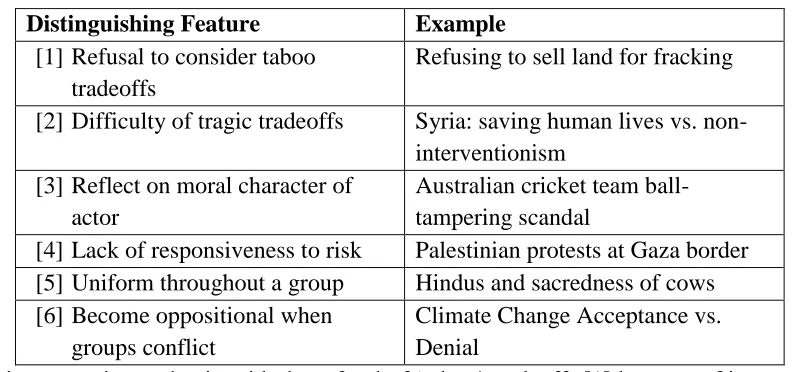
Table 1 Notable Features of Sacred Values
It is appropriate to begin with the refusal of ‘taboo’ tradeoffs [1] because of its centrality to both ISVT and the research on sacred values. To accept a taboo tradeoff is just to choose a profane outcome at the expense of a sacred value (Baron & Spranca 1997). When considering a policy, like the legality of abortion, an affirmative response to “this should be [allowed or] prohibited no matter how great the benefits from allowing it [or prohibiting it]” shows that no amount of material or hedonistic value will be enough to justify choosing the profane outcome (Baron & Spranca 1997 p. 7). For example, if one believes a temple is sacred ground, no reward, no matter how absurd, will compel an agent to allow disrespect of the site. In contrast, no matter how strongly one desires a profane outcome, like eating an orange, he will pass on the opportunity if offered enough money for the orange, whether that is $5 or $50. If someone accepts a taboo tradeoff, it not only means the sacred has been compared to the profane, but that person actually values material outcomes more than the sacred. An agent that regularly accepts taboo tradeoffs does not sincerely possess the sacred value in question.
A very consistent finding is that agents refuse, and refuse to consider, taboo tradeoffs (Atran 2016; Baron & Spranca 1997; Tetlock et. al. 2000). For example, in one of Tetlock’s experiments, people identifying as ‘liberal’ overwhelmingly refused to trade money for “votes in
Distinguishing Feature Example
[1] Refusal to consider taboo tradeoffs
Refusing to sell land for fracking
[2] Difficulty of tragic tradeoffs Syria: saving human lives vs. non-interventionism
[3] Reflect on moral character of actor
Australian cricket team ball-tampering scandal
[4] Lack of responsiveness to risk Palestinian protests at Gaza border [5] Uniform throughout a group Hindus and sacredness of cows [6] Become oppositional when
groups conflict
elections for political offices, the right to become a U.S. citizen, [or] the right to a jury trial” (Tetlock et. al. 2000 p. 857). Likewise, while interviewing students at Indonesian Madrassas, Ginges and Atran found that “75% of participants answered ‘no’” when asked to compromise their belief in sharia law, at some schools reaching 91% of respondents (Ginges & Atran 2009 p. 17). Upon the adoption of a sacred value, taboo tradeoffs are refused in principle, suggesting that a true comparison of the options never happens (Baron & Spranca 1997 p. 7). A conventional preferential ranking is unnecessary because the unconditional endorsement of a sacred value ensures that any amount of sacred good is chosen over solely profane outcomes.
What’s more, people react with “moral outrage” and “moral cleansing” to just the offer of a taboo tradeoff, signifying an opinion that the question ought never have been asked (Tetlock et. al. 2000 p. 853). These findings are consistent with inviolability, in which any openness to trading the sacred for the profane is incompatible with the larger goals of the agent. Indeed, Tetlock adopts an explicitly Razian perspective, writing, “our commitments to other people require us to deny that we can compare certain things” (2000 p. 854). For example, suppose a company that uses embryonic stem cells in medical treatments offers a devout Catholic a job with a high salary and exceptional benefits. Of course, the Magisterium forbids any destruction of embryonic stem cells, since it is tantamount to abortion and vitiates the sanctity of life. To take the job would certainly
forfeit his standing as a good member of the Church, but to even consider it warrants harsh censure. In these terms, the agent refuses to violate sacred goods because of restrictions that are constitutive of the pursuit of the spiritual project of living as a good Catholic.
on taboo choices. However, one important finding is that tragic tradeoffs are very difficult decisions to make, relative to both standard and taboo tradeoffs. When Martin Hasselman and Carmen Tanner offered a choice between improving “flood protection” or “safety at work” in a community, subjects said the tragic tradeoff was more than twice as difficult as the taboo condition (2008 p. 54). Difficult is an expected property of tragic choices according to ISVT, since the lack of a common scale entails that no obvious answer is forthcoming. Another finding lending credence to the unrankability thesis is people’s lack of confidence in their decisions concerning sacred values, again compared to standard and taboo tradeoffs (Hasselman & Tanner 2008 p. 54). Taboo tradeoff have an obvious, morally required, choice, but tragic tradeoffs are not determined by moral rules because both outcomes realize sacred values.
indecision will persist. The extra utility from 5 new congregation members entails that, had the two options truly been equal in the first choice, the agent should choose the sweetened option without hesitation in the second. We can conclude that agents are not comparing the values instantiated in each outcome along a common scale because, if they were, sweetening’s marginal increase in utility would result in a strict preference.3 Therefore, we have good reason to believe that different sacred values cannot be ranked, establishing the second core property of ISVT.
Thirdly, by attending more closely to results concerning moral outrage and the judgment of others, we can improve our understanding of the ways in which decisions featuring sacred values impact one’s moral standing [3]. Readers of vignettes about agents making taboo decisions report “moral outrage” at the fact the choice is even being considered, the degree of which increases with the length of contemplation (Tetlock et. al. 2000 p. 852). In taboo conditions, participants of the experiment judged the moral standing of the decision-maker very harshly, with some recommending punishment (Tetlock et. al. 2000). As expected, how an agent acts when in a position to choose between the sacred and profane affects their moral standing in the eyes of others. Further, people cast their moralizing eyes on themselves, with Tanner and Hasselman finding that “compared to routine trade-off scenarios, negative emotions were somewhat stronger in taboo trade-off scenarios and considerably stronger in tragic trade-off scenarios” (2008 p. 55). Aware of the moral import of decisions involving sacred values, people feel pressured and ‘on the spot’ because they know their moral standing is subject to the judgment of their community.
3 Some may object by arguing that the small improvement argument is only sufficient to show that the outcomes
Importantly, the negative emotions that agents experience during tragic tradeoffs are tied to the difficulty of choice, with participants endorsing statements like “I was swamped with this decision” and “I was afraid to make a choice” (Tanner & Hasselman 2008, Appendix B). The lack of a traditional preferential ranking causes the behavioral instantiations of uncertainty and worry. Returning to the perspective of someone judging a decision-maker, we find that lengthy consideration of a tragic tradeoff does not merit derision, but instead, the attribution of ‘wisdom’ (Tetlock et. al. 2000 p. 858). Since these important decisions are so difficult, the absence of haste befits what is at stake. The least difficult decisions involve only profane value, since the outcomes are commensurable with one another and enter conventional preferential relations. RCT expects the ease of standard tradeoffs because the completeness axiom dictates that an agent can form a preference between any two options, but is inapplicable to taboo or tragic choices because comparison fails in each, though in different ways. Inviolability and unrankability have different behavioral consequences, but, in both cases, the agent is aware that her behavior will represent her moral character to others in the community, and, to herself.
the more profane goods the agent is risking, the less the profane matters. The insensitivity to profane costs associated with sacred outcomes suggests the processes that evaluate these outcomes do not include estimations of benefits, costs, or risks. The steadfastness with which people choose sacred outcomes in the face of increasing profane costs is consistent with the presence of any amount of sacred value ‘activating’ the rules of ISVT, meaning inviolability continually precludes compromise. Since the goods available in sacred outcomes are not measured and bundled together, but simply recognized as sacrosanct, there is no ‘sum’ of value to combine with subjective probabilities in order to calculate the act’s expected utility. As such, agents cannot integrate probabilities associated with an outcome into the decision-procedure, which means agents motivated by sacred values will respond to risks differently than in profane tradeoffs.
participants took part in religious rituals, the more they considered their preferences to be sacred values” (2012 p. 114). These rituals synchronize people’s conception of the margins of the sacred world, weaving individuals into a collective with shared goals and pursuits.
Since rituals are explicitly directed towards an object, place, or idea, participants will adopt a sacred attitude towards the same content, committing to applying the inviolability and unrankability principles in the relevant contexts. When a group is prepared to cooperatively defends a sacred value without compromise, any challenges will be met with greater force than even the strongest lonesome defender could muster. One of Atran’s key findings is the greater the degree of “identity fusion” with a group, the more likely it is an agent engages in “extreme pro-group behavior” (2016 p. 197). Identity fusion, on Atran’s theory, occurs when “people’s collective identities become fused with their personal self-concept” as a result of emotional bonds between groups friends, family, and “kin-like” social groups (2016 p. 197). Furthermore, treating a sacred object properly “credibly signals” one’s commitment to a group, especially since the unconstrained nature of the inviolability principle ensures adherence to a sacred value is “costly to fake” (Sosis & Alcorta 2004 p. 267). Richard Sosis finds that “a higher number of costly rituals and taboos” in a commune, like a kibbutzim or collective farm, the greater the average length of survival before dissolution (Sosis & Alcorta 2004 p. 271). Thus, people devoted to the same sacred value have common ground on which to build mutual trust, solving problems of free-riding and cheating. The expectation that members of a group will act in defense of a sacred value, even when counter to their own interests, enables a level of cohesiveness not present among purely self-interested individuals; it is at this point, as Durkheim puts it, people form a “society” (1912 p. 16).
further drives the conflict. By ‘oppositional,’ I mean that one group’s sacred object becomes a profane object to the opposed group, and vice-versa. For example, American flags are sometimes treated as profane objects in the Middle East, to be burnt and spit upon, while more Islamophobic corners of the 50 States have had the exact same ideas about the Koran—but both sub-cultural groups perform these rituals with equal rarity. The slurs used in war to refer to the enemy ingrain the profane, disgusting, nature of the enemy into the minds of recruits (Kubrick 1987). The damage inherent in this type of violent oppositional thinking should be clear to everyone, as it has played out countless times throughout history.
3.1Summary of ISVT
My theory of sacred values can explain all the features of religious and political action just surveyed, even though they occur at different levels of analysis. The first two features, the refusal to consider taboo tradeoffs and the difficulty of tragic tradeoffs, are observations of behavioral responses to different types of choice situations. In contrast, the uniformity of sacred values amongst members of religious, class, political groups, as well as their tendency to become oppositional when these groups conflict, concern groups of actors unified by their values, not individuals. ISVT contributes to understanding both levels of analysis with the same small set of principles about the interaction of conative mental states.
When people see or hear of how others behaved in choices involving sacred values, they judge the moral character of the actor [3], the valence of which varies depending on the type of tradeoff. As we know, taboo tradeoffs must be rejected quickly to prevent moral outrage. In contrast, agents are not negatively appraised for taking time to consider the response to a tragic tradeoff, appropriate since the unrankability gives no guidance on the right action. In both cases, the way people react is consistent with inviolability and unrankability. Likewise, ISVT expects the lack of risk responsiveness in decisions involving sacred outcomes [4] because the structure of sacred values precludes the integration of subjective probability into decision making. In taboo cases, the options are not actually compared, with the profane outcome rejected out of hand; thus, the likelihood of success in the sacred action is not relevant. And, in tragic tradeoffs, there is no common value to use in the calculation of expected utilities for the outcomes, so probabilities do nothing to resolve unrankability.
group’s value, SVii, is an affront to the other groups sacred value, SVi; this, of course, motivates
single-prime people to remove any offending sacred objects belonging to the double-primes. Before ending this section, I wish to raise and respond to a counter-proposal. The central importance of group membership in my account of sacred values suggests that we may be able to explain sacred actions in terms of desires to belong to a group, without mentioning sacred values at all. On this proposal, a sacred acts are caused by higher-level preference for remaining in the group without any attachment to the ‘sacred value’ purportedly instantiated in the outcome. If, as I have claimed, a precondition of belonging to a group is respecting their sacred objects, it seems possible to interpret any action in defense of those objects in a way that affords great value to remaining in the group and no value at all to the sacred objects themselves. Although initially credible, this proposal does not capture (1) private sacred actions or (2) the externalization of sacred value.
p. 82). Kyle Stanford has recently taken up these themes, arguing that externalization establishes a “crucial connection between our own motivation to conform to any given distinctively moral norm of behavior and the extent to which we demand that others conform to the same norm” (2018 p. 2). The fact that we externalize sacred values raises our commitments from standard preferences to “distinctively moral obligations,” which augments group cohesion to a greater extent than shared commitment to merely instrumental values (Stanford 2018 p. 8). The proposal that we value sacred objects only as a means to the end of group membership is incompatible with our independent respect for the sacred and our externalization of moral obligations.
4 CONSEQUENCES FOR RATIONAL CHOICE THEORY
The existence of a competency solely responsible for processing decisions involving sacred values means that what was thought to be a unitary target of inquiry, decision-making, actually contains two targets, sacred decision-making and non-sacred decision-making. Discoveries that a natural phenomenon possesses only illusory underlying unity are not uncommon in science, occurring when we find out there are four species of giraffe or identify etiologically-distinct illnesses with identical symptomology. A successful theory has a scope that is sensitive to differences between distinct types of phenomena that merely appear similar, ensuring that theoretical entities covering heterogeneous objects do not confuse the interpretation of experimental results. Importantly, the cluster of human behavior within the scope of ISVT more or less corresponds to a pre-theatrically identifiable class of actions centered around religion and politics. These considerations raise the question of how to theorize about behavior outside the scope of ISVT; namely, actions emerging from choices between two profane outcomes.
our attention. Countless inconsequential decisions must be made on a daily basis; whether to drive to work or take the train, whether to employ one investment strategy rather than the other, or what to cook for dinner. When people are making these decisions they are often, though not always, attempting to maximize or economize a finite resource such as time, money, or effort. One considers the choice of automobile instead of light rail ‘correct’ if the time spent commuting via automobile ends up being less than the light rail—assuming the agent is not an environmentalist, whose decision will involve ISVT. Initially, it seems reasonable to preserve RCT for explaining this class of actions because agential goals align with the decision procedure’s guarantee that a rational agent will experience the greatest benefit in the long run. In fact, restricting RCT’s scope to only profane matters improves its descriptive adequacy, given that moral choices have always resisted purely rational terms. This move rules out the most ardent interpretations of RCT (which claim its decision procedure to be operative across all choices), but enables a theorist to narrow the explanatory scope to a specific cluster of actions, as was done in ISVT.
remaining agnostic towards content, which represents a similar approach to ISVT, albeit with different rules. The similarity in theoretical features enables a useful contrast between ISVT and a decision procedure with different rules and functions that processes everyday choices. Secondly, accounts of multiple types of decision-making afford insight into the shifts in behavior and demeanor across moments in which one or the other competency is operative. A person must split his attention between the social concerns of sacred values and the more individualistic concerns of material preferences depending on the context and outcomes involved.
To make good on these promises, I first will briefly present the important concepts necessary for understanding RCT, as well as some common criticisms. I then introduce Chomsky’s performance/competence distinction to characterize seemingly adverse experimental results as performance errors. Following this, I provide two positive arguments for RCT: the first focuses on the way in which agents correct performance errors upon further consideration, the second on the conceptual necessity of assuming rationality. Finally, I discuss the implications of a motivational system split between two separate competencies that produce behavior using different rules of practical reasoning.
mathematical proof). Thus, the image of human nature motivating RCT is of people attempting to do the best they can, whatever their circumstances.
In order to guarantee the greatest reward possible, RCT imposes axiomatic restrictions on the preference set. While there are a few variants of RCT, each with slightly different axioms, none of these divergences are relevant (Jeffery 1965; Savage 1954; von Neumann & Morgenstern 1944). No matter the system, the two most important axioms are transitivity and completeness. The transitivity axiom limits an agent’s ranking of more than two options, stating: ‘if A ≻B and B
≻ C, then A ≻ C.’ This rule ensures preferences are consistent with one another, eliminating
preferential cycles that make the agent liable to be money-pumped. Completeness requires that a rational agent can form a preference between any two options or is indifferent between them. More formally, the completeness axiom states: ‘given options A and B, either A ≻B, B ≻A, or A = B.’ This assumption is required to ensure that the agent experiences the greatest expected utility possible because it guarantees that no option outside the calculus has a greater utility than those included. It further “entails that any two options, no matter how disparate, can be compared,” which means an agent is able to rank situations with very different types of good (Peterson 2009). This axiom conflicts with inviolability and unrankability, since both preclude comparisons between the types of value represented in their outcomes
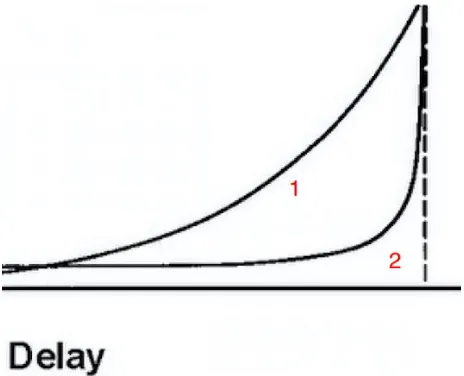
attributes, like selecting college applicants for admission (1969). Similarly, both Tversky and Kahneman found that differential framing of identical options will affect an experimental subject’s rankings. The famous example is the ‘Asian Disease Problem,’ which presents a choice between healthcare policies that are framed in terms of lives-saved or number of deaths. Presenting the policy in terms of deaths moved people to choose more risky policies, presumably to avoid the salient costs of death (Tversky & Kahneman 1981). Recently, George Ainsle showed we discount future rewards in a hyperbolic curve that diverges from the exponential discounting curve implied by RCT. He argues that people discount future rewards too greatly (even when the reward is quite soon), generating irrational patterns of choice like addiction and procrastination (Ainsle 2002). These three findings are representative, but certainly not exhaustive, of experiments indicating that actual behavior is irrational according to RCT’s axioms, seeming to render the theory untenable because of anomalous results.
Chomsky’s grammar and RCT are both idealized theories in the sense that their full expression would assume cognitive capacities beyond ours. RCT does not introduce restrictions on the number of options available to an agent at any one time, which, for anyone, includes a tremendous number of actions. Recall, the completeness axiom dictates that every option be included in the utility function, requiring the ability to process a nearly infinite amount of information. In actuality, people could not possibly consider all available options, limiting consideration to relatively few outcomes. Chomsky’s grammar is also capable of generating more information than a person can handle, which he illustrates with unintelligible, yet grammatically correct, sentences with many nested clauses, such as, “the man who the boy who students recognized pointed out is a friend of mine” (1965 p. 11). When rules are open ended or recursive, it is impossible for limited cognitive agents to handle very long chains of options or sentences. However, despite its failure to achieve literal truth, RCT may still improve our understanding of choice by making accurate predictions and demarcating a particular class of actions with the function of ensuring an agent derives the most benefit from her circumstances.
think them completely ignorant of grammatical rules, but assume the particular performance was in error. Similarly, an agent who uses the representativeness heuristic is not irredeemably irrational, but commits a performance error relative to ideal expectations.
However, Chomsky mentions some causes of performance errors that do not seem to be connected to idealization, such as “shifts in attention and interest,” but to the interaction of the competency in question with other systems in the brain (Chomsky 1965 p. 3). Competencies are enmeshed in complex networks of systems with their own functions, enabling other systems to causally influence behavior. If an angry person acts contrary to rational expectations (Hursthouse 1991), it is not immediately obvious that this counts as evidence against a theory of, specifically and only, choice; had the emotional system not interfered, the agent would have acted differently. The complexity and multiplicity of connections between different cognitive systems leave cognitive scientists with no choice but to abstract away from much of it. One introduces abstraction into the theory, when necessary, by simplifying the effects of external systems or ignoring them altogether. For example, ISVT’s treatment of the emotional resonance of sacred values is highly abstract, discussed only in terms like ‘moral outrage’ that do not differentiate between specific emotions, each of which may influence decision-making uniquely.
I wish to introduce a further source of what appear to be performance errors, which is implied by the above meta-theoretical commitments. It is a live possibility that other domains of human action exist that neither ISVT nor RCT have the conceptual resources to explain, requiring a dedicated theory. I do not think, for instance, that decisions about romantic matters are made using solely rational faculties. If distinct clusters of choice-phenomena require splitting for descriptive adequacy, theories with improper scope can expect confused experimental results.
revisions mean that we take ourselves to be acting in accordance with RCT, even if mistakes sometimes cause deviations.
[image:38.612.193.425.125.313.2]
Figure 1 Hyperbolic vs. Exponential Discounting
but the result of increased attention to features of the circumstances relevant to RCT’s decision procedure.
In the statistical domain, Richard Nisbett and colleagues performed experiments on gambling behavior, with manipulations that made chance more salient and induced awareness of the range of possible outcomes. In both conditions, subjects were more responsive to “statistical considerations having to do with the adequacy of the sample,” meaning they did not overgeneralize (i.e. use the representativeness heuristic (Kahneman & Tversky 1974)) to the same degree as control groups (Nisbett et. al. 1983 p.353). Once again, that one does not need explicit instruction to self-correct implies that people can act in accordance with rational prescriptions. The
willingness to self-correct, in distinction from the direction of correction, implies that people believe that they should be following rational expectations when acting.
In my second argument, I will claim that the assumption of general, albeit imperfect, rationality furnishes theorists with a purposive explanation of many choices between two profane values. Intuitively, RCT’s decision procedure seems to be appropriate explanatory paradigm for a great many cases, from choices about the best route through traffic to searching for deals at the grocery. We make many purely instrumental decisions, most often without even noticing, that are accurately described as a process of weighing each outcome’s utility, considering the subjective probability of each, and choosing the highest ranked. In non-moral circumstances, people do not often pass up the opportunity to save a little time, money, or effort at no cost to themselves, conforming to the basic picture of human motivation RCT proposes. The idea that agents are generally working to maximize the benefits available in a situation immediately suggests ways of moving forward in an action-explanation, allowing inferences from behavior to underlying preferences or from gambling to attitudes about risk.
with enough data, distinguish between a performance error and operation of a separate competency. If a cluster of anomalous choices seem to possess a common purpose distinct from the utility maximization of RCT, they belong to a hitherto unknown faculty with the function of realizing that purpose. Without adopting such a strategy, it would have been impossible to establish the existence of ISVT. However, if the choices lack a pattern that corresponds to some useful faculty, they are mere performances errors.
In closing, the two competencies I have described using RCT and ISVT are mental processes that instill dispositions to behave in a manner prescribed by the rules governing preferential relations between outcomes instantiating different types of value. The presence of rules governing the choice of actions enables each of the competencies to cause an agent to act towards general goals implicit in the rules. ISVT promotes pro-social behavior in the service of shared sacred values, thereby binding a group of actors into a collective, more able to unite without free-riders or cowards. RCT, on the other hand, pushes an agent to maximize material goods, whether the particular good is time, money, or pleasure. Both ways of behaving are necessary in different contexts of one’s life. Sometimes, one furiously checks boxes off a to-do list, using the sound instrumental reasoning implicit in RCT’s decision procedure. At other times, however, one must work with others to defend something sacred, so the disposition to refuse taboo tradeoff enhances everyone’s commitment. Deployed in their proper contexts, these two modes of action provide a coherence to our pursuits that would be impossible without the psychological systems underlying choice.
people constantly make the same sorts of decisions in the same sorts of circumstances, functions emerge out of the patterns.
5 Extension of Sacred Values and The Possibility of Immoral Action
In this final section, I wish to raise two outstanding questions that an theory of sacred values should be able to answer. First, I wish to examine the reasons that sacred values seem to cluster into familiar categories across cultures, like the presence of symbolic objects and objects tied to the interests of the group. The presence of coherent themes is puzzling because members of a community can, in principle, sacralize absolutely anything. Second, although RCT and ISVT are idealized and abstract theories, we have only examined performance errors in everyday choice situations. This absence seems pressing given the prevalence of immorality, society’s label for moral performance errors.
When evaluating the place of a basic moral principle, say, against murder or cheating, in a mental architecture that includes sacred values, one notices that aberrant behavior, like murder or theft, is essentially socially coercive. As such, these simple, universal, moral principles seem like they must be required to even start the process of forming a society united by more specific sacred values. Whenever one starts hanging around with a new group of people, it is never mentioned that the group has a sacred value prohibiting stealing from one another, but if you are caught stealing from friends, you won’t have those friends for very much longer (and even thieves have people they trust). We should consider ‘not stealing from the group’ to be a sacred value because it is a constitutive part of any stable group, which is also why we could consider it to be one of the few truly universal sacred values.
Secondly, groups require more parochial sacred values in order to differentiate themselves from other groups and provide an identity for their members. The proper treatment a symbolic object, whether a flag, Roman Eagle Standard, or Babylonian Idol, is important for group dynamics because the “sacredness [of the symbolic object] stems from one cause: it is a material representation of the clan” (Durkheim 1912 p. 124). The arbitrary names and symbols provide insignia around which individuals conceptualize their social identities, in other cases, the identities of a group organize around ideas, like Marxism or Wahhabism. Whatever the content of a group’s sacred commitments, whatever their symbols, the main social function of sacred values is accomplished when the collective itself sacralized. We can now see, more explicitly, the way in which sacred and profane outcomes are constitutively incomparable with each other. Recall, Raz argues that refusing to even compare, let alone trade, sacred and profane outcomes is a necessary condition for genuinely engaging in some pursuits; his example runs, “only those who hold the view that friendship… is simply not comparable to money or other commodities are capable of having friends” (1988 p. 352). Similarly, if a sacred value is disrespected, the offending agent has
shown herself to be incapable of belonging to the group which is constituted by that sacred value. In contrast with basic moral principles, these sacred values promote agential self-identification with the core beliefs and values of a group. ‘Everyone against stealing!’ is a poor
(features [6]) usually operates on sacred objects and ideas in this class. The very same unique qualities of a sacred object that motivate people to identify with a group are useful for inciting hatred of it among others.
Thirdly, even more changeable and specific sacred values arise when circumstances call for co-operation on a specific issue. Sacred values certainly respond to historical conditions over long periods of time, driven by factors like the changes to a religion’s status (an Emperor converts), economic conditions (the slow decline of West Virginia coal country), and political change (revolutions). Although the long-term evolution of value systems is a fascinating topic, the changes I am concerned with are more short-term. For example, Mostafa Dehghani (2010) finds that considerable numbers of Iranians have sacralized the development of nuclear weapons, a movement only possible since the program began to generate controversy in the late 1990s. The presence of a group of people holding the attainment of nuclear weapons greatly facilitates the defense of that project, since each person with that value must act to the extent of their capacities. Moreover, the sacred attachment to nuclear weapons was strengthened by perceived threats towards Iran from the Western world, which resonates with findings that “intergroup conflicts” stimulate the creation of new sacred values (Sheik et. al 2012).
general, and as such, they are necessary for the development of groups in the first place, forming the bedrock of our moral cognition. Next, we have the more salient sacred values we’ve focused on play a crucial roles in constituting groups and sub-groups. These sandier values are more nimble and parochial, better suited for defining the identity of the group because of, rather than despite, their idiosyncrasies. These values must be somewhat stable so that the group can continue to rally around them. Finally, sacred values that arise in response to current conditions allow groups to coordinate behavior to defend their interests. The import of these values rises and falls with circumstance, so they represent the least permeant and least important values to the long-term cohesion of a group (though they can be crucial for survival in the short term).
Moving on to my second topic, it may be difficult to see how immorality is even possible for agents following ISVT’s decision procedure, since the absolute character of inviolability never allows choice of the profane. Strictly speaking, the agent should never even consider the taboo option, leaving no room for sacrilegious action. Of course, one could label these actions as performance errors and gesture at many of the same factors that affect the efficacy of RCT; however, without further illumination of the conditions that moderate performance, the move is an ad-hoc elimination of adverse data. To avoid this, I provide three explanations of different types of performance error that cause immoral behavior: (1) framing a sacred outcome as solely profane, (2) framing a profane outcome as containing sacred value, and (3) knowingly immoral behavior when personal costs are too high.
one of her own values. Only the second set of cases are instances of the problematic immoral actions we are considering here, since the absolute structure of the sacred value only affects those who hold it. Someone who does not consider a flag to be a sacred object is not subject to prohibitions regarding the proper treatment of the patterned swathe—even if an observer may find the repurposing as a cleaning rag to be distasteful. In contrast, if the agent herself attaches sacred value to the flag’s dignity, she commits an immoral action by her own standards.
The second type of cases, the truly sacrilegious actions relevant here, raise a dilemma in our interpretation of the behavior: either the agent genuinely holds [S>A] but somehow acts otherwise or the person is engaged in some form of moral posturing. The behavior may be intended to express the ‘normatively correct’ response to the moral problem, avoiding social sanction and negative self-judgment. In the real world, money on the table, agents would compromise their moral values for a great enough payoff, meaning that our moral convictions are better described as “pseudo-sacred values” (Tetlock et. al. 2017 p. 1).
is less absolute than it seems. Inviolability as presented in ISVT, can never be violated, but this is an idealization of our actual decision principles that reflects the conceptual underpinnings of the moral domain. Thus, meeting the challenge of immoral action requires a positive account of the factors that cause humans to commit immoral performance errors, of which I think there are three types.
cognitive dissonance in the agent, which suggests that, in these moral performance errors, agents will correct in the direction mandated by ISVT—just as they corrected towards RCT in errors of reasoning and statistics. Embarrassment and contrition will be more prominent in these corrections, I believe, because the failures implicate the moral integrity of the inattentive sinner. The second type of immoral action also involves a misapplication of attitude-type to outcome; this time, however, it is the profane outcome that is sacralized. Paired with an outcome realizing a legitimate sacred value, the newly sacralized outcome is unrankable, as expected in tragic tradeoffs. Since neither option is stably preferred to the other, the agent can choose the immoral action with some arbitrary justification for the necessity of making a choice. Tetlock et. al. identify this mental maneuver, using cases about the costs of healthcare decisions to demonstrate that “the failure to save a child’s life ceases to be a taboo money-vs.-life trade-off and becomes a tragic life-vs.-life trade-off when we can redirect the resources to save more lives elsewhere” (2017 p. 7). If a hospital administrator concerned with profits is able to frame the choice as a tragic tradeoff, she is not bound by the demands of inviolability, which requires immediate rejection of the monies. Hence, the agent can make an immoral choice because unrankability allows for the choice of either outcome, albeit without a preferential ranking that justifies the choice. The presentation of a profane outcome as a sacred one is sometimes less arresting than passing off the sacred as the profane, but the particulars of outcomes under consideration will dictate which strategy is least cognitively dissonant.
spectacles of their respect for a sacred value, but privately violate them in obviousways. In these cases, an agent uses RCT in a decision that includes a sacred outcome, thereby initiating a taboo comparison and paying the social price. Tim Murphy, a disgraced former politician, is a guiding example, having recently featured in articles with headlines like, “Pro-Life Congressman Adopts Sensible ‘Abortion for Mistresses Only’ Stance” (Ryan 2017). The clarity of Murphy’s decision— he was asking someone to get an abortion—means that he cannot have used either mode of immorality explained above; he must have consciously chosen to act against his sacred beliefs.
In such cases, the agent decides the personal costs of sacred obligations are so extreme that damaging one’s moral standing in the community is worth it for avoiding catastrophic personal costs. Tim Murphy never forgot the content of his votes and speeches, nor his fervent public action in support of Christian values, but when urging his mistress to get an abortion, he was considering the impact of a child outside of wedlock for his life as an individual. The suddenness, magnitude, and importance of the personal and sacred values at play in these choices may impede the proper functioning of the sacred value system, overwhelming one’s ability to be steadfast in refusing to violate the sacred. When large amounts of money are involved in a choice, selfishness can motivate a taboo acts. Likewise, a sacred act that requires daring or courage may commissioned by those willing to accept great personal cost out of loyalty to a group, but not everyone possesses the constitution of a martyr. Many of our terms of censure—like greed, cowardice, or moral blindness—seem to might pick out different types of moral performance errors.
Recall, one ceases to be an accepted member of the community the moment one compares a sacred outcome with a profane outcome instead of rejecting the tradeoff out of hand.4 When an
4 An interesting related phenomena emerges when an agent engages in a taboo comparison, but ultimately
agent makes an immoral choice, they mentally extricate themselves from the community, accepting the guilt and social censure that accompanies the discovery of taboo behavior. Obviously immoral actions can be chosen when the personal costs of a moral obligation are so onerous that an individual sees opting-out of the moral community (publically or incognito) as their best option. However, immoral behavior on one value does not necessarily imply that sacred values closely related to the transgressed value are insincere, nor that past actions in their defense were merely grandstanding. Many Muslims routinely violate sacred values against drinking, but remain genuinely committed to other ideals like charity and piety. Sacred values are isolated from one other, so the addition or subtraction of a sacred value does not necessarily affect one’s attitudes towards other sacred objects.
When acting as a member of a group, the agent truly desires the full actualization of her sacred values, but when making a choice as an individual, the subjective costs of sacrifice are sometimes too great for an agent. This is especially true if the taboo act is unseen, since it has no effect on how members conceive of their group, which is where the harm of public sacrilege comes from. Of course, if no one sees the violation, no one judges the offender harshly; though if the group finds out about, they feel outrage at the slight—as more than a few Muslim teenagers have found. Within private spheres, agents can represent themselves as autonomous individuals, with moral obligations that can be dispensed if the benefit is great enough. The conflicting norms of practical reason that coexist make one’s self-representation as a social or individual agent extremely powerful tactic in regulating our conative attitudes.
6 CONCLUSION
In this paper, I have argued for introducing a discontinuity between standard actions and sacred actions, using two different practical reasoning systems to predict behavior, described by ISVT and RCT respectively. The separate competencies responsible for action and their rules causes wide variation in the properties of behavior, reflected in the contrast between the sometimes reckless abandon of sacred action and the careful consideration of an important investment or purchase. Similarly, Durkheim argues that people are “homo duplex,” with a nature split into two sides; he writes, “man is double. In him are two beings: an individual being that has its basis in the body and whose sphere of action is strictly limited by this fact, and a social being that represents within us the highest reality in the intellectual and moral realm…” (p. 15). His emphasis on the social origin and purposes of morality usefully frames the distinction between the individualistic profane world, subject to the sciences of economics, and the other collective sacred sphere, which inaugurates laws of a higher caliber. Meeting both our individual and social needs requires striking a balance between the operation of the two competencies, one cannot ruthlessly maximize subjective value at all times, nor can one view every decision as a moral one.
REFERENCES
Ainslie, George (2002) “The Effect of Hyperbolic Discounting on Personal Choices,” Keynote: APA Conference, ‘Personal Choice and Change,’ Chicago.
Atran, Scott (2016). “The Devoted Actor,” Current Anthropology 57: 13.
—¶ (2006). “Sacred values, terrorism, and the limits of Rational Choice,” Presented to Department of Homeland Security
Baron, Jonathon & Spranca, Mark (1997). “Protected Values,” Organizational Behavior and Human Decision Processes 70: 1.
Boot, Martijn (2017). “Problems of Incommensurability,” Social Theory and Practice 43:2. Broome, John (2000). “Incommensurable Values,” Well-Being and Morality: Essays of Honor of
James Griffin [Eds. Crisp and Hooker], Oxford University Press: Oxford.
Chang, Ruth (1997) “Introduction,” in Incommensurability, Incomparability, and Practical Reason [Ed. Chang], Harvard University Press: Cambridge.
— (2002) “The Possibility of Parity,” Ethics 112: 4.
Chomsky, Noam (1965). Aspects of the Theory of Syntax, M.I.T. Press: Cambridge.
Cohen, L. Jonathan (1981). “Can Human Irrationality be Experimentally Demonstrated?”
Behavioral and Brain Science 4.
Davidson, Donald (1963). “Actions, Reasons, and Causes,” The Journal of Philosophy 60: 23. Dehghani, Mostafa (2010). “Sacred values and conflict over Iran’s nuclear program,” Judgment
and Decision Making 5.
Duc, Corinne, et. al. (2013). “Sacred Values: Trade-off Type Matters,” Journal of Neuroscience, Psychology, and Economics 6:4.
Durkheim, Emile (1912). The Elementary Forms of Religious Life [Trans. Fields (1995)], Simon & Schuster: New York.
Finucane, Melissa, et. al. (2000). “The Affect Heuristic in Judgments of Risk and Benefits,”
Journal of Behavioral Decision Making 13.
Gigerenzer, Gred & Selten, Richards [Eds.] (2002) Bounded Rationality: The Adaptive Toolbox, MIT Press: Cambridge.
Ginges, Jeremy & Atran, Scott (2009). “Noninstrumental Reasoning over Sacred Values: An Indonesian Case Study,” Psychology of Learning and Motivation 50.
Hare, Caspar (2010). “Take the sugar.” Analysis 70.
Hasselman, Martin & Tanner, Carmen (2008). “Taboos and conflicts in decision making: Sacred values, decision difficulty, and emotions,” Judgment and Decision Making 3:1.
Hofmeyr, Andre, et. al. (2010). “The relationship between addiction and reward bundling: an experiment comparing smokers and non-smokers,” Addiction 106.
Hursthouse, Rosalind (1991). “Arational Actions,” The Journal of Philosophy 88: 2. Jeffrey, Richard (1965). The Logic of Decision, McGraw-Hill: New York
Kubrick, Stanley (1987). Full Metal Jacket [prod. Kubrick], Warner Bros.: Burbank.
Nisbett, Richard, et. al. (1983) “The Use of Statistical Heuristics in Everyday Inductive Reasoning,” Psychological Review 90: 4.
Peterson, Martin (2009) An Introduction to Decision Theory, Cambridge University Press: Cambridge.
Regenwetter, Michel & Dana, Jason (2011). “Transitivity of Preferences,” Psychological Review
118: 1.
Ryan, Erin (2017). “Pro-Life Congressman Adopts Sensible ‘Abortion for Mistresses Only’ Stance,” The Daily Beast 10/03/2017.
Savage, Leonard (1954). The Foundations of Statistics, Dover Publications: New York.
Sheikh, Hammad, et. al. (2012). “Religion, group threat and sacred values,” Judgment and Decision-Making 7: 12.
Skryms, Brian (1998). “The Shadow of the Future,” Rational Commitment and Social Justice: Essays for Gregory Kavka [Ed. Coleman and Morris], Cambridge University Press: New York.
Smith, Michael (1987) “The Humean Theory of Action,” Mind 96: 381.
Sosis, Richard & Alcorta, Candace (2004). “Signalling, Solidarity, and the Sacred: The Evolution of Religious Behavior,” Evolutionary Anthropology 12: 2.
Stanford, Kyle (2018). “The difference between ice cream and Nazis: Moral externalization and the evolution of human cooperation,” Behavioral and Brain Sciences 95.
Tetlock, Philip, et. al. (2000). “The Psychology of the Unthinkable: Taboo Trade-Offs, Forbidden Base Rates, and Heretical Counterfactuals,” Journal of Personality and Social Psychology
78: 5.
— (2017). “Sacred versus Pseudo-Sacred Values: How People Cope With Tradeoffs”
American Economic Review: Papers and Proceedings 107: 5.
Tversky, Amos (1969). “Intransitivity of Preferences” Psychological Review 76:1.
— (1979). “Prospect Theory: An Analysis of Decision Under Risk,” Econometrica 47: 2. — (1981). “The Framing of Decisions and the Psychology of Choice,” Science 211: 4481. — (1983). “Extensional Versus Intuitive reasoning: The Conjunction Fallacy in Probability
Judgment,” Psychological Review 90: 4.
Von Neumann, John & Morgenstern, Oskar (1944). Theory of Games and Economic Behavior, Princeton University Press: Princeton.
APPENDIX: A FORMALIZATION OF ISVT
I define a simple logic for decisions involving sacred values using the theoretical resources of ISVT. I introduce two mental attitude predicates, which symbolize the cognitive attitudes of valuing an outcome as sacred or profane. I introduce three relations: first, incomparability ( >), second, incommensurability (⟛), and third, a change in the attitude type with which an outcome is held (⟐). The final aspect of the theory is definitions of behavior in profane, taboo, and tragic tradeoffs. I derive some implications from these properties that mirror behavior in the world. Definition of terms:
on : outcome, with 1, 2, 3…specifying identity
on+ : outcome with improved value over on
Sx (on) : on instantiates a sacred value, with a, b, c… specifying identity
P(on): on instantiates profane value
Definition of operators: X≻Y : X is preferred to Y
X = Y : X and Y are equally preferable
X > Y : X is sacredly-preferred to Y, where X is a sacred outcome and Y is a profane outcome X⟛ Y : X and Y are incommensurable, where X and Y are different sacred values
X⟛Y : X changes attitude-type to Y X>Y → X: X is chosen
Tradeoffs:
1. S1(o1) > P(o2) → o1 Taboo tradeoffs
2. S1(o1) ⟛ S2(o2) → o1 or o2 or ∅ Tragic tradeoffs
Applications:
1. S1(o1) > P(o2)
P(o3) ≻P(o2)
∴S1(o1) > P(o3) → o1
Increasing the value of profane outcomes does not result in a taboo action.
2. At t1, S1(o1) ⟛ S2(o2) → o1
At t2, S1(o1) ⟛ S2(o2) → o2
Incommensurability implies instability across multiple forced choice situations.
3. [a]
At t1, S1(o1) > P(o2)
At t2, S1(o1) ⟐ P(o1)
∴At t3, P(o1) ≻P(o2), P(o2)≻P(o1), or
P(o1) = P(o2)
[b]
At t1, P(o1) ≻P(o2)
At t2, P(o2) ⟐ S1(o2)
∴At t3, S1(o2) > P(o1) → o2
If an agent changes attitude towards an outcome from sacred to profane, nothing is implied about its profane ranking.
If an agent changes attitude towards an outcome from profane to sacred, nothing about its profane ranking affects its new sacred properties.
4. If S1(o1) = S2(o2)
then S1(o1+) ≻S2(o2)
~ [S1(o1+) ≻S2(o2)] ∴S1(o1) = S2(o2) is false
Small improvements argument:
If the two sacred outcomes are equal, then sweetening should result in choice o1+.
5. S1(o1) ⟛ S2(o2) ∴S1(o1) ⟛ S2(o2+)