Detection of Antibiotic Sensitivity in Multi Drug
Resistant Microorganisms using Red Wine
M.Anitha, R.Vyshnavi and S.Raveena
Department of Microbiology, Shri Sathya Sai Medical College & Research Institute, Thiruporur, Sri Balaji Vidyapeeth University, Tamil Nadu, India.
Abstract- Red wine is a complex fluid. It contains water, sugars, acids, alcohols, and a wide range of phenolic compounds. Red wine contains a number of biologically active compounds with beneficial effects on human health. The resveratrol is commonly found in food and drinks, including Red wine and grapes. Many studies have been documented towards health benefits of red wine consumption, including anti-oxidative, anti-carcinogenic, anti-inflammatory and anti-cardiovascular and antibacterial properties. Therefore, we evaluated the antimicrobial activity of red wine against multi drug resistant bacteria. The aim of the present study was to determine the antimicrobial activity of Red wine against 30 Multi Drug Resistant pathogenic strains of Staphylococcus aureus, β haemolytic streptococci, Escherichia coli and Klebsiella pneumoniae was studied using the agar well diffusion method.
Index Terms- Red wine, Multi Drug Resistant strains, Antibacterial activity.
I. INTRODUCTION
ecent years have seen an increased awareness in the importance of diet in the maintenance of health and well being. A diet rich in fruit, vegetables, olive oil, and red wine has been shown to help prevent the development of coronary heart disease and some cancers. The active components of this diet are believed to include phenolic compounds which act as antioxidants.(1)
Red wines have a higher content of total phenolics and contain a wider spectrum of phenolics than the white wines. Wine phenolics are divided into flavonoids and non-flavonoids. The family of flavonoids includes mainly flavonols, flavanols and anthocyanins, whereas the non-flavonoids include mainly phenolic acids (benzoic and hydroxycinnamic acids) and stilbenes(2).
The increasing antimicrobial resistance of pathogens isolated from humans and animals, combined with the increasing awareness of the consumers on chemical substances used as food preservatives, necessitates research for more efficient antimicrobials with fewer side-effects on human health. Several studies suggest that moderate wine consumption has beneficial effects on human health. The antioxidant and antiradical properties, particularly of red wine, attributed mainly to a high polyphenol content(3-5), appear to protect against the risk of coronary heart disease and cancer.
The most important and abundant alcohol in wine is ethanol. Under standard fermentation conditions, ethanol can accumulate
to ~14–15%, but generally ethanol concentrations in wine range between 10–13%. The primary factors controlling ethanol production are sugars, temperature, and yeast strain. Ethanol is crucial to the stability, aging, and sensory properties of wine. As its production increases during fermentation, it increasingly limits the growth of most microorganisms, allowing Saccharyomyces cerevisiae to dominate the fermentation process.
The inhibitory activity of ethanol, combined with the acidity of the wine and the added potassium metabisulfite, allows wine to remain for years in the absence of air. During skin fermentation of red grapes, ethanol acts as an important solvent in the extraction of pigments and tannins. The dissolving action of ethanol probably reduces the evaporation of aromatic compounds along with carbon dioxide during fermentation.(6) Through the 1990s, a remarkably consistent epidemiologic data has accumulated pointing to the reduced incidence of mortality and morbidity from coronary heart disease (CHD) among those who consume alcohol in moderation by comparison with abstainers. This reduction has been demonstrated for every end-point (death, myocardial infarction, or hospitalization for CHD), in every one of the diverse populations studied, in both sexes, and at all ages. This protection seems to be due in large measure, if not exclusively, to the ethanol present in those beverages classified as “alcoholic,” but there is some evidence that wine confers additional benefits, due to its content of polyphenols(7).
Recently, the antimicrobial effects of various plant extracts against certain pathogens have been reported by a number of researchers (8). Particularly, polyphenols of plant origin have been reported to have a variety of biological effects, including oxidant, carcinogenic, inflammatory and anti-microbial activities. Specifically some phenolic compounds such as resveratrol, hydroxytyrosol, quercetin and a number of phenolic acids have been reported to inhibit various pathogenic microorganisms (9-12).Also, there are recent studies reporting the antimicrobial activities of wines and wine extracts against various pathogens(13,14).
Resveratrol, trans-3,4’,5-trihydroxystilbene a phytoalexin that belongs to group of compounds known as stilbenes, can be found in dietary items including red wine, grapes and peanuts. It is well known as an inhibitor of cyclo-oxygenases and it inhibits activation of inducible nitric oxide pathway in mammalian macrophages(15).
Phytoalexins are low molecular weight secondary metabolites made by plants as a defence response to microbial infections(16). The molecular function of resveratrol in chemo prevention and carcinogenesis are reviewed by experimental cancer cell models.
Resveratrol is going to be a promising molecule in future cancer prevention and therapy models.(17)
The aim of the present in vitro study was to dilute red wine for potential antimicrobial activities against Multi Drug Resistant pathogenic strains of Staphylococcus aureus, β haemolytic streptococci, Escherichia coli and Klebsiella pneumoniae with lower side effects and with higher antimicrobial properties.
II. MATERIALS AND METHODS
Wines
Red wines were purchased from local commercial markets, which are having less than 0.5% of ethanol (pH 3.18).
Antimicrobial activity tests (Microbial strains) Antibiotic resistance of test strains
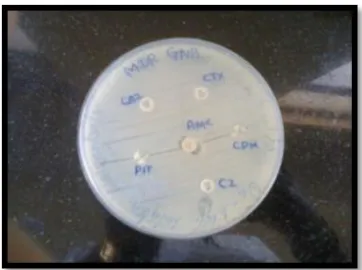
5 different strains from each of these organisms (Staphylococcus aureus, β haemolytic streptococci, Escherichia coli and Klebsiella pneumoniae) were taken for the study.The bacterial strains used for the tests were selected based on their resistance to antibiotics, because it was thought that it would be essential to experiment with strains already exhibiting resistance mechanisms. All isolates of the selected strains exhibited resistance to certain antibiotics. The antibiotic susceptibility test of the selected strains was determined by the standard disk diffusion method of Bauer et al. (18). GPC strains were resistant to CZ(Cefazolin), CTX(Cefotaxime), AMC(Amoxyclav), A/S(Ampicillin/Sulbactam), E (Erythromycin) and GNB strains were resistant to CTX(cefotaxime), CAZ(Ceftazidime), CPM(Cefepime), CZ(Cefazolin), AMC(Amoxyclav), PIT(Piperacillin/Tazobactam).
Antimicrobial activity of serially diluted Red wine
The antimicrobial effect of the red wine was tested using the agar well diffusion method following the well-established method of Deans and Ritchie.(19) Overnight bacterial cultures were used for surface inoculation of Petri dishes containing 15 mL of MH agar. Each Petri dish was spread on with 0.5 mL of strain inocula streaked thoroughly all over the surface of the MHA. Subsequently, four equidistant wells, 4 mm in diameter each, were punched into the inoculated medium with sterile glass Pasteur pipettes and were filled up with serially diluted red wine at different concentrations of 1500mg/ml,750mg/ml and 375mg/ml. All plates were incubated at 37°C and inhibition zones were measured after 24 h. All the experiments were done with controls using sterilized distilled water.
III. RESULT
A total of 30 Gram positive and Gram negative organisms were isolated from various clinical samples. Out of these, 20
organisms showed Multi Drug Resistant which were selected for this study(Table 1).The results of the antibacterial pattern using the well diffusion method indicate that different bacterial strains demonstrated different levels of sensitivities towards the tested samples of diluted red wine(Table 2 and Table 3).
The organisms were tested for antibiotic resistance by Kirby Bauer disc diffusion method to conventional antibiotics such as CZ, E, A/S, CTX, CAZ, CPM, AMC, PIT. Antibacterial activity of red wine was tested against 5 different strains of Staphylococcus aureus, β haemolytic streptococci, Escherichia coli and Klebsiella pneumoniae and the efficacy of conventional antibiotic disk activity was compared with the red wine activity. Red wine exhibited antibacterial activity against both GPC and GNB. All the organisms, both GPC and GNB were found to show susceptibility at 1500mg/ml with maximum inhibition(Table 2 & 3). For this study, dilutions were made of a standard solution of red wine at three different concentrations(1500mg/ml,750mg/ml and 375mg/ml).
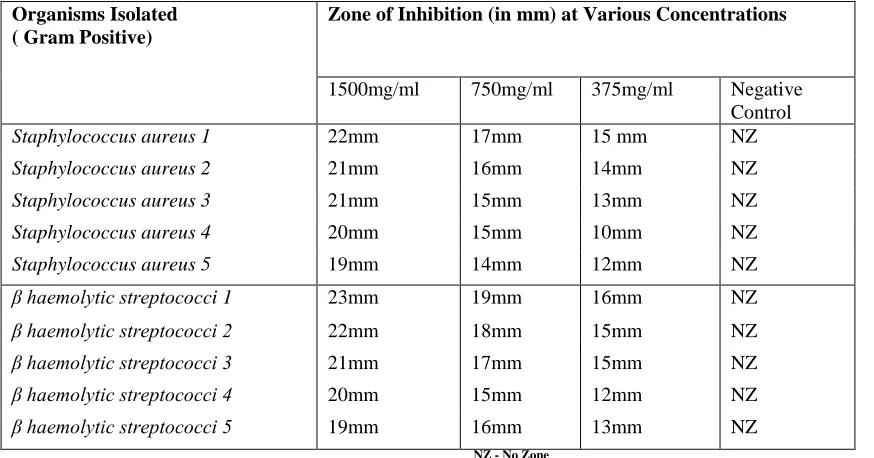
The study analysis showed that the zone diameter in all the three concentrations of 1500mg/ml,750mg/ml & 375mg/ml with β haemolytic streptococci was more than the zones produced with Staphylococcus aureus (Table 2 and Figure 2).With respect to the Gram negative bacilli Escherichia coli exhibited higher zone diameter in all the three concentrations of 1500mg/ml,750mg/ml & 375mg/ml than the other Gram negative isolates Klebsiella pneumoniae(Table 3 and Figure 4).The inhibition zone of red wine against Staphylococcus aureus, β haemolytic Streptococcus,E. coli and Klebsiella pneumoniae strains increased whenever the total phenolic content of the Red wine was increased.
Red wine exhibited the antibacterial activity against both Gram-positive and Gram-negative strains. In all the dilutions, the diameter of the inhibition zone for GNB showed higher susceptibility than the GPC particularly Escherichia coli was more susceptible than the zone for β haemolytic streptococci strains, but in the results of previous study: ‘‘Potential antimicrobial activity of red and white wine phenolic extracts against strains of Staphylococcus aureus, Escherichia coli and Candida albicans’’.(8) Most wine extracts exhibited some kind of
antibacterial activity against both positive and Gram-negative strains. But almost all the extracts, the diameter of the inhibition zone for Staphylococcus aureus was greater than the zone for E. coli strain, indicating that the Gram-positive strain was more sensitive than the Gram-negative one.
Table 1: Multi drug resistant strains of GPC and GNB isolated from various clinical samples
Gram Positive Bacteria
No. of
Samples
Gram Negative Bacteria
No. of
Samples
Staphylococcus aureus 5 Escherichia coli 5
β haemolytic streptococci 5 Klebsiella pneumoniae 5
Table 2:Antimicrobial sensitivity pattern by zone of inhibition (mm) for GPC
Organisms Isolated ( Gram Positive)
Zone of Inhibition (in mm) at Various Concentrations
1500mg/ml 750mg/ml 375mg/ml Negative Control
Staphylococcus aureus 1 22mm 17mm 15 mm NZ
Staphylococcus aureus 2 21mm 16mm 14mm NZ
Staphylococcus aureus 3 21mm 15mm 13mm NZ
Staphylococcus aureus 4 20mm 15mm 10mm NZ
Staphylococcus aureus 5 19mm 14mm 12mm NZ
β haemolytic streptococci 1 23mm 19mm 16mm NZ
β haemolytic streptococci 2 22mm 18mm 15mm NZ
β haemolytic streptococci 3 21mm 17mm 15mm NZ
β haemolytic streptococci 4 20mm 15mm 12mm NZ
β haemolytic streptococci 5 19mm 16mm 13mm NZ
NZ - No Zone
Table 3: Antimicrobial sensitivity pattern by zone of inhibition (mm) for GNB
Organisms Isolated ( Gram Negative)
Zone of Inhibition (in mm) at Various Concentrations
1500mg/ml 750mg/ml 375mg/ml Negative Control
Escherichia coli 1 29mm 21mm 15mm NZ
Escherichia coli 2 28mm 19mm 14mm NZ
Escherichia coli 3 27mm 19mm 15mm NZ
Escherichia coli 4 26mm 17mm 13mm NZ
Escherichia coli 5 25mm 19mm 15mm NZ
Klebsiella pneumoniae 1 27mm 18mm 15mm NZ
Klebsiella pneumoniae 2 26mm 16mm 13mm NZ
Klebsiella pneumoniae 3 25mm 18mm 14mm NZ
Klebsiella pneumoniae 4 24mm 16mm 13mm NZ
Klebsiella pneumoniae 5 24mm 15mm 12mm NZ
[image:3.612.102.515.496.679.2]Figure 1: Conventional Antibiotic Disc Showing Multi Drug Resistance to GPC strain
Figure 2: Antibacterial activity of red wine showing sensitivity to GPC strains
Staphylococcus aureus β haemolytic streptococci
[image:4.612.214.395.459.594.2]Figure 4: Antibacterial activity of red wine showing sensitivity to GNB strains
Escherichia coli Klebsiella pneumonia
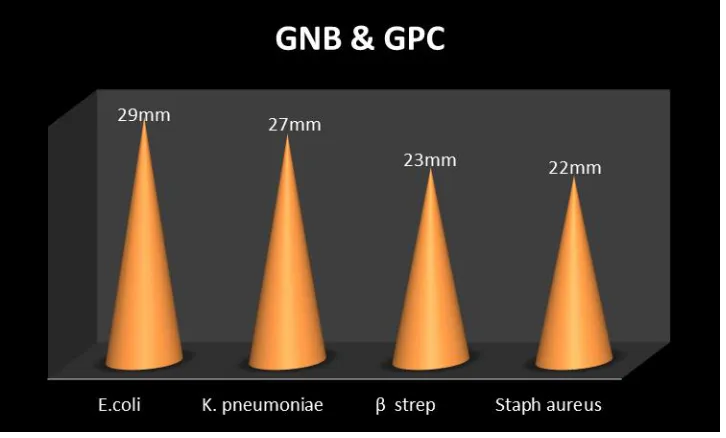
Figure 5: Maximum zone of inhibition for GNB and GPC at higher concentration (1500mg/ml )
IV. DISCUSSION
The bacterial strains used in this present study were chosen on the basis of their clinical Importance. In our study,the antibacterial activity of diluted red wine was analysed by the presence of inhibition zones and measuring of zone diameters (mm). From the results, it was evident that the red wine showed a maximum inhibitory zone at the concentration of 1500mg/ml for all the GPC and GNB strains. The antibacterial activity of red wine on the E.coli showed a largest diameter of clearance than the other strains. Moreover, the zone of clearance achieved by diluted red wine was compared to that of zone diameter with standard drugs, CZ, E, A/S, CTX, CAZ, CPM, AMC, PIT(Figure 1 and 3).
However, few reports are available on the antimicrobial activity of Red wine.Weisse et al.reported that red and white wines are as potent as bismuth salicylate against several bacteria responsible for traveler's diarrhea and that diluted ethanol induced no significant reduction in colony counts. (20) Sugita-Konishi et al. also showed the in vitro antibacterial activity of red
and white wines against three potential entero-pathogenic bacteria; the activity was exerted by polyphenol free fractions and was lost after the evaporation of small molecules, particularly acetic acid, suggesting that this small molecule could be responsible for the antibacterial activity.(21)
Navarro et al. showed that several lactic acid bacteria occurring in Rioja red wine produced bacteriocins, antimicrobial peptides, during alcoholic and malolactic fermentation of wine.(22) Maria Daglia et al. found the antibacterial activity of red and white commercial wines against several strains of oral streptococci responsible for dental plaque formation and caries development and against S. pyogenes, which causes a wide range of human diseases, such as pharyngitis. (23)
[image:5.612.126.489.271.490.2]media, whereas acetic acid, a common wine constituent, was seen to induce an inhibitory effect similar to that of wine. (24) It should be pointed out that our results suggest that the red wines exhibited sensitivity at higher concentration(1500mg/ml) for all the Gram positive and Gram negative strains. In all the above strains, the diameter of the inhibition zone for Gram negative strains was more sensitive than Gram positive strains(Table 2 and Table 3).
According to the results of our study, at higher concentration(1500mg/ml) red wine possess numerous action with a therapeutic potential for Gram-negative E.coli(29mm), Klebsiella pneumoniae(27mm) followed by Gram-positive β haemolytic streptococci(23mm) ,Staphylococcus aureus(22mm)(Figure 5).
In contrast to the study done by Chrissanthy Papadopoulou et al. (8) our study shows antibacterial activity more towards GNB. Therefore even the diluted red wine can be used as an effective antibacterial agent for both GPC and GNB bacteria.
V. CONCLUSION
The antimicrobial agent in wine seems to be a polyphenol that is liberated during fermentation and is active against bacteria at an acid pH.(25)
The higher concentration of red wine 1500mg/ml is an effective antibacterial agent as proved Escherichia coli,Klebsiella pneumoniae, β haemolytic streptococci and Staphylococcus aureus; where as the lower concentration of 750mg/ml,375mg/ml also showed inhibitory zone against Gram negative and Gram positive bacteria and this may be used as bacteriostatic agent as revealed by our study.The components of red wine showed extensive sensitive zone for Gram negative bacilli when compared to Gram positive organisms.
In conclusion, red wine was proved to exert in vitro antibacterial activity against Gram negative organisms. Thus red wine can be used in the treatment of infections as proved by our study when the world is facing the crisis with LACK of sensitive drugs for the lethal MDR GNR!!!
ACKNOWLEDGEMENT
The authors are extending their thanks to Dr.T.R.Gopalan, Dean and Dr.Karthika Jayakumar, Professor and Head, Microbiology Department from Shri Sathya Sai Medical College and Research Institute.
REFERENCES
[1] Jennifer Burns,Peter T. Gardner,David Matthews,Garry G. Duthie, Michael E. J. Lean and Alan Crozier, Extraction of Phenolics and Changes in Antioxidant Activity of Red Wines during Vinification, J. Agric. Food Chem. 2001, 49, 5797-5808.
[2] S.R. Jackson: Wine Science. Principles and Applications, Academic Press, San Diego (1994).
[3] German, J. B,Walzem, R. L. The health benefit of wine. Annu. ReV. Nutr. 2000, 20, 561-593.
[4] Ruf, J. C. Overview of epidemiological studies on wine, health and mortality. Drugs Exp. Clin. Res. 2003, 29, 173-179.
[5] Gold finger, T. M. Beyond the French paradox: the impact of moderate beverage alcohol and wine consumption in the prevention of cardiovascular disease. Cardiol. Clin. 2003, 21, 449-457.
[6] Williams AA, Rosser PR: Aroma enhancing effects of ethanol. Chem Senses1981 6:149–153.
[7] George J. Soleas, Eleftherios P. Diamandis,and David M. Goldberg Department of Clinical Biochemistry: Wine as a Biological Fluid: History, Production, and Role in Disease Prevention, Journal of Clinical Laboratory Analysis(1997) 11:287–313.
[8] Chrissanthy Papadopoulou, Kalliopi Soulti and Ioannis G. Roussis.Potential Antimicrobial Activity of Red and White Wine Phenolic Extracts against Strains of Staphylococcus aureus,Escherichia coli and Candida albicans. Food Technol. Biotechnol. (2005) 43 (1) 41–46.
[9] M.M.Y. Chan, Antimicrobial effect of resveratrol on dermatophytes and bacterial pathogens of the skin, Biochem.Pharmacol. 63 (2002) 99–104. [10] G. Bisignano, A. Tomaino, R. Lo Cascio, G. Crisafi, N. Uccella,A. Saija,
On the in vitro antimicrobial activity of oleuropeinand hydroxytyrosol, J. Pharm. Pharmacol. 51 (1999) 971–974.
[11] N.H. Aziz, S.E. Farag, L.A.A. Mousa, M.A. Abo-Zaid,Comparative antibacterial and antifungal effects of some phenolic compounds, Microbios, 93 (1998) 43–54.
[12] A.M. Wen, P. Delaquis, K. Stanich, P. Toivonen, Antilisterial activity of selected phenolic acids, Food Microbiol. 20(2003) 305–311.
[13] J.R. Just, M.A. Daeschel, Antimicrobial effects of wine on Escherichia coli O157:H7 and Salmonella typhimurium in model stomach system, J. Food Sci. 68 (2003) 285–290.
[14] F. Daroch, M. Hoeneisen, C.L. Gonzalez, F. Kawaguchi, F.Salgado, H. Solar, A. Garcia, In vitro antibacterial activity of Chilean red wines against Helicobacter pylori, Microbios,104 (2001) 79–85.
[15] Chan MM, Mattiacci JA, Hwang HS, Shah A, Fong D. Synergy between ethanol and grape phenols, querectin, and resveratrol, in the inhibition of the inducible nitric oxide synthase pathway. Biochem Pharmacol 2000; 60:1539-48.
[16] Dixon RA. Natural products and plant disease resistance. Nature 2001; 411:843-7.
[17] Guo, C., Cao, G., Sofic, E. & Prior, R. L. High performance liquid chromatography coupled with coulometric array detection of electroactive components in fruits and vegetables: Relationship to oxygen radical absorbance capacity. J. Agric. Food Chem. 45: (1997) 1787–1796. [18] A.W. Bauer, W.M. Kirby, J.C. Sherris, M. Truck, Antibiotic susceptibility
testing by a standardized single disc method,Am. J. Clin. Pathol. 45 (1966) 493–496.
[19] S.G. Deans, G. Ritchie, Antibacterial properties of plant essential oils, Int. J. Food Microbiol. 5 (1987) 165–180.
[20] Weisse, M.E.; Eberly, B.; Person, D. A. Wine as adigestive aid: comparative antimicrobial effects of bismuth salicylate and red and white wine. Br. Med. J. 1995;311,1657-1660.
[21] Sugita-Konishi,Y.; Hara-Kudo, Y.; Iwamoto,T.;Kondo,K. Wine has activity against entero-pathogenic bacteria in vitro but not in vivo. Biosci., Biotechnol., Biochem. 2001;65,954-957
[22] Navarro, L. Zarazaga, M. Sa´enz, F. R.-L. Torres, C. Bacteriocidin production by lactic acid bacteria isolated from Rioja red wines. J. Appl. Microbiol. 2000, 88, 44-51.
[23] Maria Daglia,Adele Papetti, Pietro Grisoli, Camilla Aceti,Cesare Dacarro, and Gabriella Gazzani, Antibacterial Activity of Red and White Wine against Oral Streptococci J. Agric. Food Chem. 2007, 55, 5038-5042. [24] Dolara, P.; Arrigucci, S.; Cassetta, M. I.; Fallani, S.; Novelli, A. Inhibitory
activity of diluted wine on bacterial growth: the secret of water purification in antiquity. Int. J. Antimicrob. Agents 2005, 26, 338-341.
[25] Masquelier MJ, Jensen H. Recherches sur I'action bactericide des vins rouges. Bufletin de la Societi de Pharmacie de Bordeaux 1953;91:24-9.
AUTHORS
First Author – M.Anitha, Department of Microbiology, Shri
Second Author – R.Vyshnavi, Department of Microbiology, Shri Sathya Sai Medical College & Research Institute,
Thiruporur, Sri Balaji Vidyapeeth University, Tamil Nadu, India.
Third Author – S.Raveena, Department of Microbiology, Shri