INITIATING SYSTEM INNOVATION: A
TECHNOLOGICAL FRAMES ANALYSIS OF THE
ORIGINS OF GROUPWARE PRO JECTS
Angela Lin
D epartm ent of Information S y stem s
London School of Econom ics and Political S cience
Novem ber 2000
UMI Number: U615825
All rights reserved
INFORMATION TO ALL USERS
The quality of this reproduction is dependent upon the quality of the copy submitted.
In the unlikely event that the author did not send a complete manuscript and there are missing pages, these will be noted. Also, if material had to be removed,
a note will indicate the deletion.
Dissertation Publishing
UMI U615825
Published by ProQuest LLC 2014. Copyright in the Dissertation held by the Author. Microform Edition © ProQuest LLC.
All rights reserved. This work is protected against unauthorized copying under Title 17, United States Code.
ProQuest LLC
789 East Eisenhower Parkway P.O. Box 1346
T
£
F
7790
ABSTRACT
This research explores the origins of information systems innovation through two case studies of groupware projects. The thesis argues that the study of the origins of projects has an important role in explaining the subsequent events during the more formal implementation activity. This is particularly so in the case of groupware, where a substantial literature has emerged describing and analysing the unpredicted outcomes of such projects. The research is based on a model of systems adoption as a continuous process, and with the choices and decisions taken at an early stage with regard to technology having significant effects on the adoption across time. The analysis of the early stages of a project can be significant in explaining subsequent levels and degrees of system use. It is argued that in order to provide a more complete description of the adoption process one needs to go back to the origins of a project and to examine the choices and decisions made during that period. This period of initiation of groupware projects has received little attention in CSCW research and scarcely more in the broader IS field. The purpose of this thesis is both to address this absence of scrutiny and to argue for its significance.
The thesis presents a detailed review of CSCW and related literature, and explores how and to what extent the initiation of projects has been considered and addressed within this field. The thesis then develops a research framework to explore initiation, based on a synthesis of the contextualist approach with a cognitive model based on Orlikowski’s notion of technological frames. The thesis then applies the framework in the analysis of two interpretive case studies of the initiation of groupware projects. These case studies were conducted in the British Oxygen Company (BOC) and the Bank for International Settlement (BIS).
ACKNOWLEDGEMENTS
This thesis would have not been possible without the love and support of my parents and family. I thank them with all my heart. I would also like to thank my husband, Jonathan, for his support and inspiration which he has given me. I am also extremely grateful to my father-in-law, Professor Paul Foster for reading my manuscript with such a critical eye.
I am most grateful to my supervisor Dr. Anthony Comford for his continuous guidance and support. His critiques of my use of language and feedback on my work have been crucial in my development as a researcher. Most of all, I thank him for his immense encouragement which means a lot during the difficult moments of this research exercise. Thank you, Tony.
TABLE OF CONTENTS
L IS T O F T A B L E S ... 1
L IS T O F F IG U R E S _________________________________________________________________________ 2 C H A P T E R 1: IN T R O D U C T IO N ... 3
1.1 Resea rchsc o pe... 3
1.2 Preliminarycasest u d y ... 7
1.2.1 Organisational background... 7
1.2.2 P roject H istory...10
1.2.3 Findings...11
1.2.4 Discussion and im plications...15
1.3 Organisationo fth et h e sis... 16
C H A P T E R 2: R E S E A R C H IS S U E S ... 17
2.1 Generalreviewof C S C W ...18
2.1.1 A b rie f o f review o f CSCW development...18
2.1.2 A review o f Cooperative W ork... 24
2.2 O rig in s o f t e c h n o l o g i c a l s o l u t i o n s ...30
2.2.1 Technology adoption is a rational solution...31
2.2.2 Technology adoption is subjective p ro c e ss...33
2.2.3 Choices and decisions about technology...39
2.3 R e s e a r c h Q u e s tio n ... 41
2.4 Su m m a r y... 43
C H A P T E R 3: R E S E A R C H F R A M E W O R K ...44
3.1 Technologicalframesa n a ly sis... 46
3.1.1 The Concept o f Frames...47
3.1.2 Technological Frames A n alysis...52
3.1.3 Applications o f Technological Frames A n alysis...56
3.1.4 Cri ti ques o f technological fram es analysis...62
3.2 Contextuala ppro a ch... 69
3.2.1 Outline o f the contextual approach...71
3.3 Synthesisedconceptualfr a m e w o r k... 75
3.4 Su m m a r y...77
C H A P T E R 4: R E S E A R C H D E S IG N ... 79
4.1.1 Selection o f papers...80
4.1.2 Analysis....82
4.1.3 Research methods in CSCW....84
4.2 Resea rch De s ig n...87
4.2.1 Research strategy...87
4.2.2 Research Design...94
4.3 Su m m a r y... 99
CHAPTER 5: BRITISH OXYGEN COMPANY...101
5.1 British Oxyg en Com pany (BOC Group) ... 103
5.1.2 About the organisation...103
5.1.1 Background o f the Project...105
5.2 An a l y s is...110
5.2.1 Phase I: New concept o f working together (late 1992 —1994)...110
5.2.2 Phase 11: Exploring the technology (mid 1995 - first half o f1996)...120
5.2.3 Phase III: Extending and applying the skills (the second half o f 1996 - )...129
5.3 Fin d in g s... 135
5.4 Su m m a r y...141
CHAPTER 6: BANK FOR INTERNATIONAL SETTLEMENTS... 143
6.1 Bankfor Interna tio na l Settlem en ts... 146
6.1.1 About the Bank...146
6.1.2 Background of the WORKGRO UP project...148
6.2 An a l y sis... 153
6.2.2 Process...163
6.2.3 Interactions between contexts and the Bank and between interest groups...183
6.3 Fin d in g s... 185
6.4 Su m m a r y...194
CHAPTER 7: DISCUSSION... 195
7.1 Re-interpretationofthecasestudyfin d in g s... 195
7.1.1 Ontological perspectives on technology... 196
7.1.2 Epistemological perspectives on decisions...201
7.1.3 Situated plan...204
7.2 Fu rtherfind ing s: Conceptsoftim e... 207
7.2.1 Time as a component o f research design...209
7.2.2 Time-place/space...213
7.2.3 Equili bri um time...215
7.2.4 Time and change...217
7.2.5 Being in and time...220
CHAPTER 8: CONCLUSION... 227
8.1 O v e rv ie w o ft h e r e s e a r c h ...227
8.2 Im plica tio n s... 231
8.2.1 IS research...231
8.2.2 IS practice...234
8.3 Contributiono fther e s e a r c h... 236
8.3.1 Contribution to theory...236
8.3.2 Contribution to research methods...239
8.3.3. Contribution to practice...242
8.4 Limitationso ftheresea rch... 243
8.5 Suggestionsforfurtherresearch... 245
BIBLIOGRAPHY... 247
LIST OF TABLES
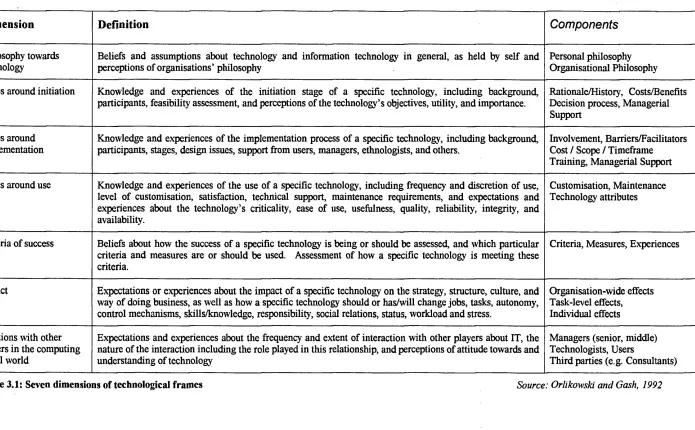
Table 3.1: Sevendim ensionso ftechnologicalfr a m e s... 58
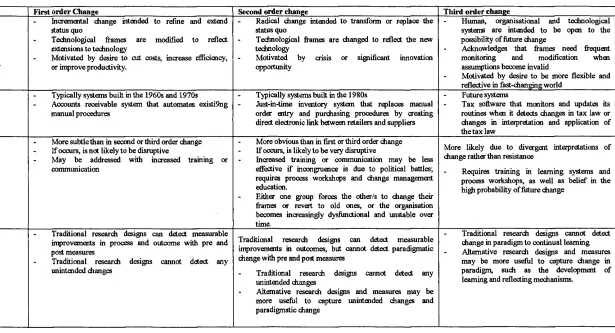
Table 3.2: Summaryo fordersofintendedtechnologicalc h a n g e s... 59
Table 3.3: Technologicalframesandchoicesanddecisionsmadeabouttech no lo gy: Thesised ANALYTICAL FRAMEWORK... 75
Table 4.1: Proceedingsinrev iew... 81
Table 4.2: Papersclassifiedbyresearchm e t h o d s... 82
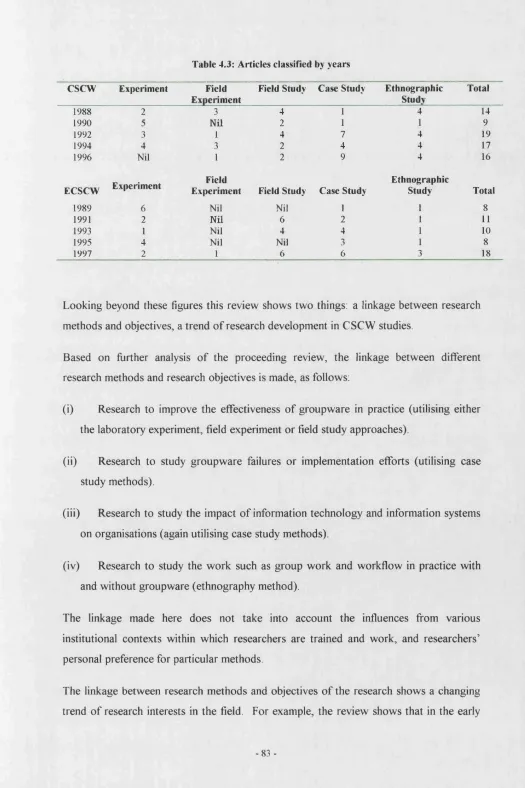
Table 4.3: Articlesclassifiedbyy e a r s...83
Table 4.4: Summaryofth eresearchd esig n... 99
Table 5.1: Primaryin t er v ie w s... 102
Table 5.2: Titlesofprincipaldocumentss t u d ie d...102
Table 5.3: Theriseofg r o u pw a r e... 112
Table 5.4: Comparing Notestoothersystem s... 125
Table 6.1: Numberofin t e r v ie w s...144
Table 6.2: Titlesofprincipaldocumentsc o n s u l t e d... 145
Table 6.3: Numbersofdocum entsv ie w e d... 146
Table 6.4: Projectt im e t a b l e...149
Table 6.5: Thepotentialvendors... 151
Table 6.6: Content, context, andp r o c e s s... 154
Table 6.7: Technological Framesofthe D O IS ...164
Table 6.8: Summaryo fevaluationelem en ts... 168
Table 6.9: Memberdepartm entofthe User Gr o u p...169
Table 6.10: Technologicalfram esoftheusergroups' ... 177
Table 6.11: Currente-m ailser v ic e... 178
Table 6.11: Thetechnologicalfram esofth em a nagem entg r o u p... 181
Table 6.12: Keyelem entoftechnologicalfr a m e s... 187
Table 7.1: Ontologicalperspectiveoftechnologicalfr a m es... 198
Table 7.2: Thenotionsoft im e...209
LIST OF FIGURES
Figure 1.1: Organisational Str u c t u r e ... 8
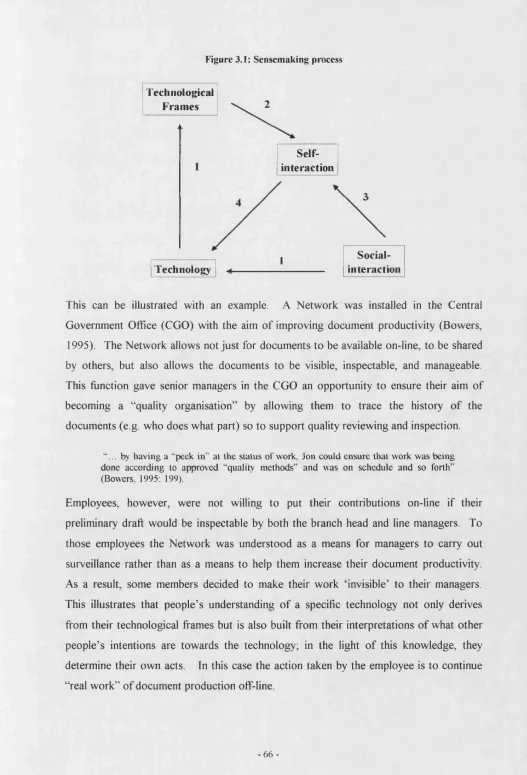
Figure 3.1: Sensemakingp r o c e s s... 64
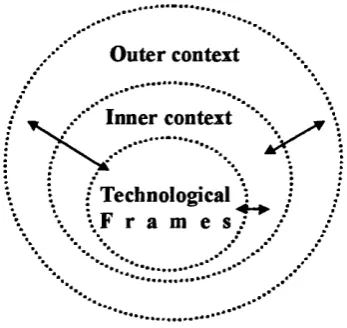
Figure 3.2: Higherandlo w erlevelfactorsandtheirin tera ctio n s... 74
Figure 4.1: A schemeforanalysingassum ptionsaboutth enatureo fsocialscien ce... 88
Figure 5.1: Group Management Structure (1 9 9 6 )...105
Figure 5.2: Theriseofg r o u pw a r e... :... 109
Figure 5.3: Framesinvolvedin Phase On e... 117
Figure 5.4: Framesinvolvedin Phase Tw o...126
Figure 5.5: Framesinvolvedin Phase Th r e e...135
Figure 5.6: Interdependenceo ffra m es...139
Figure 6.1: Manufacturers' Market Sh a r e s... 168
Figure 6.2: Creatingashapedunderstandingthroughsocialin ter a c tio n... 189
F ig u re 7.1: BOC's o n t o l o g i c a l a s s u m p tio n o f t e c h n o l o g y a n d d i r e c t i o n o f t h e p r o j e c t ... 200
F ig u re 7.2: BIS' o n t o l o g i c a l a s s u m p tio n o f t e c h n o l o g y a n d d i r e c t i o n o f t h e p r o j e c t ...201
CHAPTER 1
INTRODUCTION
1.1 Re s e a r c h s c o p e
Various issues surround the early stages of an information system (IS) project. They include project definition, requirement collection and specification, decisions about acquisition and development, and allocation of resources (financial and human resources). Previous research has discussed these issues selectively from a number of perspectives notably from that of technology (Galegher and Kraut, 1990; Gallupe and McKeen, 1990; Hollingshead, et al., 1993; Whisler, 1970), of business strategy (Boynton, et al., 1992; Drucker, 1988; Martin, 1998; Rockart, et al., 1996; Porter and Millar, 1985; Schein, 1996), of economics (Benson, et al., 1990; Brynjolfsson and Hitt, 1998; Ciborra and Olson, 1998; Opper and Fersko-Weiss, 1992; Threlkel and Kavan, 1999; Venkatraman, 1994), and of organisations (Coombs and Hull, 1995; Davenport and Short, 1990; Grint and Willcocks, 1995; Keen, 1991; Taylor, 1995). Each of these perspectives rests on an assumption that an IS project occurs as a result of rational behaviour. In this analysis it is thereby assumed that the initiation of an IS project originates from problems within the current system (technological perspective), the needs for strategic alignment of IS with business (strategic perspective), the wish to increase productivity or to reduce cost (economic perspective), or the desire to make changes in organisation (organisational perspective); and that the adoption of a particular information system reflects an organisation’s best interests.
IS adoption, the acquisition of a particular information system is equally likely to originate from the deliberation of a few individuals. This deliberation will reflect individuals’ perceptions and problems with a given technology rather than an organisation’s overall rationality. It is maintained therefore that the ideas and decisions about what is to be achieved and what technology offers are explored and shaped at the early stage of a project; and that understanding of the initial and ongoing deliberation related to the decisions and choices made about an IS project becomes a source of explanation for phenomena observed in the post-implementation environment. In the light of this argument this thesis investigates and focuses on the issue of how the perception and expectation o f individuals influence the decisions taken with regard to
the initiation and acquisition o f a specific information system. This will be achieved through a social cognitive approach that provides important countervailing insights into decisions about a specific system.
This thesis is both original and challenging on a number of accounts. First, it shifts attention from the rational (both technological and organisational) dimension to the less well represented social cognitive dimension. It emphasises the role of individuals’ cognitive properties (i.e. experience, knowledge, perception, and expectation) in the process of making decisions and choices about technology. Second, the thesis provides evidence which illustrates the dynamic nature of these cognitive properties and highlights the shifts in the initial ideas and notions of the technology and the impacts of these shifts on individuals’ attitudes towards the technology over time. Third, its focus on the origins of an IS project gives historical consideration to the phenomena observed in the later phases of the project. This challenges the implicit assumption that the technology only comes alive after its implementation.
According to the definition given by the UKAIS (1997), information systems are:
“the means by which organisations and people, utilising information technologies gather, process, store, use and disseminate information” (p.5).
By this definition, a wide range of information technologies is then qualified to be called information systems. For the purpose of this research it is important to narrow the range of technologies to a specific type serving specific purposes. By so doing, it is possible to compare and contrast the processes of forming perceptions and expectations
as well as the choices and decision-making in different organisations. Groupware is chosen with this context.
In the late 1980s there was a growing interest in the design, implementation and use of technical systems which support people working cooperatively, and a group of researchers and practitioners gathered to discuss the topic. This special interest group later became a community engaged in discussion of related topics and technology, and the subject became known as computer supported cooperative work (CSCW). Systems including software and hardware developed and designed within this context became known as groupware.
Groupware is designed to support group work in an integrated way. Such systems have been described in these terms:
“[...] they put coordination technology into the hands of the group members, giving them access to the positive aspects of coordination - not just preventing collisions, but enabling collaboration” (Grief 1988: 9).
Put another way, groupware is not something that stands alone but serves as a standard platform that allows users to exchange information uniformly; and to have similar levels of consistent support for users’ collaborative work needs.
In the late 1980s and early 1990s the interest of groupware extended beyond academia and was introduced to the commercial sector. The trend is said to stem from an increasing attention to business process engineering (BPR), an emphasis on teamwork to achieve flexibility, the speed of globalisation, and booms in the software and hardware industries (Lloyd, 1994). The introduction of Lotus Notes in 1989 which marketed itself as a groupware to help companies to bring together their expertise around the world certainly pushed discussions of the topic further in academia, in business and in commerce.
A number of common assumptions are made and shared in the CSCW community: (1) to enhance or enable group work, (2) to improve communication, (3) to create a common platform for information sharing, and (4) to remove time and place restraints. The specific assumptions and expectations of groupware in these communities provide a well-defined range of information systems for analysis. Moreover, it allows investigators to examine and even challenge the assumptions made by organisations
about technology. For example, whether organisations adopt groupware for the reasons assumed by academia or the IT/IS industry; whether organisations’ decisions about groupware adoption emerge from a process of IS projects; and whether organisations understand the implications of groupware when they choose to introduce groupware. Besides, although the groupware chosen as the subject for the case study it is believed that the experiences and lessons learned from how individuals and organisations understand and form their understandings and interpretations of this technology provide valid insights and can be applied to studies of other information systems.
The present study employs a case study research method in the empirical work to help to understand the subject area. This method provides an understanding both of the content of an object/event and the process over time of the mutual influence between the object/event and its context (Walsham, 1993). Three case studies have been carried out; a preliminary study and two main studies.
The preliminary case study was conducted in a well-established financial group in Taiwan - Jardine Fleming (JF). The study was commissioned in 1996 by a senior manager in the business division in order to identify potential areas in which the company could benefit from Lotus Notes. One of the two main case studies was carried out in the British Oxygen Company (BOC Group), a UK-based and world- leading industrial manufacturer. The company’s Lotus Notes project was established to support its marketing sector reform in 1994. During the two years of experiences with groupware (i.e. Lotus Notes) information systems personnel as well as users learned about the system, in a hard way at the beginning, but their learning curves started to take off once they became familiar with the system and developed understanding. The other main case study was undertaken in the Bank for International Settlement (BIS). The Bank completed its WORKGROUP project a year before the case study was carried out, and had seen initiated and set up to replace the old electronic mail system in the Bank. Telling a different story, the project in the Bank was claimed by the team to be the most successful project ever in the Bank’s IS history.
The rest of this chapter introduces the preliminary case study of JF Taiwan and discusses issues that emerged from the study. The chapter ends by presenting the organisation of this thesis.
1.2 Pr e l im in a r yc a s e s t u d y
The study presented here is based on fieldwork in the course of a project with Jardine Fleming, a Taiwan-based financial company. The project was commissioned by a senior manager to generate a report of whether Lotus Notes would bring value-added benefits to the company from its implementation. The project started in July 1996 and was completed with a report at the end of August. It involved two months staying on site and working side-by-side with other employees.
This case study was chosen to be presented as a preliminary not the main case study of this research for a number of methodological reasons.
The main methodological concern is data continuity. The project was commissioned by the senior manager in JF Taiwan and carried out prior to the decision to investigate the present research topic (indeed the present research topic emerged from the observations made in the project) therefore the data collected during the project was collected solely for the purposes of the JF Taiwan project. That is, the data was collected according to the requirements of the senior manager and not those of the current research and therefore if used the data would have been partial.
The second concern is the stage at which the project had reached in the company. The project at JF Taiwan was at its initial and exploratory stage which on the surface can be said to be an appropriate candidate for being the main case study of the present thesis. However, it is this initial and exploratory stage that raised our concern about suitability. The project carried out in JF Taiwan was at its early stage of development and a final decision about implementation had not been made at that time. Hence it is not possible for us to examine the choices and decisions about the system from an historical point of view. In other words, no examination was able to be made concerning the process of how the decision makers’ perceptions and expectations formed, reformed, and changed over time.
1.2.1 Organisational background
The main data sources came from observations, interviews, and informal conversations (e.g. lunch, coffee breaks, dinners] with staff. Interviews with personnel were open- ended and intended to gather information of their job contents and needs, technologies
used in their jobs, and their perceptions of problems and expectations of the new information system. During these conversations, it was possible to make suggestions about the new system. A significant limitation of the interview technique emerged when it was found that employees were cautious with what they said since they felt that the contents of the interviews might be fed back to the senior manager and they might compromise their positions. Informal conversations with employees as well as observations1 of interactions and overhearing conversations between individuals therefore became important sources of ‘unofficial’ views of problems.
Jardine Fleming Taiwan is a well-known financial service company in Taiwan and its major business activity is to sell local and overseas funds and mature bonds. The company’s largest shareholder is JF Hong Kong whose activities cover investment management, securities broking, corporate finance, capital markets and banking. JF Hong Kong itself is a joint venture owned equally by a London based investment bank and art international trading house. Relatively speaking, JF Taiwan has a closer business relationship with JF Hong Kong than with the London based investment bank and international trading house. This is not only because of JF Hong Kong is the direct and major shareholder in JF Taiwan, but also because of financial legislation in Taiwan.
Under the current legislation no financial company in Taiwan can act on behalf of their clients to invest in overseas financial markets directly, so funds and mature bonds operations have to be carried out outside Taiwan. JF Hong Kong naturally became the candidate to managing and operating JF Taiwan’s local investors’ investments in overseas financial markets. In terms of selling overseas funds and mature bonds to local investors JF Taiwan can be described as a big sales department of JF Hong Kong since it only receives commission fees by selling overseas funds and mature bonds instead of managing fees2. It is also responsible for promoting, for dealing in overseas funds, and answering funds related questions from investors.
At the beginning of the fieldwork direct observation was the only option to collect information. Employees suspected that I was there to spy on them on the behalf of the senior manager and it was only sometime later they found that I was ‘harmless’ and gradually accepted me as a part of the working force; at this point, participating observation became possible.
2
Fund managing fee is counted as the major income in a financial service company like JF Taiwan.
Figure 1.1: Organisational structure
UK b a s e d U K b a s e d
I n v e s t m e n t B a n k U K
H K
F i n a n c i a l G r o u p H K
4 9 %
T a i w a n G ro u p
5 1 %
O t h e r l o c a I
In v e s t e r s T a i w a n
The company has three branches in Taiwan, in addition to the Taipei headquarters. These branches are distributed in different cities: the North, the Midland, and the South, to serve the regional customers. The power is centralised in the company, that is, the Taipei office gives orders and has absolute authority to determine business decisions and activities for these three branches. Communication between the headquarters and branches relies on the traditional communication tools including internal and external telephone lines, fax machines, face-to-face meetings. It was only since early 1996 that the Southern and Northern branches had installed cc:Mail™, which connects them with the Taipei headquarters.
Five departments were involved in this project, all of which except the information systems (IS) department are said to play critical roles in the company’s daily business operations. These four other departments were fund administration, sales administration, sales, and marketing. Fund and sales administration departments are responsible for processing the administrative work of local investments transactions and if these investments are interested in overseas markets, they then pass them to JF Hong Kong. The sales department consists of four sales groups: Banking, Private, Institution, and International. Each of them targets different market groups; for example, Banking targets ordinary investors so its job is to negotiate with high street banks to encourage them to promote and sell funds and mature bonds for the company over the counters. Because each group has its target clients and pursues different interests there are not many interdependencies between these groups. The marketing department consists of two divisions: Customer Service and Research. Customer Service division is divided
into further two groups: Telephone Centre and Marketing. The former answers phone calls from clients who have questions, requirements, or complaints, and the latter is responsible for planing various business activities and promotions, and public relations. In the research division the primary task is to study and analyse financial markets around the world, and generate weekly and monthly market reports for both internal use and clients.
1.2.2 Project History
Lotus Notes was recommended by JF Hong Kong to JF Taiwan in early 1996. The system had been used in Research Departments both in JF Hong Kong and London and allows their market analysts to share information and have discussions on line. JF Hong Kong, convinced by its ‘successful’ experience with Lotus Notes, recommended JF Taiwan to develop applications within the system.
Before this suggestion was made to JF Taiwan, the IS department had run the first and only pilot application on Lotus Notes which involved Fund, Sales Administration, and Marketing departments. The application was designed to allow departments to submit their requests for IS service via the network. This pilot project was new to both users and the IS department. At the beginning, users found themselves struggling with the application since there was no technical support from the IS department, no user manual for reference, and bugs in the application. However, when the bugs were gradually sorted out and users were becoming familiar with the application they started to see benefits in it. One benefit was that with the application people kept both electronic and paper copies of the same requests whereas before only one copy was kept and was often lost in the process. With dual copies of the request form people could now provide electronic evidence to the IS department to prove that the department received requests but never delivered the services required. This pilot project stopped running six months later because the server broke down and was never fixed.
The pilot project running on Lotus Notes was the IS department’s initiative and did not involve the senior manager; but the second introduction originated the senior manager who expressed her interest in having Lotus Notes in the company since JF Hong Kong ‘recommended’ them to do so. In early 1996 JF Taiwan had its first e-mail system, cc:Mail, to assist internal communication with its dispersed branches and with JF Hong
Kong. In general, people especially the senior manager were satisfied with the system, and believed that Lotus Notes, which is also Lotus’ product, would be equally good for them. They expected that Lotus Notes would solve problems of information sharing and communication, and increase coordination between departments. The employees also expected Lotus Notes to replace the existing information systems and allow them to access information freely and immediately.
1.2.3 Findings
Three groups of people were interviewed: senior management, IS personnel, and potential users. The senior management group included the managing director, a senior manager in charge of market research, a general manager in charge of marketing, and a manager dealing with administration of transaction. The IS personnel group included an IS manager who was assigned to the Lotus Notes project, and two other people who worked on the project. The three IS people had technical backgrounds and had worked as computer support staff for most of their careers. The potential users group included employees from departments into which senior management was considering introducing Lotus Notes. These departments included a sales department which comprised five different divisions, a sales administration department which processed details of sales of funds and bonds, and a marketing department which included research and marketing divisions.
When senior management and potential user groups talked about the problems which they had in mind and their expectations of Lotus Notes, it was first found that their problems and expectations coincided with what has been described within CSCW literature. For example, they were having problems with information sharing and communication because of the dispersed locations between departments, and hoped that the new technology could improve the situation. However, under close scrutiny these problems and expectations were not, in nature, the same as those described in the literature. Comments on the perceptions of each group - senior management, potential user, and IS personnel - in relation to the problems and expectations of Lotus Notes are now presented.
Senior m anagement
The primary reason for senior management to consider the adoption of Lotus Notes was that the system was recommended by JF Hong Kong. The latter was the company’s major shareholder and the Managing Director (MD) felt that politically the company needed to consider the recommendation. As the Managing Director said: “they suggested the system, so we considered the system.”
Their recent experience with Lotus cc:Mail was another reason which drove senior management to consider Lotus Notes. Lotus cc:Mail was the first e-mail system which the company had ever had and which was used for communicating between branches in Taiwan and between JF Taiwan and HK. Before the introduction of electronic mail, surface mail and fax machines were the primary means of communication. The MD expressed her satisfaction with Lotus cc:Mail and believed that Notes would achieve a similar outcome because it was a product of Lotus.
There was a general feeling in the company that the IS department had seen unable to deliver the service which people wanted. Indeed, it was known to the company that the MD was unhappy with the service provided. An interviewee from a user department who often attended IS-related internal meetings said
“It is not unusual that the MD and the IS manager spend most of their time shouting at each other in meetings.”
The MD expressed her view of the IS service in the company as follows:
“The IS department never gives me what I want. For example, this time I simply want them to design a computer-generated report which can tell me each sales person’s monthly, quarterly, and annual sales records, and now see how many months have passed and I still have not got it.”
The dissatisfaction with the current level of service provided by the IS department along with the company’s experiences with cc:Mail meant that the MD expected that Lotus Notes would change the current problem situations since she had a strong belief that “computers can solve any problem”.
Potential users
Most employees interviewed had never heard of Lotus Notes before, and those that had heard about it did not know what it was about. Their expectations of Notes came partly
from the problems that they had encountered in their work and partly from a brief introduction which the researcher provided at the beginning of each interview.
Various problems with the current systems were described by the employees, among these the problem of information sharing was mentioned most of the time. However, definitions and interpretations of the problem differed from one employee to another depending on the interviewee’s status (e.g. rank, department, and job content) in the company. For example, a market researcher who specialised in Asian financial markets saw the problem of information sharing in the context of not being able to access on line reports, figures and diagrams generated by the HK company. She therefore expected that the future system, Notes, would enable her to access the on-line research data which she needed. A different market researcher in the same office who specialised in European and Russian markets had a different view of the problem. For the MD, information sharing was not a problem but finding information was. Other people in the company complained that information on marketing activities organised by the different sales divisions was not widely shared within the company. This caused embarrassment. The sales people sometimes felt that customers knew more than they did, for example one interviewee mentioned:
“Sometimes customers called and asked us when such and such activities will take place and where, and we did not have a clue what the customers were talking about because the activities were organised by other divisions and they did not inform us what was going on.
Despite the fact the employees knew little about the system and how it could help them in their jobs, most of them welcomed the idea of Notes. This attitude could be interpreted as a result of the fact that employees were not happy with the current system and in common with the Managing Director they also had a conception that all the current problems could be solved by a new computer system. It was not unusual that the current AS400 system crashed at least twice a week and that each time the crash could last about half a day. Employees who needed to use the system to check, calculate, and report transactions were frustrated with the interruptions caused by the system's lack of stability. Others found switching between the AS400 and Windows working environments was not easy.
A further reason for some employees to welcome the system was that they expected that it would enable them to access information stored by the HK company such as data and
progress of transactions. Currently, because of banking and investment law in Taiwan, all the overseas funds were managed and handled by the HK company and JF Taiwan was only responsible for promoting and selling overseas funds to local people. When sales were completed administrators in Taiwan then sent the details of the transactions to the HK company; after that JF Taiwan had no rights of access to the information about the transactions. Employees in Taipei hoped that the new system could give them greater control over local transactions so that they did not need to rely on the HK company to answer customers’ enquiries about their investments.
IS personnel
The IS project manager was not enthusiastic and optimistic about the idea of having Notes. The manager was more knowledgeable about mainframes especially IBM AS400 and did not know much about the PC working environment. It was not until early 1996 that he had started to learn to develop applications within a Windows environment. Since it was not his field, the introduction of client-server computing was conceived by him to be a threat to his position in his department. Other IS personnel were unfamiliar with and not keen on the idea of Notes. Due both to their own lack of interest and incentive to adopt Notes the IS personnel put little effort into promoting Notes project within the company. Consequently, the majority of employees had never heard of Notes despite the fact that the system had been considered for sometime before this case study was carried out.
The project manager considered that groupware could only be used by small groups of people within the organisation, although one application developer argued that the system could be used in a wider arena such as the organisation as a whole. The manager also perceived that Notes was useful in terms of automating workflow processes. The project manager’s perception of Notes as being limited to its being used by small groups of people and of Notes being a workflow system led to the development of a pilot application which was designed to change the processing of requests for IS services from paper-based to electronic-based. The pilot application was up and running for about three months until the server broke down; from then on no other application was developed in Notes. In fact Notes server was never repaired.
1.2.4 Discussion and implications
The assumed rationales for groupware adoption described in other research papers were not found in this case study. Even if organisations cite to users the vendors’ advertisement about groupware applications, they are likely to interpret the system in the organisational context in order to pursue their own agenda. The observations of the case study also illustrates that organisations’ decisions about groupware adoption do not necessarily reflect a match between their “real” needs and abilities of groupware; but more individualistic interests. It was noted that expectations held by individuals were influenced by their previous experiences with other technology which were both good (e.g. experiences with cc:Mail) and bad (e.g. frustration with the current system). The findings also suggest that individuals’ expectations of Notes were not built upon the technology itself but on their own perceptions of how problem situations should be resolved. Furthermore, the observations suggested that individuals’ perceptions and understanding are formed and reformed over time on the basis of their personal experiences and knowledge and are constructed through social and organisational interactions; and that perceptions of problems and understandings of technology change over time according to individuals’ surrounding environment.
These observations have a number of implications for further research. It has been observed that individuals’ interpretation of problems, and knowledge and experience of technology have influences on their expectations of technology and which in turn forms a part of the reason for adopting new technology. Thus, in order to understand the issue of why particular technology is chosen (i.e. groupware) the focus of the investigation should be on these cognitive properties.
It was also noted that decision makers could have made decisions about groupware adoption without any previous knowledge about the technology. Then it becomes important to understand on what basis that a particular information system is chosen and why, if one wants to know and make sense of what is observed in a post implementation environment. This leads to another issue that whether the outcome of information system observed in post implementation stage is a reflection of the selection of inappropriate solutions to organisational problems, or mismatch of perceptions and decisions about the system to actual problems and offered by the system. In this context further research is needed to assess and examine the process of
selecting a particular system to support organisational problems so to track the origins of phenomena observed in post implementation stage and understand the phenomena from there.
These findings and implications, however, were not pertinent to be developed into a research question until later when they were compared with a review of CSCW literature; this review is presented in Chapter Two.
1.3 Or g a n is a t io n o f t h e t h e s is
This chapter (Chapter One) has briefly introduced the research scope and objectives of this thesis, and presented a preliminary case study and the observations made in the study. The next chapter (Chapter Two) is organised to critically review the current CSCW literature and relevant literature in social cognitive research on information systems acceptance and adoption. Chapter Three introduces a social cognitive approach - technological frames analysis, explains how the framework will be used in the context of this research. Chapter Four, Research Issues, firstly reviews various research methods employed in CSCW and examines research topics associated with them. This is followed by a section which addresses the research strategy and design of the present study. Chapter Five presents the case study conducted in BOC Group whilst Chapter Six presents the study of BIS. Chapter Seven brings together the findings from both case studies and interprets them in a broader context. Finally, Chapter Eight summarises the whole thesis, demonstrates the implications of this research, comments on the contributions of this thesis to IS research, and addresses directions for further research.
CHAPTER 2
RESEARCH ISSUES
Since the late 1980s there has been a growing interest in the design, implementation and use of technical systems which support people working cooperatively. A research domain then emerged and has been known to many as computer-supported cooperative work (CSCW). CSCW is said to be a stream of the information systems field but because of its specific interests the domain actually develops a research agenda, organises conferences (CSCW and ECSCW), and publishes a specialist journal International Journal o f Computer Supported Cooperative Work (CSCW). Whether
CSCW research should be regarded as a pivotal branch of information systems study excites debates. Some scholars see that CSCW studies are built on the existing development in computing science and information systems and therefore it should be seen as a part of information systems study. Yet, some are against such a statement and suggest that the research is in itself a new discipline. The present study would argue that CSCW is a specific topic which investigates a special domain (computer-supported collaborative work) in the information systems discipline. This view allows issues relating to CSCW to be studied and with reference to IS research and at the same time issues drawn from CSCW studies can be applied to general IS research.
The first section of this chapter (Section 2.1) will be dedicated to a review of the development of the CSCW domain and literatures of cooperative work (CW) within the CSCW domain. From there, a gap in the current research of CSCW will be discussed: a lack of research on the activities undertaken between the stage of searching for possible technological solutions and of understanding the limitations of systems in use. The relevant literature of this area in IS will be reviewed (Section 2.2). Bringing together
-the observations made in -the preliminary case study and -the literature review -the third section (Section 2.3) of this chapter will refine the questions raised in Chapter One and tune them into an appropriate research topic for this study.
2.1
G e n e r a l r e v ie w o f CSCWIn this section the development of CSCW research will be reviewed chronologically, followed by a comprehensive review of CSCW literature. The literature review is further organised into two subsections according to two main streams in the domain: workplace study and technology use study.
2.1.1 A brief of review of CSCW development
Broadly speaking, the development in the CSCW domain has followed a similar pattern to that that IS has been through - for instance, emerging, formalising, and maturing phases. Each of these phases involves specific interests in academia and technology development in the industry. This section provides a brief review of the research development in the field.
Emerging (1984 - 1 9 8 5 )
Although the very first concept of CSCW was mentioned by Engelbart in the early 1960s, the first CSCW workshop was not held only until 1984 and since then the domain begun to take off. The 1984 workshop was organised by Iren Grief of MIT and Paul Cashman of Digital Equipment Coporation and held at MIT. The delegates at this workshop came from different backgrounds but shared a common interest - which was to use computer technology to support people to work together (Grief, 1988).
At that time, CSCW was defined as a body of research which examines ways of designing systems - people and computer systems - that would have significant implications for the way people work. This stream of research was argued as differing from traditional computer science as it drew on contributions from various disciplines such as computer science, artificial intelligence, psychology, sociology, organisational theory, and anthropology, all of which supported an aim to develop computer systems on the basis of people and their working relationships (Grief, 1988).
A subsequent response to the discussion of a potential research domain - CSCW - was the development of a new class of commercial software, namely groupware, which was noted as being designed to take group work on board in an integral way. Grief (1988) described some software in these terms:
“[...] they put coordination technology into the hands of the group members, giving them access to the positive aspects of coordination - not just preventing collisions, but enabling collaboration” (p.9).
Groupware does not, argued Grief, stand-alone but serves as a standard platform that allows users to exchange information uniformly; and to have similar levels of consistent support for the collaborative work needs of all users.
Formalising (1986 - 1 9 9 1 )
The stage of formalising the acknowledgement of CSCW in both computer and IS communities began with the first CSCW conference which took place in Austin, Texas in 1986. Like IS at its early stage, CSCW went through the stage of identity seeking which is reflected in debates over definitions of the term CSCW and research directions. Various definitions were offered but there was (and still is) no single definition agreed within the community. These definitions ranged from very broad and loose to very narrow and specific (Bannon, et al., 1988; Greenberg, 1991; Hughes, et al., 1991; Lyytinen and Ngweyama, 1992; Robinson, 1991; Schmidt, 1991; Schmidt and Bannon,
1992). As an example, Olson (Olson, 1987) defines CSCW as
“a label for an emerging body of research on the relationship between computer systems and social systems. Part of the research has to do with building tools to help people work together. Part of it has to do with assessing the ways in which people use computer-based tools to work together and understanding how the tools and work relationship affect each other” (p.77).
Greenberg (1991:1) speaks from a computer science point of view: “CSCW should be the scientific discipline that motivates and validates groupware design”, whereas Bannon and Schmidt (1991) argue that CSCW should be
“an endeavour to understand the nature of characteristics of cooperative work with the objective of designing adequate computer-based technologies. The conceptual models of group processes” (p.5).
The fundamental problem was that people could not decide how the word “cooperative” should be dealt with. Some argued that the word is redundant while some argued that the word should be replaced with other C words in order to reflect the concepts of
CSCW fully. For example, Bodker et al. (1988) claims that all work is essentially cooperative and that there is no need to seek additional clarification by adding the term “cooperative” to that of “work”.
Those who saw the necessity to keep the word - cooperative - argue that the term not only should be kept but also should be addressed and carefully analysed. This group of researchers discussed that a considerable number of Office Information Systems (OIS) which failed to live up to people’s expectations was due to the fact that they failed to address and incorporate into the system designs ideas of cooperation and communication in intellectual work (Galegher and Kraut, 1990b).
Some agreed that the second C (operative) word in CSCW should remain on condition that it is replaced with other words, for “coordinated”, “collaborative”, “collective”, or even with group/teamwork (Howard, 1987). Cooperative work, explained by Schmidt (1991) is
“constituted by work processes that are related as to content, that is, processes pertaining to the production of a particular product. Cooperative work, then, is a far more specific concept than social interaction in the system of work in general. The concept pertains to the sphere of production. It does not apply to every interaction pertaining to the running of, say, a company” (p. 10).
Building on the above definition, collective work is explained as a type of cooperative work where ensembles share responsibility to accomplish a task. Further, collaborative work is a “particular ‘collaborative’ or complying spirit among the cooperators, as evident, for example, in the expression ‘collaborating’ with an enemy” (Bannon and Schmidt, 1997: 7). In light of the above, coordination in a work process can be defined as a process of coordinating participants’ activities to attain given goals. Cooperative work is an umbrella term to cover different concepts of working together.
Whether or not the name matters at all, and why we spend much time on debating the definitions of CSCW, are questions that one may ask. Those who argue that names matter believe that only when CSCW is properly defined will the research direction and focus become apparent. Ironically, the debates over various C words did not synthesise the disparate views of CSCW but led to further confusions and diversities of research focuses. Even more, it seemed that all the efforts put into the debates over the definitions had been wasted because technology development (groupware development) and other research studies rarely referenced those definitions. In fact, Hughes et al.
(1991) believe that it is wrong that people spend time on defining the terms which are irrelevant. They argue that what is important is not which C word should be focused on but to recognise that all work is socially constructed:
“all work is socially organised; that most significant tasks are complexly social; and that it is largely for this reason that they have sometimes been poorly served by computer systems” (p.34).
Another feature of this period of time is that various theoretical frames were proposed to study cooperative work. A lot of work came from computer-mediated communication literature (Dietz and Widdershoven, 1991; King, 1991; Lea and Spears, 1991), group decision support systems studies (Gallupe and McKeen, 1990; Poole and DeSanctis, 1990; Tan, et al., 1991; Watson and Bostrom, 1991), and studies of group dynamics (Bikson and Eveland., 1990; Galegher and Kraut, 1990a; Gutek, 1990; Kraemer and Pinsonneault, 1990; McGrath, 1991).
Technology development in this period focused on computer - mediated communication tools and emphasised the issues about synchronously or asynchronously communications and cooperations. For example, the discussions on remote meeting (Bikson and Eveland, 1990; Cook, et al., 1991; Egido, 1990), e-mail system (Eveland and Bikson, 1988; Mackay, 1988; Sproull and Kiesler, 1986), and asynchronous conferencing systems (Borenstein and Thyberg, 1988; Galegher and Kraut, 1990a) were the themes at that time. Most of applications/systems discussed in the research in this period were not commercially available.
Maturing (1992 - 1 9 9 8 )
At this stage, debate over definitions and directions of CSCW evaporated, for papers written to discuss the matter (definitions and directions) in this period were either summaries or reiterations of the earlier studies and did not intend to provoke further debate. It is also noted that the number of heterogeneous research proposals decreased, and research topics became focused and coherent. Interestingly, the number of theoretical and conceptual frameworks offered to study dynamics of group/team work, and coordination process decreased too. Instead, empirical work such as ethnographical studies to study workplace and work, case studies to study interactions between technology and organisations, action research to develop and design groupware; and
hands-on groupware designs such as virtual spaces, conferencing systems, collaborative authoring systems came to dominate the field.
The terms CSCW and groupware had been used by many indiscriminately as if they were the same thing, and a consequence of this was that the early research of CSCW was limited to small group work. But examining the definitions given, CSCW was never defined exclusively to study “group/team work”. There are possible reasons for the confusion: firstly, the name group-ware misleads people to think that CSCW and its related technologies are for group/team work; secondly, people had been mistakenly thinking that cooperative work exists only among a small group of people who share and work together towards the same ends. In this phase people began to explore areas beyond small group work and look into “cooperative” work in general within an organisation.
There were an increasing number of studies in this period which moved out of the laboratory into the real world to study CSCW technology in its hosting organisations; but only then was it realised that the benefits promised by the technology were not there. Disappointment with the technology was explained as the result of the failure to incorporate ideas of social constructions of work into the design (Galegher and Kraut, 1990a; Hughes, et al., 1991; Olson, 1987). The theme, social organisation of work, was therefore developed to replace the formal models of cooperative work used previously (Harper, 1998; Hughes, et al., 1996; Rouncefield, et al., 1995). The aim of this line of study is to provide insights into work in reality, through observations made in workplaces so as to inform system/software design.
Another research development in CSCW is the increasing number of case studies undertaken to investigate the relations between technology and hosting organisations by exploring questions such as why or why not the technologies fail to live up to their expectations; and what changes have been made around the technologies. This development is related to the availability of the technologies in the commercial sectors. The aim of this body of research (Bikson, 1996; Ciborra and Patriotta, 1996; Failla, 1996; Gallivan, et al., 1993; Orlikowski, 1995; Wynn, 1996) is to inform system design (but not software design) and to inform system management (including implementation strategies).
The above development in research was evidently reflected in the changes in the principles of CSCW system designs. An example can be given by comparing the papers included in the book Design Issues in CSCW edited by Rosenberg and Hutchison (1994) published in 1994 and the book The design o f Computer Support Cooperative Work and Groupware Systems edited by Shapiro et al. (1996) published in 1996. The
papers included in Rosenberg and Hutchison’s book seemed to concentrate on rational conceptual models of group process, coordination activities, software engineering and multimedia conferencing designs only. In contrast, the papers included in the volume by Shapiro et al. gave equivalent consideration to both practical systems/software design and real world work. The shift from engineering modes of design to more socially oriented modes of design is also reflected in the increasing number of published studies adopting participatory design (PD) method. For example, the CSCW’96 and ECSCW’97 conference proceedings, included articles on PD, and a special issue of the Journal o f Collaborative Computing was dedicated to the topic in 1998.
Later in the same period it was observed that technology breakthroughs in both the hardware and software industries had advanced systems development and designs in CSCW too. For example, more advanced than it was in the early 1990s the multimedia technology was now being used to help to create Collaborative Virtual Environment (CVE) which aimed to permit individuals to interact with others in a computational environment (Benford, et al., 1996; Benford, et al., 1997). Breakthroughs in The Internet related technologies have also benefited design in CSCW and prompted some radical changes which have led the domain to another stage of development (Bentley, et al., 1997; Dix, 1997; Ginsburg and Duliba, 1997).
Internet Era (After 1998)
The development of the Internet has been an agent in driving the CSCW research and design to another stage. Within the commercial sectors the term groupware was gradually replaced with ‘Intranet” and then with “Extranet”. This development is shown by the increasing number of papers published in the conferences and journals to discuss the possibilities, problems and perspectives for CSCW on the World Wide Web. Commercial products such as Lotus Notes also introduce the Internet alike interface, Domino, to reflect the trend.
In IS research the related concepts and technology of CSCW seem not to be discussed as intensively as they used to be in the early days. At one extreme this is viewed by some as the sign of the decline of the research like other fashionable ideas but the reviews of the development patterns suggests that the field has simply moved on. CSCW related topics were widely discussed when the field began to emerge because the idea of using the computer to support cooperative work was unfamiliar and new to people. Prior to that information systems research talked about information retrieval (database), improving effectiveness and efficiencies (office automation), increasing individual productivity and so on but it seldom addressed the issues about using the computer to support cooperative work or any similar work. Now, after a decade the concepts that CSCW studies attempt to draw people’s attentions to have been widely accepted in the IS community, and have been considered by systems/software designs. The domain now tries to widen its research focus to cover diverse research topics with respect to work in workplace and applications of collaborative technology, as is evident in the flyer of call for papers for CSCW2000:
“[...] we also encourage submissions that explore the applications of collaborative technology to areas such as the domestic environment, health and education. Specific topics of interest might include augmented environments for collaborative activity, studies of specific work settings, the use of the Internet in the home, technologies for organisational knowledge sharing, the impact of The Internet technologies on organisational life, or collaborative practices in education.”
2.1.2 A review of Cooperative Work
Broadly speaking, CSCW literatures can be reviewed in two main streams; one focuses the surrounding issues of computer applications to support cooperative work, and the other focuses on the surrounding issues of cooperative work in the workplace; that is, one centres on “CS”, the other on “CW”. This study is categorised in the latter stream because of its investigation in how CSCW technology is perceived and has determinations of adoption are made in organisations (workplace). Studies of CW can be further grouped and examined in two categories, for example workplace study and assessment of technology use. The former considers the issues of how work is organised in the workplace (in the real world settings), and the latter considers phenomena observed in interactions between individuals/organisations and the technology. The rest of this section details the review of literature in these two areas.
2.1.2.1 Workplace study: searching for p o ssib le technological solu tion s
Workplace study is often initiated to study how work is organised in the real world settings with an aim to inform system/software design. This body of research argues that the nature of work and of the workplace have long been neglected or taken for granted by both practitioners and researchers. Workplace studies strongly object to the idea that work and workplace can be understood by using formal models, and that systems/software are designed on the basis of such understandings. The main reason for the objection is that work and the workplace is context specific and can only be understood through studying the actuality in context (Ackroyd, et al., 1991; Anderson and Button, 1993; Bentley, et al., 1992; Hughes, et al., 1994; Hughes, et al., 1991; Randall, et al., 1995). Hence, to design a system to support specific work, it is necessary to uncover what that work is really about and how it is organised; if the system is to support a specific workplace, then consideration should be given to how work is carried out within that workplace. Disappointments that organisations have with technology are seen as the result of the failure to incorporate the real-world settings in the designs, especially in terms of how organisation arranges this work.
Organisations of work.
Work has been, in organisational studies, IS and CSCW research, examined and understood through formal organisational models (Hackman and Oldham, 1980; McGrath and Hollingshead, 1994; Sproull and Kiesler, 1991). Most of these formal models treat organisations as machines so that work, tasks and people can be articulated and modelled since they are routine, efficient, reliable, and predictable (Morgan, 1986). Work is therefore a collection of many discrete-entities (Kling, 1987). Each discrete-
entity has its own tasks to perform, means to use, and ends to meet. Therefore computer applications are perceived as a coordination mechanism to link those discrete-entities together, as a way of routinising and automating procedures (Walsham, 1991). This view of work implies that computer applications can be used to connect discrete-entities and even to automate flows between the entities (Malone, et al., 1987; Malone and Crowston, 1994). Work here is understood as status quo and can be modelled and generalised.
Some scholars reject such a simple view of work and argue that work is a social activity which is largely unstructured, covert, political and symbolic (Hirschheim, 1985). In this
sense, characteristic of work is influenced by its surrounding environment (Ackroyd, et al., 1991; Hirschheim, 1985; Kling, 1980). The contextual factors that have impacts on work including socio-organisational structures (Checkland and Scholes, 1990; Lyytinen and Ngweyama, 1992; Mumford, 1987; Mumford and Weir, 1979), power relations (Knights and Murray, 1994; Knights and Murray, 1997; Markus, 1983), and external business environments (Bjom-Andersen and Turner, 1997; Galliers and Baets, 1998).
Similarly, a body of research in CSCW regards that work is socially rather than formally constructed; and that people perform their jobs in situ (Button and Harper, 1993; Sachs, 1995; Suchman, 1995). This view rejects the idea that work and tasks can be articulated in advance or be studied indiscriminately in different institutions and participants. Sachs (1995) writes:
“Studies of actual work practices have yielded evidence that the efficiency of work is in feet determined not so much by the logic and sequencing of task flow as by the capabilities of people for troubleshooting vexing problems in complicated situations, which inevitably arise in all workplaces” (p.38).
Going further, researchers argue that immediate surroundings and local contingencies have more direct influence on work than some broader contextual factors (Hutchins, 1991; Rogers, 1994). For example, in a constantly interrupted office a secretary has to perform several jobs simultaneously (i.e. filing, answering telephone, booking rooms, etc.) and sometimes needs to cover for the colleagues when they are off sick or on their break (Rouncefield, et al., 1995). The study of work is then carried out to underline the fact that work is socially organised and situated within the context of a particular workplace, and to examine the interplay of work and technology.
Wynn and Suchman (1996) illustrate how procedures of work are much more heterogeneous and complex than they first appear, and that to accomplish the process effectively there is a need for regular, constant, informal interactions between employees. Harper (1998) suggests that this ‘sociality’ of work underscores work practice; and that it is this ‘sociality’ which needs to be supported by technology. Hughes et al. (1992) illustrates the sociality of work by demonstrating how work is socially organised and how tasks and cooperation carried out for accomplishment of work are constantly negotiated between participants and changed all the time.