http://dx.doi.org/10.4236/jcdsa.2013.33A2012
Preparation of Temperature and Water Responsive
Microcapsules Containing Hydroquinone with Spray
Drying Method
Kuniko Shirokawa1, Yoshinari Taguchi1, Hiroshi Yokoyama2, Fumiyasu Ono3, Masato Tanaka1*
1Graduate School of Science and Technology, Niigata University, Niigata, Japan; 2Department of Management Information, Niigata University of Management, Niigata, Japan; 3Collaborative Research Division Art, Science and Technology Center for Cooperative Research, Kyushu University, Fukuoka City, Japan.
Email: *[email protected]
Received October 2nd,2013; revised November 1st, 2013; accepted November 10th, 2013
Copyright © 2013 Kuniko Shirokawa et al. This is an open access article distributed under the Creative Commons Attribution Li-cense, which permits unrestricted use, distribution, and reproduction in any medium, provided the original work is properly cited.
ABSTRACT
It was tried to prepare temperature and water responsive microcapsules containing hydroquinone as a water soluble core material with the spray drying method. Microcapsules were composed of ethyl cellulose (EC), methyl cellulose (MC) and P-N-isopropylacrylamid (PNIPAM). P-N-isopropylacrylamid and methyl cellulose were used as a temperature re-sponsive polymer and as a water rere-sponsive polymer, respectively. Ethyl cellulose was the main shell material of microcapsule. At the microencapsulation process, the core and shell materials were dissolved in ethyl alcohol dissolving water (20 wt%) and then, spray-dried to prepare microcapsules. In the fundamental operation, the concentration and molecular weight of methyl cellulose were mainly changed. The releasing rate of hydroquinone was repressed at 40˚C and increased at 20˚C due to temperature responsive PNIPAM. Furthermore, responsibility to water was increased with the concentration of methyl cellulose.
Keywords: Stimuli Responsive Microcapsule; Spray Drying Method; Hydroquinone; Controlled Release; Methyl
Cellulose
1. Introduction
Stimuli-responsive microcapsules for controlled release of core material have been applied in many fields such as drug delivery systems (DDS), painting, self-healing agent, cosmetics, foods [1-9].
As stimuli, mechanical pressure, temperature, water, pH, specified enzyme and ultra violet ray have been util- ized according to physical properties of shell materials.
Among these stimuli, temperature was utilized fre- quently for controlled release of core material.
As the temperature responsive shell materials, fatty ac- ids, paraffin wax, fatty acid ester and polymer (poly-N- isopropylacryl-amid) have been applied to form the mi- crocapsule shell.
On the other hand, as the water responsive shell mate- rials, the water soluble materials such as methyl cellulose (MC), hydroxyl propyl methyl cellulose (HPMC), gelatin, starch, polyvinyl alcohol, pectin and chitosan have been
applied to form the microcapsule shell.
Until now, the stimuli responsive microcapsules have been mainly prepared with the chemical methods such as the miniemulsion polymerization method, the suspension polymerization method, the interfacial reaction method and the physical chemistry methods such as the drying- in-liquid method, the coacervation method, the hetero- coagulation method and the spray drying method [10].
Among these preparation methods, the preparation method without the continuous water phase is desired to microencapsulate the water soluble core materials, be- cause the core materials are easy to dissolve in the water phase during the microencapsulation process.
The spray drying method without the continuous water phase has been generally utilized to prepare various pow- dery composite particles and microcapsules, because the products with stable quality are able to be manufactured in large quantities [11-14].
However, there are few reports with respect to the
preparation of the temperature and water responsive microcapsules with the spray drying method.
Taking these things into consideration, it is tried to microencapsulate hydroquinone as a water soluble core material with the spray drying method. It is well known that hydroquinone is used as an inhibitor for polymeriza- tion, a reduction agent and a bleaching agent and is easily deteriorated.
In this study, hydroquinone is designed to act as a bleaching agent in cosmetics.
Namely, it is designed that hydroquinone is released from the microcapsules responding to temperature and water by using P-N-isopropylacrylamid as the tempera- ture responsive shell and methyl cellulose as the water responsive shell.
The purposes of this study are to investigate whether the microcapsules with the temperature and the water responsibility are able to be prepared with the spray dry- ing method or not and how the release of hydroquinone is controlled by stimuli of temperature and water.
2. Experimental
2.1. Materials
Materials used to prepare the microcapsules are as fol- lows.
Core material: hydroquinone (HQ, Tokyo Kasei, Co. Ltd.).
Shell materials:
Ethyl cellulose (EC, Shinetsu Kagaku Kogyo, Ltd.); Methyl cellulose (MC, MC25, MC400, MC1500,
Shinetsu Kagaku Kogyo, Co. Ltd.).
Here, MC25, MC400 and MC1500 mean the viscosity of aqueous solution of 1.0 wt% of MC, namely 25 cP, 400 cP and 1500 cP.
P-N-isopropylacrylamid (MW: 150000, PNIPAM, Tokyo Kasei Co. Ltd.);
Solvent for shell and core materials: Ethyl alcohol (EA: Tokyo Kasei Co. Ltd.).
[image:2.595.373.480.95.248.2]2.2. Preparation of Microcapsules
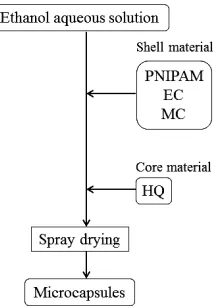
Figure 1 shows the flow chart for preparing the micro-
capsules containing hydroquinone as a water soluble core material with the spray drying method.
First, ethyl cellulose (EC), methyl cellulose (MC) and P-N-isopropylacrylamid (PNIPAM) were dissolved in ethyl alcohol (EA) containing water of 20 wt% and then, hydroquinone (HQ) of a given weight was dissolved to prepare the uniform solution.
This solution was spray dried under the given condi- tions with Spray Drier (Yamato Seisakusho Co. Ltd.).
In this fundamental microencapsulation operation, the concentration and molecular weight of methyl cellulose
Figure 1. Flow chart for preparing microcapsules with spray drying method.
were mainly changed.
Experimental conditions adopted in this study are shown in Table 1.
2.3. Characterization
2.3.1. Content of HQ
The content of HQ in the microcapsule was measured as follows.
Namely, the microcapsules of a given weight were added and mechanically crushed in the water of 10 cm3
to dissolve HQ. The amount of HQ dissolved was ob- tained by the spectrophotometer (Shimazu Co. Ltd.) and then, the concentration of HQ was determined by com- paring the amount of HQ with the calibration curve which was obtained beforehand from the results corre- lating the concentration of hydroquinone with the ab- sorption degree.
2.3.2. Measurement of Released Amount of HQ
The given weight of microcapsules was added in the wa- ter phase of 30 cm3 at 20˚C and 40˚C, respectively. From
this point, the change in the concentration of HQ in the water phase was measured at temperature of 20˚C and 40˚C, respectively.
The concentration of HQ in the water phase was meas- ured as follows.
The water phase of 2 cm3 was sampled out at the finite
time interval and the amount of HQ dissolved was ob- tained by the spectrophotometer (Shimazu Co. Ltd.). The concentration of HQ was determined by comparing the amount of HQ with the calibration curve as stated above.
By using these results, the released rate was defined as the ratio of released amount to the microcapsulated amount of HQ.
2.3.3. Observation of Microcapsules
Table 1. Experimental conditions.
Solvent
80 wt% Ethanol aqueous solution 50 g
Shell material CPN = 0, 2.0 wt% (Solvent × 100)
PNIPAM
EC 2 g
MC CMC = 0.5 - 1.5 wt% (MC/Solvent × 100)
MC species MC25, MC25, MC1500
Core material
HQ 20 wt% (HQ/(HQ + Shell Material) × 100)
Spray drying
Velocity of dried air 0.42 m3/min
Pressure of spray 0.15 MPa
Inlet Temp. 110˚C
Exit Temp. 50˚C
Nozzle diameter 3 mm
observed by scanning electron microscope (JSM-5800, JEOL Ltd.).
2.3.4. Diameter Distribution and Mean Diameter of Microcapsules
Diameter distribution and mean diameter (Sauter diame- ter) were obtained directly from the SEM photographs.
Namely, the diameters of microcapsules of 100 num- ber were directly measured from the SEM photographs and the diameter distributions and mean diameters were obtained from these results.
3. Results and Discussion
3.1. Observation of Microcapsules
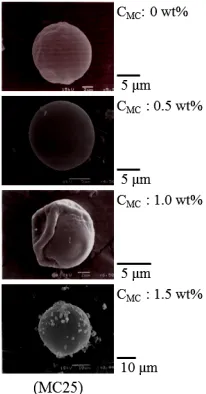
Figure 2 shows the SEM photographs of microcapsules
prepared with the various MC (MC25) concentrations. The microcapsules are spherical and the surfaces of microcapsule are smooth at CMC = 0 and 0.5 wt%. How-
ever, the microcapsules become irregular and the surface becomes slightly rough at CMC = 1.0 and 1.5 wt%. This is
considered due to increase in the degree of shrinkage of polymeric chain with the MC concentration.
3.2. Effect of Temperature
First, in order to investigate the effect of temperature, the released rate was measured by preparing the microcap- sules composed of PNIPAM and EC as the shell materi- als.
[image:3.595.59.286.109.371.2]Figure 2. Observation of microcapsules (SEM photo-graphs).
Figure 3 shows the transient feature of released rate,
in which the transient feature of released rate for the microcapsules prepared with only EC is shown for com- parison. Here, the effect of temperature on the released rate was investigated at 20˚C and 40˚C, because P-N- isopropylacrylamid becomes hydrophilic at 20˚C and hydrophobic at 40˚C.
In the case of microcapsules composed of only EC, the released rate at 40˚C is larger than that at 20˚C. This is considered to be due to increase in the solubility and dif- fusion velocity of HQ in the water phase.
Contrary to this, in the case of microcapsules com- posed of EC and PNIPAM, the released rate at 40˚C is smaller than that at 20˚C.
This result is considered to be due to the following reason.
Namely, as PNIPAM becomes hydrophobic at 40˚C, swelling of microcapsules by absorption of water and diffusion of water through the microcapsule shell have to be repressed as shown by an illustration in Figure 3. As a
result, the release of HQ may be prevented. From these results, it is found that PNIPAM is responsive to tem- perature for release of HQ.
3.3. Effect of Water Due to MC Concentration
Next, in order to investigate the effect of water, the re- leased rate was measured by using the microcapsules prepared with EC, PNIPAM and MC, in which the con- centration of MC (MC25) was changed.
Figure 4 shows the transient features of the released
rate measured by using the microcapsules prepared with the various concentrations of MC and CPN = 2.0 wt%.
Figure 3. Effect of temperature on released rate.
Figure 4. Effects of temperature and water on released rate.
than those at 40˚C. This result may be due to the effect of PNIPAM as shown by an illustration in Figure 4.
At CMC = 1.0 wt%, the released rates at 20˚C and 40˚C
are almost the same each other.
However, at CMC = 1.5 wt%, the released rates at 40˚C
become larger than those at 20˚C.
This result may be considered to be attributable to the fact that responsibility to water due to larger MC exceeds that to temperature due to PNIPAM.
[image:4.595.346.503.96.248.2]Namely, as the concentration of MC increases, swell- ing of microcapsules by absorption of water and dissolu- tion of HQ by water have to be superior to both repres- sion of diffusion of water and non swelling of microcap- sules due to PNIPAM. From these results, it is found that MC is responsive to water.
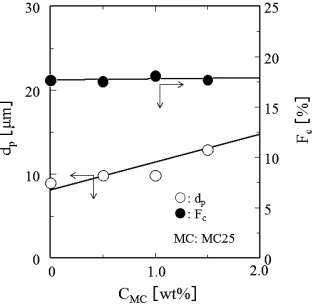
Figure 5 shows the dependences of the mean diame-
ters (dp) of microcapsules and content (FC) of HQ on the
MC concentration, where MC is MC25 and CPN is 2.0
wt%.
Figure 5. Dependences of diameter and content on MC concentration.
The content of HQ is found to be almost constant (18.0 wt%) and the mean diameters increase with the MC con- centration. As the content of HQ on the basis of the feed is 20 wt%, the microencapsulation efficiency of HQ is estimated to be ca. 90%.
The dependence of mean diameter on the MC concen- tration is described as Equation (1).
1.2 MC C
p
d (1)
As the cohesive energy for droplet formation increases with the viscosity of shell solution, the diameter of liquid droplet of shell solution may be increased with the MC concentration. It is natural that the diameters of droplets atomized through the nozzle are strongly depended by the physical properties of liquids such as viscosity, sur- face tension and density.
[image:4.595.80.266.96.287.2]3.4. Effect of MC Species
Figure 6 shows the transient features of released rate for
the microcapsules prepared with the various MC species, where the MC concentration is 1.0 wt% and CMC = 0
means that MC is not added.
From this figure, it is found that the released rate be- comes smaller with the molecular weight of MC.
This result is considered to be attributable to the fact that the microcapsule shell becomes denser with the mo- lecular weigh of MC. As a result, the released rate of HQ is decreased with the molecular weight of MC.
Figure 7 shows the dependences of the mean diame-
ters of microcapsules and content of HQ on the MC spe- cies.
The mean diameters are found to be larger than that at CMC = 0 and almost constant (dp = 18 μm) irrespective
the MC species.
On the other hand, the content of HQ is slightly larger than that at CMC = 0 and almost constant (FC = 18 wt%).
Figure 6. Transient feature of released rate.
Figure 7. Dependences of mean diameter and content on MC species.
able to be stably prepared under the conditions adopted here.
Figure 8 shows the SEM photographs of microcap-
sules prepared with the various MC species.
The Microcapsules becomes more irregular with the molecular weight.
This is considered to be due to increase in the degree of shrinkage of polymeric chain with the molecular weight. As the irregular form results in the larger surface area of microcapsules, the irregular microcapsules may be better than the spherical microcapsules on releasing the core material.
3.5. Effects of MC Concentration and MC Species on Initial Release Velocity
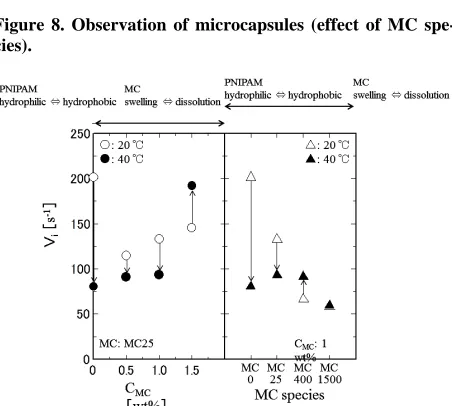
The Figure 9 shows the dependence of the initial release
velocity on the MC concentration and the MC species. Also, responsibility to temperature and water of micro- capsules prepared in this study is able to be summarized as shown in Figure 10.
The effects of MC concentration and MC species and the mechanism of controlled release may be explained according to Figures 9 and 10 as follows.
Figure 8. Observation of microcapsules (effect of MC spe-cies).
Figure 9. Dependence of initial release velocity on MC con-centration and MC species.
Figure 10. Mechanism of controlled release of core material.
Here, the initial release velocities are obtained from the slope of tangent line at t = 0 for the transient feature of released rate as shown in Figures 3, 4 and 8.
[image:5.595.311.537.221.424.2] [image:5.595.309.536.463.661.2]20˚C are larger than those at 40˚C in the range of MC concentration from CMC = 0 to CMC = 1.0 wt% because of
repression of swelling of microcapsules and diffusion of water molecular due to PNIPAM.
However, at CMC = 1.5 wt%, the initial release velocity
at 40˚C is larger than that at 20˚C because of increase in swelling and dissolution of MC as stated above.
On the other hand, the initial release velocities at 20˚C are larger than those at 40˚C in the case of CMC = 0 and
MC25.
However, the initial release velocity at 40˚C is larger than that at 20˚C in the case of MC400 and the initial release velocities at 20˚C and 40˚C are almost the same in the case of MC1500, because the solubility of MC is decreased with molecular weight.
4. Conclusions
The microcapsules containing hydroquinone as the core material, which were composed of ethyl cellulose, methyl cellulose and P-N-isopropylacrylamid as the shell materials, were prepared with the spray drying method. The following results were obtained.
Microcapsules were responsive to temperature due to P-N-isopropylacrylamid and water due to methyl cel- lulose.
The released rate of HQ at 40˚C was smaller than that at 20˚C because of repression of swelling of micro- capsules and diffusion of water molecule due to hy- drophobic P-N-isopropylacrylamid.
At the larger concentration of methyl cellulose, re- sponsibility to water due to methyl cellulose was su- perior to that to temperature due to P-N-isopropy- lacrylamid.
Responsibility to water due to methyl cellulose was decreased with molecular weight of methyl cellulose.
REFERENCES
[1] H. Dou and M. Jiang, “Fabrication, Characterization and Drug Loading of pH-Dependent Multi-Morphological Nanoparticles Based on Cellulose,” Polymer Interna- tional, Vol. 56, No. 10, 2007, pp. 1206-1212.
http://dx.doi.org/10.1002/pi.2259
[2] S. Ekici and D. Saraydin, “Interpenetrating Polymeric Network Hydrogels for Potential Gastrointestinal Drug Release,” Polymer International, Vol. 56, No. 11, 2007, pp. 1371-1377. http://dx.doi.org/10.1002/pi.2271
[3] P. V. Kulkarni, J. Keshavayya and V. H. Kulkarni, “Ef- fect of Method of Preparation and Process Variables on Controlled Release of Insoluble Drug from Chitosan Mi- crospheres,” Polymers for Advanced Technologies, Vol. 18, No. 10, 2007, pp. 814-821.
http://dx.doi.org/10.1002/pat.940
[4] B. L. Guo, J. F. Yuan and Q. Y. Gao, “pH and Ionic Sen-
sitive Chitosan/Carboxymethyl Chitosan IPN Complex Films for the Controlled Release of Coenzyme A,” Col- loid and Polymer Science, Vol. 286, No. 2, 2008, pp. 175-181. http://dx.doi.org/10.1007/s00396-007-1749-y [5] J. T. Zhang, X. L. Liu, A. Fahr and K. D. Jandt, “A New
Strategy to Prepare Temperature-Sensitive Poly(N-iso-
propylacrylamide) Microgels,” Colloid and Polymer Sci- ence, Vol. 286, No. 10, 2008, pp. 1209-1213.
http://dx.doi.org/10.1007/s00396-008-1890-2
[6] G. C. Kim, Y. Y. Li, Y. F. Chu, S. X. Cheng, R. X. Zhuo and X. Z. Zhang, “Nanosized Temperature-Responsive Fe3O4-UA-g-P(UA-co-NIPAAm) Magnetomicelles for Con- trolled Drug Release,” European Polymer Journal, Vol. 44, No. 9, 2008, pp. 2761-2767.
http://dx.doi.org/10.1016/j.eurpolymj.2008.07.015 [7] B. L. Guo, J. F. Yuan and Q. Y. Gao, “Preparation and
Release Behavior of Temperature- and pH-Responsive Chitosan Material,” Polymer International, Vol. 57, No. 3, 2008, pp. 463-468. http://dx.doi.org/10.1002/pi.2350 [8] Y. Zhou, D. Yang, G. Ma, H. Tan, Y. Jin and J. Nie, “A
pH-Sensitive Water-Soluble N-Carboxyethyl Chitosan/ Poly(hydroxyethyl methacrylate) Hydrogel as a Potential Drug Sustained Release Matrix Prepared by Photopoly- merization Technique,” Polymers for Advanced Tech- nologies, Vol. 19, No. 8, 2008, pp. 1133-1141.
http://dx.doi.org/10.1002/pat.1097
[9] H. Feng, Y. Zhao, M. Pelletier, Y. Dan and Y. Zhao, “Synthesis of Photo- and pH-Responsive Composite Nano- particles Using a Two-Step Controlled Radical Polym- erization Method,” Polymer, Vol. 50, No. 15, 2009, pp. 3470-3477. http://dx.doi.org/10.1016/j.polymer.2009.06.017 [10] M. Tanaka, “Key Point of Preparation of Nano/Micro-
capsules,” Techno System Publishing Co. Ltd., Tokyo, 2008.
[11] A. Soottitantawat, F. Bigeard, H. Uoshii, T. Furuta, A. Ohkawara and P. Linko, “Influence of Emulsion and Powder Size on the Stability of Encapsulated D-Limo- nene by Spray Drying,” Innovative Food Science and Emerging Technologies, Vol. 6, No. 1, 2005, pp. 107- 114. http://dx.doi.org/10.1016/j.ifset.2004.09.003
[12] S. Polavarapu, C. M. Oliver, S. Ajlouni and M. A. Au- gustin, “Impact of Extra Virgin Olive Oil and Ethyl- enediaminetetraacetic Acid (EDTA) on the Oxidative Stability of Fish Oil Emulsions and Spray-Dried Micro- capsules Stabilized by Sugar Beet Pectin,” Journal of Ag- ricultural and Food Chemistry, Vol. 60, No. 1, 2012, pp. 444-450. http://dx.doi.org/10.1021/jf2034785
[13] K. Laohasongkram, T. Mahamaktudsanee and S. Chai- wanichsiri, “Microencapsulation of Macadamia Oil by Spray Drying,” Procedia Food Science, Vol. 1, 2011, pp. 1660-1665.
http://dx.doi.org/10.1016/j.profoo.2011.09.245
[14] A. Gharsallaoui, G. Roudaut, L. Beney, O. Chambin, A. Voilley and R. Saurel, “Properties of Spray-Dried Food Flavours Microencapsulated with Two-Layered Mem- branes: Roles of Interfacial Interactions and Water,” Food Chemistry, Vol. 132, No. 4, 2012, pp. 1713-1720.