Citation:
Fish, M and Milligan, J and Killey, J (2014) Is it possible to establish reference values for ankle muscle isokinetic strength? A meta-analytical study. Isokinetics and Exercise Science, 22 (2). ISSN 0959-3020 DOI: https://doi.org/10.3233/IES-140532
Link to Leeds Beckett Repository record: http://eprints.leedsbeckett.ac.uk/225/
Document Version: Article
The aim of the Leeds Beckett Repository is to provide open access to our research, as required by funder policies and permitted by publishers and copyright law.
The Leeds Beckett repository holds a wide range of publications, each of which has been checked for copyright and the relevant embargo period has been applied by the Research Services team.
We operate on a standard take-down policy. If you are the author or publisher of an output and you would like it removed from the repository, please contact us and we will investigate on a case-by-case basis.
1
Is it possible to establish reference values for ankle muscle
isokinetic strength? A meta-analytical study.
Michael Fish. B.Sc M.Sc FHEA (corresponding author)
Human and Health Sciences, University of Huddersfield, Queensgate, Huddersfield,
HD1 3DH. [email protected]. 01484 471362
Dr James Milligan BSc MSc PhD FHEA MCSP
Faculty of Health and Social Sciences, Leeds Metropolitan University, Calverley Street,
Leeds, LS1 3HE
Dr Jenny Killey BSc MA PhD FHEA
Human and Health Sciences, University of Huddersfield, Queensgate, Huddersfield,
HD1 3DH.
Abstract
BACKGROUND:
The importance of measuring ankle muscle strength (AMS) has
been demonstrated in a variety of clinical areas. Much data has been accumulated using
the Cybex Norm isokinetic dynamometer but a uniform framework does not exist.
OBJECTIVE:
To identify pertinent studies which have used the Cybex Norm to
measure AMS in order to establish reference values.
METHODS:
A narrative review of the literature was used to identify papers that have
2
RESULTS:
Fifty five research papers were identified but each study used a different
isokinetic protocol.
CONCLUSIONS:
It is not possible to produce AMS reference values due to the wide
variation in data collection methods. This is therefore an area of research that needs
further exploration.
1. Introduction
The importance of measuring muscle strength across the ankle has been demonstrated in
a variety of research and clinical areas. These include investigations indicating
relationships between AMS and both ankle stability [1] and with falling episodes and
functional movement in the elderly [2, 3]. Measurement of AMS has been established as
a performance indicator and a predictor of injury in athletic populations [4, 5] as well as
an indicator of the effectiveness of rehabilitation [6] and intervention strategies [7].
Reference values for AMS (sometimes also referred to as normal or normative values)
represent a normal range of strength and are commonly used as a frame of reference in
scientific literature. Reference values have been produced using various isokinetic
dynamometers [8-10]. Harbo et al., [10] used the Biodex System 3 to produce reference
values for the shoulder, elbow, wrist, hip, knee and ankle. These values have
subsequently been used in several studies. Examples are a baseline for assessing the
severity of muscle function impairment in chronic hemiparetic stroke patients [11] and a
comparison to joint torque in patients with a reverse shoulder prosthesis [12]. However,
the reference values produced by Harbo et al., [10] are only relevant to studies which
have used the Biodex System 3 to measure muscle torque. They cannot be applied to
studies using other dynamometers such as the Cybex Norm as the reference values
3
Isokinetic dynamometry using the Cybex Norm is a safe, reliable and popular way to
AMS [15-17]. It has been used in a variety of studies for example as an indicator of the
effectiveness of rehabilitation [6] and intervention strategies [7]. Sekir et al [6] used the
Cybex Norm in an experimental test re-test design study to examine the effect of a six
week exercise intervention programme in twenty four recreational athletes using the
contralateral ankle as a control measure. They found that the intervention did improve
strength but also stated that there was no significant difference in strength between
injured and uninjured ankles in three of the four ankle strength tests performed. It could
be argued that there was no difference in the three strength measurements as both ankles
were weaker than average thus susceptible to ankle injury. It may be equally likely that
the uninvolved ankle could be injured in the future, however, the availability of
reference values could to a certain extent highlight muscle weakness and as such
become a factor in predicting injury. In the absence of reference values for AMS using
the Cybex Norm Li et al [7] used a controlled test re-test experimental design for the
measurement of AMS in forty individuals. They found a sixteen week Tai Chi
intervention programme did not significantly improve plantar flexion or dorsiflexion
strength as measured using the this system. Li et al [7] observed that the participants
could not effectively manage ankle joint movement throughout the study and suggested
this was a reason for the lack of improvement in ankle strength. Without relevant
reference values it is not clear if the participants had an ankle strength deficiency to start
with leading to this inability to manage the movement.
However, in spite of the relatively large number of studies making use of the Cybex
Norm for assessing AMS, a brief review of the literature has revealed that no such
reference values existed. Thus an in depth narrative review was necessary to determine
4
2. Method
2.1 Eligibility criteria
The objective of the narrative review was to identify those studies which have measured
AMS in terms of peak torque (PT) using the Cybex Norm. Paper inclusion criteria
consisted of a defined dynamometer (Cybex Norm) for the assessment of strength using
concentric or eccentric active isokinetic plantar flexion, dorsiflexion, inversion or
eversion. The search was not restricted to one experimental type as the outcome
measures listed above could come from multiple experimental designs.
2.2 Scope of the search
In order to access the maximum number of papers six electronic databases were
searched and three academic search engines used. Four of these six databases could be
searched through the National Library for Health website [18] thus allowing the
automatic elimination of duplicate results from these databases. These were MEDLINE,
EMBASE (Excerpta Medical Database), CINAHL (Cumulative Index of National
Allied Health Literature) and AMED (Allied and Complimentary Medicine). The span
of the search was January 1995 (when the Cybex Norm Isokinetic Dynamometer was
first introduced) to March 2013. The remaining two of the six databases, namely the
Science Direct database [19] and Pubmed [20] were searched outside of the National
Library for Health website. Three academic search engines were also used; Summon
[21], a search engine used in some higher education institutions which provides access
to scholarly material; The Web of Science [22] and Google Scholar. Manual removal of
duplicate results was necessary from these five resources.
5
To identify studies likely to meet the eligibility criteria the terms ‘Cybex’, ‘norm’,
‘isokinetic’ and ‘ankle’ were used to search the databases and in the search engines.
There are a number of different isokinetic dynamometers such as Kin-Com, Biodex and
Lido so the term ‘Cybex’ was used to limit the search to the relevant machine. There is
a large amount of physiological testing equipment under the Cybex brand and a number
of older versions of the isokinetic dynamometer [23]. To isolate the specific piece of
equipment the term ‘norm’ was also used. The National Library for Health website [18]
and Google Scholar allows quotation marks to enable searching for exact phrases.
“Cybex Norm” was used to determine only papers which contain this phrase. As well,
to discount unrelated research concerning the shoulder, elbow, wrist, hip and knee as
well as isometric and isotonic tests the Boolean phrase AND was used to include the
search terms ‘ankle’ and ‘isokinetic’.
3. Analysis
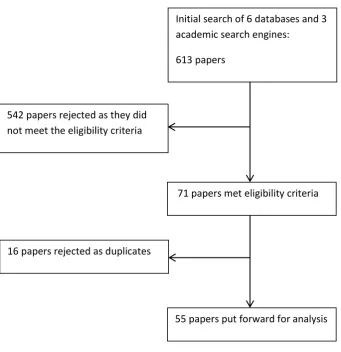
Figure 1 shows the number of papers identified at each stage of the search process. The
initial search produced 613 papers which matched the search terms. The title and
abstract of each of these papers was analysed and if eligibility could not be determined
the whole paper was read. 542 papers were rejected as the eligibility criteria were not
met. Any duplicate papers were removed which left 55 papers that met the eligibility
criteria.
Of the 55 papers found in this search there was no single paper which set out to produce
reference values for AMS using this dynamometer. However, many of the papers have
compared their findings to measurements derived from a control group. A control group
may provide a basis for comparison but the collected data cannot be considered
6
specific sample demographics. On the other hand, however, it may be theoretically
possible to combine the results of control groups from separate studies in a
meta-analysis to produce valid reference values which could be used in a general clinical
setting [24], subject to very strict factors including gender, age, activity level and test
protocol . Table 1 lists the papers in terms of the experimental and control groups that
have been used. Reference values for a healthy population by their definition should be
produced by a healthy population, however, analysis of the data presented in table 1
shows two of the papers have not tested a healthy population or used one as a control
meaning only 53 of the papers are potentially eligible to contribute to a meta-analysis.
Additionally, it has been demonstrated that age and gender affect the amount of torque
produced [8, 10] and as such any reference value produced would have to be specific to
age and gender. This means that the populations described in table 1 would have to be
matched for age and gender before a meta-analysis can be performed.
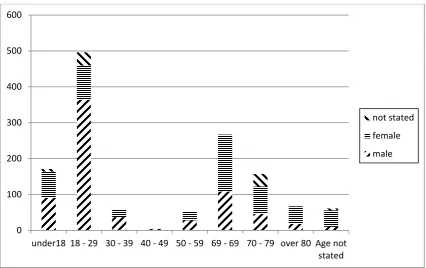
The graph in figure 2 shows the breakdown of populations described in table 1 in terms
of age and gender. For reference values to have sufficient external validity a large
amount of data should be considered. Significant numbers were only tested in the 18 –
29 years and 60 – 69 years age ranges and as such reference values could only
potentially be produced for these groups.
The papers within these age and gender specific groups were analysed and differences
in the data collection methods were found. Examination of all 55 papers produced 7
common methodological variables, these are: the position of the body on the Cybex
Norm; degree of knee flexion; use of a warm up; speed of contraction and contraction
type; the number of sets and reps used; whether the dominant or non-dominant foot was
used; use of verbal or visual encouragement. Details of these variables are given in table
7
combine the data in a meta-analysis. The effects of altering these seven variables are
discussed here.
3.1 Position
Seymour and Bacharach [25] showed that when using a Cybex II+ to measure ankle
plantar flexion, altering from a supine to a prone position significantly reduced the
amount of torque produced at 0° per second and 30° per second. As they used the Cybex
II+ and not the Cybex Norm it is difficult to draw an exact comparison. However due to
the lack of empirical evidence using the latter, it is necessary to infer the effect of an
alteration in body position from a closely related protocol.
3.2 The degree of knee flexion.
Extension of the knee stretches the plantar flexors thus reducing range of movement as
the dorsiflexion displacement angle is reduced [26]. Plantar flexion PT occurs at near
full dorsiflexion [27] so fully extending the knee may prevent development of PT
during a concentric contraction. However, during an eccentric contraction the increased
tension in the plantar flexors as a result of extending the knee produces higher PT
compared to a flexed knee [28]. As such angle of knee extension should be considered
when producing a reference value.
3.3 Warm up.
One or combinations of three types of warm up were used in the papers described in
table 2; these were cardiovascular, stretching and familiarisation. The rationale for a
cardiovascular warm up is exercise would increase the muscle temperature and so
improve the neuromuscular function [29]. However, in an experiment to determine the
8
Hennig [30] demonstrated that a 10 minute warm up on a treadmill did not affect torque
production of the plantar flexors in fifty healthy males. A review on stretching and its
effect on performance by McHugh and Cosgrave [31] stated there is an acute loss of
strength after relaxed muscle has been stretched. This conclusion supports the ankle
specific research by Rosenbaum and Hennig [30] and Fowles and Sale [32] both of
whom demonstrated that static stretching prior to testing significantly reduced plantar
flexion PT production. From this it can be concluded that any papers to be included in a
meta-analysis should have a standardised warm-up and familiarisation procedure.
3.4 The speed and type of contraction.
Decreases in PT associated with increased angular velocity are well established [33].
Equally, an eccentric contraction produces greater torque than a concentric contraction
[6, 34]. Hence, if results are to be combined in a meta-analysis, both the speed any type
of contraction should be constant.
3.5 The number of sets and repetitions used.
If participants were given just one attempt at achieving PT it is unlikely the results
would be reliable as without practice the movement can be unfamiliar. Equally fatigue
has been shown to alter muscle strength [35] so multiple attempts at achieving PT at one
speed or movement type could reduce the accuracy of subsequent tests. Van Cingel et al
[15] compared reproducibility of inversion eversion strength between one set of three
reps and three sets of three reps and found that the standard error of measurement and
intraclass correlation coefficient between the two was noticeably different. As such,
papers included in a meta-analysis should use the same number of sets and reps, and
9
3.6 Effect of foot dominance.
There is conflicting evidence regarding the effect of limb dominance on the level of
plantar-dorsiflexion PT produced at the ankle. Some evidence suggests that there is no
difference due to dominance in terms of the above [36-39]. Özçaldiran and Durmaz [40]
did show a significant difference between left and right dorsiflexion at 30°/s in runners.
However, no such difference was found in plantar flexion at 30°/s or in plantar flexion
or dorsiflexion at 120°/s in runners, or in any ankle movement or speed in swimmers.
Theoharopoulos and Tsitskaris [41] found a significant difference between dominant
and non-dominant plantar flexion PT at 60°/s in basketball players. Both Özçaldiran and
Durmaz [40] and Theoharopoulos and Tsitskaris [41] found, in instances where there
was significant difference between left and right, that the non-dominant side was
significantly stronger. Lin et al [42] concluded there were no differences in inversion /
eversion PT between dominant and non-dominant ankles when testing concentric
strength at 30° and 120°/s using a Biodex 3 dynamometer. Konradsen et al [37]
demonstrated no difference in isometric eversion strength between left and right ankles
six weeks post unilateral ankle injury. They assumed that the PT in the contralateral
ankle was the same as the involved ankle pre injury based on unpublished data cited in
the paper.
3.7 Encouragement or feedback
Campenella et al [43] showed that visual feedback or a combination of visual and verbal
feedback increased the amount of PT produced in the hamstrings, however verbal
feedback alone did not. Jung and Hallbeck [44] found similar results in terms of visual
feedback when investigating handgrip strength but found that verbal encouragement did
10
and AMS has not been studied, these conclusions suggest that standardising verbal
feedback could be problematic as participants may respond differently verbal
encouragement.
Thus alteration of any of the variables describes above would alter the PT produced. As
such the lack of standardisation in the papers which have used the Cybex Norm to
measure ankle muscle strength means it is not possible to combine the results and
produce reference values by meta-analysis.
4. Conclusion
To date no paper has published reference values for AMS using the Cybex Norm. The
differences in the variables presented in the references rendered a unified picture not
possible. As such reference values for AMS using this dynamometer cannot be
determined from the current literature. The apparent non-standardisation of data
collection methods for AMS seen across these papers suggests the need for a consensus
method. Once a consensus method is produced reference values can be determined for
11
Reference Experimental population Control Population
Buckley et al [45] 10 males 5 females aged 75±3 years
10 males 7 females aged 25±4years
N/A – older vs younger population
Alfieri et al [46] 1 male, 22 females aged 70.18±4.8 years
N/A – strength training vs multisensory training experiment.
Fong and Tsang [47] 13 males, 7 females aged 15±1.2 years
N/A – correlation study between hours of taekwondo training and muscle strength Noguchi et al [48] 10 males football players
aged 20±0.8 years
10 males athletes aged 21.1±0.57 years Strejcova et al [49] 8 males 1 female aged
25.0±0.9 years (slackline walkers)
8 males 1 female aged 22.9±0.8 years (non-slackline walkers)
Tan et al [50] 13 male and 12 female Diabetes patients aged 65.9±4.2 years
No healthy control
Wang [51] “elite skaters” no other detail given
Zhang and Xia [52] 6 males aged 25.8±3.87 years
12 males aged 22.3±2.56 years
N/A – comparison of national and international skaters
Patterson & Ferguson [53] 8 females aged 23±3 years 8 females aged 22±3 years
N/A – training method comparison between blood restriction and no restriction and 25%1RM and 50%1RM reps
Gopalakrishnan et al [54] 4 males aged 49.5±4.7 years N/A – strength measured pre and post space flight
Reeves, et al [55] 5 males 10 females aged 74.8±2.8 years
10 males 7 females aged 24.6±4.1 years
Li, Xu, & Hong [7] 13 males 12 females 64.9±3.2 years (healthy performed Tai Chi)
12 males 13 females 65.6±3.5 years (healthy did not perform Tai Chi)
Koutsioras et al [56] 7 males aged 16.3±1.2 years 7 females aged 16.1±1.2
N/A – examination of muscle strength and long jump performance
Eyigor et al. [57] 8 males 25 females aged 55.79±12.4 years with Rheumatoid arthritis
7 males 26 females aged 60.27±10.7
Reeves et al [58] 15 “older adults” aged 74±2.8 years
17 “young adults” aged 24.6±4.1 years gender not stated
N/A – comparison of older and younger biomechanics of stair descent
Özçaldiran & Durmaz [40] 14 males median age 18(6) (elite swimmers)
8 males median age 20(5) (elite runners)
N/A comparison between swimmers and runners.
Thom et al [59] 9 males aged 74.7±4.0 years 15 males aged 25.3±4.5
12 years
Muller et al [60] 10 males, 33 females aged 86.0±5 years. Hospitalised patients
6 males, 22 females aged 75.4±6.2 years
Eyigor et al. [61] 20 participants aged 70.3±6.5 years gender not stated
N/A - test retest design
Dehail et al. [3] 6 males aged 75.6±5.4 years, 18 females aged 73.2±6.7 years
N/A analysis of strength and sit to walk movement
Xu et al [62] 13 males, 8 females aged 66.2±5.1 years (Tai Chi practitioners) 11 males, 7 females aged 65.2±3.0 years (joggers)
12 males, 10 females aged 64.9±3.2 years
Neto et al [63] 8 males between 20 and 23 years
N/A – test retest design
Mahieu et al [64] 69 males aged 18.41±1.29 years
N/A – cohort study examining risk factors for Achilles over use injury
Greene et al [65] 20 females aged 15.9±1.6 years (middle distance runners) 20 males aged 16.8±00.6 years (middle distance runners
20 females aged 16±1.8 years, 20 males aged 16.4±0.7 years
Gerodimos et al [66] 30 males in each group: aged 12.3±0.1 years Aged 13.4±0.2 years Aged 14.5±0.3 years Aged 15.2±0.1 years Aged 16.5±0.3 years Aged 17.4±0.2 years
N/A – analysis of strength in basketball players
Ferri, et al [67] 9 males aged 71.8±4.3 years N/A – test retest design Greene et al.[68] 20 females aged 16±1.7
years (middle distance runners)
20 females aged 16±1.8 years
McCarthy, et al [69] 47 females aged 64.51±3.08 years
N/A – comparison of sit to stand movement and hip, knee and ankle strength
Demonty et al [70] 10 males mean age 52.8 with occlusive arterial disease
10 males mean age 53.9 years
Reeves and Narici [71] 4 males, 4 females aged 25.1±2.6 years
N/A – examination of muscle fascicles during dynamic movement
Ferri et al [72] 16 males aged 67.9±0.9 years
N/A – test retest protocol
Tsiokanos, et al [4] 29 males aged 22.1±2.2 years
N/A – comparison of leg strength and jumping performance
Schulze et al [33] 8 males 27.1±3.0, 8 males 29.5±2.9 years (underwent unilateral lower limb
13 suspension for 21 days)
Bourdel-Marchasson et al [73] 4 males, 7 females aged 87.1±5.7 years
(malnourished)
4 males, 9 females aged 83.4±6.1 years
Ademoglu et al. [74] 3 males, 1 female between 24 and 47 years (average 35) (wound complications after Achilles tendon rupture)
Contralateral ankle
Mouraux et al [75] 4 males, 6 females aged 24.7±3.2 years
N/A – test retest design
Guo and Song [76] 10 males aged 22.4±2.6 years (elite speed skaters)
14 males aged 19.4±0.8 years
Behrens et al [77] 7 short track speed skaters aged 17.1±1.3 years (gender not stated)
N/A – test retest design
Collado et al [78] 6 males, 3 females aged 25.1±2.57 (eccentric
training); 4 males, 5 females aged 23.3±2.8 (concentric training)
2 males, 8 females aged 24.4±3.06
Latour et al [79] 10 males, age not stated (training on sand)
10 males, aged not stated
Urguden et al [80] 15 males, 5 females aged 20.6 years (range 16 – 32 years) with chronic ankle instability
‘20 patients with same demographic characteristics’
van Cingel et al [15] 15 males aged 34.2±9.32 years; 15 females aged 28.6±8.64 years
N/A – reproducibility study
Sekir et al. [34] 24 males aged 21.1±1.8 with functional ankle instability
N/A – reliability study
Sekir et al. [6] 24 males aged 21±2 years with unilateral functional ankle instability
Contralateral ankle
Høiness et al [81] 9 males aged 26.2±4.4 years (using normal bike pedal); 10 males aged 24.5±3.9 years (using bi-directional bike pedal)
Contralateral ankle
Yildiz et al [82] 8 males aged 26.2±2 years with chronic ankle
instability
9 males aged 25±2 years
Sanioglu et al. [83] 9 males, 7 females aged 24.3 ±4.12 years
Strength with ankle taped vs not taped
Visamara et al. [84] 11 adults aged 33±4.3 years with Prader-Willi Syndrome
20 healthy adults aged 28±7.8 years
Giagazoglou et al [85] 10 blind females aged 33.5±7.9 years
10 healthy females aged 33.5±8.3 years
Taskiran et al[86] 2 males, 11 females aged 34.3±9.2 years
N/A test – retest reliability study
Geremia et al [87] 5 individuals (no population data given)
14 Tallent et al [88] 10 resistance trained males
aged 22±2 years
9 untrained males aged 26±3 years
Frasson et al [89] 36 females, age not stated Ballet dancers versus volleyball players Wilcox et al [90] 8 males, 12 females mean
age 61 range 28 - 80
Contralateral ankle control
Sammarco et al [91] 16 males mean age 53.4 range 18-74 and 24 female mean age 55 range 15-74
[image:15.595.73.518.72.191.2]Contralateral ankle control
15
Reference Prone/Supine/ weight bearing
Degree of Knee Flexion
Warm up Speed / contraction type, in °/s
Sets and Repetitions Dominant or non-dominant foot Encouragement given
Buckley et al [45]
Not stated Not stated Not stated 60, 120, 180, 240 eccentric PF
3reps at each speed
Not stated Not stated
Alfieri et al [46] Supine 80° 3 reps at free angular speed
30 PF DF INV EVE
5 reps Not stated Verbal
encouragement given
Fong and Tsang [47]
Prone 0° 3 trials 60, 240
PF DF concentric
3 trials, 10 seconds between trials (reps per trial not stated)
Dominant (self reported)
Not stated
Noguchi et al [48]
Not stated Not stated 1 ‘practice run’ 30 ‘2 tests in
between I minute intervals’
Not stated Not stated
Strejcova et al [49]
Supine 90° Not stated 30, 120 PF DF 5 reps 30°,15 reps 120°
dominant Not stated
Tan et al [50] Supine Not stated ‘familiarisation and a warm up’ no detail given
30, 60 PF DF 2sets of 3 reps 1 minute rest between
dominant Not stated
Wang [51] Not stated Not stated Not stated 60, 120, 180, 240, 300, 360, 420, 480 concentric; 60,
8 reps at each concentric speed and 5 reps at each eccentric
16 120, 180, 240,
300 eccentric
speed
Zhang and Xia [52]
Not stated Not stated 10 mins ‘warm up’ and 3 reps at 60° per sec
60, 120, 180, 240, 300, 360, 420, 480 concentric
3 reps at each speed, 20secs between reps
both Not stated
Patterson & Ferguson [53]
Prone 0° 5 contractions at
each speed
30, 60, 120 PF concentric
3 reps at each speed. 1 minute between reps
both Verbal
encouragement given
Gopalakrishnan et al [54]
Prone 0° 5mins bike
25-50W 60-80rpm. 5 sub max reps, 2-3 max reps 2mins rest
30 PF DF concentric eccentric
5 reps ecc
5 reps con
right Not stated
Reeves, et al [55] Prone 0° Not stated 60, 120, 180, 240 concentric PF
Not stated left Not stated
Li, Xu, & Hong [7]
Not stated Not stated Not stated 30 PF DF concentric.
3 reps no info on rest
dominant Not stated
Koutsioras et al [56]
Prone 0° 3 sub max reps 60, 120
concentric and eccentric PF
3 max reps at each speed for each movement
17 Eyigor et al. [57] Supine 90° 10 min walk 2
sub max reps 180° per sec
60, 120, 180 PF DF
6 reps at each speed 20s between speeds
Not stated Verbal
encouragement given
Reeves et al [58] Prone 0° Not stated 60, 120, 180, 240 eccentric PF
3 reps at each speed 2-3 minute rest between
left Not stated
Özçaldiran & Durmaz [40]
Supine 0° 5 min warm up
plus 4 sub max reps
30, 120 PF DF 5 reps at 30° per sec 15 reps at 120° per sec with 30 sec rest between sets
Both Verbal
encouragement given
Thom et al [59] Prone 0° Familiarisation session and 5 isometric MVCs
50, 100, 150, 200, 250 Concentric PF
4 reps at each speed, 1 min between reps, 5mins between speeds.
left Verbal
encouragement given
Muller et al [60] Supine 30° 5 sub max reps 30, 60 PF concentric
2 sets 5 reps 30°sec
1 set 5 reps 60° per sec
right Not stated
Eyigor et al. [61] Supine 90° 10 min walk then 2 sub max PF/DF reps at 180° per sec
60, 120, 180 PF DF
6 reps at each speed. 20s between reps
both Verbal
18 Dehail et al. [3] Supine 0° 3 training reps
before each set
30, 60
Concentric PF
2 x 5 reps at 30°per sec
1 x 5reps at 60°per sec
2mins between sets
dominant Verbal
encouragement given
Xu et al [62] Supine Not stated 5mins bike 50-60w 3 submax reps
30 concentric PF DF
3 reps dominant Not stated
Neto et al [63] Not stated Not stated Not stated 30, 60, 120, Concentric 60, eccentric PF
3 reps of each apart from 5 reps of 120°
All subjects were right leg
dominant, not clear which leg was tested.
Not stated
Mahieu et al [64] Supine 0° 10 sub-max reps at 90° per sec
30, 120
Concentric PF DF
3 reps at 30° per sec and 5 reps at 120° per sec. 1 minute rest between tests
both Verbal
encouragement given
Greene et al [65] ‘Standard positioning used’
Not stated Not stated 60 PF DF 5 reps dominant Not stated
Gerodimos et al [66]
Supine 0° 15 minutes
cycling and stretching 3
30, 90 Concentric
5 reps of each movement at each speed. 5
1 randomly determined leg
19 submax reps and
1 max rep at 30° and 90° per sec
eccentric PF DF min rest between speed
feedback
Ferri, et al [67] Prone 0° ‘several’ warm up contractions
60, 120 concentric 60 eccentric PF DF
3 reps at each speed, 1 min between reps
Left (non dominant in all subjects)
Verbal
encouragement given
Greene et al [68] ‘Standard positioning used’
Not stated 60 PF DF 5 reps dominant Not stated
McCarthy et al [69]
Not stated Not stated 3 submax reps at 60° per sec
60 PF DF 5 reps right PF DF, 5mins rest, 5 reps left PF DF
both Not stated
Demonty et al [70]
Supine ‘straight’ 10 mins bike 40w 60rpm 3 submax reps
120, 30
concentric PF DF
5 reps 120° 3 reps 30° 30s rest between sets
both Not stated
Reeves and Narici [71]
Supine 90° Warm up not
stated
50, 100, 150, 200, 250, concentric eccentric DF
5 reps each movement each speed 180s rest between contraction sets
right Not stated
Ferri et al [72] Prone 180° Several sub max reps
30, 60, 90, 120, PF
3 reps at each speed
dominant Verbal
encouragement given
Tsiokanos, et al Prone 0° 3 submax reps at 60, 120, 180 3 reps at each speed, 30s
20
[4] each speed Concentric PF between reps, 5
mins between speeds
Schulze et al [33] Supine 160° 4 sub max contractions at 50% peak torque at each speed
30, 60, 120, 180, 240, 300
concentric eccentric PF
4 maximal contractions at each speed 90s rest between speeds.
left Not stated
Bourdel-Marchasson et al [73]
Supine 0° 3 training
exercises (reps) for each set
30, 60 PF 2 sets 5 reps at 30° per sec, 1 set of 5 reps at 60° per sec
Right (or the healthy side)
Not stated
Ademoglu et al. [74]
Supine 10° 2 submax and 1
max rep
30, 120 PF DF 3 reps, 30 seconds between speeds
Both Not stated
Mouraux et al [75]
Supine 90° 10 minutes bike
and
familiarisation with the equipment
30, 60, 90 PF Concentric eccentric
3 max reps at each speed. 90 seconds between speeds.
Both pre and post training
Not stated
Guo and Song [76]
Not stated Not stated 10 mins preparatory activities and 2 sets 3 reps at 60°
60, 120, 180, 240, 300 PF concentric
3 reps at each speed 20 seconds between each rep
21 per sec
Behrens et al [77]
Supine Between 100° - 110°
10 mins bike at 100W 5 submax concentric reps at 240° per sec
240 inv eve Concentric
3 max reps right No visual feedback, verbal encouragement was given
Collado et al [78] Supine 90° 3 practice trials 30 concentric eccentric
3 reps Both (one had suffered lateral ankle sprain)
Not stated
Latour et al [79] Supine (based on photo, not stated in text)
Bent (based on photo, not stated in text)
Not stated 30, 120, inv eve concentric eccentric
Not stated Not stated Not stated
Urguden et al [80]
Supine 80 – 110° Not stated although proprioception test performed on the Cybex prior to isokinetic tests
60, 150 inv eve 5 reps 60° sec. 10 reps 150° sec
Both (1 injured 1 uninjured)
Not stated
van Cingel et al [15]
Supine 10° 5min bike 75w
70 – 80rpm, 3 submax inv eve 2 max inv eve
30, 120 inv eve 3 sets of 3 reps at each speed
both No visual
feedback or verbal
encouragement given
Sekir et al. [34] Supine 80° - 110° 10minute ‘general ROM
120 inv eve concentric
5 maximal contractions
14 dominant 10 non dominant
Verbal
22 and stretching’ 3
submax contractions
eccentric 2mins between inv and eve tests
(only injured ankle tested)
given
Sekir et al. [6] Supine 80° - 110° 10minute ‘general ROM and stretching’ 3 submax
contractions
120 inv eve Concentric eccentric
5 maximal contractions 2mins between inv and eve tests
14 dominant 10 non dominant injured both tested Verbal encouragement given
Høiness et al [81]
Supine 80° - 110° No warm up 60, 180 eve 5 reps 15min rest 5 reps (to ensure reliability)
Both (1 injured 1 uninjured)
Verbal
encouragement given
Sanioglu et al. [83]
Supine Not stated 5mins cycling, 6-10 submax PF DF contractions, 2-3 max PF DF contractions then 2mins rest
60, 180 PF DF Concentric
5reps at 60° per sec 15 reps at 180° per sec
both Not stated
Visamara et al. [84]
Prone 180° Not stated 60, 120 PF DF 5 reps at each speed, 1min rest between reps
both Not stated
Giagazoglou et al [85]
Supine ‘fully extended’ 3 submax contractions
30, 60, 120 PF DF concentric eccentric
3 reps of each movement at each speed with 2mins between
23
each rep given
Taskiran et al[86]
Prone ‘full extension’ 4 submax reps 30, 120 PF DF concentric
5 reps at 30° per sec 10mins rest 20 reps at 120°per sec
dominant Not stated
Geremia et al [87]
Not stated Not stated Not stated 60, 120, 180, 240, 300 PF DF concentric
3 reps per speed, 90sec rest between speeds Both (non-dominant was sprained) Not stated
Tallent et al [88] Supine 120° Not stated 15 DF
concentric and eccentric
3 reps dominant Not stated
Frasson et al [89] prone 180° A ‘series’ of submax contractions at different speeds
60, 120, 180, 240, 300, 360, 420 PF DF concentric
3 reps at each speed, 2mins rest between reps
right Not stated
Wilcox et al [90] Prone Knee fully extended
3 trial reps at each speed
30, 120 PF DF concentric inferred but not stated
5 reps at 30° per sec, 10 reps at 120° per sec
Both Not stated
Sammarco et al [91]
Supine Knee ‘flexed’ Not stated ‘standardised protocol’
5 reps Both Not stated
Yildiz et al [82] Supine 80° - 110° 10 minute warm up – general rom and stretching. 3
120 concentric inv, eccentric eve
5 reps inv, 2mins rest, 5 reps eve
Not stated Verbal
24
Table 2 Details of the methodological variables found in papers using the Cybex Norm to measure isokinetic AMS. PF = plantar flexion; DF =
dorsiflexion; Inv = inversion; Eve = eversion
25
Figure 1 A chart showing the results at each stage of the search process.
Initial search of 6 databases and 3 academic search engines:
613 papers
71 papers met eligibility criteria 542 papers rejected as they did
not meet the eligibility criteria
16 papers rejected as duplicates
26
Figure 2. A graph showing the breakdown of the numbers of males and females tested
in different age groups
0 100 200 300 400 500 600
under18 18 - 29 30 - 39 40 - 49 50 - 59 69 - 69 70 - 79 over 80 Age not stated
not stated
female
27
References
1. Fox J, Docherty CL, Schrader J, Applegate T. Eccentric Plantar-Flexor Torque Deficits in Participants With Functional Ankle Instability. Journal of Athletic Training. 2008;43(1):51-4. 2. Rubenstein LZ, Josephson KR. Falls and their prevention in elderly people: what does the evidence show? Medical Clinics of North America. 2006;90(5):807-24.
3. Dehail P, Petit J, Bourdel-Marchasson I, Bestaven E, Robert B, Muller F, et al. Kinematic and electromyographic analysis of rising from a chair during a "Sit-to-Walk" task in elderly subjects: Role of strength. Clinical Biomechanics. 2007;22(10):1096-103.
4. Tsiokanos A, Jamurtas A, Kellis S, Kellis E. The relationship between jumping performance and isokinetic strength of hip and knee extensors and ankle plantar flexors. ISOKINETICS AND EXERCISE SCIENCE. 2002;10(2):107-15.
5. Witchalls J, Blanch P, Waddington G, Adams R. Intrinsic functional deficits associated with increased risk of ankle injuries: a systematic review with meta-analysis. British Journal of Sports Medicine. 2011 December 14, 2011.
6. Sekir U, Yildiz Y, Hazneci B, Ors F, Aydin T. Effect of isokinetic training on strength, functionality and proprioception in athletes with functional ankle instability. Knee Surgery, Sports Traumatology, Arthroscopy. 2007;15(5):654-64.
7. Li JX, Xu DQ, Hong Y. Changes in muscle strength, endurance, and reaction of the lower extremities with Tai Chi intervention. JOURNAL OF BIOMECHANICS. 2009;42(8):967-71.
8. Danneskiold-Samsøe B, Bartels EM, Bülow PM, Lund H, Stockmarr A, Holm CC, et al. Isokinetic and isometric muscle strength in a healthy population with special reference to age and gender. Acta Physiologica. 2009;197(s673):1-68.
9. Lategan L. Isokinetic norms for ankle, knee, shoulder and forearm muscles in young South African men. ISOKINETICS AND EXERCISE SCIENCE. 2011;19(1):23-32.
10. Harbo T, Brincks J, Andersen H. Maximal isokinetic and isometric muscle strength of major muscle groups related to age, body mass, height, and sex in 178 healthy subjects. European Journal of Applied Physiology. 2011:1-9.
11. Severinsen K, Jakobsen JK, Overgaard K, Andersen H. Normalized Muscle Strength, Aerobic Capacity, and Walking Performance in Chronic Stroke: A Population-Based Study on the Potential for Endurance and Resistance Training. Archives of Physical Medicine and Rehabilitation. 2011;92(10):1663-8.
12. Alta TDW, Veeger HEJ, Janssen TWJ, Willems WJ. Are Shoulders with A Reverse Shoulder Prosthesis Strong Enough? A Pilot Study. Clinical Orthopaedics and Related Research®. 2012:1-8.
13. English KL, Hackney KJ, Redd E, De Witt JK, Ploutz-Snyder R, Ploutz-Snyder L. A Ground-based Comparison of the Muscle Atrophy Research and Exercise System (MARES) and a Standard Isokinetic Dynamometer. 2011.
14. Bardis C, Kalamara E, Loucaides G, Michaelides M, Tsaklis P. Intramachine and intermachine reproducibility of concentric performance: A study of the Con-Trex MJ and the Cybex Norm dynamometers. ISOKINETICS AND EXERCISE SCIENCE. 2004;12(2):91-7.
15. van Cingel R, van Melick N, van Doren L, Aufdemkampe G. Intra-examiner reproducibility of ankle inversion-eversion isokinetic strength in healthy subjects. ISOKINETICS AND EXERCISE SCIENCE. 2009;17(3):181-8.
16. Laughlin MS, Lee SMC, Loehr JA, Amonette WE. Isokinetic Strength and Endurance Tests Used Pre-and Post-Spaceflight: Test-Retest Reliability. NASA Technical Memorandom. 2009.
17. Whimpenny P. Isokinetics.net. 2011 [cited 2012]; Available from:
http://www.isokinetics.net/component/content/article/59-manufacturers/95-csmi.html. 18. NICE. NHS evidence. 2011 [cited 2011 February]; Available from:
28 19. ScienceDirect. Science Direct Database Search. Elsevier; 2011 [cited 2011 February]; Available from: http://www.sciencedirect.com/.
20. PubMed. US National Library of Medicine. 2011 [cited 2011 Feb]; PubMed comprises more than 20 million citations for biomedical literature from MEDLINE, life science journals, and online books. Citations may include links to full-text content from PubMed Central and publisher web sites. ]. Available from: http://www.ncbi.nlm.nih.gov/pubmed/.
21. Summon. University of Huddersfield Search Engine. 2011 [cited 2011 February]; Available from: http://library.hud.ac.uk/summon/.
22. WebofScience. Web of Science. Thompson Reuters; 2011 [cited 2011 July]; Available from: http://thomsonreuters.com/products_services/science/science_products/a-z/web_of_science/#tab2.
23. CSMi. Product list. 2005c [cited 2011 04/05]; Available from:
http://www.csmisolutions.com/products/products.shtml.
24. Deeks JJ, Higgins JPT, Altman DG. Cochrane Handbook for Systematic Reviews of Interventions 2011. Available from: http://www.cochrane-handbook.org/.
25. Seymour RJ, Bacharach DW. The effect of position and speed on ankle plantarflexion in females. The journal of orthopaedic and sports physical therapy. 1990;12(4):153-6.
26. Souza TR, Fonseca ST, Gonçalves GG, Ocarino JM, Mancini MC. Prestress revealed by passive co-tension at the ankle joint. JOURNAL OF BIOMECHANICS. 2009;42(14):2374-80. 27. Billot M, Simoneau EM, Ballay Y, Van Hoecke J, Martin A. How the ankle joint angle alters the antagonist and agonist torques during maximal efforts in dorsi- and plantar flexion. Scandinavian Journal of Medicine & Science in Sports. 2011;21(6):e273-e81.
28. Wakahara T, Kanehisa H, Kawakami Y, Fukunaga T. Effects of knee joint angle on the fascicle behavior of the gastrocnemius muscle during eccentric plantar flexions. Journal of Electromyography and Kinesiology. 2009;19(5):980-7.
29. McArdle WD, Katch FI, Katch VL. Exercise Physiology - Energy, Nutrition and Human Performance. Sixth ed. Philadelphia PA, USA: Lippincott Williams and Wilkins; 2007.
30. Rosenbaum D, Hennig EM. The influence of stretching and warm‐up exercises on Achilles tendon reflex activity. Journal of Sports Sciences. 1995 1995/12/01;13(6):481-90. 31. McHugh MP, Cosgrave CH. To stretch or not to stretch: the role of stretching in injury prevention and performance. Scandinavian Journal of Medicine & Science in Sports. 2010;20(2):169-81.
32. Fowles J, Sale D. Time Course of Strength Deficit After Maximal Passive Stretch in Humans 155. Medicine & Science in Sports & Exercise. 1997;29(5):26.
33. Schulze K, Gallagher P, Trappe S. Resistance training preserves skeletal muscle function during unloading in humans. Medicine & Science in Sports & Exercise. 2002;34(2):303.
34. Sekir U, Yildiz Y, Hazneci B, Ors F, Saka T, Aydin T. Reliability of a functional test battery evaluating functionality, proprioception, and strength in recreational athletes with functional ankle instability. EUROPEAN JOURNAL OF PHYSICAL AND REHABILITATION MEDICINE (EUROPA MEDICOPHYSICA). 2008;44(4):407-15.
35. Forestier N, Teasdale N, Nougier V. Alteration of the position sense at the ankle induced by muscular fatigue in humans. Medicine & Science in Sports & Exercise. 2002;34(1):117-22.
36. Ersoz M, Simsir Atalay N, Kumbara F, Akyuz M. Investigation of Effect of Age, Gender and Limb Dominance on Ankle Evertor/Invertor Peak Torque Ratios of Healthy Volunteers. Journal of Physical Therapy Science. 2009;21(3):263-7.
29 38. So CH, Siu TO, Chan KM, Chin MK, Li CT. Isokinetic profile of dorsiflexors and plantar flexors of the ankle--a comparative study of elite versus untrained subjects. British Journal of Sports Medicine. 1994 March 1, 1994;28(1):25-30.
39. Leslie M, Zachazewski J, Browne P. Reliability of Isokinetic Torque Values for Ankle Invertors and Evertors. . Journal of Orthopedic and Sports Physical Therapy,. 1990 11:612-6. 40. Özçaldiran B, Durmaz B. Isokinetic muscle strength for ankle extensors and flexors: a comparison between elite sprint runners and swimmers. Journal of Sports Medicine and Physical Fitness. 2008;48(3):300.
41. Theoharopoulos A, Tsitskaris G. Isokinetic evaluation of the ankle plantar and dorsiflexion strength to determine the dominant limb in basketball players. ISOKINETICS AND EXERCISE SCIENCE. 2000;8(4):181-6.
42. Lin W-H, Liu Y-F, Hsieh CC-C, Lee AJY. Ankle eversion to inversion strength ratio and static balance control in the dominant and non-dominant limbs of young adults. Journal of Science and Medicine in Sport. 2009;12(1):42-9.
43. Campenella B, Mattacola CG, Kimura IF. Effect of visual feedback and verbal encouragement on concentric quadriceps and hamstrings peak torque of males and females. ISOKINETICS AND EXERCISE SCIENCE. 2000;8(1):1-6.
44. Jung M-C, Hallbeck MS. Quantification of the effects of instruction type, verbal encouragement, and visual feedback on static and peak handgrip strength. International Journal of Industrial Ergonomics. 2004;34(5):367-74.
45. Buckley JG, Cooper G, Maganaris CN, Reeves ND. Is stair descent in the elderly associated with periods of high centre of mass downward accelerations? Experimental Gerontology. 2013;48(2):283-9.
46. Alfieri FM, Riberto M, Gatz LS, Ribeiro CPC, Lopes JAF, Battistella LR. Comparison of multisensory and strength training for postural control in the elderly. Clinical Interventions in Aging. 2012;7:119.
47. Fong SSM, Tsang WWN. Relationship between the duration of taekwondo training and lower limb muscle strength in adolescents. Hong Kong Physiotherapy Journal. 2012;30(1):25-8. 48. Noguchi T, Demura S, Nagasawa Y. Relationship between Ball Kick Velocity and Leg Strength: A Comparison between Soccer Players and Other Athletes. Advances in Physical Education. 2012;2.
49. Strejcová B, Šimková L, Baláš J. Ankle isokinetic strength and postural stability in “slackliners”. Česká kinantropologie/Czech kinanthropology/. 2012;16(3).
50. Tan S, Li W, Wang J. Effects of six months of combined aerobic and resistance training for elderly patients with a long history of type 2 diabetes. Journal of Sports Science and Medicine. 2012;11(3):495-501.
51. Wang X. Research on Lower Muscle Strength Feature for Elite Speed Skaters in High Speed Gliding. Applied Mechanics and Materials. 2012;117:67-70.
52. Zhang XM, Xia JY. The Comparative Study on Lower Limb Muscles between International and National Master Skating Athletes. Applied Mechanics and Materials. 2012;117:712-5.
53. Patterson SD, Ferguson RA. Increase in calf post-occlusive blood flow and strength following short-term resistance exercise training with blood flow restriction in young women. European Journal of Applied Physiology. 2010;108(5):1025-33.
54. Gopalakrishnan R, Genc KO, Rice AJ, Lee S, Evans HJ, Maender CC, et al. Muscle volume, strength, endurance, and exercise loads during 6-month missions in space. Aviation, space, and environmental medicine. 2010;81(2):91-104.
30 56. Koutsioras Y, Tsiokanos A, Tsaopaulos D, Tsimeas P. Isokinetic muscle strength and running long jump performance in young people. BIOLOGY OF EXERCISE. 2009;5(2):51-7. 57. Eyigor S, Kirazly Y, CapaciI K, Oder G, Tarhan F, Inal V. Isokinetic ankle plantarflexion and dorsiflexion strength in patients with rheumatoid arthritis. Isokinetics and Exercise Science. 2008;16(1):25-31.
58. Reeves ND, Spanjaard M, Mohagheghi AA, Baltzopoulos V, Maganaris CN. The demands of stair descent relative to maximum capacities in elderly and young adults. Journal of Electromyography and Kinesiology. 2008;18(2):218-27.
59. Thom JM, Narici MV, Morse CI, Birch KM. Influence of muscle architecture on the torque and power–velocity characteristics of young and elderly men. European Journal of Applied Physiology. 2007;100(5):613-9.
60. Muller F, Dehail P, Bestaven E, Petit J, Joseph P-A, Barat M, et al. Maximal and sustained isokinetic lower-limb muscle strength in hospitalized older people. Muscle & Nerve. 2007;35(6):739-44.
61. Eyigor S, Karapolat H, Durmaz B. Effects of a group-based exercise program on the physical performance, muscle strength and quality of life in older women. Archives of Gerontology and Geriatrics. 2007;45(3):259-71.
62. Xu DQ, Li JX, Hong Y. Effects of long term Tai Chi practice and jogging exercise on muscle strength and endurance in older people. British Journal of Sports Medicine. 2006;40(1):50.
63. Neto AG, Preis C, Bittencourt E, Manffra EF, Israel VL. Analysis of the plantarflexion musculature isokinetic training influence over knee flexion mechanism [Portuguese]. Fisioterapia em Movimento. 2006;19(2):25-36.
64. Mahieu NN, Witvrouw E, Stevens V, Van Tiggelen D, Roget P. Intrinsic Risk Factors for the Development of Achilles Tendon Overuse Injury: A Prospective Study. The American Journal of Sports Medicine. 2006;34(2):226-35.
65. Greene DA, Naughton GA, Briody JN, Kemp A, Woodhead H. Assessment of bone strength at differentially-loaded skeletal regions in adolescent middle-distance runners. Journal of Science and Medicine in Sport. 2006;9(3):221-30.
66. Gerodimos V, Manou V, Stavropoulos N, Kellis E, Kellis S. Agonist and antagonist strength of ankle musculature in basketball players aged 12 to 17 years. ISOKINETICS AND EXERCISE SCIENCE. 2006;14(1):81-9.
67. Ferri A, Pousson M, Grassi B, Narici M. Neuromuscular recovery after a strength training session in elderly people. European Journal of Applied Physiology. 2006;97(3):272-9. 68. Greene DA, Naughton GA, Briody JN, Kemp A, Woodhead H, Corrigan L. Bone strength index in adolescent girls: does physical activity make a difference? British Journal of Sports Medicine. 2005 September 1, 2005;39(9):622-7.
69. McCarthy EK, Horvat MA, Holtsberg PA, Wisenbaker JM. Repeated Chair Stands as a Measure of Lower Limb Strength in Sexagenarian Women. The Journals of Gerontology. 2004;59A(11):1207.
70. Demonty B, Detaille V, Pasquier AY. Évaluation par isocinétisme de la force et de la fatigabilité musculaire chez les patients porteurs d'artériopathie oblitérante des membres inférieurs. Annales de Réadaptation et de Médecine Physique. 2004;47(9):597-603.
71. Reeves ND, Narici MV. Behavior of human muscle fascicles during shortening and lengthening contractions in vivo. Journal of Applied Physiology. 2003;95(3):1090.
72. Ferri A, Scaglioni G, Pousson M, Capodaglio P, Van Hoecke J, Narici M. Strength and power changes of the human plantar flexors and knee extensors in response to resistance training in old age. Acta physiologica scandinavica. 2003;177(1):69-78.
31 74. Ademoglu Y, Özerkan F, Ada S, Bora A, Kaplan I, Kayalar M, et al. Reconstruction of skin and tendon defects from wound complications after achilles tendon rupture. The Journal of Foot and Ankle Surgery. 2001;40(3):158-65.
75. Mouraux D, Stallenberg B, Dugailly P, Brassinne E. The effect of submaximal eccentric isokinetic training on strength and cross sectional area of the human achilles tendon. ISOKINETICS AND EXERCISE SCIENCE. 2000;8(3):161-8.
76. Guo G, Song JR. Correlation between plantar flexor muscle shape and strength in different people groups. Journal of Clinical Rehabilitative Tissue Engineering Research. 2009;13(7):1288-92.
77. Behrens M, Mau-Möller A, Laabs H, Felser S, Bruhn S. Combined sensorimotor and resistance training for young short track speed skaters: A case study. ISOKINETICS AND EXERCISE SCIENCE. 2010;18(4):193-200.
78. Collado H, Coudreuse JM, Graziani F, Bensoussan L, Viton JM, Delarque A. Eccentric reinforcement of the ankle evertor muscles after lateral ankle sprain. Scandinavian Journal of Medicine & Science in Sports. 2010;20(2):241-6.
79. Latour MB, Mangione C, Feldheim É. Apport d'un entraînement spécifique dans le sable sur la stabilité de la cheville. Kinésithérapie, la Revue. 2010;10(108):41-7.
80. Urguden M, Kizilay F, Sekban H, Samanci N, Ozkaynak S, Ozdemir H. Evaluation of the lateral instability of the ankle by inversion simulation device and assessment of the rehabilitation program. Acta Orthop Traumatol Turc. 2010;44(5):365-77.
81. Høiness P, Glott T, Ingjer F. High‐intensity training with a bi‐directional bicycle pedal improves performance in mechanically unstable ankles–a prospective randomized study of 19 subjects. Scandinavian Journal of Medicine & Science in Sports. 2003;13(4):266-71.
82. Yildiz Y, Aydin T, Sekir U, Hazneci B, Komurcu M, Kalyon TA. Peak and end range eccentric evertor/concentric invertor muscle strength ratios in chronically unstable ankles: comparison with healthy individuals. Journal of Sports Science and Medicine. 2003;2:70-6. 83. Sanioglu A, Ergun S, Erkmen N, Taskin H, Goktepe AS, Kaplan T. The effect of ankle taping on isokinetic strength and vertical jumping performance in elite taekwondo athletes. ISOKINETICS AND EXERCISE SCIENCE. 2009;17(2):73-8.
84. Vismara L, Cimolin V, Grugni G, Galli M, Parisio C, Sibilia O, et al. Effectiveness of a 6-month home-based training program in Prader-Willi patients. Research in Developmental Disabilities. 2010;31(6):1373-9.
85. Giagazoglou P, Amiridis IG, Zafeiridis A, Thimara M, Kouvelioti V, Kellis E. Static balance control and lower limb strength in blind and sighted women. European Journal of Applied Physiology. 2009;107(5):571-9.
86. TAŞKIRAN ÖÖ, ÖZDOĞAN V, SEPİCİ V, MERAY J. Test- retest and inter-rater reliability of isokinetic ankle dorsiflexor and plantar flexor strength measurement in health adults. Turk J Phys Med Rehab. 2013;59:32 - 5.
87. Geremia JM, Galvão AQ, Diefenthaeler F. Razões de torque e ativação em indivíduos imobilizados após entorse de tornozelo: dados preliminares. Salão de Iniciação Científica (19: 2007: Porto Alegre) Livro de resumos Porto Alegre: UFRGS, 2007. 2007.
88. Tallent J, Goodall S, Hortobágyi T, St Clair Gibson A, Howatson G. Corticospinal responses of resistance-trained and un-trained males during dynamic muscle contractions. Journal of Electromyography and Kinesiology. 2013.
89. Frasson VB, Rassier DE, Herzog W, Vaz MA. Dorsiflexor and plantarflexor torque-angle and torque-velocity relationships of classical ballet dancers and volleyball players. Brazilian Journal of Biomechanics. 2007;8(14):31-7.