A Monthly Double-Blind Peer Reviewed Refereed Open Access International e-Journal - Included in the International Serial Directories.
International Research Journal of Management and Commerce (IRJMC) ISSN: (2348-9766)
12 | P a g e
International Research Journal of Management and Commerce Vol. 3, Issue 4, April 2016 IF- 3.861 ISSN: (2348-9766)
© Associated Asia Research Foundation (AARF)
Website: www.aarf.asia Email : [email protected] , [email protected]BRANDING IN INDIA
Ibanri Dalin Wankhar1, Dr. Uma V R2
1
Research Scholar, Department of Commerce, Christ University, India
2
Associate Professor, Department of Commerce, Christ University, India
ABSTRACT
Companies have always regarded their tangible assets as the main source of business
value. Along with changes in market conditions, there is also a need to assign a value to
returns of marketing activities of companies. Intangibles such as patents, technology and
most importantly, brands, are now being expressed in monetary terms. There is a clear
relationship between brand value and the shareholder’s value. With an increase in
competition level in international markets and fluctuations in stock market performances,
marketing productivity has become an important issue for the management. Branding is not
only a tool of marketing, but a term which is now synonym with monetary value of returns.
However, it still remains unclear as to how such values are being quantified. The
brand value rarely appears in some of the companies’ financial statements. Even if such a
value does appear in the statements, it is still unclear as to what is the universally accepted
brand valuation method. Many brand companies and agencies have been trying to find out an
appropriate model to value brands. But they are not yet certain as to which model is better
than the others.
Determining the purchase consideration of the target firm by the acquired firm is not
an easy task. Some acquirers are willing to pay a price which is more than the calculated
A Monthly Double-Blind Peer Reviewed Refereed Open Access International e-Journal - Included in the International Serial Directories.
International Research Journal of Management and Commerce (IRJMC) ISSN: (2348-9766)
13 | P a g e
talks about assigning a value to the brand, to quantify it, further leading to its accountability
in the financial statements of the target firm.
There are several models used to calculate Brand Value of a firm. But there is no
established model and academicians are yet to arrive at a consensus. The models can be
broadly classified into Direct Measures and Indirect Measures.
KEYWORDS - Brand, Brand Equity, Brand Valuation, Brand Value
INTRODUCTION
Time and again, leading companies develop new means and methods to build a
successful brand in the market. Brand building leads to increase in the value of the brand.
Some companies try to assess their brand values on their own, while some take the help of
other parties to appraise the same. Companies adopt different strategies to enhance their
brands and one of the strategies is by being good corporate citizens. Company‟s contribution
towards corporate social responsibility often leaves a lasting impression in the minds of the
costumers. This in turn, enhances the company‟s value. A positive brand image plays an
important role in the customer‟s buying decision process, which leads the companies towards
profit maximization.
However, profit maximization is not the sole purpose for assessment of brands. There
is also an increasing demand to explain the financial contribution of marketing to shareholder
value.
Brand value can be defined as the present value of future cash flows that accrue to a
branded offering (product or service). A brand is influenced by consumers and their behavior
and attitudes toward brands, which are in turn affected by factors that are mutual and
interactive. These factors affect brand cognition, or the brand recognition of consumers,
which is how the brand accrues its value. The process of the generation of brand value
includes brand cognition, brand description, brand strength generation and brand value
creation, in that order. Brand value is classified as an intangible asset of a company and thus
A Monthly Double-Blind Peer Reviewed Refereed Open Access International e-Journal - Included in the International Serial Directories.
International Research Journal of Management and Commerce (IRJMC) ISSN: (2348-9766)
14 | P a g e
A careful evaluation on the topic of Brand brings about three important features: (1)
Brand equity is treated as an asset of the firm and the methodology objectively separates
brand equity from the other assets of the firm. (2) Brand equity is measured in a
forward-looking perspective, since market value of the firm's traded securities reflect an unbiased
estimate of future cash flows. (3) The value of a firm's brands changes as new information
becomes available in the market.
Success in global competition is one of the objectives of all companies in any sector.
The word „Brand‟ is often described qualitatively and used along with terms such as identity,
uniqueness, product differentiation, premium quality and customer‟s loyalty towards an
organization. Traditionally, marketing performance is measured by brand performance (brand
awareness, preference, purchase intention, customer‟s satisfaction, and loyalty). Brand is one
of the most important assets, especially for a company involved in a merger and acquisition.
Mergers and acquisitions refer to a very common mode of entering international business and
forming foreign collaboration.
Brand equity describes the value of having a well-known brand name. It recognizes
the fact that a well known brand often attracts more customers and more interest from the
public, as compared to other brands.
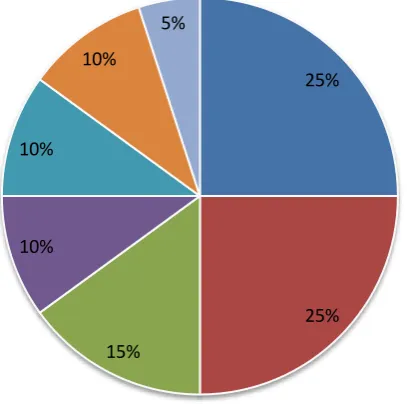
It is quite difficult to name any one factor that drives the brand strength forward or
have a clear cut formula to increase it.
Brand Equity Determinants
Price Premium Additional
Sales Volume Share Prices
Returns to Shareholders
A Monthly Double-Blind Peer Reviewed Refereed Open Access International e-Journal - Included in the International Serial Directories.
International Research Journal of Management and Commerce (IRJMC) ISSN: (2348-9766)
[image:4.595.160.364.64.266.2]15 | P a g e Figure 1: Brand Strength Components
1.REVIEWOFLITERATURE
Corporate branding is not just related to one specific product, but integrates a
corporation‟s common product attributes and benefits, relationships with people, social
values and programs and corporate credibility (Keller, 1998). Practitioners have proposed a
number of proprietary brand valuation techniques generating numerous brand value
measures, but no consensus brand value measure has emerged from these efforts. Similarly,
academics have shied away from developing a standard brand value measure (Fischer, 2007;
Salinas & Ambler, 2008; Simon & Sullivan, 1993).
In the absence of a well-established brand value measure, these brand value estimates
have unclear credibility. As a result, firms do not report their brand value in financial
statements, even though a successful brand is one of most valuable assets a firm can possess.
The literature on brand equity (e.g., Aaker 1991, 1996; Keller 2003) has recognized
brand associations as important bases underlying brand equity. Strong, favourable, and
unique brand associations can enhance brand preference (Keller 2003). In addition, enhanced
25%
25%
15% 10%
10% 10%
5%
Geographic Footprint
Leadership
Stability
Support
Profit Trend
Market(Consumer Preference)
A Monthly Double-Blind Peer Reviewed Refereed Open Access International e-Journal - Included in the International Serial Directories.
International Research Journal of Management and Commerce (IRJMC) ISSN: (2348-9766)
16 | P a g e
brand preference can increase the trade's interest in stocking the brand, thus increasing brand
choice probability.
Strategically, brand-based advertising can create brand equity for firms through its
ability to differentiate the firm's product, which is not easily imitated by competitors (Mizik
and Jacobson, 2003). Advertising can also be viewed as an entry barrier, as the high amount
of money needed to overcome the established brand loyalty of the incumbent may discourage
some potential competitors from entering an advertising-intensive market (Ho et al., 2005).
If firms do not have innovative products, even the most attractive advertising and
enticing promotions will not be effective. Hence, it is imperative for firms to invest in R&D.
In particular, Erickson and Jacobson (1992) find that obtaining a comparative advantage
through advertising depends on the specific nature of the expenditure and how it interacts
with the firm's capabilities to prevent imitation by competitors. As such, investment in
marketing communications can be viewed as an appropriation mechanism for investment in
R&D (Ho et al., 2005).
Chou (2002) identified two categories of brand equity definition in the marketing
literature: customer-based brand equity (Keller, 1993) and financial brand equity (Simon &
Sullivan, 1993). Brennan (2004) defined brand value as the extra financial value accrued to a
firm due to its ownership of a successful brand and brand equity as the successful brand‟s
effect on consumer behaviour.
A strong brand was able to influence and dominate consumers' decision making, play
an important role in helping the company maximize profits, and most efficiently influence the
decisions of consumers from the bottom to the top of the pyramid (Wänke et al., 2007).
Premium brands experience lower long-term price sensitivity and higher revenues and
become a strong competitive weapon in marketing (Calderón et al., 1997).
Simon and Sullivan (1993) assess brand equity as “the incremental discounted cash
flows that would result from a product having its brand name in comparison with what would
accrue of the same product did not have the brand name.” Previous empirical research has
identified a strong link between corporate associations and product brand evaluations (e.g.
A Monthly Double-Blind Peer Reviewed Refereed Open Access International e-Journal - Included in the International Serial Directories.
International Research Journal of Management and Commerce (IRJMC) ISSN: (2348-9766)
17 | P a g e
A comprehensive understanding of customer value should comprise all different
aspects of a customer's contribution to the company's success (Cornelsen, 2002). The CLV
represents such a profound supplier oriented understanding of customer value. The CLV
measures the profit streams of a customer across the entire customer life cycle. In this
context, marketing expenditures are viewed as investments in customer assets that create
long-term value for the firm.
Using the Interbrand data, Madden, Fehle, and Fournier (2006) investigate whether
strong brands increase shareholder wealth. Controlling for risk using Fama- French
methodology, they find that firms on the list earn abnormal returns. Madden et al. also
examine return on investment using Aaker and Jacobson's (1994) approach. Although they
focus on the marketing implications of their results, in both cases, Madden et al. find
evidence of benefits to shareholders for good brands.
2. BRAND VALUE
Recognizing this need to value brands, various brand valuation models have been
developed on the basis of each organisational needs and convenience. The classification of
brand valuation models can be briefly explained as follows:
1) Direct Brand Value Measures – Purpose for adopting these measures of brand
valuation include trading of brands, managing taxes, justifying the share prices and
mergers nod acquisitions.
a. Cost Based Measure – it calculates the value of brand as the aggregate of all
historic cost incurred while bringing the brand to its current state.
b. Market Based Measure – This measure compares similar brands where
transactions like sale of a brand, stock market quotations, etc are being
compared
c. Income Based Measures – It considers the valuation of future net earnings that
directly attribute to the brand to determine the value of the brand in its current
A Monthly Double-Blind Peer Reviewed Refereed Open Access International e-Journal - Included in the International Serial Directories.
International Research Journal of Management and Commerce (IRJMC) ISSN: (2348-9766)
18 | P a g e
d. Premium Price – The premium price is calculated as the not present value of
future price premiums that a branded product would command over an
unbranded product.
2) Simon & Sullivan‟s Brand Value Measure – The macro approach of this measure
assigns an objective value to a company‟s brand and relates this value to the
determine of brand equity. The micro approach isolates changes in brand equity at the
individual-brand level by measuring the response of brand equity to major marketing
decisions.
3) Capital Asset Pricing Model – This model is used to determine a theoretical
appropriate required rate of return of an asset, if that asset is to be added to an already
well- diversified portfolio.
4) Fischer‟s Measure (Customer Lifetime Value) - It is a prediction of the net profit
attributed to the entire future relationship with the customer.
5) Fama French Three Factor Model- Factor Model expands on the capital asset pricing
model by adding size and value factors in addition to the market risk factor in CAPM.
It takes into consideration factors such as the zero risk return, market premium, size
premium and value premium.
6) Ohlson‟s Model- This model is used in the context of Mergers and Acquisitions for
Brand Valuation using shareholder value. Factors to be considered include level data
factors and growth data factors.
7) Interbrand Model- According to Interbrand Model of Brand Valuation, the calculation
of Brand Value must be built on financial forecasting, the role of branding and brand
strength.
8) Hirose Model- within this model to optimize brand value, the company should
manage the brand by dividing the value of the group‟s total brand value into company
and product departments and should obtain data from each department on the basis of
A Monthly Double-Blind Peer Reviewed Refereed Open Access International e-Journal - Included in the International Serial Directories.
International Research Journal of Management and Commerce (IRJMC) ISSN: (2348-9766)
19 | P a g e
9) Tobin Q- This technique makes use of the factor „Q‟, which is defined as the ratio of
the market value of the firm to the replacement cost of its intangible assets.
3. BRAND VALUATION IN INDIA
As a nation, India is home to many leading companies that contribute to its Brand
Value. India's "Incredible India" slogan, used for tourism promotion, has worked well as "an
umbrella brand", with more targeted and detailed campaigns appealing to the different
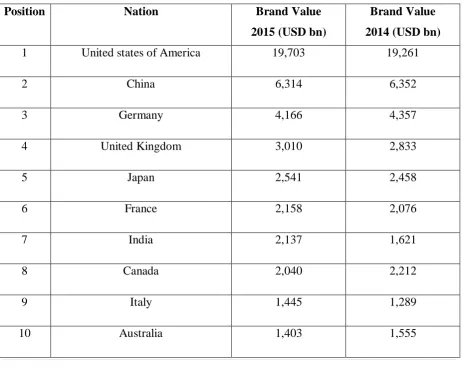
audiences. India's nation brand value has in 2015 increased by a whopping 32 per cent to
$2.14 trillion, compared with $1.62 trillion last year. Not only has India's rate of increase
been the highest among the top 10 by brand value, it has also helped the country improve its
global ranking by a notch to seventh.
[image:8.595.68.531.379.761.2]FIGURESANDTABLES
Table 1: Brand Value of Nations
Position Nation Brand Value
2015 (USD bn)
Brand Value
2014 (USD bn)
1 United states of America 19,703 19,261
2 China 6,314 6,352
3 Germany 4,166 4,357
4 United Kingdom 3,010 2,833
5 Japan 2,541 2,458
6 France 2,158 2,076
7 India 2,137 1,621
8 Canada 2,040 2,212
9 Italy 1,445 1,289
A Monthly Double-Blind Peer Reviewed Refereed Open Access International e-Journal - Included in the International Serial Directories.
International Research Journal of Management and Commerce (IRJMC) ISSN: (2348-9766)
20 | P a g e
The ISO 10668 represents global best practice in Brand valuation. Brands are the
largest single source of intangible assets. The reason for having such a standard is because the
valuation of brands is sometimes viewed as opaque, unreliable and often subjective. Different
companies follow different methods of brand valuation. The new ISO standard is to settle
decades of disagreement for those in the fields of marketing and finance, and bring greater
clarity in measuring economic value brands add to businesses.
Such a standard is especially important for Indian companies that are going global,
from the perspective of tax and transfer pricing of brands and companies. Securities
Exchange Board of India has also ordered fairness of valuation in mergers and acquisitions.
Also, brand valuation standards will help many organisations use their brands to raise money
to grow their businesses. The brand valuation process to be carried out should take into
account extraordinary profit derived from proprietary values, profit from brands and future
profit from brands. An India-specific model will enable domestic companies to improve their
brand strength, presence and reach as well as increase shareholder value. The exercise will
also help a company know the worth of its brands further helping it to prepare future
[image:9.595.113.542.395.650.2]strategies.
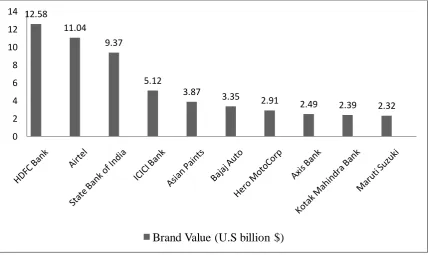
Figure 2: Most Valuable Brand in India (2015) 12.58
11.04
9.37
5.12
3.87 3.35
2.91 2.49 2.39 2.32
0 2 4 6 8 10 12 14
A Monthly Double-Blind Peer Reviewed Refereed Open Access International e-Journal - Included in the International Serial Directories.
International Research Journal of Management and Commerce (IRJMC) ISSN: (2348-9766)
21 | P a g e
India is a market of great opportunities, where the consumers are empowered and this
is reflected in the attempts made by companies to attract more customers. 30 percent of top
50 brands in India are owned by multinationals.
As is seen, banking sector is dominating the top 10 ranks for India‟s top brands. In
this sector, building trusts with customers and potential users of the bank services is one of
the most important functions of a bank and that is achieved through proper branding. The
services provided by different banks are quite homogeneous in nature, which makes it
difficult for them to create and retain competitive advantage. The key to acquire and retain
customers is by maintaining a favorable brand image in the minds of target customers. A
good brand will lead to higher goodwill among investors. There are many examples of
consolidations in the banking industry like UTI Bank and Global Trust Bank, Centurion Bank
and Bank of Punjab. Thus, valuing such brands is very important to determine the purchase
consideration in cases of mergers and acquisitions.
CONCLUSION
Earlier, companies used to get their brands valued only for mergers, acquisitions and
takeovers. Now, companies here have realized that it's important to build strong brands and
are using valuation tools to know the worth of their brands. All firms are equally efficient at
enhancing brand value with their advertising, promotional and R&D expenses. Efficiency
could depend on the type of industry and country. This may drive the variability in brand
value and its downstream effect on firm performance. As both advertising and promotion
communicate R&D breakthroughs, their effects could be confounded, as observed from the
relatively flat returns from R&D expense and the negative returns for low promotional
expense levels.
It would be helpful to understand how factors such as corporate reputation, market
orientation, and corporate culture may influence brand value formation. Depending on data
availability, uncertainty and risk preferences as moderating variables can also be
incorporated. Another way to extend this research would be to consider how brand value
affects firm performance, in terms of both quantitative (e.g., sales revenue, profitability,
market share, and stock prices) and qualitative (e.g., customer satisfaction, repurchase
A Monthly Double-Blind Peer Reviewed Refereed Open Access International e-Journal - Included in the International Serial Directories.
International Research Journal of Management and Commerce (IRJMC) ISSN: (2348-9766)
22 | P a g e
the antecedents and consequences of brand value, and contribute to both the literature as well
as managerial practice.
Growing global competition and ever shorter periods of supremacy of products with
inbuilt latest technology, the contribution of brand to its owners will keep on increasing.
Brand is just one of several factors that provide stable competitive advantage. Despite the
commercial importance of brands, their management still lags behind that of their tangible
counterparts. A number of techniques have been developed for managing production, that
measure and analyse every detail of the manufacturing process using sophisticated computer
systems. A similar situation is found in financial controlling. But, strangely, this cannot be
said for the management of the brand asset. Although many brand measures are available,
few can link the brand to long term financial value creation. Brand investments and their
results are not followed in detail nearly as much as investments in other assets. As the
importance of intangibles to a company increases, managers will inevitably need to install
more value-based brand management systems that can align the management of the brand
asset with that of other corporate assets and provide more reliable indicators on contribution
of brand to the overall business performance. For that purpose, it is necessary to amend
accounting standards because the current standards are inadequate for observing and analysis
of intangible assets. As the need for brand valuation is constantly increasing from both the
management and the market, the first and most important step is the development of a unique
economic use approach to brand valuation. Such a system may well become the most
important management tool in the future.
REFERENCES
1. Keller, K. L. (n.d.). Strategic Brand Management: Building, Measuring and
Managing Brand Equity. New Jersy.
2. C. J. Simon, M. w. (1993). The Measurements and Determinants of Brand Equity: A
Financial Approach. Marketing Science, 28-52.
3. Fischer, M. (n.d.). Valuing Brand Assets: a Cost- effective and Easy-to-implement
Measurement Approach. MSI Working Paper Series, 25-49.
A Monthly Double-Blind Peer Reviewed Refereed Open Access International e-Journal - Included in the International Serial Directories.
International Research Journal of Management and Commerce (IRJMC) ISSN: (2348-9766)
23 | P a g e
5. Aaker, D. (1991). Managing Brand Equity. The Free Press, New York.
6. Aaker, D. (1996). Building Strong Brands. The Free Press, New York.
7. N. Mizik, R. J. (2003). Trading off between Value creation and VAlue Appropriation:
The financial implications of shifts in strategic emphasis. Journal of Marketing,
63-76.
8. G. Erickson, R. J. (1992). Gaining Competitive Advantage through discretionay
expenditures: The returns of R&D and Advertising. Management Science.
9. Chou, Y. (2002). Brand Equity: Definition, Valuation and Equilibrium Efficiencyin a
Duopolistic Industry. Taiwan: National Taiwan University.
10.Brennan, R. (2004). Value and Relationships. ESRC Seminar on Relationship
Marketing.
11.M. Wanke, A. H. (2007). Brand Name: Influence on Brand Perception. Psychology
and Marketing, 1-24.
12.T. Brown, P. D. (n.d.). The Company and the Product: Corporate Associations and
Corporate Responses. Journal of Marketing, 68-84.
13.Coraelsen, J. (2002). What is the Customer Worth? Customet Value analysis in
Relationship Marketing of the basis of car buyers. Yearbook of Marketingand
Consumer Reach, pp. 27-46.
14.T. J. Madden, F. F. (2006). Brands Matter: An Empirical Demonstration of the
creation of shareholder value through branding. Journal of the Academy of Marketing
Science, 224-235.