The External And Internal Loads Of Professional Rugby League Training Modes: Consideration For Concurrent Field-Based Training Prescription. Journal of Strength and Conditioning Research. ISSN 1064-8011 DOI: https://doi.org/10.1519/JSC.0000000000002242
Link to Leeds Beckett Repository record: http://eprints.leedsbeckett.ac.uk/4467/
Document Version: Article
The aim of the Leeds Beckett Repository is to provide open access to our research, as required by funder policies and permitted by publishers and copyright law.
The Leeds Beckett repository holds a wide range of publications, each of which has been checked for copyright and the relevant embargo period has been applied by the Research Services team.
We operate on a standard take-down policy. If you are the author or publisher of an output and you would like it removed from the repository, please contact us and we will investigate on a case-by-case basis.
QUANTIFYING THE EXTERNAL AND INTERNAL LOADS OF PROFESSIONAL RUGBY
LEAGUE TRAINING MODES: CONSIDERATION FOR CONCURRENT FIELD-BASED
INTRODUCTION
The intermittent movement, collision and skill components of professional rugby league match play require players to have a wide range of physical (e.g. repeated effort ability, speed) and technical qualities (e.g. passing, kicking, tackling ability) to attain successful competitive performance.1 To
induce varied adaptations, practitioners manipulate the fundamental training principles (e.g. intensity, duration and type) to concurrently prescribe multiple modes such as small-sided games (SSG), technical-tactical and sprint training.2-4 For large proportions of the calendar year, this prescription must
also be considered within an individual’s time-course of recovery following the load imposed by
competition.2 As a result, ensuring the appropriate concurrent prescription of multiple modes of training
poses a complex challenge for practitioners due to the need to balance an appropriate variance in training load that maximises training induced adaptations in a wide range of physical and technical qualities whilst also minimising negative outcomes (e.g. injury incidence).5
Understanding the organisation of the prescribed external load (i.e. the intensity and duration of distance, speed, and acceleration activities) and the resulting psycho-physiological and biomechanical responses that comprise the internal load are key considerations within the overall training process.6
Currently, there are numerous methods used to quantify the two constructs, including heart-rate (HR; internal)7,8, perceptual (session rating of perceived exertion [sRPE]; internal)3 and micro-technology
including global positioning systems (GPS; external), and tri-axial accelerometers (external).4
Primarily, these are used to determine the accumulated load from a session which is typically averaged across both chronic (e.g. 28-days) and acute (e.g. 7-days) training periods to manage global training load prescription.6 To assist this, load data can also be used to plan the contribution of each mode to this
For certain training modes such as SSG, the specificity of the external load to competition is an important focus2 although the understanding of the external loads of rugby league training2 is limited in
comparison to competition.1,9-13 The most commonly reported method to represent the external load is
the absolute and relative (to time) total distance.2,12-13 Given the intermittent nature of rugby league,
total distance is also frequently categorised into arbitrary speed zones to describe the intensity distribution of the locomotor activities performed.2 However, whilst there is much debate over the use
of arbitrary vs individualised thresholds for such purposes,14-15 an additional consideration is that
representing the external load solely via speed-derived methods could underestimate the contribution of changes of direction and the resulting acceleration and deceleration events, particularly maximal accelerations that can occur despite low-speeds.17,18 This is particularly important due to the nature of
rugby league, as spatial constraints (i.e. 10-metre rule) are prevalent during competition and within prescribed training drills16 which is likely to increase the frequency of changes in direction, acceleration
and deceleration events. As a result, the metabolic power approach has been proposed as a method which incorporates the cost of accelerated running17 and has subsequently been implemented to estimate
the external load of soccer training19 and rugby league match play.9 Using comparable thresholds17 of
high metabolic-power (> 20 W·kg-1) and high-speed (> 14 km·h-1) distances during professional rugby
league competition, Kempton et al.9 reported high-metabolic-power to estimate greater distances
compared to high-speed across all playing positions, particularly in the hit-up forwards (76% increase). The activities of hit-up forwards are predominant in the middle of the field during competition to progress (in attack) or limit (in defence) field-position. Therefore, hit-up forwards could spend a greater proportion of time accelerating maximally yet failing to reach a high-speed threshold. This suggests that the distances determined from metabolic power could also provide additional insight into the between-mode differences in external load of professional rugby league training, particularly those that involve spatial constraints. However, research detailing both the speed- and metabolic-power-derived distances across training modes in professional rugby league has yet to be investigated.
importance of the internal load to the outcomes of training6-8 there is limited information reporting how
the internal load differs across common training modes utilised in rugby league. The heart-rate based individualised training impulse (iTRIMP) has previously been used to quantify the internal loads of professional and youth soccer training and has demonstrated moderate to large associations with team sport specific changes in physical performance, including the Yo-Yo Intermittent Recovery Test 1 (r = 0.69, p = 0.01) in elite soccer players8 and with physiological changes such as the velocity at lactate
threshold (r = 0.67; p = 0.04) in professional youth soccer players.7, Alternatively, sRPE is a simple,
inexpensive and widely adopted perceptual based method to quantify the internal load.3 However, the
limited information detailing the mode-specific training loads in professional rugby league training has reported only absolute external loads2 or perceptual (sRPE) internal training loads.3 Therefore, the aim
of the current study was to establish the magnitude of difference of time-relative external and internal training load methods across the modes of training (conditioning, SSG, skills and sprint) that are used to prepare professional rugby league players for the demands of competition. A secondary aim was to compare the distances derived from metabolic-power and speed-derived external load methods within-modes of training.
Methods
Experimental Approach to the Problem
players completed bouts of small-sided-games then completed bouts of sprint- or skills-training within a single session) were not included in the dataset. Data were ‘clipped’ in real-time during each session (TeamAMS Version 2014.3, GPSports, Canberra, Australia) so that drinks breaks were omitted from the session durations although prescribed rest periods (i.e. during interval based training during conditioning) were included. The lead researcher, in collaboration with club coaching staff, defined the training modes prescribed but was not involved in the prescription of any content relating to each training mode. Given the longitudinal nature (i.e. 2 consecutive pre-season periods) and the standard of players within the study design, the content of each training mode (e.g. intensity, frequency and duration of exercise bouts, number of players, pitch dimensions and technical-tactical content) could not be standardised throughout the data collection period. An overview of content included within each mode is summarised below:
1. SSG: Small sided, high intensity ‘off-side’ and ‘on-side’ conditioning games which aimed to
concurrently improve rugby league specific fitness and execution of skills under fatigue. Players typically competed in teams of 6 on either a 10-m width x 40-m length or 40-m width x 70-m length playing area.
2. Conditioning (CON): linear- and shuttle-running which aimed to improve players capabilities to tolerate repeated high-intensity running bouts. The distances for these running drills were prescribed for each player based on a percentage of the maximal aerobic speed generated from a 4-minute running time trial for maximal distance. This ranged from 4-minutes continuous based running with 3-minutes passive recovery to 30s shuttle running with 30s passive recovery both at a percentage of their maximal aerobic speed.
3. Skills: Individual-, positional- and team-based drills which focused on enhancing individual rugby league skills and team technical-tactical strategies. This was the only mode to have contact episodes prescribed during a proportion of the sessions.
Subjects
Seventeen male professional rugby league players (9 forwards and 8 backs) from one European Super League club (age: 25 ± 3 yrs.; height: 186.0 ± 7.7 cm; mass: 96.0 ± 9.3 kg; playing experience either European Super League or National Rugby League: 106 ± 93 matches) participated in this study. The study was granted ethics approval by the Department of Sport, Health and Exercise Science Human Research Ethics Committee in accordance with the Declaration of Helsinki. Written informed consent was obtained from each player prior to the start of the study.
Procedures
During all training modes, players wore a microtechnology device including both a 5 Hz with 15 Hz interpolated GPS (SPI Pro XII, GPSports, Canberra, Australia) and 100-Hz tri-axial accelerometer. The SPI Pro XII (GPSports, Canberra, Australia) device has demonstrated an acceptable level of accuracy and reliability for measures of total distance and peak speed during a team sport specific circuit.20 Each player wore the same GPS device throughout the data collection period to limit
potential inter-unit variability.21 Throughout the data collection period, the mean (SD) number of
satellites and horizontal dilution of precision was 9 (1) and 0.94 (0.30) respectively.22 Training data
were categorised into the distance (m) covered at various movement speed bands which corresponded to walking (0 to 1.94 m·s-1), jogging (1.95 to 3.87 m·s-1), striding (3.88 to 5.4 m·s-1) and sprinting (≥
5.5 m·s-1). High-speed running was determined by summating the distances covered at striding and
sprinting speeds (i.e. ≥ 3.88 m.s-1).
Calculations for the distance covered at low- (0 to 9.9 W·kg-1), intermediate- (10 to 19.9 W·kg-1),
high- (20 to 34.9 W·kg-1), elevated- (35 to 54.9 W·kg-1), and max-power (≥ 55 W·kg-1) thresholds
were calculated using the instantaneous energy cost equations provided by di Prampero and
colleagues.23 as used in previous studies.9,17,19 The equivalent distance (EQ distance), which represents
the steady state distance required to match the estimated energy expenditure inclusive of accelerative running was also calculated as per previous studies.9,17,19 High-metabolic-power-distance was
20 W·kg-1). Metabolic power data were calculated within the proprietary software (TeamAMS
Version 2014.3, GPSports, Canberra, Australia) and exported to a custom made spreadsheet for data management.
Internal training load involved calculating the sRPE for each player during the study period using the method of Foster et al. (2001).24 Exercise intensity for sRPE was determined using Borg’s CR-10
scale25 which was collected ~30 minutes following the completion of the training session. RPE was
then multiplied by the training session duration to calculate the sRPE training load in arbitrary units
(AU).3,4 All players who participated in the study had been familiarised with the RPE scale including
the interpretation of exertion in relation to the verbal anchors placed within the scale. To eliminate third-party observation during collection, players were required to provide the lead researcher with their sRPE in a room with only the lead researcher present which was inputted into a custom made spreadsheet.
The iTRIMP is a heart-rate based method to quantify the internal training load, and has shown dose-response validity with changes in fitness in team sports athletes.7,8 In order to calculate the iTRIMP
measure, players undertook an incremental stage test on a motorised treadmill (Woodway ELG55, Woodway, Weil an Rhein, Germany) and a resting HR test. This was conducted during the first week of each pre-season period immediately prior to the commencement of the formal pre-season training period. Players avoided any strenuous exercise in the 24 hours preceding the tests. Resting HR (HRrest) was recorded (Polar F3, Polar Electro, OY, Finland) from the subjects in a resting state prior
to the first test. The resting state involved lying in a supine position in a quiet room. HRrest was taken
as the lowest 5s value during the 5 minute monitoring period. Players then completed an incremental treadmill test to assess the participants blood lactate-heart rate relationship during incremental exercise.7,8 This consisted of five, 4 minute sub-maximal stages commencing at an initial running
velocity of 7 km.h-1 with 1 minute recovery given between stages. A finger capillary blood lactate
sample was collected during the 1 minute recovery period during the sub maximal stages and
immediately analysed in duplicate (YSI 2300, YSI inc, Yellow Springs, OH). Treadmill velocity was
ramp protocol was used to determine an individual’s maximal HR (HRmax). The ramp protocol
commenced at an initial velocity of 15 km.h-1 and increased at increments of 1 km·h-1 per minute until
volitional fatigue. HR data were collected throughout the treadmill test (every 5s) using Polar HR straps (T14, Polar, Oy, Finland). The highest HR recorded at the completion of the ramp protocol was used in order to determine the individual’s HRmax.
The HRmax measured during the maximal incremental test was used as the reference value for iTRIMP
calculation. The iTRIMP was calculated for each player for each training session for the duration of the study using previously described methods.26 Briefly, the iTRIMP is described in formula 1:
(1) Duration x ∆HR x aebx
Where ∆HR equals HRexercise – HRrest/HRmax-HRrest, a and b are constants for a given player derived
from the regression equation calculated from the relationship between blood-lactate and fractional elevation of HR during the incremental treadmill test26, e equals the base of the Napierian logarithms
and x equal’s ∆HR.7 Each player’s equation was generated from their own data collected from the
incremental treadmill test. Heart rate was collected during each training session (every 5s) using Polar HR straps (T14, Polar, Oy, Finland) which transmitted continuously to the GPS monitor (SPI Pro XII, GPSports, Canberra, Australia). To determine the iTRIMP value for each session, each 5s heart rate during the session is weighted according to formula 1 and then summed. Raw HR data for every training session were exported from the GPS manufacturer software (TeamAMS Version 16.1, GPSports, Canberra, Australia) into dedicated software to determine individual session iTRIMP values (iTRIMP Software, Training Impulse LTD, UK).
Statistical Analyses
To account for differences in training duration between training modes, all data were divided by session duration with all data expressed per minute. Data were log transformed to reduce the bias that results due to non-uniformity error. Magnitude based inferences were used to determine the practical meaningfulness of the differences in relative external and internal load across training modes
determine the magnitude of differences in the dependent variables ± 90% confidence intervals (CI).27
Standardised mean differences of <0.20, 0.20-0.60, 0.61-1.19, 1.20-2.00 and >2.00 were considered trivial, small, moderate, large, and very large respectively.27 The threshold difference which was
considered to be practically important (smallest worthwhile difference; SWD) was set at 0.2 x between-subject standard deviation (SD). Based on 90% CI, the thresholds used to assign qualitative terms to chances were as follows: <0.5%, most unlikely; 0.5-5%, very unlikely; 5-25%, unlikely; 25-75%, possibly; 75-95% likely; 95-99.5%, very likely; >99.5%, almost certainly. The magnitude of difference was considered practically meaningful when the likelihood was ≥75%. Where the 90% CI
crossed both the upper and lower boundaries of the SWD (ES ± 0.2), the effect was described as unclear.27
RESULTS
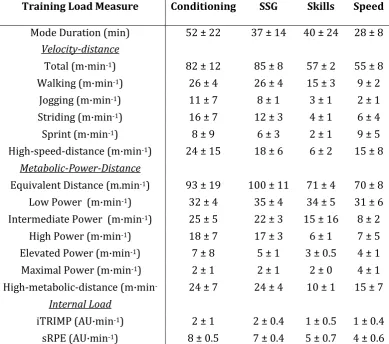
Table 1 displays the mean ± SD of the relative external (both speed- and metabolic-power) and internal (iTRIMP and sRPE) training loads for each training mode (CON, SSG, skills and sprint training).
*** INSERT TABLE 1 HERE***
Relative velocity-distances
Figure 1 shows the magnitude (standardised mean difference [90% CI]) and likelihood of difference in relative (m·min-1) speed-derived-distances (total; walk; jog; stride and sprint) between training
modes (CON vs SSG; CON vs skills; CON vs sprint training; SSG vs skills; SSG vs sprint training; skills vs sprint training).
*** INSERT FIGURE 1 HERE***
Figure 2 shows the magnitude (standardised mean difference [90% CI]) and likelihood of difference in relative (m·min-1) metabolic-power-derived-distances (equivalent; low-; intermediate-; high-,
elevated-, and maximal-power) between training modes (CON vs SSG; CON vs skills; CON vs sprint training; SSG vs skills; SSG vs sprint training; skills vs sprint training).
Internal load
iTRIMP, was almost certainly greater during CON than skills (SMD [90% CI]; descriptor: 2.37 [1.76 to 2.99]; very large) and speed (SMD = 2.91 [2.19 to 3.64]; very large) training whilst this was unclear (SMD [90% CI] = 0.02 [-0.45 to 0.49]; trivial) between CON and SSG. iTRIMP was almost certainly greater during SSG than skills (SMD = 2.35 [1.75 to 2.95]; very large) and sprint training (ES = 2.89 [2.26 to 3.53]; very large). The difference in iTRIMP between skills and sprint training was unclear (SMD = 0.54 [-0.24 to 1.32]; small).
sRPE was likely greater during CON vs SSG (SMD = 0.61 [0.15 to 1.06]; moderate) and almost certainly greater during CON vs skills (SMD = 6.49 [5.44 to 7.54]; very large) and sprint training (ES = 8.21 [7.27 to 9.14]; very large). sRPE was almost certainly greater during SSG vs skills (SMD = 5.89 [4.90 to 6.87]; very large) and sprint training (SMD = 7.60 [6.53 to 8.67]; very large). sRPE was very likely greater during skills vs sprint training (SMD = 1.71 [0.24 to 3.19]; large).
High-Speed Distance vs High-Metabolic-Power Distance
The difference in high-speed-distance and high-metabolic-power-distance was possibly trivial for CON (SMD [90% CI] = 0.19 [-0.19 to 0.56]; trivial) and likely trivial for sprint training (SMD = 0.04 [-0.15 to 0.23]). High-metabolic-power-distance was almost certainly greater than high-speed-distance during SSG (SMD = 0.75 [0.48 to 1.02]; moderate) and skills (SMD = 1.36 [0.99 to 1.72]; large).
DISCUSSION
sprint training) that are used to prepare professional rugby league players for the demands of competition. A secondary aim was to investigate the within-mode differences in ‘high-intensity’ distance as quantified at greater than 3.88 m·s-1 (high-velocity) or 20 W·kg-1 (high-metabolic-power).
The findings show substantial differences in the composition of the external load per minute across training modes (SSG, CON, skills and sprint training). This highlights the varied field-based running demands placed onto professional rugby league players as part of the overall training process.
External Training Load
Comparing CON to SSG, players cover greater distances per minute moving at moderate velocities (1.95 to 5.49 m·s-1) and metabolic-power (10 to 34.9 W·kg-1) during CON (Figure 1 & 2). Within
SSG, players were found to cover greater distances at high-metabolic-power (≥ 20 W·kg-1) than
high-speed (≥ 5.5 m·s-1) whilst trivial differences existed between the variables during CON. This
demonstrates that players complete a greater proportion of ‘high-intensity’ activity while accelerating and decelerating during SSG and maintain greater proportions of high-speed running during CON. Compared to skills training (technical-tactical development) and sprint training (maximal speed development), SSG and CON possess similar central aims (e.g. prolonged high-intensity running ability development) and practitioners should consider their differences in the organisation of the external load when planning training prescription. For example, more acceleration and deceleration activity lead to greater force production at the hip, knee and ankle joints28 and subsequently greater
structural damage to skeletal muscle tissue.29 During in-season training therefore, practitioners could
use data such as this to plan drills which provide the greatest acceleration/deceleration demands earlier in the training week to allow appropriate recovery prior to competition.29
The whole-game relative mean (SD) total distance of European Super League competition has been found to range from 83 (2) to 104 (27) m·min-1 whilst high-speed distance has ranged from 12 (7) to
16 (3) m·min-1.10,12-13 Therefore, whilst not considering positional differences, it appears that both
compare to those found in NRL match play (22 to 24 m·min-1).9 Although the current study did not
directly compare to the match demands experienced by this group of players, the comparisons10,12-13
provide suggestion that SSG and CON can appropriately prepare players for the mean speed- and metabolic-power derived running demands of competition. However, practitioners must also keep in mind that exposing players to the mean demands may increase the likelihood that players will be under-prepared for the most demanding passages of competition.1 For example, Delaney et al.11
reported the peak 10 minute average m∙min-1 of National Rugby League competition to range from 98
to 109 m∙min-1 between positions, suggesting the mean relative distances covered by ESL players
during all training modes in the current study would leave players underprepared for this demand during competition. Therefore, to confirm this comparison, future research is needed to determine whether these modes of training prepare players for the peak demands of professional rugby league competition.11
For skills training, lower distances were observed across all arbitrary speed-derived variables
compared to CON and SSG (SMD = large to very large). Although the session aims of CON and SSG focus predominately on the development of prolonged high-intensity running ability2, skills training
aims to enhance passing, catching, tackling technique and defensive line shape within drills that consist of variable constraints (e.g. 10-m rule, changes in player numbers).30 The presence of physical
contact has been reported to reduce locomotor output during rugby league activities.31-32 Therefore, as
training.9,11 In contrast, the session aims of CON focuses on greater periods of continuous bouts of
training and thus a proportionally reduced contribution from accelerative activity. This appears to be reflected in the differences between the distances above either high-speed or high-power thresholds in the current study. Given skills training is the most frequently prescribed training mode across the season, the appropriate quantification of the external load during skills training is particularly important.3-4 This suggests that the magnitude of the external load could be underestimated if
acceleration is not quantified during skills training. Therefore, practitioners should consider that adopting only speed-derived methods could underestimate the total external load of this mode of training.
Internal Training Load
The findings showed that players likely perceived (sRPE) a greater internal load during CON than SSG. A greater mean sRPE during conditioning (8.8 ± 1.1) compared to SSG (7.2 ± 1.5) has also been reported in professional NRL players.3 Whilst speculative, the unclear differences in iTRIMP and
numerous external load metrics between SSG and CON suggest that factors that do not concurrently increase the external load (e.g. ball involvement) contribute to the differences in perceptual response between the two training modes.However, numerous factors, such as the number of players, pitch size and rule constraints have also been reported to influence the perceptual response between SSGs.32-36
Therefore, as both current and previous3 studies adopted longitudinal (e.g. > 1 year) observational
research designs, coaches are likely to have manipulated these factors during this time. This
variability in SSG prescription is likely to limit the inferences of the mechanisms behind the greater perception of effort during CON compared to SSG reported in the current study.Due to the unclear findings, further research (which should attempt to control the external load between SSG and CON conditions) is required to establish the mechanisms behind the increase in effort perception found during CON compared to SSG training in both current and previous studies.3 Despite this, both CON
compared to CON and SSG. Collectively, the findings suggest that CON and SSG provide the greater overall accumulation of load per minute of training whilst sprint training provide players with the greatest proportion of high-speed running without a concomitant increase in internal load. For rugby league players, this provides support for the supplementation of sprint training within the overall training plan to expose players to this intensity of running when required without proportionally increasing the overall total distance covered compared to other modes of training.
Despite the current findings, the study is not without limitation. Firstly, although the inclusion of
acceleration into the determination of the external load provides useful information to aid our understanding of rugby league training, it is important to evaluate the limitations of the metabolic-power method and the energetics approach by di Prampero et al. (2005).23 More specifically, the
model assumes that the total mass of a player is located at the centre of mass which neglects the effect of limb motion on running.13 In addition, the model fails to account for the influence of air resistance
or the energetic cost of eccentric work which could under represent deceleration events.9,18 Secondly,
whilst the findings demonstrate the differences in internal and external load per minute of training between common training modes, it must be acknowledged that the data were collected from only one ESL club which didn’t consider positional differences between modes and with data collected during the pre-season phase. As a result, the magnitude of difference between the modes may be influenced by the group of players and particularly, coaching methods within each training mode which might not be representative of all rugby league clubs. It is also possible that the specific relative loads found in the current study could change during in-season training, where recovery and preparation for competition become primary aims. In addition, whilst the study compared the ‘global’ differences in external and internal training load between modes, given the longitudinal nature of the data collection, these modes will comprise of multiple different drills, which are likely to comprise of varying
provides a process for how this data can be used in practice to establish normative external and internal loads per minute of training time (by dividing absolute session load by session duration) for different modes of training. This can be useful to evaluate the differences in the external and internal loadsof different components of a field-based training programme. Once normative values are established for players, the external and internal load variables can then be used to plan future training periods by multiplying the normative load for a given variable by the planned session duration.
CONCLUSIONS
The present study has provided comparisons of the mean relative external and internal loads across modes of training (SSG, CON, skills, sprint training) in professional rugby league. The findings of the study have shown that different modes of training elicit differences in external and internal training load per minute of training time. For practitioners, this highlights how dividing the overall session loads per minute of training can be used to establish the differences in time-relative load for frequently prescribed training modes. This information can be extremely beneficial for coaches to plan (by multiplying the typical load per minute by planned session duration) multiple concurrent modes within the loading requirements for players across their short- and long-term training programmes. The findings also highlight the benefits of using metabolic-power variables to
complement speed-derived methods for the practical implication of understanding the organisation of the external training load both within- and between-training-modes. Practitioners should therefore consider this within their evaluation of the relative field-based running demands to individualise the prescription of the running-based stimulus of the training programme. For example, based on the findings in the current study, if the training day was identified to include a requirement for high-intensity activity at high-speed which was not provided by the drills included during skills training, practitioners might consider the prescription of CON, rather than SSG, to provide players with greater proportion of exposure to high-speed rather than high-acceleration running.
Practitioners should consider that whilst the overall external training load (e.g. total or
equivalent distance per minute) can be similar between training modes, the composition of this overall load can vary across types of training.
Sprint training exposes players to the greatest sprinting and maximal power running demands
without an associated increase in internal load.
Metabolic power measures of the external load compliment speed-derived methods,
particularly during skills and SSG training which involve randomised activity within spatial constraints.
Practitioners can establish normative information by calculating the relative training load for
each training mode and individual, which can be used to plan future training loads by multiplying the relative load by the planned session duration.
REFERENCES
1. Johnston, RD, Gabbett, TJ, Jenkins DG. Applied sport science of rugby league. Sports Med
44: 1087-1100, 2014.
2. Gabbett, TJ, Jenkins, DG, Abernethy, B. Physical demands of professional rugby league
training and competition using microtechnology. J Sci Med Sport 15: 80-86, 2012.
3. Lovell, TW, Sirotic, AC, Impellizzeri, FM ,Coutts, AJ. Factors affecting perception of effort
(session rating of perceived exertion) during rugby league training. Int J Sports Physiol Perform 8: 62-69, 2013.
4. Weaving, D, Marshall, P, Earle, K, Nevill, A, Abt G. Combining internal- and
external-training-load measures in professional rugby league. Int J Sports Physiol Perform 9: 905-912, 2014.
5. Gabbett, TJ. The training-injury prevention paradox: should athletes be training smarter and
harder? Br J Sports Med 50: 273-280, 2016.
7. Akubat, I, Patel, E, Barrett, S, Abt, G. Methods of monitoring the training and match load and
their relationship to changes in fitness in professional youth soccer players. J Sports Sci, 30: 1473-1480, 2012.
8. Manzi, V, Bovenzi, A, Impellizzeri, FM, Carminati, I, Castagna, C. Individual training-load
and aerobic-fitness variables in premiership soccer players during the precompetitive season. J Strength Cond Res 27: 631-636, 2013.
9. Kempton, T, Sirotic, AC, Rampinini, E, Coutts, AJ. Metabolic power demands of rugby
league match play. Int J Sports Physiol Perform 10: 23-28, 2015.
10. Evans, SD, Brewer, C, Haigh, JD, Lake, M, Morton JP, Close GL. The physical demands of Super League rugby: Experiences of a newly promoted franchise. Eur J Sport Sci 15: 505-513, 2015.
11. Delaney, JA, Duthie, GM, Thornton, HR, Scott, TJ, Gay, D, Dascombe, BJ. Acceleration-based running intensities of professional rugby league match-play. Int J Sports Physiol Perform 11: 802-809, 2016.
12. Waldron, M, Twist, C, Highton, J, Worsfold, P, Daniels, M. Movement and physiological match demands of elite rugby league using portable global positioning systems. J Sports Sci 29: 1223–30, 2011.
13. Twist, C, Highton, J, Waldron, M, Edwards, E, Austin, D, Gabbett, TJ. Movement demands
of elite rugby league players during Australian National Rugby League and European Super League matches. Int J Sports Physiol Perform 9: 925-930, 2014.
14. Abt, G, Lovell, R. The use of individualised speed and intensity thresholds for determining
the distance run at high-intensity in professional soccer. J Sports Sci 27: 893-898, 2009. 15. Varley, MC, Jaspers, A, Helsen, WF, Malone, JJ. Methodological considerations when
quantifying high-intensity efforts in team sport using global positioning system technology. Int J Sports Physiol Perform 4: 1-25, 2017.
16. Johnston, RD, Gabbett, TJ, Seibold, AJ, Jenkins, DG. Influence of physical contact on
17. Osgnach, C, Poser, S, Bernardini, R, Rinaldo, R, di Prampero, PE. Energy cost and metabolic
power in elite soccer: a new match analysis approach. Med Sci Sports Exerc 42: 170-178, 2010.
18. Varley, MC, Gabbett TJ, Aughey, RJ. Activity profiles of professional soccer, rugby league
and Australian football match play. J Sports Sci 32: 1858-1866, 2014.
19. Gaudino, P, Alberti, G, Iaia, FM. Estimated metabolic and mechanical demands during
different small-sided games in elite soccer players. Hum Mov Sci 36: 123-133, 2014. 20. Johnston, RJ, Watsford, ML, Kelly SJ, Pine, MJ, Spurrs, RW. Validity and interunit
reliability of 10 Hz and 15 Hz GPS units for assessing athlete movement demands. J Strength Cond Res 28: 1649-1655, 2014.
21. Buchheit, M, Al Haddad, H, Simpson, BM, Palazzi, D, Bourdon, PC, Di Salvo, V, Mendez-Villaneuva, A. Monitoring accelerations with GPS in football: time to slow down? Int J Sports Physiol Perform 9: 442-445, 2014.
22. Malone, JJ, Lovell, R, Varley, MC, Coutts, AJ. Unpacking the black box: applications and considerations for using GPS devices in sport. Int J Sports Physiol Perform 13: 1-30, 2016. 23. Di Prampero, PE, Fusi, S, Sepulcri, L, Morin, JB, Belli, A, Antonutto, G. Sprint running: a
new energetic approach. J Exp Biol 208: 2809-2816, 2005.
24. Foster, C, Florhaugh, JA, Franklin, J, Gottschall, L, Hrovatin, LA, Parker, S, Doleshai, P,
Dodge, C. A new approach to monitoring exercise training. J Strength Cond Res 15: 109-115, 2001.
25. Borg, G, Ljunggren G, Ceci, R. The increase of perceived exertion, aches and pain in the legs,
heart rate and blood lactate during exercise on a bicycle ergometer. Eur J Appl Physiol Occup Physiol 54: 343-349, 1985.
26. Manzi, V, Iellamo, F, Impellizzeri, F, D’Ottavio, S, Castagna, C. Relation between
individualised training impulses and performance in distance runners. Med Sci Sports Exerc 41: 2090-2096, 2009.
27. Hopkins, WG, Marshall, SW, Batterham, AM, Hanin, J. Progressive statistics for studies in
28. Lakomy, J, Haydon, DT. The effects of enforced, rapid deceleration on performance in a
multiple sprint test. J Strength Cond Res 18: 579–583, 2004.
29. Twist, C, Highton, J. Monitoring fatigue and recovery in rugby league players. Int J Sports
Physiol Perform 8: 467-474, 2013.
30. Gabbett, TJ, Jenkins, D, Abernethy, B. Physical collisions and injury during professional
rugby league skills training. J Sci Med Sport 13: 578-583, 2010.
31. Norris, JP, Highton, J, Hughes, SF, Twist, C. The effects of physical contact type on the
internal and external demands during a rugby league match simulation protocol. J Sports Sci 34: 1859-1866, 2016.
32. Johnston, RD, Gabbett, TJ, Jenkins, DG. Influence of number of contact efforts on running performance during game-based activities. Int J Sports Physiol Perform 10: 740-745, 2015. 33. Gabbett, TJ, Abernethy, B, Jenkins, DG. Influence of field size on the physiological and skill
demands of small-sided games in junior and senior rugby league players. J Strength Cond Res 26: 487-491, 2012.
34. Gabbett, TJ, Jenkins DG, Abernethy, B. Influence of wrestling on the physiological and skill demands of small-sided games. J Strength Cond Res 26: 113-120, 2012.
35. Halouani, J, Chtourou, H, Gabbett, T, Chaouachi, A, Chamari, K. Small-sided games in team
sports training: a brief review. J Strength Cond Res 28: 3594-3618, 2014.
36. Smith, MR, Zeuwts, L, Lenoir, M, Hens, N, De Jong, LM, Coutts, AJ. Mental fatigue impairs
Fig 1. The difference (standardised mean difference [90% CI]) in the metabolic-power- (A) and
speed-derived (B) threshold distances per minute of training time for each training mode
comparison. The direction of the standardised mean difference is in relation to the first named
training mode within each comparison. Grey area represents trivial differences.
Table 1. Mean ± standard deviation for each relative external and internal training load measure during conditioning, SSG, skills and speed training.
Training Load Measure Conditioning SSG Skills Speed
Mode Duration (min) 52 ± 22 37 ± 14 40 ± 24 28 ± 8 Velocity-distance
Total (m·min-1) 82 ± 12 85 ± 8 57 ± 2 55 ± 8 Walking (m·min-1) 26 ± 4 26 ± 4 15 ± 3 9 ± 2
Jogging (m·min-1) 11 ± 7 8 ± 1 3 ± 1 2 ± 1 Striding (m·min-1) 16 ± 7 12 ± 3 4 ± 1 6 ± 4
Sprint (m·min-1) 8 ± 9 6 ± 3 2 ± 1 9 ± 5
High-speed-distance (m·min-1) 24 ± 15 18 ± 6 6 ± 2 15 ± 8 Metabolic-Power-Distance
Equivalent Distance (m.min-1) 93 ± 19 100 ± 11 71 ± 4 70 ± 8 Low Power (m·min-1) 32 ± 4 35 ± 4 34 ± 5 31 ± 6 Intermediate Power (m·min-1) 25 ± 5 22 ± 3 15 ± 16 8 ± 2
High Power (m·min-1) 18 ± 7 17 ± 3 6 ± 1 7 ± 5 Elevated Power (m·min-1) 7 ± 8 5 ± 1 3 ± 0.5 4 ± 1 Maximal Power (m·min-1) 2 ± 1 2 ± 1 2 ± 0 4 ± 1 High-metabolic-distance (m·min
-1)
24 ± 7 24 ± 4 10 ± 1 15 ± 7 Internal Load