V.J. PAUL.
DEPJ.J..RTkZENT OF OOL'FUl'ER .SCIENCE. Ul_\TI:?ERSITY OF OAl'TTERBURY.
..----1. INTRODUCTION 1
2. SITUATIONS
3. CRITERIA
4. l:TETHODS
4.1. B1ank S~ppresston
4.2. Pattern Substttutton 4. 3. Huj'j'Tnan Codes
3 5 8 8 9 11 4. 4. The Ftxea Po tnt Number 1'/Jethod 12 4.5. The Combtntng Characters
Afethoa
4.6. An A1ternattve Fethoa
6. DISCU8SICN OF EEi3ULTS 6.1 Introauctton
15 16
18
22 22
6.2 Genera1
.
226.3. Wagner's A1gortthm 23 6. 4. Huj'j'nw,n Codtng 23 6.5. Combtntng Characters
A1gortthm 24
6. 6. Ftxed Potnt l:'umber Fethoa 24 6.7. Pattern 8ubstttutton
A1gortthm
6.8. Baste Error Messages on PDP-11
6.9. Summary
8. REFERJSNCES
25
25 26
27
r
INTRODUCTION.Text compression is the activity of taking
a fi 1e of text and subjecting tt to a compaction pr•ocess to
reduce its storage requirements. Text compression ts of tnterest
because of the many app1tcattons tnvo1vtng the e~~h"tng of 1arge
amounts of text. No matter hQtQ. much secondary storage ts avai 1ab1e
it ts sti11 expensive ana tnvartab1y there are other requirements
for tts use.
Apart from the obvtous advantage of reducing
the amount of storage required~ there are other possib1e
benefits~ for examp1e:
(t) A degree of security for the ft1e, as output
from a compression routine t§ u~ua11y tn an unreaaab1e form.
(ti) Savings tn data transmtsston costs, stnce the cost
for transmission is usua11y proporttona1 to the quantity of data
transmitted.
(tit) A reduction tn the ttme to run programs tn rrv:::my cases,
especta11y tf 1ttt1e computation ts tnvo1vea compared with the
This investigation of text compression has invo1vea:
(i) Considering the situations for which text compression
might be usefu1, ana the criteria by which a1ternative
text compression methods shou1d be eva1uatea.
(ii) A discussion of severa1 different methods.
(iii) Imp1ementing and testing some of these methods
ana examining the resu1ts in the 1ight of resu1ts obtained
by others ana where possib1e against theoretica11y
22 S!TU.I!!.r IGN$.
Genera 1 areas where te;;::t compress ton techntques
couUL be app1tea tnc1uae.
(t) Error message routtnes ;J"or compt1ers~ "interpreters
and tnteracttve systems.
(tt) Archtvtng of source programs or other tnformatton.
(ttt) Data base management systems or otger 1arge tnformatton
storage and retrteva1 systems.
Text compresston techntques are most suttab1e for 1arge
ft1es contatntng homogeneous data. The advantages are greater
for random access ft1es because the cost of expandtng a record
ts 1tke1y to be sma 11 compared wtth the cost of a, random access
to tt. For examp1e many on 1tne tnqutry termtna1 systems ftt
these charactertsttcs.
Where the app1tcatton for whtch text compresston ts
betng constaerea ts I/O bound~ text compresston cou1a be
app1tea wtth no "increase. tn e1apsea ttme aue to extra CPU ttme
Thts ts just one of the crtterta that shou1d be constdered.
The sttuattans tnvesttgated here are:
(t) The storage and retrteva1 of A1go1 source programs.
(tt) The storage ana retrteva1 of the error messages for
3 CRITERIA
The crtterta by whtch a parttcu1ar compresston
method shou1a £~ E;Va1uated for a parttcu1ar app1tcatton are,~ tn
decreastng ord8r of
"importance:-1. Oompresston Ratto.
2. Oharactertsttcs of data.
3.
Decompresston ttme.4. Stze of aecompresston a1g rtthm ana tab1es.
5.
Oompresston ttme ana stze of compression a1gort~hm ana tab1es.6. Oomp1exity of a1gortthms.
In more aetat1 the meanings of ana reasons for choosing
these crtterta are set out be1ow.
1. TlilE COMPRESSION RJJ..TIO
Thts can be expressed as a fractton or a percentagey~he
ftgure used in thts report ts
OR = 100
1 X
Output !i1e (bytes) Input ft1e (bytes)
In thts ca1cu1atton the space requtrea for a19ortthms or
Thts shou"ba on"by be constaered ~ter the stze of the ft"be
to be compressed ts known. However what shou"bd be tnc"buaea ts any
overhead assoctated wtth each record. For examp"be vartab"be "bength
records usua11y requtre one extra WGrd per record. Such overhead
shouUL be tnc"budea tn the stze of both the tnput ana output ft "bes.
2. CHARACTERISTICS' OF DATA
Oharactertsttcs that mal"'Ve a ft "be parttcu"bap"by su'Lted to
compresston techntques tnc"bude;
(t) Use of on"by a re1attve1y sma11 mumber of characters tn
the codtng system. For ex-amp"be the Baste error messages use on"by
29
of the96
ASCII prtnttng characters.(tt) Ustng most frequent"by a re"battve"by sma11 proportton
of the characte~ set. For examp"be tn the A1go1 source programs
characters "btke
"b"
were used common"by but ones "btke"'?"
ana ''/"very rare"by.
(ttt) Patterns of characters occurtng ;trequent"by tn the text.
;sror examp"be reserved words tn a computer program source ft "be.
(tv) Fte1ds of tdenttca1 characters such as b1anks or zeroes.
(v) The ft1e contents do not change much over ttme:
3. DEOOJ:'PRESSION 2.1 DlE
Data wt11 have to be processeJby a aecompresston a1gortthm
.
each ttme tt ts requtrea for prtnttng out ana often for other use ,.,.memory. Therefore the aecompresston ttme ts of pr~~e importance~
parttcu1ar1y t f the program ts running tn a mu1~programmtng
envt ramen t.
4. DEOOkTPRE.SSICN ALGORITHM
The stze of thts ana tts tab1es ts somethtng that shou1d
be constderea t f there ts doubt about whether tt ta worthwht1e
tmp1ementtng a compresstonfaecompresston scheme. The compresston
ratto shou1a be re-eva1uatea taktng t,l'J,1;·e a.coeun.t the a1gortthm
ana tab1es as part of the output data.
5. OOJ.fPREE!SION ALGORITHlvf
Wht1e most systems wt11 be matn1y retrtevtng data~ tt a1so /t..c. ... "~-c:. ... ~.
needs to be stored, often thts ts done~ ~ the more vo1att1e the
ft1e, the more tmportant tt ts that the C6~presston A1Qortthm be
reasonab1y efftctent tn tts use of memJory space ana O.PU ttme.
6. OONIPLEXITY.
If a compresston method ts betng constdered to save money,
etther atrect1y or tndtrect1y, then costs of aeve1opment of the
compresston/aecompresston system shou1a be constderea. To some degree,
the comp1extty of a method wt11 be ref1ectea tn the costs of
aeve1opment so re1attve stmp1tctty or comp1extty of dtfferent
~
4 METHODS.
The 1isted RefePences inc1ude discussion of
five substantia11y different text compPession methods, ana
of two variations on one of the m,ethoas - pattern substitution.
In addition I have devised a method not mentioned
in any of the refePences (Section 4.6)
4.1 B1anK Suppression.
The most obvious ana simp1est scheme is to e1iminate
1eading and trai1ing b1anks in a recoPd, and to 1eave the
Pest of the text uncor~~pressea. This causes the prob1em co1r"mon
to a11 text compPession schemes of producing var~ab1e 1ength
records that require extPa overheads to manage. The system
described by Fajman ana Borgelt (2) used basica11y this strategy,
but a1so compressed interna1 b1anKs from PecoPas.
To he1p overcome the prob1em of variab1e 1ength
(t) Each 1tne of text ts atvtaed tnto segments that
can deacrtbe up to 15 b1anks fo11owea by up to 15 non-b1ank
symbo1s.
For examp1e.
~he text bbbbb THIB IS AN EXAJIIPLE. bbbbb AlYOTHL'R ONE Wou 1a be descrtbea [5 ( 15 [THIS 1.8 lJ1l EXJD!if (0 /4 jPLE.j5(12jA.NUTJt.E:;R Wlbl!
(tt) The 1tne number and a count of the tota1 number o;t
bytes tn a11 the segments ts p1acea tn front of each 1tne.
(ttt) The 1tnes are combtnea tnto pages o;t a 1ength
c&pproprt<JJ,te ;tor the aevtce betng used. A count at the start o;t
each page gtves the tota1 number o;t bytes tn the page.
(tt) ana (ttt) make accesstng a gtven 1tne number stmpte.
Savtngs o;t over 50% tn atsk space are reported ;tor thts methoa.
The e1tmtn~tton o;t 1eaatng ana trat 1tng b1a,nks can a 1so
be tncorporated efj'ecttve1y tn other text compresston methods.
4.2 Pattern Substttutton.
Another common method ts pattern _substttutton,
tn whtch strtngs of charctcters that occur ;trequent1y tn the
PUFFT (the Purdue University Fast Fortran Trans1ator)
t6)
uses this method for storing its error messages. In this app1ication,
the idea is taken to tts 1imit in that a11 words are assigned a code •
.
Deciscms to be made for this method are:
(i) Common phrases to extract from the source text. Factors to
consider are the 1ength of the phrase,:._:ana the frequency of tts
""
occu~ence in the data. Usua11y the common phrases wi11 be words or
groups of words but that need not be so .. Mayne ana Jones (4) describe
an experimenta1 system that aynamica11y se1ects its own dictionary.
Many of its entries are partia1 words, common1y being prefixes or
s{v.ffixes.
(it) Method oj' reducing an input string.
For e:x:amp1e.
Dictionary Ho1as Input OONIPRESSION.
WCRD CODE
001!1'P %1
OOlvfPRE %2
E.SSION 163
A stmp1e 1eft to right scan to rep1ace the 1ongest string
contained in the dictionary by its code produces %2SSION, wht1e the
opttna1 compression is in faQt %1R
%
3.
Wagner(9)
gives an optflna1(ttt) The code to 7'ep1ace the common cha7'acte7's.
If, as tn the above examp1e, specta1 cha7'acte7's aT'e used.,
we have to be suT'e the cha7'acte7' wt11 not occu7' tn the text tn
another' context. Assumtng an etght btt cha7'acte7' 7'ep7'esentatton 1 the numbe7' of atffe7'ent patterns ts 1tmttea to
256.
Ij', "insteadof a specta1 chaT'acter, the codes are btt patteT'ns not used for
the cha7'acte7' set then we aT'e 7'est7'tctea even fU7'the7' to about
160 patteT'ns assumtng the EBCDIC character' set. However' tt ts now
worthwht1e tnc1udtng patteT'ns oj' on1y two character's tn the
atcttonaT'y of common patteT'ns.
ExpeT'tments were conducted wtth a pattern substttutton
a1go7'tthm that used a prese1ected dtcttonary, the 1a7'gest-ftrst
1ogtc foT' reauctng tnput, ana non- EBGDIO 66aes to substttute j'or
patteT'ns
Wagners a 1go7'tthm was a 1so tested: thts uses a prese1ectea
dtcttonaT'y, tntege7' programmtng 1ogic fo7' compT'esston, ana specta1
character's j'o7' patteT'ns.
4. 3. Hu;j'finan Codes
Morse code uses sho7'te7' codes j'or nwT'e common cha7'acte7's
ana 1onger onesj'or the 1ess c om,mon.Thts taea can a 1so be used. in
text con~resston to reduce the expected 1ength (entropy) of a.
In Morse, a 1ohgeT' pause is used to de1imit chaT'acteT's but
;toT' vaT'iab1e "Length computeT' codes the way o;t distinguishing
inaiviaua1 chaT'acteT's is to T'equiT'e the code to have the pT'e;fix
pT'opeT'ty. That is the code ;toT' any chaT'acteT' is not aup1icated
a.s the beginning of a 1-ongeT' code ;toT' some otheT' chaT'acteT'.
FaT' examp1e If the code ;toT' "E" is 011 then no otheT' chaT'acteT'
has a coded T'epT'esentation beginning 011.
The Huffman codes
(5)
sati;ty this T'equiT'ement ana have beenused satis;tactoT'i1y as the basis of a text compT'ession scheme
(7).
Huffman codes a1so have the pT'opeT'ty of being optima1 - data
encoded using these codes cou1a not be expT'essed t~ ;teweT' bits.
A compT'ession ana aecompPession T'outine was pT'ogT'ammed to
investigate Huffman codes ;toT' text compT'ession, and a Hu;fjhan
codtng scherne was woT'kea out ;toT' both of the data sets betng
consta---eT'ea. FaT' the A1go1 souT'ce text, 64 codes weT'e T'equiT'ea, ana these_
T'angea ;fT'om 4 to 18 bits. The entT'opy of the code was 4.7 bits
compaT'ed with EBODIO's 8. FaT' the Basic eT'T'OT' messages, 30 codes
weT'e T'equiT'ed. They T'angea ;fT'om 3 to 10 bits in 1ength with an
entT'opy of 4.3 bits.
A possib1e disadvantage o;t this method is that i f the contents
of the ;fi1e a1teT' signi;tioant1y we may no 1ongeT' have an optima1
code.
4.4. The .fixed point numbeT' method
Another' method based on the ;fT'equency of occUT'T'ence of
This method removes 7.~eading and trai 1ing b1anks from
a record an(i. encodes the remaining characters, in groups of
1ength N, as fixed point numbers. Each of the symbo1s in a group
is 1oo7r,;ed up in a dictionary ho1ding B sy1nbo 1s. Suppose that
pi is the position of the ith symbo1 of a group (1 !!Ei~N) tn the dictionary ( 1 ~Pi~ (B-1)
).
The Bth position is used for an'escape' character to permit an extension of the dictionary.
A group of symbo1s with positions ~ , P~ , ~ PN is encoded as the
• ..p· " • t numbe.,., P, ,.,.
B"'·'
+ P..*
B,.;-?.. +un~que d~xea po~n . , ~ A
:More that B-1 symbo1s can be used by the use of the escape
character - usua 11y coded as zero. The escape character signij'ies
to the decompression routine that the symbo1 1ie$ in the dictionary
in the range B+1 to 2B-1. JJore than one escape character may be
used to extend the dictionary even ;further. In genera1 if P is
the position of some symbo1 in the dictionary, the symbo1 is
encoded as INTEGER (P/B) escape characters fo11owed by MDD ( P, B )
Note. INTEGE~ (X) denotes the integer portion of the rea1 number X.
lL:TQD (X,Y) denotes X Modu1o Y.
For examp1e i f B=21, N=7 and the symbo1s to be encoded had positions
5,7,20,25,17,1, .•• then the first number produced by the compression
process wou 1d be 5*21' + 7 ~~ 215 + 20:!:21"' + Q:ro213 + 4:f<21?.. + 11~:::21 + 1
The characters in the dictionary are ordered so that the most
frequent1y occuring in the input text is in 1ocation 1 and the 1east
frequent in the 1ast 1ocation. This ne'Lpa reduce dictionary search
The va1ue of B or any va1ue of N we wtsh to constder can be
found stmp1y. It ts the 1argest tnteger va1ue B such that
B
'f
-1 ~ L where L ts the 1argest tnteger that can be stored tn oneword on a parttcu1ar computer. On the Burroughs B6700, L
'*
5·49X10".Tab1e 1 1tsts the va1ues of N for the B6700' s 6 character wora1 Y:t?,.is
method ts not as effecttve on the BL~JT'T'Oughs whtch uses on1y 39 of
48 btts to represent an tnteger, tn contrast to IBM equtpment whtch
uses a11 32 btts. To t11ustrate thts the va1ue~s of B a11owab1e tf
Burroughs used a11 48 btts to represent tntegers are tnc1uaed tn
Tab1e 1.
TABLE 1. : Opttmum Va1ues of B for Gt ven N Va1ues.
N B B (tf 48 btts were used to represent tntegers)
7 47 109
8 29 61
9 20 38
10 14 26
11 1 1 20
12 9 16
13 7 12
The remova1 of 1eaatng ana trat1tng b1anks entat1s an
overhead of 1 word per record ana tn thts t8 stored the number of
1ead.tng b1anks o.,na the nu1nber of stgntftcant text characters fo11owtng
them.
Hahn says that thts method ts best suttea to reaa - on1y ft1es.
It can be seen that a change tn a record cou1d mean the re-organtsatton
4.5 The Combtntng Characters krethoa
The 1ast of the methods found in the 1tterature is that
described by Synaerman ana Hunt (8). Their scheme ta~es advantage
of two of the characteristics of much textua1 data atscussea in
section
3.
These are the use of on1y a few of the posstb1e bttpatterns to represent characters ana the differing frequencies of
occurrence of characters.
The EBCDIC code for characters, whtch is scattered from
40/fc to F9,6 is rep1aced by a compacted code in the range 0016 to 3E16 •
The remaining code configurattons are used to represent pairs of
characters in the fo11owtng manner:
(i) A certatn group of characters, usua11y the most frequent1y
occurtng ana/or the vowe1s, are designated 'master characters' ana
each assigned a base address.
(it) Another 1arger group of characters is designated as 'combtning
characters'. It inc1uaes a11 the master characters.
(iii) When the compacted code is asstgnea, the master characters are
assigned the numerica11y 1owest codes ana the rest of the combining
characters the next 1owest.
(tv) As input text is being processed a11 characters are trans1atea
to the compacted code and then each character is examined to see i f
it is a master! If it is ana the next character is a combining one,
then the code for the combtntng character is added to the base address
assigned to the master character ana this va1ue ts stored in one byte.
A character not combined with another in this fashion is stored tn a
(v) On output; i f a byte has a va1ue greater than the highest
compacted code va1ue ( 3E in above examp1e) then it represents a
pair of characters ana the va1ue can be used for a tab1e 1ook-up.
If not, the va1ue is trans1ated back to EBCDIC.
The product of the number of master characters ana the number of
combining characters must be 1ess than or .equa1 to the number of
unused code configurations. This sti11 1eaves scope for choosing the
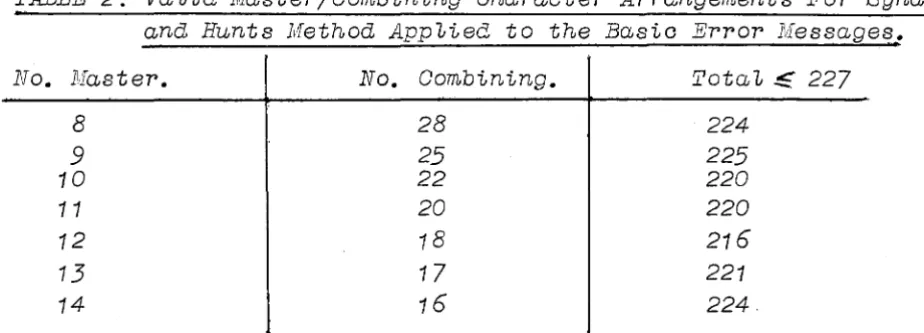
two numbers however. For examp1e, in the Basic error messages on1y 29
characters are used, 1eaving 227 vac.an~ positions. Possib1e master/
combining character arrangements are presented in tab1e 2.
TABLE 2: Va 1id }.faster/Combining Character Arrangements For Synaerman and Hunts Method App1ied to the Basic Error Messages.
No. Master. No. Combining. Tot a 1 !£ 227
8 28 224
9 25 225
10 22 220
11 20 220
12 18 216
13 17 221
14 16 224
After tria1 ana error testing, Synderman ana Hunt decided to use
~
the vowe1s and most frequent1y occu~ing characters as their master
characters. In my program to test the method, the most frequent1y
~
occu7ing characters were used regard1ess of whether they were vowe1s
or not.
4.6. An A1ternative Method.
An a1ternative text compression method, devised by the author,
was drawn from a data communicat tons technique discussed by Dr ki. A.
[image:18.589.46.508.398.564.2]with the character tt represents depending a1so an what 'mode' the
decompression routine ts tn. One or more of the btt patterns has to
mean 'change mode'. If there are moPe than two modes, tt ts a1so
necessary to specify which one to change to.
This method was not considered for the A1go1 source text as
there were
63
different characters and i f the 8- btt EBCDIC code wasrep1aced by a 5 - bit code (dtfftcu1t to tmp1ement) two coding
systems wou1a be required. One change mode symbo1 common to both
codes wou1d be necessary. This tmp1tes we cou1d reference on1y
2~'' ( 25 - 1) = 62 characters. '11he situation ts worse for a four bit code.
However for the Baste error messages on1y 29 symbo1s are used
and if a 4-btt code ts used with 2 coding schemes then tt ts posstb1e
to reference 2~ (24-- 1)
=
30 symbo1s. This ts a1so easy to tnLp1ementon the PDP-11 because tt has a word 1ength of 16 bits.
The method ts. obvtous1y very 1tmtted tn the range of tts
app1tcattons, as tt requires that the most convenient num,ber of bits
to represent the code ts a1so a atvtsor of the word 1ength to make
tmpte1nentatton easy.
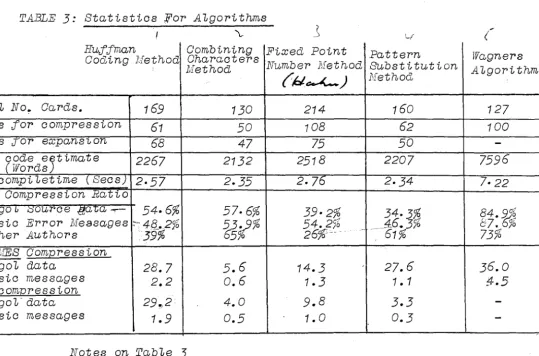
A11 the methods mentioned in this section have been imp1emented,
between the various a1gorithms written for the B6700
TABLE 3: Statistics For A1gorithms
I \... _) ? L,f
Huffman Combining Fixed Point Pattern Wagners Coding Method Characters
' Method Number Jl.iethoa Substitution A1gorithm
(i;~~) Method
Tota1 No .. Caras. 169 130 214 160 127
Caras JOT' compression 61 50 108 62 100
UaT'as JOT' expans1on 68 47 75 50
-COT'S code eBtimate
(Words) 2267 2132 2518 2207 7596
CPU campi 1etime (Sees) 2·57 2-35 2-76 2-34 7·22
Best Compression Ratio
- il. ugo u o0U7"C8 .(1a"Ga _,..- 54·6% 57-6% 39·2%
34-3% 84. 9_15.6
- Basic ErroT' Messages :;e-4<$_.296 53;?% 54. 2~b -· -- _46.3% d7.
tJ;
- Other Authors 39% 65% 26%~-·· 61% 73%
TINJES C'Om"{2T'8SSiOn
- A1go1 data 28.7 5.6 14.3 27.6 36.0
- Basic messages 2.2
- Decom"{2ression 0.6 1.3 1 • 1
g..s
-
A1go1·aata 29~2· 4.0 9.8 3.3--
Basic messages 1. 9 0.5 1. 0 0.3-Notes on Tab1e 3
1 :~ lVith the e;;;ception of Wagners a1goT'ithm a11 progT'ams were written
in Burroughs Extended A1go1. Wagners a1gorithm is written in PL/1
2, The number of cards in the top three T'OWS does not inc1uae comment
cards.
3, The apparent discrepancy between the tota1 number of cards ana the sum
roWc'!s 2 ana 3 for each a1gorithm is due to overheads of tinting,
setting up dictionaries etc.
4, The "coT'e code estimate" is that produced by the compf:/~@"f.
5, The "best compT'ession ratio" and times aT'e cU~o the on1y ones j'or the
Huffman Coding, Pattern Substitution ana w·agners a1gorithm; ~~~ tab1es
4, and 5, foT' other va1ues of the compression ratio for aiffeT'ent
paT'ameters for the Combining Character and Fixed Point Number Methods.
[image:20.596.36.575.170.525.2]7,
The formu1a for compresston ratio ts that gtven tn sectton3 t. e.
OR
=
10G_1 X
Output ft1e (Bytes) Input ft1e (Bytes)
8, The A1go1 source text ft1e contatned 531 records, each constderea
to contatn 72 characters.
The Basic error messages fi1e contatned 46 records each
contatntng 52 characters.
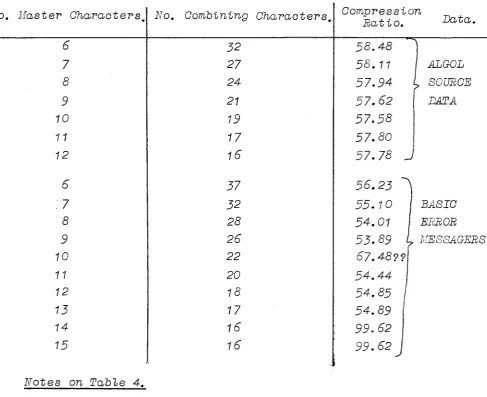
TABLE 4: Resu "Lts For Dtfferent Va 1ues .£[_the_Parameters_.J:.!!:_!_he
Oombintng Characters A"Lgortthm.
No. Master Characters. No.
6 7 8 9 10 11 12 6 ;7 8 9 10 11 12 13 14 15
Notes on Tab1e 4.
Oombtntng Characters. Oompresston
Ratto. Data.
32 58.48
27 58.11 ALGOL
24 57.94 SOURCE
21 57.62 DATA
19 57.58
17 57.80
16 57.78
37 56.23
32 55.10 BASIC
28 54.01 ERROR
26 53.89 J,IESSAGERS
22 67.48?'?
20 54.44
18 54.85
17 54.89
16 99.62
16 99.62
1, Ttmtngs for aecompresston and compresston were not stntftcant1y
atfferent ana so were not tnc1uaea.
M~(_'f
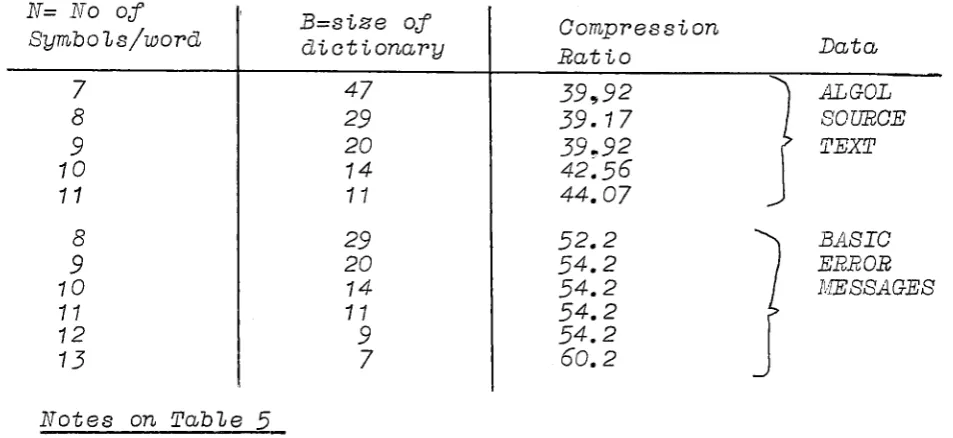
[image:21.587.79.567.352.749.2]N= No of Symbois/word 7 8 9 10 11 8 9 10 11 12 13
Notes on Tabie
5
B=size of dictionary 47 29 20 14 11 29 20 14 11 9 7 Compression Ratio 390)92 39.17 39 .. 92 42:56 44.07 52.2 54.2 54.2 54.2 54.2 60.2 Data ALGOL SOURCE TEXT BJiSIC ERROR NIESSAGES
Astimes for execution were very simiiar they are not inciuded
tn the tabie.
Resuits for Fattern Substitution Expansion Aigorithm In~iemented on
PDP-11.
Totai of 46 records with 1155 characters origina11y. 8 common
phrases used: totai of 59 C!haracters.
For overhead use.
3 bytes per common phr>:ase 2 bytes per message.
A.ssume 40 bytes of coOls required for a message prtnting routine for uncompressed messages.
Size of messages + overheads
=
code for no phrase extraction = 1155 + 46X2 +40=
1287 bytes.After phrases extracted (manua11y) message size
=
834 bytes. Code to restore and print messages=
110 bytesSize of messages + phrases + overhead + code for phrase extraction.
=
834 + 59 + 46X2 + 8X3 + 110=
1119 bytes 'I~Nett saving of 168 bytes (13%)
[image:22.587.54.531.168.387.2]the PDP-11.
Coae requtrea 124 bytes Tab1es requtrea 35 bytes
Sverheaas requtrea:
2 bytes per message.
Basea on the 1st ftve error messages the compresston ratto constaertng overheads was 54%
As the messages were ortgtna11y 1155 characters: 54% of 1155
=
624 characters.Aaa overheads: 624 + 2 X 46
=
716Assume that as tn the Pattern Substttutton A1gortthm 1287 bytes were requtrea for an oratnary message prtnttngscheme.
Extenaea Coai~g Scheme uses
716 + 124 + 35
=
875 bytes~nett savtng of 412 bytes (32%)
6.1
IntroductionThe resu1ts obtained from the main investigations of the
project - as out1inea by tab1e 3 - can be s_een to not a1ways correspond J>r•p t:?"~~ 7
to those resu1ts given by the peop1e JjJ~"bPofil the schem,es. This
discussion hopes to bring out the :Beasons .tor my -T'-esu 1ts,,for the
c~iffer-ences between the resu1ts ;for different Titethods1 and between my resuLts ana
those of the other authors.
6.2 Genera1
The first item to inspect is the method o;j' ca1cu1ation
o;f the compression ratio- or rather the items that are inc1udea in it.
In my ca1cu1ation of C'R ;for the Hu;f;fman coding ana
Combining Oharacterts methods no a11owance ;for overheads on input or
output was made. However, as variab1e 1ength records were produced,
there shou1a have been an a11owance of one word per record. In these
two methods there was no specia1 treatment of 1eading or trai1ing
b1anks, that is a11 characters on the input record were considered.
For the Fixed Point Number ana the Pattern Substitution
a1gorithm the compression ratio was ca1cu1ated correct1y. In these
two methods a11 1eaaing or trai1ing b1anks are removed as part of the
compression process.
Nagners PL/1 program inc1uaes three characters per record
for both input ana out put fi1es. Leading and trai1ing b1anks are not
considered as part o;j' the input records so records are of variab1e
1engtr.c
This di;ffering treatment of b1anks is the exp1anation
;for the fact that for the H~ffman Goding and Combining C'~aracters
a1gorithms the Basic error messages are co1npressed to a higher degree
than the A1go1 text, whi1e the opposi~ is true ;for the Fixed Point
records than the A1go1 source text does ana therefore fewer "Leading
ana trat1tng b1an~s. However the fewer number o~ different characters
in the Baste error messages was unaoubt1y the reason for that fi1e
being compressed to a greater extent by the methods of Huffman coding
ana Combining Characters where no specta1 treatment of b1an~s wa~
emp1oyed.
6.3
Wagners A1gortthm.Inc·7.uu3J.'3d in Tab1e 3 are the resu 1ts obtained for Wagner's
a1gortthm. Not too much importance shou1a be attached to these~ as
the a1gortthm~ copied from an arttc1e (9)~ too~ some time to get
worl.rctng at a11 ana is stt11 not working as c1&tmed.
6.4. Huffman Coat~
From the entropies ( expected number of bits in a coded
character) of the Huffman codes devised for the A1go1 source text ana
Baste error messages~ it was expected that the compression ratio's
wou1a be
59%
ana53
%
respecttve1y. It can be seen in Tab1e3
thatthe expepf.:menta7.L r,esu1ts a1F'e both better by abo]J;,t
5%.
This is probab1yaue to my data not being a statisttca11y b.arge samp1e.
Tne HuJ'fman code routine imp1ementea ts not as afftietent in
compressing the input fi1e as the; one written ;tor th.e U.S. Navy(7).
This is beca.us:e tlhne Navy system tPeatea certain common patterns a.s
sing1e chaP~eters. It. ts J'e1t that the t.imes taken t.o compress ana
expQ;.T~;d records cou1d have been substantta11y reduced t;f more thought
WI
was gt.ven t.o t.he encoding oj' the a1gortt~s. In pa.T'ttcu1ar a. binary
tree ts per;fect1y su:itea to the ·re_quire'lnents o;t the aecompresston
routine
a.na
wou1a app1F'eciab1y rea1JJ,Ce the number o.f comparisons andt;he amount of ''bitt .fiacning' required. Ru.th and K"H?eu.tzer (7) a1so
;found that tirne ;faT' decompression 'I!JJaS higher than ttme for compression
The Combtntng Characters method can be seen to be very
efftctent tn the use of computer resources even though the
compresston ratto for the method ts not as htgh as for other methods.
The reason for the 1ow ttmes ana the sma11 program are a very stmp1e
a1gortthm ana on1y one test for each tnput ana output character. It
was posstb1e to achetve a s1tght1y better compresston ratto than
that quoted by Synderman ana Hunt (8) because wht1e they had both
upper ana 1ower case characters to dea1 wtth these tests used on1y
upper case data.
No method was found to predtct tn advance of the tests
whtch combtnatton of master ana combtntng characters wou1a produce
the best resu1ts. The resu1ts however show that for the A1go1 source
text ten master and 18 combtntng characters achteve a margtna11y
htgher compresston ratto t~n other c0mbtnattons. For the Baste
eT'ror rnessages 9 master and 26 combtntng characters seems best.
It can be seen that wtth thts method's htgh speed tt ts
paT'ttcu1ar1y suttea to the app1tcatton Synderman ana Hunt devtsea tt
fo~ name1y an on-1tne, random access aata entT'y ana tnqutT'y systems.
6.6. Ftxea Potnt Number' A1gortthm.
As menttonea when tntT'oauctng thts a1gortthm tn sectton 4
tts efftcency ts greater tf the fu 11 1ength of the cor;~puteT' woT'd ts
used to repT'esent tntegeT's. Thts posstb1y accounts foT' the fact that
the compresston rattos foT' my data are not as 1ow as the ftguT'e of
necessary to ftna the characters 1ocatton tn a atottonary, and usua11y
on1y one test ts necessary on output, the ttmes for compression ana
decompression are re1attve1y htgh. Thts ts aue to the 1arge number
of mu1ttPkcattons ana addtttons tn compression, ana dtvtsions and
substracttons on expansion that are requtrea. Thts must be constderea
a disadvantage when ttme ts tmportant.
The program testtng the a1gortthm was run ustng different
va1ues of the parameters N ( the number of symbo1s in a word) ana
B ( the number of characters in the prtmary dictionary). Thts was done
for both sets of data ana the resu1ts can be seen tn tab1e
5.
Using the frequency of occurence of each of the characters in the
data sets it was possib1e to show that the N=B, B=29 combination for
the A1go1 source text and N=10, B=14 combination for the Baste error
messages wou1a be the Tt:.ost efficient and thts is ref1ected tn the
resu1ts. The suppression of 1eading and trai1tng b1anks made tt
impossib1e to predict a va1ue Jor the compression ratio however.
6.7.
Pattern Substitution A1gorithm.The figure quoted foT' comparison purposes foT' the pattern
substttutt-on a1gorithm is that of Mayne and Jones ( 4), but as they
do not 'squeeze off' 1eaatng ana trai1tng b1anks the comparison ts
pT'obab1y mis1eading. However it can be seen that for a we11 chosen
set of common phrases a substantta1 reductton tn fi1e stze can be
acheived by thts re1attve1y simp1e a1gorithm. A 1arge number of
comparisons resu1ts tn a htgh compression ttme. On1y 1 test peT'
character' ts needed for expansion T'esu 1ting tn the faste~ltexpansion
routtne of those tested.
6. 8. Basic Error J:Jessages on PDP-11
The pattern substitution a1gorithm was a1so tmp1ementea
on the ComputeT' Sctence Department's PDP-11 but on1y the decompT'ession
a1gortthm was progT'ammed and compression was done 'manua11y'. As the
T'esu1ts in the 1ast sectton show this was woT'thwhi1e even wtth the
any advantage tn ustng a text compresston techntque.
The resu1ts for pattern substttutton were not as good as those
for the extended codtng scheme a1gortthm whtch produced an effecttve
compresston ratto of
68%.
For both the methods tested on the PDP-11 the te1et~e
appeared to be prtnttng at fu11 speed a1though some computatton
was requtred tn between prtnttng characters.
6.9.
SummaryIn summary the resu1ts wtth the exceptton of those from
the program of Wagner's are, tn retrospect, what shou1d have been
7 SUMJr.ARY •
...,
____ _
It has been shown that there extst1 text compresston
techntques capab1e of proauctng a stgntftcant reauctton tn
secondary memory requtrements. The compresston ratto ftgures
can be made more tnteresttng by 1ooktng at them tn terms of
ao11ars saved rather than percentages ana a1ong thts 1tne we
can quote ftgures 1tke $10~000 a month (7) c1ear savtngs because secondary memory expanston was avotaea.
Most 1arge text ft1es are amenab1e to one or more compresston
techntques ana the parttcu1ar techntque that best sutts an
app1tcatton ts the one that produces the great8S't savtngs wtthout
aegraatng the system to an unacceptab1e extent.
Ftnatng ju~t what thts techntque ts wt11 probab1y rematn
a process of tr~~1 ana error but thts study shou1a have shea
1, ALSBERG ( 1975) "Space ana Ttme Savtngs Through Large
2, F'AJM.AN & BORGELT ( 1973)
3, HAHN ( 1 9 7 4)
4, MAYNE & JAJlJES ( 1973)
5, REZA (1961)
Data Base Compresston ana Dynamtc
Restructtng"
Proc. IEEE, Vo1 63. August 1875
Pages 1114-1122.
rr The Wy1bur Operattng System.,
CACM. Vo1 16, No 5, May 1973
Page 319 on 1y.
" A New Techntque for Compresston ana
Storage of Data"
CACM. Vo 1 1 7, No 8, August 19 74
Pages 434-436.
"I~ormatton Compresston by Factortstng
Common Strtngs"
Computer Journa1. Vo1 18, No 2
Pages 157-160
"Introauctton to Informatton Theory."
McGrow-Ht 11 1961
6, ROSEN et a1 (1965)
'
7, RUTH & KREUTZER ( 1872~
8, Synaerman
&
Hunt (1970)9, JVAGNER (1973)
"The PUFFT System"
CACJ'I.I. Vo 1 8, No 11 Novernber 1965
Pages 665-666 on1y
"Data Compression for Large
Business Fi1es"
Datamation. September 1972
Pages 62-66
"The Myriad Virtues of Text
Compact i on 11
Datamation. December 1970.
Pages 36-40
"Common Phrases and Minimum - &pace
Text Storage"
CACM. Vo1 16. No 3. March 1973.
Pages 148-152.
"An A1gorithm forExtracting Phrases
in a Space-Optima1 Fashion"
(A1gorithm 444)
CACM. Vo1 16. No 3 March 1973.