Original Article
Reducing one port in laparoscopic cholecystectomy:
does that really make a difference?
Emir Eroler1, Evren Dilektasli1, Deniz Tihan1, Ugur Duman1, Mehmet Emrah Bayam1, Mehmet Fatih Erol1, Havva Nur Alparslan2, Ahmet Taha1
1Department of Surgery, Yuksek Ihtisas Training and Research Hospital, Bursa, Turkey; 2Clinic of General Surgery,
Corlu Government Hospital, Tekirdag, Turkey
Received January 7, 2016; Accepted March 21, 2016; Epub June 15, 2016; Published June 30, 2016
Abstract: Background: New methods for minimally invasive surgery are continually being developed and conven-tional laparoscopic techniques are constantly being modified to improve the ease of minimal invasive procedures. The aim of this study was to compare the clinical results of three ports laparoscopic cholecystectomy with the four ports laparoscopic cholecystectomy. Methods: Consecutive 60 patients that underwent laparoscopic cholecystec-tomy were prospectively enrolled in this study. The patients were randomized into Group 1 (three ports) and group 2 (four ports). Two groups were compared in regard to operative complications, amount of carbon dioxide used for insufflation, requirement to drainage tubes, postoperative pain scores, time to discharge and occurrence of early complications after the operation. Results: The median age (minimum-maximum) was 44 (22-78) and 86.7% of the patients were female. When two groups were compared, there was no statistically significant difference between the groups according to the carbon dioxide used and the need for drain usage (P=0.156 and P=0.070 respectively). Although there was no statistically significant difference between the groups according to the operation time, mean operation time was slightly shorter in group 1 (P=0.110). No significant difference was found between two groups according to the pain scores and the hospital length of stay (P=0.693 and 0.792 respectively). When complica-tions were compared, no statistically significant difference between two groups according to perioperative and postoperative complications were noted (P=0.761 and P=1.000). Conclusions: In reduced port surgery, three-port cholecystectomy may be counted as an educative bridge to the single incision cholecystectomy. Three-port laparo-scopic cholecystectomy is a safe method especially after gaining adequate experience. But even in the hands of experienced surgeons, it has a high rate of conversion to four-port conventional technique. Surgeons that are per-forming three-port cholecystectomy should never hesitate on adding an additional trocar when they have difficulties on dissecting the Calot’s triangle or defining the critical anatomical landmarks.
Keywords: Laparoscopic cholecystectomy, minimally invasive surgery, complication, reduced port surgery, three-port cholecystectomy
Introduction
Gallstone disease is quite common worldwide while its prevalence may vary depending on age, gender and ethnicity. Studies demonstrate that at least 10% of adults have gallstones. Thus, cholecystectomy is the second most common type of operations performed in gen-eral surgery practice [1]. Surgery itself is a trau-ma to the patient and the response to that trauma increases depending on the severity of the injury. Hence, minimizing the trauma should be one of the main objectives performing a pro-cedure [2].
tech-niques are constantly being modified to improve the ease of minimal invasive procedures [5]. In the light of this view, it has been suggested that LC operations be performed through three ports instead of the standard four-port app- roach. Today, three-port LC has been accepted worldwide as a safe method without producing troublesome complications such as major bile duct injury [6-8]. But little is known whether if three-port cholecystectomy has any advantage over four-port cholecystectomy; in regards to patient’s per-operative or post-operative out-comes, or not. The aim of this study was to compare the clinical results of three-port LC, with four-port conventional LC. Our primary out-come was operative time while our secondary outcomes were per-operative and post-opera-tive complications, post-operapost-opera-tive pain and hospital length of stay.
Methods
Approval for this study was obtained from the Sevket Yilmaz Training and Research Hospital Institutional Review Board (Approval Date/ Number: 23.10.2012/2). This was a prospec-tive randomized study including a total of 60 consecutive patients that were scheduled for an elective LC procedure with the diagnosis of cholelithiasis, in the Department of General Surgery, Sevket Yilmaz Training and Research Hospital. Patients agreed on participating to the study and filled up the patient consent forms.
To estimate the sample size, operative time was used as primary endpoint considering a 20% reduction in operative time clinically rele-vant. Assuming the first type error as α=0.05 and deeming a power of 80%, a total sample size of 52 patients (26 subjects per group) was calculated adequately. Patients were rand-omized into two groups each with 30 patients: group 1 (three-port LC) and group 2 (four-port LC). Before the operation patients were blinded on the treatment group that they were enrolled.
Patients with perioperative suspected malig-nancy, previous upper gastrointestinal surgery, American Society of Anesthesiology (ASA) score ≥4 and body mass index (BMI) >30 kg/m2 were excluded from the study. If the patient in group 1 requires an additional port (fourth port) per-operatively, due to technical difficulties such as excess of adhesions or the difficulty of dis-section, the case was also excluded from the study. All patients were given 1 g of intravenous cephazolin sodium during induction of anaes-thesia for prophylaxis. All operations were per-formed by a group of surgeons that are experi-enced in LC, who are performing more than 250 LC’s per year, either by using three-port or four-port technique. Drain was placed accord-ing to surgeons’ choice dependaccord-ing especially on the difficulties in intraoperative assessment and weighing the severity of inflammatory changes. In the post-operative first 24 hours all patients had standardised multimodal analge-sia (nonsteroidal anti-inflammatory drugs, and opioids).
Under general anestesia, patients were posi-tioned in supine position. Placement of trocars in Group 1 (three-port technique) was as fol-lows: a 10-mm port for the camera was insert-ed just below the umbilicus, a 10-mm right-hand port was inserted approximately 2 cm below the xiphoid process, a 5-mm left-hand port was inserted 1 cm below the midpoint of the line joining the intersection of the anterior axillary line and costal margin to the mid-clavic-ular line. Placement of trocars in Group 2 (four-port technique) was as follows; a 10-mm (four-port for the camera was inserted just below the umbilicus, a 10-mm right-hand port was insert-ed approximately 2 cm below the xiphoid pro-cess, a 5-mm left-hand port was inserted 1 cm below the intersection of the mid-clavicular line and the right costal margin and a 5-mm trac-tion port was inserted 1 cm below the intersec-tion of the right anterior axillary line and the right costal margin.
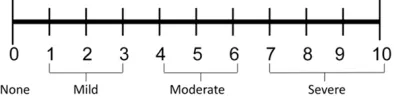
[image:2.612.91.288.74.125.2]Patients’ data including demographics, ASA scores, intraoperative complications, the use of drainage tubes, amount of carbon dioxide used, pain scores at postoperative 24 hours, time to discharge from hospital and early post-operative complications were recorded. Num- eric rating scale (NRS) was used to assess pain. The NRS is an 11-point scale for the patient to
self-report their pain (Figure 1). Pain at each port insertion site was separately questioned and the highest score was noted. Two operative groups were compared in regard to operative complications, amount of carbon dioxide used for insufflation, requirement to drainage tubes, postoperative pain scores, time to discharge and occurrence of early complications after the operation.
All statistical analyses were performed using Statistical Package for the Social Sciences (SPSS), version 16.0 (IBM® SPSS® Inc. Chicago, IL. USA) software. Continuous parameters were defined as mean ± standard deviation if they are normally distributed and defined as median (minimum-maximum) if they are non-normally distributed. Categorical variables were report-ed as frequencies and percentages. To exam-ine the differences between groups, categori-cal covariates were analysed using Fishers exact test, while the continuous covariates were analysed based on Mann Whitney-U test. Unless otherwise indicated, a 5% type-I error level was used to infer statistical significance.
Results
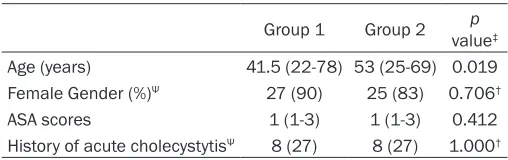
When patient characteristics were analysed, the median (min-max) age was 44 (22-78), 52 patients were female with a median (min-max) ASA score of 1 (1-3). When two groups were compared, there was no statistical difference for gender, ASA scores and the history of acute cholecystitis. On the other hand there was a significant difference between the median ages of the two groups (P=0.019). The baseline char-acteristics for two groups are outlined in Table 1.
Six patients (10%) that were initially in the three-port surgery group according to the rand-omization were excluded due to excessive amount of adhesions or the difficulty of
dissec-bladder (GB) perforation occurred in 5 patients, haemorrhage from the liver bed was the case in 2 patients and iatrogenic perforation with haemorrhage occurred in one patient. On the other hand, in group II, 3 iatrogenic GB perfora-tions, 1 haemorrhage from the liver bed and 2 iatrogenic perforation with haemorrhage occ- urred. There was no major per-operative com-plication in study groups (Table 2). Postopera- tively, complications occurred in 3 patients. Wound infection has occurred in 2 patients, one in each group. Bile leak was diagnosed in one patient from Group 2, after 3 days from the operation. Two days after the discharge of that patient, he was re-hospitalized with signs of peritonitis. In the radiological evaluation with upper GI ultrasonography, a bilioma for- mation was diagnosed. Pigtail catheter drain-age was placed followed by Endoscopic Retrograde Cholangio Pancreatography (ERCP). In the ERCP, a possible leakage from accessory biliary duct was diagnosed and endoscopic sphincterotomy was performed. Seven days after the ERCP, complete resolution of the bile drainage achieved and the patient was suc-cessfully discharged. Per-operative and post-operative complications are outlined in Table 2. No significant differences were noted between the groups regarding per-operative and postop-erative complications (P=0.761 and P=1.000 respectively).
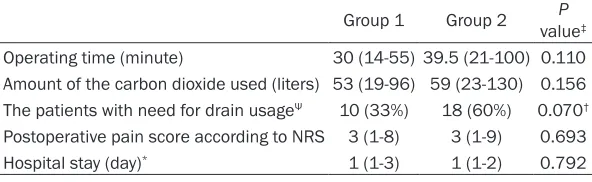
Median (min-max) of the carbon dioxide used during the operation for group I and II were 53 (19-96) and 59 (23-130) respectively. There was no significant difference between the groups regarding the amount of carbon dioxide used (P=0.156). Similarly drain usage after the operation was also statistically non-significant between two study groups (P=0.070) (Table 3). Detailed comparisons for the outcome varia-bles are outlined in Table 3. Operating time
var-Table 1. Baseline characteristics
Group 1 Group 2 valuep ‡
Age (years) 41.5 (22-78) 53 (25-69) 0.019 Female Gender (%)Ψ 27 (90) 25 (83) 0.706†
ASA scores 1 (1-3) 1 (1-3) 0.412
History of acute cholecystytisΨ 8 (27) 8 (27) 1.000† Values are median (min-max) unless indicated otherwise. ΨValues are n (%) ‡Mann Whitney-U test unless listed otherwise, †Fisher’s exact test.
tion in the callot triangle. In all of those patients the operation was fin-ished laparoscopically without con-version to open technique. In all, addi-tional trocar (4th trocar) was placed and by using two instruments, trac-tion and counter-tractrac-tion from fundus and Hartman was carried out.
[image:3.612.89.343.83.163.2]gall-ied between 14-55 minutes (median time: 30 min) in Group I and 21-100 minutes (median time: 39.5 min) in Group II. No significant difference was found between the two groups in terms of operating time (P=0.110). Post-operative pain scores were also statistically non-significant between groups (P=0.693) (Table 3).
Days of hospital stay varied between 1-3 in Group 1 and 1-14 in Group 2 with median val-ues of 1 day in both groups. No significant dif-ference was found between the groups regard-ing the days of hospital stay (P=0.742) (Table 3).
Discussion
Since it was first implemented in humans in 1985, LC has replaced the open cholecystec-tomy and became the gold standard of practice in surgical treatment of gallstone disease [9]. Currently in the United States, over 770.000 LC procedures are being performed annually [10]. LC has been regarded as the gold standard
difications by time. Port input techniques have been the most commonly modified techniques in LC. In four-port technique, surgeons in United States use different inputs than French sur-geons [12]. Sursur-geons in United States use the fourth port for traction of the fundus. But in recent years, the necessity for a fourth port has become the matter of a debate. With increas-ing experience of surgeons usincreas-ing laparoscopy, some new techniques have been introduced such as suspending the gallbladder to the ante-rior abdominal wall or by applying traction to the GB through the port inserted at right hypo-chondrium [13-15]. We did not use any sutures or techniques to suspend the GB in our patients. Traction of the GB was achieved using a tool introduced through the port inserted at right hypochondrium.
LC requires implementation of a safe surgical technique, for which obtaining a good exposure of the cystic duct and the cystic artery is of criti-cal importance. After suspending the GB and achieving optimal visualization of the Calot’s triangle, cystic duct and cystic artery are
visual-Table 2. Per-operative and post-operative complications
Group 1
(n=30) Group 2 (n=30) P value† Per-operative (minor) complications Gallbladder perforation 5 (16.7) 3 (10)
Hemorrhage from the liver bed 2 (6.7) 1 (3.3) Perforation and haemorrhage 1 (3.3) 2 (6.7)
Total 8 (26.7) 6 (20) 0.761
Postoperative complications Wound infection 1 (3.3) 1 (3.3)
Bile leak 0 1 (3.3)
Total 1 (3.3) 2 (6.7) 1.000
[image:4.612.91.522.85.203.2]Values are n (%), †Fisher’s exact test.
Table 3. Comparative table between two groups for operating time, amount of the carbon dioxide used during the operation, drain us-age, postoperative pain scores at 24th hour according to NRS and days of hospital stay
Group 1 Group 2 valueP ‡
Operating time (minute) 30 (14-55) 39.5 (21-100) 0.110 Amount of the carbon dioxide used (liters) 53 (19-96) 59 (23-130) 0.156 The patients with need for drain usageΨ 10 (33%) 18 (60%) 0.070†
Postoperative pain score according to NRS 3 (1-8) 3 (1-9) 0.693
Hospital stay (day)* 1 (1-3) 1 (1-2) 0.792
NRS: Numeric rating scale. Values are median (min-max) unless indicated otherwise. ΨValues are n (%). ‡Mann Whitney-U test unless listed otherwise, †Fisher’s exact test. *The mean ± standard deviation for Group 1 was 1.2 ± 0.48 and for Group 2 it was 1.6 ± 2.37.
technique, depending on many factors including ea- rly return to normal daily activities, short length of hospital stay, enhanced sa- fety due to magnified view of the operative field, low risk of mortality and mor-bidity, less tissue damage, good cosmetic outcomes, less postoperative pain and low cost [11].
[image:4.612.90.386.286.377.2]ized and a ligature is passed around them sep-arately. Then, the duct is clipped and cut between the clips. The GB is dissected away from the liver bed and removed without exiting the anatomic plane [16]. In this study, a fourth port was introduced if the Calot’s triangle could not be clearly visualized or if the risk of failure was too high due to technical difficulty.
Al Azavi et al. [17] demonstrated in their study that, in 495 patients there were no significant differences between three-port and four-port cholecystectomy in regard to perioperative and early postoperative complication rates. Simi- larly, in a series of 90 patients, Khorgami et al. [18] found no significant difference between three-port and four-port cholecystectomy in regard to complication rates. In our study only one serious complication occurred. In four-port LC group (Group 2), one patient had bile leak-age in the postoperative period and underwent an additional procedure. But, we found no sig-nificant difference between patients receiving three-port and four-port LC in regard to periop-erative and postopperiop-erative complication rates. As a result, three-port LC may be regarded as a safe option in terms of patient safety.
The duration of an operation is a measure that many surgeons care. Although duration of the anaesthesia comprises the major concern for keeping the operation as short as possible, a rapid surgery should never be regarded as a good surgery. Al-Azawi et al. [17] reported that mean duration of the operation using three-port LC was 46.1 minutes. Kumar et al. [14] reported that mean duration of the operation was 47.3 minutes in patients receiving three-port technique whereas the duration was 60.8
minutes in those receiving four-port techniques. The mean duration of four-port LC varied in lit-erature between 34 and 59 minutes (13, 15 and 19). In our study median duration of opera-tion were 30 minutes in Group 1 and 39.5 min-utes in Group 2. No significant difference was found between two groups in regard to duration of operation and this finding is not contradicto-ry with previous studies. In our study, despite insignificance, the amount of carbon dioxide used in Group 1 was lower than that in Group 2, which was partly due to the shorter operative times achieved in this group.
[image:5.612.95.525.72.210.2]Use of drainage tubes after cholecystectomy is controversial [19-21]. In LC patients, Tzovaras et al. [19] compared patients with drainage tubes, to the patients without drainage tubes and found no significant difference in mortality, morbidity and duration of hospital stay. Whereas they reported that postoperative pain was significantly lower in patients without drain-age tubes. In our study, we placed suctioning silicone drainage tubes in 10 patients from group 1 and in 18 patients in Group 2. The high rate for the drain usage in our series is mostly because of the patients that had previous acute cholecystitis history (16 patients) and the increased difficulty in dissection due to the severity of inflammatory changes especially in those patients. Despite insignificance, we observed that drain usage rates of patients receiving three-port LC are smaller than those receiving four-port technique (P=0.07). Taken together with that two groups were similar with respect to postoperative complications, the finding that three-port technique resulted in a decrease in need for drainage tubes may be an
important finding in terms of surgical safety. But one should keep in mind that, the decision of placing drainage tube is surgeon’s per-opera-tive choice. Moreover there is a lack of specific guideline for deciding the necessity for placing a drainage tube. Thus, we believe that this find-ing is highly suspicious for a possible selection bias.
Kumar et al. [14] compared the 10 cm unscaled visual analogue scale (VAS) scores of patients receiving three or four-port LC and found that 24 h pain scores of patients in three-port group was significantly lower than those in four-port group (2.19 vs. 2.91 in three and four-port groups, respectively). In our study, 24th hour pain scores were not significantly different between two groups. Since we believe that the fourth port was placed at a dermatome area that is sensitive to pain, we evaluated the pain score at this area separately from the overall pain score but found no significant difference either.
Hospital length of stay should be kept as short as possible to overcome the risk of nosocomial infection and to reduce cost. One possible rea-son why concept of minimal invasive surgery is so widely accepted is that, these operations cause a relatively short hospital length of stay. Chalkoo et al. [22] reported that mean hospital length of stay after three-port LC was 1.5 days. Kumar et al [14] reported that mean hospital length of stay was 1.19 days and 1.44 days in patients receiving three and four-port LC, respectively. In our study, median hospital lengths of stay after three-port and four-port LC were both 1 days (P=0.742). For to compare with the previous studies, the mean ± standard deviation for Group 1 and Group 2 were also calculated and found to be 1.2 ± 0.48 and 1.6 ± 2.37 respectively. In most studies, it was reported that the length of stay was not differ-ent between two techniques [15, 17, 23]. Three-port LC may be regarded as an initial stage for surgeons who are interested in mini-mal invasive surgery and for those wishing to perform single incision LC. It is recommended to gradually reduce the number of ports used from four to one to achieve single access over time [24]. The experience gained in this opera-tion may facilitate transiopera-tion to single access laparoscopic surgery. Moreover, it may also be an option for minimally invasive surgery in the
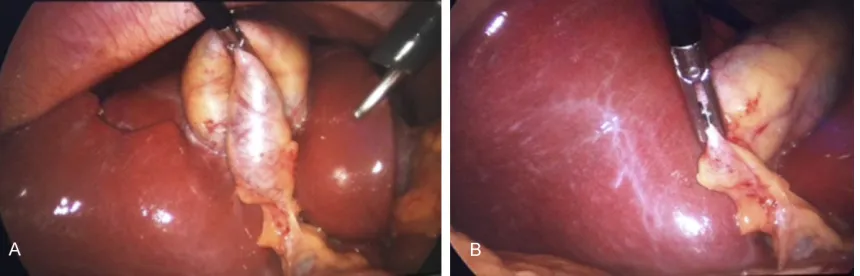
absence of technical facilities for single access cholecystectomy. In conventional LC, the instru-ment that is used by the assistant grasps the fundus of GB and hangs up the GB with the liver. This maneuver gives a better exposure to the surgeon and the surgeon counter-tracts the Hartmann’s pouch with the left hand and dis-sects the Calot’s triangle properly. On the other hand, for three-port LC, in some of the cases, the only instrument that is used for traction is not adequate for safe dissection of the Calot’s triangle (Figure 2). This is sometimes because of the loose fundus that hangs down to the Calot’s triangle and due to incompetent trac-tion of the GB.
Three-port LC seems appealing for its low cost which is related to short length of stay, lower amount of carbon dioxide and less need to analgesics. Macario et al. [25] reported that 37.2% of the overall cost of LC operations was for operating room and equipment, 24.3% was for nursery and room services, 7.2% was for anaesthesia, 4% was for drugs and 5.3% was for laboratory tests. Although there has been no study comparing the cost-effectiveness between three and four-port LC, Podolsky et al. [26] demonstrated that treatment costs were lower in patients receiving single-port LC than those receiving four-port LC.
count-ed as an count-educative bridge to the single incision cholecystectomy.
One of the important limitations of our study is the lack of a cost-effective analysis between two study groups. But when taken to account that the trocars used in our department are reusable, the operation durations and hospital lengths of stay did not differ between study groups and according to fast tract surgery pro-gramme the analgesics use in the post-opera-tive period are standardized, this might be counted as a lesser important limitation. The most important downside of our study is the limited number of patients enrolled.
Our results suggest that three-port LC is a safe method and it is also potentially feasible to perform after gaining adequate experience. It is as safe as four-port LC with regard to complica-tion rates. But take home message of this study is; the surgeons that are interested in reduced port surgery should never hesitate on adding an additional trocar when they are not clear about anatomical landmarks and have difficul-ties on dissection. High conversion rates in three-port surgery should be counted as a precaution as it helps to finalize the laparo-scopic operation without causing any iatrogenic injury.
There have been studies reporting less postop-erative pain, shorter duration of hospital stay and shorter time of surgery using three-port technique. Nevertheless, we found no signifi-cant differences in regard to these parameters. In current study, the technique seems to have no significant advantage on clinical outcomes, but it is crucial for educative purposes and may be counted as a previous stage of single-port surgery. Further prospective randomized trials with larger patient populations are warranted to evaluate its effectiveness and to reveal its role on transition to single access laparoscopic surgery.
Disclosure of conflict of interest
None.
Authors’ contribution
Emir EROLER and Evren DILEKTASLI made con-tributions to conception, design, and acquisi-tion of data and also made contribuacquisi-tions to
analysis and interpretation of data. Emir Eroler, Deniz TIHAN, Ugur DUMAN and Evren DILEKTASLI, made contribution to acquisition of data and involved in drafting and revising the manuscript. Evren DILEKTASLI, Mehmet Emrah BAYAM, Mehmet Fatih EROL, Ahmed TAHA and Havva Nur Alparslan YUMUN made contribu-tions to acquisition of data and interpretation of data. Deniz TIHAN, Ugur DUMAN and Evren DILEKTASLI have given final approval for this manuscript.
Abbreviations
ASA, American Society of Anesthesiology; NRS, Numeric rating scale; SPSS, Statistical Package for the Social Sciences; GB, Gallbladder; LC, Laparoscopic cholecystectomy.
Address correspondence to: Evren Dilektasli, De- partment of Surgery, Yuksek Ihtisas Training and Research Hospital, Bursa, Turkey. E-mail: [email protected]
References
[1] Schafer M, Krahenbuhl L, Farhadi J, Buchler MW. Cholelithiasis-laparoscopy or laparotomy? Ther Umsch 1998; 55: 110-115.
[2] Redmond HP, Watson RW, Houghton T, Condron C, Watson RG, Bouchier-Hayes D. Immune function in patients undergoing open vs laparoscopic cholecystectomy. Arch Surg 1994; 129: 1240-1246.
[3] Mosimann F. Laparoscopic cholecystectomy has become the new gold standard for the ma- nagement of symptomatic gallbladder stones. Hepatogastroenterology 2006; 53: 1.
[4] Bittner R. The standard of laparoscopic chole-cystectomy. Langenbecks Arch Surg 2004; 389: 157-163.
[5] Chamberlain RS, Sakpal SV. A comprehensive review of single-incision laparoscopic surgery (SILS) and natural orifice transluminal endo-scopic surgery (NOTES) techniques for chole-cystectomy. J Gastrointest Surg 2009; 13: 1733-1740.
[6] Leggett PL, Bissell CD, Churchman-Winn R, Ahn C. Three-port microlaparoscopic cholecys-tectomy in 159 patients. Surg Endosc 2001; 15: 293-296.
[7] Saccomani G, Arezzo A, Percivale A, Baldo S, Pellicci R. Laparoscopic cholecystectomy can be performed safely with only three ports in the majority of cases. Chir Ital 2009; 61: 613-616.
chole-cystectomy: an original three-trocar technique. World J Surg 1995; 19: 394-397.
[9] Soper NJ, Stockmann PT, Dunnegan DL, Ashley SW. Laparoscopic cholecystectomy. The new ‘gold standard’? Arch Surg 1992; 127: 917-921.
[10] Richards C, Edwards J, Culver D, Emori TG, Tolson J, Gaynes R; National Nosocomial Infections Surveillance (NNIS) System, Centers for Disease Control and Prevention. Does us-ing a laparoscopic approach to cholecystecto-my decrease the risk of surgical site infection? Ann Surg 2003; 237: 358-362.
[11] Amaral PC, Azaro Filho EM, Galvao-Neto MP, Fortes MF, Souza EL, Alcantra RS, Ettinger JE, Regis AB, Sousa MM, do Carmo VM, Santana PA, Fahel E. Acute cholecystitis: video-laparo-scopic versus traditional treatment. JSLS 2001; 5: 159-165.
[12] Kramp KH, van Det MJ, Totte ER, Hoff C, Pierie JP. Ergonomic assessment of the French and American position for laparoscopic cholecys-tectomy in the MIS Suite. Surg Endosc 2014; 28: 1571-1578.
[13] Endo S, Souda S, Nezu R, Yoshikawa Y, Hashimoto J, Mori T, Uchikoshi F. A new meth-od of laparoscopic cholecystectomy using three trocars combined with suture retraction of gallbladder. J Laparoendosc Adv Surg Tech A 2001; 11: 85-88.
[14] Kumar M, Agrawal CS, Gupta RK. Three-port versus standard four-port laparoscopic chole-cystectomy: a randomized controlled clinical trial in a community-based teaching hospital in eastern Nepal. JSLS 2007; 11: 358-362. [15] Sun S, Yang K, Gao M, He X, Tian J, Ma B.
Three-port versus four-port laparoscopic chole-cystectomy: meta-analysis of randomized clini-cal trials. World J Surg 2009; 33: 1904-1908. [16] Litwin DE, Cahan MA. Laparoscopic
cholecys-tectomy. Surg Clin North Am 2008; 88: 1295-1313.
[17] Al-Azawi D, Houssein N, Rayis AB, McMahon D, Hehir DJ. Three-port versus four-port laparo-scopic cholecystectomy in acute and chronic cholecystitis. BMC Surg 2007; 7: 8.
[18] Khorgami Z, Shoar S, Anbara T, Soroush A, Nasiri S, Movafegh A, Aminian A. A randomized clinical trial comparing 4-port, 3-port, and sin-gle-incision laparoscopic cholecystectomy. J Invest Surg 2014; 27 147-154.
[19] Tzovaras G, Liakou P, Fafoulakis F, Baloyiannis I, Zacharoulis D, Hatzitheofilou C. Is there a role for drain use in elective laparoscopic cho-lecystectomy? A controlled randomized trial. Am J Surg 2009; 197: 759-763.
[20] Monson JR, Guillou PJ, Keane FB, Tanner WA, Brennan TG. Cholecystectomy is safer without drainage: the results of a prospective, random-ized clinical trial. Surgery 1991; 109: 740-746. [21] Lewis RT, Goodall RG, Marien B, Park M, Lloyd-Smith W, Wiegand FM. Simple elective chole-cystectomy: to drain or not. Am J Surg 1990; 159: 241-245.
[22] Chalkoo M, Ahangar S, Patloo AM, Matoo AR, Baqal FS, Iqbal S. A medical school experience with three port laparoscopic cholecystectomy with a new modification in technique. Int J Surg 2013; 11: 37-40.
[23] Trichak S. Three-port vs standard four-port laparoscopic cholecystectomy. Surg Endosc 2003; 17: 1434-1436.
[24] Wu AS, Podolsky ER, Huneke R, Curcillo PG 2nd. Initial surgeon training for single port ac-cess surgery: our first year experience. JSLS 2010; 14: 200-204.
[25] Macario A, Vitez TS, Dunn B, McDonald T. Where are the costs in perioperative care? Analysis of hospital costs and charges for inpa-tient surgical care. Anesthesiology 1995; 83: 1138-1144.