http://wrap.warwick.ac.uk
Original citation:
Thomason, Alasdair, Griffiths, Nathan and Sanchez Silva, Victor (2015) Parameter
optimisation for location extraction and prediction applications. In: 13th IEEE
International Conference on Pervasive Intelligence and Computing, Liverpool, UK, 26-28
Oct 2015. Published in: Proceedings of the 2015 IEEE International Conference on
Computer and Information Technology; Ubiquitous Computing and Communications;
Dependable, Autonomic and Secure Computing; Pervasive Intelligence and Computing
pp. 2173-2180.
Permanent WRAP url:
http://wrap.warwick.ac.uk/72860
Copyright and reuse:
The Warwick Research Archive Portal (WRAP) makes this work by researchers of the
University of Warwick available open access under the following conditions. Copyright ©
and all moral rights to the version of the paper presented here belong to the individual
author(s) and/or other copyright owners. To the extent reasonable and practicable the
material made available in WRAP has been checked for eligibility before being made
available.
Copies of full items can be used for personal research or study, educational, or not-for
profit purposes without prior permission or charge. Provided that the authors, title and
full bibliographic details are credited, a hyperlink and/or URL is given for the original
metadata page and the content is not changed in any way.
Publisher’s statement:
“© 2015 IEEE. Personal use of this material is permitted. Permission from IEEE must be
obtained for all other uses, in any current or future media, including reprinting
/republishing this material for advertising or promotional purposes, creating new
collective works, for resale or redistribution to servers or lists, or reuse of any
copyrighted component of this work in other works.”
A note on versions:
The version presented here may differ from the published version or, version of record, if
you wish to cite this item you are advised to consult the publisher’s version. Please see
the ‘permanent WRAP url’ above for details on accessing the published version and note
that access may require a subscription.
Parameter Optimisation for Location Extraction and
Prediction Applications
Alasdair Thomason, Nathan Griffiths, Victor Sanchez
Department of Computer ScienceUniversity of Warwick, Coventry United Kingdom, CV4 7AL
{ali, nathan, vsanchez}@dcs.warwick.ac.uk
Abstract—The pervasive nature of location-aware hardware has provided an unprecedented foundation for understanding human behaviour. With a record of historic movement, in the form of geospatial trajectories, extracting locations meaningful to users is commonly performed as a basis for modelling a users’ interactions with their environment. Existing literature, however, has scarcely considered the applicability of extracted locations, typically focusing solely on the consequent knowledge acquisition process employed, due to the difficulty of evaluating the output of such unsupervised learning techniques. Towards the goal of ensuring the representativeness of extracted locations, and using location prediction as an example knowledge acquisition process, this work provides a method of automated parameter selection for both location extraction and prediction that ensures both the applicability of the locations extracted and the utility of the predictions performed. Specifically, we: (i) provide a metric for the evaluation of both extracted locations and predictions that characterises the goal of each of these tasks, (ii) frame the process of parameter selection as that of mathematical optimisation through the presented metric, and (iii) discuss characteristics of the metric while demonstrating its applicability over real-world data, location extraction algorithms and prediction techniques.
I. INTRODUCTION
With vast amounts of geospatial data readily available, services are increasingly being built to leverage the latent knowledge inherent in human mobility patterns. Understanding human behaviour through data has great potential in improving the quality and personalisation of services offered, making for tailored solutions capable of understanding not only the current needs and preferences of its users, but also their likely future requirements. Many systems that focus on understanding people from geospatial data make use of location extraction techniques to identify locations that have meaning and im-portance to the users, gaining insight not only into the types of places that users spend their time, but also aiding in the identification of the activities they perform and the people they associate with. These extracted locations are often used as the basis for the prediction of future movements of individuals, the recommendation of places to visit, and the identification of activities conducted.
While the extraction of locations meaningful to users pro-vides a vital foundation for further analysis, existing literature has scarcely considered the applicability of the locations ex-tracted to the task at hand, instead focusing solely on the con-sequent knowledge acquisition process employed. Although evaluating locations extracted through unsupervised learning techniques is challenging due to the lack of available ground
truth, the properties inherent in the locations have significant impact on the results of further analysis. Selecting appropriate parameters for location extraction is therefore of paramount importance. However, the impact of altering parameters is typically unknown, as methods of evaluating the applicability of a set of locations to a particular task are lacking.
The work presented here aims to overcome this problem by providing a method of parameter optimisation that selects the most appropriate parameters for both location extraction and the subsequent learning algorithm employed (e.g. location prediction). The need for manual selection of parameters and review of location properties is therefore removed, and the robustness of any predications based on the locations is en-sured, thereby increasing the utility afforded by such systems. Specifically, we focus on the problem of location prediction as a representative task and (i) provide a metric for the evaluation of both extracted locations and predictions that characterises the goal of each of these tasks, (ii) frame the process of pa-rameter selection as that of mathematical optimisation through the presented metric, and (iii) discuss characteristics of the metric while demonstrating its applicability over real-world data, location extraction algorithms and prediction techniques.
The remainder of this paper is structured as follows: Section II discusses related work in the areas of location extraction, prediction and parameter optimisation. Section III introduces the proposed parameter optimisation procedure for the task of location extraction and prediction. Section IV presents the experimental methodology followed, and Sec-tion V presents and discusses the results observed when applying the methodology to real-world data. We discuss our conclusions in Section VI.
II. RELATEDWORK
This section discusses relevant existing literature for loca-tion extracloca-tion, predicloca-tion and parameter optimisaloca-tion.
A. Location Extraction
linear time. The second step, visit clustering, clusters these periods, henceforth referred to as visits, into locations.
In support of visit extraction, methods have been proposed to identify periods of missing data, where missing data is expected to correlate with a user being indoors [3, 4]. Recent work, however, has assumed a greater availability of data and consequent removal of the requirement for visits to only occur inside buildings. This work has focused on using time and distance thresholds [2, 18, 20, 31, 32], where the user must have remained for a specified period of time in an area no larger than a provided radius.
While these algorithms do not assume that missing data is synonymous with a visit, they all suffer from a lack of resilience to noise, as a single erroneous point that falls outside of the distance threshold causes the visit to be ended. Based on the fact that the majority of location estimation techniques are prone to noise, the STA extraction [7] and GVE algorithms [26] have been proposed. Both algorithms monitor the trend of motion of the user and employ techniques to ensure resilience to noise. GVE, the Gradient-based Visit Extractor, in contrast to STA extractor, performs visit extraction in such a way that it does not impose a minimum bound on visit duration and does not assume evenly spaced observations [26].
Once extracted, visits are grouped to form locations using clustering techniques, such as k-means [4, 19]. The drawback to this approach is the requirement for the number of clusters to be known a priori, and so the use of density-based approaches such as DBSCAN is more common [2, 6, 12, 20].
B. Location Prediction
Originally motivated by the problem of determining the future location of an individual in a cellular network, location prediction aims to identify which location a user will visit next given their current location and transition history. Many approaches have been applied to next location prediction, including neural networks [1, 9], support vector machines (SVMs) [28], and Markov models [4, 5, 14, 15]. These techniques have considered locations modelled as cellular tow-ers [1, 9, 14], rooms in a smart office building [22, 27] and lo-cations extracted through clustering approaches [4, 5, 10, 15]. The locations can be used as nodes in Markov models of transitions, and neural networks and SVMs can be used as classifiers for locations.
C. Parameter Optimisation
While much research has been conducted into location extraction and prediction, there has been little discussion of the selection of appropriate parameters for these techniques, with existing work using empirically determined parameters to demonstrate results. An exception to this is Ashbrook and Starner’s presented method of parameter selection, which involves plotting graphs of the number of locations extracted for different parameters and selecting an appropriate value by manually observing a specific quality on the graph [3, 4].
Automated selection of parameters has, however, been considered for a few select domains, specialised for each task at hand. This includes optimising the parameters for support vector machines using online Gaussian process models [13],
genetic algorithms [25] and heuristic-based approaches [23]. Also considered for parameter optimisation have been hidden Markov models, using length modelling [33], and neural networks, using genetic algorithms [11, 29].
Not focusing specifically on parameter selection, several mathematical optimisation and search algorithms have been presented that aim to locate an optimal or near-optimal solution from an n-dimensional search space. One such example is
hill climbing, which begins at a random point in the search space and repeatedly moves to adjacent states until it reaches a maxima [24]. There is no guarantee, however, that such a maxima would be global as hill climbing is prone to detecting local maxima in non convex search spaces. Overcomming this issue, heuristic-based approaches have been presented including simulated annealing [8] and evolutionary approaches such as genetic algorithms [24], and memetic algorithms [21]. These algorithms do not guarantee to find the global maxima, but find an approximation of it given sufficient time to search. In this paper we describe how simulated annealing can be applied to the problem of parameter optimisation for location extraction and prediction.
III. PARAMETEROPTIMISATION
Identifying an optimal, or near-optimal, set of parameters for both location extraction and prediction can be performed through mathematical optimisation techniques only once an evaluative procedure or metric has been defined. It is through such a metric that two sets of parameters can be compared to identify the more desirable. The task of parameter optimisation can therefore be split into two primary components; an eval-uative metric that, when given two sets of parameters, is able to quantifiably select the more desirable, and a mathematical optimisation procedure that, when combined with the evalua-tive metric, locates a near-optimal set of parameters in finite time. The remainder of this section details the development of the evaluative metric and the selection of an appropriate mathematical optimisation procedure for this purpose.
A. Evaluation Metric
greater knowledge than a prediction for a vast location that encompasses the correct region, as the former case, although incorrect, identifies a position close to the correct one.
Evaluating both locations and predictions is difficult in standard approaches because of the dependency relationship between the two. The exact locations extracted will directly impact on the ability for prediction to occur, and thus methods of characterising the locations and predictions independently cannot cater for this relationship. Therefore, the separate stages of location extraction and prediction must be evaluated together to get an honest representation of applicability to the given task. Towards this end, and taking the goal of location prediction to be that previously defined, the idea of aiming to identify as close as possible the region on earth to be visited
by the user, we define erroras follows.
Definition 1: The errorof location extraction and predic-tion is the distance between the centroid (i.e. the arithmetic mean of all of its points) of the predicted location and the centroid of the region actually visited by the user, represented by the next visit in the data.
Intuitively, this definition of error favours small locations with accurate predictions, as wherever the actual region visited falls within such a location (i.e. an accurate prediction), the distance between the region and the centre of the location will be small. With large locations, which are undesirable for location prediction, a correct prediction may still have a high error if the distance between the location centroid and actual visited region is vast. Similarly, for incorrect predictions (i.e. inaccurate ones), a small predicted location situated near to the correct region will give a low error as the distance between the predicted location’s centroid and the actual visit made is small.
Under such a definition of error, while small locations are favoured, locations that are meaninglessly small (e.g. if every data point were to be classed as its own location) are prevented by the properties inherent in predictive systems. In order to predict future movements of individuals, past behaviour is analysed and patterns determined, but when considering such an extreme case, each location would have a single transition to another, unique, location and thus no repeating patterns can exist. This property ensures that accurate predictions from such training data are unachievable and therefore predictions will be little better than random, producing a high average error in the system. This ensures that the locations favoured by Definition 1 are small, while still being meaningful. If the error were defined to be the distance between the centroid of the predicted location and the extracted location within which the user’s next visit falls, a correct prediction would be given an error of 0 regardless of the size of the location. By using the distance between the centroids of the predicted location and the actual visit, unless the location covers only this single visit, the error will be non-zero even for a correct prediction, with a magnitude dependent upon the location’s size.
The error of a given set of locations and given predictor,E,
can be calculated by using themean absolute errormetric, with
distances calculated by the haversine formula in kilometers,
formally:
E= 1
|P|
X
l,v∈P
|dist(centroid(l), centroid(v))| (1)
where P is the set of all predictions, each prediction having
two parts: {l, v} ∈ P,l is the expected next location of the
user, and v is the actual visit that the user makes next. Mean
absolute error (MAE) is selected for its linear weighting of errors. While mean squared error is also a common metric, any large error would be weighted extremely highly and overshadow the remaining data (e.g. if the user visited a different city to the one predicted just once, even if all other predictions were correct), which is undesirable in this case. With MAE, a small number of large errors has significantly less impact and thus individual mistakes are still penalised, but not as highly. With MAE selected as the metric, and a definition of error (Definition 1) consistent with expectations of the problem, comparison of sets of extracted locations and predictions can occur. Given two sets of locations and an associated prediction model, the more desirable set is the one which has the lowest associated cost as calculated by MAE.
B. Optimisation Algorithm
With an evaluative metric in place, the selection of optimal parameters for a given set of data would ideally be performed by evaluating all possible combinations of parameters and selecting those which produce the minimum mean absolute error. In reality, however, performing location extraction and prediction is computationally expensive, and so it is infea-sible to perform a complete search. Instead, a near optimal solution can be found using techniques including heuristic-based approaches (e.g. simulated annealing) or evolutionary approaches (e.g. genetic algorithms). Specifically, we opt to use simulated annealing as it can overcome the problem of local maxima while maintaining a single state space. While other algorithms, such as evolutionary approaches, are also applicable, they typically assume that taking two states that individually produce good results and merging them will produce results at least as good. In this work, the interplay between parameters is extremely important and thus it is not immediately clear that this property will hold, as such, an exploration of the applicability of different optimisation techniques is left as future work.
Simulated annealing starts at a random point in the search space (the parameter space in our case), evaluates the current position and selects a single-step neighbour (i.e. a parameter set that can be reached by modifying a single parameter by a single increment). If evaluating this neighbour yields a more favourable position than the current location, the move is taken. Otherwise, the move is taken with some probability according to thetemperature functionandprobability function, together regulating the moves made. This selection procedure
is repeated a maximum of kmax times, where kmax is a
user-specified parameter. If there is plenty of time remaining,
i.e. the iteration count, k, is low with respect to kmax, a
bad move is more likely to be followed as there is room
to recover later. If time is running out (k is approaching
kmax), then only positive moves are likely to be made. Once
IV. EXPERIMENTALMETHODOLOGY
In order to explore the applicability of the proposed metric and algorithm to the problem of parameter selection for location extraction and prediction, several experiments must be conducted using different extraction and prediction approaches.
A. Location Extraction
As discussed in Section II-A, location extraction is typi-cally performed as a two-step process where first periods of low mobility, calledvisits, are detected in linear time from the dataset. These visits are then clustered together intolocations. For this work, we adopt two approaches to visit extraction,
namely thestay-point detection method proposed in [18] that
uses maximum size and minimum duration thresholds, and the gradient-based visit extractor algorithm proposed in [26]1,
referred to asthresholdingandGVErespectively. Thresholding
takes two parameters,radiusandtime, controlling the
max-imum size and minmax-imum duration of a visit. GVE takes four parameters, α,β,npoints andtmax, withαandβ controlling the threshold function that dictates when a visit is marked as
having ended. Additionally, npoints sets the maximum size
of buffer over which to consider trend of motion, and tmax
specifies the maximum period of time between consecutive points for the points to belong to the same visit. This approach protects against periods of missing data from erroneously being grouped into the same visit where the user could have left and returned to a nearby location. While the thresholding approach is perhaps the most widely used in literature, the GVE algo-rithm is designed to overcome many of its drawbacks, and hence both are used to explore the generality of our approach. Once extracted, the resultant visits are then clustered using DBSCAN. DBSCAN has been demonstrated to be applicable to the problem and does not require the number of locations to be known a priori, instead determining the clusters based
on density of visits, determined by the parameters minpts
and, which specify the minimum number of points required
within distanceto consider a cluster. The parameters for these algorithms are shown in Table I.
B. Location Prediction
While many methods of location prediction have been considered (Section II-B), for this work we focus specifically on the task of next location prediction, i.e. aiming to identify the location out of the extracted set of locations that the user is most likely to visit upon leaving their current location. For this purpose, we employ hidden Markov models and multilayer perceptions trained through backpropogation with a single hidden layer. Both of these approaches have been widely used for a range of tasks, including location prediction, and have been shown to be effective [1, 9, 14, 15]. Although alternative methods exist, such as SVMs, this work focuses on the proposed evaluative metric and a comparison of alternative predictors is left as future work.
Once a set of locations has been extracted, the history of transitions between them is split into two with half used to
1This algorithm has been extended with the addition of the parametert
max, where a visit under consideration is ended if the time between the last point in the buffer and the new point is greater thantmax seconds, employed to prevent periods of missing data from being considered as part of a visit.
train the predictive models, and the remaining half used as part of the evaluation procedure. To predict future locations from historic transitions, the test data must be temporally after the training data, meaning that validation methods such as cross-validation are not appropriate. An even test:train split was selected to ensure both sufficient training data for the predictive models and to evaluate performance. Both of these approaches take parameters that can be optimised to improve predictive accuracy, shown later in Table I. For the hidden Markov model,
this is the number of hidden states, numStates, and for the
neural network it is the number of nodes in the hidden layer,
numNodes. In addition, we introduce another parameter for the
hidden Markov model, namely the sequence length,seqLength,
to provide to the model when requesting a prediction. A long sequence length captures the recent movements of the user better, but affords fewer opportunities for prediction as at least
seqLength transitions are required for prediction to occur. The selection of an appropriate value is therefore left open for optimisation as part of this process.
C. Parameter Optimisation
As described in Section III, the task of parameter opti-misation is being performed using the Simulated Annealing algorithm in conjunction with a novel evaluative metric (Sec-tion III-A). The maximum number of moves that can be made by the Simulated Annealing algorithm is set by the parameter
kmax, and thus bounds the time complexity. Complexity is,
however, not linear in our case as the evaluative procedure requires both locations to be extracted and a predictive model to be trained, and thus complexity is dependant upon the specific algorithms used for these purposes. However, the increased complexity of such algorithms is somewhat mitigated as location extraction and prediction is only performed over a subset of the data.
Neighbour Function
In order to utilise simulated annealing to optimise the parameters for location extraction and prediction, a method of
selecting aneighbour of a current state must be specified. As
many of the parameters are continuous, we first discretise them by specifying a minimum increment value for each parameter as shown in Table I. The starting position of the algorithm is created by selecting a value for each parameter that falls within the start range, as shown in the table. We can now define the neighbour of a given state as being any set of parameters that has a single parameter altered by one increment such that the parameter combination is legal (i.e. all constraints imposed on the parameters by algorithms hold, for example, most parameters must be positive). The neighbour function of the simulated annealing algorithm selects one neighbour of the current state at random by adhering to these rules.
Probability Function
TABLE I: Parameter increments
Method Algorithm Parameter Inc. Start Range
Visit Extraction GVE
α 0.1 0≤α≤2.5
β 3 1≤β≤50
npoints 3 1≤n≤50
tmax(s) 1200 600≤t≤86400 Thresholding radius(m) 10 0≤r≤250
time(s) 120 0≤t≤3600 Visit Clustering DBSCAN minpts 1 0≤m≤10
(m) 5 1≤≤100 Prediction HMM
numStates 1 5≤n≤50
seqLen 1 1≤s≤5 Neural Network numNodes 1 5≤n≤50
a move to a worse position (i.e. higher cost) can be made
with some probability dependant upon thetemperature, which
reduces with time. Initially, a worse move is more likely to be made to avoid being stuck in a local maxima while there is time to recover later. As time progresses, however, worse moves have a lower chance of being made.
To adhere to these principles, a probability function has been selected:
p(c, n, t) =
1 if n > c
0 if n=null
e−c−tn otherwise
(2)
wherec is the score of the current position,nis the score of
the selected neighbour (which is set tonullif no score can be
calculated) and t is the current temperature. The probability
of selecting a worse move depends upon the magnitude of the cost difference and the temperature, defined as:
t(r) = 0.985500r (3)
where r is the proportion of time expanded. The function
ensures that temperature reduces rapidly towards 0 so that poor moves are only likely towards the beginning of the process. The exact values have been empirically determined to provide an appropriate function that responds to the problem at hand.
D. Data
Our primary evaluation data comes from 5 users in the Nokia Mobile Data Challenge (MDC) Dataset [16, 17], which contains high-accuracy location and usage data collected from smartphones carried by 191 users over a period of 2 years.
E. Experiments
In order to understand the applicability of the metric proposed in Section III-A to the task at hand, multiple runs of the parameter optimisation approach must be performed with different combinations of location extraction and prediction algorithms and data from different users. Furthermore, to better understand the metric, it is important to investigate the impact of using different segments of data from the same users. To this end, experiments use both different amounts of data (continuous subsets of between 10% and 25% of the available data per user) with different starting positions (selected at points 0% and 50% through the data when ordered temporally). With data selected and a methodology formalised, experiments
can be run with different values of kmax, the parameter of
simulated annealing that specifies the maximum number of
0 0.5 1 1.5 2 2.5 3 3.5
0 10 20 30 40 50 60 70 80 90 100
Cost
Time
(a)
0 10 20 30 40 50 60 70 80 90
0 10 20 30 40 50 60 70 80 90 100
Cost
Time
[image:6.612.46.302.75.180.2](b)
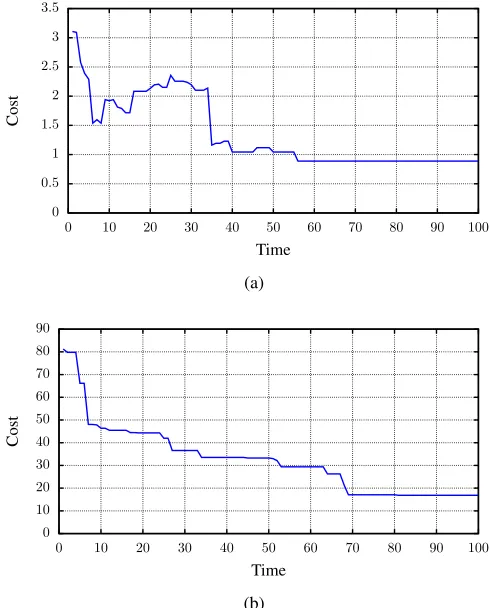
Fig. 1: Example simulated annealing runs showing MAE against time
iterations of the algorithm, where the selection of a neighbour, evaluation and possible adoption of a new parameter set is a single iteration. The results from these experiments are presented in Section V, where each experiment was repeated 10 times and results averaged.
V. RESULTS
Investigating the applicability of parameter optimisation to location extraction and prediction under the methodology proposed in Section IV, this section summarises the results obtained from the individual runs of the procedure. In total, 8,000 runs have been performed. Once a set of locations has been extracted and a prediction model trained, the resultant locations and predictions are given an associated cost by the MAE metric (discussed in Section III-A), where the optimal solution is the one with the lowest cost.
0 2 4 6 8 10 12 14 16 18
0.0001 0.0014 0.012 0.11 1 9 81 729
Cost
Location Size(km2) (a) Average location size
0 2 4 6 8 10 12 14 16 18 20
0 0.1 0.2 0.3 0.4 0.5 0.6 0.7 0.8 0.9 1
Cost
Accuracy
[image:7.612.323.560.55.272.2](b) Average predictive accuracy
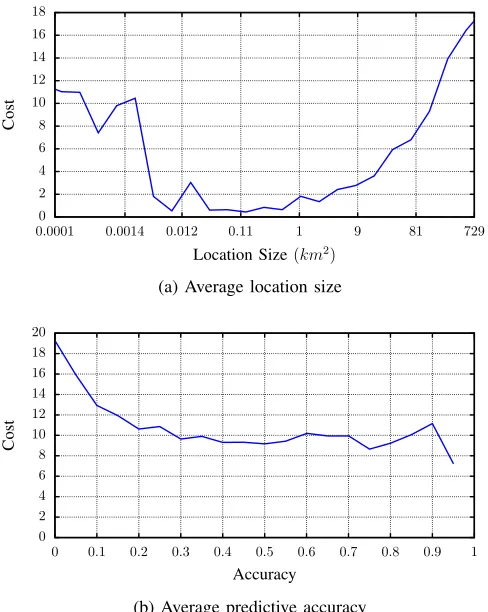
Fig. 2: Relationship between MAE and extraction properties
problem, taking worse positions towards the beginning of the run, but converging towards a minimum as time runs out. After
t= 43, no move to a worse position is made, instead, the cost
decreases before remaining constant.
Figure 2 shows the overall trends present with respect to the mean absolute error metric. Specifically, Figure 2a shows the
relationship between cost and average location area (in km2),
and Figure 2b shows the relationship between cost and average predictive accuracy. Both graphs show the overall trends and show results from all iterations in all runs, demonstrating the link between these properties. Figure 2a shows that large locations incur a high cost, which decreases as the locations get smaller up to a certain point. Once locations become extremely small in size, they encompass few visits and thus provide less training data, leading to the cost increasing once again. Addi-tionally, Figure 2b demonstrates that lower costs are indicative of higher predictive accuracy, up to a point. As predictive accuracy increases towards 1, however, the associated cost begins to increase. This is due to the situation discussed in Section III-A, where achieving such high predictive accuracy comes at the cost of location size. Due to the complexity of human mobility, achieving perfect predictions over small locations is extremely unlikely, and so in the cases where prediction accuracy approached 1, the locations became larger and thus were penalised with a higher score. Combined, these properties demonstrate that the definition of error as proposed in Section III-A favours a balance between small locations and high predictive accuracy. These are desirable properties for this
0 5 10 15 20 25
0 10 20 30 40 50 60 70 80 90 100
Cost
kmax
User 1 User 2
User 3 User 4
User 5
Fig. 3: Cost against number of iterations
0 2 4 6 8 10 12 14 16 18 20
10 12 14 16 18 20 22 24 26
Cost
Percent of Data User 1
User 2
User 3 User 4
[image:7.612.50.294.57.363.2]User 5
Fig. 4: Cost against percentage of data for different users
purpose as they serve to accurately identify where a user will be in the future with as little uncertainty as possible.
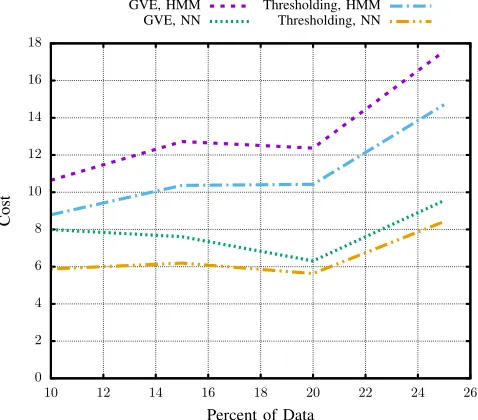
Finally, Figures 3-5 show the effect on cost of the
maxi-mum number of iterations (i.e.kmax, Figure 3) and percentage
of data used for each user (Figure 4 showing results when split per user, and Figure 5 when split by combination of visit extractor and predictor). In the case of Figure 3, the percentage of data used is held constant at 10%, and in the
other two figures, kmax is held at 100, with results averaged
[image:7.612.322.560.309.522.2]0 2 4 6 8 10 12 14 16 18
10 12 14 16 18 20 22 24 26
Cost
Percent of Data GVE, HMM
GVE, NN
[image:8.612.52.291.57.267.2]Thresholding, HMM Thresholding, NN
Fig. 5: Cost against percentage of data for different techniques
moves to find the optimal position (Fig. 3). While kmax can
be further extended beyond 100, it was observed that with
kmax of 100, 1,347 of 1,600 runs (i.e. 84%) had converged
to a stable cost, indicating that the benefits of selecting a
larger value for kmax would be minimal. Providing more
of the user’s data for optimisation results in increased costs, however (Figures 4 and 5). More data means that the predictor has more information to model the user’s behaviour, but it also means that the user will likely have visited additional locations for which no previous transitions exist, increasing the complexity of the required predictive model and thus resulting in slightly increased costs as these new locations are likely to result in incorrect predictions. This combination of factors leads to the trends shown in the graphs, where the increase in information results in slightly higher average costs. Furthermore, Figure 5 shows similar trends across the different visit extraction and location prediction techniques employed, providing an indication of the generality of the MAE metric.
VI. CONCLUSION
This work has presented a method of automatic parameter optimisation for location extraction and prediction that under-stands the aims of both tasks. While existing work has assumed the validity of extracted locations and focused on prediction, we argue that predictions are predicated upon these locations and thus ensuring the representativness of such locations is of paramount importance to producing useful predictions.
Through a novel definition of error for location prediction, that considers the aims of the prediction process, combined with the simulated annealing mathematical optimisation algo-rithm, we provide a method of parameter optimisation that assures both the applicability of extracted locations and the utility of predictions. This applicability is then demonstrated through an evaluation of properties of the proposed metric. Such results evidence the conformity of the metric to the stated aim of minimising the distance between predicted future
location and actual location visited by the user, thus identifying the region to be visited with as little uncertainty as possible.
The specific contributions of this paper have been: (i) the provison of a metric for the evaluation of both extracted locations and predictions that characterises the goal of each of these tasks, (ii) framing of the process of parameter selection as that of mathematical optimisation through the presented metric, and (iii) a discussion of characteristics of the metric along with a demonstration of its applicability over real-world data, location extraction algorithms and prediction techniques.
Focus for expanding the work presented in this paper should include evaluating the applicability of this approach on a larger range of algorithms, including additional location extraction techniques, prediction techniques and parameter op-timisation algorithms, in conjunction with a greater emphasis on validation through unseen data.
VII. ACKNOWLEDGEMENTS
Our experiments used the MDC Database from Idiap Research Institute, Switzerland and owned by Nokia [16, 17].
REFERENCES
[1] Sherif Akoush and Ahmed Sameh. Bayesian Learning of Neural Networks for Mobile User Position Prediction. In
Proceedings of the 12th International Euro-Par Confer-ence on Parallel Processing, pages 1234–1239, Honolulu, 2007.
[2] Gennady Andrienko, Natalia Andrienko, Georg Fuchs, Ana-Maria Olteanu Raimond, Juergen Symanzik, and
Cezary Ziemlicki. Extracting Semantics of Individual
Places from Movement Data by Analyzing Temporal
Pat-terns of Visits. InProceedings of the ACM SIGSPATIAL
International Conference on Advances in Geographic Information Systems, pages 5–8, Orlando, 2013.
[3] Daniel Ashbrook and Thad Starner. Learning Significant Locations and Predicting User Movement with GPS. In Proceedings of the 6th International Symposium on Wearable Computers, pages 101–108, Seattle, 2002. [4] Daniel Ashbrook and Thad Starner. Using GPS to Learn
Significant Locations and Predict Movement Across
Multiple Users. Personal and Ubiquitous Computing,
7(5):275–286, 2003.
[5] Roland Assam and Thomas Seidl. BodyGuards: A Clair-voyant Location Predictor Using Frequent Neighbors
and Markov Model. In Proceedings of the 10th IEEE
International Conference on Ubiquitous Intelligence and Computing, pages 25–32, Vietri sul Mere, 2013. [6] Roland Assam and Thomas Seidl. Context-based
Loca-tion Clustering and PredicLoca-tion using CondiLoca-tional Random
Fields. InProceedings of the 13th International
Confer-ence on Mobile and Ubiquitous Multimedia, pages 1–10, 2014.
[7] Athanasios Bamis and Andreas Savvides. Lightweight Extraction of Frequent Spatio-Temporal Activities from
GPS Traces. In Proceedings of the 31st Real-Time
Systems Symposium, pages 281–291, San Diego, 2010. [8] Dimitris Bertsimas and John Tsitsiklis. Simulated
An-nealing. Statistical Science, 8(1):10–15, 1993.
for Location Predication in Mobile Networking. In
Proceedings of the 9th International Conference on Neu-ral Information Processing, pages 2157–2161, Whistler, 2002.
[10] Yohan Chon, Hyojeong Shin, Elmurod Talipov, and
Ho-jung Cha. Evaluating Mobility Models for Temporal
Prediction with High-Granularity Mobility Data. In
Proceedings of the IEEE International Conference on Pervasive Computing and Communications Workshops, pages 206–212, Lugano, 2012.
[11] Deborah F Cook, Cliff T Ragsdale, and Raymond L
Major. Combining a neural network with a genetic
algorithm for process parameter optimization.
Engineer-ing Applications of Artificial Intelligence, 13(4):391–396, 2000.
[12] Martin Ester, Hans-Peter Kriegel, J¨org Sander, and Xi-aowei Xu. A Density-Based Algorithm for Discovering
Clusters in Large Spatial Databases with Noise. In
Proceedings of the 16th International Conference on Knowledge Discovery and Data Mining, pages 226–231, Portland, 1996.
[13] Holger Frohlich and Andreas Zell. Efficient Parameter Selection for Support Vector Machines in Classification and Regression via Model-based Global Optimization. In
Proceedings of the IEEE International Joint Conference on Neural Networks, pages 1431–1436, Montreal, 2005. [14] Yu Gong, Yong Li, Depeng Jin, Li Su, and Lieguang Zeng. A Location Prediction Scheme Based on Social
Correlation. In Proceedings of the IEEE Vehicular
Technology Conference, pages 1–5, 2011.
[15] Ramaswamy Hariharan and Kentaro Toyama. Project
Lachesis: Parsing and Modeling Location Histories. In
Proceedings of the 3rd International Conference on Ge-ographic Information Science, pages 106–124, Adelphi, 2004.
[16] Niko Kiukkonen, Jan Blom, Olivier Dousse, Daniel Gatica-Perez, and Juha Laurila. Towards Rich Mobile Phone Datasets: Lausanne Data Collection Campaign. In Proceedings of the First Workshop on Modeling and Retrieval of Context, Berlin, 2010.
[17] Juha K Laurila, Daniel Gatica-Perez, Imad Aad, Jan Blom, Olivier Bornet, Trinh Minh Tri Do, Olivier Dousse, Julien Eberle, and Markus Miettinen. The Mobile Data Challenge: Big Data for Mobile Computing Research. In
Proceedings of the Nokia Mobile Data Challenge (MDC) Workshop in Conjunction with Pervasive, Newcastle, 2012.
[18] Quannan Li, Yu Zheng, Xing Xie, Yukun Chen, Wenyu Liu, and Wei-Ying Ma. Mining User Similarity Based
on Location History. In Proceedings of the 16th
ACM SIGSPATIAL International Conference on Advances in Geographic Information Systems, pages 34:1–34:10, Irvine, 2008.
[19] James MacQueen. Some Methods for Classification and
Analysis of Multivariate Observations. In Procedings
of the 5th Berkeley Symposium on Math, Statistics, and Probability, pages 281–297, Berkeley, 1967.
[20] Raul Montoliu and Daniel Gatica-Perez. Discovering
Human Places of Interest from Multimodal Mobile Phone
Data. In Proceedings of the 13th International
Confer-ence on Mobile and Ubiquitous Multimedia, pages 12:1– 12:10, Limassol, 2010.
[21] Pablo Moscato. On Evolution, Search, Optimization,
Genetic Algorithms and Martial Arts: Towards Memetic
Algorithms. Caltech Concurrent Computation Program,
pages 1–67, 1989.
[22] Jan Petzold, Faruk Bagci, Wolfgang Trumler, and Theo
Ungerer. Comparison of Different Methods for Next
Location Prediction. InProceedings of the 12th
Interna-tional Euro-Par Conference on Parallel Processing, pages 909–918, Dresden, 2006.
[23] Gin´es Rubio, H´ector Pomares, Ignacio Rojas, and Luis Javier Herrera. A heuristic method for parameter selection in LS-SVM: Application to time series
predic-tion. International Journal of Forecasting, 27(3):1–15,
2010.
[24] Stuart Russell and Peter Norvig. Artificial Intelligence:
A Modern Approach. Prentice Hall, 4th edition, 2009. [25] Lalit M Saini, Sanjeev K Aggarwal, and Ashwani
Ku-mar. Parameter optimisation using genetic algorithm for support vector machine-based price-forecasting model in National electricity market. Generation, Transmission & Distribution, 4(1):36–14, 2010.
[26] Alasdair Thomason, Nathan Griffiths, and Matthew Leeke. Extracting Meaningful User Locations from
Tem-porally Annotated Geospatial Data. InInternet of Things:
IoT Infrastructures, volume 151 ofLNICST, pages 84–90. Springer, 2015.
[27] Lucian Vintan, Arpad Gellert, Jan Petzold, and Theo
Ungerer. Person Movement Prediction Using Neural
Networks. In Proceedings of the First Workshop on
Modeling and Retrieval of Context, Ulm, 2004.
[28] Jingjing Wang and Bhaskar Prabhala. Periodicity Based
Next Place Prediction. In Proceedings of the Nokia
Mobile Data Challenge (MDC) Workshop in Conjunction with Pervasive, Newcastle, 2012.
[29] Darrell Whitley, Timothy Starkweather, and Chris Bog-art. Genetic algorithms and neural networks:
optimiz-ing connections and connectivity. Parallel Computing,
14(3):347–361, 1990.
[30] Vincent W Zheng, Yu Zheng, Xing Xie, and Qiang Yang. Collaborative Location and Activity Recommendations
with GPS History Data. In Proceedings of the 19th
International Conference on World Wide Web, pages 1029–1038, Raleigh, 2010.
[31] Yu Zheng, Lizhu Zhang, Xing Xie, and Wei-Ying Ma. Mining Interesting Locations and Travel Sequences from
GPS Trajectories. In Proceedings of the 18th
Interna-tional Conference on World Wide Web, pages 791–800, Madrid, 2009.
[32] Jun Zhou, Qinpei Zhao, and Hongyu Li. Integrating
Time Stamps into Discovering the Places of Interest. In Proceedings of the 10th International Conference on Intelligent Computing Methodologies, pages 571–580, Taiyuan, 2014.
[33] Matthias Zimmermann and Horst Bunke. Hidden Markov Model Length Optimization for Handwriting Recognition
Systems. In Proceedings of the 8th International