SECURITY RISKS OF GLOBALIZATION
*Dr. Mitar Lutovac and Dr. Vladimir
University Union Nikola Tesla, Faculty of
ARTICLE INFO ABSTRACT
Globalization dates from the earliest period of the history of human society, from the time when people began to spread their knowledge and skills
Today, when globalization has entered in almost all segments of social phenomena, modern society is preoccupied with exploring the risks of globalization. The research aims at overcoming the risk of danger aff
broadest sense. The paper covers the conceptual definition of the concept of globalization, with particular OUTLOOK theorists. The perceived risks which is characte
classification. The paper analyzes the economic consequences of globalization, the disparities in economic growth and development of the economy and poverty in the world. As a result of the action of globalization on human society, trea
Copyright © 2016, Dr. Mitar Lutovac and Dr. Vladimir Stojanovic
which permits unrestricted use, distribution, and reproduction in any medium, provided the original work is properly cited.
INTRODUCTION
Recognized and valid definition of globalization exists, but it is
essentially an ever-growing connectedness and
interdependence of countries, economies and societies. This is accomplished primarily through advanced information and communication technologies, markets and capital, under the patronage of the most powerful countries and international institutions. At the end of XX and beginning of XXI century, globalization is the most important trend. Globalization as the term "... in most cases is not innocent or neutral case and is often used to replace older discourses such as imperialism and modernization and to divert attention from
sadržajakoje includes the concept of imperialism or to embellish reality that is meant by modernization"
initially be understood as "expansion, deepening and accelerating global interdependence in all aspects of modern social life, from culture to crime, from the financial to the spiritual."Many different theoretical approaches to the problem of globalization point to the fact that it is difficult to come to a definition of globalization that could be generally accepted. Thus, "according to Martin Albrou, globalization refers to all the processes by which people around the world are incorporated into the world, and in a global society.
*Corresponding author: Dr. Mitar Lutovac,
University Union Nikola Tesla, Faculty of Business and Indus Management Belgrade Serbia
ISSN: 0975-833X
Article History:
Received 04th February, 2016
Received in revised form 28th March, 2016
Accepted 01st April, 2016
Published online 10th May,2016
Key words:
Globalization, Security risks, Country, Sub, Poverty.
Citation: Dr. Mitar Lutovac and Dr. Vladimir Stojanovic, 2016.
30917-30924.
RESEARCH ARTICLE
SECURITY RISKS OF GLOBALIZATION
Dr. Mitar Lutovac and Dr. Vladimir Stojanovic
University Union Nikola Tesla, Faculty of Business and Industrial Management Belgrade Serbia
ABSTRACT
Globalization dates from the earliest period of the history of human society, from the time when people began to spread their knowledge and skills of knowledge and phenomena that surround them. Today, when globalization has entered in almost all segments of social phenomena, modern society is preoccupied with exploring the risks of globalization. The research aims at overcoming the risk of danger affecting the security of the state, society and individuals, respectively, on security in the broadest sense. The paper covers the conceptual definition of the concept of globalization, with particular OUTLOOK theorists. The perceived risks which is characte
classification. The paper analyzes the economic consequences of globalization, the disparities in economic growth and development of the economy and poverty in the world. As a result of the action of globalization on human society, treated and cultural homogenization.
Dr. Mitar Lutovac and Dr. Vladimir Stojanovic.This is an open access article distributed under the Creative Commons Att use, distribution, and reproduction in any medium, provided the original work is properly cited.
Recognized and valid definition of globalization exists, but it is
growing connectedness and
countries, economies and societies. This is accomplished primarily through advanced information and communication technologies, markets and capital, under the patronage of the most powerful countries and international inning of XXI century, Globalization as the term "... in most cases is not innocent or neutral case and is often used to replace older discourses such as imperialism and modernization and to divert attention from the social sadržajakoje includes the concept of imperialism or to that is meant by modernization". It can initially be understood as "expansion, deepening and accelerating global interdependence in all aspects of modern culture to crime, from the financial to the spiritual."Many different theoretical approaches to the problem of globalization point to the fact that it is difficult to come to a definition of globalization that could be generally accepted. to Martin Albrou, globalization refers to all the processes by which people around the world are incorporated into the world, and in a global society.
University Union Nikola Tesla, Faculty of Business and Industrial
Anthony Giddens defines globalization as the intensification of social relations on a global level that connects distant sites so that local events shaping the events that took place at a great distance. " Thanks to globalization, relations between people and countries are becoming more intense, and people are starting to think globally and the world at large to understand otherwise. Today's world is increasingly "open" and "reduced" and thus created the well-known sa
"global village". Globalization also describes the increased mobility of goods, services, labor, technology and capital throughout the world, which in itself brings prosperity to society, but inevitably carries risks. She, as a co
change, the procedure full social reality, with all its contradictions. On the one hand to the positive effects which are increasingly observed, and on the other hand, these are risks that are increasingly difficult to be predicted and controlled. While the positive side of globalization, we can hardly enumerate all, the risks can be divided into: socio economic, environmental and military, but also to: technological and political risks. In addition, the often stand out and the geographic, urban, migratory and, in particular, ideological risks. In fact, in all historical types of society there is the experience of danger, but the risks associated with deterritorialising space created in the process of globalization less national and increasingly global phenomenon. Bek about it correctly concludes: "The risks of modernization have an inherent tendency towards globalization." Modern risks are International Journal of Current Research
Vol. 8, Issue, 05, pp.30917-30924, May, 2016
INTERNATIONAL
: Dr. Mitar Lutovac and Dr. Vladimir Stojanovic, 2016. “Security risks of Globalization”, International Journal of Current Research
Business and Industrial Management Belgrade Serbia
Globalization dates from the earliest period of the history of human society, from the time when of knowledge and phenomena that surround them. Today, when globalization has entered in almost all segments of social phenomena, modern society is preoccupied with exploring the risks of globalization. The research aims at overcoming the risk of ecting the security of the state, society and individuals, respectively, on security in the broadest sense. The paper covers the conceptual definition of the concept of globalization, with particular OUTLOOK theorists. The perceived risks which is characterized by made their classification. The paper analyzes the economic consequences of globalization, the disparities in economic growth and development of the economy and poverty in the world. As a result of the action
ted and cultural homogenization.
is an open access article distributed under the Creative Commons Attribution License, use, distribution, and reproduction in any medium, provided the original work is properly cited.
Anthony Giddens defines globalization as the intensification of social relations on a global level that connects distant sites so that local events shaping the events that took place at a great globalization, relations between people and countries are becoming more intense, and people are starting to think globally and the world at large to understand otherwise. Today's world is increasingly "open" and "reduced" known saying about the world as a Globalization also describes the increased mobility of goods, services, labor, technology and capital throughout the world, which in itself brings prosperity to society, but inevitably carries risks. She, as a complete social change, the procedure full social reality, with all its contradictions. On the one hand to the positive effects which are increasingly observed, and on the other hand, these are risks that are increasingly difficult to be predicted and lled. While the positive side of globalization, we can hardly enumerate all, the risks can be divided into: socio-economic, environmental and military, but also to: technological and political risks. In addition, the often stand an, migratory and, in particular, In fact, in all historical types of society there is the experience of danger, but the risks associated with deterritorialising space created in the process of globalization y global phenomenon. Bek about it correctly concludes: "The risks of modernization have an inherent tendency towards globalization." Modern risks are INTERNATIONAL JOURNAL OF CURRENT RESEARCH
different from the earlier risk not only for its globality, but also for contemporary reasons that Bek located primarily in the industrial and post-industrial model of production and distribution of manufactured goods.
Socio-economic risks of globalization
Socio-economic dimensions of globalization involves, on the one hand, the economy and all its spheres - trade, finance and production, and on the other man as a rational being, around which everything happens, and that all affected. Being a man in his works through certain norms and rules of conduct, and therefore the impact of globalization on certain spheres of social life, there are also different consequences for man as scijalnog beings.
Economic inequality and poverty
The essence of economic relations should, above all, seek to provoke the multiplication of social inequality. Such concerns caused by extreme inequalities and imbalances, as lead to
asymmetry in life opportunities. Asocial trends of
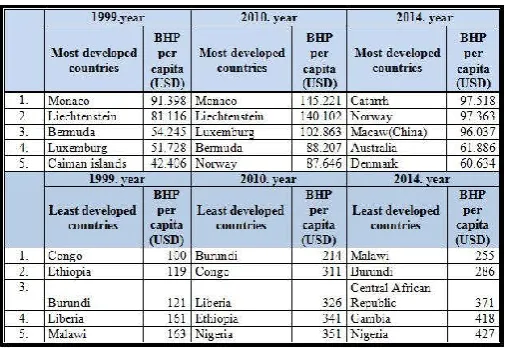
globalization, which is all the more difficult to restrain, not slow Many advocates of this process, claiming: "Globalization is too heavy, too intrusive, too unjust to the great number of people, it is too dehumanizing." In such a social environment, the benefits of globalization are those peoples and nations that are able to take advantage of technological advances. At the same time, they harm those who are less technologically prepared, because aggressive economics, as a rule, strong and fit even more capable, a poor level of frailty, hence the view that the process of globalization, as well as in war, or you kill, or you're killed. The consequences of the globalization of economic flows strongest seen in the exploitation of cheap labor and cheap raw materials. As a result of such distributions of raw materials and distributing finished products, there is an enormous increase in wealth of a tiny elite powerful and globalization of poverty gigantic scale, which creates a new social map of the world. They are recognizable indications that creates an environment for the global social revolution, because it is a minority of modern mankind alienated from the majority of the inhabitants of the planet, and it also shows an overview of the countries with the highest and lowest BNP.
It is a multi-gap, not only between rich and poor, but between: scientific and technical developed and developing, comfortable populated and overcrowded, highly educated and the uneducated. These data clearly illustrate the depth and scope of global economic inequality and polarization in the modern world, and even more impressive picture of the modern world inequality is obtained by comparing the level of gross national income (GNI) of most developed countries of the world.
Very convincing data confirming the presence of a steady rising trend in GDP of the richest countries of the modern world, and also the increase in inequality between them and poorer countries. Differences between the extremely rich and the extremely poor are drastic. If this is added to the fact that the poorest countries tend to have the highest birth rate, it is not
[image:2.595.308.561.231.405.2]difficult to conclude that the increasing gap between rich and poor is a risk to security and promotes economic migration. Also, economic inequality and increased the gap between rich and poor can be seen through the unbalanced rate of investment in economic development. The high interest loans to the International Monetary Fund and World Bank, as well as the offensive performance of multinational companies in the global capital markets, leading developing countries and developing countries that do not have adequate capacity and appropriate infrastructure, in a kind of colonial situation. Time is underdeveloped and developing countries still lead in a subordinate position.
Table 1. Countries with the highest and lowest GDP per capita in the world for years
The growth of world population and demography
At the global level, the enormous growth of the world population strengthens the intensity of tensions and cleavages, and thus seriously threatening the future of the world. What brings uncertainty is the increasing discrepancy between the increase in world population and limited natural resources. In other words, rapid and uneven growth of the world population is the basis for the emergence of a growing demographic and economic imbalances between rich and poor, increasing levels of the lack of basic foodstuffs, numerous and uneven population migration and the emergence of new diseases as a
result of rapid and unplanned urbanization. Estimates of population growth and the consequences that it causes suggest that this is one of the most important security risks in this millennium. The tendency of growth of the population on Earth is characteristic of HIH and the twentieth century. Statistical data on the number of the world's population and dynamics of increase vary, but each variant is dominated by the indicator points to the demographic explosion. The table below provides an overview of the growth of world population since the mid-twentieth century, with the forecast growth of up to half a century XXI. Data clearly illustrate a marked increase in human population dynamics in recent years. Only during the second half of the twentieth century that number has increased to more than four billion people. What is particularly worrying is the tendency of growth of the world population. In the
Year 1950. 1960. 1970. 1980. 1990. 2025. 2050
opinion of Miodrag Ilic "... if we take into account the tendency of growth of the world population of 1.5 percent annually, it can be expected that by 2050 the Earth to live about 15 billion people. That number would not be alarming to demographers and economists warn that the Earth has a place and conditions for the survival of up to 14 billion people. "On the other hand, according to demographic projections of the United Nations (UN) World population growth will slow after 2025, the peak of 10 billion will reach 2070, and then it will slowly deteriorate and eventually stabilize at around 7 billion in the 22 century. However, according to such "optimistic" variant population growth on Earth and its growth projection for the future, the world is facing a serious temptation. The rapid population growth and other complex demographic processes in some regions of the world can cause some new problems, such as lack of water and basic foodstuffs, and in extreme cases and hunger, then accelerated wear of traditional energy sources, as well as economic stagnation in many underdeveloped countries and the entire region. The negative aspect of globalization in the form of uneven population growth clearly seen through the much higher population growth in developing countries than in countries with developed standards that are faced with problems of mass depopulation. According to forecasts by the UN, by 2025 the most significant human population increase will occur in the equatorial region and tropical belts of the planet, and they are, at the same time, the poorest region. Because of this tendency, it is certain that further deepening the gap between the poor and overpopulated countries of the Third World and developed post-industrial countries.
The demographic explosion occurs in underdeveloped parts of the world - Africa and the Middle East, where the number of inhabitants in the countries of the region in recent years has increased enormously. It also shows that the growing problem of geographic remoteness of the region which have experienced a demographic boom of the region where they are based technological resources. The technological explosion is happening in economically prosperous societies, a population explosion in countries with limited technological resources, which indicates a strong coherence of economic, technological and demographic trends in the contemporary world and threats. Migration and cultural homogenization of globalization and rapid population growth accompanied by other important processes, such as violent and violent migration. For non-violent migration came true Malthus predictions that population growth would affect the deteriorating condition of the human species, increasing the gap between imajućih and nemajućih and increased pressure on the two dominant resources - land and water. The basic form of population migration is caused by changing the traditional agricultural society to an urban society. The result is enormous and uncontrolled influx of people from rural areas in multimillion cities. Offers a bleak vision of the new megalopolis (Mexico City, Sao Paolo, Shanghai, Lagos, Jakarta, ...), overcrowded and disabled to provide its residents basic living conditions, cities where the poor and ruled by gangs of rioters. Also, the rapid pace of urbanization of the poor companies illustrated by the fact that the inhabitants of the cities in 1960 accounted for less than a quarter of the less developed world. Another form of population migration is a result of the imbalance between rich and poor, and a wave of migration to each other. Explosive
population growth, while reducing resources in
underdeveloped countries and developing countries, in addition to the risk of internal migration and the various non-violent and violent conflict has led to mass migration to other countries and regions. The most important reasons for the great migrations of the population are economic decline, as well as various ethnic and religious conflicts, disputes and wars. In other words, compromised the security of the country or region moves millions of poor, disenfranchised and vulnerable to looking for the optimal and safe conditions of life leave their home country.
Lately we have witnessed a large number of economic migrants from Africa and the countries of the Near and Middle East in the rich countries of Western, Central and Northern Europe. These migrations have become so extensive that it could be said to have taken on the scope of "migration of peoples". Also, a large part of the economic success of Emirates, one of the world's richest economies, lying on his back a huge number of cheap labor. The largest part of the workforce consists of immigrants who are in an attempt to escape from poverty in their own countries, but also among the largest working population is employed about 1.75 million 1.25 million Indians and Pakistanis. Of course, this is just a cheap labor force and it is expected that when the need for it to rich countries will try harder and release the "ballast". Mechanisms for the venture is likely to be - "legalizing" their attitudes, already known scenario "by making targeted resolutions in international organizations". The enormous increase in the number of refugees in the world is primarily caused by a number of civil, ethnic, religious and racial conflicts and the collapse of some states. Most of the population, in order to save the "alive" seeking refuge outside the zone of conflict and leaving their homes in order to provide the most basic egsistencije. According to the United Nations High Commissioner for Refugees, it is assumed that in the world in 2013 were about 26 million refugees and 1.3 million asylum seekers. Globalization strongly encourages the process of homogenization of culture and the establishment of cultural imperialism. Homogenization of culture does not mean the process of permeation of various cultures that connects them and creating a homogenous culture in which different cultures equally participate with its original elements, but a process that goes beyond the structure of individual societies and cultures. In that way, the transnational homogenization means
(detorijalizovanu culture), and a cosmopolitan spirit.
Homogenization means the process of linking culture in one project, one of modern culture centered around a cultural core.
catastrophic not only for the person as an individual, but also for humanity as a whole, their production, transport, distribution and abuse, were placed under the control of the international community, and therefore the competent authorities and institutions of each country separately. It goes without saying how much the relationship of globalization and drug trafficking. Because of the trade, transport, media and cultural integration of the drug has become easily accessible and well-publicized.
Illegal drugs are undermining the economic and social development and contribute to increasing crime, instability and the spread of HIV. Efforts to reduce the cultivation and production of basic plant-based drugs, aggravated the compensation of the increase in the level of production of synthetic drugs, including a significant increase in production and consumption of psychoactive substances that are not under international control. The consequences of these activities are much broader and more serious than it seems at first sight, it has become clear that the repressive methods in this area can achieve a little, and that priority must be given to preventive activities, primarily educational. In modern conditions of life of children of different ages are exposed to various abuses in the production and trade of narcotics. Child psychology is very delicate, and in combating drug trafficking, special attention must be paid to the education of members of government bodies operating in the field of combating this type of crime, then parents, and children themselves. Illegal trade in weapons, radioactive and other hazardous substances arms trade is one of the traditional forms of classical forms of criminal business of organized crime. In addition to the legal form of arms trafficking exists and illegal trade in weapons, especially
firearms, which supply them paramilitary, terrorist
organizations and other criminal organizations.
General known three ways traded weapons: legal and open trade with other countries according to the established rules and procedures; secret and illegal trade with other countries through a third country and secretly supplying non-state actors through a broker on the black market. Arms trade is a trade that brings an extremely high profits rapidly developing after the Second World War, the establishment of a large number of factories for the production of weapons and military equipment, and the US is the largest world exporter of weapons. As the only country that is economically developed during the Second World War, enabled them to and after the war as the dominant trading power in the world. The period of "cold war" has caused the further dynamic development of the military-industrial complex (an entity that produces and exports a weapon) of the country. During this period, the Soviet Union attempted to keep up with the US in military readiness and strength, cost them lagging in the growth of GNP (gross national product), which in the end probably one of the reasons for the dissolution of the Warsaw Pact. One of the biggest threats to international security is the threat that organized criminal groups, criminals, terrorists, and came into possession of nuclear materials. Therefore, one of the most important goals, in addition to nuclear weapons, a halt to proliferation and peaceful use of nuclear energy and resolving the issue of nuclear safety. This must be a common goal, reinforcing nuclear safety as well as reducing the threat of nuclear terrorism, which includes responsible action on the
national level and sustained and effective international cooperation. The uncertain nuclear materials, highly enriched uranium and pluton require special precautions, as a way of preventing and responding to cases of trafficking. Cyber crime and Internet pedophilia On the one hand, it is evident that new technologies bring significant benefits to people and the numerous challenges that can and must respond to the creative intelligence, on the other hand internet brings with it many dangers, which are particularly exposed to young people. A large percentage of young people intoxicated by the Internet establishes such forms of communication that do not contribute to the advancement of humanity rather than an increase in feelings of disorientation and loneliness, which leads, in one way, and indifference to real life. In this context, due to new technology and the prosperity they bring, there is reasonable uncertainty and fear of a conflict that can be found susceptible individuals, which could become impossible to distinguish truth from error, that could lead to mixing of the real world and virtual reality. Scientific and technological development, along with what started the forces that integrate our planet, in order to improve the lives of its inhabitants, has enabled the presumption for those who want to take advantage of specific innovations in the purpose of carrying out criminal activities. Positive and helpful Gazette of modern information and computer technologies, have brought a number of problems related to the emergence and expansion of different types and forms of manifestation of cyber crime. New fo
rms of value, concentration data, new methods and techniques of operation in a different ambience and narrowing the time scale of operation, the elimination of limits on the spatial limits of operation, with dynamism, agility, inventiveness and stability risks, are the determinants that fit and that guide individuals and criminal organizations tend to various forms of abuse. Internet pedophilia did particularly specific type of cyber crime, as pedophiles increasingly roam electronic networks and looking for victims. Internet has actually become the new "playground" accessible pedophiles, where children are constantly exposed to inappropriate sexual content and disturbing and hostile messages, which devastatingly affects their physical and mental constitution, or psycho-physical development, which can be decisive for their future status biopsychological. The Internet has now become a global definistino the main medium of communication. However, its ubiquity carries a risk, especially for younger users. The increase of users of social networks "... mainly young population is significantly influenced the number of" internet predators "(pedophiles, human traffickers) increase." This raises a very important issue in the field of internet security, and to the education and protection of children and young people on the Internet.
Environmental risks
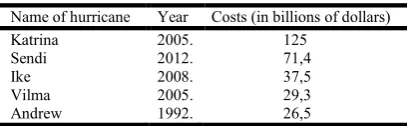
globalization and interdependence in the economy and other spheres of life all the more significant given the global dimension of all environmental problems. Environmental pollution and global warming consequences of the transformation of the Earth by human activity are numerous: acid rain, ozone depletion, climate change and the greenhouse effect, which is focused on the overall effect of the living world on the planet. The destruction of the ozone layer, climate warming, depletion of biodiversity, the disappearance of vast expanses of forest and expansion of desert areas account for an all-out global danger. However, the effect of contemporary risks are not the only consequences that occurred, but also the effects that threaten to occur. In fact, many dangers and destruction today are realistic: contaminated water and the destruction of wildlife in them, deforestation, new diseases, etc. But real social weight of contemporary risks are risks that are designed for the future. Centre awareness of the risk is not in the present but in the future. As a result of the greenhouse effect, there is global warming, which karakerišu extreme climate change in short intervals. This is especially characterized by a large amount of rainfall in a short period of time, an extremely dry and extremely rainy periods, extreme high and extreme low body temperature. Experts warn that came a period of weather and climate impact, showing that the number of strong hurricanes - the fourth and fifth degree, in the last decade increased from 11, as they were in the period between 1980 and 1990 at 18, as noted in the last decade of the twentieth century. Hurricane "Katrina", which struck in late August 2005. The southern coast of the United States, especially New Orleans, once again in a drastic way, attention to man's relationship with nature. More than 1,000 people were killed, according to the estimate of US companies to deal with emergencies hurricane "Katrina" caused the property damage of more than $ 125 billion. Especially devastating is the fact that the most powerful force in the modern world was powerless to oppose the destructive potential of tropical storm "Katrina" or serious mitigate its consequences.
Table 3. Overview of the Atlantic hurricane that hit the American continent
Name of hurricane Year Costs (in billions of dollars)
Katrina 2005. 125
Sendi 2012. 71,4
Ike 2008. 37,5
Vilma 2005. 29,3
Andrew 1992. 26,5
Other forms of serious damage caused to the environment that threaten the safety of the people are different contamination of water and land surfaces which cause acid rain, and they further increase environmental problems and reduce vital resources. It was found that nitrogen oxides and sulfur, which, due to increased emissions come into contact with water vapor in the atmosphere, generating aerosol droplets of acid, falling to the earth as rain, destroying plant and animal life on land and water surfaces. The consequences of environmental pollution are disastrous, because the dying forest on vast expanses, which reduces the overall potential of photosynthesis and causing the extinction of plant and animal species. Enormous damage that can lead to life, and therefore mankind must be reasonable and take measures to reduce emissions and increase ecological security. In an effort to find a solution is education on other model and sustainable development.
Its essence seems requirements for harmonization of economic activities with the economic possibilities ie. the need to preserve the ecological balance in order to preserve the living conditions of the human race ljudsog respecting the dignity of each member of that genus. In an attempt to limit the level of discharge of harmful substances into the air, educated the Kyoto Protocol, which has not yet entered into force because of the refusal of some countries to verify. Among them is the United States, although it is the biggest polluter of the Earth's outer atmosphere. United States, with its economy and population, are one of the biggest emitters of greenhouse gases but refused to sign that agreement. The US Senate has not ratified the agreement on the grounds that it will not do so until other countries do not take part in the division of costs related to addressing global warming. Mandelbaum justice in the US stance that "the issue of global warming, the United States does not want to be an international leader, or the holder of the largest costs". Recent events indicate that the leading world leaders realize that it is conservation of the planet must be taken seriously to grips with climate change. From 30 November to 11 December 2015 in Paris, France will be held 21st International Conference of the Parties of the United Nations Framework Convention on Climate Change - COP 21. The aim of the conference is to achieve a global climate agreement to reduce global warming, which would be binding for all countries, which would involve the inclusion of the energy transition process to gradually reduce emissions of greenhouse gases. The greatest significance of this event is that it is planned to sign the agreement and the Americas, which would complete the process of binding limits ispušatnja of harmful substances in the air.
Mass consumption and limited resources
consumption of fossil fuel development and reorientation to ekspoaltaciju "clean energy". The reasons for investing in renewable energy in recent years become more rational and economical. Wind energy is used just 30 years ago. Today, the use of wind energy to grow strongly, and the reason is the low price of this energy does not emit polluting gases and is therefore becoming an increasingly important source.
War Risks
Terrorism, ethnic and religious extremism, proliferation of weapons of mass destruction, military interventionism and regional conflicts make up the core of security tensions around the world, with a tendency to create instability in the international security system and an increase in insecurity. Those risks, combined with ethnic and historical component and other social and economic differences, can pose risks to the great potential that can be directed at destabilizing the wide space and the escalation of the conflict with the use of armed violence.
The militarization of the world
Militarization, as the process by which society ie. country arranges for a military conflict and violence, can be said to exist in the history of ancient times, when the first conflict. There are many large observations that Alexander the Macedonian was one of those who is on his spear infantry passed its first military globalization, linking the then Western world with Persepolis and the East. However, its currency, militarism gains in the second half of the twentieth century and major military, political and economic superpower rivalry. The dissolution of the Warsaw Pact and an end of the Cold War, it was expected that the role of military force being marginalized. The paradox is that since then militarization enhances rather than reduces or disappears. Rather than come to a halt in the process of strengthening military potential, has intensified the process of re-arming. The most powerful country in the world, primarily the United States, through militarism express their political, economic and other aspirations in the world.
Global military spending has increased compared to the mid-nineties of the twentieth century. The increase in military spending in 2012 reached the amount of 1.756 billion dollars, an increase of 67% compared to 1996. In Central and South Asia, North America, Oceania and Western and Central Europe, there is an increase in military spending in the period 2003-2009. year, and then a decrease in the period 2009-2012. year. In contrast, accelerated growth rate in the Middle East and in North Africa, which may point to the fact where you can expect the biggest clashes. Traffic light weapons in the world grew by 16 per cent between 2005-2009 and 2010-14, and the five largest arms exporter in the period 2010-2014. the USA, Russia, China, Germany and France, accounted for 74 percent of the total global volume of exports of weapons, but the United States and Russia are the absolute leaders. Also, it is notable that among the seven largest importers of weapons three countries belong combustible region of the Near and Middle East: Saudi Arabia, United Arab Emirates and Turkey. In addition, there were seven terrorist groups that have imported weapons in the total percentage of 0.02 percent. In the current situation, and given the skills and methods of
terrorists and such a small percentage could represents a major risk to global security. The disappearance of the bipolar world and the tendency of strengthening of military power in international relations are actualized competition for regional dominance, especially among the countries of East and Southeast Asia, where the intensified arms race, and these are the most illustrative examples of India and Pakistan. Similar processes exist in Africa, where they are now, according to some estimates; there are 100 times more weapons than 40 years ago. Likewise, it is obvious that, in parallel with the strengthening of global economic processes, competition between countries partially suppresses competition between the economic blocs. Think, above all, the US, EU and Japan, which, according to hints in some papers about globalization, time may grow into political alliances and blocs. The use of force in solving the "problem" in international relations in such a constellation of forces has given the US an absolute dominance, and for that reason, an arms race has never endured. The disappearance of the bipolar world has slowed the development of weapons at a time, with the strongest world power, but it is also present on the increased militarization of certain regions of the world, primarily the Near and Middle East, Africa, Pakistan and India. In this way, the militarization of only one hand changed the level at which it exists, but still it survives and strengthens its presence in certain regions of conflict.
The proliferation of weapons of mass destruction and global terrorism
terrorist attacks, apostates and fanatics have become invisible army, and the battle against terrorism has grown into a war against terror. The parameters for a possible measurement of the level of fear do not exist, or are some of the consequences of the activities of terrorists clearly visible and measurable. There is general agreement that the terrorist attacks caused financial difficulties of airlines, primarily for fear of passengers that the flight can be hijacked, be used as a projectile or simply shot down. Thanks to terrorism, guaranteeing security has become one of the main items in the tourist industry. If the terrorists had intended to carry out the attack on the economy of the Western world, as the demolition of the building of the World Trade Center in Manhattan, this certainly shows, then they have succeeded and with a minimum of invested funds caused damage that can be measured in billions of dollars.
On the other hand, new terrorist organizations are able to use their acts to directly influence political events, and even the attitudes of the countries on specific issues. The result of the elections in Spain in many ways determined by the terrorist attack in Madrid, which came in response to the participation of military viduals this country in Iraq. After this, Spain was forced to withdraw its troops from Iraq, although it is open to constitute a concession to terrorists. Follow the example of Spain and many other countries, as well as economic
companies that participate in the stabilization and
reconstruction of Iraq (the same is with the humanitarian organizations that are mainly left Iraq and Afghanistan under the pressure of terrorism). Also, terrorist actions can have a direct impact on the electorate and form the executive. Recently, under the pressure of terrorism and the fear for their own survival, the elections in many European countries, the electorate is slowly opting for the right-wing parties, which him "lurking" hostility towards members of other nations. For now, the right to moderate or intensification of terrorist attacks and spreading throughout Western Europe, the moderate right can become extreme, as is the case with the recent regional elections in France. Namely, according to foreign media reports ekstreme-right party National Front, whose leader Marine Le Pen (Marine Le Pen) won in the first round, held on 06 December 2015, almost a third of the votes and became the leading party in France. Bearing in mind the presence of a significant part of the population of the Islamic world in the countries of Western Europe, the strengthening of right-wing forces and radicalizing the idea may be a conflict of unimaginable proportions.
The recent elections in Turkey and the terrorist attack that preceded them can be directly linked to the strengthening of the Turkish Justice and Development Party, whose leader Recep Tayyip Erdogan (Recep Tayyip Erdoğan). After a brief decline in the popularity of his party once again achieved an absolute majority in the parliament of Turkey. During 2014 and 2015 increased the engagement of forces against the policy of Erdogan and power to strengthen the "European values", which at one point his party lost its absolute majority. Now, achieved an absolute majority in the elections by the Justice and Development Party, the forces of progress and the forces that advocate for the strengthening of human rights, temporarily defeated, and Erdogan can continue the process of "Islamisation" of Turkey. The success of the new global terrorism can be measured and efficiency. Thanks to the
application of modern technologies, as well as the direct perpetrators of suicide, extraordinary flexibility in operation, selection of targets, ruthlessness and fanaticism, the possible effects of an attack are frightening and obvious. Examples of this are increasingly common lately (terrorist act of demolition of the Russian passenger jet airliner over the Sinai terrorist attacks in France). Such actions have tremendous influence on public opinion, the wider state of uncertainty and fear, which essentially represents the main target of terrorists. Enhancing the activities of terrorists and the spread of activities both in scope and intensity, leading to a very clear conclusion that this was a global threat and that it can only win by engaging all relevant actors in the field of global security. Great powers must join together to stop terrorists parts of the "good" and "bad", but the only indication of terrorism is a terrorist act against innocent people. Recent events show that the looming formation of any coalition that would be jointly engaged in the fight against the so-called. Islamic countries, since it is marked as a "major threat" to world security. In this war is likely to reach its collapse, but the crucial question is whether it is "power center" or the network is so diverse, so that throughout the world there are still many "branches of power center," which can be at any time activated ? Time will show...?!
Conclusion
As shown in the work of globalization as an unavoidable world process incorporates duality, the world's progress that enables the progress of human society and the global risks posed by retrograde forces exploited to satisfy their own interests. It brings with it inequality in most social phenomena, which is frustration and dissatisfaction throughout the world. This negativity can result in an enormous and uncontrolled forms of violence, conflict and repression sense of planetary community. Therefore, it is very important to constantly monitor and assess correct all the security risks in order to take adequate measures and responses to them. Economy is the sphere of social life that brought great benefits, but also the sphere where the security risks of them are concentrated. Increased the gap between rich and poor, and the world from the colonial era came to neo-colonial time, which in many ways coincides with colonialism. Increasing inequality between rich and poor countries is the basis for numerous risks and violence, because it is inevitable that unequal society turns into a society that is becoming increasingly unsafe. Population growth and in developing countries, leads to the conclusion that the regional disparities deepen even more. In such circumstances are inevitable migration, in order to prevent social collapse, mass unemployment and mass hunger.
REFERENCES
Bezbedna Evropa u boljem svetu Evropska strategija bezbednostu, ISAC, Fond Serbia, 2006.
Bek Urlih: Rizično društvo, Filip Višnic, Belgrade, 2001. BjelajacZheljko, MatijasevicJelena, PocucaMilan, „Znacaj
edukacije mladih o zloupotrebama opojnih droga“, Pedagoška stvarnost, vol. 58, br. 3, 2012.
BjelajacZeljko, Organizovani kriminalitet – Imperija zla, Pravni fakultet za privredu i pravosudje, Novi Sad, 2013. Vidojević Zoran: Kuda vodi globalizacija, Filip Visnjic,
Vujaklija Milan: Leksikon stranih reci i izraza, Prosveta, Beograd, 1980.
Zirojević Mina,“Bezbednosna kultura u eri globalizacije, Pravni fakultet za privredu i pravosudje, Novi Sad, 2014. Ilić Miodrag: Quo Vadis svete, Filip Višnjić, Beograd, 2000. Mandelbaum Majkl: Ideje koje su osvojile svet, Filip Visnjic,
Beograd, 2004.
Miljevic M. i Vladimir Dzamic: „Globalizacija, globalizam i rizicno društvo“, 10. međunarodni naucni skup sa Sinergija, Beograd, 2012.
Petrovic Vladimir:„Globalizacija i budućnost“, Aspekti globalizacije, Beogradska otvorena skola, Beograd, 2003. Pecujlic Miroslav:„ Planetarni bog Janus - dva lika
globalizacije“, Vreme globalizacije: zbornik, Dom kulture Studentski grad Beograd, 2003.
Plevnik Jasna: Iza globalizacije. Geoekonomija medjunarodnih odnosa,Goldenmarketing, Zagreb, 2003.
Stojanovic Stanislav: Globalizacija i bezbednosne perspektive sveta, VIZ, Beograd, 2009.
Tadic Tadija:Prilog (re) konceptualizaciji i geneza
globalizacije“, Privredna izgradnja, vol. 48,2005.
Hantington Semjuel: Sukob civilizacija i preoblikovanje svetskog poretka, CID, Podgorica, 1999.
HeldDavid, Debate o globalizaciji“, zbornik Globalizacija, mit ili stvarnost, Zavod za udzbenike i nastavna sredstva, Beograd, 2003.
Zoran Vidojevic: Kuda vodi globalizacija, Filip Visnjic, Beograd, 2005, str. 13.
David Held, „Debate o globalizaciji“, zbornik Globalizacija, mit ili stvarnost, Zavod za udzbenike i nastavna sredstva, Beograd, 2003, str. 48.
Stanislav Stojanović: Globalizacija i bezbednosne perspektive sveta,VIZ, Beograd, 2009, str. 14-15.
Branko Katalinic, Novi Sad,T.F, 30. juna 2009. godine.
Stanislav Stojanovic: Globalizacija i bezbednosne
perspektive sveta, VIZ, Beograd, 2009, str. 103.
Tadija Tadic: „Prilog (re) konceptualizaciji i geneza globalizacije“, Privredna izgradnja, Vol. 48, 2005, str. 191. Tadija Tadic, isto, str. 193.
Urlih Bek: Rizicno drustvo, Filip Visnjic, Beograd, 2001, str. 55.
Stanislav Stojanovic, isto, str. 109. Tadija Tadić, isto, str. 191.
Miroslav Pečujlic:„ Planetarni bog Janus - dva lika globalizacije“, Vreme globalizacije: zbornik, Dom kulture Studentski grad Beograd, 2003, str. 27.
Stanislav Stojanović: isto, str. 104. Stanislav Stojanović, isto, str. 105.
Podaci Svetske banke, http://data.worldbank.org/indicator/ ny.gdp.pcap.cd, internet, 01. decembar 2015.
godine.
Stanislav Stojanovic, isto, str. 113. Stanislav Stojanovic, isto, str. 120.
World Population, http://www.census.gov/population/
international/data/worldpop/table_population.php, internet, 01. decembar 2015. God.
Miodrag Ilic: Quo Vadis svete, Filip Visnjic, 2000, str. 251.
Demografska tranzicija i projekcija stanovništva,
http://www.egeografija.org/?p=95, internet, 01. decembar 2015. god.
Stanislav Stojanović, isto, str. 122. Stanislav Stojanović, isto, str. 123.
Vladimir Petrović: „Globalizacija i buducnost“, Aspekti globalizacije, Beogradska otvorena skola, Beograd, str. 159. Semjuel Hantington: Sukob civilizacija i preoblikovanje
svetskog poretka, CID, Podgorica, 1999, str. 93. Stanislav Stojanović, isto, str. 127.
Stvarnost iza blestavila - robovi Dubaija, http://www.advance. hr/vijesti/stvarnost-iza-bljestavila-robovi-dubaija-nehumani-uvjeti-zivota-i-rada-imigrantske-radne-snage/, internet, 01. decembar 2015. god.
Statistical Annexes, http://www.unhcr.org/54cf9bc29.html,
internet, 01. decembar 2015. god.
Ivan Cifric: Home genizacijairaznolikostkulturauk
ontekstuglobalizacijeiidentiteta, Sintezafilozofije, Vol. 23,
br. 1, SveučilišteuZagrebu, 2008, стр. 781.
Sranislav Sojanovic, isto, стр. 135.
ljudskog znanja i tehnologije na svet prirode. Stanislav Stojanovic: Globalizacija i bezbednosne perspektive sveta, VIZ, Beograd, 2009, str. 103.
Tadija Tadic: Prilog (re) konceptualizaciji i geneza globalizacije“, Privredna izgradnja, vol. 48, 2005, str. 191. Tadija Tadic, isto, str. 193.
Urlih Bek: Rizicno društvo, Filip Visnjic, Beograd, 2001, str. 55.
Stanislav Stojanović, isto, str. 109. Tadija Tadić, isto, str. 191.
Miroslav Pecujlic: Planetarni bog Janus - dva lika globalizacije“, Vreme globalizacije: zbornik,
Dom kulture Studentski grad Beograd, 2003, str. 27. Stanislav Stojanović: isto, str. 104.
Stanislav Stojanović, isto, str. 105.
Podaci Svetske banke, http://data.worldbank.org/indicator/ ny.gdp.pcap.cd, internet, 01.decembar 2015. godine. Stanislav Stojanović, isto, str. 113.
Stanislav Stojanović, isto, str. 120.
WorldPopulation, http://www.census.gov/population/
international/data/worldpop/table_population.php, internet, 01. decembar 2015. god.
Miodrag Ilic: Quo Vadis svete, Filip Visnjic, 2000, str. 251.
Demografska tranzicija i projekcija stanovnistva,
http://www.egeografija.org/?p=95, internet, 01. decembar 2015. god.
Stanislav Stojanović, isto, str. 122. Stanislav Stojanović, isto, str. 123.
Vladimir Petrovic: Globalizacija i budućnost“, Aspekti globalizacije, Beogradska otvorena skola, Beograd, str. 159. Semjuel Hantington: Sukob civilizacija i preoblikovanje
svetskog poretka, CID, Podgorica, 1999, str. 93. Stanislav Stojanovic, isto, str. 127.
Stvarnost iza bleštavila-robovi Dubaija,
http://www.advance.hr/vijesti/stvarnost-iza-bljestavila- robovi-dubaija-nehumani-uvjeti-zivota-i-rada-imigrantske-radne-snage/, internet, 01. decembar 2015. god.
Statistical Annexes, http://www.unhcr.org/54cf9bc29.html,
internet, 01. decembar 2015. god.