warwick.ac.uk/lib-publications
A Thesis Submitted for the Degree of PhD at the University of Warwick
Permanent WRAP URL:
http://wrap.warwick.ac.uk/110296/
Copyright and reuse:
This thesis is made available online and is protected by original copyright. Please scroll down to view the document itself.
Please refer to the repository record for this item for information to help you to cite it. Our policy information is available from the repository home page.
A thesis submitted in partial fulfilment of the requirements
for the degree of Doctor of Philosophy in Chemistry
University of Warwick, Department of Chemistry
Table of Contents
Table of Contents...2
List of Figures ...6
List of Schemes ...9
List of Tables...19
Acknowledgements ...23
Declaration ...24
Abstract ...25
Abbreviations...26
Chapter 1: Introduction to Vitamin E and the Jocic Reaction
...28
1.1 Discovery of Vitamin E...28
1.2 Mechanism of Action ...30
1.3 Influence of Substituents on Activity ...31
1.4 Comparison Between α-, β-, γ- and δ- forms ... 38
1.4.1In Vitro...38
1.4.2In Vivo...38
1.6 Potential Non-antioxidant Applications...42
1.7 Tocotrienols ...43
1.8 Vitamin E Synthesis in Industry...44
1.9 α-Tocopherol Asymmetric Total Synthesis ... 48
1.9.1 C1’-C2’ Coupling Approach ...48
1.9.2 Other Approaches to Enantiomerically Enriched Chromanes...52
1.9.3 Stereospecific Ring Closure Approach ...56
1.9.4 Stereoselective Ring Closure Approach ...62
1.10 Our Planned Synthesis of α-Tocopherol ... 69
1.11 The Jocic Reaction ...70
1.12 The Bargellini Reaction ...71
1.13 Synthesis of Racemic Trichlorocarbinols ...72
1.13.1 Trichloromethyl Anion Addition ...72
1.13.2 Nucleophilic Addition to Chloral...83
1.14 Synthesis of Enantiomerically Enriched Trichlorocarbinols...88
1.14.1 Asymmetric Reduction ...90
1.14.2 Organocatalysis ...92
1.15 Jocic Reactions with Racemic Trichlorocarbinols...98
1.15.5 Reactions with Hydride Nucelophiles ...106
1.16 Jocic Reactions with Enantiomerically Enriched Trichlorocarbinols ...107
1.16.1 Reactions with Oxygen-Based Nucleophiles ...107
1.16.2 Reactions with Nitrogen-Based Nucleophiles ...109
1.16.3 Reactions with Other Nucleophiles ...115
1.17 Bargellini Reactions ...115
Chapter 2: The Total Synthesis of Vitamin E...118
2.1 Synthesis of Model Compounds...118
2.2 Synthesis of Aldehyde 35 ...129
2.3 Completion of the α-Tocopherol Synthesis ... 134
2.4 Trolox ...136
2.5 Revised Preparation of Methyl Ester 387 ...137
2.6 Synthesis of γ-Tocopherol ... 138
2.6.1 Previous Literature Syntheses ...138
2.6.2 Our Total Synthesis ...141
2.7 Other Tertiary Trichlorocarbinol Substrates ...144
2.7.1 Reactions with Carbon Nucleophiles...144
2.7.2 Reactions with Nitrogen Nucleophiles...153
2.7.3 Reactions with Oxygen Nucleophiles...155
2.9 Experimental Section ...159
Chapter 3...213
3.1 (R)-4-(Trichloromethyl)-oxetanone 254a ...213
3.2 The Synthesis of (R)-dihydrocitronellol ...215
3.3 Scope of the Reductive Jocic Reaction ...226
3.3.1 The Synthesis of Tertiary Trichlorocarbinols ...226
3.3.2 Jocic Reation using Hydride Nucleophile ...229
3.4 Dichlorocarbinols as Alternative Substrates ...232
3.4.1 Literature Syntheses and Reactions of Dichlorocarbinols ...232
3.4.2 Synthesis of Dichlorocarbinol Substrates ...238
3.4.3 Jocic Reaction using Hydride Nucleophile ...242
3.4.4 Results ...242
3.4.5 Mechanism Considerations ...244
3.4.6 Stereochemistry ...248
3.5 Other Nucleophiles...252
3.6 Conclusions and Future Work...254
3.7 Experimental Section ...256
List of Figures
Figure 1. Naturally occurring vitamin E compounds...29
Figure 2. Newman projection of 4-methoxy-2,3,5,6-tetramethyl phenoxyl radical. 34
Figure 3. Newman projection of pentamethyl-6-hydroxy chromanoxyl radical...34
Figure 4. Presumed conformation of compound 15h, with the nitrogen lone pair
perpendicular to the π system. ... 35
Figure 5. A selection of target compounds which use a Bargellini reaction to install
the α-disubstituted carboxylic acid motif. ... 116
Figure 6. Top: HPLC trace of (±)-373. Bottom: HPLC trace of (R)-373. Conditions: Daicel Chiralcel AD-H column, 2-propanol : hexane = 90 : 10, 1 mL/min, 221 nm, (R) isomer 14.81 min, (S) isomer 16.33 min...128
Figure 7. Top: HPLC trace of (±)-382. Bottom: HPLC trace of (S)-382. Conditions: Daicel Chiralcel AD-H column, 2-propanol : hexane = 90 : 10, 1 mL/min, 220 nm, (R) isomer 14.35 min, (S) isomer 16.12 min...128
Figure 8. Top 1H NMR spectrum: (R)-lactone 171. Bottom 1H NMR spectrum:
compound366...130
Figure 9. Top: HPLC trace of (±)-366. Bottom: HPLC trace of (R)-366 Conditions: Daicel Chiralcel AD-H column, 2-propanol : hexane = 95 : 5, 1 mL/min, 214 nm, (R) isomer 7.67 min, (S) isomer 8.65 min...132
Figure 10. Top: HPLC trace of (±)-387. Bottom: HPLC trace of (S)-387. Conditions: Daicel Chiralcel AD-H column, 2-propanol : hexane = 95 : 5, 1 mL/min, 221 nm, (S) isomer 29.05 min, (R) isomer 31.92 min. ...132
Figure 11. Top 1H NMR spectrum: synthesised α-tocopherol 1. Bottom 1H NMR
Figure 12. Top 13C spectrum: Synthesised α-tocopherol 1. Bottom 13C spectrum:
authentic sample purchased from TCI (UK)...135
Figure 13. Top: HPLC trace of (±)-367. Bottom: HPLC trace of (R)-367. Conditions: Daicel Chiralcel AD-H column, 2-propanol : hexane = 4 : 96, 1 mL/min, 227 nm, (S) isomer 18.55 min, (R) isomer 19.88 min. ...143
Figure 14. Top: HPLC trace of (±)-411. Bottom: HPLC trace of (S)-411. Conditions: Daicel Chiralcel AD-H column, 2-propanol : hexane = 6 : 94, 1 mL/min, 231 nm, (S) isomer 19.64 min, (R) isomer 22.59 min. ...143
Figure 15. Top1H NMR spectrum: isolated single diastereoisomer of compound434. Bottom 1H NMR spectrum: crude reaction mixture. Inset: diastereomeric CHCl doublets. ...148
Figure 16.1H NMR spectrum of isolated lactone435. ...149
Figure 17.1H NMR of isolated side product439...152
Figure 18. Comparison of IR data to the literature. ...155
Figure 19.1H NMR of crude reaction mixture. Inset: magnified region showing α-CH protons...219
Figure 20. HPLC trace of (±)-482. ...221
Figure 21. HPLC trace of (R)-482. Conditions: Daicel Chiralcel AD-H column, 2-propanol : hexane = 98 : 2, 1 mL/min, 225 nm, (S) isomer 32.49 min, (R)-isomer 36.84 min. ...221
Figure 22. HPLC trace of the phosphonate ester (±)-482. ...224
Figure 25. Synthesis of tertiary trichlorocarbinols.aThis compound was synthesised
using the method of Aggarwalet al.: CHCl3(2.0 equiv.), DBU (1.0 equiv.), rt, 16 h.
...229
Figure 26. Top: 1H NMR spectrum of entry a crude mixture. Bottom: 1H NMR
spectrum of entryhcrude mixture. ...231
Figure 27. Synthesis of dichlorocarbinols. Reagents and conditions: LDA (2.0 equiv.), CH2Cl2, -78 °C, 0.5 h. Yields shown for542i-k and542n are the combined yield of
both diastereoisomers.aCrude yield. ...239
Figure 28. 1H NMR spectrum obtained from crude mixture of 542i. Inset: CHCl 2
peaks used to determine diastereomeric ratio. ...240
Figure 29. 1H NMR spectrum obtained from crude mixture of 542j. Inset: CHCl 2
peaks used to determine diastereomeric ratio. ...241
Figure 30. 1H NMR spectrum obtained from crude mixture of 542k. Inset: CHCl 2
peaks used to determine diastereomeric ratio. ...241
Figure 31. 1H NMR spectrum obtained from crude mixture of 542n. Inset: CHCl 2
peaks used to measure diastereomeric ratio ...242
Figure 32. Top1H NMR spectrum: obtained from the crude mixture of543b. Bottom 1H NMR spectrum: 2-nonanol. ...1
Figure 33. Illustration of possible transition states in the ring opening of gem -dichloroepoxides. ...246
Figure 34. Top1H NMR spectrum: crude reaction mixture of543c. Bottom1H NMR
spectrum: tertiary alcohol549...1
Figure 35.1H NMR spectra from top to bottom: starting material epoxide550; tertiary
Figure 36. Top1H NMR spectrum: obtained from the reaction of a mixture of both
542i diastereoisomers. Middle1H NMR spectrum: obtained from the reaction of the
more polar diastereoisomer of 542i. Bottom 1H NMR spectrum: obtained from the
reaction of the less polar diastereoisomer of542i...1
Figure 37. Magnification of α-CH peaks. ... 249
Figure 38. 1H NMR spectrum of the crude mixture from the Jocic reaction of dichlorocarbinol542k. ...251
Figure 39. 1H NMR spectrum of the crude mixture from the Jocic reaction with dichlorocarbinol 542j. Inset: CH3CH doublets used to determine the diastereomeric ratio. ...1
List of Schemes
Scheme 1. Lipid autoxidation free radical chain reaction. ...30Scheme 2. Inhibition of free radical propagation by tocopherols...31
Scheme 3. Reactions of α-tocopherol with peroxyl radicals. ... 31
Scheme 4. Stabilisation of phenoxyl radicals by delocalisation...33
Scheme 5. Regeneration of tocopherol by UQ10H2(Ubiquinol-10). ...37
Scheme 6. Pathway of metabolism of γ-tocopherol to its γ-CEHC form. ... 40
Scheme 7. Proposed mechanism for the trapping of NO2 radicals by γ-tocopherol. . 41
Scheme 8. First reported synthesis of α-tocopherol. ... 44
Scheme 9. Industrial synthesis of (all-rac)-α-tocopherol 28and its acetate29. ...45
Scheme 13. C1’-C2’ coupling route towards α-tocopherol. ... 48
Scheme 14. Kinetic resolution of racemic aldehyde (±)-36. ...49
Scheme 15. Synthesis of aldehyde46by chiral resolution. ...50
Scheme 16. Synthesis of (3R,7R)-1-bromo-3,7,11-trimethyldodecane56. Some steps have been omitted for clarity...50
Scheme 17. Synthesis of (S)-chroman-2-methanol61...51
Scheme 18. Synthesis of α-tocopheryl acetate. ... 52
Scheme 19. Synthesis of chromane aldehyde 35 via an enantiomerically enriched sulfoxide...53
Scheme 20. Asymmetric Wacker-type cyclisation...54
Scheme 21. Chromane synthesis using an asymmetricO-alkylation. ...55
Scheme 22. IntramolecularO-alkylation...55
Scheme 23. Synthesis of chromanes using a Sharpless dihydroxylation. ...56
Scheme 24.o-Alkylation of phenols with dialkyl sulphides. ...57
Scheme 25. Total synthesis of α-tocopherol 1...58
Scheme 26. Synthesis of known benzoquinone intermediate108...58
Scheme 27. Synthesis of α-tocopherol 1by Hübscher and Barner. ...59
Scheme 28. Synthesis of α-tocopherol using a stereoselective Shi epoxidation. ... 60
Scheme 29. α-Tocopherol synthesis using a directed cuprate addition. ... 61
Scheme 30. α-Tocopherol synthesis using a Mitsunobu reaction. ... 62
Scheme 31. Synthesis of chromanesviapalladium-catalysed cyclisation. ...63
Scheme 32. Domino Wacker-type oxidation and Heck reaction...63
Scheme 33. Synthesis of α-tocopherol using a domino aldol/Michael addition. ... 64
Scheme 34. Proposed mechanism for the aldol/oxa-Michael addition...65
Scheme 35. Biomimetic synthesis of α-tocopherol 1. ...66
Scheme 37. Synthesis of α-tocopherolby 1,4-addition. ...67
Scheme 38. Stereoselective synthesis of a chromane compound. ...68
Scheme 39. Sulfoxide-directed allylation...69
Scheme 40. Preliminary retrosynthesis of α-tocopherol 1...69
Scheme 41. The Jocic reaction. ...70
Scheme 42. General mechanism for the Jocic reaction. ...70
Scheme 43. General mechanism for the Bargellini reaction. R1, R2= alkyl. ...71
Scheme 44. Failure of aldehydes as substrates in the Bargellini reaction. R1 = alkyl. ...71
Scheme 45. Early synthesis of 1,1,1-trichloro-2-methylpropan-2-ol. Yield not reported. ...72
Scheme 46. Synthesis of 2,2,2-trichloro-1-phenylethan-1-ol by Jocic...73
Scheme 47. Synthesis of 2,2,2-trichloro-1-(furan-2-yl)ethan-1-ol...73
Scheme 48. Attempted synthesis of aliphatic trichlorocarbinols. R = CH3CH2, CH3CH2CH2, (CH3)2CHCH2...73
Scheme 49. Improved synthesis of aryl trichlorocarbinols. R =o-CH3,m-CH3,p-CH3, o-OCH3,m-OCH3,p-OCH3,o-Cl,m-Cl,p-Cl. ...74
Scheme 50. Wyvratt synthesis of 2,2,2-trichloro-1-(3-nitrophenyl)ethan-1-ol197..76
Scheme 51. 1,8-diazabicyclo[5.4.0]undec-7-ene (DBU)-promoted addition of chloroform to benzaldehyde...76
Scheme 52. Explanation for the observed selectivity using a Felkin-Anh model. ....80
Scheme 57. Aldol condensation of acetone and acetophenone with chloral...86
Scheme 58. Crossed-aldol reaction using a silyl enol ether ...87
Scheme 59. Reagents and conditions: alkyne225(1.1 equiv.), Cl3CCHO (1.0 equiv.),
ZnCl2(1.5 equiv.), NEt3(1.5 equiv.). ...87
Scheme 60. Yields and enantiomeric excesses of trichloroketone reductions. Typical conditions: ketone (1.0 mmol), HCO2H/NEt3(5:2, 0.5 mL), under N2, 28 °C, 5-17 h.
All results shown were obtained using catalyst (R,R)-241. ...92
Scheme 61. Catalytic cycle for the tertiary amine-catalysed aldol lactonisation of ketene252with chloral. ...97
Scheme 62. The absolute configuration of 259b and 171 were confirmed as (R) by comparison of optical rotations to literature data.319, 320The remaining lactones were
assumed to be of the same configuration. ...97
Scheme 63. General Jocic reaction mechanism, depicted with an alkoxide nucleophile. ...98
Scheme 64. Synthesis of α-methoxyaryl acetic acids. ... 99 Scheme 65. Synthesis of α-methoxyaliphatic acetic acids. R = alkyl. ... 99 Scheme 66. R1= CH
3,C2H5; R2= H, OBn; X = H, Cl, Br...100
Scheme 67. Reagents and conditions: phenol (2.0 equiv.), NaOH (8.0 equiv.), acetone, rt, 16 h. ...100
Scheme 68. Reaction of alkenyl trichlorocarbinols with various nucleophiles...102
Scheme 69. Reagents and conditions: KNH2(4.6 equiv.), NH3(l), -33 °C, 12 h. R =
Et,i-Pr, Ph. ...103
Scheme 70. Reagents and conditions: NCNH2(2.4 equiv.), KOH (5.9 equiv.), ROH,
rt, overnight. R = CH3, C2H5,n-Pr,n-Bu; X = H,p-Cl,p-OMe. ...103
Scheme 71. Jocic reaction of thiourea with aryltrichlorocarbinols. R = H, 3,4-dichloro,
Scheme 72. Additional reactions with sulfur nucleophiles. ...104
Scheme 73. The original Jocic reaction...105
Scheme 74. Various homologation procedures developed by Snowden et al. R1 = alkyl, alkenyl, aryl; NH(R2) 2= NH2, benzylamine, morpholine...106
Scheme 75. Proposed conversion of dichloroepoxide 309 to carboxylate 307 using sodium phenylseleno(triethyl)borate complex...107
Scheme 76. Stereospecific synthesis of (S)-citramalic acid. ...108
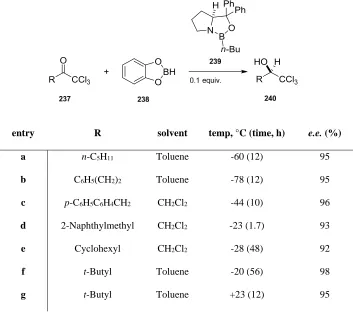
Scheme 77. Stereoselective synthesis of α-hydroxy esters. R = n-pentyl, C6H5(CH2)2, cyclohexyl,t-butyl. ...108
Scheme 78. Synthesis of an epoxycarboxylic acidviaan intramolecular Jocic reaction. TBAOH = tetrabutylammonium hydroxide. ...109
Scheme 79. Stereospecific synthesis of an α-azido γ-lactone. Reagents and conditions: DIBAL (1.0 equiv.), CH2Cl2, rt, 10 h; NaOH (4.0 equiv.), NaN3 (2.0 equiv.), DME/H2O, rt, 12 h. ...110
Scheme 80. Attempted synthesis of δ-lactam 327...111
Scheme 81. Synthesis of a 3,4-syn-disubstituted azetidine-2-carboxylic acid. ...111
Scheme 82. Synthesis of piperazin-2-ones. R1= (CH 2)2Ph, R2= alkyl, aryl. ...112
Scheme 83. Synthesis of (+)-LY354740. ...113
Scheme 84. Reagents and conditions: DBU (1.0 equiv.), NaN3 (2.0 equiv.), DME/H2O, rt, 24 h. ...113
Scheme 85. Synthesis of twobis-amino acid monomer precursors. ...114
Scheme 86. Discovery synthesis of lead compound348...114
Scheme 89. Reagents and conditions: ketone (8.0 equiv.), CHCl3(1.3 equiv.), NaOH
(4.5 equiv.), 10 °C, 20 h. R1/R2= alkyl, cycloalkyl; R3= alkyl. ...116
Scheme 90. Disconnections for the synthesis of vitamin E. R1, R2, R3 = CH 3 or H. ...118
Scheme 91. Friedel-Crafts acylation of anisole with trichlorolactone (R)-254a. ....119
Scheme 92. Synthesis of (S)-citramalic acid by Wynberg and Staring. ...119
Scheme 93. Synthesis of (1S,3S)-austrocortilutein...120
Scheme 94. Proposed Friedel-Crafts acylation of protected hydroquinones...120
Scheme 95. Methylation of hydroquinones. ...121
Scheme 96. Attempted ring opening of lactone171 under Friedel-Crafts conditions. ...121
Scheme 97. Attempted ring opening of lactone 171 by lithiation of arenes 364 and 365. TMEDA = tetramethyl ethylenediamine...121
Scheme 98. Attempted ring opening of lactone 171 by the lithium exchange of bromobenzenes. NBS =N-bromosuccinimide...122
Scheme 99. Successful ring opening of lactone171. ...122
Scheme 100. Failedortho-selective demethylation reaction...123
Scheme 101. Unsuccessful demethylation using NaI or LiI...123
Scheme 102. Demethylation of methyl ether373. ...124
Scheme 103. Optimised demethylation protocol...124
Scheme 104. Intramolecular Jocic reaction mechanism...125
Scheme 105. Synthesis of diastereomeric amides380. ...126
Scheme 106. Synthesis of 4-oxo-chromane (±)-382. ...126
Scheme 107. Failed acid-catalysed aldol condensation...127
Scheme 108. Attempted synthesis of monoprotected phenol386...129
Scheme 110. Synthesis of ester387. ...131
Scheme 111. Synthesis of racemate (±)-387. ...131
Scheme 112. Planned synthesis of aldehyde35. ...133
Scheme 113. Synthesis of aldehyde35. ...133
Scheme 114. Completion of the synthesis of α-tocopherol 1. ...134
Scheme 115. Synthesis of (R,R)-hexahydrofarnesol. The supplied hexahydrofarnesol 32 was of the following stereochemical composition: (3R,7R) 93%, (3S,7S) 0%, (3R,7S) 5.8%, (3S, 7R) 0.75%. This corresponds to ane.e.(C-3) = 99% ande.e.(C-7) = 88%. ...134
Scheme 116. Industrial synthesis of (S)-Trolox395. ...136
Scheme 117. Synthesis of (S)-Trolox 395by the hydrolysis of methyl ester (S)-388. ...136
Scheme 118. Attempted use of alternative phenol proctecting groups. ...137
Scheme 119. Demethylation of aryl methyl ethers using BBr3. ...138
Scheme 120. Total synthesis of γ-tocopherol. ... 139
Scheme 121. Synthesis of γ-tocopherol by Reuping et al. ...140
Scheme 122. Synthesis of γ-tocopherol by the demethylation of α-tocopherol. ... 141
Scheme 123. Synthesis of γ-tocopherol. ... 142
Scheme 124. Preparation of β-hydroxy(trichloromethyl) ketones. R = alkyl, aryl, allyl, vinyl. ...144
Scheme 125. Synthesis of ketones using Weinreb amides. ...144
Scheme 126. Acylation of organometallic compounds using morpholine amide. ..145
Scheme 129.Unexpected formation of compound434. ...147
Scheme 130. Mechanism for the formation of compound 434 involving an alkyl migration. ...147
Scheme 131. Mechanism for the formation of compound 434 via a cyclopropane rearrangement...147
Scheme 132. Unexpected formation of lactone435...149
Scheme 133. Potential mechanism for the formation of lactone435. ...149
Scheme 134. Potential mechanism for the formation of lactone435. ...150
Scheme 135. Potential mechanisms for the formation of lactones which were not observed in the reaction mixture. ...150
Scheme 136. Unsuccessful reaction with phenylmagnesium chloride...151
Scheme 137. Reaction of morpholine amide428withn-BuLi. ...151
Scheme 138. Reaction of morphonline amide428at elevated reaction temperature and time...151
Scheme 139. Elimination of CHCl3from amide428. ...152
Scheme 140. Intramolecular Jocic reaction to produce β-lactams. ... 153
Scheme 141. Proposed synthesis of cyclic structures using an intramolecular Jocic reaction...154
Scheme 142. Amide synthesis. ...154
Scheme 143. Attempted Jocic reaction with 4-methoxyphenol. ...155
Scheme 144. Attempted Jocic reaction using an alternative amide...156
Scheme 145. Reagents and conditions: TsOH (2.0 mol%), EtOH, reflux, 25 h; n-Bu3SnH (2.1 equiv.), THF, reflux, 28 h. ...213
Scheme 147. Synthesis of Schulzeine B...215
Scheme 148. Direct reduction of lactone254a...215
Scheme 149. One-carbon homologation of trichlorocarbinols. Reagents and conditions: LiBH4(4.0 equiv.), NaOH (3.0 equiv.), IPA, 40 °C, 16-24 h. ...216
Scheme 150. Proposed reduction of lactone171...216
Scheme 151. Attempted synthesis of α-disubstituted γ-lactones. ... 218
Scheme 152. One-carbon homologation of a tertiary trichlorocarbinol. ...218
Scheme 153. Reaction pathways leading to the formation of alcohols (R)-475and476. ...219
Scheme 154. Synthesis of racemic monoprotected diol (±)-475. ...220
Scheme 155. Synthesis of phosphonate esters...221
Scheme 156. Formation of an isopropyl ester intermediate483. ...222
Scheme 157. Synthesis of (3R,7R)-hexahydrofarnesol32by Matsuedaet al.Reagents and conditions: I2 (1.3 equiv.), PPh3 (1.2 equiv.), imidazole (1.3 equiv.), CH2Cl2, rt, 16 h;486(2.0 equiv.), CuCl2(3.0 mol%), 1-phenyl-1-propyne (0.15 equiv.), THF, rt, 2 h; TBAF (2.0 equiv.), THF, rt, 3 h...223
Scheme 158. Synthesis of (R)-dihydrocitronellol487...223
Scheme 159. Synthesis of phosphonate ester (S)-482. ...224
Scheme 160. Potential stereoselective synthesis of all four stereoisomers of hexahydrofarnesol. ...225
Scheme 161. Completion of the hexahydrofarnesol synthesis. ...226
Scheme 165. Diastereoselective synthesis of trichlorocarbinol503. ...228
Scheme 166.Synthesis of tertiary trichlorocarbinol497...228
Scheme 167. Reagents and conditions: diethyl phosphonate (4.0 equiv.), NEt3 (3.0 equiv.), 80 °C, 12 h. ...232
Scheme 168. Electrochemical reduction of trichloromethyl group. Mercury cathode, -1.6V working potential versus saturated calomel electrode...232
Scheme 169. Synthesis of α-aryloxy-aldehydes. ... 233
Scheme 170. Reagents and conditions: Lithium dicyclohexylamide (2.0 equiv.), CH2Cl2, -78 °C, 1 h. ...233
Scheme 171. Stereoselective synthesis of α-azido aldehyde 520aand520b. Reagents and conditions: LDA (4.0 equiv.), CH2Cl2 (4.0 equiv.), THF, -78 °C to rt; NaN3 (10 equiv.), DMPU (5.0 equiv.), 15-crown-5 (0.1 equiv.), 70 °C. DMPU = 1,3-Dimethyl-3,4,5,6-tetrahydro-2(1H)-pyrimidinone. ...234
Scheme 172. Synthesis of Sphingofungin E...235
Scheme 173. Reagents and conditions: LDA (2.0 equiv.), CH2Cl2(10 equiv.), -78 °C, 15 min; NaN3(5.0 equiv.), 15-crown-5 (0.5 equiv.), HMPA, 100 °C, 2 h. ...236
Scheme 174. Insertion of dichlorocarbene. CTAC = cetyltrimethylammonium chloride. R =n-C6H13, CH2Ph, Ph ...236
Scheme 175. Reagents and conditions: K2CO3(5.0 equiv.), MeOH, rt, 10 min; NaN3 (3.0 equiv.), 15-crown-5 (1.0 equiv.), THF, rt, 12 h; KCN (3.0 equiv.), 18-crown-6, THF, rt, 12 h; NaBH4(5.0 equiv.), MeOH, rt, 10 min...237
Scheme 176. Observed double inversion of phenyl substrate532. ...237
Scheme 177. Attempted synthesis of dichlorocarbinols by carbene insertion. ...238
Scheme 178. Formation of alcohols543and544. ...245
Scheme 180. Synthesis of tertiary alcohol549...246
Scheme 181. Synthesis of epoxide550using a Corey-Chaykovsky reaction...247
Scheme 182. Reaction of epoxide550with LiBH4and NaOH...247
Scheme 183. Inversion of configuration at the C-1 centre during the Jocic reaction. ...250
Scheme 184. Attempted Jocic reaction with a phenoxide nucleophile. R = p -OCH3C6H4...253
Scheme 185. Synthesis of α-aryloxyaldehyde 553. R =p-OCH3C6H4...253
List of Tables
Table 1.k5values for selectedo-alkylated phenols at 30 °C. ...32
Table 2.k5values for the natural tocopherols at 30 °C. ...32
Table 3. The effect onk5of substitution around the chromane ring. ...35
Table 4. Measurement ofk5values for vitamin E and related phenolic antioxidants at
25 °C, in both micellar (Triton X-100) and ethanol solution...37
Table 5. Comparison of natural tocopherols. a Relative to (2RS,4’RS,8’RS
)-α-tocopheryl acetate (=100%).bMeasured by calculating the relative IC
50values. ...39
Table 6. EC50values (µM) for vitamin E analogues. ...43
Table 7. Synthesis of trichlorocarbinols using sodium amide base. Reagents and conditions: aCHCl
3 (1.0 equiv.), NaNH2 (1.0 equiv.); b CHCl3 (4.0 equiv.), NaNH2
(1.2 equiv.);c CHCl
3(3.0 equiv.), NaNH2(1.0 equiv.);dCHCl3(1.0 equiv.), NaNH2
Table 9. Selection of results from Aggarwal et al. Reactions were performed in absence of solvent at room temperature using a carbonyl compound:CHCl3:DBU ratio
of 1:2:1. ...77
Table 10. One-pot oxidation/trichloromethylation of primary alcohols. Reactions were conducted on a 1 mmol scale. ...78
Table 11. Reagents and conditions: CHCl3(5.0 equiv.),n-BuLi (5.0 equiv.), TiCl(Oi
-Pr)3(2.0 equiv.), THF, -60 °C, 4 h...79
Table 12.aIsolated after desilylation (1M HCl/MeOH, rt, 0.25-0.5 h). Reagents and
conditions:bTASF (0.1 equiv.), THF, rt, 8 h;cTASF (0.1 equiv.), THF, 0 °C, 12 h;d
TASF (0.25 equiv.), THF, 0 °C, 4 h. In all entries 1.2 equiv. of silane was used. TASF
= tris(dimethylamino)sulfonium difluorotrimethylsilicate. ...80
Table 13. a Isolated as a > 20:1 mixture of diastereoisomers. b Not isolated, the
deprotected carbinol was obtained in a yield of 65% over two steps and as a > 20:1
mixture of diastereoisomers. ...81
Table 14. Reactions were run at 23 °C (entriesa-d) or 4 °C (entries eandf). TCA = trichloroacetic acid; NaTCA = sodium trichloroacetate. ...83
Table 15. Reaction of chloral with Grignard reagents. ...84
Table 16. Friedel-Crafts reaction of aromatic compounds with chloral. a Excess
indicates that 7-10 equivalents were employed. ...85
Table 17. Ketones were used in slight excess (1.25 equiv.) with respect to chloral. R2
= C2H5(entriesbandc); R2= CH3(entriesaandd)...87
Table 18. R2 = (-)-menthyl. Alkoxide 229 was prepared in situ from phenol (1.0
equiv.), (-)-menthol (1.0 equiv.) and Et2AlCl (1.0 equiv.).aNot determined. ...88
Table 19. Reagents and conditions: a(R)-232 (0.2 equiv.), 4 Å molecular sieves,
equiv.), -78 °C, 1-2 h. All reactions were carried out with the alkene in slight excess
(1.2 equiv.). ...89
Table 20. Reagents and conditions: alkyne (1.1 equiv.), Zn(OTf)2(0.50 equiv.), NEt3
(0.75 equiv.), (S,S)-235(0.55 equiv.). All reactions were carried out in toluene at room temperature...90
Table 21. All reactions were initiated at -78 °C and brought to the indicated temperature after one hour. ...91
Table 22. Reagents and conditions: chloral (1.0 equiv.), toluene, -78 °C to rt, overnight. ...93
Table 23. Reagents and conditions: ketone (2.0 equiv.),248(5 mol%), CH3CN. aThe
absolute configurations were not determined except for entrye.bChloral was used in
place of its monohydrate. ...94
Table 24. Reagents and conditions: Cl3CCHO (1.0 equiv.), L-prolinamide (0.30
equiv.), CH2Cl2, rt, 24 h. ...95
Table 25. Catalytic, asymmetric synthesis of 2-oxetanones. a Identified as the (R
)-enantiomer by conversion to malic acid.bThe yield using quinine as the catalyst was
not reported. ...96
Table 26. Synthesis of α-alkoxy carboxylic acids. Reagents and conditions: KOH (4.0
equiv.), R3OH, rt to reflux, 3 h...99
Table 27. Phenoxide277was generatedin situby the addition of substituted phenol (1.02 equiv.) to Na in anhydrous MeOH...101
Table 28. Reagents and conditions: NaOH (6.0 equiv.), 55 °C, 12 h.aNot determined.
Table 30. Reagents and conditions: NaOH (4.0 equiv.), NaN3(2.0 equiv.), DME/H2O,
rt, 12 h; 10% Pd/C (25 wt%), H2, EtOAc, rt, 12 h. ...110
Table 31. Reagents and conditions: ketone (3.0 equiv.), CHCl3 (5.0 equiv.), NaOH
(5.0 equiv.), THF, rt, 18 h. ...117
Table 32. Optimisation of conditions for the reduction of lactone171. 3.0 Equivalents of the reductant were used in each entry...217
Table 33. Reagents and conditions: LiBH4 (4.0 equiv.), NaOH (3.0 equiv.), IPA, rt,
24 h. aDetermined by analysis of the 1H NMR spectrum of the crude
material. bCrude yield: compound506was inseparable from compound507.cCrude
yield: compound was difficult to isolate due to its volatility. ...230
Table 34. Reactions and conditions: LiBH4(4.0 equiv.), NaOH (3.0 equiv.), IPA, rt,
16 h. aRatio determined by examination of the crude 1H NMR spectrum. bNeither
product 543 or 544 was observed in the crude mixture. cCrude yield: product 543
could not be isolated cleanly. dMajor diastereomer was used as the substrate as the
Acknowledgements
The University of Warwick are gratefully acknowledged for funding this project.
First and foremost though, many thanks must go to Fox for his assistance and
supervision throughout my research. His enthusiasm as both an academic and a teacher
are infectious and helped me to stay motivated and happy for the last three and a half
years.
Thanks should also go to members of the Fox group, past and present, for helpful
discussions. Particular thanks go to the mass spectrometry facility staff, Dr Lijiang
Song and Mr Phillip Aston, as well as Dr Ivan Prokes and Mr Robert Perry for running
the NMR facilities.
Finally, thanks must go to family and friends for invaluable support. In particular Ellie
Declaration
All of the work described in this thesis is original research carried out at the University
of Warwick between October 2014 and April 2018. I declare that any material
described which is not original has been identified and properly referenced. I certify
that the material within this thesis has not been submitted for a degree at any other
Abstract
This thesis begins with an introduction to Vitamin E and the Jocic reaction. Chapter 1
provides a review of the biological activity of vitamin E and related compounds and
the synthesis, both racemic and asymmetric, of vitamin E compounds. Also discussed
in this chapter is the Jocic reaction and the synthesis of trichloromethyl alcohol
compounds.
Chapter 2 describes the asymmetric total syntheses of both α- and β-tocopherol, where
an intramolecular Jocic reaction was used to provide a high enantiomeric excess. Difficulties encountered during the synthesis, and how these were overcome, are
detailed.
Chapter 3 describes the novel use of hydride as a nucleophile in the Jocic reaction with
tertiary polychloromethyl alcohols. This one-carbon homologation procedure was
improved by the use of dichloro- rather than trichloromethyl alcohols. The scope of
Abbreviations
Å Angstrom
aq. Aqueous
BACE-1 β-Site amyloid precursor protein cleaving enzyme [BarF
4]- Tetrakis[3,5-bis(trifluoromethyl)phenyl]borate
BINAP 2’,2-bis(Diphenylphosphino)-1’,1’-binaphthyl Boc Tert-butyloxycarbonyl
BOXAX Bis(oxazolyl)-1,1’-binaphthyl BTAC Benzyltriethylammonium chloride
BuLi Butyl lithium
Cat. Catalytic
Cbz Carboxybenzyl
CEHC 2’-Carboxyethyl-6-hydroxychromane
cod Cyclooctadiene
CTAC Cetyltrimethylammonium chloride
dba Dibenzylidene acetone
DBU 1,8-Diazabicyclo[5.4.0]undec-7-ene
DIBAL-H Diisobutylaluminium hydride
DIPEA Diisopropylethylamine
DMAP N,N-dimethylamino pyridine DME Dimethoxyethane
DMF N,N-Dimethylformamide DMP Dess-Martin periodinane
DMPU 1,3-Dimethyl-3,4,5,6-tetrahydro-2(1H)-pyrimidinone
DMSO Dimethylsulfoxide
DPPB Diphenylphosphanyl benzoate
EDCI 1-Ethyl-3-(3-dimethylaminopropyl)carbodiimide
eq. Equivalent(s)
Fm Fluorenylmethyl
GAD Generalised anxiety disorder
hfc 3-(Heptafluoropropylhydroxymethylene)-(+)-camphorate
HOBt Hydroxybenzotriazole
IBX Iodoxybenzoic acid
IPA 2-Propanol
HMPA Hexamethylphosphoramide
HPLC High performance liquid chromatography
HRMS High resolution mass spectrometry
LDL Low-density lipoprotein
LDA Lithium diisopropylamide
LiHMDS Lithium hexamethyldisilazide
mGluRs Metabotropic glutamate receptors
µW Microwave
m.p Melting point
NaTCA Sodium trichloroacetate
Nu Nucleophile
PMP Para-methoxyphenol
Red-Al ® Sodiumbis(2-methoxyethoxy)aluminium hydride SAR Structure activity relationship
TASF Tris(dimethylamino)sulfonium difluorotrimethyl silicate TBAOH Tetra-n-butylammonium hydroxide
TCA Trichloroacetic acid
TES Triethylsilane
α-TEA α-Tocopherol ether-linked acetic acid
TFA Trifluoroacetic acid
THF Tetrahydrofuran
THP Tetrahydropyran
TIPS
TLC
Triisopropylsilane
Thin Layer Chromatography
TMG 1,1,3,3-Tetramethylguanidine
TMS Tetramethylsilane
α-TOS α-Tocopheryl succinate
Ts Tosyl
α-TTP α-Tocopherol transfer protein
Chapter 1: Introduction to Vitamin E and the Jocic
Reaction
1.1 Discovery of Vitamin E
Vitamin E is the name given to a class of naturally occurring antioxidants consisting
of eight different compounds. These eight compounds are divided into the tocopherols
chain. Depending on the extent and position of methylation around the aromatic ring
these compounds are further designated α, β, γ or δ.
Figure 1. Naturally occurring vitamin E compounds.
In 1922, Evans and Bishop reported that rats which were fed an unnatural diet
consisting mainly of milk, cornstarch and adequate vitamin A, B and C were infertile,
and that fertility was restored by the feeding of lettuce leaves.1They had demonstrated
that natural foods contained a substance essential for reproduction. Other groups
reported the same results from similar experiments and the substance was first termed
“Vitamin E” since vitamins A, B, C and D were already known.2-4Much of the early
studies on the antioxidant activity of vitamin E were carried out by Mattill5-10 and
Evans.11Mattill and co-workers were one of the first groups to suggest that vitamin E
acted as an antioxidant; they did this by measuring the uptake of oxygen from a variety
of vegetable and animal fats and noted that uptake of oxygen was considerably slower
in the presence of wheat germ oil (the best source of vitamin E at the time).12, 13Evans
et al. isolated α-tocopherol in pure form from wheat germ oil in 193614 and shortly
after its chemical structure was fully elucidated.15 Olcott and Emerson then
1.2 Mechanism of Action
Lipid autoxidation (Scheme 1) is the process by which long chain fatty acids undergo
oxidation under mild conditions, leading to rancidity.17-19 In biological systems, the
process is referred to as peroxidation and can result in the modification of low density
lipoprotein (LDL)20and tissue damage.21-23
Scheme 1. Lipid autoxidation free radical chain reaction.
In order to measure the kinetics of lipid autoxidation using equations 1-4 (Scheme 1),
the rate of initiation needs to be controlled and this is most commonly achieved using
thermally-labile azo compounds as initiators.24-26Within biological systems initiators
such as Fe+ions,27-30organic hydroperoxides,31-33CCl
434, 35and ethanol36, 37have all
been described. The alkyl radicals (L•) generated are highly reactive and will react
quickly with oxygen to form lipid peroxy radicals (LOO•), which react with further
lipids to form lipid hydroperoxides (LOOH) and L• radicals which propagate the
chain. Terminationviadimerisation takes place when almost all of the lipids LH have been consumed.
Phenols are well known to act as inhibitors in radical chain reactions.38-41 This is
primarily due to their ability to donate a hydrogen atom to a propagating radical, thus
terminating the chain. Therefore the antioxidant activity of vitamin E can be described
by equations 5 and 6 (Scheme 2), where the phenol hydrogen atom (TOH) is donated
Scheme 2. Inhibition of free radical propagation by tocopherols.
The chromanoxyl radical (TO•) will undergo radical-radical coupling to form adducts.
Depending on whether the other radical is carbon-based or oxygen-based, the adduct
will tend to be formed at the chromanoxyl oxygen42 or at the 8a43, 44 position
respectively (Scheme 3).
Scheme 3. Reactions of α-tocopherol with peroxyl radicals.
The tocopherones 10-13 are then hydrolysed to the corresponding quinones by opening of the chromane ring. According to equations (5) and (6), one tocopherol
molecule is therefore theoretically able to neutralise two lipid peroxy radicals.
1.3 Influence of Substituents on Activity
reaction (5) must be much greater than that for (3),k5>>k3(Schemes 1 and 2), which
implies a high reactivity towards peroxy radicals. Howard and Ingold measuredk5for
a range of phenolic antioxidants with various substitution patterns, a selection of
which are shown in Table 1.41, 57
R1 R2 R3 10-5k
5(M-1s-1)
H OCH3 H 94
H OCH3 CH3 130
CH3 OCH3 CH3 39
CH3 CH3 CH3 36
CH3 CH3 H 11
H CH3 H 8.5
Table 1.k5values for selectedo-alkylated phenols at 30 °C.
structure 10-4k
5(M-1s-1) structure 10-4k5(M-1s-1)
α-tocopherol 320 γ-tocopherol 140
β-tocopherol 130 δ-tocopherol 44
Table 2.k5values for the natural tocopherols at 30 °C.
They found that the greatest k5 values were obtained with a p-methoxy substituent,
and with three methyl groups in the other positions. From the data it was concluded
that for simple phenols,k5is dependent both on the radical stabilising effect of groups
in theorthoandparapositions and on steric hindrance preventing the approach of the peroxy radical. For example, in the same study they found that 2,6-di-tert-butyl phenols were less reactive than the corresponding 2,6-dimethyl phenols due to the
The k5 values for the natural tocopherols were also measured under the same conditions and found to be in the order α > β ≈ γ > δ (Table 2), which has also been
reported by othersin vitro.58 Due to their structural similarities it might be expected
that p-methoxy-2,3,5,6-tetramethyl phenol should have a comparable antioxidant
activity to α-tocopherol, but instead it was found that α-tocopherol was much more
active. Given that there is no difference in steric hindrance in the positionsortho to the phenol group, the authors concluded that there must be a difference in the stability
of the radicals formed.
If the group in thepara position has lone pairs available these can overlap with the π
system of the aromatic ring, which stabilises the phenoxyl radical by delocalisation
(Scheme 4).
Scheme 4. Stabilisation of phenoxyl radicals by delocalisation.
In order for the lone pair electrons to overlap effectively they need to be perpendicular
to the aromatic plane, and the extent of overlap will depend on the dihedral angle (θ)
between the lone pair orbital on oxygen 1 and the p orbitals in the aromatic ring. Therefore a dihedral angle closer to 0 ° maximises the orbital overlap while an angle
closer to 90 ° represents a minimum overlap. Inp-methoxy-2,3,5,6-tetramethyl phenol the methoxy group can twist out of the plane in order to reduce steric clashing,
resulting in a dihedral angle of 89 ° (Figure 2).57, 59, 60 Orbital overlap is at a minimum
Figure 2. Newman projection of 4-methoxy-2,3,5,6-tetramethyl phenoxyl radical.
On the other hand, pentamethyl-6-hydroxy chromane is not able to twist out of the
plane to the same extent due to its bicyclic nature, resulting in a dihedral angle of
17 ° and better orbital overlap (Figure 3).57, 59, 60 Consequently, the chromane
compound is able to stabilise the radical to a greater extent resulting in a larger k5
value. This appears to be the fundamental reason for high vitamin E antioxidant
activity compared to phenols which lack the fused ring system.
Figure 3. Newman projection of pentamethyl-6-hydroxy chromanoxyl radical.
Burtonet al. investigated the effect of substitution on the chromane ring in an attempt
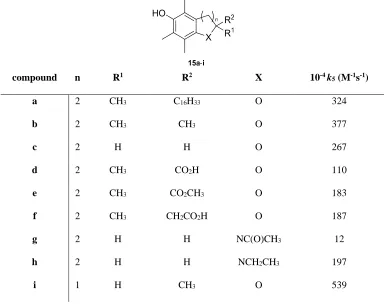
to find a compound with greater antioxidant activity than α-tocopherol (Table 3).61An
increase in k5was seen when the phytyl side chain was substituted for a CH3 group,
due to a decrease in puckering of the chromane ring resulting in a dihedral angle closer
to 0 ° than in α-tocopherol. When R2= CO
2H or CO2CH3(compounds15dand15e) a
decrease in activity is seen. The authors attribute this to an electron-withdrawing effect
which reduces the ability of oxygen (X = O, Table 3) to donate its lone pair,
consequently lowering the stability of the radical. Compound15dhad previously been
Table 3. The effect onk5of substitution around the chromane ring.
It might be expected that the compound with X = NCH2CH3 (tetrahydroquinoline,
15h) should have higher activity than compounds with X = O due to the greater ability of nitrogen to stabilise neighbouring radical centres.64, 65 However, a decrease in
activity relative to α-tocopherol was measured. The reason for this is suggested to be
that the N-ethyl group occupies the axial position in order to reduce steric clashing with the C-8 methyl group, preventing the nitrogen lone pair from overlapping with
the π system (Figure 4).
compound n R1 R2 X 10-4k
5(M-1s-1)
a 2 CH3 C16H33 O 324
b 2 CH3 CH3 O 377
c 2 H H O 267
d 2 CH3 CO2H O 110
e 2 CH3 CO2CH3 O 183
f 2 CH3 CH2CO2H O 187
g 2 H H NC(O)CH3 12
h 2 H H NCH2CH3 197
However, this conclusion was drawn from space-filling models as the authors were
unable to grow crystals for X-ray crystallography. Compound 15i with n = 1 (2,3-dihydrobenzofuran) showed the greatestk5value in the study, and this has been shown
to be due to the small dihedral angle of 6 ° which increases radical stability as
discussed previously.57, 60 Other groups have carried out similar structure activity
relationship (SAR) studies of this type.66, 67
Studies of the type by Burtonet al. above are typically carried out by measuring the inhibited autoxidation of styrene in non-polar, organic solvent. Mukai et al.
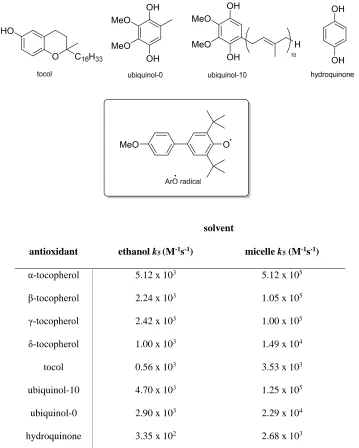
investigated the reaction of an ArO• radical with α-, β-, γ-, and δ-tocopherols, together
with a selection of structurally related phenols, in a micellar solution designed to
mimic cell membranes (Table 4).58
The data they obtained showed that the activity of the tocopherols is in the order α >
β ≈ γ > δ in both micellar and ethanol solutions. The increase in rate constant seen in
micellar solution is due to the lipophilicity of the compounds. They will be localised
within the micelles and since the ArO• radicals are also lipid soluble, the reaction will
take place inside the micelle. This close association is responsible for the large
increase in rate. Tocol was shown to be around 90% less reactive towards radicals and
this is due to a lack of electron donating groupsorthoto the phenol.
Ubiquinol-0 and ubiquinol-10 are known to act as lipid antioxidants in cell
membranes.68-70The rate constantk
5in micelles measured in this study was found to
be comparable to vitamin E and a “regenerative” mechansim has been observed in vitro, whereby ubiquinol-10 donates an H atom to the Toc• radical (Scheme 5).58, 71, 72
This type of synergistic relationship has been directly observed with ascorbic acid
solvent
antioxidant ethanolk5(M-1s-1) micellek5(M-1s-1)
α-tocopherol 5.12 x 10³ 5.12 x 10⁵
β-tocopherol 2.24 x 10³ 1.05 x 10⁵
γ-tocopherol 2.42 x 10³ 1.00 x 10⁵
δ-tocopherol 1.00 x 10³ 1.49 x 10⁴
tocol 0.56 x 10³ 3.53 x 10³
ubiquinol-10 4.70 x 10³ 1.25 x 10⁵
ubiquinol-0 2.90 x 10³ 2.29 x 10⁴
[image:38.595.141.500.57.505.2]hydroquinone 3.35 x 10² 2.68 x 10³
Table 4. Measurement ofk5values for vitamin E and related phenolic antioxidants at 25 °C, in both
micellar (Triton X-100) and ethanol solution.
1.4 Comparison Between α-, β-, γ- and δ- forms
1.4.1In Vitro
In vitro studies have shown α-tocopherol to be the most active form of vitamin E and
δ-tocopherol to be the least active, with the β- and γ- forms in between.50, 52, 57-59, 77
This must be primarily due to the greater extent of methylation of α-tocopherol around
the aromatic ring, as discussed previously, since the dihedral angles imply a greater
orbital overlap between the ring oxygen and the arene π system in γ- and δ-
tocopherol.78-80 In addition, a greater number of electron donating groups would be
expected to stabilise a radical to a greater extent. However, studies of this type appear
to be highly dependent on a number of experimental factors. For example, Cillardet al. studied the autoxidation of linoleic acid with and without tocopherols. They found
that the antioxidant activities were in the reversed order, with δ-tocopherol most
potent.81 This has also been reported by other authors when measuring the relative
antioxidant activities in fats.82-84 Due to the reactive nature of radicals a number of
side reactions can take place which may be dependent on the substrate being studied,85,
86temperature,86light,86concentration87-89or solvent.90, 91This wide range of variables
may explain the contradictory nature of the reports in the literature and makes it
difficult to compare results from different authors.
1.4.2In Vivo
Whilst the relative antioxidant activities of the four tocopherols are all within an order
of magnitudein vitro, in biological systems α-tocopherol is by far the most important
antioxidant. Leth and Sondergaard used a rat resorption-gestation assay to determine
the relative biological activities of the tocopherols (Table 5).92 They found that
δ-tocopherol had < 0.4% activity relative to so-called (all-rac)-α-tocopheryl acetate and
substrate biological activity (%)a α-TTP binding affinity (%)b
(R,R,R)-α-tocopherol 80 100
(R,R,R)-β-tocopherol 45 38.1 ± 9.3
(R,R,R)-γ-tocopherol 13 8.9 ± 0.6
(R,R,R)-δ-tocopherol < 0.4 1.6 ± 0.3
(R,R,R)-α-tocopheryl acetate - 1.7 ± 0.1
(S,R,R)-α-tocopherol - 10.5 ± 0.4
Table 5. Comparison of natural tocopherols.aRelative to (2RS,4’RS,8’RS)-α-tocopheryl acetate
(=100%).bMeasured by calculating the relative IC
50values.
Given that this difference cannot be explained by the relative chemical reactivity of
the tocopherols alone, other factors relating to their distribution, transport or
bioavailability in cell tissues must be governing the measured relative activity. The
most important factor appears to be recognition by the α-tocopherol transfer protein
(α-TTP), which is the protein responsible for maintaining plasma α-tocopherol
concentrations.98-100
Hosomiet al. measured the relative binding affinities for tocopherols and tocopherol
analogues to α-TTP (Table 5).101 They found that (R,R,R)-α-tocopherol displayed the highest binding affinity and δ-tocopherol displayed the lowest, which correlates well
with the relative biological activitiesin vivo. In addition, they also studied the effect
of stereochemistry on the binding affinity. From their results it can be seen that
α-tocopherol with the (2R)-configuration has an almost 10-fold higher binding affinity
The metabolism of vitamin E provides an additional explanation for the differences in
observed potency. It has been shown that the non-α-tocopherols are preferentially
metabolised to the 2’-carboxyethyl-6-hydroxychromane (CEHC) forms by
cytochrome P450s (Scheme 6).106, 107
Scheme 6. Pathway of metabolism of γ-tocopherol to its γ-CEHC form.
The fate of non-α-tocopherols is of importance given that the North American intake
of γ-tocopherol exceeds that of α-tocopherol by a factor of 2-4.108, 109Soybean oil is
thought to be the primary source of ingestion of vitamin E in the US diet, and this oil
has been shown to contain 3-4 fold higher quantity of γ-tocopherol compared to
α-tocopherol.110 γ-Tocopherol may also have different reactivity due to the potentially
reaction of γ-tocopherol with low levels of NO2 yielded 2,7,8
trimethyl-2-(4’,8’,12’-trimethyldecyl)-5-nitro 6-chromanol 16 and 2,7,8-trimethyl-2-(4’,8’,12’-trimethyltridecyl)-5,6-chromaquinone 19 (Scheme 7).111, 112 Other groups have demonstrated the ability of γ-tocopherol to trap mutagenic electrophiles.110, 113It has
also been suggested that γ-tocopherol may play a specific role in the prevention of
heart disease and cancer.114
16 33 16 33 16 33
16 33 16 33
2
16
18 19
-tocopherol3 17
Scheme 7. Proposed mechanism for the trapping of NO2 radicals by γ-tocopherol.
1.5 Vitamin E Deficiency in Humans
Patients with symptoms caused by vitamin E deficiency were first reported in the
1960s.115, 116This has been shown to be not due to lack of vitamin E in the diet, but
due to either a defect in the gene for α-TTP,117-120or malabsorption of fatty acids,121
resulting in a lack of α-tocopherol at cell membranes and therefore increased lipid
peroxidation. An increased oxidative stress on tissue cells can result in
neurodegenerative disease,122cardiovascular disease,123myopathy,124, 125or peripheral
1.6 Potential Non-antioxidant Applications
A number of roles not associated with antioxidant activity have been proposed for the
tocopherols, including regulation of protein kinase C128-130 and inhibition of cell
proliferation.131, 132 This conclusion was based largely on the fact that α-tocopherol
had an effect on the signalling pathways whilst non-α forms did not. However, it has
been suggested that these signalling pathways may in fact be dependent on the
oxidative stress of the cell or tissue in question rather than being directly controlled
by α-tocopherol.133 Therefore, the apparent regulation of signalling pathways and
other roles suggested for vitamin E may come back to its primary antioxidant function.
Vitamin E and analogues such as α-tocopheryl succinate (α-TOS) and α-tocopherol
ether-linked acetic acid (α-TEA) have been shown to have potent anticancer properties
in some cell types.134-139 Chen et al. synthesised a number of related vitamin E
analogues for anticancer functions (Table 6).140 The data in table 6 shows that the
highest anticancer activity was obtained with ether-linked analogues21and22. Chen
et al. speculated that this may be due to the ether increasing the hydrophilicity of the compound and increasing uptake in the cells, but the mechanism is unknown.
Pharmaceutical compounds incorporate fluorine in order to increase bioavailability,
lipophilicity or binding with a target protein.141 It has also been shown that fewer
methyl groups on the chromane head group may increase anticancer activity.136
Therefore, the authors synthesised20and23, which are fluorinated at the C-7 position and unsubstituted at C-5 and C-8. These compounds were found to exhibit similar
anticancer activity to α-TEA. However, given the considerable difference observed
between the in vitro and in vivo antioxidant activity of the tocopherols due to their differing bioavailability, similar effects may be observed with anticancer activity.
Table 6. EC50values (µM) for vitamin E analogues.
1.7 Tocotrienols
In comparison to the tocopherols, much less work has been done on the tocotrienols,
which only differ in the phytyl side chain unsaturation (Figure 1). In vivo studies
showed that α-tocotrienol has 30% of the biological activity of α-tocopherol and
β-tocotrienol has only 5% of the activity of β-tocopherol, as determined by the rat
resorption-gestation assay.142 This can be attributed to discrimination by the α-TTP
which specifically recognises a saturated phytyl chain.143, 144 Consequently, the
tocotrienol forms of vitamin E are not retained in tissues and membranes to the same
extent as the tocopherols, resulting in lower biological activity.
cancer cell line α-TEA 20 21 22 23
MDA-MB-231 35 34 16 18 27
were identical in hexane solution.147Since the only structural difference between the
two is in the side chain, this suggests that differing arrangements in the membrane
could be affecting the reactivity. From their results Suzuki et al. suggested that
α-tocotrienol is located closer to the membrane surface than α-tocopherol, allowing for
greater interaction with peroxy radicals. However, work by Yoshida et al. yielded contrary results to those above, where they found very little difference in antioxidant
activity between α-tocopherol and α-tocotrienol in membrane systems.148
1.8 Vitamin E Synthesis in Industry
(R,R,R)-α-Tocopherol is the most biologically relevant form of vitamin E due to its
higher activity. However a mixture of all eight stereoisomers, so-called (all-rac
)-α-tocopherol26, is the most important compound commercially. The first synthesis of
α-tocopherol was reported by Karrer et al. in 1938, by the acid-catalysed condensation of trimethylhydroquinone24with phytyl bromide25(Scheme 8).149, 150
Scheme 8. First reported synthesis of α-tocopherol.
Note that phytyl bromide 25 was derived from natural (enantiomerically enriched) phytol, since this was the only available source of the compound at the time.
The current industrial-scale synthesis of (all-rac)-α-tocopherol and (all-rac
trimethylhydroquinone and (all-rac)-isophytol27(Scheme 9). Considerable effort has gone into the development of alternative catalysts to replace the conventional Lewis
acids (ZnCl2,AlCl3, BF3among others), in order to increase selectivity and yield with
a lower catalyst loading.151-153 Trimethylhydroquinone is accessible on an industrial
scale from mesitol, isophorones or diethyl ketone.152, 154 (All-rac)-isophytol 27 is
accessible using isoprenoid chemistry, in particular the acid-catalysed Carroll155and
Saucy/Marbet156 reactions for C
3 elongations. The starting materials are acetone,
ethyne and hydrogen (Scheme 10).
Given the increased biological activity of specifically (R,R,R)-α-tocopherol compared
to the lower homologues and other stereoisomers, access to this compound on an
industrial scale is important for pharmaceutical applications. Currently this is achieved
by the processing of natural materials, such as soya beans and vegetable oil, which are
rich in (R,R,R)-α-tocopherol. However, these materials also contain the lower
homologues and so a “semi-synthetic” approach is used. All the tocopherols are first
isolated by extraction, and then upgraded to the α-form using halo-,157 amino-,158 or
hydroxy-159alkylation-reduction sequences (Scheme 11).
Scheme 11. Representative procedure for the upgrading of γ-tocopherol to α-tocopherol.
Netscher et al. have optimised procedures of this type using morpholine as the Mannich reagent in a variety of ratios with formaldehyde.160 By adjusting the
stoichiometry to 1:1-1.2 [δ-tocopherol:morpholine] they were also able to
monoalkylate δ-tocopherol to the β- form, due to the higher reactivity of the C-5
position compared to the C-7 position. The reduction step is typically carried out using
H2and Pd/C and the authors screened a considerable number of hydride reductants in
an attempt to find alternative reagents. They found that NaCNBH3or NaBH4/NaOH
in i-BuOH were effective in the reduction of 5-(aminomethylated)-γ-tocopherol, but
Relatively recent advances in catalytic asymmetric hydrogenation, based on the
pioneering work of Noyori and co-workers, have allowed construction of the
enantio-and diastereomerically enriched side-chain component 32 on an industrial scale (Scheme 12).
Scheme 12. Asymmetric hydrogenation of olefins using Ru and Ir catalysts.
Conditions developed by Noyori et al.161, 162 were used at Roche to convert 30 into
(R,R)-hexahydrofarnesol 32, on a pilot scale with substrate:catalyst ratios of up to 150000:1.163 Pfaltz et al. developed an Ir catalyst capable of the asymmetric
hydrogenation of unfunctionalised, trialkyl substituted olefins with > 90%d.e. and > 99% e.e.164, 165 In this way farnesol, 31, was converted directly into (R,R
)-hexahydrofarnesol 32. One disadvantage of this route is that ligand 34 is not commercially available, unlike the BINAP derived ligands used for Noyori-type
1.9 α-Tocopherol Asymmetric Total Synthesis
The asymmetric total synthesis of (R,R,R)-α-tocopherol has been reported a number
of times in the literature. Most of the syntheses to date can be categorised into:1) those which feature a C1’-C2’ coupling;2) those which feature a stereospecific ring closing
reaction; and 3) those which feature a stereoselective ring closing reaction. The syntheses in category1are the most abundant and generally consist of the asymmetric construction of a chromane aldehyde (for example 35 or 36), followed by a Wittig coupling with a side chain component (for example37or38, Scheme 13).
Scheme 13. C1’-C2’ coupling route towards α-tocopherol.
Given the importance of the chromane moiety in vitamin E chemistry, some
asymmetric approaches to their syntheses are also discussed below.
1.9.1 C1’-C2’ Coupling Approach
The first reported asymmetric total synthesis of α-tocopherol 1was reported by Mayer
et al. in 1963.166Their synthesis was the first example of the Wittig coupling method
O AcO
CO2H
O AcO
CO2H
Quinine, MeOH Chiral Resolution
O AcO
CO2H
+ O AcO 39 40 41 36 O
Scheme 14. Chiral resolution of racemic aldehyde (±)-36.
The authors were unable to resolve aldehyde (±)-36 directly so it was converted into the carboxylic acid39, from which both enantiomers could be resolved using quinine. Conversion into the enantiomerically enriched aldehyde 36 from the desired enantiomer40 was achieved over four steps; this compound was then subjected to a Wittig coupling with phosphonium bromide 37, followed by hydrogenation over palladium to yield (R,R,R)-α-tocopherol.
Chiral resolutions of this type are common in the asymmetric syntheses of (R,R,R
)-α-tocopherol. Scottet al.used chiral resolution to synthesise precursor aldehyde46, from which the synthesis was completed using a Wittig coupling (Scheme 15).167
Construction of the chromane ring was achieved using a Wadsworth-Emmons reaction
and hydrolysis of the resulting ester gave the acid (±)-44. Resolution with (S
Scheme 15. Synthesis of aldehyde46by chiral resolution.
Schmidet al. demonstrated a synthetic route to the phytyl side chain component and
used this in the total synthesis of α-tocopherol.168, 169This synthesis was based on the
multiple Grignard coupling of chiral C5 components, derived from the
enantiomerically enriched lactone47(Scheme 16).170
Scheme 16. Synthesis of (3R,7R)-1-bromo-3,7,11-trimethyldodecane56. Some steps have been
omitted for clarity.
The bromide fragment 48 was obtained with an e.e. of > 97% based on 1H NMR
analysis with the chiral shift reagent Eu(hfc)3. (3R,7R
)-1-Bromo-3,7,11-trimethyldodecane56was synthesised in 11 linear steps with an overall yield of 36%, based on the lactone 47. Completion of the synthesis of α-tocopherol was achieved
A chiral γ-butyrolactone 57was also used as a starting material in a synthesis by Cohen
et al. (Scheme 17).171In this work the lactone57was elaborated into diketone58over
a number of steps, followed by annulation and oxidation to generate the p -benzoquinone59. This compound was cyclised in aqueous HCl and methanol to yield the bridged ketal 60, which could be reduced with H2 and Pd/C to give the (S
)-chroman-2-methanol 61. None of the alternative seven-membered ring product was detected in the final reduction step, and only one enantiomer was observed by chiral
shift 1H NMR spectroscopy. Completion of the synthesis was carried out using the
method of Mayeret al. to yield α-tocopherol in a total of 13 steps and with an overall
yield of 6.5%.
Scheme 17. Synthesis of (S)-chroman-2-methanol61
An alternative approach was demonstrated by Chanet al. in which the side chain was built directly onto the chromane head group (Scheme 18).172, 173The key steps in this
synthesis were a stereospecific Claisen rearrangement and a coupling with the
Scheme 18. Synthesis of α-tocopheryl acetate.
The chromane aldehyde46was prepared as described by Scottet al.167(Scheme 15).
The required diastereomerically pure acetylenic carbinol 62 could be separated as a mixture of 3,5-dinitrobenzoates, followed by hydrolysis. Johnson-Claisen
rearrangements are known to be highly stereoselective.174Treatment of allylic alcohol
63 with triethylorthoacetate and propionic acid at 140 °C yielded the (2R,4’R)-ester
64, with ane.e.of 99%. Completion of the synthesis was achieved by the coupling of tosylate66with the enantiomerically enriched Grignard reagent67, analogous to the route of Schmidet al. (Scheme 16), in a total of ten linear steps (from aldehyde46) and an overall yield of 8.5%.
1.9.2 Other Approaches to Enantiomerically Enriched Chromanes
As can be seen above, the synthesis of enantiomerically enriched chromane structures
commonly involves an optical resolution of a related racemic acid, often using chiral
nitrogen bases such as quinine or (S)-α-methylbenzylamine. Enzymatic kinetic
resolutions have also been shown to provide very highe.e.values.175, 176Asymmetric