warwick.ac.uk/lib-publications
Original citation:Bonell, C., Shackleton, N., Fletcher, A., Jamal, F., Allen, E., Mathiot, A., Markham, Wolfgang A., Aveyard, P. and Viner, R.. (2016) Student- and school-level belonging and commitment and student smoking, drinking and misbehaviour. Health Education Journal .
doi: 10.1177/0017896916657843 Permanent WRAP URL:
http://wrap.warwick.ac.uk/83216 Copyright and reuse:
The Warwick Research Archive Portal (WRAP) makes this work by researchers of the University of Warwick available open access under the following conditions. Copyright © and all moral rights to the version of the paper presented here belong to the individual author(s) and/or other copyright owners. To the extent reasonable and practicable the material made available in WRAP has been checked for eligibility before being made available.
Copies of full items can be used for personal research or study, educational, or not-for profit purposes without prior permission or charge. Provided that the authors, title and full bibliographic details are credited, a hyperlink and/or URL is given for the original metadata page and the content is not changed in any way.
Publisher’s statement:
The final, definitive version of this paper has been published in
Health Education Journal by SAGE Publications Ltd, All rights reserved. © The Author(s) Published version: http://dx.doi.org/10.1177/0017896916657843
A note on versions:
The version presented here may differ from the published version or, version of record, if you wish to cite this item you are advised to consult the publisher’s version. Please see the ‘permanent WRAP url’ above for details on accessing the published version and note that access may require a subscription.
1
Student and school-level belonging and commitment and student smoking, drinking and misbehaviour
Christopher Bonell1*; Nichola Shackleton2; Adam Fletcher3; Farah Jamal1; Elizabeth Allen4 Anne Mathiot5; Wolfgang Markham5; Paul Aveyard7; Russell Viner5.
1 Department of Social Science, University College London Institute of Education, London, UK. 2 Centre of Methods and Policy Application in the Social Sciences, University of Auckland, New Zealand.
3School of Social Sciences, Cardiff University
4 Department of Medical Statistics, London School of Hygiene and Tropical Medicine, London, UK. 5 University College London Institute of Child Health, London, UK.
6 Warwick Medical School- Statistics and Epidemiology, University of Warwick, Coventry, UK. 7 Department of Primary Care Health Sciences, University of Oxford, Oxford KU.
*corresponding author: Chris Bonell, Department of Social Science, UCL Institute of Education, 18 Woburn Square, London WC1H 0NR, UK. Tel. +44 (0)20 7612 6731; Fax. +44 (0)20 7612 6400; email [email protected]
Acknowledgements
We would like to thank the other co-investigators working on the INCLUSIVE trial as well as the students and staff of the participating schools.
2 3965 excluding references and tables
Funding
This project is funded by a grant from the National Institute for Health Research Public Health Research programme (grant 12/153/60). This report presents independent research commissioned by the National Institute for Health Research (NIHR). The views and opinions expressed by authors in this publication are those of the authors and do not necessarily reflect those of the NHS, the NIHR, MRC, CCF, NETSCC, the Public Health Research programme or the Department of Health. The work
was undertaken with the support of The Centre for the Development and Evaluation of Complex
Interventions for Public Health Improvement (DECIPHer), a UKCRC Public Health Research Centre of
Excellence. Joint funding (MR/KO232331/1) from the British Heart Foundation, Cancer Research UK,
Economic and Social Research Council, Medical Research Council, the Welsh Government and the
Wellcome Trust, under the auspices of the UK Clinical Research Collaboration, is gratefully
acknowledged.
Conflicts of interest statement
The authors declare that they have no conflicts of interest. The funder had no involvement in: study design; the collection, analysis, and interpretation of data; the writing of the report; or the decision
to submit the manuscript for publication. No honoraria were involved in study authorship.
Compliance with ethical standards
The process of ethical review and informed consent procedures for human participants are
3
4
Student and school-level belonging and commitment and student smoking, drinking and misbehaviour
Abstract (246 words)
Objectives: Markham and Aveyard’s Theory of Human Functioning and School Organisation suggests that students are healthier in schools where more students are committed to school. Previous research has examined this only using a proxy measure of value-added education (a measure of whether school-level attendance and attainment are higher than predicted by students’ social profile), finding associations with smoking tobacco, use of alcohol and illicit drugs, and violence. These findings do not provide direct insights into the associations between school-level aggregate student commitment and health behaviours, and may simply reflect the proxy measure being residually confounded by unmeasured student characteristics. We examined the previously used proxy measure of value-added education, as well as direct measures at the level of the school and the student of lack of student commitment to school to see if these were associated with students’ self-reported smoking tobacco, alcohol use and school misbehaviour.
Design, setting and methods: Multi-level analyses drew on cross-sectional data from 6667 students in 40 schools in south-east England.
Results: There were association between school- and student-level measures of lack of commitment
to school and tobacco smoking, alcohol use and school misbehaviour outcomes, but the proxy measure of school-level commitment, value-added education, was not associated with these outcomes. A sensitivity analysis focused only on violent aspects of school misbehaviour found an identical pattern of associations to that found for the measure of misbehaviour.
5 Key words
6
Student and school-level belonging and commitment and student smoking, drinking and misbehaviour
Introduction
As well as being sites for health promotion interventions, schools and education operate as social determinants of health (Viner et al., 2012). It is well established from many previous studies that at the individual level, lack of commitment to school or education is associated with risk behaviours and poorer health (Fletcher et al., 2008: ; Resnick et al., 1997). However, individual-level analyses cannot determine whether such associations reflect deficits in schools’ ability to engage students or students’ prior dispositions. To address this, more recent research has examined school-level health effects (Bonell et al., 2013b: ; West et al., 2004: ; Fletcher et al., 2008). These studies examine whether school-level factors affect student health behaviours independently of individual characteristics.
7
A systematic review of multi-level studies of the effects of school-level factors on student health outcomes (Bonell et al., 2013b) found consistent evidence from cross-sectional (Aveyard et al., 2004: ; Bisset et al., 2007) and longitudinal studies (Markham et al., 2008: ; Tobler et al., 2011) of US middle schools and UK secondary schools that students attending schools with high ‘value added education’ (VAE) have lower rates of smoking, drinking and drug use. One of these studies also reports an association between this measure of VAE and reduced violence (Tobler et al., 2011). In these studies, VAE is intended as a school-level measure indicating the extent to which student academic attainment and attendance are better than would be predicted according to their socio-demographic profile, intended to function as a proxy for the extent to which schools ensure students are committed to learning and the school community.
Selection bias arising from more health-oriented families sending their children to better schools is unlikely because parents of students in these studies could access data on gross but not value-added attainment and attendance, there being no correlation between gross and value-added attainment. Reverse causality is unlikely even in the cross-sectional studies because assessment of VAE drew on data on recent not current students. However, a key weakness is that these studies provide only indirect evidence on the Theory of Human Functioning and School Organisation, relying on a proxy measure of commitment. The relatively small associations between high VAE and lower risk behaviors may reflect confounding by unmeasured student characteristics. Furthermore, existing studies do not examine mediators and shed little light on mechanisms (Bonell et al., 2013b).
8
found are not merely the result of a proxy measure failing to account for all student socio-demographic characteristics. Research questions are:
1. Is school-level VAE associated with reduced student self-reported smoking, drinking alcohol and school misbehaviour?
2. Is self-reported student lack of commitment to learning and to the school community operating at the school and student levels associated with student smoking, drinking and school misbehaviour?
3. Are any associations found between low VAE and risk behaviors mediated by school- or student-level lack of commitment to learning and the school community?
As well as smoking and alcohol, our analyses examine school misbehaviour using an established measure. School misbehaviour is not a health risk behaviour but since it represents behaviours contravening school norms, the Theory of Human Functioning and School Organisation would predict that it would be greater in schools with lower VAE and lack of student commitment. Some of the items within this scale focus on violent aspects of misbehaviour and sensitivity analyses examine whether these are subject to the same patterns of association as the main measure.
Methods
Sample and surveys
9
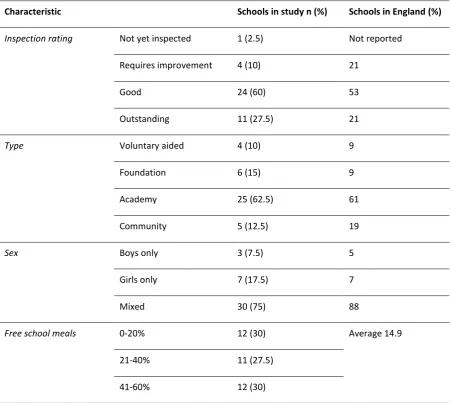
[image:10.595.73.525.352.755.2]national school inspectors as ‘inadequate’. Sample size calculation, recruitment and data collection are described elsewhere (Bonell et al., 2014a). Survey data reported here was collected at trial baseline (2014) before allocation or intervention targeting all students at the end of year 7 (age 11/12 years). Students gave written informed consent to participate. Parents were informed and could withdraw their children from surveys. The study was approved by the Institute of Education (FCL 566) and the University College London (5248/001) ethics committees. The procedures followed were in accordance with the Declaration of Helsinki 1975, revised Hong Kong 1989.
Table 1: Characteristics of schools that participated in the study 2014-2017
Characteristic Schools in study n (%) Schools in England (%)
Inspection rating Not yet inspected 1 (2.5) Not reported
Requires improvement 4 (10) 21
Good 24 (60) 53
Outstanding 11 (27.5) 21
Type Voluntary aided 4 (10) 9
Foundation 6 (15) 9
Academy 25 (62.5) 61
Community 5 (12.5) 19
Sex Boys only 3 (7.5) 5
Girls only 7 (17.5) 7
Mixed 30 (75) 88
Free school meals 0-20% 12 (30) Average 14.9
21-40% 11 (27.5)
10
61-80% 5 (12.5)
Attainment (extent to
which students do better
in best 8 GCSE exams at
age 16 than predicted
based on attainment at
entry age 11)
Above average 24 (60) 50%
Below average 16 (40) 50%
Measures
VAE: As per previous studies, (Aveyard et al., 2004: ; Bisset et al., 2007: ; Markham et al., 2008: ;
11
each model represent the difference between observed attainment and absence rates and those predicted based upon student socio-demographic profile at each school. These showed that schools with better than expected attainment also had better attendance (r=-0.36). We then undertook a principal components analysis of residuals from each model, which identified a single factor explaining 68.1% of variance with factor loadings of +0.71 for attainment and -0.71 for attendance residuals. This continuous variable was termed ‘VAE’ and standardized so that +1 represented schools with performance one standard deviation (SD) above average and -1 indicated schools with one SD below average.
Student lack of commitment to learning and to the school community: These continuous variables
were respectively assessed by the 4–item ‘commitment to academic values’ and the 8–item ‘sense of belonging’ subscales of the Beyond Blue School Climate Questionnaire (BBSCQ) (table 2). This was developed in Australia (Sawyer et al., 2010) using items from the Gatehouse, (Bond et al., 2004) Quality of School Life, (Epstein and McPartland, 1976) Patterns of Adaptive Learning, (Roeser et al., 1996) Manitoba School Improvement Survey (Earl and Lee, 1998) and Psychological Sense of School Membership (Goodenow, 1993) questionnaires. Cronbach’s alphas for the lack of belonging and academic commitment sub-scales of 0.85 and 0.82 were reported for a sample of similar age (personal communication Lyndal Bond 21 July 2011).
Table 2: Scales used for belonging, commitment and school misbehaviour
Question Response options
Lack of sense of belonging (8 items
Cronbach’s alpha=0.80, ordinal alpha=0.83)
“How much do you agree with the following
statements?”
12
I feel very different from most other students
here
YES!!Totally agree!! (3)/Yes, I agree a bit(2)/
No, I don’t really agree(1)/ NO! Totally
disagree!! (0)
I can really be myself at this school YES!!Totally agree!! (0)/Yes, I agree a bit(1)/
No, I don’t really agree(2)/ NO! Totally
disagree!!(3)
Other students in this school take my opinions
seriously
YES!!Totally agree!! (0)/Yes, I agree a bit(1)/
No, I don’t really agree(2)/ NO! Totally
disagree!!(3)
I am encouraged to express my own views in
my class(es)
YES!!Totally agree!! (0)/Yes, I agree a bit (1)/
No, I don’t really agree (2)/ NO! Totally
disagree!! (3)
Most of the students in my class(es) enjoy
being together
YES!!Totally agree!! (0)/Yes, I agree a bit(1)/
No, I don’t really agree(2)/ NO! Totally
disagree!!(3)
Most of the students in my class(es) are kind
and helpful
YES!!Totally agree!! (0)/Yes, I agree a bit(1)/
No, I don’t really agree(2)/ NO! Totally
disagree!!(3)
Most other students accept me as I am YES!!Totally agree!! (0)/Yes, I agree a bit(1)/
No, I don’t really agree(2)/ NO! Totally
disagree!!(3)
I feel I belong at this school YES!!Totally agree!! (0)/Yes, I agree a bit(1)/
No, I don’t really agree(2)/ NO! Totally
disagree!!(3)
Lack of commitment to academic values (4
items Cronbach’s alpha=0.74, ordinal alpha =
0.84)
“How much do you agree with the following
statements?”
Higher scores = lower commitment
I try hard in school YES!!Totally agree!! (0)/Yes, I agree a bit(1)/
No, I don’t really agree(2)/ NO! Totally
13
Doing well in school is important to me YES!!Totally agree!! (0)/Yes, I agree a bit(1)/
No, I don’t really agree(2)/ NO! Totally
disagree!!(3)
Continuing or completing my education is
important to me
YES!!Totally agree!! (0)/Yes, I agree a bit(1)/
No, I don’t really agree(2)/ NO! Totally
disagree!!(3)
I feel like I am successful in this school YES!!Totally agree!! (0)/Yes, I agree a bit(1)/
No, I don’t really agree(2)/ NO! Totally
disagree!!(3)
School misbehaviour (13 items; Cronbach’s
alpha=0.89, ordinal alpha=0.96)
“During the last 3 months how often did you
do these things at school?”
Higher scores = increased misbehaviour
Arrive late for classes 0=hardly ever or never; 1=less than once a
week; 2=at least once a week; 3=most days
Fight in or outside the class
Refuse to do homework or class work
Be cheeky to a teacher
Use bad or offensive language
Wander around school during class time
Threaten a teacher
Hit/kick a teacher
14
Purposely damage or destroy things belonging
to the school
Threaten another student
Hit/kick another student
Get in a fight
Outcomes: For outcomes, we used self-report single-item binary measures of ever having smoked
and ever having drunk alcohol previously used in the Ripple trial (Stephenson et al., 2008). We measured school misbehaviour in the last three months using a continuous measured derived from an amended 13-item version of the Edinburgh Study of Youth Transitions and Crime (ESYTC) school misbehavior subscale (table 2), (Bonell et al., 2015: ; Smith, 2006) adding three items piloted in a previous study designed to examine threats, hitting/kicking and getting into fights (Bonell et al., 2015: ; Smith, 2006). The total score was a summed frequency of school misbehavior. The Cronbach’s alpha among a sample of similar age was 0.847 (Bonell et al., 2015).
Analysis
The analysis was performed in several steps, all using Stata version 13.1 (StataCorp, 2013). Missing data were handled by list-wise deletion.
15
Multi-level logistic regression analyses were used for the smoking and alcohol outcomes. The ESYTC measure of school misbehaviour was zero-inflated; 42% of responses were at zero and the
remainder of responses declined in frequency with increasing magnitude. The variance was much larger than the mean indicating over-dispersion. Therefore for the ESYTC we used multi-level negative binomial regression and presented the results in the exponentiated form, as incidence rate ratios (IRR). To interpret IRR, the expected count is multiplied by a factor of the IRR value when the independent variable increases by one unit.
The intra-class correlation coefficient (ICC) measures the degree of within-cluster similarity between individuals for a variable. If all observations within schools are independent of one another, the ICC will be 0. If all the observations within schools are exactly the same, the ICC will be 1. ICCs for smoking and alcohol were calculated in intercept-only models using the following formula:
ICC =var(u0)/[var(u0)+π2 /3]
Where var(u0) is the level 2(school) residual variance, and π2/3 (which is equal to 3.29) is by assumption the variance of the level 1(student) residuals.
To calculate the ICCs for school misbehaviour, we calculated the design effect using the following formula:
Deff=1+(m-1)ICC
16
We rearranged the formula in the following way to obtain an estimate of the ICC with our estimate design effect:
ICC=Deff/1+(m-1)
Step 2: Estimating associations between VAE and student outcomes
We undertook multi-level analysis estimating associations between VAE and the three outcomes in unadjusted and adjusted analyses. We adjusted for school-level size (divided by 100 so that
coefficients were expressed per 100 student increase), IDACI and FSM, as well as student-level sex, ethnicity, family structure (student report of the adults they live with dichotomized into single parent/two parent households), household employment (student report of whether any adults in the household were in paid work or not), and housing tenure (student responses to whether their house or flat was rented from the Council/housing association, rented from a landlord, owned by their family, other, or whether they didn’t know).
Step 3: Estimating associations between lack of academic commitment and sense of belonging with student risk behaviours
We used the same method as above to examine the unadjusted and adjusted associations between our outcomes and lack of student-report belonging and commitment at both the school and student
levels. We analysed school-level and student-level separately.
17
Dependent upon the findings from steps 2 and 3, we aimed to assess whether our measures of lack of belonging and academic commitment at the student or school level mediated the association between low VAE and risk behaviours. The possibility of co-linearity between the measures of VAE and school- and student-level lack of belonging and academic commitment was assessed by examining correlations. However, as described in the results section, there was no association between VAE and smoking, alcohol, or school misbehaviour
Step 5: Estimating school- and student-level measures of lack of commitment and belonging simultaneously
We included both student- and school-level lack of belonging and academic commitment in the same model to examine whether the between-school and within-school associations were independent. For these models, student-level variables were cluster-mean-centred.
18
Where both school-level and student-level lack of belonging or academic commitment were significantly associated with the risk behaviours, we tested cross-level interactions between these measures, to test whether high overall school levels of lack of belonging and academic commitment were associated with more risk behaviours for students having or lacking an individual sense of
belonging or commitment to academic values.
Results
Of eligible students, 6667 (93.6%) completed questionnaires. Of these: 6474 (97%) reported on ever smoking; 6414 (96%) reported on ever drinking alcohol; and 6265 (94%) responded to school
misbehaviour scale items. Overall 5.4% of students had ever tried smoking and 13.7% had ever drunk alcohol. The mean misbehaviour score was 2.82 (SD 4.81). These outcomes varied
19
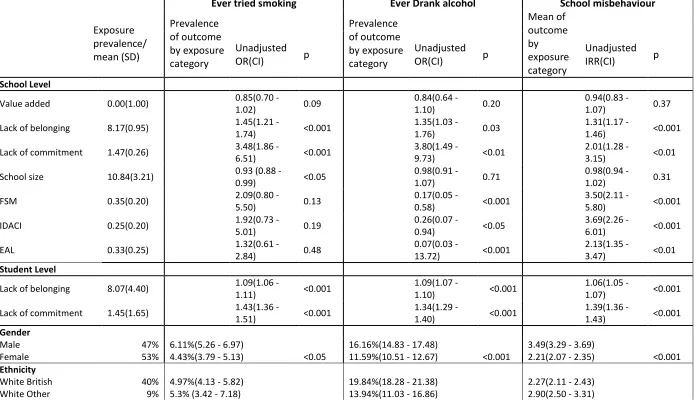
Table 3. Descriptive statistics and unadjusted relationships between exposures and outcomes, and covariates and outcomes
Ever tried smoking Ever Drank alcohol School misbehaviour
Exposure prevalence/ mean (SD) Prevalence of outcome by exposure category Prevalence of outcome by exposure category Mean of outcome by exposure category Unadjusted
OR(CI) p
Unadjusted
OR(CI) p
Unadjusted IRR(CI) p
School Level
Value added 0.00(1.00) 0.85(0.70 -
1.02) 0.09
0.84(0.64 -
1.10) 0.20
0.94(0.83 -
1.07) 0.37
Lack of belonging 8.17(0.95) 1.45(1.21 -
1.74) <0.001
1.35(1.03 -
1.76) 0.03
1.31(1.17 -
1.46) <0.001
Lack of commitment 1.47(0.26) 3.48(1.86 -
6.51) <0.001
3.80(1.49 -
9.73) <0.01
2.01(1.28 -
3.15) <0.01
School size 10.84(3.21) 0.93 (0.88 -
0.99) <0.05
0.98(0.91
-1.07) 0.71
0.98(0.94 -
1.02) 0.31
FSM 0.35(0.20) 2.09(0.80 -
5.50) 0.13
0.17(0.05 -
0.58) <0.001
3.50(2.11 -
5.80) <0.001
IDACI 0.25(0.20) 1.92(0.73 -
5.01) 0.19
0.26(0.07 -
0.94) <0.05
3.69(2.26 -
6.01) <0.001
EAL 0.33(0.25) 1.32(0.61 -
2.84) 0.48
0.07(0.03 -
13.72) <0.001
2.13(1.35 -
3.47) <0.01
Student Level
Lack of belonging 8.07(4.40) 1.09(1.06 -
1.11) <0.001
1.09(1.07 -
1.10) <0.001 1.06(1.05 - 1.07) <0.001
Lack of commitment 1.45(1.65) 1.43(1.36 -
1.51) <0.001
1.34(1.29 -
1.40) <0.001 1.39(1.36 - 1.43) <0.001
Gender
Male 47% 6.11%(5.26 - 6.97) 16.16%(14.83 - 17.48) 3.49(3.29 - 3.69)
Female 53% 4.43%(3.79 - 5.13) <0.05 11.59%(10.51 - 12.67) <0.001 2.21(2.07 - 2.35) <0.001
Ethnicity
White British 40% 4.97%(4.13 - 5.82) 19.84%(18.28 - 21.38) 2.27(2.11 - 2.43)
20
Asian/ Asian British 25% 3.73%(2.91 - 4.77) 3.76%(2.93 - 4.82) 2.74(2.50 - 2.98)
Black/Black British 14% 7.84%(6.23 - 9.83) 13.45%(11.32 - 15.91) 4.25(3.86 - 4.65)
Mixed ethnicity 7% 6.98%(4.95 - 9.76) 16.78%(13.55 - 20.60) 3.01(2.57 - 3.46)
Other (including
Chinese) 6% 5.42%(3.52 - 8.26) <0.001 11.47%(8.59 - 15.17) <0.001 3.30(2.71 - 3.88) <0.001
Family Affluence
Low 3% 7.33%(3.60-11.06) 11.70%(7.06-16.33) 3.27(2.55-4.00)
Medium 34% 5.49%(4.51-6.46) 10.92%(9.58-12.26) 3.25(3.02-3.48)
High 63% 4.98%(4.30-5.64) 0.47 15.45%(14.32-16.58) 0.15 2.56(2.41-2.70) <0.05
Household
composition
Single parent
household 19% 8.69%(7.10-10.27) 18.64%(16.43 - 20.84) 4.09(3.74 - 4.44)
Two parent household 81% 4.47%(3.91-5.03) <0.001 12.65%(11.74 - 13.55) <0.001 2.52 (2.40 - 2.65) <0.001
Employment status of parents
At least one parent in
work 74% 7.34%(5.36 - 9.97) 13.91%(11.13 - 17.25) 3.58(3.07 - 4.10)
Neither parent 8% 4.68%(4.11 - 5.32) 14.57%(13.59 - 15.61) 2.58(2.45 - 2.71)
don't know 18% 6.34%(5.07 - 7.91) <0.05 10.61%(8.95 - 12.53) 0.08 3.37(3.06 - 3.69) <0.001
Housing tenure
Rented from council/housing association
16%
6.93%(5.52 - 8.67) 13.94%(11.93 - 16.24) 3.65(3.30 - 4.00)
Rented from landlord 12% 7.43%(5.77 - 9.52) 12.02%(9.89 - 14.54) 2.87(2.55 - 3.19)
Owned by
family/mortgage 42% 4.18%(3.49 - 5.01) 15.67%(14.33 - 17.10) 2.27(2.11 - 2.43)
Other 2% 5.26%(2.37 - 11.26) 18.92%(12.64 - 27.33) 3.58(2.57 - 4.60)
21
Correlations between school-level VAE and school-level lack of belonging (r=-0.23) and academic commitment (r=0.21), and school-level VAE and student-level lack of belonging (r=-0.05) and commitment (r=-0.03) were small. Correlations between student-level lack of belonging and academic commitment were moderate (r=0.37); those between school-level belonging and
commitment were larger (r=0.56). School-level correlations were based on only 40 observations so
this moderate correlation suggests a small number of observations whereby school-level lack of belonging and academic commitment were disparate.
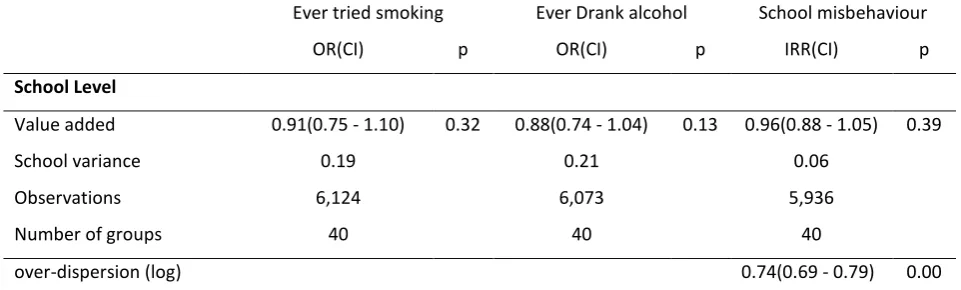
[image:22.595.75.556.514.659.2]The unadjusted relationships between the exposures of interest (VAE, lack of belonging and academic commitment) as well as the covariates with the risk behaviours are also shown in table 3. VAE was not significantly associated with any of the risk behaviours at the 5% level of significance; there was a suggestion of a possible association between high VAE and lower odds of ever having tried smoking. In adjusted models (table 4) VAE was not significantly associated with ever having tried smoking, ever having tried drinking or school misbehaviour.
Table 4. Adjusted relationship between VAE and outcomes
Ever tried smoking Ever Drank alcohol School misbehaviour
OR(CI) p OR(CI) p IRR(CI) p
School Level
Value added 0.91(0.75 - 1.10) 0.32 0.88(0.74 - 1.04) 0.13 0.96(0.88 - 1.05) 0.39
School variance 0.19 0.21 0.06
Observations 6,124 6,073 5,936
Number of groups 40 40 40
over-dispersion (log) 0.74(0.69 - 0.79) 0.00
Adjusted for school level covariates (school size, FSM, IDACI) and student level covariates (sex, ethnicity,
household composition, parental work status and tenure). Full model presented in web appendix 3
22
[image:23.595.78.558.294.597.2]significant. The adjusted relationship between student-level and school-level belonging and academic commitment and the risk behaviours were estimated separately (web appendixes 1 and 2). The coefficients were almost identical to the model in which school-level and student-level cluster-mean-centred lack of belonging and academic commitment were included in the same model adjusted for confounders (table 5), hence we only report the results of this model in the main text.
Table 5. Adjusted relationship between School (between) and student (within) level belonging and outcomes
Ever tried smoking Ever drank alcohol School misbehaviour
OR(95C.I) p OR(95C.I) p OR(95C.I) p
School Level
Lack of belonging 1.15(0.92 - 1.44) 0.23 1.30(1.04 - 1.61) 0.02 1.06(0.97 - 1.16) 0.21
Lack of commitment 2.79(1.33 - 5.86) <0.01 1.70(0.82 - 3.52) 0.15 1.74(1.27 - 2.38) <0.01
Student Level
Lack of belonging 1.02(0.99 - 1.05) 0.13 1.05(1.03 - 1.07) <0.001 1.01(1.01 - 1.02) <0.01
Lack of commitment 1.39(1.31 - 1.47) <0.001 1.29(1.23 - 1.35) <0.001 1.36(1.32 - 1.39) <0.001
Observations 6,059 6,010 5,877
Number of groups 40 40 40
School variance 0.10 0.16 0.03
over-dispersion (log) 0.52 <0.001
Log likelihood -1094.9167 -2110.9673 -11551.243
Tests of equality of coefficients
Lack of commitment OR=2.01, z=1.84 0.07 OR=1.31,z=0.75 0.46 IRR=1.28, Z=1.55 0.12
Lack of belonging OR=1.12, z=1.00 0.32 OR=1.24, z=1.90 0.06 IRR=1.04, z=0.94 0.35
Adjusted for school level covariates (school size, FSM, IDACI) and student level covariates (sex, ethnicity,
household composition, parental work status and tenure). Full model presented in web appendix 4.
23
significant. A lower academic commitment at the student level was associated with increased odds of ever having tried smoking, ever having drunk alcohol, and school misbehaviour. A lower school-level average of student belonging was associated with increased odds of students having ever drunk alcohol, but was not significantly associated with ever having tried smoking or school misbehaviour. A lower school-level average of student academic commitment was associated with increased odds of students having ever tried smoking and engaging in school misbehaviour. Lower levels of school-level academic commitment were associated with increased odds of student ever having drunk alcohol, but this was not statistically significant.
Likelihood ratio tests comparing the adjusted model (with both student- and school-level lack of belonging and academic commitment) to the adjusted model including only student-level lack of belonging and commitment to academic (web appendix 1) indicated small but significant
improvements in model fit for smoking(χ2(2)=8.24,p=0.02), alcohol(χ2(2)=7.49,p=0.02) and school misbehaviour(χ2(2)=6.60,p=0.04). The significant coefficients for school- and student-level lack of academic commitment with ever having tried smoking and school misbehaviour, and school- and student-level belonging with ever having tried alcohol suggest independent associations for the between- and within-school associations of lack of academic commitment with smoking. However, tests of the equality of the school-level and student-level lack of belonging and academic
commitment coefficients did not reach statistical significance.
Finally, we tested the interactions between school- and student-level lack of commitment for ever having tried smoking (OR=0.94, 95%CI 0.77,1.16) and school misbehaviour (IRR=1.03, 95%CI 0.94,1.14), and the interaction between school- and student-level lack of belonging for ever having drunk alcohol (OR=0.99, 95%CI 0.97,1.01). None of the interactions were significant.
24
Summary of key findings
There was no evidence for an association between school-level VAE and any risk behaviours among students aged 11-12 years. Lower school-level student academic commitment was associated with increases in smoking and reporting school misbehaviour, and lower school-level belonging was associated with increases in use of alcohol. Students with lower academic commitment were more likely to report ever smoking, drinking alcohol or misbehaving. Students with lower belonging were more likely to report ever drinking alcohol and engaging in school misbehaviour. At both the school and student levels, lack of belonging and academic commitment were independently associated with smoking, alcohol and aggression. However, formal tests of interaction which aimed to assess whether these effects were independent did not reach statistical significance, probably because the sample of schools was insufficient.
Limitations
Our sample excluded schools poorly rated by school inspectors and this may have reduced the range of value-added among our school sample. Compared with English schools overall, our sample somewhat over-represented highly rated and high-achieving schools, slightly under-represented community and mixed-sex schools and had more students eligible for FSM. The measures for ever having tried smoking and drinking alcohol use could not distinguish regular smoking or drinking from experimentation. The Theory of Human Functioning and School Organisation would predict that reduced commitment to school would be associated with the former more than the latter because of its being an indicator of greater deviance from conventional norms. Use of measures of frequency was precluded by the low rates of this among students who were aged only 11-12 years.
25
Viner and Taylor, 2007). Our study focused on students in their first year of secondary school; school effects may increase as they move through secondary school. Our study was cross-sectional so that causal directions cannot be inferred, particularly in analyses using our measures of belonging and academic commitment, which unlike our measure of VAE were derived from student self-reports. Thus, our findings should be considered as hypothesis-refining rather than testing. Longitudinal research should assess these hypotheses. Our analysis used the ESYTC measure of school
misbehaviour rather than a measure specifically of violence in contrast to previous research (Tobler
et al., 2011). However, we conducted a sensitivity analysis which repeated all our analyses but
focused on the violence only subset of items (fights in or outside class; purposefully damage school
property; threaten a teacher; hit or kick a teacher; threaten a student; hit or kick a student; and get in a fight), finding that the pattern of associations is identical and point estimates very similar to that of the full ESYTC measure.
Implications for research and policy
Our finding of apparent protective effects of student belonging and academic commitment at the school levels though based on cross-sectional data is an important contribution to empirically assessing the Theory of Human Functioning and School Organisation, such associations having previously been examined at the individual (Resnick et al., 1997) but not school level studies (Bonell et al., 2013b). Our findings suggest that students’ risk of early experimentation with tobacco and alcohol and engagement in school misbehaviour may be affected not only by their own commitment to learning and the school community but also by aggregate levels among their peers as predicted by the theory.
26
included in the systematic review cited earlier, found small associations between increased VAE and increased substance use, which were reduced by adjusting for other indicators of school ethos drawing on aggregate student self-reports. In the case of our study, it may be that as a result of recent government policy the English educational system has become even more focused on traditional academic attainment metrics. In consequence, there may be less of an association between the quality of education provided by a school and the broader social development of its students (Bonell et al., 2014b).
Our finding that lower school-level student academic commitment was associated with increases in smoking and reporting school misbehaviour but not with alcohol might be explained by
experimentation with alcohol being a more normative behaviour less influenced by processes of disengagement from learning, which fits with the Theory of Human Functioning and School Organisation’s focus on more deviant behaviours (Markham and Aveyard, 2003). The association with school misbehaviour is unsurprising and consistent with this theory. Our finding that lower school-level belonging was associated with increases in use of alcohol but not with smoking or school misbehaviour is more puzzling. It may be that because these behaviours were relatively uncommon in our data they may have been more randomly distributed. Our finding that at the student level lower academic commitment and lower belonging were associated with drinking alcohol and misbehaving is what we would expect from the theory.
27
aiming to modify the school institutional environment can reduce health-compromising behaviors and whether such effects are mediated by effects on student commitment to learning and the school community. Our ongoing trial of the effects of restorative practice on misbehaviour and bullying is an example, its theory of change being informed by the Theory of Human Functioning and School Organisation (Bonell et al., 2014a).
Conflict of interest
There are no conflicts of interests, including any financial, personal or other relationships with other people or organizations, which could inappropriately influence or be perceived to influence this work. The funder had no involvement in: study design; the collection, analysis, and interpretation of data; the writing of the report; or the decision to submit the manuscript for publication. No
honoraria were involved in study authorship.
Funding
28
Wellcome Trust, under the auspices of the UK Clinical Research Collaboration, is gratefully acknowledged.
Supplementary materials
The data on which this analysis draws were collected as part of a randomised controlled trial. They will be made available publically once approval for this has been given by the trial's data monitoring and ethics committee.
References
Aveyard P, Markham WA, Lancashire E, et al. (2004) The influence of school culture on smoking among pupils. Social Science & Medicine 58(9): 1767-1870.
Bisset S, Markham WA and Aveyard P. (2007) School culture as an influencing factor on youth substance use. Journal of Epidemiology and Community Health 61(6): 485-490.
Bond L, Thomas L, Coffey C, et al. (2004) Long-term impact of the gatehouse project on cannabis use of 16-year-olds in Australia. Journal of School Health 74(1): 23-30.
Bonell C, Allen E, Christie D, et al. (2014a) Initiating change locally in bullying and aggression through the school environment (INCLUSIVE): study protocol for a cluster randomised controlled trial. Trials 15: 381.
Bonell C, Fletcher A, Fitzgerald-Yau N, et al. (2015) A pilot randomised controlled trial of the INCLUSIVE intervention for initiating change locally in bullying and aggression through the school environment: final report. Health Technology Assessment 19(53): 1-109.
29
Bonell C, Humphrey N, Fletcher A, et al. (2014b) Why schools should promote students’ health and wellbeing Education policy shouldn’t focus solely on academic attainment. British Medical
Journal 348: g3078.
Bonell C, Jamal F, Harden A, et al. (2013b) Systematic review of the effects of schools and school environment interventions on health: evidence mapping and synthesis. Public Health
Research 1(1).
Currie C, Molcho M, Boyce W, et al. (2008) Researching health inequalities in adolescents: the development of the Health Behaviour in School-Aged Children (HBSC) Family Affluence Scale. Social Science & Medicine () 66: 1429-1436.
Department for Education. (2015) IDACI score and rank of IDACI Available at: http://www.education.gov.uk/cgi-bin/inyourarea/idaci.pl.
Earl LM and Lee LE. (1998) Evaluation of the Manitoba School Improvement Program, Toronto: University of Toronto/Proactive Information Services Inc.
Epstein JL and McPartland JM. (1976) The concept and measurement of the quality of school life.
American Educational Research Journal 13(1): 15-30.
Fletcher A, Bonell C and Hargreaves J. (2008) School effects on young people's drug use: a systematic review of intervention and observational studies. Journal of Adolescent Health 42(3): 209-220.
Goodenow C. (1993) Classroom belonging among early adolescent students relationships to motivation and achievement. The Journal of Early Adolescence 13(1): 21-43.
Lando HA, Thai DT, Murray DM, et al. (1999) Age of initiation, smoking patterns, and risk in a population of working adults. Preventive Medicine 29(6 Pt 1): 590-598.
30
Markham WA and Aveyard P. (2003) A new theory of health promoting schools based on human functioning, school organisation and pedagogic practice. Social Science & Medicine 56(6): 1209-1220.
Markham WA, Aveyard P, Bisset SL, et al. (2008) Value-added education and smoking uptake in schools: a cohort study. Addiction 103(1): 155-161.
Markham WA, Young R, Sweeting H, et al. (2012) Does school ethos explain the relationship
between value-added education and teenage substance use? A cohort study. Social Science
and Medicine 75(1): 69-76.
Rabe-Hesketh S and Skrondal A. (2005) Multilevel and longitudinal modeling using Stata, College Station, Tex.: Stata Press.
Resnick MD, Bearman PS, Blum RW, et al. (1997) Protecting adolescents from harm: findings from the national longitudinal study on adolescent harm. Journal of the American Medical
Association 278(10): 823-832.
Roeser RW, Midgley C and Urdan TC. (1996) Perceptions of the school psychological environment and early adolescents' psychological and behavioral functioning in school: The mediating role of goals and belonging. Journal of Educational Psychology 88(3): 408.
Sawyer MG, Pfeiffer S, Spence SH, et al. (2010) School-based prevention of depression: a randomised controlled study of the Beyond Blue schools research initiative. Journal of Child Psychology
and Psychiatry 51(2): 199-209.
Smith DJ. (2006) School experience and delinquency at ages 13 to 16, Edinburgh: Centre for Law and Society, University of Edinburgh.
StataCorp. (2013) Stata Statistical Software: Release 13, College Station, TX: StataCorp.
31
Tobler AL, Komro KA, Dabroski A, et al. (2011) Preventing the link between SES and high-risk behaviors: “Value-added” education, drug use and delinquency in high-risk, urban schools.
Prevention Science 12(2): 211–221.
Viner RM, Ozer EM, Denny S, et al. (2012) Adolescence and the social determinants of health. Lancet 379(9826): 1641-1652.
Viner RM and Taylor B. (2007) Adult outcomes of binge drinking in adolescence: findings from a UK national birth cohort. J Epidemiol Community Health 61(10): 902-907.
von Elim E, Altman DG and Egger M. (2007) Strengthening the reporting of observational studies in epidemiology (STROBE) statement: guidelines for reporting observational studies. BMJ 335: 806-808.