© 2019, IRJET | Impact Factor value: 7.211 | ISO 9001:2008 Certified Journal
| Page 1030
VISITX: Face Recognition Visitor Management System
Mr. Rikshit Makwana
1,
Mr. Romil Nandwana
2,
Mr. Jayshil Jain
3, Mr. Tejas Laxmeshwar
4,
Mr. Shirish Sabnis
51,2,3,4
BE, Information Technology, Rajiv Gandhi Institute of Technology, Affiliated to Mumbai University, Mumbai,
India
5
Assistant Professor, Rajiv Gandhi Institute of Technology, Mumbai, India
---***---Abstract - The current office managementsystems are too intrusive which creates issues in the corporate offices. This paper presents a hassle-free way of managing the office premises with the help of biometric security systems which involves a high-end face recognition system to identify people in office and to recognize strangers i.e. visitors and make appointments for them. In the case of Unknown face recognition, a token-based authentication method is used via mail. We also show that augmenting the memory base with additional, synthetic face image results in further improvement in performance. Results of extensive empirical testing on two standard face recognition data sets are presented, and direct comparison with published work shows that the algorithm archives comparable results. The face recognition mechanics works on the Python Algorithm Facial landmark detector with dlib. The face recognition software will provide an accuracy ranging from 50% to 70%. We are presenting a review on the most successful existing algorithms or methods for facial recognition technology to encourage researchers to embark on this topic.
Keywords — Dlib algorithm, Image Processing, Face Landmark detector algoritm.
I. INTRODUCTION
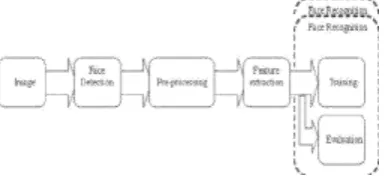
[image:1.595.212.405.520.609.2]The visitor management is a modern world problem with its application a numerous frauds, privacy issues, etc. can be easily detected and avoided. The visitor management system using face recognition is one of the most secure system even better than CCTV cameras and wake through gate methods. The main focus that has to made in project is whether the cost of the system compiles with the extent of the project. The scale of operations and the security requirements differ from place to place for instance domestic usage and industrial usage. Visitor Management System is mostly used by corporate, schools, colleges now but with great advancements can extent its scope to railway stations, airports, toll stations, etc. Almost all businesses with huge facilities are incorporating Visitor Management Systems in their overall security and is constantly growing a constant pace. Global Visitor Management Software Market to Reach USD 6300.0 million by 2025 (Reports by Zion Market Research published on 01-Feb-2018). The current Visitor Management Systems are very traditional in approach like barcode system, token system, etc. which can be easily manipulated and disrupted. Thus there is a need of a smart system that can be both secure and user friendly.
Fig 1: Stages of face recognition
II. EXISTING SYSTEM
The current existing systems in the domain of visitor management system are:
1. Traditional Paper and Pen method thatinvolves the usage of registers manual entry and exit time which the visitor enters himself. There is a lot of scope for breach in the entry system and the details written down cannot always be reliable.
2. Barcode System here, the user gets abarcode tag that is scanned by the system and gives the person access to the gate but this system falls into trap if there is a leak of the barcode code.
© 2019, IRJET | Impact Factor value: 7.211 | ISO 9001:2008 Certified Journal
| Page 1031
Because of the numerous limitations in the above systems, a facial recognition system is the one best suited.
III. DESIGN DETAIL A. Recognition:
An important phase of face recognition system is the extraction of features that uniquely identifies the faces given as input. It is important to identify the appropriate language in order to avoid errors in detection of the faces. Analyzing the region used for feature extraction is one of the main issue. Therefore, some prefer dividing the images into small intervals, called pixels, from each which a local feature vector is extracted and some prefers to extract global statics from the whole face.
B. Face Recognition Using CNN:
For classification, CNN uses the following steps:
Step I: Initially it extracts low-level features like edges and corners.
Step II: After the extraction of edges and corners, high-level layers extract high-level features for the process of 3D convolution in CNNs.
Step III: It starts from the top-left corner of input wherein each kernel is moved from left to right.
Step IV: After reaching the top right corner, kernel is moved one element downward, and then again kernel is moved from left to right, considering one element at a time.
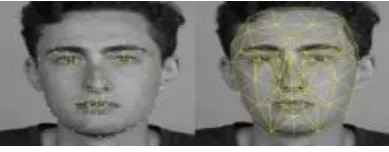
[image:2.595.200.395.362.438.2]Step V: This process is repeatedly done until the process reaches the bottom-right corner.
Fig 2: DLIB Algorithm vector points.
C. Training Phase
• On obtaining the input, individual image is pre-processed.
• Pre-processing filters are used to assure that there is no unwanted information.
• Using CNN, the processed images that are extracted are stored in the database associated with that sign.
• Same procedure is followed for all the signs which are given as input and the set of output is prepared.
D. Test Phase
• The workflow of testing sequence can be outlined as below: • The input image is extracted.
• The images are pre-processed in order to get the Processed image as similar to that in training sequence.
• After obtaining the Processed image in testing, the images are matched with the previously maintained database.
The difference between them is measured depending feature. On finding the nearest match, the image is recognized as that particular sign and corresponding output is flashed on the screen.
IV.PROCEDURE
Step I: Camera is used to detect the face gesture which will be input to the system.
© 2019, IRJET | Impact Factor value: 7.211 | ISO 9001:2008 Certified Journal
| Page 1032
By setting upper and lower bound values
H min < = H < = H max {Hmin 0o
Hmax 20o}...(1)
S min < = S <= S max {S min 45
Smax 255}..,(2)
Step III: Contour extraction is used to extract the information about the shape of input. Correct extraction of the contour will produce more accurate features which will increase the chances of correctly classifying the given pattern.
Step IV: Digital images are prone to various types of noise. For the removal of noise we will be using different types of filtering process such as Linear Filtering, Median Filtering and Average Filtering. After using such filtering techniques our image will be noise and error free.
Convexity Defects find Holes in difference Between convex hull & hand.
STEP V: Face will be recognized from dataset and final output will be displayed to the user.
V. PROPOSED METHODOLODY
Visitor entry with Visitor’s Details, Official Details & photograph. Authorized users can access the application. Retrieval of the past visitor’s data based on different criteria. Online scheduled appointments list. Centralized database Management
© 2019, IRJET | Impact Factor value: 7.211 | ISO 9001:2008 Certified Journal
| Page 1033
PHASE 1:
The camera setup will detect a human face of the person standing in front of the system and will start the process by clicking a photograph of the person.
PHASE 2:
The image captured will be processed with a face detection algorithm that will help in generating a set of binary code which will then be checked with the stored database details for match to be found.
PHASE 3:
If a perfect match is found, then the person is verified and approved by the system and details like time, picture, date, etc. would be stored at the database for records.
PHASE 4:
If the records do not match a visitor option initiated that will help the visitor in scheduling an appointment with the desired person in the office.
1. Image Acquisition
Image acquisition process starts with capturing an image during runtime through camera and while doing these process it will store these images in directory. The captured image will get compared with the existing image stored in directory using DLIB algorithm and then it will provide the required face image which we needed. The images are captured using web cam through JavaScript and then capturing these image through frames per second, These image will be stored in another directory and then comparison is made between recently captured image and images already stored in directory.
2. Feature Extraction
An extracted object can have many features, these features provide description of the object. In a similar way DLIB gives us set of features of an object which are not affected by various complications that are faced in other methods, such as object scaling and rotation. DLIB approach, generates features of image by taking a picture and transforming it into a “big collection of local feature vectors”. Hence, with the help of DLIB, feature vectors never changes to any of the transformations of the image.
3. Orientation Detection
In this, we will take the input of face in any of the form or any orientation, the face will be detected by the desired section of feature extraction as the DLIB algorithm also has a unique feature which includes detection of only single face.
4. Face Recognition
When the whole process is completed, the input will be then converted into its recognized points from the face which might be helpful to understand.
Face detection framework is a combination of integral image and cascading classifiers. Faces are trained for five different poses (left, left+45deg, front, right+45deg and right) and face detectors are obtained for all poses these techniques yields good results for face detection.
VI. FUTURE SCOPE
The different areas where we can use this application are:
© 2019, IRJET | Impact Factor value: 7.211 | ISO 9001:2008 Certified Journal
| Page 1034
VII. CONCLUSION
Thus our proposed system will help and reduce the amounts of security breaches going on in the industry as well as help and manage meetings that will go smoother without any human intervention. This will reduce human efforts and the existing systems cost burden.
VIII. REFERENCES
1) Norizan Anwar, Noorman Masrek, “Visitor Management System by applying UTAUT”, IEEE,
2) Subha Rajam, P. and Balakrishnan, G.,‘Recognition of Face using Image Processing to aid’, International 3) Conference on Communication Technology and System Design, Elsevier, pp: 861-868,2011.
4) Subha Rajam, P. and Balakrishnan, G., ‘Real time face recognition System to aid People’, IEEE, pp: 737- 742,2011.
5) M Turk and A. Pentland, “Eigenfaces for recognition,” Cognitive Neuroscience, vol. 3, January 2000
6) R. Lienhart and J. Maydt, “An extended set of haar-like features for rapid object detection,” in Proc. 2002 IEEE Image Processing, pp.1522-4880.
7) P. N. Belhumeur, J.P. Hespanha, and D. Kriegman, “Eigenfaces vs. fisherfaces. recognition using class specific linear projection,” IEEE Transactions on Pattern Analysis and Machine Intelligence, vol. 19, no. pp. 711–720, July 1997.
8) R. Gottumukkal and V.K. Asari, “An Improved Face Recognition Technique Based on Modular PCA Approach,” Pattern Recognition Letters, vol. 25, pp. 429-436.