WFST-based Grapheme-to-Phoneme Conversion: Open Source Tools for
Alignment, Model-Building and Decoding
Josef R. Novak, Nobuaki Minematsu, Keikichi Hirose Graduate School of Information Science and Technology
The University of Tokyo, Japan
{novakj,mine,hirose}@gavo.t.u-tokyo.ac.jp
Abstract
This paper introduces a new open source, WFST-based toolkit for Grapheme-to-Phoneme conversion. The toolkit is efficient, accurate and currently supports a range of features including EM sequence alignment and several decoding techniques novel in the context of G2P. Experimental results show that a combination RNNLM system outperforms all previous reported results on several standard G2P test sets. Preliminary experiments applying Lattice Minimum Bayes-Risk decoding to G2P conversion are also provided. The toolkit is implemented using OpenFst.
1 Introduction
Grapheme-to-Phoneme (G2P) conversion is an im-portant problem related to Natural Language Pro-cessing, Speech Recognition and Spoken Dialog Systems development. The primary goal of G2P conversion is to accurately predict the pronunciation of a novel input word given only the spelling. For example, we would like to be able to predict,
PHOENIX → /f i n I k s/
given only the input spelling and a G2P model or set of rules. This problem is straightforward for some languages like Spanish or Italian, where pronuncia-tion rules are consistent. For languages like English and French however, inconsistent conventions make the problem much more challenging.
In this paper we present a fully data-driven, state-of-the-art, open-source toolkit for G2P conver-sion, Phonetisaurus [1]. It includes a novel mod-ified Expectation-Maximization (EM)-driven G2P sequence alignment algorithm, support for joint-sequence language models, and several decoding so-lutions. The paper also provides preliminary in-vestigations of the applicability of Lattice
Mini-mum Bayes-Risk (LMBR) decoding [2; 3] and N-best rescoring with a Recurrent Neural Network Language Model (RNNLM) [4; 5] to G2P con-version. The Weighted Finite-State Transducer (WFST) framework is used throughout, and the open source implementation relies on OpenFst [6]. Ex-perimental results are provided illustrating the speed and accuracy of the proposed system.
The remainder of the paper is structured as fol-lows. Section 2 provides background, Section 3 out-lines the alignment approach, Section 4 describes the joint-sequence LM. Section 5 describes decod-ing approaches. Section 6 discusses preliminary ex-periments, Section 7 provides simple usage com-mands and Section 8 concludes the paper.
2 G2P problem outline
Grapheme-to-Phoneme conversion has been a pop-ular research topic for many years. Many differ-ent approaches have been proposed, but perhaps the most popular is the joint-sequence model [6]. Most joint-sequence modeling techniques focus on pro-ducing an initial alignment between corresponding grapheme and phoneme sequences, and then mod-eling the aligned dictionary as a series of joint to-kens. The gold standard in this area is the EM-driven joint-sequence modeling approach described in [6] that simultaneously infers both alignments and subsequence chunks. Due to space constraints the reader is referred to [6] for a detailed background of previous research.
The G2P conversion problem is typically bro-ken down into several sub-problems: (1) Sequence alignment, (2) Model training and, (3) Decoding. The goal of (1) is to align the grapheme and phoneme sequence pairs in a training dictionary. The goal of (2) is to produce a model able to gen-erate new pronunciations for novel words, and the
goal of (3) is to find the most likely pronunciation given the model.
3 Alignment
The proposed toolkit implements a modified WFST-based version of the EM-driven multiple-to-multiple alignment algorithm proposed in [7] and elaborated in [8]. This algorithm is capable of learning natural G-P relationships like igh→/AY/ which were not possible with previous 1-to-1 algorithms like [9].
The proposed alignment algorithm includes three modifications to [7]: (1) A constraint is imposed such that onlym-to-oneandone-to-marcs are considered during training. (2) During initialization a joint alignment lattice is constructed for each in-put entry, and any unconnected arcs are deleted. (3) All arcs, including deletions and insertions are ini-tialized to and constrained to maintain a non-zero weight.
These minor modifications appear to result in a small but consistent improvement in terms of Word Accuracy (WA) on G2P tasks. The Expectation and Maximization steps for the EM training procedure are outlined in Algorithms 2, 3. The EM algorithm
Algorithm 1:EM-driven M2One/One2M
Input:xT,yV,mX,mY,dX,dY
Output:γ, AlignedLattices
1 foreachsequence pair (xT,yV)do 2 InitFSA(xT,yV,mX,mY,dX,dY)
3 foreachsequence pair (xT,yV)do
4 Expectation(xT,yV,mX,mY,γ) 5 Maximization(γ)
is initialized by generating an alignment FSA for each dictionary entry, which encodes all valid G-P alignments, given max subsequence parameters sup-plied by the user. Any unconnected arcs are deleted and all remaining arcs are initialized with a non-zero weight. In Algorithm 2 lines 2-3 compute the for-ward and backfor-ward probabilities. Lines 4-8 com-pute the arc posteriors and update the current model. In Algorithm 3 lines 1-2 normalize the probability distribution. Lines 3-6 update the alignment lattice arc weights with the new model.
Algorithm 2:Expectation step
Input:AlignedLattices
Output:γ,total
1 foreachFSA alignment latticeF do
2 α←ShortestDistance(F)
3 β ←ShortestDistance(FR) 4 foreachstateq ∈Q[F]do
5 foreacharce∈E[q]do
6 v←((α[q]⊗w[e])⊗β[n[e]])β[0];
7 γ[i[e]]←γ[i[e]]⊕v;
8 total←total⊕v;
Algorithm 3:Maximization step
Input:γ,total
Output: AlignedLattices
1 foreacharceinE[γ]do
2 γnew[i[e]]←w[e]/total;γ[i[e]]←0; 3 foreachFSA alignment latticeF do
4 foreachstateq ∈Q[F]do
5 foreacharce∈E[q]do
6 w[e]←γnew[i[e]];
4 Joint Sequence N-gram model
The pronunciation model implemented by the toolkit is a straightforward joint N-gram model. The training corpus is constructed by extracting the best alignment for each entry, e.g.:
a}x b}b a}@ c|k}k a}x b}b a}@ f}f t}t
The training procedure is then, (1) Convert aligned sequence pairs to sequences of aligned joint label pairs,(g1:p1, g2:p2, ..., gn:pn); (2) Train an N-gram
model from (1); (3) Convert the N-gram model to a WFST. Step (3) may be performed with any lan-guage modeling toolkit. In this papermitlm [11] is utilized.
5 Decoding
The proposed toolkit provides varying support for three different decoding schemes. The default de-coder provided by the distribution simply extracts the shortest path through the phoneme lattice created via composition with the input word,
whereHbestrefers to the lowest cost path,P rojecto
refers to projecting the output labels,wrefers to the input word,M refers to the G2P model, and◦ indi-cates composition.
5.1 RNNLM N-best rescoring
Recurrent Neural Network Language Models have recently enjoyed a resurgence in popularity in the context of ASR applications [4]. In another re-cent publication we investigated the applicability of this approach to G2P conversion with joint se-quence models by providing support for thernnlm toolkit[5]. The training corpus for the G2P LM is a corpus of joint sequences, thus it can be used without modification to train a parallel RNNLM. N-best reranking is then accomplished with the pro-posed toolkit by causing the decoder to output the N-best joint G-P sequences, and employingrnnlm to rerank the the N-best joint sequences,
HN best=N ShortestP aths(w◦M)
Hbest=P rojecto(Rescorernn(HN best)).
(2)
In practice thernnlmmodels require considerable tuning, and somewhat more time to train, but pro-vide a consistent WA boost. For further details on algorithm as well as tuning for G2P see [4; 10].
5.2 Lattice Minimum Bayes-Risk decoding for G2P
In [2] the authors note that the aim of MBR decod-ing is to find the hypothesis that has the “least ex-pected loss under the model”. MBR decoding was successfully applied to Statistical Machine Trans-lation (SMT) lattices in [2], and significantly im-proved in [3]. Noting the similarities between G2P conversion and SMT, we have begun work imple-menting an integrated LMBR decoder for the pro-posed toolkit.
Our approach closely follows that described in [3], and the algorithm implementation is sum-marized in Algorithm 4. The inputs are the full phoneme lattice that results from composing the in-put word with the G2P model and projecting outin-put labels, an exponential scale factor α, and N-gram precision factors θ0−N. The θn are computed
us-ing a linear corpus BLEU [2] N-gram precision p, and a match ratio r using the following equations, θ0 =−1/T; θn = 1/(N T prn−1). T is a constant
Algorithm 4:G2P Lattice MBR-Decode
Input:E ←P rojecto(w◦M),α,θ0−n 1 E ←ScaleLattice(α× E)
2 NN ←ExtractN-grams(E)
3 forn←1toN do
4 Φn←MakeMapper(Nn) 5 ΨRn ←MakePathCounter(Nn)
6 Un←Opt((E ◦Φn)◦ΨRn)
7 Ωn= Φn
8 forstateq∈Q[Ωn]do
9 forarce∈E[q]do
10 w[e]←θn× U(o[e])
11 P ←P rojectinput(Eθ0 ◦Ω1)
12 forn←2toN do
13 P ←P rojectinput(P ◦Ωn) 14 Hbest=ShortestP ath(P)
which does not affect the MBR decision [2]. Line 1 appliesαto the raw lattice. In effect this controls how much we trust the raw lattice weights. After applyingα,E is normalized by pushing weights to the final state and removing any final weights. In line 2 all unique N-grams up to order N are ex-tracted from the lattice. Lines 4-10 create, for each order, a context-dependency FST (Φn) and a
spe-cial path-posterior counting WFST (ΨR
n), which are
then used to compute N-gram posteriors (Un), and
finally to create a decoder WFST (Ωn). The full
MBR decoder is then computed by first making an unweighted copy ofE, applyingθ0 uniformly to all arcs, and iteratively composing and input-projecting with eachΩn. The MBR hypothesis is then the best
path through the result P. See [2; 3] for further details.
6 Experimental results
System NT15k CMUdict OALD
Sequitur[6] 66.20 75.47 82.51
direcTL+[8] ∼ 75.52 83.32
m2m-P 66.39 75.08 81.20
m2m-fst-P 66.41 75.25 81.86
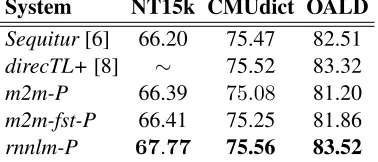
[image:4.612.317.539.52.245.2]rnnlm-P 67.77 75.56 83.52
Table 1: Comparison of G2P WA(%) for previous sys-tems and variations of the proposed toolkit.
indicates the alternative FST-based alignment algo-rithm, andrnnlm-Pindicates the use of RNNLM N-best reranking.
The results show that the improved alignment al-gorithm contributes a small but consistent improve-ment to WA, while RNNLM reranking contributes a further small but significant boost to WA which pro-duces state-of-the-art results on all three test sets.
The WA gains are interesting, however a major plus point for the toolkit is speed. Table 2 compares training times for the proposed toolkit with previ-ously reported results. Them2m-fst-Pfor system for
System NETtalk-15k CMUdict
Sequitur[6] Hours Days
direcTL+[8] Hours Days
m2m-P 2m56s 21m58s
m2m-fst-P 1m43s 13m06s
rnnlm-P 20m 2h
Table 2: Training times for the smallest (15k entries) and largest (112k entries) training sets.
CMUdict performs %0.27 worse than the state-of-the-art, but requires just a tiny fraction of the train-ing time. This turn-around time may be very impor-tant for rapid system development. Finally, Figure. 1 plots WA versus decoding time form2m-fst-Pon the largest test set, further illustrating the speed of the decoder, and the impact of using larger models.
Preliminary experiments with the LMBR decoder were also carried out using the smaller NT15k dataset. The θn values were computed using p, r,
and T from [2] while α was tuned to 0.6. Re-sults are described in Table 3. The system matched the basic WA for N=6, and achieved a small im-provement in PA over m2m-fst-P (%91.80 versus %91.82). Tuning the loss function for the G2P task should improve performance.
!"# !$# $"# $$# %"# %$# &"# &$# '"#
()# (!# (%# ('# )"# ))# )!# )%# )'#
!
"#
$%
&'
'(
#)
'*
%+,-%
./'"$012%34/%+5/'-%
678$0'9%:;<=::;<%% !"#$%&''(#)'*%>5?%@04/%A"#%BC;D:;%
*+#,-#./01#
Figure 1: Decoding speed vs. WA plot for various N-gram orders for the CMUdict 12k/112k test/train set. Times averaged over 5 run usingctime.
NT15k N=1 N=2 N=3 N=4 N=5 N=6
WA 28.88 65.48 66.03 66.41 66.37 66.50
PA 83.17 91.74 91.79 91.87 91.82 91.82
Table 3: LMBR decoding Word Accuracy (WA) and Phoneme Accuracy (PA) for order N=1-6.
7 Toolkit distribution and usage
The preceding sections introduced various theoreti-cal aspects of the toolkit as well as preliminary ex-perimental results. The current section provides sev-eral introductory usage commands.
The toolkit is open source and released under the liberal BSD license. It is available for down-load from [1], which also includes detailed com-pilation instructions, tutorial information and addi-tional examples. The examples that follow utilize the NETTalk dictionary.
Align a dictionary:
$ phonetisaurus-align --input=test.dic \ --ofile=test.corpus
Train a 7-gram model with mitlm:
$ estimate-ngram -o 7 -t test.corpus \ -wl test.arpa
Convert the model to a WFSA
$ phonetisaurus-arpa2fst --input=test.arpa \ --prefix=test
Apply the default decoder
[image:4.612.92.281.53.134.2]abbreviate 28.20 @ b i v i e t abbreviate 29.03 x b b r i v i e t
Apply the LMBR decoder
$ phonetisaurus-g2p --model=test.fst \ --input=abbreviate --nbest=3 --words \ --mbr --order=7
abbreviate 1.50 @ b r i v i e t abbreviate 2.62 x b r i v i e t abbreviate 2.81 a b r i v i e t
8 Conclusion and Future work
This work introduced a new Open Source WFST-driven G2P conversion toolkit which is both highly accurate as well as efficient to train and test. It incor-porates a novel modified alignment algorithm. To our knowledge the RNNLM N-best reranking and LMBR decoding are also novel applications in the context of G2P.
Both the RNNLM N-best reranking and LMBR decoding are promising but further work is required to improve usability and performance. In particular RNNLM training requires considerable tuning, and we would like to automate this process. The pro-visional LMBR decoder achieved a small improve-ment but further work will be needed to tune the loss function. Several known optimizations are also planned to speed up the LMBR decoder.
Nevertheless the current release of the toolkit pro-vides several novel G2P solutions, achieves state-of-the-art WA on several test sets and is efficient for both training and decoding.
References J. Novak, et al. [1].
http://code.google.com/p/ phonetisaurus
R. Tromble and S. Kumar and F. Och and W. Macherey. [2]. Lattice Minimum Bayes-Risk Decoding for Sta-tistical Machine Translation, Proc. EMNLP 2007, pp. 620-629.
G. Blackwood and A. Gispert and W. Byrne. [3]. Effi-cient path counting transducers for minimum bayes-risk decoding of statistical machine translation lat-tices, Proc. ACL 2010, pp. 27-32.
T. Mikolov and M. Karafiat and L. Burget and J. ˇCer-nocký and S. Khundanpur. [4]. Recurrent Neural Net-work based Language Model, Proc. InterSpeech, 2010.
T. Mikolov and S. Kombrink and D. Anoop and L. Burget and J. ˇCernocký. [5].RNNLM - Recurrent Neural Net-work Language Modeling Toolkit, ASRU 2011, demo session.
C. Allauzen and M. Riley and J. Schalkwyk and W. Skut and M. Mohri. [6]. OpenFST: A General and Effi-cient Weighted Finite-State Transducer Library, Proc. CIAA 2007, pp. 11-23.
M. Bisani and H. Ney. [6]. Joint-sequence models for grapheme-to-phoneme conversion, Speech Communi-cation 50, 2008, pp. 434-451.
S. Jiampojamarn and G. Kondrak and T. Sherif. [7]. Ap-plying Many-to-Many Alignments and Hidden Markov Models to Letter-to-Phoneme Conversion, NAACL HLT 2007, pp. 372-379.
S. Jiampojamarn and G. Kondrak. [8]. Letter-to-Phoneme Alignment: an Exploration, Proc. ACL 2010, pp. 780-788.
E. Ristad and P. Yianilos. [9]. Learning String Edit Dis-tance, IEEE Trans. PRMI 1998, pp. 522-532.
J. Novak and P. Dixon and N. Minematsu and K. Hirose and C. Hori and H. Kashioka. [10]. Improving WFST-based G2P Conversion with Alignment Constraints and RNNLM N-best Rescoring, Interspeech 2012 (Ac-cepted).