• No results found

BARN OWLS (

N/A
N/A
Protected

Academic year: 2020

Share "BARN OWLS ("

Copied!
185
0
0

Loading.... (view fulltext now)

Full text

(1)

INTERPLAY AMONG OCCUPANCY, BEHAVIOR, HABITAT SELECTION, AND ROADWAY MORTALITY IN SOUTHERN IDAHO

by Tempe Regan

A thesis

submitted in partial fulfillment of the requirements for the degree of Master of Science in Raptor Biology

Boise State University

December 2016

(2)

© 2016

Tempe Regan

ALL RIGHTS RESERVED

(3)

DEFENSE COMMITTEE AND FINAL READING APPROVALS

of the thesis submitted by

Tempe Regan

Thesis Title: Barn Owls (Tyto alba) Crossing the Road – Examining the Interplay Among Occupancy, Behavior, Habitat Selection, and Roadway Mortality in Southern Idaho

Date of Final Oral Examination: 28 October 2016

The following individuals read and discussed the thesis submitted by student Tempe Regan, and they evaluated her presentation and response to questions during the final oral examination. They found that the student passed the final oral examination.

James R. Belthoff, Ph.D. Chair, Supervisory Committee Jesse R. Barber, Ph.D. Member, Supervisory Committee

Julie Heath, Ph.D. Member, Supervisory Committee

Christopher J. McClure, Ph.D. Member, Supervisory Committee

The final reading approval of the thesis was granted by James R. Belthoff, Ph.D., Chair of

the Supervisory Committee. The thesis was approved by the Graduate College.

(4)

iv

To Mom and Dad, for letting me play in the peeper ponds, run around the hills,

and wade across the creek to the woods alone: for taking me hunting, fishing, hiking,

huckleberry picking and firewood-getting: for showing me how to put stones back in

their place after checking under them for treasures, for teaching me that creation matters

and showing me how to be a good steward of it. This is where my journey started.

(5)

v

I would like to express my gratitude to members of my supervisory committee Dr.

Jesse Barber, Dr. Julie Heath, and Dr. Chris McClure for their advice, encouragement and guidance in preparing this manuscript as well as throughout graduate school. Dr. Barber always had a smile on his face and something positive and encouraging to say whenever he saw me. Dr. Heath was my strong, woman-in-science hero who was there for me in ways no one else ever could have been. Dr. McClure was my statistics guru and always, always took the time to answer my questions, no matter how many of them there were or how long it took for me to understand. Thank you all so much.

I would like to especially thank my major professor Dr. Jim Belthoff for all his patience, mentorship, and assistance throughout my three years at Boise State University.

This project would not have been possible without his valuable knowledge and

understanding of science, statistics and of course, owls. From carrying the heavy ladder through swamps in the winter while installing nest boxes, teaching me how to band Barn Owl chicks, to all the times I dropped into his office with countless questions, Dr.

Belthoff tirelessly supported and helped me. Thank you for taking the chance and hiring me as a graduate student and making my dreams come true.

Thank you to all the volunteers who spent time assisting with Barn Owl surveys

during cold, dark, long winter nights: Sarah Ogden, Sara Pourzamani, Andrea Gibbons,

and Cassidy VanWarmerdam. Special thanks to the many graduate students who took

time out of their busy schedules to assist me with surveys or offer advice: Bryce

(6)

vi

Martinez, Shawn Smith, Patrick Thomas, Michelle Jeffries, Ben Dudek, and Aislinn Johns. Thank you to Will Brown for being my field assistant in all Barn Owl recapture endeavors; especially for creatively building the manual trigger trap door that I used to successfully capture so many Barn Owls as well as his endless encouragement, support, and confidence in my abilities. Thank you to Travis Henman for being the mastermind behind the design and function of the laser-break triggered trap door. Thank you to Laura Bond for her patience and statistical assistance. Thank you to Ben Pauli for his invaluable help with the resource selection function analysis. I am forever grateful to my fellow Barn Owl researcher and graduate-student bestie, Erin Arnold, for making me laugh when times were rough and helping me every step of the way. Together we tackled different aspects of the same problem and our team work and friendship became one of the best and truest things about my graduate experience.

I thank the Idaho Transportation Department, the Mike Butler Ecological

Research Award, and Boise State’s Raptor Research Center for funding portions of this

research. Finally, I am extremely grateful for my family and friends for their love,

support, prayers and encouragement as I waded through graduate school quicksand.

(7)

vii

Barn Owls (Tyto alba) are killed by vehicle collisions in greater numbers than any other North American bird of prey. Interstate-84 (I-84) in southern Idaho, USA has among the world’s highest known rates of Barn Owl-vehicle collisions. Little is known about Barn Owl occupancy in this region, so it is unclear if owls are killed in proportion to their abundance, or if they are equally abundant in segments with lower mortality and somehow escape collisions. Furthermore, studies of Barn Owl movements and behavior are limited. I was interested in understanding (1) factors that affect Barn Owl occupancy in two seasons: early- and post-breeding, (2) Barn Owl colonization of sites from early- breeding to post-breeding season, (3) examining the relationship between model-

predicted occupancy, based on the factors I assessed, and roadway mortality established

from observed Barn Owl mortality locations, and (4) examining Barn Owl behavior,

movements and habitat selection, particularly in relation to I-84. I conducted nighttime

point counts for Barn Owls in southern Idaho during the early- and post-breeding seasons

(Jan – Mar and Sept – Nov 2014, respectively). I detected Barn Owls during 52 of 666

(7.8 %) point counts and at 39 of 222 (17.6 %) locations in the early-breeding season and

during 50 of 201 (24.8 %) point counts and at 31 of 67 (46.3 %) locations in the post-

breeding season. During the early-breeding season, probability of Barn Owl detection

was 0.32 ± 0.06 (SE). Detection increased with playback of Barn Owl calls and with

increasing Julian date, percent moon illumination, and cloud cover. Barn Owl occupancy

increased with increased proportion of crops and presence of trees, and it decreased as

(8)

viii

higher in the post-breeding season (0.45 ± 0.07). Detection increased with playback of Barn Owl vocalizations, increasing Julian date, and decreasing background noise. During the post-breeding season, Barn Owl occupancy was positively related to stream length and negatively related to proportion development and increasing distance from the Snake River. Of the potential models I assessed to describe colonization between seasons, there were two top models. The first model indicated that colonization of sites from the early- to post-breeding season declined with increasing terrain roughness while the second suggested that colonization increased with increasing cumulative stream length but decreased with distance to the Snake River and proportion development. Understanding factors influencing occupancy of Barn Owls will facilitate more effective conservation of this species in southern Idaho, especially in light of potential population declines related to roadway mortality.

Using data from standardized roadkill surveys, I compared road mortality locations of Barn Owls to model-predicted occupancy estimates to understand how occupancy may be influencing mortality along I-84. Using the previously created

occupancy models, I generated predicted occupancy at point-count locations which I then

paired with the nearest interstate segment (1- and 5-km lengths) to examine the potential

effects of occupancy and season on the likelihood of dead Barn Owls. The likelihood that

1-km segments near point count locations included a dead Barn Owl increased with

occupancy and was greater during the early-breeding season. For 5-km segments, there

was an interaction between occupancy and season, with occupancy having a greater

positive effect on mortality during the early-breeding season than in the post-breeding

(9)

ix

(96 % and 56% at 1 and 5 km scale respectively) was not explained by occupancy and season, so factors such as geometric roadway features, traffic patterns, fluctuations in small mammal abundance, and owl behavior near the interstate likely also influence mortality rates and locations.

Finally, to address questions of Barn Owl behavior and movements in relation to I-84, as well as habitat use I studied four adult male Barn Owls that were tending nests during February 2015. Two of these nests were within 3 km of the interstate, whereas the other two were more than 25 km away. I examined the efficacy of GPS data loggers for tracking Barn Owls and assessed six recapture methods to retrieve the data loggers. I obtained location data that spanned approximately two weeks of activity for each owl during the nesting season. I recaptured all instrumented males and found that manual- or laser-break triggered trap doors mounted on the nest box were most effective for

recapturing Barn Owls. Within home ranges, the probability a Barn Owl used a site was higher near trees and minor roads and lower as distance from the nearest stream and the nearest major road increased. Barn Owl use of areas also increased as terrain roughness increased. Relative use of development, hay/pasture, and sage steppe land cover were less than for cultivated crops, while owls used grassland/herbaceous and wetland land cover more than cultivated crops. The two male Barn Owls that nested within 3 km of the interstate never moved closer than 1 km even though their maximum movements ranged up to 3 km. Thus, it is possible major roadways function as barriers to adult owl

movements during the breeding season because they avoid roads, but they remain

susceptible to road mortality in their more rare attempts to cross.

(10)

x

DEDICATION ... iv

ACKNOWLEDGEMENTS ...v

ABSTRACT ... vii

LIST OF TABLES ...xv

LIST OF FIGURES ... xvii

LIST OF ABBREVIATIONS ...xx

GENERAL INTRODUCTION ...1

Study Species ...2

Overview of Chapters One, Two and Three ...6

Literature Cited ...9

CHAPTER ONE: BARN OWL OCCUPANCY IN SOUTHERN IDAHO: CHARACTERSITICS OF HABITAT AND PATTERNS OF SEASONAL CHANGE ..13

Abstract ...13

Introduction ...14

Study Area and Methods ...17

Study Area ...17

Barn Owl Occupancy Surveys ...19

Point Count Protocol ...19

Number and Timing of Point Counts ...21

Detection and Occupancy Covariates ...21

(11)

xi

Data Analysis - Occupancy ...23

Multiseason Occupancy Analysis ...24

Model Performance ...24

Statistical Analysis ...25

Results ...25

Early-Breeding Season...25

Post-Breeding Season ...27

Multiseason Occupancy Models - Colonization ...30

Discussion ...30

Detection: Early-Breeding Season ...31

Detection: Post-Breeding Season ...33

Effect of Broadcast Vocalizations on Detection ...34

Occupancy: Early-Breeding Season ...35

Occupancy: Post-Breeding Season ...36

Multiseason Occupancy: Colonization ...38

Conclusions ...39

Literature Cited ...41

CHAPTER TWO: RELATIONSHIP BEWTEEN BARN OWL OCCUPANCY AND ROADWAY MORTALITY ALONG AN INTERSTATE HIGHWAY IN IDAHO ...61

Abstract ...61

Introduction ...62

Study Area and Methods ...69

Study Area ...69

(12)

xii

Point Count Locations...71

Point Count Protocol ...72

Number and Timing of Point Counts ...73

Detection and Occupancy Covariates ...73

Data Analysis – Occupancy Modeling ...75

Model Performance ...75

Seasonal Comparison of Mortality to Predicted Occupancy ...76

Results ...76

Occupancy Estimates ...76

Analysis of Mortality in 1-km Interstate Segments ...77

Analysis of Mortality in 5-km Interstate Segments ...77

Model Performance at Different Scales (1- and 5-km) ...78

Discussion ...78

Occupancy...79

Occupancy and Mortality ...79

Other Factors Contributing to Mortality ...83

Conclusions ...84

Future Directions ...85

Literature Cited ...86

CHAPTER THREE: EXAMINING BARN OWL BEHAVIOR, HABITAT SELECTION, AND MOVEMENTS IN RELATION TO INTERSTATE-84 IN IDAHO ...104

Abstract ...104

(13)

xiii

Study Area and Methods ...108

Study Area ...108

Barn Owl Capture ...109

Data Logger Settings and Attachment ...110

Barn Owl Recapture ...111

Spatial Analyses ...113

Statistical Analyses ...114

Results ...115

Barn Owl Capture ...115

Barn Owl Recapture ...115

GPS Data Loggers...116

Individual Owl Locations and Movements ...117

Resource Selection Function...119

Movements Near Interstate-84 ...120

Discussion ...120

Use of GPS Data Loggers to Track Barn Owls ...121

Recapture Methods ...122

Barn Owl Home Ranges and Movements ...123

Resource Selection Function...124

Movements in Relation to a Major Roadway ...129

Conclusions ...129

Future Directions ...130

(14)

xiv

APPENDIX ...154

Parts and Programming for Laser-Trigger Trap Door ...154

(15)

xv

Table 1.1. Land cover, anthropogenic, road, and detection variables evaluated in relation to Barn Owl detection and occupancy in southern Idaho. ... 54 Table 1.2. A priori models examined in a multi-season occupancy modeling

framework and AIC model selection to evaluate covariates associated with colonization by Barn Owls between the early- and post-breeding seasons. ... 57 Table 1.3. Covariates associated with Barn Owl detection in early-breeding season

derived using forward variable selection in an occupancy model

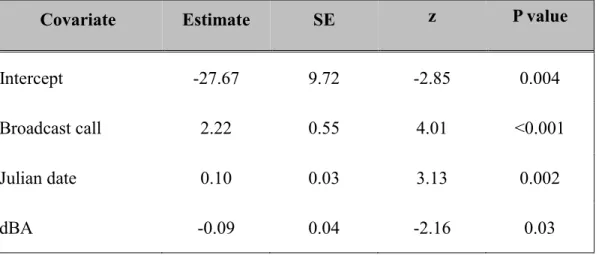
framework. ... 58 Table 1.4. Covariates associated with Barn Owl detection in post-breeding

season derived using forward variable selection in occupancy model framework. ... 58 Table 1.5. Top occupancy models for the early (Jan-Mar) and post breeding (Sept-

Nov) seasons at 1- and 5-km scales (based on a 1 and 5 km radius buffer around each nighttime point count survey). ... 59 Table 1.6. Parameter estimates for top multi-season occupancy models

(< 2ΔAIC). ... 60 Table 2.1 Number of dead Barn Owls detected along Interstate 84/86 in s. Idaho,

USA during standardized and ad hoc road surveys conducted between 2006 and 2015. ... 102 Table 2.2. Results of occupancy models, adjusted for detection (variables noted),

for Barn Owls near Interstate 84/86 in s. Idaho, USA for the early- (Jan – Mar) and post-breeding (Sept – Nov) seasons. Models were selected using AIC model selection, and model parameters shown are based on a 1-km radius buffer around each point-count location (See

Chapter 1)... 102 Table 2.3. Number of 1- and 5-km segments along Interstate-84 in s. Idaho with and

without dead Barn Owls during the early- and post-breeding seasons.

Mortality data were pooled across all surveys between 2004 – 2014 and

then subset by Jan – Mar for the early-breeding season and Sept – Nov

for the post-breeding season (see Table 1.1). ... 103

(16)

xvi

along Interestate-84 in southern Idaho contained at least one dead

barn owl. ... 103 Table 3.1 Summary of number of recapture attempts and successes for male

Barn Owls nesting in nest boxes in s. Idaho, USA. ... 150 Table 3.2 Operating times and location information from GPS data loggers

placed on four adult male Barn Owls in s. Idaho, USA. ... 151 Table 3.3 Descriptive measurements of four instrumented male Barn Owls in s.

Idaho, USA. ... 151 Table 3.4 Number of used and available points, by land cover type, for analysis in

a resource selection function on four GPS-tagged adult male Barn owls in s. Idaho, USA. ... 151 Table 3.5 Distance of used and available points from variables used for analysis

in a resource selection function on four GPS-tagged adult male Barn owls in s. Idaho, USA. ... 152 Table 3.6 Results of resource selection function analysis for four male Barn Owls

in s. Idaho during the breeding season. Individual owl was included as

a random effect and cultivated crops was used as a reference category

for the categorical land cover variables. ... 153

(17)

xvii

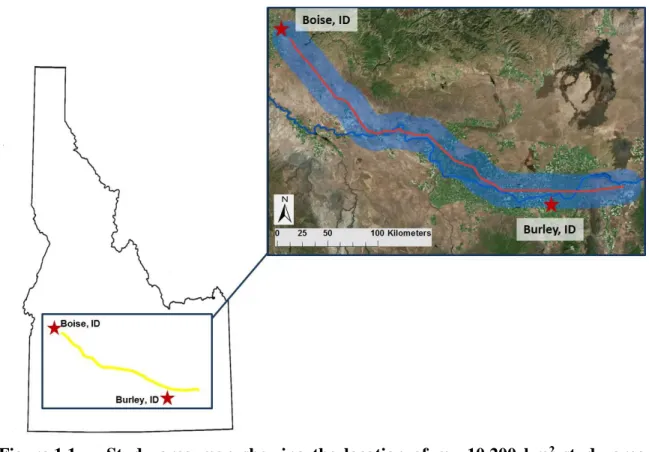
Figure 1.1. Study area map showing the location of my 10,200 km

2

study area (blue) and Interstate 84 (red), where I surveyed for Barn Owls during the early- and post-breeding seasons of 2014. ... 49 Figure 1.2. Broadcast sequence for Barn Owl surveys in s. Idaho during the early-

and post-breeding seasons, 2014. Point counts consisted of three repeat surveys conducted over 16 min. Survey 1 included 5 min of silent listening, Survey 2 began with 30 sec. of broadcast of Barn Owl vocalizations followed by 5 min of silent listening, and Survey 3 was the same format as Survey 2. ... 50 Figure 1.3. Point-count locations (n = 222) surveyed for Barn Owls in early- and

post-breeding seasons, 2014 in s. Idaho. Yellow points show locations of Barn Owl detections. ... 51 Figure 1.4. Model predicted relationships (± 95% CI) between Barn Owl occupancy

(Ψ) and (A) proportion crops, (B) background noise, and (C) presence and absence of trees during the early breeding season. ... 52 Figure 1.5. Model predicted relationships (± 95% CI) between Barn Owl occupancy

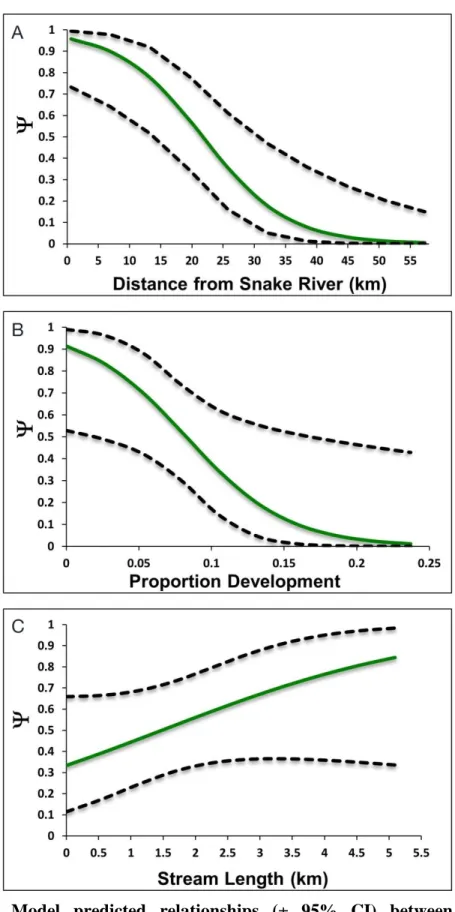
(Ψ) during the post-breeding season and (A) distance to the Snake River, (B) proportion development, and (C) stream length. ... 53 Figure 2.1. Potential relationships between Barn Owl occupancy and mortality along

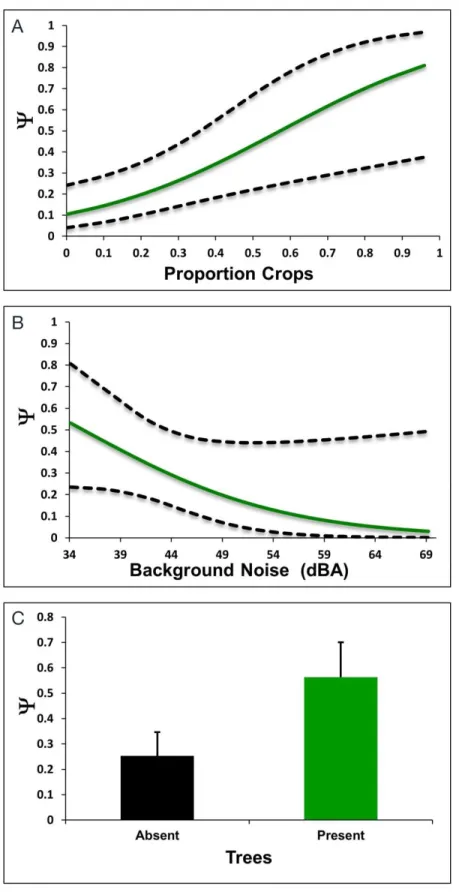
Interstate-84/86 in southern Idaho. Mortality may be in proportion to occupancy (blue cells). Or, occupancy could be low, but interstate segments have high mortality (upper left) such that the interstate

functions as an ecological trap, where owls may move long distances to the interstate and end up killed. Finally, the interstate may function as a barrier to owl movement, such that there is high occupancy near the interstate but low mortality in nearby interstate segments... 95 Figure 2.2. Maps illustrating the mortality survey route along I-84/86 in southern

Idaho (yellow line), and my 10,200 km

2

study area (blue) where I conducted nighttime point counts for Barn Owls during the early- and post-breeding seasons (2014). ... 96 Figure 2.3. Point-count locations (n = 222) surveyed for Barn Owls in early- and post-

breeding seasons in s. Idaho during 2014. Yellow points show locations

of Barn Owl detections. ... 97

(18)

xviii

of spotlighting, broadcast calls, and silent listening as illustrated. ... 98 Figure 2.5. Diagram showing the pairing of point-count locations (blue stars) with

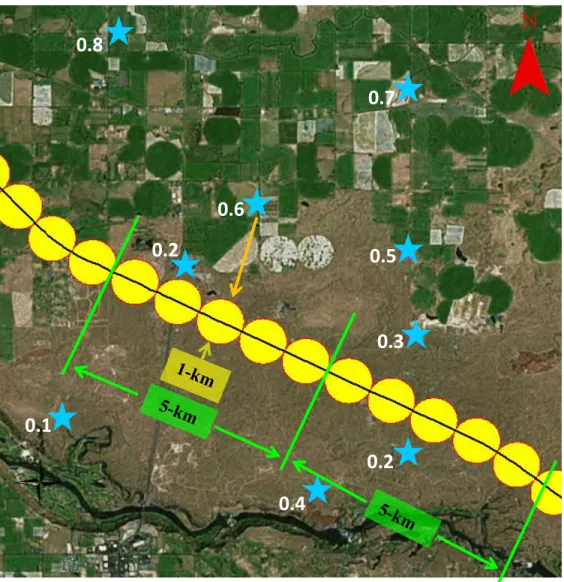
their respective 1- (yellow arrows) and 5-km (green arrows) interstate segments. Predicted occupancy probabilities for each point-count location are in white. Yellow circles represent 1-km interstate segments, and green lines show 5-km segments. ... 99 Figure 2.6. Probability of mortality as a function of predicted occupancy and season

(early- and post-breeding) for Barn Owls in A) 1-km segments and B) 5-km segments of Interstate 84/86 in s. Idaho. ... 100 Figure 2.7. Two 5-km segments of Interstate 84 (red) in s. Idaho with no dead Barn

Owls detected in road surveys between 2004 – 2015. Purple circles indicate four point-count locations surveyed for Barn Owls during 2014 and the predicted occupancy probability for each. ... 101 Figure 3.1. Barn Owl nest boxes were plugged manually to capture owls for data

logger attachment. ... 137 Figure 3.2. GiPSy 4 data-logger with rechargeable battery (manufactured by

TECHNOSMART, Rome, Italy). ... 138 Figure 3.3. Backpack holding GPS data logger and VHF transmitter attached to

an adult male Barn Owl near Jerome, Idaho, USA. ... 139 Figure 3.4. Diagram of manual-triggered wooden trap door affixed to Barn Owl

nest boxes. ... 140 Figure 3.5. Installation of laser-break triggered trap door on a Barn Owl Nest Box

near CJ Strike Reservoir, east of Grand View, Idaho, USA. ... 141 Figure 3.6. Nest box with laser-triggered trap door installed. To the bottom left is the

trigger mechanism and wooden peg used to hold the door open. The small black box on top of the box holds the Arduino Nano microprocessor and associated wiring. On the top left of the trap door is the weight used to adjust the center of gravity of the trap door so that it appropriately swung to cover the entrance. ... 142 Figure 3.7. Photo of trigger mechanism on laser-trigged trap door. Monofilament

line is attached to a wooden peg and connected to steel shank. After the

laser-beam is broken, the motor in the trigger mechanism spins and rotates

the steel shank, which in turn pulls out the wooden peg allowing the

trap door to fall over the entrance hole. ... 143

(19)

xix

PVC pipe. ... 144 Figure 3.9. Isopleth home-range map an adult male Barn Owl outside of Wendell

in s. Idaho. The arrow shows the shortest straight-line distance from the nest box to Interstate-84. ... 145 Figure 3.10. Isopleth home-range map an adult male Barn Owl outside of Jerome

in s. Idaho. The arrow shows the shortest straight-line distance from the nest box to Interstate-84. ... 146 Figure 3.11. Isopleth home-range map of an adult male Barn Owl near Borden Lake

in the CJ Strike Wildlife Management Area in s. Idaho. ... 147 Figure 3.12. Isopleth home-range map of an adult male Barn Owl in the CJ Strike

Wildlife Management Area, near CJ Strike Reservoir in s. Idaho... 148 Figure 3.13. Relationship between probability of use (± 95% CI) by Barn Owls and (A)

distance to the nearest stream, (B) distance to the nearest tree, (C) distance to nearest minor road, (D) distance to nearest major road, (E) terrain roughness, and (F) land cover type in reference to cultivated crops where D = development, G = grassland, H/P = hay/pasture, SS = sage steppe, and W = wetlands. ... 149 Figure 3.14. Home range maps showing proximity of nest boxes and closest movement to Interstate-84 of male Barn Owls in s. Idaho, USA. ... 150 Figure A1.1. Arduino Nano microprocessor used to control laser, photo resistor, and

triggering mechanism functions for the laser-break triggered trap door

(Arduino 2016)... 165

(20)

xx BSU Boise State University

I-84 Interstate-84

I-84/86 Interstate-84/86

USA United States of America

(21)

GENERAL INTRODUCTION

This thesis consists of three chapters describing my research on Barn Owl (Tyto alba) occupancy, behavior, and movements in relation to the high rates of roadway mortality Barn Owls suffer along Interstate 84/86 (I-84/86) in southern Idaho, USA.

During the early- and post-breeding seasons of Barn Owls, I conducted nighttime point counts to collect data relating to Barn Owl detection and occupancy. I also attached GPS data loggers to four adult male Barn Owls to collect fine scale movement and behavioral data. I was interested in understanding (1) factors that affect Barn Owl occupancy in two seasons: early- and post-breeding, (2) patterns of Barn Owl colonization of sites from early-breeding to post-breeding season, (3) the potential relationship between occupancy and roadway mortality using model-based predicted occupancy compared with actual Barn Owl mortality locations to assess whether Barn Owl mortality occurred in

proportion to occupancy, and (4) Barn Owl behavior, movements and habitat selection, particularly in relation to I-84.

Information described in this thesis contributes to the general body of knowledge

regarding Barn Owl biology and provides information to wildlife management agencies

and other stakeholders interested in mitigating the high rates of Barn Owl roadway

mortality observed along I-84/86 in southern Idaho. Furthermore, Barn Owl roadway

mortality is a common phenomenon across much of their worldwide range, and my

studies are among the first in the United States to examine occupancy, movements, and

behavior in relation to roadway mortality.

(22)

Study Species

Barn Owls (Tyto alba) are one of the most widely distributed species of owl in the world (Taylor 2004; Marti et al. 2005; Grilo et al. 2012) and occur on every continent except Antarctica (Marti et al. 2005). There are 32 recognized subspecies worldwide (Dickinson 2003). Tyto alba pratincola is the North American subspecies of Barn Owl (Marti et al. 2005). They occur throughout much of the United States but typically are not found in northern states with colder winters and high snowfall (Marti et al. 2005). Barn Owls commonly inhabit open grassland, rangeland, or agricultural areas rather than mountainous or heavily forested areas (Marti et al. 2005). Once Barn Owls establish a nesting territory, they typically exhibit high site fidelity and do not disperse or migrate, especially in lower latitudes (Marti 1999; Marti et al. 2005).

Barn Owls are medium-sized owls with long legs in proportion to their body and are characterized by a striking heart-shaped facial disc, no ear tufts, and dark eyes (Marti et al. 2005). Barn Owl plumage coloration varies from white to dark reddish

(pheomelanin) with varying amounts and patterns of black (eumelanin) spotting (Roulin et al. 2001). Barn Owls are sexually dimorphic; in general, females are larger than males, male owls are typically lighter in color with fewer black spots, and females can be darker reddish-brown with heavier black spotting (Roulin 1999; Marti et al. 2005). A typical North American Barn Owl male measures 32 – 39 cm in length and weighs 400 – 560 g, while a female is 33 – 40 cm long and weighs 420 – 700 g (Marti 1990). Wingspan varies from 100 – 125 cm (Marti 1990).

Barn Owls often make use of tree cavities, human structures such as old barns and

church steeples, hay bales, river banks, rock outcrops, and caves for nests (Marti et al.

(23)

2005). They tend to reuse the same nest site for as long as they live (Marti 1999). Barn Owls can breed during their first year of life (Marti 1997) or at least at one year of age (Colvin 1985; Marti et al. 2005) and are usually monogamous within breeding seasons (but see Roulin and Marti 2002). Barn Owls breed almost year-round in lower latitudes;

for example, in Texas breeding has been documented in all but November and December (Otteni et al. 1972). In higher latitudes, it is more common for owls to initiate nesting beginning in early to mid-March (Marti 1994). Timing of breeding is likely tied to food availability and climate rather than day length (Taylor 2004). In general, Barn Owls in higher latitudes lay one clutch per breeding season (Marti et al. 2005), but in lower latitudes a second clutch is more common (Marti 1994). Clutch size can be as large as 10 but typically averages closer to five to seven (Marti et al. 2005). Barn Owls lay one egg roughly every two days, and females begin incubation with the first egg which results in asynchronous hatching (Keith 1964; Smith et al. 1974). The male is the sole provider of food for the first three weeks while the female broods and feeds the young (Marti et al.

2005). When the oldest nestlings are large enough to thermoregulate and feed themselves, the female joins the male in provisioning the brood, and both adults may roost away from the nest during the day (Marti et al. 2005). Young spend 8 – 10 weeks in the nest before fledging (Smith et al. 1974). After they fledge, young typically continue to depend on adults for food for another 3 – 5 weeks (Marti et al. 2005) before initiating dispersal in late summer to early fall. Dispersal movements can be in any direction from the nest and range from 1 – > 1500 km in distance (Marti 1999). Life expectancy is relatively short.

For instance, Marti et al. (2005) reported that the “mean age of death of 572 Barn Owls

banded across North America and reported to the Bird Banding Laboratory was 20.9

(24)

months.” Barn Owls typically have high first-year mortality with 65 – 75% Barn Owl fledglings dying before reaching one year of age (Taylor 2004).

Barn Owls are active almost exclusively at night (Marti 1974; Colvin 1985). They search for prey with low, slow flight about 1 – 4 m above the ground and hunt from the wing more often than from perches (Bunn et al. 1982). Barn Owls specialize in capturing small mammals, especially voles (Microtus spp.) and mice (Peromyscus spp.), as well as pocket gophers (Geomyoidae), rats (Rattus spp.), moles (Talpidae), and shrews

(Soricidae) in smaller amounts (Herrera and Jaksić 1980; Taylor 2004; Marti et al. 2005;

Marti 2010). A 15-year study on Barn Owl diet in Utah found that 93.6% of prey items were voles and mice (Marti 2010). Barn Owls also eat bats, rabbits, birds, reptiles, amphibians, and arthropods (Otteni et al. 1972; Herrera and Jaksić 1980). Barn Owls detect and capture prey using their excellent low-light vision, acute hearing, and long legs (Marti 1974; Marti et al. 2005). Indeed, the hearing ability of Barn Owls is among the most precise of any animal species tested (Knudsen 1981), and Barn Owls can detect prey in complete darkness using hearing alone (Payne 1971).

Barn Owls are not suited for colder climates and need sheltered places to roost for thermal cover (Johnson 1974). Deaths from freezing or starvation occur under periods of prolonged snow cover and extended cold temperatures in North American and more commonly in Europe (Marti and Wagner 1985). The insulating quality of Barn Owl feathers is lower, and their thermo-neutral zone is much narrower, than other owl species;

thus a Barn Owl must expend more energy to maintain its body temperature, and this

requires the owl to consume more food (Johnson 1974). Deep snow hindersBarn Owls

from locating and/or capturing prey to obtain energy required for thermoregulation (Marti

(25)

and Wagner 1985; Altwegg et al. 2006). Altwegg et al. (2006) estimated Barn Owl survival in Switzerland over 70 years and found that prolonged winter snow cover reduced Barn Owl populations because their main prey became unavailable under the snow. During two of the most extreme winters, both juvenile and adult numbers were reduced so much that it resulted in a population crash (Altwegg et al. 2006).

Barn Owls are one of the most widely distributed species of owl (Taylor 2004;

Marti et al. 2005). Despite this wide geographic range, populations are in decline in many areas (Colvin 1985; Toms et al. 2001). These declines are attributed to three main things.

First, the loss of grasslands in some areas has reduced small rodent populations and subsequent hunting opportunities for Barn Owls (Colvin 1985; Taylor 2004). Second, conversion of open barns and other old structures into more modern, closed steel buildings, and the cutting of old trees for agricultural field expansion have effectively removed roost and nest sites (Ramsden 1998; Taylor 2004). Finally, the number of roads and traffic volume has increased resulting in a concomitant increase in Barn Owl

roadway mortality from collisions with vehicles and a decrease in owl persistence (Ramsden 2003; Hindmarch et al. 2012).

Barn Owls in Great Britain have been in decline over the last 100 years and experienced a serious 50% reduction from 1991 – 1996 (Ramsden 2003). In central Spain, the Barn Owl population has declined 70% in a 10-year period (Fajardo and Pividal 1994). Barn Owl populations in British Columbia, Canada received a

“Threatened” status in 2010 and those in Ontario are considered Endangered, and these are the only two remaining provinces where they currently breed (COSEWIC 2010).

Barn Owls have declined in some Midwestern states (Colvin 1985). For example,

(26)

Connecticut, Illinois, Indiana, Iowa, Michigan, Missouri, and Ohio have listed Barn Owls as threatened or endangered and nine other states list Barn Owls as species of special concern.

Overview of Chapters One, Two and Three

In Chapter One, to help shed light on correlates of Barn Owl occurrence, I conducted a field study within a 10,200 km

2

swath of southern Idaho with Interstate- 84/86 as the central feature to collect data on factors potentially related to Barn Owl occupancy. I examined variables that influenced detection of Barn Owls and created single-season occupancy models, accounting for imperfect detection, to predict Barn Owl occupancy during the early-breeding (January – March) and post-breeding seasons (September – November) at two spatial scales, 1- and 5-km.

In both seasons, the models created at a 1-km scale performed better at

representing patterns of occupancy than those at the 5-km scale. In the early-breeding season, probability of Barn Owl detection was 0.32 ± 0.06 (SE), and detection increased with playback of Barn Owl calls, increasing date, moon illumination, and percent cloud cover. Early-breeding season occupancy of Barn Owls was related to three variables:

occupancy increased with proportion crops, presence of trees, and decreased as

background noise level (dBA) increased. In the post-breeding season, Barn Owl detection

was 0.45 ± 0.07 (SE), and detection increased with playback of Barn Owl vocalizations,

increasing date, and decreasing background noise. Post-breeding Barn Owl occupancy

was positively related to stream length and negatively related to increasing proportion

development and increasing distance from the Snake River.

(27)

The seasonal differences that I detected in both detection and occupancy of Barn Owls suggest that season is an important factor to consider when studying Barn Owls.

Studies conducted only during the breeding season may not capture important variations in Barn Owl populations that occur during other time periods. Additionally, scale was also important. Land cover variables measured at a 1-km radius around a point-count location, rather than a 5-km radius, were most suitable for examining Barn Owl occupancy in the contexts I studied.

In Chapter Two, I used both early- and post-breeding season occupancy models created in Chapter One to examine the potential relationship between occupancy and season on observed mortality along Interstate-84/86 in 1- and 5-km interstate segments.

Occupancy models were used to predict Barn Owl occupancy at point-count locations <

5-km from Interstate-84/86, and then I paired each point-count location with its nearest 1- and 5-km interstate segment to examine the potential influence of occupancy on mortality by season. In so doing, I evaluated whether road mortality occurred in proportion to occupancy, i.e., road segments with the highest mortality were those in areas of the highest barn owl occupancy.

Both the 1- and 5-km analyses resulted in similar conclusions about the role of

occupancy on mortality but differed with the relationship to season. At the 1-km scale,

both season and occupancy affected mortality. More owls were killed during the early-

breeding season than during the post-breeding season, and as Barn Owl occupancy

increased so did the probability of road mortality. In the 5-km analysis, there was a

significant interaction between season and occupancy and suggested that occupancy had

a greater effect on probability of mortality during the early-breeding season. Model

(28)

results suggested that if predicted occupancy was 0.25 or higher, there was 100%

probability of finding a dead Barn Owl in the nearest 5-km interstate segment. Thus, even at fairly low predicted occupancy levels, probability of mortality had the potential to be very high. Effects of season on mortality at both spatial scales supports previous research demonstrating winter peaks in Barn Owl mortality, both in southern Idaho (Boves and Belthoff 2012), and across other regions where they experience road mortality (Bourquin 1983; Newton et al. 1997; Massemin and Zorn 1998; Fajardo 2001; Ramsden 2003).

However, a large proportion (96%) and a moderate proportion (56%) of the variation in road mortality were not explained by owl occupancy at the 1 km scale and 5 km scale respectively. Thus other factors such as geometric features of the roadway, traffic patterns, fluctuations in rodent abundance, and owl behavior near I-84/86, which my study did not address, also potentially influence mortality rates and locations.

In Chapter Three, I conducted a radio-tracking study of four adult male Barn Owls that were each tending nests but at varying distances from Interstate-84 to evaluate the efficacy of using GPS data loggers to record owl movements, examine habitat selection of Barn Owls during the breeding season in southern Idaho using a resource selection function, and help understand how behavior and movements may influence mortality along the interstate. Backpack GPS data loggers captured fine scale location and movement data on Barn Owls. I was able to recapture all four instrumented owls to retrieve the data from the loggers. Manual and laser-break triggered trap doors seemed to be the two best methods of recapturing adult Barn Owls at nest boxes.

The resource selection function showed that probability a site was used in

comparison to available sites decreased with increasing distance from the nearest tree and

(29)

increasing distance from the nearest minor road. Use was positively associated with increasing distance from the nearest stream, increasing distance from major roads, and terrain roughness. Proportion development, proportion hay/pasture, and proportion sage steppe were all used less than cultivated crops while grassland/herbaceous land cover and wetlands were used more than cultivated crops.

Maximum movements away from the nest box for all four owls were > 3 km. The 95 % isopleth home range size varied from 0.93 – 3.48 km

2

. Two of the four owls had home ranges that overlapped, which is consistent with previous studies suggesting that Barn Owls are relatively non-territorial and often occur with other Barn Owls nesting nearby (Marti et al. 2005).

Two of the males were from nest boxes < 3 km from I-84, while two were > 30 km from the interstate. The two males nesting closest to I-84 showed consistent

movements in directions away from the interstate, never moved closer than 1 km, and did not cross the interstate. This may indicate the interstate is functioning as a barrier to owl movement, at least for owls that are nesting nearby and/or during this particular time of the year. How owls move in relationship to the interstate during other times of the year, e.g., during winter when road mortality is at its highest, remains to be determined.

Literature Cited

Altwegg, R., A. Roulin, M. Kestenholz, and L. Jenni. 2006. Demographic effects of extreme winter weather in the barn owl. Oecologia 149:44-51.

Bourquin, J. D. 1983. Mortalité des rapaces du long de l`auto route Genève- Lausanne.

Nos Oiseaux 37:149-169.

Boves, T. J., and J. R. Belthoff. 2012. Roadway mortality of barn owls in Idaho, USA.

Journal of Wildlife Management 76:1381-1392.

(30)

Bunn, D. S., A. B. Warburton, and R. D. S. Wilson. 1982. The Barn Owl. Buteo Books, Vermillion, South Dakota, USA.

Colvin, B. A. 1985. Common Barn-Owl population decline in Ohio and the relationship to agricultural trends. Journal of Field Ornithology 56:224-235.

COSEWIC. 2010. COSEWIC Assessment and status report on the Barn Owl Tyto alba (Eastern population and Western population) in Canada. Committee on the Status of Endangered Wildlife in Canada. Ottawa. Xiv + 34 pp.

Dickinson, E. C., (Ed.). 2003. The Howard and Moore complete checklist of the birds of the world. Revised and enlarged 3rd Edition Princeton University Press,

Princeton, New Jersey, USA

.

Fajardo, I., and V. Pividal. 1994. Alarmante regresion de la lechuza comun en la comunidad de Madrid. Quercus 97:34.

Fajardo, I. 2001. Monitoring non-natural mortality in the Barn Owl (Tyto alba), as an indicator of land use and social awareness in Spain. Biological Conservation 97:143-149.

Grilo, C., J. Sousa, F. Ascensão, H. Matos, I. Leitão, P. Pinheiro, M. Costa, J. Bernardo, D. Reto, R. Lourenço, M. Santos-Reis, and E. Revilla. 2012. Individual spatial responses towards roads: Implications for mortality risk. PloS ONE 7:1-11.

Herrera, C., and F. Jaksić. 1980. Feeding ecology of the Barn Owl in central Chile and southern Spain: a comparative study. Auk 97:760-676.

Hindmarch, S., E. Krebs, J. Elliott, and D. Green. 2012. Do landscape features predict the presence of Barn Owls in a changing agricultural landscape? Landscape and Urban Planning 107:255-262.

Johnson, W. D. 1974. The bioenergetics of the Barn Owl, Tyto alba. M. A. Thesis.

California State University, Long Beach, California.

Keith, A. 1964. A thirty-year summary of the nesting of the Barn Owl on Martha’s Vineyard, Massachusetts. Bird-banding 35:22-31.

Knudsen, E. I. 1981. The hearing of the Barn Owl. Scientific American 245:112-125.

(31)

Marti, C. D. 1974. Feeding ecology of four sympatric owls. Condor 76:45-61.

Marti, C. D., and P. W. Wagner. 1985. Winter mortality in common Barn Owls and its effect on population density and reproduction. Condor 87:111-115.

Marti, C. D. 1990. Same-nest polygyny in the Barn Owl. Condor 92:261-263.

Marti, C. D. 1994. Barn Owl reproduction: patterns and variation near the limit of the species’ distribution. Condor 96:468-484.

Marti, C. D. 1997. Lifetime reproductive success in Barn Owls near the limit of the species’ range. Auk 114:581-592.

Marti, C. D. 1999. Natal and breeding dispersal in Barn Owls. Journal of Raptor Research 33:181-189.

Marti, C. D., A. F. Poole and L. R. Bevier. (2005). Barn Owl (Tyto alba). The Birds of North America Online (A. Poole, Ed.). Ithaca: Cornell Laboratory of Ornithology;

Retrieved January 21, 2014, from The Birds of North American Online database:

http://bna.birds.cornell.edu/BNA/account/Barn Owl/.

Marti, C. D. 2010. Dietary trends of Barn Owls in an agricultural ecosystem in northern Utah. Wilson Journal of Ornithology 122:60-67.

Massemin, S., and T. Zorn. 1998. Highway mortality of Barn Owls in northeastern France. Journal of Raptor Research 32:229-232.

Newton, I., I. Wyllie, and L. Dale. 1997. Mortality causes in British barn owls (Tyto alba), based on 1,101 carcasses examined during 1963–1998. Pages 299–307 in D. Johnson, and J. Duncan, editors. 2nd International Symposium for Biology and Conservation of Owls of the Northern Hemisphere. Winnipeg, Manitoba, Canada.

Otteni, L. C., E. G. Bolen, and C. Cottam. 1972. Predator-prey relationships and reproduction of the Barn Owl in southern Texas. Wilson Bulletin 84:434-438.

Payne, R. S. 1971. Acoustic location of prey by Barn Owls (Tyto alba). Journal of Experimental Biology 54:535-573.

Ramsden, D. J. 1998. Effect of barn conversions on local populations of Barn Owl Tyto

alba. Bird Study 45:68-76.

(32)

Ramsden, D. J. 2003. Barn Owls and major roads: results and recommendations from a 15-year research project. Barn Owl Trust, Waterleat, Ashburton, Devon, England.

Roulin, A. 1999. Delayed maturation of plumage coloration and plumage spottiness in the Barn Owl Tyto alba. Journal of Ornithology 140:193-197.

Roulin, A., Riols, C., Dijkstra, C. and A. L. Ducfrest. 2001. Female- and male-specific signals of quality in the Barn Owl. Journal of Evolutionary Biology 14:255-267.

Roulin, A., and C. Marti. 2002. Offspring desertion by double-brooded female Barn Owls (Tyto alba). Auk 119:515-519.

Smith, D. G., C. R. Wilson, and H. H. Frost. 1974. History and ecology of a colony of Barn Owls in Utah. Condor 76:131-136.

Taylor, I. 2004. Barn Owls: predator-prey relationships and conservation. Cambridge University Press, Cambridge, England.

Toms, M. P., H. Q. P. Crick, and C. R. Shawyer. 2001. The status of breeding Barn Owls

Tyto alba in the United Kingdom 1995–97. Bird Study 48:23-37.

(33)

CHAPTER ONE: BARN OWL OCCUPANCY IN SOUTHERN IDAHO:

CHARACTERSITICS OF HABITAT AND PATTERNS OF SEASONAL CHANGE Abstract

Barn Owls (Tyto alba) are secretive, nocturnal owls that are often difficult to detect during surveys because they do not produce typical owl hoots. Therefore, little is known about patterns of occupancy, and it is unclear what land cover and anthropogenic factors affect Barn Owl occurrence. I was interested in understanding factors that affect (1) Barn Owl occupancy in two seasons: early- and post-breeding, (2) Barn Owl

colonization of sites from early-breeding season to post-breeding season, and (3) efficacy of using broadcast of conspecific vocalizations as a method of surveying for Barn Owls. I conducted nighttime point counts for Barn Owls at 222 randomly selected locations (3 times each, 666 total surveys) in southern Idaho, USA during the early-breeding season (Jan – Mar 2014). I revisited 67 locations during the post-breeding season (Sept – Nov 2014) and conducted the same survey protocol (3 times each, 201 total surveys). Each 16- min point count included silent listening as well as broadcast of Barn Owl vocalizations.

Spotlights were used to improve visual detection of owls at night. I detected Barn Owls during 52/666 (7.8 %) point counts and at 39/222 (17.6 %) locations in the early-breeding season and during 50/201 (24.8 %) point counts and at 31/67 (46.3 %) locations in the post-breeding season. During the early-breeding season, probability of Barn Owl

detection was 0.32 ± 0.06 (SE). Detection increased with playback of Barn Owl calls and

with increasing Julian date, percent moon illumination, and percent cloud cover. Barn

(34)

Owl occupancy increased with increased proportion of crops and presence of trees and decreased as background noise level (dBA) increased. Probability of detection of Barn Owls was higher in the post-breeding season (0.45 ± 0.07). Detection increased with playback of Barn Owl vocalizations, increasing Julian date, and decreasing background noise. During the post-breeding season, Barn Owl occupancy was positively related to stream length and negatively related to proportion development and increasing distance from the Snake River. Of the potential models I assessed to describe colonization between seasons, there were two that were well-supported. A terrain roughness model indicated that colonization of sites by Barn Owls from the early- to post-breeding season declined with increasing terrain roughness. The second most-supported model suggested that colonization of sites from early- to post-breeding season increased with cumulative stream length but decreased with distance to the Snake River and as proportion

development increased. Understanding factors influencing occupancy of Barn Owls will hopefully facilitate more effective conservation of this species in southern Idaho,

especially in light of population pressures related to roadway mortality.

Introduction

Wildlife populations are closely tied to habitat characteristics that increase fitness

by facilitating occupancy, survival, and reproduction. Understanding how animals use

aspects of their habitat is vital to conservation efforts (McClure et al. 2012). Occupancy,

or the presence of a focal species in a specific area, can be a way to understand habitat

quality (MacKenzie 2005) because occupancy can indicate which areas are more valuable

to a species (Sergio and Newton 2003). While understanding occupancy, which is a static

state, is important, factors affecting occupancy dynamics such as colonization help

(35)

elucidate what attracts an animal to a site and promotes occupancy once a site is colonized (Lee et al. 2012; Yackulic et al. 2014). However, features underlying both occupancy and colonization can be challenging to determine depending on characteristics of the life history of a species.

One taxonomic group that is often difficult to study is owls. Information about owl distribution, abundance, occupancy and habitat use is limited because of their nocturnal habits, inconspicuous behavior and, at times, rarity (Takats et al. 2001). While factors influencing occupancy of Spotted (Strix occidentalis), Barred (Strix varia),

Flammulated (Psiloscops flammeolus), and Northern Saw-whet Owls (Aegolius acadicus) have been identified (Olson et al. 2005; Bailey et al. 2009; Groce and Morrison 2010;

Scholer et al. 2014), occupancy of Barn Owls (Tyto alba) remains poorly understood.

Barn Owls nest in a variety of substrates (trees, haystacks, rock cliffs, open barns and abandoned buildings) and inhabit areas that support small mammal prey such as open grasslands, rangelands, or agricultural areas in temperate climates (Bunn et al. 1982;

Marti et al. 2005). But, how specific land cover types and other biotic and spatial features influence occupancy of Barn Owls throughout different seasons of the year is not known.

While it is clear that Barn Owls frequently associate with agricultural landscapes (Colvin 1985; Taylor 2004; Marti et al. 2005), responses of Barn Owls to disturbance associated with agriculture are not well studied. Dairy farms harbor high small mammal populations (Rowe et al. 1983), but whether Barn Owls occur more often near dairies is not known.

Additionally, the potential effects of variations in terrain, distance from and extent of

trees, roads, and bodies of water, on occupancy are not completely understood.

(36)

Questions of abundance, distribution, habitat use, and occupancy can often be addressed for diurnal birds with data from standard visual/listening point counts (Rosenstock et al. 2002). However, when applied to nocturnal owl species, the almost complete loss of any visual information during point counts leads to imperfect detection (Kissling et al. 2010). To increase detection, researchers often use broadcasts of

conspecific vocalizations to elicit vocal responses from focal owl species (Fuller and Mosher 1987; Hardy and Morrison 2000; Takets et al. 2001; Shawyer 2011). Indeed, broadcast surveys improve detection of Barred, Great Horned (Bubo virginianus), Flammulated, and Northern Saw-whet Owls (Tackets et al. 2001; Barnes and Belthoff 2008). Although broadcast surveys for owls are common, some consider it ineffective for surveying Barn Owls (Sara and Zanca 1989; Shawyer 1994) because Barn Owls do not defend a well-defined territory, do not “hoot” in the fashion of other owl species, and are often quiet outside the breeding season (Bunn et al. 1982; Marti et al. 2005; Shawyer 2011).

Understanding factors that influence Barn Owl occupancy and colonization is

important, in part, because Barn Owl populations are in decline in many portions of their

range (Colvin 1985; Toms et al. 2001). For instance, the population of Barn Owls in

Britain has been in decline over the last 100 years (Ramsden 2003). In some areas of

central Spain, Barn Owl populations have declined by 70 % in a 10-year period (Fajardo

and Pividal 1994). In Canada, Barn Owls now only breed in two provinces and are listed

as Threatened in British Columbia and Endangered in Ontario. Barn Owls have declined

in some Midwestern states (Colvin 1985). For example, Connecticut, Illinois, Indiana,

Iowa, Michigan, Missouri, and Ohio have listed Barn Owls as threatened or endangered,

(37)

and nine other states list Barn Owls as species of special concern. Barn Owls are also common victims of road mortality (Ramsden 2003; Boves and Belthoff 2012; Grilo et al.

2012; Borda-de Água et al. 2014) which in some cases further imperils their populations (Ramsden 2003; Hindmarch et al. 2012; Borda-de Água et al. 2014).

My main objective was to examine factors related to Barn Owl occupancy using data collected from nighttime point counts in relation to measurements of land cover variables. To understand occupancy, I first examined environmental, temporal, and biological factors that influenced detectability of Barn Owls, including whether use of broadcast calls improved detection. I then used occupancy models, adjusted for imperfect detection, to understand the factors related to Barn Owl occurrence in two seasons: the early- and post-breeding seasons. The early-breeding season represents a period during which time Barn Owl activity is frequently centered at the nest or otherwise focused in breeding territories, whereas the post-breeding season may be a more transitional period during which juveniles undergo natal dispersal and adults are less tied to a nest site (Marti 1999). Finally, I examined what factors influenced Barn Owl colonization of sites between the early- and post-breeding seasons.

Study Area and Methods Study Area

I studied Barn Owls in southern Idaho, USA between Boise (Ada County,

4337’N, 11612’W) and Burley (Cassia County, 4232’N, 11347’W) within the Snake

River Plain ecoregion (McMahon et al. 2001). Elevation in the study area ranged from

820 m above sea level near Boise to 1330 m just east of Burley. Predominant land cover

types were shrub steppe/disturbed grasslands and irrigated agriculture, in addition to a

(38)

few primarily rural municipalities. Shrub-steppe lands consisted of a mix of native plants such as sagebrush (Artemisia tridentata), bitterbrush (Purshia tridentata), green

rabbitbrush (Chrysothamnus viscidiflorus), and bunch grasses often combined with invasive species such as cheat grass (Bromus tectorum), tumble mustard (Sisymbrium altissimum), and Russian thistle (Salsola kali). The main cultivated crops in agricultural areas during my study were sugar beets (Beta vulgaris), potatoes (Solanum spp.), corn (Zea mays), wheat (Triticum spp.), barley (Hordeum spp.), alfalfa (Medicago sativa), and soy beans (Glycine max). Agricultural lands contained numerous irrigation ditches, isolated groves of trees, and human structures (barns, grain silos, and abandoned buildings). Approximately 322 dairy farms were scattered throughout the study area, where dairies were defined as “any land, place or premises where milking cows, sheep, or goats are kept, and from which all or a portion of the milk produced thereon is delivered, sold or offered for sale for human consumption” (Idaho Office of the Administrative Rules Coordinator 2014).

Portions of my research also occurred in the Morley Nelson Snake River Birds of Prey National Conservation Area, which is home to some of the highest nesting densities of breeding raptors in the world. The Snake River Canyon, which is one of the widest and deepest canyons in the United States, was one of the main geologic features. This canyon is characterized by vertical walls of volcanic rock which, in addition to Barn Owls, provide nest and roost sites for many raptor species, such as Prairie Falcons (Falco mexicanus), Golden Eagles (Aquila chrysaetos), and Great Horned Owls.

The Snake River Plain ecoregion has a semiarid climate (Maupin 1995). In the

winter (December – February), monthly mean temperature ranges from -11.9 – 10 °C

(39)

(Western Regional Climate Center 2015). Monthly mean temperatures in summer

average around 21 °C, but daily maximum temperature can be as high as 40 °C (Western Regional Climate Center 2015). During the autumn (October – November), mean

monthly temperature ranges from 4.1 – 21 °C (Western Regional Climate Center 2015).

Precipitation of 25 – 27 cm falls on the Snake River Basin annually, with most occurring in winter and spring (Maret 1997; Western Regional Climate Center 2015).

Barn Owl Occupancy Surveys

To determine patterns of Barn Owl occupancy, I conducted nighttime point count surveys. Using Arc GIS (ESRI 2013, ArcMap 10.1) I generated random point count locations within a 10,200 km

2

portion of southern Idaho (Figure 1.1). The study area contained a > 250-km long stretch of Interstate-84 as a portion of my study was on occupancy of Barn Owls in relation to roadway mortality (see Chapter 2). Random points were relocated to the nearest public road so that all surveys were conducted from public roads; however, none were surveyed directly from I-84 itself. Distance between points was restricted to >1 km, which reduced the chance of double counting an individual owl at multiple survey locations in one night. Thus, I considered point count locations to be independent of one another.

Point Count Protocol

An assumption of occupancy modeling is that sites are closed to changes in occupancy for the entire survey period. Conducting repeat surveys in quick succession is one way to help meet this assumption (MacKenzie and Royle 2005). Therefore, I spent 16 min at each point-count location conducting three successive surveys. At each

location, I used a combination of silent listening for aural detection of owls, spotlighting

(40)

for visual detection of owls, and call broadcast to help elicit vocalizations from Barn Owls. Survey 1 began with 5 min of silent listening and spotlighting. This was followed by Survey 2 and Survey 3, which each included 30 sec of broadcast calling followed by 5 min of silent listening and spotlighting (Figure 1.2).

For broadcast of Barn Owl vocalizations during point counts, I used a FoxPro (FX3) game caller with pre-recorded Barn Owl vocalizations (Stokes and Stokes 2010) broadcasted at 16 screeches/min at 105 dB measured 1 m from the speaker (Mosher and Fuller 1996; Kissling et al. 2010). During each 30-sec broadcast, I directed the speaker in the four cardinal directions for approximately 7.5 sec each.

Because some literature suggested that Barn Owls may not consistently respond to playback (e.g., Shawyer 2011), I combined broadcasts of Barn Owl vocalizations with spotlighting (Condon et al. 2005) to increase the chances of detecting Barn Owls that were present but not vocalizing. During point counts two observers used high power spotlights (Streamlight Waypoint, 300 lumens) to scan for Barn Owls. I recorded Barn Owls observed within ~250 m of the point-count location (visual detection) and when heard (aural detection) irrespective of distance.

Barn Owls are primarily nocturnal and can be active during all hours of the night (Marti et al. 2005). Thus, I conducted point counts between 0.5 h after sunset and 0.5 h before sunrise. I avoided surveying in heavy rain, dense fog, or when winds exceeded a score of 6 on the Beaufort scale (~ 40-50 km/h), because these conditions could reduce both owl activity and my ability to detect owls (Takats et al. 2001; Condon et al. 2005).

When possible, I also avoided surveying within busy residential or developed areas

(41)

because of the noise associated with these areas and to avoid disturbing people in nearby residences.

Number and Timing of Point Counts

I conducted point counts at 222 locations from January – March 2014, which corresponded with the early-breeding season period for Barn Owls. During these months, Barn Owls typically engage in establishing pair bonds, defending nesting territories, and egg-laying and incubation; for instance, mean date of clutch initiation in nearby Utah is 13 March ± 5.9 (SD) days (Marti 1994). I randomly selected and revisited 67 of the 222 point-count locations to survey for Barn Owls during the post-breeding season (October – November 2014) to examine changes in occupancy and patterns of colonization. During this time most juvenile owls have likely fledged and are initiating their natal dispersal (Marti et al. 2005).

Detection and Occupancy Covariates

When an owl was detected, I recorded time of detection, type of detection (aural,

visual, or both), number and species of owl detected, and number and types of vocal

responses. For each point count, I also recorded Julian date, time of sunset, and start and

stop time of the 16 min spent at each location. Fog was ranked visually into none, low

(no effect on visibility), medium (visibility several hundred meters), and high (visibility ≤

50 m). I measured wind speed (km/h) and temperature (°C) using a handheld weather

meter (Kestrel 4000, Nielsen-Kellerman Co., Birmingham, MI). Wind speed was

measured once per survey (3 times per point-count location) and then averaged for the

16- min period, and temperature was measured in the middle of the second survey. I used

the mobile phone app “Phases of the Moon” (Allaverdiev and Cain 2014) to estimate the

(42)

percent of moon illumination for a survey night. I divided the sky into four quadrants, visually estimated the percent cloud cover in each quadrant, where 25% was maximum cloud cover per quadrant, and then summed the quadrants to derive percent cloud cover. I measured background noise intensity in A-weighted decibels (dBA) twice per survey (6 times per point-count location) in the range 31.5 – 8000 Hz using a sound level meter (EXTECH, # G3991644) accurate to ±1.5 dB and then averaged noise at each location.

Noise type was categorized as road traffic, stream, wind, airplane, train, or other.

Presence of above-ground powerlines, fence posts, and trees were also recorded as these represent potential perching, roosting or, in the case of trees, nesting sites for Barn Owls.

To examine correlates of occupancy, I quantified proportion land cover type, cumulative stream length, cumulative road length and terrain roughness using Arc GIS (ESRI 2013, ArcMap 10.1) within 1- and 5-km radius buffers centered on each point- count location. A 1-km radius around a nesting or roosting site often corresponds to average nightly foraging movements of Barn Owls, and 5-km corresponds to maximum estimated movements of Barn Owls (Ramsden 2003; Marti et al. 2005; Chapter 3). To determine the effect of distance from biotic and abiotic features on occupancy, I calculated distance from the point-count location to the nearest dairy, the Snake River, Interstate-84, and other major roads. To examine potential effects of land cover type on occupancy, I determined proportion of cultivated crops, development,

grassland/herbaceous, hay/pasture, sage steppe, and water within each 1- and 5-km radius buffer using the National Land Cover Database 2011 (Homer et al. 2015).

Data Analysis - Probability of Detection

(43)

Prior to formulating either detection or occupancy models, I examined variables for multicollinearity, redundancy, and lack of variation. I also removed from analysis variables that ultimately caused estimation issues in analyses. I created a detection history from the three repeat surveys conducted at each point-count location and evaluated the potential effects of Julian date, sunset time, cloud cover, percent moon illumination, background noise, broadcast call, fog, observer, wind speed, and temperature on Barn Owl detection. I used a forward-stepwise variable selection procedure (Schuster and Arcese 2013) and retained covariates that lowered Akaike’s Information Criterion (AIC, Akaike 1974). I generated detection models for both the early- and post-breeding seasons and calculated probability of detection (p) for Barn Owls. Occupancy (Ψ), the probability a species is present, was held constant during all detection analyses (MacKenzie et al.

2006).

Data Analysis - Occupancy

Occupancy variables included noise level and type (road traffic, stream, wind, airplane, train, or other), distance to nearest dairy, presence of fences and powerlines, distance to Interstate-84, distance to other major roads, cumulative road length, presence of trees, terrain roughness, distance from the Snake River, and cumulative stream length.

Land cover variables that I assessed included proportion water, development, cultivated crops, grassland, hay/pasture, and sage steppe (Table 1.1).

I used single season models (MacKenzie et al. 2006) to estimate occupancy of

Barn Owls separately in the early- and post-breeding seasons. I used the same stepwise

variable selection procedures described above for detection to develop the model best

predicting occupancy. I developed models for variables measured at two scales (1- and 5-

(44)

km). I then compared the top occupancy models at each scale, where top models were determined by the lowest AIC value, to determine the spatial scale that best predicted Barn Owl occupancy.

Multiseason Occupancy Analysis

I was also interested in assessing whether the same suite of variables from the single season occupancy analyses might be associated with change in occupancy at sites between seasons, i.e., factors associated with colonization of sites by Barn Owls. While I was also interested in examining factors associated with extinction between seasons, I ultimately did not have enough surveys in the second season (post-breeding) overall, and especially with extinction events. I used a multiseason modeling approach as outlined in McKenzie et al. (2006). To create a detection model, I combined variables from the early- and post-breeding season detection models: season, Julian date, broadcast call, percent cloud cover, percent moon illumination, and noise level. Next, detection was held constant, and I created a model for occupancy in the first season using variables from the early-breeding season occupancy model: proportion crops, tree presence, and background noise. Then, I held detection and first-season occupancy constant while I tested a priori models constructed from different combinations of spatial and biotic covariates with models parameterized to assess Barn Owl colonization from the early- to post-breeding season (Table 1.2). I evaluated models using AIC and considered the most parsimonious model the one with the lowest AIC value.

Model Performance

I evaluated the performance of the early- and post-breeding season occupancy

models by calculating the area under the receiver operator characteristic curve (AUC).

(45)

Models with AUC values between 0.5 and 0.7 have a poor ability to distinguish between an occupied and unoccupied site, models with values > 0.7 are thought to be useful, those

> 0.8 are considered good, and models with AUC > 0.9 are deemed excellent in their ability to discriminate between an occupied and unoccupied site (Pearce and Ferrier 2000). As I used the same data to fit occupancy models and to calculate AUC, AUC values in my case are best viewed as measures of model fit rather than true measures of predictive ability.

Statistical Analysis

All statistical analyses were conducted in R (3.0.1, R Core Team 2015). I used the unmarked package (Fiske and Chandler 2011) for occupancy modeling and the ROCR package for model performance evaluation and calculation of AUC (Sing et al. 2005).

Means are given with standard errors unless otherwise noted.

Results Early-Breeding Season

During the early-breeding season, I detected Barn Owls during 52 of 666 (7.9 %) surveys and at 37of 222 (16.7 %) point-count locations. Most detections, 92.3 % (48 of 52), occurred during silent listening periods. Only 7.7 % of detections (4 of 52) occurred during the 30-sec broadcast periods (n = 3 and n = 1 during the first and second broadcast periods, respectively). Of the 52 Barn Owl detections, 35 (67.3 %) were aural, eight (15.4

%) were visual, and nine (17.3 %) were a combination of visual and aural. Eight

detections occurred in Survey 1 (1.2 % of surveys and 3.6 % of point-count locations), 22

detections occurred during Survey 2 (3.3 % of surveys and 9.9 % of point-count

Figure

Figure 1.1.  Study  area  map  showing  the  location  of  my  10,200  km 2   study  area  (blue) and Interstate 84 (red), where I surveyed for Barn Owls during the early- and  post-breeding seasons of 2014
Figure 1.2.  Broadcast sequence for Barn Owl surveys in s. Idaho during the  early- and post-breeding seasons, 2014
Figure 1.3.  Point-count locations (n = 222) surveyed for Barn Owls in early- and  post-breeding  seasons,  2014  in  s
Figure 1.4.  Model  predicted  relationships  (±  95%  CI)  between  Barn  Owl  occupancy (Ψ) and (A) proportion crops, (B) background noise, and (C) presence and  absence of trees during the early breeding season
+7

References

Related documents

Sectional specification: Fixed surface mount multilayer capacitors of ceramic dielectric, Class 2..

Recognized degree that includes completion of a teacher preparation program consisting of a minimum of 48 semester hour credits of education coursework and supervised student

As in the case of individuals with chronic conditions, Dutch respondents put a lower value on extra insurer services than the German subsample, and they have no positive WTP for a

We systematically reviewed quantitative and qualitative evidence on the associations between gender inequities and women’s and children’s nutri- tional status, their diets,

One way to keep up your intake of calcium-rich foods is to enjoy a variety of cultured dairy products including buttermilk, acidophilus milk, yogurt, frozen yogurt, and Swiss

Ekzistojne dy lloje te bashkimit te veprave: bashkimi ideal dhe bashkimi real.. BASHKIMI IDEAL – Ekziston kur personi me nje veprim kryen dy apo me shume vepra penale per te

Limitation of Liability - As Macleay Valley Travel acts only as agent for the Airlines, Hotels, Coach Companies etc, providing accommodation, transportation and other services,

faithful partner in marriage…expectations were mutually concordant and a self-enforcing convention was locked in.” 86 With regard to dating, the idea that, “I can’t start dating