Abstract
—
The increasing climate change, growing population and exhaustion of natural reserves from mining and related operations have led to severe environmental challenges. It is a known fact that acid mine drainage (AMD) from mining activities in South Africa, constitute massive environmental issues in need of drastic solutions. AMD poses a huge risk which needs prompt mitigating measures for curbing consequential effects on soil, surface, subsurface and groundwater resources, which invariably impacts human and environmental health. However, the present persistent challenges from AMD paved way for this study to assess the material properties initiated in the study for three subtropical clayey soils interacted with AMD towards ascertaining their mineral buffering efficacy for use as natural containment liners in areas affected by AMD. Series of prolonged pore volume passage of AMD through the respective soil system were undertaken and vital tests as prelude to further investigations and analysis served as a gateway to more intricate interpretations for succeeding studies. In a nutshell, the general outcome fell short of the accepted criterion specified for clay liner construction in South Africa but may considerably be utilized as a natural material in the construction of composite barriers for acid-producing wastes.Keywords—Batch Sorption, Contaminants, Acid Mine Drainage (AMD), Clayey Soils, Diffusion
I. INTRODUCTION
CID mine drainage (AMD) forms in mining environments when ore and waste materials, containing sulphide minerals such as pyrite, are exposed to water and oxygen. In other words, when some mine tailings from processed sulphide-rich ores are oxidized, AMD may be generated. In South Africa, studies on AMD formation, transport and impacts particularly in the Witwatersrand have been performed by the Council for Geoscience, on behalf of
Manuscript received August 9, 2016.
Emmanuel Emem-Obong Agbenyeku is a research student at the University of Johannesburg, South Africa (phone: +27 11 559 6396; e-mail: [email protected]; [email protected]).
Edison Muzenda is a Professor of Chemical and Petroleum Engineering and Head of Department of Chemical, Materials and Metallurgical Engineering, College of Engineering and Technology, Botswana International University of Science and Technology, Private Mail Bag 16, Palapye, Botswana, as well as visiting Professor at the University of Johannesburg, Department of Chemical Engineering, Faculty of Engineering and the Built Environment, Johannesburg, P.O.Box 17011, 2028, South Africa (phone: +27 11 559 6817; e-mail: [email protected]; [email protected]).
Innocent Mandla Msibi is Group Executive of Innovation and Impact, Water Research Commission, Pretoria; Research and Innovation Division, University of Johannesburg, South Africa (phone: +27 12 330 0344; e-mail: [email protected]).
the Department of Mineral Resources [1]. The disturbance of ore bodies and the transport of large volumes of pyritic material to the surface create conditions highly conducive to the generation of AMD, both owing to the exposure of ore in the underground environment and due to the transport of blasted and/or crushed waste rock and tailings to the surface. In order for pyrite to oxidize, both oxygen and water must be present. Water serves not only as a reactant, but also as a reaction medium and a product transport solvent [2].
The rate of AMD generation in an environment where sulphidic material is exposed to oxygen and water, will be determined by a number of factors. The reactions will proceed rapidly in warm humid environments, while other environmental factors, such as the specific sulphide mineralogy and grain size, and the presence or absence of acid neutralizing minerals, such as carbonates will also influence the rate of AMD production and its eventual environmental impact. The major source of groundwater contamination by mine tailings have been suggested to be AMD [3]. The environmental impact of AMD as reviewed by [4] include; metal toxicity, sedimentation processes and high acidity, which usually have the potential to cause interrelated negative impacts on terrestrial and aquatic life. Since AMD has potential negative impacts on the environment, efforts are made to either prevent or control its generation and migration. As such, several measures and technologies are available as recorded by [5-9] for mitigating the environmental effects of AMD. These include co-disposal of waste rock and mine tailings and the construction of wetlands, base liners or water covers.
Soil covers and liners may also be used as hydraulic barriers for containing AMD leakage at mine sites. When used for this purpose, it is usually pertinent to determine whether the soil liner can buffer contaminants or is compatible with AMD. Consequently, several studies have been conducted on the compatibility of some soils from temperate regions with AMD [10-15]. However, as earlier pointed out, there is need to investigate the interaction of AMD with tropical/subtropical soils as there is insufficient data and knowledge in this area of AMD-soil compatibility interest whose gap requires bridging. South Africa’s mining history has created vast economic benefits and still plays an important role in safeguarding the country’s stance in the global market. Despite such benefits, mining sector operations as elsewhere in the world, have resulted in serious environmental consequences, notably in respect of poor environmental and water management and, in the case of the gold mines of the Witwatersrand, AMD. Pyrite (FeS2), sphalerite (ZnS), galena (PbS), arsenopyrite (FeAsS)
Sub-Tropical Clayey Soils-Acid Mine
Drainage Interactions: A Glance at Material
Properties
Emmanuel Emem-Obong Agbenyeku, Edison Muzenda and Innocent Mandla Msibi, Member, IAENG
and occasionally chalcopyrite (CuFeS2) are associated with
gold mineralization in operating gold mines in South Africa [16-19].
As recorded by [9] mining activities and processing from these sulphidic ores have led to several tonnes of mine waste that oxidize and lead to the widespread generation of AMD in and around areas where such operations occur in South Africa. AMD is known to occur in a number of areas in South Africa, mostly in the Witwatersrand Gold Fields, the country’s various Coal Fields and the O’Kiep Copper District. Thus, potable sources of water in mining areas, some of which are densely populated, are severely at risk due to AMD contamination. The key factors which differentiate the developing problem in South Africa from international scenarios is the degree of interconnection of large voids, the sheer scale of the Witwatersrand operations and the fact that many of the problem areas are located in or close to major urban centres. Most mining centres are also covered by the natural habitats of some rare and endangered species. Bioaccumulation of metals from AMD adversely affects flora and fauna in South Africa and this has led to the loss of food sources and elimination of some sensitive species [20-23].
The surface flow or decant of mine water is also of concern to the environment as the water, in accordance with well-known and researched chemical and geochemical reactions between the mine rock strata, wastes and oxygen, readily becomes acidic, characterized by elevated concentrations of salts, heavy metals and radionuclides. The immediate concern is the threat posed by decanting mine water in the Witwatersrand area, which poses potentially severe environmental and safety impacts on the receiving water environment and associated surface areas [8], [24]. In this light, mitigating the effects of AMD contamination of the South African mine environment is imperative. Currently, with the sulphidic ore exploitation in South Africa, mine tailings dams and acid water containment ponds are being constructed for the storage of mine waste being generated from mining operations, and assessment of the suitability of local construction materials is therefore essential. In an earlier stage of this study, the chemical and geotechnical properties, and the mineralogical composition of three sampled soils, prior and subsequent to AMD percolation were determined and the results were presented.
However, the study herein takes a glance at the material properties in terms of the sorption, mineralogy and advection of AMD migration through three compacted clayey soils sampled around the City of Johannesburg (CoJ), South Africa, where waste disposal activities occur. To assess the impact of these contaminant migration processes on the buffering efficacy and performance of the respective soils as lining materials, a bespoke device was used to permeate the soils with AMD at low flow rates typical of field conditions. The outcomes formed part of a larger study to characterize a number of solute transfer processes as AMD was interacted with the respective sampled subtropical soils examined for their buffering efficacy towards potential use as natural earthen lining materials (locally available clayey mineral liners) for the containment of mine waste and associated contaminants.
II.RELATEDBACKGROUND
The contaminant mass transport mechanisms in natural and compacted clayey soils have been extensively studied by several authors from past to recent times [25-31]. Compacted clays usually have low permeability and as such, groundwater flow through them is usually slow. Consequently, the mass of solute transport by flowing contaminating solutions (advection) is likely minute, whereas it is usually significant in solute transport due to concentration gradients (diffusion). Hence, sorption, diffusion and hydraulic conductivity tests are commonly performed to determine retardation factors, effective diffusion coefficients and hydraulic conductivities respectively. Therefore, the study found the relevance to briefly review the principles involved in the transport mechanisms towards ascertaining the buffering efficacy of the concerned soils.
III. MATERIALPROPERTIES
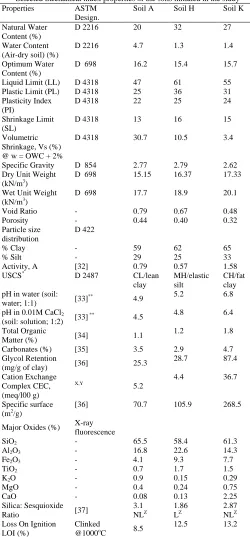
The study revealed that the AMD used had a low pH of 2.8. Additionally, sulphate, iron and calcium concentrations were found to be high with values of 5150 mg/L, 635 mg/L and 318 mg/L respectively. The AMD was also potent with contaminant species capable of harmfully affecting groundwater, surface water and soils (i.e., adversely impacting environmental and human health). The contaminants present include; magnesium and aluminium with values of 285 mg/L and 135 mg/L respectively, while heavy metals (i.e., nickel -180 mg/L, zinc -160 mg/L, manganese -65.0 mg/L and cobalt -7.0 mg/L) were also present. The chloride, nitrate and silica present were found to also have high concentration values of 200 mg/L, 185 mg/L and 140 mg/L respectively. The mechanical and index soil tests revealed that the respective sampled subtropical clayey soils designated Soil A, H and K had substantial fine fractions above 50% passing the No. 200 sieve with high measured specific gravities of solids in the range of 2.62-2.79 suggesting the existence of metal oxides. The Table I summarizes selected mechanical properties of the respective soils. Additionally, [32] classification scheme for soil activity (A) was used to further classify the soils accordingly. Soil A is a normal clay (0.75≤A≤1.25), Soil H is an inactive clay (A<0.75) whereas Soil K is an active clay (A>1.25).
soils. The soils were found to be generally rich in quartz and contained non-clay minerals rich in iron and aluminium.
TABLE I
Selected mechanical index properties of the soils initiated in the study Properties ASTM
Design.
Soil A Soil H Soil K
Natural Water Content (%)
D 2216 20 32 27
Water Content (Air-dry soil) (%)
D 2216 4.7 1.3 1.4
Optimum Water Content (%)
D 698 16.2 15.4 15.7
Liquid Limit (LL) D 4318 47 61 55 Plastic Limit (PL) D 4318 25 36 31 Plasticity Index
(PI)
D 4318 22 25 24
Shrinkage Limit (SL)
D 4318 13 16 15
Volumetric Shrinkage, Vs (%) @ w = OWC + 2%
D 4318 30.7 10.5 3.4
Specific Gravity D 854 2.77 2.79 2.62 Dry Unit Weight
(kN/m3)
D 698 15.15 16.37 17.33
Wet Unit Weight (kN/m3)
D 698 17.7 18.9 20.1
Void Ratio - 0.79 0.67 0.48 Porosity - 0.44 0.40 0.32 Particle size
distribution
D 422
% Clay - 59 62 65
% Silt - 29 25 33
Activity, A [32] 0.79 0.57 1.58 USCS* D 2487 CL/lean
clay
MH/elastic silt
CH/fat clay pH in water (soil:
water; 1:1) [33]
** 4.9 5.2 6.8
pH in 0.01M CaCl2 (soil: solution; 1:2) [33]
** 4.5 4.8 6.4
Total Organic
Matter (%) [34] 1.1
1.2 1.8
Carbonates (%) [35] 3.5 2.9 4.7 Glycol Retention
(mg/g of clay) [36] 25.3
28.7 87.4
Cation Exchange Complex CEC, (meq/l00 g)
X,Y
5.2
4.4 36.7
Specific surface (m2/g)
[36] 70.7 105.9 268.5
Major Oxides (%) X-ray fluorescence
SiO2 - 65.5 58.4 61.3
Al2O3 - 16.8 22.6 14.3
Fe2O3 - 4.1 9.3 7.7
TiO2 - 0.7 1.7 1.5
K2O - 0.9 0.15 0.29
MgO - 0.4 0.24 0.75
CaO - 0.08 0.13 2.25
Silica: Sesquioxide Ratio [37]
3.1 NLZ
1.86 LZ
2.87 NLZ Loss On Ignition
LOI (%)
Clinked
@1000oC 8.5 12.5 13.2
*Unified Soil Classification System; **United States Department of
Agriculture; X1N ammonium acetate (NH4CH3COO) extract; Y1N barium
acetate extract; ZL- Lateritic; NL- Non-Lateritic
[image:3.612.307.572.142.309.2]Nonetheless, the soils possessed relatively low amounts of feldspar while kaolinite was found to be the only clay mineral existent in all three soils. More so, interlayered or mixed layer vermiculite was present in Soils A and H whereas, the other clay minerals present in Soil K were smectite and iron chlorite.
TABLE II
Summarized dominant mineralogical composition of the studied soils Design. Clay minerals Non-clay minerals Soil A Kaolinite, Halloysite and
Illite/Vermiculite
Quartz, goethite, hematite, Magnesioferrite, gibbsite, diaspore and potassium feldspar
Soil H Kaolinite and Hydroxy-aluminium interlayered vermiculite
Quartz, hematite, goethite, magnesioferrite, cobalt iron oxide, gibbsite, hydroxy apatite and potassium feldspar
Soil K Kaolinite, Smectite and Fe-chlorite
Quartz, goethite, hematite gibbsite, diaspore, anatase, ilmenite, lepidocrocite, dolomite, potassium and plagioclase feldspars
IV DISCUSSIONOFFINDINGS A. Batch Sorption Studies
The capacity of a soil to adsorb an inorganic solute from an aqueous solution such as AMD may be subjective of several factors. These factors include; solution pH, soil: solution ratio, the moisture content of the adsorbent, method of mixing, interaction time, and the composition and concentration of competitive sorbates in the solution [38], [39]. As stated by [40] when contaminants migrate through porous media, some of the chemical species in solution possess the latency to retard or even immobilize other species. As such, it becomes pertinent to measure the capacity of each contaminant species to impact seepage or leaching in a competitive environment, notably those species possessing a high contaminating potential with consequential human and environmental effects. Employing the potential contaminating fluid expected in the field as the permeating solution in batch sorption studies, in place of single or binary ion solutions, gives a more realistic simulation as it allows for an assessment of possible competitive sorption between ionic species for available soil exchange sites. The sorption parameters distribution coefficient, Kd, and retardation factor, R, for ionic species of interest may be determined from batch sorption or column tests.
(1) Where: R = Retardation factor of contaminant species; ρ = Density of the soil (g/cm3); n = Porosity of the soil; and Kd = Distribution coefficient (mL/g). These sorption parameters are essentially used as input data parameters in contaminant transport models. The retardation factor is dimensionless and provides a measure of the capacity of a particular adsorbent to adsorb solutes and thus, buffer/attenuate them during contaminant migration. For non-reactive or non-adsorbing solutes, Kd = 0, hence R = 1, whereas for reactive or adsorbing solutes, Kd > 0, hence R > 1.
B. Soil Mineral Investigation
Results from several authors on field studies involving clayey soil liners have revealed that diffusion may be the dominant contaminant transport mechanism [43-45]. Similarly, laboratory diffusion testing has become a routine approach in the assessment of clayey soils as natural barrier lining materials. The [46] advection-dispersion expression is the recognized one-dimensional solute transport equation through a homogeneous, isotropic compacted clayey soil usually represented by the relationship in (2).
(2) Where: C = Contaminant concentration at depth z; D = Coefficient of hydrodynamic dispersion (m2/s); T = Time of flow (s); z = Distance in the direction of flow (m); vs = Seepage or groundwater velocity (m/s), n = Porosity of soil at depth z; and λ = Decay constant of contaminant species.
For this study, the decay of the contaminant species was considered to be negligible. The reason being that; if seepage velocity through compacted clayey soil is very low, advection and mechanical dispersion are negligible modes of contaminant migration. However, diffusion and sorption become dominant contaminant transport modes as recorded by several authors [25], [47], [28], [45]. Hence, for reactive or adsorbing solutes, the expression in (2) reduces to the Fickian second law and the transport process relates to molecular diffusion through the relationship presented in (5).
(3)
When Eq. 1 is substituted into Eq. 3, we derive:
(4) (5) Hydrodynamic dispersion occurs due to the composite effects of two processes namely, effective diffusion and mechanical dispersion which according to [48] may be mathematically expressed as shown in (6).
(6) Where, De = Effective diffusion coefficient (m2/s); and Dm = Coefficient of mechanical dispersion (m2/s).
The coefficient of mechanical dispersion, Dm is a function of seepage velocity, vs, and it is represented by the expression shown in (7).
(7)
Where: α = Dispersivity (m).
The compacted clayey soils were intact and as already reported in previous studies, the results indicated an increase of less than one quarter of an order of magnitude over the baseline hydraulic conductivity of 2.6 × 10⁻¹¹ m/s for the soils at the end of permeation and as such, were considered fairly low. The hydraulic gradient during the diffusion test was negligible, therefore, the flow velocity through the soils during the diffusion test was also negligible. Consequently, coefficient of mechanical dispersion would also be negligible as against effective diffusion coefficient. In light of these conditions, the effective diffusion coefficient would be essentially equal to the coefficient of hydrodynamic dispersion as expressed in (8).
(8)
C. Advection
Advection is the transport process that involves the movement of contaminant mass at seepage velocity, through a porous medium. Advection is usually the most dominant transport process in porous media when high flow rates are involved. As expressed by [46] the flux, f, of contaminant mass moved by advective transport is related to seepage velocity, vs, and contaminant concentration, C, as presented in (9).
(9) Where: f = Contaminant flux.
The hydraulic gradient is the driving force for advective flow. Conventionally, evaluating the advective transport of contaminant mass through clayey barriers requires hydraulic conductivity studies. Presently, different permeameter types are widely available for hydraulic conductivity testing. The choice of an appropriate permeameter would result in a more accurate soil hydraulic conductivity value. As such, in conducting chemical compatibility studies using hydraulic conductivity testing, it is important to percolate, at a low flow rate, the compacted soil sample with several pore volumes of the permeant to ensure interactive saturation of the sample, and as much as possible reduce potential sidewall leakage.
V CONCLUSIONS
The study assessed the material properties of three subtropical clayey soils sampled from respective sites around the CoJ, South Africa, interacted with AMD towards determining their mineral buffering efficacy for use as natural containment liners in areas affected by AMD. Series of protracted pore volume passage of AMD through the respective soil system were done and the following conclusions were reached:
Key tests leading to further investigations and analysis created a channel towards interpretations in succeeding studies.
The results of the study suggest that interactions between AMD and the soils plausibly resulted in dissolution of metals from soil grains.
Desorption of adsorbed contaminant species at the exchangeable sites of the soils occurred.
There was alteration and dissolution of soil minerals. Therefore, considering the general outcomes of the study with further interpretations and analysis in succeeding studies, the three sampled natural subtropical soils were found to be incompatible with AMD and as such, may not be used alone as natural clayey mineral lining materials towards AMD containment disposal.
ACKNOWLEDGMENT
The Authors appreciate the University of Johannesburg where the study was done.
REFERENCES
[1] Coetzee H. Van Tonder D. Wade P. Esterhuyse S. Van Wyk N. Ndengu S. Venter J. Kotoane M. 2007. Acid mine drainage in the Witwatersrand: Department of Minerals and Energy, Pretoria, Council for Geoscience Report No 2007-0260, pp. 81.
[2] Van Tonder D.M. Coetzee H. Esterhuyse S. Strachan L. Wade P.W. Mudau S. 2009. South Africa’s challenges pertaining to mine closure-development and implementation of regional mining and closure strategies. Mine Closure 2009. Proceedings of the forth international seminar on mine closure. Fourier, A., Tibbett, M., Weiersbye I., and Dye, P., Johannesburg, Australian Centre for Geomechanics.
[3] Wade P.W. Woodbourne S. Morris W. Vos P. Jarvis N. 2002. Tier 1 risk assessment of radionuclides in selected sediments of the Mooi River, Water Research Commission, WRC Report 1095/1/02, Pretoria: 93 p. [4] Coetzee H. Wade P. Winde F. 2006. An assessment of sources,
pathways, mechanisms and risks of current and future pollution of water and sediments in the Wonderfontein Spruit Catchment, Water Research Commission, WRC Report No. 1214/1/06, Pretoria: 202 p.
[5] Society for Mining, Metallurgy and Exploration, Inc- SME 2000. In Proceedings of the Fifth International Conference on Acid Rock Drainage (ICARD), ICARD 2000, Denver Colorado. SME Inc., Littleton, Colorado. 2: 769-1272.
[6] Coetzee H. Wade P.W. Winde F. 2002. Reliance on existing wetlands for pollution control around the Witwatersrand gold/uranium mines of South Africa. Are they sufficient? In Uranium in the aquatic environment: Uranium Mining and Hydrogeology.
[7] Vermaak J.J.G. Wates J.A. Bezuidenhout N. Kgwale D. 2004. The evaluation of soil covers used in the rehabilitation of coal mines. Research Report 1002/1/04, Water Research Commission, Pretoria. [8] Tutu H. McCarthy T.S. Cukrowska E. 2008. The chemical
characteristics of acid mine drainage with particular reference to sources, distribution and remediation: The Witwatersrand Basin, South Africa as a case study. Applied Geochemistry, 23, 3666- 3684. [9] International Network for Acid Prevention (INAP) 2009. Global Acid
Rock Drainage Guide, http://www.gardguide.com.
[10] Kashir M. Yanful E.K. 2000. Compatibility of slurry wall backfill soils with acid mine drainage. Advances in Environmental Research, 4: 251-268.
[11] Kashir M. Yanful E.K. 2001. Hydraulic conductivity of bentonite permeated with acid mine drainage. Canadian Geotechnical Journal, 38: 1-15.
[12] Martin-Garin A. Gaudet J.P. Charlet L. Vitart X. 2002. A dynamic study of the sorption and the transport processes of cadmium in calcareous sandy soils. Waste Management, 22: 201-207.
[13] Seuntjens P. Mallants D. Simunek J. Patyn J. Jacques D. 2002. Sensitivity analysis of physical and chemical properties affecting field-scale cadmium transport in a heterogeneous soil profile. J. of Hydrol., 264: 185-200.
[14] Amezaga J.M. Younger P.L. 2006. Mine water management in European Environmental Policy: An Assessment of recent legislative developments. In Barnhisel (ed.) Proceedings of the 7th International Conference on Acid Rock Drainage ICARD, March, 26-30, St. Louis, Missouri.
[15] Vincenzo C. Antonio C. Alessandro C. 2011. Laboratory-Scale Study on Reactive Contaminant Transport in Soil By Means of One-Dimensional Advective Dispersive Models. Journal of Ag. Eng-Riv. di Ing. Agr. 3: 1-6.
[16] Horstmann U.E. Coetzee H. 2004a. A strategic water management plan for prevention of water ingress into underground workings of the Witwatersrand mining basins-Western Basin Stable Isotope Study-report on project period up to 15 Dec., 2004: Council for Geoscience, Pretoria, Stable Isotope Laboratory Report 2004-06, pp. 16.
[17] Hobbs P. Cobbing J. 2007. A hydrogeological assessment of acid mine drainage impacts in the West Rand Basin, Gauteng Province. Report no. CSIR/NRE/WR/ER/2007/0097/C. Council for Scientific and Industrial Research. Pretoria.
[18] Department of Water Affairs and Forestry, DWAF 2008. Integrated Mine Water Management, Best Practice Guideline H1, Directorate: Resource Protection and Waste, Pretoria, 67 pp.
[19] Department of Water Affairs DWA 2010. Projects/Programmes, http://www.dwa.gov.za/projects.aspx (accessed 29 November 2010). [20] Coetzee H. Croukamp L. Venter J. De Wet L. 2005a. Contamination of
the Tweelopie Spruit and environs by water from the Western Basin decant point on Harmony Gold’s property: Council for Geoscience, Pretoria, Report No. 2005-0148, pp. 28.
[21] Coetzee H. Singh M. Roux R. 2008b. Risks related to the flooding of gold mines in the Central Rand, West Rand and KOSH Gold Fields: Department of Minerals and Energy, Pretoria, Council for Geoscience, Report No: 2008-0241, 21 pp.
[22] Netili K.F. Van Tonder D. Coetzee H. Rust U. Yibas B. 2010. Strategic Water Management Project: Proposed way forward prepared by CGS. Council for Geoscience, Pretoria, 21 pp.
[23] Lin L. Hansen R.N. 2010. Mine Flooding, Identification of Decant Site and determination of Environmental Critical Level on the Central Rand Gold Field, Council for Geoscience Report Number 2010-0199, Council for Geoscience, Pretoria, 75 pp.
[24] Yibas B. Pulles W. Nengovhela C. 2010. Kinetic Development of Oxidation Zones in Tailings Dams with specific reference to the Witwatersrand Gold Mine Tailings Dams. Report to the Water Research Commission, WRC Report No. 1554/1/10, 105 pp.
[25] Shackelford C.D. Rowe R.K. 1998. Contaminant transport modeling. In Proceedings of the Third International Congress on Environmental Geotechnics. Lisbon, Portugal. Edited by Seco e Pinto, P.S., Environmental Geotechnics, 1. pp.939-956.
[26] Leite A.L. Paraguassu A.B. Rowe R.K. 2003. Sorption of Cd2+, K+, F, and Cl- on some tropical soils. Canadian Geotechnical Journal, 40: 629-642.
[27] Chai J.C. Miura N. Hayashi S. 2005. Large-scale tests for leachate flow through composite liner due to geomembrane defects. Geosynthetics International, 12, No. 3, 134-144.
[28] Barroso M. Touze-Foltz N. Maubeuge V.K. Piersond P. 2006. Laboratory investigation of flow rate through composite liners consisting of a geomembrane, a GCL and a soil liner. Geotextiles and Geomembranes 24:139-155.
[29] Akram N.A.P.E. Nima R. 2006. Parametric Study of One-Dimensional Solute Transport in Deformable Porous Media. Journal of Geotech. Geoenviron. Eng. 132:1001-1010.
[30] Celik B. Rowe R.K. Unlu K. 2009. Effect of vadose zone on the steady-state leakage rates from landfill barrier Systems. Journal of Waste Management 29:103-109.
[31] Nguyen T.B. 2011. Comparison of four composite landfill liner systems considering leakage rate and mass flux. Proceedings of 14th Asian Regional Conference on Soil Mechanics and Geotechnical Engineering, Hong Kong, May 23-27, 2011, 6 p.
[32] Head K.H. 1980. Manual of soil laboratory testing Vol. 1 - Soil classification and compaction tests. John Wiley & Sons, Toronto. [33] United States Department of Agriculture- USDA 1996. Miscellaneous
[34] Walkley A. Black I.A. 1934. An examination of the Degtjareff method for determining soil organic matter and a proposed modification of the chromic acid titration method. Soil Science, 34: 29-38.
[35] Dreimanis A. 1962. Quantitative gasometric determination of calcite and dolomite by using Chittick Apparatus. Journal of Sedimentary Petrology, 32(3): 520-529.
[36] Martin R.T. 1955. Glycol retention analysis. In Proceedings of Soil Science Society of America, 19(2): 160-164.
[37] Building and Road Research Institute (BRRI) and Lyon Associates Inc. 1971. Laterites and lateritic soils and other problem soils of Africa. An engineering study for USAID, AID/csd-2164.
[38] Roy W.R. Krapac I.G. Chou S.F.J. Griffin R.A. 1991. Batch-type procedures for estimating soil adsorption of chemicals. USEPA Technical Resource Document EP/530-SW-87-006-F.
[39] Myung C.J. 2008. Heavy Metal Concentrations in Soils and Factors Affecting Metal Uptake by Plants in the Vicinity of a Korean Cu-W Mine. Sensors (Basel) 8(4): 2413–2423.
[40] Domenico P.A. Schwartz F.W. 1998. Physical and chemical hydrogeology. Second Edition. John Wiley and Sons, Inc., Toronto. [41] Shackelford C.D. 1994. Critical concepts for column testing. Journal of
Geotechnical Engineering, 120(10): 1804-1827.
[42] Rowe R.K. 2012. Short- and long-term leakage through composite liners. The 7th Arthur Casagrande Lecture. Proceedings of the 14th Pan-American Conference on Soil Mechanics and Geotechnical Engineering, Toronto, Ont., Oct. 2011. 49:141-169.
[43] Rowe R.K. Quigley R.M. Booker J.R. 1995. Clay barrier systems for waste disposal facilities. E & FN Spon, London, UK.
[44] Bouazza A. Zornberg J.G. Adam D. 2002. Geosynthetics in waste containment facilities: recent advances. Proceedings 7th International Congress on Environmental Geotechnics, Delmas, Gourc & Girard (eds): 445-507.
[45] Frempong E. Yanful E. 2007. Tropical Soils-Acid Mine Drainage Interactions: Breakthrough Curves and Some Transport Parameters. Journal of Environ. Eng. 133:7, 733-741.
[46] Rowe R.K. Booker J.R. Fraser M.J. 1994. POLLUTEv6 and POLLUTE-GUI. User’s guide. Distributed by GAEA Environmental Engineering Ltd., London, ON, Canada.
[47] Rowe R.K. Quigley R.M. Booker J.R. 1995. Clay barrier systems for waste disposal facilities. E & FN Spon, London, UK.