Original Article
Association between single nucleotide polymorphism
of DNA repair genes and endometrial
cancer: a case-control study
Beata Smolarz1, Hanna Romanowicz2
1Laboratory of Cancer Genetics, Department of Clinical Pathomorphology, Polish Mother’s Memorial
Hospital-Research Institute, Rzgowska 281/289, 93-338 Lodz, Poland; 2Department of Clinical Pathomorphology, Polish
Mother’s Memorial Hospital-Research Institute, Rzgowska 281/289, 93-338 Lodz, Poland
Received December 1, 2017; Accepted January 8, 2018; Epub March 1, 2018; Published March 15, 2018
Abstract: Aim: The aim of this study was to analyse the frequencies of genotypes and alleles of Single Nucleo-tide Polymorphisms (SNPs) of six DNA repair genes (XRCC1-rs25487, XPD-rs13181, hMSH2-rs4987188, XRCC2 -rs3218536, BRCA1-rs799917 and BRCA2-rs144848 SNPs) and attempt to evaluate the effect this DNA marker on endometrial cancer (EC). Material and methods: The patients were recruited to the study at the Department of Operative Gynaecology of the Institute of the Polish Mother’s Memorial Hospital in Lodz. The study comprised 510 patients treated for EC. 510 disease-free individuals were used as controls. SNPs were analysed by the high reso-lutionmelting technique (HRM). Results: Statistically significant correlations were identified between four SNPs and endometrial cancer risk: rs25487, rs4987188, rs13181 and rs799917. The alleles XRCC1-Gln (OR 2.89; 95% CI 2.39-3.49, P<0.0001), hMSH2-Asp (OR 1.65; 95% CI 1.38-1.96, P<0.0001), XPD-Gln (OR 3.24; 95% CI 2.69-3.91, P<0.0001) and BRCA1-L (OR 1.56; 95% CI 1.31-1.85, P<0.0001) genes were strongly correlated with this malig-nancy. No relationship was found between the studied polymorphisms of XRCC2 and BRCA2 and the incidence of endometrial cancer. There was also not any association between polymorphisms of XRCC1, hMSH2, XPD, XRCC2, BRCA1, BRCA2, i.e., the polymorphisms of the analysed repair genes, and the cancer stage progression acc. to FIGO, the body mass index, the number of pregnancies in history, replacement therapy, diabetes mellitus and hypertension. Conclusions: The results indicate that rs25487, rs4987188, rs13181, and rs799917 SNPs may be associated with the incidence of endometrial cancer.
Keywords: Single nucleotide polymorphism, DNA repair, endometrial cancer
Introduction
The endometrial cancer (EC) is the 7th in the world and the 4th in Poland in the ranking of malignancy incidence rates in women (after breast, colon, and lung cancer) [1, 2]. The observed imperfections of cancer prophylac-tics result, among others, from:
●The identification of pathology at the stage of morphological, and not molecular changes, ●Possible technical and diagnostic errors,
●The necessity of frequent repetitions of diag -nostic procedures,
●Impossibility of pathology progression pro-gnosis.
At the actual level of medical knowledge, we are capable of dealing with almost any type of cancer, provided it is identified early enough. There are many factors which play a significant role in triggering endometrial cancer forma- tion process, with genetic factors being of major significance. Endometrial cancer is cha-racterised by the occurrence of different gen- etic changes in various genes [3].
development of malignant changes, including endometrial cancer.
DNA repair forms a barrier, protecting cells from cancer forming mutations. There are six known systems of DNA repair: pathway of di- rect reversion of damage, base excision repair (BER), nucleotide-excision repair (NER), mis-match repair (MMR), homologous
recombina-ant role in maintaining genome stability, thus its defects lead to serious diseases, e.g., hered-itary nonpolyposis colorectal cancer and other cancer types [4]. Microsatellite instability (MSI) caused by MMR is observed in certain types of cancer, including 20 to 30% of cases of endometrial cancer [12, 13]. These results suggest that MMR gene abnormalities occur frequently in endometrial cancer.
Table 1. The characteristic of endometrial cancer patients and con-trols
Patients
(n=510) Controls (n=510) Mean ± SD
Age (years) 68.12 ± 10.76 65.10 ± 10.14
n (%) Menarche (years)
10 112 (21.96) 120 (23.53)
13 132 (25.88) 138 (27.06)
14 125 (24.51) 121 (23.73)
≥ 15 141 (27.65) 131 (25.68)
Number of pregnancies
0 120 (23.53) 118 (23.14)
1 110 (21.57) 128 (25.10)
2 122 (23.92) 110 (21.57)
≥ 3 158 (30.98) 154 (30.19)
Obesity (BMI ≥ 30kg/m2)
Yes 125 (24.51) 154 (30.20)
No 385 (75.49) 356 (69.80)
Use of hormone replacement therapy (HRT)
No 242 (40.4) 215 (36.00)
Yes 358 (59.6) 385 (64.00)
Hypertension
Yes 244 (47.84) 228 (44.71)
No 266 (52.16) 282 (55.29) Diabetes mellitus
Yes 214 (41.96) 202 (39.61)
No 296 (58.04) 308 (60.39)
Uterine bleeding
Yes 265 (51.96) 213 (41.76)
No 245 (48.04) 297 (58.24)
FIGO grade
G1 170 (33.33)
G2 230 (45.10)
G3 110 (21.57)
FIGO stage
I 165 (32.35)
II 231 (45.29)
III 114 (22.36)
tion (HR), and non-homolo-gous DNA end joining (NH- EJ) [4-6]. Cancer diseases are driven by a compromi- sed ability of DNA repair. Therefore, a set of alle- les of repair protein encod- ing genes may largely defi-ne anindividual abilities for DNA damage repair, as well as the susceptibility to tu- mor development. It is then significant to learn the po-lymorphic variants of the genes that are associated with DNA repair, as well as with their degradation in the population. Single nuc- leotide polymorphisms (SN- Ps) may change the risk of cancer and may thus be regarded as potential mar- kers of carcinogenesis [7, 8].
Repair by recombination enables removal of a number of serious DNA damages, first of all, double strand breaks. These breaks may cau- se a loss of some chromosomes and induce translocation of genetic material between th- em. Moreover, they are strong inducers of programmed cell death [4]. SNPs in HR-related genes cause susceptibility to breast, ovarian, and endometrial cancer [14, 15]. In addition, polymorphisms of DNA repair genes may also have an effect on cellular response to radiation therapy in patients with carcinoma [16]. In the present work endometrial cancer pati- ents were analysed for polymorphisms in fol-lowing genes: BER system (XRCC1 gene-Arg-
DNA isolation
DNA was extracted using theDNeasy Blood & Tissue Kit (Qiagen GmbH, Hilden, Germany) according to the manufacturer’s instruction. Genotype determination
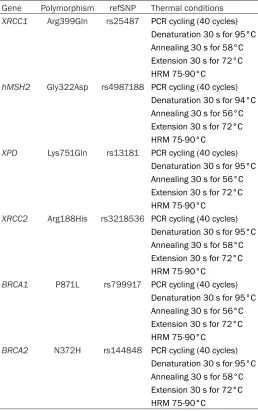
[image:3.612.91.349.96.507.2]Real-time PCR cycling and conditions for HRM analysis of the examined DNA repair SNPs are summarized in Table 2. The High-Resolution Melter analysis was carried out in a Light Cycler® 96 (Roche, Mannheim, Germany) Th- ermocycler. PCR amplification was performed with support of a Light Cycler® 480 High Re- solution Melting Master Kit (Roche, Mannheim, Germany), according to the manufacturer’s re-
Table 2. The refSNPand conditions for HRM analysis of the examined DNA repair refSNP and genes
Gene Polymorphism refSNP Thermal conditions
XRCC1 Arg399Gln rs25487 PCR cycling (40 cycles) Denaturation 30 s for 95°C Annealing 30 s for 58°C Extension 30 s for 72°C HRM 75-90°C
hMSH2 Gly322Asp rs4987188 PCR cycling (40 cycles) Denaturation 30 s for 94°C Annealing 30 s for 56°C Extension 30 s for 72°C HRM 75-90°C
XPD Lys751Gln rs13181 PCR cycling (40 cycles) Denaturation 30 s for 95°C Annealing 30 s for 56°C Extension 30 s for 72°C HRM 75-90°C
XRCC2 Arg188His rs3218536 PCR cycling (40 cycles) Denaturation 30 s for 95°C Annealing 30 s for 58°C Extension 30 s for 72°C HRM 75-90°C
BRCA1 P871L rs799917 PCR cycling (40 cycles) Denaturation 30 s for 95°C Annealing 30 s for 56°C Extension 30 s for 72°C HRM 75-90°C
BRCA2 N372H rs144848 PCR cycling (40 cycles) Denaturation 30 s for 95°C Annealing 30 s for 58°C Extension 30 s for 72°C HRM 75-90°C
399Gln, rs25487), NER system (XPD gene-Lys751Gln, rs13181), MMR system (hMSH2 gene-Gly- 322Asp, rs4987188), repair by ho- mologous recombination (XRCC2 gene-Arg188His, rs3218536, BRC- A1 gene-P871L, rs799917 and BR- CA2 gene-N372H, rs144848). The aim of this study was to investigate the association between SNPs in six DNA repair genes and the risk of endometrial cancer.
Materials and methods
Endometrial cancer patients
commendations. All control DNA samples we- re employed in each run of HRM analysis. The collected data was analysed, using LightCyc- ler® 96 software version SW 1.1 (Roche, Mannheim, Germany). SNPs in DNA repair ge- nes were selected using the public domain of the National Centre for Biotechnology Infor- mation at http://www.ncbi.nlm.nih.gov/snp (Be- thesda, MD, USA).
Relationship between genotypes in SNPs and endometrial cancer
[image:4.612.92.371.97.594.2]In our study, the analysed individuals were ethnically homogenous: Polish females from Lodz Region. Genotypes in XRCC1-rs25487, XPD-rs13181, hMSH2-rs4987188, XRCC2-rs- 3218536, BRCA1-rs799917 and BRCA2-rs14- 4848 SNPs, were successfully determined for
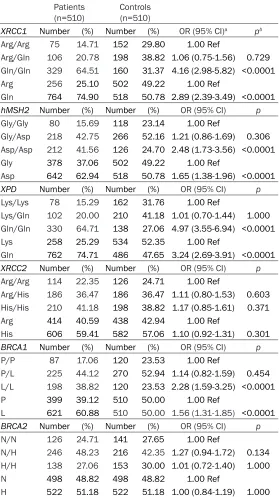
Table 3. Genotype and allele distributions of SNPs of DNA repair genes in endometrial cancer patients and controls
Patients
(n=510) Controls (n=510)
XRCC1 Number (%) Number (%) OR (95% CI)a pb
Arg/Arg 75 14.71 152 29.80 1.00 Ref
Arg/Gln 106 20.78 198 38.82 1.06 (0.75-1.56) 0.729
Gln/Gln 329 64.51 160 31.37 4.16 (2.98-5.82) <0.0001
Arg 256 25.10 502 49.22 1.00 Ref
Gln 764 74.90 518 50.78 2.89 (2.39-3.49) <0.0001
hMSH2 Number (%) Number (%) OR (95% CI) p
Gly/Gly 80 15.69 118 23.14 1.00 Ref
Gly/Asp 218 42.75 266 52.16 1.21 (0.86-1.69) 0.306
Asp/Asp 212 41.56 126 24.70 2.48 (1.73-3.56) <0.0001
Gly 378 37.06 502 49.22 1.00 Ref
Asp 642 62.94 518 50.78 1.65 (1.38-1.96) <0.0001
XPD Number (%) Number (%) OR (95% CI) p
Lys/Lys 78 15.29 162 31.76 1.00 Ref
Lys/Gln 102 20.00 210 41.18 1.01 (0.70-1.44) 1.000
Gln/Gln 330 64.71 138 27.06 4.97 (3.55-6.94) <0.0001
Lys 258 25.29 534 52.35 1.00 Ref
Gln 762 74.71 486 47.65 3.24 (2.69-3.91) <0.0001
XRCC2 Number (%) Number (%) OR (95% CI) p
Arg/Arg 114 22.35 126 24.71 1.00 Ref
Arg/His 186 36.47 186 36.47 1.11 (0.80-1.53) 0.603
His/His 210 41.18 198 38.82 1.17 (0.85-1.61) 0.371
Arg 414 40.59 438 42.94 1.00 Ref
His 606 59.41 582 57.06 1.10 (0.92-1.31) 0.301
BRCA1 Number (%) Number (%) OR (95% CI) p
P/P 87 17.06 120 23.53 1.00 Ref
P/L 225 44.12 270 52.94 1.14 (0.82-1.59) 0.454
L/L 198 38.82 120 23.53 2.28 (1.59-3.25) <0.0001
P 399 39.12 510 50.00 1.00 Ref
L 621 60.88 510 50.00 1.56 (1.31-1.85) <0.0001
BRCA2 Number (%) Number (%) OR (95% CI) p
N/N 126 24.71 141 27.65 1.00 Ref
N/H 246 48.23 216 42.35 1.27 (0.94-1.72) 0.134
H/H 138 27.06 153 30.00 1.01 (0.72-1.40) 1.000
N 498 48.82 498 48.82 1.00 Ref
H 522 51.18 522 51.18 1.00 (0.84-1.19) 1.000
aCrude odds ratio (OR), 95% CI = confidence interval at 95%, bChi square.
Statistical analysis
Hardy-Weinberg distribution (H- WE) was checked using the X2 test to compare the ob- served genotype frequencies with the expected frequencies among the case and control subjects. Differences between distributions in particular gr- oups were evaluated also by X2 test. The general risks we- re illustrated as odds ratios (ORs) with associated 95% in- tervals (CIs) by unconditional logistic regression. The wild ty- pe of genotype and allele act- ed as reference. P-values < 0.05 were considered signifi-cant.
Results
Hardy-Weinberg equilibrium
all DNA samples obtained from patients and controls selected for genetic tests. This stu- dy demonstrates that XRCC1-Gln/Gln (OR 4.16; 95% CI 2.98-5.82, P<0.0001), hMSH2-Asp/Asp (OR 2.48; 95% CI 1.73-3.56, P< 0.0001), XPD-Gln/Gln (OR 4.97; 95% CI 3.55 - 6.94, P<0.0001) and BRCA1-L/L genotypes (OR 2.28; 95% CI 1.59-3.25, P<0.0001) are strongly associated with an increased risk of endometrial cancer. In addition, the alleles of hMSH2-Asp, XPD-Gln, XRCC1-Gln and BRCA1-L genes werestrongly correlated with this malig-nancy (P<0.0001).
We demonstrate that Arg188His and N372H polymorphisms of XRCC2 and BRCA2 gene, respectively donot have any influence on neo -plasm development (P>0.05). (Table 3). We did not find any correlation between the repair genes polymorphic variants and FIGO grade nor stage (P>0.05). DNA repair genes polymo- rphisms were also unrelated to the patients’ age, the body mass index, hormone replace-ment therapy, number of births, the date of menarche, uterine bleedings, the endometri- um thickness, diabetes, and hypertension (P>0.05).
Discussion
Endometrial carcinoma is the most frequent malignant neoplasm of female genitals. Des- pite intensive research EC aetiology remains unknown. The primary objective of our work was to identify the SNPs associated with the risk of endometrial carcinoma and to estima- te the cancer risk in SNPs carriers.
Our results fit in the general commonly acce-pted trend in research based on the concept that assumes that an individual susceptibility to cancer - including EC - is a cumulative out-come of multiple risk factors derived from nu- merous low-penetrating genetic variables. There are seven major MMR genes in hum- ans: hMLH1, hMLH3, hPMS1, hPMS2, hMSH2, hMSH3 and hMSH6. We selected hMSH2 gene for its well-proven role in the pathogenesis of cancer. According to the literature, Gly322Asp polymorphism of hMSH2 gene may enhance the risk of colorectal and stomach cancer [17-19].
Some reports provide proof that the hMSH2 Gly322Asp polymorphism was related to incre- ased risk of endometrial cancer [20].
Our study demonstrates that Gly322Asp po- lymorphism is strongly associated with an increased risk of endometrial cancer. The Asp allele may as such be a risk factor of EC. We tested ECpatients for SNPs of both BER sys- tem and the NER system genes. Endometrial cancer is oestrogen-related. The oestrogens may bring about oxidative DNA defects, which are eliminated by the BER and NER mechani- sm [11, 21]. A series of enzymes are involved in BER and NER, including XRCC1 and XPD which harbor polymorphisms associated with the risk of tumors [22-24]. We have demon-strated that the polymorphic form of XRCC1 and XPD contributes to an increased risk of endometrial cancer: alleles of XRCC1-Gln and XPD-Gln are strongly correlated with this ma- lignancy.
Since RAD51 participates in DNA repair but also interacts with BRCA proteins (mutations of which are often identified in breast cancer), the above-mentioned polymorphisms may be associated with a higher risk of development this malignancy. It has been found, among oth-ers, that 135C variant may increase the risk of breast cancer in BRCA1 and BRCA2 genes mutations carriers, whereas no effects of 135C variant were observed on the morbidity in wo- men without the mutations [31, 32]. G135C polymorphism can modify mRNA splicing to affectprotein function or the effectiveness of translation [33]. In spite of the abundance of results, there is still no unequivocal explana- tion of the role of RAD51 in cancer formation. Our assumption has beenthat another genetic variability factor could act either additively or independently of the above-mentioned poly-morphisms in 5’UTR region, what may help to explain the role of RAD51 in EC development. Our research was then oriented towards less investigated SNPs within BRCA1 and BRCA2 genes: P871L (rs799917) and N372H (rs14- 4848). In this study, significant correlations were identified between breast cancer and the new, not yet reported in the literature, SNP-ty- pe polymorphism in BRCA1 (rs799917). No correlation was found between the studied SNP and FIGO grade/stage.
In summary, the above presented studies con-tribute to a better knowledge of the molecular background of endometrial cancer. Our results point outDNA repair genes and their polymor-phisms which can be involved in EC formation in Polish women.
Conclusions
The polymorphisms within the studied genes of the DNA repair system may become a group of new risk factors for endometrial cancer.
Disclosure of conflict of interest
None.
Address correspondence to: Beata Smolarz, Labo- ratory of Cancer Genetics, Department of Clinical Pathomorphology, Polish Mother’s Memorial Hos- pital - Research Institute, Rzgowska 281/289, 93- 338 Lodz, Poland. E-mail: [email protected]
References
[1] Siegel R, Naishadham D, Jemal A. Cancer sta-tistics, 2012. CA Cancer J Clin 2012; 62: 10-29.
[2] Syczewska-Weber K, Rucinski P. The main challenges of polish oncology. Public Health Rep 2008; 123: 655-63.
[3] Gayther SA, Pharoah PD. The inherited genet-ics of ovarian and endometrial cancer. Curr Opin Genet Dev 2010; 20: 231-8.
[4] Hakem R. DNA-damage repair; the good, the bad, and the ugly. EMBO J 2008; 27: 589-605. [5] Kelley MR, Logsdon D, Fishel ML. Targeting
DNA repair pathways for cancer treatment: what’s new? Future Oncol 2014; 10: 1215-37. [6] Jackson SP, Bartek J. The DNA-damage re-sponse in human biology and disease. Nature 2009; 461: 1071-8.
[7] Shridhar K, Aggarwal A, Walia GK, Gulati S, Geetha AV, Prabhakaran D, Dhillon PK, Rajara-man P. Single nucleotide polymorphisms as markers of genetic susceptibility for oral poten-tially malignant disorders risk: review of evi-dence to date. Oral Oncol 2016; 61: 146-51. [8] Ke HL, Chen M, Ye Y, Hildebrandt MA, Wu WJ,
Wei H, Huang M, Chang DW, Dinney CP. Ge-netic variations in micro-RNA biogenesis genes and clinical outcomes in non-muscle-invasive bladder cancer. Carcinogenesis 2013; 34: 1006-11.
[9] Prat J, Gallardo A, Cuatrecasas M, Catasus L. Endometrial carcinoma: pathology and genet-ics. Pathology 2007; 39: 72-87.
[10] Melis JP, van Steeg H, Luijten M. Oxidative DNA damage and nucleotide excision repair. Anti-oxid Redox Signal 2013; 18: 2409-19. [11] Maynard S, Schurman SH, Harboe C, de
Sou-za-Pinto NC, Bohr VA. Base excision repair of oxidative DNA damage and association with cancer and aging. Carcinogenesis 2009; 30: 2-10.
[12] Boland CR, Thibodeau SN, Hamilton SR, Sid-ransky D, Eshleman JR, Burt RW, Meltzer SJ, Rodriguez-Bigas MA, Fodde R. A national can-cer institute workshop on microsatellite insta-bility for cancer detection and familial predis-position: development of international criteria for the determination of microsatellite instabil-ity in colorectal cancer. Cancer Res 1998; 58: 5248-57.
[13] Kanaya T, Kyo S, Maida Y, Yatabe N, Tanaka M, Nakamura M, Inoue M. Frequent hypermethyl-ation of MLH1 promoter in normal endometri-um of patients with endometrial cancers. On-cogene 2003; 22: 2352-60.
suscep-tibility genes (review). Oncol Rep 2013; 30: 1019-29.
[15] Krupa R, Sobczuk A, Popławski T, Wozniak K, Blasiak J. DNA damage and repair in endome-trial cancer in correlation with the hOGG1 and RAD51 genes polymorphism. Mol Biol Rep 2011; 38: 1163-70.
[16] Wang C, Nie H, Li Y, Liu G, Wang X, Xing S, Zhang L, Chen X, Chen Y. The study of the rela-tion of DNA repair pathway genes SNPs and the sensitivity to radiotherapy and chemother-apy of NSCLC. Sci Rep 2016; 6: 26526. [17] Dowty JG, Win AK, Buchanan DD, Lindor NM,
Macrae FA, Clendenning M, Antill YC, Thibodeau SN, Casey G. Cancer risks for MLH1 and MSH2 mutation carriers. Hum Mutat 2013; 34: 490-7.
[18] Wu S, Chen J, Ji Y, Liu Y, Gao L, Chen G, Shen K, Huang B. Association between the hMSH2 IVS12-6 T>C polymorphism and cancer risk: a meta-analysis. Exp Ther Med 2011; 2: 1193-8. [19] Bansidhar BJ. Extracolonic manifestations of
lynch syndrome. Clin Colon Rectal Surg 2012; 25: 103-10.
[20] Poplawski T, Sobczuk A, Sarnik J, Pawlowska E, Blasiak J. Polymorphism of DNA mismatch re-pair genes in endometrial cancer. Exp Oncol 2015; 37: 44-7.
[21] Huang JC, Hsu DS, Kazantsev A, Sancar A. Substrate spectrum of human excinuclease: repair of abasic sites, methylated bases, mis-matches, and bulky adducts. Proc Natl Acad Sci U S A 1994; 91: 12213-17.
[22] McCullough LE, Santella RM, Cleveland RJ, Mil-likan RC, Olshan AF, North KE, Bradshaw PT, Eng SM, Terry MB. Polymorphisms in DNA re-pair genes, recreational physical activity and breast cancer risk. Int J Cancer 2014; 134: 654-63.
[23] Tse D, Zhai R, Zhou W, Heist RS, Asomaning K, Su L, Lynch TJ, Wain JC, Christiani DC. Polymor-phisms of the NER pathway genes, ERCC1 and XPD are associated with esophageal adeno-carcinoma risk. Cancer Causes Control 2008; 19: 1077-83.
[24] Kumar A, Pant MC, Singh HS, Khandelwal S. Associated risk of XRCC1 and XPD cross talk and life style factors in progression of head and neck cancer in north Indian population. Mutat Res 2012; 729: 24-34.
[25] Merritt MA, Cramer DW. Molecular pathogene-sis of endometrial and ovarian cancer. Cancer Biomark 2010; 9: 287-305.
[26] Michalska MM, Samulak D, Romanowicz H, Smolarz B. Association of polymorphisms in the 5’ untranslated region of RAD51 gene with risk of endometrial cancer in the Polish popu-lation. Arch Gynecol Obstet 2014; 290: 985-91.
[27] Khanna KK, Jackson SP. DNA double-strand breaks: signaling, repair and the cancer con-nection. Nat Genet 2001; 27: 247-54. [28] Michalska MM, Samulak D, Bieńkiewicz J,
Ro-manowicz H, Smolarz B. Association between -41657C/T single nucleotide polymorphism of DNA repair gene XRCC2 and endometrial can-cer risk in Polish women. Pol J Pathol 2015; 66: 67-71.
[29] Romanowicz-Makowska H, Smolarz B, Połać I, Sporny S. Single nucleotide polymorphisms of RAD51 G135C, XRCC2 Arg188His and XRCC3 Thr241Met homologous recombination repair genes and the risk of sporadic endometrial cancer in Polish women. J Obstet Gynaecol Res 2012; 38: 918-24.
[30] Smolarz B, Samulak D, Michalska M, Góralc-zyk B, Szyłło K, Lewy J, Sporny S, Kokołaszwili G, Burzyński M. 135G>C and 172G>T polymor-phism in the 5’ untranslated region of RAD51 and sporadic endometrial cancer risk in Polish women. Pol J Pathol 2011; 62: 157-62. [31] Antoniou AC, Sinilnikova OM, Simard J, Léoné
M, Dumont M, Neuhausen SL, Struewing JP, Stoppa-Lyonnet D, Barjhoux L. RAD51 135G-->C modifies breast cancer risk among BRCA2 mutation carriers: results from a combined analysis of 19 studies. Am J Hum Genet 2007; 81: 1186-200.
[32] Kadouri L, Kote-Jarai Z, Hubert A, Durocher F, Abeliovich D, Glaser B, Hamburger T, Eeles RA, Peretz T. A single-nucleotide polymorphism in the RAD51 gene modifies breast cancer risk in BRCA2 carriers, but not in BRCA1 carriers or noncarriers. Br J Cancer 2004; 90: 2002-5. [33] Wang WW, Spurdle AB, Kolachana P, Bove B,