To the Minister for Jobs, Enterprise and Innovation
Pursuant to the Industrial Development Act, 1993, Forfás herewith presents its report and accounts for the year ended 31 December 2010.
About
Us
5
Board
Members
13
Forfás
Management
Team 17
Statement of the Chairman and Chief Executive
19
Policy
Activities
25
Enterprise 29
Knowledge
&
Innovation
49
Competitiveness
67
People
79
Sustainability
91
Discover Science & Engineering
97
The Irish National Accreditation Board (INAB)
105
Corporate
Governance
111
Financial
Statements
119
Appendix 1 Advisory Councils
143
Appendix 2 Forfás Publications 147
About Us
Forfás is the national policy advisory board for enterprise, trade, science, technology and innovation.
In addition to its primary policy functions, other Forfás activities include awareness, accreditation and shared corporate services.
Policy Analysis and Advice
Forfás is an agency of the Department of Jobs, Enterprise and Innovation1 (DJEI), and works closely with the DJEI and Forfás’ sister agencies, Enterprise Ireland, IDA Ireland and Science Foundation Ireland to ensure the coherence of policies across the enterprise development agencies in support of enterprise growth and job creation.
Forfás provides the Minister and DJEI with independent policy advice in a range of policy areas from an enterprise perspective. It links private sector enterprises and the public
system and has individuals from both the private and public sectors represented on the Board. Many of the policy areas which impact on enterprise are within the Minister’s brief and
responsibility for others reside with other Ministers and Departments, but have a direct or indirect impact on enterprise development. This requires Forfás to work across government departments and agencies.
Forfás policy advice in 2010 addressed five overarching policy areas of critical importance to the success of enterprise in Ireland and our work is detailed in the Activities Section of this report.
Enterprise Supporting the development of sustainable enterprises
Knowledge & Innovation Making research and technology work for business and Ireland
Competitiveness Ensuring Ireland is a good place to do business
People Building a highly skilled, talented and flexible labour force
Sustainability Contributing to environmental sustainability and identifying
enterprise opportunities
Enterprise – Supporting the development of sustainable enterprises
Ireland has a strong base of enterprise, both indigenous and foreign owned and a culture that encourages companies to develop and expand. Working with the enterprise development agencies and a broad range of stakeholders Forfás delivers policy advice across a broad range of enterprise issues to contribute to an environment conducive to successful enterprises.
Knowledge and Innovation - Making research and technology work for business and Ireland Innovation has no boundaries. It can come from suppliers and customers, competitors and employees, in Ireland or internationally. It can apply to any aspect of a business – new or improved products, services, technology applications, processes, designs and organisation structures. Innovation is one of the essential factors which will define the future success of enterprises in Ireland.
Working with the Department of Jobs, Enterprise and Innovation and other Government Departments Forfás works to ensure that the investments that Ireland has made are optimised in all aspects of science, technology and innovation and that the right supports and policy measures are in place to ensure that enterprises are supported and enabled to convert this investment into commercial products and services.
Competitiveness - Ensuring Ireland is a good place to do business
Our ability to compete in international markets and grow exports of high value added goods and services is perhaps the most critical condition for our future economic prosperity and standards of living. We have seen some improvement in our international competitiveness with costs of energy, labour and property falling, due in large part to the recession. While improvement is welcome, we need to stay focused on reducing costs in the economy,
enterprise development. Forfás itself and through its work with the National Competitiveness Council delivers a range of research, analysis and advice on issues affecting our national competitiveness and focused on protecting our attractiveness as a location to do business.
People - Building a highly skilled, talented and flexible labour force
Continued strategic investment in the development of our people is an essential component in Ireland’s economic success. Providing education, training and upskilling that meets the needs of current and future enterprises must be at the heart of our enterprise policy. Forfás also advises on policies which support labour market flexibility.
Forfás itself and through its work with the Expert Group on Future Skills Needs continues to support policies aimed at the development of Ireland’s people by providing a range of analysis and advice on the skills needs of Irish enterprises, on how Ireland can address the upskilling needs of those who have lost or are losing their jobs and the training needs of those in employment particularly in vulnerable sectors and companies.
Sustainability - Contributing to environmental sustainability and identifying enterprise opportunities
Sustainability encompasses our ability to continue to achieve economic gains while ensuring that our enterprise activities do not impact negatively on the physical environment.
The rapid pace of change in energy and environment markets and policy development is presenting a range of enterprise and competitiveness opportunities and challenges for Ireland. Forfás conducts research and provides policy analysis on critical environmental policy with a clear focus on the enterprise position and identifies infrastructural challenges facing enterprise in Ireland.
As well as ongoing research work under the five policy areas, Forfás provides the Minister and DJEI with responsive, real-time policy advice on a broad range of emerging issues
Forfás supports the DJEI in the promotion and implementation of the outcomes of our advice. Forfás manages the work of and provides research and analytical support to the National Competitiveness Council, the Advisory Council for Science, Technology and Innovation and the Expert Group on Future Skills Needs.
Awareness, Accreditation and Corporate and Shared Services
Awareness
Forfás manages the national awareness programme, Discover Science and Engineering (DSE). This programme delivers a focused, strategic and quantifiable awareness campaign which aims to:
Increase the number of students studying the physical sciences and mathematics - essential skills and knowledge for the development of Ireland as a Smart Economy;
Promoting a positive attitude to careers in science, technology, engineering and mathematics; and
Fostering a greater public understanding of the physical sciences, engineering and mathematics and their value to Irish society.
Accreditation
The Irish National Accreditation Board (INAB) is the designated national body with sole responsibility for accreditation in Ireland and is a sub-board and division of Forfás.
It has responsibility for the accreditation of laboratories, certification bodies and inspection bodies. It is Ireland’s only signatory to the multilateral agreements (MLAs) for Europe through the European cooperation for Accreditation (EA) and worldwide through the International Laboratory Accreditation Cooperation (ILAC) and the International Accreditation Forum (IAF). It provides accreditation in accordance with the relevant International Organisation for Standardisation ISO 17000 series of standards and guides and the harmonised EN 45000 series of European standards.
Corporate and Shared Services
Forfás provides certain shared corporate services to IDA Ireland, Enterprise Ireland, Science Foundation Ireland, and the Office of the Chief Scientific Adviser to the Government. These shared services are provided in areas where Forfás can improve the efficiency and
effectiveness of these services or where Forfás has obligations as the legal employer of staff in these agencies. These include aspects of financial and accounting services, human resources, pensions, facilities and property management, goods inwards, messengers,
receptionist/telephonist services, co-ordination of corporate insurances and management of a Freedom of Information network for the enterprise agencies and some other public bodies. As legal employer of staff across the development agencies, Forfás centrally manages the pension schemes of Forfás itself and its preceding organisations2, the associated pension compliance obligations and related staff benefits and insurance schemes. Forfás centrally handles certain pension queries from staff across the agencies, administers pension related matters for approximately 1080 pensioners and their related records as well as records and
2
queries from approximately 500 former employees with deferred pension benefits. All pension benefits arising for retiring and retired staff of IDA Ireland, Enterprise Ireland, Science
Foundation Ireland and Forfás, as well as their preceding organisations, are paid on an ongoing basis by Forfás.
Forfás holds the head leases of the former headquarter buildings of the Industrial
Development Authority, including Wilton Park House. In Wilton Park House, Forfás provides for the central procurement and management of facilities, cleaning, courier, travel,
telecoms, catering, security, procurement and storage of stationary and related goods for IDA Ireland and Science Foundation Ireland. Forfás is also responsible for the property
management of Wilton Park House including rent reviews, tenant liaison, landlord consents etc. Significant energy efficiency upgrade works were also undertaken in Wilton Park House during the year.
Forfás is responsible for the costs arising from lease obligations for Carrisbrook House and Knockmaun House, both of which had previously been leased by the former Industrial Development Authority.
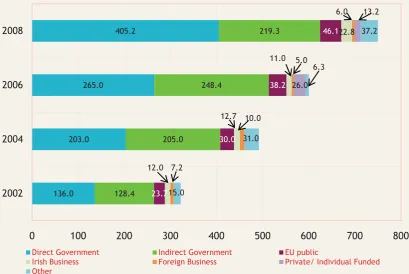
Forfás Expenditure
11
Forfás Board Members
Eoin O’Driscoll Chairman, Forfás Chairman, Southwestern Martin ShanahanChief Executive, Forfás
Simon Barry
Chief Economist ROI, Ulster Bank Capital Markets Bob Brannock President, European Operations, Genworth Financial Timothy Dullea
Former Chief Executive Officer,
Tipperary Co-op
Sean Gorman
Secretary General, Department of Enterprise, Jobs and Innovation
Miriam Magner Flynn
Managing Director, Career Decisions
William O’Brien
Chief Executive, Wm O’Brien Plant Hire Ltd
Barry O’Leary
Chief Executive Officer, IDA Ireland
Paul O’Toole
Director General, FÁS
Frank Ryan
Chief Executive Officer, Enterprise Ireland
Dr Don Thornhill
Business Adviser and Company Director
Michael O’Leary
Jane Williams, Chief Executive, Forfás, retired from the Board of Forfás in June 2010 on completion of her term as Chief Executive.
Martin Shanahan joined the Board of Forfás in June 2010 on his appointment as Chief Executive.
Prof. Frank Gannon, former Director General of Science Foundation Ireland, resigned from the Board of Forfás in December 2010 following his resignation as Director General of Science Foundation Ireland.
Eoin O’Driscoll and Dr Don Thornhill retired from the Forfás Board on a rota basis in December 2010 and were both reappointed in January 2011.
Forfás Audit Committee
William O’Brien (Chairman) Sean Gorman
Eoin O’Driscoll Tim Dullea
Forfás Management Development Committee
Eoin O’Driscoll (Chairman) Dr Don Thornhill
Forfás
Chief Executive
Martin Shanahan Enterprise and Trade Division
Science, Technology Innovation, Education and
Skills Division
Vacant
Declan Hughes
Division Manager
Division Manager Michael O’Leary
Dept. Manager Secretary’s Office, HR, Pensions &
Communications
Adrian Devitt
Dept. Manager, Economic Analysis, Competitiveness, Infrastructure, Tax & Finance
Eoin Gahan
Department Manager Trade, Environment & Survey
Analysis
Marie Bourke
Department Manager Education, Skills & Labour
Market Policy Maria Ginnity Department Manager Enterprise Policy Peter Brabazon Manager Discover Science and
Engineering
Vacant
Note: Martin Craig retired as Department Manager, Finance Department in April 2011
Adrienne Duff
Manager, Irish National Accreditation Board
Department Manager Finance
John Dooley
Department Manager Research & Development Policy
Eamonn Kearney
Dept. Manager, Systems & Cross Agency Facilities
Karen Hynes
Statement of
the Chairman
and Chief
Statement of the Chairman and Chief Executive
The Scale of the National Challenge
While 2010 was a year of almost unprecedented economic difficulties – following on from a similar 2009 – any assessment of economic developments of the past twelve months must consider the progress we have made and the challenges which still confront us.
While the economic outlook remains challenging, it is worth noting some developments which provide a more positive perspective on our situation. After negative growth in GDP for three years, the expectation for 2011 is that Ireland will achieve weak economic growth. This growth will be driven by a combination of continued strong export growth; improving productivity (albeit from a low base); enhanced cost competitiveness; and most importantly of all, by the actions of a dynamic cohort of successful firms with proven track records in competing for, and winning business in global markets. As an open, trading economy, Irish firms, and the Irish economy as a whole, can only benefit from forecast improvements in global growth.
To give ourselves the best possible starting place in the race for sales, exports and
investment, however, we must urgently address the outstanding challenges which face us. These are not new, and over the past two or three years, concerted actions have been taken. More is required. Ireland is faced with significant fiscal challenges as a result of a property bubble, the Irish banking crisis and recession and slow global economic growth.
The underlying General Government deficit, not including the extraordinary amounts to recapitalise the banks, was €18.5 billion in 2010 and an estimated €15.75 billion in 2011. In response, Ireland is resolutely implementing an agreed programme to reduce Government expenditure to bridge the gap between our outgoings and our tax take. The result is that Government investment and expenditure is heavily constrained. Allied to this, consumer confidence remains weak, and as a result consumption has fallen precipitously. Similarly, the investment environment remains weak – firms are reluctant to invest in expensive machinery and equipment at a time of limited resources. Such investment is a necessary precursor to productivity growth.
Unemployment has increased significantly over 2010 and is undoubtedly one of the most significant social and economic challenges facing Ireland. It currently stands at 299,000 people or 14.1% of the labour force. There are three elements required to addressing this issue; the first and most challenging is ensuring that sufficient job opportunities are
Enterprise -The Lifeblood of Recovery
Delivering sustainable economic growth is essential to reducing unemployment and restoring fiscal balance. Sustainable, competitive enterprises will be at the centre of growth.
As the Government aims to bridge the gap between income and expenditure, investment in the enterprise economy must be seen as a necessity not just for enterprise, but critical for the success of the entire economy and society. Growing the enterprise economy is necessary to make our debt manageable and to allow us to achieve societal objectives.
To achieve the growth potential of the enterprise sector, we must build on our strengths, eliminate barriers to growth, encourage and support innovation and relentlessly pursue cost competitiveness and productivity growth in all areas of the economy.
Ireland’s Strengths
Despite the fiscal and banking issues, the exporting element of the Irish economy has proven resilient and provides the basis for getting us back to a sustainable growth path.
Economic growth, driven by property investment and domestic consumption and fuelled by increased levels of personal debt, was unsustainable. The underlying principles of previous success were compromised. As a result we lost competitiveness and investment was deflected away from the productive economy.
We need to focus again on exports and the enterprise economy. Irish exports have increased from €154 billion in 2008 to €1 billion in 2010 and we expect a continued strong
performance in 2011. Net exports have also increased from €21 billion in 2008 to €36 billion in 2010 as imports decrease.
Employment in the firms supported by the enterprise agencies has also levelled off recording a 2.3% drop in 2010, significantly reduced from the declines experienced in the previous two years. It is also notable that most of the job losses were as a result of downsizing rather than closures. The tentative indications for 2011 are that both foreign direct investment in manufacturing, services and R&D and indigenous companies exports are showing signs of recovery. Ireland was, and still is a good place to do business, but we need to sustain the progress made on restoring international competitiveness.
In terms of supporting the development of strong modern enterprise base, there is also cause for optimism. Investment in R&D by firms has held up. Irish firms outperform most European counterparts in innovation performance, both technological and non-technological. Modern and R&D performing sectors have sustained output and export growth through recession and there has been growth in indigenous R&D spend which needs to be sustained. There has also been a marked increase in commercialisation activity from higher education institutions.
Growth Requirements
Exports have the greatest potential to fuel the economy. It is through export trade that we can pay our way in the world. Policies must take consideration of all enterprises as
While we must be open to new ideas and continually promote innovation policies to ensure that Ireland remains competitive, there is little by way of ‘low hanging fruit’. No single policy action alone will make the difference. What is required is the systemic and systematic addressing of issues which have been identified as inhibiting entrepreneurship and business development. To achieve the objective of building a sustainable, competitive enterprise base, a full suite of complementary actions must be implemented.
Enterprise Growth Relies on Competitiveness, Productivity,
Innovation and a Strong Mix of Enterprise
The fundamentals for enterprise development have not changed. Forfás has continuously highlighted that a sustainable competitive enterprise base relies on four interlinked and complementary growth requirements.
The relentless pursuit of cost competitiveness
A whole of government response is needed to ensure a sustainable, structural change to costs of doing business relative to competitor countries. While improving, some of our competitiveness improvements are due to the economic downturn and we now must ensure that we take decisions that deliver enduring competitiveness gains.
Achieving productivity gains
At the national level, productivity can be enhanced through developments and
investments in education and skills, information and communications technologies and physical infrastructures and ensuring open competitive markets. In a time of
constrained resources expenditure in these areas must be targeted at supporting competitiveness gains through enhancing productivity.
Innovation - Central to everything we do
Innovation is how firms differentiate their product and service offerings, develop new ways to reach their customers and markets, improve processes and structures. It enhances competitiveness and drives productivity. Research and development is critical to supporting innovation, but non-R&D innovation is equally important. Developing our understanding of markets is integral to innovation.
Developing a sustainable enterprise mix of competitive sectors and markets
Ireland’s economic success in international markets has been driven primarily by a limited number of sectors and strong trade or intra-firm relationships with a limited number of countries. Building a strong enterprise mix including manufacturing and internationally-trading services business in both new and emerging areas, building on strengths in existing modern and more mature sectors, and developing strong
partnerships internationally, can ensure that Ireland is not overly reliant on limited avenues for future growth and employment. A diverse enterprise profile will provide better protection from external shocks and will further underpin a sustainable model for economic growth.
Enterprise Issues
continued provision of competitive taxation environment; advanced technological infrastructures; and a favourable operating environment. An overview of Forfás’ key enterprise policy recommendations are set out in Making it Happen – Growing Competitive Enterprise for Ireland, Forfás, 2010.
In 2010, Forfás continued to conduct important research and provided policy advice to Government on a range of key enterprise issues including: enterprise policy; SME Credit initiatives; labour costs and targeted activation measures for the unemployed, the role of state-owned assets in enterprise competitiveness and growth, future trade and investment strategy, taxation expenditure to support enterprise, a nanotechnology commercialisation framework, Ireland’s priorities for the eight European Framework Programme for Research and Development; and Ireland’s competitiveness performance and policy challenges. All of these issues were examined from an enterprise perspective.
Forfás – Activities and Resources
While Forfás’ core activity is research and policy advice, it also undertakes a number of other important functions. The Irish National Accreditation Board is a division of Forfás. Forfás operates the Discover Science and Engineering awareness programme on behalf of the Department of Jobs, Enterprise and Innovation (DJEI) and in addition to its own corporate services, Forfás provides shared services to its sister agencies.
2010 was a challenging year but one in which Forfás achieved more with less resources and one in which an already lean organisation continued to innovate and increase productivity through the internal redeployment of resources; the smart use of information and
communications technology; the de-layering of management structures; prioritisation; and cooperation with our sister agencies and other public bodies. Forfás has operated within the Employment Control Framework staffing level provided and Forfás’ headcount has reduced significantly over the past two years. In addition to planned savings, a small number of key management positions have remained unfilled due to the moratorium on recruitment.
Forfás - Performance
The Board and Staff of Forfás are committed to continuing to provide objective, impartial, evidenced-based advice based on rigorous research to the Minister for Jobs, Enterprise and Innovation and wider Government on policies which support enterprise development. The recent past has underlined the requirement for such advice.
Given the nature of Forfás’ core activity and work it is difficult to use quantitative metrics to track performance. The ultimate measure is sustainable enterprise growth. Forfás regularly solicits the feedback of stakeholders across the policy system to provide the organisation with a structured understanding of the views and opinions of its stakeholders and to provide feedback on its performance across a wide range of business aspects and which informs the ongoing development of the organisation’s strategy.
Acknowledgements
Forfás requires the support of many different stakeholders to undertake its work. Forfás works in partnership with our parent department, the Department of Jobs, Enterprise and Innovation, in the development of policy options and we appreciated their support in our work during 2010.
We would like to acknowledge the support of former Minister for Enterprise, Trade and Innovation, Batt O’Keefe and Ministers of State at the Department of Enterprise, Trade and Innovation in 2010, and more recently that of Minister Richard Bruton, T.D. and his colleagues Minister John Perry, T.D. and Minister Sean Sherlock, T.D. at the Department of Jobs,
Enterprise and Innovation (DJEI). We would also like to acknowledge Forfás Board member and Secretary General of DJEI, Sean Gorman.
The nature of Forfás activity requires that we work across many Government departments and agencies as we bring an enterprise perspective to their areas of policy. Forfás is grateful for the level of engagement demonstrated by all departments and their agencies in Forfás’ policy work and that of the councils we support.
Forfás has a formal relationship prescribed in legislation with its sister agencies, Enterprise Ireland, IDA Ireland and Science Foundation Ireland. Beyond this, Forfás and the agencies work extremely closely to ensure that policy is coherent and also that every effort is made to ensure that the use of available resources is maximised through working together. We would like to thank our sister agencies for their support during 2010. Forfás also receives support in its work from FÁS, Shannon Development and Údarás na Gaeltachta.
There is a wider community of stakeholders who also contribute significantly to our work including employer representative groups, trade unions, third level institutions and training bodies.
Forfás manages and supports the work of three advisory councils. We would like to thank the members of those groups, particularly the chairpersons of the Advisory Science Council, Tom McCarthy, the Expert Group on Future Skills Needs, Una Halligan and the National
Competitiveness Council, Dr Don Thornhill.
We would also like to acknowledge the work of the Irish National Accreditation Board in 2010, chaired by Tom O’Neill.
We would like to thank the entrepreneurs and business people who have given of their time freely to engage with us directly or through their representative groups to help us develop policy which supports their endeavours.
We would like to acknowledge the work of Jane Williams who was Chief Executive of Forfás for an interim period up to June 2010. We would like also to acknowledge the Forfás Board, drawn from the public and private sectors, who provided their valuable time and expertise to our work once again in 2010.
Policy
Enterprise 29
Making It Happen – Growing Enterprise for Ireland 30 Trading and Investing in a Smart Economy 32
Enterprise Access to Finance 33
The Role of State-Owned Enterprises 34
Pre-Budget Submission for an Enterprise-led Recovery 35 Review of Tax Expenditures to Support Enterprise 36 Assessing the Impact of a Universal Social Charge 36 Becoming a Global Leader in Silver Technology 37
Supporting the Life Sciences Alliance 38
Making a Case for the Reinstatement of Regional Aid 39 Identifying Opportunities for Improving Business Regulation 39
European Business Test Panel 39
Enhancing Agency Collaboration on Supporting Enterprise 40 Agency Programme Evaluations – A Framework 41
Enterprise Surveys 41
Knowledge & Innovation 49
Prioritising Areas of Focus for Publicly Funded Research 50 Ireland’s Nanotechnology Commercialisation Framework 51
Mapping Research Activity in Ireland 53
Categorising State Expenditure on R&D 54 Evaluation of the STEPS and CEIA programmes 55 Outcomes from the Review of Supports for Exploitation of Intellectual Property
from Higher Education Research 56
Optimisation of Irish Engagement in Seventh European Framework Programme for
Research and Technological Development (FP7) 56 Preliminary Paper on Ireland’s Priorities for the Eighth European Framework
Representing Ireland at the Strategic Forum for International Scientific and
Technological Cooperation 58
Representing Ireland at the European Strategic Forum on Research
Infrastructures 59
R&D and Innovation Surveys 59
Advisory Council for Science, Technology and Innovation 64 Maximising the Environment for Company Research and Development 64 End of Year Statement – Staying the Course 65 Contributing to the National Research Prioritisation Exercise 66
Competitiveness 67
Assessing Ireland’s Labour Cost Competitiveness 68 Addressing Waste Management Competitiveness 68
Improving Energy Competitiveness 69
Prioritising Public Capital Investment Programmes for Enterprise 70 Developing Next Generation Networks for Enterprise 71
Trade and Enterprise Development 72
National Competitiveness Council 74
Benchmarking Ireland’s Performance 2010 74 Ireland’s Competitiveness Challenge 2010 74 Costs of Doing Business in Ireland 77
Pre-Budget Submission 78
People 79
Informing Government on Labour Activation 80 Forfás Guidelines on 2010 Labour Market Activation Fund 81 National Strategy for Higher Education 81
Expert Group on Future Skills Needs 83 Future Skills Needs of Enterprise within the Green Economy in Ireland 84 Future Skills Requirements of the Biopharma - Pharmachem Sector 85 Recognising Prior Learning and its Role in the National Skills Strategy 85 Aligning Education and Training Needs 87 Implementation of EGFSN Recommendations 88 Collaboration with FÁS Skills and Labour Market Research Unit 90
Sustainability 91
Assessment of Progress on the Recommendations of the High Level Group on
Green Enterprise 92
Adaptation to Climate Change: Issues for Business 93 Long-term Energy Policy: The Energy Tetralemma 94 Ongoing Research and Policy Advice to the Department of Jobs, Enterprise and
Innovation Environment Unit 94
Working with the enterprise development agencies and a broad range
of stakeholders, Forfás delivers policy advice that contributes to an
environment conducive to successful enterprises.
We advise on enterprise policy that recognises the critical role of
sustainable, competitive enterprises to Ireland’s economic recovery.
We develop a clear action plan to enhance the business ecosystem so that
all enterprises can invest, grow and thrive in an intensely competitive
global environment.
We highlight new sectoral areas of opportunities for enterprise, informed
by global trends and Ireland’s existing strengths and competences, and
identify sector-specific actions needed to accelerate growth in exports and
employment.
We advise on a strategy for trade, building on Ireland’s existing trade
relations, and identify the actions needed to expand into new and
emerging markets. Forfás partners with State agencies and government
departments to facilitate a coordinated approach to sectoral and
enterprise development.
We contribute to the development of regional policy and highlight the
importance of place, access and quality of life for enterprise investment
and entrepreneurship.
We evaluate enterprise agency programmes in a comprehensive and
Enterprise
Making it Happen – Growing Enterprise for Ireland
During 2010, Forfás undertook a major review of enterprise policy in Ireland and developed a comprehensive, evidence based action plan to support enterprise growth and sustainable jobs in the short to medium term. Making it Happen – Growing Enterprise for Ireland, published in September 2010, sets out the actions needed across a range of policy areas to ensure that the optimum business environment is in place to deliver economic growth and employment opportunities. The analysis was undertaken against the backdrop of global and domestic recession at a time when unemployment had reached over 13 per cent and GNP had fallen by 13.8 per cent over the years 2007 to 2009.
The report drew upon the research and recommendations contained in a range of enterprise related strategies that have been published over recent years, and reviewed them in the context of the current economic context.
What became clear is that the thrust of enterprise policy in Ireland remains the right one, although Ireland needs now to return to export-led growth. Export-led growth is the best route to deliver sustainable economic growth and job creation. Exporting fuels the domestic economy and delivers more sustainable job opportunities than could otherwise be achieved by an economic model dependent on consumption or government expenditure.
Growth in global markets is a key factor and one over which Ireland has no control. However, there are early indications of a return to growth in world markets and Ireland needs to be poised to take advantage of opportunities.
Critical Success Factors
For Ireland as a small open economy, a sustainable competitive enterprise base will rely on four interlinked and complementary critical success factors: innovation, productivity, cost competitiveness and a strong enterprise mix.
These are the fundamental building blocks for Ireland’s future growth and the need to embrace innovation, enhance productivity and reduce costs are relevant to all firms in the economy.
Ireland has a proven track record in a number of markets and sectors and international trade and investment has been relatively resilient during the recession. However, Ireland now needs to build on its existing strengths to exploit other opportunities for growth and job
creation over the coming
years.
Driving Export-led Growth
Supporting an efficient market for locally trading activities
Enterprise Mix Innovation
Costs Productivity
Opportunities for Growth
Making it Happen presents opportunities for a range of sectors under four headings:
1. Building on strengths and convergence
ICT, life sciences, agri-food, international financial services and internationally traded sectors
2. Emerging opportunities and untapped potential
Clean/green technology, creative industries, marine and maritime, education and healthcare services
3. Revitalising mature sectors
Tourism and hospitality, retail and wholesale, transport, logistics and distribution, and construction
4. Locally trading activities
Examples include professional services, business services, and personal and lifestyle services
Recommendations
The report sets out the policy actions needed to support all enterprises: exporting firms, firms with export potential and locally trading firms. It takes a whole of enterprise approach. The recommendations are categorised according to the critical success factors, although each recommendation will have an impact on more than one factor. The recommendations aim to:
Deliver on enhanced national productivity by:
Ensuring that Ireland’s education system produces high quality, enterprise aware graduates and stimulates creativity and innovative thinking through its curricula design and learning processes.
Allocating funding to enhance management development and leadership skills, in-employment training (focused initially on the low-skilled), and stimulating increased productivity in the work place through lean, six sigma and transformational change programmes.
Ensuring availability of and access to next generation broadband, and maintaining and coordinating targeted investments in physical infrastructures to meet the needs of enterprise.
Stimulate increased innovation by:
Prioritising public investment in research to meet the needs of current and future enterprise, and continuing to build a supportive Intellectual Property framework that facilitates commercialisation.
Utilising public procurement to stimulate innovation and implementing flagship public sector procurement initiatives.
Deliver a structural change in Ireland’s relative cost competiveness by:
Focusing on areas of importance to business including regulation, waste, local authority charges and commercial rates.
Developing a national policy to increase labour market flexibility to restore labour cost competitiveness and incentivise work and recruitment.
Develop Ireland’s enterprise mix by ensuring a coherent approach is taken to sectoral development and to targeting new market opportunities. Recommendations include:
Developing international trading relationships;
Fostering networks and alliances;
Enhancing relevant international marketing skills within firms; and
Undertaking programme evaluations in a systematic way to measure their appropriateness, effectiveness and efficiency in delivering on policy objectives.
Implementation
Since the publication of Making it Happen – Growing Enterprise For Ireland a numberof its recommendations have been reflected in the National Recovery Plan 2011-2014 and the new Programme for Government.
Providing independent and rigorous research, advice and support to Government.
Forfás Chief Executive Martin Shanahan briefs Richard Bruton, TD, Minister for Jobs, Enterprise and
Innovation at a meeting in April 2011.
Trading and Investing in a Smart Economy
analysis and data support in terms of merchandise and services statistics, extensive research papers on a number of countries in high growth and emerging economies highlighting many of the opportunities for Ireland and also participated in the High Level Group as a key member. The strategy recognised that the global environment for trading and investing is changing. To maintain our position as an export-orientated small open economy every point of contact with a country needs to be maximised in terms of trade, tourism, FDI, education and culture, and research and development. Deeply embedded in this strategy is the concept of economic partnership programmes of action in the complementary fields of trade, tourism, investment, education, R&D, and cultural links between two countries to the economic benefit of both. Development of economic partnerships is a key priority for Forfás in 2011 with an initial focus on high growth and emerging economies. Forfás continues to work with and support DETI in relation to multilateral and bilateral trade issues.
Enterprise Access to Finance
Forfás provided advice to the Department of Enterprise, Trade and Innovation (DETI) and other Government Departments on the issue of enterprise access to credit.
Loan Guarantee Scheme
Internationally, loan guarantees schemes have become an increasingly prevalent public policy instrument to support credit flow to business – particularly in dealing with the current
financial crisis. Ireland is one of a very small number of EU and OECD member states not to have a loan guarantee scheme. DETI requested the examination of a loan guarantee scheme to determine whether it could address the difficulties of certain commercially viable businesses in accessing credit.
Forfás has recommended the introduction of a carefully targeted loan guarantee scheme on the basis that it would deliver positive returns for the economy and address the competitive disadvantage being experienced by Irish SME’s. Under such an initiative, a loan guarantee would be provided by the State as guarantor to the lender, under strict criteria to target the identified market failure, thereby facilitating the outflow of additional credit from the banks to the targeted commercially viable SMEs. Research of schemes in other countries has been utilised to recommend a scheme that minimises risk exposure for the Sate while maximising the economic benefits. Forfás worked closely with DETI, Enterprise Ireland and other key stakeholders in considering the potential of a loan guarantee in an Irish context.
The Programme for Government commits to introducing a “temporary, partial credit
The Role of State-Owned Enterprises
State-owned enterprises play an important part in the Irish economy, employing over 41,000 people directly and representing 5.8 per cent of GDP. The majority of state-owned
enterprises are engaged in the provision of essential infrastructure and related services which are vital to the competitiveness of the economy, including energy, transport and
telecommunications.
Forfás presents at Public Affairs Ireland conference
Adrian Devitt, Manager of the Economic Analysis, Competitiveness, Infrastructure, and Tax and Finance Department in Forfás presenting at the Public Affairs Ireland conference “A national policy for State-owned enterprises?” in November 2010.
The Forfás report, The Role of State-owned Enterprises, published in July 2010, assesses the factors required to ensure that state-owned enterprises (SOEs) are providing high-quality, competitively priced infrastructure and services to Irish enterprise and are maximising their broader contribution to supporting economic recovery and opportunities for enterprise and innovation. These include:
Developing a national policy on the role of enterprises. An ownership policy should be put in place that defines the overall objectives of state ownership and the corporate governance of SOEs. The state as a shareholder should have a strategic approach to SOEs rather than approaching issues on a case by case basis.
Evaluating the mission and goals of state-owned enterprises. In the absence of regular reviews, there are risks that SOEs can drift from their founding goals or that individual SOE goals may not reflect current national economic development needs. Particular attention is required for SOEs engaging in diversification strategies, SOEs buying emerging private sector competitors or SOEs who are increasingly offering similar products and services as markets converge.
Implementing clearer governance structures. State-owned enterprises are often required to pursue multiple and sometimes conflicting objectives e.g. to provide loss-making public services while operating commercially. International evidence suggests that establishing a single, competently resourced unit, dedicated to SOE supervision could improve the State’s ability to exercise ownership efficiently and monitor companies under its ownership. Additionally, separating policy, regulatory and shareholder functions would ensure greater transparency and more conscious decision making where conflicts exist.
Implementing stronger corporate governance frameworks. This includes developing clearer mandates and improving monitoring by shareholders. From an enterprise development perspective, additional non-financial indicators that measure the quality and costs of services provided to enterprise relative to trading partners and
competitors are important.
Developing contestability in markets. SOEs should not enjoy a competitive advantage simply because of their State ownership. It is also necessary to provide greater
transparency on subsidies provided and the costs of meeting public policy goals. Forfás met with the Review Group on State Assets and Liabilities which was established by the Minister for Finance. The Review Group will be reporting to Government in 2011.
Pre-Budget Submission for an Enterprise-led Recovery
The Forfás Pre-Budget Submission 2011 provided advice on the potential implications of a range of proposed tax changes on enterprise. Recommendations were developed following consultation with the enterprise development agencies IDA Ireland, Enterprise Ireland and SFI, and external industry representative bodies.
The focus of these recommendations was to:
Maintain a competitive ecosystem where enterprise can prosper and create employment.
Ensure an enterprise-led recovery is not threatened.
Continue to invest for the future and build the knowledge economy.
Forfás set out a number of principles to guide the approach to Budget 2011 including:
Ensuring that proposals to increase taxation should follow the hierarchy of taxes least harmful to economic growth, cognisant of the need to achieve €3 billion of fiscal adjustment in Budget 2011.
Any additional taxes should be in the context of broadening the tax base.
Increasing further the tax burden on businesses would increase the risk of delaying economic recovery.
Recommendations put forward by Forfás were aimed at driving export growth, removing barriers to market development, promoting sustainable development and innovation as well as minimising potential negative impacts to enterprise of policy changes mooted for inclusion in Budget 2011.
Budget 2011 was published in December 2010. Forfás welcomes the inclusion of a number of the principles proposed in the Forfás Pre-Budget Submission to minimise the impact on enterprise of the introduction of a universal social charge as well as the continued expansion of the Double Taxation Agreements (DTAs). The proposed revamp and renaming of the Business Expansion Scheme (BES) to the Employment and Investment Incentive once the necessary approval from the European Commission has been received is to be welcomed in terms of its removal of barriers to market development. Particularly, the increased limit that can be raised by companies to €10 million and the amount that can be raised in any twelve-month period to €2.5 million is to be welcomed along with the reduction in administrative burden through the simplification of the certification requirements.
Review of Tax Expenditures to Support Enterprise
Some tax expenditures (incentives) are designed to support enterprise. There is an ongoing process of reviewing the tax expenditures in the Irish taxation system. In consultation with the development agencies, Forfás undertook an objective assessment of the costs and benefits of a number of the enterprise related tax expenditure recommendations from the Commission on Taxation report. The assessment was submitted to the Department of Finance to assist their review of tax expenditures for Budget 2011. This work will be ongoing, as the National Recovery Plan 2011-2014 highlights that tax expenditures will continue to be progressively reviewed and removed from the Irish tax system.
Assessing the Impact of a Universal Social Charge
In November 2010 Forfás published research undertaken to understand the impact of the proposed universal social contribution rate on Irish businesses. The study established a set of indicative rates at which the proposed social contribution could be introduced and assessed the impact of these potential rates on four key enterprise policy areas: the incentive to work; the incentive to take up self-employment and improve the entrepreneurial environment; labour cost competitiveness; and maintaining and attracting key skills. The indicative rates were established under a revenue neutral scenario and did not allow for revenue raising. Details of the universal social charge (USC) were published with Budget 2011 and introduced in January. Forfás welcomes the introduction of a USC from the perspective of simplifying a cumbersome combination of social insurance systems and levies. However, the fact that PRSI was not amalgamated into the charge weakened this simplification.
Becoming a Global Leader in Silver Technology
Globally both at government and institutional level there is an increasing prioritisation of the challenges and opportunities posed by ageing populations. Demographic change and
population ageing is one of the key trends influencing developments in technology and public and private investment decisions. Countries are recognising its importance and potential, but no country has yet established clear leadership in this field. “Silver technology” is a growing sector of importance in terms of addressing this global challenge and providing many
opportunities for enterprise development. The term silver technologies has been adopted to encapsulate the broad range of technologies and services in ICT, medical devices,
pharmaceuticals and bio-pharma that can positively influence the ageing experience of older people and that enable older people to remain active in society as well as staying socially connected and independent for longer.
Ireland is well positioned to take advantage and become a global leader in this emerging sector and has many of the essential building blocks. In addition to our favourable tax regime, skilled workforce and position as a gateway to Europe which has served Ireland well in terms of attracting FDI, Ireland has many distinct advantages that are particularly relevant to the growth of the silver technology sector in Ireland including:
A strong industry base with the involvement of key players both from multinational and indigenous firms with significant expertise in ICT and software development, medical devices and pharmaceuticals.
High quality and world-class relevant research with a particular focus on technology solutions and applications for the ageing population.
Strong clinician research activity in hospitals in Ireland.
An engaged voluntary community in terms of representative and advocacy organisations representing older people and a willingness by the population to be involved in trials. In 2010 Forfás has worked closely with the development agencies, the Department of Enterprise, Trade and Innovation and the wider policy community to ensure that emphasis is given to this sector within the policy community. Silver technology has been identified as one of the ten key sectors in the Strategy on Trade, Tourism and Investment - Trading in a Smart Economy, and was also recognised in the four year national recovery plan.
The realisation of this opportunity for Ireland is based around a three pillar approach of:
The development of both multinational companies and indigenous firms into clusters;
The development of an internationally recognised test-bed for new and innovative solutions for an ageing population; and
Development of enhanced public purchasing and integrated administration in terms of improving healthcare delivery and stimulation of innovation.
These pillars are interrelated and not exclusive of each other and in fact progressing any action will strengthen the outcomes of the others.
Forfás continues to be a member of the Ageing Well Network and chairs the Silver Technology Working Group which is under the auspice of the Ageing Well Network.
Supporting the Life Sciences Alliance
Forfás provided support to the Life Sciences Alliance that was established in January 2010. The Alliance brings together high level representatives from industry, the Department of Enterprise, Trade and Innovation, the enterprise development agencies, the healthcare system as well as the research and academic community. It is chaired by Dr Paul Duffy, Vice President of Manufacturing, Pfizer Ireland and Singapore.
The overall objectives of the Alliance are to:
Increase coordination and collaboration across life sciences stakeholders so that existing resources are used to best effect and focused on an agreed agenda for action; and
Drive/influence implementation of the recommendations set out in the Forfás report
Health Life Sciences in Ireland – An Enterprise Outlook published in November 2009. There are some recommendations that are within the direct remit of the Alliance member organisations to deliver. Many require the Alliance to influence others by clearly articulating the enterprise perspective and needs.
Progress 2010
The Alliance’s members have contributed to the considerable progress to date in this area:
Science Foundation Ireland (SFI) and the Health Research Board (HRB) launched a co-funded Translational Research Award Programme in 2010. Awards were granted to four of the 53 eligible proposals submitted under the 2010 call. The standard of proposals overall was very high and the Alliance will facilitate an industry showcase of a number of selected proposals from the 2010 call along with those deemed suitable in the 2011 call, once the latter is completed. These activities will enable the Alliance to fully leverage the potential of this initiative.
The Convergence Network3 was re-established as a result of the Alliance and plans to host the first of six events in May which will focus on combination products – an area of direct relevance to life sciences. The Molecular Medicine Ireland (MMI) partners, NUI Galway, TCD, UCC, UCD and RCSI, have established the Irish Clinical Research Infrastructure Working Group to accelerate convergence among the academic community.
Considerable progress has been made in developing relevant skills programmes. These include the launch of the BioInnovate Ireland Fellowship Programme which was launched in NUI Galway in November 2010; the introduction of structured PhD programmes in Biomedical Engineering and Regenerative Medicine (NUIG), and in clinical and translational research (coordinated by MMI4); and the mainstreaming of a PhD curriculum for clinician scientists by MMI in its five partner institutions.
3 The group is an extension of the group that organised the “Meeting of Minds” convergence conference in June 2008. It is chaired by Sharon Higgins from IBEC who is also a member of the Alliance
Collaboration on events has increased considerably over the past year through events such as the SFI/PharmaChemical Ireland and SFI/Irish Medical Device Association (IMDA)
research showcases, the HRB/IMDA clinical research event and the life sciences summit in November co-organised by SFI, IDA Ireland and Enterprise Ireland with Business & Finance magazine as the media partner.
Making a Case for the Reinstatement of Regional Aid
Regional Aid Guidelines inform the limits of grant aid which the enterprise development agencies can provide to firms to support investment and new employment. The limits are based on the EU’s objective to direct state aid to the most disadvantaged areas within the EU 27 member states.
Forfás led a cross agency submission to the Department of Enterprise, Trade and Innovation which was used by them in response to the midterm review of the EU’s Regional Aid
Guidelines 2007-2013 undertaken by the EU Commission. The submission sought the
reinstatement of regional aid for large investment projects in the Midwest region which had been lost at the end of 2008. It presented a robust and substantiated basis for reinstatement, based on a solid understanding of state aid objectives, changing economic circumstances and relevant data. The submission was approved by the Commission in July 2010. This decision was welcomed by the enterprise development agencies and by the Mid-West Task Force in the context of the relatively high unemployment in the region.
Identifying Opportunities for Improving Business Regulation
During 2010 Forfás was a member of the High Level Group on Business Regulation, which is chaired by the Secretary-General of the Department of Enterprise, Trade and Innovation (DETI), and brings together government departments and business organisations in order to identify opportunities for an improved regulatory environment for business through the reduction of administrative burdens and “red tape”. The Government, as in other EU states, has adopted a target of a 25 per cent reduction in administrative burdens on business by 2012, and the target has now been shifted to 2011 as part of the four year national recovery plan. This work is being led by DETI, and in support Forfás also hosted seminars with officials from DETI, its agencies, and with businesses on ways to simplify regulation to achieve the 25 per cent reduction target in selected areas of legislation for which DETI is responsible.
European Business Test Panel
The consultations held in 2010 were:
Simplification and modernisation of accounting rules (4th Company Law Directive);
Commercial disputes and cross border debt recovery
Review of EU minimum rules on organisation of working time (Working Time Directive)
Moving staff within the European Union and associated social security coordination issues
A legislative instrument in European contract law
Reports and statistics on each of the consultations are available on the EBTP consultation 2010 website5.
Enhancing Agency Collaboration on Supporting Enterprise
The development agencies6 play a key role in stimulating entrepreneurship and the development of new businesses, facilitating the expansion of existing companies, and targeting FDI through a broad range of initiatives. In 2010, Forfás continued to support the Department of Enterprise Trade and Innovation in identifying ways to optimise the collective resources, capabilities and knowledge of the agencies in a more strategic way to the benefit of their client companies.
Progress was made in a number of areas, detailed below:
Procedures to manage transfer of client companies from the portfolio of one agency to another have been revised resulting in a more proactive approach and a
significantly reduced timeframe.
Mechanisms to facilitate newly acquired foreign companies, which were previously indigenous, to access relevant Enterprise Ireland supports (e.g. involvement in trade missions, marketing and leadership skills programmes) were explored. A framework was developed between IDA Ireland and Enterprise Ireland that is now being piloted with a number of companies.
A cross agency information sharing team has been established to drive a systematic approach to collating, updating, sharing and disseminating information that is relevant to all agencies. A ‘do once, disseminate widely - across all agencies’ approach is being taken.
Strategy for Science, Technology and Innovation (SSTI) implementation bodies have adopted a joint approach to deal with cross-cutting initiatives and avoid duplication. A proactive cross agency approach has also been taken to generate company
involvement in competence centres.
5 http://ec.europa.eu/yourvoice/ebtp/consultations/2010/index_en.htm
Sectoral development was identified as a key area where agency activities could be enhanced by developing a coordinated approach and this will be progressed during 2011.
Agency Programme Evaluations – A Framework
Making it Happen – Growing Enterprise For Ireland called for the development and implementation of a framework that would inform a systematic approach to undertaking evaluations of enterprise development agency programmes. A systematic approach to evaluations would provide an assessment of the appropriateness, efficiency and effectiveness of the intervention under consideration before, during or after implementation. Ultimately, a comprehensive approach to evaluations should inform the optimum use of resources in a constrained environment to deliver on enterprise policy objectives.
The development of the framework commenced in 2010 and was completed by the end of March 2011. Taking into account international best practice, the framework has been structured to deal with the specific context of enterprise support programmes in Ireland. It provides a common basis for evaluations undertaken across programmes provided by
Enterprise Ireland, IDA Ireland, Science Foundation Ireland and the county enterprise boards. It allows for maximum coherence and comparability across evaluations, a robust basis for resource allocations, and a regular systemised approach to their undertaking.
Guided by the framework, Forfás will undertake a range of agency programme evaluations over the next 12 to 18 months. Forfás will also work with the agencies to embed the undertaking of evaluations to international standards as part of their work practices.
Enterprise Surveys
Annual Business Survey of Economic Impact 2009
The Annual Business Survey of Economic Impact (ABSEI) is a survey of the client base of Enterprise Ireland, IDA Ireland, Shannon Development and Údarás na Gaeltachta and tracks indicators of their performance and contribution to the Irish economy. The population comprises all manufacturing and internationally traded services client firms in Ireland with ten or more employees (approximately 4,000 enterprises). The response rate for this survey was approximately 60 per cent.
Figure 1. Contribution of Irish-Owned Agency-Assisted Companies in the Irish Economy, 2000 – 2009 (€)
Source: Annual Business Survey of Economic Impact 2009
Figure 2. Contribution of Foreign-Owned Agency-Assisted Companies in the Irish Economy, 2000 – 2009 (€)
Source: Annual Business Survey of Economic Impact 2009
Corporation Tax Payments
In addition to their expenditure in the economy, manufacturing and internationally traded and financial services companies provide a significant direct return to the Exchequer by way of corporation tax payments. The total corporation tax yield from all sources in 2009 was €3.9 billion, down from €5.1 billion in 2008. It is estimated that agency-assisted firms in the manufacturing and internationally traded services sectors accounted for €1.98bn, with an additional €642m from internationally traded financial services firms, amounting to €2.62bn (67 per cent) of the €3.9bn total corporation tax paid in the economy.
Detailed results of the ABSEI 2009 are available on the Forfás website.
Annual Employment Survey 2010
The Annual Employment Survey is an annual census of employment in all primary production, manufacturing and services companies supported by the enterprise development agencies, IDA Ireland, Enterprise Ireland, Shannon Development and Údarás na Gaeltachta. In response, firms give their count or best estimate of permanent full-time employees and part-time and other employees as of 31 October in the survey year. The survey has been carried out each year since 1973. Forfás, in line with its mandate to co-ordinate the activities of Enterprise Ireland and IDA Ireland, continues to carry out the survey with the co-operation of Enterprise Ireland and IDA Ireland regional staff. Shannon Development and Údarás na Gaeltachta carry out the survey for companies falling within their remit and provide the results for inclusion in the Forfás database.
and one eighth were clients of Shannon Development or Údarás na Gaeltachta. Results from the survey are, and have been, important to the enterprise development agencies, as they help to establish the level of net job creation in each of the sectors in which its clients are involved, and to make overall comparisons between those changes in employment levels and changes in employment by sector across the wider economy.
In 2010, total permanent full-time employment in agency assisted companies operating in all sectors amounted to 275,693. This is a decrease of 6,521 jobs (2.3 percent) on employment levels in 2009. However, part-time employment increased by almost 11 per cent between 2009 and 2010. Total full-time employment among Irish-owned companies amounted to 136,385 in 2010, down from 141,274 in 2009, a fall of 4,889. Irish owned company employment is currently 17,484 jobs or 11.4 percent lower than it was in 2001. Among foreign-owned companies, total full-time employment amounted to 139,308 in 2010, down slightly from 140,940 (a decrease of just 1.2 percent on the previous year). These job losses, combined with the 13,960 employment decrease in 2009, result in employment among foreign-owned companies being 14.4 percent (23,380 jobs) lower than 2001 employment levels.
In addition to permanent full-time employment, there were a further 34,345 jobs of a temporary or part-time nature recorded in agency assisted companies in 2010, of which 19,025 are found in Irish firms, and the remaining 15,320 in foreign-owned firms. The temporary/part-time employment level for 2010 is up 3,363 on 2009 levels (10.9 percent). Among Irish-owned companies, there was an increase in temporary and part-time employment of 1,466 (8.3 percent) in 2010. Employment of a temporary or part-time nature among
foreign-owned companies increased by 1,897 jobs (14.1 percent) on the previous year. This represents a decrease of 2,587 (14.4 percent) over the period 2007 to 2010. These trends indicate that companies are beginning to employ people on a part-time basis rather than on full-time hours.
Taking the two categories of employment together (permanent/full-time and
temporary/part-time), there are now 310,038 people employed in agency assisted companies, compared to 349,371 in 2001. Irish-owned companies increased the number of part-time employees in 2010 by 8.3 percent, suggesting that posts previously occupied on a full-time basis are continuing to be filled, but on a part-time basis. Foreign-owned companies increased this type of employment by 14.1 percent in 2010.
While there were employment losses due to plant closures in 2010, the majority of job losses (74.4 percent) are generated by companies that are continuing to trade but are reducing their staff numbers.
Figure 3. Job Gains, Losses & Net Change in Permanent Full-time Employment in All Agency Assisted Companies, 2001 – 2010
Source: Annual Employment Survey 2010
Figure 4. Sectoral Trends in Permanent Full-time Employment within Irish-owned Agency-Assisted Companies, 2001 – 2010
Source: Annual Employment Survey 2010
The decline in agency-assisted Manufacturing employment is apparent in the above graph, with a loss of 29,841 jobs (26 percent) since 2001. With the exception of the Food sector - which accounts for over one-third of Manufacturing employment - and the Medical Devices sector, all Manufacturing sub-sectors recorded falls in employment in 2010, with an overall annual reduction of 3,164 jobs (3.6 percent).
2001 2002 2003 2004 2005 2006 2007 2008 2009 2010
AllSectors 153,869 151,128 149,133 147,534 149,708 160,037 164,911 159,676 141,274 136,385
Construction, Utilities& Primary Production
7,376 7,549 8,383 8,629 9,541 10,429 11,437 11,150 9,398 8,458
Manufacturing 114,767 111,351 108,903 105,999 106,013 110,737 110,253 102,402 88,090 84,926
Business, Financial&Other
Services 13,704 15,256 16,028 17,244 18,433 21,957 24,503 26,917 25,686 24,599 Information,
Communication &Computer
With respect to services, there has been steady growth in the numbers employed in the Business, Financial and Other Services sector grouping in the last ten years; employment levels are just under 80 percent higher in 2010 than they were in 2001. In 2010, employment in this broad sector fell by 1,087 (4.2 percent). Employment in the Information,
Communications and Computer Services rose gradually between 2002 and 2008, before falling off during 2009 and 2010. Irish firms in this sector grouping employ 18,402 full-time
[image:48.595.93.514.346.544.2]employees; 302 (1.7 percent) higher than in 2009, and 380 (2.1 percent) higher than in 2001. As a share of total Irish-owned company employment, manufacturing has fallen from 114,767 in 2001(74 percent of total employment) to just under 85,000 in 2010 (62 percent of total employment). Alongside an 80 percent absolute increase in employment between 2001 and 2010, Business, Financial and Other Services has seen its share double from 9 to 18 percent over the same period. The Construction, Utilities and Primary Production and Information, Communications and Computer Services sector groupings each saw small increases in shares of total employment between 2001 and 2010 (see Figure 5).
Figure 5. Sectoral Proportions in Permanent Full-Time Employment within Irish-owned Agency-Assisted Companies, 2001 and 2010
Source: Annual Employment Survey 2010
Figure 6 depicts the proportion of agency-assisted employment for each sector in the economy in 2001 and in 2010. Construction, Utilities and Primary Production employment shares are not shown above due to their negligible proportions. Notable are the reduced share of Manufacturing and the increases in the services sectors. Business, Financial and Other Services have increased their proportion of employment from 5 to 11 percent.
5% 74% 9% 12%
2001
Construction, Utilities and Primary Production Manufacturing Business, Financial and Other Services Information, Communicatio n and Computer Services 6% 62% 18% 14%2010
Construction, Utilities andFigure 6. Sectoral Proportions in Permanent Full-time Employment within Foreign-owned Agency-Assisted Companies, 2001 and 2010
Source: Annual Employment Survey 2010
67%
5%
28%
2001
Manufacturing
Business, Financial and Other Services
Information, Communication and Computer Services
58%
11%
31%
2010
Manufacturing
Business, Financial and Other Services