
This is the author's final version of the work, as accepted for publication following peer review but without the publisher's layout or pagination.
Roberts, G. and Anderson, M. (2014) Task structure complexity and goal neglect in typically developing children. Journal of Experimental Child Psychology, 120 . pp. 59-72.
http://researchrepository.murdoch.edu.au/20448
Copyright © Elsvier
It is posted here for your personal use. No further distribution is permitted.
Task Structure Complexity and Goal Neglect in Typically Developing Children
Gareth Roberts and Mike Anderson
Neurocognitive Development Unit, School of Psychology
University of Western Australia
Word Count: 9093
Author Note
Gareth Roberts, Neurocognitive Development Unit, School of Psychology, University of
Western Australia; Mike Anderson, Neurocognitive Development Unit, School of Psychology,
University of Western Australia.
Gareth Roberts is now at the School of Psychology and Exercise Science, Murdoch
University.
Mike Anderson is now at the School of Psychology and Exercise Science, Murdoch
University.
The research was supported by an Australian Postgraduate Award from the Australian
Government and conducted as part of the primary author’s doctoral dissertation. Special thanks
to Kaitrin McNamara, Alex Nicol, Catherine Campbell, and Corinne Reid for assistance in
participant recruitment and data collection.
Correspondence concerning this article should be addressed to Gareth Roberts, School of
Abstract
Goal neglect is a failure to enact task requirements despite being able to accurately report them.
In this study, we introduce a new child-appropriate experimental paradigm to measure goal
neglect in children between the ages of 7 and 11, and test the hypothesis that the complexity of
an action plan, not real-time trial demands, increases goal neglect. Sixty-six children (Mage =
9.50) were administered a Feature Matching task. Half were given four rules for matching, and
half three rules. After practice, the four-rule group was told to ignore the additional rule, and
both groups completed an identical three-rule task. The results showed that the extra rule
increased goal neglect and its correlation with fluid intelligence. While intermittent trial errors
were correlated with fluid intelligence for both groups, only in the four-rule group were
systematic rule failures (i.e., goal neglect) correlated with fluid intelligence. Task performance
improved with chronological age, however when controlling for the influence of fluid
intelligence, the relationship between age and task performance was effectively removed. This
suggests a child’s current level of fluid intelligence (and not age) determines task performance.
We suggest that the relationship between goal neglect, complex task instructions, and fluid
intelligence is linked to the mental preparation for future events; i.e., mentally compiling verbal
instructions into a set of activated goal representations in working memory that represent what is
to be done and under what circumstances.
Keywords: Executive Function; Fluid intelligence; Goal Neglect; Task Complexity; Task
Task Structure Complexity and Goal Neglect in Typically Developing Children
Goals are "an intention to accomplish a task, achieve some specific state of the world or
take some mental or physical action" (Altmann & Trafton, 2002, p. 39). Goals are central to the
construct of executive functioning, which in turn is related to the construct of fluid intelligence
(Friedman et al., 2006). Accordingly, many researchers directly or indirectly conceptualize the
term executive function as a process of goal activation (Altmann & Trafton, 2002; Duncan,
Emslie, Williams, Johnson, & Freer, 1996; Nieuwenhuis, Broerse, Nielen, & De Jong, 2004). In
this context, executive functioning can be thought of as goal-directed processes that exert control
over thought and behavior in novel and complex situations (Jurado & Rosselli, 2007). When
goals are not brought to sufficient awareness, we can suffer from a lapse in intention, whereby
nothing is attempted in behavior; despite verbal knowledge than an action is required (Duncan et
al., 1996). This abulic dissociation, termed goal neglect, is similar to that seen in patients with
damage to the frontal lobes.
Anecdotal and historical accounts of behavior after damage to the frontal lobes (Bianchi,
1922; Luria, 1966) suggest major defects in planning, coordinating or controlling a sequence of
action. Behavior will often manifest as disorganized and fragmentary, with sequences of action
left incomplete and purposeless actions introduced (Duncan, 1986). Intriguingly the same
chaotic behavior can be seen in people with intact frontal functioning when they are faced with
novel tasks of high complexity (Duncan et al., 2008). The best predictors of this type of
behavior are tests of fluid intelligence, such as Raven’s Matrices or the Cattell Culture Fair test
of g. These tests provide an excellent measure of Spearman's g, or general intelligence (Carroll,
1993). Spearman's g derives from the finding that diverse tests of cognitive ability correlate with
some general factor (g) underlies individual differences in intelligence. Subject to vigorous
study for over a century, g is a well-established predictor of social, educational, neurocognitive
and biological factors (Jensen, 1998).
Adult research regarding goal neglect has typically been conducted using two main
experimental paradigms: the Letter Monitoring Task (Duncan et al., 1996) and the Feature Match
Task (Duncan et al., 2008). These two experimental paradigms share several important
characteristics that make them ideal for eliciting and measuring goal neglect. First, the tasks
provide minimal performance feedback to participants. Once the experimental trials have
started, participants are not provided with any information regarding their task performance by
the experimenter or through the experimental paradigm. Second, the association between task
stimuli and the corresponding action requirement is not explicitly stated by the task stimuli, nor
is it obvious or intuitive in anyway. That is, the task requirements are ambiguous and hence
participants must rely on internal representations to correctly guide behavior. Finally, the
collection of task requirements and overall task structure must be novel. Novelty appears to be a
key characteristic for both frontal patients and normal individuals in eliciting goal neglect
(Duncan et al., 1996), with well-practiced habits and “crystallized” intelligence measures
showing resilience against brain damage (Duncan, Burgess, & Emslie, 1995).
Children provide an excellent opportunity to investigate goal neglect due to the changes
in executive function (Brydges, Reid, Fox, & Anderson, 2012) and fluid intelligence (Anderson,
1992) that occur throughout the childhood years. These changes are thought to be due to the
development of the prefrontal cortex (PFC). Over childhood, the PFC undergoes substantial
development (Casey, Giedd, & Thomas, 2000; Giedd & Rapoport, 2010; Giedd et al., 1999;
between the ages of 7 to 11 years (McArdle, Ferrer-Caja, Hamagami, & Woodcock, 2002). For
example, between the ages of 7 and 11, children show an increased ability to hold information in
mind and manipulate it (Diamond, 2002), which is a hallmark feature of goal-directed behavior
and generally referred to as working memory (Baddeley, Sala, Robbins, & Baddeley, 1996). In a
standard memory item of the Weschler Intelligence Scales, the forward digit span task,
participants are asked to remember and recall a series of digits in the order in which they are
heard. Children show an improvement of 1.5 digits at the task from ages 7 to 13. However,
when children are required to recall the digits in the opposite order that they were presented,
which requires manipulation of the temporarily stored information, there is an improvement of 3
additionally recollected digits (Diamond, 2002).
From this perspective, typically developing children can be considered frontally
compromised compared to adults, and because of this they may provide important insights into
goal-directed behavior that is dependent upon the PFC. As frequently pointed out by Luria
(1966), young children often neglect task demands in situations that contain multiple rules,
induce conflict between internal and external representations, or require the planning and
execution of a multi-step behavioral sequence. A developmental paradigm frequently used to
investigate these dissociations between knowledge and action is the Dimensional Card Change
Sort task (DCCS) (Zelazo, Frye, & Rapus, 1996). In this paradigm, children aged between 3 and
5 are presented with bivalent stimulus cards and asked to sort the cards into piles based on the
color or object identity of the stimulus on each card. While children initially perform
appropriately by sorting the cards according to the experimenter’s instructions, when the
instructions change and they are required to view the same stimuli in a new way, children
responses rather than the experimenter’s new instructions. It is important to note that this effect
is observed regardless of whether they were initially required to sort by color or shape. While
the majority of 3-year old children fail to sort cards the post-switch cards correctly, by 5-years of
age children show little difficulty in switching their sorting methods according to the change in
task rules (Zelazo et al., 1996).
The DCCS has led to the development of theoretical models of cognitive development to
explain this age-related change (Zelazo, 2004; Zelazo et al., 1996). The Cognitive Complexity
and Control (CCC) model proposes that 3-year olds explicitly know both the pre-switch rules
and the post-switch rules but without a higher order rule tying the two rule pairs together, they
are unable to make a decision about which rule to use and thus persist in using the rule that is
most strongly associated with the task (Zelazo et al., 1996). The CCC model posits that as
children develop, they acquire the ability to embed the rule sets into a hierarchical structure. A
theoretical extension by Zelazo (2004) argues that higher Levels of Consciousness (LOC) are
essential in incorporating the two rule pairs into a single higher-order rule. Higher LOC are
thought to develop with age and reflect increased re-entrant processing due to neural
development of PFC. This increased “reflective consciousness” allows the contents of
consciousness at one level to be considered in relation to other contents at the same level, which
results in a more complex conscious experience and the ability to undertake more complex
thought and action. Applying this model to age-related performance changes on the DCCS task,
3-year old children are thought to represent both the pre and post-switch rules at the same LOC.
However, without reflection on the two rule pairs at a higher level of LOC, they are unable to
One of the first studies to specifically investigate goal neglect in children (Towse, Lewis,
& Knowles, 2007) administered the DCCS, an inhibitory control task, and a child-appropriate
version of the Letter Monitoring Task (Duncan et al., 1996) to a group of preschool children. To
adjust the Letter Monitoring Task for use with young children, the rate of stimulus presentation
was slowed down, the number of stimuli was reduced, and the task was made more motivating
for young children through an engaging story and appropriate task stimuli (i.e., naming types of
food to help a hungry bear, as opposed to arbitrarily naming letters). While these modifications
made the task appropriate for testing young children, importantly they also preserved crucial
features of the original adult task (i.e., minimal performance feedback, ambiguity, and novelty).
Using the new task, Towse et al. (2007), investigated whether performance in the other two
cognitive measures (DCCS and inhibitory task) predicted goal neglect to different rules of the
Letter Monitoring Task. Using correlational analyses, the authors showed differential
contributions from the two other cognitive measures on goal neglect on the child Letter
Monitoring Task, but interestingly only the DCCS predicted performance on the component of
the adult Letter Monitoring Task that is neglected by adult participants with low fluid
intelligence. These results suggest the DCCS and child Letter Monitoring tasks share a central
requirement of representing the goal state in an active state within working memory.
Within this goal maintenance perspective, Marcovitch, Boseovski, and Knapp (2007)
tested the hypothesis that the ability to maintain goal representations in working memory may
underlie performance on the DCCS. Drawing on adult research conducted with the Stroop task
(Kane & Engle, 2003), the authors predicted that by frequently presenting “conflict” trials (trials
requiring a switch between the stimulus dimensions) to children performing the DCCS, goal
appropriate goal state for the task. However, if “conflict” trials were infrequently presented,
participants could slip into a state of responding where inappropriate actions would occur due to
insufficient representation of the task goals in working memory. To test this prediction, the
authors modified the DCCS by introducing a new “redundant” test card to the DCCS. These
new cards were to be sorted the same regardless of the task rules, and were interspersed among
the standard conflict test cards (cards that were sorted differently depending on the rules). The
introduction of this new card type allowed the trial ratio of the DCCS to be manipulated. Using
this new task, children aged between 4 and 5 demonstrated good performance when presented
with a high proportion of “conflict” cards, consistent with the prediction that task context serves
as a reminder of the relevant rules and keeps the goal state active. Furthermore, when children
were presented with a high proportion of “redundant” cards, children showed poorer
performance in sorting the “conflict” cards, an effect that persisted even when children were
explicitly told the rule before each individual trial.
Using the same modified DCCS task, Marcovitch et al. (2010) tested whether working
memory capacity (WMC) in children between 4 and 6 years of age predicted goal neglect. Using
three working memory span tasks as a measure of WMC, the authors hypothesized that if the
mostly redundant card sort condition relied on the maintenance of goal information in the face of
interference, performance in the modified DCCS would be predicted by individual differences in
WMC. This hypothesis was based on the theoretical prediction that goal neglect is a by-product
of the inability to maintain goal representations over time and distraction, a skill directly
measured by working memory span tasks (Kane & Engle, 2002). The authors further
hypothesized that WMC would be related to performance on the mostly conflict sort for the
theoretical prediction that goal maintenance is still required for the mostly conflict card sort
(Kane & Engle, 2003), but that older children generally do not require the additional scaffolding
to succeed on the mostly conflict card sort, and thus no relationship between WMC and
performance was expected. Both hypotheses were supported, WMC was a significant predictor
of performance on both the mostly redundant card sort for both age groups, and the mostly
conflict card sort showed a significant relationship with WMC for the 4-year olds but not the
6-year olds.
Although these developmental goal neglect studies emphasize the importance of
maintaining the goal state, and how it can be affected through manipulations of task context,
another important factor influencing goal neglect is the successful construction of a mental
model from the task instructions presented to a participant. There is evidence from adult samples
to suggest that the initial planning for future action from the task instructions imposes constraints
on future successful performance in the task (Cohen-Kdoshay & Meiran, 2009; Duncan et al.,
2008). For example, using a Feature Matching task, Duncan et al. (2008) presented half the
participants with the standard rules to complete the task and the other participants with the
standard rules plus an extra rule that related to a central stimulus feature that appeared on each
individual trial. Even though participants were given practice with this task rule, they were not
presented with any trials in the experimental sequence where it would actually apply. Both
groups were given the same stimulus sequence and therefore an identical task. Despite
performing precisely the same task, participants who were given the extra rule performed more
poorly and found it difficult to satisfy the task demands. In addition, goal neglect in this
condition was more strongly correlated with fluid intelligence, suggesting an important link
For this study we created a new paradigm to measure goal neglect in children aged
between 7 and 11 years. The construction of a developmentally appropriate paradigm allowed
for the investigation of factors that affect goal neglect in a sample already susceptible to action
failures. We were specifically interested whether the adult findings of Duncan et al. (2008)
could be replicated with a different task and in children. The new task was presented to children
as a game requiring them to buy a house and a car for an alien named Yeebo. To help Yeebo
buy a house and a car, they were told that when they see two pictures of a house or two pictures
of a car to press the left or right key for the picture containing the lower price. They were
warned, however, that an evil alien called Zorak was trying to mislead them and would
sometimes present pairs of rockets. The children were informed that Yeebo did not need a
rocket and did not want to waste his money, so they should withhold their response for these
trials. The children were also told that Yeebo could only buy a house or a car, if the two objects
were presented together. Half the children were also given an additional rule, that sometimes the
two houses or two cars would be the same price, and for these trials they should press the down
arrow key. This was the fourth rule of the experiment, and was not actually necessary for the
experimental trials. After practice trials (that included this rule) these participants were told that
they would not need this rule as all the cars and houses would be different prices. Children in
both conditions were then presented with an identical stimulus sequence and hence an identical
task.
In summary, we presented half the participants with a more complex body of
task-relevant information but had all participants complete the same experimental sequence. As
children are undergoing major neural changes in the PFC between the ages of 7 and 11 and show
instruction manipulation in a sample that showed high variability in fluid intelligence. It was
predicted that the maintenance of a more complex task structure in working memory would lead
to poorer task performance and a stronger relationship with fluid intelligence. Specifically, we
hypothesized that participants who were given the extra rule (four task-rules) would show
increased goal neglect compared with those who were only informed of three-task rules. It was
also hypothesized that there would be a significant relationship between general task
performance and fluid intelligence for participants in both conditions. However, it was
hypothesized that goal neglect would be more strongly related to fluid intelligence in the four
task-rules condition than in the three task-rules condition.
Method Participants
There were 66 participants, aged between 7 and 11 years of age with Mage = 9.50 years
(SD = 1.24) with an approximately equal gender balance (59.10% of the sample was male).
Participants were typically developing and were from a medium to high socioeconomic
background. Ninety-seven percent of participants were right handed. Participants were recruited
through Project KIDS (Kids Intellectual Development Study). Project KIDS is an annual
research program run by the Neurocognitive Development Unit at the University of Western
Australia, Perth1. The program involves psychological testing embedded within an activity-day, holiday-program format that includes games and fun activities.
Measures
The test assesses novel problem solving with geometric figures. There are four timed sub-tests
(series completions, odd-one-out, matrices, and topology).
Feature Match Task. A child analogue of the feature match task was developed because pilot testing revealed the original feature match task from Duncan et al. (2008) was too difficult
for children below the age of 12. The new task involved children being presented with two
stimuli simultaneously in the center of the screen. The stimuli were of three objects (houses, cars
and rockets), of two colors (red and blue) and each contained a dollar amount directly below
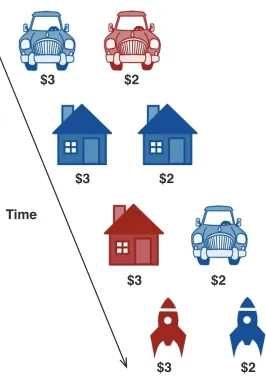
them ($1, $2, or $3). The new experimental paradigm is shown in Figure 1.
Children were to respond if the two stimuli belonged to the same category, withhold their
response if they belonged to a different category, and withhold their response if the stimuli
belonged to the “No Go” category (rockets). If both stimuli were houses or cars, they responded
by indicating whether the stimulus on the left or right contained the smallest dollar value via a
button response (match rule). A response was only scored as correct if the correct dollar amount
was selected. If the stimuli were a pair of rockets, they withheld their response (no go rule) and
if the stimuli did not match (i.e., a house and a car), they withheld their response (no match rule).
Half the children were given an extra rule that involved the dollar amounts below each object.
They were told that if dollar amounts below both the stimuli were the same, they were to press
another key (down arrow). The extra instruction was presented to children in the 4-rules
condition as the first task requirement. Each task rule and its response requirements are outlined
in Table 1. After completion of the Feature Match task, children were asked to repeat the rules
of the task through a series of cued-recall questions (e.g., “What would you do if two rockets
Figure 1. Stimuli used in the child Feature Match task. The first trial is an example of the car
match rule, the second trial is an example of the house match rule, the third trial is an example of
the no-match rule and, the final trial is an example of the no-go rocket rule. For all rules,
stimulus color and dollar amount were counter-balanced.
$3
$2
$3
$2
$3
$2
$3
$2
Table 1
Rules for the child Feature Match task
Rule description Response
Match rule If the two stimuli are both from the same
category (i.e., two houses or two cars)
Press the left or right key for
the stimulus with the lowest
price
No Go rule If the two stimuli are rockets Do not press anything
No Match rule If the two stimuli are not members of the
same category (i.e. a house and a car)
Do not press anything
Unnecessary rule If the dollar amounts of the two stimuli are
the same
Press the down arrow key
Task Specifics. The Feature Match experiment was programmed using functions of the
Psychtoolbox running under MATLAB 2009b on a Windows XP PC. All stimuli were presented
centrally and had an equal height and width of 3.5cm on a 19-inch CRT monitor (1280 x 760
resolution at 60 Hz). A trial constituted a pair of objects being presented for 1 s, followed by a 1
s blank interval. There were 4 blocks of 30 trials. Each block contained 18 no-match trials
(stimuli that did not match), 9 match trials (stimuli that did match) and 3 no-go trials (stimuli that
matched but required a response to be withheld). Directly below each object was a numeric
value behind a dollar sign ($). These digits varied from one to three. All stimuli were either red
or blue, and trials were equally both colors or mixed. Children were instructed to ignore color
and focus on the objects. Responses were made via the “z” (left) and “/” (right) keys on the
Task Scoring. For the purposes of analyzing the data we examined performance for each
trial type in the task (match rule, no-match rule and no-go rule) and global composite scores,
using two different scoring procedures: total error rate (reflecting general performance) and goal
neglect (reflecting ability to adhere to task instructions). Total error rate was the total number of
errors of any variety accumulated across blocks. Goal neglect was scored using a point system,
where participants would obtain one point for each time a specific performance criterion was met
for each task rule, and in each experimental block. This scoring procedure was taken verbatim
from the Feature Match task of Duncan et al. (2008, experiment 4) and represents a
neuropsychological scoring procedure. A rule was scored as “failed” if a participant made more
than 25% incorrect responses for each rule in a task block. A participant’s total goal neglect
score was their total score summed across all experimental blocks and for all task rules. In other
words, this scoring procedure measured compliance to the task rules, i.e., whether a task
requirement was being systematically ignored across the experiment. Therefore, a participant's
total goal neglect score is conceptually different from a participant’s total error score. It is
possible to make errors to different rules of the task but not meet the performance boundary to be
counted as a rule fail. For example, errors could be made to each trial type of the task but not be
frequent enough for any rule or task block to meet the criteria for goal neglect.
Procedure
In Project KIDS tasks completed by the children are incorporated into a theme where
each task contributes to a group goal (Brydges et al., 2012). Children earn stickers or tokens that
can be used to “buy” materials for the group goal. Each child only works on a task for a short
period of time (25 to 30 minutes) before moving on to a different task, to ensure minimal fatigue
administered according to standardized procedure by trained staff. The experimental measures
were administered in a group setting (six children) with one adult experimenter per child. Both
the Cattell Culture Fair Intelligence test and Feature Match task were administered at different
time periods over the two days for different groups of children.
Results Data Screening
Visual inspection of the distribution of total errors revealed three clear outlier children
who all had a total error rate of over 70%. These children were excluded from all analyses, as
well as five other children who made multiple responses to single trials throughout the study.
All the excluded children had recorded behavioral observations that they were not responding to
the task appropriately, due to lack of motivation or fatigue. These exclusion criteria left a sample
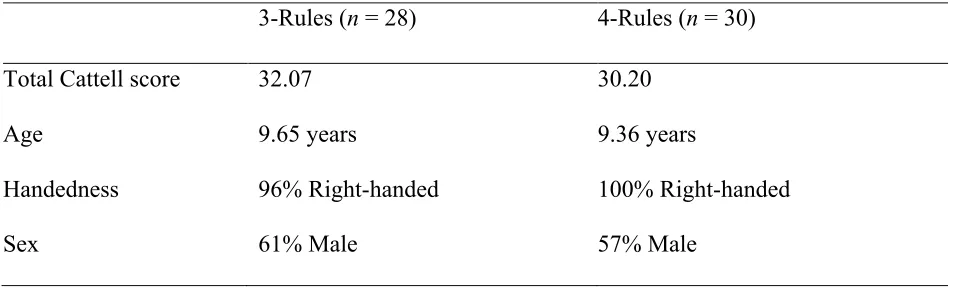
size of 58. Before scoring the data we examined group differences in the demographic
information between children in the two experimental conditions. There were no significant
differences for Cattell score, age, handedness or male-to-female ratio between the two samples
(Table 2). Data from the Feature Match task was not normally distributed and hence not suitable
for parametric statistics, and correspondingly nonparametric Mann-Whitney U tests were used
for all between subject comparisons. One-tailed tests were used due to the strong a priori
prediction that participants maintaining a more complex task structure would show poorer
Table 2
Demographic descriptives for both 3- and 4-rules conditions
3-Rules (n = 28) 4-Rules (n = 30)
Total Cattell score 32.07 30.20
Age 9.65 years 9.36 years
Handedness 96% Right-handed 100% Right-handed
Sex 61% Male 57% Male
Task Structure Complexity and Individual Trial Type Performance
Table 3 shows the total number of errors made for each trial type between conditions and
the results of Mann-Whitney U tests for each trial type. For all trial types, the maintenance of a
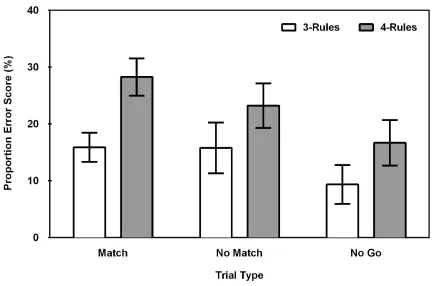
more complex task structure was associated with poorer performance. Performance for each trial
type across both conditions is shown in Figure 2. The instruction manipulation affected
performance for all aspects of the task.
Table 3
Total error scores for each trial type for both 3 and 4-rules conditions
Trial Type 3-Rules
M (SEM)
4-Rules
M (SEM)
z p r
Match 6.04 (0.98) 10.73 (1.25) -3.02 <.01 .40
No Match 12.79 (3.62) 18.33 (3.11) -2.12 .02 .28
Figure 2. Proportion (%) of errors made for Match, No-Match and No-Go trial types for
participants in the 3-rules and 4-rules conditions. Error bars represent standard error of the
mean.
Task Structure Complexity and Global Measures of Task Performance
We then tested the hypothesis that children in the 4-rules condition would show poorer
performance on average, than children in the 3-rules condition for our general measure of task
performance (total error rate) and for goal neglect score. For total error score, the 4-rules
condition (M = 31.23) had a SEM of 3.78 while the 3-rules condition (M = 20.04) had a SEM of
4.261. The results of the Mann-Whitney U test were in the expected direction and significant, z
= -2.60, p = .004, r = .34. For goal neglect score, the 4-rules condition (M = 0.73) had a SEM of
direction and significant, z = -2.50, p = .007, r = .32. Both these differences constitute a medium
effect size and support the hypothesis that children in the 4-rules condition would show poorer
task performance compared to children in the 3-rules condition.
Relationship between Task Performance, Fluid intelligence, and Number of Instructed Rules
Having established that there was an experimental effect on the instructed rules
conditions, we now examined the relationship between task performance and fluid intelligence,
for both scoring methods and for each experimental condition. Non-parametric Spearman
rank-order correlations were performed between total error score, total goal neglect score, and fluid
intelligence, separately for both instruction conditions. For both the 4-rules and 3-rules
conditions, total number of errors was significantly correlated to fluid intelligence (rs = -.58, p =
.001 and rs = -.69, p = <. 001, respectively). Interestingly, the only non-significant correlation
was between goal neglect score and fluid intelligence for the 3-rules condition, rs = -.18, p = .35.
The corresponding correlation for the 4-rules condition was significant, rs = -.37, p = .043.
Regression analyses between fluid intelligence and goal neglect in each condition confirmed this
difference; with the regression slope in the 4-rules condition being significantly different from
zero (B = -.39, t (29) = -2.21, p = .04, R2 = .15) but not in the 3-rules condition (B = -.075, t (27)
= -.38, p = .71, R2 = .01).
To explicitly test whether the relationship between fluid intelligence and goal neglect was
statistically significant between the two experimental conditions, we tested the interaction of the
two regression lines, under the null hypothesis that a single regression slope would be the best fit
for both experimental conditions. Despite the regression slope being significantly different from
F (2, 54) = 2.41, p = .10. This indicates that strength of the relationship between goal neglect
and fluid intelligence was not statistically different between the two instruction conditions. As
this non-significance may be due to a lack of statistical power, we used nonparametric
bootstrapping analyses recommended for small sample sizes (see Preacher & Hayes, 2004;
Preacher, Rucker, & Hayes, 2007) to further investigate the relationship between goal neglect
and fluid intelligence between the instruction conditions. We computed 1000 bootstraps and
calculated the 95% CIs using a bias-corrected and accelerated method (BCa) that adjusts for both
bias and skewness in the bootstrap distribution (DiCiccio & Efron, 1996; Efron, 1987). For the
4-rules condition, the 95% BCa CIs between goal neglect and fluid intelligence were between rs
= -.53 and rs = -.20, while for the 3-rules condition they were between rs = -.27 and rs = -.13.
While the 95% CIs just overlap, the bootstrapping results suggest a consistent difference between
the two experimental conditions in the strength of the correlation, with children in the 4-rules
condition showing a stronger relationship between goal neglect and fluid intelligence.
Relationship between Age, Fluid Intelligence and Task Performance
As there is a well-known relationship between age and fluid intelligence during the
childhood years, we investigated the effect of age on children’s total error score using sequential
multiple regression. Specifically, we tested whether the relationship between age and task
performance was due to the effect of fluid intelligence, rather than any broad developmental
effects of chronological age. Entering age first into the model revealed that it was a significant
predictor of total error rate, F (1, 57) = 9.49, p = .003, and explained 14.5% of the total variance
(R = .38). However, entering fluid intelligence into the model in the second block of predictors
revealed that fluid intelligence still contributed significantly to the prediction of total error score,
(1, 55) = 18.72, p = < .001). Conversely when fluid intelligence was entered first, it was a
significant predictor of total error score F (1, 57) = 31.57, p = .003, and explained 36.1% of the
total variance (R = .60) but when age was entered second, (B = -.05, t (57) = -.36, p = .77) it
failed to predict any additional variance (ΔR2 = <.01, F (1, 55) = .13, p = .72). This result
suggests that task performance is related to level of fluid intelligence, rather than to “general”
processes associated with chronological age.
Discussion
The main aim of this study was to develop a child-appropriate Feature Match task for
investigating goal neglect in children between the ages of 7 and 11. Secondary aims were to test
whether the presence of extra instructions increases goal neglect, to test whether goal neglect is
related to levels of fluid intelligence, and to test whether the relationship between goal neglect
and fluid intelligence would be greater for children in the condition with the extra instruction.
We wanted to test these hypotheses in children because of the well-known changes in executive
function (Brydges et al., 2012) and fluid intelligence (Anderson, 1992) that occur between 7 and
11 years of age. It was hypothesized that children given four task rules as opposed to three
would show poorer performance on the Feature Matching task, despite the extra task rule being
unnecessary for successful performance. It was further expected that performance at the Feature
Matching task would be correlated with fluid intelligence. The first hypothesis was supported;
children given four rules showed decreased task performance (as measured by both total error
rate and total goal neglect score). The second hypothesis was also supported; children in both
instruction conditions showed a strong relationship between error rate and fluid intelligence. The
third hypothesis was partly supported, while the explicit test of the hypothesis was
for children in the 4-rules condition than children in the 3-rules condition, and this was
corroborated by separate regression and bootstrapping analyses.
Children who were given four task rules showed poorer performance on all rules of the
task compared to children who were only instructed in the three necessary task rules. For both
conditions, successful performance was significantly correlated with levels of fluid intelligence,
reflecting the difficulty of complex goal-directed tasks that require the maintenance of multiple
goals in working memory. These results are in accordance with research showing a strong
positive correlation between WMC and fluid intelligence in children (de Abreu, Conway, &
Gathercole, 2010; Cornoldi, Orsini, Cianci, & Giofrè, 2013; Giofrè, Mammarella, & Cornoldi,
2013; Hornung, Brunner, Reuter, & Martin, 2011) and in adults (Christal, 1990; Colom, Abad,
Quiroga, Shih, & Flores-Mendoza, 2008; Fukuda, Vogel, Mayr, & Awh, 2010). This
relationship is hypothesized to rely on the maintenance of “goal information” in the face of
interference (Kane & Engle, 2002). The results of this study support this idea and demonstrate
that the maintenance of a plan containing more task goals impedes performance. Moreover, the
results suggest that the complexity of the plan held in working memory increases the strength of
the relationship between goal failures and fluid intelligence. In addition, the results of the
current study highlight the conceptual relationship between task complexity and fluid
intelligence, which has been hypothesized and investigated for some time (Marshalek, Lohman,
& Snow, 1983; Primi, 2002; Stankov, 2000) but has typically been confounded with
complexities unrelated to the task structure. The current study utilized Duncan et al.'s (2008)
instruction manipulation where the two factors can be separated. That is, the complexity of the
and not by increasing real-time demands of task execution (e.g., by increasing the span of an
n-back task in a working memory paradigm).
Developmental analysis of the Feature Matching task revealed that task performance was
negatively correlated with age, indicating that older children made fewer errors and showed less
goal neglect. Interestingly, however, the performance improvement seen with age was not due to
broad developmental effects associated with chronological age—when the influence of fluid
intelligence (a non-age-standardized measure) was controlled for, the relationship between age
and task performance was effectively removed. Therefore, although children improve at the
Feature Matching task with age, this relationship was mediated by fluid intelligence. This could
reflect individual differences among neurological variables that have complex non-linear
relationships with age (Shaw et al., 2006; Shaw, 2007). In addition, this result suggests that goal
neglect is a general phenomenon of task complexity, and that its behavioral manifestation will be
similar across diverse age ranges, provided the participants are tested using an age-appropriate
paradigm and have the same raw fluid intelligence test score. Support for this idea comes from
Duncan et al. (1996) experiment 1, who used a broad age range of participants and found that the
correlation between goal neglect and fluid intelligence was virtually unchanged when age was
partialled out. Other goal neglect studies that have tested children (Marcovitch et al., 2007;
Marcovitch et al., 2010; Towse et al., 2007), young adults (Roberts, Anderson, & Fox, 2013;
Roberts, Jones, Ly, Davis, & Anderson, 2013) and elderly adults (Duncan et al., 1996) all
indicate that goal neglect manifests similarly in different experimental paradigms.
Compared to the other goal neglect studies conducted on children (Marcovitch et al.,
2007; Marcovitch et al., 2010; Towse et al., 2007) the current study differs in two main areas.
of which used children between the ages of 4 and 6. Indeed, considering past studies have
shown children beyond the age of 5 show little difficulty at the DCCS (Zelazo et al., 1996), the
Feature Match task introduced in the current study allows for researchers to investigate goal
neglect in an age appropriate manner for children between the ages of 7 and 11. Second, instead
of examining the relationship between WMC and goal neglect (e.g., Kane & Engle, 2003;
Marcovitch et al., 2010), we examined the relationship between fluid intelligence and goal
neglect. We argue that analyzing fluid intelligence is more informative and reflective of the
underlying theoretical framework behind goal neglect (Duncan et al., 1996; Duncan, 2010). In
particular, we refer to the fact that fluid intelligence tests consist of items that require novel
“offline” problem solving (i.e., no computer-controlled timing of stimuli, abstract
stimulus-response mappings, etc.). Despite this difference, fluid intelligence tests correlate very highly
with experimental paradigms that test the ability to plan for future action “online” (e.g., goal
neglect paradigms). In contrast, WMC paradigms do not contain any overt problem solving, and
are more akin to “online” goal neglect paradigms where performance is due to the real-time
control of action in a highly controlled environment.
In the current study, task performance was scored using two different methods and the
difference between the methods is conceptually important. Traditional goal neglect (as scored in
Duncan et al., 2008) can be thought of as the competency to implement the required task model
and reflect the participant’s understanding of the task’s requirements. On the other hand,
standard rule errors are tantamount to errors that reflect momentary “mistakes” or “slips” made
by the participant. Using this scoring procedure meant that it was possible for children to show
no goal neglect—that is, the child was capable of maintaining the task model and generally
errors. The results of the current study show that this variability of momentary mistakes and
errors across the task, while distinct from goal neglect, is highly related to fluid intelligence and
from any theoretical perspective this would be an unsurprising result. These errors simply
confirm the difficulty of novel multi-rule experimental paradigms. Interestingly, however, goal
neglect was only related to fluid intelligence in the extra instruction load condition. While the
explicit test of this hypothesis was not statistically significant; bootstrapping analyses revealed a
consistent difference in the strength of the correlation, and separate linear regressions showed
that the slope was significantly different to zero in the 4-rules condition but not in the 3-rules
condition. These results in combination with the small-to-medium effect sizes found in the
between-subjects comparisons of task performance, suggest that a future better-powered study
would be more sensitive in detecting this effect, and help in elucidating on the distinction
between momentary errors versus systematic rule failures.
The performance decrement observed by participants in the 4-rules condition is similar to
a well-known effect in the prospective memory literature. That is, the cost of a secondary task
on a primary on-going task even if the second task is never actually encountered. In a seminal
paper, Smith (2003) had half of the participants perform a lexical decision task with an
embedded prospective memory task, and half perform just the lexical decision task. Upon
analysing response times, the author found that participants who completed the embedded
prospective memory task had longer response times on non-prospective memory target trials than
participants performing the lexical decision task alone. These results suggest that the
maintenance of an action intention requires capacity either for the storage of the intention or for
the checking of individual stimuli. Another related field of literature concerns the
verbal instructions are rapidly converted into mental representations that can immediately
influence cognitive control, somewhat like a “prepared reflex” (Cohen-Kdoshay & Meiran,
2007; 2009). For example, Wenke, Gaschler and Nattkemper (2007) found that when
participants were instructed of S-R mappings for a size task, and then told that they would be
doing a location task; participants suffered interference effects when the stimuli were
incongruent with the first task but congruent with the second. This result suggests that
participants had formed a mental representation of the first task that was subsequently affecting
their behavior. Similarly, participants in the current study appear to have rapidly converted the
verbal instructions into active goals that interfered with successful task performance.
The results of the current study suggest that in a complex, goal-directed situation the
cognitive system attempts to guide behavior by any representation it has available. This
reinforces the fallibility of goal representations (Davelaar, 2011) and is consistent with
theoretical computational models of cognitive development that emphasize active and latent
representations guiding behavior, with higher-order representations serving as a goals that bias
lower-level processes toward the goal at hand (e.g., the computational model by Morton &
Munaka, 2002). Further computational modelling may shed light on the dissociation of
declarative and procedural knowledge. For example, how the cognitive system can reproduce
the verbal rule instruction but not be able to keep these representations at a high enough level of
activation to guide behavior. Indeed, the model by Morton & Munaka (2002) suggests that
representations are not all-or-none but rather vary continuously in their strength. This “graded
representations” account suggests dissociations between knowledge and action result because
to formulate explicit mechanistic accounts of how extra task representations negatively affect
performance.
The results of the current study emphasize the advantage of looking at goal-directed
behavior as a holistic picture, and not just at isolated aspects of cognitive control (Duncan,
2010). The finding that an extra task instruction can lead to detrimental performance for
typically developing children in all trial types for a difficult goal-directed problem reinforces this
perspective. Each trial type in the Feature Match task consisted of its own difficulties and
processes, and indeed, one could argue that the complete task requires commonly posited
executive functions such as task shifting, inhibition of prepotent responses, and the updating of
working memory (Miyake et al., 2000). However, we argue that by focusing on isolated
elements of control; the larger picture of successful goal-directed behavior is clouded.
Moreover, recent structural equation modeling work in children has shown that a unitary
executive function factor provides the best fit to the data in typically developing children
between the ages of 7 and 11 (Brydges et al., 2012). That is not to say that elements of
“cognitive control” cannot be meaningfully subdivided into components, but rather that the
orchestration of a complex multi-step sequence of behavior appears to be most closely aligned to
what is measured by tests of fluid intelligence (Duncan, 2010) and that this may be a key
component to their success in predicting real world outcomes (Gottfredson, 1997).
In conclusion, the current study showed that goal neglect is highly related to fluid
intelligence in a sample of typically developing children between the ages of 7 and 11. To do
this we introduced a new developmentally appropriate paradigm for investigating goal neglect
that required children to match stimuli using different rules. The results highlight the strong
by tests of fluid intelligence. The results were obtained by instructing half the children of four
rules for a matching task, and the other half with three rules. For the experimental trials, only
three rules were ever used, hence children were presented with an identical stimulus sequence.
Therefore, the only difference between the two conditions was the action plan that was created to
prepare for the task. This had a differential effect on goal neglect and the probability of makings
errors or mistakes. The latter was related to fluid intelligence in both conditions, but goal neglect
itself was only related to fluid intelligence in the condition where an individual’s mental
representation of the task embodied an extra (but unnecessary) task instruction. We suggest the
extra task instruction increases goal neglect due to a disruption in the ability to convert all task
Footnotes
1 Now relocated to School of Psychology and Exercise Science, Murdoch University,
References
Altmann, E. M., & Trafton, J. G. (2002). Memory for goals: an activation-based model.
Cognitive Science, 26(1), 39-83. doi:10.1016/s0364-0213(01)00058-1
Anderson, M. (1992). Intelligence and development. A cognitive theory. Oxford, UK: Blackwell.
Baddeley, A., Sala, S. D., Robbins, T. W., & Baddeley, A. (1996). Working memory and
executive control. Philosophical Transactions of the Royal Society B: Biological
Sciences, 351(1346), 1397-1404. doi:10.1098/rstb.1996.0123
Bianchi, L. (1922). The mechanism of the brain and the function of the frontal lobes. Edinburgh,
UK: Livingstone.
Brydges, C. R., Reid, C. L., Fox, A. M., & Anderson, M. (2012). A unitary executive function
predicts intelligence in children. Intelligence. doi:10.1016/j.intell.2012.05.006
Carroll, J. B. (1993). Human Cognitive Abilities: A survey of factor-analytic studies. Cambridge,
UK: Cambridge University Press.
Casey, B. J., Giedd, J. N., & Thomas, K. M. (2000). Structural and functional brain development
and its relation to cognitive development. Biological Psychology, 54(1-3), 241-257. doi:
10.1016/S0301-0511(00)00058-2
Cattell, R. B. (1971). Abilities: Their structure, growth, and action. Houghton-Mifflin. Bostin:
Houghton-Mifflin.
Cohen-Kdoshay, O., & Meiran, N. (2007). The representation of instructions in working memory
leads to autonomous response activation: Evidence from the first trials in the flanker
paradigm. The Quarterly Journal of Experimental Psychology, 60(8), 1140-1154.
Cohen-Kdoshay, O., & Meiran, N. (2009). The representation of instructions operates like a
prepared reflex: Flanker compatibility effects found in first trial following S–R
instructions. Experimental Psychology, 56(2), 128-133. doi:10.1027/1618-3169.56.2.128
Colom, R., Abad, F. J., Quiroga, M. Á., Shih, P. C., & Flores-Mendoza, C (2008). Working
memory and intelligence are highly related constructs, but why? Intelligence, 36(6),
584-606. doi:10.1016/j.intell.2008.01.002
Cornoldi, C., Orsini, A., Cianci, L., & Giofrè, D. (2013). Intelligence and working memory
control: Evidence from the WISC-IV administration to Italian children. Learning and
Individual Differences. doi:10.1016/j.lindif.2013.04.005
Davelaar, E. J. (2011). Processes versus representations: Cognitive control as emergent, yet
componential. Topics in Cognitive Science, 3(2), 247-252.
doi:10.1111/j.1756-8765.2011.01138.x
de Abreu, P. E., Conway, A., & Gathercole, S. (2010). Working memory and fluid intelligence in
young children. Intelligence. doi: 10.1016/j.intell.2010.07.003
DiCiccio, T., & Efron, B. (1996). Bootstrap confidence intervals. Statistical Science, 1-25.
Retrieved from http://www.jstor.org/stable/10.2307/2246110
Diamond, A. (2002). Normal development of prefrontal cortex from birth to young adulthood:
Cognitive functions, anatomy, and biochemistry. In Principles of frontal lobe function.
(pp. 466-503). New York, NY, US: Oxford University Press.
doi:10.1093/acprof:oso/9780195134971.003.0029
Duncan, J. (1986). Disorganisation of behaviour after frontal lobe damage. Cognitive
Duncan, J. (2010). The multiple-demand (MD) system of the primate brain: mental programs for
intelligent behaviour. Trends in Cognitive Sciences, 14(4), 172-179.
doi:10.1016/j.tics.2010.01.004
Duncan, J, Burgess, P., & Emslie, H. (1995). Fluid intelligence after frontal lobe lesions.
Neuropsychologia, 33(3), 261-268. doi:10.1016/0028-3932(94)00124-8
Duncan, J, Emslie, H., Williams, P., Johnson, R., & Freer, C. (1996). Intelligence and the frontal
lobe: the organization of goal-directed behavior. Cognitive Psychology, 30(3), 257-303.
doi:10.1006/cogp.1996.0008
Duncan, J., Parr, A., Woolgar, A., Thompson, R., Bright, P., Cox, S., ... Nimmo-Smith, I. (2008).
Goal neglect and Spearman's g: Competing parts of a complex task. Journal of
Experimental Psychology: General, 137(1), 131–148. doi:10.1037/0096-3445.137.1.131
Efron, B. (1987). Better bootstrap confidence intervals. Journal of the American Statistical
Association, 82(397), 171-185. doi:10.1080/01621459.1987.10478410
Friedman, N. P., Miyake, A., Corley, R. P., Young, S. E., DeFries, J. C., & Hewitt, J. K. (2006).
Not all executive functions are related to intelligence. Psychological Science, 17(2),
172-179. doi:10.1111/j.1467-9280.2006.01681.x
Fukuda, K., Vogel, E., Mayr, U., & Awh, E. (2010). Quantity, not quality: The relationship
between fluid intelligence and working memory capacity. Psychonomic Bulletin &
Review, 1-7. Retrieved from http://link.springer.com/article/10.3758/17.5.673
Giedd, J. N, Blumenthal, J., Jeffries, N. O., Castellanos, F. X., Liu, H., Zijdenbos, A., …
Rapoport, J. L. (1999). Brain development during childhood and adolescence: A
Giedd, J. N., & Rapoport, J. L. (2010). Structural MRI of pediatric brain development: What
have we learned and where are we going? Neuron, 67(5), 728-734.
doi:10.1016/j.neuron.2010.08.040
Giofrè, D., Mammarella, I., & Cornoldi, C. (2013). The structure of working memory and how it
relates to intelligence in children. Intelligence. doi:10.1016/j.intell.2013.06.006
Gogtay, N., Giedd, J. N., Lusk, L., Hayashi, K. M., Greenstein, D., Vaituzis, A. C., …
Thompson, P. M. (2004). Dynamic mapping of human cortical development during
childhood through early adulthood. Proceedings of the National Academy of Sciences of
the United States of America, 101(21), 8174-8179. doi:10.1073/pnas.0402680101
Gottfredson, L. S. (1997). Why g matters: The complexity of everyday life. Intelligence, 24(1),
79-132. doi:10.1016/S0160-2896(97)90014-3
Hornung, C., Brunner, M., Reuter, R., & Martin, R. (2011). Children's working memory: Its
structure and relationship to fluid intelligence. Intelligence. doi:
10.1016/j.intell.2011.03.002
Institute for Personality and Ability Testing (1973). Measuring intelligence with the Culture Fair
tests. Champaign, IL: Institute for Personality and Ability Testing.
Jensen, A. (1998). The g factor: The science of mental ability. Westport, CT: Praeger.
Jurado, M. B., & Rosselli, M. (2007). The elusive nature of executive functions: A review of our
current understanding. Neuropsychological Review, 17, 213-233. doi:
10.1007/s11065-007-9040-z
Kane, M. J., & Engle, R. W. (2002). The role of prefrontal cortex in working-memory capacity,
executive attention, and general fluid intelligence: An individual-differences perspective.
Kane, M. J., & Engle, R. W. (2003). Working-memory capacity and the control of attention: The
contributions of goal neglect, response competition, and task set to Stroop interference
Journal of Experimental Psychology: General, 132(1), 47-70.
doi:10.1037/0096-3445.132.1.47
Kyllonen, P. C., & Christal, R. E. (1990). Reasoning ability is (little more than)
working-memory capacity?! Intelligence, 14(4), 389-433. doi:10.1016/S0160-2896(05)80012-1
Luria, A. R. (1966). Higher Cortical Functions in Man. London, UK: Tavistock.
Marcovitch, S., Boseovski, J. J., & Knapp, R. J. (2007). Use it or lose it: examining preschoolers
difficulty in maintaining and executing a goal. Developmental Science, 10(5), 559-564.
doi:10.1111/j.1467-7687.2007.00611.x
Marcovitch, S., Boseovski, J. J., Knapp, R. J., & Kane, M. J. (2010). Goal neglect and working
memory capacity in 4- to 6-year-old children. Child Development, 81(6), 1687-1695.
doi:10.1111/j.1467-8624.2010.01503.x
Marshalek, B., Lohman, D. F., & Snow, R. E. (1983). The complexity continuum in the radex
and hierarchical models of intelligence. Intelligence, 7(2), 107-127.
doi:10.1016/0160-2896(83)90023-5
McArdle, J. J., Ferrer-Caja, E., Hamagami, F., & Woodcock, R. W. (2002). Comparative
longitudinal structural analyses of the growth and decline of multiple intellectual abilities
over the life span Developmental Psychology, 38(1), 115-142.
doi:10.1037//0012-1649.38.1.115
Miyake, A., Friedman, N. P., Emerson, M. J., Witzki, A. H., Howerter, A., & Wager, T. D.
“Frontal Lobe” tasks: A latent variable analysis. Cognitive Psychology, 41(1), 49-100.
doi:10.1006/cogp.1999.0734
Morton, J. B., & Munakata, Y. (2002). Active versus latent representations: A neural network
model of perseveration, dissociation, and decalage. Developmental Psychobiology, 40(3),
255-265. doi:10.1002/dev.10033
Nieuwenhuis, S., Broerse, A., Nielen, M. M. A., & De Jong, R. (2004). A goal activation
approach to the study of executive function: An application to antisaccade tasks. Brain
and Cognition, 56(2), 198-214. doi:10.1016/j.bandc.2003.12.002
Preacher, K. J., & Hayes, A. F. (2004). SPSS and SAS procedures for estimating indirect effects
in simple mediation models. Behavior Research Methods, 1-1. doi:10.3758/BF03206553
Preacher, K. J., Rucker, D. D., & Hayes, A. F. (2007). Addressing moderated mediation
hypotheses: Theory, methods, and prescriptions. Multivariate Behavioral Research,
42(1), 185-227. doi:10.1080/00273170701341316
Primi, R. (2002). Complexity of geometric inductive reasoning tasks: Contribution to the
understanding of fluid intelligence. Intelligence, 30(1), 41-70.
doi:10.1016/s0160-2896(01)00067-8
Roberts, G. I., Anderson, M., & Fox, A. (2013). Relevant but unnecessary task rules are
remembered and reduce cognitive control: An event-related potential study. Manuscript
submitted for publication.
Roberts, G. I., Jones, T. W., Ly, T., Davis, E. A. & Anderson, M. (2013). The oscillatory
dynamics of goal neglect: The effects of task complexity and practice trials on novel task
Shaw, P. (2007). Intelligence and the developing human brain. BioEssays, 29(10), 962-973.
doi:10.1002/bies.20641
Shaw, P., Greenstein, D., Lerch, J., Clasen, L., Lenroot, R., Gogtay, N., …Giedd, J. (2006).
Intellectual ability and cortical development in children and adolescents. Nature,
440(7084), 676-679. doi:10.1038/nature04513
Smith, R. E. (2003). The cost of remembering to remember in event-based prospective memory:
Investigating the capacity demands of delayed intention performance Journal of
Experimental Psychology: Learning, Memory, and Cognition, 29(3), 347-361.
doi:10.1037/0278-7393.29.3.347
Spearman, C. (1904). “General Intelligence”, objectively determined and measured. American
Journal of Psychology, 15, 201-293. Retrieved from
http://psychclassics.yorku.ca/Spearman/
Stankov, L. (2000). Complexity, metacognition, and fluid intelligence. Intelligence, 28(2),
121-143. doi:10.1016/S0160-2896(99)00033-1
Towse, J. N., Lewis, C., & Knowles, M. (2007). When knowledge is not enough: The
phenomenon of goal neglect in preschool children. Journal of Experimental Child
Psychology, 96(4), 320-332. doi:10.1016/j.jecp.2006.12.007
Tsujimoto, S. (2008). The prefrontal cortex: Functional neural development during early
childhood. The Neuroscientist, 14(4), 345-358. doi:10.1177/1073858408316002
Wenke, D., Gaschler, R., & Nattkemper, D. (2007). Instruction-induced feature binding.
Psychological Research, 71, 92-106. doi:10.1007/s00426-005-0038-y
Zelazo, P. D. (2004). The development of conscious control in childhood. Trends in Cognitive
Zelazo, P. D., Craik, F. I. M., & Booth, L. (2004). Executive function across the life span.
ACTPSY, 115(2–3), 167-183. doi:10.1016/j.actpsy.2003.12.005
Zelazo, P. D., Frye, D., & Rapus, T. (1996). An age-related dissociation between knowing rules
and using them. Cognitive Development, 11(1), 37-63.
![REPORT FROM THE COMMISSION TO THE EUROPEAN PARLIAMENT AND THE COUNCIL Annual Report [1st] on the Implementation of Part IV of the EU Central America Association Agreement COM (2015) 131 final, March 2015](data:image/gif;base64,R0lGODlhAQABAIAAAP///wAAACH5BAEAAAAALAAAAAABAAEAAAICRAEAOw==)