R E S E A R C H A R T I C L E
Open Access
Systematic review of resilience-enhancing,
universal, primary school-based mental
health promotion programs
Amanda Fenwick-Smith, Emma E. Dahlberg and Sandra C. Thompson
*Abstract
Background:Wellbeing and resilience are essential in preventing and reducing the severity of mental health problems. Equipping children with coping skills and protective behavior can help them react positively to change and obstacles in life, allowing greater mental, social and academic success. This systematic review studies the implementation and evaluation of universal, resilience-focused mental health promotion programs based in primary schools.
Methods:A systematic review of literature used five primary databases: PsycINFO; Web of Science; PubMed; Medline; Embase and The Cochrane Library; and keywords related to (a) health education, health promotion, mental health, mental health promotion, social and emotional wellbeing; (b) school health service, student, schools, whole-school; (c) adolescent, child, school child, pre-adolescent; (d) emotional intelligence, coping behavior, emotional adjustment, resilienc*, problem solving, to identify relevant articles. Articles included featured programs that were universally implemented in a primary school setting and focused on teaching of skills, including coping skills, help-seeking behaviors, stress management, and mindfulness, and were aimed at the overall goal of increasing resilience among students.
Results:Of 3087 peer-reviewed articles initially identified, 475 articles were further evaluated with 11 reports on evaluations of 7 school-based mental health promotion programs meeting the inclusion criteria. Evaluation tools used in program evaluation are also reviewed, with successful trends in evaluations discussed. Encouraging results were seen when the program was delivered by teachers within the schools. Length of programing did not seem important to outcomes. Across all 7 programs, few long-term sustained effects were recorded following program completion.
Conclusions:This review provides evidence that mental health promotion programs that focus on resilience and coping skills have positive impacts on the students’ability to manage daily stressors.
Keywords:Mental health, Health promotion, Primary school, Resilience, Universal intervention, Child
Background
This review looks at resilience-boosting mental health pro-motion programs implemented universally at schools for primary school-aged children (5–12 years). Wellbeing and resilience are important in preventing and reducing the se-verity of mental health problems. The skills of problem solving, building and maintaining interpersonal relation-ships, and realistic goal-setting are well-established as
enhancing an individual’s ability to contribute meaningfully in daily life. There is substantial literature on resilience [1] which is defined as a capacity or set of skills that allows a person to“prevent, minimize or overcome the damaging ef-fects of adversity”[2] and includes factors that are internal and external to the person - emotions, behavior, biology, development, and context affect mental health [3]. Potential risks for poor self-esteem and mental health can be over-come by protective factors, including one’s coping skills, healthy family and social relationships, help-seeking behav-iors, and meaningful activities in interactions [4].
* Correspondence:[email protected]
Western Australian Centre for Rural Health, University of Western Australia, 167 Fitzgerald St, Geraldton, WA 6531, Australia
Resilience theory states that all children, regardless of risk or current mental health status, can benefit from help and support in the development of effective, mentally-healthy strategies and resilience skills [5]. Sup-port for and a focus on the development of children’s re-silience skills does not lead to a risk-free life, but can increase a child’s ability to seek support while building their self-worth and self-efficacy. By providing children with skills with which to cope with negative life stressors through the promotion of resilience and protective fac-tors, children can thrive despite obstacles [6]. An argu-ment for a population approach for argu-mental health strengthening can be extrapolated from Geoffrey Rose’s argument that the largest number of cases of ill health happen not in those at high risk, but in those who have just some risk, simply because in a normal population distribution more people (and hence adverse events) will occur to them [7]. Since all people experience adversity at some point in their life, teaching strategies for resili-ent thinking would be better applied in advance to the potential “at risk” population. The positive outcomes and possibilities associated with strengthening children’s resilience universally applied can act as a mitigating approach, allowing for early support and strengthen-ing of mental health, rather than requirstrengthen-ing interven-tions for acute situainterven-tions in the future [8]. The approach of boosting resilience can enhance children’s abilities to self-protect, as well as being an effective counter to offset the effects of maltreatment and po-tential traumatic life events [9–11]. As such, universal application of programs to enhance resilience stands as not only useful for those recognized as being at risk and who require additional mental health support currently, but also as a protective shield for all chil-dren moving through life.
Universal, school-based programing
School-based mental health promotion programs deliv-ered to all students within a class, grade, or the entire school are categorized as universal programs. In devel-oped countries, all children are required to attend school, making it an ideal setting for programs providing key interventions for children, particularly children from challenged families, homes and communities that may not have easy access to community or home-based inter-vention programs [12]. Mental health promotion pro-grams have been developed and implemented in schools using a variety of different approaches. Many mental ill-ness prevention or intervention programs use a targeted approach, focusing on children deemed at risk due to their background, history or signs of mental health prob-lems, usually based upon defined socio-demographic fac-tors or certain behavioral characteristics.
Universal programs vary in their approach and imple-mentation. Some universal programs are class-based, with weekly sessions delivered by classroom teachers or program staff to the entire classroom. Another universal approach is to change the entire school environment to be friendlier and more supportive of positive mental health messages, and this is often implemented in com-bination with class-based approaches [13]. Class-based, universal mental health promotion programs vary in their aims, focusing on different elements of cognitive or affective skills and behaviors, environmental or cultural factors, while increasing knowledge of mental health and resources.
Mental health promotion programs specifically target-ing resilience may be referred to as social and emotional learning programs, mindfulness programs, stress man-agement programs, or emotional wellbeing programs and vary in terms of curriculum, length and implemen-tation, and use of different tools and activities to convey key themes and topics. Methods of delivery vary as well, including the use of clinical tools, educational resources, training of teachers and parents, changes to school sys-tems and resources, and use of narrative tools. As such, the curricula used in these programs vary, although all utilize a pre-established definition of resilience and the desired outcomes to be achieved from a social and emotional learning program. The most effective social and emotional learning curricula are highly interactive and use a variety of educational tools, addressing both specific and general skills, and are delivered in support-ive environments [14]. Mental health promotion pro-grams promoting resilience focus on the development of coping skills, mindfulness, emotion recognition and management, empathic relationships, self-awareness and efficacy, and help-seeking behavior. Secondary out-comes often include decreased symptoms of anxiety, depression, and increased academic outcomes.
Relevant research reviews
Given the importance and reach of school settings, many reports describe universal, school-based mental health promotion programs. Prior reviews have ex-plored school-based mental health promotion pro-grams in different contexts, countries, applications, and within specific demographic parameters. There are many reviews addressing targeted programs aimed at suicide prevention, sexual health, substance abuse and misuse, physical activity and nutrition improve-ment and these often measure as secondary outcomes changes in self-efficacy, coping and resilience skills [5,
15–17]. A number of reviews analyzing mental health
social and emotional skills, behavior, and symptoms of anxiety and depressive disorders [12, 16, 18]. In their 2017 review, Dray and colleagues looked at control-based trial evaluations of programs of univer-sal resilience-programing in schools spanning all ages, reporting on those that yielded significant results in resilience factor changes. Durlak and colleagues com-pared 213 programs, also targeting all age groups, assessing the outcomes on attitudes, behaviors and academic performance and analyzing effect size and factors that moderate program outcomes. Waere and Mind assessed the key features that make school-based curricula successful as an approach, highlighting the importance of social and emotional competence as part of the curriculum within schools [12]. Another review considered studies on mental health promotion programs solely conducted with control and comparison groups [19].
The current review
This review aims to inform policy, programing and evaluation of universal, resilience-focused mental health interventions for primary school-aged children as it fo-cuses on the specific tools and key elements for the population that will benefit the most from increased re-silience in an easy-to-reach setting, aspects which have not been highlighted in previous reviews. The multi-tude of existing mental health promotion programs highlights the need to establish what specific elements and evaluations contribute to successful programing. Unlike previous reviews, this review focuses on pro-grams delivered solely to primary school students (aged 5–12 years), as there is evidence that the younger the implementation of mental health promotion and resili-ence programing, the greater the positive effect [3, 20, 21]. Rather than focusing on the program curriculum, it considers the criteria for implementation and key ele-ments of programing for a comprehensive intervention, highlighting the elements of that allow for best program fidelity and student engagement. It also describes the criteria and outcome measures (tools and methods) used in implementing and evaluating resilience-focused, univer-sal school-based mental health promotion programs.
Methods
Studies eligible for inclusion were published from 2002 to 2017, describe mental health promotion pro-grams focusing on resilience and protective factors, and were delivered universally at schools for primary school children aged 5–12 years. A universal program is defined as being a program offered for a specific all-inclusive group, whether it be the entire school, grade or classroom. All students within the group
participate in at least one component of the program, regardless of their mental health status and risk fac-tors. Resilience is defined as a capacity or set of skills that allows a person to “prevent, minimize or over-come the damaging effects of adversity” [2], through the promotion of protective factors including coping skills, peer socialization and empathy building, self-efficacy, help-seeking behaviors, mindfulness and emotion literacy.
Search procedures
A preliminary review of literature revealed key terms re-lated to resilience-focused, school-based, universal men-tal health promotion programs. A broad search strategy was then developed to identify relevant peer-reviewed articles in five primary databases: PsycINFO; Web of Sci-ence; PubMed; Medline; Embase and The Cochrane Li-brary. The search strategy was modified as necessary for advanced searches of each database, using keyword search criteria: (a) health education, health promotion, mental health, mental health promotion, social and emo-tional wellbeing; (b) school health service, student, schools, whole-school; (c) adolescen*, child, school child, pre-adolescent; (d) emotional intelligence, coping behav-ior, emotional adjustment, resilienc*, problem solving. Searches were conducted in September 2016 and up-dated in May 2018. Articles were initially screened by abstract by the lead author. All full-text articles were reviewed by two reviewers, with additional checks and consultations with other authors, to ensure consensus around those articles where eligibility was less clear. Snowball citation was used to identify other relevant articles.
Inclusion criteria
To be included in the review, each study had to meet the following criteria: (a) adhere to the above definition of a universal program; (b) be based in a primary school; (c) be delivered to children aged between 5 and 12 years of age; (d) focus on resilience and protective factors (meeting the above definition); (e) contain a qualitative, quantitative or mixed-methods evaluation of the pro-gram; (f ) be published in English since 2002 in a peer-reviewed journal.
Exclusion criteria
Universal programs that sought to change school atmos-phere through teacher resilience training, or increasing school health services were not included. After-school or recess resilience programing was not included, even if it took place at a school. Programs that were available but not implemented universally were not included, as the self-selecting nature of optional programing is unlikely to reach the most at-risk children, and such programs do not insure a comprehensive program for all students regardless of risk. Studies where many students were outside of the age group and during a transition period between different schools were not included. Resilience programing that fits our inclusion criteria but is solely delivered to a population that has been exposed to high stress situations and is at risk or may develop PTSD are not included. Unpublished dissertations, grey literature and reports were not included.
Excluded studies
It is worth commenting upon how exclusion criteria were applied in practice. A number of programs were not included in this review despite having a resilience focus, being universally-delivered and school-based be-cause they have not been reported upon within the pre-ceding 15 years (since 2002). Other excluded programs had an ultimate goal that was not general mental health promotion program, but rather aimed at addressing a specific condition or behavior through the promotion of certain resilience skills and protective factors. Notable programs include the Penn Resilience Program, which has been shown to reduce depressive symptoms through the cognitive-behavioral therapy programing, including the promotion of coping skills [22]. The Good Behavior Games specifically target behavior control through the promotion of resilience, but fall outside of the age range of this review [23]. REACH for RESILIENCE promotes resilience skills to prevent anxiety problems, and targets very young children [24]. The nation-wide Australian program, beyondblue, focuses on social and resilience skills to prevent depression, targeting ado-lescents [25]. Evaluations of the FRIENDS program were not included as it targets childhood anxiety through the promotion of social-emotional skills [26]. Another exclusion was the Aussie Optimism: Positive Thinking Skills Program (AOP-PTS) which promotes so-cial and coping skills to prevent and address depression symptoms [27].
Article quality assessment
The Mixed Methods Appraisal Tool (MMAT) was used to assess the quality of included studies and provides a validated method of assessing qualitative, quantitative, and mixed methods studies. After the initial screening, articles were scored based on the criteria for each
respective study [28]. Two researchers independently assessed each article [29]. Of note, the tool does not ad-dress the quality of the reporting, but only the quality of the reported methods of the study.
Results
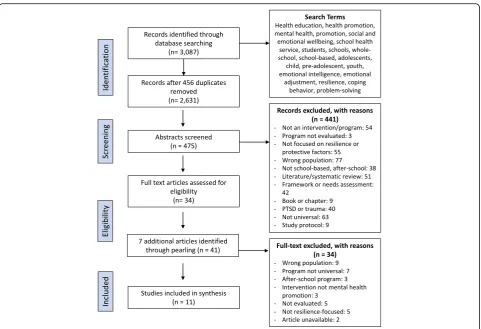
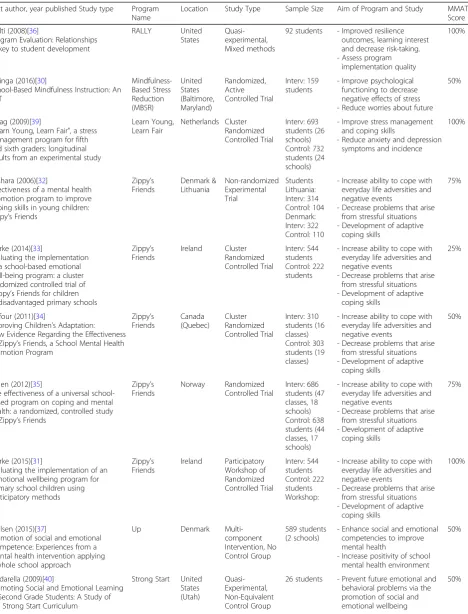
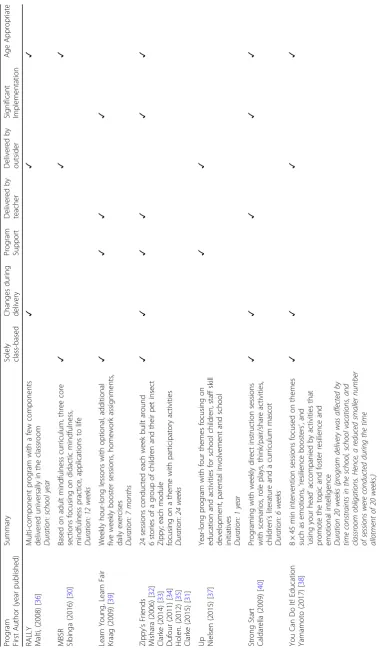
The initial search strategy shows that of an initial 3087 publications identified using the search terms and following abstract assessment of 475 references, 34 articles were selected for full-text assessment. An additional 7 articles were identified through citation snowballing and after reading of the full-text so that 41 articles were fully assessed for eligibility. A total of 11 studies reporting on 7 programs met all the inclu-sion criteria (Fig. 1), with key characteristics including MMAT scores recorded (Table 1). The most common reasons for exclusion were: focus on trauma, incorrect age group or target population; not meeting our def-inition of universal programs; and lack of focus on re-silience and protective factors. Included articles. Key elements of each program’s curriculum and imple-mentation are shown (Table 2).
Aim of the program
The aims of the seven programs (reported on in eleven articles) included varied in their approach to resilience and the protective factors they sought to address. All six programs sought to increase social and emotional com-petencies with the ultimate aim of increasing mental wellbeing and future protection from risks. Six articles, addressing 2 different programs, Mindfulness-Based Stress Reduction and Zippy’s Friends, specifically sought to improve psychological functioning with the goal of ameliorating the negative effects of stress and increasing coping skills [30–35]. The RALLY program aimed at in-creasing the prevalence of resilience protective factors in students, with a particular focus on academic outcomes and learning potential [36] while the Up program, a so-cial and emotional competencies program, aimed at en-hancing existing competencies and decreasing inequity in social and emotional competencies across socioeco-nomic lines [37]. The You Can Do It! (YCDI!) Education program sought to ameliorate children’s ability to posi-tively control their emotions in daily life [38]. All pro-grams sought to improve the outcomes of one or more protective factors, hypothesizing increased resilience as a result. A strong emphasis on increased coping skills and strategies as well as improved relationships was evident in all the programs.
Target population
Universal programs demand the application of the program to an entire cohort of students, but how
an entire class, across an entire grade or across mul-tiple schools. As such, sample size varied signifi-cantly between studies. Details of sample populations (Table 1) show all but two studies were implemented and evaluated across multiple schools, with ten of eleven conducted across multiple classrooms [30–35,
37–39]. Age groups varied across the programs, with 4
studies addressing populations 10 years and above [30,36,
38, 39], and 6 studies addressing populations younger
than 10 years of age [31–35, 40]. Socio-demographic profiles of students varied across studies. Four studies described programs delivered at socio-economically disadvantaged schools [30, 31, 33, 36] whereas four programs took place in middle or upper class neigh-borhoods [32, 37, 39, 40]. Dufour et al. (2011) did not report on socio-demographic data of students who received the program [34] whereas the students involved in the report by Holen et al (2012) were from homes where parents had educational attainment levels higher than the national average [35]. Yamamoto et al. (2017) delivered the program to students in the Tokyo Metropolitan Area, making no demographic dis-tinctions, other than to address the specific contextual
implications of Japanese emotion- and stress-culture as impactful in their student population [38].
Key elements of programs
Key elements of the programs (Table2) show that Malti et al (2008) was the only study in which the program comprised more than one student-focused component [36]. Although only a few components were delivered universally, all students were exposed to at least one component of the program [36]. The Up program in-cluded parent and teacher training, and school environ-ment programing [37] and program fidelity and adaptability were identified as key contributing factors to successful implementation with four studies reporting high levels of program fidelity and program support
[32, 33, 39, 40]. The five studies that implemented
and evaluated the Zippy’s Friends program described no changes in curriculum or delivery, but allowed for activity adaptability during sessions [31–35]. Teachers delivering it felt equipped to adapt the program as they saw necessary to their class while still maintaining high program fidelity [34]. Adaptability was also highlighted as being an important program factor for the You Can
Table 1Summary of Articles Included in the Review
First author, year published Study type Program Name
Location Study Type Sample Size Aim of Program and Study MMAT Score
Malti (2008)[36]
Program Evaluation: Relationships as key to student development
RALLY United States
Quasi-experimental, Mixed methods
92 students - Improved resilience outcomes, learning interest and decrease risk-taking. - Assess program
implementation quality
100%
Sibinga (2016)[30]
School-Based Mindfulness Instruction: An RCT
Mindfulness-Based Stress Reduction (MBSR)
United States (Baltimore, Maryland)
Randomized, Active Controlled Trial
Interv: 159 students
- Improve psychological functioning to decrease negative effects of stress - Reduce worries about future
50%
Kraag (2009)[39]
“Learn Young, Learn Fair”, a stress management program for fifth and sixth graders: longitudinal results from an experimental study
Learn Young, Learn Fair
Netherlands Cluster Randomized Controlled Trial
Interv: 693 students (26 schools) Control: 732 students (24 schools)
- Improve stress management and coping skills
- Reduce anxiety and depression symptoms and incidence
100%
Mishara (2006)[32]
Effectiveness of a mental health promotion program to improve coping skills in young children: Zippy’s Friends
Zippy’s Friends
Denmark & Lithuania
Non-randomized Experimental Trial
Students Lithuania: Interv: 314 Control: 104 Denmark: Interv: 322 Control: 110
- Increase ability to cope with everyday life adversities and negative events
- Decrease problems that arise from stressful situations - Development of adaptive
coping skills
75%
Clarke (2014)[33]
Evaluating the implementation of a school-based emotional well-being program: a cluster randomized controlled trial of
Zippy’s Friends for children in disadvantaged primary schools
Zippy’s Friends
Ireland Cluster Randomized Controlled Trial
Interv: 544 students Control: 222 students
- Increase ability to cope with everyday life adversities and negative events
- Decrease problems that arise from stressful situations - Development of adaptive
coping skills
25%
Dufour (2011)[34]
Improving Children’s Adaptation: New Evidence Regarding the Effectiveness of Zippy’s Friends, a School Mental Health Promotion Program
Zippy’s Friends
Canada (Quebec)
Cluster Randomized Controlled Trial
Interv: 310 students (16 classes) Control: 303 students (19 classes)
- Increase ability to cope with everyday life adversities and negative events
- Decrease problems that arise from stressful situations - Development of adaptive
coping skills
50%
Holen (2012)[35]
The effectiveness of a universal school-based program on coping and mental health: a randomized, controlled study of Zippy’s Friends
Zippy’s Friends
Norway Randomized Controlled Trial
Interv: 686 students (47 classes, 18 schools) Control: 638 students (44 classes, 17 schools)
- Increase ability to cope with everyday life adversities and negative events
- Decrease problems that arise from stressful situations - Development of adaptive
coping skills
75%
Clarke (2015)[31]
Evaluating the implementation of an emotional wellbeing program for primary school children using participatory methods
Zippy’s Friends
Ireland Participatory Workshop of Randomized Controlled Trial
Interv: 544 students Control: 222 students Workshop:
- Increase ability to cope with everyday life adversities and negative events
- Decrease problems that arise from stressful situations - Development of adaptive
coping skills
100%
Nielsen (2015)[37]
Promotion of social and emotional competence: Experiences from a mental health intervention applying a whole school approach
Up Denmark Multi-component Intervention, No Control Group
589 students (2 schools)
- Enhance social and emotional competencies to improve mental health
- Increase positivity of school mental health environment
50%
Caldarella (2009)[40]
Promoting Social and Emotional Learning in Second Grade Students: A Study of the Strong Start Curriculum
Strong Start United States (Utah)
Quasi-Experimental, Non-Equivalent Control Group
26 students - Prevent future emotional and behavioral problems via the promotion of social and emotional wellbeing
Do It! Education program in Japan, where program staff translated and altered the internationally-implemented program with Japan-specific illustrations, examples and exercises to optimize the connection with students [38]. Three studies identified problems with implemen-tation of programming due to teacher perceptions, time constraints, participation rates and class literacy levels [32,33,38,40].
Evaluation frameworks, tools and indicators
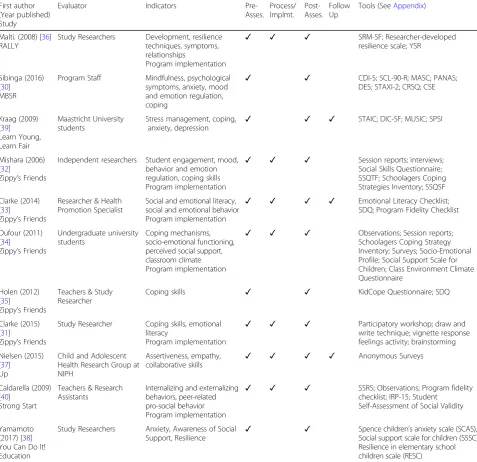
Study evaluation frameworks and indicators (sum-marised in Table 3) are reported with more detail on evaluation tools and methods used for evaluating el-ements of programing reported in Appendix. Studies varied greatly on the timing and purpose of their evaluation although all applied a combination of pre-assessment, post-assessment, process evaluation, implementation evaluation and follow up assess-ments. Within specific programs, different evalua-tions were used for different implementaevalua-tions and contexts. The five articles reporting on the Zippy’s Friends program utilized different evaluation methods
[31–35]. Mishara and Ystgaard (2006) evaluated the
im-plementation of Zippy’s Friends in two countries with similar socio-demographic characteristics, Lithuania and Denmark, and found similar results in outcomes of students in the intervention groups in both coun-tries. Yamamoto et al. used a semi-experimental de-sign with intervention and control groups and utilized three self-report scales to evaluate students [38]. Clarke evaluated a randomized-controlled trial imple-mentation of Zippy’s Friends in Ireland using both standard measures [33] and a participatory workshop with a subsample of students. The workshop was semi-structured around three key themes: lived expe-riences and coping reactions; emotion recognition and regulation; and program evaluation [31]. In all articles meeting out inclusion criteria, multiple stan-dardized, validated tools were used for evaluation measures, most commonly the Children’s Depression Inventory (CDI, Short or Complete Form) [30, 39], the Strengths and Difficulties Questionnaire [33, 35], the Schoolagers’Coping Strategies Inventory [32,34], and a Program Fidelity Checklist [33,40]. Evaluation methods
commonly included in-class observations [33,34,36,40], researcher-developed questionnaires [34, 36] and session reports [32,34,35].
Outcomes
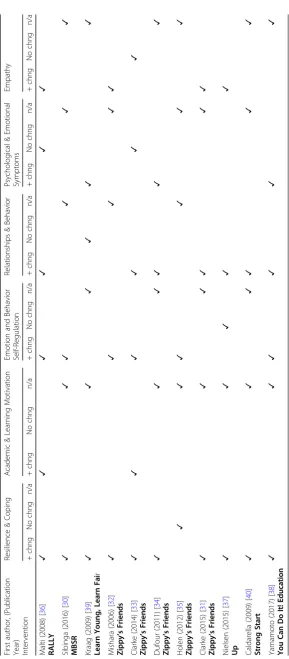
Each article identified outcomes associated with their re-search question and hypothesis with outcomes following program implementation to assess the impact of the program. Table4presents a summary of whether major outcomes were considered by the article to have chan-ged as a result of programing. In eight studies, re-searchers identified at baseline an overarching need for resilience programing among students, including low levels of trust and empathy; problems with emotion control, relationships and help-seeking; or reported symptoms [30,31,33,36–40]. Ten out of eleven studies reported positive outcomes with improvements in stu-dent resilience and protective factors, including fre-quency of use of coping skills, internalizing behaviors, and self-efficacy at post-assessment [30–34, 36–40]. Three studies identified shortcomings in outcomes despite positive results from the overall program implementation and outcomes. Kraag et al. (2009) identified a lack of follow up and social reinforcement for components taught in programing, with negative implications on long-term follow-up outcomes [39]. Clarke and col-leagues (2014) showed limited effects on resilience it-self, but highlighted a marked increase in self-awareness among students [33]. Variations in outcomes between in-formants was highlighted in Holen et al (2012) who did not determine that resilience itself was an outcome of the program [35].
Discussion
This review examined the program criteria and out-come measures used in the implementation and evalu-ation of resilience-focused, universal, school-based mental health promotion programs. Eleven published studies based on seven different programs were identified and included.
Characteristics of effective programs
Several characteristics of effective programing stood out. The involvement of teachers in the delivery of programs
Table 1Summary of Articles Included in the Review(Continued)
First author, year published Study type Program Name
Location Study Type Sample Size Aim of Program and Study MMAT Score
Yamamoto (2017) [38]
Effects of the cognitive behavioral You Can Do It! Education program on the resilience of Japanese elementary school students: A preliminary investigation
You Can Do It! Education
Tokyo Quasi-Experimental, Intervention, Control Group
125 students, intervention
n= 78, control group =47
- Evaluate a mental health promotion program’s efficacy in enhancing resilience in
schools
emerged as key. Numerous studies used teachers to de-liver the program, a feature presented positively as pro-viding the opportunity for adaptability of programing and more seamless implementation, if provided with programmatic support and training. For example, the Zippy’s Friends program uses teachers to deliver the content materials [33] and teachers reported receiving substantial, helpful program support by research and program staff.
In their review of factors of success for implementa-tion, adaptation of programing was identified as a key component of implementation [38, 41]. Teachers of the
Zippy’s Friends Program reported the ability to adapt, add and remove activities relating to thematic content based on student literacy, mood and timing, as one of the most important parts of program delivery [33]. This allowed the maintenance of high program fidelity while also involving students in the most effective way possible. Teachers are an important resource in the de-velopment of children’s resilience, as they already have rapport and an understanding of the students and are more likely to know their students lived experiences and current coping and help-seeking strategies. Yamamoto et al. credit their successful implementation of the
Table 3Evaluation frameworks of included studies
First author (Year published) Study
Evaluator Indicators
Pre-Asses. Process/ Implmt.
Post-Asses.
Follow Up
Tools (SeeAppendix)
Malti.(2008) [36] RALLY
Study Researchers Development, resilience techniques, symptoms, relationships
Program implementation
✓ ✓ ✓ SRM-SF; Researcher-developed resilience scale; YSR
Sibinga (2016) [30] MBSR
Program Staff Mindfulness, psychological symptoms, anxiety, mood and emotion regulation, coping
✓ ✓ CDI-S; SCL-90-R; MASC; PANAS; DES; STAXI-2; CRSQ; CSE
Kraag (2009) [39] Learn Young, Learn Fair
Maastricht University students
Stress management, coping,
anxiety, depression ✓ ✓ ✓
STAIC; DIC-SF; MUSIC; SPSI
Mishara (2006) [32]
Zippy’s Friends
Independent researchers Student engagement, mood, behavior and emotion regulation, coping skills Program implementation
✓ ✓ ✓ Session reports; interviews; Social Skills Questionnaire; SSQTF; Schoolagers Coping Strategies Inventory; SSQSF
Clarke (2014) [33]
Zippy’s Friends
Researcher & Health Promotion Specialist
Social and emotional literacy, social and emotional behavior Program implementation
✓ ✓ ✓ ✓ Emotional Literacy Checklist; SDQ; Program Fidelity Checklist
Dufour (2011) [34]
Zippy’s Friends
Undergraduate university students
Coping mechanisms, socio-emotional functioning, perceived social support, classroom climate Program implementation
✓ ✓ ✓ Observations; Session reports; Schoolagers Coping Strategy Inventory; Surveys; Socio-Emotional Profile; Social Support Scale for Children; Class Environment Climate Questionnaire
Holen (2012) [35]
Zippy’s Friends
Teachers & Study Researcher
Coping skills ✓ ✓ KidCope Questionnaire; SDQ
Clarke (2015) [31]
Zippy’s Friends
Study Researcher Coping skills, emotional literacy
Program implementation
✓ ✓ ✓ Participatory workshop; draw and write technique; vignette response feelings activity; brainstorming
Nielsen (2015) [37] Up
Child and Adolescent Health Research Group at NIPH
Assertiveness, empathy, collaborative skills
✓ ✓ ✓ ✓ Anonymous Surveys
Caldarella (2009) [40]
Strong Start
Teachers & Research Assistants
Internalizing and externalizing behaviors, peer-related pro-social behavior Program implementation
✓ ✓ ✓ SSRS; Observations; Program fidelity checklist; IRP-15; Student
Self-Assessment of Social Validity
Yamamoto (2017) [38] You Can Do It! Education
Study Researchers Anxiety, Awareness of Social
Support, Resilience ✓ ✓
Spence children’s anxiety scale (SCAS), Social support scale for children (SSSC), Resilience in elementary school children scale (RESC)
YCDI! Program with the extensive edits to the cur-riculum to adapt it to Japanese culture and relation-ships [38].
The length of programing did not appear to im-pact on the number of outcomes achievable. The RALLY program ran for an entire school year and provided consistent resilience outcomes [36], while the Mindfulness-Based Stress Reduction program ran for only 12 weeks and showed positive resilience outcomes as well [30]. The YCDI! Program ran for a shorter period of time than most implementations of the program but still demonstrated significant results [38]. Importance was placed on the intensity of ses-sions and the content delivered, as opposed to the regularity. However, importantly, if follow up evalua-tions were conducted, they did not reveal that out-comes were maintained in the longer term after most programs. This suggests that program length may not alter the ongoing resiliency of students once the program ends.
Emergent themes across studies
Although all eleven articles presented programs that aimed at fostering the resilience skills and protective factors of students, the specific skills and outcomes taught in each program differed. This is consistent with research highlighting the difficulty that exists in defining resilience and creating programs around the topic [1]. Not only is the definition difficult and vari-able between studies, but the criteria and skills that come with developing resilience differ as well. In the RALLY study, researchers targeted resilience, and the outcomes evaluated were empathy, trust of others, and emotional regulation skills [36]. On the other hand, the UP study targeted resilience through social and emotional competencies that allow students to engage and navigate daily life, social interactions and society [37]. Both programs aimed to foster social and emotional development by increasing resilience skills and protective factors, but were based on differences in terminology and theory. Evaluations of both pro-grams determined they had a positive outcome on re-silience in students despite these differences.
An effect noted by a number of studies included in this review was the “ceiling effect” since many of the students enrolled in universal-based programs have high baseline mental health and social and emotional competence [33]. Although individuals within the group might suffer from higher risk factors or mental illness, across the board students present with gener-ally normal levels. As such, when the program is im-plemented, outcomes may be generated but will not be large as there is little room for change. This is not the case when providing targeted programs with
students who all generally have much more room for change, given that they begin the program with lower scores at baseline. Despite the ceiling effect, research has shown that resilience-boosting programing bene-fits at-risk but are not specific for at-risk children. Additionally, properly identifying and screening target groups for targeted programing is often unsuccessful due to the complexities of mental health, and preventive approaches, such as universal resilience-boosting pro-graming, are considered the most all-encompassing method [42]. As such, a program promoting resilience will support positive changes and growth in both groups of kids, although with more significant differences in the at-risk group.
Characteristics and methodologies of evaluations
An element of the evaluations that emerged in many ar-ticles is the removed nature of evaluation when collect-ing data on children’s capacities. Many of the programs seek to foster resilience through the development of coping skills, and use scales or observations in order to measure outcomes. The Learn Young, Learn Fair pro-gram evaluated a positive effect on emotion-focused, adaptive coping skills using validated questionnaires and scales [39]. This approach is used in all the program evaluations, but does not leave room for lived experi-ences to be factored into the interpretation of outcomes. These traditional evaluation methodologies can be seen as researching on a topic, rather than researching for a cause or population, as they do not leave room for ambi-guity or other factors.
Additionally, a couple of studies in this review used evaluation tools that did not take into account the views of children themselves. The researchers chose to interview and evaluate both teachers’ and the pro-gram deliverers’ perceptions and ratings, rather than interviewing or evaluating the children themselves. For example, Caldarella, Christensen et al. (2009) evaluate children’s outcomes through pre- and post-assessments of the teacher’s perceptions of her students, using validated assessment tools [40]. However, evaluations like this introduce an additional limitation to the outcome analysis, as they gather data through secondary sources with the program delivered to children for their benefit, but outcomes not gathered directly from the children. However, observational data is a key component of a program evaluation with many stud-ies successfully using observations to ensure program fidelity and as part of process evaluations.
share their feelings using their own words rather than those of researchers [44], as well as vignettes to elimin-ate interview processes [45]. Students from the interven-tion group were found to use more adaptive coping skills in their daily life, both in and out of the classroom than children in the control group [31]. These results were supported by the quantitative data collected on the larger student sample from which the participatory workshop subsample was drawn [33]. A clearer picture of children’s coping skills and experiences with the Zippy’s Friends program was gathered through the use of both qualitative and quantitative evaluation meth-odology. Additionally, children’s lived experiences and direct insights were gathered through the participatory workshop model, allowing for a greater breadth of un-derstanding on the program’s efficiency.
Limitations of articles and evidence
Consideration must be given to the ethics and feasibility of implementing and evaluating programs for mental health promotion. Ethical concerns arise from providing a program that might be highly beneficial for a group of children, and not for another, essentially disadvantaging them. The ethics are further confounded by the lack of complete or stringent randomization described in the studies that include a control group. To avoid the di-lemma of disadvantaging students, studies on success factors have highlighted that in many studies the control groups do not receive ‘no intervention’ [41]. For ex-ample, Sibinga et al. (2016) included an active control group. While the intervention group received the Mindfulness-Based Stress Reduction program being studied, the control group received Healthy Topics, a general health program to match the MBSR structure. Thus, while the control group students are not receiving a resilience-focused, mental health promotion program, they still receive a health promotion program but one which allows a distinction between control and interven-tion groups around resilience outcomes and mental health [30]. Yamamoto and colleagues, however, did not provide programing to the control group following the intervention [38].
The evidence provided by certain articles must be weighed with differing criteria. Seven articles evaluated a program against a control group, allowing for compari-son of outcomes. These articles present more substantial outcome evidence than those that do not include a con-trol group for comparison. For example, Nielsen and colleagues (2015) and Caldarella and colleagues (2009) did not have a control group, decreasing the strength of their evaluation. Nielsen et al. (2015) implemented the UP program in kindergarten through grade 9, but only evaluated grades 5–9. Such selective evaluation intro-duces potential bias and paired with the absence of a
control group makes it difficult to identify if the increase in social and emotional competencies is due to the UP intervention, or simply a natural developmental progres-sion [37].
A limitation of the evaluations in many programs is the involvement of the person delivering the program as the evaluator. This can be seen in many studies on the Zippy’s Friends program, where the classroom teacher delivers the program and conducts the process and implementation evaluation themselves. Third-party observations are sometimes conducted in addition to verify program fidelity and implementation outcomes. Of note is that observational evaluation and the use of independent evaluators have been more extensively documented as reliable than using tools based on self-report [41].
We also note that despite gender differences in the prevalence of mental health problems and the type of resilience protective factors that children and adoles-cents use, the studies did not generally report results by gender [46, 47]. This limitation could be overcome by encouraging that future studies provide a gender breakdown or highlight gender-specific results.
Conclusion
This review complements previous reviews on mental health promotion programing for students. Our focus on universally delivered programs in primary schools re-veals key components and strengths of programing that make for the most successful delivery and evaluation and enables important conclusions to be drawn.
The review confirms that adaptability and teacher in-volvement are key elements of program delivery, with student engagement and use of multiple methods strengthening program evaluation. The use of participa-tory methods to engage children allows for greater as-sessment of lived experiences and use of coping skills compared to self-reporting tools or observations. Adaptability of curriculum to different contexts, seen in theZippy’s Friendsprogram, was considered successful by multiple authors, illustrating that broad program ap-plication across multiple contexts is possible and effective.
Appendix
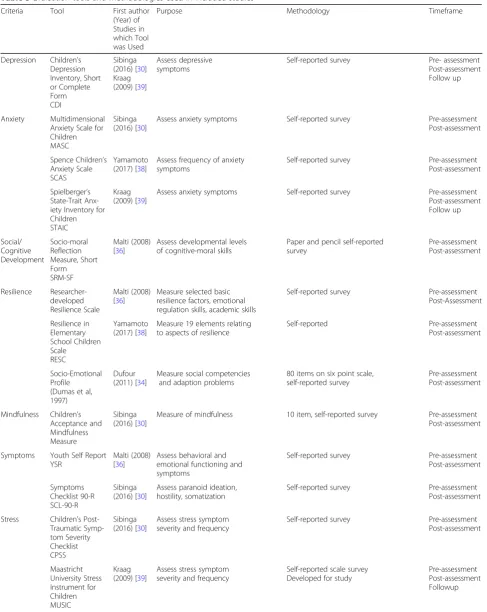
Table 5Evaluation tools and methodologies used in included studies
Criteria Tool First author (Year) of Studies in which Tool was Used
Purpose Methodology Timeframe
Depression Children’s Depression Inventory, Short or Complete Form CDI
Sibinga (2016) [30] Kraag (2009) [39]
Assess depressive symptoms
Self-reported survey Pre- assessment Post-assessment Follow up
Anxiety Multidimensional Anxiety Scale for Children MASC
Sibinga (2016) [30]
Assess anxiety symptoms Self-reported survey Pre-assessment Post-assessment
Spence Children’s Anxiety Scale SCAS
Yamamoto (2017) [38]
Assess frequency of anxiety symptoms
Self-reported survey Pre-assessment Post-assessment
Spielberger’s State-Trait Anx-iety Inventory for Children STAIC
Kraag (2009) [39]
Assess anxiety symptoms Self-reported survey Pre-assessment Post-assessment Follow up
Social/ Cognitive Development
Socio-moral Reflection Measure, Short Form SRM-SF
Malti (2008) [36]
Assess developmental levels of cognitive-moral skills
Paper and pencil self-reported survey
Pre-assessment Post-assessment
Resilience Researcher-developed Resilience Scale
Malti (2008) [36]
Measure selected basic resilience factors, emotional regulation skills, academic skills
Self-reported survey Pre-assessment Post-Assessment
Resilience in Elementary School Children Scale
RESC
Yamamoto (2017) [38]
Measure 19 elements relating to aspects of resilience
Self-reported Pre-assessment Post-assessment
Socio-Emotional Profile (Dumas et al, 1997)
Dufour (2011) [34]
Measure social competencies and adaption problems
80 items on six point scale, self-reported survey
Pre-assessment Post-assessment
Mindfulness Children’s Acceptance and Mindfulness Measure
Sibinga (2016) [30]
Measure of mindfulness 10 item, self-reported survey Pre-assessment Post-assessment
Symptoms Youth Self Report YSR
Malti (2008) [36]
Assess behavioral and emotional functioning and symptoms
Self-reported survey Pre-assessment Post-assessment
Symptoms Checklist 90-R SCL-90-R
Sibinga (2016) [30]
Assess paranoid ideation, hostility, somatization
Self-reported survey Pre-assessment Post-assessment
Stress Children’s Post-Traumatic Symp-tom Severity Checklist CPSS
Sibinga (2016) [30]
Assess stress symptom severity and frequency
Self-reported survey Pre-assessment Post-assessment
Maastricht University Stress Instrument for Children MUSIC
Kraag (2009) [39]
Assess stress symptom severity and frequency
Self-reported scale survey Developed for study
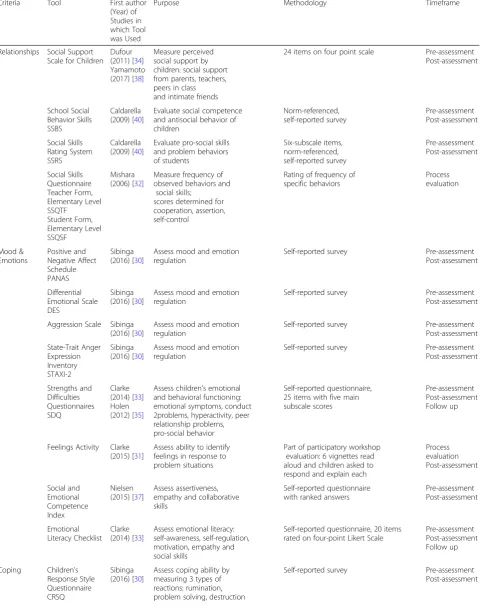
Table 5Evaluation tools and methodologies used in included studies(Continued)
Criteria Tool First author (Year) of Studies in which Tool was Used
Purpose Methodology Timeframe
Relationships Social Support Scale for Children
Dufour (2011) [34] Yamamoto (2017) [38]
Measure perceived social support by children: social support from parents, teachers, peers in class and intimate friends
24 items on four point scale Pre-assessment Post-assessment
School Social Behavior Skills SSBS
Caldarella (2009) [40]
Evaluate social competence and antisocial behavior of children
Norm-referenced, self-reported survey
Pre-assessment Post-assessment
Social Skills Rating System SSRS
Caldarella (2009) [40]
Evaluate pro-social skills and problem behaviors of students
Six-subscale items, norm-referenced, self-reported survey
Pre-assessment Post-assessment
Social Skills Questionnaire Teacher Form, Elementary Level SSQTF
Student Form, Elementary Level SSQSF
Mishara (2006) [32]
Measure frequency of observed behaviors and
social skills; scores determined for cooperation, assertion, self-control
Rating of frequency of specific behaviors
Process evaluation
Mood & Emotions
Positive and Negative Affect Schedule PANAS
Sibinga (2016) [30]
Assess mood and emotion regulation
Self-reported survey Pre-assessment Post-assessment
Differential Emotional Scale DES
Sibinga (2016) [30]
Assess mood and emotion regulation
Self-reported survey Pre-assessment Post-assessment
Aggression Scale Sibinga (2016) [30]
Assess mood and emotion regulation
Self-reported survey Pre-assessment Post-assessment
State-Trait Anger Expression Inventory STAXI-2
Sibinga (2016) [30]
Assess mood and emotion regulation
Self-reported survey Pre-assessment Post-assessment
Strengths and Difficulties Questionnaires SDQ
Clarke (2014) [33] Holen (2012) [35]
Assess children’s emotional and behavioral functioning: emotional symptoms, conduct 2problems, hyperactivity, peer relationship problems, pro-social behavior
Self-reported questionnaire, 25 items with five main subscale scores
Pre-assessment Post-assessment Follow up
Feelings Activity Clarke (2015) [31]
Assess ability to identify feelings in response to problem situations
Part of participatory workshop evaluation: 6 vignettes read aloud and children asked to respond and explain each
Process evaluation Post-assessment
Social and Emotional Competence Index
Nielsen (2015) [37]
Assess assertiveness, empathy and collaborative skills
Self-reported questionnaire with ranked answers
Pre-assessment Post-assessment
Emotional Literacy Checklist
Clarke (2014) [33]
Assess emotional literacy: self-awareness, self-regulation, motivation, empathy and social skills
Self-reported questionnaire, 20 items rated on four-point Likert Scale
Pre-assessment Post-assessment Follow up
Coping Children’s Response Style Questionnaire CRSQ
Sibinga (2016) [30]
Assess coping ability by measuring 3 types of reactions: rumination, problem solving, destruction
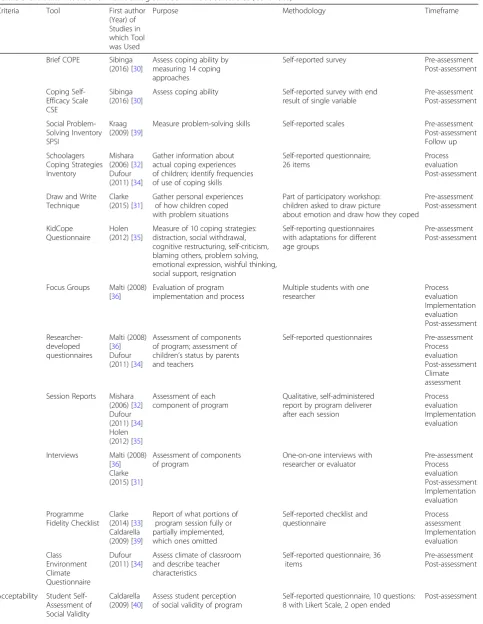
Table 5Evaluation tools and methodologies used in included studies(Continued)
Criteria Tool First author (Year) of Studies in which Tool was Used
Purpose Methodology Timeframe
Brief COPE Sibinga (2016) [30]
Assess coping ability by measuring 14 coping approaches
Self-reported survey Pre-assessment Post-assessment
Coping Self-Efficacy Scale CSE
Sibinga (2016) [30]
Assess coping ability Self-reported survey with end result of single variable
Pre-assessment Post-assessment
Social Problem-Solving Inventory SPSI
Kraag (2009) [39]
Measure problem-solving skills Self-reported scales Pre-assessment Post-assessment Follow up
Schoolagers Coping Strategies Inventory
Mishara (2006) [32] Dufour (2011) [34]
Gather information about actual coping experiences of children; identify frequencies of use of coping skills
Self-reported questionnaire, 26 items
Process evaluation Post-assessment
Draw and Write Technique
Clarke (2015) [31]
Gather personal experiences of how children coped with problem situations
Part of participatory workshop: children asked to draw picture
about emotion and draw how they coped
Pre-assessment Post-assessment
KidCope Questionnaire
Holen (2012) [35]
Measure of 10 coping strategies: distraction, social withdrawal, cognitive restructuring, self-criticism, blaming others, problem solving, emotional expression, wishful thinking, social support, resignation
Self-reporting questionnaires with adaptations for different age groups
Pre-assessment Post-assessment
Focus Groups Malti (2008) [36]
Evaluation of program implementation and process
Multiple students with one researcher
Process evaluation Implementation evaluation Post-assessment
Researcher-developed questionnaires
Malti (2008) [36] Dufour (2011) [34]
Assessment of components of program; assessment of children’s status by parents and teachers
Self-reported questionnaires Pre-assessment Process evaluation Post-assessment Climate assessment
Session Reports Mishara (2006) [32] Dufour (2011) [34] Holen (2012) [35]
Assessment of each component of program
Qualitative, self-administered report by program deliverer after each session
Process evaluation Implementation evaluation
Interviews Malti (2008) [36] Clarke (2015) [31]
Assessment of components of program
One-on-one interviews with researcher or evaluator
Pre-assessment Process evaluation Post-assessment Implementation evaluation
Programme Fidelity Checklist
Clarke (2014) [33] Caldarella (2009) [39]
Report of what portions of program session fully or partially implemented, which ones omitted
Self-reported checklist and questionnaire
Process assessment Implementation evaluation
Class Environment Climate Questionnaire
Dufour (2011) [34]
Assess climate of classroom and describe teacher characteristics
Self-reported questionnaire, 36 items
Pre-assessment Post-assessment
Acceptability Student Self-Assessment of Social Validity
Caldarella (2009) [40]
Assess student perception of social validity of program
Self-reported questionnaire, 10 questions: 8 with Likert Scale, 2 open ended
Abbreviations
AOP-PTS:Aussie optimism: positive thinking skills program; CDI: Children’s depression index; MBSR: Mindfulness-Based stress reduction; MMAT: Mixed methods appraisal tool; WA: Western Australia
Acknowledgements
We thank Georgetown University, Dr. Helen Fairnie-Jones and staff at the WA Centre for Rural Health for assistance that enabled this work to be under-taken. We particularly thank May Doncon for her valuable help in early dis-cussions and highlighting the importance of the topic.
Availability of data and materials
Data sharing is not applicable to this article as no datasets were generated or analyzed during the current study.
Authors’contributions
AF determined the search strategy, conducted the systematic review of the databases, and wrote all parts of the review. AF, ED and ST read all full text articles and agreed upon inclusion and exclusion of articles. AF and ED conducted independent applications of MMAT to the articles, and came to a consensus on article strength. ED assisted in writing the results and discussion section as well. AF and ST edited the article for content and errors. All authors read and approved the final manuscript.
Ethics approval and consent to participate
Not applicable as all literature is published.
Consent for publication
Not applicable.
Competing interests
The authors declare that they have no competing interests.
Publisher’s Note
Springer Nature remains neutral with regard to jurisdictional claims in published maps and institutional affiliations.
Received: 27 April 2018 Accepted: 14 June 2018
References
1. Kaufman J, Cook A, Arny L, Jones B, Pittinsky T. Problems defining
resiliency: illustrations from the study of maltreated children. Dev
Psychopathol. 1994;6(1):215–29.
2. Grotberg EH: The international resilience project findings from the research
and the effectiveness of interventions [microform] / Edith H. Grotberg. [Washington D.C.]: distributed by ERIC clearinghouse; 1996.
3. Greenberg M, Domitrovich C, Bumbarger B. The prevention of mental
disorders in school-aged children: current state of the field. Prev Treat. 2001;
4(1):1–62https://www.researchgate.net/profile/Brian_Bumbarger/publication/
216458565_The_Prevention_of_Mental_Disorders_in_School-Aged_Children_ Current_State_of_the_Field/links/0fcfd50d20aaf66cf7000000/The-Prevention-of-Mental-Disorders-in-School-Aged-Children-Current-State-of-the-Field.pdf
4. Hodgson R, Abbasi T, Clarkson J. Effective mental health promotion: a
literature review. Health Educ J. 1996;55(1):55–74.
5. Catalano RF, Berglund ML, Ryan JAM, Lonczak HS, Hawkins JD. Positive
youth development in the United States: research findings on evaluations of positive youth development programs. ANNALS Am Acad Polit Soc Sci.
2004;591(1):98–124.
6. Benson PL, Saito RN. The Scientific Foundations of Youth Development. In:
Benson PL, Pittman KJ, editors. Trends in Youth Development: Visions,
Realities and Challenges. Boston, MA: Springer US; 2001. p. 135–54.
7. Rose G. Sick individuals and sick populations. Int J Epidemiol. 2001;
30(3):427–32.
8. Catherine PB, LJ F. Editorial commentary: resilience in child
development–interconnected pathways to wellbeing. J Child Psychol
Psychiatry. 2013;54(4):333–6.
9. Karatsoreos IN, McEwen BS. Annual research review: the neurobiology and
physiology of resilience and adaptation across the life course. J Child
Psychol Psychiatry. 2013;54(4):337–47.
10. Bonanno GA, Diminich ED. Annual research review: positive adjustment to
adversity – trajectories of minimal–impact resilience and emergent
resilience. J Child Psychol Psychiatry. 2013;54(4):378–401.
11. Dante C. Annual research review: resilient functioning in maltreated
children–past, present, and future perspectives. J Child Psychol Psychiatry.
2013;54(4):402–22.
12. Weare K, Nind M. Mental health promotion and problem prevention in
schools: what does the evidence say? Health Promot Int. 2011;26(suppl
1):i29–69.
13. Adi Y, Killoran A, Janmohamed K, Stewart-Brown S. Systematic Review of
the Effectiveness of Interventions to Promote Mental Wellbeing in Primary Schools: Universal Approaches Which Do not Focus on Violence or Bullying. London: National Institute for Clinical Excellence; 2007.
14. Diekstra R. Effectiveness of school-based social and emotional education
programmes worlwide - part one, a review of meta-analytic literature. In:
Social and motional education: an international analysisedn.: Fundacion
Marcelino Botin; 2008. p. 255–84.
15. Browne G, Gafni A, Roberts J, Byrne C, Majumdar B. Effective/efficient
mental health programs for school-age children: a synthesis of reviews. Soc
Sci Med. 2004;58(7):1367–84.
16. Durlak JA, Weissberg RP, Dymnicki AB, Taylor RD, Schellinger KB. The
impact of enhancing students' social and emotional learning: a meta-analysis of school-based universal interventions. Child Dev. 2011;82(1):
405–32.
17. Murphy JM, Abel MR, Hoover S, Jellinek M, Fazel M. Scope, scale, and dose
of the world's largest school-based mental health programs. Harv Rev
Psychiatry. 2017;25(5):218–28.
18. Dray J, Bowman J, Campbell E, Freund M, Wolfenden L, Hodder RK,
McElwaine K, Tremain D, Bartlem K, Bailey J, et al. Systematic review of universal resilience-focused interventions targeting child and adolescent mental health in the school setting. J Am Acad Child Adolesc Psychiatry.
2017;56(10):813–24.
19. Wells J, Barlow J, Stewart-Brown S. A systematic review of universal approaches
to mental health promotion in schools. Health Educ. 2003;103(4):197–220.
20. Durlak JA, Wells AM. Primary prevention mental health programs for
children and adolescents: a meta-analytic review. Am J Community
Psychol. 1997;25(2):115–52.
21. Zoritch B, Roberts I, Oakley A. The health and welfare effects of
day-care: a systematic review of randomised controlled trials. Soc Sci Med
(1982). 1998;47(3):317–27.
22. Gillham JE, Reivich KJ, Freres DR, Chaplin TM, Shatté AJ, Samuels B,
Elkon AGL, Litzinger S, Lascher M, Gallop R, et al. School-based prevention of depressive symptoms: a randomized controlled study of the effectiveness and specificity of the Penn resiliency program. J
Consult Clin Psychol. 2007;75(1):9–19.
23. Vuijk P, van Lier PA, Crijnen AA, Huizink AC. Testing sex-specific pathways from
peer victimization to anxiety and depression in early adolescents through a
randomized intervention trial. J Affect Disord. 2007;100(1–3):221–6.
Table 5Evaluation tools and methodologies used in included studies(Continued) Criteria Tool First author
(Year) of Studies in which Tool was Used
Purpose Methodology Timeframe
Intervention Rating Profile-15 IRP-15
Caldarella (2009) [40]
Assess teacher’s perception of social validity of program
Self-reported questionnaire with 15 items on 6-point Likert scale
24. Dadds MR, Roth JH. Prevention of anxiety disorders: results of a universal
trial with young children. J Child Fam Stud. 2008;17(3):320–35.
25. Sawyer MG, Pfeiffer S, Spence SH, Bond L, Graetz B, Kay D, Patton G,
Sheffield J. School-based prevention of depression: a randomised controlled study of the beyondblue schools research initiative. J Child Psychol
Psychiatry. 2010;51(2):199–209.
26. Iizuka CA, Barrett PM, Gillies R, Cook CR, Marinovic W. A combined
intervention targeting both Teachers' and Students' social-emotional skills: preliminary evaluation of Students' outcomes. Aust J Guid Couns. 2014;
24(2):152–66.
27. Rooney R, Hassan S, Kane R, Roberts CM, Nesa M. Reducing depression in
9-10 year old children in low SES schools: a longitudinal universal randomized
controlled trial. Behav Res Ther. 2013;51(12):845–54.
28. Pluye P, Robert E, Cargo M, Bartlett G, O'Cathain A, Griffiths F, Boardman F,
Gagnon MP, Rousseau MC. Proposal: A mixed methods appraisal tool for systematic mixed studies reviews. Montreal, Canada: McGill University; 2011.
29. National Collaborating Center for Methods and Tools. Appraising
Qualitative, Quantitative, and Mixed Methods Studies included in Mixed Studies Reviews: The MMAT. Hamilton, ON: McMaster University; 2015.
30. Sibinga EMS, Webb L, Ghazarian SR, Ellen JM: School-based mindfulness
instruction: an RCT. Pediatrics 2016, 137 (1) (no pagination)(e20152532).
31. Clarke AM, Sixsmith J, Barry MM. Evaluating the implementation of an
emotional wellbeing programme for primary school children using
participatory approaches. Health Educ J. 2015;74(5):578–93.
32. Mishara BL, Ystgaard M. Effectiveness of a mental health promotion
program to improve coping skills in young children: Zippy's friends. Early
Child Res Q. 2006;21(1):110–23.
33. Clarke AM, Bunting B, Barry MM. Evaluating the implementation of a
school-based emotional well-being programme: a cluster randomized controlled
trial of Zippy’s friends for children in disadvantaged primary schools. Health
Educ Res. 2014;29(5):786–98.
34. Dufour S, Denoncourt J, Mishara BL. Improving Children's adaptation:
new evidence regarding the effectiveness of Zippy's friends, a school mental health promotion program. Adv School Ment Health Promot.
2011;4(3):18–28.
35. Holen S, Waaktaar T, Lervåg A, Ystgaard M. The effectiveness of a universal
school-based programme on coping and mental health: a randomised,
controlled study of Zippy’s friends. Educ Psychol. 2012;32(5):657–77.
36. Malti T, Schwartz SE, Liu CH, Noam GG. Program evaluation: relationships as
key to student development. New Dir Youth Dev. 2008;2008(120):151–77.
Table of Contents
37. Nielsen L, Meilstrup C, Nelausen MK, Koushede V, Holstein BE. Promotion of
social and emotional competence. Health Educ. 2015;115(3/4):339–56.
38. Yamamoto T, Matsumoto Y, Bernard ME. Effects of the cognitive-behavioral
you can do it! Education program on the resilience of Japanese elementary
school students: a preliminary investigation. Int J Educ Res. 2017;86:50–8.
39. Kraag G, Van Breukelen GJP, Kok G, Hosman C. Learn young, learn fair', a
stress management program for fifth and sixth graders: longitudinal results
from an experimental study. J Child Psychol Psychiatry. 2009;50(9):1185–95.
40. Caldarella P, Christensen L, Kramer TJ, Kronmiller K. Promoting social and
emotional learning in second grade students: a study of the strong start
curriculum. Early Childhood Educ J. 2009;37(1):51–6.
41. Durlak JA, DuPre EP. Implementation matters: a review of research on the
influence of implementation on program outcomes and the factors
affecting implementation. Am J Community Psychol. 2008;41(3–4):327–50.
42. Moore, TG. Rethinking universal and targeted services. CCCH Working Paper
2. August 2008. Parkville, Victoria: Centre for Community Child Health.
43. Darbyshire P, MacDougall C, Schiller W. Multiple methods in
qualitative research with children: more insight or just more? Qual
Res. 2005;5(4):417–36.
44. Pridmore P, Bendelow G. Images of health: exploring beliefs of children
using the 'draw-and-write' technique. Health Educ J. 1995;54(4):473–88.
45. Barter C, Renold E. 'I wanna tell you a story': exploring the application of
vignettes in qualitative research with children and young people. Int J Soc
Res Methodol. 2000;3(4):307–23.
46. Lengua LJ, Stormshak EA. Gender, Gender Roles, and Personality: gender
differences in the prediction of coping and psychological symptoms. Sex
Roles. 2000;43(11):787–820.
47. Wasonga T, Christman DE, Kilmer L. Ethnicity, Gender and Age: predicting
resilience and academic achievement among urban high school students.