Int. J. Nonlinear Anal. Appl. 10 (2019) No. 2, 47-85 ISSN: 2008-6822 (electronic)
https://dx.doi.org/10.22075/IJNAA.2019.4175
Evaluation of strategic risks of credit processes in
the banking system of Iran
Yadollah Hemmatia, Seyed Ali Nabavi Chashmia,∗, Rahmat Alizadeha
aDepartment of Financial Management, Branch Babol, Islamic Azad University, Babol, Iran
(Communicated by J. Vahidi)
Abstract
In recent years, banks and financial institutions have always been at the forefront of identifying and assessing the operational risk of banking products and activities, processes and banking systems for effective risk management as an essential element of the Bank’s risk management program of Banks. So that banks were able to reduce or even annihilate the potential risks of their banking activities. Therefore, the main objective of this study is to evaluate the strategic risks of credit processes in the banking system of Iran. The research method is also descriptive-applied and statistical population includes experts of banking and risk management. Data collection was performed by laboratory and field (questionnaire distribution) methods. In order to analyze the data, we used statistical tests (descriptive and inferential), factor analysis and multiple regression analysis. Therefore, the findings of this study illustrate that strategic risks of credit processes have a major effect on the performance of management of credit risks and operational risks in the banking system of Iran.
Keywords: Operational risk, Credit processes, Banking system of Iran.
2010 MSC: 91G40.
1. Introduction
Accounting risks have been one of the most prominent and hot issues in the world (Wahlstrom, Gun-nar, 2006, p494). However, one of the most important risks in financial accounting is the operational risks or In particular risks of credit processes in banking systems. In fact, credit risk is the oldest and the biggest risk in the area of banking businesses, in a way that most of the literature in banking risk management is related to credit risk (Arunkumar, Rekha and Kotreshwar, 2006). Because banks and financial institutions, with regard to their invest and finance activities such as lending to various
∗Seyed Ali Nabavi Chashmi
Email address: [email protected](Seyed Ali Nabavi Chashmi)
48 Hemmati, Nabavi Chashmi, Alizadeh
firms, are particularly vulnerable to risk taking on the effects of their repayment of principal and in-terest on their loans. In fact, one of the most important risks in the comprehensive risk management system is the operational risk. However, based on the definition of the Basel Committee on Banking Supervision (BCBS), the operational risk itself includes different levels such as trading risk, process risk, system risk, and manpower risk. Therefore, Basel Committee on Banking Supervision defines the operational risk as “probability of financial loss due to insufficiency of processes and methods, privates and internal systems or the events occurring outside of credit institution” (Basel Commit-tee on Banking Supervision, 2001, Guidelines of central bank of I.R.I, provisional notices No.1172, Bureau of Banking Studies and Regulation). It should be noted that evolution and development of provisions of the Basel Committee had been carried out by focusing on the credit risk
(Meulbroek, 2002). Nevertheless, credit risk has been examined from various perspective in different studies. Credit risk has been examined from measures and policies related to credit risk manage-ment in a number of studies including, Stulz (1984), Smith, Froot, Sharfstein and Stein (1993), Anbar (2005), Horstedt and Linjamaa (2015). They have concluded that there is a need for active management of credit risk due to several reasons, such as individual benefit of the manager, the nonlinear tax structure, and financial costs of bankruptcy and lack of competitive markets (Saghafi et al., 2017). There are also a number of studies that use various methods like, neural network (Atiya, 2001), genetic algorithm (Chen and Huang, 2003), integration of audit analysis and neural network (Yu, Wang and Lai, 2008), data envelopment analysis (Emel et al., 2003, Min, Lee and Young-Chan, 2008), support vector machine (Yu, 2010), decision tree (Yanping et al., 2012), In-tegration of decision tree and neural network (Kabari and Nwachukwu, 2013), logistic regression , The KMV structural model (Khansari and Shamsfallah, 2010), bee colony oriented neural net-work (Fallahpour,Raei and Hendijanizadeh, 2013), application of survival analysis theory (Karani and Aghaeipour, 2014) , Multi-criteria hybrid algorithm for neuro-fuzzy ant colony neural network (Horri and Mahdavi, 2015), Regression and decision tree (Mirghafouri, 2015), Support vector ma-chine and hybrid genetic algorithm (Kord, Zaferani and Emamdoust, 2016) in order to examine the credit risk that are published in national and International journals. In addition there are some studies that are focusing on the evaluation of credit risk management including, Hayali et al., (2012), Nawaz and Munir (2012), Abdelrahim, (2013), Singh, (2013), Aydu and Ayumi, (2014), Ogboi and Unuafe, (2013), Adossi et al, Kurawa and Garba, (2014), Li and Zou, (2014), y, Khoshsima and Shahikitash, (2012) and Saghafi et al., (2017). In this regard, it seems that in order to identify and describe the new method in credit risk from various measures and policies, evaluation of credit risk and performance of management of credit risk, there is a need to pay more attention to credit risk in credit processes of the banking system. In this study, we examined strategic risks in the banking system of Iran as one of the major dimension of the credit risk in the credit processes of the banking system. So that our attempt is to describe the strategic risks in the banking system of Iran with consideration of the currency market. Accordingly, the main objective of this study is the evaluation and examination of strategic risks in the banking system of Iran. The next topics of this study are as follows, the second section includes theoretical foundations and literature review, in the second section we describe the statistical population and employed analytical methods. Also, in fourth section analyses and findings of descriptive and inferential statistics have been presented in forms of tables and experimental patterns and in the end, there are conclusions and also suggestions for future studies.
2. Theoretical foundation
Evaluation of strategic risks of credit processes... 10 (2019) No. 2, 47-85 49
By organizing receipts and payments they can facilitate commerce and commercial exchanges that can lead to economic flourishing. However, the banking system has been facing some obstacles due to fluctuations in the rate of interest, inflation, currency and no refund of loan. Such Obstacles led to a social crisis in some countries. Therefore, risk management of financial institutions is in consideration of authorities of the regulatory and financial system (Arani, 2001). As a consequence, if this issue, it is important to realize how banking risk can affect the banking system with the aim of management of such risk and their undesirable
50 Hemmati, Nabavi Chashmi, Alizadeh
as a threat has affected the activity of banks, with credit risk rising as a result of the most important banking operations, namely loaning. Credit risk is one of the most important factors affecting the health of the
banking system (Baral, 2005). The risk associated with losses caused by non-repayment or repayment by the principal or subordinated loan delay from the customer is called credit risk (Nikpei, 2006). In another definition, credit risk is the probability of postponement, suspicion of receipt or non-receipt of loaning provided to customers. In another word, credit risk is a risk that the borrower is not able to pay his principal (loan) in accordance with the terms of the contract or in accordance with this risk, the repayments are either delayed or not collected. This causes problems in the cash flow of the bank (Musavian and Kavand, 2011) Four indicators are widely used to determine the level of credit risk for banks including a) the ratio of unrealized assets to total loans and leased assets; unrealized assets are income-generating assets such as loan that 90 days passed from its due date, b) the net ratio of the unpaid loans to the total loans and leased assets; the unpaid loans are loans that are not available to the bank and are ineffective and the banks have removed them from their documents, c) annual precautionary loss of loans to total loans and leased assets or total equity, d) the ratio of doubtful receipts to gross loans and leased assets. The inattention of credit risk reduces the liquidity and profitability of the banks. Credit risk derives from the fact that the contractor fails to fulfill his obligations. In a traditional way, the impact of this risk is measured at rial cost due to the default of the parties to the contract (Ahmadi et al., 2016).
3. Research background
Eckert and Gatzert, (2017) reviewed the issue of modeling of operating risk in their study while con-sidering credit risk, giving a comprehensive analysis of financial firms. They examined the credit risk using three different models: 1) a definite simple model, 2) a randomized model using distributional hypotheses, 3) the extension of the second model considering the company’s ability to deal with the credit events. They concluded that the credit losses can be much wider than operational losses and the neglect of credit losses leads to a negligible assumption of operational risks, and in particular to Rick’s fraud events.
Urbina and Guill´en (2014) used the principles of allocating capital in line with operational risk and cost of fraud. Operational risk costs refer to the acquisition of the capital needed to cover the losses incurred by the company’s normal activities. In this study, several principles of the allocation of capital are investigated to illustrate how these principles can be used to distribute capital generated among various components that cause operational risks. For example, the proportional allocation can also account for the cost of one unit. As a result, a comparative example is presented for risk management of bank fraud and correlation scenarios between business lines.
Mohammadi and Johari (2018) addressed the issue of assessing banks’ credit risk models by approach-ing the customer’s ethical characteristics. They concluded that a logistic regression model with a multilevel approach plays an important role in terms of the ethical characteristics of customers as an explanatory variable (such as the history of cooperation with the bank, income, financial ratios of legal clients, etc.) to express credit risk behavior.
Saghafi et al. (2017) described a comprehensive model of credit risk management in the banking system of Iran. To this end, they developed a framework for the theorizing of the foundations, following the various stages of coding into the three-part framework of a comprehensive risk man-agement strategy, including policy, methodology, and infrastructure.
Evaluation of strategic risks of credit processes... 10 (2019) No. 2, 47-85 51
banks, but liquidity and asset returns of banks are significantly affected by credit risk in the long term.
Mohammadianhajikord et al. (2016) presented the issue of credit risk assessment of legal clients that was developed using the support vector machine model and the hybrid model of the genetic algorithm at the Tejarat bank. In this research, the genetic algorithm has been used to optimize the support vector machine inputs. The high potential of the genetic algorithm in choosing the optimal points always ensures that the proposed optimum points are better points for the problem. In the hybrid GA-SVM model, the genetic algorithm optimizes the input data of the SVM model. The research findings show that the GA-SVM hybrid model has a better performance than the SVM model in identifying well-off and bad credit customers and predicting customer credit risk.
Abdoli and Fardhariri (2015) addressed the issue of modeling the credit risk assessment of the legal customers of the Rafah Bank. For this purpose, qualitative and financial information was collected from a random sample of 300 clients who have received credit facilities from the branches of the Rafah Bank in 2012 and 2013. Then using the logit regression method, the factors affecting the credit risk of the bank’s customers are estimated. In this model, at first, 17 explanatory variables including qualitative and financial variables were considered as determining factors for customers’ credit risk. Then using the likelihood ratio, five variables that had a significant effect on the credit risk of legal clients were considered among the variables and finally the choice and the final model is fitted by them.
Jameei et al. (2015) investigated the issue of credit risk assessment of customers of the Melli Bank of Kurdistan province using multi-criteria prediction and decision models. The results of this study show that both topics and logistic regression models can be used by credit institution managers to classify untrustworthy customers. Nevertheless the accuracy of the Topsis model is better than the Logit model.
Yazdani et al. (2016) addressed the issue of identifying the operational risks of Islamic contracts and providing solutions for managing the Ansar bank. In the results of the FMEA methodology, it was determined that the operational risks of Islamic contracts and banking contracts were divided into four broad categories: ”risk tolerance”, ”risk reduction”, ”risk aversion” and ”critical situation of immediate action”. Also, the way of confrontation and control measures were introduced for each of these categories, in order to ultimately make operational risks acceptable for the bank.
Tehrani and Fallahshamslilastani (2005) developed and explained the model of credit risk in the banking system of Iran. The results indicate that the relationship between variables in the credit risk prediction model is not linear and the exponential and sigmoid functions are the most 24 appropriate models for predicting credit risk. The model that has the best performance for credit risk prediction relates to artificial neural networks and the logistic model, respectively.
Conceptual model of research
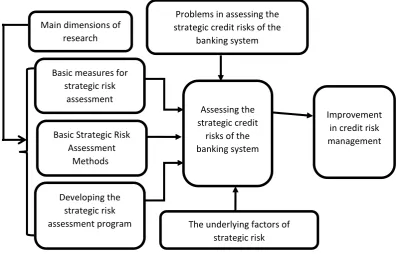
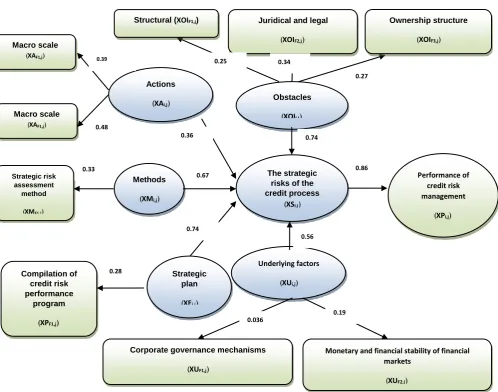
In the following, based on the review of previous studies, the conceptual model of the research is presented in the diagram 1:
Figure 1. Conceptual model of research
4. Methodology of research
52 Hemmati, Nabavi Chashmi, Alizadeh
Basic measures for strategic risk
assessment
Assessing the strategic credit
risks of the banking system
Improvement in credit risk management Main dimensions of
research
Problems in assessing the strategic credit risks of the
banking system
Basic Strategic Risk Assessment
Methods
Developing the strategic risk
assessment program The underlying factors of
strategic risk
Studies on theoretical foundations, the subject matter and the background of the problem of the research have been carried out using a study of references 25
such as dissertations and research related to the topic and the use of internet databases. Meanwhile, in order to implement the main steps of the research and collecting information, field methods including researcher-made questionnaires have been used. The statistical population of this research is risk experts and risk managers of the banking system of Iran and professors and academic experts in the field of risk. Also, in order to analyze the data, statistical tests (descriptive and inferential), factor analysis (exploratory and confirmatory), and multiple regression have been used.
As shown in Table 1, the final statistical population of the research is determined based on Krejcie & Morgan method. In order to collect questionnaire data, the items to be examined and strategic risk assessment are described in Table 2. This data is collected based on the study of the theoretical foundations and operational structure of the credit process and considering the interviews with banking experts based on the observation of the actual documentation of the credit sector of the banking system of Iran.
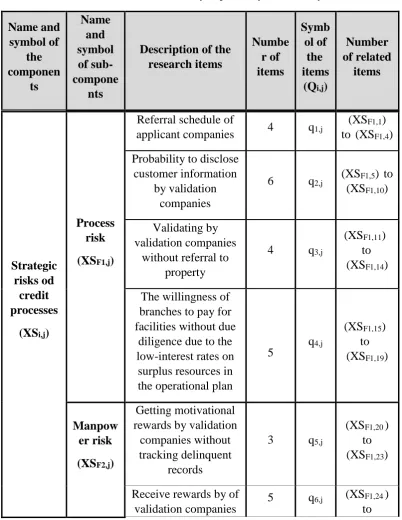
As shown in Table 2, 12 items were identified as aspects of the strategic risks of the credit system process in the banking system of Iran. We continue to use the research data flow for analysis. As outlined in Table 3, the strategic risks of the credit process are taken into account in the context of the actions taken by credit risk management, credit risk assessment and credit risk management in the banking system of Iran.
In Table 4, it is noted that a summary of the problems of assessing the strategic risks of the credit process in three structural, juridical and legal sections and the ownership structure in the banking system is introduced.
Evaluation of strategic risks of credit processes... 10 (2019) No. 2, 47-85 53
25 Hemmati, Nabavi Chashmi, Alizadeh
such as dissertations and research related to the topic and the use of internet databases. Meanwhile, in order to implement the main steps of the research and collecting information, field methods including researcher-made questionnaires have been used. The statistical population of this research is risk experts and risk managers of the banking system of Iran and professors and academic experts in the field of risk. Also, in order to analyze the data, statistical tests (descriptive and inferential), factor analysis (exploratory and confirmatory), and multiple regression have been used.
Table1. Introducing the characteristics of the research sample
No.
Characteristics of the statistical population of
research
Number of the statistical population
(n)
Type of statistical population
Percentage of a statistical population
Statistical sample according to Krejcie & Morgan
method
Selection of the
final statistical
sample
1
Students and graduates of financial and accounting management (incl.
Tendencies)
More than
20000 great 8%
384
persons 30.72
2
Risk managers of banks and financial
and credit institutions of Iran
More than
30000 great 12%
384
persons 46.08
3
Professors and academic elite in the
field of risk management
More than
50000 great 20%
384
persons 76.80
4
Experts in the banking system of
Iran
More than
150000 great 60%
384
persons 230.04
5 Total population of
research
More than
250000 great 100% *** 384
54 Hemmati, Nabavi Chashmi, Alizadeh
26
Evaluation of strategic risks of credit processes in the banking system of Iran
As shown in Table (1), the final statistical population of the research is determined based on Krejcie & Morgan method. In order to collect questionnaire data, the items to be examined and strategic risk assessment are described in Table (2). This data is collected based on the study of the theoretical foundations and operational structure of the credit process and considering the interviews with banking experts based on the observation of the actual documentation of the credit sector of the banking system of Iran.
Table2. Introducing the minor dimensions of strategic risk
No. Sub-component Description of the item reference
1 Process risk
Referral schedule of applicant companies (field observations
and interviews 2018)
The probability to disclose customer information by validation companies
(field observations and interviews 2018)
Validating by validation companies without referral to property
(field observations and interviews 2018)
The willingness of branches to pay for facilities without due diligence due to the low-interest
rates on surplus resources in the operational plan
(field observations and interviews 2018)
2 Manpower risk
Get Motivational Rewards by Validation Companies Without Tracking delinquent
records
(field observations and interviews 2018)
Receive rewards by of validation companies without tracking delinquent records
(field observations and interviews 2018)
Lack of awareness of the staff of validation companies in the credit processes of the
banking system of Iran
(field observations and interviews 2018)
The lack of awareness of the staff of the validation companies regarding the real estate
valuation affairs
(field observations and interviews 2018)
3 Systemic and
structural risk
Lack of pursuit of low-value facilities by validation companies
(field observations and interviews 2018)
No customer justification for providing the envelope containing the documents stamped by
the company to the experts of the validation companies
Evaluation of strategic risks of credit processes... 10 (2019) No. 2, 47-85 55
27 Hemmati, Nabavi Chashmi, Alizadeh
4 Trading risk
High cost due to parallel tasks in collecting claims (field observations and interviews 2018)
Increasing the opportunity cost of time because of the impossibility of fast communication with
validation companies
(field observations and interviews 2018)
Increasing the cost of outsourcing customer credit information to credit companies
(field observations and interviews 2018)
Source: Researcher Findings (field observations)
As shown in Table (2), 12 items were identified as aspects of the strategic risks of the credit system process in the banking system of Iran. We continue to use the research data flow for analysis.
As outlined in Table (3), the strategic risks of the credit process are taken into account in the context of the actions taken by credit risk management, credit risk assessment and credit risk management in the banking system of Iran.
Table3. Introducing the major dimensions of strategic risk
No. discussion Major and minor perspective References
1 Measures
Measures and policies for macroeconomic
credit risk management
Credit risk assessment in small size banks
Horstedt, M., & linjamaa, J. (2015)
Existence of different procedures for credit risk management in the banking
system
Anbar, a. (2006)
A framework for evaluating risk management practices in
an organization
Basel arisni, (2002)
The requirement for active credit risk management
Stulz, (1984), Smith, Smithson and Walford, (1990), Froot,
Sharfstein and Stein (1993)
Types of risk management
strategies in banks Groning and Brajweik, (2009)
Management measures and policies at the
Scheduled plan
Wang et al. (2010) Qualities of data
27 Hemmati, Nabavi Chashmi, Alizadeh
4 Trading risk
High cost due to parallel tasks in collecting claims (field observations and interviews 2018)
Increasing the opportunity cost of time because of the impossibility of fast communication with
validation companies
(field observations and interviews 2018)
Increasing the cost of outsourcing customer credit information to credit companies
(field observations and interviews 2018)
Source: Researcher Findings (field observations)
As shown in Table (2), 12 items were identified as aspects of the strategic risks of the credit system process in the banking system of Iran. We continue to use the research data flow for analysis.
As outlined in Table (3), the strategic risks of the credit process are taken into account in the context of the actions taken by credit risk management, credit risk assessment and credit risk management in the banking system of Iran.
Table3. Introducing the major dimensions of strategic risk
No. discussion Major and minor perspective References
1 Measures
Measures and policies for macroeconomic
credit risk management
Credit risk assessment in small size banks
Horstedt, M., & linjamaa, J. (2015)
Existence of different procedures for credit risk management in the banking
system
Anbar, a. (2006)
A framework for evaluating risk management practices in
an organization
Basel arisni, (2002)
The requirement for active credit risk management
Stulz, (1984), Smith, Smithson and Walford, (1990), Froot,
Sharfstein and Stein (1993)
Types of risk management
strategies in banks Groning and Brajweik, (2009)
Management measures and policies at the
Scheduled plan
56 Hemmati, Nabavi Chashmi, Alizadeh
28
Evaluation of strategic risks of credit processes in the banking system of Iran
level of micro-risk
Sharing processes
Predictability of the results of the models
High mortality rate
2 Methods
The perspective of the credit risk assessment
method
Neural network Atiya, a. (2001)
Genetic algorithm Chen, M., Huang, S. (2003).
Combining audit analysis and neural network
Yu, L., Wang, S., Lai, K. (2008)
Data Envelopment Analysis
Emel, AhmetBurak. Oral, Muhittin. Reisman, Arnold.
Yolalan, Reha. (2003) and Min, Jae H. Lee, Young-Chan.
(2008)
Combined support vector machine
Yu, L.,Yue, W., Wang, S., Lai, K.K.(2010)
Decision tree
Yanping,Y.,Zhengming, Q., Min, Y.,Rui, G.,Liting,
F.,Penghui, G. (2012)
Combined decision tree and neural network
Kabari, L. G. Nwachukwu, E. O. (2013)
Logistic regression (Pusa, 2016)
KMV structural model (Khansari and Shamsfallah,
2010)
Bee colony oriented neural network
(Fallahpour,Raei and Hendijanizadeh, 2013)
Application of survival analysis theory
(Karani and Aghaeipour, 2014)
criteria hybrid
-ulti A m
fuzzy ant
-algorithm for neuro colony neural network
(Horri and Mahdavi, 2015)
Regression and decision tree (Mirghafouri, 2015)
Support vector machine hybrid genetic algorithm and
(Kord, Zaferni, Emamdoust, 2016)
Evaluation of strategic risks of credit processes... 10 (2019) No. 2, 47-85 57
58 Hemmati, Nabavi Chashmi, Alizadeh
29 Hemmati, Nabavi Chashmi, Alizadeh
plan strategic credit
risk assessment program
work operations Date: 25/10/2007, Bureau of
Banking Studies and Regulation of the Central Bank of the Islamic Republic
of Iran, 2007), (field observations and interviews
2018) Formulate a written and
comprehensive program of affairs
Recovering the operation of the credit institution
A comprehensive picture of goals, attitudes and operational orientations of the
credit institution
Establishing a long-term program (for a period of 3 to
5 years)
4 Performance A perspective on the development of a credit
risk management program
Ibi et al., (2012)، Hayali, a. (2012) ،Nawaz and Munir, (2012), Abdelrahim, (2013) ، Singh, A., (2013), Aydu and Atdumi, (2014). Ogboi, C., &
Unuafe, O. (2013), Addosi et al., (2012), ، Kurawa, J., & Garba, s. (2014). ،Li, F., & Zou, Y. (2014), Khoshsima and Shahikitash, (2012),
Saghafi et al., (2017)
In Table (4), it is noted that a summary of the problems of assessing the strategic risks of the credit process in three structural, juridical and legal sections and the ownership structure in the banking system is introduced.
Table4. Introduction obstacles in assessing the strategic risks of the credit process of the banking system
No. discussion Major and minor perspective References
1 Structural Social and cultural (field observations
and interviews
30
Evaluation of strategic risks of credit processes in the banking system of Iran
2018)
Weaknesses in software and
hardware systems (Shirvani, 2004)
Management weakness (Shirvani, 2004)
2
Juridical and legal problems
The weakness of knowledge and education on Islamic banking
issues
(Shirvani, 2004)
3 Ownership
structure
Caution in the lending behavior of state-owned banks
(Sapienza, P. 2004), (Kordbacheh, H and
Noushabadi, L. 2011)
Management ownership and Risk-taking Behavior
Chun, S. E. et al, (2011)
Focus on ownership and risk behavior
(Sariri, s. 2013), (Meshki, 2010)
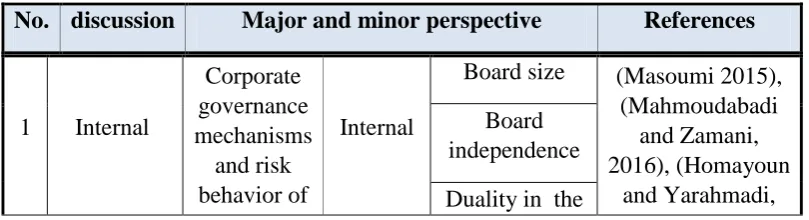
Table 5 summarizes the underlying factors of the strategic risks of the credit process of the banking system. Therefore, based on the study of theoretical foundations and empirical research background, we divided the underlying factors of the strategic risks of the credit system process of the banking system of Iran into internal and external factors. Among the internal factors of banks, corporate governance, risk and risk behavior are introduced. Among the external factors, the frameworks and approaches of monetary and financial stability of financial markets and the risk appetite behavior of banks were introduced as the most important factors.
Table5. Introducing the underlying factors of the strategic risks of the credit process of the banking system
No. discussion Major and minor perspective References
1 Internal
Corporate governance mechanisms
and risk behavior of
Internal
Board size (Masoumi 2015),
(Mahmoudabadi and Zamani, 2016), (Homayoun
and Yarahmadi, Board
independence
Evaluation of strategic risks of credit processes... 10 (2019) No. 2, 47-85 59
30
Evaluation of strategic risks of credit processes in the banking system of Iran
2018)
Weaknesses in software and
hardware systems (Shirvani, 2004)
Management weakness (Shirvani, 2004)
2
Juridical and legal problems
The weakness of knowledge and education on Islamic banking
issues
(Shirvani, 2004)
3 Ownership
structure
Caution in the lending behavior of state-owned banks
(Sapienza, P. 2004), (Kordbacheh, H and
Noushabadi, L. 2011)
Management ownership and Risk-taking Behavior
Chun, S. E. et al, (2011)
Focus on ownership and risk behavior
(Sariri, s. 2013), (Meshki, 2010)
Table 5 summarizes the underlying factors of the strategic risks of the credit process of the banking system. Therefore, based on the study of theoretical foundations and empirical research background, we divided the underlying factors of the strategic risks of the credit system process of the banking system of Iran into internal and external factors. Among the internal factors of banks, corporate governance, risk and risk behavior are introduced. Among the external factors, the frameworks and approaches of monetary and financial stability of financial markets and the risk appetite behavior of banks were introduced as the most important factors.
Table5. Introducing the underlying factors of the strategic risks of the credit process of the banking system
No. discussion Major and minor perspective References
1 Internal
Corporate governance mechanisms
and risk behavior of
Internal
Board size (Masoumi 2015),
(Mahmoudabadi and Zamani, 2016), (Homayoun
and Yarahmadi, Board
independence
Duality in the
approaches of monetary and financial stability of financial markets and the risk appetite behavior of banks were introduced as the most important factors.
5. Results
In this part of the research, statistical methods are used to describe and analyze the data. Therefore, firstly the findings of the Cronbach’s alpha and Kolmogorov-Smirnov tests are presented. Then, the inferential statistics were obtained by employing exploratory factor analysis, confirmatory factor analysis (first and second order) and structural equation modeling (SEM) using Liserl (8.72) and SSPS (23) software are presented in tables.
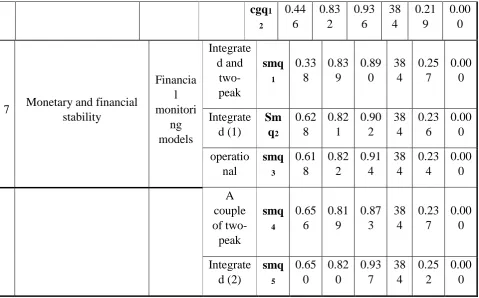
The results of tables (6) to (7) show that the questionnaire has the necessary validity and reliability for the research problem. Also, the results of the Kolmogorov-Smirnov test show that the variables of the research have a normal distribution (P <0.05). Therefore, standard statistical least squares (OLS) methods are used to perform statistical analyses.
Exploratory factor analysis
Before performing factor analysis, data must first be checked. Table 8 shows the results of the test (KMO) and Bartlett. According to this table, since the size of the Kaiser-Meyer is 0.786 and greater than 0.7, so that the data is suitable for performing factor analysis. Also, considering that the significance value is 0 and less than 0.05, then the results of Bartlett’s test are significant. It means that there is a significant correlation between the variables and can be examined by the factor analysis method.
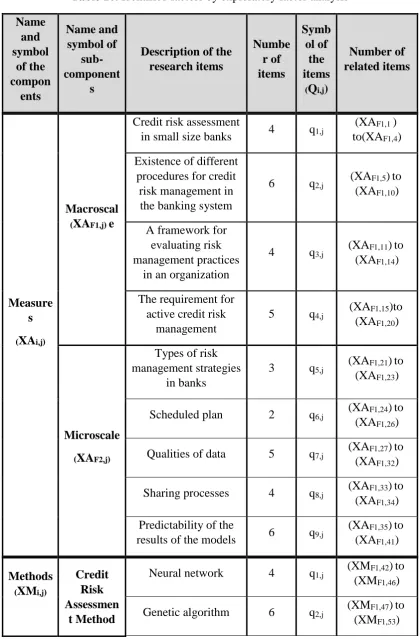
According to the results of (9) to (11), the questionnaires were categorized into 14 dimensions, which are in fact the same as the sub-components of the seven main dimensions of the questionnaire. However, the summary of the results of this categorization is presented in table (8) to (10). Also, there are symbols that will be used to introduce components and sub-components.
First-order confirmatory factor
In this section, the first-order confirmatory factor analysis was used to test and validate the sub-components of the major and minor dimensions along with the related items of the questionnaire. Therefore, the results of the method in two states of standard coefficients and significant numbers have been used to examine the significance of the obtained coefficients. Thus, if the absolute value of a significant number is greater than 1.96, it indicates the significance of the corresponding path in the model. Therefore, due to the significant values obtained in this section, all sub-components of the main dimensions of the model are significant.
Summary of results of first-order confirmatory factor
60 Hemmati, Nabavi Chashmi, Alizadeh
31 Hemmati, Nabavi Chashmi, Alizadeh
bank role of CEO 2017), (Forouzan,
2017)
Management ownership
Focused ownership
Unauthorized members of
the board
Board Bonus
(Hamidian, 2017) Separation of
the CEO from the members
Cabinet shares
(Demsaz and lenn 1985), (Hamidian,
2017)
Exterior
Free float
percentage (Hamidian, 2017)
Ownership percentage of
institutional shareholder
(Hamidian, 2017)
Ownership and influence of government
in companies
(Hamidian, 2017)
2 External
The framework and approaches to the monetary and financial
stability of financial markets
Integrated and two-peak surveillance
model
(UK Financial Policy Committee,
2006-2015)
Integrated monitoring
model
(German Financial Stability Commission,
2006-2015)
Functional (with some two-peak
(High Council for Financial Stability
2006-Evaluation of strategic risks of credit processes... 10 (2019) No. 2, 47-85 61
32
Evaluation of strategic risks of credit processes in the banking system of Iran
structures) 2015)
A couple of two- peaks
(US Financial Stability Monitor,
2006-2015)
Integrated
(Central Bank Cooperation with
the Ministry of Finance of Japan,
2006-2015)
5. Results
In this part of the research, statistical methods are used to describe and analyze the data. Therefore, firstly the findings of the Cronbach's alpha and Kolmogorov-Smirnov tests are presented. Then, the inferential statistics were obtained by employing exploratory factor analysis, confirmatory factor analysis (first and second order) and structural equation modeling (SEM) using Liserl (8.72) and SSPS (23) software are presented in tables.
Table6. Descriptive statistics of Cronbach's alpha and Kolmogorov-Smirnov tests (research items)
No.
criterio n
Defau
lt Cronbach's alpha test Kolmogorov-Smirnov test
Modified correlatio
n
Alpha if the criterion is
removed from the questionnai
re
Cronbach 's alpha
Numb er
Leve l (Z)
The significan
ce level
1 Minor
dimensions of
q1 0.308 0.886 0.887 384 0.209 0.000
q2 0.332 0.886 0.703 384 0.208 0.000
32
Evaluation of strategic risks of credit processes in the banking system of Iran
structures) 2015)
A couple of two- peaks
(US Financial Stability Monitor,
2006-2015)
Integrated
(Central Bank Cooperation with
the Ministry of Finance of Japan,
2006-2015)
5. Results
In this part of the research, statistical methods are used to describe and analyze the data. Therefore, firstly the findings of the Cronbach's alpha and Kolmogorov-Smirnov tests are presented. Then, the inferential statistics were obtained by employing exploratory factor analysis, confirmatory factor analysis (first and second order) and structural equation modeling (SEM) using Liserl (8.72) and SSPS (23) software are presented in tables.
Table6. Descriptive statistics of Cronbach's alpha and Kolmogorov-Smirnov tests (research items)
No.
criterio n
Defau
lt Cronbach's alpha test Kolmogorov-Smirnov test
Modified correlatio
n
Alpha if the criterion is
removed from the questionnai
re
Cronbach 's alpha
Numb er
Leve l (Z)
The significan
ce level
1 Minor
dimensions of
q1 0.308 0.886 0.887 384 0.209 0.000
62 Hemmati, Nabavi Chashmi, Alizadeh
33 Hemmati, Nabavi Chashmi, Alizadeh
Strategic Risks q3 0.358 0.885 0.810 384 0.188 0.000
q4 0.264 0.887 0.846 384 0.209 0.000
q5 0.220 0.887 0.809 384 0.217 0.000
q6 0.193 0.888 0.812 384 0.204 0.000
q7 0.256 0.887 0.832 384 0.206 0.000
q8 0.596 0.879 0.829 384 0.160 0.000
q9 0.607 0.879 0.867 384 0.163 0.000
q10 0.602 0.879 0.866 384 0.150 0.000
q11 0.609 0.879 0.875 384 0.152 0.000
q12 0.593 0.879 0.807 384 0.153 0.000
2 Measures
macro
maq1 0.602 0.879 0.863 384 0.157 0.000
maq2 0.553 0.880 0.887 384 0.185 0.000
maq3 0.648 0.878 0.796 384 0.166 0.000
maq4 0.471 0.882 0.864 384 0.172 0.000
maq5 0.484 0.882 0.851 384 0.185 0.000
micro
miq1 0.482 0.882 0.803 384 0.186 0.000
miq2 0.434 0.883 0.811 384 0.180 0.000
miq3 0.446 0.883 0.826 384 0.181 0.000
miq4 0.374 0.885 0.877 384 0.165 0.000
miq5 0.446 0.883 0.848 384 0.189 0.000
3 Methods
method.q1 0.445 0.883 0.866 384 0.207 0.000
method.q2 0.404 0.884 0.868 384 0.201 0.000
method.q3 0.414 0.884 0.883 384 0.206 0.000
method.q4 0.472 0.882 0.879 384 0.206 0.000
method.q5 0.378 0.820 0.794 384 0.238 0.000
method.q6 0.339 0.822 0.797 384 0.205 0.000
Evaluation of strategic risks of credit processes... 10 (2019) No. 2, 47-85 63
34
Evaluation of strategic risks of credit processes in the banking system of Iran
method.q8 0.525 0.812 0.836 384 0.196 0.000
method.q9 0.525 0.812 0.854 384 0.200 0.000
method.q10 0.403 0.819 0.861 384 0.232 0.000
method.q11 0.445 0.816 0.857 384 0.193 0.000
method.q12 0.400 0.819 0.802 384 0.243 0.000
method.q13 0.396 0.819 0.817 384 0.206 0.000
method.q14 0.430 0.817 0.871 384 0.201 0.000
4 Plans
eq1 0.417 0.792 0.884 384 0.361 0.000
eq2 0.652 0.725 0.799 384 0.107 0.000
eq3 0.533 0.713 0.841 384 0.119 0.000
eq4 0.554 0.876 0.807 384 0.323 0.000
eq5 0.564 0.857 0.862 384 0.322 0.000
5 Performance
perfor.q1 0.374 0.915 0.928 384 0.300 0.000
perfor.q1 0.391 0.915 0.974 384 0.243 0.000
perfor.q1 0.404 0.915 0.839 384 0.248 0.000
perfor.q1 0.406 0.915 0.836 384 0.369 0.000
perfor.q1 0.457 0.914 0.845 384 0.254 0.000
Table 7. Descriptive statistics of Cronbach's alpha and Kolmogorov-Smirnov tests (research items) No, Crite rion Def ault
Cronbach's alpha test
Kolmogorov-Smirnov test
Modified correlation
Alpha if the criterion is removed from the questionnaire
Cronb ach's alpha Nu mbe r Le vel (Z) The signifi cance level
5 Issues Structural
1 q 0.54 4 0.91 2 0.91 8 38 4 0.28 5 0.00 0 2 q 0.63 4 0.91 0 0.93 6 38 4 0.23 2 0.00 0 34
Evaluation of strategic risks of credit processes in the banking system of Iran
method.q8 0.525 0.812 0.836 384 0.196 0.000
method.q9 0.525 0.812 0.854 384 0.200 0.000
method.q10 0.403 0.819 0.861 384 0.232 0.000
method.q11 0.445 0.816 0.857 384 0.193 0.000
method.q12 0.400 0.819 0.802 384 0.243 0.000
method.q13 0.396 0.819 0.817 384 0.206 0.000
method.q14 0.430 0.817 0.871 384 0.201 0.000
4 Plans
eq1 0.417 0.792 0.884 384 0.361 0.000
eq2 0.652 0.725 0.799 384 0.107 0.000
eq3 0.533 0.713 0.841 384 0.119 0.000
eq4 0.554 0.876 0.807 384 0.323 0.000
eq5 0.564 0.857 0.862 384 0.322 0.000
5 Performance
perfor.q1 0.374 0.915 0.928 384 0.300 0.000
perfor.q1 0.391 0.915 0.974 384 0.243 0.000
perfor.q1 0.404 0.915 0.839 384 0.248 0.000
perfor.q1 0.406 0.915 0.836 384 0.369 0.000
perfor.q1 0.457 0.914 0.845 384 0.254 0.000
Table 7. Descriptive statistics of Cronbach's alpha and Kolmogorov-Smirnov tests (research items) No, Crite rion Def ault
Cronbach's alpha test
Kolmogorov-Smirnov test
Modified correlation
Alpha if the criterion is removed from the questionnaire
Cronb ach's alpha Nu mbe r Le vel (Z) The signifi cance level
5 Issues Structural
64 Hemmati, Nabavi Chashmi, Alizadeh
35 Hemmati, Nabavi Chashmi, Alizadeh
3 q 0.54 3 0.91 2 0.92 0 38 4 0.27 0 0.00 0
Juridical and legal
problems q4
0.52 0 0.91 3 0.91 5 38 4 0.31 8 0.00 0 Structure of ownership 5 q 0.55 6 0.91 2 0.92 1 38 4 0.25 1 0.00 0 6 q 0.62 9 0.91 1 0.92 7 38 4 0.30 5 0.00 0 7 q 0.63 5 0.91 1 0.86 5 38 4 0.35 0 0.00 0
Evaluation of strategic risks of credit processes... 10 (2019) No. 2, 47-85 65
36 Hemmati, Nabavi Chashmi, Alizadeh
1 cgq 2 0.44 6 0.83 2 0.93 6 38 4 0.21 9 0.00 0
7 Monetary and financial
stability Financia l monitori ng models Integrate d and two-peak smq 1 0.33 8 0.83 9 0.89 0 38 4 0.25 7 0.00 0 Integrate d (1) Sm 2 q 0.62 8 0.82 1 0.90 2 38 4 0.23 6 0.00 0 operatio nal smq 3 0.61 8 0.82 2 0.91 4 38 4 0.23 4 0.00 0 A couple of two-peak smq 4 0.65 6 0.81 9 0.87 3 38 4 0.23 7 0.00 0 Integrate d (2) smq 5 0.65 0 0.82 0 0.93 7 38 4 0.25 2 0.00 0
The results of tables (6) to (7) show that the questionnaire has the necessary validity and reliability for the research problem. Also, the results of the Kolmogorov-Smirnov test show that the variables of the research have a normal distribution (P <0.05). Therefore, standard statistical least squares (OLS) methods are used to perform statistical analyses.
Exploratory factor analysis
Before performing factor analysis, data must first be checked. Table 8 shows the results of the test (KMO) and Bartlett. According to this table, since the size of the Kaiser-Meyer is 0.786 and greater than 0.7, so that the data is suitable for performing factor analysis. Also, considering that the significance value is 0 and less than 0.05, then the results of Bartlett's test are significant. It means that there is a significant correlation between the variables and can be examined by the factor analysis method.
Table 8. KMO and Bartlett test results
test
KMO 0.785
Bartlett’s test
Chi-square 22334.49
Degree of freedom 3486
(
p-value
) 0.000
36 Hemmati, Nabavi Chashmi, Alizadeh
1 cgq 2 0.44 6 0.83 2 0.93 6 38 4 0.21 9 0.00 0
7 Monetary and financial
stability Financia l monitori ng models Integrate d and two-peak smq 1 0.33 8 0.83 9 0.89 0 38 4 0.25 7 0.00 0 Integrate d (1) Sm 2 q 0.62 8 0.82 1 0.90 2 38 4 0.23 6 0.00 0 operatio nal smq 3 0.61 8 0.82 2 0.91 4 38 4 0.23 4 0.00 0 A couple of two-peak smq 4 0.65 6 0.81 9 0.87 3 38 4 0.23 7 0.00 0 Integrate d (2) smq 5 0.65 0 0.82 0 0.93 7 38 4 0.25 2 0.00 0
The results of tables (6) to (7) show that the questionnaire has the necessary validity and reliability for the research problem. Also, the results of the Kolmogorov-Smirnov test show that the variables of the research have a normal distribution (P <0.05). Therefore, standard statistical least squares (OLS) methods are used to perform statistical analyses.
Exploratory factor analysis
Before performing factor analysis, data must first be checked. Table 8 shows the results of the test (KMO) and Bartlett. According to this table, since the size of the Kaiser-Meyer is 0.786 and greater than 0.7, so that the data is suitable for performing factor analysis. Also, considering that the significance value is 0 and less than 0.05, then the results of Bartlett's test are significant. It means that there is a significant correlation between the variables and can be examined by the factor analysis method.
Table 8. KMO and Bartlett test results
test
KMO 0.785
Bartlett’s test
Chi-square 22334.49
Degree of freedom 3486
(
p-value
66 Hemmati, Nabavi Chashmi, Alizadeh
37
Evaluation of strategic risks of credit processes in the banking system of Iran
Reference: Researcher Findings (field observations)
According to the results of (9) to (11), the questionnaires were categorized into 14 dimensions, which are in fact the same as the sub-components of the seven main dimensions of the questionnaire. However, the summary of the results of this categorization is presented in table (8) to (10). Also, there are symbols that will be used to introduce components and sub-components.
Table 9. Identified factors by exploratory factor analysis
Name and symbol of
the componen
ts
Name and symbol of sub-compone
nts
Description of the research items
Numbe r of items
Symb ol of the items
(Qi,j)
Number of related
items
Strategic risks od
credit processes
(XSi,j)
Process risk
(XSF1,j)
Referral schedule of
applicant companies 4 q1,j
(XSF1,1)
to (XSF1,4)
Probability to disclose customer information
by validation companies
6 q2,j
(XSF1,5) to
(XSF1,10)
Validating by validation companies
without referral to property
4 q3,j
(XSF1,11)
to (XSF1,14)
The willingness of branches to pay for facilities without due
diligence due to the low-interest rates on
surplus resources in the operational plan
5
q4,j
(XSF1,15)
to (XSF1,19)
Manpow er risk
(XSF2,j)
Getting motivational rewards by validation companies without tracking delinquent
records
3 q5,j
(XSF1,20)
to (XSF1,23)
Receive rewards by of validation companies
5 q6,j (XSF1,24)
Evaluation of strategic risks of credit processes... 10 (2019) No. 2, 47-85 67
38
Evaluation of strategic risks of credit processes in the banking system of Iran
without tracking delinquent records
(XSF1,29)
Lack of awareness of the staff of validation
companies in the credit processes of the banking system of Iran
4 q7,j
(XSF1,30)
to (XSF1,34)
The lack of awareness of the staff of the validation companies
regarding the real estate valuation affairs
5 q8,j
(XSF1,35)
to (XSF1,40)
Systemic and structur
al risk
(XSF3,j)
Lack of pursuit of low value facilities by validation companies
6 q9,j
(XSF1,41)
to (XSF1,46)
No customer justification for providing the envelope
containing the documents stamped by
the company to the experts of the validation companies
5 q10,j
(XSF1,47)
to (XSF1,51)
Trading risk
(XSF4,j)
High cost due to parallel tasks in collecting claims
6 q11,j
(XSF1,52)
to (XSF1,58)
Increasing the opportunity cost of time because of the impossibility of fast communication with validation companies
4 q12,j
(XSF1,59)
to (XSF1,62)
Increasing the cost of outsourcing customer credit information to
credit companies
5 q13,j
(XSF1,63)
to (XSF1,68)
68 Hemmati, Nabavi Chashmi, Alizadeh
39
Evaluation of strategic risks of credit processes in the banking system of Iran
Table 10. Identified factors by exploratory factor analysis
Name and symbol
of the compon
ents
Name and symbol of
sub-component
s
Description of the research items
Numbe r of items
Symb ol of the items
)
i,j
Q
)
Number of related items
Measure s
( i,j
XA
)
Macroscal e
( F1,j
XA
)
Credit risk assessment
in small size banks 4 q1,j
(XAF1,1 )
to(XAF1,4)
Existence of different procedures for credit
risk management in the banking system
6 q2,j
(XAF1,5)to
(XAF1,10)
A framework for evaluating risk management practices
in an organization
4 q3,j (XAF1,11)to
(XAF1,14)
The requirement for active credit risk
management
5 q4,j
(XAF1,15)to
(XAF1,20)
Microscale
( F2,j
XA
)
Types of risk management strategies
in banks
3 q5,j (XAF1,21)to
(XAF1,23)
Scheduled plan 2 q6,j (XAF1,24)to
(XAF1,26)
Qualities of data 5 q7,j (XAF1,27)to
(XAF1,32)
Sharing processes 4 q8,j
(XAF1,33)to
(XAF1,34)
Predictability of the
results of the models 6 q9,j
(XAF1,35)to
(XAF1,41)
Methods
( i,j
XM
)
Credit Risk Assessmen
t Method
Neural network 4 q1,j (XMF1,42)to
(XMF1,46)
Genetic algorithm 6 q2,j (XMF1,47)to
Evaluation of strategic risks of credit processes... 10 (2019) No. 2, 47-85 69
40
Evaluation of strategic risks of credit processes in the banking system of Iran
( F1,j
XM
) Combining audit
analysis and neural network
4 q3,j
(XMF1,54)to
(XMF1,57)
Data Envelopment
Analysis 5 q4,j
(XMF1,58)to
(XMF1,63)
Combined support
vector machine 3 q5,j
(XMF1,64)to
(XMF1,66)
Decision tree 2 q6,j
(XMF1,67)to
(XMF1,68)
Combined decision tree and neural
network
5 q7,j
(XMF1,69)to
(XMF1,73)
Logistic regression 4 q8,j
(XMF1,74)to
(XMF1,78)
Kmv structural model 6 q9,j
(XMF1,79) to
(XMF1,85)
Bee colony oriented
neural network 4 q10,j
(XMF1,86)to
(XMF1,89)
Application of survival analysis
theory
6 q11,j
(XMF1,90)to
(XMF1,96)
criteria hybrid
-Multi
-algorithm for neuro
fuzzy ant colony neural network
4 q12,j (XMF1,97)to
(XMF1,100)
Regression and
decision tree 5 q13,j
(XMF1,101) to
(XMF1,105)
Support vector hybrid machine and
genetic algorithm
3 Q14,j
(XMF1,106)to
(XMF1,109)
Strategi c Plan
( i,j
XE
)
Developin g a strategic credit risk assessment
Managing the Continuity of work
operations
4 q1,j (XEF1,1)to
(XEF1,4)
Formulate a written and comprehensive
2 q2,j (XEF1,5) to
70 Hemmati, Nabavi Chashmi, Alizadeh
41 Hemmati, Nabavi Chashmi, Alizadeh
program
( F1,j
XE
)
program of affairs
Recovering the operation of the credit
institution
4 q3,j (XEF1,8) to
(XEF1,11)
A comprehensive picture of goals,
attitudes and operational orientations of the
credit institution
2 q4,j (XEF1,12)to
(XEF1,16)
Establishing a long-term program (for a period of 3 to 5 years)
3 q5,j
(XEF1,17)to
(XEF1,20)
Perform ance ( i,j XP ) Developin g a credit
risk performan ce program ( F1,j XP )
Development of a short term program (6
months to 1 year)
4 q1,j (XPF1,1)to
(XPF1,4)
Development of a midterm program (2 to
3 years)
6 q2,j (XPF1,5)to
(XPF1,10)
Development of a short term program (3
to 5 years)
4 q3,j
(XPF1,11)to
(XPF1,14)
Reference: Researcher Findings (field observations)
Table11. Identified factors by exploratory factor analysis
Name and symbol of the components Name and symbol of subcomponents
Description of the research items Number of items Symbol of the items (Qi,j)
Number of related items Obstacles ( i,j XOI ) Structural ( F1,j XOI )
Social and cultural 4 q1,j
(XOIF1,1) to
(XOIF1,4)
Weaknesses in software
and hardware systems 6 q2,j
(XOIF1,5) to
(XOIF1,10)
Management weakness 4 q3,j (XOIF1,11)to
(XOIF1,14)
41 Hemmati, Nabavi Chashmi, Alizadeh
program
( F1,j
XE
)
program of affairs
Recovering the operation of the credit
institution
4 q3,j
(XEF1,8) to
(XEF1,11)
A comprehensive picture of goals,
attitudes and operational orientations of the
credit institution
2 q4,j
(XEF1,12)to
(XEF1,16)
Establishing a long-term program (for a period of 3 to 5 years)
3 q5,j (XEF1,17)to
(XEF1,20)
Perform ance ( i,j XP ) Developin g a credit
risk performan ce program ( F1,j XP )
Development of a short term program (6
months to 1 year)
4 q1,j
(XPF1,1)to
(XPF1,4)
Development of a midterm program (2 to
3 years)
6 q2,j
(XPF1,5)to
(XPF1,10)
Development of a short term program (3
to 5 years)
4 q3,j (XPF1,11)to
(XPF1,14)
Reference: Researcher Findings (field observations)
Table11. Identified factors by exploratory factor analysis
Name and symbol of the components Name and symbol of subcomponents
Description of the research items Number of items Symbol of the items (Qi,j)
Number of related items Obstacles ( i,j XOI ) Structural ( F1,j XOI )
Social and cultural 4 q1,j
(XOIF1,1) to
(XOIF1,4)
Weaknesses in software
and hardware systems 6 q2,j
(XOIF1,5) to
(XOIF1,10)
Management weakness 4 q3,j
(XOIF1,11)to
Evaluation of strategic risks of credit processes... 10 (2019) No. 2, 47-85 71
42
Evaluation of strategic risks of credit processes in the banking system of Iran
Juridical and legal problems
( F2,j
XOI
)
The lack of knowledge and education on
Islamic banking obstacles
5 q4,j
(XOIF2,15)to
(XOIF2,20)
Ownership structure
( F3,j
XOI
)
Caution in the lending behavior of state-owned
banks
5 q5,j (XOIF3,21)to
(XOIF3,25)
Management Ownership and
Risk-taking behavior
4 q6,j
(XOIF3,26)to
(XOIF3,30)
Focus on ownership and
risk behavior 6 q7,j
(XOIF3,31)to
(XOIF3,34)
Underlying factors
( i,j
XU
)
Corporate governance mechanisms
( F1,j
XU
)
Board size 4 q1,j (XUF1,1)to (XUF1,4)
Independency of the
board 4 q2,j (XUF1,5) to(XUF1,8)
Duality in the role of
CEO 2 q3,j (XUF1,9) to(XUF1,10)
Management ownership 3 q4,j (XUF1,11) to
(XUF1,13)
Focused ownership 5 q5,j (XUF1,14)to
(XUF1,18)
Unauthorized members
of the board 2 q6,j
(XUF1,19)to
(XUF1,20)
Board bonus 4 q7,j
(XUF1,21)to
(XUF1,24)
Separation of the CEO
from the members 2 q8,j
(XUF1,25)to
(XUF1,26)
Cabinet shares 3 q9,j
(XUF1,27)to
(XUF1,30)
Free float percentage 2 q10,j
(XUF1,31)to
(XUF1,32)
Ownership percentage of institutional
shareholder
3 q11,j
(XUF1,33)to
72 Evaluation of strategic risks of credit processes in the banking system of Iran Hemmati, Nabavi Chashmi, Alizadeh43
Ownership and influence of government in
companies
4 q12,j
(XUF1,37) to
(XUF1,40)
Monetary and financial
stability ( F2,j
XU
)
Integrated and two-peak
surveillance model 4 q13,j (XUF2,1)to(XUF2,4)
Integrated monitoring
model 5 q1,j (XUF2,5) to(XUF2,9)
Functional (with some
two-peak structures) 3 q2,j
(XUF2,10) to
(XUF2,13)
A couple of two- peaks 6 q3,j (XUF2,14)to
(XUF2,19)
Integrated 2 q4,j (XUF2,20)to
(XUF2,22)
Reference: Researcher Findings (field observations)
First-order confirmatory factor
In this section, the first-order confirmatory factor analysis was used to test and validate the sub-components of the major and minor dimensions along with the related items of the questionnaire. Therefore, the results of the method in two states of standard coefficients and significant numbers have been used to examine the significance of the obtained coefficients. Thus, if the absolute value of a significant number is greater than 1.96, it indicates the significance of the corresponding path in the model. Therefore, due to the significant values obtained in this section, all sub-components of the main dimensions of the model are significant.
Summary of results of first-order confirmatory factor
Strategic risks of credit processes (XSi, j): As in Table (9), strategic risk dimension (XSi, j) of the credit processes of the banking system of Iran consists of four sub-components. The results of the first-order confirmatory factor analysis method in two states of the standard coefficients and significant values show that all the significant numbers are larger than 1.96. It is therefore concluded that all of the following sub-components of the strategic risk of the credit process (XSi, j), and its related items, have been reported at a 95% confidence level. Regarding the standard coefficients obtained in this section, it follows that the sub-components of the major dimension of the strategic risks of the credit process (XSi, j) affect the performance of credit risk management (XPi, j) of the banking system of Iran.
Measures (XAi, j): As indicated in the table (10), risk assessment measures (XAi, j) of the credit system of the banking system of Iran include two sub-components. The results of the first-order confirmatory factor analysis method in two states of the standard coefficients and significant
of the credit processes of the banking system of Iran consists of four sub-components. The results of the first-order confirmatory factor analysis method in two states of the standard coefficients and significant values show that all the significant numbers are larger than 1.96. It is therefore concluded that all of the following sub-components of the strategic risk of the credit process (XSi, j), and its related items, have been reported at a 95% confidence level. Regarding the standard coefficients obtained in this section, it follows that the sub-components of the major dimension of the strategic risks of the credit process (XSi, j) affect the performance of credit risk management (XPi, j) of the banking system of Iran.
Measures (XAi, j): As indicated in the table 10, risk assessment measures (XAi, j) of the credit
system of the banking system of Iran include two sub-components. The results of the first-order confirmatory factor analysis method in two states of the standard coefficients and significant values show that all the significant numbers are larger than 1.96. It is therefore concluded that all of the following sub-components of the credit risk assessment (XAi, j), and related items, have been reported at a 95% confidence level. Regarding the standard coefficients obtained in this section, it follows that the sub-components of the main dimension of risk assessment measures (XAi, j) affect the strategic risks (XSi, j) of the credit processes of the banking system of Iran.
Methods (XMi, j): As shown in Table 10, risk assessment methods (XMi, j) of the credit processes
of the banking system of Iran include a sub-component. The results of the first-order confirmatory factor analysis method in two states of the standard coefficients and significant values show that all the significant numbers are larger than 1.96. It is therefore concluded that all of the following sub-components of the credit risk assessment (XMi, j), and related items, have been reported at a 95% confidence level. Regarding the standard coefficients obtained in this section, it follows that the sub-components of the main dimension of risk assessment measures (XMi, j) affect the strategic risks (XSi, j) of the credit processes of the banking system of Iran.
Evaluation of strategic risks of credit processes... 10 (2019) No. 2, 47-85 73
of the banking system of Iran include a sub-component. The results of the first-order confirmatory factor analysis method in two states of the standard coefficients and significant values show that all the significant numbers are larger than 1.96. It is therefore concluded that all of the following sub-components of the strategic plan (XEi, j), and related items, have been reported at a 95% confidence level. Regarding the standard coefficients obtained in this section, it follows that the
sub-components of the main dimension of the strategic plan (XEi, j) affect the strategic risks (XSi, j) of the credit processes of the banking system of Iran.
Performance (XPi, j): As shown in Table 10, performance (XPi, j) of the credit processes of
the banking system of Iran include a sub-component. The results of the first-order confirmatory factor analysis method in two states of the standard coefficients and significant values show that all the significant numbers are larger than 1.96. It is therefore concluded that all of the following sub-components of the performance (XPi, j), and related items, have been reported at a 95% confidence level. Regarding the standard coefficients obtained in this section, it follows that the sub-components of the main dimension of performance (XPi, j) affect the strategic risks (XSi, j) of the credit processes of the banking system of Iran.
Obstacles (XOi, j): As shown in Table 11, Obstacles (XOi, j) of the credit processes of the
banking system of Iran include three sub-component. The results of the first-order confirmatory factor analysis method in two states of the standard coefficients and significant values show that all the significant numbers are larger than 1.96. It is therefore concluded that all of the following sub-components of the Obstacles (XOi, j), and related items, have been reported at a 95% confidence level. Regarding the standard coefficients obtained in this section, it follows that the sub-components of the main dimension of Obstacles (XOi, j) affect the strategic risks (XSi, j) of the credit processes of the banking system of Iran.
Underlying factors (XUi, j): As shown in Table 11, underlying factors (XUi, j) of the credit
processes of the banking system of Iran include three sub-component. The results of the first-order confirmatory factor analysis method in two states of the standard coefficients and significant values show that all the significant numbers are larger than 1.96. It is therefore concluded that all of the following sub-components of the underlying factors (XUi, j), and related items, have been reported at a 95% confidence level. Regarding the standard coefficients obtained in this section, it follows that the sub-components of the main dimension of underlying factors (XUi, j) affect the strategic risks (XSi, j) of the credit processes of the banking system of Iran.
Summary of results of second-order confirmatory factor analysis:
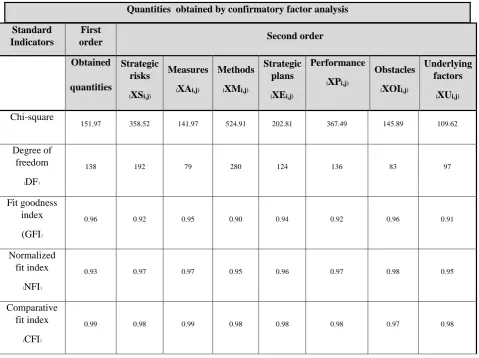
In order to evaluate the structural validity of each of the major dimensions of the model, sub-components and their related items were used by second-order confirmatory factor analysis. The results are presented for each of the main dimensions of the model.
Strategic risks of credit processes (XSi, j): As in Table 9, strategic risk dimension (XSi, j) of
the credit processes of the banking system of Iran consists of four sub-components. The results of the second-order confirmatory factor analysis method in two states of the standard coefficients and significant values show that all the significant numbers are larger than 1.96. It is therefore concluded that all of the following sub-components of the strategic risk of the credit process (XSi, j), and its related items, have been reported at a 95% confidence level.
Measures (XAi, j): As in Table 10, measures (XAi, j) of the credit processes of the banking system
of Iran consists of four sub-components. The results of the second-order confirmatory factor analysis method in two states of the standard coefficients and significant values show that