R E S E A R C H
Open Access
Using equitable impact sensitive tool
(EQUIST) to promote implementation of
evidence informed policymaking to
improve maternal and child health
outcomes: a focus on six West African
Countries
Chigozie Jesse Uneke
1*, Issiaka Sombie
2, Henry Chukwuemeka Uro-Chukwu
1and Ermel Johnson
2Abstract
Background:United Nations Children’s Fund (UNICEF) designedEQUitableImpactSensitiveTool (EQUIST) to enable global health community address the issue of equity in maternal, newborn and child health (MNCH) and minimize health disparities between the most marginalized population and the better-off. The purpose of this study was to use EQUIST to provide reliable evidence, based on demographic health surveys (DHS) on cost–effectiveness and equitable impact of interventions that can be implemented to improve MNCH outcomes in Benin, Burkina Faso, Ghana, Mali, Nigeria and Senegal.
Methods:Using the latest available DHS data sets, we conducted EQUIST Situation Analysis of maternal and child health outcomes in the six countries by sub-national categorization, wealth and by residence. We then identified the poorest population class within each country with the highest maternal and child mortality and performed EQUIST Scenario Analysis of this population to identify intervention package, bottlenecks and strategies to address them, cost of the intervention and strategies as well as the number of deaths avertible.
Results:Under-five mortality was highest in Atlantique (Benin), Sahel (Burkina Faso), Northern (Ghana), Sikasso (Mali) , North-West (Nigeria), and Diourbel (Senegal). The number of under-five deaths was considerably higher among the poorest and rural population. Neonatal causes, malaria, pneumonia and diarrhoea were responsible for most of the under-five deaths. Ante-partum, intra-partum, and post-partum haemorrhages, and hypertensive disorder, were responsible for highest maternal deaths. The national average for improved water source was highest in Ghana (82%). Insecticide treated nets ownership percentage national average was highest in Benin (73%). Delivery by skilled professional is capable of averting the highest number of under-five and maternal deaths in the six countries. Redeployment/relocation of existing staff was the strategy with highest costs in Burkina Faso, Nigeria and Senegal. Ghana recorded the least cost per capita ($0.39) while the highest cost per capita was recorded in Benin ($4.0).
Conclusion:EQUIST highlights the most vulnerable and deprived children and women needing urgent health interventions as a matter of priority. It will continue to serve as a tool for maximizing the number of lives saved; decreasing health disparities and improving overall cost effectiveness.
Keywords:EQUIST, West Africa, Maternal, Neonatal, Child, Health, Equity
* Correspondence:[email protected]
1African Institute for Health Policy and Health Systems, Ebonyi State
University, CAS Campus, Abakaliki PMB 053, Nigeria
Full list of author information is available at the end of the article
Introduction
As the United Nations (UN) Millennium Development Goals (MDGs) initiative of 2000 rounded off in 2015, available reports indicated that most countries made various levels of progress towards achieving the MDGs 4 and 5 (reducing child mortality and improving maternal health, respectively) [1]. Recent statistics from the WHO Global Health Observatory showed that in Africa, infant, neonatal and under-five mortality rates per 1000 live births reduced from 93.5, 40.9 and 154 in 2000 to 53.9, 27.7 and 79.5 in 2015 respectively [2]. Similarly, the ma-ternal mortality ratio (MMR) per 100,000 live births in
Africa reduced from 840 in 2000 to 542 in 2015 [3].
Despite these appreciable, the current infant mortality rate (IMR), neonatal mortality rate (NMR), under-five mortality rate (U5MR) and MMR in Africa are still un-acceptably high.
Of all the sub-regions of Africa, the West-Africa with a population of more than 357million (about 1/3 of en-tire African population) [4,5], is among the worst per-forming regions in terms of addressing maternal and child mortality. The MMR of some of the West African countries are among the highest in the world such as Sierra Leone (1360/100,000), Nigeria (814/100,000), Liberia (725/100,000) and The Gambia (706/100,000) [5]. Similarly, the sub-region has countries which re-cords U5MR that are among the highest in the world including Sierra Leone (118/1000), Mali (114/1000), Nigeria (108/1000) and Benin (100/1000) [5].
Recent studies sponsored by the West African Health Organization (WAHO) report that contextual barriers such as road conditions, culture, knowledge of risks and the status of women, and health systems barriers includ-ing geographic distance of health centres, services deliv-ery organisation, the availability and ability of health services, and the quality of care, all act together to increase maternal and child mortality in the sub-region [6,7]. It has been argued that any effort to improve maternal and child mortality in West Africa must not only focus on investing in interventions but more importantly on strengthening health systems and context to enable efficient and effective implementation of proven life-sav-ing interventions [6]. Among the most critical health systems components that is often neglected in health sys-tems strengthening efforts to improve MNCH outcomes
in Africa is the concept of equity [8]. Wilunda and
co-workers [9] have noted that dramatic inequities in ma-ternal and child care in Africa are now being increasingly recognized and addressed in strategic documents, action plans and related indicators, but unfortunately are seldom translated into concrete actions.
Evidence abound which showed that decrease in ma-ternal and child mortality in low and middle-income countries (LMICs) including the African region has been
accompanied by increased inequity in health outcomes between the poor and those better off [10–13]. Conse-quently, the United Nations Children’s Fund (UNICEF)
has strongly advocated against the ‘mainstream
ap-proach’where scaling–up of health interventions favour wealthier groups in the society, but rather is promoting an‘equity–focused’approach in which interventions are targeted at the poorest in the society [14]. In a recent publication [13], UNICEF made a strong case for equit-able investment and argued that since most maternal and child deaths in LMIC could have been prevented with practical, high-impact, and, low-cost health inter-ventions, extending services to the most deprived and marginalized communities would not only avert more deaths, but would also do so more cost-effectively.
To this end, a number of tools have been developed to assess the relationship between cost–effectiveness and equitable impact in maternal and child mortality reduc-tion [14]. Some of these tools included the Marginal Budgeting for Bottlenecks (MBB) [15], Choice of Inter-ventions that are Cost–Effective (CHOICE) [16], and the Lives Saved Tool (LiST) [17]. According to Waters and colleagues [18], the major limitation of these tools is that they make no allowance for income-related inequalities in countries and therefore cannot fully address equitable impact considerations. To address this limitation, the UNICEF designed the EQUitable Impact Sensitive Tool (EQUIST) to enable the global health community im-prove equity in MNCH and reduce health disparities be-tween the most marginalized mothers and young children and the better-off [18,19]. EQUIST is an online tool (http://equist.info/en/pages/home), which has been described as a medium-term strategic planning, model-ling and monitoring platform that serves to improve child and maternal health as well as nutrition equity in LMICs [18–22].
saved with appropriate action; (iii). identify the highest impact, most cost-effective strategies to level disparities; and (iv). measure the potential effects in terms of lives saved and costs.
Methods
Setting
Geographically, the West African sub-region is bounded by the Atlantic Ocean in the west and by the Gulf of Guinea in the south and is characterised by a very rich ethnic and social diversity. Most of the countries of West Africa are classified as poor and their economies are not very well developed or diversified with the Hu-man Development Index (HDI) rank among the poorest in the world [4]. The 2014 HDI rank of Benin, Burkina Faso, Ghana, Mali, Nigeria and Senegal out of 188 coun-tries were 166, 183, 140, 179, 152, and 170 respectively [2]. The health situation in these six countries like all others in West Africa region is a reflection of the devel-opment stage which most of the countries in the region are at. These six countries were selected for this investi-gation because there are the countries in which the West African Health Organization is implementing the Mov-ing Evidence to Policy (MEP) project in maternal and child health.
Design
An explanation of the main concepts, assumptions and default data sources used in EQUIST are presented in the EQUIST technical note [23], while the step-wise pro-cedure of performing the analysis is described in the EQUIST user’s guide [24]. EQUIST is linked to LiST, es-timate cost using MBB, and uses data globally available such as DHS [24], and is based on a simple seven-step theory of change [21,23]. This theory of change assumes that investments in, and implementation of, equity-fo-cused strategies that remove quantifiable health system bottlenecks will lead to improvements in the coverage of high-impact health interventions and improved health outcomes for target populations [21].
Analysis
EQUIST situational analysis
EQUIST is pre-loaded with DHS data sets and we used the latest available DHS data sets of the six West African countries we considered in this study. The DHS are country-wide household survey that are nationally-rep-resentative and which provide a wide range of systematic information on health indicators and health services. We used the 2011 DHS data set of Benin, 2010 of Burkina-Faso, 2014 of Ghana, 2013 of Mali, 2013 of Nigeria and 2014 of Senegal to perform both profile and frontier situational analysis [23]. We conducted a general EQUIST situation analysis of maternal and
child health outcomes in the six countries by sub-na-tional categorization, by wealth and by residence. We then identified the poorest population class within each country with the highest maternal and child mortality and performed EQUIST scenario analysis of this popu-lation in order to identify the intervention package, the bottlenecks and strategies to address them, the cost of the intervention and strategies as well as the number of deaths avertible and lives saved per US$ invested.
(a) Profile analysis
Using the EQUIST Profile analysis, we assessed the general extent, nature and implications of inequities as they affect MNCH in the six countries. Under the Demographic Parameters of the Sector Category, we examined under-five mortality and neonatal mortality with reference to the key drivers of inequity, the under-lying factors that explain inequities (wealth quintile, geography, and location) and analysed the scale of in-equity (deprivation mostly concentrated in poorest quintile and in rural areas). Under the Epidemiological Parameters of the Sector Category, we performed EQUIST Profile analysis to determine the key epi-demiological causes and the specific number of under-five, neonatal and maternal mortality each of them causes.
Under the Theme Category, we also performed EQUIST Profile analysis of the percentage of Effective Coverage of maternal and child health interventions including: (i). Fam-ily care practices (WASH, ITNs/Environmental safety, neo-natal/infant care); (ii). Preventive services (immunization plus); (iii). Curative services (IMNCI, delivery by skilled professionals, EMONC). We related these interventions and effective coverage to the six countries by wealth (poor-est and rich(poor-est) and by residence (rural and urban).
(b) Frontier analysis
Using the EQUIST Frontier analysis, we identified the factors most likely to drive inequity, and compared the number of Under-five and maternal deaths that could be averted in the poorest wealth quintile in the six West African countries. Under the Frontier, we performed two analyses.
Second, we performed the Operational Frontier ana-lysis to determine the number of under-five and mater-nal deaths that could be averted if effective coverage of evidence based high impact interventions are imple-mented and if their bottlenecks are reduced with the same proportion as observed in the most disadvantaged quintiles in best- performing countries.
EQUIST scenario analysis
We conducted EQUIST scenario analysis for the six se-lected West African countries by wealth focusing on the poorest quintile.
(a) Analysis of epidemiological priorities
Using the EQUIST epidemiological priorities we iden-tified three categories of mortality and their main causes in the poorest quintile as follows: (i). Neonatal mortality (asphyxia, prematurity, sepsis, pneumonia, diarrhoea, tetanus); (ii). Post-neonatal and child mortality (diar-rhoea, malaria, meningitis, pneumonia, asphyxia, sepsis, measles, tetanus, pertussis, prematurity); (iii). Maternal mortality (antepartum haemorrhage, complicated abor-tion, obstructed labour, postpartum haemorrhage, sepsis infection).
(b) Analysis of interventions
We identified the priority interventions with which to address the epidemiological issues we selected. The inter-ventions are grouped in nine“packages” further grouped into three service delivery modes: family care practices, preventive services, and curative services.
(c) Analysis of bottlenecks, causes & recommendations
We identified the priority bottlenecks to implementing the interventions we selected. We related the priority bot-tle necks with the eight EQUIST scenario coverage deter-minants including: (i) Availability of commodities, (ii) availability of human resources, (iii) geographical accessi-bility, (iv) financial affordaaccessi-bility, (v) sociocultural accept-ability, (vi) initial utilization, (vii) adequate coverage, and, (viii) effective coverage. The bottleneck analysis frame-work in EQUIST assumes that eight conditions (coverage determinants) must be met to provide effective coverage of any health intervention [23]. Using the EQUIST bottle-neck analysis, we determined the severity of bottlebottle-necks based on the indicators used to measure the level of com-pliance with each condition for utilization, as well as the relationship between initial utilization, adequate coverage. For each intervention, we identified the coverage deter-minant, bottleneck, cause of the bottleneck and recom-mendations to address them.
(d) Analysis of enabling environment and strategies to address bottlenecks and their causes
We performed the analysis of the enabling environment which is classified into four (social norms; legislation/pol-icy; budget/expenditure; management/coordination) and identified the direct causes. We also performed the ana-lysis of the strategies classified into five health systems building blocks (financing; service delivery; medical prod-ucts, vaccines and technologies; health workforce; govern-ance/leadership; information) to address the bottlenecks.
(e) Analysis of impact and cost
The EQUIST impact and cost analysis was performed to determine the following: (i). The operational frontier for maternal, under-five and neonatal mortality: that is amenable deaths if the deprived population coverage value was equal to the best performing countries, (ii). The equity frontier for maternal, under-five and neonatal mortality: that is amenable deaths if the deprived popu-lation coverage value was equal to the non-deprived population coverage value; (iii). Amenable under-five and maternal deaths among the poorest by intervention package in the six West African countries; (iv). The cost of strategies to avert both maternal and under-five mor-tality; (v). The cost per capita averting the number of deaths.
Result
Outcome of situational analysis
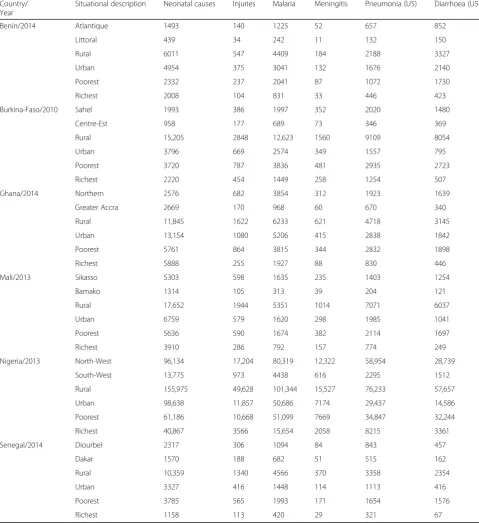
The EQUIST profile analysis of under-five mortality by sub-national regions under the demographic parameters of the sector category in the six West African countries showed the regions recorded the highest mortality Atlan-tique (Benin), Sahel (Burkina Faso), Northern (Ghana), Sikasso (Mali), North West (Nigeria), and Diourbel (Senegal). The number of deaths/1000 live births in these regions were more than twice the number recorded in the regions with the lowest number of deaths/1000 live births and the values were considerably higher than the national average in the six countries (Table 1). The number of under-five deaths/1000 live births was considerably higher among the poorest compared to the richest and among the rural compared to the urban population (Table1).
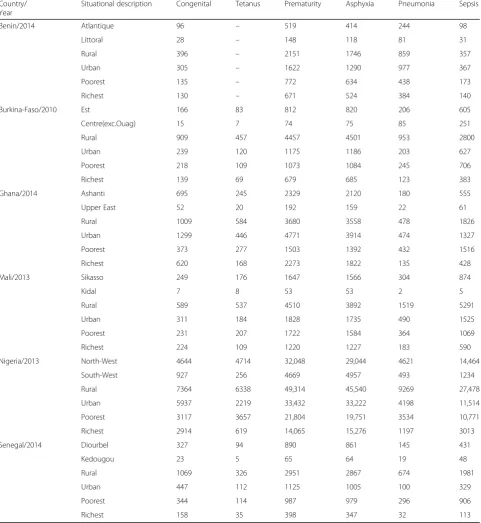
The outcome of profile analysis of neonatal mortality by sub-national regions, wealth and residence under the demographic parameters of the sector category is
sum-marized in Table 2. The number of neonatal deaths/
four diseases responsible for most of the deaths are neo-natal causes, malaria, pneumonia and diarrhoea. The rural dwellers as well as the poorest had higher under-five mortality numbers across the six West African countries (Table3).
The poorest and the rural dwellers across the six countries had the highest number of neonatal deaths (Table 4). The four diseases responsible for the highest neonatal mortality included sepsis, asphyxia, prematurity and congenital disorders. Prematurity was the major killer of the neonates in all the six countries with the mortality considerably higher among the rural compared to the urban population in Benin (2151 vs. 1622), Bur-kina Faso (4457 vs. 1175), Mali (4510 vs. 1828), Nigeria (49,314 vs. 33,432) and Senegal (2951 vs. 1125). An ex-ception was in Ghana where the neonatal mortality due to prematurity was higher among the urban (4771) com-pared to the rural population (3680) (Table4).
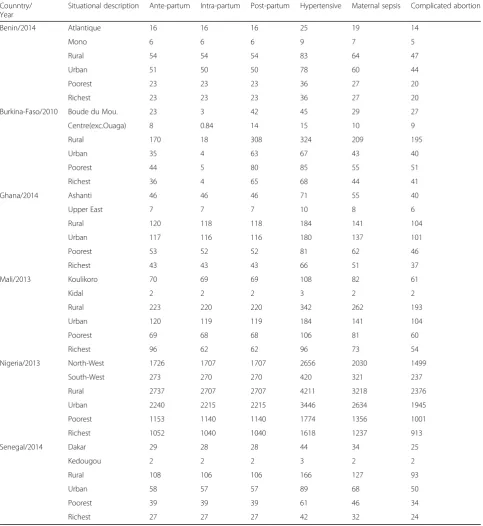
The six diseases responsible for the highest maternal mortality included ante-partum haemorrhage, intra-par-tum haemorrhage, post-parintra-par-tum haemorrhage, hyperten-sive disorder, maternal sepsis and complicated abortion. Considerably higher maternal mortality was recorded in the rural compared to the urban population across all the countries except in Ghana (Table5).
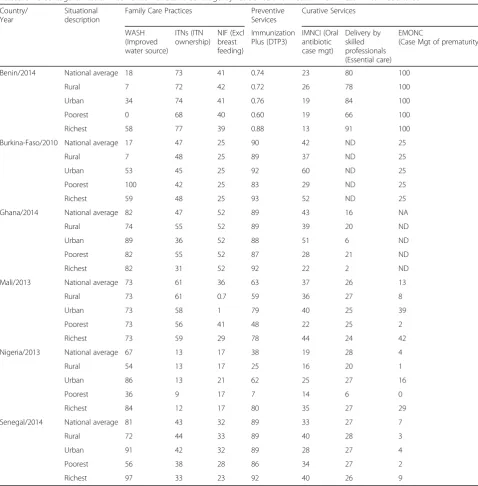
The percentage national average for WASH (improved water source) was higher in Ghana (82%), Mali (73%), and Senegal (81%), compared to the remaining three countries. ITN ownership percentage national average was highest in Benin (73%) and Mali (61%) but lowest in Nigeria (13%). The percentage of the ITN ownership was lower among the poorest compared to the national average in Benin (73% vs. 68%), Burkina-Faso (47% vs. 42%), Mali (61% vs. 56%), Nigeria (13% vs. 9%) and Senegal 43% vs. 38%) (Table 6). Ghana recorded the highest percentage of na-tional average of exclusive breast feeding (52%) compared
to the other five countries. The highest percentage cover-age of DTP3 immunization was recorded in Burkina Faso (90%) and Ghana (89%), with the least in Benin (0.74%). In all the six countries, the percentage coverage of DTP3 immunization among the poorest was lower than the na-tional average (Table6). In terms of the curative services (essential care and case management of premature babies), the percentage coverage was low across the countries ex-cept in Benin (80% and 100% respectively), also the per-centage coverage among the poorest was generally lower than the national average.
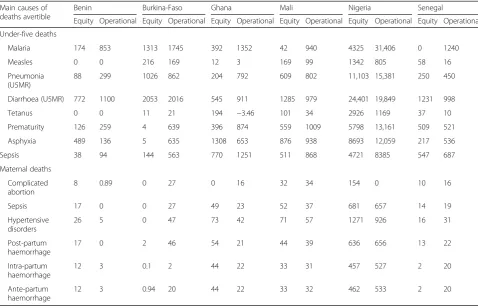
The outcomes of the analysis of avertible deaths by epidemiological cause and equity/operational frontier for under-five children in the six countries are shown in Table7. In the Burkina Faso and Nigeria, the three main diseases responsible for the highest number of avertible under-five deaths by equity and operational frontiers are malaria, pneumonia, and diarrhoea. In Ghana, Mali and Nigeria, the four main diseases responsible for the high-est number of avertible maternal deaths by equity and operational frontiers are sepsis, hypertensive disorders, post-partum haemorrhage and intra-partum haemor-rhage (Table7).
Outcome of scenario analysis
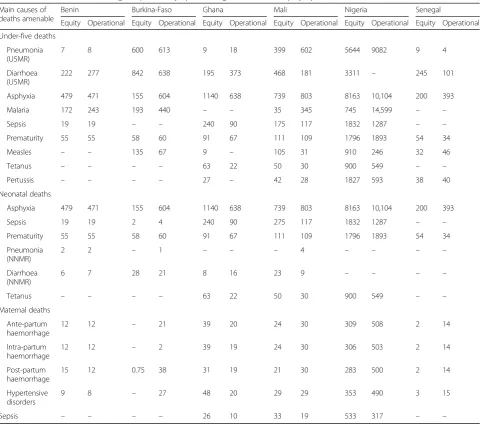
The number of amenable/avertible under-five deaths if the deprived population coverage value was equal to (i). the best performing countries (operational frontier) and (ii) the non-deprived population coverage value (equity frontier) are shown in Table8. An additional chart file of the six West African countries shows this in more detail [see Additional files1,2,3,4,5,6]. In the six countries, pneumonia, diarrhoea and asphyxia were responsible for the highest number of amenable under-five deaths by operational and equity frontiers.
Table 1Six West African Countries Under-five mortality by Sub-National Regions, Wealth and Residence Country/Year National
Average Deaths/ 1000 live births
By Sub-National Region Deaths/1000 live births (Number of deaths)
By Resident
Deaths/1000 live births (Number of deaths)
By Wealth
Deaths/1000 live births (Number of deaths)
Highest Lowest Rural Urban Poorest Richest
Benin/2014 109 Atlantique:
106(5495)
Littoral: 50(1263)
122(20,864) 94(15,196) 126(8342) 63(4636)
Burkina-Faso/2010 114 Sahel: 181(9573)
Centre-Est: 60(3121)
120(58,279) 80(11,748) 134(17,071) 74(7503)
Ghana/2014 64 Northern:
118(12,709)
Greater Accra: 50(5352)
80(32,677) 68(27,213) 98(17,667) 68(10,050)
Mali/2013 123 Sikasso:
156(16,253)
Bamako: 76(3086)
146(58,505) 83(17,856) 145(18,040) 79(8861)
Nigeria/2013 117 North West:
149(343,740)
South West: 72(26,126)
134(492,003) 80(241,110) 153(235,760) 59(82,647)
Senegal/2014 50 Diourbel:
86(5922)
Dakar: 38(3660)
Asphyxia is responsible for the highest number of amen-able neonatal deaths by operational and equity frontiers in the six countries. Ante-partum haemorrhage, intra-partum haemorrhage, post-partum haemorrhage and hypertensive disorders are the diseases responsible for the highest num-ber of amenable maternal deaths among the poorest quin-tile in Ghana, Mali and Nigeria (Table8).
Amenable deaths among the poorest by intervention package and equity/operational frontier for under-five and maternal mortality in six West African countries are shown in Table 9. Delivery by skilled professional is a major intervention capable of averting the highest num-ber of under-five and maternal mortality in all the six countries. IMNCI, ITNs/Environmental safety, WASH and Immunization plus are capable of averting under-five deaths ranging from 35 in Ghana to 15,599 in Nigeria. An additional chart file of the six West African countries shows this in more detail [see Additional files
1,2,3,4,5,6].
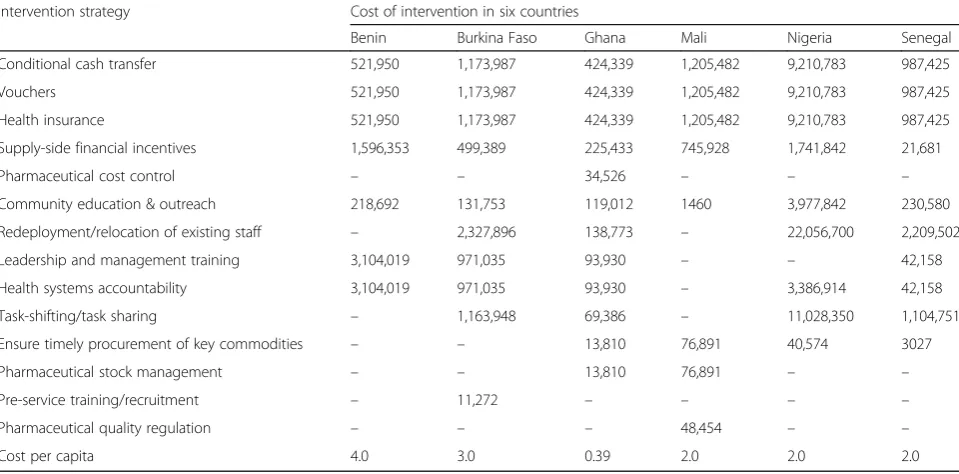
The cost of intervention strategies to avert the mortal-ity as provided by the EQUIST impact and cost analysis are presented in Table 10. The strategies with the high-est costs in Burkina Faso, Nigeria and Senegal are Re-deployment/relocation of existing staff. Ghana recorded the least cost per capita ($0.39) while the highest cost per capita was recorded in Benin ($4.0) (Table10). The avertible under-five, neonatal and maternal mortality by cause and by intervention package as well as the esti-mates of cost generation for the analysis and cost per capta of avertible number of deaths in the scenario in all the six countries are shown in more detail as an add-itional chart file [see Addadd-itional files1,2,3,4,5,6].
Discussion
The outcome of the EQUIST analysis generally showed that the six West African countries have unacceptably
high maternal and child mortality that is perhaps among the worst in the world. Santi and Weigert [25] noted in their report that West Africa lags behind the other re-gions of Africa in terms of women health as gender-dis-aggregated indicators showed that the status of women has hardly improved. The regions that consistently re-corded the highest maternal, under-five and neonatal mortality included Atlantique in Benin, Sikasso in Mali, North West in Nigeria, and Diourbel in Senegal. Using the EQUIST analysis, the picture of the health status of these regions were highlighted as having the most vul-nerable and deprived children and women and needing urgent health interventions as a matter of priority.
Available reports from Nigeria support the outcome of the EQUIST situational analysis which indicated the highest maternal and child mortality in the North-West region of the country [26]. The Nigeria National Popula-tion Commission (NPC), noted in a previous report that there exist substantial variations across the Nigeria’s six geopolitical zones in terms of social, cultural, and eco-nomic status [27]. The North-East and North-West re-gions of Nigeria are noted to be characterized by high level of non-formal education, polygamous marriage, early/teenage marriage/pregnancy, poor access and utilization of modern health facility, and very high propor-tion of extremely poor rural populapropor-tion [28]. These factors contribute significantly to the very poor MNCH outcomes in the North-West and North-East Nigeria [26–28].
In Mali, a recent report confirms that the Sikasso is among the regions with the worst health statistics, hav-ingthe highestinfant mortalityrate andunder-five mor-tality rate in the country [29]. According to Daou and colleagues, the main factors that are significantly associ-ated with child mortality in Sikasso Mali, included the level of education of parents, the age of the mothers and the lack of skilled health care resources [30]. In Senegal,
Table 2Six West African Countries Neonatal mortality by Sub-National Regions, Wealth and Residence Country/Year National
Average Deaths/ 1000 live births
By Sub-National Region Deaths/1000 live births (Number of deaths)
By Resident
Deaths/1000 live births (Number of deaths)
By Wealth
Deaths/1000 live births (Number of deaths)
Highest Lowest Rural Urban Poorest Richest
Benin/2014 33 Atlantique:
29(1493)
Littoral: 18(439)
35(6011) 31(4953) 32(2332) 27(2008)
Burkina-Faso/2010 30 Est:
46(2920)
Centre-Nord: 21(1129)
31(15204) 26(3796) 29(3719) 22(2220)
Ghana/2014 29 Ashanti:
42(6646)
Upper East: 24(544)
29(11845) 33(13154) 32(5761) 40(5888)
Mali/2013 39 Sikasso:
51(5303)
Bamako: 32(1314)
44(17654) 31(6759) 45(5636) 35(3909)
Nigeria/2013 36 North West:
42(96145)
South West: 30(16085)
43(155964) 33(98646) 44(67185) 29(40872)
Senegal/2014 22 Diourbel:
42(2897)
Ziguinchor: 18(599)
and especially in Diourbel region, child marriage is re-ported to be a major contributor to the very high mater-nal and child mortality [31,32].
The EQUIST situational analysis showed that the rural dwellers and poorest quintile population had consist-ently higher maternal and child mortality in all the six countries. Also, higher number of deaths due to epi-demiological causes were recorded among the rural
dwellers and poorest quintile population. In an earlier report on maternal mortality and access to obstetric ser-vices in West Africa, Ronsmans and co-workers noted that most rural women give birth at home in the absence of skilled care, while urban women tend to give birth in a hospital with a skilled attendant, consequently, mater-nal mortality is extremely high in rural areas, and sub-stantially lower in urban areas [33]. In addition to this,
Table 3Six West African Countries Under-five mortality numbers by six major Epidemiological Causes Country/
Year
Situational description Neonatal causes Injuries Malaria Meningitis Pneumonia (U5) Diarrhoea (U5)
Benin/2014 Atlantique 1493 140 1225 52 657 852
Littoral 439 34 242 11 132 150
Rural 6011 547 4409 184 2188 3327
Urban 4954 375 3041 132 1676 2140
Poorest 2332 237 2041 87 1072 1730
Richest 2008 104 831 33 446 423
Burkina-Faso/2010 Sahel 1993 386 1997 352 2020 1480
Centre-Est 958 177 689 73 346 369
Rural 15,205 2848 12,623 1560 9109 8054
Urban 3796 669 2574 349 1557 795
Poorest 3720 787 3836 481 2935 2723
Richest 2220 454 1449 258 1254 507
Ghana/2014 Northern 2576 682 3854 312 1923 1639
Greater Accra 2669 170 968 60 670 340
Rural 11,845 1622 6233 621 4718 3145
Urban 13,154 1080 5206 415 2838 1842
Poorest 5761 864 3815 344 2832 1898
Richest 5888 255 1927 88 830 446
Mali/2013 Sikasso 5303 598 1635 235 1403 1254
Bamako 1314 105 313 39 204 121
Rural 17,652 1944 5351 1014 7071 6037
Urban 6759 579 1620 298 1985 1041
Poorest 5636 590 1674 382 2114 1697
Richest 3910 286 792 157 774 249
Nigeria/2013 North-West 96,134 17,204 80,319 12,322 58,954 28,739
South-West 13,775 973 4438 616 2295 1512
Rural 155,975 49,628 101,344 15,527 76,233 57,657
Urban 98,638 11,857 50,686 7174 29,437 14,586
Poorest 61,186 10,668 51,099 7669 34,847 32,244
Richest 40,867 3566 15,654 2058 8215 3361
Senegal/2014 Diourbel 2317 306 1094 84 843 457
Dakar 1570 188 682 51 515 162
Rural 10,359 1340 4566 370 3358 2354
Urban 3327 416 1448 114 1113 416
Poorest 3785 565 1993 171 1654 1576
higher maternal and child deaths are recorded in West African rural areas because of low quality of services at government facilities, inadequate outreach services, self-medication and client preferences for traditional medicine because traditional beliefs and practices remain strong in the region [34].
The EQUIST situational analysis showed that neonatal causes, malaria, pneumonia, and diarrhoea were the major
causes of under-five mortality in all the six countries. Re-sult also showed that sepsis, asphyxia, and prematurity were the leading causes of neonatal mortality in the coun-tries. Both under-five mortality and neonatal mortality were highest among the poorest and the rural dwellers in the six countries. Available evidence from previous studies conducted in Nigeria indicated that these diseases were re-sponsible for the highest under-five and neonatal mortality
Table 4Six West African Countries Neonatal mortality numbers by six major Epidemiological Causes Country/
Year
Situational description Congenital Tetanus Prematurity Asphyxia Pneumonia Sepsis
Benin/2014 Atlantique 96 – 519 414 244 98
Littoral 28 – 148 118 81 31
Rural 396 – 2151 1746 859 357
Urban 305 – 1622 1290 977 367
Poorest 135 – 772 634 438 173
Richest 130 – 671 524 384 140
Burkina-Faso/2010 Est 166 83 812 820 206 605
Centre(exc.Ouag) 15 7 74 75 85 251
Rural 909 457 4457 4501 953 2800
Urban 239 120 1175 1186 203 627
Poorest 218 109 1073 1084 245 706
Richest 139 69 679 685 123 383
Ghana/2014 Ashanti 695 245 2329 2120 180 555
Upper East 52 20 192 159 22 61
Rural 1009 584 3680 3558 478 1826
Urban 1299 446 4771 3914 474 1327
Poorest 373 277 1503 1392 432 1516
Richest 620 168 2273 1822 135 428
Mali/2013 Sikasso 249 176 1647 1566 304 874
Kidal 7 8 53 53 2 5
Rural 589 537 4510 3892 1519 5291
Urban 311 184 1828 1735 490 1525
Poorest 231 207 1722 1584 364 1069
Richest 224 109 1220 1227 183 590
Nigeria/2013 North-West 4644 4714 32,048 29,044 4621 14,464
South-West 927 256 4669 4957 493 1234
Rural 7364 6338 49,314 45,540 9269 27,478
Urban 5937 2219 33,432 33,222 4198 11,514
Poorest 3117 3657 21,804 19,751 3534 10,771
Richest 2914 619 14,065 15,276 1197 3013
Senegal/2014 Diourbel 327 94 890 861 145 431
Kedougou 23 5 65 64 19 48
Rural 1069 326 2951 2867 674 1981
Urban 447 112 1125 1005 100 329
Poorest 344 114 987 979 296 906
numbers in various parts of the country especially among the rural and the poorest [26,27]. A similar trend was also reported in other West African countries [35].
EQUIST analysis showed that obstetric hemorrhage is the leading cause of maternal mortality in all the six countries. Of the three types of Obstetric haemorrhage, post-partum haemorrhage was responsible for the high-est number of maternal mortality. In a previous study
on maternal mortality undertaken in northern Nigeria, post-partum haemorrhage was a leading cause of ma-ternal mortality, contributing 75% of the cases [36]. Re-ports from Mali, Senegal and other parts of West Africa, noted that post-partum haemorrhage was a major cause of maternal death [37,38].
The EQUIST situational and scenario equity and operational frontier analysis showed that thousands of
Table 5Six West African Countries Maternal mortality numbers by six major Epidemiological Causes Counntry/
Year
Situational description Ante-partum Intra-partum Post-partum Hypertensive Maternal sepsis Complicated abortion
Benin/2014 Atlantique 16 16 16 25 19 14
Mono 6 6 6 9 7 5
Rural 54 54 54 83 64 47
Urban 51 50 50 78 60 44
Poorest 23 23 23 36 27 20
Richest 23 23 23 36 27 20
Burkina-Faso/2010 Boude du Mou. 23 3 42 45 29 27
Centre(exc.Ouaga) 8 0.84 14 15 10 9
Rural 170 18 308 324 209 195
Urban 35 4 63 67 43 40
Poorest 44 5 80 85 55 51
Richest 36 4 65 68 44 41
Ghana/2014 Ashanti 46 46 46 71 55 40
Upper East 7 7 7 10 8 6
Rural 120 118 118 184 141 104
Urban 117 116 116 180 137 101
Poorest 53 52 52 81 62 46
Richest 43 43 43 66 51 37
Mali/2013 Koulikoro 70 69 69 108 82 61
Kidal 2 2 2 3 2 2
Rural 223 220 220 342 262 193
Urban 120 119 119 184 141 104
Poorest 69 68 68 106 81 60
Richest 96 62 62 96 73 54
Nigeria/2013 North-West 1726 1707 1707 2656 2030 1499
South-West 273 270 270 420 321 237
Rural 2737 2707 2707 4211 3218 2376
Urban 2240 2215 2215 3446 2634 1945
Poorest 1153 1140 1140 1774 1356 1001
Richest 1052 1040 1040 1618 1237 913
Senegal/2014 Dakar 29 28 28 44 34 25
Kedougou 2 2 2 3 2 2
Rural 108 106 106 166 127 93
Urban 58 57 57 89 68 50
Poorest 39 39 39 61 46 34
under-five and maternal deaths could have been averted if the countries had equalized coverage values for the least disadvantaged within the most disadvantaged population (poorest quintile). According to the UN Chronicle report, universal coverage of scientifically proven cost-effective interventions are capable of redu-cing child deaths from about 2 million to just 650,000 [39]. According to Partnership for Maternal, Newborn & Child Health, the majority of maternal and child mortality and morbidity are preventable with interven-tions that are effective and affordable which prevent or
treat the most common causes of illness [40]. A recent World Bank report indicated that scaling up all inter-ventions in the packages of maternal and newborn health, plus folic acid before pregnancy, and child health from the existing rate of coverage to 90% would avert 149,000 maternal deaths; 849,000 stillbirths; 1,498,000 neonatal deaths; and 1,515,000 child deaths [41]. There is therefore, an international consensus that improving the coverage and quality of these inter-ventions should be the focus of policies and associated programmes [40].
Table 6Percentage of health intervention effective coverage by residence and wealth in Six West African Countries Country/
Year
Situational description
Family Care Practices Preventive Services
Curative Services
WASH (Improved water source)
ITNs (ITN ownership)
NIF (Excl breast feeding)
Immunization Plus (DTP3)
IMNCI (Oral antibiotic case mgt)
Delivery by skilled professionals (Essential care)
EMONC
(Case Mgt of prematurity)
Benin/2014 National average 18 73 41 0.74 23 80 100
Rural 7 72 42 0.72 26 78 100
Urban 34 74 41 0.76 19 84 100
Poorest 0 68 40 0.60 19 66 100
Richest 58 77 39 0.88 13 91 100
Burkina-Faso/2010 National average 17 47 25 90 42 ND 25
Rural 7 48 25 89 37 ND 25
Urban 53 45 25 92 60 ND 25
Poorest 100 42 25 83 29 ND 25
Richest 59 48 25 93 52 ND 25
Ghana/2014 National average 82 47 52 89 43 16 NA
Rural 74 55 52 89 39 20 ND
Urban 89 36 52 88 51 6 ND
Poorest 82 55 52 87 28 21 ND
Richest 82 31 52 92 22 2 ND
Mali/2013 National average 73 61 36 63 37 26 13
Rural 73 61 0.7 59 36 27 8
Urban 73 58 1 79 40 25 39
Poorest 73 56 41 48 22 25 2
Richest 73 59 29 78 44 24 42
Nigeria/2013 National average 67 13 17 38 19 28 4
Rural 54 13 17 25 16 20 1
Urban 86 13 21 62 25 27 16
Poorest 36 9 17 7 14 6 0
Richest 84 12 17 80 35 27 29
Senegal/2014 National average 81 43 32 89 33 27 7
Rural 72 44 33 89 40 28 3
Urban 91 42 32 89 28 27 4
Poorest 56 38 28 86 34 27 2
In terms of the coverage of intervention package to improve maternal and child health outcomes, EQUIST analysis revealed that Ghana, Senegal and Mali had higher national average of 82%, 81% and 73% respect-ively compared to the remining three countries. A recent report indicated that Ghana achieved its Millennium De-velopment Goal (MDG) water target about a decade be-fore the 2015 deadline [42]. As in Ghana, substantial donor support as well as institution of effective water policy reforms are major contributors to the very high percentage national water coverage also witnessed in Senegal and Mali [43,44].
The EQUIST analysis indicated that the percentage of the ITN ownership, DTP3 immunization and curative services such as essential care and case management of premature babies was lower among the poorest com-pared to the national average in most of the countries. A recent study on equity trends in ownership of ITNs in-volving eight West African countries (including Benin, Burkina Faso, Mali, Nigeria, Senegal etc.) and 11 other sub-Saharan African countries, showed that richer households were more likely to own ITNs than the poorest households [45]. The relatively lower percentage of ITNs possession by the population of the poorest quintile has been attributed to their inability to afford
the cost of the ITNs and probably as a result of low ac-cess to health care among the poorest populations [46]. Similarly, regarding routine immunization, disparities in coverage within countries also exist between poor and wealthy populations, where children in poor households are at much greater risk of dying from vaccine-prevent-able diseases than children in relatively wealthier house-holds [46,47].
The EQUIST scenario analysis for mortality by inter-vention package showed that delivery by skilled profes-sionals has the potential of averting the highest number of under-five and maternal mortality in all the six coun-tries. Findings from a number of previous studies have shown that between 13 and 33% of maternal deaths and up to 25% of newborn deaths could be averted by the availability of skilled attendant at delivery [48, 49]. Ac-cording to UNICEF, the very high NMR, IMR and U5MR recorded in LMICs are caused by diseases and medical conditions which can easily be prevented by skilled care during delivery and immediate neonatal period [50].
One of the major strengths of the EQUIST scenario analysis is the estimation of the actual cost of the strat-egies to avert the mortality. Redeployment/relocation of existing staff and task-shifting/task sharing are the
Table 7Avertible deaths among the poorest by epidemiological cause and equity/operational frontier for under-five mortality in six West African countries
Main causes of deaths avertible
Benin Burkina-Faso Ghana Mali Nigeria Senegal
Equity Operational Equity Operational Equity Operational Equity Operational Equity Operational Equity Operational
Under-five deaths
Malaria 174 853 1313 1745 392 1352 42 940 4325 31,406 0 1240
Measles 0 0 216 169 12 3 169 99 1342 805 58 16
Pneumonia (U5MR)
88 299 1026 862 204 792 609 802 11,103 15,381 250 450
Diarrhoea (U5MR) 772 1100 2053 2016 545 911 1285 979 24,401 19,849 1231 998
Tetanus 0 0 11 21 194 −3.46 101 34 2926 1169 37 10
Prematurity 126 259 4 639 396 874 559 1009 5798 13,161 509 521
Asphyxia 489 136 5 635 1308 653 876 938 8693 12,059 217 536
Sepsis 38 94 144 563 770 1251 511 868 4721 8385 547 687
Maternal deaths
Complicated abortion
8 0.89 0 27 0 16 32 34 154 0 10 16
Sepsis 17 0 0 27 49 23 52 37 681 657 14 19
Hypertensive disorders
26 5 0 47 73 42 71 57 1271 926 16 31
Post-partum haemorrhage
17 0 2 46 54 21 44 39 636 656 13 22
Intra-partum haemorrhage
12 3 0.1 2 44 22 33 31 457 527 2 20
Ante-partum haemorrhage
Table 8Amenable deaths among the poorest by epidemiological cause and equity/operational frontier in six West African countries Main causes of
deaths amenable
Benin Burkina-Faso Ghana Mali Nigeria Senegal
Equity Operational Equity Operational Equity Operational Equity Operational Equity Operational Equity Operational
Under-five deaths
Pneumonia (U5MR)
7 8 600 613 9 18 399 602 5644 9082 9 4
Diarrhoea (U5MR)
222 277 842 638 195 373 468 181 3311 – 245 101
Asphyxia 479 471 155 604 1140 638 739 803 8163 10,104 200 393
Malaria 172 243 193 440 – – 35 345 745 14,599 – –
Sepsis 19 19 – – 240 90 175 117 1832 1287 – –
Prematurity 55 55 58 60 91 67 111 109 1796 1893 54 34
Measles – – 135 67 9 – 105 31 910 246 32 46
Tetanus – – – – 63 22 50 30 900 549 – –
Pertussis – – – – 27 – 42 28 1827 593 38 40
Neonatal deaths
Asphyxia 479 471 155 604 1140 638 739 803 8163 10,104 200 393
Sepsis 19 19 2 4 240 90 275 117 1832 1287 – –
Prematurity 55 55 58 60 91 67 111 109 1796 1893 54 34
Pneumonia (NNMR)
2 2 – 1 – – – 4 – – – –
Diarrhoea (NNMR)
6 7 28 21 8 16 23 9 – – – –
Tetanus – – – – 63 22 50 30 900 549 – –
Maternal deaths
Ante-partum haemorrhage
12 12 – 21 39 20 24 30 309 508 2 14
Intra-partum haemorrhage
12 12 – 2 39 19 24 30 306 503 2 14
Post-partum haemorrhage
15 12 0.75 38 31 19 21 30 283 500 2 14
Hypertensive disorders
9 8 – 27 48 20 29 29 353 490 3 15
Sepsis – – – – 26 10 33 19 533 317 – –
Table 9Amenable deaths among the poorest by intervention package and equity/operational frontier for under-five and maternal mortality in six West African countries
Main intervention package
Amenable under-five deaths by package and equity/operational frontier among the poorest
Benin Burkina-Faso Ghana Mali Nigeria Senegal
Equity Operational Equity Operational Equity Operational Equity Operational Equity Operational Equity Operational
Delivery by skilled professional
548 537 208 653 1534 817 1070 1014 12,654 13,116 254 426
IMNCI – – 554 576 – – 375 588 5500 8985 – –
ITNs/Environmental safety
182 258 202 462 – – 42 409 796 15,599 – –
WASH 236 293 941 711 216 412 544 206 3611 – 265 109
Immunization plus – – 161 66 35 – 141 56 2727 835 67 86
Amenable maternal deaths by package and equity/operational frontier among the
poorest-Delivery by skilled professional
strategies with the highest costs in Burkina Faso, Nigeria and Senegal. According to Santi and Weigert, the health sector is skilled-labour-intensive and in all countries of the West African region, the increase and effective man-agement of health staff is crucial to the improvement of health systems [25]. Insight from the EQUIST analysis can help to prioritize this domain, of which emphasis must be laid on territorial equity in order to address the human resource shortage in rural areas, where the poor-est people live but which still harbour the greatpoor-est health risks [25]. EQUIST scenario analysis also showed the cost per capita averting the number of deaths was least in Ghana ($0.39) and highest in Benin ($4.0). This out-come was not a surprise, among the six countries in this study, Ghana had the least total expenditure on health as percentage GDP, least private expenditure on health as percentage of total expenditure on health and least poverty headcount ratio and the best Human Develop-ment Index rank [5].
Carrera and colleagues [12] have noted that a better understanding of the effectiveness, impact, and costs of the operational strategies and service delivery modes that can be used to overcome existing bottlenecks (espe-cially those faced by people living in low-income and lower-middle-income countries) is required to ensure that deprived populations receive low cost, high impact interventions.
Study limitation
The major limitation of this study is that it is entirely based on DHS data. The weakness of information collected in DHS are well-established [51, 52]. One
important weakness is that virtually all data obtained through DHS is subject to reporting and recall biases. Furthermore, DHS can only measure limited health indicators and health services and so misclassification biases are known to occur and the magnitude of the bias is often unknown and very difficult to correct
[51]. As can be seen from this study, some of the
DHS information from some of the countries could not be obtained for others due to the challenges as-sociate with data collection process from the various target populations. Despite the limitation, DHS pro-vide valuable and high-quality data base on various of health indicators in LMICs which in many cases are the only reliable source of scientific information for health policymaking and implementation.
Conclusion
Although EQUIST can be described as a valuable tool which can assist decision makers to engage equity-fo-cused approaches to improving MNCH outcomes, the knowledge and application of the tool is not yet wide-spread in LMICs. This study is the first attempt to demonstrate the usefulness of the EQUIST in the
provision of scientific evidence on equity–focused
approaches to health interventions to improve MNCH outcomes in West Africa. It has been argued that this type of information is very crucial as it supports an evidence-based prioritization of vulnerable populations and priority interventions, as well as an initial under-standing of the broad health system issues that will need to be addressed in order to reduce health dispar-ities in a region like West Africa [23].
Table 10Cost of intervention in USD ($) to avert mortality among the poorest by in six West African countries Intervention strategy Cost of intervention in six countries
Benin Burkina Faso Ghana Mali Nigeria Senegal
Conditional cash transfer 521,950 1,173,987 424,339 1,205,482 9,210,783 987,425
Vouchers 521,950 1,173,987 424,339 1,205,482 9,210,783 987,425
Health insurance 521,950 1,173,987 424,339 1,205,482 9,210,783 987,425
Supply-side financial incentives 1,596,353 499,389 225,433 745,928 1,741,842 21,681
Pharmaceutical cost control – – 34,526 – – –
Community education & outreach 218,692 131,753 119,012 1460 3,977,842 230,580
Redeployment/relocation of existing staff – 2,327,896 138,773 – 22,056,700 2,209,502
Leadership and management training 3,104,019 971,035 93,930 – – 42,158
Health systems accountability 3,104,019 971,035 93,930 – 3,386,914 42,158
Task-shifting/task sharing – 1,163,948 69,386 – 11,028,350 1,104,751
Ensure timely procurement of key commodities – – 13,810 76,891 40,574 3027
Pharmaceutical stock management – – 13,810 76,891 – –
Pre-service training/recruitment – 11,272 – – – –
Pharmaceutical quality regulation – – – 48,454 – –
Throughout the world and especially in LMICs, pol-icy makers and other key stakeholders in the health sector have come to the realization that resources for scaling up cost–effective MNCH interventions in their populations are scarce. Consequently, they are faced with the complex task of identifying and implementing the most efficient and cost-effective interventions that will results to more deaths averted per fixed
invest-ment [53, 54]. According to Sridhar and co-workers
[51], health investors usually like to know how many deaths (or episodes of disease) could be averted for a fixed level of investment. EQUIST not only provides this vital information but also disaggregates data to re-veal inequities that are often masked by national aver-ages [13].
EQUIST will continue to serve as a tool for maximiz-ing the number of lives saved; decreasmaximiz-ing health dispar-ities and improving overall cost effectiveness [23]. The importance of this cannot be overstated because even if current rates of decline in under-five mortality are sus-tained, without additional investment in reaching the poorest, nearly 70 million newborns, infants and young children will still die from preventable causes by 2030 [13]. In this study EQUIST analysis has helped in iden-tifying the country’s populations that are disadvantaged, why they are disadvantaged, and which combination of evidence based high impact interventions and health system strengthening strategies would produce the best results. The West African policymakers will find this very valuable. We recommend EQUIST to national decision makers in LMICs who are interested in conducting an in-depth analysis of the situation of the disadvantaged or underserved populations in their countries. If the national decision makers are also interested in bridging imple-mentation gaps and in the development of policies that are based on a thorough assessment of how the health system is functioning, particularly with regards to pro-ducing equitable health outcomes, then EQUIST is highly imperative.
Additional files
Additional file 1:Outcome of EQUSIT Scenario analysis for poorest quintile in Benin. (PDF 345 kb)
Additional file 2:Outcome of EQUSIT Scenario analysis for poorest quintile in Burkina Faso. (PDF 345 kb)
Additional file 3:Outcome of EQUSIT Scenario analysis for poorest quintile in Ghana. (PDF 345 kb)
Additional file 4:Outcome of EQUSIT Scenario analysis for poorest quintile in Mali. (PDF 345 kb)
Additional file 5:Outcome of EQUSIT Scenario analysis for poorest quintile in Nigeria. (PDF 345 kb)
Additional file 6:Outcome of EQUSIT Scenario analysis for poorest quintile in Senegal. (PDF 345 kb)
Acknowledgements
Authors wish to thank UNICEF for access to the EQUIST, the user guide and the technical note. The content of this study is solely the responsibility of the authors and does not necessarily represent the official views of the UNICEF, WAHO or governments of the countries studied.
Funding
This study was one of the outcomes of the“Moving Maternal, Neonatal and Child Health Evidence into Policy in West Africa”(MEP) project undertaken by the West African Health Organization. The project and publication costs were funded by the International Development Research Centre Canada (Reference: IDRC 107892_001).
Availability of data and materials
The authors confirm that all data underlying the findings are fully available without restriction upon reasonable request, which should be made to the corresponding author.
Authors’contributions
Study conceptualization and design by CJU, IS and HCU. CJU drafted the manuscript, all authors participated in developing and editing the final manuscript and approved final version submitted.
Ethics approval and consent to participate
Ethical clearance for this study was obtained from the University Research Ethics Committee of Ebonyi State University Nigeria (the institution of the principal author) (Ref No: EBSU/UREC/015/10/03).
Consent for publication
Not applicable.
Competing interests
The authors declare that they have no competing interests.
Publisher’s Note
Springer Nature remains neutral with regard to jurisdictional claims in published maps and institutional affiliations.
Author details
1African Institute for Health Policy and Health Systems, Ebonyi State
University, CAS Campus, Abakaliki PMB 053, Nigeria.2Organisation Ouest Africaine de la Santé, 175, Avenue Ouezzin Coulibaly, Bobo Dioulasso 01 01 BP 153, Burkina Faso.
Received: 28 July 2018 Accepted: 12 October 2018
References
1. Cohen RL, Alfonso YN, Adam T, Kuruvilla S, Schweitzer J, Bishai D. Country progress towards the millennium development goals: adjusting for socioeconomic factors reveals greater progress and new challenges. Glob Health. 2014;10:67.
2. World Health Organization. Global health observatory data repository. Probability of dying per 1000 live births-Data by WHO region; 2016. http:// apps.who.int/gho/data/view.main.CM1300R?lang=en. Accessed 2 July 2018. 3. World Health Organization. Global Health Observatory data repository.
Maternal mortality-Data by WHO region; 2016. http://apps.who.int/gho/ data/view.main.1370?lang=en. Accessed 2 July 2018.
4. United Nations Development Programme. Human Development Indicators and Indices: 2018 Statistical update team. United Nations development Programme, 1 UN plaza, New York, NY 10017 USA 2018. http://www.hdr. undp.org/sites/default/files/2018_human_development_statistical_update. pdf Accessed 28 Sept 2018.
5. World Health Organization. Global Health Observatory country views; 2016.
http://apps.who.int/gho/data/node.country. Accessed 2 July 2018. 6. Agyepong IA, Kwamie A, Frimpong E, Defor S, Ibrahim A, Aryeetey GC, et al.
7. Sombie I, Bouwayé A, Mongbo Y, Keita N, Lokossou V, Johnson E, et al. Promoting research to improve maternal, neonatal, infant and adolescent health in West Africa: the role of the west African health organisation. Health Res Policy Syst. 2017;15(Suppl 1):53.
8. Barros AJ, Ronsmans C, Axelson H, Loaiza E, Bertoldi AD, França GV, et al. Equity in maternal, newborn, and child health interventions in countdown to 2015: a retrospective review of survey data from 54 countries. Lancet. 2012;379(9822):1225–33.
9. Wilunda C, Putoto G, Dalla Riva D, Manenti F, Atzori A, Calia F, et al. Assessing coverage, equity and quality gaps in maternal and neonatal care in sub-saharan Africa: an integrated approach. PLoS One. 2015; 10(5):e0127827.
10. You D, Jones G, Hill K, Wardlaw T, Chopra M. Levels and trends in child mortality, 1990–2009. Lancet. 2010;376:931–3.
11. United Nations Children’s Fund. Progress for children: achieving the MDGs with equity, No. 9. New York: UNICEF; 2010.
12. Carrera C, Azrack A, Begkoyian G, Pfaffmann J, Ribaira E, O'Connell T, et al. Equity in child survival, health and nutrition analysis team. The comparative cost-effectiveness of an equity-focused approach to child survival, health, and nutrition: a modelling approach. Lancet. 2012; 380(9850):1341–51.
13. UNICEF. Narrowing the Gaps: The power of investing in the poorest children. New York, NY 10017, USA; 2017. https://www.unicef.org/ publications/files/UNICEF_The_power_of_investing_in_the_poorest_ children.pdf. Accessed 2 July 2018.
14. Waters D, Theodoratou E, Campbell H, Rudan I, Chopra M. Optimizing community case management strategies to achieve equitable reduction of childhood pneumonia mortality: an application of equitable impact sensitive tool (EQUIST) in five low- and middle-income countries. J Glob Health. 2012;2(2):020402.
15. UNICEF, World Bank. Marginal budgeting for bottlenecks. UNICEF. Available from: https://www.unicef.org/sowc08/docs/sowc08_panel_4_2.pdf. Accessed 2 July 2018.
16. Evans DB, Edejer TT, Adam T, Lim SS. Methods to assess the costs and health effects of interventions for improving health in developing countries. BMJ. 2005;331:1137–40.
17. Fox MJ, Martorell R, van den Broek N, Walker N. Assumptions and methods in the lives saved tool (LiST). BMC Public Health. 2011;11(Suppl 3):I1. 18. UNICEF Global. EQUIST Equitable strategies to save lives; 2016.https://www.
communitysystemsfoundation.org/uploads/1/9/9/2/19920247/[p0425]_ unicef_hq_equist_admt_ii_r2.pdf. Accessed 2 July 2018.
19. UNICEF. EQUIST: a tool to maximize the impact and equity of health policies on children and women in developing countries; 2017. https:// www.ungm.org/UNUser/Documents/DownloadPublicDocument?docId= 442257. Accessed 2 July 2018.
20. United Nations Development Group (UNDG). Equitable Impact Sensitive Tool (EQUIST); 2016. https://undg.org/sdg_toolkit/equitable-impact-sensitive-tool-equist/. Accessed 2 July 2018.
21. UNICEF Approach to Health Systems Strengthening. A Resource Paper for the UNICEF Strategy for Health 2016-2030. New York. 2016.
22. Uneke CJ, Sombie I, Uro-Chukwu HC, Johnson E, Okonofua F. Using equitable impact sensitive tool (EQUIST) and knowledge translation to promote evidence to policy link in maternal and child health: report of first EQUIST training workshop in Nigeria. Pan Afr Med J. 2017;28:37. 23. UNICEF. User guide EQUIST: Equitable impact sensitive tool-Analyst &
general user. 2018. http://www.equist.info/files/general_files/User_Guide. pdf. Accessed 2 July 2018.
24. UNICEF. EQUIST: Equitable Strategies to Save Lives-Technical Notes. 2016.http:// www.equist.info/files/general_files/Technical_Notes.pdf. Accessed 2 July 2018. 25. Santi E, Weigert M. The health sector in West Africa. West Africa Monitor
Quarterly. 2015;5:19–37.
26. Adewemimo A, Kalter HD, Perin J, Koffi AK, Quinley J, Black RE. Direct estimates of cause-specific mortality fractions and rates of under-five deaths in the northern and southern regions of Nigeria by verbal autopsy interview. PLoS One. 2017;12(5):e0178129.
27. Charles NC, Chuku A, Anazodo NM. Childhood mortality in federal medical Centre Umuahia, south eastern Nigeria. Oman Med J. 2014;29(5):320–4. 28. National Population Commission (NPC) [Nigeria] and ICF International.
Nigeria Demographic and Health Survey 2013. Abuja, Nigeria, and Rockville, Maryland, USA: NPC and ICF International; 2014. https://www.dhsprogram. com/pubs/pdf/FR293/FR293.pdf. Accessed 2 July 2018.
29. Cooper MW, West CT. (2016) unraveling the Sikasso paradox: agricultural change and malnutrition in Sikasso, Mali. Ecol Food Nutr. 2016;56(2):101–23.
30. Daou P, Diakite C, Willcox M, Traore A, Bamba D, Sidibe K, Berthe D, Traore SO, Coulibaly E, Diarra D, Dembele ME, Sangare A, Guindo I, Diallo D, Traore M. Audit of child mortality in Mali: case study of Finkolo ac/Sikasso and Massantola-Sabougou/Kolokani rural areas. Grant Med J. 2017;02(04):78–84. 31. Save the Children. Child marriage in Senegal. https://www.savethechildren.
org.uk/content/dam/global/reports/advocacy/child-marriage-senegal.pdf. Accessed 2 July 2018.
32. Government of Senegal, Agence Nationale de la Statistique. General Census of Population, Habitat, Agriculture and Livestock: Definitive Report [Recensement Général de la Population et de l’Habitat, de l’Agriculture et de l’Élevage : Rapport Definitif] (RGPHAE 2013). 2014.
33. Ronsmans C, Etard JF, Walraven G, Høj L, Dumont A, de Bernis L, Kodio B. Maternal mortality and access to obstetric services in West Africa. Tropical Med Int Health. 2003;8(10):940–8.
34. Scott S, Kendall L, Gomez P, Howie SRC, Zaman SMA, Ceesay S, et al. Effect of maternal death on child survival in rural West Africa: 25 years of prospective surveillance data in the Gambia. PLoS One. 2017;12(2):e0172286. 35. Grady SC1, Frake AN, Zhang Q, Bene M, Jordan DR, Vertalka J, Dossantos TC, Kadhim A, Namanya J, Pierre LM, Fan Y, Zhou P, Barry FB, Kutch L. Neonatal mortality in East Africa and West Africa: a geographic analysis of district-level demographic and health survey data. Geospat Health 2017;12(1):501. 36. Bukar M, Kunmanda V, Moruppa J, Ehalaiye B, Takai U, Ndonya D. Maternal mortality at federal medical Centre Yola, Adamawa state: a five-year review. Ann Med Health Sci Res. 2013;3(4):568–71.
37. Tort J, Rozenberg P, Traoré M, Fournier P, Dumont A. Factors associated with postpartum hemorrhage maternal death in referral hospitals in Senegal and Mali: a cross-sectional epidemiological survey. BMC Pregnancy Childbirth. 2015;15:235.
38. Bouvier-Colle MH, Ouedraogo C, Dumont A, Vangeenderhuysen C, Salanave B, Decam C. MOMA group. Maternal mortality in West Africa. Rates, causes and substandard care from a prospective survey. Acta Obstet Gynecol Scand. 2001;80(2):113–9.
39. UN Chronicle. Reducing Child Mortality -- The challenges in Africa. Vol. XLIV No 4; 2007. https://unchronicle.un.org/article/reducing-child-mortality-challenges-africa. Accessed 2 July 2018.
40. Partnership for Maternal, Newborn & Child Health and WHO. A Policy Guide for Implementing Essential Interventions for Reproductive, Maternal, Newborn and Child Health (RMNCH): A Multisectoral Policy Compendium for RMNCH. Geneva: World Health Organisation; 2014.
41. Black RE, Walker N, Laxminarayan R, Temmerman M. Reproductive, Maternal, newborn, and child health: disease control priorities, third edition (volume 2). Washington (DC): The International Bank for Reconstruction and Development / The World Bank; 2016.
42. Monney I, Antwi-Agyei P. Beyond the MDG water target to universal water coverage in Ghana: the key transformative shifts required. Journal of water sanitation and hygiene for Development 2018. www. washdev2018176; DOI:
https://doi.org/10.2166/washdev.2018.176. Accessed 2 Jul 2018. 43. WASH Fact sheet-Mali. 2018. https://www.endwaterpoverty.org/sites/
default/files/2018-01/
Mali%2C%20WASHwatch%20extended%20factsheet%2C%202018.pdf. Accessed 2 July 2018.
44. WASH Fact sheet- Senegal; 2018. https://endwaterpoverty.org/sites/default/ files/2018-01/Senegal,%20WASHwatch%20extended%20factsheet,%202018. pdf. Accessed 2 July 2018.
45. Taylor C, Florey L, Ye Y. Equity trends in ownership of insecticide-treated nets in 19 sub-Saharan African countries. Bull World Health Organ. 2017; 95(5):322–32.
46. Webster J, Lines J, Bruce J, Armstrong Schellenberg JR, Hanson K. Which delivery systems reach the poor? A review of equity of coverage of ever-treated nets, never-ever-treated nets, and immunisation to reduce child mortality in Africa. Lancet Infect Dis. 2005;5(11):709–17.
47. WHO. Fulfilling A Promise: Ensuring Immunization for All in Africa. Ministerial Conference on Immunization In Africa; 2016. http://afrolib.afro.who.int/ documents/2016/immunizationinafrica2016_eng.pdf. Accessed 2 July 2018. 48. Lee AC, Cousens S, Darmstadt GL, Blencowe H, Pattinson R, Moran NF, et al.
49. Tura G, Fantahun M, Worku A. The effect of health facility delivery on neonatal mortality: systematic review and meta-analysis. BMC Pregnancy Childbirth. 2013;13:18.
50. UNICEF, World Health Organization, The World Bank, The United Nations Population Division. Levels & trends in child mortality: estimates developed by the UN inter-agency Group for Child Mortality Estimation (IGME) New York. USA: IGME; 2012.
51. Boerma JT, Sommerfelt AE. Demographic and health surveys (DHS): contributions and limitations. World Health Stat Q. 1993;46(4):222–6. 52. Short Fabic M, Choi Y, Bird S. A systematic review of demographic and
health surveys: data availability and utilization for research. Bull World Health Organ. 2012;90(8):604–12.
53. Sridhar D, Car J, Chopra M, Campbell H, Woods N, Rudan I. Improving health aid for a better planet: the planning, monitoring and evaluation tool (PLANET). J Glob Health. 2015;5(2):020404.