International Journal of Applied And Pure Science and
Agriculture
www.ijapsa.com
Land application of composted poultry litter as a nutrient source for the growth
of
Lycopersicum esculentum.
Y. Karuna 1*and Y.AVSN Maruthi 2 1
Research Scholar, Dept. Of Environmental Sciences, Andhra University, Visakhapatnam-India. Email id:
2
Associate Professor, Dept. Of Environmental Sciences, GITAM University, Visakhapatnam.
ABSTRACT
From the statistics it was seen that India is expected to produce 260 million layers (77,700 million eggs) and 3500 million broilers (5.9 million tonnes) in the year 2010. Poultry development in the recent past has shown very fast development and at present in A.P. the total population of poultry is 193 millions and from these birds the litter is estimated at 17.70 lakh tons per year. This tremendous increase of poultry industry results in substantial amounts of poultry litter, which can efficiently use in solving the present agronomic problems thus leading to sustainable agriculture. The application of poultry litter on land has been a long used disposal method that benefits soil and plant. Composted poultry litter is being applied on agricultural fields as an amendment to provide nutrients and also enhance the organic matter content and improve the physico-chemical properties of the cultivated soils. In the present study, quantitative changes in physical, chemical and microbial properties of composted poultry litter were studied. In order to understand the composting process and evaluate the suitability of composted poultry litter as soil amendments to Lycopersicum esculentum plant, Lycopersicum sps was planted and monitored for growth performance and yield. The effect of land application of composted poultry litter on the soil organic matter content and other properties as the soil quality indices were being evaluated in this case study.
Keywords: Composted poultry litter, soil fertility and solid waste management.
I. INTRODUCTION
Indiscriminate use of chemical fertilizer is harmful for soil and biodiversity. Crave for maximum income is the root cause for this burning problem. There is a need to increase the productivity of marginal soils through appropriate fertilizer application to provide food for an ever increasing population (Faridullah et al., 2009). Animal manure can be a plentiful source of organic soil amendments but proper management is imperative to prevent adverse environmental effects that can result from application of manure to soil (Preusch et al., 2004). Agronomic practices aimed at reducing the dependence on inorganic fertilizers can contribute to the sustainability of agriculture. One of the measures being adopted for relieving environmental problems arising from agricultural production is to recycle animal manure and other organic products as fertilizers and soil amendments (Eneji et al., 2001, 2003; Bolan et al., 2004). Poultry litter has been traditionally applied to agricultural soils for decades as an organic fertilizer, because it is good source of plant nutrients (Moore et al., 1995). The use of manure in agricultural land is beneficial to the soil properties (Olayinka. 1997) on account of their valuable ingredients and characteristics (Eneji et al., 2001).
Volume 02, Issue 1, [January - 2016]
3500 million broilers (5.9 million tones) (http://mofpi.nic.in). As per the last 17th livestock census, the state of Andhra Pradesh ranks first in poultry population (21.0% of the country). There is a very sharp increase by around 62% in the fowl population and by 61% in the total poultry in the state during the period from 1997 to 2003 (www.17th Live Stock census India). Poultry development in the recent past has shown very fast development and at present in A.P. the total population of poultry is 193 millions and from these birds the litter is estimated at 17.70 lakh tons per year (www.appcb.ap.nic.in). This tremendous increase of poultry industry results in substantial amounts of poultry litter, which can efficiently use in solving the present agronomic problems thus leading to sustainable agriculture.
Composting may provide a beneficial alternative method for handling poultry litter due to immobilization of nutrients and a reduction in litter volume. Studies have shown that the composting process immobilizes N in the litter and produces humus, a source of organic materials and slow release-nutrients (Paul and Clark, 1996). The slow release of nutrients from composted poultry litter (CPL) may lessen adverse environmental effects from leaching of N in run-off from farmlands (Chang and Janzen, 1996).
Vegetable crops fetch attractive prices at local markets and generate income through out the year. Vegetables provide household nutritional security since they are rich in vitamins, minerals and roughage which constitute the essentials of a balanced diet. The use of Poultry litter as a source of fertilizer would mitigate the problem of poultry litter disposal. Therefore, use of composted poultry litter as manure will result in reduced levels of environmental pollution and brings about sustainable agricultural development.
II. MATERIALS AND METHODS A. Study area
The pot experiments were carried out at Surya Farms, Thagarapuvalasa in Gudivada Village, Vizianagaram (Dist), Andhra Pradesh, India during July 2008 to July 2009. Poultry litter was collected from progressive poultry farm in Boyapalem, Visakhapatnam. The test soil was collected from Surya Farm. Analysis of physico chemical characteristics of garden soil was carried out as per standard procedures (Jackson, 1973). Litter was obtained from a poultry farm in Boyapalem consisting of 2000m2 concrete floored houses with a stocking density of 20 fowls /m2 at the start of each 60-day production cycle; the floor is covered with 5kg/m2 of rice hull. It was highly efficient moisture absorbent and constitutes an important source of carbon in poultry litter used as fertilizer (Sweeten, 1988).
B. Sampling Procedure for Fresh Litter
At the end of each production cycle after removal of the birds, the litter was removed with a loading shovel and piled under cover and the floors were washed and disinfected. Specifically ten samples each of 200g were obtained from random points in each pile, at depths of 50-100 cm. These ten samples were then pooled. The final collected composite samples of 2 kg fresh litter was collected. The fresh litter samples were taken in cleaned, sterilized test tubes for physico-chemical and microbial analysis. The analysis was done with in 24- 48 hours collection of Fresh poultry litter (Lopez-Mosquera. et al. 2007).
C. Composting
The poultry litter collected from the poultry farm was composted in a prototype composter (cement vessel). This vessel was constructed with a volume of 250 l. Then it was filled with 120 ± 1 Kg of poultry litter. During composting period, stirring of litter was carried out successively at weekly intervals. Care was taken to retain moisture. After 60 days of composting, the composting material was collected and then transformed in to experimental pots.
D. Drying
(Anderson and Ingram, 1998). Then all homogenized samples (both fresh and composted) were carried to the laboratory with necessary precautions. Simultaneously both control and test soil samples were analyzed for their nutritive value.
E. Laboratory/ analytical methods
The garden soil, fresh and composted poultry litter samples were analyzed for the following Physico-Chemical and microbial parameters and were analyzed before the plantation of seeds.
F. Plantation
After the characterization of physico-chemical properties of the composted poultry manure, then it was mixed with soil and applied to the pots at different ratios. The composted poultry manure was amended with soil at four rates, 75% (3:1 soil and litter), 25% (1:3 soil and litter), 50% (1:1 soil and litter), 100% litter (control PL), 100% soil (control soil) and soil with of commercial fertilizer (CF). Respective controls were also maintained to compare the results for each treatment. All the pots were labeled with code. The 6 pots of 3sets (triplicates) were allotted for Lycopersicum species seeds and three sets were sown with 50 seeds of each Lycopersicum sps seeds in each pot.
For irrigation, an equal amount of water was given to each pot at the same time when the mixtures in the pots dried (everyday). 40 days were elapsed as growing period under the controlled conditions. During this period any additional compost were not applied, but endosulfan and thiram (Dolgen et al. 2004) were given as pesticide. Following the 40 days of the growing period, the plants were harvested. Fig. 1 presents the pictures of the Lycopersicum plants before harvesting.
The test soil samples were collected from the experimental pots during decomposition on the days of 0th day, 10th day and 40th days and were air dried, sieved to pass through 2mm screen and stored at room temperature (27± ºC) until use. The following physico- chemical parameters were analyzed in order to determine the characteristics of the test soil. All procedures were adopted from Jackson, M.L. (1973) and analysis was carried as described. Then the plants were uprooted with out damaging their roots by using lancet, and the leaves and the roots were washed with de-ionized water and dried at oven at 60 ºC through a week and then weighed in the laboratory. The soil of the study area was initially characterized in order to assess its fertility status before setting of experimental pots with litter application. Following the 10th day 20th day and 40th day, the Lycopersicum plants were taken for the biochemical analysis.
III. RESULTS AND DISCUSSION
The results showed slight differences because of decomposition of organic manure. During decomposition the poultry litter undergoes some changes. Differences that affects N mineralization rates of fresh litter include uric acid concentration in broiler litter (which depends on diet), number of flocks grown on the litter, and moisture content of the litter (Gordillo and Cabrera, 1997). Moisture content is particularly important because it supports bacterial activity and thus the production of the enzyme urease, which breaks down uric acid molecules to simpler N forms (Cabrera et al. 1993). Fresh litter probably contained recently formed organic N that was less stable than N previously incorporated in to the organic fraction, which is often found in composted litter (Broadbent, 1986). A significant finding of the current work was that litter source had a large effect on mineralization rates of fresh but not composted poultry litter. Composting yield, a more predictable and reliable source of mineralizable N than fresh litter. Composting did not have as consistent an effect on P as it did on N. Results indicate that application of composted poultry litter (CPL) solely based on N requirements may result in significant P inputs to the environment (Preusch et al. 2002).
Volume 02, Issue 1, [January - 2016]
Lycopersicum sps was cultivated in soil along with the poultry litter as an amendment. In
experimental pots during decomposition of the poultry litter while plant grows indicates its utilization by the cultivated plants. Various parameters like pH, Organic Carbon (%), Nitrogen (g/kg), Phosphorus (g/kg), Potassium (g/kg), were analyzed in the soil at regular intervals at 0th day, 10th day and 40th day. Total 6 units of pots were setup with different poultry amendments, soil and litter in 3:1, 1:1, 1:3 ratios were labeled as L31, L11, L13 respectively and other two units LCL, LCF
posses only poultry litter and soil with CF respectively. All the samples from LCS, L31, L11, L13, LCL
and LCF were analyzed for all the above parameters.
pHwas observed as 6.87, 7.23, 7.68, 8.20, 8.29 and 7.25 respectively for 0th day, 7.12, 7.18, 7.58, 7.99, 8.20, 7.15 respectively for 10th day and 7.20, 7.16, 7.41, 7.73, 8.16 and 7.13 respectively for 40th day. The Organic Carbon (%) resulted as 10.2, 15.5, 21.2, 26.6, 29.4 and 10.7 % respectively for 0th day, 10.0, 14.9, 20.8, 26.0, 29.0, 10.2 % respectively for 10th day and 9.8, 14.6, 20.4, 25.5, 28.9, 10.0 % respectively for 40th day. Nitrogen measured in (%) gram per kilogram, showed the values as 1.2, 2.1, 2.6, 3.2, 3.6, 1.9 % respectively for 0th day, 1.0, 1.9, 2.5, 3.1, 3.5, 1.7 % respectively for 10th day and 0.9, 1.9, 3.9, 5.7, 6.9, 1.1 % respectively for 40th day. Results of Phosphorus reported in mg/g were 1.1, 2.4, 4.3, 6.4, 7.5, 1.6 mg/g respectively for 0th day, 1.1, 2.2, 4.1, 5.9, 7.2, 1.3 mg/g respectively for 10th day and 0.9, 1.9, 3.9, 5.7, 6.9, 1.1 mg/g respectively for 40th day. Potassium levels were observed in those soils and reported in mg/g which was as follows 2.2, 5.2, 9.4, 12.5, 15.4, 3.4 respectively for 0th day, 2.0, 4.8, 8.9, 12.0, 15.2, 3.1 respectively for 10th day and 1.9, 4.5, 8.6, 11.8, 14.9, 2.9 respectively for 40th day.
From the results, it was evident that all the nutrients were gradually taken up by the plant during the course of cultivation in litter amended pots. There was a remarkable difference between the values of these parameters from control to test samples with ratios of soils and composted poultry litter.
The results showed variations in the different poultry litter amendments because of the addition of stabilized manure to soil can affect soil fertility by modifying the physical, chemical and biological properties of the soil (Dick and McCoy 1993). Application of different ratios of composted poultry litter (25%, 50%, 75% & 100%) and CF (Commercial fertilizer) increased vegetable growth yield relative to the control. All the amendments gave growth yields that were significantly similar and higher than the control except sole poultry litter treatment. Pots under CF treatment showed the less significant growth than the composted poultry amended treatment (3:1). However, in combination with composted poultry litter amended with soil and CF treatments increase in all parameters were noted down. This observation corroborates with the finding of Kapkiyai et al. (1998) that maize grain yields were significantly affected by manure and fertilizer application.
The insignificant differences in nitrification following amendments application have been reported in literature. The nitrogen available for vegetables growth following application is often estimated from the ammonical N plus a portion of the soil organic nitrogen (Sluijsmans and Kolenbrander, 1997). This study confirmed an earlier observation by Paul and Beauchamp (1996) that the organic nitrogen fraction in manure was not available compared to the soil organic N. There is often a marked seasonality of organic matter decomposition in the wet and dry tropics due to a flush of decomposition associated with the rewetting of dry soils (Appel, 1997). This can lead to a pronounced flush of nitrate in the soil at the onset of the rains which is susceptible to leaching in cultivated soils. The soil of the study area experienced short dry spells which were followed by resumption of rains. This study has established that sampling periods rather influenced mineralization significantly than amendments and cropping systems.
Soil total Nitrogen levels of 0.05 - 0.13 % under amendments and vegetable growth systems were low. This was particularly due to the low soil organic carbon levels (0.77 - 1.37 % or 1.32 - 2.36 % organic matter) found in this study following amendment and was in conformity with the findings of Ranamukhaarachchi et al. (2005) who reported low nitrogen levels under cropping systems in Bangladesh. According to Howarth (2005), the soil organic matter was composed of 5 - 6 % nitrogen. The observation could also be partially ascribed to N losses which occur mainly through leaching, surface runoff, denitrification, etc. In their study on N losses, Bijay and Sekhon (1977) observed that losses of N in the form of nitrate occurred due to leaching with cropping systems consisting of shallow rooted crops. Crop uptake of N is relatively inefficient and often results in average losses of 50 % because of leaching, volatilization or denitrification (Zublena, 1997). The data (Table -3) showed a general increase in exchangeable Potassium during the experimental period. A similar observation was made by Wicks et al. (1988) when they found a decline in potassium in cultivated soils over time.
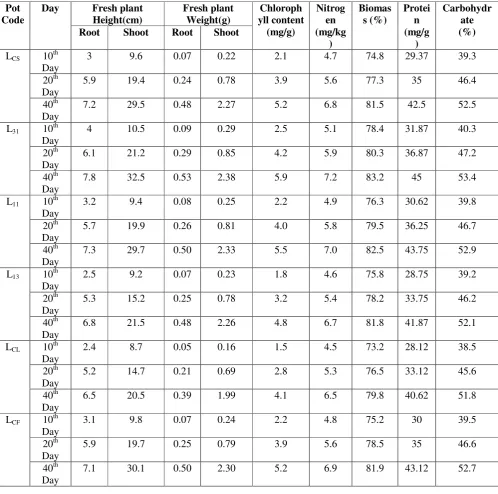
Out of all plants, the maximum values of root length and shoot length of Lycopersicumplants grown in composted poultry litter amended (3:1) treatment, for 10th, 20th & 40th days were observed as 4, 6.1, 7.8 and 10.5, 21.2, 32.5cm respectively. The minimum values were found in sole poultry litter treatment (100%) 2.4, 5.2, 6.5 and 8.7, 14.7, 20.5 cm respectively for 10th, 20th & 40th days and that of control treatment of (soil with out amendment) Lycopersicum showed 3, 5.9, 7.2 and 9.6, 19.4, 29.5 cm respectively. The results indicated that the maximum fresh weight of root and shoot weights of Lycopersicum plants grown in composted poultry litter amended (3:1) treatment were found 0.09, 0.29, 0.53 and 0.29, 0.85, 2.38 g for 10th, 20th & 40th days respectively. The minimum fresh weights of root and shoot values recorded were 0.05, 0.21, 0.39 and 0.16, 0.69, 1.99 g respectively in sole poultry litter treatment and the control treatment showed 0.07, 0.24, 0.48 and 0.22, 0.78, 2.27 g respectively. Out of biochemical properties of Lycopersicumplants, the minimum Biomass yield of Lycopersicum plants grown in sole poultry litter treatment was observed (viz., 73.2, 76.5 and 79.8 %) for 10th, 20th & 40th days. The maximum biomass (78.4, 80.3 and 83.2 %) was found in composted poultry litter amended (3:1) treatment and that of control treatment showed 74.8, 77.3 and 81.5 % respectively for 10th, 20th & 40th days.
The minimum leaf Carbohydrate content of Lycopersicum plant was found in sole poultry litter treatment (viz., 38.5, 45.6 and 51.8 %) for 10th, 20th & 40th days respectively. The maximum leaf Carbohydrate content (40.3, 47.2 and 53.4 %) was observed in composted poultry litter amended (3:1) treatment and that of control treatment showed 39.3, 46.4 and 52.5 % respectively for 10th, 20th & 40th days. Lycopersicum plants showed minimum amount of leaf Chlorophyll content in sole poultry litter treatment (viz., 1.5, 2.8, 4.1 mg/g) for 10th, 20th & 40th days respectively. The maximum amount of leaf chlorophyll content was found in composted poultry litter amended (3:1) treatment (2.5, 4.2, 5.9 mg/g) for 10th, 20th & 40th days respectively and that of control treatment showed 2.1, 3.9 and 5.2 % respectively for 10th, 20th & 40th days. The minimum leaf Nitrogen content of
Lycopersicum plant was found in sole poultry litter treatment (viz., 4.5, 5.3, 6.5 g/kg) for 10th, 20th &
Volume 02, Issue 1, [January - 2016]
composted poultry litter amended (3:1) treatment (5.1, 5.9, 7.2 g/kg) for 10th, 20th & 40th days respectively and that of control treatment was showed 4.7, 5.6 & 6.8 for 10th, 20th & 40th days respectively. These results indicated that the lower Protein content of Lycopersicumplants for 10th, 20th & 40th days were observed in sole poultry litter treatment (viz., 28.12, 33.12, 40.62 mg/g) for 10th, 20th & 40th days respectively. The higher protein content (31.87, 36.87, 45 mg/g) was found in composted poultry litter amended (3:1) treatment and that of control treatment showed 29.37, 35 & 42.5 mg/g for 10th, 20th & 40th days respectively (Table-4).
IV. CONCLUSION
Poultry litter has shown to improve the growth of all the plants under test, as well as resulted in increase yields. Poultry litter not only increased yields but also increased protein content over control and commercial fertilizer pots. Higher yields and protein content at similar rates of litter and commercial fertilizer may result from the fact that litter provides a slow release nitrogen fertilizer, improves soil quality, and reduces soil acidity. The research provided a systematic monitoring of soil physico-chemical properties as affected by specific nutrient management practices in composted poultry litter amended soils. It has added to knowledge on the mineralization of nitrogen under different amendments. Results have shown that NO3- - N could be subject to immobilization under
amendments during decomposition of composted poultry litter. The research has demonstrated that composted poultry litter is a good store of phosphorus and that plants’ need of phosphorus could be met through its application. Advantages of using composted poultry litter were food safety issues are addressed, less wear and tear on spreading machinery, better control of weed seeds and pests and odors during spreading are greatly reduced
BIBLIOGRAPHY
[1] Anderson, J. M. and J. S. I. Ingram (eds.). 1998. Tropical Soil Biology and Fertility. A handbook of methods:
1-221.
[2] Anonymous. 1999. Compost utilization on the farm. In: Mark, D. (Ed.), Field Guide to On-Farm Composting.
Publication No. 114, Natural Resource, Agriculture and Engineering Service (NRAES): 85–97.
[3] Appel, T. 1997. Non-biomass soil organic nitrogen: The substrate for nitrogen mineralization flushes following soil
drying- rewetting and for organic nitrogen rendered calcium chloride-extraction upon soil drying. Soil Biol.
Biochem. 30:1445-1456.
[4] Bolan, N. S., Adriano, D. C. and Mahimairaja, S. 2004. Distribution and bioavailability of trace elements in
livestock and poultry manure byproducts. Critical Reviews in Environmental Science and Technology 34:291–338.
[5] Bernhart, M., Fasina, O. O., Fulton, J. and Wood, C. W. 2010. Compaction of poultry litter. J. Bioresource
Technology.101: 234-238.
[6] Bijay, S. and Sekhon, G.S. 1977. Some measures of reducing leaching loss of nitrates beyond potential rooting
zones. Plant and Soil 47: 203- 208.
[7] Broadbent, F.E. 1986. Effects of organic matter on nitrogen and phosphorus supply to plants. p. 13–27. In Chen, Y.
and Avnimeiech, Y. (ed.). The role of organic matter in modern agriculture. Martinus Nijhof Publ., Dordrecht, the Netherlands
[8] Cabrera, M.L., Chiang, S. C. Merka, W. C. Thompson, S. A. and Pancorbo, O. C. 1993. Nitrogen transformations in
surface-applied poultry litter: Effect of litter physical characteristics. Soil Sci. Soc. Am. J. 57:1519–1525.
[9] Dick, W. A. and McCoy, E. I. 1993. Enhancing soil fertility by addition of compost. In: Hoitink, H. A. J., Keener,
H. M. editors. Science and engineering of composting: design, environmental, microbiological and utilization aspects. Worthington, Ohio: The Reaissance Publications: 623-44.
[10] Dolgen, D., Necdet Alpaslan, M. and Delen, N. 2004. use of an agro-industry treatment plant sludge on iceberg
lettuce growth. Ecological Engineering. 23:117-125.
[11] Eneji, A. E., Honna, T., Yamamoto, S., Irshad, M. and Endo, T. 2003. Changes in humic substances and phosphorus
fractions during composting. Communicationsin Soil Science and Plant Analysis 34: 2303–2314.
[12] Eneji, A. E., Yamamoto, S. and Honna, T. 2001. Rice growth and nutrient uptake as affected by livestock manure
in four Japanese soils. Journal ofPlant Nutrition 24: 333–343.
[13] Faridullah,Muhammad Irshad, Sadahiro Yamamoto, Egrinya Eneji, A., Tomoji Uchiyama and Toshimasa Honna.
2009.Recycling of chicken and duck litter ash as a nutrient source for Japanese mustard spinach. Journal of Plant
[14] Gordillo, R.M., and Cabrera, M. L. 1997. Mineralizable nitrogen in broiler litter: I. Effect of selected litter chemical
characteristics. J. Environ. Qual. 26:1672–1679.
[15] Howarth, W. R. 2005. The importance of soil organic matter in the fertility of organic matter production systems.
Western Nutrient Management Conference 6: 244- 249.
[16] *Jackson, M.L. 1973. Soil Chemical Analysis, Prentice Hall of India Pvt. Ltd., New Delhi.
[17] Kapkiyai, J. J., Karanja, N., Woomer, P.L. and Quresh, J. N. 1998. Soil organic carbon fractions in a long-term experiment and the potential for their use as a diagnostic assay in highland farming systems of Central Kenya.
African Crop Sci. J. 6:19-28.
[18] Katyal, J. C., Rao, N. H. and Reddy, M. N. 2001. Critical aspects of organic matter management in the tropics: the
example of India. Nutrient Cycling in Agro systems. 61: 77- 88.
[19] Lloyd, J. E., Herms, D. A., Stinner, B. R. and Hoitink, H. A. J. 2003. Organic mulches enhance overall plant growth. Turfgrass Trends Magazine, www.turfgrasstrends.com.
[20] Lopez-Mosquera. M. E., F. Cabaleiro, M. J. Sainz, A. Lo´pez-Fabal, E. Carral, 2007. Fertilizing value of broiler
litter: Effects of drying and pellatizing. J.Bioresourse Technology. doi:10.1016/j.biortech.2007.10.034.
[21] Lowry, O. H., N. J. Rosebrough, A .L. Farr and R. J. Randall. 1951. J. Bio Chem 193 - 265.
[22] *Metson, A. J. 1961. Methods of chemical analysis for soil survey samples, New Zealand, DSIR, Soils Bulletin, 12
GVT Printer Wellington.
[23] Moore, Jr., P. A., Daniel, T. C., Sharpley, A. N. and Wood, C. W. 1995. Poultry manure management:
Environmentally sound options. Journal of Soil andWater Conservation 50: 321–327.
[24] Olayinka, A. 1997. Nitrogen and phosphorus uptake by maize (Zea mays L.) as affected by depth of animal manure
incorporation. Samaru Journal ofAgricultural Research 13: 59–66.
[25] Paul, J. W. and Beauchamp, E. G. 1996. Nitrogen availability for corn in soils amended with urea, cattle slurry and
solid and composted manures. Can. Journal of Soil Science. 73:253-266.
[26] Paul, E. A. and Clark, F. E. 1996. Soil Microbiology and Biochemistry. Academic Press, San Diego: 182–197.
[27] Powell, J. M., Ikpe, F. N. and Somda, Z. C. 1999. Crop yield and the fate of nitrogen and phosphorus following
application of plant materials and feces to soil. Nutrient Cycling in Agro systems. 54: 215 – 226.
[28] Preusch, P.L., P .R. Adler, L .J. Sikora and T. J. Tworkoski. 2002. Nitrogen and phosphorus availability in
composted and uncomposted poultry litter. J. Environ. Qual. 31: 2051–2057.
[29] Preush. P. L., F. Takeda and T. J. Tworkoski. 2004. N and P uptake by strawberry plants grown with composted
poultry litter. J. Sciencia Horticulturre. 10: 91-103.
[30] Ranamukhaarachchi, S. L., Mizanur- Rahman, M. D. and Begum, S. H. 2005. Soil fertility and land productivity
under different cropping systems in highlands and medium highlands of Chandina sub- district, Bangladesh. Asia-
Pacific Journal of Rural Development. 15 (1): 63- 76.
[31] Sluijsmans, C.M. and Kolenbrander, G. J. 1997. The significance of animal manure as a source of nitrogen in soils.
Pp. 403-411. In: Proc. Int. Seminar on Soil Environment and Fertility Management in Intensive Agriculture, Tokyo, Japan.
[32] Sommerfeldt, T. G. and Chang, C. 1985. Changes in soil properties under annual applications of feedlot manure and
different tillage practices. Soil Sci. Soc. Am. J. 49: 983–987.
[33] Stephenson, A. H., McCaskey, T. A. and Ruffin, B. G. 1990. A survey of broiler litter composition and potential
value as a nutrient resource. Biol. Wastes 34: 1–9.
[34] Sweeten. J. M., 1988. Composting manure and sludge. In: proc. Natl. Poultry waste Manage. Symp, Department of
poultry Science. The Ohio State University. Colombus. OH. pp 38-44.
[35] Wicks, G. A., D.E. Smika, D. E. and Hergert, G.W. 1988. Long-term effects of no-tillage in a winter wheat
(Triticum aestivum)–sorghum (Sorghum bicolor)–fallow rotation. Weed Sci. 36:384–393.
[36] Zublena, J. P. 1997. Nutrient removal by crops in North Carolina. North Carolina Cooperative Extension Service
Pub. Ag. : 439- 446.
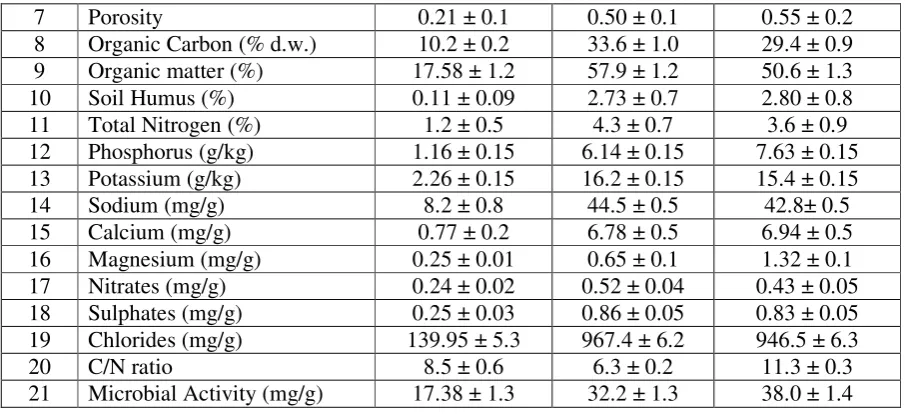
Table 1. Physico-chemical Characteristics of Garden Soil, Fresh and Composted Poultry litter (mean ± SD) n=6.
S.No PARAMETER GARDEN SOIL FRESH COMPOSTED
1 PH 6.87 ± 0.02 8.72 ± 0.3 8.29 ± 0.2
2 Electrical Conductivity (m-mhos)
0.04 ± 0.01 0.36 ± 0.02 0.43 ± 0.03
Volume 02, Issue 1, [January - 2016]
7 Porosity 0.21 ± 0.1 0.50 ± 0.1 0.55 ± 0.2
8 Organic Carbon (% d.w.) 10.2 ± 0.2 33.6 ± 1.0 29.4 ± 0.9 9 Organic matter (%) 17.58 ± 1.2 57.9 ± 1.2 50.6 ± 1.3 10 Soil Humus (%) 0.11 ± 0.09 2.73 ± 0.7 2.80 ± 0.8 11 Total Nitrogen (%) 1.2 ± 0.5 4.3 ± 0.7 3.6 ± 0.9 12 Phosphorus (g/kg) 1.16 ± 0.15 6.14 ± 0.15 7.63 ± 0.15 13 Potassium (g/kg) 2.26 ± 0.15 16.2 ± 0.15 15.4 ± 0.15 14 Sodium (mg/g) 8.2 ± 0.8 44.5 ± 0.5 42.8± 0.5 15 Calcium (mg/g) 0.77 ± 0.2 6.78 ± 0.5 6.94 ± 0.5 16 Magnesium (mg/g) 0.25 ± 0.01 0.65 ± 0.1 1.32 ± 0.1 17 Nitrates (mg/g) 0.24 ± 0.02 0.52 ± 0.04 0.43 ± 0.05 18 Sulphates (mg/g) 0.25 ± 0.03 0.86 ± 0.05 0.83 ± 0.05 19 Chlorides (mg/g) 139.95 ± 5.3 967.4 ± 6.2 946.5 ± 6.3
20 C/N ratio 8.5 ± 0.6 6.3 ± 0.2 11.3 ± 0.3
21 Microbial Activity (mg/g) 17.38 ± 1.3 32.2 ± 1.3 38.0 ± 1.4
Table 2. Pattern of arrangement of test pots of Lycopersicum esculentum
S.No CODE TREATEMENT MATERIALS USED FOR POT
1 LCS Control 10 Kg. of garden soil
2 L31 3:1 7.5 Kg. of garden soil
2.5 Kg. of Composted poultry litter was used as organic manure. 3 L11 1:1 5 Kg. of garden soil
5 Kg. of Composted poultry litter was used as organic manure. 4 L13 1:3 2.5 Kg. of garden soil
7.5 Kg. of Composted poultry litter was used as organic manure. 5 LCL Poultry litter 10 Kg. of Composted poultry litter
was used as organic manure. 6 LCF Soil with CF* 10 Kg. of garden soil
1g. of commercial fertilizer
* Commercial Fertilizer
Table 3. Changes in some Physico-chemical properties of Soil of Lycopersicum sps cultivated in Experimental pots during Decomposition
Sam ple Cod e
Treatm ent
0th Day 10th Day 40th Day
PH Orga nic Carb on (%)
N (%)
P (g/ kg)
K (g/k
g)
PH Orga nic Carb on (%)
N (%)
P (g/ kg)
K (g/k g)
PH Orga nic Carb
on (%)
N (% )
P (g/ kg)
K (g/k
g)
LCS Control 6.87 10.2 1.2 1.1 2.2 7.12 10.0 1.0 1.1 2.0 7.20 9.8 0.9 0.9 1.9
L31 3:1 7.23 15.5 2.1 2.4 5.2 7.18 14.9 1.9 2.2 4.8 7.16 14.6 1.8 1.9 4.5
Table 4. Morphometrical and Bio-Chemical Parameters of Germinated Lycopersicum sps seeds in experimental pots
Pot Code
Day Fresh plant Height(cm)
Fresh plant Weight(g)
Chloroph yll content
(mg/g)
Nitrog en (mg/kg
)
Biomas s (%)
Protei n (mg/g
)
Carbohydr ate (%) Root Shoot Root Shoot
LCS 10th
Day
3 9.6 0.07 0.22 2.1 4.7 74.8 29.37 39.3
20th Day
5.9 19.4 0.24 0.78 3.9 5.6 77.3 35 46.4
40th Day
7.2 29.5 0.48 2.27 5.2 6.8 81.5 42.5 52.5
L31 10th
Day
4 10.5 0.09 0.29 2.5 5.1 78.4 31.87 40.3
20th Day
6.1 21.2 0.29 0.85 4.2 5.9 80.3 36.87 47.2
40th Day
7.8 32.5 0.53 2.38 5.9 7.2 83.2 45 53.4
L11 10
th
Day
3.2 9.4 0.08 0.25 2.2 4.9 76.3 30.62 39.8
20th Day
5.7 19.9 0.26 0.81 4.0 5.8 79.5 36.25 46.7
40th Day
7.3 29.7 0.50 2.33 5.5 7.0 82.5 43.75 52.9
L13 10
th
Day
2.5 9.2 0.07 0.23 1.8 4.6 75.8 28.75 39.2
20th Day
5.3 15.2 0.25 0.78 3.2 5.4 78.2 33.75 46.2
40th Day
6.8 21.5 0.48 2.26 4.8 6.7 81.8 41.87 52.1
LCL 10
th
Day
2.4 8.7 0.05 0.16 1.5 4.5 73.2 28.12 38.5
20th Day
5.2 14.7 0.21 0.69 2.8 5.3 76.5 33.12 45.6
40th Day
6.5 20.5 0.39 1.99 4.1 6.5 79.8 40.62 51.8
LCF 10th
Day
3.1 9.8 0.07 0.24 2.2 4.8 75.2 30 39.5
20th Day
5.9 19.7 0.25 0.79 3.9 5.6 78.5 35 46.6
40th Day
7.1 30.1 0.50 2.30 5.2 6.9 81.9 43.12 52.7
L13 1:3 8.20 26.6 3.2 6.4 12.5 7.99 26.0 3.1 5.9 12.0 7.73 25.5 3.0 5.7 11.8
LCL Poultry
litter
8.2 29.4 3.6 7.5 15.4 8.20 29.0 3.5 7.2 15.2 8.16 28.9 3.3 6.9 14.9
LCF Soil
with CF*
Volume 02, Issue 1, [January - 2016]
Fig: 1 Lycopersicumspscultivated in experimental pots on 10th, 20th & 40th day
Fig: 2 Morphometrical and Bio-Chemical Parameters of Germinated Lyccopersicum sps seeds in Experimental pots. Morphometrical properties 0 10 20 30 40 50 60 70 10th Day 20th Day 40th Day 10th Day 20th Day 40th Day 10th Day 20th Day 40th Day 10th Day 20th Day 40th Day 10th Day 20th Day 40th Day 10th Day 20th Day 40th Day
HCS H31 H11 H13 HCL HCF
Sample code
Fresh plant Height(cm) Root Fresh plant Height(cm) Shoot
Morphometrical properties 0 5 10 15 20 10th Day 20th Day 40th Day 10th Day 20th Day 40th Day 10th Day 20th Day 40th Day 10th Day 20th Day 40th Day 10th Day 20th Day 40th Day 10th Day 20th Day 40th Day
HCS H31 H11 H13 HCL HCF
sample code
Fresh plant Weight(g) Root Fresh plant W eight(g) Shoot
Chlorophyll conte nt (mg/g)
0 1 2 3 4 5 6 7 8 10th Day 20th Day 40th Day 10th Day 20th Day 40th Day 10th Day 20th Day 40th Day 10th Day 20th Day 40th Day 10th Day 20th Day 40th Day 10th Day 20th Day 40th Day
HCS H31 H11 H13 HCL HCF
sample code Nitrogen (mg/kg) 0 2 4 6 8 10 10th Day 20th Day 40th Day 10th Day 20th Day 40th Day 10th Day 20th Day 40th Day 10th Day 20th Day 40th Day 10th Day 20th Day 40th Day 10th Day 20th Day 40th Day
HCS H31 H11 H13 HCL HCF
Sample code
Biomass (% )
78 80 82 84 86 88 90 92 94 96 10th Day 20th Day 40th Day 10th Day 20th Day 40th Day 10th Day 20th Day 40th Day 10th Day 20th Day 40th Day 10th Day 20th Day 40th Day 10th Day 20th Day 40th Day
HCS H31 H11 H13 HCL HCF
Sample code Protein (mg/kg) 0 10 20 30 40 50 60 10th Day 20th Day 40th Day 10th Day 20th Day 40th Day 10th Day 20th Day 40th Day 10th Day 20th Day 40th Day 10th Day 20th Day 40th Day 10th Day 20th Day 40th Day
HCS H31 H11 H13 HCL HCF
Sample code
Carbohydrate (% )
0 10 20 30 40 50 60 10th Day 20th Day 40th Day 10th Day 20th Day 40th Day 10th Day 20th Day 40th Day 10th Day 20th Day 40th Day 10th Day 20th Day 40th Day 10th Day 20th Day 40th Day
LCS L31 L11 L13 LCL LCF