Iranian journal of educational Sociology
(Interdisciplinary Journal of Education)Available online at: http://www.iase-idje.ir/
Volume 1, Number 2, September 2017
Determining the Effectiveness of Acceptance and Commitment
(ACT) Therapy on Interdependence, loneliness Feeling and
attribution style of the wives of addicts
Esmaeil Askari1, Farhad jomehri2*, Buck Tajeri3
,
Hamed Bermas41. Phd student of health psychology, Islamic Azad university, Karaj branch ,karaj ,Iran 2. Assistant professor of psychology,allameh tabatabaee university, Tehran, Iran
3. Assistant professor of health psychology, Islamic Azad university, Karaj branch ,karaj ,Iran 4. Assistant professor of educational pschology, karaj islamic Azad university, karaj, Iran.
Article history:
Received date: 19 September 2017 Review date: 28 October 2017 Accepted date:22 November 2017 Printed on line: 21 September 2018
Abstract
Purpose: The purpose of this study was to determine the efficacy of acceptance-based treatment and commitment to interdependence, loneliness and Attributional styles of addicts' wives. The present study was a quasi-experimental design with a pretest-posttest with control group and from the perspective of the purpose, the research was applied. Methodology: The statistical population of the study consisted of all wives of drug addicts in Tehran. The sample of the present study was based on objective sampling based on available sampling including 30 subjects (15 subjects in each group, 15 in the experimental group and 15 in the control group). The research instruments were Spen-Fisher questionnaire (1991), loneliness questionnaire, Attributional style styles, and adherence-based therapy package. Data were analyzed by repeated measures of covariance and Bonferrini test. Findings showed that considering the fact that the level of significance is smaller than α, also considering that the effect of pre-test was covariate by covariance pre-test, it can be concluded that in the context of the variables of dependency, loneliness and Attributional styles, Treatment based on admission and commitment has been significantly effective. Findings: Also, considering all the three variables, we can conclude that the experimental intervention has led to changes in the experimental group. Discussion: So the treatment affected the decrease in dependency and loneliness and the change in the Attributional style.
Keywords:
Acceptance and Commitment Therapy, Dependency, Loneliness, Attributional Styles, Wives of Addicts
Please cite this article as: Asgari, I, Jomheri, F, Tajeri B. (2017). Determining the Effectiveness of Acceptance and Commitment (ACT) Therapy on Interdependence, loneliness Feeling and attribution style of the wives of addicts, Iranian journal of educational Sociology, 1(2), 146-156.
*Corresponding author E-mail: [email protected]
1. Introduction
Consumption of drugs and its unpleasant consequences are among the most important social concerns and one of the worst social harm now and has long been the subject of attention by health professionals (Butler, 2006). Addiction (drug dependence, substance poisoning) as a social, psychological and historical problem is one of the many problems of the contemporary world that threatens human societies. Addiction to drugs prevents people from recognizing the potential of the individual and thus acts as a barrier to social development. The social and economic losses of substance abuse, in the same way, impose intolerable pressure on the social infrastructure of developed and developing countries. One of the most important consequences of addiction is violence, crime and crime (Fada'i, 2011). From the point of view of psychology, the extent of the destructive effects of drug addiction is so important that its immediate consequences are not the only addicted person, but also the environment and friends, family and colleagues will be exposed to its devastating effects. Soil, 1371).
2. literature Review
As a consequence of addiction, family members, especially wives of addicts, are exposed to a variety of pathological problems. Homogeneity is a common problem in the family of addicts and drug addicts. Cognitive, emotional, and behavioral symptoms of co-morbidity include: custody, self-assimilation, suppression, obsession, control, loose relationships, shaky borders, anger, distrust, and sexual problems (Dupree, 2010). Both extreme and exaggerated patterns of affiliation consist of learned behaviors, beliefs and feelings that make life painful, and this is a dependency on people outside of their own circumstances, which, in parallel, is somewhat forgotten, that the identity of (Farsham, Motafari and Davoudi, 2014).
The issue of homogeneity creates many personal and social destructive effects for the interlocutor in interpersonal relationships and intrapersonal problems. Homogeneity is a disorder that is based on the following: the need to control when dealing with very unfortunate conditions, neglecting their needs, changing their borders in terms of intimacy and separation, getting in with certain people with a disorder and other manifestations Such as denial, accumulated emotions, depression and stress-related illnesses (Whitefield, 1997). In recent years, the absence of symptoms of mental illness is not a health indicator, but adaptability, happiness, self-esteem, and positive attributes of this kind of health signify that the person's main goal in life is to boost their capabilities (Graham and Crohn, 2014).
On the other hand, one of the problems of these people is the feeling of isolation and loneliness, loneliness is an unpleasant experience that appears in response to quantitative or qualitative failures in social relationships (Rahimzadeh et al., 2009). It should be said that loneliness is synonymous with a kind of perceived social isolation, not necessarily with a real social isolation in the external environment, so that humans can have a solitary life without feeling alone or having a seemingly rich social life but still feel lonely. Loneliness is defined as a distressing feeling in which a person feels that his social needs are not commensurate with the quantity and quality of social relationships he has (Hawkley and Casipa, 2010). Therefore, it seems that the relationship between loneliness and dependency of wives of addicts is appropriate, relevant and necessary. At the same time, one of the factors affecting the sense of loneliness and dependency is the Attributional style of the wives of addicts. Attributionals are the process people use to link events or behaviors to their underlying factors. Tzems and Vriesen (1997) explain why people Attributional, describes mainly the creation of attributes because people need to understand their own behavior and others. The basic assumption of the authority of the Attributionals relies on the fact that one wants to find out more about the very structure of his environment and to know what happened and what is the reason for it to be Attributionaled. An important question raised about Seligman is that if depressed people consider their lives as external forces, why do they always blame and blame for each event? When
people perceive their life events beyond their control, they ask themselves why? If they attribute their lack of control to some of the underlying causes that are enduring, they may feel unable to. The attribution of consequences can be explained in terms of their underlying dimensions. Many theories believe that causal agents are linked to a relatively small number of more fundamental cognitive dimensions (Karimi, 1392).
Couples who easily share their thoughts are able to accept and understand each other's feelings and are more satisfied. In this regard, the researchers investigated the efficacy of admission and commitment therapy in various disorders, including in the treatment of panic disorder (Pourfehj Omran, 2011), general anxiety (prayer, trust, and philosophical race, 2011), satisfaction of couples (Neman and Sinatif, 1394), Quality of Life (Alireza'i & Yazidi, 1394), Marital Adjustment (Barouch, Connecker & Bush, 2012), Forgiveness (Art Workers and Associates, 2014). The philosophical foundations of this type of treatment are based on functional context and also its theoretical foundations are based on the theory of the framework of mental relationships. It seeks to change potential potentials of unwanted thoughts and feelings by modifying the psychological contexts in which they are experienced (Hayes et al., 2008). One of the cognitive behavioral therapies is the Third Wave, which uses admission strategies and mind-awareness to increase psychological flexibility. Acceptance and commitment therapy is a behavioral therapy that uses mindfulness, acceptance, and cognitive skills to enhance psychological flexibility (Herbert and Forman, 2011). In adherence and commitment therapy, psychological flexibility is to increase the ability of clients to connect with their experience in the present, and to choose values based on what is possible at that moment for them and act in a manner that Consistent with their chosen values (Hayes et al., 2010).
ACT, unlike most treatments, does not seek to change the content of the thought. For example, cognitive-behavioral therapy for anxiety disorders is intended to help clients reduce their distress by altering cognitive and behavioral responses to anxiety. In fact, cognitive behavioral therapy enables clients to create a new communication network of adaptive thoughts and behaviors that compete with and eliminate maladaptive networks and memories. To achieve this goal, cognitive-behavioral therapy includes these components: training on the nature of fear and anxiety, checking signs and symptoms, relaxation and proper breathing training, cognitive reconstruction, behavioral testing, prevention Response. In cognitive reconstruction, clients are taught to challenge their authenticity based on evidence of aggression and against anxiety thoughts, identify the cognitive errors that reflect these thoughts, and create alternative ideas for them. Behavioral tests challenge the anxiety prediction directly. Helps the authorities approach the horrible trigger and see if their expected consequences occur. Preventing responses confronts references with stimuli and anxiety, and at the same time prevents avoidable behaviors and avoidance behaviors (Gudiano and Leotti, 1983). According to the above explanations, this study seeks to answer the question of whether acceptance-based therapy and commitment to interdependence, loneliness, and Attributional styles affect the addicted spouses?
3. Methodology
The present study was a quasi-experimental design with a pre-test-post-test with a control group. In the literature collection, the library and Attributional method is used and is considered as a field research in terms of collection. From the perspective of the goal, the research has been applied. The statistical population of the study consisted of all spouses of drug addicts in Tehran who have been referred to addiction treatment centers due to psychological problems. The sample of the study was based on a target-based sampling of 30 subjects (15 subjects in each group, 15 in the experimental group and 15 in the control group). Sampling was performed on the basis of available sampling from spouses who were referred to addiction treatment centers in Tehran. Before the intervention, independent variables were randomly
assigned to experimental and control groups and after the implementation of the therapeutic method, again the questionnaires were put on them Done.
The criteria for entering the test group were no use of psychotropic drugs, drugs and psychological treatments during the study. 2. Having over 20 years of age; 3. Failure to have acute or chronic mental disorders. 4. To express satisfaction for the subjects. Exclusion criteria for the experimental group1-No attendance at the trial sessions and more than two sessions of intervention. 2. No reluctance to attend the experimental and intervention sessions. 3. Suffering from an associated psychiatric disorder requiring immediate treatment.
Spen-Fisher's Dependency Questionnaire. This test is a 16 official academic questionnaire test to measure interdependence, which is answered through a 6-point Likert scale, and two of the questions are reversed. In 1990, Spen Fisher presented 15 graduate questions to the academic community after validating them with a validation (Cronbach's alpha coefficient of 0.77), abbreviated as "SSSS." In 1991, Spen and Fisher made a number of comparative studies, which led to the addition of a question to the test. In the present study, the 16 question questions formulated in 1991 were used. This questionnaire has been validated in Iran. The internal consistency method was used to examine the credibility of the questionnaire. The Cronbach's alpha coefficient obtained for the test was 73%. The spin-factor validity coefficient was calculated based on both Spearman-Brown and Gutman's methods, which was found to be 74%, which indicates the credibility of this questionnaire. Also, the correlation between the two half-tests was equal to 62% and acceptable (Ashraf, 2010).
Loneliness is measured by a variety of scales, including the scale of the use of loneliness (UCLA). A sense of loneliness questionnaire was developed by Russell and Pilawa and Corteona in 1980, containing 20 questions, 4 options, 10 negative sentences, and 10 positive sentences. In this questionnaire, you never score (1), scarcely (2), sometimes (3), and always score (4). But the points of the questions are 1,5,6,9,10,15,16,19,20 in reverse. That is, never (4), rarely (3), sometimes (2), and always score (1). Scores range between 20 (minimum) and 80 (maximum). So the average score is 50. A score higher than the mean represents a higher intensity of loneliness. The reliability of this test was reported in the revised new version of 78%. Wa and colleagues also reported this tool as a short and reliable tool for measuring loneliness, and Cronbach's alpha coefficient reported it at 84% (Wa, 2008). Also, Hojjati et al. (2011) reported a 89% alpha of Cronbach. On this scale, based on the definition given, there are some questions like "I feel isolated," "people around me who can communicate with me and constructive dialogue," and "I feel part of the group. My friends "The result of the scale is on a range of intense loneliness and an effective social relationship (Hawkley and Casipa, 2010).
Attributional styles are used to measure positive or negative thinking styles. This Attributional questionnaire is a self-report tool that contains 12 hypothetical positions (six positive positions and six negative positions). Four positions are considered for each position. The first question that is answered in an anecdotal way asks a major cause of the event that it does not count in the scoring, but it helps the subject in answering the next 3 questions. The next three questions are the same for all situations and the dimensions of the attribution Ali is measured. The second question, after each internal and external position, measures the response of the individual. The third question after each stability situation is the instability of the respondent's response, and finally the fourth question in each general situation-specifies the specificity of the respondent's response. This questionnaire can be performed either individually or in group. For each situation, the subject is asked to carefully read each event and clearly imagine in their minds that they are in such a situation and then one reason they believe that the most important and main reason for that event is To be written in place. Several studies have confirmed the internal consistency of the Attributional style questionnaire. Peterson et al. (1982) reported internal consistency of causality, stability and universality, using the Cronbach's alpha formula 0.44-0.96. Of course, the existence of such a modest internal consistency in this questionnaire is normal because each scale has a few questions and even a lower
reliability probability can be expected. In the study of Sieran and Magallas (2009), the coefficient of reliability of the questionnaire was 0.81. In Heidari, Maktabi and Shanni Yalagh (2012), the coefficients of reliability of the questionnaire women, for positive Attributional styles, were 0.89 and Cronbach alpha (Spearman-Braun and Gutmann) were 0.69 and 0.61, respectively, respectively, and 0.63, 0.48 and 0.41 for negative predictive style, respectively.
A therapeutic package based on admission and commitment
In the acceptance and commitment of therapy, a set of empirical exercises and metaphors are combined with standard behavioral interventions in order to nurture one's judgmental experiences of individual therapies. This empirical admission is not an end in itself, but is linked to the promotion of action for the proper personal goals. The course was designed as 8 sessions per hour and weekly sessions based on the ACT protocol. The treatment plan based on this protocol is as follows. First session: Group familiarity with each other, with therapist and general plan of treatment, therapeutic sessions, person's willingness to receive treatment and medication and non-pharmacological treatments, and ultimately diagnostic interview. Session 2: Understanding acceptance and commitment therapeutic concepts, discovering and evaluating patient's therapeutic approaches and their scoring, helping to cope with intermittent and low-impact treatments using examples, insight into the problem and challenging the problem. Receive feedback, registration and assignment. Session 3: Reviewing the tasks and experiences of the previous session, expressing control as a problem, measuring performance, identifying ineffective control strategies and finding out their nullity, accepting painful personal events without conflict with them, receiving feedback, examining the exercises next week. Session Four: Making Adoption and Mindfulness by releasing attempts to control and cognitive faults, discovering avoidable situations, and contacting them through admission, appropriate exposure to mental experiences, training on admission steps, explaining the concepts of enthusiasm and obstacles, and presenting Tasks for the next meeting. Fifth Session: A review of the task and behavioral observer commitment, the teaching of value-oriented life, and the expression of the concept of evaluation and description using allegory, calm education, showing separation between oneself, internal experiences and behavior, self-observation as a background, self-conceptual weakening and expressing themselves, creating goals and a social life style and a practical commitment to them and offering new tasks. Session Six: Evaluation of goals and actions, attributing values, goals and actions, and obstacles to them, explaining the concepts of role and background, observing oneself as a platform and establishing contact with itself using allegory, knowing different sensory receptions, and separating from Senses that are part of mental content. Focus on activities and awareness of your own circumstances. Therefore, the learner is trained to pay attention to their thoughts and emotions, but do not stick to their content.
Receive feedback and provide a task. Seventh Session: Reassessing Values, Goals, Appreciation, Engagement and Engagement with Excitement and Commitment, Discovering the Practical Values of Life, Explaining the Concept of Values, and Expression of Differences Between Values, Objectives, and Motivations, Unclear Values of References for Better Life, Focusing Practices, receive feedback and provide a task. Session 8: Learning commitment to action, recognizing behavioral patterns in accordance with values and committing to them, understanding the nature of desire and commitment, determining patterns of action in accordance with values, reviewing assignments, performing post-tests.
4. Finding
Results of covariance analysis The difference between mean score of impact score on interdependence (number = 51 people in each group)
eta F
degrees of freedom Total squared
mean squares Change source
Variable
360.0 *
516033 5
1211.352 51556011
Between subjects attachment styles
363.1 *
56511 5
352.759 0116113
within subjects
3611 **
16.5. 5
532.819 1016253
treatment
11 1984.375
50.6511 Error or remaining
03 15894.00
Total
P > 0.01**, P >
0.05*
Considering that the significance level of α is smaller, also considering that the effect of pre-test was covariate by covariance test, it can be concluded that in the context of the variables of dependency, acceptance and commitment therapy, Also, with a consideration of 3611ect, it can be concluded that the experimental intervention led to changes in the experimental group, which was 361.of the total variation resulting from the experimental procedure. So the treatment affects the reduction of interdependence. Subsequently, Benferonian post hoc test was used to examine the difference between means.
Table1. The results of Benfrehny's post hoc test were used to examine mean differencees
Low limit. Confidence interval High limit
Confidence interval Mean
differences Standard
error. Significance
Variable
16311 36021
36351 36.15
36351 dependency
P >0.01**, P >0.05*
The results of the table show that the difference between the mean of the post-test and the pre-test in the case of interdependence is significant. According to the above tables, there is a statistically significant difference between the mean of experimental and control groups by intervention. Therefore, it can be concluded that the group that received acceptance and commitment therapy had a significant decrease in the degree of dependence in comparison with the untreated group. So the first hypothesis was confirmed.
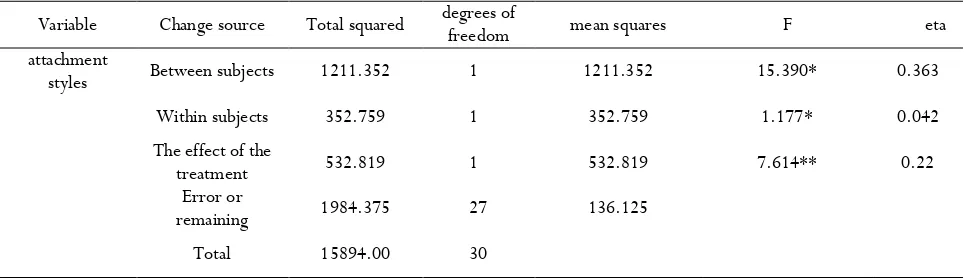
Table 2. Results of covariance analysis The difference between moderated mean scores of the impact of intervention on attachment styles (number = 51 people per group)
eta F mean squares degrees of freedom Total squared Change source Variable 360.0 * 516033 51556011 5 1211.352 Between subjects attachment styles 363.1 * 56511 0116113 5 352.759 Within subjects 3611 ** 16.5. 1016253 5 532.819
The effect of the treatment 50.6511 11 1984.375 Error or remaining 03 15894.00 Total P > 0.01**, P > 0.05*
Considering that F was observed at a significant level less than 3631, also considering that the effect of the pre-test was covariate by covariance test, it can be concluded that in the context of attachment styles, acceptance therapy and commitment to Has been meaningfully effective. Also, considering the 11 % ETA squeeze, it can be concluded that experimental interventions led to changes in the experimental group, which was 3611of the total variation resulting from the experimental procedure. So the treatment affects the style of the documents.
Table 3. Effect of acceptance and commitment therapy on attachment styles (number = 15 people in each group)
Significance level Standard error. Mean differences Variable 0.26 0.001 16.21 Inner - outer (positive)
0.07 0.21 4.423 Inner-outer (negative) 0.25 0.001 15.92 Stable-unstable (positive) 0.08 0.11 4.123 Stable-unstable (negative) 0.31 0.005 14.83 General-minor (positive) 0.11 0.07 3.328 General-minor (negative)
The difference between the mean scores of internal, external, positive, stable, positive, and unstable external attributes was meaningful. In other words, treatment has increased these attributes. However, there was no significant effect on the rest of the records, with respect to Eta-interventional scores, had the greatest effect on the increase of overall-partial-positive reports.
Table 4- . The results of Bonfrehny's post hoc test were used to examine the difference between the mean
Variable Mean differences
Standard error. Significance
level Low limit. Confidence
interval High limit Confidence
interval
Attachment style *
16252 16200
3635 16331
506.01
P > 0.01**, P >
0.05*
The results of the table show that the difference between the mean of the post-test and the pre-test is significant despite the modifications made to the attachment styles. According to the above tables, there is a statistically significant difference between the two experimental and control groups in the intervention stages. Therefore, it can be concluded that the group that received acceptance and commitment therapy showed a significant change in the documentation style compared to the untreated group. So the third hypothesis was confirmed.
5. Discussion
In adherence and commitment therapy, the goal is to help people experience their disturbing thoughts as thoughts and become aware of the ineffective nature of their thoughts and instead of responding to them, doing what is important in their lives. Pay attention In treatment based on admission and commitment, training such as leaving negative thoughts and self-conceptualization, self-observers, strengthen internal contexts, accept their values, pay attention to them, present Gets In this treatment, people learn to accept their feelings to distance themselves from them and to focus their thoughts and processes of thinking on the mind more closely and link them to goal-oriented activities. According to the theorists of commitment and acceptance therapy, an important factor in the creation and preservation of mental health is experiential avoidance, which means an exaggerated negative evaluation of internal experiences such as thoughts, feelings and emotions and reluctance to experience them. It attempts to control or escape them and can interfere with the person's performance. Based on study and colleagues, people experiencing more emotional avoidance experience positive emotional experiences and less satisfaction with life and feel that their lives are meaningless. However, the goals of commitment and acceptance treatment, the reduction of empirical avoidance, increased psychological flexibility through the adoption of unavoidable, inevitable and distressing emotional feelings such as anxiety, the development of mindfulness in order to neutralize excessive cognitive conflicts and identify relevant personal values It is intended for behavioral purposes, and the patient is encouraged to communicate fully with and experience the strength of the patient while embarking on his valuable goals, and to accept them at the time of their appearance without judging their correctness or incorrectness. . This increases the incentive for change with inevitable barriers and encourages the person to work towards the realization of his valuable goals, and this can lead to improved mental health and life expectancy in addicted women. In a committed activity, an individual is encouraged to take the ultimate effort and effort to reach the goal. In fact, in this kind of therapy, the main goal is to create psychological flexibility; that is, to create the ability to make practical choices among the different choices that are more appropriate, rather than to act purely to avoid disturbing thoughts, feelings, memories, or desires Imposed to the person. The commitment and acceptance therapy has two parts: mindfulness, action, and experience in the present, and is taught to people who, by accepting their emotions and avoiding experiential avoidance, live and live now, and better with the challenge Affect after a wife's addiction. Acceptance and commitment therapy helps to control inferior thoughts and inappropriate behaviors to self-acting. In fact, since adherence and commitment therapy does not mean disturbing
emotions and enduring experiences, it can lead a person to self-consciously consciously restrain his thoughts, behaviors, and emotions, and his excitement To experience and manage on their own.
Regarding the research done in the field of Attributionals, controllable and internal and sustained assignments for success are among the factors that increase self-esteem, and one can have positive emotions with an internal, controlled and stable knowledge of it. Slave and self esteem; and because the external assignment of success reduces self-esteem and irreversible and unstable determinations of failure, it can increase it. In order to increase self-esteem, one can attribute success to his ability and to fail uncontrollably and unstable Jacoby and Moghighi, 2009). Recognition and correct doctrine of excitement are an inseparable part of marital relations. The inadequacy of interpersonal cognition and, in particular, the correct excitement of an individual with multiple problems in interpersonal relationships. For example, peoples and intimate relationships with others require the ability to recognize the emotions and emotions of themselves and others. Defects and inability to recognize emotions are causing interpersonal problems in these areas. On this basis, it can be argued that negative and incomplete Attributionals in the recognition of emotions and emotions increase interpersonal and marital problems. Normal spouses relate the weaknesses of the relationship to specific and temporary factors and attribute the positive aspects of the relationship to stable and general characteristics, but the wives of the addicted person reverse this state of affairs, that is, the negative aspects of the relationship They attribute to the general and sustainable features and positive aspects of the relationship to specific and unsustainable features. Inference from the behavior of their husbands seriously affects their behavior. There is credible evidence about the role of marital Attributionals in couple’s adaptation with stressful events of life, couples with negative marital attributes have shown that they have less ability to maintain quality and overall marital satisfaction in dealing with negative aspects (Garram and Canley, 2006).
Attributionalation is a process by which one can judge the behavior of himself or others as internal or external causes (Grass, 2002). According to Wiener, there are methods of writing, emotions, and behavior of a logical sequence, in the sense that attributes determine emotions and emotions also affect behavior. In fact, the evidence tells us what to feel and what emotions are telling us what to do. Addicts' husbands generally attribute the negative aspects of relationships to general and sustainable features and positive aspects of relationships to specific and unsustainable features. In this regard, cognitive explanations are also influenced by three important dimensions of source, repetition, and time. External internal dimension, unstable stable dimension, and specific general dimension (Karimi and Sadat Afraz, 2009). Based on this kind of formulation, when a person Attributionals his failures to internal, stable, and general factors, he has a pseudo-style Attributional style, and when he presents his successes to internal, stable, and general factors, he has an optimistic style of writing. In an adherence and commitment approach, it tries to experience excitements as they really are, which makes it possible for a person to understand deep emotions, correctly identify them, and seek to understand and correct their well-being and When an individual, with the help of an adherence and commitment approach, recognizes and cognises his emotions in a healthy way, he has achieved a better emotional management. In justifying the impact on Attributional styles, several points can be noted, such as the fact that individuals learn to choose the most important and achievable goals, that is, the goals that they are reaching for a person, that is, people are hoping to succeed and achieve the goal; That is, the inner conversation that "we are doing well." The tutorials help people to achieve less negative emotions in reaching the barriers to achieving their goals (negative situations), choose alternative paths to reach their goals and choose flexible goals with available goals. It also teaches people to use cross-sectional thinking, in other words, to create solutions to achieve goals, and ultimately helps people create the motivation to implement these strategies and keep them along the way. In adherence and commitment therapy, the goal is to increase psychological flexibility and to increase the ability of users to communicate with their experience in the present and based on what is possible at that moment in a manner that is in line with the values of choice In this treatment, behavioral commitment exercises, along with
faulting and admission techniques, as well as discussing values, all reduced the severity of depression in patients. The purpose of this treatment was to emphasize the willingness of individuals to experience internal experiences. Helping them to experience their annoying thoughts as just a thought, and from nature Effectively understand their current program and instead of responding to it, they will do what is important to them in their lives and in line with their values.
References
American Psychiatric Association. (2013), Diagnostic and Statistical Manual of DSM-V Psychiatric Disorders, Fifth Edition. Translation by Farzin Rezaei et al. (1393) Tehran: Arjmand Publication.
Arabnejad S, Birashk B, Abolmaali Alhosseini KH(2014). The effectiveness of acceptance and commitment therapy (ACT) on increasing marital intimacy and decreasing marital conflicts between the couples of Tehran. Journal of Social Issues & Humanities; 2(8):89-93. (PERSION)
Arch, J, J. and Craske, M G. (2008). Acceptance and Commitment Therapy and Cognitive Behavioral Therapy for Anxiety Disorders: Different Treatments, Similar Mechanisms? Clinical psychology: science and practice, 15(4), 263-279.
Berguno G, Leroux P, McAinsh K, Shaikh S.(2004). Children'sexperience of loneliness at school and its relation to bullyin and the quality of teacher interventions. Qualitative Report. 483–499.
Boomsma, D. I., Willemsen, G., Dolan, C. V., Hawkley, L. C., & Cacioppo, J. T. (2005). Genetic and environmental contributions to loneliness in adults: The Netherlands Twin Register Study. Behavior Genetics, 35, 745-752.
Buick Businessman. (1390). Addiction to anthropology and treatment. First Edition. Andizhan Publishing.
Businessman Buick, Ahadi Hasan and Farhad (1390). The Effectiveness of Cognitive-Cognitive Skills Training on Attitude, Depression and Public Creativity of Glass Addicts. Methods and models of psychology. No. 5, Autumn 2011, 85-106. Carroll, Kathleen. (2002). Practical Guide to Cognitive Behavioral Therapy. Translation by Abbas Bakhshi Pour Roodsari,
Shahram Mohammad Khani (2002). Tehran: Spand Art Publishing.
Ellwardt Lea, Van Tilburg, Theo G, Aartsen, Marja J (2014). Child care by Dutch grandparents: Changes between 1992 and 2006. Jornal of Ageing and Society. , Volume 38, Number 3 1 May 2014, pages 243-257.
Ettema, Eric J. Derksen, Louise D. & van Leeuwen, Evert. (2010). Existential loneliness and end-of-life care: A systematic review. Theor Med Bioeth (2010) 31:141–169.
Foroughi Rad, Masoomeh (1392). The effect of the dependence of addicted spouses on the satisfaction of their marital life. Master's dissertation, General Psychology, Imam Khomeini International University. Social Sciences.
Ghasemi, Nizam al-Din. (1388). Attributional styles and convergent-divergent learning styles in depressed and normal students. Journal of Behavioral Sciences, Vol 9, No 9, 181-113
Gillette, Russell. (2012). Substance Abuse, Co-Dependency and Family Systems across Generations. The Bowen System and the Alcoholic/Addict Family.
Graham, C., & Crown, C. (2014). Religion and wellbeing around the world: Social purpose, social time, or social insurance. International Journal of Wellbeing, vol 4, 1, 1-27. doi:10.5502/ijw.v4i1.1
Herbert J & Forman, E. (2011). Acceptance and Mindfulness in Cognitive Behavior Therapy. Hoboken, NJ: Wiley. Hole, Katy. (2011). Loneliness compendium: Examples from research and practice. Joseph Rowntree Foundation 2011. Hughes, M. E., Waite, L. J., Hawkley, L. C., & Cacioppo, J. T. (2004). A short scale for measuring loneliness in large surveys:
Results from two population-based studies.
Kabat-Zinn, J. (2010). Participatory Medicine. Journal of European Academy of Dermatology and Vereneology, 14, 239-240. Kim, Junghyun, LaRose, Robert & Peng, Wei (2009). Loneliness as the Cause and the Effect of Problematic Internet Use: The
Relationship between Internet Useychological Well-Being.
McGuire, J. (2005). Social problem solving: Basic concepts, Research and Applications. In A. McGuire. (Eds). Social problem solving and offending: Evidence and Evaluation. (PP. 3-29) New York: John Wiley & Sons.
McGuire, S., Clifford, J. (2000). Genetic and environmental contributions to loneliness in children. Psychological Science, 11, 487-491.
Mohammadi Leila, Salehzadeh Abargouei Maryam, Nasirian Mansoureh. (1394). The Effectiveness of Acceptance and Commitment Therapy on Cognitive Emotion Regulation in Methadone-treated Men. Journal of Shaheed Sadoughi University of Medical Sciences and Health Services, Yazd, Iran. Vol. 23, No. 9; Pages 853 - 861.
Mojdeh, Mohammad Reza, Etemadi, Ahmad and Falsafinejad, Mohammad Reza (2011). Investigating the mediations of treatment and the efficacy of acceptance and commitment treatment in reducing the symptoms of generalized anxiety, Journal of Cultural and Counseling and Psychotherapy, 2008 (Issue 7).
Morgan, GP. (1991). what is Codependency.journal of Clinical Psychology, 97,720-729.
Motiean, Samira; Ghorbani, Maryam; Golparvar, Mohsen. (1393). Relationship between dependence and the difficulty of emotion in women. Journal of Clinical Psychology. 6 (1). P. 77-90.
Narimani, Mohammad (1393). The Effectiveness of Two Approaches Based on Admission and Commitment and Group Narrative Therapy on Reducing Initial Maladaptive Schemes in Patients Who Claim for Divorce. Consultation
Omidi, Abdullah, Tuliqi, Anise. (1394). Investigating the Effectiveness of Couple Therapy Based on Admission and Commitment on Marital Satisfaction and Anger in Couples in Kashan. Abstracts of the First Congress of the Third Wave of Behavioral Therapy. 27
Pour Faraj Omran, Majid. (1390). The Effectiveness of Group Therapy on Acceptance and Commitment on Students' Social Phobia. Journal of Knowledge and Health. Volume 6, Issue 2 pp. 37 - 151.
Prest, L.A., & protinsky, H. (1993). Family system theory: A unifying framework for Codependence. The American journal of Family Theory, 21,352-360.
Rogers, C. R. (1961). Ellen West – and loneliness. Review of Existential Psychology and Psychiatry, 1, 94-101.
Ronald Caden. (1383). Cognitive Therapy: Commitment to Drug Dependence. Translation by Abbas Bashishipour Roodsari. Tehran: Tehran University Student Counseling Center.
Rotunda, R. J., West, L., & O'farrell, T. J. (2004). Enabling behavior in a clinical sample of alcohol-dependent clients and their partners. Journal of Substance Abuse Treatment. 26 (4), 269-276.
Russell, D. W. (1996). UCLA Loneliness Scale (Version 3): Reliability, validity, and factor structure. Journal of Personality Assessment, 66, 20-40.
Saduk, Benjamin James; Saduk, Virginia Alc. (2013). Synopsis of Kaplan and Sadukh Psychiatry. Translated by Farzin Rezaei (1394). Tehran, Arjomand Publication.
Segrin, C6, Passalacqua, S6 A6 (1353) ‘Functions of loneliness, social support, health behaviours, and stress in association with poor health’, Health Communication, Vol6 11, No6 ., pp6 051–322
Stephane, S., yvan L., & john W.(2006).the Effects of measurement strategy on attributions for marital problems and behaviors. Departement de Psychologie, Universire de Montreal. Journal of Applied Social Psychology,21, 734-746.
Templeton, L. J. (2009). Use of a structured brief intervention in a group setting for family members living with substance misuse. Journal of Substance Use, 14 (3-4), 211-220.
Whitfield, C.L. (2011). Co-alcoholism: Recognizing a treatable illness. Family and community Health. 7.16-25.