Volume 11 Number 1 Article 9
11-29-2018
Complete V.11 No.1
Complete V.11 No.1
Follow this and additional works at: https://digitalcommons.law.lsu.edu/jcls
Part of the Civil Law Commons
Repository Citation Repository Citation
Complete V.11 No.1, 11 J. Civ. L. Stud. (2018)
Available at: https://digitalcommons.law.lsu.edu/jcls/vol11/iss1/9
Volume 11 Number 1 2018 ___________________________________________________________________________
ARTICLES
The Organization of American States’ Model Law
on Simplified Corporations Francisco Reyes Villamizar
Canada’s Legal Traditions: Sources of Unification, Diversification, or Inspiration? Rosalie Jukier
Early 20th Century Perceptions of Civil Law-Common Law Difference: F.L. Joannini’s Spanish-English Civil Code Translations in Context Seth S. Brostoff
The Impact of Harmonized European Private Law and the Acquis Communautaire on Spanish Law Luz M. Martínez Velencoso
CIVIL LAW IN THE WORLD
Central America A First Approach to Tort Liability in the Central American Civil Codes Claudia María Castro Valle
Germany 2017: An Eventful Year in German Family Law Saskia Lettmaier
BOOK REVIEW
Dan E. Stigall, The Santillana Codes: The Civil Codes of Tunisia,
J
OURNAL OFC
IVILL
AWS
TUDIESEditor-in-Chief
Olivier Moréteau
Louisiana State University Paul M. Hebert Law Center, USA
Executive Editor
Agustín Parise
Faculty of Law, Maastricht University, The Netherlands
Managing Editors
Christabelle Lefebvre
Louisiana State University Paul M. Hebert Law Center, USA
Camille Renard
Louisiana State University Paul M. Hebert Law Center, USA
Book-Review Editor
Vicenç F. Feliù
Nova Southeastern University, Shepard Broad College of Law, USA
Honorary Members of the Advisory Board
Robert A. Pascal†
Louisiana State University Paul M. Hebert Law Center, USA
Rodolfo Sacco
Faculty of Law, University of Turin, Italy
Jacques P. Vanderlinden
Faculty of Law, Free University of Brussels, Belgium Faculty of Law, University of Moncton, Canada
Advisory Board
Stathis Banakas
Norwich Law School, University of East Anglia, United Kingdom
Paul R. Baier
Louisiana State University Paul M. Hebert Law Center, USA
Andrea Beauchamp Carroll
Louisiana State University Paul M. Hebert Law Center, USA
Elizabeth R. Carter
Louisiana State University Paul M. Hebert Law Center, USA
Seán P. Donlan
Faculty of Law, Thompson Rivers University, Canada
François du Toit
Faculty of Law, University of the Western Cape, South Africa
Muriel Fabre-Magnan
Faculty of Law, University Panthéon-Sorbonne, Paris 1, France
Frédérique Ferrand
Faculty of Law, University Jean Moulin, Lyon 3, France
Silvia Ferreri
Michele Graziadei
Faculty of Law, University of Turin, Italy
David W. Gruning
College of Law, Loyola University New Orleans, USA
Attila Harmathy
Faculty of Law, Eötvös Loránd University, Budapest, Hungary
Rosalie Jukier
McGill University Faculty of Law, Canada
Nicholas Kasirer
Justice, Court of Appeal of Quebec, Canada
Pnina Lahav
Boston University School of Law, USA
Alain A. Levasseur
Louisiana State University Paul M. Hebert Law Center, USA
Melissa T. Lonegrass
Louisiana State University Paul M. Hebert Law Center, USA
Hector MacQueen
University of Edinburg School of Law, United Kingdom
Ulrich Magnus
Faculty of Law, University of Hamburg, Germany
Blandine Mallet-Bricout
Faculty of Law, University Jean Moulin, Lyon 3, France
Juana Marco Molina
Faculty of Law, University of Barcelona, Spain
Michael McAuley
Advocate, Montreal, Canada
Barbara Pozzo
Faculty of Law, University of Insubria, Como, Italy
Christa Rautenbach
Faculty of Law, North-West University, South Africa
Francisco Reyes Villamizar
Faculty of Law, University of the Andes, Colombia
Michel Séjean
Faculty of Law, University Bretagne Sud, France
Lionel Smith
McGill University Faculty of Law, Canada
Jan M. Smits
Faculty of Law, Maastricht University, The Netherlands
Fernando Toller
Faculty of Law, Austral University, Argentina
John Randall Trahan
Stefan Vogenauer
Max Planck Institute for European Legal History, Germany
Michael L. Wells
University of Georgia School of Law, USA
Pierre Widmer
Swiss Institute of Comparative Law, Lausanne-Dorigny, Switzerland
National Correspondents
Carlos Felipe Amunátegui Perelló, Chile
Ewa Bagińska, Poland
Lucas Abreu Barroso, Brazil
Claudia María Castro Valle, Central America
Roland Djieufack, OHADA Countries
Laura Franciosi, Italy
Thomas Kadner-Graziano, Switzerland
Saskia Lettmaier, Germany
Juana Marco Molina, Spain
Julieta Marotta, Argentina
Mohamed Mattar, Arab Countries
Mustapha Mekki, France
Asya Ostroukh, Russia
Alexandra Popovici, Québec
Vincent Sagaert, Belgium
Bing Shui, China
François du Toit, South Africa
Lécia Vicente, Portugal
Lars van Vliet, The Netherlands
Executive Graduate Editors
William A. Milburn
Louisiana State University Paul M. Hebert Law Center, USA
Bryan Dupree
Louisiana State University Paul M. Hebert Law Center, USA
Senior Graduate Editors
Aaron Koenck Marguerite Stewart
Katherine Stephens
Junior Graduate Editors
Jonathan Cobb Lindsay T. Rich Brittney I. Esie Marcus D. Sandifer Breana Harris Stephen Stovall
Kadence R. Haskett Vaughnkerryah V. Tatum Nancy A. Maurice
William Patrick
JOURNAL OF CIVIL LAW STUDIES (ISSN1944-3749)
Published by the Center of Civil Law Studies, Paul M. Hebert Law Center, Louisiana State University.
© November 2018, Center of Civil Law Studies
The JCLS welcomes submissions for Articles, Notes, Comments, Essays, Book Reviews, and
General Information. Unless otherwise agreed, contributions should have been neither published nor submitted for publication elsewhere. All contributions will be subject to a critical review by the
Editors, and will be subjected to peer-review.
Editorial comunication and books for review should be addressed to the editor-in-chief, and sent to our editorial offices.
Editorial offices:
Center of Civil Law Studies
LSU Paul M. Hebert Law Center
Room W326, 1 East Campus Drive Baton Rouge, LA 70803
_________________________________________________________________________________
VOLUME 11 NUMBER 1 2018
_________________________________________________________________________________
ARTICLES
The Organization of American States’ Model Law on Simplified Corporations
Francisco Reyes Villamizar 1
Canada’s Legal Traditions: Sources of Unification, Diversification, or Inspiration?
Rosalie Jukier 75
Early 20th Century Perceptions of Civil Law-Common Law Difference: F.L. Joannini’s Spanish-English Civil Code Translations in Context
Seth S. Brostoff 105
The Impact of Harmonized European Private Law and the Acquis Communautaire on Spanish Law
Luz M. Martínez Velencoso 151
CIVIL LAW IN THE WORLD
Central America
A First Approach to Tort Liability in the Central American Civil Codes
Claudia María Castro Valle 189
Germany
2017: An Eventful Year in German Family Law
Saskia Lettmaier 217
BOOK REVIEW
Dan E. Stigall, The Santillana Codes: The Civil Codes of Tunisia, Morocco, and Mauritania
L
AW ONS
IMPLIFIEDC
ORPORATIONSFrancisco Reyes Villamizar∗
I. Introduction: A Model Law on Simplified Corporations ... 3
II. Why a Model Law on Simplified Corporations? ... 5
A. Focus on Latin America ... 11
B. Problems with the Legislative Agenda in the Latin American Region ... 15
1. Entry Barriers ... 16
2. Restrictions to Freedom of Contract and Dichotomy of Private Law ... 21
3. Multiple Piercing the Corporate Veil Hypotheses ... 25
4. Difficult Access to Information Subject to Public Record ... 28
5. Enforcement Failure ... 31
6. Costs of Starting a Business ... 34
III. Contents of the Model Law ... 35
A. Facilitating Incorporation Procedures ... 37
B. Full-Fledged Limited Liability ... 39
C. Private Ordering ... 41
D. Unrestricted Business Purpose, Perpetuity and Commercial Character ... 45
E. Freedom to Define Internal Structure ... 47
F. Rules on Capital ... 48
G. Protection Mechanisms ... 49
H. Restructuring Transactions ... 52
I. Dissolution and Winding Up ... 53
J. Dispute Resolution ... 55
IV. Empirical Data on Simplified Corporations in Colombia ... 57
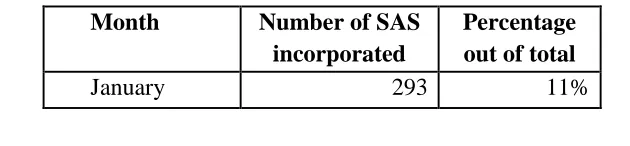
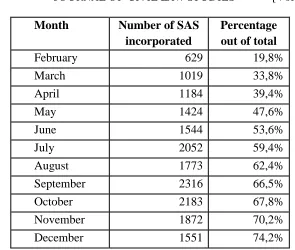
A. Number of SAS Created Since the Enactment of Law 1258 of 2008 ... 59
B. Formalization and the SAS ... 61
C. Dimension of Incorporated SAS ... 62
D. SAS Versus Traditional Business Associations ... 63
V. Specialized Corporate Disputes Court ... 65
A. Matters Brought to the Colombian Specialized Corporate Law Court ... 67
B. Broad Access to the Specialized Court ... 69
C. Productivity and Performance of the Specialized Court ... 70
VI. Conclusion ... 72
ABSTRACT
Colombian Law 1258 of 2008 introduced the Simplified Corpo-ration (Sociedad por Acciones Simplificadaor SAS). This type of business entity included modern corporate law features such as sim-plified incorporation proceedings, full-fledged limited liability for its shareholders, and broad freedom of contract for the definition of housekeeping and governance rules. It also reduced old-fashioned prohibitions pertaining to shareholders and managers activities and reduced transaction costs. The SAS’s “opt-in” approach also has allowed for private parties to draft the most suitable agreements. The enabling provisions of Law 1258 have been the starting point for the preparation of at least three Model Law proposals presented before the Organization of American States (OAS), the United Na-tions Commission for International Trade Law (UNCITRAL), and the Pacific Alliance.
Discussions on these draft legislative models have been under-way over the last few years at different bodies within these multina-tional organizations. Although some progress has been made in rec-ognizing the importance of providing some degree of harmonization in the field of closely held business enterprises, particularly in de-veloping jurisdictions, there are still significant obstacles that need to be surpassed before such model law is adopted. In June, 2017 the OAS General Assembly recommended to the Organization’s mem-ber States to adopt the Interamerican Model Law on Simplified Cor-porations. It is the first successful attempt for the international har-monization on the rules concerning business corporations.
I.INTRODUCTION:AMODEL LAW ON SIMPLIFIED CORPORATIONS
On June 20, 2017, the General Assembly of the Organization of American States (OAS) adopted a resolution1 in which it requested the Inter-American Juridical Committee and its Technical Secretar-iat to give the broadest possible publicity to the Model Law on Sim-plified Corporations. In the same resolution, the General Assembly requested the General Secretariat to provide the OAS Member States all the necessary cooperation and support if they decided to adopt the Model Law or any parts thereof. The General Assembly’s decision represents a significant step towards the harmonization of company law in the Americas, since it is the first instrument ever produced in this legal area.2
This paper discusses the OAS Model Law on Simplified Corpo-rations3 (hereinafter also referred to as the “Model Law”), and ana-lyzes harmonization of laws concerning closely held entities, espe-cially in emerging jurisdictions. This paper also contains an analysis concerning some of the current legislative approaches to corporate law existing in emerging jurisdictions, and summarizes certain dif-ficulties that entrepreneurs encounter when confronted with legal formalism. It also describes the scope of the Model Law and the legislation upon which it was based, i.e., the Colombian Law on Simplified Corporations (hereinafter also referred to as “Colombian
1. See Model Law on the Simplified Corporation, Resolution AG/RES.2906 (XLVII-O/17), adopted at the first plenary session held on June 20, 2017. For the Model Act on the Simplified Stock Corporation, see https://perma.cc/X92E-DDM9 [hereinafter Model Law].
2. The resolution was adopted by unanimous consent at the General Assem-bly with the exception of Venezuela.
3. During its March 2011 regular session, the Inter-American Juridical Committee approved the Model Law on Simplified Corporations. SeeProject for a Model Act on Simplified Stock Corporation, CJI Res. 188 (LXXX-O/12), CJI/doc.380/11 (Mar. 9, 2012) [hereinafter OAS Resolution 188]; See alsoDraft OAS Model Law on the Simplified Stock Corporation (SAS) considered at Annual Meeting of ASORLAC, OAS NEWSLETTER (Oct. 2014), at https://perma.cc /6EVA-ASQ4. On various occasions, the Model Law was presented before the Committee on Juridical and Political Affairs. This body remanded the initiative to the Permanent Council which, on its meeting of June 14, 2017 adopted the resolution concerning the Model Law, which was eventually sent to the OAS; See
SAS”).4 In this vein, the empirical data distilled from the Colombian experience illustrates the appropriateness of most solutions pro-posed in the Model Law.
Following this brief introduction, section II discusses the objec-tive behind the enactment of the Model Law, and the current prob-lems affecting the Latin American legislative agenda. The core idea is that the adoption of the Model Law will help broaden the formal economy and foster economic growth and welfare for the popula-tion. In fact, it is well known that formalization is a crucial factor without which businesses find it hard to have access to credit from financial institutions; the state cannot collect revenues derived from taxes, and workers are deprived from social security benefits. It is argued that introducing the forward-looking rules contained in the Model Law can correct most corporate law deficiencies in the region and could produce the desired economic results. Section III contains a summary of the main contents of the Model Law, as well as an explanation as to how these provisions can improve current corpo-rate law in the region. Section IV contains empirical data on the Co-lombian experience concerning the Simplified Corporation (SAS by its Spanish acronym) over nearly a decade. The relevance of the Co-lombian SAS is emphasized given its significant influence in the preparation of the Model Law. The collection of empirical data pro-vides compelling arguments in favor of the Model Law’s adoption. Section V provides an analysis of the Colombian Specialized Cor-porate Law Court. This section is intended to underscore the fact that, in order for substantive legal transplants in the corporate sphere to be effective, they must be accompanied by reforms aimed at strengthening the institutional infrastructure. Lastly, section VI pre-sents a few relevant conclusions.
II.WHY A MODEL LAW ON SIMPLIFIED CORPORATIONS?
The Model Law is aimed at reducing transaction costs in start-ing, carrying out, and closing any given business venture, irrespec-tive of its dimensions or business activity. It is argued that reducing transaction costs for business fosters economic growth and trade, and may incentivize formal economic activity in emerging econo-mies. World Bank researchers have found that “informality is not single-caused but results from the combination of poor public ser-vices, a burdensome regulatory regime, and weak monitoring and enforcement capacity by the state.”5 The initiative is thus intended to counter the final two characteristics of informality: a burdensome regulatory regime and weak enforcement capacity by the state. It is expected that reducing informality by setting up an enabling envi-ronment for business, will ultimately enhance economic develop-ment and provide welfare for the people of a given jurisdiction.6
The Model Law initiative is also intended to fulfill additional useful purposes. First, regional trade may be increased by a process that involves simplifying the legal formalities required for undertak-ing entrepreneurial activity. Second, at the local level, definundertak-ing a less onerous threshold for businesspersons setting up micro, small, and medium enterprises (MSMEs) to enter the formal economy may be achieved by simplifying the incorporation process. Finally, there is also an academic purpose in the Model Law initiative. Despite the importance of comparative company law as an academic discipline, before the OAS Model Law, there had not been any comprehensive initiatives geared towards the creation of a harmonizing instrument in this area of law. In 2006, comparative law professor Klaus J. Hopt
5. Norman Loayza, Luis Servén & Naotaka Sugawara, Informality in Latin America and the Caribbean (World Bank Policy Research Working Paper Series, Paper No. 4888, Apr. 20, 2016), available athttps://perma.cc/QJ3Z-6QXE.
6. According to Hansman and Kraakman, the general goal of corporate law is to advance aggregate welfare of constituencies affected by the activities of an enterprise. The Model Law intends to further said goal. See REINER KRAAKMAN
ET AL., THE ANATOMY OF CORPORATE LAW—ACOMPARATIVE AND FUNCTIONAL
APPROACH ch. 1 (3d ed., Oxford U. Press 2017). The goals advanced by the Model Law are in line with contemporary policies that give preference to business forms referred to as “uncorporations.” See LARRY RIBSTEIN, THE RISE OF THE
complained about the absence of such a project: “In view of the golden age of the elaboration of common principles of law such as the UNIDROIT Principles of International Commercial Contracts and the Principles of European Contract Law, it is astonishing that similarly successful work has not yet been undertaken in the area of company law.”7 The initiative also intends to serve as a stepping-stone to fill this gap in private international law.8
The initiative assumes that harmonization of the company law framework within Latin America may be achieved.9 This endeavor involves two distinct processes: (i) reaching a common understand-ing between different, albeit related, legal systems; and (ii) facilitat-ing the mutual recognition of corporations dofacilitat-ing business in a des-ignated region. In this context, achieving a common understanding refers to bridging the different legal languages within various juris-dictions. Arguably, reaching a set of homogenous legal terms will promote economic integration by facilitating the interaction be-tween entrepreneurs (and their advisors).10 Achieving a mutual
7. KlausJ.Hopt, Comparative Company Law, in THE OXFORD HANDBOOK
OF COMPARATIVE LAW 1172 (Reimann & Zimmermann eds., Oxford U. Press
2008).
8. It is relevant to underscore the efforts of the Organization for the Business Law Harmonization in Africa (Organisation pour l’Harmonisation en Afrique du Droit des Affaires) (OAHADA). The treaty that gave rise to this organization was executed in Port Louis, on October 17, 1993, and later revised in Quebec, on Oc-tober 17, 2008. This organization has passed a uniform act on corporations, which regulates, inter alia, the relationships among shareholders, the integration of cor-porate organs, the management of the corporation, the access to capital, and the transfers of shares of stock. The Uniform Act is applicable to all signatory states of the Harmonization Treaty. There are 17 OAHADA states: Benin, Burkina Faso, Cameroon, Central African Republic, Chad, Comoros, Côte d'Ivoire, Democratic Republic of Congo, Equatorial Guinea, Gabon, Guinea, Guinea-Bissau, Mali, Ni-ger, Republic of the Congo, Senegal, and Togo.
9. Since Model Laws are legislative instruments that are not vested with any coercive powers, it is up to each of the member state governments to adopt such rules altogether or to use them as a prototypical structure that can be partially imitated. Thus, one of the main benefits of the Model Law is to offer legislators of all OAS member states broad parameters on the topic, so that each legislature can find inspiration for the enactment of its own corporate laws, and if the case may be, to take advantage of the model provisions to harmonize its legislation by incorporating the above-quoted best practices.
recognition of corporations relates to the process of hosting a foreign entity in a local jurisdiction without requiring compliance with cum-bersome and costly formalities in the receiving country.11 The ef-fective mutual recognition of foreign enterprises is also intended to promote cross-border entrepreneurial activity and to reduce transac-tion costs involved in operating in new markets.
At the local level, it is well-known that millions of MSMEs cur-rently face significant formalistic barriers preventing them from en-tering the formal economy.12 Transaction costs are here evident in light of the cumbersome proceedings required to undertake the pro-cess of incorporation. In the Latin American region, the informal economy is prevalent and micro and small entrepreneurs frequently find that the benefits of operating formally are outweighed by the
Communication from the Commission to the Council and the European Parlia-ment on European Contract Law (2001/C 255/01) 5, no. 31, at https://perma .cc/H4A8-HJGF. Facilitated interaction between businesspersons will entail a re-duction of costs and will also facilitate economic integration within the region.
FRANCISCO REYES, II LATIN AMERICAN COMPANY LAW—A NEW POLICY
AGENDA:RESHAPING THE CLOSELY HELD LANDSCAPE 67(Carolina Acad. Press 2013):
Harmonization in the field of company law could be a sensible step in the context of the process of integration, particularly taking into consid-eration the fact that several countries throughout the region have either entered into or are in the process of negotiating free trade agreements with the United States.
11. The concept of mutual recognition is explained by Nicolaidis & Shaffer: Mutual recognition regimes set the conditions governing the recognition of the validity of foreign laws, regulations, standards, and certification procedures among states in order to assure host country regulatory offi-cials and citizens that their application within their borders is “compati-ble” with their own, and that incoming products and services are safe. These conditions involve different types of obligations for home states, who benefit from conditional recognition of the laws and regulations ap-plicable to products, persons, firms and services, and host states, who forego the application of their own rules to products, persons, firms and services, provided that the agreed conditions are met.
Kalypso Nicolaidis & Gregory Shaffer, Transnational Mutual Recognition Re-gimes: Governance without Global Government, 68 LAW &COMTEMP.PROBS. 264 (2004).
high costs involved in such operation.13 The existence of an infor-mal economy also results in the loss of opportunities for foreign in-vestment, which is crucial for less developed economies.14 Thus, such informality also impacts the collection of taxes which, in turn, hinders the availability of funds for revenue distribution.15
Business informality in several countries of Latin America reaches high figures that can be even above 50 percent. According to Professor David Stewart, a study shows that:
[I]n our hemisphere, both big and small economies depend upon informally-created micro and small companies (“MiPymes”) for much of their employment. In El Salvador, MiPymes accounted for 99.6% of all of businesses in 2005, and 90.52% of these were microenterprises located in urban areas and especially in the capital city of San Salvador. Most Salvadoran micro-businesses are conducted by a single indi-vidual or with the assistance of one or two additional em-ployees. In Brazil, according to a report from the Serviço Brasileiro de Apoio às Micro e Pequenas Empresas (Brazil-ian Service for the Support of Micro and Small Businesses), the number of microenterprises grew 9.1% from 1997 to 2003, from 9,477,973 to 10,335,962, employing over 13 mil-lion people. In Mexico, 99% of all Mexican businesses fall under the rubric of “micro,” “small” or “medium-sized” en-terprises, employing approximately 60% of the population,
13. The Organisation for Economic Co-operation and Development (OECD) presents the link between informality and, among others, regulatory restraints: “Informality and gender gaps remain high, and social mobility low.” OECD,
OECD Economic Surveys: Colombia 2017 (Paris, May 2017), https://perma.cc /7GYD-J3S9.
14. World Bank researchers have evidenced the correlation between the in-formal sector and low levels of investment: “[T]he inin-formal sector contributes to an inimical investment climate for formal firms, particularly foreign investors. Further, the informal sector in general and large informal firms in particular are responsible for a substantial loss of fiscal revenues and narrowing of the tax base.” Nancy Benjamin, Kathleen Beegle, Francesca Recanatini, & Massimiliano San-tini, Informal Economy and the World Bank (World Bank Policy Research Work-ing Paper Series, Paper No. 6888, Apr. 20, 2016), available athttps://perma.cc /57FB-3QSG.
and MiPymes are responsible for more than 20% of Mex-ico’s gross domestic product.16
To further illustrate the problem of informality of MSMEs, it is suitable to refer to the data collected by the World Bank in 201517:
- In the developing world, there are between 365 million and 445 million MSMEs.
- Of that number only 25–30 million are formal Small and Me-dium Enterprises (SMEs) and, only, between 55–70 million are formal Micro Enterprises.
- 285 out of 345 million MSMEs, over 70% are considered informal and consequently, lack access to credit.
In contrast with the data above, four out of every five jobs in emerging economies are created by MSMEs, providing over 33% of the national income in these jurisdictions.18 These data reveal the importance of MSMEs for emerging economies, as well as the ex-isting potential for developing a strong formal economy.
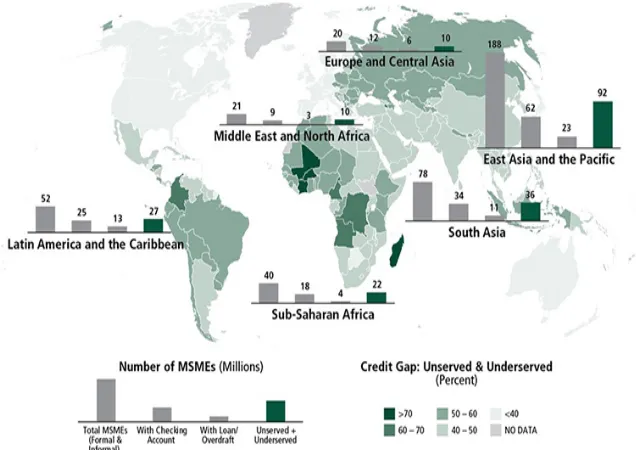
As a result of informality, these MSMEs, which make up the bulk of the productive capacity, lack access to credit. The following image contains a map of the World showing the credit gap between informal and formal firms:
16. See David Stewart, Recommendations on the Proposed Model Act on the Simplified Stock Corporation, Annual Report of the Inter-American Juridical Committee 50 (2012) (quoting a study prepared by Boris Kozolchyk & Cristina Castaneda). See also OAS Resolution 188, supra note 3.
17. Simon Bell & Ghada Teima, Small and Medium Enterprises (SMEs) Fi-nance,THE WORLD BANK, Sep. 1, 2015.
18. See Margolis, supra note 15. See also, e.g.,Donald C. Clarke, “Nothing but Wind”? The Past and Future of Comparative Corporate Governance, 59 AM. J.COMP.L. 104 (2010):
Figure 1. Total Credit Gap Map19
The implications of the lack of access to credit for MSMEs are noteworthy. Firms that cannot access legal sources of finance have limited growth opportunities and therefore cannot contribute to the economy in a significant way.20 Formalization of MSMEs is needed in order to provide capital-raising opportunities for large sectors of the economy.
In furtherance of the objectives set out above, the Model Law initiative is aimed at creating the appropriate incentives in order for informal firms to migrate into the formal economy. This will be done mainly by introducing less burdensome incorporation proce-dures and reducing transaction costs in general throughout the life cycle of the firm. The underlying concept is straightforward: firms should be able to comply with a simplified registration process, fa-cilitating incorporation, and ensuring compliance with basic
tions. As the World Bank has stated: “Studies have shown that re-moving excessive bureaucratic formalities in the startup process has numerous benefits for both economies and entrepreneurs. Some of these gains include higher levels of firm formalization, economic growth and greater profits.”21 For many decades it has been compel-lingly argued that migration into the formal system will produce sev-eral benefits including the following: higher tax revenues, better reg-ulation, social security protection and labor formalization, higher levels of transparency and disclosure, better access to credit and government services, and higher levels of investment.22 Other posi-tive consequences for fully complying firms are benefitting from limited liability and asset partitioning, among others.23
A. Focus on Latin America
The Model Law has been designed with a focus on Latin Amer-ica.24 There are two reasons for this regional approach. First, the Colombian experience with the recent introduction of the SAS pro-vides a compelling body of statistics and facts (discussed in depth below), which can serve as a benchmark for the adoption of this model in other similar jurisdictions. Second, the Latin American scenario offers useful features given the size of the economies in this geographic area, as well as the transitional nature of their econo-mies.
In line with the initiative’s regional focus, as stated by Jeannette M.E. Tramhel, the OAS Model Law is grounded upon the Colom-bian legislation:
[B]oth the Colombian Law and the SAS Model Law on which it is based contain the key elements that are essential
21. See World Bank Group, Doing Business 2017: Equal Opportunity for All,
doc. 14(Washington, D.C., 2017), athttps://perma.cc/9ZQ8-TTBC.
22. See HERNANDO DE SOTO, EL OTRO SENDERO—LA REVOLUCIÓN INFORMAL ch. 3, 220 (7th ed., La Oveja Negra 1987).
23. For an insightful discussion into the characteristics of the firm and its many benefits, see KRAAKMANET AL., supra note 6.
to simplified incorporation . . . . These elements could be considered to comprise ‘global best practices’ as most have been identified as key by various entities, including the World Bank, the United Nations Commission on Interna-tional Trade Law (‘UNCITRAL’) and the United Nations Conference on Trade and Development (‘UNCTAD’), among others.25
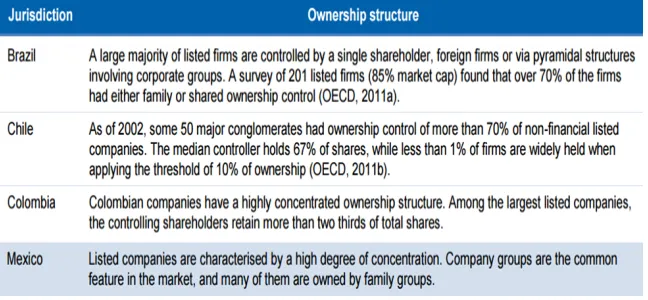
A second feature of the Model Law initiative relates to excluding listed companies from its scope. In this way, the accent has been placed on closely held entities. It is a well-known fact that most companies in Latin American are family owned and trade outside of stock exchanges.26 Recently, the Organisation for Economic Coop-eration and Development (OECD) published its Corporate Govern-ance Factbook for 2017, noting the highly concentrated ownership
25. Jeannette M.E. Tramhel, The Simplified Corporation: A New Structure for Doing Business in the Americas?, 24 AGENDA INTERNACIONAL 144-145 (2017). Likewise, Professor David Stewart recognizes the significant influence that the Colombian simplified corporations law had on the OAS initiative:
Under the Colombian approach, the SAS can be formed by one or more shareholders and can be incorporated by a relatively simple private or electronic document (as opposed to an expensive notarial deed of incor-poration). The cost is minimal. The act of incorporation provides limited liability to its shareholders (except when the corporate veil is used to perpetrate a fraud or abuse the corporate form). It also provides protec-tion to third party victims of the abusive or fraudulent use of the ultra vires doctrine by corporate officials. It enables the founders to choose an unlimited duration for the incorporation, and replaces the costly and in-effective formality of mandatory internal comptrollers (comisarios) with a more effective and less expensive supervision of external but fully qualified auditors. It also provides flexibility to corporate capital, greater contractual freedom, and increased access to capital.
See Stewart, supra note 16, at 50. See also, Jorge Oviedo Albán, La sociedad por acciones simplificada en el derecho colombiano, in LA TIPOLOGÍA DE LAS
SOCIEDADES MERCANTILES—ENTRE TRADICIÓN Y REFORMA 174(Grupo Editorial
Ibañez 2017) [hereinafter SOCIEDADES MERCANTILES]: “It is noteworthy that Law 1258 [of 2008] on simplified corporations has formed the basis for the Model Law enacted by the Organization of American States’ Inter-American Juridical Com-mittee, in its 80th Session Period . . . .”
26. The empirical analysis of the Brazilian corporate market by Érica Gorga evidences the characteristics generally seen throughout the region:
structure of listed companies in several Latin American jurisdic-tions.
Table 1. Ownership Structures at Company Level27
Noting the trend above, it is useful to establish the relative size of the securities markets in the region in terms of number of listed companies. For example, Brazil, the region’s largest economy also has the greatest number of listed companies. In 2010, there were 400 corporations listed in the Sao Paulo Stock Exchange (the BOVESPA).28 In contrast, for the same period the United States had approximately 5,000 listed companies in the U.S. stock markets.29
The focus on non-listed companies is also a characteristic of the Colombian law of 2008. Pursuant to Law 1258 of that year, the SAS is not intended to go public. The underlying rationale here is that the level of flexibility of these provisions is incompatible with the share-holder protection that is needed concerning listed corporations. In accordance with Article 4 of the aforementioned law, the shares of stock and any other securities issued by a simplified corporation
27. OECD, OECD Corporate Governance Factbook 2017, 12 et seq. (2017),
https://perma.cc/248B-SEA3.
28. See Pierre Habbard, Hans-Böckler-Foundation, Corporate Governance in Brazil - An International Trade Union Perspective (Paris, Apr. 2010),
https://perma.cc/T85D-XSBS.
shall not be listed in the National Registry of Securities and Issuers, nor traded in any stock exchange.
Inspired by the Anglo-American approach to securities regula-tion, as well as certain European models such as the German Neuer Markt, there have been attempts to broaden some Latin American securities markets, but this has had limited success.30 The approach adopted in the Model Law is different. One of the main objectives of the initiative is to offer MSMEs a simplified framework to facil-itate low cost access to the formal sector, and thus to bank financing. This proposal is coherent with the corporate structure prevailing in Latin America where the bulk of the economic building capacity is associated with MSMEs, instead of firms large enough to trade their stocks on the securities markets. This orientation is not intended to suggest that the introduction of high corporate governance standards is to be ignored. However, efforts should now be directed towards introducing and consolidating corporate governance standards spe-cifically tailored to the characteristics of the Latin American mar-kets.
The approach of the Model Law also responds to the need for a specific set of provisions directed at the establishment and operation of closely held entities. General corporate law in Latin America has responded to the codification models adopted in the region, which sometimes fail to provide for regulation aimed at the close corpora-tion. American scholars have acknowledged the need to introduce these types of statutes:
Corporate statutes try to fit corporations closely held by a
30. José Miguel Mendoza, The Controlling Shareholder as Reputational In-termediary (Oxford Centre for Corporate Reputation Working Paper Series, Paper No. 302, Mar. 5, 2012), https://perma.cc/745X-GGLC:
More than a decade on, the results of these experiments in legal reform have been disappointing. Convergence around formal rules of investor protection has not contributed significantly to the growth of stock mar-kets in emerging countries. Empirical tests in fact show that these efforts were mostly futile and in many cases counterproductive.
few shareholders into the same legal clothes worn by pub-licly-held corporations. But it’s a poor fit. The shareholders of a close corporation are likely to think of themselves as partners who incorporated their business to obtain limited li-ability or sometimes for tax reasons. They often find that the corporate rules of centralized management and majority con-trol are at odds with their expectations of decentralized equality. They may wonder why they can’t simply manage the business as they agree.31
B. Problems with the Legislative Agenda in the Latin American Re-gion
Throughout Latin America, it is hard to find investment vehicles that can serve the business community with legal structures en-dowed with enough flexibility to respond adequately to the demands of trade in the modern world. The lack of modern regulations aimed at facilitating the incorporation and operation of business entities can become a meaningful obstacle for job creation and access to credit and, more generally, to economic development. Many of the corporate structures present in Latin American and Caribbean coun-tries date back to 19th century regulations characterized by formal-ism and several restrictions to private ordering.
The Model Law on Simplified Corporations contains basic pro-visions that would allow business entities of varying dimensions to incorporate and operate in conditions that are appropriate to their economic needs. Despite the fact that the simplified corporation is particularly suitable for MSMEs, it is also true that it can be used to structure businesses of a larger dimension.
Following is a discussion of some of the prevailing characteris-tics of Latin American corporate law that constitute a hindrance to the formalization of new business entities in the region.32 Thus, by taking into consideration the problems with the legal regime, the
31. ALAN PALMITER & FRANK PARTNOY, CORPORATIONS: A
CONTEMPORARY APPROACH 1001 (West 2010).
Model Law is intended to provide tailor-made solutions that are suited to the specific needs of Latin American businesspersons.33 As recently noted by Jeannette M.E. Tramhel, commenting on the prob-lems with Latin American corporate law: “[A]s a result of these as-pects of company law, which run counter to global best practices described above, many Latin American businesses are significantly restricted and operate at a competitive disadvantage. Although this situation affects all business, the consequences are particularly se-vere for MSMEs.”34
1. Entry Barriers
The first issue is the excessive and cumbersome set of formali-ties that businesspeople have to endure in order to incorporate in the region. Some legal scholars believe that excessive formalism in Latin America is derived from Spanish and Portuguese colonial her-itage, which has been embedded in the region’s legal DNA.35
33. As noted above, the Model Law is in line with the Colombian legal reform of the SAS. The initial diagnosis and the objectives of both pieces of legislation are very similar:
The starting point for the Simplified Corporation’s original proposal was the idea of facilitating the formalization of business entities and updating the legal system in order to introduce forward-looking approaches to Corporate Law. For that purpose, a thorough critical revision of the pre-vious Company Law framework was required. This analysis was made under a functional Comparative Law methodology along with the appli-cation of relevant notions of Economic Analysis of Law. As expected, the results of such evaluation revealed the inadequacy of most Company Law provisions in place and the need to carry out an overhaul of both the legal and the institutional frameworks.
Francisco Reyes, The Colombian Simplified Corporation An Empirical Analysis of a Success Story in Corporate Law Reform,4 PENN.ST.J.L.&INT’L AFF.392, 396(2015), available athttps://perma.cc/7B7J-2Q76.
34. See Tramhel, supra, note 25, at 9.
35. This legalistic trait is masterfully explained by Keith Rosenn in his anal-ysis of Brazilian legal culture:
The Doing Business Index published by the World Bank is help-ful in identifying the problems created by excessive formalism. One of the areas measured by the Index is the ease (or difficulty) of start-ing a business. Figure 2 below compares the number of days re-quired to incorporate (or start a business) in several jurisdictions. Most Latin American jurisdictions are badly ranked.
Figure 2. Selected Ranking: Expedience of Incorporation Proceed-ings36
Upon reviewing the best practices of highly ranked jurisdictions in the Doing Business Index, it is noticeable that countries with the best performance offer entrepreneurs a set of enabling rules that fa-cilitate incorporation. Ease of starting a business is founded upon
citizen is lying unless he produces written, documentary proof that he is telling the truth.
Keith Rosenn, The Jeito: Brazil’s Institutional Bypass of the Formal Legal System and its Developmental Implications, 19 AM.J.COMP.L. 514, 530 (1971). 36. Data taken from World Bank website; see World Bank Group, supra note 21.
0 20 40 60 80 100 120 140 160 180 200
New Zealand 1
USA 51
Colombia 61
Ecuador 166
online procedures, a limited number of forms that have to be filled in order to accomplish the process, and the absence of notary publics or registrars with costly and lengthy formalities. In New Zealand, for example, the entire process can be completed by applying for registration on the Companies Office’s website,37 and it takes only a few hours to complete. The World Bank recommends the imple-mentation of the so-called “one stop shop strategy” by which all pro-ceedings related to incorporation can be accomplished before a sin-gle window, either physical or virtual. In this manner, a sinsin-gle gov-ernmental office is entrusted with processing not only the business registration but also the tax ID, social security, business licenses, etc. Within developing jurisdictions, the case of Kenya is a good example of improvement made by providing an efficient business registration system.38
At the other end of the spectrum, the World Bank argues that Brazil incorporation takes an overwhelming 101 days.39 This is the result of a highly bureaucratic procedure. The general rule in Latin American countries is that incorporation requires that the applicant personally appear before the respective governmental entity (tax, social security, pension and severance funds, notary public, mercantile registry, foreign direct investment registration, environmental permits, business license, etc.), fill out long forms,
37. See Companies Register, NEW ZEALAND COMPANIES OFFICE, at
https://perma.cc/V2LX-MMED. The first step is to log on through the setting up of a user account on the designated website. Afterwards, the applicant must re-serve the corporate name, complete the relevant forms, and pay the registration fee. Responses notifications, and the certificate of incorporation from the compa-nies’ office are sent by e-mail. While incorporating a company, an applicant can, at the same time, register online for the Goods and Services Tax and apply for a company Inland Revenue Department number. See Ease of Doing Business in New Zealand, THE WORLD BANK, athttps://perma.cc/24BF-PRW7.
38. According to the Doing Business Report, Kenya’s improvement in the “starting a business” segment resulted in a change in rank of 34 places from 2016 to 2017. See Ease of Doing Business in Kenya, THE WORLD BANK, at
https://perma.cc/6J86-4EJT. Additionally, the United Nations Commission on In-ternational Trade Law (UNCITRAL) is currently developing a legislative guide for registration of businesses, which is deemed particularly useful for emerging economies. See United Nations Commission on International Trade Law, Report of Working Group I (MSMEs) on the work of its twenty-eighth session (New York, 1-9 May 2017) A/CN.9/900 (Vienna, 2017), at https://perma.cc/ECT6-EE8G. 39. See Ease of Doing Business in Brazil, THE WORLD BANK, at
and, consequently, spend a considerable amount of time and money.40
The way towards facilitating incorporation procedures is not without obstacles. There are many powerful stakeholders and pres-sure groups who may wish to perpetuate the status quo, as there is a lot to gain by maintaining the rents derived from formalistic proce-dures, which require third party intervention. José Mendoza points out the political economy problem associated with the powerful in-fluence of such groups:
Local institutional arrangements can produce significant benefits for interest groups. These groups can easily coordi-nate their actions in order to block any changes to the insti-tutions from which they obtain these benefits, regardless of whether reform would also enhance overall welfare. Re-sistance to institutional reform can manifest itself through the open obstruction of legislative initiatives or by subtler tactics such as the promotion or acceptance of ineffective rules.41
However, this rent-seeking phenomenon is not specific to Latin American or other emerging jurisdictions. As noted by Jesper Lau Hansen, the EU has also faced opposition from certain sectors against the simplification of corporate law:
Besides the natural tendency of vested interest to uphold the status quo, the system of notaries is often lauded for being efficient, fairly inexpensive and an important safeguard that may also guide the founders of the company on difficult questions of company law. For these reasons, the [Societas
40. See REYES, supra note 10. As already discussed, the formalistic traits of the region’s legal tradition are rooted in the colonial period. Procedures and ritu-alism for incorporation of business associations have been in place ever since. This fact is shown in the early presence of the notary publics, which were also referred to as “scribes.” See MATTHEW C.MIRROW, LATIN AMERICAN LAW—A HISTORY OF PRIVATE LAW AND INSTITUTIONS IN SPANISH AMERICA 75 (U. of Texas Press 2004); Mirrow notes that during colonial times, in order to incorpo-rate “[t]he members needed to sign an agreement (estatutos) before two witnesses and a scribe.”
Unius Personae] proposal has already encountered consid-erable opposition from jurisdictions accustomed to nota-ries.42
In addition to the time consumed by registration formalities, the process also involves fees. The following Table shows the regional ranking of costs and number of days needed for both men and women to set up a business venture.
Table 2. Time and Costs Required to Set Up a Business—World Bank Doing Business Index43
Pursuant to the same index, Latin America and the Caribbean are currently second to last in terms of incorporation costs and time required to set up, with only Sub-Saharan Africa behind. Breaking down the above data, the World Bank calculates the cost of incor-porating as a percentage of a person’s income per capita. For exam-ple, in Mexico a person spends 19 percent of their annual income in paying for incorporation expenses.44 In comparison, a person in
42. Jesper Lau Hansen, The SUP Proposal: Registration and Capital (Arti-cles 13–17),12 EUR.COMPANY &FIN.L.REV. 179 (2015).
43. Starting a Business, THE WORLD BANK, at https://perma.cc/K52H-G5GK.
New Zealand would only have to pay 0.3 percent.45 This comparison provides an insight into the differences in jurisdictions that have im-plemented best practices, and those that are still lagging behind. In this vein, it provides a route for reform.
2. Restrictions to Freedom of Contract and Dichotomy of Pri-vate Law
The second issue with Latin American company laws is the range of unwarranted restrictions to private ordering. The region inherited the Napoleonic codifications, in which, following the 19th century liberal approaches, the parties were supposed to be granted great latitude to govern their legal relationships.46 Notwithstanding this, the concept of freedom of contract appears to be very restrictive, particularly in the field of Company Law.47 Several provisions of public order (ordre public) concerning all aspects of corporate governance can be found when reviewing legislation throughout the region.48 These include, among others, mandatory rules on minority shareholders’ rights, structural changes, functioning of corporate bodies, mergers, dissolution, and liquidation. The result of this legislative trait is a rise in transaction
45. Starting a Business: New Zealand, THE WORLD BANK, athttps://perma .cc/H2UC-BXCW.
46. However, even in France, the principles of economic liberalism, which were embraced in the 19th century Act of July 24, 1867 on Company Laws (Loi du 24 juillet 1867 sur les sociétés commerciales) were harnessed after the 1920s. According to Pierre-Henri Conac, the 1929 crisis resulted in a general questioning of economic liberalism in favor of a large degree of state intervention in the econ-omy, which was justified by the market failures, as well as a reduction in the free-dom of enterprise which was subject to a highly directory legislation. Pierre-Henri Conac, La société par actions simplifiée une révolution démocratique, in LA
SOCIETE PAR ACTIONS SIMPLIFIEE : BILAN ET PERSPECTIVE 3(Pierre-Henry Conac
& Isabelle Urbain-Parleani eds., L.G.D.J.2016).
47. This may be the result of the deeply rooted formalism inherited by the region from colonial times. As Mirrow notes, commenting on the excessive ulation of business associations: “In general, the colonial market was highly reg-ulated by both royal law and commercial practices.” MIRROW, supra note 40, at 76.
48. The above analysis of excessive formalities in Latin America is in sharp contrast with other jurisdictions such as Delaware, where most corporate law rules are embodied in default provisions, which may be opted out by the parties. See
costs and legal uncertainty. The following paragraphs explain this point further.
Mandatory rules in company law are all pervasive in the region. Consequently, private parties are not always able to adjust their con-tractual clauses to their particular needs.49 Parties and their advisors have to find loopholes and other devices to circumvent certain re-strictions, which may seem anachronistic today. A short-term solu-tion found by parties may be to adopt schemes that tend to include simulated contracts that do not fully reflect the business reality. As a result of these contractual solutions, there is an increase in trans-action costs, not to mention the uncertainties arising from such schemes. Moreover, simulated provisions may even be considered wrongful and subject to judicial scrutiny.
An example of this type of situation is shown in the participation of straw men in the process of incorporation whenever the legisla-tion requires multiple shareholders in order for limited liability to exist. This requirement is contrary to contemporary business prac-tice in which there may be situations where the sole shareholder is better suited for certain ends. Company laws throughout the region are deeply rooted in ancient legal concepts. The following can ex-plain this trait50: the Roman law concept of societas, which was later developed into different forms of business entities, was strongly grounded upon a contractual foundation.51 Later, the French Com-mercial Code maintained the idea whereby all forms of business as-sociations arise out of an agreement between two or more persons.52
49. See REYES, supra note 10, at 18. 50. Id.
51. Within the classification undertaken by the Roman jurist Gaius, the so-cietas was included as the last of the so-called consensu contracts. See PASCAL
PICHONNAZ, LES FONDEMENTS ROMAINS DU DROIT PRIVE 512 (Schultess Verlag
2008). The societas contract required, inter alia, the participation of two or more persons. Seeid. at 513.
52. In spite of this characteristic, the French, primal creators of the contrac-tual theory, have now fully accepted the benefits derived from the flexibility of the French Société par Actions Simplifiée (SAS):
The transplantation of the Napoleonic codifications into Latin America resulted in the inception of a full-fledged contractual the-ory throughout the region.53 Although the experience of several ju-risdictions around the world has shown the benefits of the sole shareholder scheme and the limitations of the strict contract the-ory,54 surprisingly, some sectors of Latin American academia still desperately cling to trite formalism.55 The result has been the
rules for the company, and the suppression of a minimum capitalization requirement.
María-Beatríz Salgado, La société par actions simplifiée: una estructura diferente en el derecho de sociedades, inSOCIEDADES MERCANTILES,supra note 25, at 349. 53. For Colombia, see CÓDIGO DE COMERCIO (Commercial Code) art. 374 [C.COM.]; whereby traditional corporations “may not be formed or start operation with less than five stockholders.” Seeid. at art. 98:
By means of the company contract, two or more persons undertake to make a contribution in cash, work, or in other goods representing cur-rency, for the purpose of sharing in the profits derived from their enter-prise. On legal formation of a company, it will turn into a juridical person distinct from each individual shareholder.
54. For a long time, the European Union has recognized the benefits of the single member corporation. This trend has found a recent formulation in the So-cietas Unius Personae:
One of the most recent initiatives adopted by the European Commission in 2014 is the proposed Directive on the Sole Proprietor Limited Liability Company, which includes as its highlight the ‘Societas Unius Personae.’ Said proposal seems to be an alternative to other initiatives, focused on the importance of the European MSME’s in strengthening the EU econ-omy.
Linda Navarro Matamoros, Tipologia societaria y derecho de la Unión Europea, in SOCIEDADES MERCANTILES,supranote25, at 307. The aim at which the So-cietas Unius Personae Directive geared is similar to that of the Model Law. It is noteworthy that both initiatives focus on MSMEs and have an additional purpose of furthering economic integration and harmonization:
The proposal by the European Commission of a directive on single-member private limited liability companies of 9 April 2014 is designed to facilitate cross-border activities of enterprises, especially small and medium-sized enterprises (SMEs) by requesting Member States to pro-vide a company form called the Societas Unius Personae (SUP) that would be set up online and would follow harmonised rules on key issues. Pierre-Henri Conac, The Societas Unius Personae (SUP): A “Passport” for Job Creation and Growth, 12 EUR.COMPANY &FIN.L.REV.140(2015).
55. For an example of this trend, see NÉSTOR H.MARTINEZ NEIRA, CÁTEDRA DE DERECHO CONTRACTUAL SOCIETARIO ch. 2 (2d ed., Legis 2014).Contrast this stance with the forward looking comments by another Colombian scholar, Jorge Oviedo Albán:
spread prohibition of the single member corporation, making it cum-bersome for multinational companies and investors alike to have a presence in these countries, as they would have to associate with other persons or firms in order to carry out the investment.56
Another problem brought about by the restrictions to freedom of contract is standardization. Disregarding the importance of private ordering, hinders the development of flexible and useful legal schemes that foster innovation and creativity. Consequently, the ac-tivity of setting up a business entity is reduced to a box ticking and blank filling exercise,57 to the detriment of legal innovation involved in modern business practices, which require a higher level of flexi-bility.58
In addition to reducing mandatory provisions, the simplification process heralded by the Model Law also results in reducing transac-tion costs by eliminating the outdated dichotomy of private law throughout the region (meaning the presence of both a civil code and a commercial code for the ordering of private matters).59 Indeed,
the ‘corporate juridical act,’ bearing in mind that this concept encom-passes both contractual corporations and also sole shareholder entities. Albán, supra note 25, at 182.
56. Naturally, an investor can always set up several subsidiaries outside of the Latin American region in order to cope with the multiple member requirement. This procedure will entail significant costs.
57. For instance, legal information services providers, such as Lexis Nexis (or in the Latin American region, Legis), have established form articles of associ-ation for use by the public in setting up their corporassoci-ations. For the Legis models applicable to Latin America, see Minutos y Modelos, LEGIS, https://perma.cc /6C7R-GMRY.
58. For example, this situation is contrasted with the French SAS, which is the corporate vehicle preferred by tech startups. See Fancisco Reyes & Erik P.M. Vermeulen, Company Law, Lawyers and ‘Legal’ Innovation: Common Law ver-sus Civil Law (Lex Research Topics in Corporate Law & Economics Working Paper No. 2011-3, 2011).
59. The dichotomy of private law in Latin America, although currently em-bodied in two sets of codifications as transplanted from Napoleonic law, has deep roots in the region, dating back to colonial time: “Just as the regime of contract law was divided amongst the various important sources of civil, commercial, and public law, so too was the organization and operation of the various forms of business associations.” MIRROW, supra note 40, at 75. Furthermore, it is interest-ing to note the dispersed and sometimes contradictory nature of statutory rules in the region. Mirrow further notes that in the context of laws regulating business associations, “[t]he Siete Partidas shared their authority in guiding companies with the Ordenanzas de Bilbao, which often provided somewhat different rules.”
most codes and corporate statutes in the region have maintained a differentiation between civil and commercial companies following the French 19th century model, whereby separate substantive rules apply according to the nature of the business company.
Scholars from civil law jurisdictions have commented on this point:
In Chile the criteria to classify a firm as either civil or com-mercial is related to the definition set forth in its business purpose. Therefore, Article 2.059 of the Civil Code man-dates that ‘the corporation may be either civil or commercial. Commercial corporations are those that are formed to carry out commercial acts, classified as such by the Law. The re-maining entities are civil corporations.’ Pursuant to the quoted cited article, the classification of a corporation as commercial is framed within an external criterion relating to purpose clause as set up in the by-laws, at the moment of incorporation. If the business purpose entails carrying out any of the acts regarded as commercial by Article 3 of the Commercial Code the corporation shall be commercial, re-gardless of the actual business undertaking carried out by the corporation.60
The elimination of this useless differentiation for the simplified corporation increases legal certainty in the simplest way possible: parties may now be assured of which law applies, without incurring either expensive advice or illegality. This certainty reduces transac-tion costs.
3. Multiple Piercing the Corporate Veil Hypotheses
The third issue found in the legislation throughout Latin Amer-ica is the growing number of exceptions to the principle of limited liability. The issue is so problematic that according to some scholars, for example in Brazil, piercing the corporate veil has become the rule instead of the exception.61 Commenting on this legal trend of reducing limited liability, Bruno Salama notes the following:
60. María Fernanda Vásquez Palma, Sobre los tipos de sociedades en el De-recho Chileno, in SOCIEDADES MERCANTILES, supra note 25, at 147.
In the period after the adoption of the 1988 [Brazilian] Con-stitution, the principle of limited liability was radically ad-justed. Statutory rules and judicial decisions questioning the asset partitioning between the firm and its members were is-sued in virtually all areas of law (including labor law, tax, corporate and even consumer protection, as well as adminis-trative and criminal law). Said decisions reached third par-ties related to the firm, including directors, contractors or counselors, and sometimes even persons having no contrac-tual relationship with the firm, such as counsel to the share-holders. In this manner, the basic focus of the legal system shifted from protection of entrepreneurs, to protection of creditors. The pendulum moved.62
The erratic case law sometimes encountered throughout the re-gion is mainly based on situations or regulation arising outside the scope of corporate law. Continuing with the Brazilian example, con-sumer protection laws contain a provision for the disregard of the corporate personality whenever the judge finds certain wrongful use of the corporate form, in the event of bankruptcy, or even whenever it is found that the corporate personality is “somehow a hindrance to the reimbursement of losses caused to consumers.”63 However, even more noteworthy from the Brazilian case is that the courts have ap-plied “unlimited shareholder liability in favor of workers by analogy to consumer protection legislation.”64 Thus, in Brazil not only is there specific legislation on certain causes that may result in veil piercing, but the courts have also applied this remedy on the grounds of additional unrelated matters.
The situation is not limited to Brazil. In Colombia, for example, a judicial decision from 1992 extended liability for labor obligations to shareholders of limited liability companies,65 notwithstanding the fact that the Commercial Code explicitly provided for a system of
62. BRUNO SALAMA, O FIM DA RESPONSABILIDADE LIMITADA NO BRASIL: HISTÓRIA,DIREITO E ECONOMIA26 (Malheiros 2014).
63. Unofficial English translation of article 28 of the Código de Proteção e Defesa do Consumidor (Consumer Protection Code).
64. KRAAKMAN ET AL., supra note 6, at n. 41.
limited liability for this type of entity.66 Additionally, a different de-cision from the Constitutional Court appears to have extended lia-bility arising from pension obligations of the subsidiary to a parent company, for the mere fact of being the parent.67 The trend to hold parent companies liable is also present in legislation throughout the region.68
To be sure, piercing the corporate veil is a valuable remedy in corporate law. It cures wrongdoing by controlling shareholders and the abuse of the principle of limited liability. However, when this solution is extensively applied by courts without sufficient justifica-tion, it gives rise to legal uncertainty and distrust in the corporate form.69 Seen in this light, the proliferation of exceptions (both stat-utory and judicial) to limited liability throughout the region may have the effect of discouraging local and foreign investment.70
In order to prevent these types of situations, the initiative advo-cates for a sound balance between the principle of limited liability, clearly incorporated in Article 2 of the Model Law,71 and a narrow instance of veil piercing, applicable only when the simplified corpo-ration is used for the purpose of committing fraud or any other wrongful act, as stated in Article 41.72
66. Article 353 of the Colombian Commercial Code [C.COM] reads as fol-lows: “the shareholders of a Limited Liability Company shall be liable up to the amount of their contributions.”
67. See Corte Constitucional [C.C.] [Constitutional Court], Sentencia SU-1023, Sept. 26, 2001. However, more recent decisions from the same court appear to have produced more certainty by upholding the principle of limited liability of corporations.
68. REYES, supra note 10, at n. 21, includes the following summary of legis-lation: for Brazil, see Law no. 6.404, art. 246; for Argentina, see Law no. 24.522, art. 161; and for Colombia, see Law no. 1116, 2006, arts. 61, 82.
69. Bainbridge has argued that the doctrine of piercing the corporate veil should be abolished, due to its uncertainty and lack of predictability increasing transaction costs for small businesses. Stephen M. Bainbridge, Abolishing Veil Piercing, 26J.CORP.L.470(2001).
70. For an argument against the doctrine of disregarding the corporate veil, in the context of Colombia, see Enrique Gaviria Gutiérrez, Contra el Disregard,
in GRANDES TEMAS DEL DERECHO COMERCIAL MODERNO: SU INCIDENCIA EN LA
CONSTITUCIÓN DE 1991 (Diké 1993).
4. Difficult Access to Information Subject to Public Record
The fourth issue brought about by legislation in the region is the limited role of mercantile registries. In this geographic area, the con-cept of commercial publicity is deemed important in order to pro-vide legal certainty for acts of business persons.73 However, the ef-fect of registration in the corporate sphere is restricted to publicity. In several cases the act of registration does not by itself result in the formation of a corporate body. In fact, additional bureaucratic steps are needed in order for a business to acquire legal personality. Aside from the registration, certain laws in the region frequently require notarization and sometimes even governmental authorizations. However, the recent trend in modernization of corporate law throughout the world has resulted in legislation, which derogates cumbersome multiple incorporation steps.74
Additionally, the technology used is generally obsolete and ac-cess becomes complicated. Once again, high transaction costs sur-face in this area. Formal registration is so complicated that the pro-cess cannot be completed without the intervention of third parties, particularly lawyers, making it even more costly, bureaucratic, and less efficient.75 Additionally, this matter is plagued with stern
73. See REYES, supra note 10, at n. 77 (discussing the different regulations in certain countries in the region); for Brazil, see CÓDIGO CIVIL (Civil Code) art. 993 [C.C.]; for Mexico, see Ley General de Sociedades Mercantiles [General Law of Business Associations] art. 5; for Argentina, see Law no. 19.550, art. 12; and for Colombia, see C.COM. art. 112.
74. Commenting on the trend to reduce formalism, José Miguel Embid notes that:
[A]side from the fact that [the simplification process] results in eliminat-ing the effect of several corporate law institutions, which have been de-veloped over a long time (such as the irregular company and the nullifi-cation of incorporation, among others), this simplifinullifi-cation process re-veals that only in the context of closely held corporations that the system electronic incorporation acquires true meaning and effect.
José Miguel Embid, El significado de la tipología societaria en el derecho de sociedades, in SOCIEDADES MERCANTILES,supra note25, at 49.