LEARNING GUIDE
SCIENCE AND HEALTH V
STATIC ELECTRICITY
CHARGE IT
impose as a condition the payment of royalties.
STATIC ELECTRICITY CHARGE IT
Mind Map
The Mind Map displays the organization and relationship between the concepts and activities in this Learning Guide in a visual form. It is included to provide visual clues on the structure of the guide and to provide an opportunity for you, the teacher, to reorganize the guide to suit your particular context.
Stages of Learning
The following stages have been identified as optimal in this unit. It should be noted that the stages do not represent individual lessons. Rather, they are a series of stages over one or more lessons and indicate the suggested steps in the development of the targeted competencies and in the achievement of the stated objectives.
Assessment
All six Stages of Learning in this Learning Guide may include some advice on possible formative assessment ideas to assist you in determining the effectiveness of that stage on student learning. It can also provide information about whether the learning goals set for that stage have been achieved. Where possible, and if needed, you can use the formative assessment tasks for summative assessment purposes i.e as measures of student performance. It is important that your students know what they will be assessed on.
1. Activating Prior Learning
This stage aims to engage or focus the learners by asking them to call to mind what they know about the topic and connect it with their past learning. Activities could involve making personal connections.
Background or purpose
Matter is all around us. It behaves in different ways due to its unique composition. In this stage, students' prior knowledge about matter will be activated through an activity.
Strategy
Materials
Chalkboard, chalk
Activity 1 – What You Say Matters
1. Get the students to give some examples of matter. They may cite things such as paper, tables, and the like. Ask: How do you describe matter? They may mention about its basic characteristics such as shape, texture, weight, mass, among others.
2. You may ask them: What is matter made of? When you cut a piece of paper, what happens? (It turns into smaller pieces.) What could be inside the smallest piece of paper? Do you think such tiny particles has parts?
3. Welcome all their responses and those that relate to the topic may be published on the board.
Formative Assessment
Class participation checklist on page 11 may be used to assess students' performance during the activity.
Roundup
Students should have identified some examples of matter and described some of its
characteristics. They should have shared ideas on the composition of matter based on their current understanding.
2. Setting the Context
This stage introduces the students to what will happen in the lessons. The teacher sets the objectives/expectations for the learning experience and an overview how the learning experience will fit into the larger scheme.
Background or purpose
In this stage, students' knowledge about matter and its particles will be probed by giving them some statements relevant to these concepts. This will give the teacher a chance to assess students' current understanding of the topic. This stage will also introduce the topic and its objectives.
Strategy
Anticipation/Reaction Guide is a strategy used to activate students' background knowledge about the topic. It stimulates interest and discussion, compares before and after decisions, reverses misconceptions, and assesses students' application of new knowledge and/or skills.
Materials
Activity 2, Agree/Disagree, page 12
Activity 2 – Here Is What I Think
1. Define atom, charge (positive, negative, neutral), charging, repel, attract. 2. Organize the class into desired number of groups.
STATIC ELECTRICITY CHARGE IT
4. Distribute Activity 2, Agree/Disagree, page 12. Let them agree or disagree to the given statements and guide them to write their responses under the “Anticipation” column. Ask them to offer a brief explanation about their choice.
5. Emphasize that these statements are designed to have them recall their previous learning and not to serve as a true/false test. The “reaction” column will be filled in when Activity 3.3 has been conducted.
6. Once done, collect their activity sheets and inform them that their responses will be revisited when the concepts are fully discussed.
7. Inform them about the topic and its objectives.
Formative Assessment
Group participation checklist on page 11 may be used to assess students' performance during the activity.
Roundup
Students should have expressed their views (Agree/Disagree) on the statements relevant to the topic. They should have briefly explained their choice.
3. Learning Activity Sequence
This stage provides the information about the topic and the activities for the students. Students should be encouraged to discover their own information.
Background or purpose
The activities in this stage will help students understand the different concepts included in the topic. Activity 3.1 will help them identify the sub atomic particles and their corresponding charges. Activity 3.2 will allow them to illustrate how static electricity works. These activities address BEC competencies in Grade V Science-Unit 5, Energy, #s 1.1-1.4.
Strategy
Small Group Discussion is a strategy used to generate ideas on a certain topic from all students in a limited time. This is done to increase student–student interaction and to encourage
participation of every student especially in expressing ideas.
Materials
Activity 3.1, Matter Up Close, page 13 Activity 3.1, Mind map, page 14
Activity 3.1 - Matter Up Close
1. Organize the class into desired number of groups.
2. Give each group a copy of Activity 3.1, Matter Up Close, page 13.
3. Let them read the information in the activity sheet and have them complete the mind map on page 14.
4. When done, facilitate discussion and checking of answers.
5. Lead them to cite and write the following concepts on the board for reference as the lessons progress:
• Inside an atom are protons (+), electrons (-), and neutrons (neutral).
• Opposite charges (negative to positive, vice versa) attract each other .
• Like charges (positive to positive or negative to negative) repel each other .
• Most of the time positive and negative charges are balanced in an object, which makes
that object neutral.
Formative Assessment
Check students' answers. You may refer to page 15 for the expected answers.
Roundup
Students should have
– identified the particles of an atom and their corresponding charges,
– cited the expected result when similarly/differently charged particles are brought near each other, and
– described static electricity.
Strategy
Guided Inquiry is a strategy used to guide learners through the curriculum based in inquiry units for deep understanding of the topics and gradually towards independent learning. It aims to develop their competence from variety of sources while enhancing their understanding of the content.
Materials
Scotch tape, ruler, scissor
2 plastic spoons, plastic wrap (at least 8 x 10 inches) such as Reynolds plastic wrap 1 paper clip unbent so it is in the shape of a W with thread tied in the middle piece of cotton clothing, styrofoam
Activity 3.2, Attract or Repel, page 16
Activity 3.2, Attract or Repel Results and Discussions, page 18
Activity 3.2 – Attract or Repel
1. Present 2 plastic spoons to the class. You may ask: Are these examples of matter? How do you know? Do you think these two objects could possibly attract each other? Why or why not? If you say yes, how could we possibly do it?
2. Welcome all their responses. Ideas that relate to the topic may be highlighted to be revisited later when the topic has been fully discussed.
3. Orient them that they will be performing some interesting exercises that would help them understand static electricity.
4. Organize the class into groups. Consider the availability of materials and the procedure of the activity in deciding for the number of groups to be formed.
5. Give the necessary laboratory precautionary measures before performing the activity. 6. Distribute the materials and the activity sheet to the groups. Guide them in the performance
STATIC ELECTRICITY CHARGE IT
7. Get them to answer the given questions by using the concepts learned in Activity 3.1, Matter Up Close. They may refer to the completed mind map as their guide.
8. When done, facilitate discussion of answers. You may refer to Teacher's Resource Sheet for Activity 3.2, Attract or Repel Results and Discussions, page 18.
9. Guide them to differentiate charging by friction and charging by induction.
10.Conduct a short lecture using Teacher's Resource Sheet for Activity 3.2, Static Electricity, page 20.
11.Lead them to revisit their output in Activity 2, Here Is What I Think. Let them fill in the “Reaction” columns by stating their views and explanation.
Formative Assessment
Check the answers of each group.
Student self assessment tool on page 22 may be used to let the learners assess their performance during the activity.
Roundup
Students should have demonstrated ways of charging, described what happens when a charged material is brought close to an uncharged material, described what happens when similarly charged materials are brought near each other, and describe what happens when materials that are charged differently are brought near each other.
4. Check for Understanding of the Topic or Skill
This stage is for teachers to find out how much students have understood before they apply it to other learning experiences.
Background or purpose
In this stage, students will engage in an activity to assess their understanding of the concepts developed in the previous activities. This can be used for summative assessment. The suggested activity will also enable the learners to formulate questions relevant to the topic.
Strategy
Question Dice is a question and answer activity which make use of question starters from two question dice.
In this stage, it is used as a strategy to assess students understanding on the topic about static electricity and at the same time provide opportunity for the students to enhance their
questioning skills.
Materials
Question dice, see Teacher Resource Sheet 4 on page 23 for sample
Activity 4 – Toss and Turn
Advance Preparation:
1. Prepare two Question dice, see Teacher Resource Sheet 4 on page 23 for sample.
2. For Question die 1, paste or write on its side question starters like How, Why, What, When. Since there are six sides on a cube, you may write two of these question starters twice. 3. For Question die 2, paste or write verbs like is, are, do, does. Since there are six sides on a
Procedure:
1. Organize students into groups with desired number of members.
2. Show the two dice and tell students that they will be playing with them. Demonstrate what they will do during the activity by rolling the dice and asking a question to one group based on the question starters that came up on the dice.
3. To start, ask a group to roll the two question dice and formulate a question using the words that appear on top of the two dice.
4. Give them the freedom to choose among the groups who will answer their question. The group who answers correctly will again toss the dice and formulate a question. The process will be repeated to give all groups a chance to share their ideas and come up with the essential concepts of the topic. The table on page 24 reflects suggested questions which may be formulated when tossing the two question dice.
Formative Assessment
Check the accuracy of students' answers.
Roundup
Students should have formulated questions related to the topic presented. They should have been able to show their understanding of the concepts by giving accurate answers.
5. Practice and Application
In this stage, students consolidate their learning through independent or guided practice and transfer their learning to new or different situations.
Background or purpose
The activities in this stage will draw out what the students have learned on the topic discussed. They will be putting the concepts learned into practice and apply them in some given situations.
Strategy
Small Group Discussion
Materials
Activity 5, Static Electricity and Technology, page 25
Activity 5 – Static Electricity and Technology
1. You may start the class by establishing the concept that static electricity has practical uses in technology.
2. Inform them that they will learn some of those uses in the next activity. 3. Organize the class into pairs.
4. Post the information (page 25) on the board.
5. Have them identify how static electricity is used in each of the given situations. 6. Give them time to read, discuss, and write their answers on their paper.
7. When done, lead the discussion and checking of answers.
STATIC ELECTRICITY CHARGE IT
Formative Assessment
Check students' answers.Roundup
Students should have cited the significance of static electricity to technology and how it helps people's lives.
6. Closure
This stage brings the series of lessons to a formal conclusion. Teachers may refocus the objectives and summarize the learning gained. Teachers can also foreshadow the next set of learning
experiences and make the relevant links.
Background or purpose
This stage will allow students to make a reflective assessment about what they learned in the topic. This result of this activity will inform the next steps to be undertaken---to enhance or enrich the series of lessons conducted.
Strategy
Sentence Completion is a strategy that makes use of some incomplete sentences that would stimulate the minds of learners to recall their learning experience about the topic. Students are asked to complete them according to their personal experience.
Materials
Paper and penActivity 6 – Complete Me
1. Present the following incomplete sentences to the class. (a) Today I learned that I...
(b) Something that's really pleasing me is.... (c) Something that's really confusing me is... (d) While participating in the activities, I felt...
(e) One thing I can use in my life to make it better would be to....
2. Orient them they have to complete each of those sentences. This will be done individually. 3. When done, ask them to submit their papers. Those responses should inform the next
teaching or learning steps to be undertaken.
Formative Assessment
Checking of students' outputs.
Roundup
Teacher Evaluation
(To be completed by the teacher using this Teacher’s Guide) The ways I will evaluate the success of my teaching this unit are: 1.CHARGE IT
CLASS PARTICIPATION CHECKLIST
Directions: Check the box that corresponds to the observed behavior of the student. This
tool will be used in the entire duration of the class.
Name of students Attends to
task Follows directions Listens to others ideas Responds well to the discussion
Does not disrupt the class
1.
2.
3.
4.
5.
6.
7.
8.
9.
10.
11
12
13
14
15
16
17
18
19
ACTIVITY 2
AGREE/DISAGREE CHART
STATEMENT ANTICIPATION REACTION
AGREE DISAGREE AGREE DISAGREE
Materials can become electrically charged.
Particles of matter are positively charged.
Similarly charged particles attract each other.
Differently charged particles repel.
Rubbing materials against each other always results to attraction.
CHARGE IT
ACTIVITY 3.1
ATOMS
Matter is made up of atoms. So what
are atoms made of?
In the middle of each atom is a
"nucleus." The nucleus contains two
kinds of tiny particles, called protons
(positive charge) and neutrons (neutral
charge). Orbiting around the nucleus
are even smaller particles called
electrons (negative charge).
Think of the solar system to compare the model of an atom. The nucleus is in
the center of the atom, like the sun in the center of the solar system. The
electrons orbit around the nucleus like the planets around the sun. Just like in
the solar system, the nucleus is large compared to the electrons. The atom is
mostly empty space. And the electrons are very far away from the nucleus.
Usually, atoms have the same number of electrons and protons. But if you rub
things together, electrons can move from one atom to another. Some atoms
get extra electrons so they have a negative charge. Other atoms lose
electrons so they have a positive charge. When charges are separated like
this, it is called
static electricity
.
If two things have different charges, they attract, or pull towards each
other.
ACTIVITY 3.1
MIND MAP
ATOMS
have sub-atomic particles
with charges
which
lose electrons are
which
gain electrons are
with
similar
charges
CHARGE IT
TEACHER'S RESOURCE SHEET FOR ACTIVITY 3.1
MIND MAP
ATOMS
Proton (+)
(neutral)
Neutron
Electron (-)
have sub-atomic particles with
charges
which lose
electrons are
which gain
electrons are
Negatively
charged
Positively
charged
with
different
charges
with
similar
charges
Attract
ACTIVITY 3.2
ATTRACT OR REPEL
Charging by Friction
1. Take two strips of scotch tape about 10cm long and stick them to the table with only about ¼ of an inch sticking out over the edge (for a tab). Pull them up off of the table, one in each hand, and slowly bring them together facing each other (front-to-front or back-to-back is fine). Record your observations with the answers to these questions.
(a) Do they attract or repel each other?
(b) Does this mean they have the same or opposite charges? Explain.
2. Tape one piece of scotch tape about 4-5 inches long on the table with a ¼ inch tab. Stick an identical piece of tape on top of the first piece but leave a small inch of it unstuck for a tab. Pull the bottom tape up so that they are still together but no longer on the table. Next pull them apart and then slowly bring the tape pieces together (they should not touch). Record your observations and answer these questions.
(c) Do they attract or repel each other?
(d) Does this mean they have the same or opposite charges? Explain.
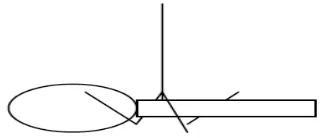
[image:16.595.250.411.531.600.2]3. Using the paper clip that is in the shape of a W on the string, tape the end of the string to the table so that the paper clip hangs freely away from anything else. Hold the handle of one of the plastic spoons and rub the rest of it with a plastic wrap – this spoon is now charged. Carefully balance this charged spoon on the W support clip so that it is free to spin (be sure not to touch the charged end of the spoon).
Charge the other plastic spoon in the same way and slowly bring it towards the suspended spoon.
Record your observations and answer these questions. (e) Do they attract or repel each other?
CHARGE IT
4. Now rub the spoon in your hand on your cotton clothing and bring it near the charged suspended spoon. Record your observations and answer these questions.
(g) Do they attract or repel each other?
(h) Does this mean they have the same or opposite charges? Explain.
Charging by Induction
5. Replace the spoon on the W clip with a styrofoam – this object is neutral (it is not negatively or positively charged). Rub a plastic spoon with the plastic wrap to charge it. Slowly bring the charged spoon near (but not touching) the neutral styrofoam. Record your observations and answer these questions.
(i) Do they attract or repel each other?
(j) Does this mean they have the same or opposite charges? Explain.
6. Now, rub the spoon on your cotton clothing and bring it near the styrofoam without touching it. Record your observations and answer these questions.
(k) Do they attract or repel each other?
ACTIVITY 3.2
ATTRACT OR REPEL
RESULTS AND DISCUSSION
Charging by Friction
1. Tape on table: RepelCharges: Same
The pieces of tape will repel each other because both will have the same charge. We cannot tell if this same charge is positive or negative because like charges always repels. The tape could be positive or negative depending on the tape used and the surface it was stuck to. If you want to know which charge it is, rub a plastic spoon on cotton and bring the spoon near the tape. The spoon will be negatively charged, so if it attracts the tape, that means the tape is positively charged. If the spoon repels the tape, then the tape is negative.
2. Tape on top: Attract Charges: Opposite
The pieces of tape will have opposite charges when pulled apart. The top tape will have the opposite charge to the bottom tape so they will attract each other. We cannot tell which is positive or negative, we just know that they are oppositely charged because they attract. If you want to know which charge it is, follow the instructions under #1.
3. Spoons with wrap: Repel Charges: Same
They will repel each other which indicates that they have the same charge. Once again, we cannot tell if the spoons are positive or negative, just that the charges are the same because they repel. If you want to know which charge it is, follow the instructions under#1 (a plastic spoon rubbed with a plastic wrap makes the spoon positively charged).
4. Spoon with wrap & spoon with cotton: Attract Charges: Opposite
The spoons will attract each other since they have opposite charges. Rubbing in a plastic wrap makes a spoon positive while rubbing cotton makes a spoon negative, so one spoon is positive and one spoon is negative.
Charging by Induction
5. Spoon with plastic wrap & styrofoam: Attract Charges: Opposite
CHARGE IT
If the same wrap is being used over and over, it may lose its attraction for the spoon and not “steal” as many electrons. A fresh sheet will work better.
6. Spoon with cotton & styrofoam: Attract Charges: Opposite
The spoon and styrofoam will be attracted to each other, which indicates that they are oppositely charged. This is not the case, as in #5. The negatively charged spoon will attract the positive charges in the styrofoam toward it.
TEACHER'S RESOURCE SHEET FOR ACTIVITY 3.1
STATIC ELECTRICITY
At it’s simplest, static electricity is an electrical charge that cannot move. It is created when two objects or materials that have been in contact with each other are separated. When in contact, the surface electrical charges of the objects try to balance each other. This happens by the free flow of electrons (negatively charged particles) from one object to the other. When the objects separate, they are left with either an excess or a shortage of electrons. This causes both objects to become electrically charged.
Some atoms hold on to their electrons more tightly than others do. How strongly matter holds on to its electrons determines its place in the triboelectric series. If a material is more apt to give up electrons when in contact with another material, it is more positive in the triboelectric series. If a material is more apt to "capture" electrons when in contact with another material, it is more negative in the triboelectric series.
The following table shows the triboelectric series for many materials you find around the house. Positive items in the series are at the top, and negative items are at the bottom:
• Human hands (usually too moist, though) Very positive • Rabbit Fur
• Glass • Human hair • Nylon • Wool • Fur • Lead • Silk • Aluminum • Paper • Cotton • Steel Neutral • Wood • Amber • Hard rubber • Nickel, Copper • Brass, Silver • Gold, Platinum • Polyester
• Styrene (Styrofoam) • Saran Wrap
• Polyurethane
• Polyethylene (like Scotch Tape) • Polypropylene
• Vinyl (PVC) • Silicon
• Teflon Very negative
CHARGE IT
that captured the electron is now negatively charged and the material that lost an electron is now positively charged. This charge imbalance is where "static electricity" comes from. The term "static" in this case is deceptive, because it implies "no motion," when in reality it is very
common and necessary for charge imbalances to flow. The spark you feel when you touch a door knob is an example of such flow. http://science.howstuffworks.com/vdg1.htm
WAYS OF CHARGING
Charging by friction - this is useful for charging insulators. If you rub one material with another (say, a plastic ruler with a piece of paper towel), electrons have a tendency to be transferred from one material to the other. For example, rubbing glass with silk or saran wrap generally leaves the glass with a positive charge; rubbing PVC rod with fur generally gives the rod a negative charge. Charging by conduction - useful for charging metals and other conductors. If a charged object touches a conductor, some charge will be transferred between the object and the conductor, charging the conductor with the same sign as the charge on the object.
STUDENT SELF ASSESSMENT TOOL
Instruction: Read each statement and check the column that best characterizes
your own response.
General Observation
Disagree
Neutral
Agree
1. The directions of the activity
were clear. I knew what do to.
2. The activity is interesting.
3. I felt I gained a better
understanding of the topic if I
learned the topic through
lecture.
Explain your answer
3. My overall experience with
the activity was satisfactory.
CHARGE IT
TEACHER'S RESOURCE SHEET FOR ACTIVITY 4
TOSS AND TURN
QUESTION DICE
TEACHER'S RESOURCE SHEET FOR ACTIVITY 4
TOSS AND TURN
Question Dice
Sample Questions Die 1 Die 2
How is static electricity experienced in daily life? Cite instances.
are materials of differing charges behaving when brought near each other? materials of similar charges behaving when brought near each other?
does a charged material behave when brought near an uncharged material?
do sub atomic particles make static electricity happen? charging by friction and charging by induction differ?
Why is it important to know about the atom to understand static electricity?
are electrons free to move or “jump” from one atom to the other?
does an uncharged material become attracted to a charged material?
do materials become charged when rubbed against an object?
What is the cause of static electricity?
are the different subatomic particles and their corresponding charges?
does static electricity mean?
CHARGE IT
ACTIVITY 5
STATIC ELECTRICITY AND TECHNOLOGY
Air purifiers
There are some appliances that can eliminate dust from the air, like air
purifiers. They use static electricity to alter the charges in the dust particles
so that they stick to a plate or filter of the purifier that has an opposite charge
as that of the dust (opposite charges attract each other).
This effect is also used in industrial smokestacks to reduce the pollution that
they generate, although they work in a very large scale, the effect is basically
the same as the home air purifier.
Car painting
To make sure a car's paint is uniform and that it will resist the high speeds and
weather to protect the car's metal interior, it is applied with a static charge.
The metal body of the car is submerged in a substance that charges it
positively, and the paint is charged negatively with the paint sprayer.
This process ensures a uniform layer of paint, since when there is enough
negative paint in the car the extra will be repelled by the paint already in the
car.
It also ensures that the paint will not fall off, since the electrical attraction
between the paint and the car is stronger than if it was just sprayed.
For the Teacher: Translate the information in this Learning Guide into the following matrix to help you prepare your lesson plans.
Stage
1.
Activating Prior
Learning
2.
Setting the
Context
3.
Learning
Activity Sequence
4.
Check for
Understanding
5.
Practice and
Application
6.
Closure
Strategies
Activities from the Learning Guide
Extra activities you may wish to include
Materials and planning needed
Estimated time for this Stage