Application of two temperature hot water soaking for improving of
paddy parboiling process
D. M. C. Champathi Gunathilake
(Department of Soil Science & Agricultural Engineering, College of Agriculture, Fisheries and Forestry, Fiji National University, PO. BOX. 1544 Nausori, Fiji)
Abstract: Soaking of paddy (rough rice) is the most time-consuming operation in the paddy parboiling process. A hot water soaking in two temperatures, paddy parboiling treatment has developed based on the gelatinization temperature of rice starch to achieve rapid completion of absorption of water into the rice kernel. As well, this treatment was aimed to eliminate the steaming process in paddy parboiling without changing milling qualities and improve parboiled rice palatability. BG 358 rice variety (short grain rice) was used for the experiment. Two soaking treatments of two hours soaking in hot water at 70oC and one hour soaking in hot water at 80oC were compared with modern and traditional parboiling treatments. Complete randomized design (CRD) was adopted to this experiment. Results revealed that the soaking two hours in hot water at 70oC in first stage caused to increase kernel moisture until an intermediate moisture content of 34.8% d.b. and one hour soaking in hot water at 80oC in second stage caused to increase kernel moisture until up to the saturation moisture content of 43.8% d.b. It was resulted in a 37.5% time reduction compared to modern hot water soaking and 87.5% time reduction compared to traditional parboiling. Further, treated rice by two temperatures hot water soaking showed significant improvement in terms of kernel color, and palatability characteristics such as taste, texture and odor compared to existing parboiled rice. However, there was no significant difference between treatments in terms of head rice yield, kernel hardness and broken grains percentage.
Keywords: paddy parboiling, hot water soaking, soaking duration, rice quality
Citation: Champathi Gunathilake, D. M. C. 2018. Application of two temperature hot water soaking for improving of paddy parboiling process. Agricultural Engineering International: CIGR Journal, 20(4): 164–168.
1 Introduction
Parboiling of paddy (rough rice) is a traditional process
in Southern Asia since ancient time, and it is still very
popular in this region. Generally, parboiling process
consists of three stages: soaking the cleaned raw rough rice
to saturation moisture content, gelatinization of rice starch
by adding heat to the moist kernels through steaming, and
drying the product to suitable moisture content for milling
or storage. Water and heat are the two main elements in the
hydro-thermal process. Parboiling causes physical and
Received date: 2018-02-10 Accepted date: 2018-07-31 *Corresponding author: Champathi Gunathilake, D. M. C.,
Assistant Professor. Department of Soil Science & Agricultural Engineering, College of Agriculture, Fisheries and Forestry, Fiji National University, Fiji.Tel: +6799911870. Email: champathi@ hotmail.com.
chemical modifications in the grain, leading to favorable
changes such as easier shelling, high head rice yield, less
broken grains, increased resistance to insects, firmer
cooked rice texture, less solids loss during cooking, better
retention of nutrients (e.g. vitamins, and minerals), and
higher oil content in the bran (Gariboldi, 1972;
Bhattacharya, 1985; Pillaiyar, 1988). It has been pointed
out that cracks, chalkiness, and incomplete grain filling
were totally rectified and many of the previous defects
were cured when paddy was parboiled properly
(Bhattacharya, 1969). Although parboiling has been
reported for lots of advantages, this process causes some
drawbacks such as decreasing aroma and whiteness,
changing taste, texture and palatability characteristics and
its consequent effect on consumer acceptability (Luh et al.,
1991). Paddy parboiling also constitutes an additional
can be achieved through a variety of methods that differ
basically in the intensity of the hydrothermal treatment
(Bhattacharya, 1985; Pillaiyar, 1988). Soaking is the most
time-consuming operation in the parboiling process,
followed by drying and steaming. In traditional parboiling,
water at room temperature was used for soaking and it took
one to two days. In modern method, using hot water
soaking can be completed in a shorter time depending on
the soaking water temperature. It takes approximately four
hours in water at 70oC temperature (Igathinathane et al.,
2005; Kwofie, and Ngadi, 2017). Long-duration ambient
temperature water soaking leads to microbial growth and
off-flavor development (Pillaiyar et al., 1980). Thus, the
general objective of this study was to improve the
parboiling process, shorten the soaking time by two
temperatures hot water soaking, while eliminate steaming
in paddy parboiling without changing the parboiled rice
qualities such as less broken grain percentage, and high
head rice yield percentage. Along with them, resulted
treatments should improve kernel whiteness and
palatability characteristics.
2 Methodology
BG 358 short grain (samba) rice variety (Length to
breadth ratio = 2.15) was used for the experiment. The
water temperature for hot soaking was determined
according to the gelatinization temperature of rice
(Igathinathane et al., 2005). Sri Lankan short grain rice
varieties have intermediate amylose content therefore,
their gelatinization temperature is 72oC-74oC (Silva and
Swami, 1988). Accordingly, two temperatures hot water
treatments were performed and these treatments were
compared with modern and traditional parboiled
treatments. Table 1 showed the treatments performed in
this experiment.
Table 1 Performed paddy parboiling treatments in experiment
Treatment No. Soaking water temperature (oC)
Soaking duration
Steaming pressure
Steaming duration 1 New treatment
(Two temperature hot water soaking)
70±2 80±2
2 hours 1 hour
- -
- - 2 (Modern
parboiling) 70±2
4 and half hours
Atmospheric
pressure 5 minutes 3 (Traditional
parboiling) 28±3 30 hours
Atmospheric
pressure 5 minutes
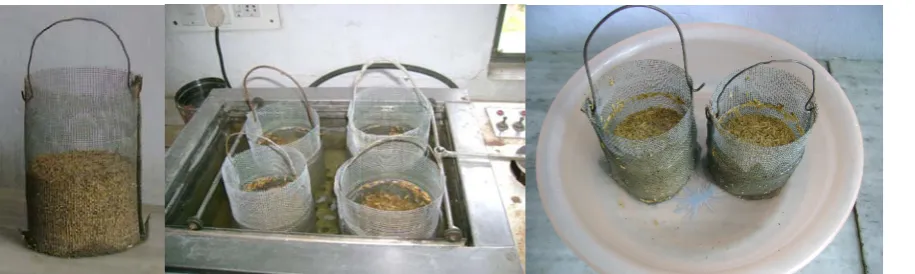
Figure 1 showed the laboratory arrangement for
soaking experiments. Perforated containers (fabricated by
wire mesh) were used for this parboiling experiment. The
300 g of paddy was put into these perforated containers
and containers were placed in the thermostatically
controlled hot water bath (Serial No. 54, CPN Industries,
India). The water temperature in the water bath was
adjusted according to temperature requirement of
treatments (70oC and 80oC). The temperature fluctuation
in water bath was found ±2oC. Same perforated containers
were placed in the water at ambient room temperature
28oC±3oC in order to perform traditional parboiling
treatment. Soaked paddy samples as modern and
traditional methods of parboiling were steamed at
atmospheric pressure (Table 1). Soaked and steamed
paddy samples were subjected to dry up to 14 % moisture
content in wet basis (wb) for safe milling. Laboratory
electric dryer (Model No SOM 45, Scientronic Industries,
India) was used for drying of paddy samples. In this study,
air temperature inside the dryer was maintained at 92oC ±
2oC. When paddy moisture content reached to 16%-17%
(wb) during drying, paddy was tempered for three hours.
After three hours of tempering, drying was started again at
72oC±2oC temperature until the paddy reached 14% (wb)
moisture content (Gunathilake et al., 2018).
The dried paddy up to 14% (wb) moisture content was
de-hulled using the Satake laboratory de-husker and then
brown (unpolished) rice was polished using the Satake
laboratory abrasive polisher. All rice samples were
polished for 75 seconds; hence average degree of polish
(bran removal) was maintained around 8%. Important
milling characteristics such as broken grain percentage
and head rice yield percentage were calculated by the
method outlined by Bal (1974). Broken grain percentage
was calculated using representative working sample of
milled rice of 50 g obtained by precision sample divider.
Rice grains, which are smaller than the 3/4 of the grain,
were considered as broken grains and they were separated
by hand picking and broken grain percentage was
calculated by Equation (1). Accordingly, head rice yield
was also calculated by Equation (2).
Rice kernel whiteness was measured using Mini-scan
XE plus Hunter Lab Colorimeter. L value (lightness value)
was used as whiteness of rice kernel. L value varies from
100 for perfect white and zero (0) for perfect black.
Compression test was carried out for determination of rice
kernel hardness (yield stress). The Instron, TA-XT2
texture analyzer was used to perform a compression test.
Force at rupture was considered as the hardness of rice
kernel. Three replicates were considered for each
treatment and the applied force were averaged.
2
Broken Grain Percentage Wb 100
Wm
= × (1)
where, Wb2 = Weight of the broken grains in grams;
Wm = Weight of the polish rice in grams.
Head rice yield percentage Wr 100
W
= × (2)
where, Wr = Weight of the head rice in grams; W =
Weight of the sample in grams used to analysis milling
qualities.
2.1 Sensory evaluation procedure
Selected samples were cooked according to the
method adopted by Ali and Ojah (1975) that 30 g of rice
immersed in 300 mL of water in glass tube in a boiling
water bath for 22 minutes. After cooking, cooked rice were
emptied into a perforated circular strainer and kept two
minutes to move out excess water and use for sensory test.
The rice samples were coded by random numbers and
served to 15 trained sensory panelists. Sensory panel
members were requested to comment on the taste, odor
and texture and they were given structured questionnaire
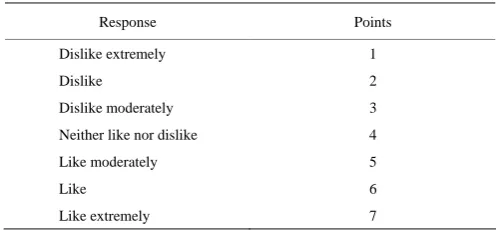
as a 07-point hedonic scale shown in Table 2. Selected
hedonic scale had been adopted by many previous
researchers for similar studies (Schutz and Oamrell, 1974;
Meullenet et al., 1998; Sitakalin and Meullenet, 2000;
Jindal and Limpisut, 2002). Data of sensory evaluation
were examined by the Friedman test with the aid of
Minitab® computer package. Sum of rank achieved by
Friedman test for each treatment were compared by the
Duncan’s multiple range test (DMRT) multiple
comparison technique at α=0.05.
Table 2 The 7-point hedonic scale
Response Points
Dislike extremely 1
Dislike 2
Dislike moderately 3
Neither like nor dislike 4
Like moderately 5
Like 6
Like extremely 7
Each treatment was replicated three times. Analysis of
variance (ANOVA) on complete randomized design (CRD)
by general liner model (GLM) procedure was performed
and also treatment means were separated by the DMRT at
α=0.05 level of significance.
3 Results and discussion
Figure 2 showed the variation in moisture content in
rice kernel for these three different soaking treatments.
The results indicated that positive linear relationship
between kernel moisture content and soaking duration.
Hot water soaking absorbed high amount of moisture in
short period of time when compared to ambient water
soaking. Initial moisture content of paddy samples
subjected to three different treatments was kept at 15.1 dry
basis (db). It was clear from the results that two
temperatures hot water soaking at 70oC two hours and
80oC one hour soaking (treatment 1) absorbed water
rapidly and rice kernel was saturated within three hours up
to saturated moisture content of 43.8 db. Modern hot water
soaking parboiling treatment (treatment 2) took four and
water soaking parboiling treatment (treatment 3) took
30 hours for saturation. Treatment 2 and 3 were undergone
5 min steaming treatment to facilitate starch gelatinization.
However, it was observed that saturation moisture content
of 43.8 db after soaking remained mostly same after
steaming treatment in these two treatments (treatment 2 &
3). Igathinathane et al. (2005) pointed out that paddy
soaking was the most time-consuming operation in paddy
parboiling, therefore, they introduced combination
soaking procedure in order to reduce soaking time in
paddy parboiling.
Figure 2 Variation of moisture content inside rice kernel with soaking treatments
The results showed that all three treatments were not
shown any significant difference in terms of broken grain
percentage, kernel hardness and head rice yield (Table 3).
However, kernel whiteness was significantly different
between the three treatments. The highest kernel whiteness
has appeared in treatment-1 and lowest was observed in
traditional parboiling treatment-3 (ambient water soaking
treatment). Accordingly, it can be concluded that
treatment-1 triggered high rice kernel whiteness compared
to existing parboiling treatment (modern and traditional).
Gariboldi (1974) explained that changing of rice kernel
whiteness was probably due to gelatinization of the starch
and disintegration of the protein bodies in the endosperm
with the increase in severity of the hydrothermal treatment
of soaking and steaming. Miah et al. (2002) observed that
parboiling with increasing soaking and steaming time
caused the relative darkness to gradually increase.
Further, treatment-1 was also capable to maintain
similar head rice yield as the existing parboiling treatments,
even though steaming was eliminated from this treatment.
This result indicated that rice kernel was gelatinized
properly by treatment-1. Soaking of paddy in hot water at
80oC (above the gelatinization temperature 72oC-74oC)
one hour facilitated proper rice kernel gelatinization.
Igathinathane et al. (2005) showed soaking of paddy above
the gelatinization temperature facilitated irreversible
starch granule swelling of rice kernel. Accordingly,
previous defects of the rice kernel such as cracks,
chalkiness, and grain fissures were totally rectified by
proper gelatinization of rice kernel and it caused high head
rice yield.
Results of the sensory test were shown that palatability
characteristics such as odour and taste significantly were
improved by treatment-1 compare to the other two
treatments (Table 3). Further, treatment-1 also caused to
improve rice texture in comparison to the other two
treatments, it was shown significant difference from
treatment-3 (traditional parboiling). The results of DMRT
(Table 3) clearly indicated that the treatment-1 improved
all required qualities of rice in comparison to the existing
parboiling treatments while reducing soaking time and
eliminating of steaming in paddy parboiling
Table 3 The result of DMRT multiple mean comparisons of responses by treatments
Treatment No. Mean broken grain %
Mean head rice yield %
Mean kernel hardness
Mean kernel whiteness
Taste mean sum of rank
Odor mean sum of rank
Texture mean sum of rank
Treat. 1 2.68a 71.6a 3.4a 60.42a 79.0a 80.0a 77.0a
Treat. 2 3.14a 71.4a 3.3a 57.96a 75.0a 70.0b 72.5a
Treat. 3 2.34a 71.7a 3.6a 53.43b 60.5b 58.5c 57.5b
Note: [a] Columns having same letter are not significantly difference at α = 0.05 by DMRT.
Treat – 1: Two Temperature hot water soaking, Treat – 2: Modern parboiling, Treat – 3: Traditional parboiling
4 Conclusion
It can be concluded that hot water soaking in two
temperature, the first stage soaking at 70oC rice kernel
absorbed water until an intermediate moisture content of
34.8% db (approx. 2 hours), followed second stage by
soaking at 80oC (approx. 1 hour) absorbed water up to the
saturation moisture content of 43.8% db, resulted in a
37.5% time reduction with compared to modern
reduction compared with conventional ambient water
soaking of paddy at 25oC-30oC. Further, steaming process
can be eliminated completely in paddy parboiling by two
temperatures hot water treatment. Under the same
treatment, a significant improvement was shown in terms
of kernel color, and palatability characteristics such as
odour, texture and taste. However, there were no
significant difference among treatments in terms of head
rice yield, kernel hardness, broken grains produced.
References
Ali, M. H., and R. P. Ojah. 1975. Physical components in steaming of paddy. Journal of Food Science and Technology, 25(1): 82–84.
Bal, S. 1974. Measurement of rice quality. No.72. New Delhi, India: REPC Publication.
Bhattacharya, K. R. 1969. Breakage of rice during milling and effect of parboiling. Journal of Cereal Chemistry,46(5): 478–485. Bhattacharya, K. R. 1985. Parboiling of rice. In RiceChemistry and
Technology, ed. B. O. Juliano, ch. 2, 82–112. St Paul, Minn, USA: American Association of Cereal Chemists.
Gariboldi, F. 1972. Parboiled rice. In Rice Chemistry and Technology, ed. D. F. Houston, ch. 3, 358–380. St Paul, Minn, USA: American Association of Cereal Chemists.
Gariboldi, F. 1974. Rice processing. FAO agricultural development paper No 97. Rome Italy: Food and Agricultural Organization of the United Nation.
Gunathilake, D. M. C. C., D. P. Senanayaka, P. Adiletta, and W. Senadeera. 2018. Drying of agricultural crops. In Advances in Agricultural Machinery and Technologies, ed. G. Chen, ch. 14, 331–365. Boca Raton Florida USA: CRC Press, Taylor & Francis Group.
Igathinathane, C., P. K. Chattopadhyay, and L. O. Pordesimo. 2005. Combination soaking procedure for rough rice parboiling.
Transaction of ASAE, 48(2): 665–671.
Jindal, V. K., and R. Limpisut. 2002. Back extrusion testing of cooked rice texture. ASAE Paper No. 026068. Chicago, Illinois, USA: ASAE Annual International Meeting, CIGR Hyatt Regency.
Kwofie, E. M., and M. Ngadi. 2017. A review of rice parboiling systems, energy supply, and consumption. Renewable and Sustainable Energy Reviews, 72: 465–472.
Luh, B. S., and R. R. Mickus. 1991. Parboiled rice. In Rice Utilization, ed. B. S. Luh, ch. 4, 51–88. Van Nostrand, Reinhold, New York, USA: Springer Science and Business Media.
Meullenet, J. F. C., J. Gross, B. P. Marks, and M. Danials. 1998. Sensory descriptive texture analyses of cooked rice and its correlation to instrumental parameters using an extrusion cell. Cereal Chemistry, 75(5): 714–720.
Miah, M. A. K., A. Haque, M. P. Douglass, and B. Clarke. 2002. Parboiling of rice. Part II: Effect of hot soaking time on the degree of starch gelatinization parboiling of rice. International Journal of Food Science and Technology,37(5): 539–545. Pillaiyar, P. 1988. Parboiling. In Rice Postproduction Manual, ch.
5, 166–229. New Delhi, India: Wiley Eastern Ltd.
Pillaiyar, P., B. S. Vasan, G. Rajendran, and V. Dhamarajan. 1980. Prevention of foul odour and minimizing soaking loss in conventional parboiling of paddy. Journal of Food Science Technology, 17(5): 228–231.
Schutz, H. G., and J. O. Oamrell. 1974. Prediction of hedonic rating of rice by sensory analysis. Journal of Food Science, 39(1): 203–206.
Silva, D. S., and T. Swami. 1988. Chemical compositions of local rice varieties and its aging conditions. Journal of Agriculture and Food Chemistry, 39(2): 420–422.1