Simultaneous degradation and adsorption of cyanide using modified fly
Ash and TiO
2/UV
Shima Rezaei Shima Rezaei Shima Rezaei
Shima Rezaei1111, Hadi Rezaei , Hadi Rezaei , Hadi Rezaei
, Hadi Rezaei2222, Meghdad Pirsaheb , Meghdad Pirsaheb , Meghdad Pirsaheb
, Meghdad Pirsaheb3333, Saeb Ahmadi , Saeb Ahmadi , Saeb Ahmadi , Saeb Ahmadi4444,
, ,
, Hooshyar HossiniHooshyar HossiniHooshyar HossiniHooshyar Hossini3333
1 Research Center for Environmental Health AND School of Public Health, Kurdistan University of Medical Sciences, Sanandaj, Iran
2 Sanandaj Health Center AND Department of Environmental Health Engineering, School of Public Health, Kurdistan University of Medical Sciences, Sanandaj, Iran
3 Department of Environmental Health Engineering, School of Health, Kermanshah University of Medical Sciences, Kermanshah, Iran
4 Departmentof Chemical Engineering, School of Chemical Engineering, Tarbiat Modares University, Tehran, Iran
Abstract Abstract Abstract Abstract
Due to the present water shortage and environmental problems associated with industrial effluent, investigation of novel treatment technologies is an essential approach. Being a highly toxic chemical of asphyxiating characteristics, cyanide is seen as a major environmental pollutant in a wide range of industrial effluents. The present study aimed
to address the adsorption and photocatalytic degradation of cyanide using activated fly ash and TiO2/UV. To
investigate the removal efficiency of cyanide, two sets of experiments were designed. First, cyanide was absorbed by activated fly ash and degraded via a photocatalytic process, individually. Second, simultaneous adsorption and
degradation was examined. The removal efficiency of cyanide by modified fly ash (MFA), TiO2/UV, and their
combination (MFA-TiO2/UV) was 76.1%, 81%, and 86.6%, respectively. Optimal conditions for the combination of
activated fly ash AFA-TiO2/UV were contact time of 6 hours, temperature of 100 °C, and AFA: TiO2 ratio (w/w) of
1:1. Under these conditions, a maximum removal rate of 92.4% was obtained when 1.2 g of MFA/TiO2 was used
with a pH value of 3 in the presence of UV light. Based on the results of cyanide removal, it can be concluded that
the combination of adsorption and photocatalytic degradation with MFA-TiO2/UV can be utilized to improve the
removal of cyanide from wastewater.
KEYWORDS: KEYWORDS: KEYWORDS:
KEYWORDS: Adsorption, MFA-TiO2/UV, Cyanide, Photocatalytic Degradation
Date of submission: Date of submission:Date of submission:
Date of submission: 22 Apr 2015, Date of acceptance:Date of acceptance:Date of acceptance:Date of acceptance: 12 Jun 2015
Citation: Rezaei Sh, Rezaei H, Pirsaheb M, Ahmadi S, Hossini H. Simultaneous degradation and adsorption
of cyanide using modified fly Ash and TiO2/UV. J Adv Environ Health Res 2015; 3(3): 196-203.
Introduction
1As a result of the increasingly growing rate of pollutant discharge by industries into the environment and ecosystem many problems are emerging such as health concerns and contamination of water resources. As a strong asphyxiating chemical group, cyanides are
Corresponding Author: Corresponding Author: Corresponding Author: Corresponding Author:
Hooshyar Hossini
Email: [email protected]
present in several industrial wastewaters including those of paint, oil refining, explosives, chemicals, plating, pesticides, synthetic fiber production, mining, electronics, and coking industries.1-3 The health damages
can produce some toxins in the blood.4,5 The
lethal dose of cyanide for humans has been determined to be about 5 mg per kg of body weight.6,7 Common processes of cyanide
removal encompass physical, chemical, and biological techniques. Through physical techniques (such as membrane processes, ion exchange, and adsorption), the removal process is only completed by phase change. On the other hand, the toxicity of cyanide may limit the use of biological techniques to low concentrations, requiring a long duration of time to proceed. The most common chemical method for cyanide removal is alkaline chlorination, with its greatest limitation being the production of cyanogen chloride.8-10
However, because of their incomplete cyanide removal and remarkably high cost, chemical methods are limited in application. Today, the use of the photocatalysis process as a strong and efficient yet green technology is growing in comparison to conventional methods.11,1
Many researches have confirmed the efficiency of the photocatalysis process in cyanide removal.12,13 Some researchers have suggested
considerable improvements, provided the photocatalysis system is coupled with a primary adsorbent such as zeolite or activated carbon.14 Absorption is an important part of
photocatalytic removal;16 thus, an increase in
absorption capacity can improve photocatalytic characteristics.15 Therefore, adding a high
capacity adsorbent such as fly ash (FA) to a catalysis system such as TiO2, in the presence
of UV light, can improve the photocatalytic performance. The main decomposition mechanisms by combined modified fly ash (MFA)/TiO2 are defined in the three steps of
chemical species adsorption on the surface of MFA/TiO2, optical dispersion over the surface,
and desorption of final product from the surface of MFA/TiO2. Hence, when TiO2 is
loaded on FA, the adsorbed analytes on FA move to the catalyst, via diffusion process, where they are decomposed.17,18 The present
study aimed not only to perform a simple modification process to enhance FA adsorption capacity, but also to mix MFA with TiO2
nanoparticles in the presence of UV to achieve a higher removal efficiency for cyanide. To the best of our knowledge, no similar study has been reported.
Materials and Methods
All material and chemical regents were of analytical grade. The experimental study was conducted on both synthetic and real samples at the laboratory scale. Raw FA was collected from Zarand Thermal Power Plant (Kerman, Iran). Once prepared, FA was sieved to isolate particles of 100 to 200 mesh size. Then, FA was washed with distilled water at a liquid:solid ratio of about 10 for 48 hours, before being filtered and dried in an oven at 105 °C to obtain washed fly ash (WFA). The size and specific surface area of the used TiO2
were 20 nm and 40 m2/g, respectively.
In order to determine the optimum conditions for obtaining an optimal FA, 4 consecutive stages were evaluated following a single-factor optimization approach. In the FA modification process, effective parameters such as acid concentration, time modification, acid/WFA ratio, and temperature modification were set to their optimal values. At the end, MFA/TiO2 ratio was evaluated. In order to
The effect of MFA:TiO2 ratio was evaluated at
the ratios (in w/w) of 0:4, 3:1, 1.5:2.5, 1:1, 2.5:1.5, 1:3, and 4:0.
At all steps, optimal values of effective parameters in cyanide removal by MFA-TiO2/UV were selected as judging criteria.
In this section, other parameters effective on photocatalitic degradation [e.g., initial pH (2-11) and substrate dose (0.3-1.5 g)] were studied. Moreover, different concentrations of cyanide (2.5 to 75 mg/l) were brought into contact with the MFA-TiO2/UV at optimum
conditions. Degrees of oxidation reactions were also determined. To evaluate MFA-TiO2/UV
under actual conditions, real samples were prepared from the electroplating industry and treated under optimum conditions using MFA-TiO2/UV.
All tests were analyzed at room temperature and conducted in duplicates to increase the accuracy of the results. Residual cyanide was determined using an atomic absorption spectrophotometer (Philips-PU 9100X) coupled with a mercury UV lamp (30 W, 338 mw/m2)
as light source with maximum wavelength of 360 nm. To avoid light reflection, the entire system was wrapped in aluminum foil.
Results and Discussion
Scanning Electron
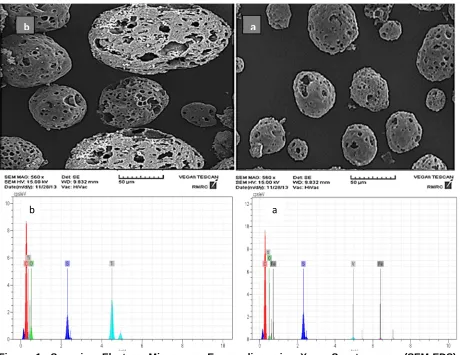
Microscopy-Energy-dispersive X-ray Spectroscopy (SEM-EDS) Figure 1 shows the growth of porosity and active sites on FA surface after modification. These micropores can be occupied by TiO2
nanoparticles on the surface of the adsorbent.
Figure 1. Scanning Electron Microscopy-Energy-dispersive X-ray Spectroscopy (SEM-EDS)
images of raw fly ash (a) modified fly ash (MFA)-TiO2 (b)
a b
Simultaneous determination of electrical conductivity (EC) and total dissolved solids (TDS) after 48 hours of washing of FA indicated them to increase to about 2.3-4.07 mS/cm2 and 80-1710 ppm, respectively. These
results reveal that water-soluble compounds from FA had dissolved as a result of acidic treatment and the development of pores. EDS results demonstrate the weight percent (wt%) of different elements and metal oxides in FA, including carbon, sulfur, oxygen, CO2, SO3,
iron, vanadium, V2O5, and Fe2O3. The weight
percent of the abovementioned elements before FA modification were about 77.94, 7.73, 10.9, 91.97, 6.22, 1.32, 2.09, 1.2, and 0.61 wt%, respectively. After treatment, the values changed to 86.52, 6.8, 6.68, 92.94, 5.08, 0, 0, and 0% wt%, respectively, indicating an increase in carbon content after acidic treatment, which confirms the enhancement of adsorption capacity. The results were in agreement with those reported by Wang et al.19
Effect of acid concentration and activation time Figure 2 illustrates the photocatalytic removal of cyanide by MFA-TiO2 under different acidic
conditions. Under these conditions, the removal rate increased with acid dose. The removal efficiency was 51.3% when WFA/TiO2
was used alone. With the increasing of acid concentration from 0.01 to 2 M, the removal rate increased from 64 to 79.11%. Accordingly, 1 M was considered as the optimum acid concentration for the following experiments. Statistical analysis indicated that acid concentration was not significantly correlated with cyanide removal efficiency (P ~ 0.256). Figure 3 presents a demonstration of the effect of activation time. The results showed that the removal percentage was improved from 77.5 to 86.2% with the increasing of activation time from 2 to 10 hours. Through further evaluation of removal efficiency, the activation time of 6 hours was found to be the optimum value. In addition, a significant relationship was observed between
activation time and removal efficiency (P ~ 0.026).
Figure 2. Effect of acid concentration on cyanide removal [cyanide: 30 mg/l, unadjusted pH]
Figure 3. Effect of activation time on cyanide removal [cyanide: 30 mg/l, unadjusted pH]
Effect of temperature
Figure 4 shows cyanide removal efficiency when activation temperature changes from 26 (room temperature) to 120 °C. The figure indicates the significant effect of temperature on cyanide removal, where removal efficiency changes from 73.6 to 89.13% with the increasing of temperature.With regard to greater cyanide removal at 97 °C, boiling point of water was chosen as the optimum temperature for FA activation. Based on statistical analysis, there was a significant relationship between temperature and removal efficiency (P = 0.01). Panitchakarn et al. reported an initial increase in the purity of FA with increasing acid concentration, followed by
50 55 60 65 70 75 80
0 0.01 0.1 1 1.5 2
R
em
o
v
a
l
E
ff
ic
ie
n
cy
%
Acid Concentration (M)
70 74 78 82 86 90
2 4 6 8 10
R
em
o
v
a
l
E
ff
ic
ie
n
cy
%
a relatively constant trend with further increase in the acid concentration.21 The acid:FA ratio
did not significantly contribute to the modification of fly ash. Porosity and surface area increased with the reduction in impurities due to longer activation time and higher treatment temperature.20-22 According to the
results, optimal acid/WFA ratio was found to be about 7 (data not reported). The removal of vanadium compounds by acid-treated adsorbent was confirmed in the studies by Kashiwakura et al.23 and Kashiwakura et al.24
in which dangerous substances such as arsenic and selenium were successfully removed.
Figure 4. Effect of activation temperature on removal efficiency [cyanide: 30 mg/l, unadjusted pH]
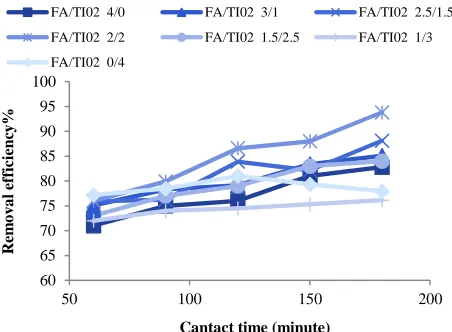
Figure 5 shows changes in removal efficiency with MFA to nanoparticles ratio for different contact times. The cyanide removal efficiency for MFA, TiO2/UV, and
MFA-TiO2/UV were found to be 76.1, 81, and 86.6%,
respectively. Accordingly, the removal efficiency of MFA-TiO2/UV was higher than
that of either the absorbent or the catalyst alone. The appropriate ratio of TiO2 to MFA
was 1. No statistically significant relationship was found between MFA:TiO2 ratio and
removal efficiency (P ~ 0.098). By increasing the surface area, chemical species were provided with further area, which improved photocatalytic removal efficiency.25 Optical
dispersion rate of pollutants is affected by light absorption of the used catalyst and the active
sites. Evidently, the photocatalytic process is likely to proceed more efficiently with appropriate adsorption. When TiO2 is
introduced into fly ash pore space, due to the proximity of contaminants and the catalyst, a better removal condition is provided. This can be associated with FA serving as an adsorbent. In other words, depending on the type of fly ash, the removal efficiency changed, leading to a reformed process.26 In mixture substrate
(MFA/TiO2), a competition is established on
active sites, with the located TiO2 molecules on
adsorbent surface behaving similar to its host. During this process, both substrates (MFA and TiO2) are engaged with pollutants, and the
absorption process takes place before the photocatalytic process. Chemical and structural changes in FA lead to changes in surface morphology, ultimately leading to important changes in the substrate affinity toward pollution before and after the modification. Such a sharp change confirmed the increase in EC and TDS by the deposition and dissolution processes.27 Through studying the effect of
radiation time, it was found that the longer the radiation time, the more free electrons were likely to be generated in the conductor band, which resulted in the enhancing of removal efficiency.
Figure 5. Effect of different FA:TiO2 ratios on
removal efficiency [cyanide: 30 mg/l, unadjusted pH]
60 65 70 75 80 85 90 95
26 70 85 97 120
R
em
o
v
a
l
E
ff
ic
ie
n
cy
%
Temperature (°C)
60 65 70 75 80 85 90 95 100
50 100 150 200
R
em
o
v
a
l
ef
fi
ci
en
cy
%
Cantact time (minute)
FA/TI02 4/0 FA/TI02 3/1 FA/TI02 2.5/1.5
FA/TI02 2/2 FA/TI02 1.5/2.5 FA/TI02 1/3
Samarghandi et al. argued that increasing the radiation time from 15 minutes to 180 minutes may raise the efficiency of cyanide removal using UV/TiO2 from 56.4% to 84.4%.28
Moreover, the results of this research were consistent with those of the studies by Kim et al.29 and Wahaab et al.30
Effect of MFA/TiO2 dosage and pH
Figure 6 shows cyanide removal efficiency for various pH values. Because the substrate surface contains more negative charges, the removal efficiency decreases with the increasing of pH,28,31 so that higher cyanide
removal efficiency was obtained for acidic pH values (herein ranging from 5 to 2). Accordingly, the acidic pH value of 3 was selected as the optimum pH value for further experiments. A statistically significant association was found between pH and removal efficiency (P = 0.001).
Figure 6. Effect of pH on the removal efficiency of cyanide [cyanide: 30 mg/l, pH: 2-11]
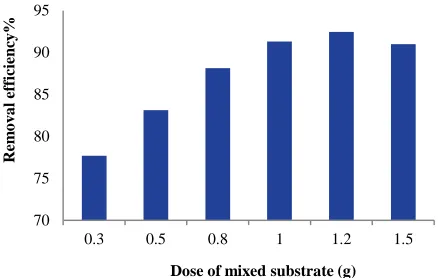
Figure 7 illustrates the effect of MFA/TiO2
dosage. The presented results show that the removal rate increased with the increasing of composite dosage. However, further increasing of the MFA/TiO2 ratio from 1.2 to 1.5 g showed a
negative effect. Thus, 1.2 g was chosen as the optimum dose. The reduction of removal efficiency by increasing the substrate dose was possibly a result of increased solution turbidity which consequently disrupted the photons’
traveling path. In addition, some responses can be effective in this regard, including reduced UV light penetration and total excitation surface.32
Some authors reported that such an increase can lead to the adhesion of contaminants to the solid photocatalyst surface, and thus, prevent photons from being stimulated.33 Similar results were
reported by Shirzad Syboni et al., who obtained a higher removal effeciency of about 92.45%.34 In
addition, a significant relationship was obtained between the mixed substrate (MFA/TiO2) dose
and removal efficiency (Pv = 0.015).
Under optimal conditions, the influence of initial cyanide concentration was investigated by changing the concentration from 2.5 to 75 mg/l (data not reported), which caused the efficiency to decrease from 98.1 to 64.14%. It is clear that, when the concentration is increased, TiO2 surface is quickly occupied by cyanide
molecules, further inhibiting an effective photon-excitation of the catalyst surfaces.
Figure 7. Effect of mixed substrate dose on removal efficiency [cyanide: 30 mg/l, pH: 3]
This may also be due to reduced light penetration due to increased pollutant concentration, as well as the reduced length of the incoming photons into the solution.33
High concentrations may degrade the pollutants and produce water-insoluble polymer compounds that attach to the catalyst surface and slow down the photocatalytic degradation.35 The removal rate data was fitted
to the second order kinetics equation and a high
60 65 70 75 80 85 90
2 3 5 7 9 11
R
em
o
v
a
l
ef
fi
ci
en
cy
%
pH
70 75 80 85 90 95
0.3 0.5 0.8 1 1.2 1.5
R
em
o
v
a
l
ef
fi
ci
en
cy
%
correlation coefficient (R2) of about 0.999 was
determined. The removal efficiency in the real sample (74.4%) was lower than that in the synthetic sample because of the presence of intervening compounds.
Conclusion
In the present study, the adsorption and photocatalytic degradation of cyanide using activated fly ash (AFA) and TiO2/UV was
addressed. Based on the results, the removal efficiency of cyanide by MFA, TiO2/UV, and
their combination (MFA-TiO2/UV) was about
76.1, 81, and 86.6%, respectively. Under optimum conditions, a maximum removal rate of about 92.4% was obtained. According to the results, it can be concluded that simultaneous adsorption and photocatalytic degradation using MFA-TiO2/UV can successfully remove
cyanide from wastewater.
Conflict of Interests
Authors have no conflict of interests.Acknowledgements
We sincerely appreciate the financial and instrumental supports of Kurdistan University of Medical Sciences, Iran.
References
1. Dash RR, Gaur A, Balomajumder C.Cyanide in industrial wastewaters and its removal: a review on biotreatment. J Hazard Mater2009; 163(1):1-11. 2. Naveen G, Majumder CB, Mondal P, Shubha D.
Biological treatment of cyanide containing wastewater. Res J Chem Sci 2011; 1(7): 15-21.
3. Dash RR, Balomajumder C, Kumar A. Removal of cyanide from water and wastewater using granular activated carbon. Chem Eng J 2009; 146(3): 408-13.
4. Shokuhi R, Mahvi A, Bonyadi Z. Efficiency compare of both sonochemical and photosonochemical technologies for cyanide removal from aqueous solutions. Iran J Health Environ 2010; 3(2): 177-84. [In Persian].
5. Baskin SI, Kelly JB, Maliner BI, Rockwood GA, Zoltani CK. Cyanide poisoning. In: Tuorinsky SD, Editor. Medical aspects of chemical warfare. Washington, DC: Walter Reed Army Medical Center; 2008. p. 371-410.
6. Nelson L. Acute cyanide toxicity: mechanisms and manifestations. J Emerg Nurs 2006; 32(4 Suppl): S8-11.
7. Malhotra S, Pandit M, Kapoor JC, Tyag DK. Photo-oxidation of cyanide in aqueous solution by the UV/H2O2 process. Journal of Chemical Technology
and Biotechnology 2005; 80(1): 13-9.
8. Karunakaran C, Gomathisankar P, Manikandan G. Solar photocatalytic detoxification of cyanide by different forms of TiO2. Korean J Chem Eng 2011;
28(5): 1214-20.
9. Kim JH, Lee HI. Effect of surface hydroxyl groups of pure TiO2 and modified TiO2 on the photocatalytic
oxidation of aqueous cyanide. Korean J Chem Eng 2007; 21(1): 116-22.
10.Lu Z, Zhou W, Huo P, Luo Y, He M, Pan J, et al. Performance of a novel TiO2 photocatalyst based on
the magnetic floating fly-ash cenospheres for the purpose of treating waste by waste. Chemical Engineering Journal 2013; 225: 34-42.
11.Wang B, Li C, Pang J, Qing X, Zhai J, Li Q. Novel polypyrrole-sensitized hollow TiO2/fly ash
cenospheres: Synthesis, characterization, and photocatalytic ability under visible light. Appl Surf Sci 2012; 258(24): 9989-96.
12.Salinas-Guzmán R, Guzmán-Mar JL, Hinojosa-Reyes L, Peralta-Hernández JM, Ramírez H. Enhancement of cyanide photocatalytic degradation using sol–gel ZnO sensitized with cobalt phthalocyanine. J Solgel Sci Technol 2010; 54(1): 1-7.
13.Chiang K, Amal R, Tran T. Photocatalytic degradation of cyanide using titanium dioxide modified with copper oxide. Advances in Environmental Research 2002; 6(4): 471-85.
14.Rezaee A, Pourtaghi GH, Khavanin A, Saraf Mamoori R, Hajizadeh E, Valipour F. Elimination of toluene by application of ultraviolet irradiation on TiO2 Nano particles photocatalyst. J Mil Med 2007;
9(3): 217-22. [In Persian].
15.Low W, Boonamnuayvitaya V. Enhancing the photocatalytic activity of TiO2 co-doping of
graphene–Fe3+ ions for formaldehyde removal. J. Environ. Manage 2013; 127: 142-9.
16.Visa M, Andronic L, Lucaci D, Duta A. Concurrent dyes adsorption and photo-degradation on fly ash based substrates. Adsorption 2011; 17(1): 101-8.
titanium dioxide for phenol photodegradation in aqueous solution. Catal Sci Technol 2011; 1(5): 817-22.
18.Zhang BH, Wu DY, Wang C, He SB, Zhang ZJ, Kong HN. Simultaneous removal of ammonium and phosphate by zeolite synthesized from coal fly ash as influenced by acid treatment. J Environ Sci (China) 2007; 19(5): 540-5.
19.Wang S, Boyjoo Y, Choueib A, Zhu ZH. Removal of dyes from aqueous solution using fly ash and red mud. Water Res 2005; 39(1): 129-38.
20.Li Y, Liu C, Luan Z, Peng X, Zhu C, Chen Z, et al. Phosphate removal from aqueous solutions using raw and activated red mud and fly ash. J Hazard Mater 2006; 137(1): 374-83.
21.Panitchakarn P, Klamrassamee T, Laosiripojana N, Viriya-empikul N, Pavasant P. Synthesis and testing of zeolite from industrial-waste coal fly ash as sorbent for water adsorption from ethanol solution. Engineering Journal 2014; 18(1): 1-12.
22.Wang S, Wu H. Environmental-benign utilisation of fly ash as low-cost adsorbents. J Hazard Mater 2006; 136(3): 482-501.
23.Kashiwakura S, Ohno H, Kumagai Y, Kubo H, Matsubae K, Nagasaka T. Dissolution behavior of selenium from coal fly ash particles for the development of an acid-washing process. Chemosphere 2011; 85(4): 598-602.
24.Kashiwakura S, Ohno H, Matsubae-Yokoyama K, Kumagai Y, Kubo H, Nagasaka T. Removal of arsenic in coal fly ash by acid washing process using dilute H2SO4 solvent. J Hazard Mater 2010; 181(1-3): 419-25.
25.Huo P, Yan Y, Li S, Li H, Huang W, Chen S, et al. H2O2 modified surface of TiO2/fly-ash cenospheres
and enhanced photocatalytic activity on methylene blue. Desalination 2010; 263(1-3): 258-63.
26.Visa M, Duta A. Methyl-orange and cadmium simultaneous removal using fly ash and photo-Fenton systems. J Hazard Mater 2013; 244-245: 773-9. 27.Visa M, Duta A. Adsorption behavior of cadmium
and copper compounds on a mixture FA: TiO2. Revue
Roumaine de Chimie 2010; 55(3): 167-73.
28.Samarghandi M, Siboni M, Maleki A, Jafari S, Nazemi F. Kinetic determination and efficiency of titanium dioxide photocatalytic process in Removal of Reactive Black 5 (RB5) dye and cyanide from aquatic solution. J Mazandaran Univ Med Sci 2011; 21(81): 44-52. [In Persian].
29.Kim HJ, Lu L, Kim JH, Lee CH, Hyeon T, Choi W, et al. UV light induced photocatalytic degradation of cyanides in aqueous solution over modified TiO2.
Bull Korean Chem Soc 2001; 22(12): 1371-4. 30.Wahaab RA, Moawad AK, Taleb EA, Ibrahim H,
El-Nazer HA. Combined photocatalytic oxidation and chemical coagulation for cyanide and heavy metals removal from electroplating wastewater. World Appl Sci J 2010; 8(4): 462-9.
31.Joshi K, Patil B, Shirsath D, Shrivastava V. Photocatalytic removal of Ni (II) and Cu (II) by using different Semiconducting materials. Advances in Applied Science Research 2011; 2(3): 445-54. 32.Tu Y, Xiong Y, Tian S, Kong L, Descorme C.
Catalytic wet air oxidation of 2-chlorophenol over sewage sludge-derived carbon-based catalysts. J Hazard Mater 2014; 276: 88-96.
33.Ghaneian M, Ehrampoush M, Ghanizadeh G, Dehvary M, Abootoraby M, Jasemizad T. Application of solar irradiation/K2S2O8 photochemical oxidation
process for the removal of reactive blue 19 dye from aqueous solutions. Iran J Health Environ 2010; 3(2): 165-76. [In Persian].
34.Shirzad Siboni M, Samadi MT, Rahmani A, Khataee A, Bordbar M, Samarghandi M. Photocatalytic removal of hexavalet chromium and divalent nickel from aqueous solution by UV irradiation in the presence of titanium dioxide vanoparticles. Iran J Health Environ 2010; 3(3): 261-70. [In Persian]. 35.Hemmati Borji S, Nasseri S, Nabizadeh Nodehi R,
Mahvi A, Javadi A. Photocatalytic degradation of phenol in aqueous solutions by Fe (III)-doped TiO2/UV process. Iran J Health Environ 2011; 3(4):
![Figure 2. Effect of acid concentration on cyanide removal [cyanide: 30 mg/l, unadjusted pH]](https://thumb-us.123doks.com/thumbv2/123dok_us/30222.2003484/4.595.316.536.339.475/figure-effect-acid-concentration-cyanide-removal-cyanide-unadjusted.webp)