A.Tamil Selvan
Teegala Ram Reddy COP, Hyderabad-97 E-mail: [email protected] Address for correspondence
Access this article online www.japer.in
Antiurolithiatic activity of Triphala Karpa Chooranam
INTRODUCTION
Urolithiasis is an extremely painful disease that afflicts
the human population since ancient times1. The
mechanism of calcium oxalate renal calculi formation
has attracted the attention of medical scientists
because of its widespread clinical occurrence and the
difficulty of treatment. Hyperoxaluria is one of the
main risk factors of human idiopathic calcium oxalate
disease. Oxalate, the major stone-forming constituent,
is known to induce lipid peroxidation which causes
disruption of the cellular membrane integrity2, 3. Lipid
peroxidation is a free radical induced process leading
to oxidative deterioration of polyunsaturated lipids.
This alters the membrane fluidity, permeability and
thereby affects the ion transport across the cellular
organelle 4, 5.
Benefits of Triphala correct constipation, cleanses
digestive tract, cleanses colon, detoxifies body and
treats irritable bowel syndrome and ulcerative colitis. Triphala is a matchless herbal formulation that has
been a gift of ayurveda to this world. Triphala since
centuries has been an herb of choice for an ayurvedic
physician to cure any kind of disease4. Since ages it
has been a house hold name in Indian civilianization
as it is the most easily available herbal supplement
that has the potential to treat any kind of disorder
especially related to the gastro intestinal tract.
MATERIAL AND METHODS
The herbal formulation Triphala Karpa Chooranam
was purchased from SKM Siddha and Ayurvedha
Company (India) Limited, Erode, Tamil Nadu, India.
The purchased formulation was standardised,
evaluated for toxicity assessment and preclinically for
antiurolithiatic action in the suitable animal models.
Herbal standardisation and phytochemical
analysis
The herbal formulation Triphala Karpa Chooranam
was standardised for Ash values, extractive values,
crude fibre content and loss on drying as per the
procedure. Phytochemical tests on the extract were
performed using standard procedures5 (Kokate,
1991).
Experimental animals
Male albino rats of wistar strain weighing between
150-200gm were used, the animals were fed with
commercial rat feed pellets (Amrut laboratory animal
feed Ltd, Bangalore) and were given water ad libitum.
Animals were housed in plastic cages with filter tops
under controlled conditions of 12:12 light dark cycle,
50% humidity and 28°C. All animal experiments and R
R R
Researchesearchesearch ArticleesearchArticleArticleArticle
Medicinal plants have curative properties due to the presence of various complex chemical substance of different composition which are found as secondary metabolites in one or more parts of these plants. Triphala Karpa Chooranam a traditional medicine used for curing kidney stones contains Terminalia chebula,
Phyllanthus emblica, Terminalia bellerica, Karungali sathu and Vengai sathu.
Preclinical evaluation of the herbal formulation shows significant antiurolithiatic action against ethylene glycol and calcium oxalate induced urolithiasis in rat model. The histopathology of the kidney section shows no damaged cells of formulation treated and Cystone treated (750mg/kg) compared with that of the control animals. The urine analysis showed reduction in the excretion of oxalate crystals in both test and the standard treated groups.
Keywords:Triphala Karpa Chooranam, Glycolic acid, calcium oxalate, cystone
ABSTRACT ABSTRACT ABSTRACT ABSTRACT A.Tamil Selvan*1, B. Jayalaxmi, R.
PAshvini, R.Suthakaran, Vishwanath2
1Department of Pharmacology, Teegala Ram Reddy College of Pharmacy, Meerpet, Saroor Nagar (M), Hyderabad-97 2SKM Siddha and Ayurvedha Company (India) Limited, Erode
maintenance were carried out according to the ethical
guidelines suggested by the IAEC of Teegala Ram
Reddy College of Pharmacy, Meerpet, Hyderabad.
Toxicity study
Toxicity study was performed to find out the toxic
dose and therapeutic dose confirmation. The human
therapeutic dose (1gm) was converted into animal
therapeutic dose (90mg/kg) and acute toxicity test
was performed for that particular dose6.
Pharmacological screening
Ethylene glycol induced urolithiasis7
Animal were divided in to five groups containing six
animals in each group. Group I served as normal
control and received regular rat food and drinking
water ad libitum. Ethylene glycol (0.75%) in drinking
water was fed to group II for induction of renal calculi
till 28 day. Group III received standard anti
urolithiatic drug, Cystone (750mg/kg, p.o) from 15th
day till 28th day. Group IV received herbal formulation
of Triphala karpa chooranam (90mg/kg, p.o) from 15th
day till 28th day. On day 28 animals of the entire group
were kept in metabolic cages and urine samples were
collected for 24h and analysed for inorganic sodium,
potassium and chloride using standard methods. The
serum creatinine levels and urinary output volumes of
all groups were also noted.
Calcium oxalate induced urolithiasis8
Ethylene glycol and ammonium chloride induced
hyperoxaluria model was used to induce calcium
oxalate urolithiasis. Group I served as normal group
and received 1ml/kg distilled water. All the remaining
groups received calculi-inducing treatment for 28
days, comprised of 0.75% v/v ethylene glycol with 1%
w/v ammonium chloride in drinking water ad libitum
for three days to accelerate lithiasis followed by only
0.75% v/v ethylene glycol for 25 days. Group II served
as induction control group and received distilled
water 1ml/kg. Groups III received Cystone
(750mg/kg) and Group IV received Triphala karpa
chooranam (90mg/kg, p.o) from first day to 28th day
of calculi induction.
Urine analysis and biochemical parameters
On the 28th day of calculi induction treatment, all
animals were kept in individual metabolic cages and
urine samples of 24 h were collected. Urine was
analysed for calcium, oxalates and total proteins. On
the next day all animals were sacrificed, blood
samples were taken and analysed for calcium,
phosphate, magnesium, oxalate and protein9.
Histopathological studies
To confirm the incidence of lithiasis, the animals were
sacrificed and their kidneys were isolated and
subjected to histopathological studies. The kidneys
were washed, weighed and fixed rapidly with 10%
neutralized formalin (pH7.4), and soaked in paraffin,
cut at 5 m intervals and the slices were stained with
hematoxylin and eosin. Tissue slices were
photographed using optical microscopy and observed
the pathological changes10.
STATISTICAL ANALYSIS
Values are presented a MEAN ± SEM of 6 rats in each
group. All the data were statistically evaluated by one
way ANOVA followed by Dunnet’s test.
RESULTS
In the preliminary phytochemical investigation on
Triphala karpa choornam revealed the presence of
triterpenes, flavonoids, saponins, alkaloids,
carbohydrates in the herbal formulation. Ash values,
extractive values, crude fibre content and loss on
drying were within the official pharmacopoeial limits.
In the present study chronic administration of 0.75%
ethylene glycol aqueous solution to albino rats
resulted in hyperoxaluria. Ethylene glycol induced
urolithiatic rats exhibited significant increase in liver
glycolic acid oxidase activity when compared to that of
the normal control rats. Treatment with Triphala
karpa choornam reduced the activities of GAO, oxalate
levels to near normal control. Calcium and oxalate
excretion were significantly increased while citrate
and magnesium excretion were significantly
decreased in 24 h urine of ethylene glycol induced
control rats. Calcium, oxalate, phosphate and protein
excretion were grossly increased. However
supplementation with Triphala karpa choornam
significantly (p<0.01) lowered the elevated levels of
calcium, oxalate, phosphate and protein excretion in
urine of curative and preventive regimen groups. In
lithiatic control group the magnesium excretion was
gradually decreased following ethylene glycol
treatment. Subsequent administration of the
formulation enhanced the magnesium excretion
significantly (p<0.01) in both regimen.
Supplementation with Triphala karpa choornam
significantly (P<0.01) lowered the elevated levels of
oxalate, calcium and phosphate in urine and kidney as
compared to cystone- treated animals. The deposition
of the crystalline components in the renal tissue,
namely oxalate, phosphate and calcium, was increased
in the stone forming rats Triphala karpa choornam
treatment significantly (P<0.01) reduced the renal
content of these stone forming constituents. The
serum uric acid and BUN were remarkably increased
in calculi-induced animals, while serum creatinine
was elevated in Group II, indicating marked renal
damage. However, triphala karpa choornam treatment
significantly (P<0.01) lowered the elevated serum
levels of Creatinine, Uric acidand BUN.
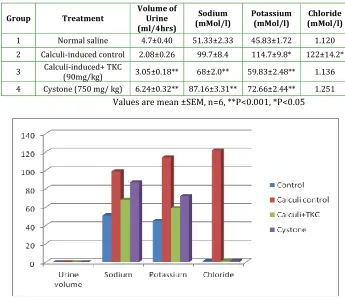
Table 1: Effect of Triphala karpa choornam on Ethylene glycol induced urolithiasis in rats
Group Treatment
Volume of Urine (ml/4hrs)
Sodium (mMol/l)
Potassium (mMol/l)
Chloride (mMol/l)
1 Normal saline 4.7±0.40 51.33±2.33 45.83±1.72 1.120
2 Calculi-induced control 2.08±0.26 99.7±8.4 114.7±9.8* 122±14.2*
3 Calculi-induced+ TKC
(90mg/kg) 3.05±0.18** 68±2.0** 59.83±2.48** 1.136
4 Cystone (750 mg/ kg) 6.24±0.32** 87.16±3.31** 72.66±2.44** 1.251
Values are mean ±SEM, n=6, **P<0.001, *P<0.05
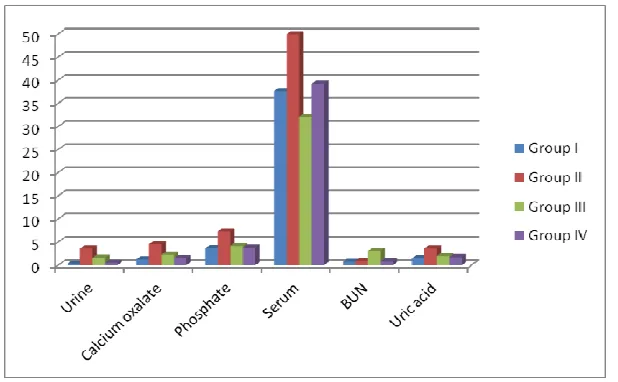
Table 2: Effect of Triphala karpa choornam on Urinary and Serum Parameters in Rats
Parameter Group I Normal
Group II Calculi-induced
Control
Group III Calculi -induced+ TKC
(90mg/kg)
Group IV Cystone treated
(750mg/kg)
Urine (mg/dl) Calcium oxalate
Phosphate
0.37 ±0.03 1.27 ± 0.07 3.67 ± 0.04
3.64 ± 0.11 4.51 ± 0.10 7.29 ± 0.06
1.60± 0.03* 2.21 ± 0.05* 4.13± 0.05*
0.53 ± 0.04** 1.50 ± 0.06** 3.81 ± 0.09** Serum (mg/dl)
Creatinine Uric acid
37.61 ± 0.15 0.75 ± 0.01 1.49 ± 0.07
49.97 ± 0.48 0.94 ± 0.03 3.64 ± 0.11
32.14± 0.17* 3.12± 0.05* 1.95± 0.03*
39.30 ± 0.48** 0.81 ± 0.02** 1.71 ± 0.04**
Table 3: Effect of Triphala karpa choornam on urinary Biochemical Parameters
Urinary excretion level (mg/24h)
Group I Normal control
Group II Lithiatic control
Group III Cystone treated
(750mg/kg)
Group IV TKC (90mg/kg)
Calcium 5.6±0.35 10.92±0.25 5.4±0.20* 6.31±0.11**
Oxalate 0.45±0.05 2.22±0.30 0.75±0.03* 0.78±0.09**
Phosphate 4.5±0.10 10.25±0.29 6.05±0.18* 7.74±0.12**
Magnesium 0.90±0.01 0.44±0.02 0.7±0.02* 0.85±0.04**
Protein 3.02±0.11 6.84±0.15 3.60±0.21* 3.85±0.04**
Values are mean+SEM, n=6, **P<0.001, *P<0.05
T. S Kidney showing the histopathology of animals in Calcium oxalate induced urolithiasis
Triphala Karpa Chooranam treated Cystone treated
DISCUSSION
In the present study, rats were selected to induce
urolithiasis because the urinary system of male rats
resembles that of humans. Urinary supersaturation
with respect to stone-forming constituents is
generally considered to be one of the causative factors
in calculogenesis. Evidence in previous studies
indicated that in response to 14 days period of
ethylene glycol (0.75%, V/V) administration, young
albino rats form renal calculi composed mainly of
calcium oxalate11. The biochemical mechanisms for
this process are related to an increase in the urinary
concentration of oxalate. Stone formation in ethylene
glycol fed animals is caused by hyperoxaluria, which
causes increased renal retention and excretion of
oxalate. Similar results have been obtained when rats
were treated with ethylene glycol and ammonium
oxalate12. In the present study, oxalate and calcium
excretion and progressively increased in
calculi-induced animals. Since it is accepted that
hyperoxaluria is a far more significant risk factor in
the pathogenesis of renal stones than hypercalciuria,
the changes in urinary oxalate levels are relatively
much more important than those of Increased urinary
calcium is a factor favouring the nucleation and
precipitation of calcium oxalate from urine and
subsequent crystal growth13. However, the formation
of urinary tract stones is world wide, sparing no
geographical, cultural or racial groups. Those
composed of calcium oxalate, either alone or mixed
with calcium phosphate, are forming the most
common urolithiasis accounting for more than 80% of
the stones. The mechanisms involved in the formation
of calcific stones are not fully understood but it is
generally agreed that urinary lithiasis is a multifaceted
process involving events leading to crystal nucleation,
aggregation and growth of insoluble particles. Various
therapies like diuretics are being used in attempt to
prevent recurrence of hypercalciuria- and
hyperoxaluria-induced calculi but scientific evidence
for their efficacy is less convincing14. Medicinal plants
have played a significant role in various ancient
traditional systems of medication. Even today, plants
provide a cheap source of drugs for majority of
world’s population15. Several pharmacological
investigations on the medicinal plants used in
traditional antiurolithic therapy have revealed their
therapeutic potential in the in vitro or in vivo models.
In the present investigation, a polyherbal formulation
constituted with Terminalia chebula, Phyllanthus
emblica, Terminalia bellerica, Karungali sathu and
Vengai sathu was evaluated for antiurolithiatic
activity against commonly occurring calcium oxalate
urolithiasis. Ethylene glycol disturbs oxalate
metabolism by way of increase in substrate
availability that increase the activity of oxalate
synthesizing enzymes in the rats. In the present study,
significantly increase activities of GAO in liver and
LDH in liver and kidney of ethylene glycol induced
urolithiatic rats that may be due to substrate mediated
induction of the enzymes. A similar increase was also
observed in glyoxylate, pyridoxine, deficient diet and
glycolate administered rats. Administration of
Triphala karpa chooranam brought about a significant
reduction in GAO activity in liver and LDH activity in
liver and kidney of urolithic rats. Increase activity of
GAO and LDH confirmed their direct link to
induced urolithiasis. Administration of Triphala karpa
chooranam reduced the oxalate level in liver and
kidney of urolithic rats.
CONCLUSION
Together these data suggest that the presence of
antiurolithic effect in Triphala Karpa chooranam
against renal calcium oxalate crystal deposits is
mediated possibly through a combination of CaOx
crystal inhibitory, diuretic, antioxidant, epithelial cell
protective, hypocalciuric and hypercitrauric effects
thus acting on multiple sites. This study rationalizes
its medicinal use in the treatment of urolithiasis.
REFERENCES
1. Moe OW. Kidney stones: pathophysiology and medical
management. Lancet 2006; 367: 333–344.
2. Tiselius HG. Epidemiology and medical management of
stone disease. BJU Int 2003; 91: 758–767
3. Devuyst O, Pirson Y. Genetics of hypercalciuric stone
forming diseases. Kidney Int 2007; 72: 1065–1072
4. Knoll T. Stone disease. Eur Urol Suppl 2007; 6: 717–
722
5. Worcester EM, Coe FL. Nephrolithiasis. Prim Care
2008; 35: 369–391
6. Taylor EN, Stampfer MJ, Curhan GC. Obesity, weight
gain, and the risk of kidney stones. JAMA 2005; 293:
455–462
7. Hadjzadeh, M., Khoei, A., Hadjzadeh, Z., Parizady, M.,
Ethanolic extract of Nigella sativa L. seeds on ethylene
glycol-induced kidney calculi in rats. Urol. J.2007;
4:86–90.
8. 2 Prasad, K., Sujatha, D., Bharathi, K., Herbal drugs in
urolithiasis – a review. Phcog. 2007; 1:175–179.
9. 3 Doddametikurke, R.B., Biyani, C.S., Browning, A.J.,
Cartledge, J.J., The role of urinary kidney stone
inhibitors and promoters in the pathogenesis of
calcium containing renal stones, 2007; 5: 126–136
10.Rivers K, Sheety S, Menon M. When and how to
evaluate a patient with nephrolithiasis. Urol Clin Amer,
2000; 27(2): 203– 213.
11.Aslokar LV, Kakkar KK, Chakre OJ. Glossary, Indian
medicinal plants with active principles. Part I, first
edition, New Delhi, CSIR 1992, 119.
12.Hadjzadeh, M., Khoei, A., Hadjzadeh, Z., Parizady, M.,
Ethanolic extract of Nigella sativa L. seeds on ethylene
glycol-induced kidney calculi in rats. Urol. J.2007;
4:86–90.
13.Prasad, K., Sujatha, D., Bharathi, K., Herbal drugs in
urolithiasis – a review. Phcog. 2007, 1: 175–179.
14.Rivers K, Sheety S, Menon M. When and how to
evaluate a patient with nephrolithiasis. Urol Clin Amer,
2000, 27(2): 203– 213.
15.Mitra SK, Gopumadhavan G, Venkataranganna MV and
Sundaram R. Effect of cystone, a herbal formulation on
glycolic acid induced urolithiasis. Phytotherapy
research, 1998; 12: 372- 374
How to cite this article: A. Tamil Selvan*1, B. Jayalaxmi, R. P. Ashvini, R. Suthakaran, Vishwanath2; Antiurolithiatic activity of Triphala Karpa Chooranam; J. Adv. Pharm. Edu. & Res. 2013: 3(3): 267-272.