Introduction
The skin, our largest organ, acts as a protective barrier between the host organism and its external environment. In addition to preventing entry of pathogens and allergens, water loss from the body is also minimized.1
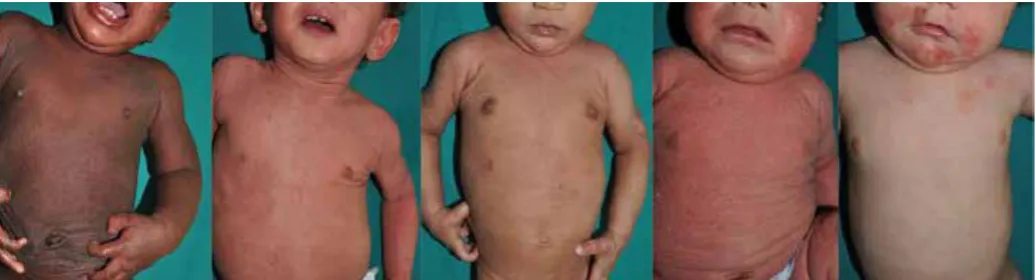
Atopic dermatitis, also referred to as eczema, is a chronic inflammatory skin disease that commonly affects children younger than five years, but onset can be at any age.2 It is characterized by pruritic, erythematous and scaly skin lesions that are in most cases localized to the flexural surfaces of the body. The areas mainly affected include the face, scalp and extensor surfaces, especially in infants, where the onset of atopic dermatitis is usually from
3 months of age.2,3 Atopic dermatitis (AD) is the first manifestation of allergy in “the
atopic march”, of a series of allergic conditions and precedes food allergy, asthma, and allergic rhinitis.4 A family history of AD, asthma or allergic rhinitis often prevails.2 The disease is debilitating and impairs a patient’s quality of life.5 Not only does AD impact on health-related quality of life, but also on patients’ mental health, and on their social and emotional functioning.7 The condition is recognized as a lifelong disposition with variable clinical manifestation and expression, in which defects of the epidermal barrier play a pivotal role.8
Types of atopic dermatitis
The clinical manifestation of AD is distinct, but due to numerous differences in other aspects, AD can be categorized in two forms: intrinsic (non-allergic) and extrinsic (allergic).9,10 An intrinsic form of AD not associated with IgE mediated sensitization contradicts the classic definition of an atopic disease and is better referred to as non-atopic AD11
Atopic Dermatitis
Engler D, BPharm, BSc Hons (Pharmacology), MSc Med (Clinical Pharmacy), LecturerMakola F, BPharm, Academic Intern (Masters in Pharmacy)
School of Pharmacy, Faculty of Health Sciences, Sefako Makgatho Health Sciences University
Correspondence to: Deirdré Engler, e-mail: [email protected] Keywords: Atopic dermatitis, pruritus, filaggrin, FLG gene, microbiome, Th2 cells
Abstract
The aetiology of atopic dermatitis (AD) is multi-faceted and impacts on the skin, our first-line host defence. Atopic dermatitis is incurable, has a significant influence on patients’ social and occupational functioning and can have long-lasting effects. Pruritus is the hallmark of atopic dermatitis and pharmacists should have a clear understanding of the pathophysiology of this disease to counsel the patient appropriately. The pharmacist plays a central role in educating patients on managing their condition and adherence to therapy.
© Medpharm S Afr Pharm J 2017;84(3):36-41
Figure 1: Flexural involvement in childhood AD4
Table 1. Categories of atopic dermatitis9,10
Types Non-atopic Atopic
Onset Later onset Early childhood Frequency 15% – 30% 70% - 85% IgE serum levels Normal High
Specific IgE Absent Present for aeroal-lergens and foods Skin prick reactions Negative Positive Cytokines: IL-4, IL-13 Low levels High levels
Skin barrier Normal Defect Filaggrin gene
mutations
No Yes
Other atopic diseases Absent Present
Epidemiology
Atopic dermatitis is the most common chronic inflammatory skin disease. The prevalence of AD has plateaued at 10-20% in developed countries but continues to increase in low income countries.8,12,13
Although the disease can become apparent at any age, it manifests at an early age in approximately 60% of cases8 with a 10-20% lifetime
prevalence in children.14 According to a 2013 report, the worldwide
incidence of AD averaged at 7.9% in the 6 to 7 year age group but varied considerably between regions; from 3% in the Indian subcontinent and 4.8% in the Eastern Mediterranean to 10.2% in Asia-Pacific and 10.3% in North America.15 In South Africa the prevalence of
AD in children was found to be around 17%.16
While the majority of patients usually develop the disease during early infancy, it sometimes persists into or starts in adulthood.15 Adult
AD has been recognized with a prevalence of between 2-10%.17 The
prevalence of AD among different ethnic backgrounds is not known, but due to AD being a heterogeneous disorder with its different genetic mechanisms, some may be more prone to developing the disease.18
Ethnicity and phenotypic variations17
Based on patients’ ethnic background, several differences have been noted in AD phenotypes. Lower rates of FLG mutations, higher prevalence, and more severe, treatment-resistant AD appears in African Americans compared to Caucasians. A lower ceramide-to-cholesterol ratio is characteristic in normal skin of African Americans and with greater trans-epidermal water loss.
With regards to gender, various studies show the difference to be either insignificant or male preponderant in preschool children, while more females suffer from AD in adulthood.19,25
Pathogenesis of AD
Although the clinical picture of AD is homogenous, presenting with acute flare-ups of eczematous, pruritic lesions on dry skin at distinct areas of the body, the pathophysiologic network is complex and the factors triggering the disease are diverse.20 An interaction between genetics, immunologic and environmental factors contribute to the pathogenesis of AD.15 Genetic studies have mainly focussed on immunological mechanisms, but a defect in the primary epithelial barrier has been anticipated.14 It is important to have a good understanding of the interaction between the various factors to enable effective management of the condition.
Genetics
Genetic factors play an important role: monozygotic twins show a consistent higher concordance rate (0.77) compared to dizygotic twins (0.15). A positive parental history is furthermore the strongest risk factor for AD; if the disease is present in one parent, the incidence rate is doubled or tripled should both patents suffer from AD.22
Figure 3: AD affects all ethnic backgrounds18
AD
AD
GeneticsSkin Barrier Dysfunction
Environment Immunology
Filaggrin, a key protein in terminal differentiation of the epidermis and development of the skin barrier, protects the body from the entry of foreign environmental substances that can otherwise trigger immune responses. It is synthesised as a giant precursor protein, profilaggrin. The latter is found within the granular layer of the epidermis and is encoded by the FLG gene. This gene is located within the epidermal differentiation complex on chromosome 1q21.1 It has been shown that two independent loss-of-function genetic variants (R510X and 2282de14) in the FLG
gene are important pre-disposing factors for atopic dermatitis.22
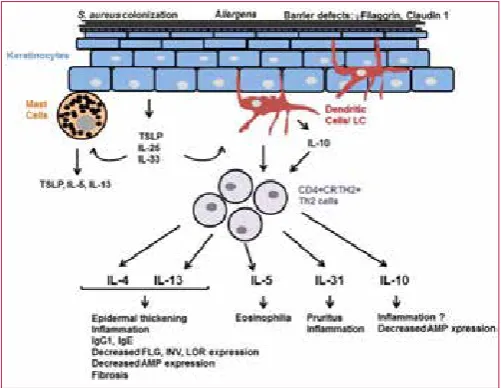
Several other candidate genes have been suggested to play a role in AD e.g. chromosome 5q31-33, the locus containing genes for the Th2 cytokines interleukin (IL)-3, IL-4, IL-5, IL-13, and granulocyte macrophage colony stimulating factor.14 Variants of an encoding region or functional mutations of promoter regions could be linked to the incidence of non-atopic dermatitis. Furthermore, polymorphisms of the IL-18 gene may be the cause of the dysbalance between Th1 and Th2-immune responses, resulting in Th2 predominance21 The functions of Th2 cytokines include increased epidermal thickening, sensitization, inflammation, pruritus, decreased expression of antimicrobial peptides and the barrier proteins filaggrin, loricrin and involcrin.11
Figure 5 represents a schematic illustration with regards to Th2 cytokines and AD: allergens, microbes and mechanical injury (e.g. scratching) activate keratinocytes. A defective skin barrier, due to decreased filaggrin, is an important contributing factor. Thymic stromal lymphopoietin (TSLP), IL-25 and IL-33 act on mast cells and antigen presenting cells e.g. dendritic or Langerhans cells with a subsequent secretion of several Th2 cytokines.11
Another possible contributing factor to the genetic susceptibility for AD is a genetic variant of mast cell chymase, a serine protease secreted by skin mast cells, which may have organ specific effects.14
Environmental factors
The incidence of AD worldwide and the variations thereof suggest that environmental factors play a pivotal role in the expression of AD. Some of the environmental factors implicated include climate, diet, obesity, smoking, and microbial exposure.15
The skin microbiota is involved in the homeostasis as well as pathogenic conditions of the skin. Both Staphylococcus aureus
and Streptococcus epidermidis significantly increase during exacerbation of AD.15 Allergenic compounds and superantigens (toxins) are released by these bacteria23 and can act as effective immunological adjuvants for increased IgE response to aeroallergens. Intense pruritus is a hallmark of AD, and skin damage due to scratching enhances the progress and continuation of the disease.24
Gut microbiota might also be involved in the pathogenesis of AD as it has been shown that children who present with AD later in life have different early gut microbiota compared to children who do not develop AD, both in composition and diversity. Furthermore, systemic antibiotic treatment is reported to increase the risk of AD.15
Figure 6 depict factors such as temperature, indoor heating, humidity, and UV-light exposure impacting on the prevalence of AD. A combination of high humidity and precipitation are associated with an increase in the disease, while high temperatures and exposure to UV-light has shown to have protective effects specific to AD.25
The acidic environment of the skin contributes to its barrier function as it has a strong antibacterial effect and controls the desquamation of corneocytes. Soaps and other detergents are common environmental agents that increase the skin pH. In addition, these agents emulsify skin surface lipids, change skin proteases, and consequently thin the stratum corneum.15
Immunology
Both the adaptive and innate immune systems are implicated in the development of AD. A complex interaction of immune cells mediates AD skin lesions. T cells play a major role in adaptive immunity and pathogenesis of AD. A relative imbalance of different
Figure 5: Th2 cytokines and AD: a schematic representation11
TSLP, thymic stromal lymphopoietin; LC, Langerhans cells; FLG, filaggrin; INV, involucrin; LOR, loricrin
types of T helper cells e.g. Th1, Th2, Th17 cells, is considered in the pathomechanism of many immune-mediated diseases. AD lesions contain an increased amount of Th2 cytokines during both acute and chronic phases of the disease compared to normal skin. Chronic lesions are however associated with a reduced production of IL-4 and IL-13 and an increased production of IL-5 and IL-12.15
Langerhans cells (LC) and inflammatory dendritic epidermal cells (IDEC) are two types of epidermal dendritic cell populations that are crucial elements of the immune system, bridging innate and adaptive immunity. These cells express increased levels of IgE high affinity receptor, FcεRI, on their surface and have the potential to respond to numerous antigens in an antigen-specific manner. It has been shown that Langerhans cells, activated by FcεRI, drive naïve T cells into Th2 cells. They further highly express the receptor for thymic stromal lymphopoietin. The latter plays a critical role in Th2 skewing and mediation of AD development.15 (Figure 5)
Inflammatory AD skin furthermore contains, in addition to LC, IDEC and various T cell subsets, vast numbers of neutrophils, basophils, eosinophils, innate lymphoid cells, natural killer cells and fibroblasts.20
Skin barrier
Skin barrier dysfunction is a major pathogenic factor for AD.20 Causes of skin barrier dysfunction include a defect in expression of the filaggrin gene, decrease in skin ceramides, and overactivation of epidermal proteases. Several genetic risk loci relating to epidermal barrier function have been identified in genome-wide association studies.15
Filaggrin plays a pivotal role in skin barrier integrity as it aggregates keratin filaments into tight bundles, modifies the composition of keratinocytes and the granular cell layer, and moisturizes the stratum corneum.15,20 Reduced availability of filaggrin metabolites alters hydration and pH of the skin.20 Patients diagnosed with non-atopic AD, lack barrier dysfunction and/or FLG gene mutation and it is therefore a feature of atopic AD.
Although not an inherent factor in patients suffering from AD, ceramide is a lipid which is important for water retention in the stratum corneum. The significance of ceramide is evident as an inversed correlation between transepidermal water loss and the level of ceramides in the stratum corneum of AD patients exists. A decreased level of ceramide in patients with AD is thought to be a post-inflammatory effect.15
Human kallikrein-related peptidases are key proteases for desquamation of corneocytes. The activity of these proteases is pH dependent with enhanced activity when the pH in the stratum corneum is elevated. Activation of epidermal proteases and subsequent increased corneocytes desquamation can induce AD-like dermatitis.15
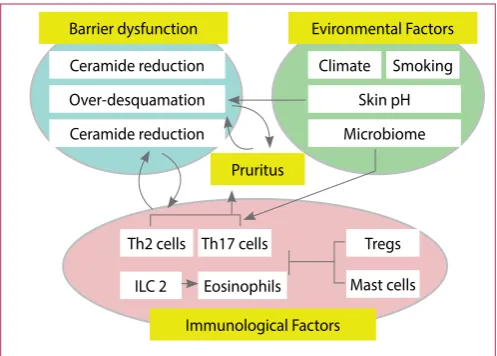
Figure 7 depicts the interplay among contributing factors in the pathogenesis of AD and pruritus as a characteristic feature of the disease.
Management of AD
Atopic dermatitis is incurable.26 Guidelines on how to manage AD aim to improve symptoms and achieve long-term disease control. A multistep approach includes avoidance of trigger factors, continuous epidermal barrier repair with emollients, and anti-inflammatory therapy with topical corticosteroids or calcineurin inhibitors. The use of phototherapy or systemic immunosuppressant therapy is indicated in severe and refractory cases.8 The management of AD should always be adapted according to disease severity. Patient education should not be neglected by health care providers and remains as important as other treatment strategies.21
Avoidance of trigger factors
Based on clinical experience and theoretical considerations rather than scientific evidence, the following factors are widely assumed to worsen the disease: food, inhalant, or contact allergens, detergents, wool fabrics, climate, infections and stress. Avoiding these trigger factors should be individualized based on a definite history of worsening of disease symptoms after exposure.8
Moisturizing
Frequent use of emollients is of key importance in maintaining homeostasis of the epidermal barrier. Emollients supply exogenous lipids and thereby soften the skin and reduce water loss by forming an occlusive layer. Humectants such as urea (avoid in infants; ≤ 4% in children; up to 10% in adults), glycerine, and lactic acid added to the emollient, further increase water binding in the stratum corneum.8,21 Products containing perfumes, colourants etc. could induce an allergic reaction or act as an irritant and should be avoided. Non-soap fragrance-free cleaners with a neutral to low pH should be used.8
Anti-inflammatory therapy
Topical corticosteroids are the first line anti-inflammatory treatment in controlling acute outbreaks of AD, and appropriate
Barrier dysfunction
Ceramide reduction Climate
Th2 cells
ILC 2
Smoking
Th17 cells Tregs
Mast cells Eosinophils
Over-desquamation Skin pH
Ceramide reduction Microbiome Evironmental Factors
Pruritus
Immunological Factors
Figure 7: Interplay among contributing factors and pruritus in the
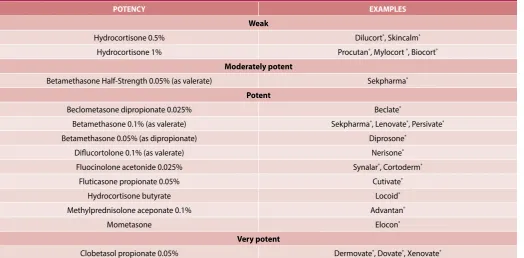
intermittent use bears little risk. Low-potency corticosteroids are preferred on the face, on areas with thinner skin, and in children. Short-term treatment of severe exacerbations is an exception.8 Thicker skinned areas should initially be treated with moderate to high potency steroids followed by a dose reduction and exchanged for a lower potency preparation.21 (Table 2)
Calcineurin inhibitors for topical application include tacrolimus and pimecrolimus and are regarded as a second-line option for short term and intermittent treatment.8 These agents selectively inhibit the production and release of pro-inflammatory cytokines and mediators by T cells and mast cells.27 The advantage of calcineurin inhibitors is that they do not cause skin atrophy and are therefore of particular value in areas with delicate skin e.g. the face and groin.8
Topical corticosteroids and calcineurin inhibitors should be applied proactively for two consecutive days per week to help reduce exacerbations of the disease.8
Phototherapy
In cases where AD cannot be controlled with topical treatment, short-term phototherapy should be considered. It has been shown that narrow-band ultraviolet B radiation and medium-dose ultraviolet A1 radiation are the most effective. This therapy should not be combined with topical calcineurin inhibitors and systemic ciclosporin treatment due to a potentially increased cumulative risk of skin cancer.8
Systemic immunosuppressive therapy
Agents such as ciclosporin, azathioprine, methotrexate, and mycophenolate mofetil are the most widely used systemic immunosuppressive therapy when both topical and phototherapy
treatments are unsuccessful in the management of AD. With the exception of ciclosporin, these agents are used off-label.
Points to Ponder
Aqueous Cream BP is commonly prescribed to relieve skin dryness. It contains the surfactant, sodium lauryl sulphate (SLS), a known irritant. Studies have shown that SLS significantly reduces the thickness of the stratum corneum with an overall increase in baseline transepidermal water loss (TEWL). It is apparent that SLS impacts on the effectiveness of the skin barrier.28
Histamine has little relevance in the pruritic pathway of AD and is therefore poorly effective in the management of the disease. First generation antihistamines are indicated for their sedative effect in order to facilitate sleep which might be impaired due to itching.29 Second generation antihistamines seem to have little or no value in the treatment of AD, as concluded by most studies.21 (Figure 7)
No evidence has been reported in favour of probiotics, dietary supplements, botanical extracts and homoeopathy in AD management.8
Conclusion
Not only does atopic dermatitis affect the lives of infants, children and adults suffering from the disease, but also has major secondary effects on their families. The disease can severely impact on the functional development of people’s lives e.g. relationships and even career choices. Appropriate and effective management of this debilitating condition should always seek to improve these patients’ quality of life.
Table 2. Topical corticosteroids27
POTENCY EXAMPLES
Weak
Hydrocortisone 0.5% Dilucort®, Skincalm® Hydrocortisone 1% Procutan®, Mylocort ®, Biocort®
Moderately potent
Betamethasone Half-Strength 0.05% (as valerate) Sekpharma® Potent
Beclometasone dipropionate 0.025% Beclate®
Betamethasone 0.1% (as valerate) Sekpharma®, Lenovate®, Persivate® Betamethasone 0.05% (as dipropionate) Diprosone®
Diflucortolone 0.1% (as valerate) Nerisone® Fluocinolone acetonide 0.025% Synalar®, Cortoderm®
Fluticasone propionate 0.05% Cutivate®
Hydrocortisone butyrate Locoid®
Methylprednisolone aceponate 0.1% Advantan®
Mometasone Elocon®
Very potent
References
1. Sandilands A, Sutherland C, Irvine AD, McLean WHI. 2009. Filaggrin in the frontline: role in skin barrier function and disease. https://www.ncbi.nlm.nih.gov/pmc/articles/ PMC2721001/?report=printable (Accessed 5 May 2017)
2. Stewart D, Pruvis D. Eczema in children - a topical issue. 2014. https://www.starship.org.nz/ media/269782/saferx_eczema_for_pharmacists_.pdf (Accessed 26 April 2017) 3. Berke R, Singh A, Guralnick M. Atopic dermatitis: an overview. Am Fam Physician. 2012;
86(1): 35-42
4. Kim BS. Atopic Dermatitis. 2017. http://emedicine.medscape.com/article/1049085-over-view (Accessed 25 April 2017)
5. Anonymous. What is atopic dermatitis/eczema? n.d. http://www.skindermatologists.com/ eczema.html (Accessed 26 April 2017)
6. Lifschitz C. The impact of atopic dermatitis on quality of life. Ann Nutr Metab 2015; 66:34– 40.
7. Holm EA, Wulf HC, Stegmann H, Jemec GBE. Life quality assessment among patients with atopic dermatitis. Br J Dermatol. 2006; 154(4):719–725.
8. Weidinger S, Novak N. Atopic dermatitis. 2016. http://www.thelancet.com/pdfs/journals/ lancet/PIIS0140-6736(15)00149-X.pdf (Accessed 27 April 2017)
9. Tokura Y. Extrinsic and Intrinsic types of atopic dermatitis. 2010. http://www.sciencedirect. com/science/article/pii/S0923181110000526 (Accessed 5 May 2017)
10. Peterson JD, Lawrence SC. A comprehensive management guide for atopic dermatitis. 2006. http://www.medscape.com/viewarticle/551352 (Accessed 5 May 2017)
11. Brandst EB, Sivaprasad U. Th2 Cytokines and Atopic Dermatitis. 2011. https://www.ncbi. nlm.nih.gov/pmc/articles/PMC3189506/ (Accessed 6 May 2017)
12. Deckers IA, McLean S, Linssen S, Mommers M, van Schayck CP, Sheikh A. Investigating in-ternational time trends in the incidence and prevalence of atopic dermatitis 1990–2010: a systematic review of epidemiological studies. PLoS One. 2012; 7(7): e39803. (Accessed 26 April 2017)
13. Wedgeworth EK, Sharp H, Powell A, Flohr C. What’s news in eczema? Part 1: epidemiology and pathophysiology. Dermatological Nursing. 2012; 11(4): 9-15
14. Karagiannidou A, Botskariova S, Farmaki E, Imvrios G, Mavroudi A. Atopic dermatitis: in-sights on pathogenesis, evaluation and management. J Allergy Ther. 2014; 5(6) 15. Egawa G and Weninger W. Pathogenesis of atopic dermatitis: a short review. 2015. http://
www.tandfonline.com/doi/full/10.1080/23312025.2015.1103459 (Accessed 26 April 2017) 16. Zhao CY, Wijayanti A, Doria MC, Harris AG, et al. The reliability and validity of outcome
measures for atopic dermatitis in patients with pigmented skin: A grey area. International Journal of Women’s Dermatology. 2015. 1:150–154.
17. Mansouri Y, Guttman-Yassky E. Immune pathways in atopic dermatitis, and definition of biomarkers through broad and targeted therapies. J Clin Med. 2015; 4
18. Torrelo A. Atopic dermatitis in different skin types. What is to know? 2014. http://onlineli-brary.wiley.com/doi/10.1111/jdv.12480/pdf (Accessed 4 May 2017)
19. Chen W, Mempel M, Schober W, Behrendt H and Ring J. Gender difference, sex hormones, and immediate type hypersensitivity reactions. Allergy. 2008; 63
20. Peng W and Novak W. Pathogenesis of atopic dermatitis. 2015. http://www.thelancet.com/ pdfs/journals/lancet/PIIS0140-6736(15)00149-X.pdf (Accessed 27 April 2017)
21. Bieber, T. Atopic dermatitis. Ann Dermatol. 2010; 22(2)
22. Palmer CN, Irvine AD, Terron-Kwiatkowski A, Zhoa Y, Liao H, Lee SP et al. Common loss of function variants of the epidermal barrier protein filaggrin are a major predisposing fac-tor for atopic dermatitis. Nat Genet. 2006; 38(4): 441-446 https://www.ncbi.nlm.nih.gov/ pubmed/16550169 (Accessed 27 April 2017)
23. Langley RJ and Toufic R. Superantigens. 2011. http://www.els.net/WileyCDA/ElsArticle/ refId-a0001216.html (Accessed 6 May 2017)
24. Pastore S, Mascia F, Giustizieri ML, Gianetti A and Girolomoni, G. Pathogenetic mechanisms of atopic dermatitis. 2000. https://www.iitd.pan.wroc.pl/files/AITEFullText/48z609.pdf (Ac-cessed 25 April 2017)
25. Silverberg JI, Hanifin J, & Simpson EL. Clinical factors associated with childhood eczema prevalence in the United States. 2013. https://www.ncbi.nlm.nih.gov/pmc/articles/ PMC3646081 (Accessed 7 May 2016)
26. Sinclair W, Aboobaker J, Jordaan F, Modi D and Todd G. Management of atopic dermatitis in adolescents and adults in South Africa. SAMJ. 2008; 98(4)
27. Rossiter D, editor. South African medicine formulary. 12th ed, Cape Town: Health and Medi-cal Publishing Group. 2016.
28. Tsang M and Guy RH. Effect of aqueous cream BP on human stratum corneum in vivo. 2010. https://www.ncbi.nlm.nih.gov/pubmed/20649794 (Accessed January 2016)