A NOMENCLATURE FOR CONGESTION CONTROL
ALGORITHM IN PACKET NETWORKS
REENA
Research scholar
Kurukshetra University University, Kurukshetra
ABSTRACT
The practice of rising networks in computer field experienced a fiery growth over the last few years and this progress bring the severe network problem in form of congestion. In the present state this congestion issue is at higher priority in network design/formation and research due to increasing or over provisioned of resources like bandwidth and demanding network application. Due to above situation many techniques have been proposed and on the way to evolve. The functioning of network worsens due to overload of network resources such as links, processor timing, memory space, and failure of router is common in packet switched network due to problem of congestion, and this situation bring the adverse effect like long delay of message reception, waste of system resources, and network failure i.e. when network ceases in bottleneck condition. Congestion control scheme is taken as control policy to achieve defined goals like round trip delay, throughput, and optimization in a distributed network environment.[2] This paper refine a nomenclature that follows such a theory not only provide framework for comparative study of existing approaches but also helps in future direction for new development in congestion control.
INTRODUCTION
control bring the rational framework for comparative study of existing approaches and maintain the balance for future development for congestion control. [3]
CONGESTION AND ITS CONTROL IN PACKET SWITCHING NETWORK
Network congestion is concern of resource sharing. In the case of packet switch resources are shared among the nodes participated in network like communication switch, channels, and buffer spaces. These problem are mostly become the bottlenecks for network. Networks need to serve all user requests for data transmission, which is unpredictable and bursty in nature with respect to transmission starting time, rate and size, and physical resources has finite capacity to manage and sharing among different transmissions. As a result the congestion would occur if the resources cannot meet the all user’s current demands. Performance behavior becomes the formal aspect of network congestion. Fig-1 shows the throughput-load relationship in packet switch network without actual means of flow control. It is seen that as the load capacity is small, network throughput generally keeps up with the increase of the load until the offered load reaches the knee point. Where the increase of the throughput becomes much slower than the increase in the load. As the same way if load on network become increasing the queues on switching nodes build up in the network, resulting dropping of packets and throughput reached at maximum and then decrease sharply to a small value almost zero. This is the point which is said to be congestion. [8]
Fig. 1: Network performance
occurred. Whenever congestion occur the network may collapse without congestion rescue scheme. [4] so that congestion rescue methods works well even if we adopt the congestion prevention schemes too to retain the throughput in state of abrupt change of the network.
NOMENCLATURE OF CONGESTION CONTROL ALGORITHMS.
Here we get new vision for new nomenclature for congestion control algorithms in computer networks that are based on the control theory. First we bring out the analogy between the closed system and the network system. So control system is taken as combination of objects merged by some form of interdependence. The objects involved in the system are not in the equilibrium state as compared to the surrounding or relative to each other. Under the influence of external force system is in transition state which is entirely dependent on the explicit effect or interaction between components. Simple case of control system is maneuvering the automobile; rider in closed loop fashion continuously exerts control over outputs of the system like speed and orientation of the car/bike. A computer network is interconnected of individual computer. It is considered as multiple users generating jobs in closed queuing network of servers signify the network routers. So that we can view the congestion control in the network as a control system for the purpose of maintaining the overall traffic within certain normal levels. The whole network system regarded as the control system with input/output from each host system. The level of network system for control of congestion can be considered as a composition of queue lengths at servers at routers and end-nodes. The feedback signal is taken as the difference between the present state of the system and some predefined limits. [18,19]
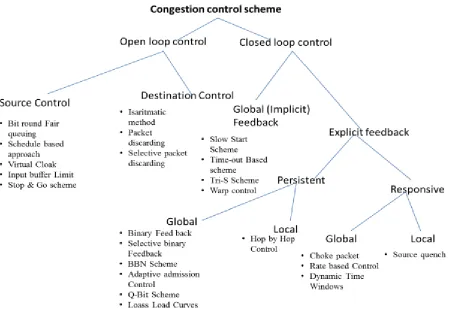
Fig. 2: Classification of Existing Congestion Control Algorithms.
CONTROL THEORY BASED CLASSIFICATION
As discussed above the control theory concept we can devise new scheme of classification of congestion control algorithms. This system algorithms are based on the decision making process of individual algorithm. The main categories of congestion control algorithm in the classification are: open loop and closed loop various categories are shown in fig 2.
Open loop congestion control
In which decisions are not based on any feedback scenario of congested spots in the network. These algorithms do not monitored dynamically. The algorithms behave as controller truly based on its own present knowledge of local node like bandwidth and buffers state in the system. Under these schemes we have admission control rights to control to stabilize the traffic arrival pattern.
Closed loop congestion control
source and local mean feedback from immediate neighbors. By this ways network tend to monitor it dynamically. This feedback may be implicit or explicit.
Comparison/classification of packet switched network
Basically above discussed congestion control algorithm in the literature, but this nomenclature provide new framework for classify existing congestion control algorithms. Fig 4. Shows the table of various congestion control algorithm under each category.
Open loop based on source control
These are entry controlled traffic algorithm which works at arrival pattern of traffic and use knowledge of locally. Algorithm included in this category are: bit-round fair queuing method [5], the schedule based control[9],the virtual clock[17], the input limit buffer model[8], and stop and go policy[6]
Open loop working on destination control
Control operation is performed at the destination end without any knowledge of feedback. They include packet discarding [11] and selective packet discarding [15]
Closed loop based on inherent feedback
Under this category realize closed loop control through certain feedback information between source and destination. (Globally) algorithm include: slow start [7], timeout based [27], Tri-S scheme [13]
Closed loop based on persistent global feedback
Feedback information about the state of network traffic network system is constantly present globally. Example binary feedback [25], adaptive admission congestion control [24], BBN scheme [26], adaptive admission control [23], the Q-bit control scheme [10], loss load curves [14]
Closed loop working on persistent, local feedback
Feedback information s propagated between immediate neighbors instead of sending it all the way from the destination to sources. Hop by hop [22]
Closed loop working on responsive global feedback
Feedback is generated in this category in response to the traffic conditions in the network such as queue length in a switch raises beyond certain limits and feedback nature is global. Example: choke packet [21, 11], rate based control [4] and dynamic time window [20]
The only algorithm iin this category is quench scheme [11] which is closed loop control scheme with feedback only generated in response to congested conditions in the network.
CONCLUSION
In this paper it is bring out a new nomenclature for congestion control algorithm in packet switched network system based on control theory. This deliver balanced outline for comparative study of current algorithm and bring path for more new strategies to overcome problem. Generally all open system algorithms are the admission control traffic feature to stabilize the traffic arrival pattern at the source ends. So lacks of global feedback open loop schemes are not enough to protect network against all traffic patterns. The worry is which performance indicator we should use for traffic indicator in the network and rapidly used for network congestion monitoring remain the major challenges in the design and development of future congestion control strategies for computer networks.
REFERENCES
[1] J. Bae and T.Suda,”survey of traffic control Schemes and protocols in ATM Networks”,Proc. Of the IEEE, Feb.1991.
[2] A. Berger and A.eckberg,” A B-ISDN/ATM traffic descriptor, and its uses in Traffic and
congestion control”, Proc. IEEE GLOBECOM’91,1991,pp. 266-270
[3]D. Comer and R. Yavatkar,” A Rae Based Congestion Avoidance and contro scheme for Packet
switched Networks”, Proc. Of 10thICDCS, IEEE,1990, pp.390-397.
[4] D. Davies, ”The Control of Congestion In Packet control Networks”,IEEE Trans.on
Commun.,COM 20 no. 3 June 1972
[5] A. Demers, S. Keshav, and S. Shenkar,” Analysis and Simulation of fair queue algorithm”,
Proc.Symp. on Communication Archiectres and protocols, ACM SIGCOMM’ 89
[6]S. Gelostani, “Congestion-Free Communication in High speed Packet Networks”, IEEE Trans. On
Commun. , Vol. 21, no. 2, pp.179-210
[7] V. Jacobson,” Congestion Avoidance and Control”, Proc. of SIGCOMM’88
[8]S. Lam and M. Raiser,” Congestion Control of Store-and-froward Network by Input Buffer Limit
Analyser”,IEEE Trans. On Commun., COM-27, no. 1 Jan 1979
[9] U. Mu kherji, "A Sched u le-Based Approach for Flow-Con trol in Data Comm u nication Networks," Ph.d. Thesis, Massach usetts I nstitute of Tech nology, Feb. 1986.
[10]0..Rose, ''The Q-bit Scheme, "ACM Computer Commun. Review, April 1992, pp. 29-42
[11]A. Tanen baum, Computer Networks,(Prentice-Hall, E nglewood Cl iffs, NJ, 1 981 ).
[12] R. Va ra ku lsi ri pu nth, N. Sh i ratori, and S. Noguchi , "A Con- gestion-Con trol Pol icy on the
I nternetwork Gateway," Computer Networks and IS DN Syst ems, 1986, pp. 43-58.
[13] Z. Wang and J. Crowcroft, A New Congestion Con trol Scheme : Slow Start and Search [Tri-SJ,'' Computer
[14] C. Wi ll ia mson, "Opti mizi ng File T ra nsf er Response Ti me Usi ng the Loss-Load Cu rve,
Congestion Control Mecha n i s m " Proc. S GCOMM '93, Sept. 1993.
[15] N. Yi n, S. Li , and T. Stern , Congestio n Con trol for Packet Voice by Selective Packet Discarding/' IEEE
Trans. on Commun., vol. 38, no. 5, May 1990, pp. 674-683.
[16] N. Yi n and M. H l uchy j, On Closed -Loop Rate Con trol for ATM Cell Relay Networks, Proc.
IEEE I N FOCOM , 1944, pp. 99-1 08.
[17] L. Zha ng, "Vi rtuolClock: A New Traff i c Con trol Algori th m for Packet Switch i ng Networks"
Proc. S IGC OMM '90, Sept. 1990, pp. 1 9-29
[18] H. Zha ng a nd S. Keshav, "Com pa rison of Rote-Based Service Discipli nes," Proc. S I GCOM M '91 , Sept. 1991.
[19] L. Zha ng, “Congestion Control i n Packet-Swi tched Com puter Netw orks ,” Proc. of 2nd lnf I Conf.
on Computers and Applications, 1987, pp. 273-280.
[20] A. Mukherjee, L. Landwebber, T. Faber,” Dynamic Time Windows Pocket Admissions
Control with feedback”, Proc. SIGCOMM’92
[21] R. Jain and K. Ramakrishnan,” Congestion avoidance in Computer Networks With
Connectionless Network Layer Concepts, Goals and Methodology”, Proc. Of Computer
Networking Symposium, April 1988
[22] P. Mishra H. kanakia, “ A Hop by Hop Rate Based Congestion Control schemes”, Proc.SIGCOMM’92
[23]M. Gerio and L. Kleinrock,” Congestion Control in Interconnected LANs”,IEEE Network, Vol.
2, No. 1, Jan 1988
[24] Z. Haas,’ Adaptive Admission control”, ACM SIGCOMM ‘91
[25]K. Ramakrishnan and R. Jain and D. Chiu,” A Selective Binary feedback for Congestion
Avoidance in Computer Networks”, ACM Trans. On Computer System, Vol. 8, No. 2, pp 158-188
[26] J. Robinson, D. Friedman and M. Steenstrup, “Congestion Control In BBN in Packet Switched
Network”, ACM Computer Commun. Review, Jan. 1990, pp 76-90
[27] R. Jain, “A Time based Congestion Control Scheme for window flow Controlled network”,