Optimal Data Analysis, LLC
O
ptimal
D
ata
A
nalysis
A Multidisciplinary Journal Specializing in Maximum-Accuracy Methods
Editor
Paul R. Yarnold, Ph.D.
Co-Editors
Fred B. Bryant, Ph.D.
Robert C. Soltysik, M.S.
tion. Review articles present reviews of theory, method, or empirical findings relating to the ODA para-digm. Method articles discuss technical aspects of optimal or heuristic algorithms and analytic pro-cesses. Versus articles feature comparisons between alternative methodologies. Application articles use optimal statistical analysis methods to address applied topics in any academic discipline. Software arti-cles discuss design or operation of existing or theoretical software systems which explicitly maximize (weighted) classification accuracy, and suboptimal heuristic systems which seek maximum accuracy.
Integrated System articles discuss theoretical or existing closed-system “black-box” or “robotic” appli-cations engineered using optimal analytic methods. Consulting articles highlight areas constituting con-sulting opportunities for proponents of optimal analytic methods.
Editor
Paul R. Yarnold, Ph.D., Optimal Data Analysis, LLC
Co-Editors
Robert C. Soltysik, M.S., Optimal Data Analysis, LLC
Fred B. Bryant, Ph.D., Loyola University Chicago
Editorial Board
Stephen M. Belknap, M.D., Northwestern University, Feinberg School of Medicine
William Collinge, Ph.D., Collinge and Associates
William Grobman, M.D., Northwestern University, Feinberg School of Medicine
Demetrios N. Kyriacou, M.D., Ph.D.,
Northwestern University, Feinberg School of Medicine
Scott C. Leon, Ph.D., Loyola University Chicago
June McKoy, M.D., M.P.H., J.D., M.B.A., Northwestern University, Feinberg School of Medicine
Kim T. Mueser, Ph.D., Dartmouth University
Marc H. Scheetz, PharmD, MSc, BCPS,
Midwestern University, Chicago College of Pharmacy
Hideo Suszki, Ph.D., Washington University School of Medicine
Kevin P. Weinfurt, Ph.D., Duke University
Manuscript Submission. Electronically submit one copy of the manuscript in Microsoft WordTM 97-2003 or later, to:
[email protected]. Follow
Instructions to Authors (see Table of Con-tents). Opinions and statements published are the responsibility of the authors, and do not necessarily represent policies of Optimal Data Analysis, LLC, or views of Editors.
Copyright and Permissions. Authors must obtain permission from the Editor and origi-nal author in order to reproduce an article of 500 or more words: permission is usually granted if the ODA copyright notice is in-cluded on the first page of reproduced mate-rial. Permission from ODA is waived for authors wishing to reproduce a single table or figure from an article, provided the au-thor’s permission is granted, and that credit is given to ODA as copyright holder and to the author via a citation (there is a $25 ser-vice fee for a letter from the Editor permit-ting such reproduction). Authors wishing to reproduce more than a single table or figure for commercial purposes must obtain per-mission from the Editor. Perper-mission is waived for authors wishing to reproduce their own material for personal use, and for the photocopying of isolated journal articles for nonprofit classroom or library use by instructors and educational institutions. Access services may use unedited abstracts without permission of ODA or author. Libraries may photocopy articles beyond limits of U.S. copyright law by obtaining permission from the editor: submit requests to [email protected].
Reprints. Authors may print copies of their own and other articles, and/or may order any requested number of reprints when they
receive notification that their article has been accepted for publication, or at any subsequent time. For information please see webpage.
Single Releases, Custom Issues, and Back Volumes. For information on soft-or hard-bound copies of single releases (the equiva-lent of a print issue), custom issues (a subset of articles hand-selected as a special collec-tion), or back volumes (all articles from an entire year), please see webpage .
Microform editions. For information regarding microform editions please contact Optimal Data Analysis.
Optimal Data Analysis (ISSN 2155-0182) is published in real time in one volume per year by Optimal Data Analysis LLC, 1220 Rosecrans St., Suite 330, San Diego, CA 92106. There is no subscription fee, and there is no manuscript submission fee. Articles published in Optimal Data Analysis
O
D
A
A Multidisciplinary Journal Specializing in Maximum-Accuracy Methods
Preface
1 Preface to Volume 1, Release 1
Paul R. Yarnold
Invited
4 The Loyola Experience (1993-2009): Optimal Data Analysis in the
Department of Psychology
Fred B. Bryant
Review
10 Optimal Data Analysis: A General Statistical Analysis Paradigm
Paul R. Yarnold and Robert C. Soltysik
Method
23 Maximizing the Accuracy of
Classification Trees by Optimal Pruning
Paul R. Yarnold and Robert C. Soltysik
30 Two-Group MultiODA: Mixed-Integer Linear Programming Solution with Bounded M
Robert C. Soltysik and Paul R. Yarnold
38 Unconstrained Covariates in CTA
Paul R. Yarnold and Robert C. Soltysik
41 Maximizing the Accuracy of Probit Models via UniODA
Barbara M. Yarnold and Paul R. Yarnold
43 Precision and Convergence of Monte Carlo Estimation of Two-Category UniODA Two-Tailed p
Paul R. Yarnold and Robert C. Soltysik
Versus
46 Aggregated vs. Referenced Categorical Attributes in Optimal Analysis
Paul R. Yarnold and Robert C. Soltysik
50 Manual vs. Automated CTA: Optimal Preadmission Staging for Inpatient Mortality from Pneumocystis carinii
Pneumonia
Paul R. Yarnold and Robert C. Soltysik
55 Manual vs. Automated CTA: Psychosocial Adaptation in Young Adolescents with Spina Bifida
Rachael M. Coakley, Grayson N. Holmbeck, Fred B. Bryant, and Paul R Yarnold
59 Gen-UniODA vs. Log-Linear Model: Modeling Discrimination in
Organizations
Paul R. Yarnold
62 UniODA vs. Chi-Square: Ordinal Data Sometimes Feign Categorical
Paul R. Yarnold
Application
67 The Use of Unconfounded Climatic Data Improves Atmospheric Prediction
Robert C. Soltysik and Paul R. Yarnold
101 Here Today, Gone Tomorrow:
Understanding Freshman Attrition using Person-Environment Fit Theory
John D. Edwards
Software
144 Automated CTA Software: Fundamental Concepts and Control Commands
Robert C. Soltysik and Paul R. Yarnold
161 How to Save the Binary Class Variable and Predicted Probability of Group Membership from Logistic Regression Analysis to an ASCII Space-Delimited Data File in SPSS 17 For Windows Fred B. Bryant
Integrated System
163 An Internet-Based Intervention for Fibromyalgia Self-Management: Initial Design and Alpha Test
William Collinge, Robert C. Soltysik, and Paul R. Yarnold
Consulting
176 Junk Science, Test Validity, and the Uniform Guidelines for Personnel Selection Procedures: The Case of
Melendez v. Illinois Bell
Fred B. Bryant and Elaine K. B. Siegel
Other
199 Author Instructions
200 Optimal Statistical Software 200 Advertiser Instructions
1
Preface to Volume 1, Release 1
Paul R. Yarnold, Ph.D.
Optimal Data Analysis, LLC
Manucripts published in Optimal Data Analysis (ODA) are parsed in sections, more of which will be added as new domains of inquiry are discovered. Not every Release of every Is-sue will present articles in every section. Sec-tions represented in this Release, and the articles they host, are briefly described below.
Invited. This section features articles written in response to the Editor’s invitation. The only manuscript in this section in the first Release is written by Fred Bryant (ODA’s
Co-Editor), a member of the faculty at Loyola Uni-versity Chicago (LUC). Outside the Optimal Data Analysis company laboratory, Fred has most experience in using ODA and CTA, and teaching these methods to colleagues and stu-dents: he has been there from the beginning. Fred describes the ontogenesis and etiology of the use of optimal methods by faculty and stu-dents in the Department of Psychology at LUC.
Review. This section offers reviews of theory, method, or empirical findings relating to the ODA paradigm. The sole article in this sec-tion is written by Paul Yarnold (ODA’s Editor)
and Robert Soltysik (ODA’s Co-Editor), and
presents an introductory review of crucial con-cepts in the ODA paradigm, including both uni-variate and multivariable ODA methods.
Method. This section presents articles discussing technical aspects of optimal and heu-ristic algorithms and analytic processes. Paul and Robert lead four of the five articles in this section in this Release. The first manuscript discusses how to maximize the classification
accuracy of any nonlinear model via a new op-timal pruning methodology.
The second paper offers a multivariable optimal data analysis (MultiODA) formulation we developed years ago and decided to publish now, which has proven extremely powerful in the laboratory in a wide domain of frontiers.
The third article demonstrates that it is not necessary to “control” for “covariates” by forcing them into a classification model before entering the attributes of theoretical interest. Indeed, it is shown that such forced entry can result in a model that is substantially weaker in performance than another model—based on ex-actly the same attributes, but arranged in a dif-ferent (algorithm-determined) geometry.
The fourth article, led by Barbara Maria Yarnold, discusses how UniODA may be used to maximize the accuracy of a model derived by probit analysis.
The fifth and final article in this section is a research note exploring precision and con-vergence properties of Monte Carlo simulation used to estimate exact Type I error.
2
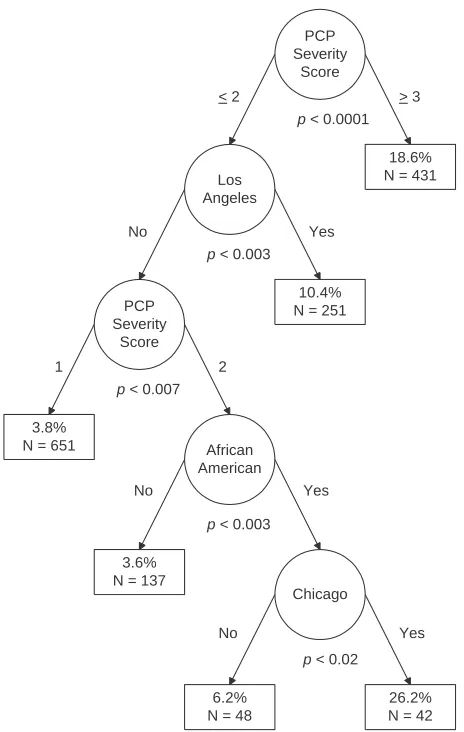
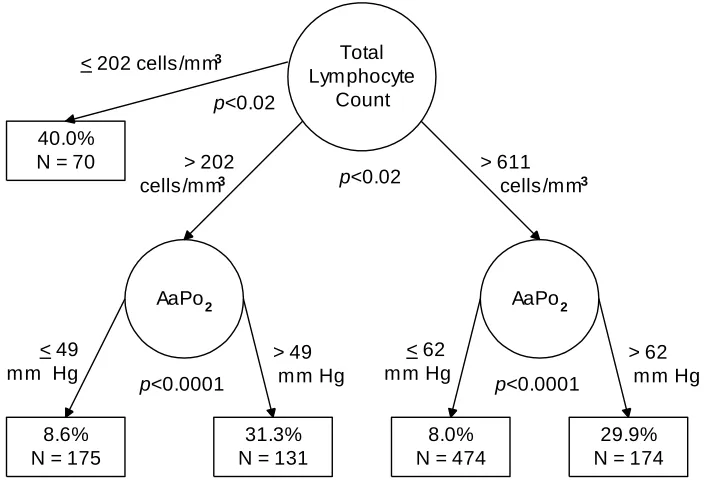
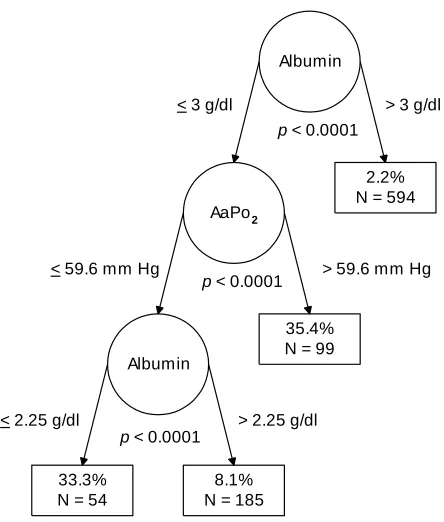
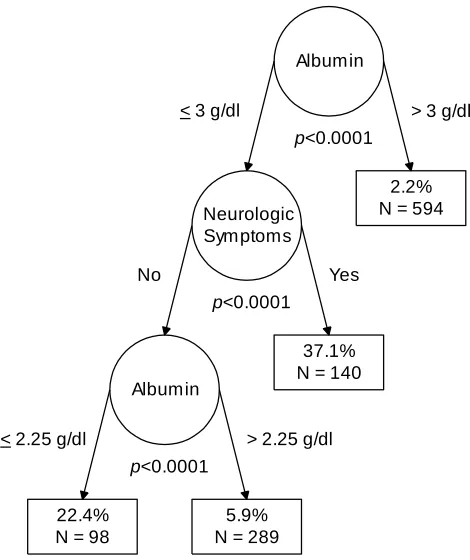
The second article is the first of a series comparing the findings of CTA performed man-ually vs. using automated software. The appli-cation in this article involves predicting mortal-ity from Pneumocystis carinii pneumonia, a topic which has been investigated via CTA more times and over a longer period of time than any other specific area of inquiry. Dr. Charles L. Bennett, M.D., Ph.D., graciously offered Paul and Robert use of data which we previously published, generated from his NIH-funded projects which completed approximately a decade ago, for expository purposes.
The third article, led by Rachel Coakley, is the second article in the “Manual vs. Auto-mated CTA” series. The original manuscript was recently published, and used a manually-derived CTA. The original model is contrasted with a new model developed using automated CTA software.
The fourth article uses Gen-UniODA to model discrimination in organizations, for an application which was problematic for log-lin-ear model.
The fifth and final manuscript in this section for this Release reveals how ordinal data are commonly misidentified as being categori-cal, and incorrectly analyzed by chi-square. This paper demonstrates the appropriate, straightfor-ward UniODA analysis.
Application. This section features arti-cles using optimal statistical analysis methods to address applied topics in any academic disci-pline. The first manuscript in this section, led by Robert Soltysik, identifies and corrects para-doxical confounding present in serial meteoro-logical measurements, then uses automated weighted CTA to predict temperature and pres-sure anomalies across the USA and the northern hemisphere. A heretofore unexplained recent Artic ice flux event is also demystified.
The second manuscript in this section, led by Jennifer Howard Smith, uses manually-derived CTA to model college freshman attri-tion. The paper is based on her dissertation,
which is believed to be the first to use CTA, and represents the first CTA conducted outside the Optimal Data Analysis company laboratory.
The final paper in this section derives from Hideo Suzuki’s thesis, and uses manually-derived CTA to model the development of juve-nile delinquency. Hideo has used UniODA soft-ware to derive CTA models for many years, and is well-versed in traditional multivariate classi-fication methodologies. A member of ODA’s
Board of Editors, Hideo agreed to be the emis-sary of ODA to the nation of Japan. We wish to transliterate all articles involving optimal meth-ods and published in Japanese, and republish them in ODA to further dissemination and ac-celerate progress in this area. Japanese journals wishing to transliterate articles originally pub-lished in ODA for republication should contact the Editor. In all cases, citations will credit the original work.
Software. Articles in this section dis-cuss design or operation of existing or theoreti-cal software systems which explicitly maximize (weighted) classification accuracy, and subop-timal heuristic systems which seek maximum accuracy. The first manuscript, led by Robert, discusses the motivation, reporting and use of automated of the CTA software which is now commercially available, including a list of the control commands and example analyses. The second article, a brief report written by Fred at the Editor’s request, discusses how to use a widely-available software system to produce a data file needed to optimize the classification accuracy of a logistic regression model.
Integrated System. This section fea-tures articles which discuss theoretical or exist-ing closed-system “black-box” or “robotic” ap-plications which are engineered using optimal analytic methods. The sole manuscript in this section in this Release is written by William Collinge, a member of ODA’s Editorial Board.
an-3
tecedents of symptoms for individual fibrom-yalgia patients.
Consulting. This section features arti-cles highlighting areas which constitute con-sulting opportunities for application of optimal analytic methods. The first manuscript in this section—and final manuscript in this release, is led by Fred and describes a now classic court case addressing paradoxical confounding.
Other. Finally, this section functions like a bulletin board. This Release features
links to author instructions; advertiser instruc-tions; how to obtain optimal software; how to obtain bound copies and reprints; and seven Special Calls.
Author Notes
4
The Loyola Experience (1993-2009):
Optimal Data Analysis in the Department
of Psychology
Fred B. Bryant, Ph.D.
Loyola University Chicago
This article traces the origins and development of the use of opti-mal data analysis (ODA) within the Department of Psychology at Loyola University Chicago over the past 17 years. An initial set of ODA-based articles by Loyola faculty laid the groundwork for a sustained upsurge in the use of ODA among graduate students which has lasted for more than a decade and a half. These student projects subsequently fueled an increase in ODA-based publica-tions by other Loyola Psychology faculty, who directly supervised the various student projects. Thus, ODA initially trickled down from faculty to students, but later grew up in the opposite direc-tion. The most frequent use of ODA in Loyola’s Psychology De-partment has been to conduct classification tree analysis, with less common uses of ODA including optimal discriminant analysis and the iterative structural decomposition of transition tables. As more Loyola Psychology graduate students find academic jobs and con-tinue using ODA in their research, we expect that they will repli-cate the Loyola experience in these new academic settings.
When you discover a new tool that you believe is superior to other tools you’ve used before, naturally you want not only to use the new tool, but also to tell others about it so they can enjoy its benefits too. Such has been the case in the Department of Psychology at Loyola University Chicago since early 1993, when the first version of Optimal Data Analysis (ODA) 1.0 for DOS became publicly available. The purpose of this brief article is to describe the 17-year process through which the use of ODA sprang up, took hold, and spread among graduate students and faculty in Loyola’s Psychology Department.
The Early Days of ODA at Loyola
5
new software3 and began using ODA in my research. Later I also published the first review of ODA for Windows.4
Having fallen in love with the power, versatility, and elegance of ODA, I began pub-lishing research articles using ODA as a statisti-cal tool in 1994.5 I first directly collaborated with departmental colleagues to use ODA in 1996, in publishing an article using optimal dis-criminant analysis as an alternative to Student’s
t test with two Loyola clinicians in the Journal of Consulting and Clinical Psychology.6 At the same time, I continued publishing ODA-based research on my own, and began extolling the capabilities of the new ODA software to my graduate students. Interestingly, it was the
graduate students, rather than the faculty, who more eagerly embraced ODA as a statistical tool in their research.
How Loyola Researchers Have Used ODA
At Loyola, researchers have used ODA in multiple ways to address a wide variety of different research questions in clinical psychol-ogy, social psycholpsychol-ogy, neuropsycholpsychol-ogy, be-havioral medicine, and biochemistry. Table 1 summarizes the 12 faculty publications and 12 graduate student projects (11 dissertations and 1 master’s thesis) in Loyola’s Psychology De-partment that have used ODA over the past 16 years (1994-2009).
TABLE 1: Published Journal Articles and Graduate Student Projects (Master’s Theses and Dissertations) in Loyola’s Psychology Department Using ODA by Year (1993-2009)
Year Student Projects Published Journal Articles
1993 0 0
1994 0 1
1995 0 1
1996 0 3
1997 1 0
1998 0 0
1999 0 0
2000 2 0
2001 1 0
2002 0 0
2003 0 1
2004 1 1
2005 3 0
2006 2 1
2007 0 1
2008 2 1
2009 0 2
6
Figure 1 illustrates the cumulative num-ber of faculty publications (red) and graduate student projects (blue) from 1993 to 2009.
FIGURE 1: Loyola Psychology Department Publications (Red) and Dissertations/Theses
(Blue) Using ODA From 1993-2009
Note the patterns that emerge across the 17-year span. The Loyola Psychology Depart-ment’s experience with ODA originated in the early publications by department faculty. This initial set of articles laid the groundwork for a sustained upsurge in the use of ODA by Loyola graduate students over more than a decade and a half. These graduate student projects subse-quently fueled the increase in ODA-based pub-lications by other Loyola Psychology faculty, who directly supervised the various student projects. Thus, although ODA initially trickled down from faculty to students, it later grew up in the opposite direction.
Classification Tree Analysis
By far, the most frequent use of ODA at Loyola has been to conduct multiattribute classi-fication tree analysis (CTA). For example, Loyola graduate students have used CTA to
identify predictive models for discriminating students who drop out versus return to college following the first year7, children’s emotional responsiveness versus unresponsiveness during psychotherapy8, child molesters versus non-molesters9, positive versus nonpositive adapta-tion to childhood10, convicted juvenile delin-quents versus non-delinquent youth11, positive versus negative morbidity and mortality out-comes following bone marrow transplant12, high versus low effect sizes in a meta-analysis of methodological and intervention characteristics associated with primary prevention programs for children and adolescents13, engaging versus not engaging in risky sexual behavior among minority adolescents14 and adult male homosex-uals15, high versus low social competence among children with spina bifida16, and state mental health care agency decisions to commit children to residential treatment versus foster homes.17 In addition, department faculty and graduate students have jointly published journal articles using CTA to predict early sexual debut among adolescents18, positive adaptation to childhood19, psychiatric hospital admission de-cisions for children in foster care20, malingering in forensic neuropsychological examinations21, change in job status following traumatic brain injury22, and clinically significant sexual con-cerns in a child welfare population.23
Optimal Discriminant Analysis
7
in levels of sympathy and empathy.26 Layden et al. used this form of discriminant analysis to identify an optimal cut-score for using psychiat-ric ratings to assess toxicity in patients under-going lithium treatment for bipolar depression.27
Iterative Structural Decomposition
Another Loyola dissertation in clinical psychology used ODA to conduct an analysis for which no alternative statistical test exists. In this particular project, the student had couples discuss an area of disagreement in their mar-riage for 15 minutes, and then used an estab-lished interaction scoring system to code these interactions. Based on existing theory, the stu-dent predicted that couples having only one de-pressed spouse would engage in the following sequence of behaviors: (a) depressive behavior, followed by (b) spouse’s supportive behavior, followed by (c) more depressive behavior, fol-lowed by (d) spouse’s incongruent behavior, followed by (e) angry/defensive behavior, fol-lowed finally by (f) spouse’s critical/rejecting behavior. Following procedures outlined by Yarnold and Soltysik2 (pp. 209-222), the data were organized into transition tables represent-ing the frequencies of various verbal exchanges between spouses over time. Supporting the hy-pothesized temporal model, an iterative struc-tural decomposition of the transition tables re-vealed that the data conformed to the predicted sequence of behaviors significantly more than would be expected by chance alone.28 It is un-clear how one would test the hypothesized be-havioral sequence using any other inferential statistical tool.
The Future of ODA in Psychology
If the past is any indication of the future, then ODA has a bright future, not only at Loy-ola but elsewhere. The recent availability of ODA-based software that automatically con-structs classification tree models is likely to ac-celerate the use of CTA across a wider variety
of research disciplines. In the future, enumer-ated CTA models may well replace traditional hierarchically-optimal CTA models, particularly given the superior classification accuracy of the former. The automated CTA software also of-fers the ability to analyze class variables that have more than two levels, thereby enabling new forms of nonlinear optimal regression mod-eling. We can foresee a vast array of new appli-cations for CTA, including meta-analysis, cross-cultural tests of similarities and differences, and optimal path analysis.
Obviously, it is relatively easy to export the Loyola Experience with ODA to other uni-versities. All that is needed is a faculty member to lay the groundwork through an initial set of ODA-based publications, along with graduate students who are seeking to analyze data for their dissertation or master’s thesis. As more Loyola Psychology graduates find academic jobs and continue to use ODA in their research, we expect that they will replicate the Loyola experience in these new academic settings.
I close by noting an unanticipated aspect of the Loyola experience with ODA. Namely, some of the graduate students who have used ODA in their dissertation research have later had the opportunity to teach introductory statis-tics in psychology at the undergraduate level, both at Loyola and at other colleges and univer-sities. Naturally, these graduate instructors have taught their students about ODA and its statisti-cal advantages, and these undergraduates are now approaching faculty members in psychol-ogy at Loyola and elsewhere to supervise inde-pendent research projects and honors theses that use ODA. Once again, the process of learning has come full circle, as the students themselves become teachers and disseminate statistical methods to students, faculty, and beyond.
References
1
8
2
Yarnold, P.R., & Soltysik, R.C. (2005). Opti-mal Data Analysis: A guidebook with software for Windows. Washington, DC: APA Books.
3
Bryant, F.B. (1994). Analyze your data opti-mally using ODA 1.0. Decision Line, 25, 16-19.
4
Bryant, F.B. (2005). How to make the best of your data [Review of Optimal Data Analy-sis]. PsycCRITIQUES-Contemporary Psychol-ogy: APA Review of Books, 50, Article 5 (7 pp.).
5
Yarnold, P.R., & Bryant, F.B. (1994). A meas-urement model for the Type A self-rating in-ventory. Journal of Personality Assessment, 62,
102-115.
6
Russell, R.L., Bryant, F.B., & Estrada, A.U. (1996). Confirmatory P-technique analyses of therapist discourse: High- versus low-quality child therapy sessions. Journal of Consulting and Clinical Psychology, 64, 1366-1376.
7
Brockway, J.H. (1997). Here today, gone to-morrow: Understanding freshman attrition us-ing person-environment fit theory. Doctoral dis-sertation, Loyola University Chicago (112 pp.).
8
Elling, K.A. (2000). Predicting children's emotional responsiveness during therapy ses-sions. Doctoral dissertation, Loyola University Chicago (119 pp.).
9
Bivens, A.J. (2001). Accurate classification of child molesters using context variation and Hi-erarchical Optimal Classification Tree Analysis. Doctoral dissertation, Loyola University Chi-cago (110 pp.).
10
Coakley, R.M. (2004). Constructing a pro-spective model of psychosocial resilience in early adolescents with spina bifida: An applica-tion of optimal data analysis in pediatric psy-chology. Doctoral dissertation, Loyola Univer-sity Chicago (233 pp.).
11
Suzuki, H. (2005). Prospectively tracing pro-files of juvenile delinquents and
non-delin-quents: An optimal data analysis. Master’s
the-sis, Loyola University Chicago (87 pp.).
12
Hurley, C.L. (2005). Medical, demographic, and psychological predictors of morbidity and mortality in autologous bone marrow transplant patients. Doctoral dissertation, Loyola Univer-sity Chicago (192 pp.).
13
Wolf, J.L. (2005). A meta-analysis of primary preventive interventions targeting the mental health of children and adolescents: A review spanning 1992—2003. Doctoral dissertation, Loyola University Chicago (128 pp.).
14
Kapunga, C.T. (2006). Individual, parental and peer influences associated with risky sexual behaviors among African-American adoles-cents. Doctoral dissertation, Loyola University Chicago (125 pp.).
15
Laforce, M. (2006). A classification profile of high-risk sexual behavior among men who have sex with men. Doctoral dissertation, Loyola University Chicago (94 pp.).
16
Jandasek, B.N. (2008). Predictors of social competence in adolescents with spina bifida.
Doctoral dissertation, Loyola University Chi-cago (199 pp.).
17
Snowden, J. (2008). Predictors of stepping-up from foster homes to residential treatment: A profile of children in the child welfare system.
Doctoral dissertation, Loyola University Chi-cago (136 pp.).
18
Donenberg, G.R., Bryant, F.B., Emerson, E., Wilson, H.W., & Pasch, K.E. (2003). Tracing the roots of early sexual debut among adoles-cents in psychiatric care. Journal of the Ameri-can Academy of Child and Adolescent Psychia-try, 42, 594-608.
19
9
analysis. Journal of Pediatric Psychology, 31,
1084-1099.
20
Snowden, J.A., Leon, S.C., Bryant, F.B., & Lyons, J.S. (2007). Evaluating psychiatric hos-pital admission decisions for children in foster care: An optimal classification tree analysis.
Journal of Clinical Child and Adolescent Psy-chology, 36, 8-18.
21
Smart, C.M., Nelson, N.W., Sweet, J.J., Bry-ant, F.B., Berry, D.T.R., Granacher, R.P., & Heilbronner, R.L. (2008). Use of MMPI-2 to predict cognitive effort: A hierarchically opti-mal classification tree analysis. Journal of the International Neuropsychological Society, 14,
842-852.
22
Han, S.D.. Suzuki, H., Drake, A.I., Jak, A.J., Houston, W.S., & Bondi, M.W. (2009). Clini-cal, cognitive, and genetic predictors of change in job status following traumatic brain injury in a military population. Journal of Head Trauma Rehabilitation, 24, 57-64.
23
Lyons, A.M., Leon, S.C., Zaddach, C., Luboy-eski, E.J., & Richards, M. (2009). Predictors of clinically significant sexual concerns in a child welfare population. Journal of Child and Ado-lescent Trauma, 2, 28-45.
24
Bryant, F.B., & Yarnold, P.R. (1995). Com-paring five alternative factor-models of the Student Jenkins Activity Survey: Separating the wheat from the chaff. Journal of Personality Assessment, 64, 145-158.
25
Bryant, F.B., Yarnold, P.R., & Grimm, L.G. (1996). Toward a measurement model of the Affect Intensity Measure: A three-factor struc-ture. Journal of Research in Personality, 30,
223-247.
26
Yarnold, P.R., Bryant, F.B., Nightingale, S.D., & Martin, G.J. (1996). Assessing physician em-pathy using the Interpersonal Reactivity Index: A measurement model and cross-sectional anal-ysis. Psychology, Health, and Medicine, 1, 207-221.
27
Layden, B.L., Minadeo, N., Suhy, J., Me-treger, T., Foley, K., Borge, G., Crayton, J., Bryant, F.B., & Mota de Freitas, D. (2004). Bi-ochemical and psychiatric predictors of Li+ re-sponse and toxicity in Li+-treated bipolar pa-tients. Bipolar Disorders, 6, 53-61.
28
Hoffman, L.A.D. (2000). Marital interaction and depression: A test of the interactional sys-tems model of depression.Doctoral dissertation, Loyola University Chicago (194 pp.).
Author Notes
The author wishes to thank Scott Leon for creative insights about the evolution of the use of ODA at Loyola. Address correspondence to the author at: Department of Psychology, Loyola University Chicago, 6526 North Sheridan Road, Chicago, IL 60626. Send eMail
10
Optimal Data Analysis:
A General Statistical Analysis Paradigm
Paul R. Yarnold, Ph.D., and Robert C. Soltysik, M.S.
Optimal Data Analysis, LLC
Optimal discriminant analysis (ODA) is a new paradigm in the general statistical analysis of data, which explicitly maximizes the
accuracy achieved by a model for every statistical analysis, in the context of exact distribution theory. This paper reviews optimal analogues of traditional statistical methods, as well as new special-purpose models for which no conventional alternatives exist.
Rarely does a technical report concerning an apparently focused and arcane classification methodology, such as optimal discriminant (data) analysis—ODA, stand a realistic chance of appealing to a diverse scientific community. Even more rarely, however, does one have the opportunity to report the emergence of a new paradigm in the statistical analysis of data.1 ODA is a highly intuitive, powerful, and exact methodology for the general statistical analysis of data, and this paper reports on the emergence of this paradigm.
ODA is the methodology that explicitly maximizes the accuracy of any type of statistical model for the training sample—that is, for the data upon which statistical analysis is per-formed and upon which the statistical model is based. An increasing awareness of the intuitive appeal of maximizing accuracy (and minimizing errors), and commercial availability of dedicated software, are fueling increasingly widespread application of ODA.1 Nevertheless, because ODA is relatively new, and therefore relatively few introductory and review resources covering the paradigm are yet widely available, this paper
introduces many major concepts and methods of the ODA paradigm.
Initial Assumptions
An ODA model explicitly maximizes the number of correctly classified observations for a specific application. Observations are consider-ed correctly classificonsider-ed when the model assigns them to the class of which they are, in reality, a member, and are misclassified otherwise. The number of misclassifications arising in a given analysis is referred to as the "optimal value." It is clear that derivation of a distribution theory for ODA requires investigation of distributions underlying optimal values. Using the simplest possible data structure to illustrate derivation of exact distribution theory, imagine a hypothetical application having the following three features.
11
course consist of more than two levels, but two levels is the simplest case.
Second, assume one random continuous attribute. In ODA, an attribute is a variable that will be employed in an effort to predict the class variable. The continuity assumption implies that every observation will achieve a unique score on the attribute (no ties). Nothing is assumed about the shape of the distribution underlying scores on the attribute, but only that the scores are random—for example, uniform or normal. Single-attribute ODA analyses are referred to as univariable ODA, or UniODA. Because the present case involves a continuous attribute, we are discussing a “continuous UniODA design”.
Finally, assume three observations: two from one class, and one from the other class (three observations are required because with two the problem is trivial: the mean of two observations’ scores on a continuous attribute is a perfect discriminant classifier for those two observations). Though it is arbitrary, refer to these as classes “1” and “0”, respectively. Hereafter, the total number of observations is referred to as n, and the number of observations in class c as nc.
Note that only the continuity assumption is capable of being violated by “real-world” data (we return to this point later). The first (binary class variable) and third (n in each class) assumptions can never be violated because they exactly define the structure of the design. That is, we are considering a UniODA design with a binary class variable, and with n1=2 and n0=1:
any deviation from this structure, such as more than two class levels or different sample sizes, simply defines another specific UniODA design.
The UniODA Model
For clarity we give an example of a two-category continuous UniODA model. Imagine that a cardiologist wished to determine if heart rate variability (HRV)—the standard deviation of one's heart rate over a 24-hour period (the continuous attribute), can discriminate patients
who die (class 0) versus live (class 1). For a given sample UniODA would provide at least one optimal model, consisting of a cutpoint and a direction, which when used together explicitly maximize forecasting accuracy: percent accurate classification, or PAC. For example, a UniODA model could be: "if HRV score is greater than (direction) 12.2 (cutpoint), assign that person to class 0; otherwise, assign that person to class 1." A UniODA model is said to be optimal because the total number of misclassifications resulting from application of the model to the data is minimized, and the number of correct classifications is maximized. In the example, no alternative combination of HRV cutpoint and direction would yield fewer misclassifications than the model which UniODA identified.
Multiple optimal models which all yield the same maximum PAC may occur for a given data set. For example, two different HRV cut-points might result in the same overall number of misclassifications, yet one model may have greater sensitivity (ability to accurately classify members of class 1) and lower specificity (ability to accurately classify members of class 0) than the other model. In such cases, it is necessary to select one optimal model, prefer-ably before conducting the analysis, using an appropriate decision heuristic.1 Examples of such selection heuristics include the sensitivity or specificity heuristic (select the model having greatest sensitivity or specificity, respectively), or the balanced performance heuristic (select the model with the smallest difference between sensitivity and specificity).1
Exact Distribution Theory
We are now ready to derive the theoreti-cal distribution of optimal values for a two-category continuous UniODA design with n1=2
and n0=1. First, it is necessary to determine the
12
There are six possible outcomes: one is that the value of the attribute for observation 1A is greater than that for observation 1B, which in turn is greater than that for the observation from class 0. Symbolically, {1A > 1B > 0}. The five other possible outcomes are: {1A > 0 > 1B}; {1B > 1A > 0}; {1B > 0 > 1A}; {0 > 1A > 1B}; and {0 > 1B > 1A}. Because the attribute was random, each of these six possible outcomes is equally likely, with a probability of 1/6.
Next, it is necessary to determine the optimal value for each of the six possible outcomes. This, of course, means that UniODA must be performed for each of the six possible data configurations.1 Two of the six possible outcomes (those in which the attribute of the class 0 observation lies between the attributes of the two class 1 observations) have an associated optimal value of 1 misclassification, because at least one observation will be misclassified regardless of where the cutpoint is placed). The other four possible outcomes (in which the two class 1 observations can be perfectly separated via a cutpoint from the class 0 observation) have an optimal value of 0 misclassifications. Cumu-lating optimal values over the set of possible outcomes gives the theoretical distribution of optimal values for this UniODA design: the probability of an optimal value of 0 is 4/6, and the probability of an optimal value of 1 is 2/6.
Enumerating in this manner the theor-etical distribution of optimal values for balanced (equal number of class 0 and 1 observations), continuous, two-tailed (no a priori hypothesis was specified) UniODA designs required a CRAY-2 supercomputer—which only achieved results for n<30 due to exponential increases in the number of combinations.2 Examination of the resulting table of optimal values for post hoc
UniODA revealed organization which motivated discovery3 and proof4 of a closed-form solution for one-tailed confirmatory UniODA.
Inexact Measures
What if data aren’t continuous, and there are ties—violating the continuity assumption? Discontinuity in empirical data is thought to reflect imprecise measurement, and not as com-promising of theoretical probabilities5, but this begged the question of exactly how imprecise can measurement become before the theoretical probabilities become compromised? This line of thinking naturally led to the question of what would occur for a binary attribute—and it was then that we understood that the binary attribute problem was the optimal analogue to chi-square analysis, and the continuous attribute problem was the optimal analogue to t-test. Proceeding with binary enumeration we found the binary and continuous distributions differ. This finding motivated two important insights.
First, there is a theoretical dimension— which we call precision—which may be used to
describe the metric underlying the attribute for any specific UniODA problem. The precision dimension is bounded at the extremes by binary data (least precise) versus continuous data (most precise). Just as specific distribution theory can be derived for the extreme poles of the precision dimension, so too can exact distribution theory be derived for every specific attribute measure metric: for example, if the attribute is measured using a 7-point Likert scale, then derive distri-bution theory by assuming a 7-point Likert scale was used. As it is possible to derive distribution theory that assumes that the specific measure metric actually used in a given application was in fact used, distribution theory for ODA can be based strictly on structural features of a prob-lem, and such distribution theory will never be violated by data for a given application.
13
may also be used, and exact distributions may be determined for, designs that lie anywhere on the precision dimension—anywhere between the binary and continuous polar extremes. This is not true for conventional statistical procedures.
ODA as an Alternative to Conventional Statistical Methodologies
Encouraged by early success, we began programmatic research to assess the domain of experimental designs and data configurations that may be addressed using UniODA. We next investigated multicategory problems involving class variables with more than two levels. For a continuous attribute, multicategory UniODA is analogous to oneway analysis of variance, and for a binary attribute it is analogous to log-linear analysis.6,7
UniODA, and other models within the ODA paradigm, clearly can be used to analyze different data configurations that are evaluated using a host of different conventional statistical methods. Why should ODA be used rather than a host of conventional methods?
First, only ODA explicitly maximizes
(weighted) classification accuracy and provides a forecasting model for every application. Not only do conventional methods fail to explicitly maximize PAC, but many, such as t-test or chi-square, also fail to provide a forecasting model.
Second, no matter what the nature of a particular data configuration might be—for example, the number of class levels, attribute metrics, or class sample-size imbalances, the classification performance of every ODA model is summarized using a normed measure of effect strength, called effect strength for sensitivity, or ESS.1 On this index 0 represents the level of classification performance that is expected by chance, and 100 represents perfect, errorless classification. No such intuitive, universal index can be used to compare the effect strength of different conventional methods such as analysis of variance, logistic regression, and tau.
Third, conventional methods require assumptions regarding the nature of the data. Unlike ODA—for which distribution theory is exact for every design, conventional methods are inappropriate when the data violate their assumptions. Whereas the assumptions of ODA must conform to the data, data must conform to the assumptions of conventional methods.
Finally, with ODA a single methodology
may be optimally applied to analyze a host of problems, while with the conventional approach a host of methods may be suboptimally applied
to analyze a single problem. ODA is therefore simultaneously more unique and parsimonious than conventional methods.
To illustrate the flexibility and power of ODA as a general statistics paradigm, below we describe different common data configurations and conventional methods often used in their analysis, and the corresponding ODA model.
Binary Class Variable and BinaryAttribute
The most common conventional method for analyzing data of this type is chi-square analysis: the ODA analogue is two-category binary UniODA. Chi-square is an approximate statistic that should not be used when the expected value for a given cell (cells are formed by cross-tabulating the class variable with the attribute) is less than five.8 In contrast, binary UniODA is an exact statistic with no such restriction: one- and two-tailed estimated p by UniODA and Fisher’s exact test are isomorphic except in a hypothetical degenerate condition.1
14
emerged that achieved 100% PAC, p<0.032. No systematic review/comparison of chi-square versus binary UniODA has yet been reported.
Binary Class Variable and Multiple Binary Attributes
The most common linear methods for analyzing data of this type include log-linear or logistic regression analysis. Completely binary problems are easiest for ODA to solve, but can be problematic for conventional methods, with aspects including marginal imbalance, sparse cells, singularities, and structural zeros (some design cells don’t exist), for example, rendering binary data difficult or impossible to analyze. The optimal linear analogue is binary Multi-ODA—a linear model which uses two or more attributes to explicitly maximize classification accuracy (discussed ahead).
For example, we reanalyzed data from a study designed to predict if 120 persons with AIDS would require home care or structured long-term care (the class variable) on the basis of three binary attributes which assessed the attitudes of patient and physician towards long-term care, and whether the patient had mental impairment.9 The data were “ill-condiioned” and thus could not be analyzed by log-linear or logistic regression methods. MultiODA, how-ever, found a two-attribute model that achieved 93.3% PAC in <1/20 CPU second on a 33MHz 386 microcomputer running a special-purpose ODA search algorithm (discussed ahead).
Binary Class Variable and Continuous Attribute
Among the most frequently reported of statistical tests, Student’s t-test is a common conventional procedure for analyzing data of this type. The ODA analogue is two-category continuous UniODA.
It is easy to construct a hypothetical problem for which t-test fails to find a signifi-cant intergroup mean difference on the attribute,
while UniODA detects nearly perfect intergroup discriminability. Imagine that ten class A obser-vations each score a value of 0 on the attribute; nine class B observations all score 1, and a tenth class B observation scores -9. Because the mean difference on the attribute between groups is zero, t-test would conclude that the groups can’t be discriminated whatsoever by the attribute. But, with UniODA, 95% of the observations are correctly classified—nearly perfect intergroup discriminability. Systematic research contrasting UniODA and t-test is not yet available.
Binary Class Variable
and Multiple Continuous Attributes
Common linear methods for analyzing data in this configuration are linear discriminant analysis, logistic regression analysis, and one-way multivariate analysis of variance.6,7 The linear ODA analogue is continuous MultiODA, but UniODA has been used with great success to maximize accuracy achieved by suboptimal models.10,11
15
Binary or Multicategory Class Variable and Continuous and Binary Attributes
Multinomial logistic regression analysis is a commonly employed conventional analysis for problems of this type. The linear optimal analogue is MultiODA, with weights used to reduce problem size by eliminating redundant data profiles (discussed ahead). Little research using either approach is available, and to our knowledge no prior research comparing these approaches has yet been published (until now).
Analyzing credit screening data for a British bank, our objective was to develop a model to predict credit worthiness (the class variable) for a sample of 325 credit applicants. Attributes were two binary variables and a third 4-point ordinal attribute. A nonparametric class-ification methodology that performed sample stratification based on a recursive chi-square procedure identified four interaction terms used as attributes in follow-up analysis. With these data logistic regression analysis and MultiODA both achieved 90.5% PAC in training analysis, but the latter model used one less term (and thus was more efficient and parsimonious) than the former model. Comparing the two models using jackknife validity analysis revealed that PAC for the MultiODA model was stable, but regressed to 83.1% for the obviously over-determined logistic regression model.
Multicategory Class Variable and Polychotomous Attribute
Common conventional methodologies for analyzing these designs include chi-square, log-linear, or multinomial logistic regression analysis. The optimal analogue is multicategory UniODA. As was true for designs that involved one binary class variable and multiple binary attributes, issues such as structural zeros, sparse cells, imbalanced marginal distributions, small
samples, and multicollinearity may spell disaster for conventional designs. As discussed earlier, these are not problems for ODA.
It is easy to construct an example for which conventional analyses are inappropriate, but for which multicategory UniODA is ideal. For example, imagine a problem with a three-category (A, B, C) class variable, with each category having three observations. Further imagine all three class A observations scored a value of 1 on the attribute; all three class B observations scored a 2, and all three class C observations scored a 3. Although the small sample renders conventional methods inappro-priate, a multicategory UniODA achieved 100% PAC, two-tailed p<0.01.
Multicategory Class Variable and Continuous Attribute
The most common conventional analysis used for such designs is oneway analysis of variance, and the optimal analogue is multicate-gory UniODA. As for t-test, distribution theory for analysis of variance is highly sensitive to assumption violations.5 Such data can present insurmountable problems for multinomial logis-tic regression, because of small samples, sparse cells, and marginal imbalance, particularly when polychotomous attributes are thrown in the mix: for example the analysis will fail if a degenerate attribute—which has fewer response categories than the class variable has levels—is included in the analysis.
As an example of a three-category Uni-ODA, imagine the following hypothetical data set, problematic for conventional methods due to the small sample, the presence of outliers, heterogeneity, the presence of zero variance for one group, and non-normality (in Table 1, X is the attribute).
16
TABLE 1: Hypothetical data set for three-category UniODA Class X Class X Class X
--- --- --- --- --- --- A 29 B 35 C 5 A 30 B 35 C 42 A 31 B 35 C 43 A 50 B 35 C 50
In this example the mean X of classes A, B, and C is exactly equal, so F=0. However, the UniODA model (if X < 33 then class = A; if X
> 38.5 then class = C; else class = B) correctly classified 10 of the 12 data points: overall and mean PAC over all three groups is 83.3%, two-tailed p<0.05.
Ordered Class Variable
and Continuous and/or Binary Attributes
Among the many types of nonparametric methods in use, Kendall's tau is arguably the least problematic procedure conventionally used to evaluate associations among ordinal (ranked) data.16 Tau is a computed index for evaluating the relationship between two ordered variables: collect data, compute tau, and “it is what it is.” Ahead we show that multicategory MultiODA can be used to determine criterion weights for two or more attributes to generate a summary score which explicitly maximizes tau.
Receiver Operator Curve (Signal Detection) Analysis
Bayesian classification methods are commonly used to evaluate the discriminating power of attributes.17 Such procedures typically aim to maximize the sensitivity, specificity, or some combination of sensitivity and specificity achieved using an attribute. Since ODA models may be derived which explictly maximize sensi-tivity, specificity, or any weighted composite of sensitivity and specificity, either for individual
attributes or for sets of attributes, we call this application “optimal signal detection analysis.”
In summary, it is a common practice to employ multiple different statistical methods, each requiring data to satisfy different essential assumptions, to analyze a given sample of data in numerous “different” (actually related) ways. We recommend using a single statistical method to analyze data with one objective function in mind: maximizing accuracy. The utility of this approach will undoubtedly receive increased attention as researchers learn more about the unrivaled generalizability and power of ODA across different data configurations.
Fast MultiODA Solutions
Early research was highly productive, and new applications for UniODA models were discovered routinely as new data structures were considered.1 As data configurations became increasingly complex, so did ODA models, and researchers began formulating and investigating optimal linear models for designs with a binary class variable and two or more ordinal and/or binary attributes: an optimal analogue of logis-tic regression or Fisher’s discriminant analysis. These multivariable ODA models are called “MultiODA,” for short.
17
MultiODA problems were recently developed, and analysis is feasible for enormous samples in favorable circumstances. Review of MultiODA here will be brief: so much work has focused on MultiODA models that a review is warranted. Below we review two fast new methods to solve MultiODA problems: MIP45 is a mixed integer formulation, and WARMACK a special-purpose search algorithm. These methods are extended for nonlinear and multicategory MultiODA.
MIP45
The first approach to computing a Multi-ODA solution that we shall discuss is a mixed integer linear programming formulation called MIP45, in which the discriminant function is normalized so the sum of the absolute values of the coefficients adds to one.18 This enables one to determine, for each constraint, a lower bound for the value of the problem parameter, M. This is in distinction to previous formulations of this problem, where M is defined as “a very large number.” Since the value of M can be kept low for each constraint, the branch-and-bound procedure can fathom branches more quickly than other formulations. Also, fewer branches need to be stored in memory, and computation time is reduced.
We compared computational resources needed to solve a problem in classification of medical residency applicants using MIP45 and a recent formulation that did not limit M. The problem had 3 attributes and 49 observations. Running the SAS/OR optimization package on an IBM 3090/600 mainframe computer, MIP45 solved the problem in 48 CPU seconds, versus 268 CPU seconds using the other formulation: MIP45 analyzed 2,896 branches, versus 14,549 branches using the other formulation.
MIP45 can be extended to obtain Multi-ODA solutions which maximize the weighted number of satisfied inequalities. As for Uni-ODA, this is useful in two different contexts.
First, the weights may represent the return obtained in the correct classification of an
observation. For example, consider the problem of predicting whether the price of a stock will rise or fall over a given time horizon, given a series of market indicators and price measure-ments. If the prediction is for a rise in the stock price, the stock will be purchased. Conversely, if a fall in the price is predicted, the stock will be sold short. The weighted MultiODA solution of this problem would maximize the trading return over the set of observations.
The other context in which the weighted criterion is useful occurs when the number of observations in each class differs. In this case, the weighted MultiODA solution balances the number in each class by maximizing the mean PAC over the two classes.
A useful extension of MIP45 involves fixing the sign of the discriminant coefficients (e.g., in a confirmatory design). In fact, bounds or any linear constraints on the coefficients may be imposed. Yet another type of constraint which can be modeled is any Boolean function of actual or predicted class membership among the observations. One example of this would be forcing certain observations to be classified correctly in the MultiODA solution (if this is feasible). Another example would be forcing observation A to be assigned to a certain class only if observation B is similarly classified.
Finally, a method for reducing the prob-lem size can be applied when multiple observa-tions share identical values for all attributes. In this case, these observations may be aggregated into a single observation, with a weight applied to the objective function. This procedure is especially useful with binary attributes: we solved binary MultiODA problems having five attributes and one million observations in less than ten CPU seconds on an IBM 3090/600.
WARMACK
18
the origin of the name we use to refer to the method).19 With this method we obtained a reduction of an order of magnitude or more in computation time versus the MIP45 approach.
We conducted Monte Carlo research to investigate the computer resources required by this algorithm as a function of n, the number of attributes, and the relative discriminability of the data. Problems having 2 attributes and 700 observations can be solved in less than one CPU minute on an IBM 3090/600. This is also true for problems with 3 attributes and 200 observa-tions, or 4 attributes and 100 observations. Our findings show that the number of attributes exerts greater influence on computation time than n or relative discriminability of the data.
Extension of MultiODA to Nonlinear and Multicategory Problems
MultiODA may be extended to a large class of nonlinear separating surfaces. This is accomplished by defining attributes which are polynomial functions of the original attributes. Any nonlinear function which is linear in the parameters of the original attributes may be modeled in this manner.
It is also possible to solve multicategory problems involving more than two class levels using either MIP45 or WARMACK. There are two ways to accomplish this. If there are k class categories, the first method is to determine the ODA solution obtained with k-1 separating surfaces in parallel with each other. From a computational standpoint, this is equivalent to adding an extra attribute for each additional class.
The second method involves the deter-mination of k different discriminant functions: an observation is assigned to the class for which the maximum value is obtained over these func-tions. If there are p original attributes, this is equivalent to a MultiODA problem with p times
k attributes.
In conclusion, MIP45 and WARMACK make feasible the solution of much larger
Multi-ODA problems than have been possible to solve previously, particularly for binary problems. Optimal analogues to conventional statistical methods are now available to researchers. How-ever, ODA is far more than simply an optimal analogue to conventional statistics.
Special-Purpose ODA Models
The flexibility of the ODA methodology lends itself to special-purpose classification applications for which there are no alternative conventional statistical procedures. Indeed, the number of different ODA models that may be created is limitless, due to the inherently infinite number of possible unique classification appli-cations. Nevertheless, below we describe some specialized ODA models that should be of great utility across a variety of applications.
Minimizing the Number of Terms in a MultiODA Solution
When performing an analysis, it is des-irable to obtain a solution with as few terms as possible, in light of the principle of parsimony. This can be achieved in the context of the MIP45 formulation: an upper bound is set on the number of misclassifications, and the number of attributes used in the solution is minimized. This results in a more parsimonious model, with a corresponding increase in statistical power.
Optimal Attribute Subsets
A related problem is the determination of an optimal subset of attributes with exactly k
19
identified a single solution that achieved 93.3% PAC; with k specified at 3 attributes MultiODA identified a single solution with 100% PAC. These problems required 91.9 and 73.9 CPU seconds to solve on an IBM 3090/600 computer running SAS/OR. When the attributes selected by MultiODA were evaluated using logistic regression analysis, 90% PAC was achieved for both the and 3-attribute models. The best 2-attribute model identified using stepwise logistic regression achieved 90% PAC, and the best 3-attribute model achieved 93.3% PAC.
Integer-Valued Coefficients
UniODA may be used to solve Multi-ODA problems in which the model weights for the attributes (the discriminant coefficients) are constrained to take on a small set of values. For example, in a problem having p attributes, the discriminant coefficients restricted to the values 0, 1, or -1, and the threshold coefficient uncon-strained, all optimal solutions may be found by solving 3p/2 UniODAs. In general, for k pos-sible coefficient values and p attributes, kp/2 UniODAs are solved. If k and p are relatively small, then few computational problems arise due to the fast speed of UniODA. An additional benefit of this analysis is that optimal attribute subsets of every size are evaluated. We solved a problem with 3 coefficient values, 8 attributes, and 900 observations in 716 CPU seconds on a 33Mhz 386 microcomputer.15
Optimal Selection of Observation Subsets with Unknown Class Membership
In some problems, observations are available for which class membership is unknown. Typically, exactly k of these observa-tions are to be acted upon in some manner. The initial phase of the MultiODA approach to this problem involves partitioning observations into two sets: the decision set, consisting of observa-tions with unknown class membership, and the
evaluation set, consisting of observations with known class membership.
To illustrate this, consider the problem of selecting k job applicants from a pool of applicants. The attributes may reflect measures of previous employment experience and skills required to perform the job task. The evaluation set is comprised of previously hired individuals who have been measured on these attributes. Each individual in the evaluation set is weighted by a performance index, in this case a measure of job performance. The decision set is compri-sed of the pool of job applicants, k of whom are to be selected for employment, and all of whom have been measured on the attributes. Multi-ODA identifies a solution which maximizes the weighted number of inequalities in the eval-uation set, such that exactly k inequalities in the decision set are satisfied.
Or, consider the problem of selecting prisoners to be released under a court mandate which requires that exactly k must be released, due to overcrowding. Here the decision set is the current population of prisoners, and the eval-uation set are those prisoners who previously were released. The performance index, which is to be minimized, is a measure of mayhem pro-duced by the previously released prisoners.
Other interesting applications of this method lie in the areas of market research, investment selection, and pattern recognition.
Ordered Class Variables
Another fruitful area of investigation relates to the use of MultiODA in analysis of data which have been sorted into ordered (ranked) categories. MultiODA is used to maxi-mize the goodness of fit between the actual and predicted category assignments. Kendall’s tau is a similarity index widely used for comparison of two ranked sequences, and is proportional to the number of satisfied inequalities between paired observations. Thus, MultiODA finds a linear discriminant function which maximizes