All Theses And Dissertations Theses and Dissertations
8-1-2016
Best Practices In Online Pedagogy: A Pearson
Correlation Analysis Between Teaching Evaluation
Scores And Transactional Distance Scores In
Online Graduate Courses
William AngroveUniversity of New England
Follow this and additional works at:http://dune.une.edu/theses
Part of theEducational Assessment, Evaluation, and Research Commons,Educational
Leadership Commons,Educational Methods Commons, and theOnline and Distance Education Commons
© 2016 William Angrove
This Dissertation is brought to you for free and open access by the Theses and Dissertations at DUNE: DigitalUNE. It has been accepted for inclusion in All Theses And Dissertations by an authorized administrator of DUNE: DigitalUNE. For more information, please [email protected].
Preferred Citation
Angrove, William, "Best Practices In Online Pedagogy: A Pearson Correlation Analysis Between Teaching Evaluation Scores And Transactional Distance Scores In Online Graduate Courses" (2016).All Theses And Dissertations. 73.
BEST PRACTICES IN ONLINE PEDAGOGY: A PEARSON CORRELATION ANALYSIS BETWEEN TEACHING EVALUATION SCORES AND TRANSACTIONAL DISTANCE
SCORES IN ONLINE GRADUATE COURSES By
William Angrove
BA (Western Michigan University) 1979 MPA (American Public University) 2013
A DISSERTATION
Presented to the Affiliated Faculty of
The College of Graduate and Professional Studies at the University of New England
In Partial Fulfillment of Requirements For the Degree of Doctor of Education
Portland & Biddeford, Maine
ii
iii
William Angrove May 2016 Educational Leadership
BEST PRACTICES IN ONLINE PEDAGOGY: A PEARSON CORRELATION ANALYSIS BETWEEN TEACHING EVALUATION SCORES AND TRANSACTIONAL DISTANCE
SCORES IN ONLINE GRADUATE COURSES
Abstract
The purpose of this quantitative study was to discover how four universally recognized best practices in online pedagogy affected teaching evaluation scores in online graduate courses. The four best practices in online pedagogy are: Course Organization and Presentation,Learning
Objectives and Assessments,Instructor-Student Interpersonal Interaction, and the Appropriate
Use of Video or Multimedia. The researcher modified these best practices from the Jaggars and
Xu (2016) Online Course Quality Rubric. The study utilized Dr. Michael G. Moore’s (1973) theory of transactional distance to understand the relationship between teaching evaluation scores and transactional distance. University instructional designers assessed and rated how well the researcher incorporated the best practices and awarded each course a transactional distance score (TDS). The researcher used a Pearson’s correlation analysis to measure the strength of the relationship between teaching evaluation scores and TDS. A thorough literature review revealed a gap in research related to how best practices in online pedagogy affected teaching evaluation scores in online graduate courses. This research study added to the body of knowledge about the gap within the existing literature.
iv
Transactional distance, distance education, best practices in online pedagogy, Course
Organization and Presentation,Learning Objectives and Assessments,Instructor-Student
Interpersonal Interaction, the Appropriate Use of Video or multimedia, dialog, course structure,
learner autonomy, teaching evaluations, IDEA survey scores, Transactional Distance Scores,
Online Course Quality Rubric, student satisfaction, student motivation, instructor, instructional
design, Pearson correlation analysis, and transformative leadership.
Research problem
According to research by Moore and Kearsley (2012), students’ feelings of separation from the instructor in online courses increase transactional distance and may lead to confusion and misunderstanding between the instructor and student. Berk (2013); Brocato, Bonanno, & Ulbig (2015); and Morrison (2011) found that student evaluations of instructors teaching online are often lower when compared to traditional classroom teaching evaluations, which suggested better instructional strategies are needed in online courses.
Research question
The primary research question for this study asked: How does transactional distance in online pedagogy relate to student evaluation scores of online instructors at a Doctoral Research University in Texas? The hypothesis of this study posited a high correlation between the four best practices in online course design -- Course Organization and Presentation, Learning
Objectives and Assessments, Instructor-Student Interpersonal Interaction, the Appropriate Use of Video or Multimedia -- and teaching evaluation scores.
v
Key Personnel
Twenty-two instructional designers in the office of Distance Education volunteered to evaluate 69 online graduate courses taught in the spring semester of 2015. Tenured instructors, who had taught at least one online graduate course, had taught all these volunteers.
Type of data collected
The researcher used two main data sources in this study: the IDEA survey scores, and transactional distance scores (TDS). The IDEA survey is a student rating of instruction used widely in higher education and the author administered this online at the end of the spring
semester of 2015. The survey measures teaching effectiveness. The author derived the TDS score by using the modified Online Course Quality Rubric that Jaggars and Xu (2016) developed. Instructional designers rated the 69 online graduate courses using a five point Likert scale to determine how effectively best practices in online pedagogy were used.
Dissertation findings
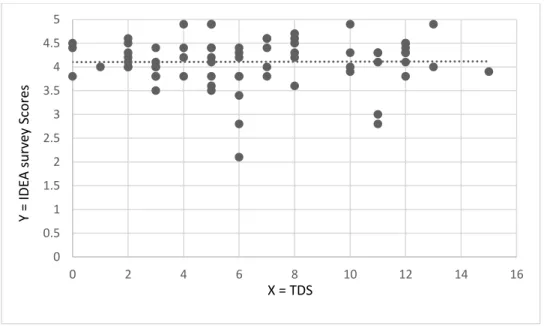
The results indicated no correlation between the cumulative measures of IDEA survey scores and transactional distance scores (TDS). The best practice Course Organization and
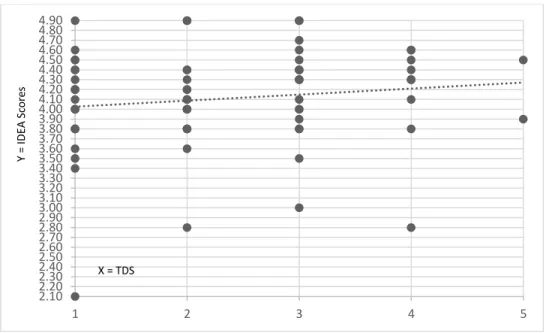
Presentation had a low positive correlation (0.137) between IDEA survey scores and TDS. The
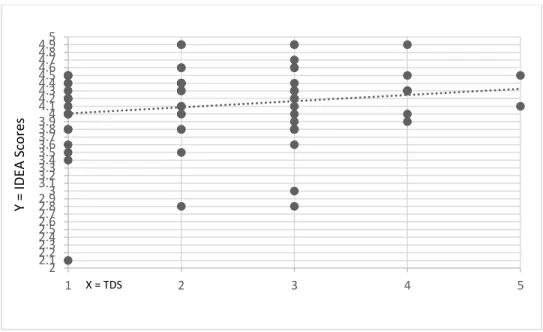
best practice Learning Objectives and Assessments had a low positive correlation (0.171)
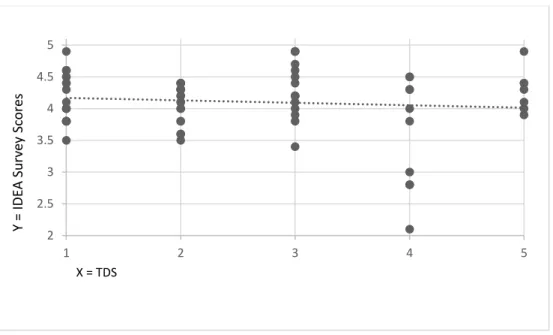
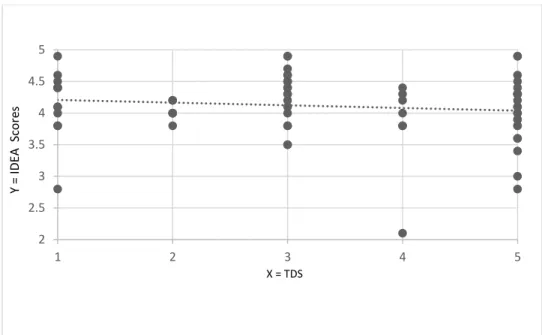
between IDEA survey scores and TDS. There was no correlation (-0.099) between IDEA survey scores and TDS for the best practice Instructor-StudentInterpersonal Interaction. A low
negative correlation (-0.124) was found between IDEA survey scores and TDS for the best practice Appropriate Use of Video or Multimedia.
vi
Stakeholders
There are many stakeholders in the study: Instructors, students, instructional designers, distance education administrators, academic department chairs, deans, senior university
administrators, university system administration, and Texas citizens.
Formats and Audience(s)
The researcher presented dissertation findings at distance education conferences
including: the 6th Annual SHSU Online Teaching and Learning Conference, TXDLA, USDLA, and IOL. The author then posted the dissertation to DUNE, and to the SHSU Online website.
vii
University of New England Doctor of Education Educational Leadership This dissertation was presented
by
William Angrove
Best Practices in Online Pedagogy: A Pearson Correlation Analysis Between Teaching Evaluation Scores and Transactional Distance Scores in Online Graduate Courses
It was presented on May 31, 2016 and approved by:
Marylin Newell, PhD, Lead Advisor University of New England
Carol Burbank, PhD, Secondary Advisor, University of New England
viii
I would like to express the deepest appreciation to my dissertation committee chair Dr. Marylin Newell who guided me throughout the entire process. Without her guidance,
encouragement, and persistent help this dissertation would not have been possible. I would like to thank my committee members, Dr. Carol Burbank and Dr. Jaimie Hebert whose questions, suggestions, patience, and support were invaluable. I would like to thank Dr. Shanna Smith Jaggars and Dr. Di Xu for granting me permission to modify their Online Course Quality Rubric.
In addition, I would like to thank my assistant, Trina Strange for proof reading my dissertation. Finally, I would like to thank my wonderful wife Kay who inspired me to take this
ix
LIST OF FIGURES ... xii
CHAPTER 1 ... 1
INTRODUCTION ... 1
Problem Statement ... 3
Background of the Problem ... 5
Purpose of the Study ... 8
Research Question ... 9
Assumptions, Limitations, Scope ... 13
Significance... 14
Definition of Terms... 15
Conclusion ... 16
CHAPTER 2 ... 18
REVIEW OF RELATED LITERATURE ... 18
Theoretical Framework ... 20
Faculty... 22
Instructors and Online Pedagogy ... 23
Student Satisfaction ... 24
Student Motivation... 26
Instructor and Student Engagement ... 27
Acceptance of Distance Education ... 28
Detractors of Distance Education ... 28
x
Video and Multimedia ... 32
Evaluations ... 33
Summary and Conclusions ... 36
CHAPTER 3 ... 39
METHODOLOGY ... 39
Method ... 40
Dependent Variable ... 41
Independent Variable ... 43
Setting of the Study ... 43
Key Personnel ... 44
Sampling Procedures ... 45
Data ... 45
Analysis... 47
Data Confidentiality ... 49
Potential Limitations of the Study ... 50
Delimitations ... 51 Summary ... 51 CHAPTER 4 ... 53 RESULTS ... 53 Analysis Method ... 54 Presentation of Results ... 55
xi
Learning Objectives and Assessments ... 58
Instructor and Student Interpersonal Interaction ... 60
Appropriate use of Video or Multimedia ... 61
Summary ... 63
CHAPTER 5 ... 64
CONCLUSION ... 64
Interpretation of Findings ... 65
Implications... 70
Recommendations for Action ... 71
Recommendations for Further Study ... 74
Conclusion ... 75
REFERENCES ... 78
xii
Figure 1. Modified from Vealé and Watts (2006). “Model of Transactional Distance” built on
Moore’s Theory of Transactional Distance. ... 11
Figure 2.What are the Possible Values for the Pearson Correlation, 2016? ... 48
Figure 3. Correlation between IDEA Scores & TDS = 0.007 ... 56
Figure4. Correlation between IDEA Scores and TDS for Course Organization and Presentation
= 0.137 ... 58
Figure5. Correlation between IDEA Scores & TDS for Learning Objectives and Assessments =
0.171... 59
Figure6. Correlation between IDEA Scores & TDS for Instructor-Student Interaction = -0.09960
Figure 7. Correlation Between IDEA Scores & TDS for the Appropriate Use of Video or
Multimedia = -0.124 ... 62
Figure 8. Predicted Correlation of IDEA survey Scores by TDS... 66
CHAPTER 1 INTRODUCTION
Allen and Seaman’s (2016) longitudinal research reported that enrollments for online courses have grown more rapidly than total enrollments in higher education since 2003. Nearly six million university students in America were taking more than one online course in the fall term of 2015. Over 63% of university administrators surveyed said distance education was a key strategy for enrollment growth. According to Miller (2014, p. 21), the rapid expansion of
distance education continues to present challenges for instructors teaching online in higher education. They need to understand and incorporate best practices in online pedagogy with an emphasis on instructional strategies that incorporate the appropriate technologies and
communication tools necessary to improve communication between themselves and their
students. Consequently, there is a need for instructors to adopt best practices in online pedagogy with a focus on the quality of dialog between teachers and students (Fraile & Bosch-Morell, 2015; Shen & Tsai, 2013).
The purpose of this quantitative study was to discover how four universally recognized best practices in online pedagogy affected teaching evaluation scores. Transactional distance, which involves the quality of transactions between instructors and students in online courses, is one of the most influential theories in the field of distance education. In 1973, Michael G. Moore described transactional distance as a pedagogical concept where the quality of transactions focuses on more than two-way communication and are concerned with all forms of dialog, interaction, and cooperation between instructors and students.
Jaggars and Xu’s (2016, pp. 271-272) research built on Moore's theory of transactional distance (2013, p. 80) and assessed the use of best practices in the design of online courses to
understand how they might impact student learning outcomes. They rated 23 online courses at two community colleges using their Online Course Quality Rubric, which they adapted from several nationally recognized online quality rubrics. Their four best practices in online course design included: (1) course organization and presentation, (2) learning objectives and
assessments, (3) interpersonal interaction, and (4) use of technology. They found that only the area of instructor-student interpersonal interaction was a predictor of improved grades in the online courses. Consequently, there is a need for instructors to adopt best practices in online pedagogy with a focus on the quality of dialog between teachers and students (Fraile & Bosch-Morell, 2015; Shen & Tsai, 2013).
Brocato et al. (2015) suggested that student evaluations of instructors teaching online courses are considerably lower than their evaluations in face-to-face classes. Student evaluations of instructors teaching are an important component of instructors’ annual performance appraisals and in tenure and promotion decisions (Annan, Tratnack, Rubenstein, Metzler-Sawin, & Hulton, 2013). Young (2006) suggested that students evaluated instructors’ teaching as more effective when instructors organized their course well, when they engaged with their students, if they were flexible to what students needed, and they created an environment that encouraged collaboration (p. 73). However, further research was necessary to understand how best practices in online pedagogy affected instructors’ evaluation scores.
This chapter includes a discussion of the circumstances regarding the problem, the problem statement, the purpose of the study, and the research question. Furthermore, the researcher presents the conceptual framework that guided this study. The researcher also
study and a definition of the terms. A summation of the key points of the study completes this chapter.
Problem Statement
According to Moore and Kearsley (2012), students’ feelings of separation from the instructor in online courses increase transactional distance and may lead to confusion and misunderstanding between the instructor and student. Berk (2013); Brocato et al. (2015); and Morrison (2011) found that student evaluations of instructors teaching online are often lower when compared to traditional classroom teaching evaluations. Brocato et al. (2015) research suggested that instructors’ teaching styles and student interactions are not easily transferable from the classroom to the online environment, which suggested that online courses need better student engagement strategies.
Stein, Wanstreet, Calvin, Overtoom, and Wheaton (2005) explored student satisfaction in online courses as related to how the courses were structured, the types of interactions involved, and the technical skills needed to succeed. They based their research on Moore’s theory to discover how instructors structured courses, and how designing communication between instructors and students into the course had considerable influence on student satisfaction (p. 114).
Moore (1997) suggested that the types of transactions that occur between instructors and students in distance education should consider three factors: Dialog, course structure, and learner autonomy. First, he posited that it is not the frequency of dialog, but how effective the quality of dialog is in solving the distance learner’s problems, that is most important. He suggested that the geographic separation between the instructors and students was less important than the
their dialog could improve. The second factor he referred to is how the course is structured, and that depended on how rigid or flexible the course is. This includes course learning objectives, the pedagogy used to teach the course, the types of assessments, and how well the course
accommodates student needs. Moore described the third factor as learner autonomy meaning the student’s ability of self-direction and motivation to learn the material at a distance. Both can be seriously affected by the dialog, how rigid or flexible the course is, and by the ability of the student to master the material with little or no interaction with the instructor. Moore argued that learning improved and student satisfaction increased as transactional distance decreased.
Jaggars and Xu (2016) found that instructors who used a high level of interaction with students by asking for regular feedback helped students connect with them. Instructors that used multiple communication technologies were able to reduce transactional distance by holding regular office hours, telephone conferences, and chat sessions; thus helping struggling students feel like they were important to the instructor. The sense that the instructor cared about the students made them feel connected to the instructor and the course and positively influenced students’ assessment of the instructor’s teaching (p. 278).
Paul, Swart, Zhang, & MacLeod (2015) measured transactional distance between students and teachers (TDST) by surveying student perceptions. They also measured
transactional distance between student and content (TDSC) as well as transactional distance between students and students (TDSS). Their research suggested the model of transactional distance is still significant, but theorists should update the measurement tools regularly. They suggested that transactional distance changes over time as new technology and societal norms evolve (p. 16).
Similarly, the purpose of Vealé’s (2009) qualitative study was to explore the impact of course structure on student perceptions of transactional distance. Vealé found that a course that was not well organized frustrated students. Stein et al. (2005) explored student satisfaction as it related to course structure, communication, and technology proficiency. Their research focused on Moore’s theory and discovered that course structure, and the way instructors designed collaborations in the course, had considerable influence on student satisfaction.
Closing transactional distance in online courses is important because it may facilitate instructor-student engagement, student motivation, student satisfaction, successful learning outcomes, and improved teaching evaluations.
Background of the Problem
Theorists have studied distance education extensively over the past 50 years. According to Anderson and Simpson (2012, p. 2), thinking about distance education evolving over three generations is helpful in understanding its history. Nipper (1989) suggested the idea of three generations as a framework and described them as production, distribution, and computer conferencing. Nipper later labeled the three generations: correspondence, broadcast, and
computer mediated instruction (p. 63). Moore and Kearsley (2012) described distance education as an integrated system that begins with an institutional commitment from the university
administration. They recommended that distance education should have a well-defined
organization, a clear policy process, faculty incentives and involvement in course development, a focus on best practices in online instruction, an emphasis on student success, a reliable
technology infrastructure, an integrated instructional design team, and a viable financial model. Throughout its history, many authors on the subject of distance education thought it was an unproven instructional delivery methodology. However, several leading researchers in the
field believed that the technology used to deliver a course at a distance was rarely the deciding factor in the educational outcomes. They believed student satisfaction and improved
understanding of concepts could occur (Russell, 1999), and that a strong sense of community could be established in distance education settings (Rovai, 2001). Moore and Thompson (1990), and Verduin and Clark (1991) advised that instruction at a distance could be just as good as classroom instruction provided: (1) the technology is appropriate to the learning objectives and outcomes, (2) there is interaction between students, and (3) there is prompt feedback from the instructors (Rovai & Barnum, 2003, p. 58).
Instructors have used many new technologies for educational purpose, as and when they emerged over the three generations. Distance education has used every imaginable technology including mail, telephone, radio, television, satellite broadcasting, fax machines, video
conferencing, audio tapes, video tapes, CD’s, and the Internet (Matthews, 1999). Chang and Hannafin (2015) explored the use of collaborative technologies in distance education and found that while many instructors encourage student engagement through group work, its effectiveness depended on how well they accommodated multiple learning styles (pp. 78-79). They found that it was not the type of collaborative technology that improved learning; it was the quality of the collaborative process itself that mattered.
Bolliger and Wasilik (2009) suggested that instructors’ satisfaction is critical in the creation of quality online courses. In order to create quality content for distance education, instructors need assistance and professional development to use software and technology. The researchers found that instructors wanted to create positive outcomes for their students, and to be recognized for teaching online. According to Guri-Rosenblit (2009), many instructors need to
understand when to be present in their online courses. They need to understand how and when to communicate with their students, and they need to learn what technologies to use and which ones to avoid.
The literature suggested that professional development for instructors teaching online is a critical factor in student success and satisfaction. Consequently, student evaluations of
instructors teaching are an important component of their annual performance appraisal and in tenure and promotion decisions. Students evaluate instructors’ teaching at the end of each semester using the IDEA survey. The IDEA survey is a national evaluation instrument that focuses on student learning objectives, the quality of instruction, and the quality of the course. The survey provides summative and formative feedback regarding the instructors teaching effectiveness. The survey also provides comparisons of instructors teaching effectiveness across a national database to disciplines and to the university as a whole (IDEA Center, 2016a).
It can be detrimental to instructors’ careers if they are not well prepared to teach online. Fortunately, instructional designers, who use a rubric that incorporates best practices in distance education course design and pedagogy, assist many instructors. According to Jaggars and Xu (2016, p. 272), there are four primary educational organizations that used research literature from the field of distance education to develop quality course design rubrics for use in the assessment of online courses. Each rubric is very similar in its description of the attributes that constitute a quality online course. The Institute for Higher Education Quality (Merisotis & Phipps, 2000) developed 24 quality standards assembled in seven groupings to assess the quality of online courses. The Council of Regional Accrediting Commissions established a rubric around five quality measures for online programs (Middle States Commission on Higher Education, 2002). The Sloan Consortium also established the Five Pillars of quality necessary in online courses
(Moore & Kearsley, 2005). The most well-known and utilized rubric in online course assessment is Quality Matters, established by Maryland Online (Quality Matters Program, 2014). This rubric is comprised of eight general quality standards and 41 specific measures designed by faculty to evaluate online courses and improve learning outcomes in online education.
Throughout the literature, researchers have had different ideas and understanding of the important features that are necessary to ensure course quality. However, in general, most
researchers agree there are four components of quality. The first is concerned with how well the course is organized and how easy it is to navigate. The second is concerned with how clear the learning objectives and student performance requirements are. The third is concerned with incorporating meaningful instructor-student interaction. The fourth is concerned with how effectively technology is utilized. For the purpose of this study, the researcher focused on the first three best practices of quality as Jaggars and Xu (2016) described in their Online Course
Quality Rubric (p. 275): Course Organization and Presentation, Learning Objectives and
Assessments, and Instructor-Student Interpersonal Interaction. The researcher did not analyze
the effective use of technology; however, the author did measure the Appropriate Use of Video
or Multimedia as the fourth element of quality, thereby modifying the Online Course Quality
Rubric.
Purpose of the Study
The purpose of this study was to measure the strength of the relationship between four universally recognized best practices in online course design and teaching evaluation scores. The best practices are: 1) course organization and navigation, 2) learning objectives and assessments, 3) instructor-student interpersonal interaction, and 4) the appropriate use of video or multimedia. The study attempted to understand how these four best practices in online pedagogy affected
students’ feelings of transactional distance as reflected in instructor teaching evaluation scores. University instructional designers assessed how well these four best practices were integrated into the design of online courses and awarded each course a transactional distance score (TDS). The study adds to the body of knowledge in the field of distance education by helping
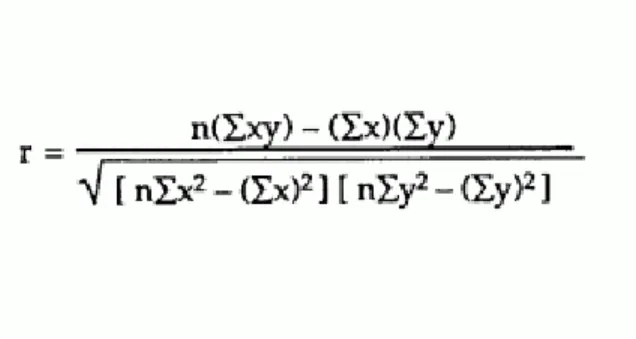
instructors, students, and university administrators understand the importance of incorporating these four best practices into online courses. The researcher used a correlation analysis to measure the strength of the relationship between TDS and teaching evaluation scores. The sample size was 69 online graduate courses taught by tenured instructors in the spring semester of 2015.
Research Question
How does transactional distance in online pedagogy relate to student evaluation scores of online instructors at a Doctoral Research University in Texas? The hypothesis of this study posited a high correlation between the four best practices in online course design -- course organization and presentation, learning objectives and assessments, instructor-student
interpersonal interaction, the appropriate use of video or multimedia -- and teaching evaluation scores.
Conceptual Framework
This study built on Moore and Kearsley’s (1996) research and analyzed distance education through the lens of Michael G. Moore's theory of transactional distance. Moore’s theory suggested that in distance education the separation in space and time between the instructor and student could lead to communication problems, confusion, and feelings of isolation between the students and the instructor (p. 200). In theory, these problems and
misunderstandings reduce student satisfaction, increase transactional distance, and may lead to lower teaching evaluation scores.
Moore (1997) suggested that the types of transactions that occur between instructors and students in online education should consider three factors: Dialog, course structure, and learner autonomy. Moore (1997) pointed out that it is not how often communication occurs, but the quality and the degree to which it helps solve the problems a student may be having that is important. Moore (1997) described course structure as how rigid or flexible the course is. Course structure included the learning objectives, the instructional pedagogy used in the course, the types of assessments, and how well the course accommodated student needs. Learner autonomy, according to Moore’s theory, depended on the previous two, in that it involved the student’s ability of self-direction and motivation which can be seriously affected by the dialog, how rigid or flexible the course design is, and the student’s ability to understand the material in relative isolation from the instructor. Figure 1 shows the conceptual framework for the study.
Figure 1. Modified from Vealé and Watts (2006) (as cited in Vealé, 2009). “Model of Transactional Distance” built on Moore’s Theory of Transactional Distance.
Theoretical Framework
A review of the literature suggested that instructor and student interaction were vitally important to student satisfaction in online courses. Moore (1993) described interaction as dialog with a positive purpose where instructor and student respected each other, listened to each other,
and contributed to improved understanding of the course material by the student (p. 24). Moore and Kearsley (1996) noted that fewer transactions or dialog between the instructor and student in a course created a greater distance in their interpersonal relationship (p. 201). In their research on improving student satisfaction in online courses, Gould and Padavano (2006) found that frequent interaction between the instructor and student made the student feel more satisfied with the course.
The author used the theoretical lens or epistemological construct of social
constructionism in the study. Bloomberg and Volpe (2012, pp. 28-29) suggested that people construct reality through their experiences. Their interactions with the realities in the world develop truth, understanding, or meaning. The researcher attempts to understand the subject’s interpretations of reality resulting from their social interactions and interpersonal relationships. Different people construct meaning in different ways, even in relation to the same set of
circumstances and experiences. Accordingly, Shin (2006) measured online students’ perceptions of positive instructor interaction, and their level of skill, as well as the challenge of the course material, and described the students’ perceptions as “flow” experiences. Shin surveyed 525 online students regarding their perceived control over learning, the energy involved in the
interaction, the curiosity involved in the interaction, and the interest derived from the interaction. The notable findings of the study were the wide range in individual differences that affected the amount of flow. The highest flow score in the low-flow group of online students was 53. This score was still much lower than the lowest flow score of 79 in the high-flow group (p. 716). This finding indicated that the online students constructed meaning about their experience in many different ways. Additionally, the study found that the gender of the students did not affect flow.
Shin suggested that flow was a strong indicator of student satisfaction, and assumed that higher flow equaled greater satisfaction (p. 719).
Assumptions, Limitations, Scope
The researcher held the underlying assumptions that best practices in online pedagogy could be measured and correlated between teaching evaluation scores and transactional distance scores. Specifically, the combined measures of Course Organization and Presentation, Learning
Objectives and Assessments, Instructor-Student Interpersonal Interaction, and the Appropriate
Use of Video or Multimedia could be correlated to measure the strength of the relationship
between teaching evaluation scores and transactional distance scores. The researcher also assumed, for the purposes of this study, that the students provided forthright and honest answers to the IDEA survey questions, and that the instructional designers understood how to assess and rate transactional distance in online courses.
A limitation is an issue that the researcher cannot control that could possibly influence the outcome of a study, and this study has several potential limitations. The researcher’s bias could have affected the study. In order to prevent bias, the researcher carried-out a thorough review of the current and seminal literature related to the topic. Bias may also be inherent in the IDEA survey scores. The researcher asked students to give anonymous answers regarding the overall quality of instruction, the quality of the course, and progress made on relevant learning objectives. Students may underrate instructors because they may have received a low grade in the course. To mitigate bias, the IDEA survey uses an adjusted mean score measuring progress on relevant objectives, the overall impression of the instructor, and the overall impression of the course. According to Benton and Li (2015), university administrators are responsible for the validity of the IDEA survey scores and how they are used to evaluate instructors. Therefore,
IDEA recommends the survey scores never count for more than 50% of an instructors teaching evaluation (p. 1). The instructional designers also may have bias in their assessment of
transactional distance or because of their relationship with an instructor. In order to mitigate bias, the instructional designers were trained to assess TDS and only rated courses and instructors with whom they had never worked. Other limitations were that all of the courses in the study were online courses taught in a 15-week semester format, the number of students enrolled in the courses were outside the control of the researcher, as were the number of students who completed the IDEA survey.
A delimitation is a reason why the researcher deliberately restricts the size of the study to make it manageable. The researcher delimited the study to 69 online graduate courses taught by tenured professors with terminal degrees in the spring semester of 2015. The two data sets used in the study are the IDEA survey scores derived from the student evaluations of instructors’ teaching and the transactional distance score derived from the instructional designers using Jaggars and Xu’s (2016, p. 275) online course quality rubric course. The author used a Pearson’s correlation analysis to measure the differences and similarities between the IDEA survey scores and TDS. There was no student or instructor demographic information used in the study, thereby limiting the generalizability of the study’s findings.
Significance
The significance of the study was that distance education has become increasingly popular among undergraduate and graduate students in recent years. Presently, students generate 20 % of their credit hours online at the university (Texas Higher Education Coordinating Board, 2016a). This fact warranted the need to appropriately study best practices in online pedagogy and to measure the correlation between teaching evaluation scores and transactional distance scores
in online graduate courses. Other theorists may use the findings of this study to inform
instructors about the benefits of incorporating the four universally recognized best practices in online pedagogy: Course Organization and Presentation, Learning Objectives and Assessments, Instructor-Student Interpersonal Interaction, the Appropriate Use of Video or Multimedia and their relationship to teaching evaluation scores. Insights from this study may aid distance
education practitioners in the implementation of strategies that reduce transactional distance and may improve student learning outcomes.
Definition of Terms
This section summarizes the definitions of key terminology used in distance education and in this study:
Distance Education: The term used to describe electronically delivered education online
or through teleconferencing (Darabi, Liang, Suryavanshi, & Yurekli, 2013).
Transactional Distance: The separation of the student from the instructor in terms of
their relationship instead of by geographic distance (Moore, 1997).
Transactional Distance Score (TDS): The numerical measure obtained by instructional
designers evaluating the effectiveness of course activities and learner interaction that reduce transactional distance.
Online Course Quality Rubric: The rubric that describes the best practice of creating
online courses with four key categories of focus including 1) organization, 2) objectives, 3) interaction, and 4) technology (Jaggars & Xu, 2016).
IDEA survey: A national evaluation instrument that students use to evaluate their
instructors teaching by assessing the quality of the instructor, the quality of the course, and whether, or not, it met the stated learning objectives. The survey provides summative and
formative feedback and comparisons across the national database to other academic disciplines. The university administration uses the IDEA survey scores in tenure and promotion decisions (IDEA Center, 2016b).
Instructional Design: The practice of creating instructional materials for online courses
that make the learning experience more organized, efficient, effective, and appealing. The online environment includes four elements: 1) technology, 2) course content, 3) instructors, students, and support staff, and 4) well-designed learning tasks and outcomes (Chen, 2007, p. 75).
Conclusion
This study is important because it measured the strength of the relationship between Course Organization and Presentation, Learning Objectives and Assessments, Instructor-Student Interpersonal Interaction, the Appropriate Use of Video or Multimedia, and teaching evaluation scores. This study is unique in that it incorporates a rating by instructional designers who created a transactional distance score (TDS) for the online courses. Rao, Edelen-Smith, and Wailehua (2015) surveyed online students who indicated that weekly synchronous class meetings via web-conferencing facilitated a strong connection between the instructor and students. Students believed these regular meetings to be inspirational and supportive. The students also appreciated regular and detailed feedback from the instructor that motivated them to persist in the online course (p. 49).
This study is significant because research has shown reducing transactional distance improves student perceptions of their relationship with the instructor, increases student
motivation, improves student success, and may lead to higher teaching evaluation scores (Gould & Padavano, 2006; Jaggars & Xu, 2016; Shin, 2006; Vealé, 2009). The university faculty
evaluation system rewards instructors for excellence in teaching. Excellent teaching evaluation scores positively affect administrative decisions regarding annual performance appraisals, merit raises, and in tenure and promotion decisions for instructors. The importance of making teaching evaluations scores transparent in higher education is evidenced by Texas House Bill 2504 being enacted into law in 2009 (Texas Legislature, 2009).
CHAPTER 2
REVIEW OF RELATED LITERATURE
In this literature review, the researcher offered increased context to the research problem. The first section reviews the literature around the theoretical framework of the study. The second section focuses on the faculty. The third section revolves around instructors and online
pedagogy. The fourth section discusses student satisfaction, student motivation, and the benefits of online education for students. The fifth section discusses distance education and the detractors of distance education. The sixth section discusses best practices in distance education including the importance of instructional designers and technical support staff. The seventh section discusses the appropriate use of video and multimedia in distance education. The eighth section involves instructor teaching evaluations. The chapter ends with a summary and conclusion of the literature review
Many universities have attempted to expand their online presence to offset the troubling trends of increasing tuition, competitive admission requirements, technological impediments, and challenging tenure requirements (Cowen & Tararrok, 2014; Harbin & Humphrey, 2013; Raffo, Gerbing, & Mehta, 2014; Simon, Jackson, & Maxwell, 2013). Since 2003, enrollments in online courses have expanded faster than on-campus enrollments, as distance education has become a more viable alternative (Cowen & Tararrok, 2014; Harbin & Humphrey, 2013; Liang & Chen, 2012; Mayer & Sung, 2012; Mueller, Mandernach, & Sanderson, 2013; Raffo et al., 2014). However, due to the distance between instructor and student, online programs have a more difficult challenge when trying to administer traditional course and faculty evaluations (Adams & Umbach, 2012; Stowell, Addison, & Smith, 2012). These evaluations have proven essential for administrative decisions of tenure, retention, promotion, salary, course offerings, and class
planning (Beleche, Farris, & Marks, 2012; Ewing, 2012; Kuzmanovic, Savic, Gusavac, Makajic-Nikolic, & Panic, 2013; Stowell et al., 2012; Wright & Jenkins-Guarnieri, 2012). Frequently, administrative online course evaluations accumulated a poor response rate from enrolled students (Adams & Umbach, 2012; Brocato et al., 2015; Stowell et al., 2012). Typically, online
evaluations tended to rank lower than those given in traditional classes (Adams & Umbach, 2012; Brocato et al., 2015; Stowell et al., 2012). Therefore, the general problem studied is that student evaluations of faculty within online courses are often lower when compared to traditional classroom teaching evaluations (Beleche et al., 2012; Berk, 2013; Brocato et al., 2015). The specific problem studied is in what ways do transactional distance in online pedagogy affect student evaluation scores of online instructors that could have consequences regarding course design, communication between instructors and students, student satisfaction, faculty salary increases, and in tenure and promotion decisions (Annan et al., 2013; Beleche et al., 2012; Stowell at al., 2012).
Addressing this gap will further the understanding of the topic by providing empirically based evidence of how reducing transactional distance by improving dialog and communication between instructors and students’ increases student satisfaction and improves instructor
evaluation scores. Identification of these communication problems can help determine the variables that lower teaching evaluations. Therefore, this research expands the investigation of best practices in online pedagogy while minimizing the gap within the existing literature. The purpose of this quantitative study is to determine how course organization, clear learning objectives, the quality of dialog between instructors and students, and the appropriate use of video or multi-media in online courses affects teaching evaluation scores.
The accumulation of existing literature to compose the review came from the following online databases and search engines: ProQuest, ERIC, and Google Scholar. The key search terms entered into the databases included the following: transactional distance, online education, faculty, instructor, tenure, student, satisfaction, perceptions, surveys, teaching evaluations, distance education, best practices, principals, student engagement, video, multimedia, engagement, and communication. The researcher gathered relevant studies from the above-mentioned database searches using these significant terms both individually and in combination. Those considered pertinent to the study were included in the literature review.
Most of the literature collected dated between 2012 and 2016. Since distance education is a relatively new phenomenon, it was important to examine the latest research studies to
determine where the gaps were located. It is important to know how the latest pedagogical trends in online instruction advance understanding of the topic. While the author found seminal articles for Moore’s theory of transactional distance, the literature review relied on current studies that utilized the theoretical framework.
Theoretical Framework
The author based this research study upon the work of Moore’s theory of transactional
distance (TTD). Moore (1973) proposed that when geographic time and distance separate the
educational process, difficulties concerning communication and behavior might arise between the student and instructor. Moore’s theory gained increased attention as online education continued its rapid development over the last decade (Dron & Anderson, 2014; Ekwunife-Orakwue & Teng, 2014; Goel, Zhang, & Templeton, 2012; Koslow & Pina, 2015).
Moore established TTD in 1973, and built this theory upon research conducted by Dewey and Bentley in 1949 (as cited in Koslow & Pina, 2015). Dewey and Bentley sought to establish
transaction as a sequence of behavior that exists in a person’s immediate environment. They posited that any portion of an event can be fragmented and disconnected through a selection of variables, but the event as a whole must be considered through broad deliberation (Koslow & Pina, 2015, p. 63). Dewey and Bentley expanded upon the logic of this phenomenon by
explaining that individuals and events within the proximate location can determine or modify an individual’s behavior (Koslow & Pina, 2015). Researchers Boyd and Apps (as cited in Koslow & Pina, 2015) developed upon Dewey and Bentley’s research by asserting that transaction implies interaction between the environment, individuals, and their behavioral patterns.
Moore advanced the findings of Dewey and Bentley and Boyd and Apps by employing transaction within the field of distance education (Koslow & Pina, 2015). Moore presumed that the distance between the student and instructor shaped successful learning (Koslow & Pina, 2015). A geographical distance could create cognitive and psychological separation between the student and instructor; thereby, producing situational difficulties that negatively influence educational results (Dron & Anderson, 2014; Ekwunife-Orakwue & Teng, 2014; Goel et al., 2012; Koslow & Pina, 2015). Moore defined transaction as when the interaction among separated students and instructors creates the need for altered teaching and learning systems (Dron & Anderson, 2014; Ekwunife-Orakwue & Teng, 2014; Goel et al., 2012; Koslow & Pina, 2015).
Moore’s TTD can be broken down into three separate sections: dialog, course structure, and learner autonomy (Dron & Anderson, 2014; Ekwunife-Orakwue & Teng, 2014; Goel et al., 2012; Koslow & Pina, 2015). Moore noted that dialog has a synergistic trait referring to when problems are resolved between the student and instructor through communication and
more important than the frequency (Dron & Anderson, 2014; Koslow & Pina, 2015). The second attribute is course structure and describes how rigid or flexible the course is. This includes the learning objectives, the pedagogy used to teach the course, the types of assessment, and how well the course accommodates student needs. The final attribute is learner autonomy, which is how the student independently reads assigned materials, writes papers, prepares study plans, and uses self-direction (Dron & Anderson, 2014; Ekwunife-Orakwue & Teng, 2014; Goel et al., 2012; Koslow & Pina, 2015).
Goel et al. (2012) sought to create empirical support for TTD within online learning. The researchers examined core themes of the theory and displayed them consistently to assist in the creation of updated guidelines (Goel et al., 2012). They found that an ease-of-use learner interface could help solve difficulties situated within the online learning process (Goel et al., 2012). The results indicated that learner autonomy was a strong indicator of the success of an online student, stating that instructors should consider different teaching styles and techniques to help those not suited for distance education (Goel et al., 2012). The researchers found that dialog is best absorbed when the students did not simply regurgitate lesson plans, but, instead, took part in activities and group projects (Goel et al., 2012).
Dron and Anderson (2014) argued that transactional distance has changed over time. The social aspect of online behavior, as well as the myriad of educational options available, have transformed the transactional distance theory into a statistical measure of distance between multiple dimensions and social outlets (Dron & Anderson, 2014).
Faculty
Traditional and online universities depend on faculty to provide students with the best education possible. Additionally, the faculty does not just influence a student’s success, but the
reputation of the school as well (Meyer, 2012). Online instruction is offering new opportunities for faculty to expand their curriculum and reputation (Cowen & Tararrok, 2014; Meyer, 2012). Online education allows top instructors to reach and teach more students (Cowen & Tararrok, 2015; Meyer, 2012). However, online instruction comes with its own share of difficulties (Betts, 2014; Cowen & Tarrok, 2014). Challenges of motivation and incentive to adopt new technology and teach online remain (Betts, 2014; Cowen & Tararrok, 2014). Meyer (2012) noted that adjusting to this new way of teaching is difficult for instructors; however, by offering some incentives administrators hope to increase efficiency and productivity through distance education models (p. 39).
Instructors and Online Pedagogy
Universities are gradually requiring faculty to adapt to online instruction, even though some are not familiar with the required technology and do not understand online pedagogy (Betts, 2014; Cicco, 2013; Crawford-Ferre & Wiest, 2012; Lloyd, Byrne, & McCoy, 2012). This technical gap has made it difficult for instructors when they move their courses online (Betts, 2014; Cicco, 2013; Lloyd et al., 2012; Meyer, 2012). Teaching a successful online course takes more than an understanding of unfamiliar software as online instructors must transform their teaching methodology (Cicco, 2013; Crawford-Ferre & Wiest, 2012; Lloyd et al., 2012). This can include creating new assessments, updating their syllabus, and rethinking student
engagement strategies (Betts, 2014; Cicco, 2013; Crawford-Ferre & Wiest, 2012; Lloyd et al., 2012; Mandernach, Hudson, & Wise, 2013; Meyer, 2012). This time-consuming process can reduce the number of face-to-face courses faculty teach, lead to decreased student interaction, and less motivation for faculty to teach online (Lloyd et al., 2012; Mandernach et al., 2013).
Universities should offer extensive and appropriate professional development in technology and online pedagogy to instructors and even administrators (Betts, 2014; Cicco, 2013; Crawford-Ferre & Wiest, 2012; Lloyd et al., 2012). Some researchers have recognized peer mentoring in assisting faculty members with the use of new technology (Lloyd et al., 2012). Lloyd et al. (2012) found that age and gender are strong indicators of how well instructors adapt to technological upgrades and requirements (Lloyd et al., 2012). Younger faculty, and male instructors in particular, have demonstrated the greatest success when moving from the classroom to the online environment (Lloyd et al., 2012).
Another critical factor is how instructors adapt to the change in communication strategies needed to effectively communicate with their students online. Sher (2009) found that both student-to-instructor interaction and student-to-student interaction contributed significantly to student satisfaction. The effective use of communication tools and strategies brought instructors and students together, which created a sense of community and supported the idea that
interaction is vital to student learning outcomes (p. 114).
Student Satisfaction
Theorists have found that faculty engagement with students has enhanced online education (Kuo, Walker, Shcroder, & Belland, 2014). Studies have suggested a connection between the level of enthusiasm, preparedness, and accessibility an instructor has for online communication, and student success and satisfaction (Cicco, 2013; Kuo et al., 2014). It is
important to emphasize professional development in technology and online pedagogy so courses are designed with frequent communication activities that can improve student learning outcomes (Betts, 2014; Cicco, 2013; Kuo et al., 2014; Lloyd et al., 2012; Mueller et al., 2012). However, Perritt (2013) found only a slight difference in student success and satisfaction between
instructors who teach the same course online and in the classroom. The most important aspect of interaction is how available the instructor is when the student needs them (Perritt, 2013). Online instruction requires a new model of communication between the instructors and students. Jaggars and Xu (2016) noted that almost every online course quality rubric emphasized instructor and student interaction as being critically important for student success (p. 273).
Universities offering online programs provide a variety of new learning options. In Kuo, Walker, Belland, & Schroder’s (2013) study, the researchers observed how students reacted to different online learning styles. The purpose was to help construct better teaching approaches. Online education allows the student the unique ability to be somewhat autonomous throughout the learning process (Kuo et al., 2013). However, the diversity of autonomy does not necessarily translate to a student’s success or satisfaction (Kuo et al., 2013). Students who connected with their instructor, interacted with the content, and who were technology savvy, were more satisfied with their online education (Kuo et al., 2013). Conversely, courses designed with more learner-to-learner interaction made students more autonomous, which led to reduced student satisfaction with online courses (Kuo et al., 2013). Kuo et al. (2013) found that the strongest indicator of student success was the content of the course. The key was student engagement with the material in addition to the instructor teaching it (Kuo et al., 2013). The final factor that Kuo et al. (2013) found was a correlation between the amount of time spent online per class and the efficiency with which they accessed the course material. Both were strong indicators of student satisfaction (Kuo et al., 2013).
Student satisfaction with online programs remains inconsistent and often depends on many variables (Fish & Snodgrass, 2014). Experienced students believed that online education
was comparable to what they had previously experienced, while those just beginning the educational online process found it difficult to meet their needs (Fish & Snodgrass, 2014).
Student Motivation
Students attend online classes for a variety reasons. This prevented the creation of a primary reason for student motivation for registering for online courses (Fish & Snodgrass, 2014; Harbin & Humphrey, 2013; Smith, Synowka, & Smith, 2015). Non-traditional students are motivated to participate in distance education due to its convenient scheduling and self-paced learning (Fish & Snodgrass, 2014; Harbin & Humphrey, 2013; Smith et al., 2015). This helps students who might not have found the time to pursue a degree traditionally due to the
obligations of work and family (Fish & Snodgrass, 2014; Harbin & Humphrey, 2013; Smith et al., 2015). Students who require a high level of autonomy when learning are highly satisfied with online education (Fish & Snodgrass, 2014). The often impersonal nature of online education and assessment remains appealing to a multitude of students (Fish & Snodgrass, 2014).
In a study that Betss (2014) conducted at George Washington University, the researcher found that the leading motivators for students using distance education programs included not having to attend classes in person, an opportunity to increase knowledge, potential job
promotions, and to challenge themselves intellectually. Personal reasons and seeking to improve job skills and pay were additionally cited (Betts, 2014). Conversely, O’Neill and Sai (2014) found that students who elected not to participate in online courses believed that face-to-face education enabled them to earn better grades and created future networking opportunities (O’Neill & Sai, 2014). These students felt that classmate networking and mentorship opportunities would not happen over a computer (O’Neill & Sai, 2014).
Instructor and Student Engagement
Jaggars and Xu (2016) found that online courses with high levels of instructor and student interaction increased student satisfaction and were a predictor of higher grades in the course. Conversely, in courses with limited instructor interaction students expressed more dissatisfaction with the course and earned lower grades (p. 278). Through the utilization of email and discussion boards, students can communicate comfortably with their peers (Ch & Popuri, 2013; Cowen & Tararrok, 2014; Fish & Snodgrass, 2014). This helps build self-esteem, confidence, and academic motivation (Ch & Popuri, 2013; Cowen & Tararrok, 2014; Fish & Snodgrass, 2014). Communication is an important aspect of a successful online program. Mayer and Sung (2012) and Fish and Snodgrass (2014) found that social respect, timely
communications, and relationship building contribute to student satisfaction. Communication in online classes allows for new ways of receiving constructive criticism (Fish & Sondgrass, 2014; Mayer and Sung, 2012). Online education permits those with introverted personalities to grow a social identity and establish personal relationships between classmates and instructors (Fish & Sondgrass, 2014; Mayer and Sung, 2012). Researchers have found these qualities to encourage a student’s performance and increase course satisfaction (Fish & Sondgrass, 2014; Mayer and Sung, 2012).
Similarly, Sher (2009) found that instructor and student interaction is the most important factor in student satisfaction in distance education courses. Sher pointed out that instructors and students must find ways to provide regular feedback. Students must be able to communicate their confusion to the instructor if they are confused. Technologies such as email, web conferencing, chat, discussion boards, announcements, and virtual office hours can facilitate interaction. The findings of the study recommended the instructor and students engage in regular discussions. The
instructor should provide timely feedback, treat the students as individuals, share their
knowledge and experience, and work to build a sense of community in the course. The student responded to open ended survey questions and confirmed the importance of instructor and student interaction (p. 116).
Acceptance of Distance Education
Traditional universities confront a changing educational landscape including increased cost, new competition, and problems growing enrollments (Cowen & Tararrok, 2014; Harbin & Humphrey, 2013; Raffo et al., 2014; Simon et al., 2013). Online education has developed into a viable alternative to traditional universities as it utilizes existing technology to increase
enrollment and control costs (Cowen & Tararrok, 2014; Harbin & Humphrey, 2013; Mayer & Sung, 2012; Mueller et al., 2012; Raffo et al., 2014). Online education has increased in
popularity within the last decade (Harbin & Humphrey, 2013). According to Allen and Seaman (2016), over 2.8 million college students were taking all of their courses online. That represented 14% of all students in higher education. Over 28% of college students were enrolled in at least one online course (p. 11-12). Allen and Seaman (2016) reported that even with the continued growth in distance education nationally, faculty acceptance remains weak. Approximately 32 % of university administrators agreed that faculty attitudes were a significant obstacle to the growth of distance education at their institution (p. 27). While online education has its advantages, research has shown that there are still numerous complications.
Detractors of Distance Education
Distance education still has many detractors. In a qualitative case study, utilizing previously established research, Linardopoulos(2012) found that employers perceived online degrees less favorably than those obtained through the traditional on-campus programs; however,
it should be mentioned that a portion of these employers were not familiar with the online degree process (Linardopoulous, 2012). This created a need to change the perception of what constitutes online education (Linardopoulous, 2012). Veren (2013) argued that online education does not count as traditional education since it tends to rely on the regurgitation of information rather than critical thinking. The author goes on to state that online classes need more thorough instruction and proctoring to protect the academic integrity of education found in traditional brick-and-mortar universities (Veren, 2013). Karl and Peluchette (2013) found that 90% of Advanced Collegiate Schools of Business declined to hire anyone with a degree earned online for a tenure-track position. This comes from the opinion that online doctorates display a lack of credibility and have originated from institutions of poor quality and minimal accreditation (Karl &
Peluchette, 2013). Educational employers felt that programs with little face-to-face time lacked the critical questioning and mentoring that is required for a doctoral degree (Karl & Peluchette, 2013).
Like other classes, online courses do not always revolve around student and instructor interaction. Students have demonstrated difficulty learning online if there is a focus on lessons using group activities rather than those taught by the faculty (Boling, Hough, Krinsky, Salee, & Stevens, 2012; Fish & Snodgrass, 2014; Kuo et al., 2014). That does not mean that online interactions should only be between the student and the instructor without group activities (Boling et al., 2012; Fish & Snodgrass, 2014). The worst courses are those that focused on text alone, which created poor student satisfaction and lower grades (Boling et al., 2012; Fish & Snodgrass, 2014).
Perceptions of online education vary greatly between employers, faculty, and students (Fish & Snodgrass, 2014). Mueller et al. (2012), and Fish and Snodgrass (2014), found that
students were more satisfied with online courses than on-campus courses due to an average of higher grades. Unfortunately, grade inflation is a common criticism when obtaining a degree online (Linardopoulous, 2012; Karl & Peluchette, 2013; Veren, 2013). Thus, instructors must use best practices in online pedagogy to counteract negative perceptions of online education.
Best Practices
Faculty should not be solely responsible for online course design (Betts & Heaston, 2014; Hoyt & Oviatt, 2013; Mueller et al., 2012). There is a noticeable difference between traditional course preparation and online course development (Betts & Heaston, 2014; Hoyt & Oviatt, 2013; Mueller et al., 2012). Online course creation should rely on three central aspects of standard course design (Mueller et al., 2012). The first standard was to include supplemental course material. This includes the development of handouts and reference materials. While typically handed-out physically in classes, these resources should be accessible to the students at the appropriate time online (Mueller et al., 2012). The second standard was interaction with students which means promptly returned emails and messages between instructor and student (Berk, 2013; Cicco, 2013; Fish & Snodgrass, 2014; Mayer & Sung, 2012; Mueller et al., 2012). The third standard was the nature of the instructor’s response. Tone and context can often be lost in online communication making it important to communicate clearly and concisely (Berk, 2013; Cicco, 2013; Mueller et al., 2012).
How the student interacts with the content was a fundamental indicator of a student’s satisfaction with online courses (Kuo et al., 2013). While instructors occasionally integrate group activities into their course work in traditional settings, the benefits and determents of online group projects remain undetermined (Boling et al., 2012; Fish & Snodgrass, 2014; Goel et al., 2013; Kuo et al., 2014). However, Kuo et al. (2013) noted that undergraduates responded better
to group exercises and the learner-learner method of teaching than traditional teacher-learner methods. This example demonstrates that different teaching methodologies may apply to students studying in different degree programs (Boling et al., 2012; Fish & Snodgrass, 2014; Kuo et al., 2013).
After an institution has laid out its vision and guidelines for online education, they must recognize potential barriers that prevent instructors and students from being successful online (Betts & Heaston, 2014). Post-course student evaluations remain a critical method in obtaining feedback of what did and did not work throughout the course (Betts & Heaston, 2014).
Appropriate and continual evaluations of online courses should be necessary to help improve online instruction (Betts & Heaston, 2014). When universities offer an online class for the first time, students should give evaluations throughout the course period so that proper adjustments can be made as the course progresses (Betts & Heaston, 2014).
Through the examination of feedback, universities should create and update guidelines to maximize the long-term sustainability of online courses and programs (Betts & Heaston, 2014). Feedback can include more than just post-course faculty evaluations (Betts & Heaston, 2014). When examining survey results, Betts and Heaston (2014) wrote that it is important to account for the institutional commitment towards online education. Pre-existing ideas or negative perceptions of online education might have harmful consequences (Betts & Heaston, 2014; Linardopoulos, 2012; Veren, 2013). Pre-and post-course student evaluations help to identify significant components of good online instruction (Betts & Heaston, 2014; Beleche et al., 2012; Wright & Jenkins-Guarnieri; 2012).
Instructional Design
Benson and Samarawickrema (2009) focused on the design of online courses in the context of Moore’s theory of transactional distance. They considered how transactional distance was the psychological distance between the instructor and student. Consequently, they focused on increasing communication between the instructor and student as a major component of instructional design (pp. 7-8). Moore (1993) noted that high levels of course structure and dialog could reduce transactional distance. Benson and Samarawickrema (2009) found that in cases where transactional distance is high, as in distance education, a high level of dialog and structure are important to bridge the transactional distance gap (p. 13). These researchers suggested that instructional design strategies include numerous opportunities for dialog be built in to the structure of the course. Their instructional design plan included structured online assignments that facilitated dialog between the instructor and student on a regular schedule. They suggested that the level of dialog should be ongoing and enough to support the student (p. 16). Benson and Samarawickrema (2009) posited that student support can be managed by designing the
appropriate level of dialog and structure into online courses with the goal of reducing transactional distance (p. 17).
Video and Multimedia
Lee and Choi (2011) suggested that it was important to develop a welcome page where the instructor used a video to introduce to themselves, the course content, and explain the important assignments due in the first week of the course (as cited in Stott and Mozer, 2016, p. 153). Additionally, Marchionini (2003) recommended that the use of video in distance education should be broken up in short segments that can be indexed and embedded in the course. All of
the video should be organized in the course by the specific content area so it is easy to find as cited in (Zhang et al., 2006, p. 17).
Mahmood (2016) studied students in an online psychology course offered over several semesters and found students felt more engaged with the instructor because of the use of
multimedia, videos, PowerPoint presentations, e-mail, and synchronous chat sessions (as cited in Mandernach, 2009, p. 10). Bledsoe (2013) found that students gave positive qualitative and quantitative feedback in the teaching evaluation after the course, which indicated that multimedia and instructor-student interaction improved student engagement and created a better online learning experience (p. 2). Bledsoe (2013) also noted that the use of text, pictures, video, social media and multimedia content enabled students to absorb important concepts in the course. They concluded that multimedia helped stimulate students to learn and it improved the online learning experience (pp. 8-9).
Evaluations
Evaluations endure as an important part of a university’s ability to evaluate instructor performance. They are important as they influence decisions of tenure, retention, promotion, and salary for the faculty (Beleche et al., 2012; Ewing, 2012; Kuzmanovic et al., 2013; Stowell et al., 2012; Wright & Jenkins-Guarnieri, 2012). Universities may also use them to assess a student’s interest in a course or subject (Beleche et al., 2012; Ewing, 2012; Kuzmanovic et al., 2013; Stowell et al., 2012). However, unlike traditional universities, online universities have dismissed the traditional means of paper and pencil instructor evaluations (Adams & Umbach, 2012; Stowell et al., 2012). Minimal oversight and the geographic separation of online students result in a poor response rate of self-administered evaluations (Adams & Umbach, 2012; Brocato et al., 2015; Stowell et al., 2012). More research needs to be conducted regarding online evaluations,