36
DissolutionTechnologies | NOVEMBER 2012Development and Validation of a
Dissolution Method for Pioglitazone
Tablets
A. P. Kulkarni*, Mohd Shahnawaz,
Zahid Zaheer, and M. H. G. Dehghan
Department of Quality Assurance, Dr. Maulana Azad Educational Trust’s, Y. B. Chavan College of Pharmacy, Rauza Bagh, Aurangabad- 431001, Maharashtra, India ABSTRACT
Dissolution testing has emerged in the pharmaceutical field as a very important tool to characterize drug product perfor-mance. Pioglitazone hydrochloride, a frequently prescribed antidiabetic, has no dissolution assay in official monographs. The aim of the study was to develop and validate a dissolution test for the quality control of pioglitazone hydrochloride (PH) tablets containing 15 mg of active pharmaceutical ingredient (API). Results from testing sink conditions and stability at 37 °C show that PH is stable in potassium chloride buffer at pH 1.2, 1.5, 1.8, and in 0.1 N hydrochloric acid. In vitro dissolution tests of PH tablets were performed using different test conditions but always under sink conditions. The effects of filtration and de-aeration were evaluated. The most discriminatory test conditions, potassium chloride buffer at pH 1.5 (900 mL at 37 ± 0.5 °C) as dissolution medium, paddle method (Apparatus 2), 75 rpm, and 60 min, were satisfactory. The UV spectrophotometric method for determination of released PH was developed and validated. The method presented linearity (r2 = 0.999) in the concentration range of 10–60 μg/mL. The recoveries were good, ranging from 96.407% to 100.24%. The intraday and interday precision results were 1.704% and 1.3869% RSD, respectively. The developed dissolution test is adequate for its purpose and can be applied for the quality control of 15-mg PH tablets.
INTRODUCTION
I
n recent years, more emphasis has been placed on dissolution testing by the pharmaceutical industry and regulatory authorities. Dissolution tests are used to assess lot-to-lot quality of a drug product in the develop-ment of new formulations and in the assurance of product quality and performance after certain changes, such as in the formulation and the manufacturing process. From a biopharmaceutics point of view, a more discriminating dissolution method is preferred because the test will indi-cate possible changes in the quality of the product before in vivo performance is affected (1).For drugs belonging to BCS Class 2, dissolution is the limiting step for drug absorption, and the dissolution profile must be quite definite and highly reproducible (2). The development of a meaningful dissolution procedure for drug products with limited water solubility has been a challenge to both the pharmaceutical industry and the regulatory agencies (3), since establishment of an in vitro– in vivo correlation and the resulting ability to discriminate between formulations with different bioavailability is dependent on the design of in vitro dissolution tests (4). The dissolution test, a quality control test, may be used as a tool for predicting bioequivalence (3).
None of the purposes of dissolution test is fulfilled without performing validation of the dissolution test ensuring that a system is experimentally sound, yielding precise, accurate, and repeatable results. A recent
interna-tional collaborative study indicated that drug dissolution testing is a highly variable technique. Consequently, in many cases the impact of formulation or manufacturing changes on drug release properties may not be detected, or conversely, differences caused by test variability rather than true differences could be recorded. Thus, careful control of experimental conditions is necessary to reduce test-to-test variability and improve test reproducibility and reliability (5).
The validation of the dissolution test can be divided into two parts. The first considers equipment validation; equipment has to be calibrated taking into consideration the specifications for geometry and alignment of the dis-solution apparatus. The second concerns test validation and requires the study of the performance parameters, especially precision. The evaluation of precision is very important to assess the reliability of the data obtained by the dissolution test. In fact, it is true that a more discrimi-nating dissolution method is preferred, but it is also true that a reliable dissolution test is of utmost importance. A dissolution test with good precision makes it possible to efficiently compare several alternative formulation can-didates to select the dosage form with the most suitable and reproducible drug release profile (5).
Guidances on validation characteristics and consider-ations have been published, Validation of a dissolution method typically involves validation of the end analysis method for specificity, precision, linearity, accuracy, and range. There are three categories of precision: repeatabil-ity, reproducibilrepeatabil-ity, and intermediate precision.
Repeat-*Corresponding author.
e-mail: [email protected] dx.doi.org/10.14227/DT190412P36
DissolutionTechnologies | NOVEMBER 2012
37
ability is the precision of the method under the sameoperating conditions over a short time. Reproducibility determines the precision between laboratories. Interme-diate precision is a measure of intralaboratory variance using different operators on different days, equipment, and so forth, and is not required in cases where reproduc-ibility has been performed. Method robustness should be evaluated, and if measurements are affected by variation in method parameters, then these should be controlled or a statement should be included in the method (6).
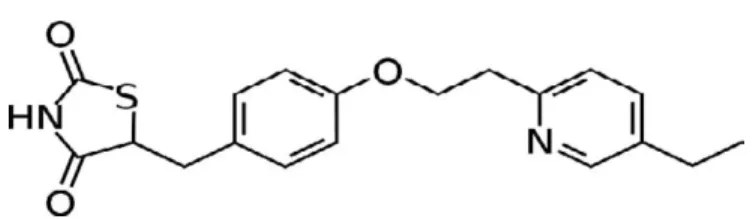
Pioglitazone hydrochloride (PH) is 5-(4-[2-(5-ethylpyri-din-2-yl)ethoxy] benzyl) thiazolidine-2,4-dione (Figure 1). It belongs to the BCS Class 2 and is practically insoluble in water but soluble in organic solvents like methanol, dimethyl sulfoxide, and dimethyl formamide. It selectively stimulates the nuclear peroxisome proliferator-activated gamma receptor (PPAR-γ) and, to a lesser extent, peroxi-some proliferator-activated alpha receptor (PPAR-α). It is primarily used in the treatment of diabetic condi-tions alone or in combination with other medicacondi-tions. It modulates the transcription of the insulin-sensitive genes involved in the control of glucose and lipid metabolism in the muscle, adipose tissue, and liver. As a result, it re-duces insulin resistance in the liver and peripheral tissues, increases the expense of insulin-dependent glucose, de-creases withdrawal of glucose from the liver, and reduces the quantity of glucose (7–9).
Although there is an increasing number of works de-scribing the determination of pH in biological fluids and pharmaceutical formulations by several methods (10), this drug is not listed in any pharmacopoeia. The FDA has sug-gested experimental conditions for the dissolution test for PH tablets (11).
The aim of the present work was to establish experi-mental conditions for the dissolution test for pioglitazone in tablet dosage forms and to validate the dissolution test for specificity, precision, linearity and range, accuracy, and robustness.
MATERIALS AND METHODS
Pioglitazone hydrochloride reference standard (99.947%) was kindly supplied by Aarti drugs Ltd, Mum-bai. Piomed tablets (Batch No. DQO 003AK, manufac-turing date: July 2010, expiry date: Dec 2013, IPCA Ltd, Pune) containing 15 mg of pioglitazone hydrochloride were obtained commercially. Analytical reagent grade potassium chloride, potassium hydrogen phthalate, and hydrochloric acid (Qualigens, Mumbai); potassium hydrogen phosphate (Fischer Inorganics and Aromatics, Madras); and sodium hydroxide (Finar Ltd, Ahmadabad) were used. Freshly distilled water was used throughout the study. Potassium chloride buffer (pH 1.2, 1.5, and 1.8), neutralized phthalate buffer (pH 4.4), mixed buffer (pH 6.8), phosphate buffer (pH 6.2, 6.8, and 7.2), borate buffer (pH 8.0 and 8.6), and 0.1 N HCl were prepared according to
USP 27 (12).
Apparatus
The dissolution test was performed in a six-station Electrolab TDT dissolution tester (model TDT-06L) in accordance with USP 27 general methods. A Shimadzu UV–vis spectrophotometer (model UV–1800) using 1.0-cm quartz cells and Spectra Manager software were used for all absorbance measurements. A digital pH meter, model P101 (Hanna Instruments, Italy) was used to determine the pH of all solutions. The ultrasonic bath used for deaeration was the model U311 (Remi Equipments, Mumbai).
Determination of Solubility and Sink Conditions
Solubility data were used as the basis for the selection of a dissolution medium for pioglitazone hydrochloride. Drug solubility was determined at 25 °C in different media and expressed as mg/mL. The term sink conditions (13) is defined as the volume of medium at least three times greater than that required to form a saturated solution of drug substance. Sink conditions were determined in dif-ferent media: potassium chloride buffer (pH 1.2, 1.5, and 1.8), neutralized phthalate buffer (pH 4.4), mixed buffer (pH 6.8), phosphate buffer (pH 6.2, 6.8, and 7.2), borate buffer (pH 8.0 and 8.6), and 0.1 N HCl. Vessels (n = 3) con-taining 10 mL of medium and an excess of PH (100 mg) were gently rotated on a mechanical shaker at a constant temperature 25 °C for 24 h and then kept undisturbed for 4 h to attain equilibrium. The solution was filtered through Whatman No. 41 filter paper and analyzed spectropho-tometrically at 269 nm after appropriate dilutions with 0.1 N HCl.
Stability Determination
Solution stability (1) was analyzed over 48 h at room temperature. Sample solutions were prepared in the same dissolution media and at the same conditions as for the dissolution test. Aliquots (1 mL) were collected initially and at 24-h intervals for 2 days and analyzed spectro-photometrically. The drug concentrations observed in samples at 0, 24, and 48 h were compared. The absolute differences between the results at time zero and the time of analysis indicate stability.
Quality Control Testing of 15-mg Piomed Tablets
Piomed tablets containing 15 mg of pioglitazone hy-drochloride were evaluated for color, shape, size, weight
38
DissolutionTechnologies | NOVEMBER 2012variation, friability, disintegration time, hardness, drug content, and content uniformity (14, 15).
Mechanical Calibration of Dissolution Apparatus
A recent FDA guideline (16) suggests that mechanical calibration can be used alternatively, and when properly executed, it can satisfy CGMP requirements. Convention-ally, for oral solid dosage forms, dissolution Apparatus 1 or 2 is suggested. Hence, mechanical calibration was carried out for Apparatus 1 and 2.
Optimization of Dissolution Test
The dissolution experiments were conducted in a six-station bath dissolution apparatus by subjecting six Piomed tablets to 900 mL of each dissolution medium, both a paddle and a basket dissolution apparatus, and stirring speeds of 50, 75, and 100 rpm (15, 17, 18). The tem-perature was stabilized at 37 ± 0.5 ° C. Aliquots of 10 mL were withdrawn manually at 5, 10, 15, 20, 30, and 40 min. The same volume of medium at 37 ± 0.5 ° C was replaced for constant volume. The sample was filtered through Whatman No. 41 filter paper and analyzed spectrophoto-metrically at 269 nm. The standard solution used in all dissolution tests was prepared using pioglitazone equiva-lent to 15 mg. The UV spectrophotometric method was developed and validated in our laboratory.
Filter Evaluation
The filter evaluation is necessary to ensure that it does not adsorb drug and that it removes insoluble excipients that may otherwise cause high background or turbidity (1, 19). A standard and a sample solution were prepared in the proposed dissolution medium (potassium chloride buffer pH 1.5). The sample solutions were prepared using a placebo to which was added an amount of reference standard equivalent to 15 mg of pioglitazone in a beaker with 900 mL dissolution medium at 37.0 ± 0.5 °C and stirred with a magnetic stirrer at 75 rpm for 1 h. Aliquots of 10 mL were withdrawn at the same point. The sample solutions were either centrifuged or filtered through Whatman No. 41 filter paper. The unfiltered solutions were treated as the standard solutions. They were diluted suitably, and all the solutions were analyzed spectropho-tometrically. A filter is acceptable for use if the results of the filtered portions approach 98–102% of the original concentrations of the unfiltered standard solution and the centrifuged sample solution.
Deaeration
Deaerated medium is necessary for the evaluation of the dissolution behavior of drugs because nondeaerated medium causes variations in the amount of drug dissolved and an increase in the variability of the results (19, 20). A standard and sample solution of pioglitazone hydrochlo-ride were prepared in the proposed dissolution medium, potassium chloride buffer pH 1.5, at a final concentration
of 20 μg/mL. The sample solutions were prepared using 900 mL of nondeaerated medium. The medium was soni-cated for 1 h at 37 ± 0.5 °C. The standard solutions were prepared using 900 mL of the same medium after ultra-sonication. All solutions were analyzed by the UV method. The results of the sample solutions were compared with those of the original concentrations of deaerated standard solutions.
Validation of Dissolution Method
The method was validated by the analysis of specificity, linearity, accuracy, precision, and robustness (21, 22) to demonstrate reproducibility and reliability.
Specificity
A placebo sample of the reference commercial formula-tion of tablets in the usual concentraformula-tion of excipients was prepared to demonstrate reproducibility and reliability of the method. The placebo sample was transferred to vessels containing 900 mL of deaerated dissolution me-dium and stirred at 37 °C for 1 h at 75 rpm using a paddle apparatus. Aliquots of the solutions were filtered through Whatman No. 41 filter paper and analyzed by UV spectro-photometric method.
Linearity
Aliquots of pioglitazone hydrochloride stock solution (100 μg/mL) were diluted with pH 1.5 potassium chloride buffer and 0.1 N HCl to give concentrations of 10–60 μg/ mL. Each solution was prepared in triplicate. The linearity was evaluated by linear regression analysis, which was calculated by the least square regression method.
Accuracy
The recovery study was performed using a well-charac-terized lot of drug product with tight content uniformity. Pioglitazone hydrochloride reference substance was added to the dissolution vessels in known amounts at the 80%, 100%, and 120% levels. Accordingly, 12, 15, and 18 mg of reference drug was added along with each 15-mg tablet. The dissolution test was performed on Piomed tablets for 40 min using 900 mL of pH 1.5 potassium chlo-ride buffer as medium in a paddle apparatus at 75 rpm. Aliquots of 10 mL were filtered through Whatman No. 41 filter paper and analyzed by UV spectrophotometric method at the spiked concentration levels of 80%, 100%, and 120%, respectively. Each concentration was analyzed in triplicate.
Precision
Repeatability (intraassay) was determined by analyzing six samples of Piomed tablets with the optimized dissolu-tion test. Aliquots were collected and evaluated by the UV method at 269 nm. Thus, repeatability was evaluated with the relative standard deviation (RSD) of the data at the 100% level.
DissolutionTechnologies | NOVEMBER 2012
39
The evaluation of intermediate precision was performedusing a well-characterized lot of drug product of tight content uniformity. The intermediate precision (interday) was determined on different days by different analysts, and the RSD values were calculated. The dissolution test was performed on six Piomed tablets for 40 min using 900 mL of pH 1.5 potassium chloride buffer as dissolu-tion medium in Apparatus 2 at 75 rpm. Aliquots of 10 mL were filtered with quantitative filter and analyzed by the UV spectrophotometric method. Each concentration was analyzed in triplicate.
Robustness
The robustness was tested by changing several param-eters of the dissolution method subsequently: analyst, equipment, and laboratory. The dissolution test was performed on six Piomed tablets for 40 min using 900 mL of pH 1.5 potassium chloride buffer as medium in Appara-tus 2 at 75 rpm in different laboratories, with two different analytical instruments in the same laboratory, and with two different analysts. Aliquots of 10 mL were filtered and analyzed by the UV method. The dissolution data were compared with the initial data.
RESULTS AND DISCUSSION
Determination of Solubility and Sink Conditions
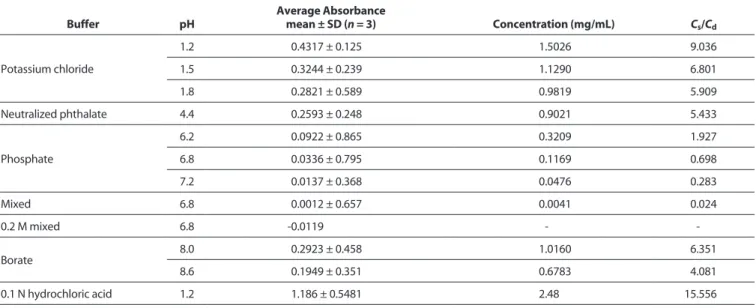
The solubility profile of PH demonstrates that the solu-bility is pH dependent. PH exhibited substantial solubil-ity at pH 1.2, 1.5, and 8.0. The maximum solubilsolubil-ity was observed in 0.1 N HCl. The solubility of PH increases as the pH decreases (Table 1) since PH is a weak base and exists in ionized form at a pH less than its pKa of 12.06 (18).
The solubility of PH in water was not tested because water is a nonideal dissolution medium for PH. In addition, water quality is variable depending on the source and
water pH is variable depending on the API and the excipi-ents. Water is not considered a physiologically relevant medium as it is not representative of the gastric environ-ment (23).
The ratio of saturation solubility to drug concentra-tion (dose), expressed as Cs/Cd, represents the closeness
to sink conditions; sink conditions occurs when the amount of drug that can be dissolved in the dissolution medium is three times greater than the amount of drug to be dissolved. A low Cs/Cd ratio shows the existence
of non-sink conditions. The rate of drug dissolution will be slowed by the limited solubility of the drug in that medium. In the present study, the value of Cs/Cd is
greater than 3 in potassium chloride buffer at pH 1.2, 1.5, and 1.8 (23); borate buffer at pH 8; and 0.1 N HCl. Accordingly, sink conditions exist in a small volume of these dissolution media. A larger dissolution volume (900 mL) was selected considering the higher strength PH tablets (20).
Stability Determination
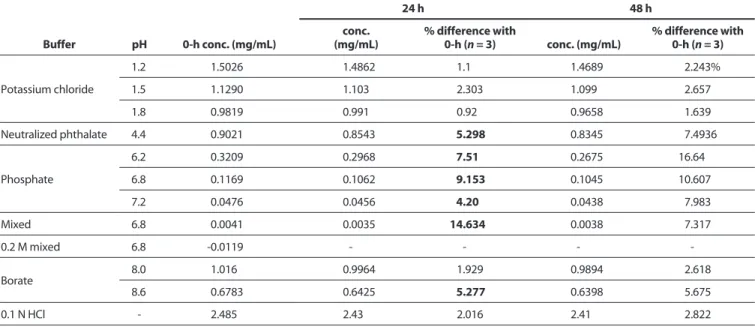
Drug solubility and solution stability are important properties to be considered when selecting the dissolu-tion medium. If standard soludissolu-tions are not stable in a dissolution medium for at least 24 h at ambient tempera-ture, it should not be chosen (23). Stability study results (Table 2) reveal that the change in concentration of drug samples stored in different dissolution media (potassium chloride buffer pH 1.2, 1.5, and 1.8; borate buffer pH 8; and 0.1 N hydrochloric acid) and in light at 25 °C over 2 days was less than 3% of that of reference solutions.
Quality Control Testing of Piomed 15-mg Tablets
Quality control test results of 15-mg Piomed tablets containing pioglitazone hydrochloride complied with IP specifications. (Results not reported.)
Table 1. Solubility of Pioglitazone Hydrochloride
Buffer pH Average Absorbance mean ± SD (n = 3) Concentration (mg/mL) Cs/Cd Potassium chloride 1.2 0.4317 ± 0.125 1.5026 9.036 1.5 0.3244 ± 0.239 1.1290 6.801 1.8 0.2821 ± 0.589 0.9819 5.909 Neutralized phthalate 4.4 0.2593 ± 0.248 0.9021 5.433 Phosphate 6.2 0.0922 ± 0.865 0.3209 1.927 6.8 0.0336 ± 0.795 0.1169 0.698 7.2 0.0137 ± 0.368 0.0476 0.283 Mixed 6.8 0.0012 ± 0.657 0.0041 0.024 0.2 M mixed 6.8 -0.0119 - -Borate 8.0 0.2923 ± 0.458 1.0160 6.351 8.6 0.1949 ± 0.351 0.6783 4.081 0.1 N hydrochloric acid 1.2 1.186 ± 0.5481 2.48 15.556
40
DissolutionTechnologies | NOVEMBER 2012Mechanical Calibration of Dissolution Apparatus
The results of the mechanical calibration demonstrated the suitability of the dissolution apparatus for test pur-poses. (Results not reported.)
Optimization of Dissolution Test
Correlation of the solubility and stability data and the influence of sink conditions indicate that potassium chloride buffer pH 1.2, 1.5, and 1.8; borate buffer pH 8; and 0.1 N hydrochloric acid are suitable dissolution media. The results of the dissolution study are depicted in Figures 2–5.
The results indicate that dissolution of PH from Piomed tablets was pH dependent. In the case of potassium chloride buffer pH 1.2, the amount dissolved was less as compared with potassium chloride buffer pH 1.5, prob-ably due to a decrease in the surface ionization at pH 1.2. The dissolution was reduced with an increase in the pH
of the dissolution medium from 1.5 to 1.8. These obser-vations corroborate the findings of Sayer et al. (24), who reported that dissolution of both trimethoprim and sulfa-methoxazole from co-trimoxazole tablets was pH depen-dent. The dissolution guidelines recommend that the pH of the dissolution medium should not exceed 8. Therefore, borate buffer pH 8 was not considered while optimizing the dissolution method (13).
Dissolution of drug from a dosage form involves at least two consecutive steps, liberation of the drug from the formulation matrix (disintegration) followed by dissolu-tion of the drug (solubilizadissolu-tion of the drug particles) in the dissolution medium. For most of the immediate-release formulations of poorly soluble drugs, the rate of dissolu-tion is intrinsically controlled. Although the solubility of PH was greater in potassium chloride buffer pH 1.2 than in potassium chloride buffer pH 1.5, the amount of PH dissolved in the pH 1.2 buffer was less than in the pH 1.5
Table 2. Stability Data for Pioglitazone Hydrochloride
Buffer pH 0-h conc. (mg/mL)
24 h 48 h
conc.
(mg/mL) % difference with 0-h (n = 3) conc. (mg/mL) % difference with 0-h (n = 3)
Potassium chloride 1.2 1.5026 1.4862 1.1 1.4689 2.243% 1.5 1.1290 1.103 2.303 1.099 2.657 1.8 0.9819 0.991 0.92 0.9658 1.639 Neutralized phthalate 4.4 0.9021 0.8543 5.298 0.8345 7.4936 Phosphate 6.2 0.3209 0.2968 7.51 0.2675 16.64 6.8 0.1169 0.1062 9.153 0.1045 10.607 7.2 0.0476 0.0456 4.20 0.0438 7.983 Mixed 6.8 0.0041 0.0035 14.634 0.0038 7.317 0.2 M mixed 6.8 -0.0119 - - - -Borate 8.0 1.016 0.9964 1.929 0.9894 2.618 8.6 0.6783 0.6425 5.277 0.6398 5.675 0.1 N HCl - 2.485 2.43 2.016 2.41 2.822
Figure 2. Dissolution profiles of Piomed tablets in pH 1.2 potassium chloride buffer.
Figure 3. Dissolution profiles of Piomed tablets in pH 1.5 potassium chloride buffer.
DissolutionTechnologies | NOVEMBER 2012
41
buffer. This may be due to a lower rate of intrinsicdissolu-tion of PH in potassium chloride buffer pH 1.2. The rate of precipitation (Kprecipitation) of PH may be slightly more
than the rate of disintegration (Kdisintegration) in potassium
chloride buffer pH 1.2 (25).
The dissolution profiles demonstrate incomplete dis-solution of PH tablets in potassium chloride buffer pH 1.2, 1.5, and 1.8, in paddle or basket apparatus, at the stirring speeds of 50, 75, and 100 rpm. The percent release was less than 85% within 30 min; therefore, the minimum requirements established by USFDA were not satisfied (26). On the other hand, the use of 0.1 N hydrochloric acid dissolution medium with a paddle or basket apparatus at 50, 75, and 100 rpm yielded a satisfactory dissolution of the drug in the first 30 min of the test, with drug release greater than 85%. The FDA guideline for dissolution test-ing of immediate-release solid oral dosage forms (26) rec-ommends a two-point dissolution specification for slowly dissolving or poorly water soluble drugs (BCS Class 2), one at 15 min to include a dissolution range (a dissolution window) and the other at a later point (30, 45, or 60 min) to ensure 85% dissolution. The dissolution test conditions suggested by FDA for pioglitazone hydrochloride tablets
(11), namely a collection time of 30 min, are inadequate, and more samples are essential.
Drug release was greater with the paddle apparatus. The selection of the stirring speed was based on the recommended range for Apparatus 1 and 2 for tablets. The effect of rotation speed of the paddles on the dissolu-tion profile of PH was examined at 50, 75, and 100 rpm. In general, mild agitation conditions and less volume of dis-solution medium should be maintained during disdis-solution testing to allow maximum discriminatory power since the dissolution apparatus tends to become less discriminating when operated at faster speeds, resulting in a flatter drug release profile (26).
When 0.1 N hydrochloric acid was used as the dissolu-tion medium, PH showed a faster dissoludissolu-tion rate, which was not desirable because this condition may not reflect in vivo performance and an adequate capacity to differ-entiate between different formulations. The dissolution profile obtained in potassium chloride buffer pH 1.5 for paddle apparatus at 75 rpm was slower and may have better capacity to differentiate the formulations. One of the desirable features of the dissolution method is its discriminatory capacity (27). In potassium chloride buffer
Figure 5. Dissolution profiles of Piomed tablets in 0.1 N hydrochloric acid. Figure 4. Dissolution profiles of Piomed tablets in pH 1.8 potassium
chloride buffer.
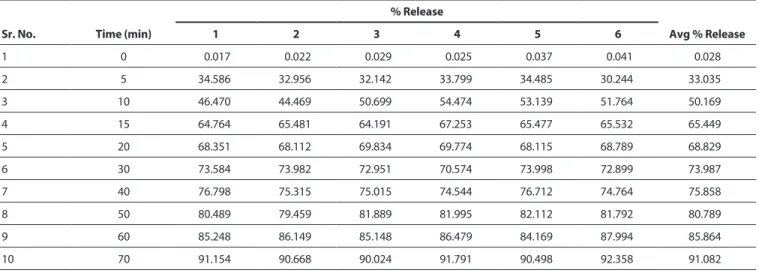
Table 3. Dissolution Release Rate of Piomed Tablets in pH 1.5 Potassium Chloride Buffer, Paddle Apparatus, 75 rpm
Sr. No. Time (min)
% Release Avg % Release 1 2 3 4 5 6 1 0 0.017 0.022 0.029 0.025 0.037 0.041 0.028 2 5 34.586 32.956 32.142 33.799 34.485 30.244 33.035 3 10 46.470 44.469 50.699 54.474 53.139 51.764 50.169 4 15 64.764 65.481 64.191 67.253 65.477 65.532 65.449 5 20 68.351 68.112 69.834 69.774 68.115 68.789 68.829 6 30 73.584 73.982 72.951 70.574 73.998 72.899 73.987 7 40 76.798 75.315 75.015 74.544 76.712 74.764 75.858 8 50 80.489 79.459 81.889 81.995 82.112 81.792 80.789 9 60 85.248 86.149 85.148 86.479 84.169 87.994 85.864 10 70 91.154 90.668 90.024 91.791 90.498 92.358 91.082
42
DissolutionTechnologies | NOVEMBER 2012pH 1.5, drug release was slower than in 0.1 N hydrochloric acid. For the same reason, Mendonca et al. (28) selected phosphate buffer pH 6.8 instead of 0.1M hydrochloric acid to study the release rate of dilitazime hydrochloride. Vaucher et al. (1) chose phosphate buffer pH 7.5 for the dissolution method for coated telithromycin tablets. The optimum dissolution conditions for the assessment of PH release rate were 900 mL of potassium chloride buffer pH 1.5 at 37 °C as the dissolution medium, paddle apparatus at a stirring speed of 75 rpm and 60 min as collection time (Table 3).
Filter Evaluation
The results of the filter evaluation reveal that the abso-lute differences between the concentrations of standard samples (in potassium chloride buffer pH 1.5) and filtered/ centrifuged samples were within 98–102%. This demon-strates the absence of PH adsorption by the filter and the suitability of Whatman No. 41 filter paper in the dissolu-tion test (1).
Deaeration
The effect of dissolved gases in the medium on PH dis-solution revealed that the amount of dissolved drug was less in nondeaerated medium and the results were more variable (1, 20). Thus, deaerated dissolution media was needed during dissolution study.
Validation of Dissolution Test
After the best experimental conditions were selected, the dissolution test was validated (17–22).
Specificity
When the placebo tablets were subjected to the dissolu-tion test and analyzed, the corresponding absorbance was equivalent to 1.64% PH concentration. According to ICH guidelines, the dissolution method is specific if the
Table 4. Dissolution Test Linearity Results for Pioglitazone Hydrochloride
Sr. No. Concentration (μg/mL) Absorbance ± Standard Deviation (n = 3)
1 10 0.2380 ± 0.003551 2 20 0.4620 ± 0.003404 3 30 0.7028 ± 0.003593 4 40 0.9034 ± 0.002524 5 50 1.1134 ± 0.000917 6 60 1.3600 ± 0.001000
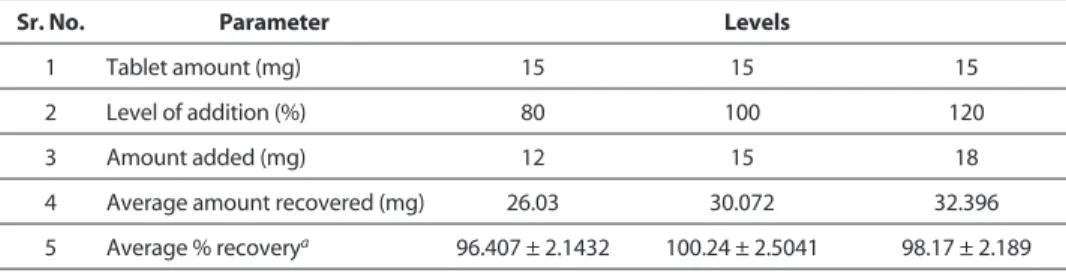
Table 5. Dissolution Test Accuracy Results for Pioglitazone Hydrochloride
Sr. No. Parameter Levels
1 Tablet amount (mg) 15 15 15 2 Level of addition (%) 80 100 120 3 Amount added (mg) 12 15 18 4 Average amount recovered (mg) 26.03 30.072 32.396 5 Average % recoverya 96.407 ± 2.1432 100.24 ± 2.5041 98.17 ± 2.189 a Each reading is mean ± SD (n = 3)
Table 6. Dissolution Test Precision (Intraday) Results for Pioglitazone Hydrochloride
Sr. No. Time (min)
Average % Release ± SD (n = 3) 10:00 am 3:00 pm 8:00 pm 1 0 0.021 ± 0.8754 0.030 ± 1.1487 0.028 ± 1.5479 2 5 30.879 ± 0.5945 33.258 ± 0.8862 34.298 ± 0.4873 3 10 50.569 ± 1.1580 54.897 ± 1.7542 52.487 ± 0.8769 4 15 64.848 ± 1.1173 66.557 ± 1.2350 67.589 ± 1.5731 5 20 66.598 ± 0.4861 67.883 ± 1.0263 68.359 ± 1.2287 6 30 69.667 ± 0.8975 70.487 ± 0.3892 71.028 ± 0.8534 7 40 72.589 ± 0.7756 73.589 ± 1.4875 73.669 ± 0.7724 8 Average at 40 min 73.282 ± 1.0118 9 % RSD at 40 min 1.704
DissolutionTechnologies | NOVEMBER 2012
43
interference is not more than 2%. The dissolution methodwas specific.
Linearity
To assess linearity, a standard curve for PH was con-structed by plotting average absorbance versus concen-tration (Table 4). The curves depict good linearity in the range of 10–60 μg/mL. The line equation was y = 0.0286x + 0.0007 with a slope of 0.0286 and r2 of 0.999. The RSD for each point was less than 2%. These data indicate that the method is linear for pioglitazone within the specifica-tion limits.
Accuracy
The accuracy expresses the agreement between the accepted value and the observed value. According to ICH guidelines, the recovery for a dissolution test must be in the range of 95–105%. The percent recovery was from 96.407% to 100.24%. The accuracy of the method is ac-ceptable (Table 5).
Precision
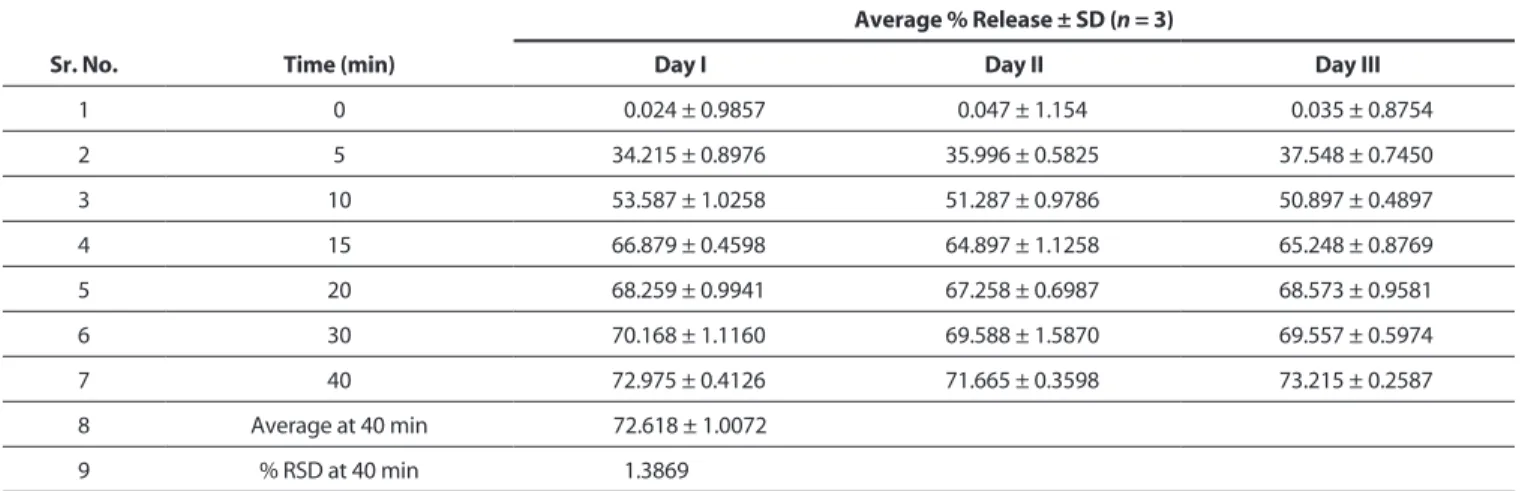
The percent RSD did not exceed 5% for the repeatability and intermediate precision, demonstrating suitable preci-sion (Tables 6 and 7).
Robustness
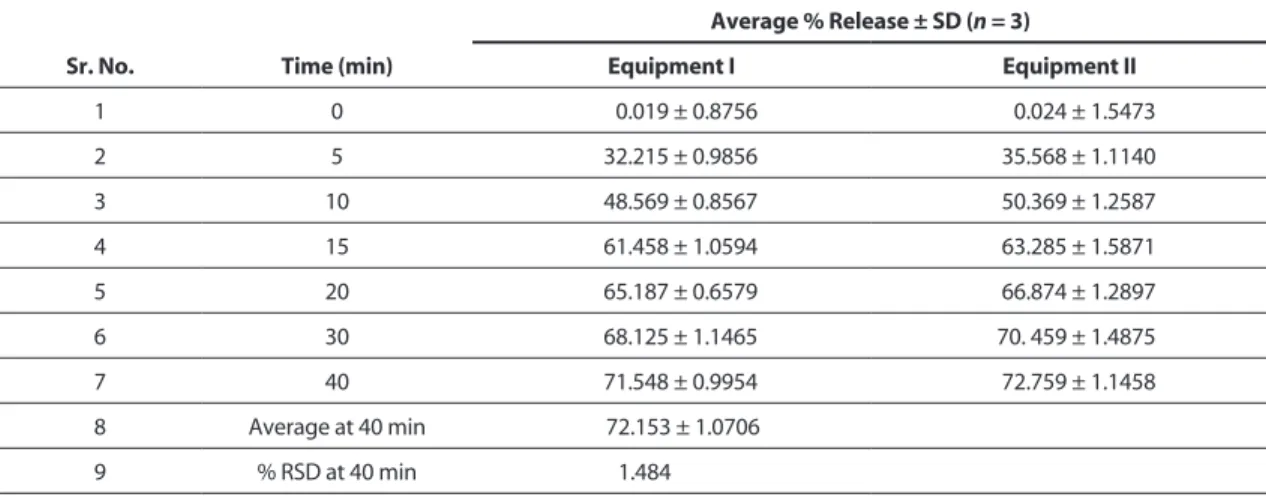
The robustness of the method was demonstrated by changing the analyst, the instrument, and the labora-tory (interlaboralabora-tory study). The percent RSD values were within the specified limit of 5% indicating the robustness of dissolution method (Tables 8–10).
CONCLUSION
The dissolution test developed and validated for pioglitazone tablets is considered satisfactory. The most discriminating conditions for dissolution testing of pio-glitazone tablets (i.e., pH 1.5 potassium chloride buffer medium, paddle apparatus, stirring speed of 75 rpm, and collection time of 60 min) appear to be the best condition. The validation shows that the dissolution test is
appropri-Table 7. Dissolution Test Precision (Interday) Results for Pioglitazone Hydrochloride
Sr. No. Time (min)
Average % Release ± SD (n = 3)
Day I Day II Day III
1 0 0.024 ± 0.9857 0.047 ± 1.154 0.035 ± 0.8754 2 5 34.215 ± 0.8976 35.996 ± 0.5825 37.548 ± 0.7450 3 10 53.587 ± 1.0258 51.287 ± 0.9786 50.897 ± 0.4897 4 15 66.879 ± 0.4598 64.897 ± 1.1258 65.248 ± 0.8769 5 20 68.259 ± 0.9941 67.258 ± 0.6987 68.573 ± 0.9581 6 30 70.168 ± 1.1160 69.588 ± 1.5870 69.557 ± 0.5974 7 40 72.975 ± 0.4126 71.665 ± 0.3598 73.215 ± 0.2587 8 Average at 40 min 72.618 ± 1.0072 9 % RSD at 40 min 1.3869
Table 8. Robustness of Dissolution Test with Change in Analyst
Sr. No. Time (min)
Average % Release ± SD (n = 3) Analyst I Analyst II 1 0 0.021 ± 1.1453 0.034 ± 0.9754 2 5 33.328 ± 0.7658 34.056 ± 0.4581 3 10 50.269 ± 1.125 49.568 ± 1.1487 4 15 63.548 ± 0.8815 64.115 ± 1.4598 5 20 66.287 ± 1.548 68.149 ± 0.8736 6 30 69.581 ± 0.9568 70.298 ± 1.558 7 40 71.695 ± 1.056 73.258 ± 0.7598 8 Average at 40 min 72.476 ± 1.0483 9 % RSD at 40 min 1.446
44
DissolutionTechnologies | NOVEMBER 2012ate for quantification of pioglitazone in tablet pharmaceu-tical form for in vitro studies, presenting selectivity, linear-ity, precision, accuracy, and robustness. The method is adequate for use in quality control testing of pioglitazone tablets since a dissolution test is not indicated in an official monograph, but is included in Pharmacopeial Forum. ACKNOWLEDGMENTS
The authors are grateful to Padmashree Mrs. Fatma Rafiq Zakaria for encouraging and providing the research facilities. The authors are thankful to Aarti Drugs Limited, Mumbai, for providing the gift sample of pioglitazone hydrochloride. REFERENCES
1. Vaucher, L. C. Development and validation of a dis-solution test for telithromycin in coated tablets. Quim.
Nova 2009, 32 (5), 1–5.
2. Oliveira, E.; Azevedo, R.; Bonfilio, R.; Oliveira, D. B.; Ribeiro, G. P.; Araujo, M. B.. Dissolution test optimiza-tion for meloxicam in the tablet pharmaceutical form.
Braz. J. Pharm. Sci. 2009, 45 (1), 67–73.
3. Soni, T.; Nagda, C.; Gandhi, T.; Chotai, N. P.
Development of discriminating method for dissolu-tion of aceclofenac marketed formuladissolu-tions. Dissoludissolu-tion
Technol. 2008, 15 (2), 31–35.
4. Dressman, J. B.; Amidon, G. L.; Reppas, C.; Shah, V. P. Dissolution Testing as a Prognostic Tool for Oral Drug Absorption: Immediate Release Dosage Forms. Pharm.
Res. 1998, 15 (1), 11–22.
5. Ansari, M.; Kazemipour, M.; Talebnia, J. The
Development and Validation of a Dissolution Method for Chlomipramine Solid Dosage Forms. Dissolution
Technol. 2004, 11 (3), 16–24.
6. Space, J. S.; Opio, A. M.; Nickerson, B.; Giang, H.; Dumont, M.; Berry, M. Validation of a dissolution method with HPLC analysis for lasofoxifene tartrate low dose tablets. J. Pharm. Biomed. Anal. 2007, 44 (5), 1064–1071.
7. Pioglitazone product information. Cayman Chemical Company Web site. https://www.caymanchem.com/ app/template/Product.vm/catalog/71745 (accessed Oct 9, 2012).
Table 9. Robustness of Dissolution Test with Change in Equipment
Sr. No. Time (min)
Average % Release ± SD (n = 3) Equipment I Equipment II 1 0 0.019 ± 0.8756 0.024 ± 1.5473 2 5 32.215 ± 0.9856 35.568 ± 1.1140 3 10 48.569 ± 0.8567 50.369 ± 1.2587 4 15 61.458 ± 1.0594 63.285 ± 1.5871 5 20 65.187 ± 0.6579 66.874 ± 1.2897 6 30 68.125 ± 1.1465 70. 459 ± 1.4875 7 40 71.548 ± 0.9954 72.759 ± 1.1458 8 Average at 40 min 72.153 ± 1.0706 9 % RSD at 40 min 1.484
Table 10. Robustness of Dissolution Test with Change in Laboratory
Sr. No. Time (min)
Average % Release ± SD (n = 3) Laboratory I Laboratory II 1 0 0.024 ± 1.2487 0.037 ± 0.5476 2 5 33.154 ± 1.2481 34.158 ± 0.5874 3 10 46.879 ± 1.1254 48.247 ± 1.485 4 15 60.887 ± 0.9570 62.587 ± 0.8576 5 20 64.589 ± 1.5486 65.218 ± 0.9758 6 30 67.256 ± 0.8659 69.115 ± 1.5874 7 40 70.556 ± 1.3598 72.876 ± 0.7798 8 Average at 40 min 71.692 ± 1.0698 9 % RSD at 40 min 1.492
DissolutionTechnologies | NOVEMBER 2012
45
8. ACTOS (pioglitazone hydrochloride) Tablets. RxList:The Internet Drug Index Web site. http://www.rxlist. com/actos-drug.htm (accessed Oct 9, 2012). 9. Pioglitazone; MSDS No. 71745 [Online]; Cayman
Chemical Company: Ann Arbor, MI, May 3, 2006. http:// www.caymanchem.com/msdss/71745m.pdf (accessed Oct 9, 2012).
10. Alim, M. A Study of Pioglitazone Biokinetics, Renal Clearance and Its Effects on Glycation Level. Ph.D. Dissertation, University of Agriculture, Faisalabad, Pakistan, 2009.
11. U.S. Food and Drug Administration. Dissolution Methods Database Web site. http://www.accessdata. fda.gov/scripts/cder/dissolution/index.cfm (accessed Oct 20, 2012).
12. The United States Pharmacopeia and National Formulary
USP 27–NF 24; The United States Pharmacopeial
Convention, Inc.: Rockville, MD, 2007.
13. Garcia, C. V.; Paim, C. S.; Steppe, M.; Schapoval, E. E.S. Development and validation of a dissolution test for rabeprazole sodium in coated tablets. J. Pharm.
Biomed. Anal. 2006, 41 (3), 833–837.
14. Indian Pharmacopoeia. Ministry of Health and Family Welfare, Indian Pharmacopoeia Commission: Ghaziabad, India, 2007; pp 179–182.
15. Patel, P. A.; Patravale, V. B. Commercial Telmisartan Tablets: A Comparative Evaluation with Innovator Brand Micardis. Int. J. Pharm. Sci. Res. 2010, 1 (8), 282–292. 16. The Use of Mechanical Calibration of Dissolution
Apparatus 1 and 2—Current Good Manufacturing Practice (CGMP); Guidance for Industry; U.S.
Department of Health and Human Services, Food and Drug Administration, Center for Drug Evaluation and Research (CDER), U.S. Government Printing Office: Washington, DC, 2010.
17. Breier, A. R.; Paim, C. S.; Steppe, M.; Schapoval, E. E. S. Development and validation of dissolution tests for fexofenadine hydrochloride capsules and coated tab-lets. J. Pharm. Pharm. Sci. 2005, 8 (2), 289–298.
18. Shohin, I. E.; Kulinich, J. I.; Ramensakya, G. V.; Vasilenko, G. F. Evaluation of In Vitro Equivalence for Drugs
Containing BCS Class II Compound Ketoprofen.
Dissolution Technol. 2011, 18 (1), 26–29.
19. Swartz, M.; Emanuele, M. Developing and Validating Dissolution Procedures for Improved Product Quality, 2009. White Paper. Smithers Pharma Services Web site. http://www.smitherspharma.com/resources (accessed Oct 10, 2012).
20. Sperandeo, N. R.; Kassuha, D. E. Development and Validation of a Dissolution Test for 6 mg Deflazacort Tablets. Sci. Pharm. 2009, 77, 679–693.
21. International Conference on Harmonisation. Validation
of Analytical Procedures: Text and Methodology, Q2(R1);ICH Harmonized Tripartite Guideline: Geneva,
Switzerland, 2005.
22. The United States Pharmacopeia and National Formulary
USP 32–NF 27; The United States Pharmacopeial
Convention, Inc.: Rockville, MD, 2009.
23. Gowthamarajan, K.; Singh, S. K. Dissolution Testing for Poorly Soluble Drugs: A Continuing Perspective.
Dissolution Technol. 2010, 17 (3), 24–32. 24. Sayar, E.; ¸Sahin, S.; Cevhero˘glu, ¸S.; Hinchal, A.
A. Comparison of Dissolution Profiles of Two
Commercially Available Co-Trimoxazole Tablets. FABAD
J. Pharm. Sci. 2008, 33, 87–94.
25. Brown, C. K.; Chokshi, H. P.; Nickerson, B.; Reed, R. A.; Rohrs, B. R.; Shah, P. A. Acceptable Analytical Practices for Dissolution Testing of Poorly Soluble Compounds.
Pharm. Tech. 2004, 28 (12), 56–65.
26. Dissolution Testing of Immediate Release Solid Oral Dosage
Forms; Guidance for Industry; U.S. Department of Health
and Human Services, Food and Drug Administration, Center for Drug Evaluation and Research (CDER), U.S. Government Printing Office: Washington, DC, 1997. 27. Qureshi, S. A. Developing Discriminatory Drug
Dissolution Tests and Profiles: Some Thoughts for Consideration on the Concept and Its Interpretation.
Dissolution Technol. 2006, 13 (4), 18–23.
28. Mendonça, T. F.; de Barros, E. G.; Pereira, G. R.; de Araújo, M. B.; Bonfilio, R. Development and validation of dissolution test for diltiazem hydrochloride in imme-diate release capsules. Quim. Nova. 2011, 34 (3), 1–7.