Ways to restrict the differential path
ZiJie Xu and Ke Xu [email protected]
Abstract: People had developed some attack methods to attack hash function. These methods need to choose some "differential pattern"[Dau05]. We present a way to restrict the collisions that hold the "differential pattern". At the same time, to build a hash function that meet the different needs, we propose a construction.
Key Words: differential path, differential cryptanalysis, hash function, data-depend function
1.
Introduction
Magnus Daum[Dao05] had presentation hash function and the attack methods Dobbertin’s method[Dob95, Dob96a, Dob96c, Dob97, Dob98a], Chabaud and Joux’s method [CJ98] and Wang’s method[WYY05]. These attack methods include two parts[Dao05].
One part is choosing "differential pattern" [Dao05]. The work in this part is use modular difference, xor-difference and bitwise deference define all differences in the calculation. Dobbertin’s method uses mainly modular divergences, Chabaud and Joux’s method uses xor-difference, and Wang’s method uses modular divergences, xor-difference
a nd b it w is e d efe r e nc e .
In Wang’s method, when "differential pattern" is determined, it can build sufficient conditions[EUROCRYPT’05] that hold the "differential pattern". The collision must satisfy
the sufficient conditions. In a way, the sufficient conditionsastrict the messages that will
hold "differential pattern". But the sufficient conditions is for the chain values. In different attack, the messages that conform the "differential pattern" maybe different. If there is some measures can be used to astrict the messages, then it can control the collision that attacker can get. We will present ways to astrict the conditions in section 2 and section 3.
"differential pattern". M. Schläffer and E. Oswald[1], P.-A. Fouque, G. Leurent, and P. Nguyen[1] had developed an algorithm to construct the differential path. The algorithm will determine the defference at every step operation in order. It can think of the algorithm as a search technology. The complexity of the algorithm depends on the size of difference space. If the calculation has more step operation, it will raise the size of difference space. But it will raise the calculation at the same time. We find a construction. With the construc-tion, it can build hash function that user can regulate the number of the step operations to meet his requirement.
We will expound the ways that can be used restrict the differential path in section 2 and sec-tion 3. And then we will expound the construcsec-tion in secsec-tion 4.
We will discuss the shift of n-bits word, where l
n 2 .
2.
Modular Difference And Bitwise Deference
The modular difference is the difference of x, x’ that are elements of the ring of integers
modulo n
2 as[Dao05]:
'
x x x
And the bitwise deference is bitstrings difference of x, x’ that are elements
of the vector space n
F2 as[Dao05]:
) ,..., ,
( : ) ' ,..., ' ,
' (
: ) ' , (
: x x x 1 x 1 x 2 x 2 x0 x0 x 1 x 2 x0
x n n n n n n
Where xi{1,0,1}.
Because there exists:
1 0 1 0
2 ' '
2
n i
i i n i
i i
x x
x x
So there exists:
) 1 . 2 ( 2
2 ) ' ( 2
' 2
' 1
0 1
0 1
0 1
0
n
i
i i n
i
i i i n
i
i i n
i
i
i x x x x
x x
x x
To given x, (2.1) maybe has many roots. That means there maybe are many
bitwise differences has same modular difference.
We find a way to strict the number of the bitwise differences that has same modular
difference. Let constant /2 12 0 01...01...01
0 2
x
C n
i
i
. And let hash function has two variable x and x1. And x and x1 satisfy:
) 2 . 2 ( 2
1 /2 1
0 2
n
i i
x x
) 3 . 2 ( 2 ' 2 ' 1 1 1 2 ' 1 2 / 0 2 1 2 / 0 2 1 0 n i i n i i n i i i x x x x x x x x x There exists: 1 2 / 0 2 2 1 0 2 2 1 ' ' 1 1 1 n i i i n i i i x x C x C x x x x
There is a proposition about the reration between modular differences (x ,x1) and
bitwise deference x as follows:
Proposition 2.1: There is sole one bitwise deference x has the given modular
dif-ferences (x ,x1) that satisfy (2.3) and x0.
Proof: It can compute the bitwise difference x from the given modular differences
(x ,x1) as follow steps:
1. Let i=0.
2. The bit value of the (2i1)-th bit of C is 0, then 121 0
i
x
3. Compute 21
0 2 2 2 1 ) 2 mod 1 ( i j j j i x x
z . Then
2 2 2 2 2 2 1 2 1
2 2 1 2 2 mod 2
1
i i i
i i
i x
x z
Because 121 0
i
x , then
,... 2 , 1 , 0 2 2
12 2 2 2
k k z
x i i i
i) If 2
2
i
z , there has x12i z/2i2 1
ii) If z 0, there has 1 /2 2 0
2
i
i z
x
iii) If z 32i2, there has 1 ( ( 1) 22 2)/2 2 1
2
i i
i z
x
4. If i<n/2, let i=i+1, turn to step 2.
5. Let i=0
6. Compute j
j i j i i i x x x
z ( mod 2 ) 2 2 2
0 2 2 2 2 3
2
. Then
3 2 3 2 1 2 1
2 2 2 mod 2
i i i
i x z Then ,... 2 , 1 , 0 2
22 1 2 3
1
2
k k z
x i i i
i) If 2 1
2
i
z , there has x2i1 z/2i21 1
ii) If z 0, there has /2 2 1 0
1
2
i i z x
iii) If 2 1
2 3
i
z , there has x2i1 (z(1)22i3)/2i21 1
7.If i<n/2, let i=i+1, turn to step 6
It will compute out the only one bitwise difference x with given modular differences
modular differences (x ,x1) that satisfy (2.3) and x0. □
So it can use (2.2) to make there is only one bitwise difference satisfy some modular differences in the " d i ffe r e nt ia l p a t t e r n " .
3.
Data-depend function
In this section, we will expound a way that can restrict the message data con-form the "d i ffe r e nt ia l p a t t e r n" .
3.1 A System of Equation
At first, let hash function has two variables x, y1 and y2. And x, y1, y2 satisfy the system of equation as follows:
) 1 . 3 ( 1
0 2
2 ) (
1 1
n r r
x y
r n x
y n r
where r depends on message. (3.1) c a n b e d i v i d e d , f o r f u r t h e r a na l y s is , i n
t w o c a s e s : r r' a nd r r'.
3.2 case 1:
r r'To two computes with (x,r) and (x’,r’), there is the differences as follow:
) 2 . 3 (
' ' 2
) ' ( ' ) ( 1
'
r x r x y
r n x r n x y
x x x
There is a proposition as follows:
Proposition 3.1: To given differences x,y1,y2, if x0 r 0, (3.2) will has:
) / ) 1 2
2 ((
log 2 y y x
n
r n
Proof: Let:
) 3 . 3 (
) ' ,...., ' ( : '
) ' ,...., ' ( : '
) ,...., (
:
) ,...., (
:
) ' ,...., ' ( : '
) ,...., (
:
0 1 1
0 1 1
0 1
0 1
x x
xr
x x
xl
x x
xr
x x
xl
x x
x
x x
x
r
r n
r
r n
n n
) 4 . 3 ( 2 2 1 2 ) ' ( ) ' ( xl y xr y xr xl x xr xr xr xl xl xl r n r Then: ) 5 . 3 ( 1 2 2 2 2 2 y y xr xl x n r n n r n
If x 0, there exists:
) / ) 1 2 2 ((
log2 y y x
n
r n □
So in "differential pattern", if there exist the given differences (x,y1,y2) that
0 0
r
x , the parameter r will be fixed and cannot be modified.
3.3 case 2:
r r'Let r r r'. We use bitwise differences analyses (3.1). Denote x, y1, y2 as
follows: ) 6 . 3 ( ) 2 ,...., 2 ( : 2 ) 1 ,...., 1 ( : 1 ) ,...., ( : 0 1 0 1 0 1 y y y y y y x x x n n n
Then there has:
) . 2 . 7 . 3 ( 2 ) . 2 . 7 . 3 ( 0 0 2 ) . 1 . 7 . 3 ( 0 1 ) . 1 . 7 . 3 ( 1 0 1 1 1 ) ( ) ( b n i r y x a i r n r n i x y b r i y x a r n i r n i n i r n x y r i i r i i r n i i r n i i
To two computes with (x, y1,y2,r) and (x’ ,y1’,y2’,r’), there exist differences as follows:
We suppose r>r’, then there exists:
) 9 . 3 ( '
0 2
1 0
1
i r n y
r n i y
i i
Because r>r’, by (3.7.1.a) and (3.7.2.a), there has:
) 10 . 3 (
1 ' 1 1
1 0 '
1
1 1
1 1
1 1 1
r n r n r n
r n
r n
y y
y y y
Because 0 r' r n1, there exists 0 n1r n1. By (3.9), if i<n-r-1, there exists
0 1
i
y . Then to given difference y1, there exist:
) 11 . 3 ( }
1 1 | min{
1
i
y i n
r
Because r rr' , there exists r' rr . Now r and r’ are computed out, it can compute
the message from given differences. We will divide x and x’ to two parts and compute as follow two sections.
3.3.1 compute
(xr1,...,x0)and
(x'r'1,...,x'0)If we study (3.7.1.a)~(3.9), we will find that y1i xi(nr) and 1 0
'
i
y
(nr i nr').
It can compute xi(nr), then it can compute x'i(nr) by xi(nr) xi(nr) x'i(nr)
, then
there exists y1'i(rr') x'irr'(nr') x'i(nr) and y1i(rr') xirr'(nr) turn to )
( ' ) ( ) ' ( )
' ( ) '
( 1 1' '
1i r r y i r r y i r r xi n r r r xi n r
y
to compute xi(nr)rr'…. If repeat these
steps, it will compute bits xi(nr)k(rr'). Then it can compute (xr1,...,x0) and (x'r'1,...,x'0 )
as follows steps:
1. Let j=0.
2. Let i=0.
3. Compute xj i (r r') y1j i (r r') (n r) y1ji(rr')(nr) y1'ji(rr')(nr)
by (3.7.1.b)
and (3.9).
4. Compute x'j i (r r') xj i (r r') xji(rr')
by (3.8), and if ji(rr')r',
compute y1'ji(rr')(nr') by (3.7.1.a) as follows:
) ' ( )
' ( ) ' ( )
( ) ' ( ) 1
( 1' '
'
1j i r r n r y j i r r n r x j i r r y
5. Let i=i+1.
6. If ji(rr')r, turn to step 3.
7. Let j=j+1.
8. If jrr', turn to step 2.
From above-mentioned compute steps, it is easy know that there is sole bits
) ' ,..., ' , ,...,
3.3.2 compute
(xn1,...,xr)and
(x'n1,...,x'r')If we study (3.7.1.a)~(3.9), we will find that y2'i x'ir' and y2i 0 (nr i nr').
It can compute x'ir', then it can compute xir' by xir' xir' x'ir'
, then there exists
' ) ' (
2i r r xi r
y and y2'i(rr') x'i(rr')r' x'ir'(rr') turn to
) ' ( )
' ( )
'
( 2 2'
2i r r y i r r y i r r
y
to
compute x'ir'k(rr')…. If repeat these steps, it will compute bits xir'k(rr'). Then it
can compute (xn1,...,xr) and (x'n1,...,x'r') as follows steps:
We will compute (xn1,...,xr) and (x'n1,...,x'r') as follows steps:
1. Let j=0.
2. Let i=0.
3. Compute x'n1ji(rr') y2'n1ji(rr')r' y2n1ji(rr')r'y2n1ji(rr')r' by
(3.9.2.b) and (3.10).
4. Compute xn1ji(rr') x'n1ji(rr')xn1ji(rr') by (3.10), and if 0
' ) ' ( ) 1 (
1
j i r r r
n , compute y2n1j(i1)(rr')r' by (3.9.2.a) as
fol-lows:
) ' ( 1 )
' ( 1 '
) ' ( ) 1 (
1 2
2n j i r r r y n j i r r r xn j i r r y
5. Let i=i+1.
6. If n1 ji(rr')r'0, turn to step 3.
7. Let j=j+1.
8. If jrr', turn to step 2.
From above-mentioned compute steps, it is easy know that there is sole bits
) ' ,..., ' , ,...,
(xn1 xr xn1 xr' will satisfy (3.8).
So there exists proposition as follows:
Proposition 3.2: To given differences x,y1,y2, if r 0, there is sole pair (x,x’)
satisfy (3.8).
Proof: Let r>r’, then it can compute (xr1,...,x0) and (x'r'1,...,x'0) by the steps given in
section 3.3.1. And it can compute the sole (xn1,...,xr) and (x'n1,...,x'r') by the steps given
in section 3.3.2.
So there is only one pair (x,x’) satisfy (3.8) □
By proposition 3.2, we will know that if r 0, there is only one collision will hold given
differences. So it can modify the input.
In section 3, we discuss a system of equation (3.1) in two cases. And we get proposition 3.1
and proposition 3.2. By proposition 3.1, if the input difference x 0, the parameter
By the way, the proposition 3.2 use bitwise differences to analyze, and the modular dif-ferences is the mainly difdif-ferences that used to analyses hash function. So the proposition 3.2 maybe not works. But it can use (2.2) to strict the differences.
4. Alterable Iteration Mix Construction (AIMC)
The compression function construction of some hash functions as follows:
Figure. 1 original c o m p r e s s io n f u n c t io n c o n s t r u c t io n : M i s t h e m e s s a g e d a t a t o b e h a s h e d , E M i s e x t e n d e d w o r d s , i
h a n d hi1 a r e h a s h c h a i n v a l u e
With the construction shown in figure 1, it will use simple and high efficiency core function to build compression function. But if the ways that build the viable differential path is found, it is not easy to change the system.
At the same time, hash function is used in different scene, user maybe has different requirement, to meet these requirements, it need hash function are flexible.
M. Schläffer and E. Oswald[0], P.-A. Fouque, G. Leurent, and P. Nguyen[2] had developed an algorithm to build the differential path. Because it need determine all the differences that appear in the differential path. It can treat the algorithm as search technology. The complexity of the algorithm depend on the number of the step operation. So if the hash function has more step operations, it will increaseed complexity of the algorithm.
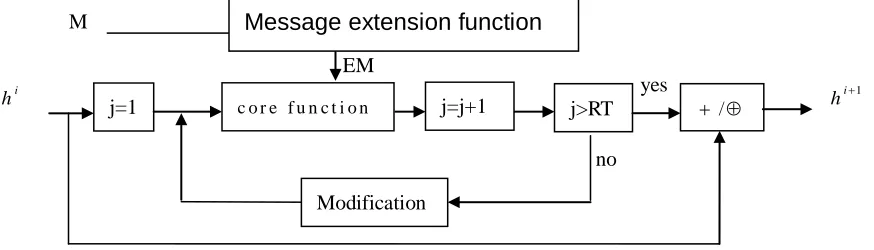
Figure. 2A lt e r a b l e I t e r a t io n M i x C o n s t r u c t io n ( A I M C ) : RT i s s e t b y u s e r
The direct idea is let user adjust the number of step operations to meet his requirement.
EM
c o r e f u n c t i o n / Message extension function
M
i
h hi1
EM
no yes
c o r e f u n c t i o n /
Message extension function M
i
h hi1
j>RT
We find a construction Alterable Iteration Mix Construction (AIMC) . The new construc-tion as figure 2:
In construction AIMC, the core functions are put into a circle. To avoid just simple repeat the core functions, it should modify the extended message words, constants or core function every circle.
In construction AIMC, if the parameter RT is turned up, it will lead to:
1. The number of the step operation will be raise. Because the complexity of the
algorithm that build the differential path depends on the number of the step opera-tion. So the complexity of the algorithm that build the differential path will be raise.
2. If the hash function is build with some appropriate constructions, when there are
more step operations, more bits in message will be fixed.
This will make it harder to build the differential path, and the differential path will fix more bits in message.
5. Conclusions
In this paper, we propose use (2.2) and (3.1) to strict differential path. By proposition 2.1, proposition 3.1 and proposition 3.1, equation (2.2) and (3.1) will strict the differences and the input that conform given differences. In fact, we find another simple nonlinear operation multiplication can be used to strict the variable to given difference. But multiplication needs multiplication operation.
To build a flexible hash function to satify different requirement, we propose construction AIMC that user can change the number of the step operations. We just give out preliminary construction, some details depend on the concrete hash function.
References:
[EUROCRYPT’05] Xiaoyun Wang and Hongbo Yu. How to break MD5 and other hash func-tions. In Cramer [Cra05], pages 19–35.
[Dau05] Magnus Daum. Cryptanalysis of Hash Functions of the MD4-Family. PhD thesis, Ruhr-Universitätat Bochum, 2005.
[Dob95] H. Dobbertin. Alf swindles Ann. CryptoBytes, 1(3):5, 1995
[Dob96a] H. Dobbertin. Cryptanalysis of MD4. In Fast Software Encryption – Cambridge Workshop, volume 1039 of LNCS, pages 53–69. Springer-Verlag, 1996.
[Dob96c] H. Dobbertin. The status of MD5 after a recent attack. Crypto-Bytes, 2(2):1–6, 1996
[Dob97] H. Dobbertin. RIPEMD with two-round compress function is not collision-free. Journal of Cryptology, 10:51–68, 1997.
[Dob98a] H. Dobbertin. Cryptanalysis of MD4. Journal of Cryptology, 11:253–274, 1998. [CJ98] F. Chabaud and A. Joux. Di?erential Collisions in SHA-0. InAdvances in Cryptology – CRYPTO’98, volume 1462 of LNCS, pages 56–71. Springer-Verlag, 1998.
[WYY05] X. Wang, Y. L. Yin, and H. Yu. Collision Search Attacks on SHA1. preprint, Febru-ary 2005. (http://www.infosec.sdu.edu.cn/paper/sha-attack-note.pdf).
[0] P.-A. Fouque, G. Leurent, and P. Nguyen. Automatic search of differential path in md4. ECRYPT Hash Workshop 2007.
http://events.iaik.tugraz.at/HashWorkshop07/papers/Leurent_MD4.pdf
[1] M. Schläffer and E. Oswald. Searching for differential paths in md4. In M. J. B.Robshaw, editor, FSE, volume 4047 of Lecture Notes in Computer Science, pages 242{261. Springer, 2006