© 2016, IJCSMC All Rights Reserved 538
Available Online atwww.ijcsmc.com
International Journal of Computer Science and Mobile Computing
A Monthly Journal of Computer Science and Information Technology
ISSN 2320–088X
IMPACT FACTOR: 5.258
IJCSMC, Vol. 5, Issue. 6, June 2016, pg.538 – 544
A Review of Future Mobile Cloud Computing
with the help of 5G Wireless Technology
RAVINDER REDDY SEELAM1, RAMADEVI KOLLI2, P. NAGESWARA RAO3, K.BIKSHAPATI4
1
M.Tech Research Scholar Gandhi Academy of Technical Education Ramapuram (V), Chilukur (M), INDIA -508206,
[email protected] +91-8008266672
2
M.Tech Research Scholar Gandhi Academy of Technical Education Ramapuram (V), Chilukur (M), INDIA -508206
3
Assistant Professor, Gandhi Academy of Technical Education Ramapuram (V), Chilukur (M), INDIA -508206
4
Assistant Professor Gandhi Academy of Technical Education Ramapuram (V), Chilukur (M), INDIA -508206
_
Abstract—This paper concentrates on the worldview of portable distributed computing, which contains preferences of versatile processing, distributed computing, and systems administration. We audit the significant advantages offered to portable distributed computing by the fifth era remote innovation, including the parts of heterogeneous network, gadget to-gadget and machine-to machine correspondences, and additionally vitality effectiveness. Our work closes by uncovering open difficulties and alluring headings for further research around there.
Keywords—mobile cloud computing; fifth generation (5G) wireless technology; heterogeneous networks (HetNets); device-to device (D2D) communications; energy efficiency, Internet of Things (IoT), Internet of Services (IoS)
I. MODERN MOBILE CLOUD COMPUTING
© 2016, IJCSMC All Rights Reserved 539
business" [3]. The vital auxiliary segments of the IoS are (i) Software as a Service (SaaS), empowering on-interest access to any application, (ii) Platform as a Service (PaaS), giving stage to development and conveyance of uses, and (iii) Infrastructure as a Service (IaaS) offering on-interest registering systems administration, and capacity bases. At last, different applications will be conveyed as administrations over the IoS base, while the equipment and frameworks programming of server farms will be utilized to give those administrations. Here, a fundamental element for the cloud suppliers to keep up the versatility of their administrations and also to enhance the related operational effectiveness is the virtualization of cloud assets. Subsequently, cloud administrators progressively depend on product equipment usage by method for system capacity virtualization (NFV) and programming characterized organizing (SDN). Situated at the crossing point of portable figuring, distributed computing, and systems administration, versatile distributed computing (MCC) acquires the alluring advantages of portability, correspondence, and transportability [4]. It guarantees to essentially develop the battery lifetime of versatile client gadgets, enhance their information stockpiling limit and preparing power, and expand the unwavering quality [5]. In this manner, it does not shock anyone that cloud based versatile arrangements have developed into a 10-billion-dollar market having applications in picture and dialect handling, sharing Internet information, swarm processing, mixed media look, sensor information applications, and person to person communication. Sadly, unusual client development in versatile mists may prompt regular reconnections and thus brings along the real restrictions of MCC, for example, shaky availability, asset lack, and limited vitality supply [6].Therefore, considerable progress has to be made in communications technology before the MCC challenges could be met satisfactorily. Many, however, believe that recent advances in wireless connectivity hold a promise to mitigate the most
pressing demands of MCC [7]. In what follows, we review the latest developments in wireless
communications technology and concentrate on its capabilities to unveil the full potential of
future MCC.
II. FIFTH GENERATION COMMUNICATIONS TECHNOLOGY
Current remote frameworks are attempting to meet the foreseen speeding up in client movement request disturbed by the fast expansion in cloud-based administrations and applications. With the normal 13-fold development of portable information throughout the following five years, versatile system administrators are tested with the need to altogether enhance limit and scope over their remote organizations. To increase the current cell innovation, portable industry is stepping in numerous parts of fifth era (5G) remote framework outline; a few of them abridged over the span of our survey
A. Heterogeneous multi-radio multi-cell connectivity
© 2016, IJCSMC All Rights Reserved 540
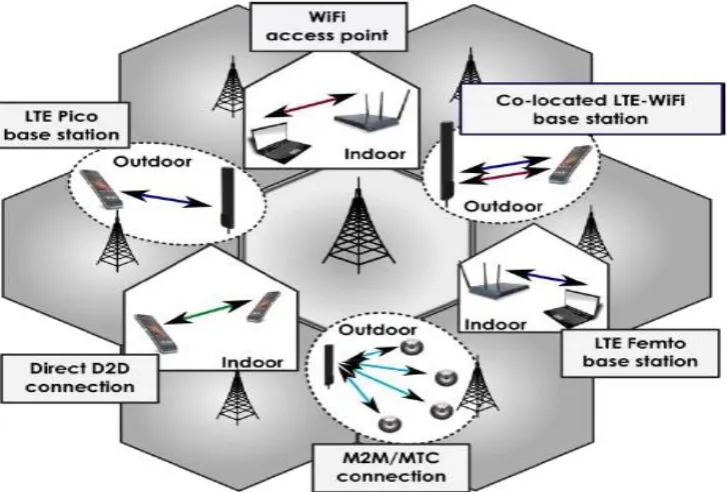
Fig. 1. Envisioned architecture of a 5G wireless system.
An imperative late pattern in HetNets is the expanding conjunction between cell (e.g., 3GPP LTE) and neighbourhood (e.g., IEEE 802.11 a.k.a. Wi-Fi) [10]. By complexity to cell innovation dwelling in costly authorized range, Wi-Fi utilizes unlicensed recurrence groups and in this manner might be favoured for sharp offloading of the cell system activity [11]. Extra advantages of Wi-Fi stem from the way that it exists in the large number of structures (from traditional IEEE 802.11n and high-rate 802.11ac arrangements, to mm Wave 802.11ad frameworks, to low-control 802.11ah innovation). Persuaded initially by the administrators' longing to ease quick clog on their systems, the utilization of Wi-Fi is, notwithstanding, liable to stay in the standard of 5G advancement, with incorporated little cells (utilizing co-found LTE and Wi-Fi interfaces) flooding the business sector soon. To encourage joining of Wi-Fi under the control of the cell organize, the 3GPP models group is creating adaptable lower-layer coordination instruments as of now for the Release 12 of LTE innovation. Such control methodology dwell on the radio access system (RAN) level and permit to, e.g., progressively adjust the stacking of the related RATs and even empower their synchronous operation, when client hardware transmits on a few radio interfaces [12]. The fine-grained control plans utilizing RAN-level help are required to convey enhanced execution to future HetNets by improving them from multiple points of view, from cutting edge RAT revelation and ongoing system choice [13] to multi-RAT radio asset administration, versatility, and session exchange capacities.
B. Network-assisted device-to-device communications
© 2016, IJCSMC All Rights Reserved 541
versatile movement development originating from shared applications and administrations, which commonly include individuals in close nearness, the advantages of D2D interchanges for information offloading are turning out to be progressively alluring [15]. While D2D-based operation does not utilize broadband framework for exchanging client information, cell availability may in any case help by giving help gadget disclosure, D2D association foundation, and administration coherence. All things considered, D2D innovation can ease cell blockage without the expense of extra systems administration framework in this way having the potential for new administration incomes [16].
Direct network may conceivably exist in two diverse structures: as authorized groups D2D (a.k.a LTE-Direct), when direct connections between gadgets utilize cell range, and unlicensed-groups D2D, using different RATs than cell for direct associations (e.g., over WiFi-Direct). The previous arrangement is alluring as the phone system has full control over the in-band D2D joins [17], yet it additionally requires huge insight to organize all the while running client transmissions and alleviate destructive obstruction between them, which does not exist in the benchmarks today. Given the moderate advancement of particular study and work things in 3GPP (as the consequence of various specialized difficulties), we don't expect LTE-Direct innovation available for quite a long while to come. Be that as it may, research on this subject turns out to be opportune and is consistently getting energy around the world. A contrasting option to authorized groups D2D correspondences is to associate proximate gadgets over the unlicensed frequencies, that is, by utilizing WiFi or Bluetooth advances. Though there is a plausibility to impart over WiFi/Bluetooth likewise without unified help, there are various routes in which cell framework may enhance generally ungraceful network [18]. Surely, given that the lion's offer of current client hardware is multi-radio gadgets equipped for running concurrent LTE and WiFi associations, the control originating from the cell system may enhance session coherence, lessen client conflict, and encourage security methods. Therefore, investigation of unlicensed-bands D2D connectivity remains an attractive research area.
C. Convergence with Internet of Things
The intricacies of HetNets and D2D network between individuals are exasperated today by the difficulties originating from the combination with the IoT foundation [19]. As various unattended remote gadgets (sensors, actuators, brilliant meters, and so forth.) interface with the 5G system, preventive measures are expected to guarantee that their uncontrolled transmissions don't disturb routine correspondence [20]. Thusly, remote industry has been planning over-burden control systems to ensure need human-driven correspondence. With individual techniques institutionalized already for Release 11 of 3GPP LTE, the exploration group has now pushed ahead with the objective to empower productive IoT operation [21].
As needs be, it is generally realized that the attributes of to-machine (M2M) or machine-sort interchanges (MTC) are definitely not the same as those of human-produced activity. With little and rare information designs run of the mill for MTC, the system needs extra components to convey such movement with low overheads and high vitality proficiency. This need is turning out to be particularly declared in cell frameworks, for example, LTE, which have been verifiably advanced for gushing session-based movement [22]. To aggravate matters, the stringent postponement and unwavering quality necessities of mechanical evaluation MTC applications highlight the requirement for further forceful enhancements, which are right now an amazingly dynamic exchange point in the measures.
D. Energy-efficient and green networking
© 2016, IJCSMC All Rights Reserved 542
improvement over the previous decades, the center of the late enhancement endeavours has been moving toward "bits-per-Joule" and "throughput-per-Joule" measurements, as requested by little shape component client gear, where remote force utilization contributes the most to the general force spending plan [23]. Correspondingly, the accentuation of the most recent exploration has been put onto representing the transmit power utilization, together with the related circuit power uses, over a multi-radio multi-cell remote environment to enhance over existing force distribution systems and methodology green systems administration [24].
III. SUMMARY AND OPEN CHALLENGES
Throughout this work, we have evaluated the crucial upgrades offered by the cutting edge remote interchanges innovation to empower universal MCC applications and administrations. Our study uncovers that regardless of the way that critical advancement has as of now been made thusly; extra strides are required to enhance heterogeneous availability, aware of multi-radio access innovation, before it might proficiently fulfil the stringent MCC prerequisites. Underneath we quickly finish up with essential bearings for future development around there. On the versatile interchanges side, further advance is essential in empowering higher-data transmission MCC models (counting, yet not restricted to coordinating mmWave access, enormous MIMO, and ultra-thick systems administration advances). Administration quality and accessibility (availability, inactivity, versatility, vitality effectiveness, and so on.) should be enhanced too by offering more sufficient components to handle heterogeneity in cell phones, mists, and remote systems. On the processing side, extra difficulties stay in improving the productivity of information access, building viable setting mindful versatile cloud administrations, offering more propelled structures for portable calculation offloading, and in addition updating security, protection, and trust. To accomplish these difficulties numerical demonstrating, i.e. by means of the numerical teletraffic hypothesis and lining hypothesis, is seen as one of the courses for breaking down impacts of portable distributed computing [25-30].
REFERENCES
[1] Z. Sanaei, S. Abolfazli, A. Gani, and R. Buyya, Heterogeneity in Mobile Cloud Computing: Taxonomy and Open Challenges, IEEE Communications Surveys & Tutorials, vol. 16, pp. 369 – 392, 2014.
[2] R. Moreno-Vozmediano, R. Montero, and I. Llorente, Key Challenges in Cloud Computing: Enabling the Future Internet of Services, IEEE Internet Computing, vol. 14, pp. 18 – 25, 2013. [3] D. Astely, E. Dahlman, G. Fodor, S. Parkvall, and J. Sachs, LTE release 12 and beyond, IEEE Communications Magazine, vol. 51, pp. 154 – 160, 2013.
[4] L. Lei, Z. Zhong, K. Zheng, J. Chen, and H. Meng, Challenges on wireless heterogeneous networks for mobile cloud computing, IEEE Wireless Communications, vol. 20, pp. 34 – 44, 2013. [5] N. Fernando, S. Loke, and W. Rahayu, Mobile cloud computing: A survey, Future Generation Computer Systems, vol. 29, pp. 84 – 106, 2013.
[6] H. Dinh, C. Lee, D. Niyato, and P. Wang, A survey of mobile cloud computing: architecture, applications, and approaches, Wireless Communications and Mobile Computing, vol. 13, pp. 1587 – 1611, 2013.
[7] P. Rost, C. Bernardos, A. De Domenico, M. Di Girolamo, M. Lalam, A. Maeder, D. Sabella, and D. Wubben, Cloud Technologies for Flexible 5G Radio Access Networks, IEEE Communications Magazine, vol. 52, pp. 68 – 76, 2014.
[8] J. Andrews, Seven ways that HetNets are a cellular paradigm shift, IEEE Communications Magazine, vol 51, pp. 136 – 144, 2013.
© 2016, IJCSMC All Rights Reserved 543
[10] M. Bennis, M. Simsek, W. Saad, S. Valentin, and M. Debbah, When cellular meets WiFi in wireless small cell networks, IEEE Communications Magazine, vol. 51, pp. 44 – 50, 2013.
[11] O. Galinina, S. Andreev, M. Gerasimenko, Y. Koucheryavy, N. Himayat, S.-p. Yeh, and S. Talwar, Capturing spatial randomness of heterogeneous cellular/WLAN deployments with dynamic traffic, IEEE Journal on Selected Areas in Communications, 2014.
[12] S. Andreev, M. Gerasimenko, O. Galinina, Y. Koucheryavy, N. Himayat, S.-p. Yeh, and S. Talwar, Intelligent Access Network Selection in Converged Multi-Radio Heterogeneous Networks, IEEE Wireless Communications, 2014.
[13] L. Wang and G. Kuo, Mathematical Modeling for Network Selection in Heterogeneous Wireless Networks – A Tutorial, IEEE Communications Surveys & Tutorials, vol. 15, pp. 271 – 292, 2013.
[14] L. Al-Kanj, Z. Dawy, and E. Yaacoub, Energy-Aware Cooperative Content Distribution over Wireless Networks: Design Alternatives and Implementation Aspects, IEEE Communications Surveys & Tutorials, vol. 15, pp. 1736 – 1760, 2013.
[15] H. Bagheri, M. Katz, F. Fitzek, D. Lucani, and M. Pedersen, D2D-Based Mobile Clouds for Energy- and Spectral-Efficient Content Distribution, Smart Device to Smart Device Communication, pp. 237 – 280, 2014.
[16] N. Golrezaei, A. Molisch, A. Dimakis, and G. Caire, Femtocaching and device-to-device collaboration: A new architecture for wireless video distribution, IEEE Communications Magazine, vol. 51, pp. 142 – 149, 2013.
[17] B. Kaufman, J. Lilleberg, and B. Aazhang, Spectrum sharing scheme between cellular users and ad-hoc device-to-device users, IEEE Transactions on Wireless Communications, vol. 12, pp. 1038 – 1049, 2013.
[18] S. Andreev, A. Pyattaev, K. Johnsson, O. Galinina, and Y. Koucheryavy, Cellular traffic offloading onto network-assisted device to- device connections, IEEE Communications Magazine, vol. 52, pp. 20 – 31, 2014.
[19] K. Hwang, J. Dongarra, and G. Fox, Distributed and Cloud Computing: From Parallel Processing to the Internet of Things, Morgan Kaufmann, 672 p., 2011.
[20] M. Gerasimenko, V. Petrov, O. Galinina, S. Andreev, and Y. Koucheryavy, Impact of MTC on Energy and Delay Performance of Random-Access Channel in LTE-Advanced, Wiley Transactions on Emerging Telecommunications Technologies, vol. 24, pp. 366 – 377,
2013.
[21] M. Hasan, E. Hossain, and D. Niyato, Random access for machine-to machine communication in LTE-advanced networks: issues and approaches, IEEE Communications Magazine, vol. 51, pp. 86 – 93, 2013.
[22] K. Zheng, F. Hu, W. Wang, W. Xiang, and M. Dohler, Radio resource allocation in LTE-advanced cellular networks with M2M communications, IEEE Communications Magazine, vol. 50, pp. 184 – 192, 2012.
[23] S. Andreev, P. Gonchukov, N. Himayat, Y. Koucheryavy, and A. Turlikov, Energy efficient communications for future broadband cellular networks, Computer Communications, vol. 35, pp. 1662 – 1671, 2012.
[24] O. Galinina, S. Andreev, A. Turlikov, and Y. Koucheryavy, Optimizing energy efficiency of a multi-radio mobile device in heterogeneous beyond-4G networks, Performance Evaluation, vol. 78, pp. 18 – 41, 2014.
[25] I.A. Gudkova and K.E. Samouylov Analysis of an admission model in a fourth generation mobile network with triple play traffic, Automatic Control and Computer Sciences, vol. 47, no. 4, pp. 202 – 210, 2013.
© 2016, IJCSMC All Rights Reserved 544
[27] I.A. Gudkova, K.E. Samouylov, I.A. Buturlin, V.Y. Borodakiy, M. Gerasimenko, O. Galinina, and S.D. Andreev, Analyzing impacts of coexistence between M2M and H2H communication on 3GPP LTE system, Lecture Notes in Computer Science, vol. 8458, pp. 162 – 174, 2014.
[28] P.O. Abaev, Y.V. Gaidamaka, K.E. Samouylov, A.V. Pechinkin, R.V. Razumchik, and S.Y. Shorgin Hysteretic control technique for overload problem solution in network of SIP servers, Computing and Informatics, vol. 33, no. 1, pp. 218 – 236, 2014.
[29] A. Cascone, R. Manzo, A.V. Pechinkin, and S.Y. Shorgin, Geom/G/1/n system with LIFO discipline without interrupts and constrained total amount of customers, Automation and Remote Control, vol. 72, no. 1, pp. 99 – 110, 2011.