COX, ADINA JEANNE. Shared-Use Pathways Located in Natural Settings within the Urban Context: A Multiple Case Study Exploring How Design Affects Use by
Children. (Under the direction of Professor Robin Moore.)
With an increasingly urbanized world, children have less opportunity to move freely about their neighborhood environments, interact with nature, and engage in free-play behaviors. Vehicle traffic and parental concerns about safety have limited biking and walking for children. Pathways provide opportunities for multiple healthy behaviors for children, including opportunities for physical activity, contact with nature, active transportation, access to play, and independent mobility. Pathway use by children has not been studied, although the federal government provides
transportation funding for pathways and children have need for such recreation and transportation alternatives. Understanding children’s use of pathways is essential for
communities that they may effectively utilize transportation dollars in planning and designing high quality pathways for use by children.
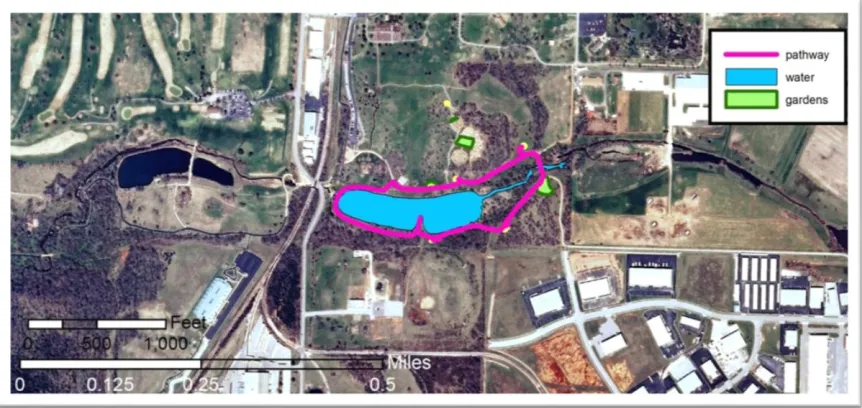
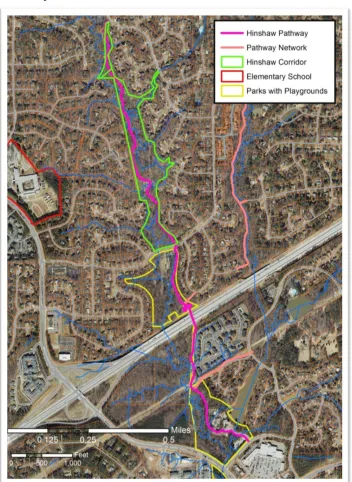
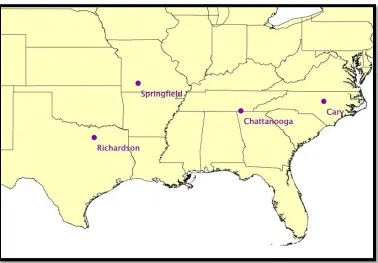
A case study approach that includes four pathways in four states and utilizes multiple methods informed this research. Two types of pathways were selected as cases: pathways located within destination parks that incorporated play equipment in play pockets, located in Springfield, Missouri; Chattanooga, Tennessee, and
pathways located along neighborhood greenways, located in Richardson, Texas; and Cary, North Carolina. Behavior Mapping was used to observe pathway
provided information on the age of.
Results suggest the following conclusions:
1. While vegetation may provide benefits such as shade, wildlife habitat, contact with nature, and scenic beauty, dense vegetation my discourage use by increasing parental fears.
2. Installation of play pockets may lead to more frequent pathway visits and increased duration of visits. This is important as time spent outdoors is associated with higher levels of physical activity for children.
3. Children are attracted to wildlife along pathway corridors. This important attribute may be encouraged by pathway planners and managers through careful attention to pathway location and landscape quality.
4. Parents ranked ‘family fun’ highest as a desired pathway benefit, followed
closely by physical activity, contact with nature, and scenic beauty. These family benefits may be useful information to public health, and park and recreation system officials to promote pathway use.
5. Parents are concerned about social safety of children in natural
by Adina J. Cox
A dissertation submitted to the Graduate Faculty of North Carolina State University
in partial fulfillment of the requirements for the Degree of
Doctor of Philosophy
Design
Raleigh, North Carolina 2013
APPROVED BY:
__________________________ ___________________________ Professor Robin Moore Dr. Nilda Cosco
Committee Chair
DEDICATION
To Chloe and Thomas
BIOGRAPHY
Adina Cox was born the third of five daughters to second generation California parents. Her grandparents included migrant farm workers and
lumberjacks. Growing up in a rural part of northern California, she spent much of her childhood outdoors climbing trees, picking blackberries, splashing in creeks, and roaming freely around the redwood forest near her home. Her parents both worked in law enforcement, so the parental perception of fear was focused on humans and, thankfully, did not extend to the wilderness.
Adina has always followed unconventional pathways in her life. She left home at the age of eighteen and spent the next fourteen years sampling several different retail jobs and college majors. She worked and paid her way through college, and graduated from Cal Poly Pomona in 1993 with a Bachelor’s of Science in Landscape
Architecture. That program had strengths in art and science, which she complemented with elective courses in ecology and regenerative studies.
When it came time to return to the work force, she moved to Raleigh and pursued a master’s degree in Natural Resource Management from North Carolina
State University (NCSU). She was drawn to that field as her exposure to GIS as an undergraduate student inspired further curiosity.
After earning that degree in another recession, she decided to pursue her doctorate in a field that combined her interests in the natural world and in design for children at the College of Design at NCSU. She has spent the last three and a half years as a single mother, doctoral student, and research assistant.
Her interests include laughing with her children, traveling, hiking, camping,
ACKNOWLEDGMENTS
I would like to acknowledge Professor Robin Moore for his assistance with this research and for providing the opportunity to pursue this project. The entire committee provided invaluable assistance over the course of the project. Dr. Nilda Cosco has tremendous experience with research and knowledge of children’s
behaviors; Professor Art Rice offered his pragmatic and thoughtful perspective; and Professor Yu-Fai provided his research experience and scientific mindset to assist in this project. I thank each of you for the time and energy you have provided over the last three years to guide and improve this work.
PlayCore made this project possible by providing the initial inspiration, financial support and thoughtful input along the way. I thank them for their
commitment to research and their passion for children and play. In particular, Lisa Moore and Jennie Sumrell were involved in this project from the beginning and provided valuable assistance every step of the way. The involvement of Tom
Norquist, Bob Barron, and Bob Farnsworth was inspirational and invaluable as well. The people at PlayCore have demonstrated a devotion to making the world a more playful place, for which I thank them.
Charlynne Smith always provided words of wisdom (and encouragement) from outside the College of Design. George Hallowell, Aliaa Elabd, and Dr. Dwane Jones were invaluable for sharing their experiences with me, and allowing me to share mine, over the entire course of this work. I appreciate the questions, discussions and support from Zhara Zamani, Jong Seon Lee, Muntazar Monsur, and Mohsen
Ghorveh that helped me sort out my own questions. Sarah Little provided the opportunity for intelligent conversations, as well as unintelligible conversations, and always kept me laughing. You were all a very important part of my education and I appreciate what I have learned from you. Let’s work together again in the future.
I am grateful for the assistance I received from the community members of the study sites who assisted in numerous ways for this research. From the Parks and Recreation Directors, to the parents who agreed to participate in the survey research, I encountered a great deal of enthusiasm and support for this project. My sincere appreciation goes to all of the people who made this possible.
TABLE OF CONTENTS
LIST OF TABLES………. xi
LIST OF FIGURES……… xii
CHAPTER 1: INTRODUCTION ………. 1
1.1 Introduction…..………... 1
1.2 Background of Problem……….... 3
1.2.1 Physical Activity……….. 5
1.2.2 Contact with Nature………... 7
1.2.3 Active Transportation………. 9
1.2.4 Access to Opportunities to Play……… 10
1.2.5 Independent Mobility………. 11
1.3 Study Objectives………. 12
1.4 Introduction to Research Design………. 13
1.5 Definition of Terms………. 13
CHAPTER 2: LITERATURE REVIEW……….. 15
2.1 Environment Behavior Framework………. 15
2.1.1 Bioecological Model of Human Development……… 16
2.1.2 Concept of Affordance………... 18
2.1.3 Behavior Settings……… 21
2.2 Conceptual Framework………. 22
2.3 Supporting Research……… 23
2.3.1 Children’s Use of Pathways……….. 23
2.3.2 Perceived Benefits………. 25
2.3.3 Play……… 28
2.3.4 Nature………... 34
2.3.5 Play in Nature………. 35
2.3.7 Measuring Vegetation……… 37
2.3.8 Animals……… 38
2.3.9 Children’s Active Transportation……….. 38
2.3.10 Children’s Walkability……….. 40
2.3.11 Perception of Safety………. 42
2.3.12 Sense of Enclosure or Openess……… 43
2.3.13 Independent Mobility………... 45
2.3.14 Pathways………... 47
CHAPTER 3: RESEARCH METHODOLOGY……… 49
3.1 Overview of the Study………... 49
3.2 Research Questions……….. 49
3.3 Research Strategy………. 53
3.4 Case Study Methodology………. 55
3.5 Case Selection………... 57
3.6 Data Collection Methods……….. 60
3.6.1 Surveys……… 61
3.6.2 Pathway Traffic Counts………. 62
3.6.3 Direct Observation and Behavior Mapping……… 64
CHAPTER 4: SITE DESCRIPTIONS……… 67
4.1 General Site Descriptions………. 67
4.2 Sites within Parks……….. 71
4.2.1 Springfield, Missouri………..……… 71
4.2.2 Chattanooga, Tennessee..……… 72
4.3 Sites Along Greenways………. 74
4.3.1 Cary, North Carolina……… 74
4.3.2 Richardson, Texas……….. 76
5.1 Data Collection Timeline………... 78
5.2 Surveys……… 80
5.3 Pathway Traffic Counts………. 84
5.4 Behavior Mapping……….. 85
CHAPTER 6: RESULTS………. 87
6.1 Question 1: Traffic Counts………... 87
6.2 Question 2: Benefits………... 88
6.3 Question 3: Play Pockets………. 90
6.4 Question 4: Affordances……….. 93
6.4.1 Overall……….. 93
6.4.2 Springfield……… 103
6.4.3 Richardson……….. 104
6.4.4 Cary………... 105
6.5 Question 5: Independent Mobility……… 106
CHAPTER 7 DISCUSSION………...………. 111
7.1 Pathway Use by Children………. 111
7.2 Pathway Context……… 115
7.3 Play……….. 116
7.4 Benefits of Pathway Use……….. 118
7.5 Pathway Affordances……… 120
7.6 Social Interactions………. 123
7.7 Wildlife………. 124
7.9 Free Play……….. 125
7.10 Independent Mobility……… 126
7.11 School System Differences……… 127
7.12 Pathways for Transportation……….. 128
7.14 Vegetation………. 129
7.15 Play Pockets………. 131
7.16 Summary………... 132
7.17 Limitations………. 133
CHAPTER 8: CONCLUSIONS……….. 135
8.1 Context and Community Connections………... 135
8.2 Corridor Landscape Quality……….…… 136
8.3 Play Value……… 136
8.4 Vegetation…….……….. 137
8.5 Wildlife……….. 138
8.6 Benefits……….... 138
8.7 Recommendations for Future Research……… 139
REFERENCES………. 140
APPENDICES………... 155
Appendix A – IRB forms / Approval Letters………... 156
Appendix B – Pathway Traffic Count Form……….. 172
LIST OF TABLES
Table 1: Problem areas and potential benefits……….…… 4
Table 2-1 Reynolds et al. study reporting trail counts………. 25
Table 2-2 Frost’s categories of play and non-play behaviors... 31
Table 3-1: Methods as related to study measures………... 61
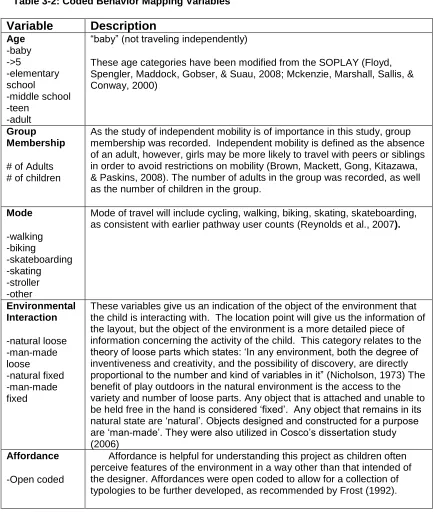
Table 3-2: Coded Behavior Mapping variables………. 66
Table 4-1: Adult/Under 19 in nearby neighborhoods……….. 67
Table 4-2: Length of Pathways in Feet……….. 70
Table 4-3: Summary of Site Descriptions……….. 77
Table 5-1: Calendar of Behavior Mapping Data Collection and Daily High Temperature……… 80
Table 5-2: Time Spent Collecting Pathway Traffic Counts………. 85
Table 6-1: Pathway Traffic Count Results by Age Groups………. 87
Table 6-2: Percentages of Use by Age Ranges……… 88
Table 6-3: Open-ended Responses Regarding Play Pockets’ Addition………… 92
Table 6-4: Themes of Behaviors Emerging from Observations………. 94
Table 6-5: Description of Behavior Setting Classifications………. 96
Table 6-6: Numbers of Observed Behaviors by Behavior Settings Type………. 97
Table 6-7: Mean Age Parents Do/Will Allow Children to Use Neighborhood Pathways Without Adults Present……… 108
LIST OF FIGURES
Figure 2-1: Conceptual Framework……….. 23
Figure 2-2: Results from the 2009 Household Transportation Survey……… 40
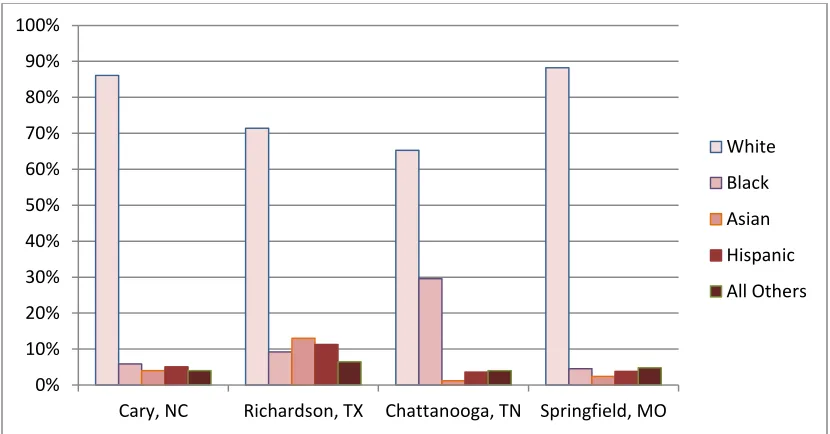
Figure 4-1: Race/Ethnicity from 2010 Census Data……….. 68
Figure 4-2: Owner / Renter / Unoccupied Housing Status………... 69
Figure 4-3: Aerial of Springfield Pathway……… 71
Figure 4-4: Aerial of Chattanooga Pathway……… 72
Figure 4-5: Aerial Showing Cary Pathway……….. 74
Figure 4-6: Aerial of Richardson Pathway……….. 76
Figure 5-1: Locations of Pathways in Study……… 79
Figure 6-1: Chart Showing Age of Pathway Users by Site……… 88
Figure 6-2: Perceived Importance of Benefits, All Sites Combined………… 89
Figure 6-3: Self-report Change in Frequency of Visits……….………. 91
Figure 6-4: Self-report Change in Duration of Visits………. 92
Figure 6-5: Dwarf Conifer Garden with Intensive Plantings, Water, Bridge, and Rocks………. 98
Figure 6-6: Bench with View of Lake……… 98
Figure 6-7: Chart Showing Percentages of Behaviors Observed at Resting/Viewing Settings……… 98
Figure 6-8: View of Play Equipment in Play Pocket……… 99
Figure 6-9: View of Children at Play Pocket………. 99
Figure 6-10: Chart Showing Percentages of Behaviors Observed at Play Pocket Settings………... 99
Figure 6-11: Children Interacting with Wildlife………. 100
Figure 6-12: Children Observing Ducks and Turtles……….. 100
Figure 6-13: Percentages of Behaviors Observed at Ephemeral Settings…. 100
Figure 6-14: View of Family Walking on Pathway……….. 101
Figure 6-16: Behaviors Across all Settings………. . 102
Figure 6-17: Behavior Mapping Results from Springfield………. . 104
Figure 6-18: Behavior Mapping Results from Richardson………. 105
Figure 6-19: Behavior Mapping Results for Cary………. 106
Figure 6-20: Percentages of Responses Indicating Age Parents Do/Will Allow Independent Mobility………. 107
Figure 6-21: Parental Concerns that Restrict Independent Mobility………... 109
Figure 6-22: Improving Safety and Security……….. 110
Figure 7-1: Change in Frequency of Visits after Addition of Play Pockets….. 117
Figure 7-2: Change in Duration of Visits after Addition of Play Pockets…….. 118
Figure 7-3: Importance of Potential Pathway Benefits……… 120
CHAPTER 1: INTRODUCTION
1.1 Introduction
Biking and walking are important activities as they may increase physical activity opportunities, reduce traffic congestion, lower use of natural resources, produce fewer greenhouse gas emissions, connect people to their destinations, and thus improve the quality of life for community residents. Walking is the most
commonly reported physical activity among adults and is beneficial in meeting requirements for healthy physical activity levels (Centers for Disease Control and Prevention, 2012; Kruger, Ham, Berrigan, & Ballard-Barbash, 2008). The likelihood of biking and walking are linked to attributes of the built environment (Forsyth & Krizek, 2010). Greenway trails or pathways provide experiences for biking and walking that, in addition to providing the same benefits offered by sidewalks and streets, may reduce conflict with motor vehicles, connect people to nature, and create a more enjoyable walking or biking experience.
built environment may influence children’s travel differently than that of adults. The presence of vehicle traffic plays a larger role in children’s walking and biking
behavior (Giles-Corti, Kelty, Zubrick, & Villanueva, 2009) and the availability of separate infrastructure designated for walking and biking may increase the likelihood of walking and biking for children (Forsyth & Krizek, 2010).
Transportation trail projects became eligible for federal highway funds with the passage of the Intermodal Surface Transportation Efficiency Act (ISTEA) in 1991(Douwes, 2012). In 1998, the updated version of ISTEA, TEA-21, expanded the policy to include funding for recreation trails (Douwes, 2012). In the ten year period between 2001-2011, the average expenditure of federal dollars for pedestrian and bicycle projects has been $652.06 million annually (Rousseau, 2012). This has increased the availability of trails, with the National Trail System now totaling over 60,000 miles, which is longer than the Interstate Highway System. The biking and walking needs of children and the potential for health promotion must be addressed with the commitment of public money to support biking and walking infrastructure and the national effort to plan and design for more community trails. Research on children’s use of trails, or pathways, is virtually non-existent (Starnes, Troped,
Klenosky, & Doehring, 2011) and should be considered a research priority.
A study that inspired and guided this research was Robin Moore’s
aspects of what he termed ‘children’s continuity of behavior’ along pathways. Moore referred to “…the way in which they hopped, climbed, balanced, skipped, rolled, swiveled and squeezed through, on, over, around and inside their surroundings -…”
and the way in which children stop “…at every point of interest along the way, until the original purpose and destination of the trip become completely forgotten” (Moore, 1986, pp. 56-57). Similar ideas of children’s movement along pathways drove the intention to study children’s travel with the mindset of ‘playing along the way’.
Pathways or trails can include a spectrum of linear routes from wilderness trails to urban promenades. Pathways of interest to this study include those located in public parks and along greenways. Pathways in public parks provide opportunities to understand children engaged in play behaviors with adults present. Pathways located along greenways are of interest as these pathways may provide
transportation options for children to reach neighborhood destinations. These pathways are commonly found in urban areas and are, therefore, appropriate for consideration in this research. As there is currently a scarcity of research on
children’s use of pathways (Starnes et al., 2011), this research takes an exploratory
approach utilizing multiple methods to create a beginning point for future research.
1.2 Background of Problem
provide children with opportunities for physical activity, exposure to nature, outdoor play, safe travel to destinations, and independent mobility. Research disciplines that relate to the use of pathways by children include parks and recreation, public health, planning, geography, transportation, child development, environmental psychology
and landscape architecture. This dissertation borrows information from many fields
of study in order to investigate the factors that influence use of such pathways. The
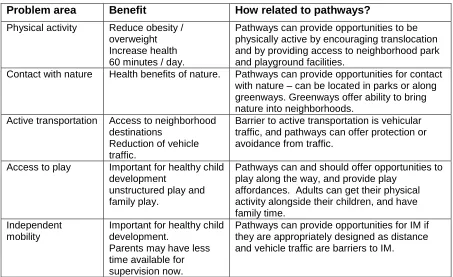
following table outlines the problem areas that link to this study (see Table 1).
Table 1: Problem Areas and Potential Benefits of Pathway Use
Problem area Benefit How related to pathways?
Physical activity Reduce obesity / overweight Increase health 60 minutes / day.
Pathways can provide opportunities to be physically active by encouraging translocation and by providing access to neighborhood park and playground facilities.
Contact with nature Health benefits of nature. Pathways can provide opportunities for contact with nature – can be located in parks or along greenways. Greenways offer ability to bring nature into neighborhoods.
Active transportation Access to neighborhood destinations
Reduction of vehicle traffic.
Barrier to active transportation is vehicular traffic, and pathways can offer protection or avoidance from traffic.
Access to play Important for healthy child development
unstructured play and family play.
Pathways can and should offer opportunities to play along the way, and provide play
affordances. Adults can get their physical activity alongside their children, and have family time.
Independent mobility
Important for healthy child development.
Parents may have less time available for supervision now.
1.2.1 Physical Activity
The rate of childhood obesity in the United States has been climbing and has severe negative health implications. The prevalence of obesity tripled in the
population of youth ages 6-11 in the time span between 1971 and 2000 (Ogden, Flegal, Carroll, &Johnson, 2002). The epidemic of childhood obesity promises severe repercussions for the health conditions and life expectancy of adults in the
future, as obesity and overweight that exist in childhood affect premature mortality and physical morbidity in adulthood (Reilly & Kelly, 2010). Increased physical activity can lower the risk of childhood overweight and obesity (Ogden, Carroll, Curtin, Lamb, & Flegal, 2010).
For children to burn an appropriate amount of calories, the U.S. Government recommends that children receive 60 minutes of moderate to vigorous physical activity every day (Physical Activity guidelines Advisory Committee, 2008).
Pressures in education have led to a decrease in physical activity children receive during the school day. The result is increased pressure on the need for after school and weekend opportunities for physical activity. Children (and adults) have a difficult time maintaining an impetus to exercise for the sake of losing weight. In a scientific statement, the American Heart Association acknowledges: “Recommended activities must be enjoyable and congruent with the child’s and family’s lifestyle and be
Families typically have more hurried lifestyles than was true in the past (Elkind, 2006), and there is evidence to show that parenthood often results in a decrease in women’s physical activity levels (Brown & Trost, 2003). Walking is often
a top-rated activity for adult recreation and physical activity. Adults may be able to spend more time outdoors being physically active if the built environment supports activities that include opportunities that are desired by children and include pathways for adults to be active.
Built environment factors that may influence physical activity for children include opportunities for biking and walking, access to parks and playgrounds, and opportunities to be physically active in a child’s home yard and immediate
surroundings (such as neighborhood streets). Children’s biking and walking needs
and barriers are different than adults. For example, high street connectivity is
Access to parks and playgrounds is important for increasing physical activity in youth. Davison and Lawson (2006) linked children’s participation in physical
activity with publicly provided recreational infrastructure. In a Canadian study, children living within one kilometer of a park with a playground were more than five times more likely to have a healthy body mass index (BMI), although there was no such association for children living within that distance of parks without playgrounds (Potwarka, Kaczynski, & Flack, 2008). Proximity and the ability to bike or walk to a recreation site has been associated with children and adolescents’ frequent use of
recreation sites (Grow et al., 2008).
Pathways that are child friendly may contribute to increased physical activity by providing opportunities for safe active travel, physical activity within a park, or by providing access neighborhood parks and playgrounds. Research that examines children’s physical activity in relation to walking is an emerging field, however little research exists regarding pathways and children. In a study on preschool children’s
use of preschool play areas, Cosco (2006) found evidence suggesting that wide, curvy pathways may motivate higher levels of physical activity. However, this finding may not be generalizable to older children and pathways in larger, public areas.
1.2.2 Contact with Nature
functioning, decreased rates of myopia, decrease in allergies, and an increase in vitamin D absorption (Kuo, 2010). Increasing numbers of people are living in urban areas, which can result in the likelihood of less exposure to the natural environment. The US Census Bureau reports that the nation’s urban population increased by
12.1% from 2000 to 2010, resulting in 80.7 % of the U.S. population now living in urban areas (defined as densely developed residential, commercial and other nonresidential areas) (US Census Bureau, 2012). This may affect children more than adults as the lack of freedom of mobility children have in urban areas where crime and vehicle traffic may restrict movement (Pucher & Buehler, 2010) and their access to environments which support their developmental needs. While research is
continuing to show the multitude of health benefits derived from exposure to nature, research on increasing opportunities to improve children’s contact with nature is in
limited supply.
Studies that examine the effects of neighborhood ‘greenness’ on walking
1.2.3 Active Transportation
Many children do not have safe access to their neighborhoods due to the presence and domination of vehicular traffic. Most communities are planned to improve vehicle access and do not consider the mobility needs of children. Available data for active transportation to and from school shows dramatic decreases since the 1960’s. Based on data from the National Household Travel Survey (NHTS), the
number of children walking and biking to school dropped from 40.7% in 1969 to 12.9% in 2001 (McDonald, 2007). A preliminary look at data collected in the 2009 NHTS shows the rate continuing to drop to approximately 10% (U.S. Department of Transportation, 2009). One reason for lower rates of walking and cycling may be the danger from vehicle traffic. As compared to the Netherlands, Denmark, and
Germany, cyclist fatalities per kilometer cycled are three to five times higher in the U.S. (Pucher & Buehler, 2010). Pedestrian fatalities are five to six times higher (Pucher & Buehler, 2010). Children, women, and older adults are more adversely affected by dangers from vehicle traffic (Pucher & Buehler, 2010).
Travel to and from school has been the focus of recent research, but other countries expand the definition of transportation to include and measure
1.2.4 Access to opportunities for play
Free play has an important impact on healthy child development; however, play opportunities or affordances along pathways and greenways have not been studied. The outdoor environment provides a stimulating and diverse palette for children’s activities (Moore & Wong, 1997) but has been traditionally studied only in
playgrounds. This study has expanded the frame of reference by adding pathways as play spaces.
A recent study in Canada of children living within one kilometer of a park with a playground were five times more likely to be of healthy weight than those who did not have such access. Numerous studies have looked at children’s access to park
and exercise facilities, as determined by the distance of travel to reach a park or exercise facility, and found that closer proximity to facilities may be a way to
increase physical activity (Kaczynski & Henderson, 2007; Sallis, Prchaska, &Taylor, 2000). Troped, Wilson, Matthews, Cromley, and Melly (2010) examined the impact of distance on adult use of a rail-trail and found that use declined with further
1.2.5 Independent mobility
The term ‘independent mobility’ begins appearing in the literature in 1990 in
Hillmans book, One False Move, a Study of Children’s Independent Mobility (Hillman, Adams, & Whitelegg, 1990). The term appears most often in research literature from Australia and European countries, including Britain, Denmark, Finland, Italy, and Norway (Fyhri, Hjorthol, Mackett, Fotel, &Kyttä; Kyttä, 2004; Mackett, Brown, Gong, Kitazawa, & Paskins, 2008; Prezza et al., 2001; Weitch, Bagley, Ball & Salmon, 2006; Wen, Kite, Merom, & Rissel, 2009. The concept, if not the terminology, of independent mobility in regard to children in the US is referenced in a special edition of Children, Youth and Environments where children’s “freedom of movement” is recognized “particularly when it comes to children’s possibilities of exploring their neighborhoods on their own” (Karsten & van Vliet, 2006). A research project conducted in Australia defined ‘independent mobility’ as a positive answer to
the question "are you allowed to walk on your own, near where you live?" (Wen, Kite, Merom, & Rissel, 2009). Mackett, Brown, Gong, Kitazawa and Paskins (2007) refer to independent mobility as simply children traveling without an adult present. The clearest definition is from Australian researchers who define independent mobility as “the ability of children and adolescents to walk or cycle around their neighbourhood without adult accompaniment” (Carver et al., 2010).
Independent mobility is important as it allows children opportunities to
most countries(Carver et al., 2010; Fyhri, Hjorthol, Mackett, Fotel, & Kytt, Hillman et al., 1990; Mackett, Brown, Gong, Kitazawa, & Paskins, 2008), however little
research is being conducted in the United States to understand all of the reasons why. Research conducted in other countries may not be generalizable to the U.S. as cultural factors are likely to play a part in children’s use of pathways.
It is known that children alter their behavior when they are with adults as compared to moving about on their own (Mackett et al., 2007). Children even thirty years ago had opportunities for independent travel in their neighborhoods by walking and biking on the streets, sidewalks, and footpaths linking children to schools, parks, playgrounds, stores, and friends’ houses. Children who have more independent
mobility are more likely to spend time outdoors, and spending more time outdoors is associated with higher levels of physical activity (Sallis, Prochaska, & Taylor, 2000). If children and adolescents have access to neighborhood greenway pathways to connect them to destinations, it is possible that independent mobility, and thus physical activity, will increase.
1.3 Study Objectives
This study seeks to explore multiple facets of pathway use in order to
1.4 Introduction to Research Design
This research is primarily concerned with the actions of children along pathway environments as well as perceptions of parents and caregivers of these environments. As such, it is important to utilize research strategies that consider the relationship between the participants and the built environment. This calls for a naturalistic inquiry that can explore the environment and behavior relationships. As children are the subject of interest, this research may also have an additional degree of complexity because children are subject to supervision by parents or caregivers that may permit or restrict their behaviors.
As there is very little literature available on children’s use of pathways, a
broad approach was taken to explore a diversity of factors that may affect use of pathways, rather than to focus on a narrow set of factors that would prematurely restrict exploration of the topic. The research also includes, in effect, a post
occupancy evaluation of the play pocket installations piloted in Springfield, Missouri, and Chattanooga, Tennessee. As the ‘play pocket’ concept is new and unstudied,
multiple evaluation methods may provide insight as to the value of play pockets and offer ideas for future development and research.
1.5 Definition of Terms
Greenway: ...”corridors of land and water (and networks of such corridors) designed
and managed for multiple purposes, such as nature conservation, recreation, stormwater management, community enhancement, social equity, and scenery protection, with an overall aim of sustaining the integrity of the landscape, including both in its natural (biophysical) and social components.” (Hellmund & Smith, 2006)
Independent mobility: Children and adolescents moving around their neighborhood without adult accompaniment
Play Pocket: Aplay space located adjacent to a pathway tread and providing play opportunities
Shared Use Pathway: ‘The term “shared use path" means a multi-use trail or other
path, physically separated from motorized vehicular traffic by an open space or barrier, either within a highway right-of-way or within an independent right-of-way, and usable for transportation purposes. Shared use paths may be used by
pedestrians, bicyclists, skaters, equestrians, and other nonmotorized users.’ – (U.S.
Department of Transportation, Federal Highway Administration)
CHAPTER 2: LITERATURE REVIEW
Research on children’s use of pathways or trails is virtually non-existent. Related fields of study include play, contact with nature, children’s active
transportation, independent mobility, perceptions of safety, neighborhood walkability, adult use of pathways or trails, and parental attitudes towards children’s outdoor
activities. A recent review of the literature on trails and physical activity considered studies from five disciplines, public health, transportation, environmental science, planning, and leisure science (Whitcomb, Troped, Klenosky, & Demano, 2011). The authors also reported that with the recent interest in the obesity epidemic, research by scholars in the field of public health has shown a dramatic increase since 2000.
2.1 Environment Behavior Framework
The research reported here was guided by the over-arching framework of Ecological Psychology, which is concerned with the relationship between human behavior and the physical environment. It attempts to understand what people expect or desire from the environment, how they perceive the environment, and how the environment affects behavior. Three psychologists have independently
contributed to the ecological approach: James Gibson, Roger Barker, and Urie Bronfenbrenner. Gibson developed the concept of ‘affordance’, Barker the concept of ‘behavior setting’, and Bronfenbrenner the nested ecological model of human
‘a careful and systematic consideration of the environmental context for psychological processes’ (Heft, 2004).
Ecological psychology is primarily relevant for this study because of its concern with children’s behavior as influenced by the physical environment and the environmental perceptions of parents / caregivers. In examining children’s
participation in community planning, Chawla and Heft (2002) discuss ecological psychology as a relevant theoretical base because “it focuses on children’s agency;
it provides a rich description of the environmental context for action and
development; and it places children and the environment together in a common realm.”
2.1.1 Bioecological Model of Human Development
Bronfenbrenner, a development psychologist, advanced the theory that the study of human development must include the concept that humans, as ‘active producers’ of their own development, must be studied within the context of the
understood within the context of the model as a series of interrelated systems which he later referred to as the Bioecological Theory of Human Development
(Bronfenbrenner, 2005). These systems and the connections between them, all have impact on the developmental outcomes of a growing child and include the following nested structures(Bronfenbrenner, 1977):
• Microsystem: immediate face-to-face setting experienced by the child
(family, school, peer group, workplace)
• Mesosystem: interrelations and interactions between two or more
microsystems
• Exosystem: linkages and processes between two or more settings, at least one of which does not contain the child but indirectly influences the child’s
environment
• Macrosystem: overarching pattern within a given culture, or societal blueprint • Chronosystem: passage of time
This model is useful when studying the connection between children’s environment
and behavior. When examining independent mobility, for example, the connection between a child and the parent or the child and a peer, are part of the Microsystem. The parent’s confidence in the abilities of the child, for example, is part of the
cultural context regarding bike vs. automobile for transportation and the natural land use policies that make it feasible or not are part of the macrosystem. All of these systems are interconnected but exist in a nested system.
2.1.2 Concept of Affordance
According to Gibson and Pick, an ecological approach “is a theory about perceiving by active creatures who look and listen and move around” (2000, p. 14).
This theory recognizes the significance of the human and the interaction of the human within the environment. It describes the relationship as “reciprocal,” as the
environment presents opportunities, resources and information to guide action, and the action (of the human) results in more information for the human perceiver.
The ecological approach “helps us to understand the impact of the physical
environment on children and to identify environmental attributes that are associated with specific behavioral responses” Cosco & Moore, 2009, p. 163). An ecological
approach provides a method to categorize the environment and the human responses to it in order to analyze the human actions in a way that facilitates understanding of the actions of individuals. To better understand how to design pathways and the surrounding environments for children and families, it is important to understand the relationship between the environment and the people using this environment. The ecological perspective assists with understanding the
objective measure of response. This approach is important because children may perceive the environment differently than adults do, and we want to understand the specific affordances of physical features in the environment that may explain the difference.
Affordance can be described as the properties of the environment as it is related to the humans that use the environment. These are objective qualities that can be described as a fit between the environmental properties of the environment, its layout, objects, and events, and the possibilities for action.
Information is the stimulus or the action of perception. It is how the environment is perceived over time and space. As individuals interact and move through the environment, they continually shift their point of view. The information is changing as the individual’s movements in the layout change. An individual
perceives the environment and co-perceives oneself in the environment. This
movement and active interaction allows children to learn about the environment from experience. Applied to movement along a pathway, children will collect their own data as to what opportunities they see for action.
weight, and texture. The information they receive can guide the possibilities for future action.
Active touch can be exploratory, which allows the child to gather knowledge. They might pick up a stick and run it along a frequently passed fence in order to hear the tapping sound that it makes. This pickup of information can be perfomatory, allowing the individual to perform a task and gain expected results based on previous learned affordances (Gibson & Pick, 2000).
Heft describes a functional approach as a method for understanding children’s outdoor environments (Heft, 1988b). With this concept, he describes affordances as its ‘functionally significant properties considered in relation to an individual.’ Heft’s approach provides a descriptive language to describe the
environment from a psychological perspective. It helps us understand not the physical properties of the environment, but how those physical properties of the environment are perceived. Heft began a typology of affordances that included such categories as: graspable/detached object: affords throwing (Heft, 1988b). Kyttӓ
added affordances for sociality including: affords role playing (Kyttä, 2002).
2.1.3 Behavior Settings
Barker’s notion of behavior settings refers to the physical environment that
contains the interactions of human activity. His intention was to develop a theory of behavior that, in psychology, had previously been limited to laboratory analysis. Prior to Barker, researchers had shied away from investigating the effect the naturally occurring environments had on behavior. Barker focused on the psychological habitat which he defines as ‘the intersection of the behaving person and the non-psychological milieu; it is jointly determined by the person and the milieu’ (Barker & Wright, 1954, p. 11). Heft explains a behavior setting as ‘standing patterns of
behavior and milieu - on-going patterns of activity and the environmental features that support as well as constrain this activity (Heft, 1988a). The interactions with the environment are viewed as observable and either constrained or supported by the qualities of the physical environment.
Barker noticed in his work as a psychologist that ‘some attributes of behavior
varied less across children within settings than across settings within the days of children’ (Barker, 1968). He believed that the environment consisted of
Behavior settings are used here to refer to areas that are observed to function as settings, which attract standing patterns of behavior.
Barker, as said earlier, was interested in studying human behavior in the physical environment in which the behavior actually occurred. He described as the ‘ecological environment (the objective, pre-perceptual context of behavior; the real-life settings within which people behave)’ (Barker, 1968, p. 1). Barker specifically provided this definition: “A behavior setting consists of one or more standing patterns
of behavior” (Barker, 1968, p. 18).
2.2 Conceptual Framework
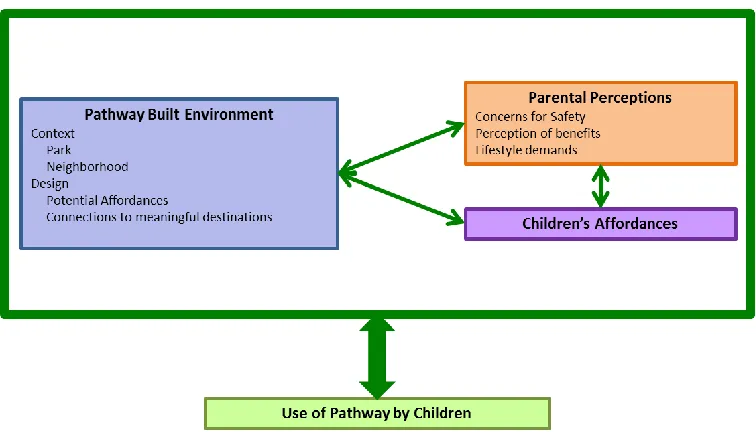
The overall conceptual framework illustrates (see Figure 1) the three main factors affecting the use of pathways by children and families. Parents and
caregivers respond to the environment, as they perceive benefits and affordances, and confront lifestyle demands, and judge safety based on their perceptions. All of these influences affect whether or not the parent allows, encourages, or prevents use of pathways by children. The environment exerts influence over the child as well. It may attract, repel, seem boring or uncomfortable. Ultimately, it will attract children by affording playful and interesting activities.
have an effect on the activities of the child. This complex set of largely hidden relationships reside in the microsystem of the child. The research reported here will attempt to uncover part of this system as far as it may affect pathway use by
children.
2.3 Supporting research
This research is supported by research from numerous disciplines including planning, parks and recreation, and research on children’s play behaviors.
A recent review of trail use and physical activity reported that age was negatively associated with trail use in five of the ten studies examined (Starnes et al., 2011). It is important to note that these studies examined ages of adult users, predominately on rail-trails. Results were mixed, with five studies finding that the adult users were more likely to be younger adults. Other studies find different results, indicating that older adults are more likely to use pathways, but use by children is not usually considered. A study conducted in Raleigh in August of 1989 surveyed users of the Capital Area Greenway and found that the presence of
children in the household resulted in a 25% decline in frequency of use (Furuseth & Altman, 1991). This was the only study of the reviewed literature that examined presence of children in the greenway user’s household. A study conducted on three
Table 2-1: Reynolds et al. study reporting trail counts.
Chicago Dallas Los Angeles Under
18 6% 3% 12%
18-39 64% 48% 45%28 40-64 29% 46% 37% 18-64 93% 94% 82%
65+ 1% 2% 7%
The data collection method used in the Reynolds study was a manual count of users, in which researchers stood at predetermined locations along the trail to collect data. Although manual counts allow for estimates of age of users, age is rarely collected. Many municipalities are now collecting data with infrared counters, which do not indicate age of pathway users. They also tend to be less accurate than estimates made from 10 minute manual sampling intervals (Lindsey & Lindsey, 2004).
2.3.2 Perceived Benefits
Perceived benefits of pathway use by children may be thought of in terms of motivational factors. Beck (2004) defines motivation as follows: ‘a theoretical
and that they avoid activities that are expected to have unpleasant or aversive outcomes’ (Beck 2004, p. 31).In a study that sought to understand barriers and
facilitators that might explain greenway use suggested that motivations can be utilized by recreation managers to market recreational products, evaluate existing services and amenities, and assist in planning for future needs (Frauman & Cunningham, 2001).
Environmental facilitators might be thought of as qualities of the environment that ‘pull’ visitors toward a particular destination, but benefits sought might be thought of as personal, higher level motivational factors that ‘push’ a visitor to
participate in a particular activity (Dann, 1977; Klenosky, 2002). In the study reported here, perceived benefits are considered as motivational factors that may influence pathway use.
In a recent review of the literature on trail use and physical activity, thirteen studies were listed that reported intrapersonal items as facilitators or barriers to use (Starnes et al., 2011). Of the thirteen, only four (Bichis-Lupas & Moisey, 2001; Frauman & Cunningham, 2001; Lee & Moudon, 2006; Moisey & Bichis, 1999)
specifically asked about personal enjoyment or fun. Of those four studies it was clear that respondents ranked ‘personal enjoyment’ and ‘fun’ high on the list of motivators.
noted that Latina women frequently were accompanied to the park with children and commented that this may have prevented women from using the trails.
A study that examined urban trail use motivation conducted in Cleveland, Ohio, found that trail users who reported the purpose for trail use was exercise and health reasons reported higher recreational use of trails than trail users who reported use of the trail for social interaction, enjoying nature, or for walking pets (Dunton et al., 2009). They found no such connection between reason for trail use and
transportation use. This study only questioned adults and did not specifically ask about ‘family fun’, but rather asked about personal ‘enjoyment’ of the activity.
Respondents reported in descending order that exercise, enjoyment, relaxation, and appreciation of nature were the most popular motivations.
A study that examined physical activity and psychosocial correlates of adolescents found that normal weight adolescents reported more fun in physical activity and had higher total levels of physical activity than their overweight
counterparts (Bourdeaudhuij et al., 2012). Although this study examined perception and did not evaluate the actual physical environment, increasing the amount of enjoyable or fun activities in the environment for adolescents may encourage higher use.
the importance of physical activity, connection with nature, scenic beauty, relaxation, and other adult oriented benefits. Studies that list ‘fun’ or ‘personal enjoyment’ as
response options for perceived benefits are rare, but may be important for children and families.
2.3.3 Play
Play is important to a child’s healthy cultural, social, cognitive, language, and
motor development, and may be utilized as a motivational force to encourage children to be active outdoors (Frost, 1992). Play has also proven difficult to define. Frost, in acknowledging the difficulty of defining complex play behaviors and of reconciling the many definitions of play across multiple disciplines stated that “it is still not possible to arrive at a simple, clear, scientific definition of play” (Frost, 1992,
p. 21).
Play is valuable to children when they engage with their parents as it may help the generations to connect, alternatively, play independent from adults is also important for children’s development and well-being. The importance of balancing
autonomous and parent-connected play is echoed in the report by Ginsburg and the Committee on Psychosocial Aspects of Child and Family Health (2007): which includes the following conclusions about play:
• Children are most likely to gain essential resiliency traits (such as confidence,
ability to care about others) within a home in which parents and children have quality time together.
• Pediatricians can promote free play as a healthy, essential part of childhood.
They should recommend that all children are afforded ample, unscheduled, independent, nonscreen time to be creative, to reflect, and to decompress. They should emphasize that although parents can certainly monitor play for safety, a large proportion of play should be child driven rather than adult directed.
• Pediatricians can reinforce that parents who share unscheduled spontaneous
time with their children and who play with their children are being wonderfully supportive, nurturing, and productive.
2.3.3.1 Play Behavior Categories
The most widely used categorical descriptions of play are based on Smilansky’s categories of cognitive play and Parten’s categories of social play.
unoccupied behavior, onlooker behavior, solitary play, parallel play, associative play, and cooperative play (Parten, 1932).
Advocating for the need for teachers and play leaders to develop skills in monitoring children’s play status as well as planning for future play, Frost
recommends the use of observation and classification of children’s behaviors (Frost,
1992). He suggests that the observer first collect anecdotal evidence or a direct recording of the observed behavior, followed by categorization of the observed behavior, and then a summarization of the child’s behavior (Frost, 1992, p. 95).
Table 2-2: Frost's categories of play and non-play behaviors.
Types of Behavior Child’s Behavior
Cog
nitiv
e
Functional Repetition of actions for the fun of it Dramatic or symbolic Substitution of an imaginary situation or
object in pretend play situations Games with rules Acceptance of prearranged rules and
adjustments to them in organized play
S
oci
a
l
Solitary Child plays alone and independently Parallel Child plays beside rather than with other
children
Group Child plays with another child or group of children striving to attain a common goal
Other
Exploratory Child seeking sensory information or stimuli Constructive Manipulation of objects to construct or
create something
Rough and Tumble Play fighting or playful physical activity Chase games One or more children planning to chase or
actually chasing another child or children
Non
-P
la
y
Unoccupied Child is not playing. Watching anything of momentary interest
Onlooker Watching other children play. May converse with players but does not participate
Transition Preparing for or moving from one activity to another
These categories have evolved to a sophisticated and useful level, however are more effective at describing indoor behaviors which can be evaluated up close and in a contained environment. It is much more difficult to utilize these categories for outdoor pathway behaviors, which present three main obstacles. First, it is more difficult to observe behaviors well enough to determine exact categories. Dramatic play, for instance, may require the observer to listen to a conversation. Second, the diversity of behaviors occurring along a pathway can be more varied. Children engage in many behaviors that do not fit in to the defined categories, for instance, observing wildlife. Finally, it is not as likely that children will be engaged with peers in the pathway environment. The school or daycare setting would be a familiar setting and less likely to involve adults. For these reasons, all though it is important to understand these play categories, they are not appropriate for this research.
2.3.3.2 Play Equipment
The role of play equipment in a landscape is described by Moore in
Childhood’s Domain, where he stated that “it became clear that a brightly painted collection of play equipment often provided the initial pretext for a park visit” (Moore, 1986, p. 113). From a child’s perspective, play equipment may serve as an invitation
attempt to explore how playground equipment is used within the context of a linear natural environment.
In a study related to playground choice, women in the U.S. and in Denmark were more likely to report that the opportunity for socialization was an important function of playgrounds while men regarded appealing and varied play equipment as essential for playground satisfaction. Men reported that their stays were less lengthy if the equipment did not provide sufficient opportunities for activity (Refshauge, Stigsdotter, & Cosco, 2012).
In an observational study in New Orleans, Farley, Meriwether, Baker, Rice and Webber (2008) found that children who played at a school playground on
weekends and after school were more likely to play in areas with more installed play equipment. This finding is interesting as adults did not accompany children to the playground in this study. A limitation is that only one playground was studied and the variability of play opportunities may have been low. A study examining renovated schoolyards in the Midwest found that the total number of play features was related to schoolyard use (Colabianchi, Maslow, & Swayampakala, 2011). The more
features available in the schoolyard, the higher the use was during afterschool hours. This was particularly true for girls as compared for boys.
been studied in relation to designated playgrounds, it has not been studied in
relation to the linear context. It would appear that variation in the equipment may be necessary to attract males, while the social aspect may be more significant to females.
2.3.4 Nature
Contact with nature has significant and measurable effects on humans, and may be even more significantly related to children’s well-being (Kuo, 2010). Diverse
natural environments support attention functioning, gross motor development, children’s health, and richer play. When adults who have more access to parks and
2.3.5 Play in Nature
A study by Fjørtoft (2004)was conducted in a diverse landscape in a schoolyard in Sweden where nine out of ten available Swedish landscape
classifications were identified. That playground afforded functional play, construction play, and symbolic play. In addition, young students who utilized the playground for one year had a significant improvement in motor abilities as compared to students who played in a traditional playground (Fjortoft, 2004).
The positive impact of diverse natural play areas on children’s behavior is documented in Moore and Wong’s (1997) description of the Environmental School
Yard in Berkeley, California, where they found that the barren and asphalt
schoolyard prior to renovation created a harsh environment that led to fighting and boredom. The change to a naturalized schoolyard after renovation led to a higher diversity of play and less social conflict. For them, “the relationship between poor
environmental quality and physical, social, and psychological health was supported by the accident records” (Moore & Wong, 1997, p. 5). For them, it was clear that the
naturalized schoolyard led to fewer altercations and hence, fewer injuries.
2.3.6 Vegetation
Vegetation plays a critical role in the assessment of pathways defined as children’s play spaces as it has the opportunity to provide ecologic value, shade,
moved from wilderness areas, to rural areas, to increasingly densely populated urban areas, the value of natural areas in urban cities has increased -particularly for children. Vegetation form can alter views and create a sense of enclosure or
openness. Diversity in vegetation can enhance visual interest as well as provide opportunities for children to learn about the life cycles of nature. Diversity in
vegetation can also provide sensory stimulation and play value when accessible to children. Neatly mown grass and ‘bushwhacked’ vegetation that is cleared from the pathway’s tread will limit the amount of nature children experience, but may increase
a perception of safety.
Nature also provides support for Nicholson’s (1973) theory of loose parts which says ‘In any environment, both the degree of inventiveness and creativity, and
the possibility of discovery, are directly proportional to the number and kind of variables in it” (1973, p. 174). The benefits of play outdoors in the natural
environment are enhanced by access to the increased variety and number of loose parts afforded. Moore (1989) mentioned the value of large scale vegetation for shelter-building, but also the value of small scale plant parts that support children’s play. Moore’s (1989) description includes numerous accounts of children’s creative
2.3.7 Measuring Vegetation
Vegetation has been measured in some studies with the Normalized
Difference Vegetation Index (NDVI) data in two studies on walking (Lindsey, Wilson, Yang, & Alexa, 2008; Liu et al., 2007). Vegetation form was also included by Lindsey (Lindsey et al., 2008) by utilizing LIDAR data for viewshed analysis. In a study by Larsen (2009), vegetation was measured by the city’s street tree inventory GIS
shapefile and compared to aerial photography to insure accuracy. Reynolds et al. (2007) examined several vegetation characteristics through observable field data collection. Data collected indicated whether or not natural features were present alongside the trail; these included ‘parks’, ‘wildlands’, ‘hills’, ‘wetlands’, and three
categories of water bodies. Vegetation density was assessed for each segment (1/2 mile) through visual determination of one of 4 categories from ‘none’ to ‘dense’. Vegetation height was assessed for each segment with three categories, ‘short’, ‘medium’, and ‘tall’; while tree canopy was either ‘full’, ‘partial’ or ‘no’ coverage.
for ½ mile segments used in the study were also too coarse a measurement for this research.
2.3.8 Animals
Vegetation attracts wildlife by providing shelter and food. Wildlife encounters may be an important factor for children developing an emotional connection with nature. Myers and Saunders (2002) explain the human connection with animals by suggesting: “One of the reasons animals are so fascinating to us is that they are
highly responsive and offer many dynamic opportunities for interaction. We are social creatures, and animals appeal to our propensity to interact socially”. Children
and adults tend to be more interested in animals than in plants (Lindemann-Matthies, 2005).
Several studies examine children’s preferences and responses to animals in
the contrived settings of zoos, and with domestic pets. Neither of these environments apply to the free play conditions of pathway use. It is clear that
children have an affinity for naturally occurring small animals (Moore & Wong, 1997), and that such animals (all manner of insects, fish, reptiles, birds, etc.) in the
environment will affect children’s behavior.
2.3.9 Children’s Active Transportation
Active travel to school should provide strong arguments for children’s daily
severely in the United States since 1969 (McDonald, 2007). As schools become larger and fewer in number, the average distance children must travel has increased, and accounts for 47% of the reduction in active transport (McDonald, 2008). Walking and cycling to and from school is important as it may provide
opportunities for children to be outdoors, socialize with friends, be physically active, and may lead to a reduction in traffic and air pollution. A recent study in London, England measured physical activity with accelerometry, and location with GPS receivers. Results indicated that children who walked to school received eleven percent of their daily moderate to vigorous physical activity during the morning commute (Cooper et al., 2010). Activity levels during the walk to school were twice as high as they were during playground use.
Figure 2-2: Results from the 2009 Household Transportation Survey
It appears that traffic volume and speed, along with distance necessary for travel are the main barriers to children’s active commuting to school. Pathways that offer
separation from traffic may provide additional opportunities for safe active travel to school.
2.3.10 Children’s Walkability
Walkability is an essential factor in considering children’s independent, active
travel. A study conducted in Atlanta looked at urban form variables (intersection density, residential density, mixed land-use, access to recreation/open space, access to commercial use) compared to use as measured by travel diaries for youth under age 18. They found that all five measures were related to walking for whites,
0 5000 10000 15000 20000 25000 Traffic Volume
Traffic Speed Distance Weather Crime
Parental Perceived Issues regarding child's trip to school
but only land use mix and access to recreation spaces were significantly related to likelihood of walking for non-whites (Kerr, Frank, Sallis, & Chapman, 2007). Urban form variables were more significantly related to walking in high-income households. The study mentions that intersection density was positively associated with walking for youth.
A review of environmental determinants of active travel in youth (Panter, Jones, & Van Sluijs, 2008) covering multiple fields including health and physical activity, transportation, and planning found positive associations for walking and social interactions, facilities to assist active travel as well as shorter route length and road safety along the route. This review found that distance was a strong and
consistent predictor of likelihood of walking. Children aged five to six years who had a school trip of less than 800 m were over 5 times more likely to walk or cycle to school, but children aged ten to twelve were over 10 times likely to walk the same distance. Distance plays a role, but many variables can alter the perception of distance, such as volume and speed of vehicular traffic.
A public health study found that neighborhood greenness, when measured with Normalized Density Vegetation Index (NDVI), and lower neighborhood speed limits were positively associated to children’s’ perception that the neighborhood was
a pleasant place to walk (Liu et al., 2007). Statistical modeling indicated that children who reported that their neighborhood was a pleasant place to walk could be
could be expected to be active an additional ½ day per week. This study is
strengthened by access to a large database collected by the Health Department that included data on health status of children, residential address, survey about
neighborhood walkability, and a strong GIS analysis of neighborhood walking determinants. Neighborhood greenness, however, was measured with NDVI, which is a relatively coarse measure of vegetation. A Canadian study found the likelihood of walking or bikingto school was positively associated with shorter trips, male gender, higher land use mix, and presence of street trees (Larsen et al., 2009). Taken together, the results of these studies support the premise that safe, green walking places for children could motivate use by children.
2.3.11 Perception of Safety
Parental fear is a recognized factor affecting children’s neighborhood
walkability, but it is difficult to measure. Although conventional wisdom suggests that so-called ‘stranger danger’ has increased, it has not been systematically studied.
mobility when parents perceived that local traffic speed was low and when there were traffic calming measures in place (Carver et al., 2010).
2.3.12 Sense of Enclosure or Openess
A sense of enclosure or openness may affect the perception of safety along a shared-use pathway. Stamps (2010) suggests that there is one area of the brain responsible for detecting enclosure, indicating its significance to humans.
Continuously changing, subtle built environment attributes such as this are
notoriously difficult to measure reliably. Psychologists who study enclosure identify ‘sense of enclosure’ as a proxy for potential impression of safety or danger. Stamps
(2010) found that sense of enclosure was most strongly associated with three
features of the built environment: permeability of boundaries, the amount of available light, and the amount of horizontal surface within the boundary.
In a study conducted in Sheffield, UK, participants were asked to examine photographs that had been altered to represent three spatial arrangements, open, partially enclosed, and enclosed views of a pathway in a proposed local park (Jorgensen, Hitchmough, & Calvert, 2002). The understory, or edge treatment, had been altered to represent five different types of woodland edge, including no
corresponded with the spatial arrangements. High safety scores were given for no-enclosure, intermediate safety scores with partial no-enclosure, and low safety for full enclosure scenes. Preference was not related to spatial enclosure, however,
although ‘no understory with flowers’ was the most preferred treatment overall. The
Jorgensen et al. study is valuable for demonstrating that pathways can be designed with a variety of edge treatments, but that providing no enclosure or partial enclosure may enhance feelings of safety.
Two large scale studies (Lindsey et al., 2008; Reynolds et al., 2007) that examined trail use (as measured by trail traffic counts) as related to the trail environment found lower use associated with enclosure. Reynolds et al. (2007) found that higher vegetation density and natural areas adjacent to the trail correlated with lower use. A study examining trail use in Indianapolis, LIDAR data was used to determine that higher trail use was also related to openness of trail viewshed
(Lindsey et al., 2008). As these studies looked at adult use on long distance pathways in urban areas, both studies used coarse measures of pathway
2.3.13 Independent Mobility
The term ‘independent mobility’ first appeared in the literature in 1990 in One False Move, a Study of Children’s Independent Mobility (Hillman et al., 1990). The
term appears most often in research literature from Australia and European
countries, including Britain, Denmark, Finland, Italy, and Norway. A research project conducted in Australia considered independent mobility as a positive answer to the question "are you allowed to walk on your own, near where you live?"(Wen et al., 2009). Mackett et al. (2007) refered to independent mobility as simply children traveling without an adult present. The clearest definition is from Australian
researchers who described it as “the ability of children and adolescents to walk or cycle around their neighbourhood without adult accompaniment”(Carver et al.,
2010).
Independent mobility is important for school children for a number of physical, cognitive, and emotional reasons. Mackett (2007) argued that experiencing the local environment allows children opportunities to ‘learn how to make decisions, build up
social networks, and acquire knowledge by observation and experimentation. Equally important, it allows them to enjoy themselves and be active.’ The Mackett,
Gong, Kitazawa and Paskins (2007, p. 15) study of children using GPS and travel diaries concluded:
“Being with an adult affects children’s spatial behavior. They tend to walk