A Combination Cloud Commanding for Protected Certified
De-Replicate
Mrs. K. Pavani 1 & Ms. G. Mamatha 2
1Associate. Professor Department of CSE Vaagdevi College of Engieering, Bollikunta, Warangal and
Telangana State, India.
2M-Tech in Computer Science Professor Department of CSE Vaagdevi College of Engieering, Bollikunta,
Warangal and Telangana State, India.
Abstract: Statistics de-duplication is considered one of important facts compression strategies for casting off reproduction copies of repeating information, and has been extensively used in cloud storage to lessen the amount of garage space and store bandwidth. To defend the confidentiality of touchy facts while supporting de-duplication, the convergent encryption approach has been proposed to encrypt the information before outsourcing. To better protect statistics protection, this project makes the primary try and formally copes with the trouble of authorized records de-duplication. Distinctive from conventional de-duplication systems, the differential privileges of users are further considered in replica test except the statistics itself. We additionally present numerous new de-duplication structures supporting authorized replica check in a hybrid cloud structure. Safety evaluation demonstrates that our scheme is at ease in terms of the definitions specified inside the proposed safety version. As a proof of concept, we put in force a prototype of our proposed authorized reproduction check scheme and conduct test-bed experiments the use of our prototype. We display that our proposed legal duplicate check scheme incurs minimum overhead as compared to normal operations.
Index terms: De-duplication, authorized replica test, confidentiality, hybrid cloud
1 INTRODUCTION
Cloud computing offers reputedly unlimited “virtualized” resources to customers as offerings throughout the whole internet, even as hiding platform and implementation details. Today’s cloud service carriers offer each enormously to be had storage and massively parallel computing sources at highly low charges. As cloud computing becomes widespread, an increasing amount of records is being stored within the cloud
putting off replica copies of repeating statistics in storage. The technique is used to improve storage usage and can also be implemented to community data transfers to lessen the quantity of bytes that should be sent. As opposed to maintaining multiple records copies with the same content material, de-duplication removes redundant facts by means of maintaining best one physical reproduction and referring different redundant records to that reproduction. De-duplication can take vicinity at either the report degree or the block stage. For file level de-duplication, it removes reproduction copies of the same report. De-duplication can also take area at the block level, which gets rid of reproduction blocks of facts that occur in non-equal documents. Although records de-duplication brings quite a few blessings, security and private-ness issues get up as users’ touchy statistics are prone to each insider and outsider attacks. Conventional encryption, whilst providing information confidentiality, is incompatible with records de-duplication. In particular, traditional encryption calls for one of kind customers to encrypt their information with their own keys. For that reason, identical data copies of various customers will cause exceptional cipher-texts, making de-duplication not possible. Convergent encryption has been proposed to put into effect statistics confidentiality whilst making de-duplication feasible. It encrypts / decrypts a records replica with a convergent key, which is obtained by way of computing the cryptographic hash fee of the content of the information reproduction. After key technology and information encryption, customers maintain the keys and send the cipher-text to the cloud. For the reason that encryption operation is deterministic and is derived from the records content, same facts copies will generate the same
convergent key and as a result the same ciphertext. To save you unauthorized get admission to, a cozy proof of possession protocol is likewise needed to provide the evidence that the person certainly owns the identical report when a replica is discovered. After the proof, subsequent customers with the same document might be provided a pointer from the server without having to add the identical file. A person can down load the encrypted document with the pointer from the server, that can most effective be decrypted by using the corresponding records proprietors with their convergent keys. Accordingly, convergent encryption allows the cloud to perform de-duplication on the cipher-texts and the proof of ownership prevents the unauthorized user to get entry to the document.
storage server company (SCSP) within the public cloud with exact privileges and the de-duplication method could be implemented to store simplest one reproduction of the equal document. Due to privateness consideration, a few documents can be encrypted and allowed the duplicate test by using personnel with precise privileges to recognize the accessed manage. Conventional de-duplication structures primarily based on convergent encryption, although supplying confidentiality to some extent, do no longer assist the reproduction check with differential privileges. In other phrase, no differential privileges were taken into consideration inside the de-duplication based totally on convergent encryption method. It appears to be contradicted if we need to recognize each de-duplication and differential authorization reproduction take a look at on the identical time.
1.1 Contributions
On this project, aiming at effectively fixing the problem of de-duplication with differential privileges in cloud computing, we recollect a hybrid cloud structure consisting of a public cloud and a personal cloud. In contrast to current data de-duplication structures, the personal cloud is worried as a proxy to permit statistics owner/customers to soundly carry out duplicate take a look at with differential privileges. Such an structure is realistic and has attracted a whole lot interest from researchers. The statistics proprietors most effective outsource their information garage by way of using public cloud even as the facts operation is managed in personal cloud. A new de-duplication system helping differential reproduction test is proposed under this hybrid cloud architecture where the S-CSP is living inside the public cloud. The user is best allowed to carry out the reproduction take a look
at for documents marked with the corresponding privileges. Moreover, we beautify our gadget in security. In particular, we present a complicated scheme to guide stronger security via encrypting the file with differential privilege keys. In this manner, the users without corresponding privileges can't perform the replica check. Moreover, such unauthorized customers can't decrypt the cipher-text even collude with the S-CSP. Security analysis demonstrates that our machine is relaxed in terms of the definitions designated inside the proposed protection version. Finally, we put in force a prototype of the proposed authorized reproduction check and behavior testbed experiments to evaluate the overhead of the prototype. We show that the overhead is minimum compared to the regular convergent encryption and report addition operations.
2 PRELIMINARIES
In this section, we first outline the notations used in this project, evaluation some at ease primitives utilized in our comfy de-duplication. The notations used on this project are indexed in the section 1.
Symmetric encryption: Symmetric encryption makes use of a common secret key κ to encrypt and decrypt information. A symmetric encryption scheme consists of three primitive features:
• keygense(1) ! Κ is the key generation algorithm that generates κ using safety parameter 1;
• decse(κ,C) ! M is the symmetric decryption algorithm that takes the secret κ and ciphertext C and then outputs the original message M.
Convergent encryption: Convergent encryption gives facts confidentiality in de-duplication. A consumer (or data proprietor) derives a convergent key from every unique statistics replica and encrypts the information replica with the convergent key. Further, the person additionally derives a tag for the records reproduction, such that the tag will be used to detect duplicates. Here, we assume that the tag correctness assets holds, i.e., if facts copies are the same, then their tags are the same. To stumble on duplicates, the person first sends the tag to the server facet to test if the identical copy has been already saved. Word that each the convergent key and the tag are independently derived, and the tag cannot be used to deduce the convergent key and compromise records confidentiality. Both the encrypted data copy and its corresponding tag may be stored on the server facet. Formally, a convergent encryption scheme can be defined with four primitive functions:
• keygence(M) ! Okay is the important thing technology set of rules that maps a statistics replica M to a convergent key k
• encce(okay,M) ! C is the symmetric encryption set of rules that takes both the convergent key ok and the facts replica M as inputs after which outputs a ciphertext C;
• decce(okay,C) ! M is the decryption set of rules that takes each the ciphertext C and the convergent key ok as inputs and then outputs the authentic facts reproduction M; and
• taggen(M) ! T(M) is the tag era algorithm that maps the authentic information replica M and outputs a tag T(M). Evidence of ownership. The perception of proof of possession (pow) enables users to show their ownership of facts copies to the storage server. Specifically, pow is applied as an interactive set of rules (denoted by means of pow) run via a prover (i.e., user) and a verifier (i.e., storage server). The verifier derives a brief price ϕ(M) from a information copy M. To prove the possession of the records replica M, the prover needs to ship ϕ′ to the verifier such that ϕ′ =
ϕ(M). The formal security definition for pow kind of follows the threat model in a content material distribution community, wherein an attacker does now not recognize the whole file, however has accomplices who've the record. The accomplices follow the “bounded retrieval model”, such that they could help the attacker attain the record, challenge to the constraint that they have to send fewer bits than the preliminary min-entropy of the file to the attacker.
Fig. 1 Architecture for Authorized De-duplication
personal key sku this is sensitive facts such as personal key of a public key in his certificate or credit card quantity etc. That he would now not want to percentage with the alternative users. The verifier performs the verification with enter of public information pku related to sku. At the belief of the protocol, the verifier outputs either accept or reject to denote whether the proof is surpassed or no longer. There are many green identification protocols in literature, which include certificate-based totally, identity-based totally identity and many others.
3. GADGET VERSION
3.1 Hybrid architecture for relaxed De-duplication
At excessive level, our putting of interest is an enterprise network, which includes a set of affiliated customers (for example, employees of a enterprise) who will use the S-CSP and shop statistics with de-duplication method. In this putting, de-duplication can be regularly utilized in these settings for statistics backup and disaster recovery packages even as greatly decreasing storage area. Such systems are substantial and are often more suitable to person record backup and synchronization packages than richer garage abstractions. There are 3 entities described in our machine, this is, users, personal cloud and S-CSP in public cloud as proven in Fig. 1. The S-CSP plays de-duplication via checking if the contents of documents are the same and stores handiest considered one of them.
Sincerely, block-stage de-duplication can be without difficulty deduced from report-stage de-duplication, which is analogous. Specially, to add a document, a consumer first plays the document-stage duplicate take a look at. If the file is a
replica, then all its blocks should be duplicates as well; otherwise, the consumer further performs the block-degree replica test and identifies the precise blocks to be uploaded. Every statistics replica (i.e., a file or a block) is related to a token for the replica test.
• S-CSP: This is an entity that offers a facts garage service in public cloud. The S-CSP gives the records outsourcing service and stores statistics on behalf of the customers. To lessen the storage fee, the S-CSP gets rid of the storage of redundant facts via de-duplication and keeps handiest precise information. On this project, we expect that S-CSP is constantly online and has considerable garage potential and computation energy.
• Statistics users. A consumer is an entity that wants to outsource records garage to the S-CSP and access the statistics later. In a storage system helping de-duplication, the user best uploads unique facts but does now not add any reproduction statistics to keep the add bandwidth, which may be owned with the aid of the identical person or exceptional users. In the authorized de-duplication system, every person is issued a hard and fast of privileges inside the setup of the gadget. Each record is protected with the convergent encryption key and privilege keys to recognize the authorized de-duplication with differential privileges.
non-public cloud is capable of offer facts user/proprietor with an execution surroundings and infrastructure operating as an interface between user and the general public cloud. The personal keys for the privileges are managed by means of the non-public cloud, who solutions the record token requests from the users. The interface presented by the personal cloud lets in user to publish files and queries to be securely saved and computed respectively.
Note that this is a unique architecture for records de-duplication in cloud computing, which includes a dual clouds (i.e., the public cloud and the personal cloud). Virtually, this hybrid cloud putting has attracted greater and greater interest recently. For example, an enterprise would possibly use a public cloud service, which include Amazon S3, for archived records, however continue to keep in-residence garage for operational purchaser statistics. Rather, the trusted non-public cloud might be a cluster of virtualized cryptographic co-processors, which can be provided as a provider by way of a 3rd birthday party and offer the important hardware based protection functions to put into effect a remote execution surroundings relied on with the aid of the customers.
3.2 Adversary version Usually, we anticipate that the general public cloud and personal cloud are both “honest-however-curious”. Especially they will follow our proposed protocol, however try to discover as a whole lot secret records as viable based totally on their possessions. Customers could attempt to access facts either within or out of the scopes in their privileges.
On this project, we suppose that each one the files are touchy and needed to be fully included in
opposition to both public cloud and private cloud. Under the idea, two varieties of adversaries are considered, this is, 1) external adversaries which goal to extract secret statistics as a whole lot as viable from both public cloud and personal cloud; 2) internal adversaries who aim to achieve extra facts at the record from the general public cloud and replica-take a look at token records from the personal cloud outdoor in their scopes. Such adversaries may additionally include S-CSP, non-public cloud server and licensed users. The certain security definitions against those adversaries are mentioned underneath and in section five, wherein assaults launched by way of external adversaries are regarded as special assaults from internal adversaries.
3.3 Layout goals
On this project, we deal with the problem of privacy preserving de-duplication in cloud computing and advise a new de-duplication system supporting for
• Differential Authorization: Each legal person is capable of get his/her character token of his record to carry out duplicate take a look at based totally on his privileges. Below this assumption, any consumer can not generate a token for reproduction take a look at out of his privileges or without the resource from the personal cloud server.
considered on this project lie in folds, inclusive of the safety of report token and protection of data documents. For the security of report token, factors are described as un-forge-ability and in-distinguish-ability of report token. The info are given below.
• Un-forge-ability of file token/replica-check token. Unauthorized customers without suitable privileges or document have to be avoided from getting or generating the record tokens for duplicate take a look at of any file saved at the S-CSP. The customers are not allowed to collude with the public cloud server to break the unforgeability of file tokens. In our device, the S-CSP is sincere but curious and will sincerely perform the duplicate check upon receiving the replica request from customers. The reproduction take a look at token of customers must be issued from the private cloud server in our scheme.
• Indistinguishability of report token/reproduction-test token. It calls for that any person without querying the non-public cloud server for a few document token, he cannot get any useful records from the token, which incorporates the document records or the privilege statistics.
• Facts Confidentiality: Unauthorized customers without suitable privileges or files, which include the S-CSP and the private cloud server, have to be prevented from access to the underlying plaintext saved at S-CSP. In any other phrase, the purpose of the adversary is to retrieve and recover the files that do not belong to them. In our device, compared to the preceding definition of records confidentiality primarily based on convergent encryption, higher stage confidentiality is described and finished.
4 RELAXED DE-DUPLICATION SYSTEMS
Predominant idea: To assist legal de-duplication, the tag of a record F will be decided through the document F and the privilege. To reveal the distinction with traditional notation of tag, we name it document token as an alternative. To help authorized get right of entry to, a secret key kp might be bounded with a privilege p to generate a file token. Allow ϕ′ F,p = taggen(F, kp) denote the token of F that is simplest allowed to get entry to through consumer with privilege p. In any other word, the token ϕ′ F,p may want to best be computed by the customers with privilege p. As a end result, if a report has been uploaded via a consumer with a duplicate token ϕ′ F;p, then a duplicate take a look at despatched from every other consumer will be successful if and handiest if he additionally has the report F and privilege p. This type of token generation characteristic may be without difficulty applied as H(F, kp), wherein H() denotes a cryptographic hash feature.
4.1 A first try before introducing our creation of differential de-duplication:
We gift a truthful strive with the method of token technology taggen(F, kp) above to layout one of these de-duplication gadget. The main concept of this fundamental construction is to issue corresponding privilege keys to every user, who will compute the document tokens and carry out the duplicate test based on the privilege keys and documents.
4.2 Our Proposed gadget Description
hybrid cloud architecture is introduced to clear up the problem. The non-public keys for privileges will no longer be issued to users directly, if you want to be saved and managed through the personal cloud server instead. On this manner, the users can't proportion those personal keys of privileges on this proposed production, which means that it is able to prevent the privilege key sharing among users inside the above truthful construction. To get a document token, the consumer wishes to send a request to the non-public cloud server. The intuition of this production may be defined as follows. To perform the reproduction test for some document, the consumer desires to get the document token from the non-public cloud server. The personal cloud server can even take a look at the user’s identification earlier than issuing the corresponding file token to the person. The legal reproduction take a look at for this document may be completed by the consumer with the public cloud earlier than importing this report. Based totally on the effects of reproduction check, the consumer both uploads this record and runs pow. Earlier than giving our construction of the de-duplication device, we outline a binary relation R = f((p, p′)g as follows. Given two privileges p and p′, we are saying that p matches p′ if and best if R(p, p′) = 1. This sort of a ordinary binary relation definition can be instantiated based totally at the heritage of applications, inclusive of the not unusual hierarchical relation. More precisely, in a hierarchical relation, p matches p′ if p is a better-level privilege. For example, in an organization control machine, three hierarchical privilege levels are defined as Director, venture lead, and Engineer, wherein Director is on the pinnacle stage and Engineer is at the bottom degree.
4.3 In addition Enhancement
Though the above solution helps the differential privilege replica, it's far inherently concern to brute force assaults launched via the public cloud server, which can get better files falling into a known set. Extra specially, understanding that the target file area underlying a given ciphertext C is drawn from a message space
S = {F1, . . . , Fn} of size n, the general public cloud server can recover F after at most n off-line encryptions. That is, for every i = 1, , n, it actually encrypts Fi to get a ciphertext denoted by way of Ci. If C = Ci, it approach that the underlying file is Fi. Protection is hence most effective possible while such a message is unpredictable. In this conventional file, we design and enforce a brand new device that could guard the security for predicatable message. The primary idea of our approach is that the radical encryption key technology algorithm. For simplicity, we are able to use the hash functions to outline the tag generation functions and convergent keys on this segment. In conventional convergent encryption, to assist duplicate test, the important thing is derived from the report F by way of the use of a few cryptographic hash characteristic kf = H(F). To keep away from the deterministic key generation, the encryption key kf for record F in our device could be generated with the aid of the non-public key cloud server with privilege key kp.
5. SAFETY ANALYSIS
check and the confidentiality of records. A few simple gear were used to construct the at ease de-duplication, which might be assumed to be secure. Those simple gear consist of the convergent encryption scheme, symmetric encryption scheme, and the pow scheme. Primarily based in this assumption, we show that systems are comfortable with admire to the subsequent protection analysis.
5.1 Security of reproduction-check Token
We remember several kinds of privateness we want shield, that is, i) unforgeability of reproduction-take a look at token: There are two forms of adversaries. These are, outside adversary and internal adversary. As proven underneath, the external adversary can be viewed as an internal adversary without any privilege. If a person has privilege p, it requires that the adversary can't forge and output a legitimate reproduction token with every other privilege p′ on any record F, in which p does now not in shape p′. Furthermore, it also requires that if the adversary does now not make a request of token with its own privilege from personal cloud server, it cannot forge and output a legitimate reproduction token with p on any F that has been queried. The internal adversaries have more assault power than the external adversaries and as a consequence we only want to recollect the safety against the inner attacker, ii) in-distinguish-ability of duplicate check token: this property is likewise described in terms of two aspects as the definition of un-forge-ability. First, if a consumer has privilege p, given a token ϕ′, it calls for that the adversary cannot distinguish which privilege or record inside the token if p does no longer in shape p′. Moreover, it also require that if the adversary does no longer make a request of token with its personal privilege
from private cloud server, it can't distinguish a valid reproduction token with p on some other F that the adversary has not queried. In the protection definition of in-distinguish-ability, we require that the adversary isn't allowed to collude with the general public cloud servers.
In-distinguish-ability of replica-take a look at token the safety of in-distinguish-ability of token may be additionally proved primarily based on the assumption of the underlying message authentication code is comfortable. The safety of message authentication code calls for that the adversary cannot distinguish if a code is generated from an unknown key. In our de-duplication gadget, all the privilege keys are stored mystery with the aid of the personal cloud server. As a consequence, although a person has privilege p, given a token ϕ′, the adversary cannot distinguish which privilege or record in the token because he does now not have the know-how of privilege key skp.
5.2 Confidentiality of records
tailored protection definition guarantees that the encryptions of two unpredictable messages ought to be indistinguishable. For this reason, the security of facts in our first production may want to be guaranteed underneath this security perception. We talk the confidentiality of information in our in addition superior production in segment 4.3. The security analysis for external adversaries and internal adversaries is nearly equal, besides the inner adversaries are furnished with some convergent encryption keys moreover. However, these convergent encryption keys have no protection impact on the records confidentiality due to the fact these convergent encryption keys are computed with unique privileges. Do not forget that the facts are encrypted with the symmetric key encryption approach, as a substitute of the convergent encryption technique. Even though the symmetric key okay is randomly chosen, it's miles encrypted with the aid of another convergent encryption key kf,p. Hence, we still need analyze the confidentiality of facts by using considering the convergent encryption. Different from the previous one, the convergent key in our production isn't deterministic in phrases of the document, which still relies upon on the privilege mystery key stored via the private cloud server and unknown to the adversary. Therefore, if the adversary does now not collude with the personal cloud server, the confidentiality of our second production is semantically at ease for each predictable and unpredictable report. In any other case, if they collude, then the confidentiality of file might be reduced to convergent encryption due to the fact the encryption key is deterministic.
6. IMPLEMENTATION
We implement a prototype of the proposed legal de-duplication device, wherein we model three entities as separate C++ programs. A purchaser software is used to version the information users to perform the document upload procedure. A personal Server software is used to model the non-public cloud which manages the private keys and handles the report token computation. A garage Server software is used to model the S-CSP which shops and de-duplicates documents. We implement cryptographic operations of hashing and encryption with the openssl library. We also implement the communication between the entities based totally on HTTP, using GNU Libmicrohttpd [10] and libcurl. Thus, users can trouble HTTP post requests to the servers. Our implementation of the client offers the subsequent characteristic calls to aid token generation and de-duplication along the document upload system.
• filetag(document) - It computes SHA-1 hash of the record as file Tag;
• tokenreq(Tag, userid) - It requests the private Server for report Token era with the report Tag and user id;
• dupcheckreq(Token) - It requests the storage Server for replica test of the report via sending the document token acquired from non-public server;
• sharetokenreq(Tag, Priv.) - It requests the non-public Server to generate the share document Token with the document Tag and goal Sharing Privilege Set;
• fileuploadreq(fileid, report, Token) – It uploads the document statistics to the storage Server if the file is specific and updates the report Token stored. Our implementation of the personal Server consists of corresponding request handlers for the token era and keeps a key garage with Hash Map.
• tokengen(Tag, userid) - It loads the associated privilege keys of the consumer and generate the token with HMAC-SHA-1 algorithm; and
• sharetokengen(Tag, Priv.) - It generates the proportion token with the corresponding privilege keys of the sharing privilege set with HMAC-SHA-1 set of rules. Our implementation of the storage Server gives de-duplication and information storage with following handlers and keeps a map among existing documents and related token with Hash Map.
• dupcheck(Token) - It searches the report to Token Map for duplicate; and
• filestore(fileid, document, Token) - It shops the report on Disk and updates the Mapping.
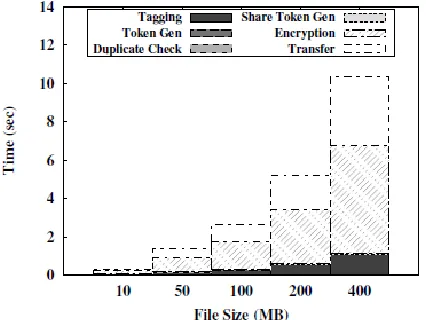
Fig 2. Time Breakdown for Different File Size
7. ASSESSMENT
We behavior testbed assessment on our prototype. Our evaluation specializes in comparing the overhead brought about via authorization steps, together with file token era and percentage token era, towards the convergent encryption and report upload steps. We examine the overhead via varying different factors, inclusive of 1) report size 2) wide variety of stored files 3) De-duplication Ratio 4) Privilege Set length . We additionally examine the prototype with a real-world workload based on VM pictures. We conduct the experiments with three machines ready with an Intel middle-2-Quad 2.66ghz Quad center CPU, 4GB RAM and installed with Ubuntu 12.04 32- Bit Operation system. The machines are connected with 1Gbps Ethernet community. We ruin down the upload procedure into 6 steps, 1) Tagging 2) Token era 3) replica take a look at 4) proportion Token technology 5) Encryption 6) Switch. For every step, we file the start and cease time of it and therefore acquire the breakdown of the whole time spent. We present the common time taken in each facts set within the figures.
7.1 File length
best use the document metadata for computation and therefore the time spent stays consistent. With the record size growing from 10MB to 400MB, the overhead of the proposed authorization steps decreases from 14.9% to zero.483%.
7.2 Wide variety of saved documents: To assess the effect of number of stored files inside the machine, we add 10000 10MB particular files to the gadget and record the breakdown for every document add. From figure 3, every step remains constant along the time. Token checking is completed with a hash table and a linear search could be carried out in case of collision. Not with-standing of the possibility of a linear seek, the time taken in replica take a look at stays stable because of the low collision opportunity.
7.3 De-duplication Ratio
To evaluate the effect of the de-duplication ratio, we put together unique data sets, each of which consists of 50 100MB files. We first upload the primary set as an preliminary upload. For the second add, we pick out a portion of 50 files, in keeping with the given de-duplication ratio, from the preliminary set as duplicate files and remaining documents from the second set as specific documents. The common time of uploading the second set is offered in determine 4. As uploading and encryption would be skipped in case of replica files, the time spent on both of them decreases with growing de-duplication ratio. The time spent on reproduction test also decreases as the looking could be ended whilst replica is found. Total time spent on uploading the file with de-duplication ratio at one hundred% is handiest 33.five% with specific files.
7.4 Privilege Set length
To evaluate the effect of privilege set size, we add one hundred 10MB specific files with different size of the data owner and target share privilege set length. In parent 5, it suggests the time taken in token technology will increase linearly as greater keys are related to the document and also the duplicate check time. Even as the wide variety of keys increases one hundred instances from a thousand to one hundred thousand, the full time spent most effective increases to 381 times and it is mentioned that the report length of the test is about at a small degree (10MB), the impact would grow to be much less giant in case of larger documents.
7.5 Real-global VM Snap shots
extra precise facts. Normal, the outcomes are constant with the previous experiments that use synthetic workloads.
7.6 Summary
To conclude the findings, the token generation introduces simplest minimum overhead within the whole upload manner and is negligible for moderate report sizes, for instance, much less than 2% with 100MB documents. This suggests that the scheme is suitable to construct a certified de-duplication machine for backup storage.
8 ASSOCIATED WORKS
Secure De-duplication. With the appearance of cloud computing, cozy statistics de-duplication has attracted plenty interest these days from studies network. Yuan et al. Proposed a de-duplication gadget in the cloud storage to reduce the storage size of the tags for integrity take a look at. To enhance the security of de-duplication and guard the records confidentiality, Bellare et al. confirmed a way to defend the data confidentiality through transforming the predicatable message into un-predicatable message. In their system, another 0.33 birthday party called key server is introduced to generate the record tag for replica take a look at. Stanek et al. supplied a singular encryption scheme that offers differential security for famous statistics and unpopular records. For popular information that are n't specifically touchy, the traditional conventional encryption is accomplished. Every other two-layered encryption scheme with more potent safety while supporting de-duplication is proposed for unpopular data. On this way, they finished better tradeoff between the efficiency and security of the outsourced facts. Li et al.
Addressed the key management trouble in block-stage de-duplication by means of distributing those keys throughout multiple servers after encrypting the files.
Convergent Encryption: Convergent encryption guarantees statistics privateness in de-duplication. Bellare et al. Formalized this primitive as message-locked encryption, and explored its utility in area-green relaxed outsourced garage. Xu et al. additionally addressed the trouble and showed a relaxed convergent encryption for efficient encryption, without thinking about troubles of the important thing-control and block-level de-duplication. There also are numerous implementations of convergent implementations of various convergent encryption variants for comfy de-duplication. It's far recognised that a few industrial cloud garage companies, along with Bitcasa, additionally deploy convergent encryption.
Twin Clouds structure: Lately, Bugiel et al. provided an architecture which will include twin clouds for comfy outsourcing of records and arbitrary computations to an untrusted commodity cloud. Zhang et al. also provided the hybrid cloud strategies to support private-ness-conscious records-in depth computing. In our paintings, we keep in mind to address the legal de-duplication problem over records in public cloud. The safety model of our structures is just like those associated paintings, where the private cloud is count on to be honest however curious.
9. END
In this project, the belief of legal information de-duplication turned into proposed to guard the data security by which includes differential privileges of users within the duplicate check. We also provided several new de-duplication buildings assisting authorized duplicate test in hybrid cloud structure, in which the replica-take a look at tokens of documents are generated by using the private cloud server with personal keys. Protection evaluation demonstrates that our schemes are at ease in phrases of insider and outsider attacks particular within the proposed safety model. As a evidence of idea, we implemented a prototype of our proposed authorized duplicate check scheme and conduct testbed experiments on our prototype. We showed that our legal reproduction check scheme incurs minimal overhead compared to convergent encryption and community transfer.
REFERENCES
[1] Openssl Project. Http://www.openssl.org/.
[2] P. Anderson and L. Zhang. Fast and secure laptop backups with encrypted de-duplication. In Proc. Of USENIX LISA, 2010.
[3] M. Bellare, S. Keelveedhi, and T. Ristenpart. Dupless: Serveraided encryption for deduplicated storage. In USENIX Security Symposium, 2013.
[4] M. Bellare, S. Keelveedhi, and T. Ristenpart. Message-locked encryption and secure deduplication. In EUROCRYPT, pages 296– 312, 2013.
[5] M. Bellare, C. Namprempre, and G. Neven. Security proofs for identity-based identification and signature schemes. J. Cryptology, 22(1):1–61, 2009.
[6] M. Bellare and A. Palacio. Gq and schnorr identification schemes: Proofs of security against impersonation under active and concurrent attacks. In CRYPTO, pages 162–177, 2002.
[7] S. Bugiel, S. Nurnberger, A. Sadeghi, and T. Schneider. Twin clouds: An architecture for secure cloud computing. In Workshop on Cryptography and Security in Clouds (WCSC 2011), 2011.
[8] J. R. Douceur, A. Adya, W. J. Bolosky, D. Simon, and M. Theimer. Reclaiming space from duplicate files in a serverless distributed file system. In ICDCS, pages 617–624, 2002.
Mrs. K. Pavani was born in India in the year of 1978. She received B.Tech degree in the year of 2000 from KITS College, Warangal, M.Tech PG in the year of 2004 from JNTU Hyderabad & Ph.D from JNTU Hyderabad in 2016. She was expert in C language, and Data Structures, Security, Data Mining, Adhoc Networks Subjects. She is currently working as an Associate Professor in the CSE Department in Vaagdevi Engineering College, Bollikunta, Warangal and Telengana State, India.
Mail ID: [email protected]
Ms. G. Mamatha was born in India. She is pursuing M.Tech degree in Computer Science & Engineering in CSE Department in Vaagdevi Engineering College, Bollikunta, Warangal and Telengana State, India.