Scholarship@Western
Scholarship@Western
Electronic Thesis and Dissertation Repository
6-7-2016 12:00 AM
A Pedagogy of Multiliteracies into Practice: A Case Study in One
A Pedagogy of Multiliteracies into Practice: A Case Study in One
Grade One Literacy Classroom
Grade One Literacy Classroom
Xing Meng Ms.
The University of Western Ontario
Supervisor Mi Song Kim
The University of Western Ontario Graduate Program in Education
A thesis submitted in partial fulfillment of the requirements for the degree in Master of Arts © Xing Meng Ms. 2016
Follow this and additional works at: https://ir.lib.uwo.ca/etd
Part of the Education Commons
Recommended Citation Recommended Citation
Meng, Xing Ms., "A Pedagogy of Multiliteracies into Practice: A Case Study in One Grade One Literacy Classroom" (2016). Electronic Thesis and Dissertation Repository. 3846.
https://ir.lib.uwo.ca/etd/3846
This Dissertation/Thesis is brought to you for free and open access by Scholarship@Western. It has been accepted for inclusion in Electronic Thesis and Dissertation Repository by an authorized administrator of
Abstract
With the rise of technology, literacy concepts in the 21st
century have challenged traditional
literacy practices that have relied primarily on print media. Recent research has alerted
early-years educators to the new understandings and significance of multiliteracies. These new
understandings will better prepare classroom practices that purposefully design learning
opportunities to accommodate diverse young learners in an era of evolving education.
This qualitative case study responds to these imperatives by showcasing a lived story of a
grade one teacher who has implemented multiliteracies pedagogy in her classroom.
Multiliteracies pedagogy has facilitated her effort in creating meaningful learning
opportunities for young children based on their diverse interests and needs. Using a narrative
analysis approach, the study suggests that applying multiliteracies pedagogy not only
motivates the grade one children to take ownership of their learning but also transforms the
way the teacher makes sense of her teaching.
The findings highlight those power structures that encourage the teacher to move forward
and those that hold her back. The research concludes that teacher education plays a critical
role in preparing and supporting an early-years educator to be successful; further, both the
educator and the young learners’ ambition to engage in actively designing teaching and
learning is influenced by the academic expectations from the school board, parents, and
resource availability.
Keywords
ii
Acknowledgments
I would like to express my utmost gratitude to my supervisor, Dr. Mi Song Kim, for her
ongoing guidance, support and patience throughout the research process. Without her
support, I do not believe I would have ever undertaken nor completed this thesis. Thank you!
I am deeply thankful to Dr. Kathryn Hibbert, member of my committee, who provided me
with valuable comments and suggestions during the research journey. Her extensive areas of
expertise and areas of knowledge have inspired me.
Although her name cannot be identified, I am very thankful for the teacher who agreed to
participate in this research. I have appreciated her support and collaboration from the first
day this research began. Working in her classroom was the highlight of this journey.
My sincere gratitude also goes to my family and friends who encouraged and supported me
iii
Table of Contents
Abstract ... i
Acknowledgments ... ii
Table of Contents ... iii
List of Figures ... vi
List of Appendices ... vii
Chapter 1 ... 1
Introduction ... 1
1.1 Coming to the problem ... 1
1.2 Rationale for the study ... 3
1.3 Research Questions ... 4
1.4 Objectives of the Study ... 5
1.5 The Organization of the Study ... 7
Chapter 2 ... 8
Review of Literature ... 8
2.1 Overview ... 8
2.2 The Why of Multiliteracies ... 9
2.3 The What of Multiliteracies ... 14
2.4 The How of Multiliteracies ... 18
2.5 Multiliteracies in Use ... 23
Chapter 3 ... 27
Research Design and Methodology ... 27
3.1 Overview ... 27
3.2 Qualitative Research and Social Constructivism Paradigm ... 28
3.3 A Qualitative Case Study Methodology ... 30
iv
3.5 Data Collection ... 32
3.6 Data Analysis ... 35
3.7 Ethical Considerations ... 37
3.8 Trustworthiness ... 37
Chapter 4 ... 39
Findings ... 39
4.1 Overview ... 39
4.2 Contextualizing The Field ... 40
4.3 Classroom Literacy Practices ... 44
4.4 Multiliteracies Learning Experience ... 47
4.5 Multiliteracies Learning Opportunities……….53
4.6
Multiliteracies Activities to Value Students’ Diversities………..59
4.7 Resources used and needed in integrating multiliteracies………62
4.8 Conclusion ... 64
Chapter 5 ... 65
Discussion and Implications ... 65
5.1 Overview ... 65
5.2 Multiliteracies pedagogy: A Transformation Impetus………...66
5.3 Integrating Multiliteracies with Literacy Learning………70
5.4 Tensions and Supports in Enabling Multiliteracies………....71
5.5 Getting Children to Read and The Standardized Assessment……….. …………....74
5.6 Implications for Practice and Future Research………...75
5.7 Concluding Remarks………..79
References ... 81
Appendices A ... 88
Appendices B ... 89
v
Appendices D ... 92
Appendices E ... 93
Curriculum Vitae ... 94
vi
List of Figures
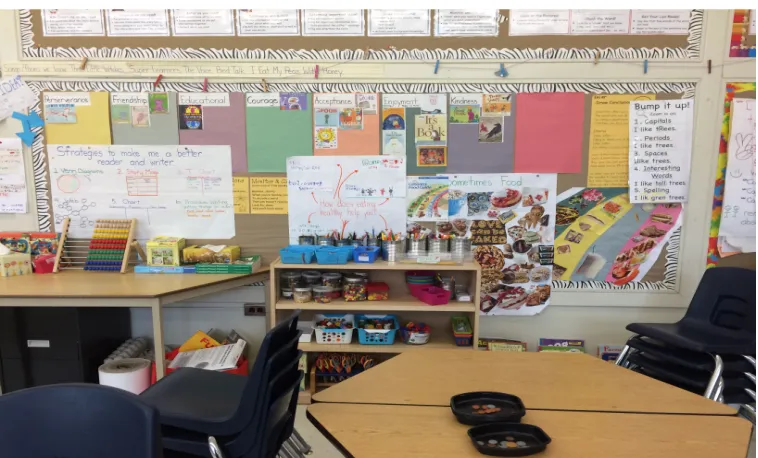
Figure 1: A Visual Representation of the Grade One classroom……….42
Figure 2: A Visual Representation of the Grade One classroom……….42
vii
List of Appendices
Appendix A: Ethics Approval Notice………...88
Appendix B: Letter of Information for Teacher………...89
Appendix C: Consent Form for Teacher………..91
Appendix D: Consent Form for Artifacts Collection………...92
Chapter 1
Introduction
This case study explored an early-year educator’s experience of implementing
multiliteracies pedagogy into practice. Attention was turned to one teacher, Jennifer
(pseudonym), a Grade One teacher at a public school in Ontario, Canada. Multiliteracies
pedagogy enabled her to draw on her students’ different interests, intentions, talents, and
knowledge in order to design learning opportunities to support their learning and
development. The purpose of this study was multifaceted: (1) to examine how a
pedagogy of multiliteracies facilitates young learners’ literacy development; (2) to
understand ways in which young learners’ difference and diversity are valued; (3) to
investigate what learning opportunities are created by multiliteracies pedagogy in the
classroom; and (4) to find out what resources and support are needed when implementing
multiltieracies pedagogies in the classroom.
1.1
Coming to the problem
Most of my memory in relation to schooling in China is full of dreary ‘learn to test’
scenes. Literacy learning to me meant being able to read fluently, write academically, and
score in the top percentile throughout my six years of elementary life. What I experienced
outside of school made no difference in the classroom, a place where I was treated as a
passive recipient of knowledge, with few opportunities to explore things that I found
intriguing. As a child, my interest, curiosity, creativity, life experience, and playful nature
were relentlessly stifled and ignored by the prescribed and highly standardized way of
teaching, learning, and testing.
When I was in grade five, I fell in love with comic books while losing interest in
classroom reading, writing, and the race to the top. My school test scores plummeted and
my teacher who implicitly dictated everything within the classroom considered me as
‘deviant’ and ‘inferior’. I was ashamed, confused, and worried, but at the same time
forced back on the ‘right track’ of school academic study again, and my comic books
ended up in a landfill. I did not understand at that time, that my desire to read comics
would lead to a diminished identity at school, or that reading and writing academic texts
were the only avenues that led to success at school.
Determined in part to better understand those early experiences, I decided to take on a
career in teaching. As a teacher, I continued to be deeply influenced by the
examination-oriented educational system in China. However, I realized that the definitions of literacy
and school success should be much broader than the linguistically-based and
examination-driven understanding that was privileged in the school system. I also found
that there were multimodal ways for students to explore literacy and learning both in and
beyond the school context. I heard students tell stories through drawings; I saw them
represent ideas through gestures; I watched them communicate through playing; and I
found that some of them were more interested in digital texts than print-based texts.
It was while studying at the Faculty of Education at Western University that I became
aware that there was a wide range of modes of representation and multiple texts that can
be used to support children’s learning and development. Through professional study, I
understood that, with the expansion of technologies and the continuous changing nature
of literacy, “there cannot be one set of standards or skills that constitute the ends of
literacy learning” (New London Group, 1996, p. 64). Most importantly, I found that
students’ differences regarding culture, language, funds of knowledge, interest, and
gender were not barriers to teaching and learning but assets of school success (Cummins,
2001). However, even as my understanding of early literacy learning and teaching was
enriched, I still questioned how to capitalize on a wide variety of skills, abilities,
experiences and interests young learners bring to school to create opportunities to
scaffold their learning.
My story and confusion resonated with many colleagues in the same program at Western
University who were early years’ practitioners. They too expressed frustration while
trying to apply child-centered approaches in the current academic and
Pyle and Deluca (2013) point out that early year educators within Ontario maintain
enough autonomy to tailor academic mandates, and choose their curricular stance and
pedagogical approach. Through further communication with my colleagues, I found that
some of them were employing multiliteracies in their classroom to facilitate literacy
teaching and learning. Thus, I wondered how multiliteracies pedagogy chosen by the
teacher could encourage young learners to actively pursue their interests, and make
meaning in accordance with their capacities.
1.2 Rationale for the study
The questions of ‘what counts as literacy in early childhood?’ and ‘what does it mean to
be literate?’ have inspired researchers and educators to address the need for children to
develop multiliteracies, and the complex ways in which children make meaning using
multiple modalities in various contexts (e.g., Flewitt, 2013; Gillen & Hall, 2013).
Researchers find that early literacy teaching is still grounded in psycholinguistic and
cognitive views of development, while other key elements such as sociocultural
differences, children’s agency, identity, family and community resources are often
neglected (e.g., Razfar & Gutiérrez, 2013).
New information, mass communication, and changing technologies have dramatically
transformed literacy and learning, increasing options students have to make and express
meaning in 21st century classrooms (Cooper, Lockyer & Brown, 2013; Walsh, 2011).
More recently, global connectedness and sociocultural diversity have altered the
demographics of students by bringing together people from diverse cultures and speak
non-dominating languages (NLG, 1996). These changes have prompted a reconsideration
of the traditional literacy curricular and pedagogy, and the roles both teachers and
students play in the rapidly changing era (Kalantzis & Cope, 2008; Kim, 2013). In the
early stages of schooling, literacy is increasingly recognized as multimodal, requiring
various forms and texts, and that pedagogical choices and practices attend to children’s
personal and cultural backgrounds (Hall, 2013).
Under such a changing climate, many scholars believe that a pedagogy of multiliteracies
of what constitutes appropriate literacy pedagogy. Multiliteracies theory explains how to
inspire children to be active designers of their own learning by embracing differences,
change and innovation (e.g., Cope & Kalantzis, 2009; Westby, 2010). Therefore, it is
important to conduct a study at a school classroom where the multiplicity of literacy is
recognized, and students’ diversity is valued. Specifically, it is of much significance to
examine the value of multiliteracies for young children in diverse early literacy
classrooms. This study focused on a grade one teacher’s lived experience with
multiliteracies pedagogy. It explored how the pedagogy of multiliteracies opens up
opportunities for young children to expand their literacy skills in a diverse classroom and
in the world beyond it. It also investigated in what ways the multiliteracies pedagogy
prioritizes what students have rather than what they lack to optimize their agency,
imagination, creativity, and encourages them to pursue their ambitions.
1.3
Research Questions
According to NLG (1996), the role of classroom pedagogy is “to develop an
epistemology of pluralism that provides access without people having to erase or leave
behind different subjectivities” instead of assimilating or “making homogeneity out of
differences” (p. 11). To date, many researchers and educators argue that the pedagogy of
multiliteracies can open up possibilities of capitalizing on children’s diversity. The
researchers and educators encourage students to transform existing meanings to design
new meanings, as multiliteracies appreciate the relationship between school and outside
school resources and environments (e.g., Cope & Kalantzis, 2000; Jewitt, 2008).
This study was designed to describe the complex nature of an early literacy teacher’s
work when interacting with diverse students in the twenty-first century. It also provided a
lens to better understand how the teacher encouraged young students to take ownership of
their learning by welcoming their diverse difference, and how her choice of
multiliteracies pedagogy influenced children’s meaning making in an elementary
classroom in Ontario in an era of new literacies and new technologies. Specifically, my
1. Why is multiliteracies pedagogy important in the early-years classroom where children
with diverse needs and experiences explore their learning multimodally?
2. In what ways do adopting multiliteracies pedagogy create various learning
opportunities for the teacher to draw on her students’ diverse identities and to encourage
their development in meaningful and creative ways?
3. What specific learning opportunities are created by the multiliteracies-oriented
teacher?
4. What resources and materials are needed, used, valued and produced when applying
the multiliteracies pedagogy to design learning opportunities for diverse classrooms?
1.4
Objectives of the Study
For the past ten years of my teaching career, I have been associated with hundreds of
students ranging from grade one to twelve in China. Although there were similarities
between students of the same age, they entered school along with diverse capabilities,
knowledge, life experiences, and interests. Unfortunately, such differences of each
student were almost invisible in schools that focus on norm-based criteria and a
one-size-fits-all approach to education.
However, I had never imagined that this type of standardized education would be part of
the Canadian landscape. As accountability movements sweep public education in North
America, literacy curriculum is often narrowly recognized as a set of academic standards.
These standards specify what children should learn and what content should be taught,
and assess if students have learnt what was prescribed (White, 2011). This accountability
context moves the focus away from following children’s lead to following the lead of
standards and test results in early childhood education (Kagan et al., 2006). The most
obvious negative impacts of standards are that they are not always based on background
of how children grow and learn, and often do not take into account children’s needs,
capacities, and unique characteristics (Strauss, 2014). Consequently, they constrain
world, whiling pushing teachers to focus on test results. According to the Education,
Quality and Accountability Office (EQAO) website, “Student achievement results have
always been considered key indicators of educational quality, and student scores on
large-scale assessments are the subject of public interest” (EQAO, 2010).
In Ontario schools, literacy teaching and learning is an important focus, while literacy
development lies at the heart of the elementary curriculum (Ministry of Education of
Ontario, 2006). The provincial document indicates that literacy is based on skills such as
listening and speaking, reading, writing, and viewing and representing, so that it is of
great importance to effectively engage students and make sure they develop the set of
‘literacy skills’ and succeed in schools. Although the Ontario government is committed to
enabling all students to reach their potential, every student is unique and each must have
opportunities to achieve success based on his or her own interests, abilities, and goals
(Ministry of Education of Ontario. 2010).
Thereby, this study discussed how a pedagogy of multiliteracies in a Grade One
classroom created opportunities to support learning and communication in a dynamic and
diverse environment. It also explored if the teacher and the children achieved what
multiliteracies call for: “active participants in social change”, “active designers”, and
“makers of social futures” (NLG, 1996, p. 64).
The purpose of this study was to explore an early-years educator’s experience using
multiliteracies pedagogy in an early literacy classroom in Ontario, Canada. The best
approach to understanding an experience is by using a qualitative research design. A
qualitative research lens allowed me to understand, think, and interpret the teacher’s story
and experience towards multiliteracies in early-years classroom in Ontario. A qualitative
lens also provided me various sources of data to critically reflect and analyze the impact
of a multiliteracies pedagogy on the diverse early-years students (Creswell, 2009).
Moreover, I used a case study method to closely examine the relationship between
multiliteracies and children’s learning and development. This statement mirrors the idea
allows researchers to present a comprehensive and thorough description of the problem,
and provide a unique example of real people in real situations.
In order to closely understand the teacher’s experience, thoughts, and feelings about
multiliteracies, I undertook qualitative data collection with a variety of data sources.
Specifically, I conducted two times of in-depth interviews with the teacher. The first
interview happened in early of March, and the second follow-up interview happened in
the end of March. The data were also collected from many informal conversations and
talks with the teacher, the artefacts of the teacher, as well as the personal narrative
reflection the teacher wrote. The rich data sources connect Creswell (2007) who claims
that gathering valid and detailed data involves a wide variety of information and
materials.
1.5 The Organization of the Study
Chapter 2
Review of Literature
2.1
Overview
Prior to investigating what multiliteracies may bring into the early literacy classroom, and
analyzing various data and artifacts collected from teacher, I had to identify and
consolidate existing literature on multiliteracies. I first examined the sociocultural and
technological influences in the twenty-first century that have promoted the theory of
multiliteracies to represent the complexity, fluidity, and diversity in literacy learning and
teaching (Cope & Kalantzis, 2009; NLG, 1996). Then, I looked at the ideas of learning
by design and learning through multimodal approaches to facilitate young children’s
learning and development (Kalantzis & Cope, 2008; Walsh, 2011). Next, I highlighted
recent literature and research on a pedagogy of multiliteracies that focus on the role of
agency in the meaning-making process, and how to create learning opportunities to
accommodate students’ diverse needs, interests, and experiences (Cope & Kalantzis,
2009; Jewitt, 2008). Then, I turned to a new assessment underpinned by a multiliteracies
theoretical framework that focuses on what students possess instead of what they lack.
This assets-based approach to assessment aims to optimize student agency in learning and
development (Clark & Moss, 2011; Jacobs, 2013). Finally, I explored literature on
multiliteracies that open up possibilities by drawing on children’s diversities (Dyson,
1990; Hibbert, 2013; Kim, 2014a), as well as the importance of teacher’s education in
implementing multiliteracies pedagogy into practice (Ball, 2000).
To conduct the literature review, I used Western Library’s Education Graduate Program
Databases. I thoroughly examined about 50 journal articles and books related to
years literacy, multiliteracies pedagogy, the notion of design, students’ diversity,
early-years assessment, as well as teacher education. I also reviewed reference lists from key
scholars in the field to find possible additional sources. Specifically, I searched for words,
phrases, themes, and concepts that explain the term multiliteracies and that would frame a
and learning. Fundamentally, the literature on multiliteracies lays the cornerstone of this
study since it provided a rich textual account of multiliteracies and its pedagogy to be
reviewed, understood, analyzed and interpreted. While not all reviewed studies identified
the methodologies employed by the authors, it is obvious that this body of literature
contains empirical studies that employed quantitative, qualitative and mixed approaches,
including ethnographies, case studies, narrative inquires, and experimental studies.
The literature review is divided into four sections, specifically including (1) the ‘why’ of
multiliteracies: social and technological transformations; (2) the ‘what’ of multiliteracies:
multimodality and learning by designs; (3) the ‘how’ of multiliteracies: a pedagogy of
multiliteracies and new assessment; and (4) multiliteracies in use: valuing students’
diversity and teachers’ education.
2.2
The Why of Multiliteracies
In the twenty-first century, learners require an expanded definition of literacy and broader
skills to support their activities in the new economy. They have to develop multiple skills
in nonlinear environments using a range of tools (Cooper, et al. 2013). The change of
learning needs have given impetus to redefining literacy as multiple literacies that stand
for the complexity, fluidity, creativity, and diversity of learning and teaching in the 21st
century (NLG, 1996). Thus, the concept of multiliteracies was coined as a way to respond
to what it means to be literate in an ever-changing environment. Broadly, multiliteracies
deal with multiple meaning making approaches, mass communication channels, cultural
and linguistic diversity, as well as a wide variety of resources (Jewitt, 2008; NLG, 1996).
This section traces the conventional views about literacy and explains two critical reasons
for the emergence of multiliteracies. Moreover, this section highlights thesociocultural
and technologicalchanges that make multiliteracies necessary to ensure education,
especially early childhood education, addresses the evolving world today. Recent book
chapters and journal articles obtained from my courses of the Master’s program at
The changes to social, cultural, and private life constitute one of the most important
factors in the development of multiliteracies. Historically, literacy emphasizes the value
of communicating in daily life, which requires people to read and write certain symbols
in particular settings and activities (Scribner, 1984). As such, schooling is seen as a place
where people acquire literacy as an autonomous and monolithic set of skills or
competencies to develop their cognitive skills and make them better citizens (Jewitt,
2008; Street, 2003). The idea of reading and writing words and sentences based on
common rules and standardized usages is challenged by current social conditions of
global capitalism, new demands on the workforce, changes in our public and private
lives, and shifts in the communicational landscape (Cope & Kalantzis, 2009).
The traditional society in which people were destined to be submissive to authorities and
workplaces is replaced by, or at least is in transition to an emerging ‘knowledge society’
(Street, 2003). Within this context, “value is increasingly located in the intangibles of
human capacity, organizational flexibility, business processes, customer relationships,
brand identity, social networks, technological know-how, product aesthetics and service
values” (Kalantzis & Cope, 2010, p. 201). Along with the effects of globalization, and
ever-increasing multiculturalism and multilingualism, literacy in these changing times is
no longer seen as a single, separate, static, and fixed set of language skills. A new
understanding of literacy is reflected in one of the foundational papers written by the
New London Group (NLG) in 1996. In their A Pedagogy of Multiliteracies: Designing
Social Futures, the NLG (1996) created the word ‘multiliteracies’ to recognize the idea of
textual multiplicity instead of conventional bounding by a set of decoding and encoding
skills required for reading and writing. NLG (1996) uses the term multiliteracies to
address the realities of increasing local diversity and global connectedness in the context
of the changing social and changing communicative landscapes, saying “dealing with
linguistic differences and cultural differences has now become central to the pragmatics
of our working, civic, and private lives” (p. 64).
Increasingly, there is considerable agreement among many researchers and educators in
the literacy field about endorsing the idea of multiliteracies. For example, Gee (1996)
in complex ways with different discourses” (p. viii). Kalantzis, Cope, and Fehring (2002)
assert that literacies are multiple: they address the changes of an ever-increasing diversity
of culture and language, while “shaping the way in which meaning is created and
exchanged, and they are generating a dynamic plurality of texts” (p. 2). Rather, meaning
making is influenced by linguistic and cultural differences and by the uses of a range of
symbolic conventions, moving from one context to another and from one culture to
another (Cope & Kalantzis, 2009). The changing society requires a new educational
response in which learning is not encapsulated in the old basics of the ‘three Rs’—
reading, writing and arithmetic (Kalantzis and Cope, 2008). Instead, the key challenge is
to move beyond linguistic boundaries to multiple and multimodal texts, and connect to
wide range of the culturally and linguistically diverse contexts in contemporary education
(Jewitt, 2008). Therefore, being literate nowadays requires multiple languages, multiple
meaning making skills, and multiple communication approaches. For this reason, many
researchers believe that the multiliteracies framework not only supplements traditional
rules of literacy learning and development but also enriches the various existing teaching
practices and pedagogies (Kalantzis & Cope, 2008; NLG, 1996).
The second reason that explains the need for implementing multiliteracies, especially for
young learners, is due to the digital technology revolution. As adults, we may struggle
with the power of ever-expanding digital technologies and media that assist the flow of
information in daily life; however, for “young children born into this technological
epoch, there may be no choice, it is simply a way of being” (McTavish, 2014, p. 320).
Undoubtedly, there have been dramatic expansions of digital technologies in the twenty
first century, and they have inevitably changed nearly every aspect of people’s lives and
influenced the way people study, work, communicate, entertain, and socialize (NLG,
1996; Walsh, 2013). The shifts have seductively promoted new types of digital and media
texts that can engage children’s interest, and encourage their learning potential (Razfar &
Gutiérrez, 2013). This important and powerful role of technology can “destabilize the
functions, uses, values and meanings of literacy anywhere” (Street, 2006, p. 6). As the
proposed by NLG (1996), digital technologies mediate how both the word and the world
are presented to young learners.
In addition to print literacy, there is a growing appreciation that literacy now can hardly
be separated from the widespread use of screen-based texts and interactive digital media.
For example, Kress (2006) argues that literacy is no longer isolated from a vast array of
social, technological, and economic influences, and he points that the medium of
contemporary literacy practices has been switched from a centuries-long dominance of
print texts to the increasingly popular use of screen. This insight mirrors the stance of
Street, Pahl and Rowsell (2009), who claim that the screen-based texts and contemporary
communications are rapidly superseding print literacies with complex digital literacies in
the field of early literacy learning and teaching.
Obviously, meaning making in a multimedia world requires a variety of text forms
integrated with information and technologies. Increasingly, researchers argue that various
timely modes and electronic affordances can be utilized to scaffold learning in an era of
digital technology. For instance, Walsh (2011) argues that digital versions of texts may
make reading more appealing and engaging for students because on-screen reading
incorporates multisensory activities such as searching, viewing, drawing, and navigating.
Also, according to Gillen and Hall (2013), literacy practices nowadays are necessarily
associated with technology. They suggest that many children often utilize technologies
that are part of their environments when playing and learning. Though the patterns of
interaction with technologies vary from child to child, “children are developing a wide
range of skills, knowledge and understanding in their use” (p. 13). This is discussed
further in Rowe’s (2013) study of preschoolers as writers. She finds young authors can
always find ways to integrate digital communication and composing tools into their
writing at school. Thanks to the affordance of computer and Internet young authors can
have a medium to connect their literacy acquisition with interests, and social interactions.
The new understandings have motivated researchers to reflect on how information and
communication technology (ICT) has become integral to the literacy experience and how
of examples of children’s different learning habits caused by the availability and
affordance of technologies found at home. She suggests that classroom contexts need to
acknowledge these changes, and teachers need to develop pedagogies that include digital
technologies to meet changing curriculum objectives and assessment requirements.
There is compelling research evidence indicating that young children’s learning and
development can be enhanced when they engage in multiple literacies involving digital
technologies. For example, Flewitt, Messer and Kucirkova (2014) investigated the
effectiveness of using iPads to create rich combinations of symbolic representations and
diverse set of texts so as to extend opportunities for early literacy learning. Their study
found that the “combination of immediate feedback with tangible and satisfying end
products motivated children to engage with and commit to digital-based literacy
activities, and to be drawn to them like bees to a honeypot” (p. 11). Similarly, Lynch and
Redpath (2014) analyzed the use of smart technologies to support literacy learning and
teaching in an Australian school; they found that the portability, the ‘touch’ interface, and
the simple navigation system of personal portable computers can support independent
learning activities that “involve students’ production and communication of knowledge,
positioning the learner as a producer, an active community member and, at times, a
teacher” (p. 169).
Today’s young children are learning differently and diversely as technologies become
increasingly embedded in everyday life. When both students and educators are
surrounded by digital technologies and media content in and beyond school settings,
“their identities, group affiliations, and fan identities are highly mediated through those
popularly available media outlets” (Razfar & Gutiérrez, 2013). A number of researchers
are devoting their efforts to inspire educators to understand the nature of the changes in
literacy and its practices; they demonstrate how the shifts in communication require
literacy pedagogy that accounts for multimodal texts and multimedia technologies (e.g.,
2.3
The What of Multiliteracies
Central to multiliteracies are the complexity of meaning making where texts and
resources are multimodal, and the proliferation where meaning makers are active
“re-makers of signs and transformers of meaning” (Cope & Kalantzis, 2009, p. 173).
Highlighted by Jewitt (2008), multimodality concerns plurality of text forms and
changing social and semiotic landscape: “meanings are made through many
representational and communicational resources” (p. 246). While the notion of design has
emerged in response to the active and transformative meaning making process in which
educators and learners are enthusiastic, creative, and devoted designers (NLG, 1996). In
this section, the discussion is organized by themes ofmultimodalityand learning by
design, drawing on a range of examples of multimodal research as well as studies on
concept of design. Resources for this section are mainly from reading materials from my
Master’s courses.
Multimodality is hardly a new concept, but due to technologies and diverse culture, it has
become more visible to educators (Kim, 2014a; Rowsell, 2013; Stooke, 2010). As
discussed previously, contemporary literacy inevitably encompasses socially interactive
meaning representations where texts are produced and understood in multiple forms and
through a variety of modes to response to changing environments. Consider, for instance,
word-processing, mind-map, desktop publishing, multimedia presentations, and various
Apps. These modes, according to Luke (2000), take into account not only how meanings
are made through combinations of diverse modes, including linguistic, visual, audio,
gestural, and spatial, but also emphasize a vast array of social, cultural, economic, and
community factors. This idea echoes Kalantzis and Cope (2008) who state that meaning
making under the influence of technologies is growingly being made multimodal in
which “written linguistic modes of meaning are part and parcel of visual, audio and
spatial patterns of meaning” (p. 197).
It is increasingly recognized that early-years literacy learning and teaching is now
inescapably multimodal, requiring the integration of texts with not only language but
Moreover, Flewitt (2013) explains that in an increasingly complex technological world,
childhood literacy learning is constructed with the use of both print and digital media.
Digital media requires interpretation through multiple modes of approaches, such as
combinations of spoken and written language, images, icons, sounds, layout and
animation. This communicational modality is a “fusion of meaning and form” (Jewitt &
Kress, 2003, p. 10), and takes into consideration the communicator’s environment as well
as the “perception of the audience and what he or she imagines they want” (p. 12).
Ongoing debates and research have elaborated on the multimodal ways in which
meanings are made in different semiotic resources. Social network sites such as
Facebook, Instagram, and online blogs, are key areas of multimodal communication in
students’ everyday life (e.g., Kalantzis & Cope, 2008; Rowsell, 2013). Early literacy is
also no longer bounded by the ability of reading and writing print-based text (Comber,
2013). Young readers and writers are required to simultaneously deal with different
modes of text, image, sound and gesture in visual, media, or digital texts. For example, in
Rowe’s (2013) study on recent trends in research on young children’s authoring, she
points out that early childhood authoring has moved beyond the conventional field of
print literacy to technologies and broader semiotic notions of multimodal meaning
making, and sociocultural practices. Literacy nowadays encompasses communication,
comprehension, the capacity to analyze text critically, and the skills needed to understand
communications technologies, video, television, and new media, as well as the ability to
use a wide range of information to function in daily life (Human Resources and Skills
Development Canada, 2005, cited in Stooke, 2010, p.10).
Considerable evidence has shown that multimodality is of great significance in current
early childhood education within the changing communicative environments. For
instance, Walsh (2011) took a mixed-method and multiple case studies approach to
explore current diversifying educational landscapes, illustrating specific examples of
ways in which teachers and young learners are engaged in multimodal literacy learning.
The findings confirm the conceptualization of multimodal literacy and demonstrate
diverse literacy practices. Also, Flewitt (2013) reviewed recent studies of early year
perspectives can facilitate early literacy learning. The research shows that the changes
from print-based literacy to multiple literacies through combinations of diverse modes
can lead to valuing young children’s cultural and linguistic experiences and their uses of
variety of symbolic conventions in early years education. As a result, early literacy
researchers demand both policy makers and practitioners to acknowledge the rapid
changes taking place in terms of meaning making and symbolic representation. They
argue early years educators should be able to represent their knowledge in an equally
diverse manner, navigate vast amounts of information, and extend their repertoire of
literacy practices to support learning with different forms of textual, graphic, linguistic,
gestural, technological, and symbolic languages (e.g., Flewitt, 2013; Hall, 2013)
Learning by design is another central emphasis in multiliteracies theory. The
multiliteracies notion privileges the concept of design, arguing classroom learning needs
to be purposefully organized around a much wider concept of communicative practice
and representation than what was currently presented to students (Street et al., 2009).
Multiliteracies certainly supports traditional skills such as reading and writing in any
form, but NLG (1996) believes school curriculum and classroom pedagogy should be
wisely designed to address diversity through the transformation but not the assimilation
or integration of the individual learners. Such ability of designing also allows students to
be active designers to think, reason, and manifest critically in learning processes, and to
be able “to design their own futures” (Westby, 2010, p. 66).
The multiliteracies framework focuses on designs of meaning making (Kalantzis et al.,
2002). The designs involve all identities of meaning makers, and meaning-making
modalities that are inclusive of the diverse needs and ways of understanding. Through
designing process that encourages imagination, vision, and problem solving, individuals
experience, conceptualize, analyze, and engage in learning (Kalantzis & Cope, 2010).
Jewitt and Kress (2003) state that as active designers, students “use the resources that are
available to them in the specific socio-cultural environments in which they act to create
signs, and in using them, they change these resources” (p. 10). Researchers express that
learning by design serves as a professional provocation: thoughtful and premeditated
promote belonging and learner transformation (e.g., Burrows, 2010; Kalantzis & Cope,
2008).
Typically, NLG divides design into three components: the designed, designing, and the
redesigned. According to Cope and Kalantzis (2009), ‘the designed’ also refers to
available designs. It also involves various discourses, including the well-known linguistic
organizational structure, meaning making resources, and syntactic patterns associated
with a variety of narrative and expository genres, and comparatively less-known visual,
computer, or media literacy (Westby, 2010). These available designs require educators
and students to develop metalanguage to understand and express explicitly the
differences between texts, and relate these to the contexts of culture and situation in
which they seem to work (NLG, 1996).
Secondly, Cope and Kalantzis (2009) see ‘Designing’ as “the act of doing something with
Available Designs in representing the world” (p. 176). It is a connection between past and
new experiences through oral, written, visual, audio, gestural, spatial, and other
multimodal patterns that relate to meaning making. The design symbolizes a transforming
process, “remaking the world by representing the world afresh” (p. 167). Cope and
Kalantzis (2009) believe the ‘Redesigned’ is the outcome of ‘Designing’. One person’s
designing becomes a resource for another person’s Available Designs. They argue this
circulation of designing process or the transformational process is the essence of learning.
As noted by Westby (2010) “students take available designs, interpret them, and then
transform them for their own purposes” (p. 67).
Research on multiliteracies further highlights the importance of purposefully designing
learning to engage teachers’ thinking, viewing, and reflecting their teaching, in the
meantime, to encourage students as confident agents in their learning (e.g., Burrows,
2010; Cope & Kalantzis, 2009). For example, Kalantzis and Cope (2010) illustrate how
the learning by design project creates new environments for teachers and students to
make meaningful choices about what and how they learn to achieve new higher standards
of performance. In their research, they clearly define teachers as designers of learning
instructor. They also argue that teachers should design learning experiences that allow
learners to take more responsibility for their learning. Teachers also need to design
meaningful assessment approaches to track “progress all the time to make sure their
teaching is right for each learner’s needs” (p. 204). Jewitt (2008) argues that when
learning happens by design, educators can conceptualize the relationships between
modes, pedagogy, curriculum and context, and provide a more flexible and dynamic
frame that responds to the interests of meaning makers and the demands of the context.
This idea connects to Burrows (2010) who finds that learning by design is a pedagogical
typology, which “suggests the impetus for deep learning lies in teachers carefully
choosing, orchestrating, sequencing activities into a coherent pedagogical design” (p.
294).
Digital openness, multimodal fluidity, and intrinsic e-learning environments not only
create a dynamic resource for teachers as designers to plan, deliver, revise, reflect, and
improve their work, but also allow individual students to be more active producers of
hybrid texts instead of being passive recipients of information. Therefore, it is of great
importance for teachers to be able to purposefully design learning opportunities in their
own contexts so as to recognize and harness individual potential. This designing
capability can help learners develop metalanguage to actively participate in learning and
development (Comber, 2013; NLG, 1996).
2.4
The How of Multiliteracies
Research on multiliteracies has inspired educators to purposefully create engaging and
supportive environments with rich opportunities for students to actively explore various
texts and become fully engaged in a variety of literacies (e.g., NLG, 1996). This
conceptualization highlights a pedagogy of multiliteracies that responses to how learning
can be meaningfully designed for “a process of self-recreation” (Cope & Klantzis, 2009,
p. 184). Such transformative pedagogy requires a different way of thinking about
assessment approaches that can also provide students with abundant opportunities to
become active meaning makers. In this section, I included literature on how learning is
The multiliteracies pedagogical framework outlines useful principles to design
opportunities to support learners to become active meaning makers. Changing literacies
and technologies brings enormous opportunities and possibilities to learning, teaching
and everyday classroom practices across the educational settings. This change in
pedagogy must address students’ interests, needs, personality, identity differences,
culture and language diversities, as well as funds of knowledge are becoming ever more
accentuated (Moje & Luke, 2009). Thus, current educational curricula and pedagogical
practices need to be reconceptualized to encompass the multilingual, multimodal, and
multiliterate practices that students face in and beyond the classroom (Gee, 2000).
NLG (1996) defines multiliteracies pedagogy as “a different kind of pedagogy, one in
which language and other modes of meaning are dynamic representational resources,
constantly being remade by their users as they work to achieve their various cultural
purposes” (p. 64). This argument resonates with Cooper et al. (2013) who argue that
within the framework of multiliteracies pedagogy, learners are supported through a
pedagogy that provides them with rich opportunities to be able to multimodally examine
diverse information source and content, to critically explore the information, and to
become active meaning-makers and effective communicators.
Research on multiliteracies highlight the importance of engaging students with
multiliteracies pedagogy because it is creative, productive, constructive, and most
importantly, transformative (Cope & Kalantzis, 2000; NLG, 1996). The pedagogy of
multiliteracies pedagogy includes four dimensions that were originally called situated
practice, overt instruction, critical framing and transformed practice.
The first dimension, situated practice, means that teachers engage students in learning by
drawing on their experiences and connecting learning with what they already know
(NLG, 1996). By valuing students’ knowledge, interests, and relationships developed
outside school settings, teachers create opportunities for students to share and expand
upon them in the learning process. The second dimension, overt instruction, means that
teachers facilitate students’ development of metalanguage in direct and explicit lessons
students take ownership of their learning. Third, critical framing means that teachers help
students to recognize the contexts of their learning, and relate what they learn to broader
contexts so as to develop their critical thinking ability. Finally, the fourth dimension,
transformed practice, refers to the expansion and re-creation in process of learning and
teaching. In this dimension, learners are encouraged to creatively apply what they learned
into practice. By taking meaning out of one context and adapting it to other contexts,
students are redesigning and expanding knowledge.
Drawing from Jewitt (2008), the sequence of multiliteracies pedagogy is not necessarily
linear, but it always starts from students and their experience. In their recent research,
Cope and Kalantzis (2009) further examine the knowledge process using the four
components of multiliteracies pedagogy. They prioritize the connection and
transformation between experiencing the known to conceptualizing the new, suggesting
that a pedagogy of multiliteracies recognizes both teacher and student agency in
meaning-making process. Initiating from students’ experiences that are meaningful to
them, teachers design strategies purposefully and appropriately to engage their students in
various modes of meaning making, and thus scaffold student learning. Cope and
Kalantzis (2009) point out that this new transformative pedagogy encourages varied
perspectives, experiences, interests, knowledge, modalities, and divergent learning
orientations; it seeks to value differences and “those who do not fit the norm” (p. 188).
The usefulness of the pedagogy of multiliteracies has been found in many research
undertakings that deal with students’ cultural and linguistic diversities, students with
language impairments and special needs, new approaches to literacy teaching and
learning, and ESL learning. Some examples of research on multimodality and
multiliteracies in early-years learning are discussed below. For instance, Stein (2003)
conducted a literacy project called ‘Olifantsvlei Fresh Stories’ for young children in
grade one and two. In the study, students were associated with multimodal literacy
practices and opportunities fostered by situated practices. In the project, children
managed to represent doll figures through actively seeking, contextualizing, and
transforming a wide variety of semiotic resources in their local context. Stein describes
different contexts of meaning making. As a result of engaging in situated practice, young
learners turned to be active learners and designers of their own literacy learning and
exploring.
A case study conducted by Giampapa (2010) also explains a multiliteracies pedagogy that
draws on the linguistic and cultural forms of capital and identities of young children. The
research illustrates how multiliteracies pedagogy creates opportunities to capitalize on
students’ diverse resources, and how students carve out interpersonal spaces and assert
their identities, sometimes beyond a teacher’s expectation. Through multiliteracies
pedagogy, young children can be encouraged to take ownership of their studies to engage
with multimodal texts, to construct multilayer knowledge, to build up different skills,
most importantly, to become active learners. In the meantime, early years educators are
challenged to design and negotiate teaching content in their own contexts so as to
recognize and harness individual learners’ agencies and their attributes in learning
(Cooper et al., 2013).
Similar to what multiliteracies pedagogy emphasizes to a teacher, an active designer of
learning and teaching with openness to differences, change, and innovation, new
approaches to assessment begin from what children have, seeking what children can do or
locating their assets rather than deficits to support their agency through multimodal
approaches (Clark, 2001). As discussed before, conventional mono-literacy is placed in a
system of rules and standards, while the formal, text-based assessments strive for results
of transmission of disciplinary or prescribed knowledge rather than young learners’
unique personality in their own ways (Kagan, 2003). The standardized teaching, learning,
and assessing leads to children as passive receptacles of knowledge, opening up few
opportunities for them to explore the world (Strauss, 2014).
Many researchers suggest that within the norm-referenced and standardized environment,
students’ agency, imagination, creativity, and unique characteristics are relentlessly
ignored, while their learning is statistically monitored and quantified with few
opportunities to explore their potential in real life contexts (e.g., Dennis-, Reuter &
multiliteracies, a demand for multiple methods of gathering information in an ongoing
process has won support. For example, White (2011) utilizes ‘dialogic approach’ to invite
early childhood educators to engage in dialogues of uncertainty with their young learners,
caregivers and local community to “generate truths that are less concerned with outcomes
than an appreciation of others through polyphonic means” (p. 49). This dialogism enables
educators to deeply recognize and appreciate young learners’ powerful agency through
their multimodal approaches of making sense of the world. Also, the Washington State
Office of Superintendent of Public Instruction (2008) described leaning and development
as complex and dynamic, so that “the most effective assessment procedures are
characterized by a combination of methods and sources of information” (p. 9). Therefore,
evaluation for early childhood education is to understand children from different
perspectives, which should be based on the continual process of seeking and interpreting
evidence about their learning and development through observations, dialogues,
interviews, discussions, documentations, and meaningful activities (Blandford &
Knowles, 2012). The continuous process of multimodally collecting information about
students’ making sense of the world requires teachers to play not only as educators, but
also observers, partners, listeners, designers, interpreters, and friends. Such mode of
assessment, according to Kagan (2003), that directly leads to improvement for teaching,
promotes children’s learning development, and is “needed as a part of any quality early
care and education program” (p. 117).
Further, some researchers view assessment practices in early childhood education as a
co-constructing and co-authoring process that involves the students in self-assessment,
encouraging them to discuss their own learning and development (e.g., Blandford &
Knowles, 2012). When educators support students to become active participants who are
able to collaborate in decision making in their learning context, both educators and
students can obtain a sense of belonging and satisfaction as they find a place for their
ideas and strengths (Council of Ministers of Education Canada, 2014). Similarly,
Hlebowitsch (2012) argues that by understanding Schwab’s (1969) “idea of personalized
or differentiated teaching that accounts for different learning strengths and that
utilize diverse resources, multiple strategies, dynamic assignments, and various
assessments to scaffold individual students’ learning and development. This argument
resonates with Clark and Moss (2011) who use the Mosaic way of getting to know early
years children better by listening to their visual, verbal even silent voices. They find that
young children are so capable that they can demonstrate their skills and competencies
through dialogues, conferences, discussions, and negotiations. The information gathered
from different modes and resources serve as a springboard for caregivers to conduct more
in-depth reflection, interpretation, evaluation, and construction for children’s meaning
making progress. Clark and Moss (2011) contend that “listening to young children has
the potential to be both used as an evaluative tool and to become embedded into early
years practice” (p. 12).
New approaches to assessment in early childhood education focus on supporting students'
agency, assets, and diverse needs rather than detecting their deficits or aligning with
standards. These approaches comply with multiliteracies’ call for educators and students
to be active participants in social change, active designers of teaching and learning, active
makers of social futures (NLG, 1996).
2.5
Multiliteracies in Use
The New London Group (1996) argue that schools must shift from functioning in
assimilation and homogeneity to reconfiguration and capitalization on students’
diversities. Diversity here is not only concerned with the multiple layers of identities that
learners developed in their private lives but also with “the different
subjectivities-interests, intentions, commitments, and purposes-students bring to learning” (NLG. 1996,
p. 72). Rather than an attempt to ignore and erase the different subjectivities,
multiliteracies perspectives envision the connection and transformation between school
and beyond school life worlds - starting building knowledge from students’ cultural and
linguistic background, various lived experiences and multimodal repertoires (e.g.,
Cummins, 2001; Jewitt, 2008). This core aspect of multiliteracies calls for teacher
(Ball, 2000). In this section the importance of recognizing students’ diversity and teacher
education is emphasized.
Substantial bodies of scholarly and professional literature indicate students’ diverse
experiences and resources developed beyond school can be carefully recognized and
purposefully harnessed. For instance, Hall (2013) comments that young pupils from
diverse neighborhoods have rich funds of knowledge and community literacy practices.
By tapping into early learners’ local practices, accepting their lived experiences, and
inviting their diverse knowledge and skills, educators can effectively engage them in
literacy learning. This perspective explicitly resonates with Comber (2013) who suggests
that with proper conditions and support, young learners’ diverse language and life
experiences can be utilized as productive resources for their learning in the early
childhood classroom.
Multiliteracies and multimodal perspectives demand early childhood teachers take into
account and draw on students’ out of school experiences, interests, and knowledge to
build classroom practices and scaffold learning (e.g., Flewitt, 2013). This ‘difference as
assets’ rather than ‘difference as deficit’ model sees diversity as an opportunity, and helps
educators “engage with and gain access to students’ agency, cultural memory, and home
and school learning within local contexts” (Jewitt, 2008, p. 255).
Researchers point out that students’ literacy identity is represented by both his/her life
and school context that are overlapping and dependent on each other (Cope & Kalantzis,
2000). Also, based on Cummins et al. (2005), students’ knowledge and experience
acquired outside school in informal settings play a critical role in shaping their identities
and cognitive functioning. The process of identity negotiation is mutually complementary
in classroom because when teachers value different identities of their students, they will
find more opportunities to scaffold their learning and development accordingly.
There is a considerable body of research in favor of attending to children’s diverse
outside school interests and experience to motivate their scholastic pursuits. For example,
a case study conducted by Dyson (1990) shows that early literacy learners can be
resources children bring to their learning process. Dyson claims, “terms like meaningful
and scaffolding can become meaningless if they do not allow us to see and allow space
for the diverse intentions and resources of our children” (p. 17).
Similarly, Marsh (2006) observed how migrant young children actively develop school
literacy skills through digital media that they are engaged with at home. The case study
demonstrates that the connections between literacies developed at home and school are
interactive and reciprocal. Through valuing the young learner’s literacy learning
experience beyond school, this study suggests that literacy learning in twenty-first
century is firmly underpinned by drawing on multi-layered relationships children
developed from their life worlds, and scaffolding them in purposeful and engaging
approaches. Such scaffolding according to Dyson (1990) comes from teachers who can
purposefully design learning opportunities that connect to uniqueness of individual
student.
More recently, in her narrative study, Hibbert (2013) argues that multiliteracies theories
encourage teachers to construct and build classroom practices based on leaners’
knowledge, experiences, capabilities, and interests. By presenting a scenario of ‘learning
is child’s play’, she suggests it is necessary for early-year educators to customize learning
for young children.
How do educators understand the importance and address the challenge of capitalizing on
students’ difference? According to Ball (2000), teacher educators should take theoretical
frameworks that can prepare teachers to work effectively with diverse students into
consideration. When developing teachers engage with theories and pedagogical
approaches during their teacher education programs, they are more likely to apply them
in practical teaching experiences. Drawing on Vygotsky’s sociocultural perspective
regarding internalization, Ball (2000) conducted a study to examine the ways in which a
teacher education program is designed to train primary and secondary school teachers and
how teachers are enabled to teach literacy to diverse pupils. He commented that “the
literacy teaching can lead to intrapersonal transformations in how prospective teachers
envision, plan and eventually implement teaching strategies for students” (p. 253).
The importance of early-years teacher education connects to the work of Hall (2013) who
explores the effectiveness of early-years literacy teaching and learning. Much attention is
given to the ongoing professional development that guides early-years educators to
creating their own solutions for raising children’s literacy achievement. In particular,
Hall (2013) argues that the quality of literacy teaching in the early years of schooling can
be significantly enhanced through programs with research-based interventions for teacher
professional development. In addition to professional learning, Hall regards teachers as
learners who need to be aware of “the transformation of a self, aligned with the
transformation of the practices engaged in and valued in local and wider communities of
learners” (p. 537).
Multiliteracies pedagogy responds to the current emphasis on diversity and
multiculturalism in education, which also calls for new teachers to employ appropriate
pedagogies and modalities to recognize students’ needs and design learning opportunities
for them (Kalantzis & Cope, 2010). These new teachers should be educated in teacher
education programs where they learn to promote “multiculturalism versus assimilation,
nationalism, or instrumentalism” (Ball, 2000, p. 252). Although the importance of
multiliteracies and multimodality has been officially recognized by many educational
systems such as state curricula in Australia, South Africa, and Canada, “the implication
Chapter 3
Research Design and Methodology
3.1
Overview
As described in Chapter One, my own concern regarding how to value and take
advantage of children’s diversity in their school learning and development, as well as the
passion of being a researcher in the field of early childhood education drove me to carry
out this classroom-based study. My research intention guided me to situate the study in
the paradigm of qualitative research. In particular, a qualitative case study served as a
methodology of investigating a teacher’s experience of enacting multiliteracies pedagogy
into her literacy lessons. In this chapter I explain the research design and methodology of
the study. I focus more attention to specific methods used during data collection and
analysis. My discussion in this chapter also includes the selection of my research
participants, ethical consideration, and trustworthiness of the study.
Since the purpose of this study was to gain a deep understanding of how an early
childhood educator in Ontario implements multiliteracies theory into the classroom, the
teacher’s experience of using a pedagogy of multiliteracies in her early-years classroom
was emphasized. The study mapped out specific learning opportunities the teacher
designed by drawing on a multiliteracies pedagogy to accommodate the rich diversity of
her students’ experiences, interests, and intentions within a grade one classroom in
Ontario, Canada. And, this classroom-based study demonstrated multiliteracies as a
notion that supplements teacher’s traditional classroom practices and supports young
children’s literacy development (Cope & Kalantzis (2009). It also fulfilled what NLG
(1996) hope to achieve: “to make some sort of difference for real children in real
classrooms” (p. 89).
It was also the intent of this study to investigate resources and support that the educator
valued while implementing a pedagogy of multiliteracies in the classroom. By listening
to and recording the voice and experience of frontline practitioner in the field of year
early-years practitioners to draw on, but also revealed how policy makers can best
support teachers in their daily implementation of a multiliteracies pedagogy.
This case study allowed me to closely investigate and understand the teacher’s lived
experience with diverse children, and gather multifaceted accounts of information in
relation to multiliteracies pedagogy. It explored the following research questions:
1. Why is multiliteracies pedagogy important in the early-years classroom where children
with diverse needs and experiences explore their learning and development
multimodally?
2. In what ways do adopting a multiliteracies pedagogy create various learning
opportunities for the teacher to draw on her students’ diverse identities to encourage their
learning and development in meaningful and creative ways?
3. What specific learning opportunities are created by the teacher through applying a
multiliteracies pedagogy in the classroom?
4. What resources, materials, and support are needed, used, and valued when applying the
multiliteracies pedagogy to design learning opportunities for diverse young students?
3.2
Qualitative Research and the Social Constructivism Paradigm
I chose to design this study following the principles of qualitative research and more
specifically, the social constructivist paradigm. Denzin and Lincoln (1994) see qualitative
research as:
multimethod in focus, involving an interpretive naturalistic approach to its
subject matter… qualitative researchers study things in their natural settings
attempting to make sense of, or interpret, phenomena in terms of the meanings
people bring to them. Qualitative research involves the studied use of and
collection of a variety of empirical materials … that describe routine and