Electronic Theses and Dissertations Theses, Dissertations, and Major Papers
9-5-2018
Digital demos: Exploring communicative rationality on Reddit
Digital demos: Exploring communicative rationality on Reddit
Evan Alexander Nevard
University of Windsor
Follow this and additional works at: https://scholar.uwindsor.ca/etd
Recommended Citation Recommended Citation
Nevard, Evan Alexander, "Digital demos: Exploring communicative rationality on Reddit" (2018). Electronic Theses and Dissertations. 7550.
https://scholar.uwindsor.ca/etd/7550
This online database contains the full-text of PhD dissertations and Masters’ theses of University of Windsor students from 1954 forward. These documents are made available for personal study and research purposes only, in accordance with the Canadian Copyright Act and the Creative Commons license—CC BY-NC-ND (Attribution, Non-Commercial, No Derivative Works). Under this license, works must always be attributed to the copyright holder (original author), cannot be used for any commercial purposes, and may not be altered. Any other use would require the permission of the copyright holder. Students may inquire about withdrawing their dissertation and/or thesis from this database. For additional inquiries, please contact the repository administrator via email
Exploring communicative rationality on
By
Evan Alexander Nevard
A Thesis
Submitted to the Faculty of Graduate Studies
through the Department of Sociology, Anthropology, and Criminology
in Partial Fulfilment of the Requirements for
the Degree of Master of Arts
at the University of Windsor
Windsor, Ontario, Canada
2018
Windsor, Ontario, Canada
by
Evan Alexander Nevard
APPROVED BY:
________________________________________________
J. Essex
Department of Political Science
________________________________________________
S. McMurphy
Department of Sociology, Anthropology & Criminology
________________________________________________
J. Ku, Advisor
Department of Sociology, Anthropology & Criminology
DECLARATION OF ORIGINALITY
I hereby certify that I am the sole author of this thesis and that no part of this thesis has been published or submitted for publication.
I certify that, to the best of my knowledge, my thesis does not infringe upon anyone’s copyright nor violate any proprietary rights and that any ideas, techniques, quotations, or any other material from the work of other people included in my thesis, published or otherwise, are fully acknowledged in accordance with the standard referencing practices. Furthermore, to the extent that I have included copyrighted material that surpasses the bounds of fair dealing within the meaning of the Canada Copyright Act, I certify that I have obtained a written permission from the copyright owner(s) to include such material(s) in my thesis and have included copies of such copyright clearances to my appendix.
ABSTRACT
ACKNOWLEDGEMENTS
Dr. Jane Ku — Thank you for your guidance, your mentorship, and your ability to put up with my frustrating habit of aways wanting to bite off more than I can chew. During your Social Movements course, you inspired me to engage with contemporary social issues, and to pursue a path dedicated towards social change. It was because of you that I found what direction I want to take my academic pursuits. I am grateful to have had the privilege of working under your direction. I am beyond appreciative for
everything you have done for me the past two years. From the bottom of my heart, thank you so much for everything.
Dr. Suzanne McMurphy — Thank you for your keen insight, constant support, and motivation. Your kindness and approachability were able to turn moments of frustration into outlooks of inspiration and positivity. Not only were you able to evolve my
understanding of how to engage in social research, you were able to help me find the joy of actually doing it. What you’ve taught me over the past two years will be
instrumental as I work to improve and develop my research abilities.
Dr. Jamey Essex — Thank you for agreeing to work with me on this project. Your kindness and willingness to be apart of the committee was greatly appreciated. Your impeccable comments, suggestions, and levity towards the often depressing nature of online discourse not only made the thesis conceptually stronger, its inspired me to continue building and modifying my understanding of digital political communication.
Dr. Ronjon Paul Datta — Thank you for challenging and expanding my theoretical underpinnings. Your passion and vigour for the craft has set a foundational love for social theory. Learning from you has been nothing short of inspirational. Thank you for your guidance and support for the past four years.
Ryan Nevard — Thank you for always being there to give me rational, sound advice when I needed it most. You’ve been there to support me throughout my entire academic career. Everything I have accomplished was only possible because you.
Grandma — Thank you for all your love, and supporting me when I needed it most. I would not have been able to focus and finish on time without you. Thank you for always believing in me. I am beyond grateful for everything you have done for me.
Diane Leach — Thank you for being there to listen through my often incoherent babble, and to provide support and advice when stuck in the writing process. Whenever I needed help, advice, or a time-sensitive edit, you were always there to help without question. Words cannot describe how grateful I am for your support.
academics, or the challenges that life happens to throw in my direction. You’ve listened to the ramblings of a madman, you’ve cheered me on I wasn’t sure of myself, and you’ve done it all with unconditional love and support. You inspire me to be the best person I can, and to push myself as far as I can go.
TABLE OF CONTENTS
DECLARATION OF ORIGINALITY iii
ABSTRACT iv
ACKNOWLEDGEMENTS v
LIST OF FIGURES xi
LIST OF APPENDICES xii
I. INTRODUCTION 1
II. ESTABLISHING THE POLITICAL CONTEXT 5
The Ubiquity of Social Media 5
Facebook: How Algorithmic Filtering Shapes Online Discourse 9
Technology as Instrumental 12
Finding an Alternative Space for Political Engagement 16
III. LITERATURE REVIEW 22
IV. THEORETICAL FRAMEWORK 33
The Public Sphere and Argumentative Analytics 33
The Rhetorical Level of Processes 37
The Dialectical Level of Procedures 40
The Logical Level of Products 45
Critiques of Habermas 49
Working Towards an Understanding of Multiple Publics 49
Locating Publics within Reddit 54
Social Movements and the Public Sphere 59
V. DATA SOURCES AND METHODOLOGY 64
Data Collection 65
Data Processing 67
Data Analysis (Discourse Analysis) 70
VI. FINDINGS 72
Thematic Analysis of /r/Politics 73
Theme 1: Trump Focused Discourse 74
Critical of Trump’s candidacy 74
Discourse which views Trump without disdain 82
Discourse critical of Clinton 83
Political optimism of Clinton candidacy 85
Theme 3: Political Dissatisfaction 87
Theme 4: Political Optimism 89
Thematic Analysis of /r/The_Donald 90
Theme 1: Make America Rhetoric Again 90
1.1 Statements 91
1.2 Narratives 93
1.3 Identity 98
Theme 2: Drain the Swamp 102
2.1 The Swamp 103
2.2 The Trump administration as the solution 107
Theme 3: Build the [Digital] Wall 111
3.1 Antagonistic towards others 112
3.2 Favourable towards the community 114
VII. DISCUSSION 117
The Rhetorical Level of Processes 117
The Ideal Speech Situation on Reddit 117
Rule 1.1 Unconditional participation 118
Rule 1.2 Unrestrictive discussion 119
Rule 1.3 Free from coercion and oppression 124
The Dialectical Level of Procedures 127
Oriented Towards a Mutual Understanding 128
Communicatively Competent 132
Cognitive Validity Claims 137
The Logical Level of Products 139
VIII. CONCLUSION 146
REFERENCES 153
APPENDIX A: Tables 164
APPENDIX B: Thematic Analysis 165
APPENDIX C: Figures 171
/r/The Donald Posts 175
/r/Politics Posts 175
LIST OF TABLES
Table 1: Table of procedures 166
LIST OF FIGURES
Fig 1: /r/Politics on topic statement 173
Fig 2: Restricted Community Example 173
Fig 3: /r/Politics submission guidelines 174
Fig 4: Trump supporters only 174
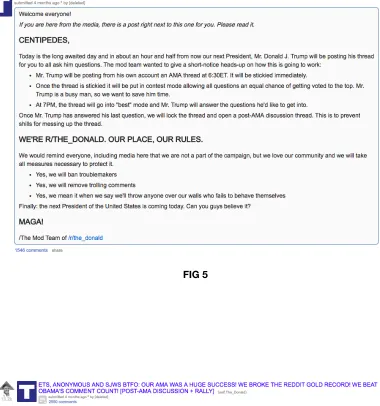
Fig 5: Ama restrictions 175
Fig 6: Ama ban 175
LIST OF APPENDICES
Appendix A: Tables 166
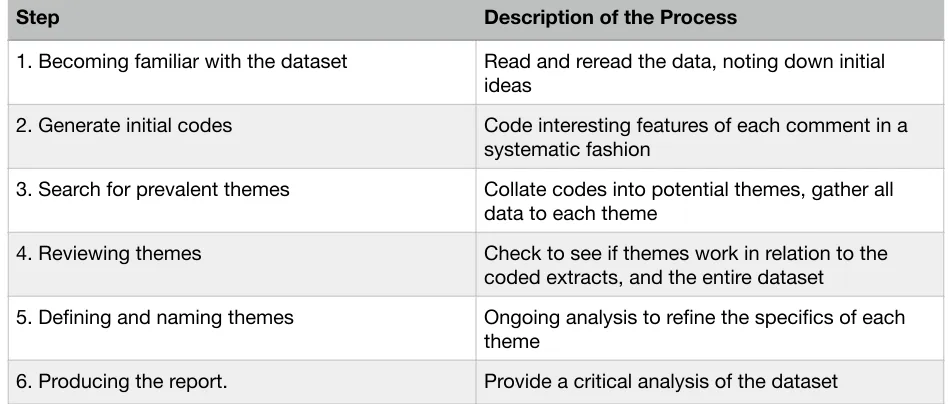
Table 1: Table of procedures 166
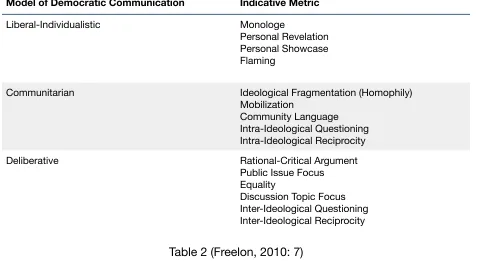
Table 2: Communication metrics 166
Appendix B: Thematic Analysis 167
Appendix C: Figures 173
“I am not concerned with what rational, reasonable or correct argumentation is, but with how people, dumb as they are, actually argue”
I. INTRODUCTION
Despite clear predictions of a Clinton victory and lowest favourability ratings
of any presidential candidate in American history (Katz, 2016; Yourish, 2016), Trump’s
candidacy, filled with overtly simplistic rhetoric, anti-elitism and anti intellectualism lead
to his election. Such contentious politics, with contradictory low voter turnout, raises
sociological questions about public, political engagement.
Neoliberalism has displaced standard forms of politics and reframed the very
meaning of politics (Brown, 2015: 17). The rise of digital publics requires a
reconceptualization of the mobilization and deliberative action of political agents
through a different method of engagement. While theoretical debate has raged in the
past two decades over the public sphere’s ( Chadwick, 2013; Dahlberg, 2001;
Dahlgren, 2005; Downey & Fenton, 2003; Gerhards & Schäfer, 2010 Morozov, 2011;
Rheingold, 1993; Shirky, 2011) potential to facilitate participatory democracy, or its
inability to incite authentic deliberation, it has nonetheless been seen as irrevocably
altering how individuals engage with the system. The past decade has yielded various
studies trying to exemplify the latent potential that social media giants such as
Facebook and Twitter hold as potential public spheres that facilitate participatory
democracy (Howard & Hussain, 2011; Juris, 2012; Milner, 2013; Romero et al., 2010;
Semaan et al., 2014; Sergerberg & Bennett, 2011). However, with the structure of those
sites emphasizing and prioritizing personal relationships, the possibility of establishing
deliberative political action (in the Habermasian sense where relationships exist by
virtue of argumentation and debate) requires further study. This thesis seeks to analyze
deliberative discussion by content or specific topics. Reddit can be seen as a
mechanism to facilitate foundational support for specific issues or political candidates.
This engagement draws parallels to the way in which new social movements mobilize
across geographical and national borders in the digital sphere — rendering a physical
presence minimal, but nonetheless just as powerful their physical counterparts
(Bennett, 2012; Buechler, 2007; Martin et al., 2007).
Centring around the 2016 American election, this thesis will explore how Reddit
and its subreddits actualize Habermas’ notion of the public sphere and communicative
action. It will compare and contrast two of the largest and most popular political
subreddits, /r/Politics and /r/The_Donald, to analyze how political groups contextualize
political issues and the discourse that manifests regarding them. My purpose is not to
study all the ways in which individuals use Reddit to discuss general politics, but the
ways in which consensus and majority opinions are reached and perpetuated through
these subreddits. This thesis seeks to examine the extent to which political discussion
on the social news aggregate website Reddit may facilitate the conditions of a public
sphere and foster democratic communicative characteristics. As such, it consists of
three primary objectives. First, it looks to assess whether or not, and to what extent,
Reddit and its subreddits /r/The_Donald and /r/Politics constitute as a public sphere
which engages in communicative rationality. Second, it seeks to critically analyze the
discourse that manifested within the two aforementioned subreddits regarding the
2016 presidential election. Finally, it seeks to provide insight on the potential
implications that virtual discourse may hold on the experiences of everyday (private)
produce publics and how do they maintain communicative action? These questions are
accompanied by four subquestions: (1) How is consensus achieved? (2) Is it
democratic and inclusive? (3) What kind of messages or knowledge is created in this
public space? (4) What does this tell us about the potential of digital political action?
The Second chapter establishes the political context in which this thesis is
situated. It breaks down how social media was utilized, what its overall impact on the
election cycle was, and its political viability for both politicians and digital technology
firms. Furthermore, it highlights why Reddit is the focus of the study for civic
deliberation over Facebook by critically assessing the way the latter operates.
Paramount to this analysis, includes examining its algorithms and process of
‘datafication," as well as how this information has been utilized by political consulting
firms such as Cambridge Analytica. It concludes by analyzing how this information can
be cultivated and manipulated by bots, the propagation of fake news and the potential
subversion of civic deliberation in the digital public sphere. The Third chapter provides
an outline on the literature regarding the digital public sphere debate and its potential
to either facilitate deliberative civic engagement, or hinder it. Furthermore, it explores
the real world implications that a digital sphere holds, underscoring that regardless of
how it operates, there are repercussions to the discourse which manifests online. The
Fourth chapter provides the theoretical basis which serves as the crux of my analysis.
Here, Habermas’ notion of the public sphere and communicative rationality is
explicated. It is also expanded upon and modified using the works of Nancy Fraser,
Geoff Eley, and Catherine Squires to indicate that there exists not a single public
an analysis of how we may be able to locate and demarcate different forms of publics
within Reddit itself. Chapter Five provides the details regarding the methods and
procedures used to collect and analyze the data. It discusses the value of thematic
analysis and how it can be utilized to address the questions posed in this thesis.
Chapter Six discusses the findings of discourse analysis, such as common themes as
a means to address the second objective: critically analyze the discourse that
manifested within the two aforementioned subreddits regarding the 2016 presidential
election, and subquestions three and four: What kind of messages or knowledge is
created in this public space and what does this tell us about the potential of digital
political action? Chapter Seven is a discussion chapter, where I amalgamate the data
collected from the thematic analysis and the theory on argumentative analytics
established in Chapter Four. Herein, I critically assess the mechanical workings of each
subreddit in order to address objective one and three: assess whether or not, and to
what extent, Reddit and its subreddits /r/The_Donald and /r/Politics constitute as a
public sphere which engages in communicative rationality, and provide insight on the
potential implications that virtual discourse may hold on the experiences of everyday
(private) citizens. Furthermore, the analysis addresses subquestions one and two: How
is consensus achieved, and is it democratic and inclusive? This discussion hopes to
provide an answer to the overarching questions of how Reddit may produce publics,
and how do they maintain communicative action? The Eighth and final chapter
provides a summary of the results and discussion of the thesis, the limitations of this
analytical approach, what this work hopes to have contributed to the growing body of
II. ESTABLISHING THE POLITICAL CONTEXT
The Ubiquity of Social Media
The political sphere has irrevocably been altered by the presence of social
media and digital technology firms. Reports on the 2016 presidential election indicate
that social media had become one of the largest platforms for news acquisition and
discussion (Gunn, 2017: 50). While television, newspapers, press conferences and
other traditional outlets remained the dominant source for political communication,
social media changed the way citizens engage with legacy outlets (Gunn, 2017: 51).
What occurs in the political sphere becomes documented, debated, and shared online
(Gunn, 2017: 51). The ubiquity of social media has allowed political campaigns to
broaden their reach — new services and platforms have emerged, replacing campaign
websites as politicians main channel for online communication (Gunn, 2017: 51). It has
been attributed to being the biggest factor in opinion formation during the election
(Papacharissi, 2009). Statistics indicate that 62% of American adults acquire news
from social media, with a staggering 18% doing so often or exclusively, resulting in an
overall 12% increase from studies conducted in 2012 (Gottfried & Shearer, 2016: 2).
Furthermore, a study conducted by Pew Research Center in 2012, indicates that nearly
66% of all social media users have utilized platforms in order to post thoughts or
articles about civic and political issues, like or promote related material, encourage
people to vote, encourage others to take action on a political or social issue, belong to
a group online dedicated to political or social issues, and/or follow elected officials or
candidates for office (Raine et al., 2012: 2) As such, the use of social media is
This change in engagement has required politicians to have performative
flexibility in order to reach out and connect with potential voters (Gunn, 2017: 53).
Campaigns are undergoing a process of adaptation to a post-material political culture,
where digital media plays a critical role in the process of civic engagement and enables
organizational experimentation of mass democratic politics (Chadwick &
Stromer-Galley, 2016: 5). While blogs were utilized as early as the 2004 election, it wasn’t until
the 2008 political cycle where social media became a central force driving campaigns
away from traditional avenues, hailing in what Gunn calls ‘The Era of Social
Media’ (2017: 53). The 2008 election saw both Republicans and Democrats utilizing the
major platforms, such as Facebook, Youtube and Twitter for their marketing campaigns
(Gunn, 2017: 53). In the 2012 election, the Democratic Party had doubled down on
their approach, ‘pioneering’ new mobilization techniques that combined voter records
and social media data to facilitate support for their platform (Chadwick & Storm-Galley,
2016: 3). It was during this election that saw Democrats almost double the amount of
social media platforms (9) compared to the Republicans (5), and demonstrate the
strategic and analytical advantage of digital outlets, leading to a second successful
election (Gunn, 2017: 54; Chadwick & Stromer-Galley, 2016: 4).
Unlike the previous cycles, the 2016 election saw a drop in the total number of
platforms utilized by both parties (Gunn, 2017: 54). It is argued that the impact of social
media has not become any less prevalent, but that the way in which it functions, and
the way in which they reach the consumer base has become more consolidated over
the past five years (Gunn, 2017: 54). To an extent, this was to be expected, as there is
experimentation, expansion, and consolidation when entering the political foyer (Gunn,
2017: 54, 57). It is during the process of consolidation where new forms of media will
revert to previous models of usage which reinforce traditional forms of existing power -
where campaigns prioritize self promotion over interactivity (Gunn, 2017: 57-58).
Indeed, one of the chief criticisms of the 2016 campaign appears to be an overall
decline in opportunities for public participation (Gunn, 2017: 59). The sanctioned social
media accounts were often heavily monitored to control the messages of public
participation, and official campaign websites lacked comment sections altogether
(Gunn, 2017: 57). Despite this reduction of interactivity, and the consolidation of
various social media platforms, there has been a substantial push in order to integrate
digital media on a more fundamental level for campaigns. Following the success of the
2012 election, the Clinton campaign was advised to form ‘working relationships’ with
digital technology firms such as Google, Facebook, Apple, and other digital technology
firms (Wikileaks, 2016). As such, social media has become one of the most prominent
channels for communication for American campaigns since the Obama administration
in 2008, with an increasing emphasis on its use to bypass editorial outlets altogether.
In turn, the post material political cycle has proven to be lucrative for
technology firms (Fuchs, 2017: 4). In the United States, political advertising on digital 1
media is utilized across local, state and national elections (Bossetta. 2017: 2). In 2012,
advertising on these platforms attributed to 1.7% of ad spending costs. In 2016, this
had increased to 14.4% (Bossetta. 2017: 2). As a result, technology firms are becoming
increasingly motivated to actively participate in the democratic process for marketing
The four most prominent technology firms are Facebook, Google, Microsoft, and Twitter 1
purposes, advertising revenue, and relationship-building in the service of lobbying
efforts (Kreiss & McGregor, 2018: 161). New branches have emerged within these firms
dedicated to the partisan nature of American politics (Kreiss & McGregor, 2018: 155).
For example, Google acquired an old industrial property and redesigned it as a tech
space for the Democratic National Convention (DNC) for the purpose of promoting the
wares of major digital technology firms, and facilitating intercommunication between
tech companies, journalists, and politicians (Kreiss & McGregor, 2018: 156). Twitter set
up a booth where they worked with politicians to set up promotional material for social
media, as well as provide real-time analytics on the use of their platform (Kreiss &
McGregor, 2018: 155). Microsoft played an ‘infrastructural’ role for political campaigns,
providing back end data to help politicians organize and manage their digital
operations (Kreiss & McGregor, 2018: 162). Facebook not only had a sizeable presence
at the DNC, they also donated $62,500 the Conservative Political Action Conference
(CPAC) where they sought to influence the ways in which candidates communicate and
understand public discussion on their platform, and establish a working relationship
with electorates (Kreiss & McGregor, 2018: 155; Romm & Scola, 2017) . Central to this 2
was their analytics platform, where data results could be used to shape messaging and
advertising strategies (Kreiss & McGregor, 2018: 165). Real-time analytics were used to
monitor content posted on the website and track issues of prevalence for effective
target marketing (Kreiss & McGregor, 2018: 163). As such, technology companies
It has been speculated that the outreach to CPAC was in part a mending between the 2
‘inadvertently’ play a role in shaping the political communication of electoral 3
campaigns in the United States.
This is especially true for Facebook, as they are by far the largest reaching
social network website, encompassing 67% of US adults (Gottfried & Shearer, 2016: 5).
Statistics indicate that at least two-thirds of Facebook users utilize the platform to
acquire news, amounting to 44% of the population (Gottfried & Shearer, 2016: 2). At
1.1 billion active daily users, it held unequivocal dominance as the primary social media
platform during the election cycle (Bossetta, 2017: 11). Facebook’s ubiquity in daily life,
coupled with their investment into political lobbying, as well as their market driven
approach with an emphasis on attracting users, soliciting advertisers, and sustaining
economic viability has brought forth questions of how their platform may influence
online discussion (Bossetta, 2018: 2). Understanding that the technology is not neutral
(Cockburn, 1985; 85), new literature is emerging that analyzes how network structure,
site algorithmic filtering, and ‘datafication’ shape the visibility of content and public
discourse (Bossetta, 2017: 7; Kreiss & McGregor, 2018: 158).
Facebook: How Algorithmic Filtering Shapes Online Discourse
Facebook's network structure is composed of internal protocols which governs
connections between user accounts (Bossetta, 2018: 5). There are three differences in
protocols that determine how users are able to connect with one another:
searchability, connectivity and privacy (Bossetta, 2018: 5). Searchability protocols
determine how users can discover and subscribe to other users and content (Bossetta,
2018: 5). Connectivity protocols determine how connections are initiated and
Mark Zuckerberg, the CEO of Facebook, had been criticized for rejecting the notion that 3
established (Bossetta, 2018: 5). Privacy protocols allow users to place restrictions on
both searchability and connectivity (Bossetta, 2018: 5). The interconnectivity of these
three elements of network structure influence the topography formed on a platform,
and the type of content which may be generated as a result (Bossetta, 2018: 5).
All content which is posted on Facebook is then subjected to algorithmic
filtering (Radar & Gray, 2015: 1). According to Bucher, algorithmic filtering refers to how
developers prioritize the visibility of posts (2012: 1165). Algorithms are intermediaries
which determine what becomes visible and what is hidden from public view (Radar &
Gray, 2015: 1). Users constantly produce content that becomes apart of Facebook’s
corpus. The algorithm selects a subset of this information where it proceeds to rank
and organize them for consumption by the user base (Radar & Gray, 2015: 1). Bucher
describes how the algorithm is affected in three primary ways:
(1) Affinity. This pertains to the nature of the relationship between the viewing user and the item’s creator. Here the amount and nature of the interaction between two users is measured. Sending a friend a private message or checking out his or her profile on a frequent basis heightens the users’ affinity score to that particular friend (2012: 1167).
(2) (2) Weight. Each post is given a specific ‘weight’ depending on how popular or important Facebook considers it to be. Therefore, not every post gets weighted the same. Some types of interactions are considered more important than others. Arguably, a Comment has more importance than a Like (2012: 1167).
(3) Time decay. Probably the most intuitive component relates to the recency or freshness of the post. Older posts are thus considered less important than new ones (2012: 1167).
The algorithmic filter becomes the arbiter in determining which users are deemed
important and thus worthy of achieving visibility on Facebook. The algorithm itself is
are savvy or aware enough of these systems are able to take advantage of them and
adapt their behaviour in order to boost visibility across broadcast feeds (Bossetta,
2017: 7; Radar & Gray, 2015: 8). Coincidently, this has a secondary effect in which the
drive for visibility leads to a digital panopticon, where users mediate their own posts
during online discussion (Butcher, 2012: 1165). Furthermore, the purpose of algorithmic
filtering is to drive revenue for Facebook (Bossetta, 2017: 7). Facebook allows
companies, social providers, and high profile clients to override the mediation process
and further their overall reach with pay-to-promote services, known as
‘boosting’ (Bossetta, 2017: 7). Posts and discussion can thus be influenced and/or
dominated by those with substantial wealth and power.
The interaction based upon these filtered posts are further subjected to a
process called ‘datafication’: ‘the transformation of social action into quantified data
for the purpose of tracking and predicative analysis’ (van Dijck, 2014: 198). These
actions are usually daily social occurrences, such as the interaction between
friendships, the conversations and discourse which manifests online, information
searches, and emotional responses to events and/or posts (van Dijck, 2014: 199). It
seeks to ‘extract’ useful information for future endeavours from the digital trails left
behind by users (van Dijck, 2014: 200). In a more political vein, datafication is
especially pertinent for campaigns, as they are able to create models which mimic
audiences they believe to either be favourable with, or potentially persuade (Bossetta,
2017: 7). This digital corpus is then merged with the primary data collected by
campaigns and material purchased from third party companies which specialize in
citizens that that cover their ideological stance to socioeconomic status (Bossetta,
2017: 7; Cambridge Analytica). The data is used to create advertisements on the
selected platform (Bossetta, 2017: 7). Campaigns are then able to analyze the
algorithmic filtering to undergo multiple and simultaneous experiments in order to test
and maximize campaign efficiencies (Bossetta, 2017: 8). This results in a
semi-perpetual loop, in which algorithmic filtering is subjected to datafication, which is then
used to modify or ‘increase the efficiency’ of the algorithm, resulting in more
datafication.
Technology as Instrumental
One notable example of data collection comes from the now defunct political
consulting firm, Cambridge Analytica. Established in 2013, Cambridge Analytica
offered data driven services in order to identify persuadable voters and change
audience behaviour (Cambridge Analytica). Using data integration, audience
segmentation, and targeted advertising, the firm would develop and employ targeted
messages at key times in order to move voters to action (Cambridge Analytica). The
company played a pivotal role in the Brexit campaign, and in 2016, signed on to be the
primary consulting firm of Trump’s candidacy (Cambridge Analytica; Persily, 2017: 3).
Employing a variety of campaign services, such as polling, predictive analytics,
targeted advertisements, event-promotion, data compilations, and new uses of social
media, the campaign target around 13.5 million voters in sixteen key states, and placed
1.4 billion web impressions through advertisements or other forms of communication
(Cambridge Analytica; Persily, 2017: 3). Facebook had played a critical role in
87 - 220 million users personal information for the purpose of building a dataset on
voters (Fuchs, 2017: 2; Rosenberg et al., 2018; Solon, 2018). While considered a ‘data
leak’ by Facebook, this allowed the political consulting firm to get unrestricted access
to information regarding a users profile, page likes, birthday, what would be visible on
their news timeline, interaction between facebook friends, as well as private and public
messages, and location services (Coulter, 2018; Lapowsky, 2018). This cornucopia of
information allowed Cambridge Analytica to create psychographic profiles of the users,
complete with the information of where that individual is located (Persily, 2017: 3;
Rosenberg et al., 2018). This allowed the company to create a comprehensive analysis
regarding which advertisements would be most effective at key times in order to move
political actors to action (Cambridge Analytica).
Cambridge Analytica wasn’t the only group to utilize Facebook’s algorithmic
filtering and datafication to their advantage. The 2016 Political cycle saw an influx in
the use of software robots (hereinafter: Bots or Social Bots), fake news, and fabricated
social media accounts designed to take advantage of the social media’s network
structure in order to influence economic, political, and ideological causes (Fuchs, 2017:
3). Companies and campaigns have become incentivized to create efficient programs
(Social bots) that exude human-like behaviour in order to rapidly promote material
beyond what is normally feasible (Ferrara et al., 2014: 1). According to Ferrara et al., “A
social bot is a computer algorithm that automatically produces content and interacts
with humans on social media, trying to emulate and possibly alter their
behaviour” (2014: 1) The purpose of bots are often multifaceted; Certain bots can be
questions, or harmful, where they focus on persuading voters, smear political
candidates, propagate false information, manipulate online discourse, and facilitate
political astroturfing (Ferrara et al., 2014: 2; Howard et al., 2018: 86). Social bots have
played an increasingly important role in the past 6 years as a means to influence public
opinion (Howard et al., 2018: 87). They have been designed to sway citizens on single
issues , inflate the follower lists of politicians in order to seem popular , as well as 4 5
create and spin content for political gain (Howard et al., 2018: 85-86). Social bots are 6
also particularly effective at steering the flow of online discourse (Howard et al., 2018:
87). They have been used to astroturf legislative campaigns, coordinate campaign and
communication strategies in complex ways, as well as solicit voters for donations of
time and money (Howard et al., 2018: 87). As a result, digital discourse and authentic
engagement has been seen as eroding into a state of decay, where campaign staff no
longer need to communicate with voters or political opponents in order to garner
support (Howard et al., 2018: 87-88).
Social bots have also been attributed to the exponential increase of low-credible
content, or ‘Fake News’ (Shao et al., 2018: 1). Defined as articles that are intentionally
and verifiably false for the purpose of misleading readers, the 2016 election has
brought forth concerns regarding how fake news had been utilized and circulated on
Obama had sent automated messages to his twitter followers during the debt ceiling crisis 4
(Howard et al., 2018: 87)
Mitt Romney’s campaign was accused of buying thousands of followers on Twitter (Howard et 5
al., 2018: 87). It is also estimated that 52 percent of Trump’s 43 million followers are fake accounts (Fuchs, 2017: 3).
Trump had spent 70 million dollars on facebook advertisements while slandering traditional 6
social media (Allcott & Gentzkow, 2017: 214) . Recent evidence has shown that 7
Facebook was the largest propagator of low-credible content, and that many people
who viewed fake news on the website had reported believing the misinformation
(Allcott & Gentzkow, 2017: 212) . Due to the nature of how Facebook (and other social 89
media) operates, false claims are just as likely to go viral as reliable sources (Shao et
al., 2018: 10). It is estimated that 68% of visits to fake news websites originated from
these locations (Fuchs, 2017: 3). There are a couple of reasons for this. The first is that
information is presented in ‘thin slices’ in order to simplify and streamline content on
news feeds (Allcott & Gentzkow, 2017: 221). This often remove vital information which
make judgement regarding an articles accuracy difficult (Allcott & Gentzkow, 2017:
221). The second is that social media networks are often ideologically segregated.
Individuals are more likely to read and share news articles that are aligned with their
current political positions, and less likely to come across competing evidence that may
challenge their assumptions (Allcott & Gentzkow, 2017: 221). There is strong evidence
that social media networks function as echo chambers and filter bubbles, as it is
estimated that 85% of fifteen million tweets and posts occurred amongst like minded
users (Fuchs, 2017: 3). Indeed, the relatively homogeneous nature of a user’s friend
network has been the focal point to ensure the effectiveness of advertisements for
political consulting firms and campaigns (Allcott & Gentzkow, 2017: 221). As noted
It has been argued that the primary purpose of fake news has been to foster support for 7
political candidates. For example, there were three times more fake news stories that supported Trump than Clinton (Fuchs, 2017: 3).
Facebook has confirmed that it harbours more than 240 million fake accounts (Naff, 2018: 8
18).
In a survey, in which 3,015 Americans participated, 75 per cent of the presented fake
9
earlier with Cambridge Analytica, propaganda campaigns utilize social bots designed
to amplify the reach of their posts, by strategically targeting users who have a strong
presence on social media, in order to push misinformation to go viral (Cambridge
Analytica; Shao et al., 2018: 1). Research indicates that sharing activity by bots triggers
a disproportionate amount of human engagement (Shao et al., 2018: 8). Once a bot
targets and engages the appropriate outlet for diffusion, users take that information
and amplify it across their personal networks (Shao et al., 2018: 7). Part of the problem
is that due to the complexities of social bots, they are often seen as indistinguishable
from actual users (Shao et al., 2018: 8). This makes the users susceptible to
manipulation, where they will re-tweet or share a post supplied by a social bot just as
much as they would another person (Shao et al., 2018: 8). As a result, social bots,
which are designed to spread misinformation, populate huge segments of social media
ecosystems (Ferrara et al., 2014: 1). Due to their elusive nature, they often go
unnoticed amongst the population of real people, where they are instrumental in 10
shaping, altering, or otherwise deteriorate pubic discourse online (Ferrara et al., 2014:
1). Thus the potential for a digital public - one that engages in authentic civic
deliberation - becomes difficult to actualize on social media.
Finding an Alternative Space for Political Engagement
The 2016 presidential election brought forth a new precedence of online
discussion, in which instrumental gain has reigned supreme at the expenditure of open
Conceptualizing technology as instrumental is critical in identifying the purpose, intent, and 10
and authentic debate (Fuchs, 2017: 5). This domination of the public sphere by
corporate and political interests echos Habermas’ colonization thesis (Habermas,
1985: 155), where systematic interests consume what little potential citizens have to
mobilize (Edwards, 2008: 313), leaving agents with minimal time, and which does not
foster adequate space for political engagement and debate (Fuchs, 2017:5). In place of
open publics emerges a new space of advertisements and particularistic interests —
one which thrives off a culture of fragmentation and superficiality, and where users are
prone to manipulation (Fuchs, 2017: 5). Persily describes the subversiveness of this
new political climate best:
“How does one characterize a campaign, for example, in which the chief strategist [Steve Banon] is also the chairman of a media website [Breitbart] that is the campaign's chief promoter and whose articles the candidate retweets to tens of millions of his followers, [utilizing algorithmic filtering, datafication, and social bots] with those posts and tweets then picked up and rebroadcast on cable-television news channels, including one (RT, formerly known as Russia Today) that is funded by a foreign government?” (2017: 3)
The proliferation of instrumental action raises concern for the advancement of social
inequalities, fears of social decline, and the emergence of new nationalisms (Fuchs,
2017: 5). Furthermore, it represents a clear threat to democracy. The undermining of a
persons ability to employ validity claims results in a one-dimensional and polarized
politics — one which risks intensifying political aggression and even violence (Fuchs,
2017: 6).
To combat the colonization of digital publics, legal, political, economic and media
innovations are required (Fuchs, 2017: 6). According to Fuchs, this involves the
“facilitation of a culture of slow media that acts as a public service platform, where
engagement and debate” (2017: 6). This requires new digital platforms which
decelerate political communication and foster open ended debates (Fuchs, 2017:6).
Ideally, this should be a social media space that is non-profit and advertising free,
subsidized by an online advertising tax which could fund fact checking systems
(Fuchs, 2017:7) .11
Unfortunately, we do not currently have access to such a system. However, if
Fuch’s idea is correct, we should be able to find traces of the emergence of
communicative rationality within systems that are able to approximate those
conditions. Such an analysis would require the examination of a digital media space
which does not function in the same regard as traditional social media. Thus, this
thesis seeks to analyze Reddit, which unlike Facebook or Twitter, was designed as a
way to organize deliberative discussion by content or specific topics and foster open
ended debate.
Reddit is a website that goes beyond the workings of traditional social media
website; it plurally functions as a “social news” aggregation website (Weninger, 2014:
1). Self described as “the front page of the internet," Reddit provides the means to
submit and discuss nearly anything (Weninger, 2014: 1). Founded in 2005 by Steve
Huffman (who goes by the alias /u/spez) and Alexis Ohanian (who goes by the alias of /
u/kn0thing) Reddit is a complex system that is built around three simple components:
Posting, commenting, and voting (Reddit). Community members share content by
posting stories, links, images, and videos. These posts are then commented upon by
other community members. Both posts and comments may be voted upon (Reddit).
There are criticism to this approach; government funded digital spaces have been known to 11
Posts which are deemed to be insightful, interesting, or well put together are likely to
be voted to the top of visibility, while disliked posts are voted down (down voted) into
obscurity (Weninger, 2014: 173). Voting upon posts usually represents the community’s
interest on the topic, while voting on comments usually indicates opinion regarding that
topic (Weninger, 2014: 173). Comments and submissions are thus ranked, with top
ranking posts deemed the most important issues to discuss for the community.
Commenters are not only able to respond to posts, but to other commenters within a
post as well. This results in complex conversation branches (also known as threads)
which allows users to trace how the conversation develop over time (Weninger et al.,
2013: 1). This allows for the manifestation of diverse and divergent sub-topics, creating
a more robust conversation (Weninger et al., 2013: 1). Unlike the way discourse
manifests on other social media platforms, comments threads are usually well formed,
hierarchical by virtue of democratic engagement, and permanent (Weninger et al., 12
2013: 1).
The entirety of the site is fragmented into smaller parts called “subreddits”.
Subreddits are specialized communities that focus on specific topics which individuals
can subscribe to (Anderson, 2015: 8). Any post submitted to Reddit must first be
assigned to a specific subreddit pertaining to that topic (Anderson, 2015: 8).
Subreddits are created and moderated by members of the community (Anderson,
2015: 8). Users are able to subscribe to subreddits to stay up to date on topics and
conversations (Anderson, 2015: 8). Depending on the community, topics can be very
Comments are able to be edited up until a post has become archived, in which case no 12
broad (such as the subreddit /r/politics, /r/gaming, /r/science) or highly specialized and
esoteric (/r/criticaltheory or /r/chomsky) .13
Anyone is able to read and discover content without registering to the website
(Anderson, 2015: 8). However in order to participate in posting, commenting, or voting,
one needs to create an account. There is no cost for joining Reddit, but users do have
the option of purchasing a premium membership (Anderson, 2015: 8). As Reddit was
designed with anonymity in mind, registration is a straightforward process with few
restrictions (Anderson, 2015: 8). Users are able to create single or multiple accounts,
and are able to do so without providing an email address (Anderson, 2015: 8). Users
who do register, are colloquially termed ‘Redditors’. Creating a Reddit account allows
users to customize their experience, and filter posts based upon personal interests to
create their own unique ‘Home page’(Anderson, 2015: 8). A home page is where posts
are filtered into a feed, showing material from all subscribed subreddits. Users can
change which posts will show up on their feed by clicking the appropriate tab. Posts
can be organized by top, new, hot, rising, controversial, gilded, and promoted
(Anderson, 2015: 8). The ‘Top’ tab shows the items which have acquired the most
amount of upvotes (Anderson, 2015: 8). Filtering by ‘Hot’ shows posts which are
rapidly gaining popularity (Anderson, 2015: 8). The ‘New’ tab filters posts based upon
how recently they were submitted (Anderson, 2015: 8). ‘Rising’ shows posts which are
becoming more popular, but not at the same rate as ‘Hot’ posts (Anderson, 2015: 8).
‘Controversial’ posts are submissions which have garnered an equal amount of
upvotes and downvotes, indicating a submissions contentious nature (Anderson, 2015:
Subreddits are identified with the naming convention “/r/subreddit”, which is used in the URL 13
8). The ‘gilded’ tab shows posts and submissions which have been awarded gold from
members of the community (Anderson, 2015: 8). The promoted tab shows posts which
have been promoted by Reddit itself (Anderson, 2015: 8). In addition to a home page,
there is also a ‘front page’. The front page is what users automatically see when they
first enter the website (regardless of if they have an account or not). Instead of
highlighting posts from subscribed subreddits, the front page filters posts from the
entire corpus of Reddit. How these posts appear on the front page may be organized in
the same manner as the ‘home page’.
Fundamentally, social news websites such as Reddit function in a way that is
dissimilar to traditional media platforms where news is either determined by an
organization or an algorithm (Mills, 2011: 1). Social news sites are able to offer a kind of
web-democracy, in which the ‘agenda’ is determined by the population (Weninger et
al., 2013: 1). While it may not actualize the ideal conditions that Fuchs puts forth in
order to address growing instrumental rationality on social media, it does approximate
the conditions (Fuchs, 2017: 6). Thus, this thesis seeks to examine the extent to which
political discussion on the social news aggregate website Reddit facilitates the
conditions of a public sphere, and fosters democratic communicative characteristics
using the 2016 presidential election as a focal point .14
It is important to note that I do not argue that Reddit is some haven for communicative 14
III. LITERATURE REVIEW
The most prevalent issue that contemporary political agents face, is an increase in
social fragmentation and a decrease in group cohesiveness stemming from
personalized politics (Bennett, 2012: 37). In part, this was due to the intensification on
the “commodification” of time and the “juridification” of space, in which the amount of
effort and energy which may be applied to rallying behind a political cause is mitigated
(Edwards. 2008: 307). The personal resources of time and space becomes consumed
by other activities considered to be more pertinent to neoliberalism (Brown, 2017). Not
only do individuals lack the time to form a political advocacy campaign, the spaces in
which communicative action can occur dissipate (Edwards, 2008: 313). Neoliberal
rationality has depredated the ideal, imaginary, and political project of democracy
(Brown, 2017: 201). Policies which have been ‘legitimized’ under this system dismantle
social infrastructure, privatize public goods, deregulate commerce, destroy social
solidarities, and ‘responsibilize’ subjects for its shortcomings (Brown, 2017: 201). In
short, it is the loss of bare democracy, where the rule of the ‘demos’ becomes the rule
of economic interests — where ‘homo politicus’ (political engagement) is vanquished
by ‘homo oeconomicus’ (Economic rationality) (Brown, 2017: 208). The neoliberal
approach to ‘democratic rule’ has always been increasing the volume of markets,
increase financialization, and to privatize resources (Brown, 2017: 221). For
neoliberalism, the solution is:
It is the quintessence of instrumental rationality that Habermas argued had been taking
over democratic spaces; it is a parasitic relationship in which the ‘system’ consumes
various aspects of everyday communication which he decried as ‘the colonization of
the lifeworld’. (Habermas, 1985: 155). Of course, democracy has always been an
empty form which is filled by the will of political actors; it can be filled with instrumental
purpose and immoral content, including xenophobia, sexism, capitalist hegemony, and
racial inequality. However, democracy also facilitates the ability to mobilize against
these issues (Brown, 2017: 209). Replacing a democratic system for an economic one
sets the condition for democracy to die (Brown, 2017: 209). Without these fundamental
principles, establishing critical elements needed to sustain deliberative spaces such as
social networks, collective identities, and other cultural formations is not feasible
(Edwards, 2008: 313). Habermas argues that the constraint of these resources
produces ‘strains’ on political movements which are required to mobilize around in
order to be successful (Edwards, 2008: 313). Social media facilitates easy accessibility
while providing foundational support in which individuals are not simply passive
consumers of information and activism, but participants in digital political spaces,
effectively regulating time consumption and circumventing the issue of physicality
(Edwards, 2008: 313). The use of media creates a landscape that amalgamates the
complexities and diversities of the social, cultural, economic and political spheres
(Chadwick, 2013: 24). While there has been no shortage in academia to analyze the
impact of a digital sphere concerning politics, the implication surrounding it has been
“Virtual communities” (Rheingold, 1993) are now considered to be synchronistic
with face to face communities and have thus become the site for analyzing public
spheres, structured as they are with similar features and frameworks for organizing
social interactions (Dahlgren, 2005: 147-8). Digital spheres are no worse or better, but
are in a state where they constant change and evolve with the kind of speech acts
which emerge on the digital front. With the continuing destabilization of the public
sphere, and the constant struggle between fragmentation and solidarity, digital publics
represents both opportunities and dangers for democratic deliberation (Downey &
Fenton, 2003: 200). There is increasing evidence that the internet is able to facilitate
discourse which replicates the basic structure of rational-critical debate in ways that
approximate the conditions of a public sphere (Dalhberg, 2001: 616). Such digital
communication manifests online in three distinct ways (2001: 616). The first is
communitarian, where the internet enhances communal spirit and values which and
emphasizes communication based around shared values (Dahlberg, 2001: 616). The
second is its ability to assist in the expression of individualized private interests
(Dalhberg, 2001: 616). The final, is its ability to expand the public sphere of
rational-critical public discourse, where individuals engage in a deliberative communicative
engagements (Dalhberg, 2001: 616). Of course, like real world engagements, digital
discourse does not manifest unprovoked and without form; there are structural
components which entices certain aspects of communication (Dahlgren, 2005).
Dahlgren focuses on three main facets of communication – the structural (institutional),
representational (ideological and symbolic), and interactional encounters among actors
structural dimension refers to formal institutional features, such as media organizations,
political economy, ownership, control, and the legal framework defining the freedoms
and constraints on communication (Dahlgren, 2005: 148). He notes that as far as the
internet is concerned, the structural dimension focuses attention to the different
formations and spaces which exist on the web, and how they reflect the spaces that
exist offline; that is to say, the virtual geography mimics that of ‘real’ spaces (Dahlgren,
2005: 149). Representation refers to the output of media that targets small groups on
the basis of information and ideological basis (Dahlgren, 2005: 149). It seeks to
understand which groups are represented and which groups are excluded from these
systems (Dahlgren, 2005: 149) Representation becomes amplified with the
‘massification’ of communication on the internet, allowing for a greater range of
ideological diffusion, but also criticisms regarding fairness, accuracy, completeness,
pluralism of views and agenda setting (Dahlgren, 2005: 149). The final dimension,
interaction, refers to either citizens encounters with the media, and encounters
between citizens themselves (Dahlgren, 2005: 149). This is where Dahlgren locates
what Habermas would be considered to be a public sphere, where citizens make sense
of, interpret, and make use of the output of media sources, as well as engage in
formalized deliberation with other citizens (2005: 149). This political space not only
exudes communicative qualities, but facilitates the development of an entire civic
culture, where agents anchor political debate through shared experiences, personal
resources, and subjective dispositions (Dahlgren, 2005: 157-158). It allows users to
test and challenge values, affinity, knowledge, identities, and practices through civic
historically unprecedented as its scope and ease of access facilitates participation on a
macro level (Dahlgren, 2005: 149). Furthermore, digital democratic spaces are not
confined to western context; there is international evidence to support the growth of a
‘universal’ digital public, where issues are negotiated across the globe from local to
international levels (Dalhberg, 2001: 621). The internet is at the forefront of an evolving
pubic sphere, where social agents are playing a role in the development of new
democratic practices (Dahlgren, 2005: 160). This theoretical conception allowed for a
revitalization on the notion of communicative action at a time when political
communication was becoming increasingly destabilized in western society (Dahlgren,
2005: 150). There is an interconnectivity between spatial dimensions which virtual
communities go beyond that of the political (Dahlgren, 2005:147-8). What is important
here is to recognize that digital spaces exist and work beyond the level of a tool used
for personal or democratic purposes. The virtual space is indeed a political one, but
something that is shaped in relation to other spatial dimensions.
The virtual world is a fluid and malleable alternate dimension that is influenced
and influences the physical world even as it is grounded in the corporeal (Graham,
2010). Graham argues that its geography is characterized by both black holes of
information and hubs of rich description and detail. This dimension exists in a
symbiotic, reflexive relationship to the physical world, which by becoming a new layer
in the palimpsests of place ultimately can shape our genius loci and change the very
natures of place (2010: 430). Virtual geographies help expand the application of
Habermas public sphere in order to navigate and make meaning within a digitized era.
communication and its relation between other spatial dimensions of more traditional
spheres of shared experiences and meaning making. Indeed, Graham, Sabbata, and
Zook build upon this by arguing how information hubs always have geography; they
are from somewhere, about somewhere, and evolve and transform from somewhere.
They are mediated by networks, infrastructures and technology; all of which exist in the
physical material world. The arguments that manifest online are an expansion of the
debates which occurred in traditional publics. Furthermore, these geographic
augmentations don’t simply reflect reality, they are a place in their own right (Graham at
al., 2015). The digital and the material spheres are continually re-combined into lived,
subjective space as one negotiates through time, space and information. Thus, what
we can infer from virtual geographies is that the discourse which manifests online is
not an isolated instance, but something that holds real world precedence. Digital
spheres are inexplicably intertwined with he workings of every day life - the information
and knowledge that is created online helps shape the experiences of everyday citizens.
Virtual geographies provide evidence in which the public sphere has migrated to online
spaces.
Similar to that of face to face interactional spaces, the digital sphere is considered
a single entity which is composed of multiple publics. Despite focusing on a single
point on a virtually endless horizon, digital spaces can represent a cornucopia of
communicative engagements. (Rheingold, 1993: 40-43). These engagements are
sparked and fuelled through interconenctive cyber-relationships which results not only
in the creation of a place for debate, but an entire cultures and subcultures in the
and space for establishing various types of communities with diverse objectives
(Rheingold, 1993: 5).
“There is no such thing as a single, monolithic, online subculture; it's more like an ecosystem of subcultures, some frivolous, others serious. The cutting edge of scientific discourse is migrating to virtual communities, where you can read the electronic pre-preprinted reports of molecular biologists and cognitive scientists. At the same time, activists and educational reformers are using the same medium as a political tool. You can use virtual communities to find a date, sell a lawnmower, publish a novel, conduct a meeting” (Rheingold, 1993: 5)
Fundamentally, much of what Rhiengold conceptualizes resonates strongly with
Habermas’ notion of the lifeworld, as it draws off establishing mutually shared
meanings and experience (Mahoney, 2001: 209). The lifeworld is represented by
“culturally transmitted and linguistically organized stock of interpretive
patterns” (Habermas, 1985: 124). It is the boundaries in which people understand their
everyday experience through culture and language. It becomes the quintessential
element whereby subjects engaging in communication facilitate a mutual
understanding between the objective world, the social world, and the subjective world
(Habermas, 1985: 119). In performing any form of speech act, participants move within
the structure of language and culture insofar as they create an experience that is
intersubjective (Habermas, 1985: 125). To simplify, the lifeworld is the everyday world
in which we share with other beings. It is a ‘reservoir’ for the simple interactions of
everyday communication (Habermas, 1996: 360). It allows for individuals to engage in
mutual recognition and meaning making to negate the impending consequence of
destabilized political communication (Mahoney, 2001: 209). Because it holds the
mediated communication) manifests in its ability to challenge existing hierarchies on
powerful communications media (Rheingold, 1990: 13). Rhiengold hypothesizes that
the power of virtual communities could either herald the revitalization of participatory
democracy, or be misconstrued as a substitute for democratic discourse (Rheingold,
1990: 238).
Indeed, many researchers are torn between enthusiasm for the capacity to
facilitate participatory democracy (Dahlberg, 2001; Dahlgren, 2005; Downey & Fenton
2003; Rheingold, 1990; Shirky, 2011) or pessimism stemming from pre-established
asymmetrical power relations engrained within technology (Gerhards & Schäfer, 2010;
Morozov, 2011). The birth of each new media technology has historically brought with it
the expectation of a critical revival of democratic practices and a redistribution of
power dynamics that empowers the people (Gunn, 2017: 57). Social media has often
been herald as a bastion of free speech, a way to spread true and authentic
information, and to unify a social cohesive that promotes inclusivity of different
members of society (Papacharissi, 2002: 9). This has often been little more than
ideological, as eventually new media reverts to reinforce the traditional forms of
existing power hierarchies, as political campaigns do not often prioritize dialogue and
interactivity, but for self promotion (Gunn, 2017: 57-58). Furthermore, there are issues
of information access inequalities, and media illiteracy amongst the general population
(Papacharissi, 2002: 9). The romanticization of digital publics has been criticized as a
fallacy of “cyber-utopianism”, wherein advocates propound the ideological
mis-conceptualization that the flow of ideas will remain unbiased, impartial, and work
engage and in proactive instrumental work, which may include the willful censoring of
particular information, as well as purporting political propaganda (George, 2013: 124).
Indeed, critics of this line of thought argue that the construction of digital media as
unbiased and mediated is fundamentally a “myth” (Couldry, 2009: 6). Media institutions
hold a particular inclination in facilitating and using social power (Couldry, 2009: 3).
This power is used to speak on behalf of members of the public, to reinforce their own
legitimacy, and to provide “authentic” accounts of the world (Couldry, 2009: 3). This is
apparent in authoritarian governments where the flow of information is heavily
restricted, and the ability to mobilize and engage in unrestricted deliberation is almost
non-existent (Shirky, 2011: 30). While arguably more open, in democratic societies the
internet has always been to some extent, developed, monitored and regulated by the
government (Dahlberg, 2001: 617). Political movements originating from social media
are undergoing additional complications in western societies, where the state is gaining
increasingly sophisticated means of monitoring, interdicting, or co-opting these tools
(Shirky, 2011: 38) Apart from governmental intervention, it has been noted that
technology firms are always in a process of shaping social relations, with significant
implications regarding social, economic and technological organization (Kreiss &
McGregor, 2018: 158). Technological firms such as Google and Facebook actively
seek political business for revenue purposes, as well as gaining influence with policy
makers for regulatory purposes, often resulting in asymmetrical power relations, issues
regarding neutrality, and fairness (Kreiss & McGregor, 2018: 175). Google’s search
engine for example, may actually silence debate, as they give higher precedence to
156). Thus, while digital spaces may have facilitated the conditions in which individuals
are able to circumvent diminishing political contribution, it also contributed to the
destabilization of political communication systems (Dahlgren, 2005: 151). Habermas
himself echoes these concerns, as he notes that the increasing complexity and
rationalization of society, in tandem with the growth of mass media, has transformed
the public sphere away from critical debate and towards a platform for prestige and
advertisement (Downey& Fenton, 2003: 186). Dahlgren concludes that while it is
evident that the internet is at the unequivocal forefront of an emerging public sphere,
its impact on the larger democratic system remains to be tested (2005: 160).
It is important to note that a ‘digital’ sphere is at conceptual odds with Habermas,
as he has expressed a general distaste and overt skepticism at the notion of the virtual
public. He has articulated that no form of technology could replicate the conditions of
facilitating an authentic public sphere, due to the locus of control and power of those
systems being outside the realm of everyday citizen (Habermas, 2006, 419). This
sentiment is shared by any who understand technology from a Marxist point of view:
technology is not neutral; it is designed for a particular purpose ( Bennett and
Sergerberg, 2012: 762). However, to relegate the digital sphere as irrevocably
corrupted and beyond the capacity for productive deliberation is needlessly pessimistic
in nature. It assumes the inability for individuals to either understand, critically use, or
control digital spaces themselves. There should be no mistake; there are clear barriers
to entry which bar everyday citizens from accessing these ‘social spaces’ and
empirical circumstances in which the locus of control is firmly in the hands of those in
ubiquitous; its accessibility continues to grow and the ability to communicate through
the expression of everyday communication grounds virtual speech in a physical one.
Despite these criticisms, digital publics have been regarded as an irrevocable
force in reshaping interaction with the political sphere. As digital and social media
develops on prominence and stature, it becomes a stronger force capable of inciting
political change for either better or worse (Segerberg, A., & Bennett, 2011: 5). The
debate over the potential of the digital spheres in facilitating participatory democracy
requires further study.