Western University Western University
Scholarship@Western
Scholarship@Western
Electronic Thesis and Dissertation Repository
8-19-2015 12:00 AM
Congruent familiar size relationships decrease size contrast
Congruent familiar size relationships decrease size contrast
illusion
illusion
Margarita Maltseva
The University of Western Ontario
Supervisor Dr. Jody Culham
The University of Western Ontario
Graduate Program in Psychology
A thesis submitted in partial fulfillment of the requirements for the degree in Master of Science © Margarita Maltseva 2015
Follow this and additional works at: https://ir.lib.uwo.ca/etd
Part of the Cognition and Perception Commons
Recommended Citation Recommended Citation
Maltseva, Margarita, "Congruent familiar size relationships decrease size contrast illusion" (2015). Electronic Thesis and Dissertation Repository. 3123.
https://ir.lib.uwo.ca/etd/3123
This Dissertation/Thesis is brought to you for free and open access by Scholarship@Western. It has been accepted for inclusion in Electronic Thesis and Dissertation Repository by an authorized administrator of
CONGRUENT FAMILIAR SIZE RELATIONSHIPS DECREASE SIZE CONTRAST ILLUSION
(Thesis format: Monograph)
by
Margarita, Maltseva
Graduate Program in Psychology
A thesis submitted in partial fulfillment of the requirements for the degree of
Master of Science
The School of Graduate and Postdoctoral Studies The University of Western Ontario
London, Ontario, Canada
Abstract
We examined the effect of familiar size of objects on size perception. Participants
matched the size of a target image to the perceived size of a central image in the
Ebbinghaus illusion. The central image was identical throughout all trials (a 25-mm-wide
dog), but the annuli varied in physical size (12 mm vs. 37 mm), semantic category
(animate vs. inanimate), and familiar real-world size (cat vs. horse for the animate
category; shoe vs. car for the inanimate category). Importantly, the familiar size
relationship between the center and the annuli was either congruent (e.g., dog surrounded
by small shoes or large cars) or incongruent (e.g., dog surrounded by large shoes or small
cars). The illusion was smaller in the congruent conditions than the incongruent
conditions for the inanimate category. These results show that perceived size is affected
by familiar size relationships.
Keywords: familiar size, size contrast illusion, size perception, Ebbinghaus illusion,
Acknowledgements
My gratitude goes towards my supervisor Dr. Jody Culham for a fundamental learning
experience that has helped me to become congruent with the standards of the Culham lab.
Many thanks go to my advisor Dr. Melvyn Goodale who inspired me to re-invent the
Ebbinghaus illusion. I am also grateful to Kevin Stubbs who immensely helped me with
launching the online study and to my lab mates, friends and family for encouraging me
Table of Contents
Abstract……….………i
Acknowledgements………...………..iii
Introduction……….……….1
Method……….……….8
Participants……….………..8
Stimuli………..………8
Experimental Display……….………11
Procedure………...……….12
Data Preprocessing……….…………13
Results………14
Discussion………..19
Differences Between Animate and Inanimate Stimuli………...…20
Linking and Extending Our Results...………..22
References………...………...……25
Appendices……….28
List of Figures
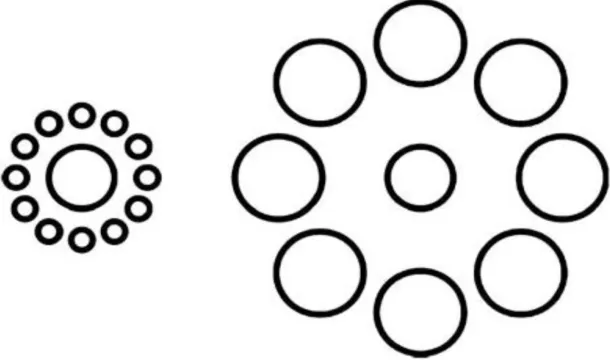
Figure 1. Two physically identical central circles in the Ebbinghaus illusion appear to be
different in size when the perceptual system takes into account relative size of the
surrounding circles…………...………4
Figure 2.Combinations of the annuli’s physical and familiar sizes result in the conditions
that are either congruent or incongruent with the size relationships of these objects in the
real world………..7
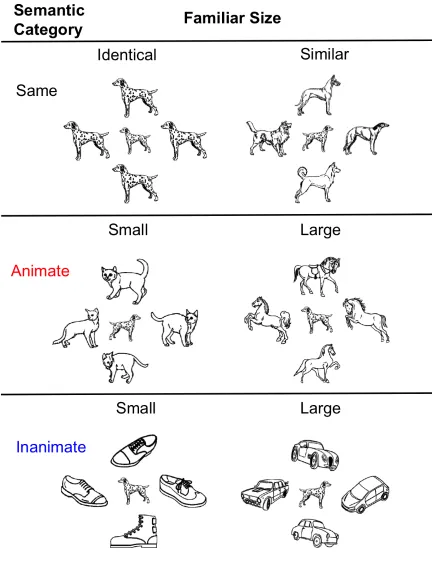
Figure 3. Annuli categories divided by familiar size and semantic category relative to the
central image………..10
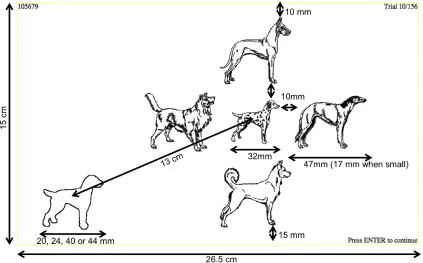
Figure 4. Experimental display with the stimuli sizing………..………11
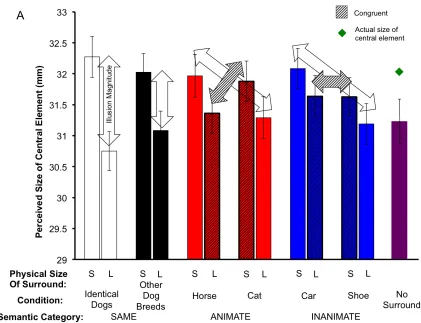
Figure 5. (A) Average perceived size of the central image as a function of the physical
size (S = small, L = large) and conditions of the annuli………...…….17
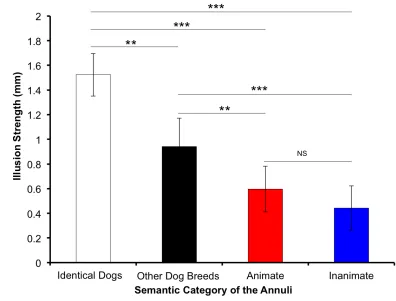
Figure 5. (B) Mean illusion strength as a function of semantic category…………..……18
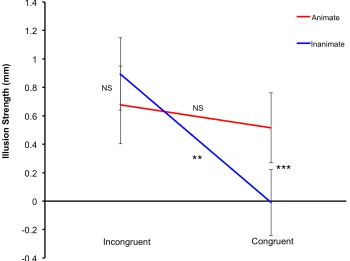
Figure 6. Illusion strength as a function of the congruence and animacy………….…….19
Congruent Familiar Size Relationships Decrease Size Contrast Illusion
In our everyday lives, objects that are larger than others in the real world subtend
larger sizes on the retina. For example, a car will be larger in retinal size than a dog when
they are viewed at a comparable distance. However, this size relationship is not
guaranteed. For example, a car further from a dog may subtend an equivalent retinal
angle; alternatively a car picture in a magazine may be the same size as a dog picture. As
such, one may wonder whether the visual system takes familiar size (that is, the typical
physical size of the object in the real world) into account during object recognition.
Certainly, the phenomenon of size constancy (Murray, Boyaci, & Kersten, 2006;
Sperandio, Chouinard, & Goodale, 2012) indicates that the visual system takes viewing
distance into account in perceiving size; although as noted, typical laboratory experiments
(usually on computer screens) often violate the real-world size relationship.
Everyday observations show that people accurately recognize objects depicted in
all different sizes and forms from small line drawings to large sculptures. For example, in
childhood we easily recognize toy miniature furniture in a dollhouse or a toy model of an
airplane. Similarly, we effortlessly identify faces on a huge cinema screen or landmarks
such as the Eiffel tower in a postcard even though the combination of physical size,
retinal size, and viewing distance is implausible in the real world. Additionally,
electrophysiological studies in monkeys found the so-called ‘size-invariant’ neurons in
the inferotemporal cortex that respond to objects presented in any size (Ito, Tamura,
Fujita & Tanaka, 1995). These neurons ensure that we accurately recognize a dog both
from a distance when it subtends a small area on the retina and when it is aiming to lick
they appear both in their familiar and unusual sizes supports the existence of a
size-invariant object representation.
However, there is an on-going debate whether neural representations of objects
incorporate familiar size.From daily experiences we learn the way familiar objects look,
distances at which they appear, and interactions they afford. Based on these experiences,
objects become associated with familiar size, distance and affordances. As such, we learn
that cars are large, usually are far away (when seen from outside) and are used for
transportation; in contrast, shoes are small, appear close and are used as footwear.
Objects of different sizes are typically seen at different distances (e.g., trees are
typically seen from a further distance than cups); as such they may be projected upon
different parts of the retina and processed in different parts of visual cortex. Specifically,
large objects and scenes are usually viewed in the periphery and require low spatial
resolution to be recognized, and are therefore processed in occipitotemporal regions
associated with peripheral vision (e.g., parahippocampal gyrus); whereas, small objects
(such as faces) are usually viewed in the fovea and require high spatial resolution to be
recognized, and are consequently processed in occipitotemporal regions associated with
central vision (e.g., fusiform gyrus; Malach, Levy, & Hasson, 2002). Importantly,
activation in visual brain areas depends more on the familiar size of objects, learned
through the real world experiences than the size of the projected image on the retina
(Konkle & Oliva, 2012b). Given that familiar size appears to be a critical organizing
principle within the visual system, perhaps it has more of an influence on visual
perception than previously realized.
Traditionally other features of objects (e.g., form and material properties;
greater detail, but recent research suggests that perception of objects is also affected by
their familiar real-world size. Konkle, Oliva and their colleagues have conducted a series
of behavioural experiments that showed how familiar size affected object perception. In
one study they found that, compared to objects that are small in the real world (e.g., an
apple), objects that are large in the real world (e.g., a car) are drawn or imagined at a
larger size and judged as more aesthetic when shown at a larger size (Konkle & Oliva,
2011). In another study they found that when judging which object is physically larger or
smaller on the screen, people are faster to answer correctly when the physical size
relationship between the objects is congruent with their familiar size relationship (an
effect deemed the “Familiar-Size Stroop Effect”; (Konkle & Oliva, 2012a). For example,
participants were faster to respond correctly that an image of an alarm clock was smaller
than an image of a horse, than to respond correctly that an image of a horse was smaller
than an image of a clock, because the former relationship between the objects’ physical
sizes is congruent with their real-world size relationship while the latter is not. The
finding suggests that the brain cannot ignore the familiar size relationship between these
objects and takes extra time to filter out the familiar size information to focus only on the
physical representation of these objects. However, this finding does not answer the
question of whether familiar size information actually affects object size perception per se
or whether the brain simply uses this extra time to form an accurate percept of an object
size despite the automatic access of knowledge of its familiar size.
Although the earlier work showed that familiar size influences various cognitive
decisions they did not directly test effects on perceived size (Konkle & Oliva, 2011;
Konkle & Oliva, 2012a). The aim of the current experiment was to determine whether
images. A well-established paradigm that allows us to measure the perceived sizes of two
targets relative to one another is the Ebbinghaus illusion (sometimes also called the
Titchner circles illusion; Girgus & Coren, 1982).In the classic version of this famous
paradigm (Figure 1), the perceived sizes of two circles are compared, with one circle
surrounded by larger circles and the other surrounded by smaller circles. Even when the
two central circles have the identical physical size, the one surrounded by small circles is
perceived as larger than the one surrounded by large circles. This illusion suggests
participants cannot help but make size judgements relative to other objects in the scene.
But is the illusion affected not just by relative physical size, but relative familiar size?
Figure 1. Two physically identical central circles in the Ebbinghaus illusion appear to be different in size when the perceptual system takes into account relative size of the
surrounding circles.
In order to study the familiar size effect in the Ebbinghaus illusion, the images
need to have a strong familiar size relationship learned from real-world experiences.
Conveniently, the Ebbinghaus illusion has been shown to occur for a wide variety of
(Rose & Bressan, 2002; Van Ulzen, Semin, Oudejans & Beek, 2008).For example, when
Coren and Enns (1993) used line drawings of animals and man-made objects, they found
an illusion of comparable strength to the classic Ebbinghaus illusion with circles. They
also found that the illusion strength decreased with the decrease in semantic similarity
between the central and surrounding images. For example, when the illusion employed a
line drawing of a dog in the center, the size misperception was largest when the surround
comprised identical images of the same dog, followed by dogs of other breeds, then other
four-legged domestic animals and man-made objects. However, in their study, familiar
size of the surrounding and central images was not controlled.
In the current experiment, we investigated whether perceived size of the central
image in the Ebbinghaus illusion would be affected by the familiar size of the
surrounding images. The task was to estimate perceived size of the central image, which
was a line drawing of a Dalmatian dog of a constant physical size. Manipulating the
physical size of the surround should induce a size contrast illusion of a regular strength
(i.e., ~ 1 mm), with the central image being perceived smaller amongst the physically
larger surround than the image amongst the physically smaller surround (e.g., Figure 2,
top row).
More importantly, varying familiar size of the surround allowed us to manipulate
congruency of the stimuli with the real world. For example, a display with a Dalmatian
dog surrounded by physically smaller shoes would be congruent with our experiences in
the real world, but a display with a dog surrounded by physically larger shoes would be
incongruent.We predicted that the illusion would occur for pairs of stimuli in which the
size relationships were incongruent with the real-world relationships (e.g., in Figure 2, a
surrounded by small cars) but that the effect of the illusion would be weaker or absent for
congruent pairs (e.g., a dog surrounded by large cars may be perceived as similar in size
to a dog surrounded by small shoes).
When estimating the size of a central Dalmatian dog amongst identical dogs of a
physically larger size, the simplest interpretation is that the central dog is a “mutt” (i.e.,
smaller than typical size); whereas, when presented amongst identical dogs of a
physically smaller size, the simplest interpretation is that the central dog is larger than the
average Dalmatian. As such, a robust perceptual size contrast illusion occurs. In contrast,
when the dog is surrounded by cars of a physically larger size, the simplest interpretation
is that the Dalmatian not a mutt, but simply appears smaller because of the relative
real-world sizes; similarly, when the dog is presented amongst shoes of a physically smaller
size, again the simplest interpretation is that of a normal-size dog. As such, the size
contrast illusion is expected to be smaller or absent. In the incongruent case (e.g.,
Dalmatian surrounded by small cars or large shoes), the illusion would still be expected to
be present or even enhanced.
We also expected to replicate the finding of Coren and Enns (1993) that the
semantic similarity would affect the visual size estimation. Specifically, the illusion
strength would decrease with the decrease in semantic similarity of images from the same
Figure 2. Combinations of the annuli’s physical and familiar sizes result in the conditions that are either congruent or incongruent with the size relationships of these objects in the real world. The grated frames indicate the congruent conditions that were predicted to not be affected by the size contrast illusion. The figure shows the inanimate semantic category, but the same combinations were present in the animate category. The ratios of the images and the distances between them are identical to the actual
Method
Participants
A total of 140 undergraduate psychology students voluntarily participated in an
online study listed on the Western University Department of Psychology participant pool
in exchange for half a research credit (mean age =18.39, SD = 0.69; females = 28 out of
77 demographic data points). Participants were instructed to withhold from participation
if they had a history of strabismus (“lazy-eye”), so that only volunteers with normal or
corrected-to-normal vision were asked to participate. Following data screening (see Data
Preprocessing section below), data from 74 participants were included in the final
analysis. The study was approved by the Western Non-Medical Research Ethics Board
(see Appendix A).
Stimuli
As mentioned earlier, the central image was a line drawing of a Dalmatian dog of
constant size (32-mm wide x 27-mm high) in all trials. Our primary manipulation used a
2x2x2 design with surrounding images that varied on three dimensions: (1) physical size
was either 17 mm in width for the small annuli or 47 mm for the large annuli; (2) familiar
size was either small as in cats and shoes or large as in horses and cars; and (3) semantic
categories were animate (cats and horses) and thus in a similar semantic category as the
central dog image or inanimate (shoes and cars) and thus in a different semantic category
than the dog (Figure 3 shows the categories for the case of the larger physical size only).
In addition to the latter manipulation of semantic categories, to replicate Coren and Enns
(1993), we also included three other conditions (not part of the primary factorial design):
(a) the dog with no surround; (b) the dog surrounded by the identical dogs (semantically
similar but visually different). For each of the six surround types (i.e., identical dogs,
other dog breeds, horse, cat, car, shoe) we also included trials in which the physical size
of the surround matched the physical size of the central image. These trials made the task
less monotonous and ensured that participants did not habituate to the physical size
differences between the central and surrounding stimuli in the experimental conditions.
We varied the orientation of the stimuli (whether the elements faced left or right)
by using six orientations (each occurring in 16.7% of the trials for each condition, in
random order), as shown on Figure 3: all four surrounding and the central images facing
left vs. right; the top and bottom images facing left vs. right with the center image
following them and the side images facing in the opposite direction; or the side pictures
facing left vs. right with the center image following them and the top and bottom images
facing in the opposite direction.
The task was to adjust the size of a target image, an outline of the dog (see Figure
4), until it matched the perceived size of the central image. On each trial, the target was
presented at a variable starting size and participants used the up and down arrow keys to
adjust its size and then pressed the enter key when they were satisfied. The direction of
same to inanimate. All six possible image orientations of the images are displayed. The displayed annuli belong to the large annuli condition (47-mm wide), but the same conditions were present in the physically small condition (17-mm-wide).
Figure 4. Experimental display with the stimuli sizing. Yellow box served as a self-check for the appropriateness of the participants’ monitor size.
Experimental Display
Figure 4 shows the arrangement of the experimental display as it appeared to the
participants in the physically large ‘identical dogs’ condition. The size of the
experimental display was fixed at 26.5 cm wide and 15 cm high. The central image was
10 mm away from the edges of the surrounding images and 13 cm diagonally from the
center of the target. The target image started off 8 mm or 12 mm smaller or larger than
the 32-mm-wide central image (i.e., 20, 24, 40 or 44 mm) on equal number of trials
order, with the target randomly occurring between the left and right sides of the display
(50% of the trials each for each condition). The top and bottom edges of the annulus were
10 mm and 15 mm away from the borders of the display, respectively. The experiment
was programmed using Adobe Flash Professional (2013) and viewed by participants in a
web browser.
Procedure
Participants received a link to the experiment once they signed up for the study.
After reading the Letter of Information they indicated their consent by pressing a ‘space’
bar on a keyboard, and were asked to provide basic demographic information. In order to
advance to the task, participants were required to successfully calibrate their monitor size.
They were given three attempts to measure and accurately input the size dimensions of a
rectangle that appeared on their monitors. The measures of the rectangle’s size were
converted by the program into the monitor size used to resize the experimental display so
that it would match between the participants regardless of their monitors’ dimensions. To
ensure that the display was resized correctly, the participants measured the second
rectangle, the size of which was known to the experimenters and would have been
accurate if the first measures were made correctly. If the entries for the second rectangle
were incorrect after the third try, the participant was unable to proceed with the
experiment. The monitor size information was also used to screen participants with the
monitors less than 13” in diagonal. Then, participants were instructed to position
themselves at arm’s length from the screen to minimize the intersubject difference in the
resulting visual angle of the images. Finally, participants read the instructions and
The task was to estimate the size of the central image in the Ebbinghaus illusion
by adjusting the size of the outline target image. The up and down arrow keys on the
keyboard increased or decreased (respectively) the width of the target image by 0.3 mm
per key-stroke (with a proportionate change in height to maintain a constant aspect ratio).
To prevent participants from matching the target image to the central image by paying
attention to pixels in the particular part of the image, the contours of the target image
were slightly rounded so that it did not exactly match those of the central dog. Once the
image was adjusted to a satisfactory size, participants pressed the ‘enter’ key to proceed
to the next trial. The outline image could have been adjusted to the minimum size of 12
mm and the maximum size of 47 mm in width. Altogether, there were 156 randomized
trials with eight trials in each experimental condition and 12 control trials in the “no
surround” condition.
Data Preprocessing
Given potential concerns about the quality of data from online studies, we did
careful preprocessing of the collected data (140 participants) to ensure that participants
completed the study with appropriate care. The data were preprocessed in three major
steps. First, we removed the data of eight participants whose computer monitor was too
small (i.e., smaller than 13” in diagonal). Second, we cleaned the data on the trial-by-trial
basis. The trials on which the number of adjustments differed from the mean (M = 26.8,
SD = 9.6) by -/+ 2 SD were removed, namely the trials on which participants adjusted the
outline target image by less than 2.1 mm (7 or less adjustments of 0.3 mm) or by more
than 14.1 mm (47 or more adjustments). The trials on which participants took 2 SD
longer or shorter than the average of 4390.5 ms to complete a single trial were removed,
were shorter than 1500 ms were removed due to the low likelihood of making a sufficient
number of adjustments (recall that with starting sizes 8- or 12-mm different from the
central item, at least 24 adjustments would be expected on average). After the second step
of data cleaning, 120 participants who had more than 10 trials per each image type of
both physical sizes remained. For the third step of data cleaning, we removed the
participants who experienced an illusion strength of less than 0.6 mm in the ‘identical
dogs’ condition, which included 25 participants with a negative illusion and 21 with a
positive illusion less than 0.6 mm, leaving a sample of 74 participants in the final
analysis. This latter step ensured that all subjects experienced a robust Ebbinghaus
illusion under the most typical circumstances, as expected (particularly considering the
online nature of the study); however, inclusion was based on a condition other than the
main ones of interest (congruent and incongruent size conditions) to avoid biasing the
results of that analysis.
Results
Our key question was whether the Ebbinghaus illusion would be stronger for
incongruent than congruent size relationships between the central and the surrounding
images. However, to investigate the illusion in general and compare our results to Coren
and Enns (1993), we first explored whether the illusion occurred at all in six conditions
and how the illusion magnitude varied between the conditions. Figure 5A shows the
target size adjusted to match the central dog reflecting its perceived size across all
conditions. As seen of the Figure 5A, the illusion occurred for each condition; that is,
participants perceived the central image as smaller when surrounded by physically large
than small items. However, participants adjusted the target’s size closer to the actual
target’s adjusted size in the physically large condition. Additionally, the perceived size of
the central image in the control condition with no surrounding was also underestimated
relative to the actual physical size of the central image. The data on the Figure 5A suggest
that even though the perceived sizes of the central images in the physically large and
small conditions were different from each other in the direction consistent with the
Ebbinghaus illusion, overall, the target was always under-adjusted. The under-adjustment
could have occurred because the target outline did not exactly match the central image
(recall that the edges of the target were slightly rounded to prevent participants from
utilizing a pixel-matching strategy), which could have resulted in a perceptual distortion.
A 2 (annulus physical size: small vs. large) x 6 (condition: identical dogs, other
dog breeds, horse, cat, car, shoe) repeated-measures analysis of variance (ANOVA)
showed that across all image types participants estimated the size of the central image
surrounded by the physically large annuli smaller than the size of the central image
surrounded by the physically small annuli, expressed by a significant main effect of the
annulus physical size (F (1,73) = 179.44, p < .001). There was a main effect of condition
(F (5, 365) = 7.60, p < .001), which was modulated by a significant physical size by
condition interaction (F (5, 365) = 15.88, p < .001), indicating that the participants
misestimated certain image types more than others. To interpret the interaction more
easily in the context of our hypotheses, we did two further analyses.
Figure 5B summarizes the same data in terms of the illusion size (perceived size
of central image for small surround vs. large surround). We collapsed the cat and horse,
and the shoe and car conditions into animate and inanimate semantic categories,
respectively, to quantify the semantic similarity effect. The post-hoc analyses showed that
by dogs of other breeds, and by the animate and inanimate categories that were not
statistically different from each other. As previously found by Coren and Enns (1993) the
illusion strength indeed decreased with the decrease in semantic similarity between the
central and surrounding images, with the semantic similarity effect being confirmed by
the current replication.
To measure the familiar size effect on size estimation we compared illusion
magnitudes between the congruent and incongruent conditions in both animate and
inanimate categories. Here, the illusion magnitude was calculated within a familiar size
congruency category. For example, the illusion magnitude for the congruent inanimate
category was calculated as the difference between the size estimates in the large car and
the small shoe conditions. The illusion magnitude for the incongruent inanimate category
was calculated as the difference between the size estimates in the small car and large shoe
conditions. As seen in Figure 6, the illusion magnitude in the congruent inanimate
condition was very low compared to the other conditions. A 2 (congruency: congruent vs.
incongruent) x 2 (animacy: animate vs. inanimate) repeated-measures ANOVA showed a
significant congruency by animacy interaction, indicating that the illusion magnitude was
very low, in fact absent, in the congruent inanimate category but present in the remaining
three conditions (F (1, 73) = 13.57, p < .001). The results showed that the participants
perceived the size of the central dog to be the same in the large car and the small shoe
conditions, but they estimated the sizes of the central dogs differently in the other three
conditions. The difference in the perceived size of the central images in the remaining
three conditions went in accordance with the Ebbinghaus illusion with the central image
being underestimated in the physically large and overestimated in the physically small
In summary, we found that the familiar size of the surround affects the size perception of
the central image in the Ebbinghaus illusion by decreasing the size contrast illusion when
the familiar size relationship between the central and the surrounding images was
congruent with their real-world size relationship.
Figure 5. (A)Average perceived size of the central image as a function of the physical size (S = small, L = large) and conditions of the annuli. The grated bars represent
conditions with the congruent familiar size relationship. The arrows represent the illusion magnitude expressed by the difference in size estimation between the respective
Figure 6. Illusion strength as a function of the congruence and animacy. The error bars represent 95% CI. ** p < 0.01, *** p < 0.001, NS = not statistically significant.
Discussion
Initially we hypothesized that the size contrast illusion should be weaker when the
familiar size relationship between the central and the surrounding images is congruent
with their real-world sizes. Indeed, we found that for inanimate objects participants
experienced a weaker illusion (in fact the illusion was absent altogether) when the
familiar size relationship of the stimuli was congruent, even though they still experienced
a strong illusion when this relationship was incongruent. Specifically, the participants did
not estimate the size of the dog surrounded by large cars differently from the dog
surrounded by small shoes, because these size relationships are congruent with the size of
contrast illusion (usually induced using abstract geometrical shapes) when the stimuli had
real-world sizes associated with them. Surprisingly, however, familiar size affected only
the inanimate conditions but not animate.
Differences Between Inanimate and Animate Stimuli
Retrospectively analyzing why the familiar size affected the semantic categories
differently, we noticed a few discrepancies between the stimuli in each category. One of
the probable explanations, in our view, for the presence of the familiar size effect only in
the inanimate category, is that the animacy may have been confounded with the frequency
of co-occurrence in the real world. Namely, participants, who were university students in
a relatively big city, may have been more likely to see dogs next to cars and shoes, rather
than next to horses and cats, which may be more common in a rural environment. Seeing
objects in co-occurrence in the scene builds the knowledge of the objects’ familiar size
relative to each other; whereas learning particular objects’ sizes independently from each
other may not completely integrate to produce a strong relative size association.
A second difference between the animate and inanimate stimuli that may have
accounted for the results is a difference in the relative familiar size between the objects in
the real world. Specifically, the relative size difference between cats and dogs is slightly
smaller than between shoes and dogs in the real world; in other words cats are usually
smaller than shoes. Similarly, the real-world size difference between horses and dogs is
smaller than between cars and dogs. Consequently, stimuli in the inanimate condition had
a larger real-world size difference relative to the central image than in the animate
condition. However, because the illusion strengths were not statistically different from
each other between the animate and the inanimate conditions (irrespective of the
Third, the stimuli in two semantic categories also slightly differed in size
dimensions of the surrounding images between these categories. Specifically, in the
physically large condition the animate annuli varied from the central image both in height
and width, whereas the inanimate annuli differed from the central image only in its width
but were the same in height (see Figure 2). However, it has been suggested that the
relative size difference is represented in categorical rather than absolute size differences
(Rosielle & Hite, 2009). Therefore, for the familiar size knowledge base to influence the
perceived size of the central dog in the Ebbinghaus illusion, neither the dog nor the annuli
necessarily need to be depicted in their absolute real-world size, as long as the relative
size relationship holds true categorically, that is the dog is smaller than the cars and larger
than the shoes.
The last possible explanation is that the relative size differences between the
images were not matched for the relative size differences between the real objects. Here
the difference between the central and the surrounding images was always 15 mm or 47%
meaning that the central dog was 47% smaller than both the large horses and the large
cars, and 47% larger than both the small cats and the small shoes. In reality, however,
these objects do not differ from each other by this percentage; instead, for instance, the
difference between a dog and a shoe is about 80%.
In the follow-up experiments we would like to investigate why familiar size
influenced two semantic categories differently in the current experiment by matching the
stimuli on the dimensions described above. It would be the most challenging to match the
stimuli both for co-occurrence in the real world and for familiarity with these objects. For
instance, a display may depict a dog surrounded by tigers versus hedgehogs, but it is
to each other. Ideally, we will find the objects that are both familiar from daily
experiences and that are usually seen next to each other.
Linking and Extending Our Results
Originally, Konkle and Oliva (2012a) found that knowledge of the objects’
real-world size affected the size of objects we imagine and prefer to look at and even a
reaction time it takes to judge objects’ sizes. Specifically, they showed that the reaction
times were slower when judging the sizes of objects that were depicted in their
incongruent familiar sizes. The current study extends the research on the familiar size
effect by quantifying the extent to which familiar size affected object actual size
perception. Now, having discovered that familiar size affects the actual perceived size of
a stimulus, it provides a new paradigm to study these effects, their mechanisms and
consequences.
The Ebbinghaus illusion affects our perception by contrasting the size of the
central image to the size of the annuli. The visual system judges the size of objects
relative to other objects in the scene. The illusion is particularly powerful when the
central and surrounding images belong to the same category, because we are literally
better in comparing apples to apples. Previous research shows that the size contrast occurs
even between objects from different categories (Coren & Enns, 1993), but the current
research indicates that the illusion depends on what kind of objects one compares the
central object to. Specifically, if the central object is compared to the objects with which
it already has a naturally occurring size contrast, then the illusion is much attenuated.
The Ebbinghaus paradigm, however, may not fully tap into the familiar size effect
on size estimation, because it does not particularly reflect the real world. That is, in the
Ebbinghaus illusion; moreover, the physical size of the items is not appropriate for the
viewing distance. Rather, in the real world, objects exist in settings that convey depth
(from binocular cues as well as monocular cues such as height in the visual field and
linear perspective), and this perception of depth can affect perceived size in a
phenomenon known as size constancy. One interesting question is how familiar size and
size constancy interact.
One possibility to explore an interaction of familiar size and size constancy on
object size perception is to use real objects in the Ebbinghaus illusion. First, such a set up
will account for the absence of the visual depth cues in the scene, and second it will
provide an opportunity to study the size perception of real objects. Given that objects and
images appear to be processed differently in the ventral visual stream (Snow et al., 2011),
we would expect a larger effect of familiar size when using real objects because they
presumably will activate the object-selective areas (known to be organized by real-world
size; Konkle & Oliva, 2012b) to a larger extent than pictures.
Another paradigm that can be adapted to study the familiar size effect by size
constancy interaction is the Ponzo illusion, which utilizes pictorial depth cues to induce
depth perception (Girgus & Coren, 1982). By introducing the converging lines in the
background of objects, the perceptual system automatically calculates the image size in
relation to its perceived depth. That is the object that is depicted in the converged end of
the lines is perceived farther away and thus appears to be larger than the assumingly
closer object.
Interestingly, the Ponzo illusion has been shown to not only affect the size
perception but also the brain activation, even at the earliest cortical processing level, V1
thus closer end of the converging lines to be physically bigger than the identical figure
sitting in the narrower and thus farther end at an early stage of visual processing in the
primary visual cortex. A larger part of the visual cortex is activated as if the ‘further’
figure is physically larger than the ‘closer’ one even though they are identical in retinal
size (Murray et al., 2006). If both the size constancy and the familiar size affect object
size perception, does familiar size also affect primary visual cortex activation? In the
future, we would like to investigate this question using brain-imaging techniques.
In summary, we showed that the size contrast illusion decreased when the familiar
size of objects was congruent with their real-world size relationship; however, this effect
occurred only for the inanimate annuli. In other words, perception was not affected by the
size contrast illusion when the illusory display reflected familiar real-world size
difference between the objects. The results suggest that knowledge of the familiar size
affects perception of object size. Further, we would like to explore the familiar size effect
References
Coren, S., & Enns, J. T. (1993). Size contrast as a function of conceptual similarity
between test and inducers. Perception and Psychophysics, 54(5), 579-588.
http://doi.prg/10.3758/BF03211782
Craddock, M., & Lawson, R. (2009). Size-sensitive perceptual representations underlie
visual and haptic object recognition. PLoS ONE, 4(11).
http://doi.org/10.1371/journal.pone.0008009
Girgus, J. S., & Coren, S. (1982). Assimilation and contrast illusions: differences in
plasticity. Perception & Psychophysics, 32(6), 555–561.
http://doi.org/10.3758/BF03204210
Hasson, U., Harel, M., Levy, I., & Malach, R. (2003). Large-scale mirror-symmetry
organization of human occipito-temporal object areas. Neuron, 37(6), 1027–1041.
http://doi.org/10.1016/S0896-6273(03)00144-2
Hsieh, P. J., Vul, E., & Kanwisher, N. (2010). Recognition alters the spatial pattern of
FMRI activation in early retinotopic cortex. Journal of Neurophysiology, 103(3),
1501–1507. http://doi.org/10.1152/jn.00812.2009
Ito, M., Tamura, H., Fujita, I., & Tanaka, K. (1995). Size and position invariant neuronal
responses in monkey inferotemporal cortex. Journal of Neurophysiology, 73(1),
Konkle, T., & Oliva, A. (2011). Canonical visual size for real-world objects. Journal of
Experimental Psychology. Human Perception and Performance, 37(1), 23–37.
http://doi.org/10.1037/a0020413
Konkle, T., & Oliva, A. (2012a). A familiar-size Stroop effect: Real-world size is an
automatic property of object representation. Journal of Experimental Psychology:
Human Perception and Performance, 38(3), 561–569.
http://doi.org/10.1037/a0028294
Konkle, T., & Oliva, A. (2012b). A Real-World Size Organization of Object Responses in
Occipitotemporal Cortex. Neuron, 74(6), 1114–1124.
http://doi.org/10.1016/j.neuron.2012.04.036
Malach, R., Levy, I., & Hasson, U. (2002). The topography of high-order human object
areas. Trends in Cognitive Sciences, 6(4), 176–184.
http://doi.org/10.1016/S1364-6613(02)01870-3
Murray, S. O., Boyaci, H., & Kersten, D. (2006). The representation of perceived angular
size in human primary visual cortex. Nature Neuroscience, 9(3), 429–434.
http://doi.org/10.1038/nn1641
Rosielle, L. J., & Hite, L. A. (2009). The caricature effect in drawing: Evidence for the
use of categorical relations when drawing abstract pictures. Perception, 38(3), 357–
375. http://doi.org/10.1068/p5831
Snow, J. C., Pettypiece, C. E., McAdam, T. D., McLean, A. D., Stroman, P. W., Goodale,
Repetition effects for pictures versus real objects. Scientific Reports, 1, 1–10.
http://doi.org/10.1038/srep00130
Sperandio, I., Chouinard, P. A, & Goodale, M. A. (2012). Retinotopic activity in V1
reflects the perceived and not the retinal size of an afterimage. Nature Neuroscience,
15(4), 540–542. http://doi.org/10.1038/nn.3069
Van Ulzen, N. R., Semin, G. R., Oudejans, R. R. D., & Beek, P. J. (2008). Affective
stimulus properties influence size perception and the Ebbinghaus illusion.